
Porto Audio Tour: Cultural Treasures
Beneath the gilded surface of Porto lies a labyrinth of scorched stone and whispered betrayals waiting to be unmasked. Explore these shadows with a self-guided audio tour that bypasses the tourist traps to reveal the city's raw, unvarnished history. You will navigate the corridors of power and the silence of forgotten martyrs. Why does the Super Bock Arena stand on the site of such violent political upheaval? What secret lies entombed within the cold, Romanesque masonry of the Church of São Martinho de Cedofeita? Which ghost still paces the iron curves of the Ponte de São João on moonless nights? Trace the arc of past rebellions and scandalous mysteries as you traverse the city streets. Feel the weight of centuries pressing against your pulse. You will move through Porto not as a traveler, but as a witness to its haunted legacy. Download the guide and reclaim the truth of Porto today.
Tour preview
About this tour
- scheduleDuration 190–210 minsGo at your own pace
- straighten9.9 km walking routeFollow the guided path
- location_on
- wifi_offWorks offlineDownload once, use anywhere
- all_inclusiveLifetime accessReplay anytime, forever
- location_onStarts at São Bento station
Stops on this tour
lock_open 3 free previews · 14 unlock with purchase
Look for the broad granite façade with its arched windows, central pediment, and formal main portal, a stately railway front standing above the metro stop below. This is where…Read moreShow less
Open dedicated page →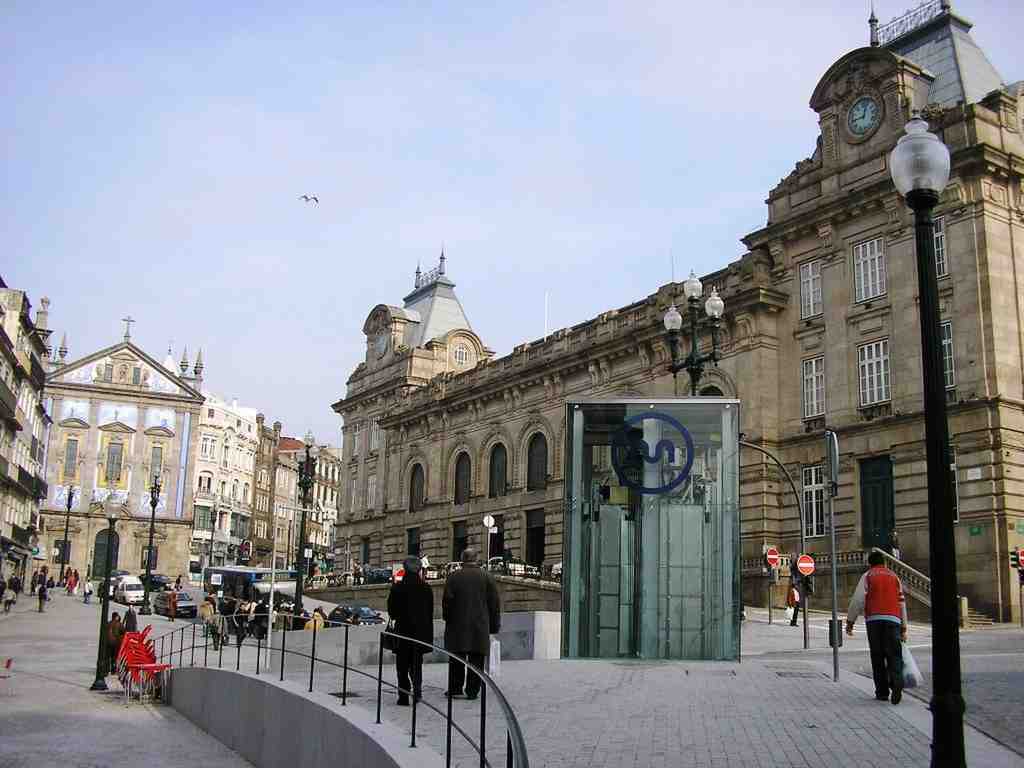
São Bento stationPhoto: Manuel de Sousa, Wikimedia Commons, Public domain. Cropped & resized. Look for the broad granite façade with its arched windows, central pediment, and formal main portal, a stately railway front standing above the metro stop below.
This is where Porto introduces itself rather honestly: not as a tidy sequence of eras, but as a stack of them. Beneath your feet, modern light rail runs through an underground station on line D, opened on the seventeenth of September, two thousand five. Above it stands one of the city’s best-known railway stations. And before either of them, this corner belonged for centuries to the Convent of São Bento de Avé-Maria.
That is the detail locals quietly enjoy telling you: the name São Bento does not come from the railway age at all. It comes from the vanished Benedictine convent that once occupied this very ground. The convent held on until the last nun died in May of eighteen ninety-two. Only then did the site open to a different kind of ritual: tickets, timetables, arrivals, departures.
Porto does this often. A sacred place becomes a civic one, but the older life never quite leaves. Here, even the station carries a whisper of the monastery it replaced. Popular legend says the last nun still wanders the corridors, and that in the quietest hours her prayers can still be heard. Folklore, certainly. But folklore tends to settle where memory has unfinished business.
Now, take a brief pause. Watch the flow of people entering and leaving, all that purposeful movement. Then imagine a very different rhythm once governing the same patch of earth: cloistered footsteps, bells, prayer.
The great tiled hall above the metro connection makes that layering visible. In nineteen oh five, the artist Jorge Colaço began the vast azulejo programme here. Azulejos are glazed ceramic tiles, and Colaço used about twenty thousand of them across roughly five hundred and fifty-one square metres. He worked for more than a decade, turning a transport building into a public history book. The panels show the Battle of Valdevez, the conquest of Ceuta, King João the First entering Porto after Aljubarrota, and scenes of rural life from the Douro and Minho. Commuters hurry through; history waits on the walls.
And the station keeps changing. The metro line now stretches far beyond its original route, and every proposed alteration here sparks debate, because this site sits inside Porto’s UNESCO-listed historic area. People still argue over what should be added, protected, or left untouched.
Just south of here, the trains emerge from the tunnel and head for the upper deck of the Dom Luís the First Bridge. If even a metro stop carries buried lives beneath its platforms, you can begin to sense what this city may reveal next. When you are ready, we’ll continue in about six minutes to the Igreja da Misericórdia do Porto.
On your right stands a pale granite façade of three deep arches and curling pediments, crowned by a carved stone cross and the emblem of the Misericórdia. This church belongs to…Read moreShow less
Open dedicated page →On your right stands a pale granite façade of three deep arches and curling pediments, crowned by a carved stone cross and the emblem of the Misericórdia.
This church belongs to the Santa Casa da Misericórdia, a brotherhood of organized mercy that shaped Porto for centuries. Founded here in the early sixteen hundreds? No, earlier still: the institution took root in fifteen oh two, after King Dom Manuel the First urged Porto’s leading citizens to create a confraternity like the one in Lisbon. The mission sounded noble, and it was: care for the sick, the poor, the abandoned. But mercy in a city always needs offices, accounts, patrons, builders, and rather a lot of stone.
That is why the brotherhood moved to busy Rua das Flores in the mid-sixteenth century. They wanted presence, visibility, and access to the life of the city. Construction began in fifteen fifty-five, and the church was blessed in fifteen fifty-nine, though it was still unfinished. If you glance at the image on your screen, you can see why this front became so famous: it is almost theatrical, filling the street so completely that the church seems to exist as a façade first and a building second. Most visitors hear a tidy version of the story. The untidy one is better. The capela-mor, the main chapel around the altar, depended on the money of Dom Lopo de Almeida. The granite came from the quarry at Monte de Mijavelhas. Father Gonçalo Vieira supervised the works. And the job kept stopping because people worried it was costing too much. That, if you ask me, is how real institutions usually get built: with piety, hesitation, invoices, and persistent human effort.
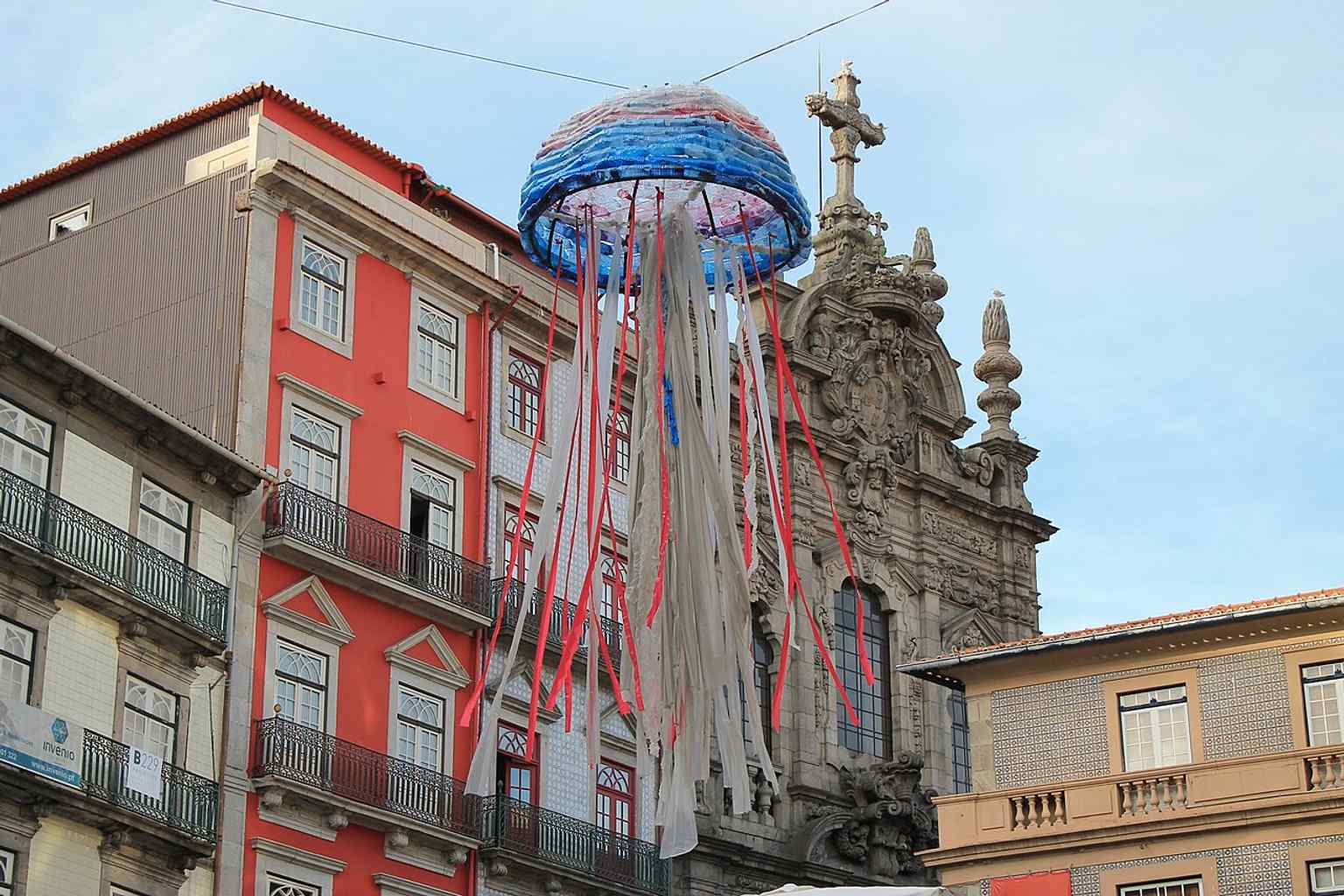
Street-level view of the Church of Misericórdia do Porto — a famously scenographic façade that can only be seen head-on from the Rua das Flores side.Photo: John Samuel, Wikimedia Commons, CC BY-SA 4.0. Cropped & resized. There was even musical trouble. In fifteen ninety-seven, the brotherhood hired Salvador Rebelo to build an organ. He finished it by fifteen ninety-nine. By sixteen oh two, it was already damaged and badly out of tune, so Rebelo had to return and promise regular tunings. Charity may be heavenly in principle; in practice, even the organ needs maintenance.
Then came the violence of chance. In April of sixteen twenty-one, lightning struck and destroyed the façade, leaving the main chapel as the chief survivor. A sacred building can feel permanent, until one flash proves otherwise. The front you see now belongs largely to the long rebuilding that followed, especially the eighteenth-century campaign shaped by Nicolau Nasoni. In seventeen forty, experts, including Nasoni, examined the church’s safety after severe structural worries. From seventeen forty-eight onward, they rebuilt it in a Baroque style with Rococo flourishes - that means lavish, curling decoration, full of movement and ornament. They chose the simplest of Nasoni’s proposals, which tells you something about his imagination, because even the simplest is wonderfully exuberant. The second image on your phone shows that remade front, the one that rose after disaster. Inside, much changed again. Lisbon tiles arrived in sixteen twenty-eight, though only a few of the earliest ones survive in sheltered places such as the stair up to the upper gallery and the sacristy. Later blue-and-white tiles replaced others in the nineteenth century. The church kept its fragments and renewed the rest, like so much of Porto.
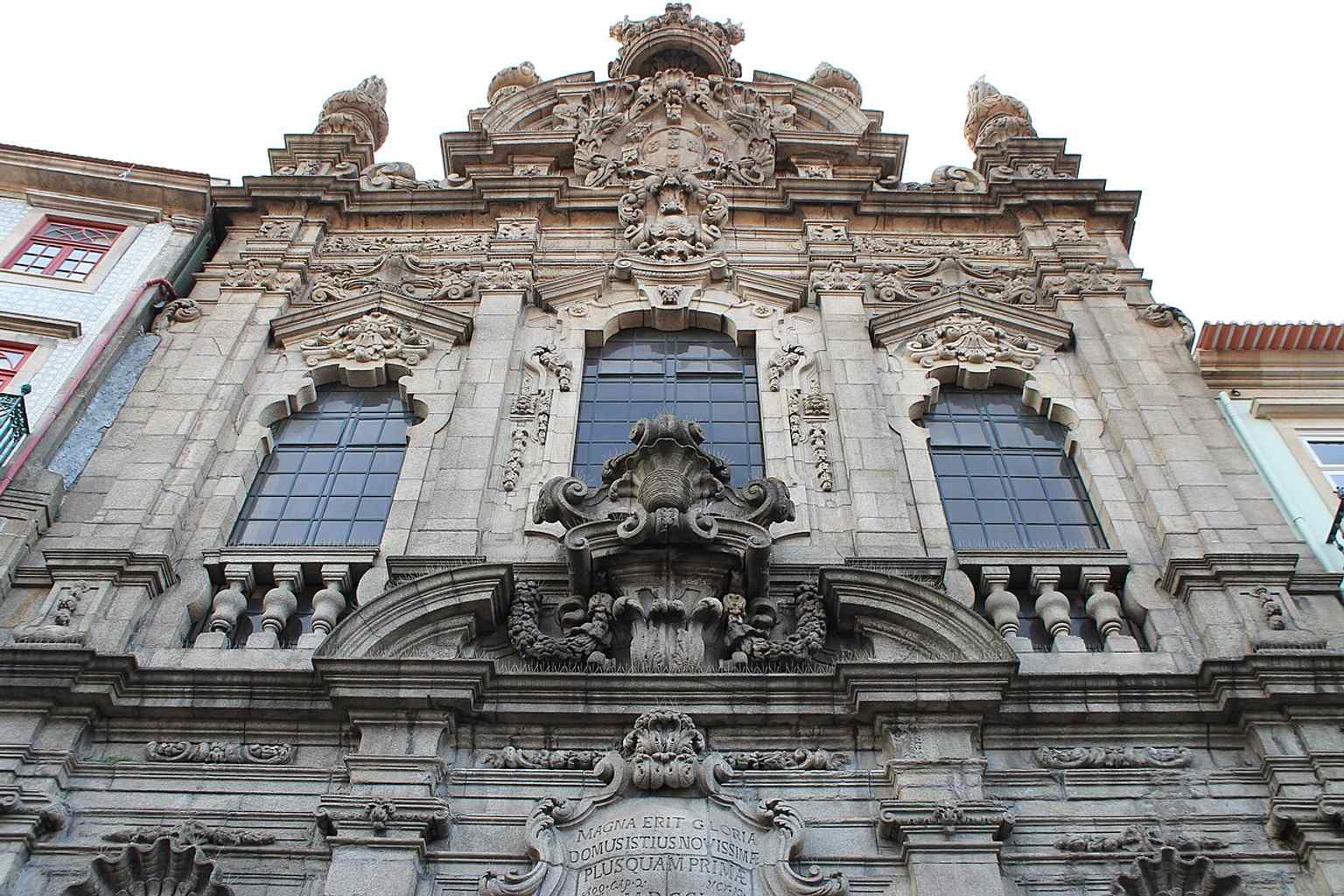
Another clear exterior of the church, useful for showing the rebuilt Baroque-Rococo front that replaced the lightning-struck façade destroyed in 1621.Photo: John Samuel, Wikimedia Commons, CC BY-SA 4.0. Cropped & resized. For centuries this building also served as the headquarters of the institution itself, right up to two thousand and thirteen, before opening to visitors as part of the Misericórdia museum. So remember this place not as an abstract symbol of kindness, but as mercy made practical: funded by patrons, hauled from quarries, argued over in meetings, repaired after ruin. From here, we continue in about nine minutes to the Tower of Dom Pedro Pitões. If you want to come back inside, the church generally opens daily from ten in the morning until half past six.
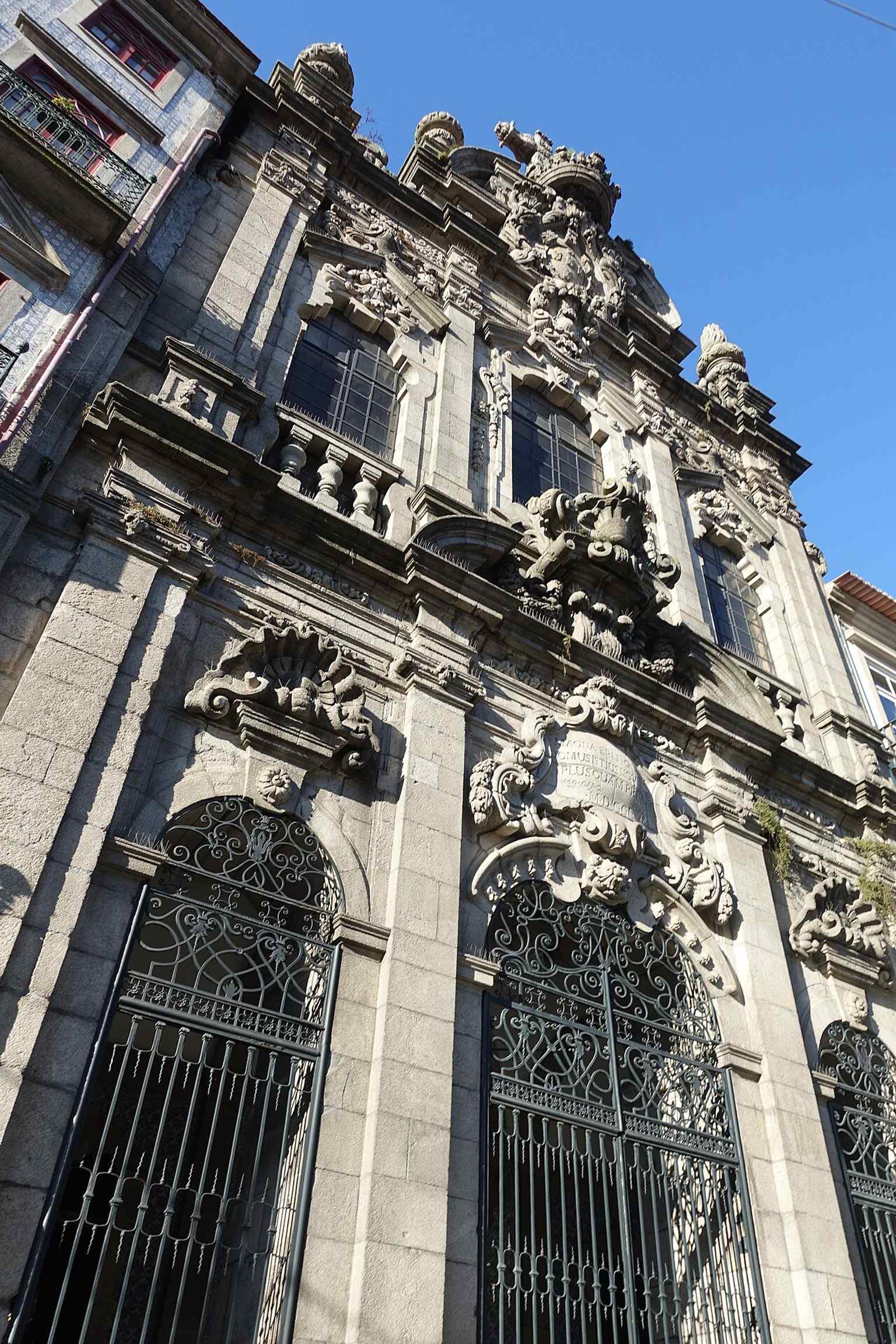
A higher-resolution exterior view of the Misericórdia Church in Porto, ideal for highlighting the ornate façade and the landmark’s presence in the city centre.Photo: Joseolgon, Wikimedia Commons, CC BY 4.0. Cropped & resized. On your left, look for a compact granite tower made of two joined rectangular blocks, topped with pointed stone crenellations and marked by a small Gothic-style balcony. This…Read moreShow less
Open dedicated page →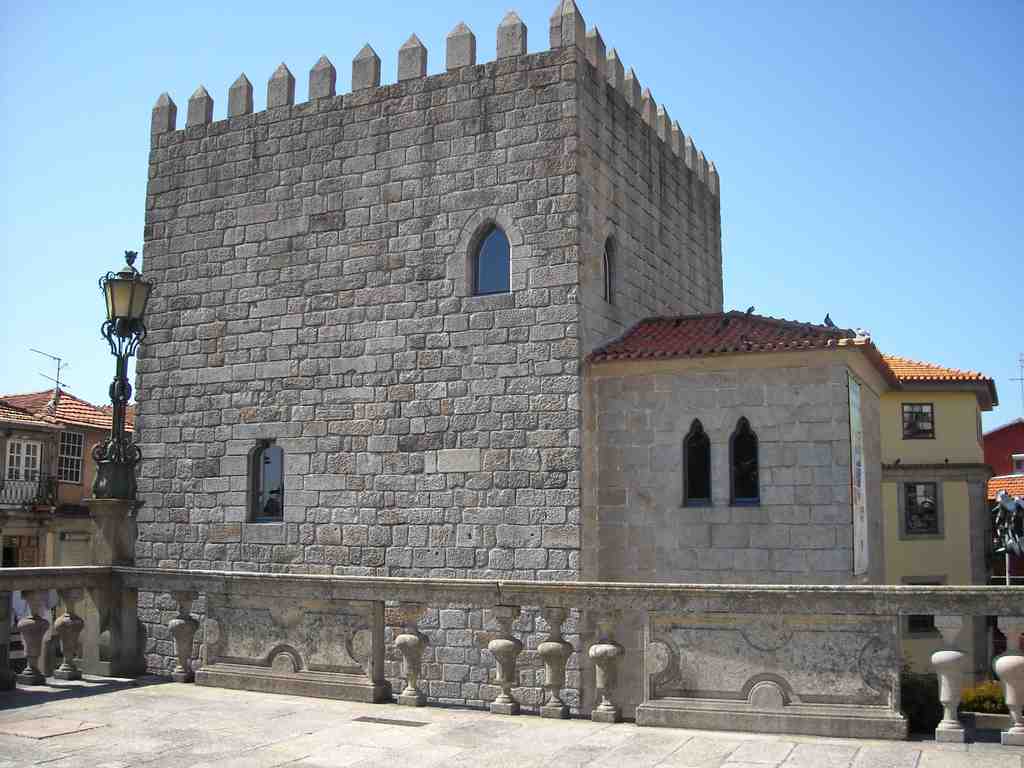
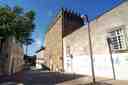
Tower of D. Pedro PitõesPhoto: Béria Lima de Rodríguez, Wikimedia Commons, CC BY-SA 3.0. Cropped & resized. On your left, look for a compact granite tower made of two joined rectangular blocks, topped with pointed stone crenellations and marked by a small Gothic-style balcony.
This little tower carries itself like a survivor, but it is also, rather wonderfully, a question mark.
Its name reaches back to D. Pedro Pitões, a twelfth-century archdeacon of Porto. Heritage accounts remember him for his part in the Reconquista, the long Christian campaign to retake Iberian territory, and for supporting the First Crusade. So the tower borrows his prestige and his medieval aura. Yet the structure in front of you did not pass cleanly from that age into ours. It vanished into the fabric of the city and only returned to notice much later.
That uncertainty is the key here. People often call it a fortification, and certainly it looks the part: granite walls, narrow openings, a sturdy upward thrust. But one heritage account suggests something more intriguing. This may not have been a military stronghold at all, or not only that. It may have been the residence of a prosperous burgher, meaning a wealthy townsman. In other words: fortress or home? Defense or status? Porto leaves the answer slightly ajar, and this tower seems content to keep its secret.
Most visitors never realise the oddest part. In nineteen forty, workers demolishing buildings around the Sé Cathedral uncovered the tower in the Largo do Açougue. The city had been clearing space for the new Terreiro da Sé, and this fragment of older Porto suddenly emerged from within later construction. Then came the decision that saved it: instead of sweeping it away, Porto shifted it roughly fifteen metres and rebuilt it near its original site. If you look at the image on your screen, you can see the silhouette that survived by moving rather than standing still. So what you are seeing is both old and interpreted. Architect Rogério de Azevedo directed the reconstruction and gave the tower some of its present character, including that stone balcony with a distinctly Gothic flavour. If you study the masonry in the app image, you can catch that slightly deliberate medieval look: not fake, exactly, but carefully composed. The structure itself helps the puzzle along. It has two rectangular volumes, one with two storeys and one taller with three, both under tiled roofs. The taller section wears triangular merlons, those tooth-like battlements along the top. Arched doorways and multi-lobed windows soften the severity, as if domestic life once pressed close against defense. Even its neighbours tell a layered story: the Arco de São Sebastião beside it, homes pressed around it, the cathedral group just beyond.
Then the tower changed roles again. Between nineteen forty and nineteen sixty, the Gabinete de História da Cidade, the City History Office, worked here, which is why some older locals still call it the Torre da Cidade. After the Carnation Revolution in nineteen seventy-four, residents occupied it and installed the Centro Social e Cultural da Sé. A restored monument became a neighbourhood space. Then, after Manuel Magalhães led another rehabilitation in nineteen ninety-seven, it turned again, opening in nineteen ninety-eight as a tourist post.
That is the irony of this place: it endured not because everyone always honoured it, but because Porto nearly lost it, noticed it in time, and moved it out of danger. Keep that thought as you head to Porto Cathedral, about five minutes away, where the city’s grand certainties also sit on disturbed ground. And in keeping with its unceremonious history, you can come by this tower at any hour.
Show 14 more stopsShow fewer stopsexpand_moreexpand_less
On your left rises a heavy granite church with two square towers, a circular rose window, and a battlement-like crown that makes it look almost like a fortress. Porto Cathedral…Read moreShow less
Open dedicated page →On your left rises a heavy granite church with two square towers, a circular rose window, and a battlement-like crown that makes it look almost like a fortress.
Porto Cathedral has the gravity of a place that learned, century by century, how to endure. People often speak of it as one of the city’s oldest monuments, and that is true, but even this great stone presence did not begin as a blank start. Before the cathedral stood here, this hill held an older sacred site: a chapel or hermitage founded by Henry of Burgundy and his wife in eleven oh eight. That earlier church still existed in eleven forty-seven, and then, in the second half of the twelfth century, builders began the cathedral you see now. They kept going, in one form or another, into the sixteenth century.
That long making explains the curious honesty of the façade. It does not pretend to come from a single age. The Romanesque body remains the backbone, especially in the rose window and the stern, defensive look, but later centuries kept editing the surface. The main portal changed in the eighteenth century. The tower cupolas changed too. And the Italian architect Nicolau Nasoni, who first came here in seventeen twenty-five to renovate the sacristy and chancel, added a graceful Baroque loggia to the side in seventeen thirty-six. If you glance at the image in the app, you can see that elegant addition quite clearly.
Now, take a proper look at the front. Notice how the cathedral feels both solid and slightly negotiated, as though several centuries sat down together and agreed on a truce in stone.
Inside, the oldest core is still Romanesque: a narrow nave, meaning the main central hall of the church, covered with a barrel vault, with side aisles tucked lower beside it. Builders even used flying buttresses here, those exterior stone supports that catch the sideways force of a heavy roof. For Portugal, that was early and ambitious.
But this hill did not belong only to builders. It also gathered lives. In thirteen eighty-seven, King John the First and Philippa of Lancaster were blessed here on the second of February and married here on the fourteenth. Their union mattered far beyond Porto. It helped seal the long Anglo-Portuguese alliance, and Philippa later became known as the mother of Portugal’s so-called Illustrious Generation. One of those future stories begins here as well: tradition holds that Prince Henry the Navigator was baptized in this cathedral. If you want a glimpse of that space, the baptistery appears in the app images.
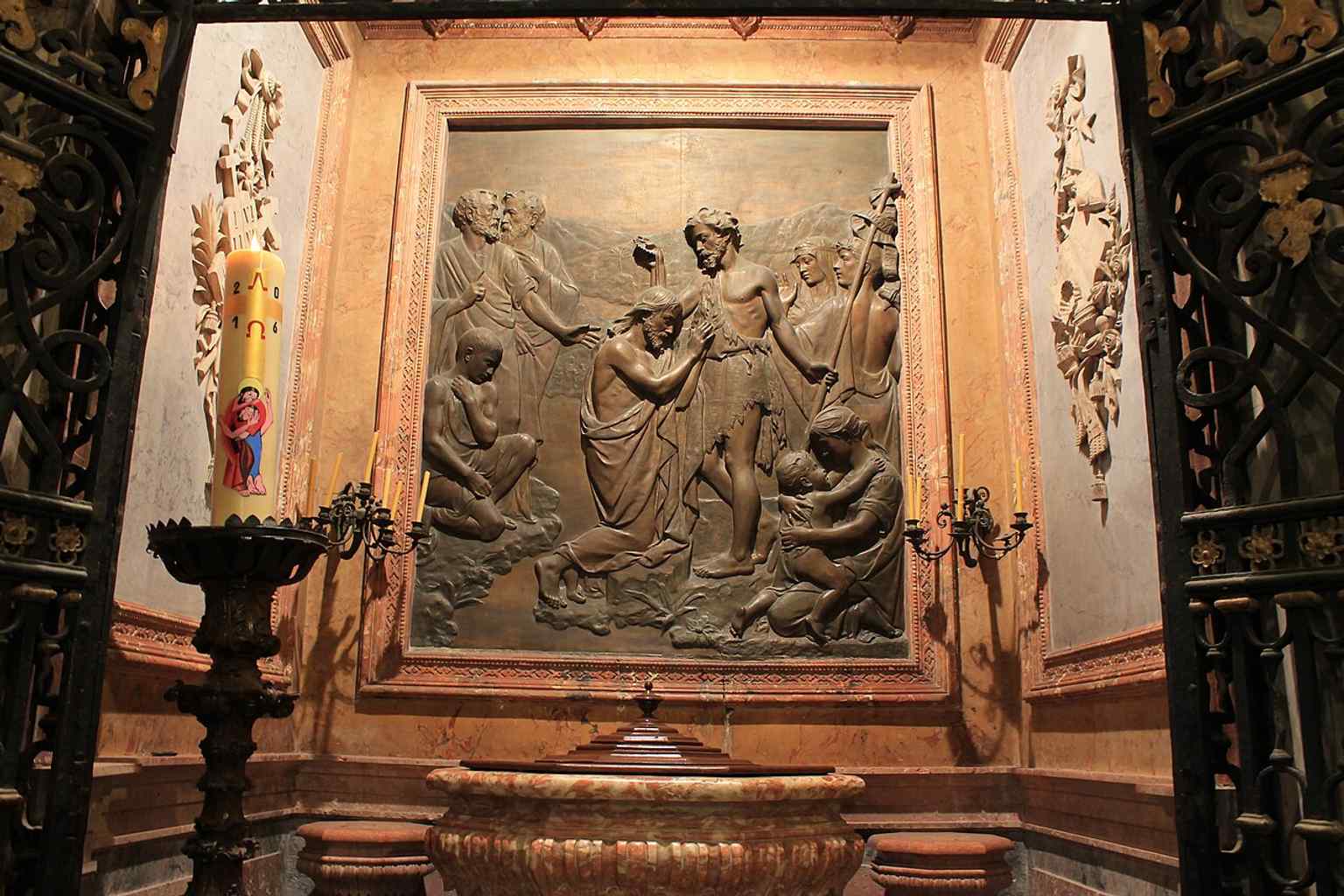
The baptistery, linked to the tradition that Prince Henry the Navigator was baptized here.Photo: John Samuel, Wikimedia Commons, CC BY-SA 4.0. Cropped & resized. The Gothic cloister, added in the fourteenth and fifteenth centuries, later received Baroque azulejo tiles by Valentim de Almeida, and one chapel holds a remarkable silver altarpiece from the seventeenth century. That treasure inspired a favourite local legend: when Napoleon’s troops entered Porto in eighteen oh nine, someone coated the silver with plaster or lime so French soldiers would overlook it. Another version gives the credit to Canon Pedro Breiner, who supposedly tried to bargain for its safety.
So even here, at what seems Porto’s firmest point, certainty slips a little. This cathedral is not pure origin preserved under glass. It is a long accumulation of repairs, additions, royal ceremonies, wartime scares, and stubborn continuity. When you continue to the Monastery of Serra do Pilar, about eleven minutes from here, keep that in mind: in Porto, the oldest places are often the most revised. If you decide to return later, the cathedral generally opens daily from nine in the morning until half past six.
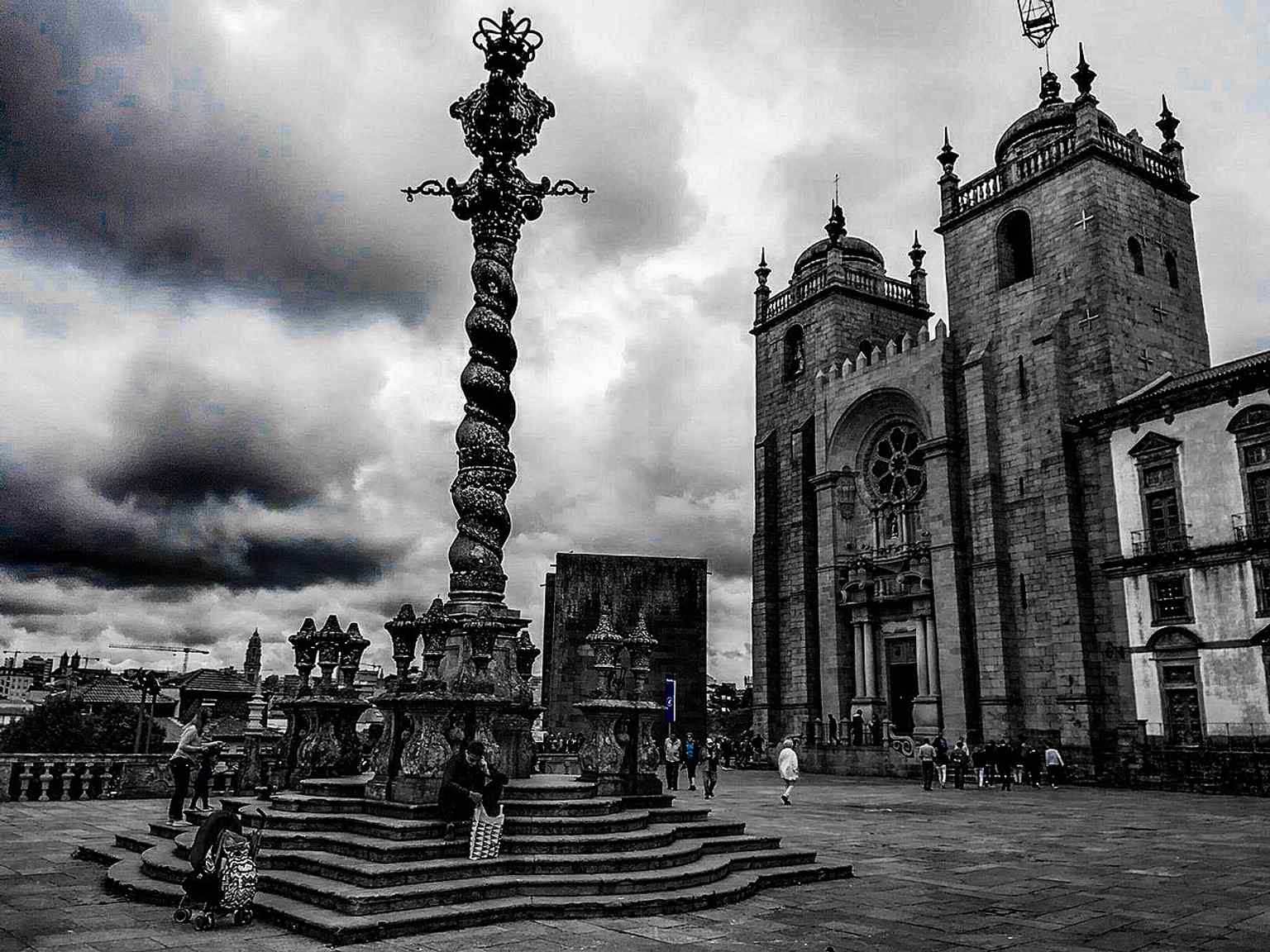
A clear daytime view of Porto Cathedral’s Romanesque façade, with the fortress-like towers and rose window that give it its defensive look.Photo: Ivan Stesso, Wikimedia Commons, CC BY-SA 4.0. Cropped & resized. 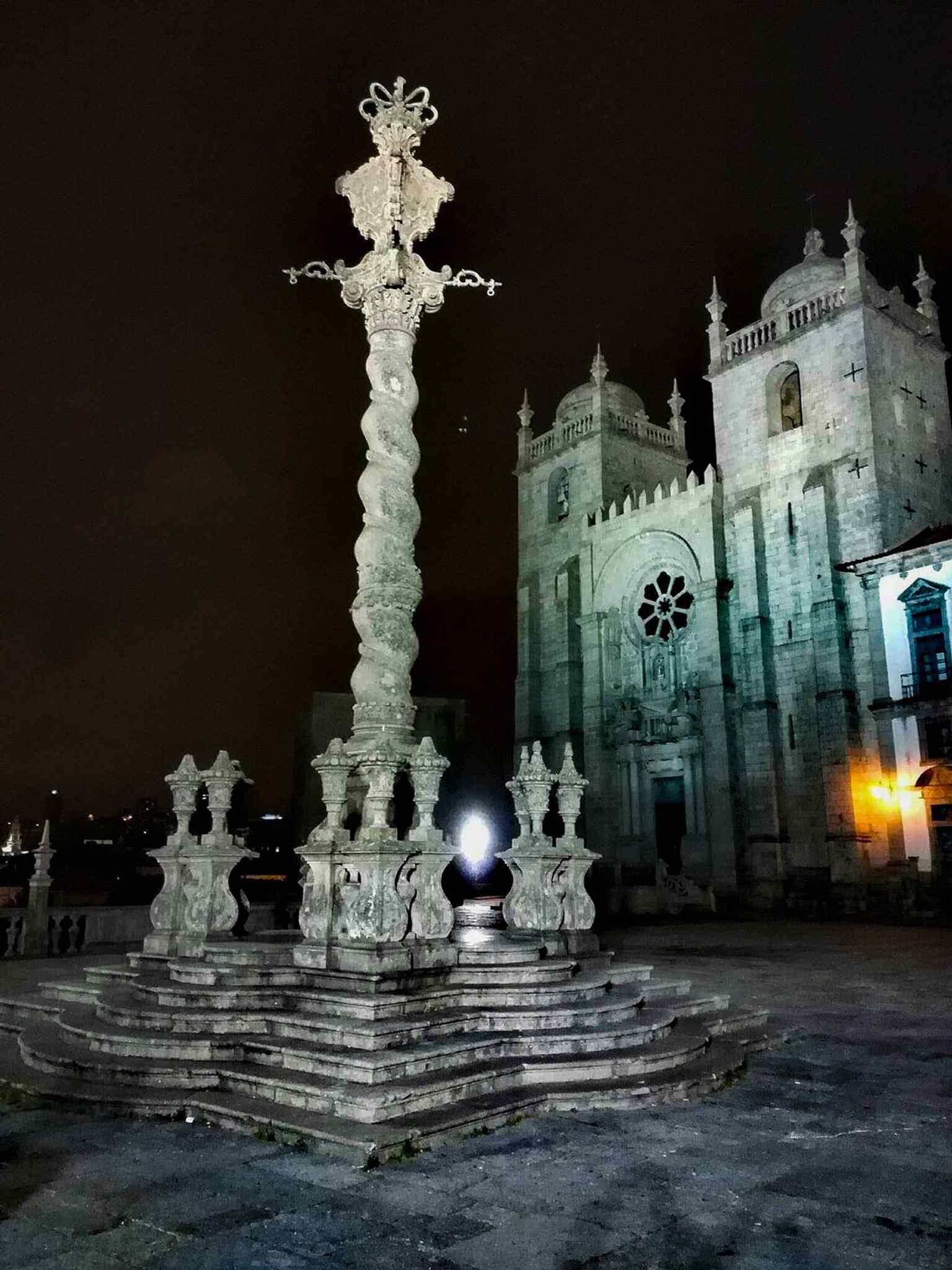
The cathedral at night, showing how the old monument still dominates Porto’s historic centre after dark.Photo: Ivan Stesso, Wikimedia Commons, CC BY-SA 4.0. Cropped & resized. 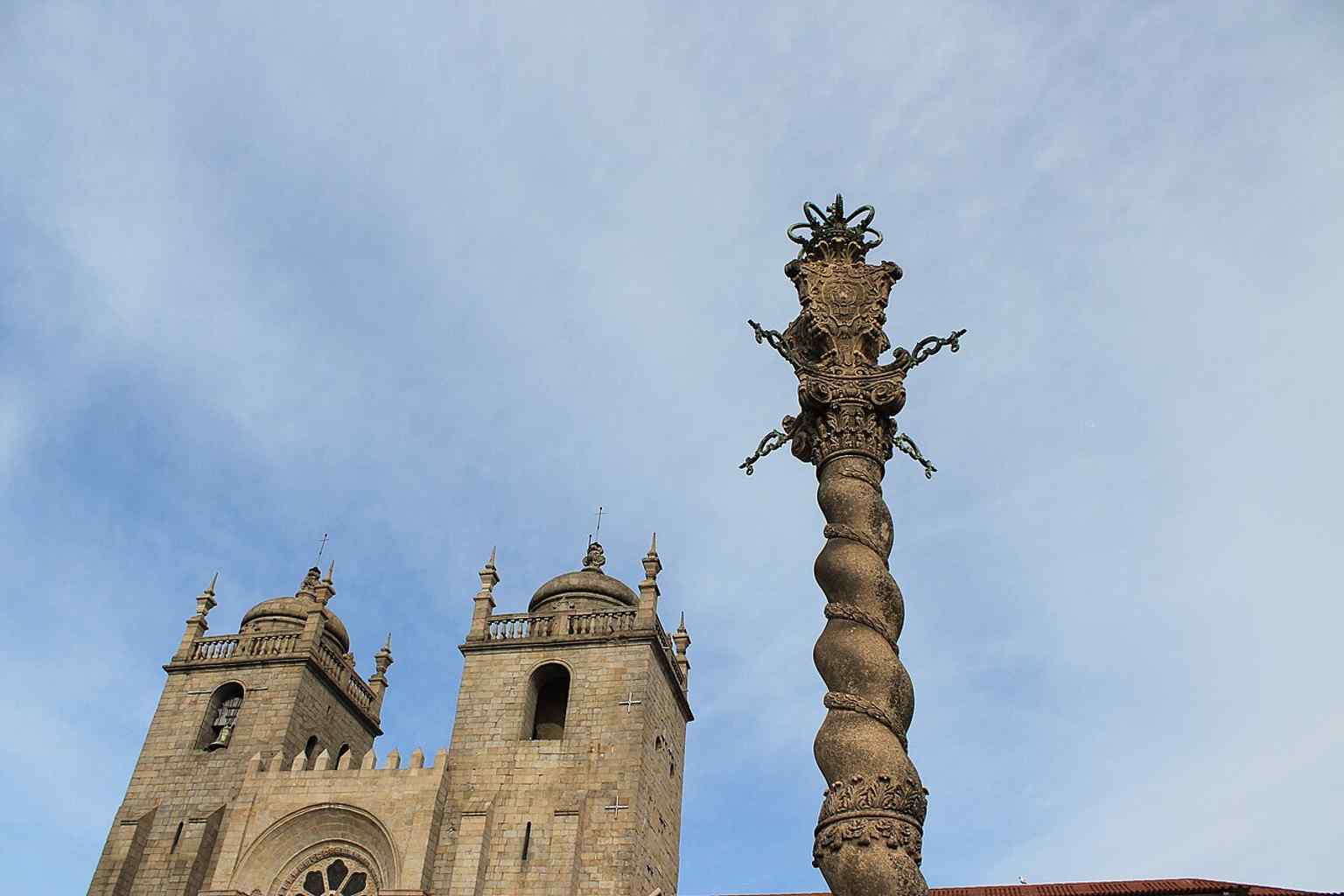
A wider exterior view that helps place the cathedral in the city and shows its heavy Romanesque massing.Photo: John Samuel, Wikimedia Commons, CC BY-SA 4.0. Cropped & resized. 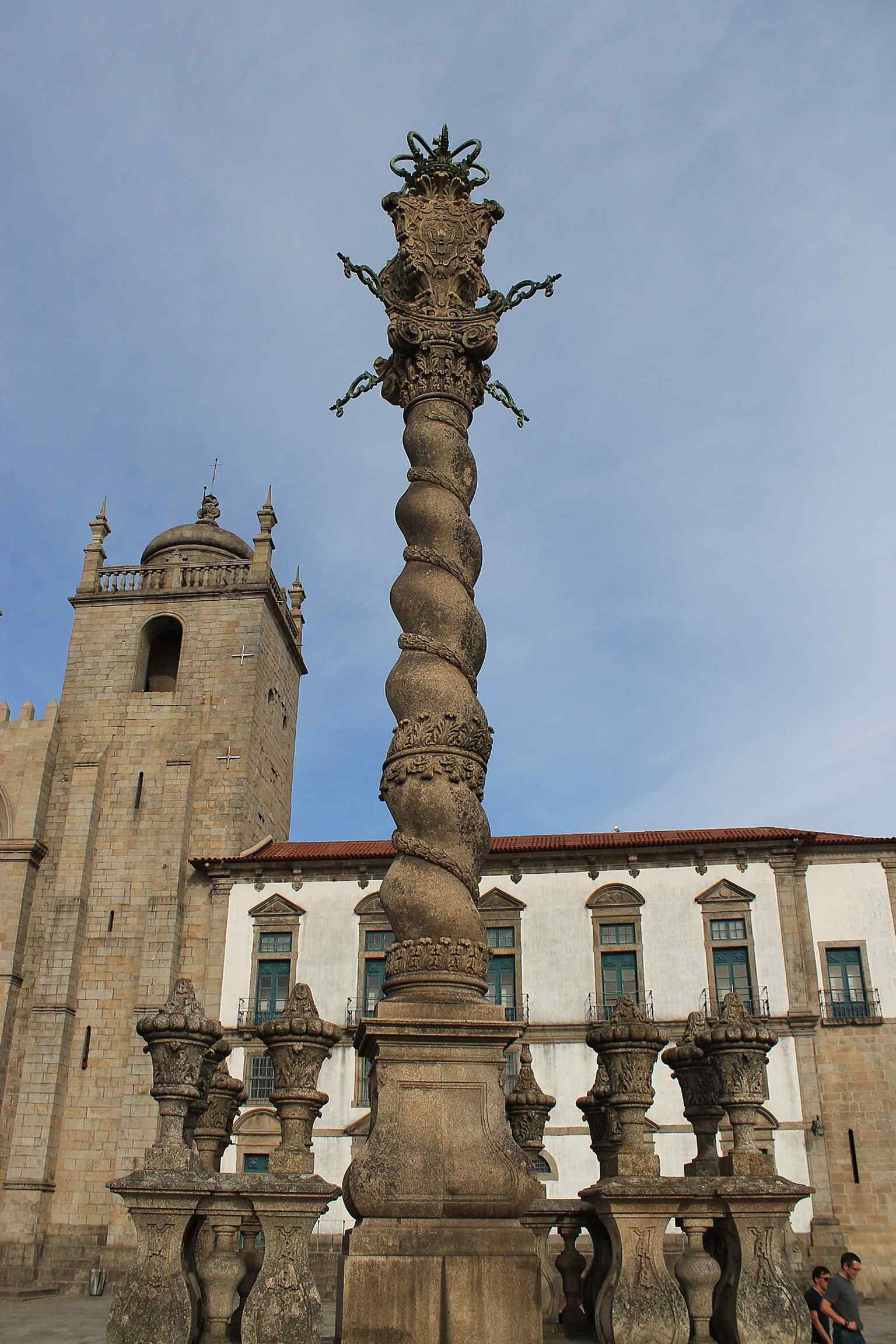
Another strong façade angle, useful for highlighting the cathedral’s layered appearance after centuries of rebuilding.Photo: John Samuel, Wikimedia Commons, CC BY-SA 4.0. Cropped & resized. 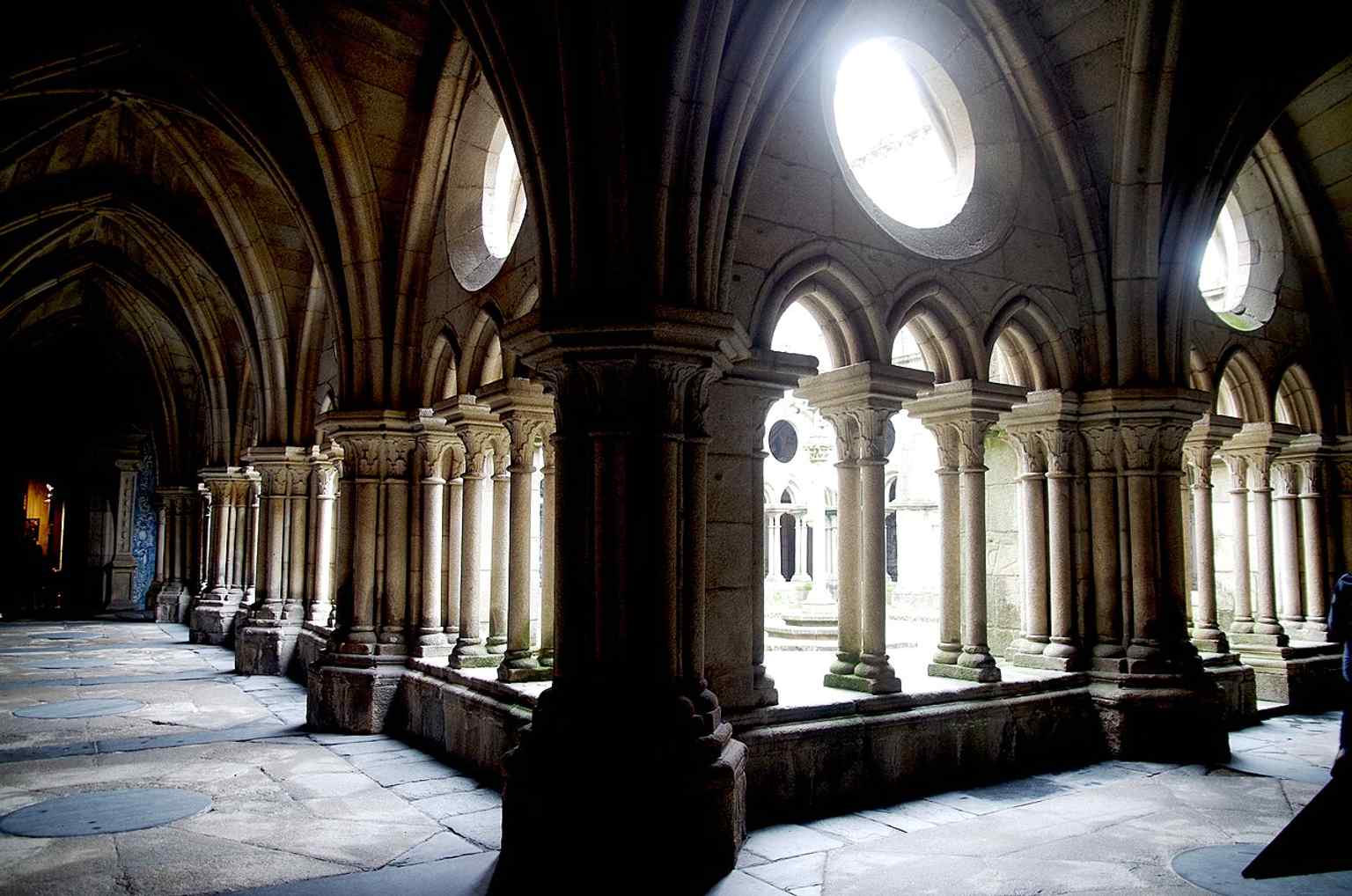
The Gothic cloister of Porto Cathedral, built in the 14th–15th centuries and later decorated with azulejos.Photo: Cardilio, Wikimedia Commons, CC BY-SA 4.0. Cropped & resized. 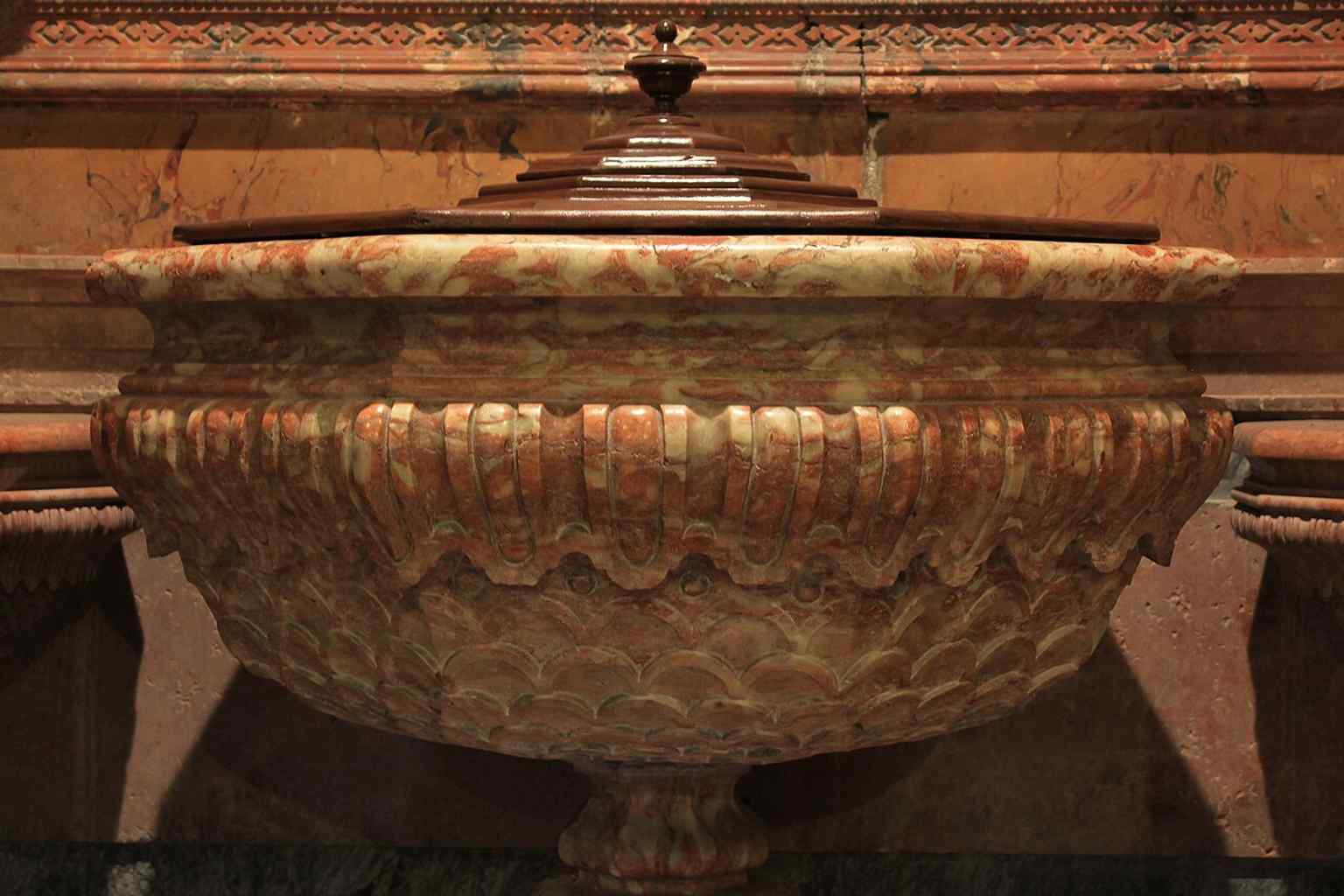
A closer look inside the baptistery, where the Christian symbolism connects to Porto Cathedral’s royal and discovery-era stories.Photo: John Samuel, Wikimedia Commons, CC BY-SA 4.0. Cropped & resized. 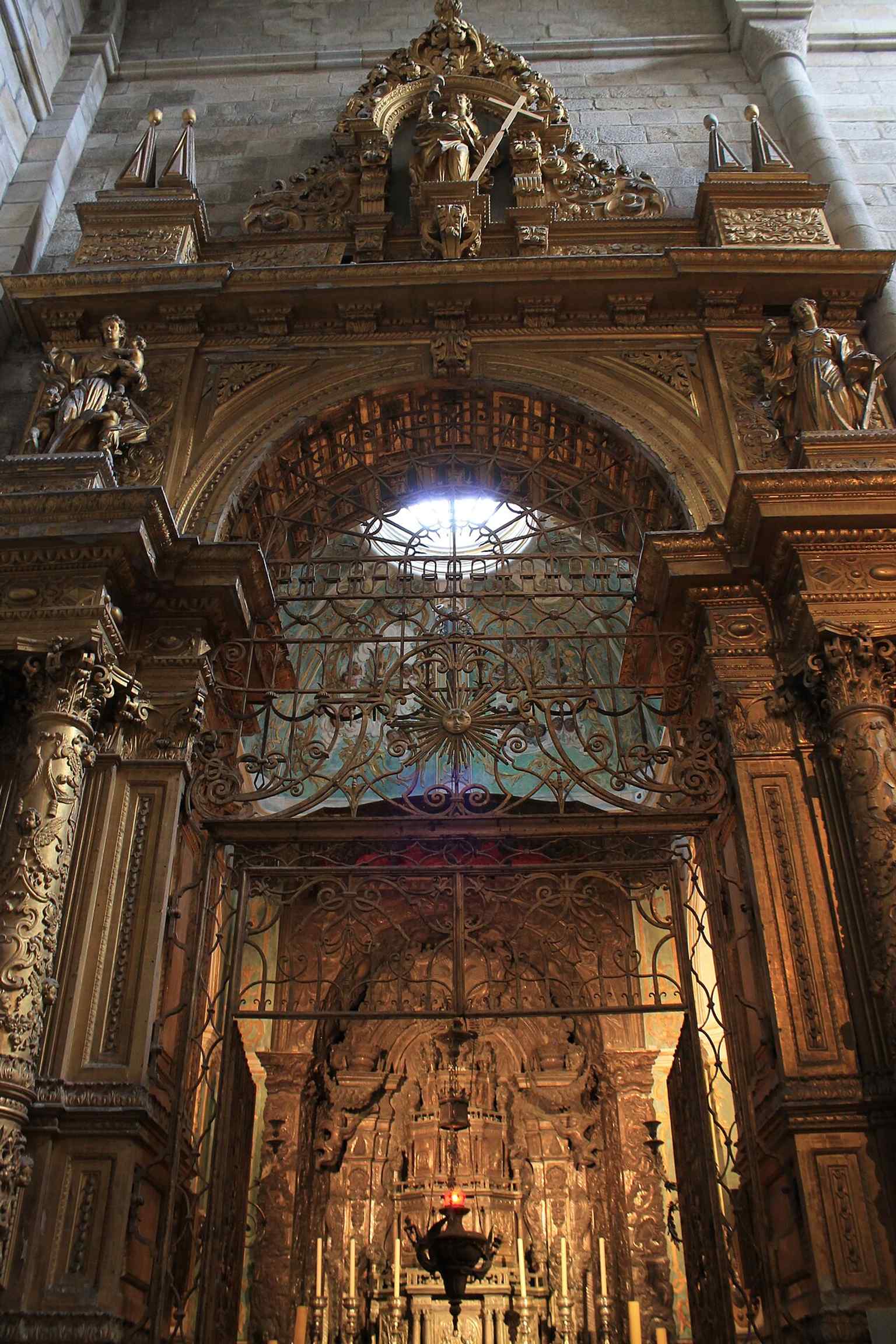
One of the chapels in the cathedral interior, part of the richly altered Baroque ensemble added over the centuries.Photo: John Samuel, Wikimedia Commons, CC BY-SA 4.0. Cropped & resized. 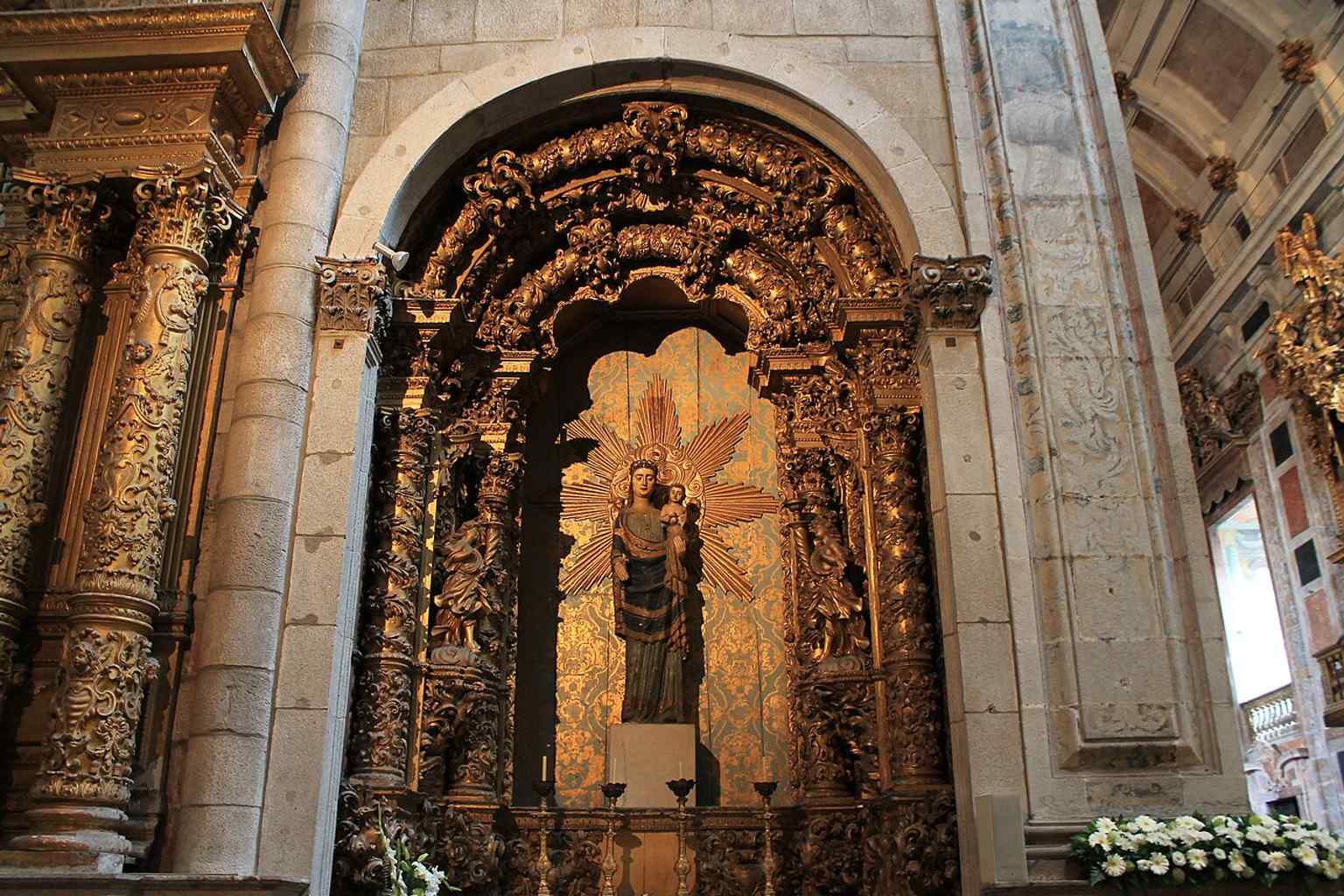
The altar of Nossa Senhora da Vandoma, part of the cathedral’s chapels and a reminder of its layered devotional history.Photo: John Samuel, Wikimedia Commons, CC BY-SA 4.0. Cropped & resized. On your right rises a pale stone monastery marked by a round church dome, a matching circular cloister, and a square bell tower set high above the river. Serra do Pilar has the…Read moreShow less
Open dedicated page →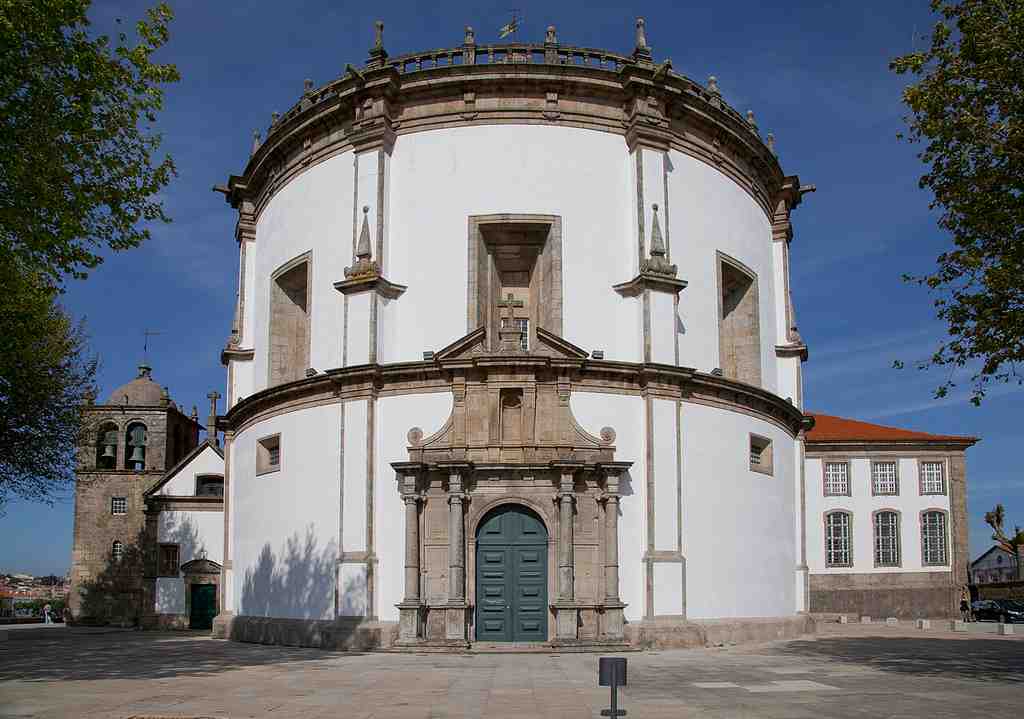
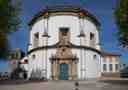
Monastery of Serra do PilarPhoto: Diego Delso, Wikimedia Commons, CC BY-SA 3.0. Cropped & resized. On your right rises a pale stone monastery marked by a round church dome, a matching circular cloister, and a square bell tower set high above the river.
Serra do Pilar has the sort of silhouette that makes architects smile and generals take notes. This former monastery stands in Vila Nova de Gaia, directly opposite Porto, on a rocky height overlooking the Douro, the Dom Luís the First Bridge, and the old city beyond. In nineteen ninety-six, UNESCO, the United Nations Educational, Scientific and Cultural Organization, placed it within the World Heritage listing for Porto’s historic centre, the bridge, and this monastery together, which tells you something important: this hilltop matters not only as a building, but as part of the whole river landscape.
Its story began as a practical royal fix. King João the Third ordered the monks of São Salvador de Grijó to move here after their old monastery fell into poor condition. Builders began the first monastery in fifteen thirty-eight, finished it in fifteen sixty-four, and completed the cloisters in fifteen eighty-three. Then came the awkward truth: it was already too small. So in fifteen ninety-seven, they began again, enlarging the complex in stages. The new circular church opened on the seventeenth of July, sixteen seventy-two, and the final works continued to the end of the seventeenth century.
That unusual plan is the key to the place. The church and cloister are both circular, with the same diameter, joined by a rectangular section for the choir and chapel. If you glance at the plan in the app, the geometry becomes wonderfully clear. And yet geometry alone did not define Serra do Pilar. Height did. In eighteen oh nine, General Arthur Wellesley used this commanding ground during his surprise Douro crossing to strike the French and retake Porto. A monastery designed for enclosure suddenly served as a lookout over the river crossings. During the Siege of Porto in eighteen thirty-two, the same hill became the main Liberal stronghold on the south bank, and the complex turned into an improvised fortress. Fortress or residence? Rather inconveniently for tidy categories, it proved to be both.
If you like, check the before-and-after image in the app; it shows how a war-damaged ruin returned to the skyline as a whole monument again.
Declared a National Monument in nineteen ten, restored from nineteen twenty-seven onward, and partly adapted as military barracks in nineteen forty-seven, Serra do Pilar never entirely shed its martial afterlife. Even so, the church still holds Sunday Mass. That is the marvel of this height: it offers seclusion for prayer, a platform for surveillance, and an advantage in war, all at once. From here, the river below begins to look less like scenery and more like destiny, which is exactly what we will follow next to Ponte das Barcas, about eleven minutes away. And should you return later, the grounds are accessible at any hour.
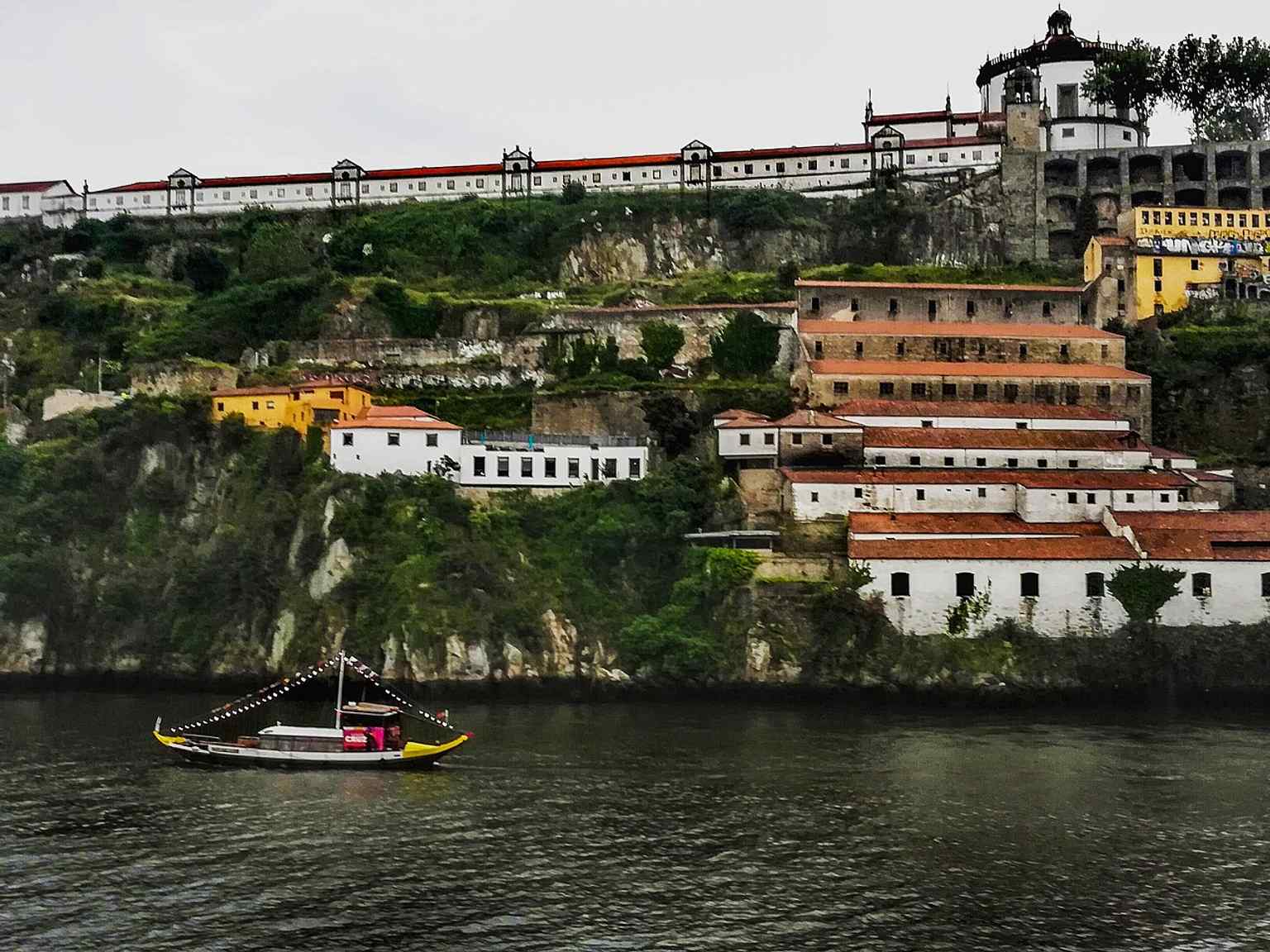
A classic riverfront view of Serra do Pilar and the Douro, highlighting the monastery’s dramatic hilltop setting.Photo: Ivan Stesso, Wikimedia Commons, CC BY-SA 4.0. Cropped & resized. 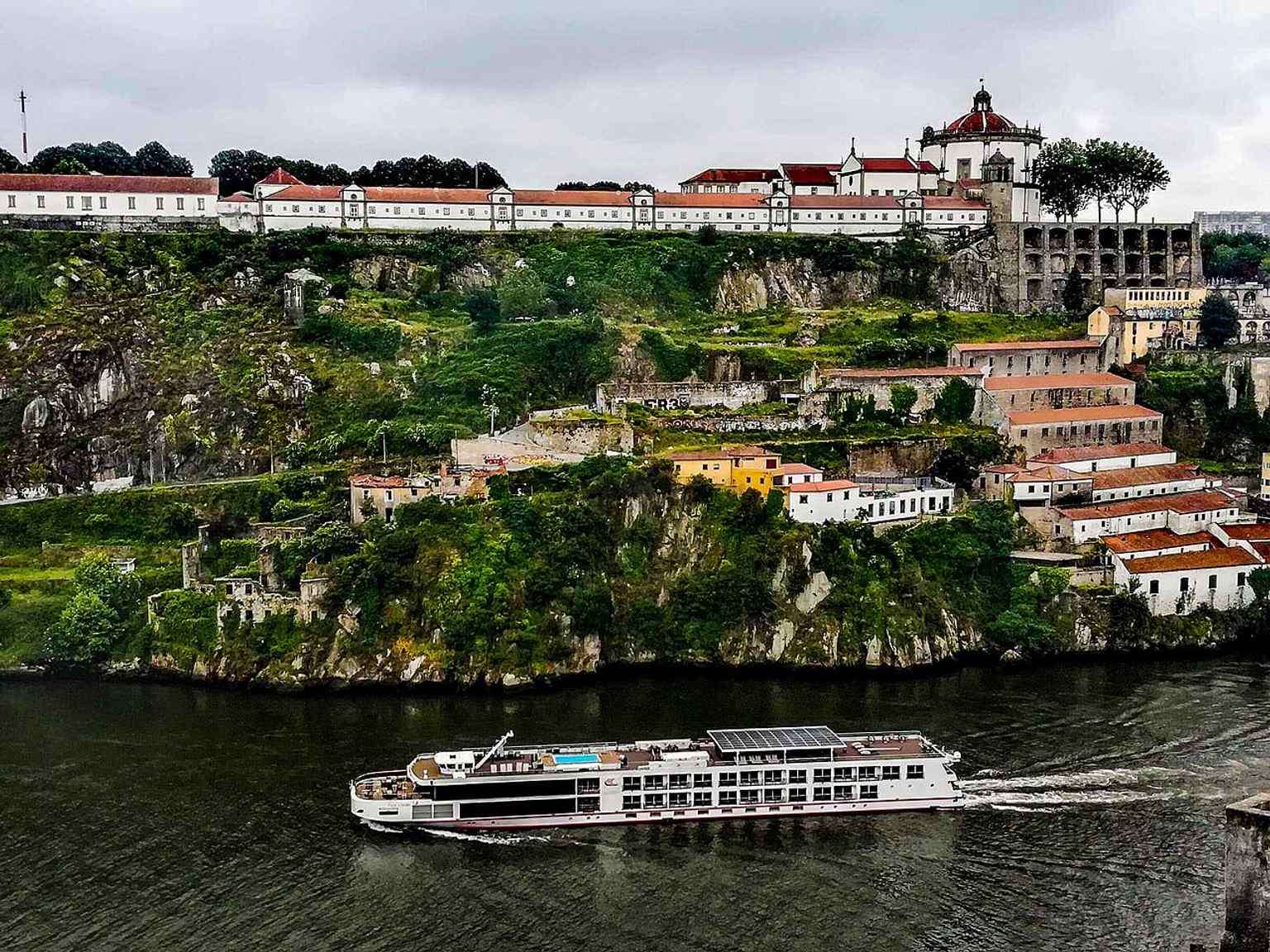
The monastery’s profile against the landscape, showing the hilltop position that made it both a landmark and a fortress.Photo: Ivan Stesso, Wikimedia Commons, CC BY-SA 4.0. Cropped & resized. 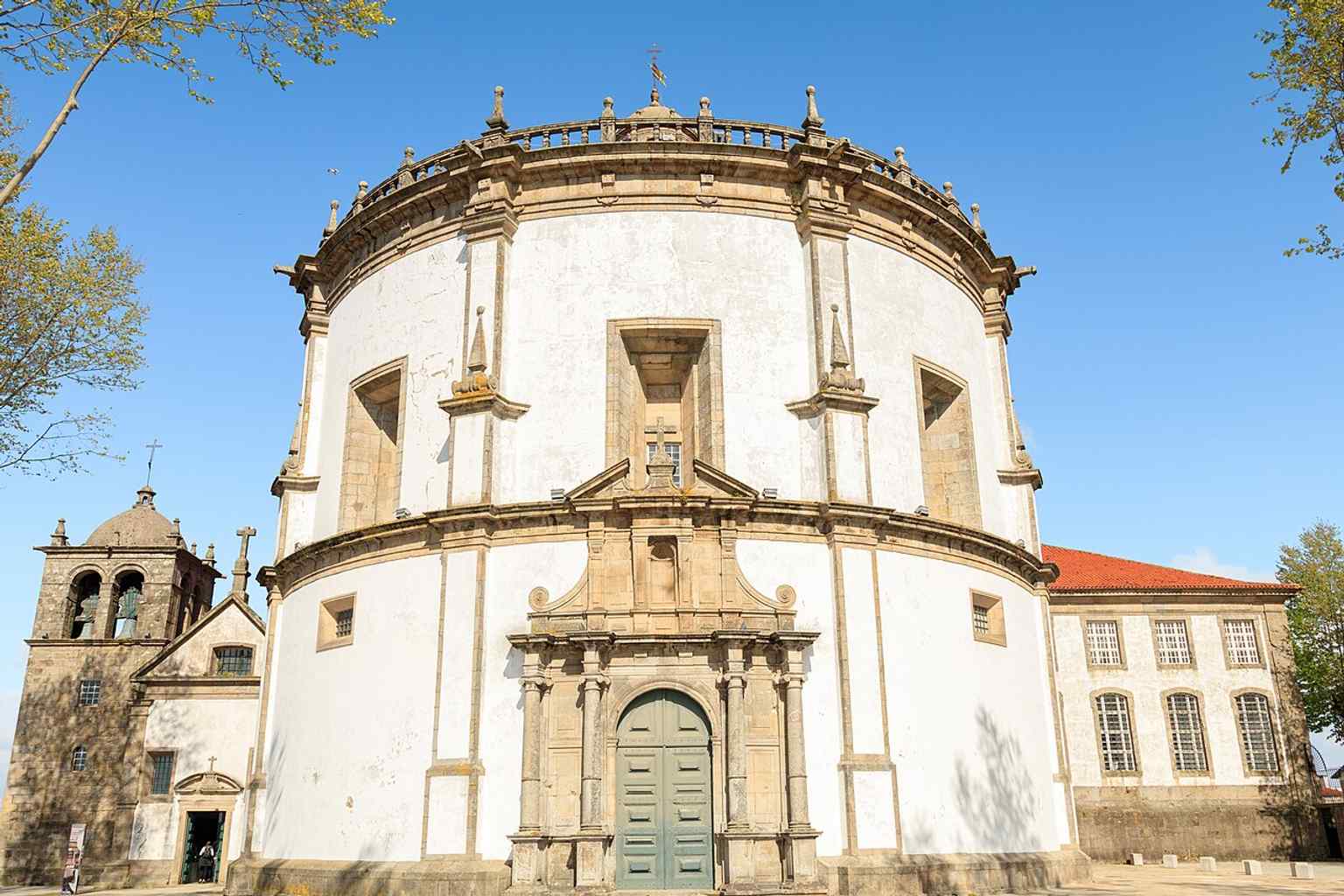
The round church dome rising above Serra do Pilar — the most visible part of the complex from across the river.Photo: Unknown, Wikimedia Commons, CC BY-SA 4.0. Cropped & resized. 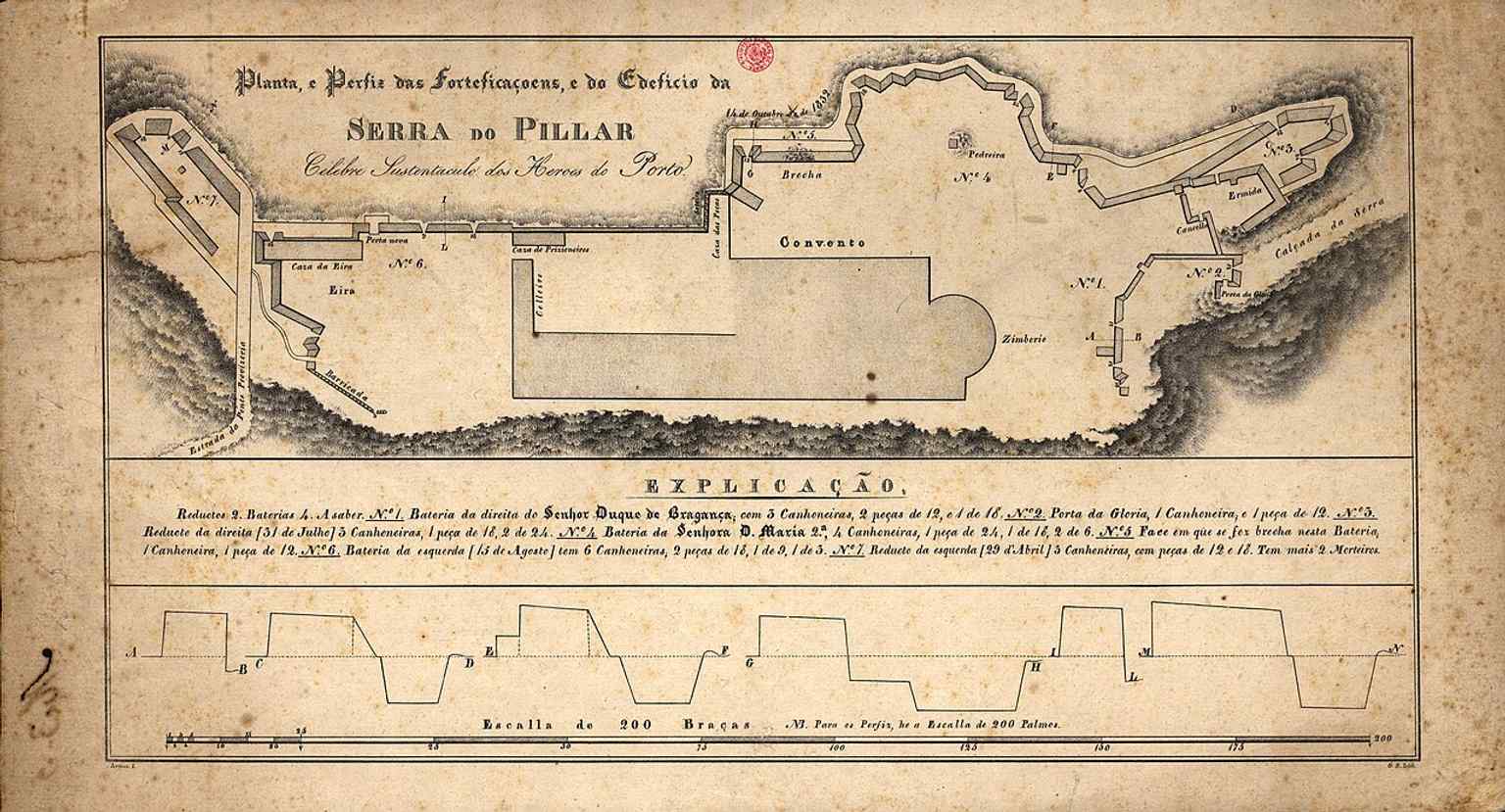
An 1833 plan of the fortifications, recalling Serra do Pilar’s transformation into a defensive stronghold during the Siege of Porto.Photo: Lemos, António Carvalho de, 1806-1885, litog.; Oficina Régia Litográfica, ed. com., Wikimedia Commons, Public domain. Cropped & resized. 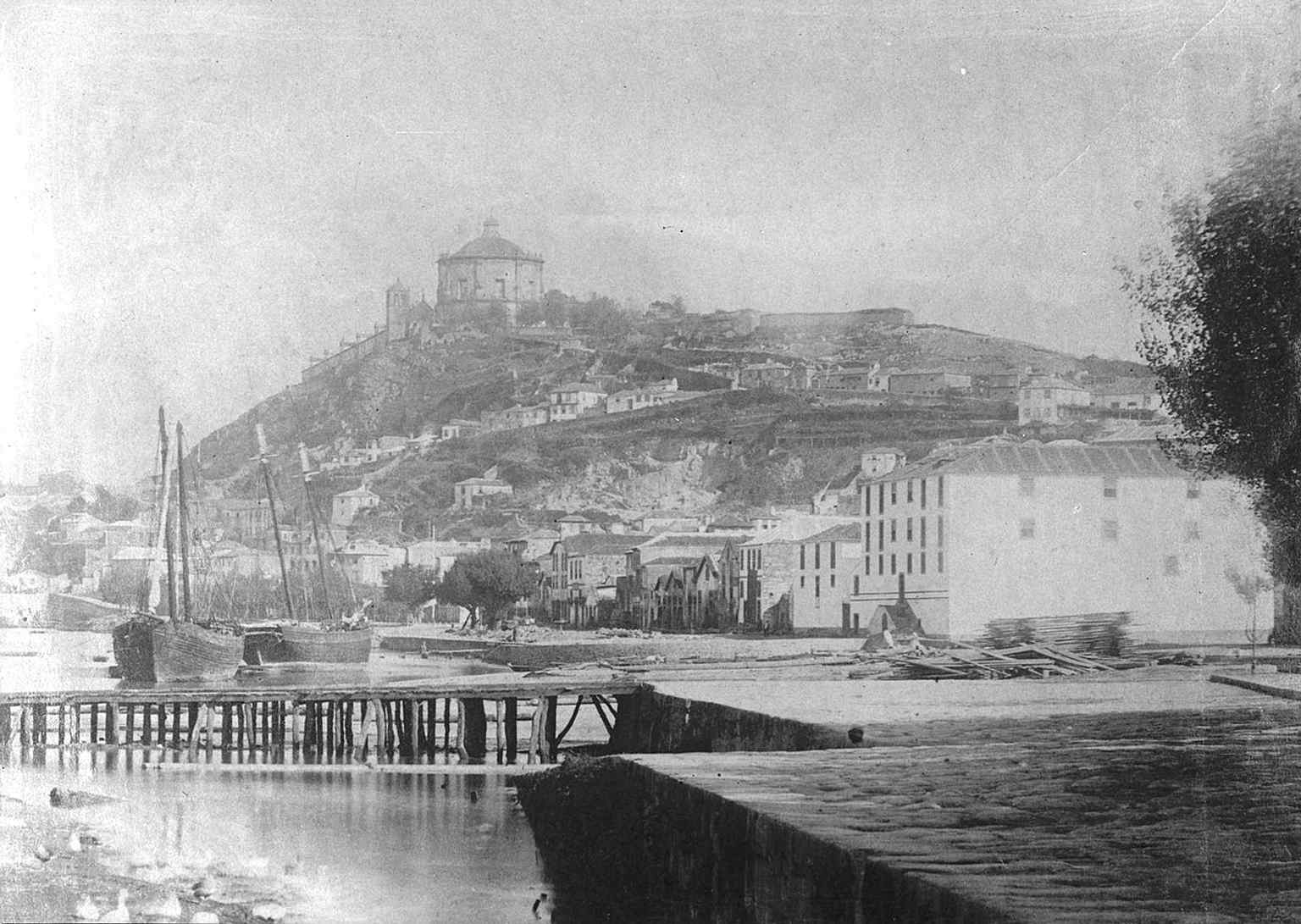
A 19th-century view of Gaia’s riverfront with Serra do Pilar, before modern changes reshaped the waterfront.Photo: Foto Guedes, Wikimedia Commons, Public domain. Cropped & resized. 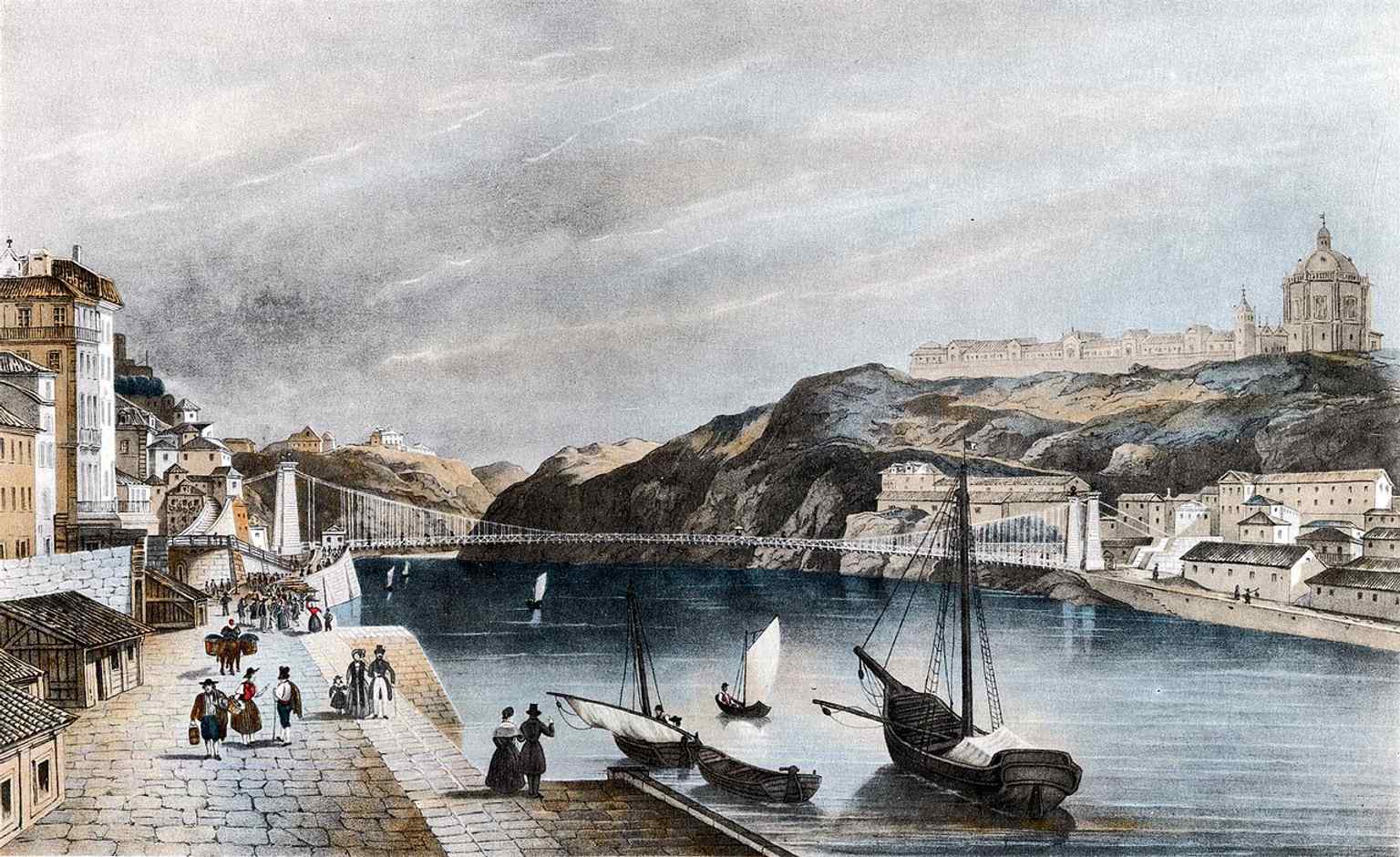
A mid-19th-century river scene linking the old bridge, Porto, Gaia, and Serra do Pilar in one historic view.Photo: Charles Legrand, Wikimedia Commons, Public domain. Cropped & resized. On your right, St. John’s Bridge appears as a long pale concrete railway deck on straight vertical piers, its flat box-like form crossing the Douro without a single arch. That…Read moreShow less
Open dedicated page →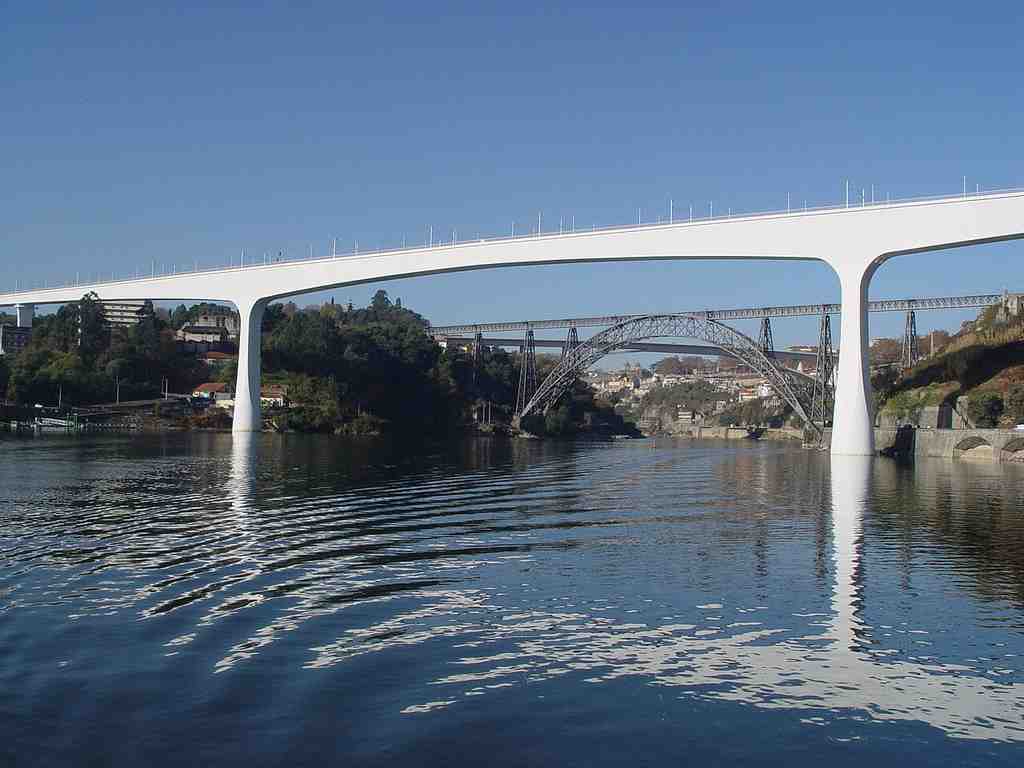
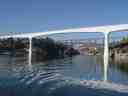
St. John's BridgePhoto: Joseolgon, Wikimedia Commons, Public domain. Cropped & resized. On your right, St. John’s Bridge appears as a long pale concrete railway deck on straight vertical piers, its flat box-like form crossing the Douro without a single arch.
That absence matters. In Porto, bridges so often announce themselves with a grand curve, a flourish, a bit of theatre. This one does something rather bolder: it trusts structure more than ornament. Ponte de São João carries the Linha do Norte, the main north-south railway line, across the river in double track, and it opened on the twenty-fourth of June, nineteen ninety-one, the very day the old Maria Pia Bridge stopped carrying trains. Porto did not erase the old crossing; it simply gave the job to a stronger successor.
The engineer was Edgar Cardoso, one of the great figures of modern Portuguese bridge design, a man who understood both daring and calculation. He had already shaped some of the country’s most admired spans, and here he chose a different language. Instead of an arch, he designed a continuous portal bridge, meaning the deck is held by vertical supports and a rigid frame rather than a curved rib. The main bridge has three spans: a central stretch of two hundred and fifty metres, then two side spans of one hundred and twenty-five metres each. At the time, that central span was widely praised for its unusually long reach on a railway bridge of this type.
If you glance at the image in the app, you can see that calm confidence very clearly: the bridge does not leap, it extends, as if certainty itself had been poured into concrete. And poured is the word. The whole structure, together with its access viaducts, runs to about one thousand one hundred and forty metres, formed as one great continuous piece of reinforced and pre-stressed concrete. Pre-stressed means the concrete was tightened internally with steel so it could carry heavier loads over longer distances. Even the approach viaducts were joined monolithically, as one solid body, so the crossing behaves less like separate parts and more like a single muscular line.
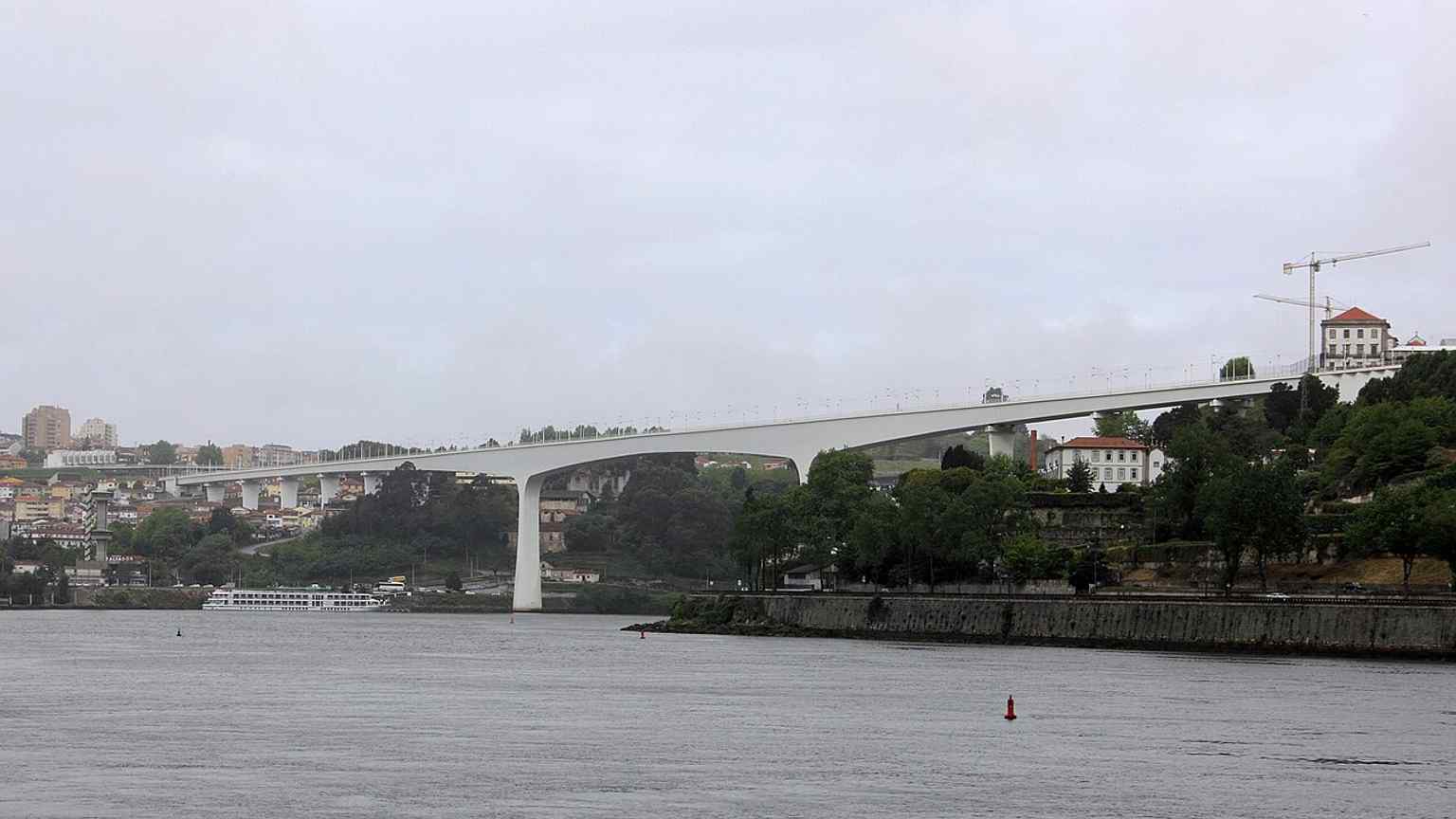
A clean side view of St. John’s Bridge, the concrete railway bridge that carries Porto’s Linha do Norte across the Douro and replaced the century-old Maria Pia Bridge in 1991.Photo: Helmut Seger, Wikimedia Commons, CC BY-SA 4.0. Cropped & resized. The details are wonderfully practical. The main beam is a hollow box girder, a deep trapezoid in section, rising from about four metres on the viaducts to fourteen metres over the river piers. The rails sit directly on the top slab, and between the tracks lies porous concrete designed to help slow a train if it ever derails. Beneath the river, each main pier foundation was strengthened with one hundred and thirty reinforced concrete micropiles driven into the rocky bed.
Cardoso’s methods could be unexpectedly human. His longtime collaborator Aristides Fernandes said the engineer sometimes shaped carrots with a craft knife to test the form of the piers before turning to formal calculations. There is something delightfully Porto about that: world-class engineering beginning, at least for a moment, with a vegetable on a workbench.
This bridge also belongs to a longer local memory. After the catastrophe of the Ponte das Barcas, and after decades of railway bottlenecks on the single-track Maria Pia, the city kept searching for crossings that were safer, stronger, and more dependable. So this modern form answers an old question. The silhouette is new, the materials are modern, but the challenge is as old as the Douro itself.
From here, we head on toward the Municipal Public Library, about twenty-seven minutes away. And, rather fittingly for a working railway bridge, this one never really closes.
On your right, look for the long stucco-and-granite frontage, stretched in a sober rectangle with a steady rhythm of tall windows and the unmistakable scale of an old convent…Read moreShow less
Open dedicated page →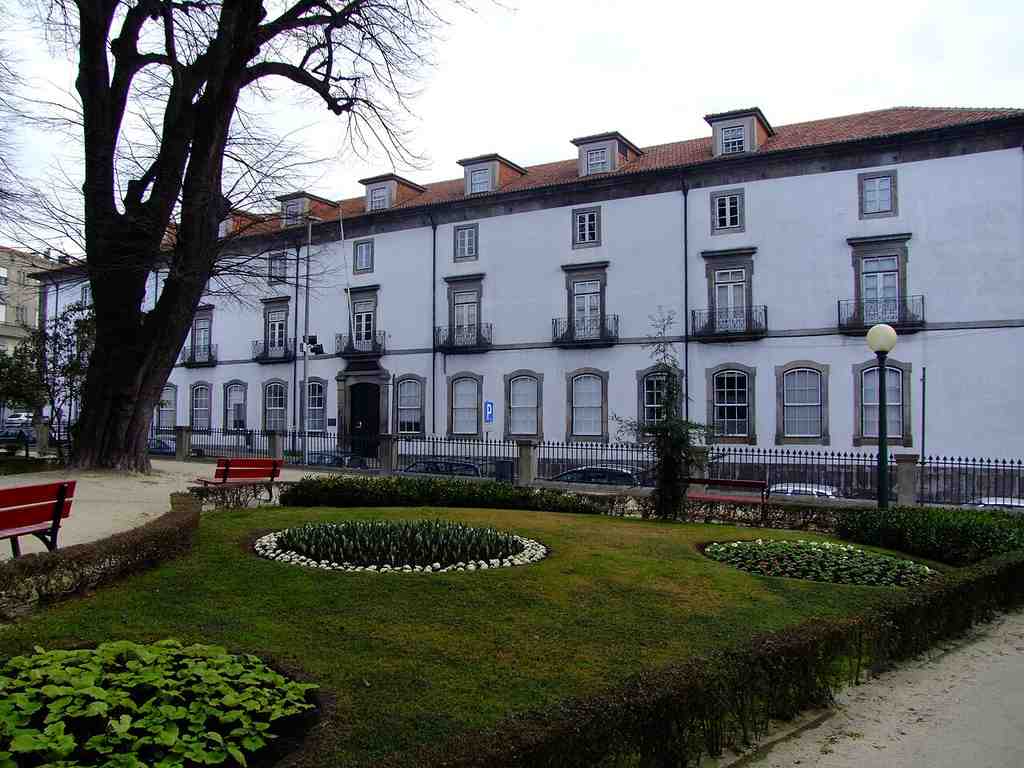
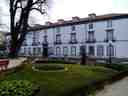
Porto Municipal Public LibraryPhoto: JotaCartas, Wikimedia Commons, CC BY-SA 3.0. Cropped & resized. On your right, look for the long stucco-and-granite frontage, stretched in a sober rectangle with a steady rhythm of tall windows and the unmistakable scale of an old convent turned civic building.
This is the Porto Municipal Public Library, and few places in the city show more clearly how one life can be folded into another without the older one quite disappearing. Behind this façade stands the former Convent of Santo António da Cidade, a religious house that now serves a public purpose, while still carrying the gravity of its first calling. The building itself earned official protection as a site of public interest in nineteen seventy-four.
The library began in upheaval. On the ninth of July, eighteen thirty-three, Dom Pedro, Duke of Bragança, signed its founding in the royal palace of Porto. He meant it to honour the city’s anniversary, and he gave it an ambitious name: the Royal Public Library of the city of Porto. It first opened elsewhere, in the Franciscan hospice at Cordoaria, in eighteen forty-one. A year later, it settled here, in this former convent by the Jardim de São Lázaro, and here it took root.
Most tourists notice the old religious shell. What they usually miss is that the first soul of the library came from other vanished religious worlds. Its earliest holdings were gathered largely from the book collections of abandoned convents, and from the remarkable library of Dom João de Magalhães e Avelar, bishop of the diocese. He spent more than thirty years building that collection volume by volume. When it passed into the future public library, people treated the transfer almost as a national event. Alexandre Herculano counted about thirty-six thousand volumes and three hundred handwritten codices - manuscript books, copied by hand before printing took over. The bishop’s heirs disputed the transfer for years, and the government eventually paid a large sum to settle it.
Herculano matters here for another reason. He became the library’s first librarian, and he did not behave like a caretaker polishing shelves. After the religious orders were dissolved in eighteen thirty-four, he rescued manuscripts from the old Library of Santa Cruz in Coimbra and brought them into public protection, rather than letting one of the country’s great medieval collections scatter. So this place did not merely receive books. It saved them.
By eighteen forty-two, the library already listed more than twenty-four thousand works in over forty-seven thousand volumes, with tens of thousands more still waiting in reserve, including thousands from the suppressed convents around Vila do Conde. Later, in eighteen seventy-six, the crown turned it formally into a municipal library. A year after that, the Count of Azevedo enriched its manuscripts again. Then, between nineteen twenty-nine and nineteen thirty-two, even endangered art came here for shelter: Hispano-Moorish tiles from the Convent of Santa Clara in Vila do Conde found refuge inside this building.
That pattern continues. Even its recent requalification has stirred debate about how much a historic place may change and still remain itself. Porto has always argued that point most fiercely where memory is thickest.
Stand here a moment with the odd beauty of it: suppression created access. Knowledge once kept in cloisters, episcopal rooms, and convent libraries became a public inheritance. From here, in about eight minutes, we’ll meet the Church of Santo Ildefonso, where the city’s outer brilliance tells another, rather different story.
Ahead of you rises a pale stone church with a broad stair, twin bell towers, and a blue-and-white tiled façade crowned by a small niche holding its patron saint. This is Santo…Read moreShow less
Open dedicated page →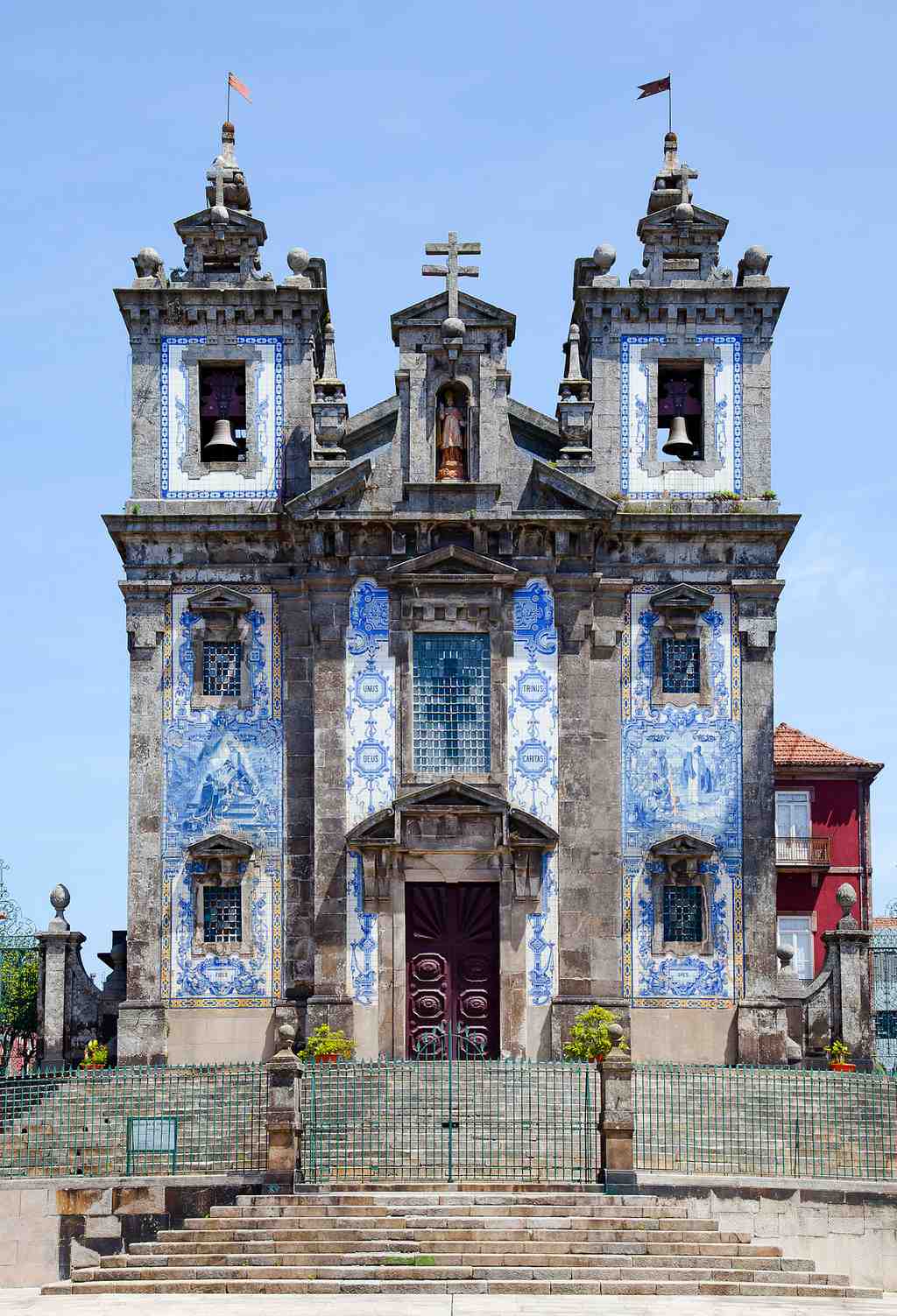
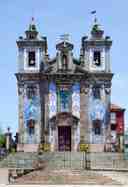
Church of Santo IldefonsoPhoto: Diego Delso, Wikimedia Commons, CC BY-SA 3.0. Cropped & resized. Ahead of you rises a pale stone church with a broad stair, twin bell towers, and a blue-and-white tiled façade crowned by a small niche holding its patron saint.
This is Santo Ildefonso, standing at Praça da Batalha, one of Porto’s great thresholds: a place where worship, traffic, argument, trade, and public memory have long pressed up against one another. The church faces the city almost like a stage set, but it has never been mere decoration. It has stood where private devotion meets the rougher business of urban life.
What you see now took shape across the eighteenth century. An older chapel here, known as Santo Alifon, had grown dangerously unstable. Texts mention it as early as twelve ninety-six, when Bishop Vicente Mendes recorded the site, and local tradition reaches even further back, saying Bishop Dom Pedro de Pitões consecrated a chapel here in the twelfth century. So this ground kept its sacred pull long before this building arrived.
The old chapel came down in seventeen oh nine. Builders then spent roughly thirty years raising the church before blessing it in July of seventeen thirty-nine. The architect’s name slipped away, which is rather Porto, really: the city often remembers the monument more clearly than the hands that made it. Still, the front tells its own story. If you glance at the image on your screen, you can see how Jorge Colaço wrapped the façade in about eleven thousand tiles in nineteen thirty-two. He gave the church the face most people remember today, with scenes from the life of Saint Ildefonso and allegories of the Eucharist, while leaving the eighteenth-century structure beneath intact.
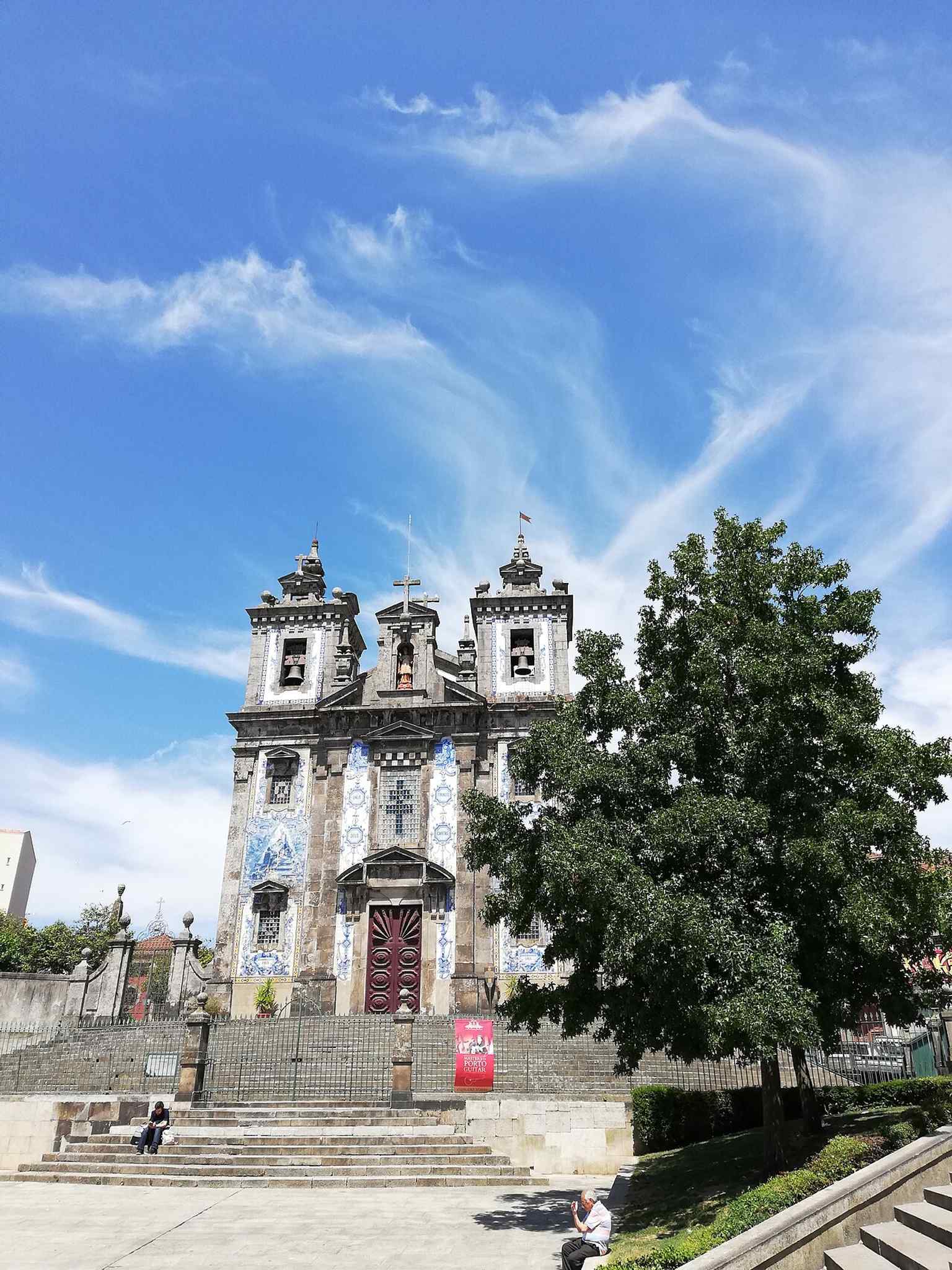
A strong full-frontal view of the church, where the twin bell towers and the famous 1932 azulejo façade define Santo Ildefonso’s identity.Photo: Asublif, Wikimedia Commons, CC BY-SA 4.0. Cropped & resized. That layering matters. Behind this tiled skin lies an early Baroque church with a polygonal central hall, a wooden ceiling, Rococo carving, and a high altarpiece linked to Nicolau Nasoni. Yet even there, authorship blurs: records suggest Miguel Francisco da Silva executed and assembled that great altar in seventeen forty-five. One man drew it, another gave it substance. Porto is full of such handovers.
And then comes the sharper edge of the story. This church survived repairs after a violent storm in eighteen nineteen, then artillery damage during the Siege of Porto in eighteen thirty-three. Later still, on the thirty-first of January, eighteen ninety-one, these steps entered political history. The Municipal Guard positioned here opened fire on republican demonstrators, crushing the revolt and one of Portugal’s first attempts to establish a republic. That is the surprise in this splendid façade: beauty on the surface, gunfire in the memory of the stones. Even the nearby Rua Trinta e Um de Janeiro keeps the wound in its name.
During works in nineteen ninety-six, renovators opened the narthex, the entrance zone before the church, and uncovered nineteen graves. So beneath the stair and ceremony lay a burial ground all along.
In a moment, we head toward Liberty Square, where politics steps fully into the open. If you plan to look inside later, note that visiting hours vary by day, with openings split between late morning and afternoon on most weekdays and Saturdays.
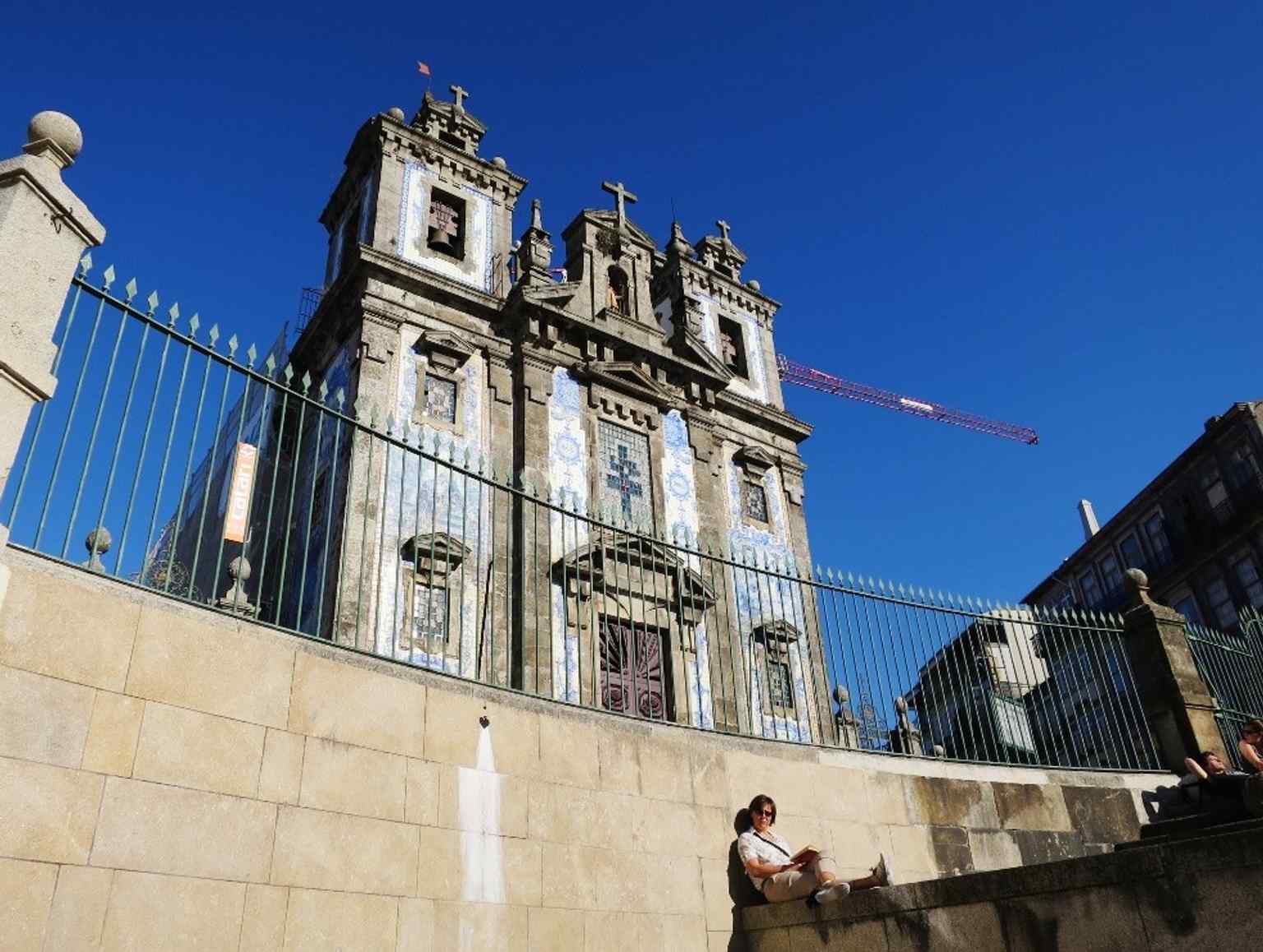
This wider façade view shows the Proto-Baroque church rebuilt in the 1730s, before the tilework becomes the main focus.Photo: Senhormario, Wikimedia Commons, CC BY-SA 4.0. Cropped & resized. 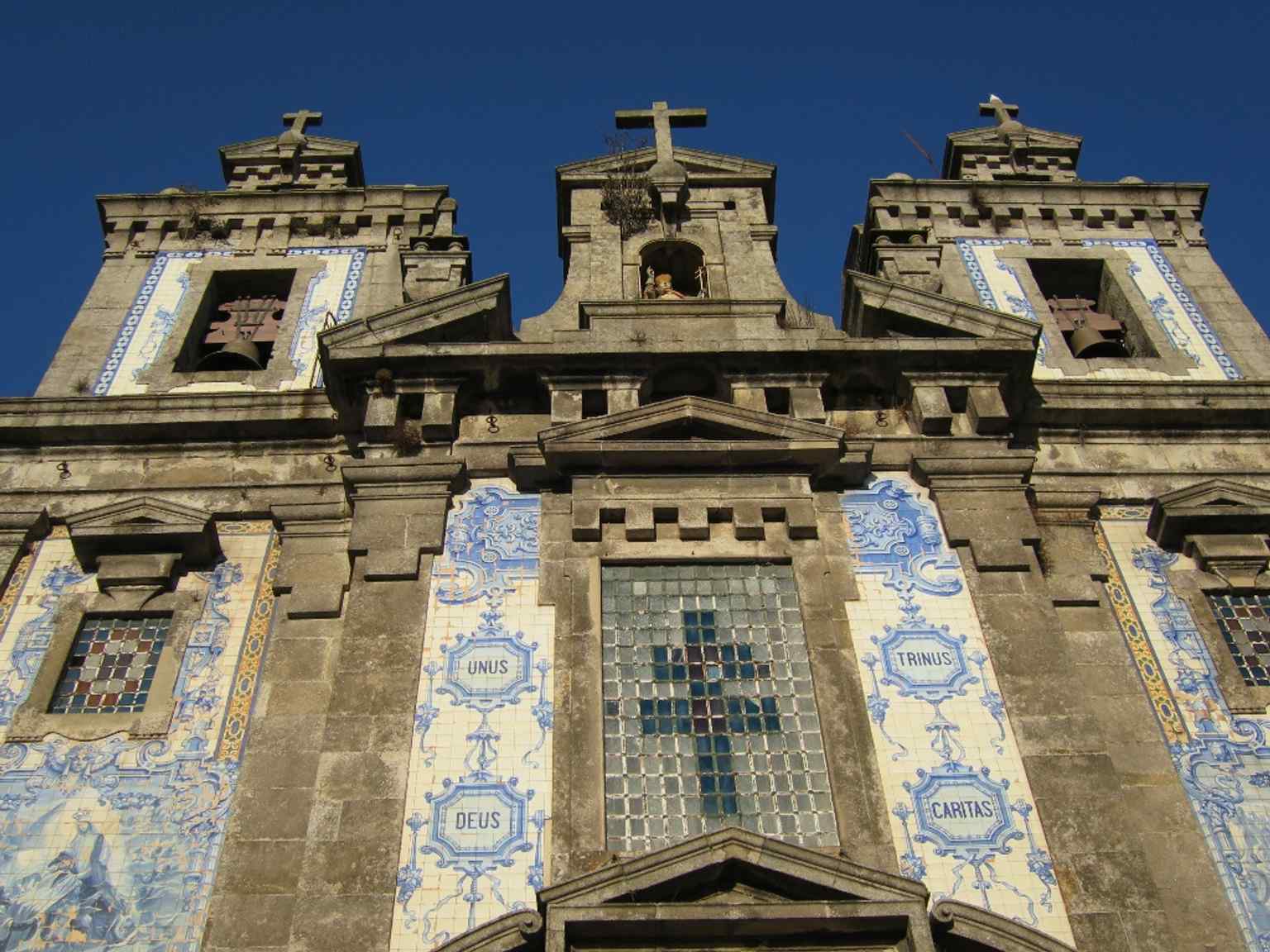
A close look at the central façade, useful for the niche and decorative stonework that crown the front elevation.Photo: Senhormario, Wikimedia Commons, CC BY-SA 4.0. Cropped & resized. 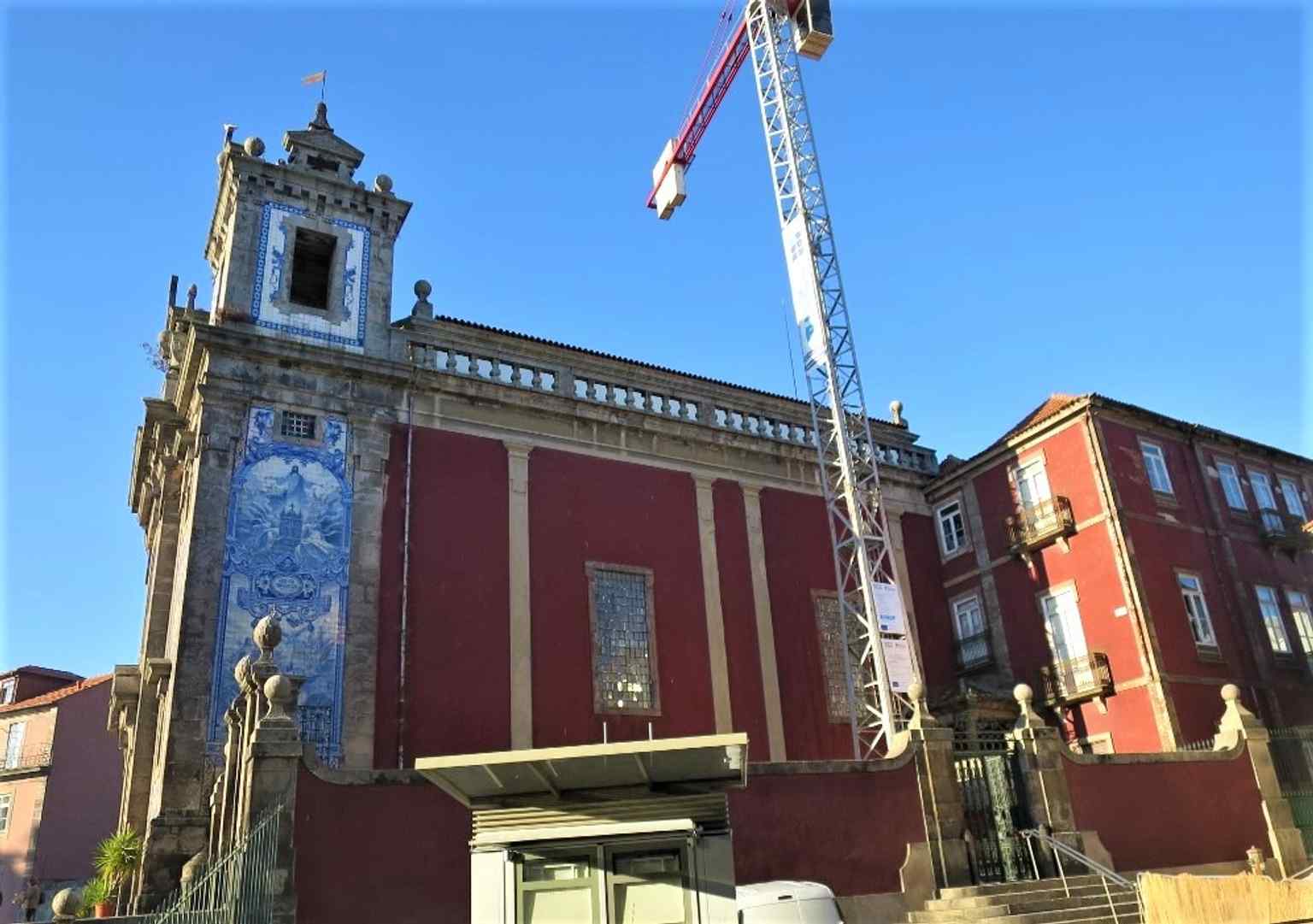
A side façade angle that helps show the church’s massing and the tiled exterior wrapping around the building.Photo: Senhormario, Wikimedia Commons, CC BY-SA 4.0. Cropped & resized. Look for a broad stone-paved square framed by grand granite façades, with a dark bronze horseman rising from a tall pedestal at its centre. This is Praça da Liberdade, Liberty…Read moreShow less
Open dedicated page →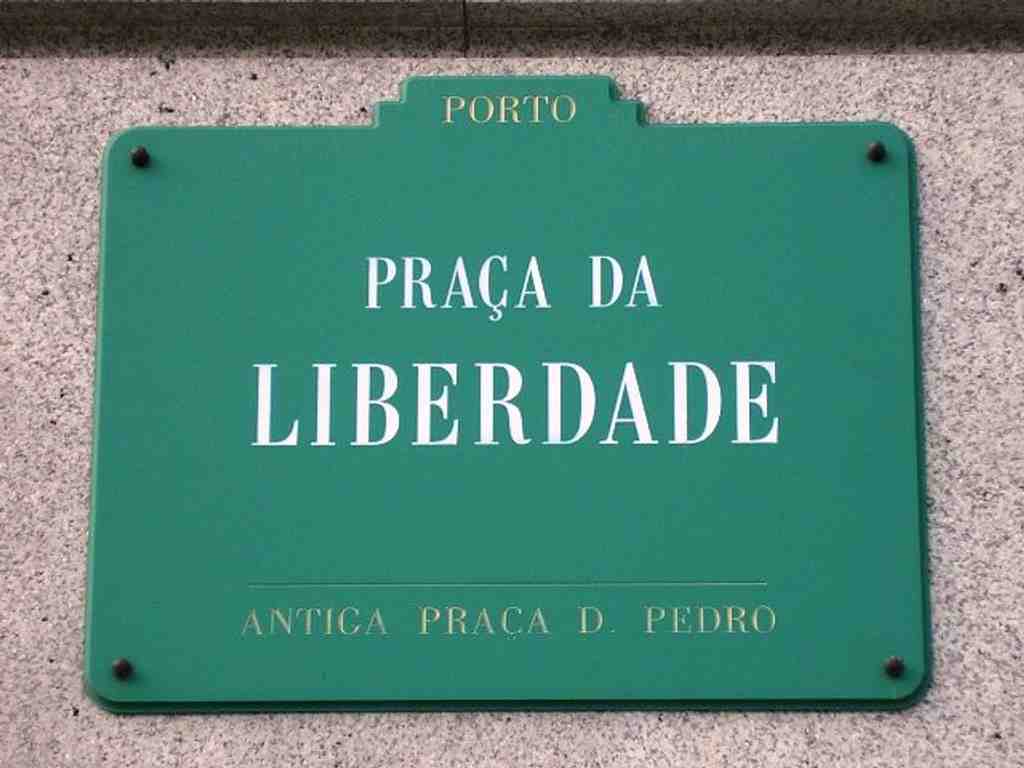
Liberty SquarePhoto: Manuel de Sousa, Wikimedia Commons, Public domain. Cropped & resized. Look for a broad stone-paved square framed by grand granite façades, with a dark bronze horseman rising from a tall pedestal at its centre.
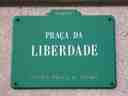
This is Praça da Liberdade, Liberty Square, though Porto has called this place many things before it settled on so confident a name. In the fifteenth century it answered to older, quieter names linked to fields and water. After a fountain arrived in sixteen eighty-two, people called it Praça da Natividade. Then came Hortas, the gardens. Then Praça Nova. In eighteen twenty, Praça da Constituição. In eighteen thirty-three, Praça de Dom Pedro the Fourth. For a few days in October of nineteen ten, it was even Praça da República. Only on the twenty-seventh of October, nineteen ten, did it become Praça da Liberdade, a title chosen to honour the new republican order.
That changing name tells you something essential about Porto. Even its ceremonial centre sits on layers of argument.
Originally, this ground belonged to the cathedral chapter, the Cabido da Sé, and lay outside the Fernandine walls, between the old gates of Porta de Carros and Santo Elói. Plans for a proper public square appeared in sixteen ninety-one and again in seventeen oh nine, but both came to nothing. At last, in seventeen eighteen, the cathedral chapter gave up the land, new streets were cut through, and Praça Nova began to take shape. To the north stood two small palaces that later housed the city council. To the east stood the Convent of the Congregados. To the south, part of the medieval wall came down in seventeen eighty-eight so the Convent of Santo Elói could rise there, the building you now know as the Palácio das Cardosas.
And yet elegance did not protect this place from brutality.
In eighteen twenty-nine, when this was still Praça Nova, the absolutist regime of Dom Miguel used the square as a theatre of warning. Twelve liberals connected to the revolts of eighteen twenty-eight died here: ten were hanged on the seventh of May, and two more on the ninth of October. Municipal memory records an uglier detail still: some severed heads were displayed near homes and public places. Standing in a square now linked with openness and movement, what does it do to the space to know that power once staged terror here, right in the civic heart of the city?
That is why the man in the middle matters. Dom Pedro the Fourth, mounted in bronze since October of eighteen sixty-six, does more than decorate the square. The sculptor Célestin Anatole Calmels and the architect Joaquim da Costa Lima turned his pedestal into a political statement. Its reliefs recall liberal memory: Pedro’s arrival at Mindelo, and the delivery of his heart to Porto, a gesture that bound the king to the city almost like a saintly relic.
By the nineteenth century, this became Porto’s favoured meeting place for politicians, journalists, merchants, and wealthy returnees from Brazil. Coffee houses filled the edges, then gradually gave way to banks, insurers, and offices as the square tightened its grip on the city’s business life. The opening of the Dom Luís bridge in eighteen eighty-seven, and the arrival of the railway at São Bento in eighteen ninety-six, only strengthened that role.
Then the square changed again. In nineteen sixteen, President Bernardino Machado attended the ceremonial start of demolition for the old town hall, clearing the way for Avenida dos Aliados and a grand new civic axis. Later plans imagined even harsher surgery, including elevated roads towards the cathedral, but some ambitions remained on paper. If you fancy, have a look at the before-and-after image in the app to see how the Metro works turned the square into an excavation site in two thousand and twenty-two.
So Liberty Square is not innocent. Squares with names like this often earn them only after coercion, renaming, and loss. When you are ready, we continue in about nine minutes to Praça de Carlos Alberto, another place where public life and private memory meet. And, fittingly for a true city square, this one remains open at all hours.
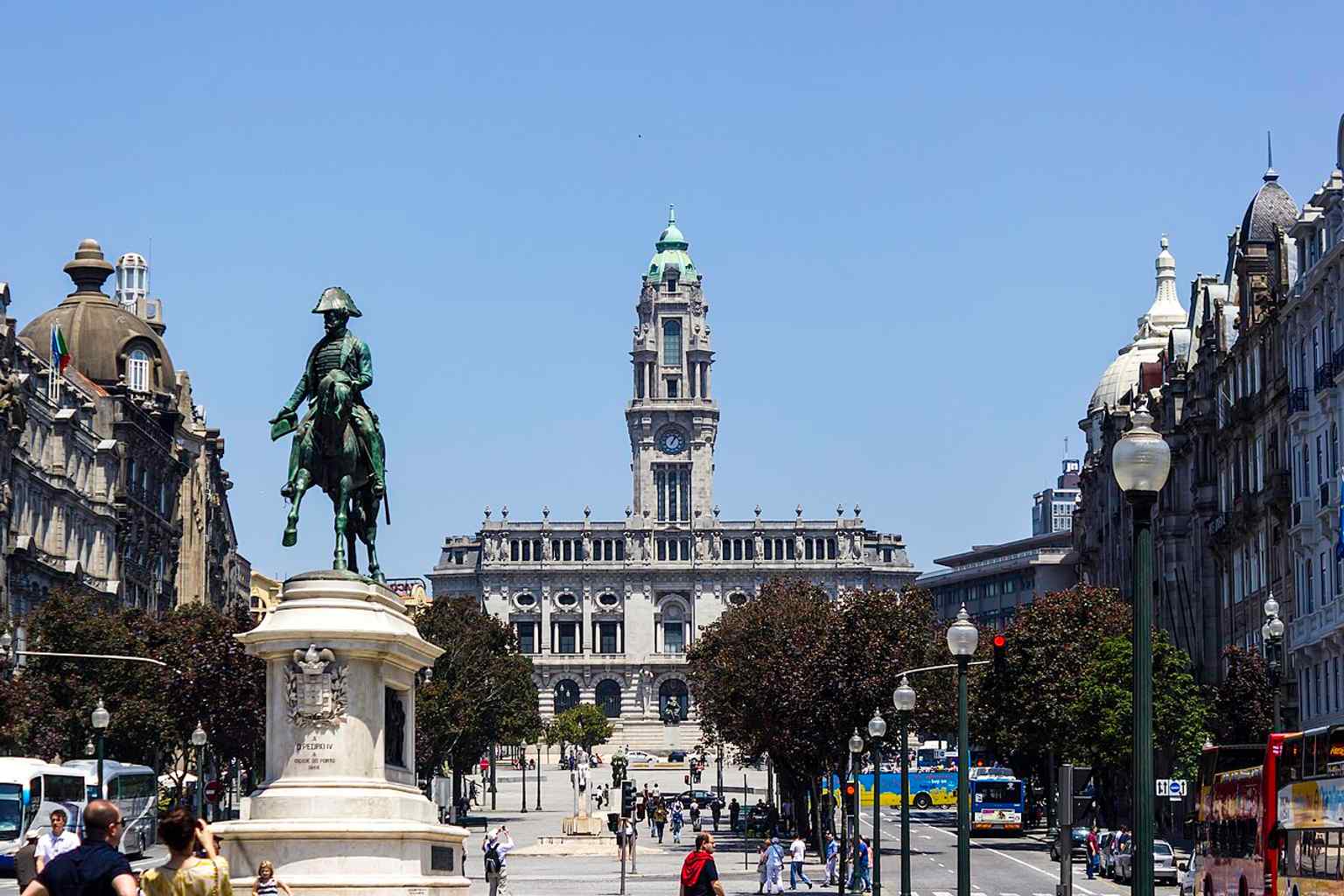
The open square with D. Pedro IV’s statue at the heart of Porto’s historic center, a place long tied to the city’s political life and civic gatherings.Photo: Bene Riobó, Wikimedia Commons, CC BY-SA 4.0. Cropped & resized. 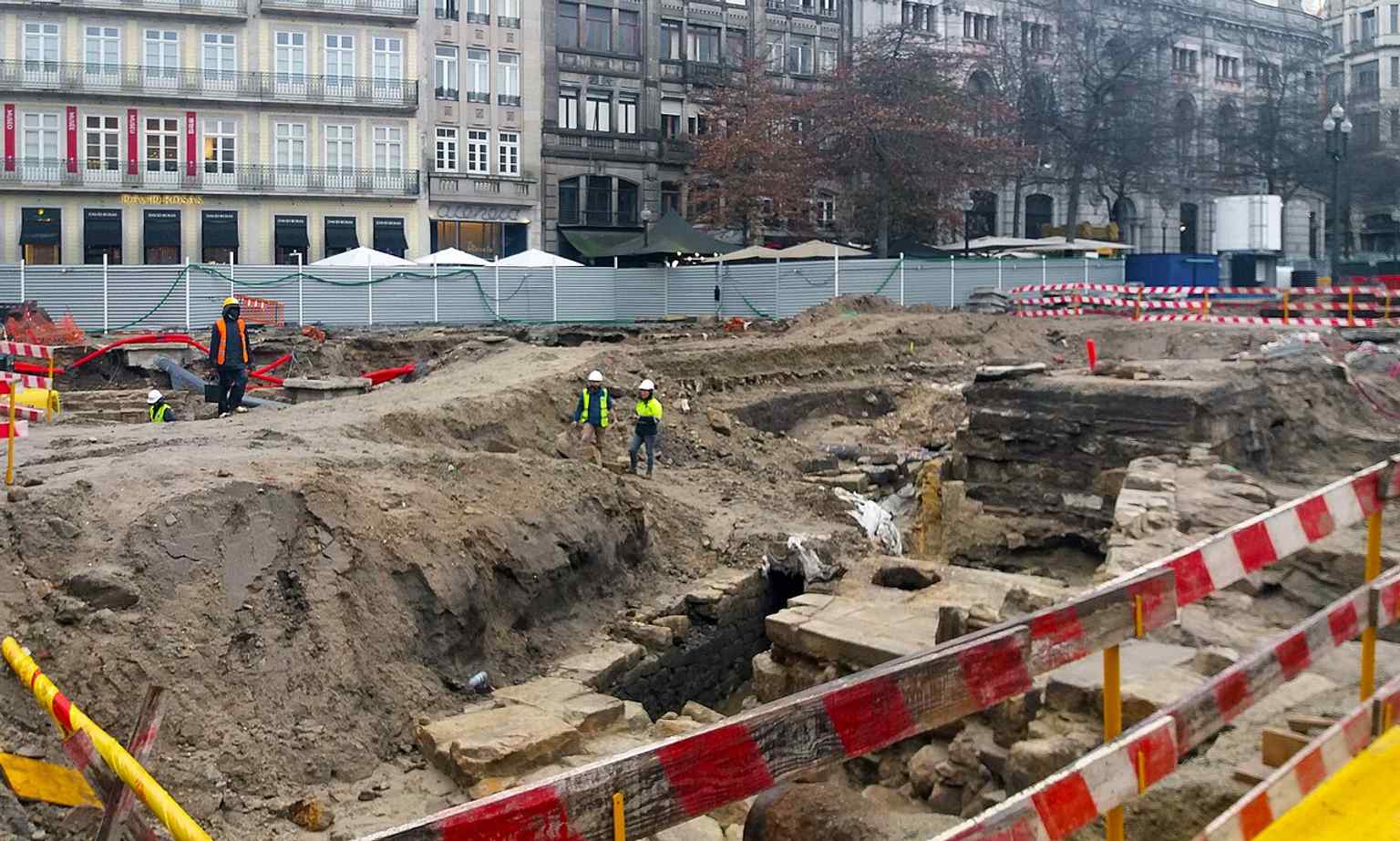
Metro works in the square during 2022, showing how Praça da Liberdade remains a changing urban محور even in the modern city.Photo: Petnog, Wikimedia Commons, CC BY 4.0. Cropped & resized. On your right, look for a broad square paved in pale limestone and dark basalt, shaped by formal garden beds and anchored by a tall memorial rising from its centre. Praça de…Read moreShow less
Open dedicated page →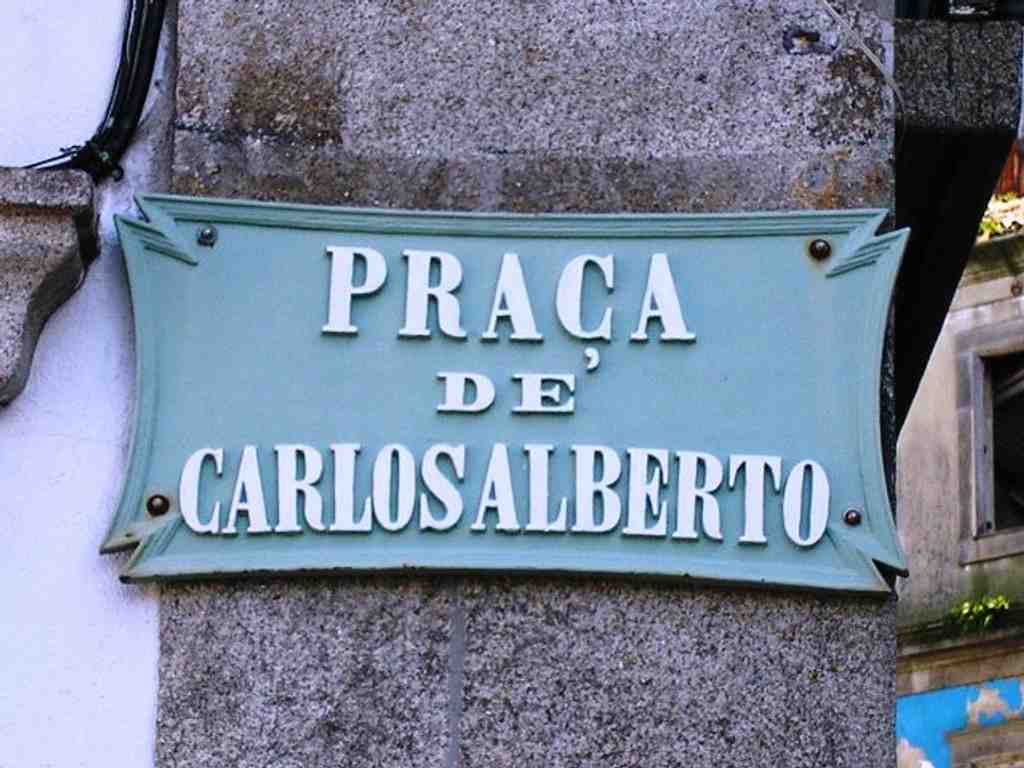
Carlos Alberto SquarePhoto: Manuel de Sousa, Wikimedia Commons, Public domain. Cropped & resized. On your right, look for a broad square paved in pale limestone and dark basalt, shaped by formal garden beds and anchored by a tall memorial rising from its centre.
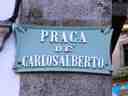
Praça de Carlos Alberto feels open and public now, but it began as a hardworking crossroads. In the seventeenth century people called it Largo dos Ferradores, the Farriers’ Square, because this was where men shod horses and readied mounts for the long roads ahead. Just beyond the old Porta do Olival, the routes split here toward Braga by today’s Rua de Cedofeita, and toward Guimarães by Rua das Oliveiras. Inns gathered around the traffic, and so did trade. Later, people nicknamed it Feira das Caixas, the Fair of Boxes, because carpenters here made the trunks that emigrants carried to Brazil.
Then, in eighteen forty-nine, this practical square took on a strangely intimate sorrow. Carlos Alberto, the deposed king of Piedmont and Sardinia, arrived in Porto after losing the Battle of Novara and giving up his throne. He came here not in procession, but in refuge. On the nineteenth of April, he lodged in the Hospedaria do Peixe, inside the Palacete of the Viscounts of Balsemão, right on this square. It is quite a thought: a fallen king entering an inn in a place known for horses, luggage, and departures. He stayed only briefly, moved on to the Quinta da Macieirinha, and died about three months later. Soon after, the square took his name. Porto has a habit, you notice, of first receiving the wounded and only later deciding what to call the moment.
If Praça Nova, today’s Praça da Liberdade, carried the spectacle of political power, this place keeps the quieter aftermath. Here, history shrinks to a room, a bed, a man in exile. And yet even that private grief left a dynastic echo: Carlos Alberto would become the grandfather of Maria Pia, future queen of Portugal.
The square did not stop being useful because a king suffered here. It kept changing occupations. It hosted fairs for cattle, cloth, animals, grass, charcoal, and firewood. It became a hiring ground where farm servants and domestic workers came from the outskirts to bargain directly with future employers. From eighteen fifty-three to nineteen ten, the terminal for the Carros Ripert stood here by the Havaneza tobacco shop, a heavy wood-and-iron horse-drawn vehicle linking Porto to São Mamede de Infesta. And on the twelfth of August, eighteen seventy-four, Porto’s first carro americano, a horsecar and direct ancestor of the electric tram, departed from this square for Cadouços in Foz.
Later, memory grew more monumental. Henrique Moreira’s memorial to the dead of the Great War, unveiled in nineteen twenty-eight after an earlier statue was rejected and removed, gave the square a more solemn centre. In nineteen fifty-eight, an immense crowd followed Humberto Delgado here, and decades later José Rodrigues fixed that act of defiance in bronze nearby. Even the recent redesign tells its own tale: plans to radically remake the square met resistance, so Porto kept the gardens and the stone paving, choosing adjustment over amnesia.
That may be this city’s gentlest strength: it does not merely produce history, it shelters those broken by it. When you are ready, continue to the Carmelite church, only a couple of minutes away. And, as public squares tend to do, this one remains open at all hours.
On your right, look for a granite façade with three rounded arch doorways, a triangular top, and a blue-tiled bell tower capped by a bulb-shaped dome. At first glance, the Igreja…Read moreShow less
Open dedicated page →On your right, look for a granite façade with three rounded arch doorways, a triangular top, and a blue-tiled bell tower capped by a bulb-shaped dome.
At first glance, the Igreja dos Carmelitas seems rather strict, almost as if it expects good behaviour from everyone in front of it. Porto does enjoy that sort of façade. But this church holds a softer story inside its disciplined outline.
In sixteen sixteen, with permission from King Filipe the Second of Portugal, the Carmelite friars began building here on the old Olival ground. They settled in by sixteen twenty-two, and the decoration continued until sixteen fifty. Even then, the building did not quite stop changing; in seventeen fifty-four, builders shifted the bell tower, so the silhouette before you is itself the result of adjustment, not a frozen original.
By now you may have noticed how often Porto lets one institution inherit another’s shell. This is one of the clearest examples. The convent attached to this church later took on a military life. During the French invasion of eighteen oh nine, troops from Soult’s regiment occupied it as quarters. After the religious orders were suppressed in eighteen thirty-four, the state passed the convent into military hands. A monastery became barracks.
Yet locals remember more than soldiers. Before that later identity settled in, the convent supported chaplains, artists working on the decoration, doctors linked to the Carmo hospital, and even a substantial kitchen garden. That detail changes the whole picture, I think. Not merely discipline and command, but meals, care, craft, and ordinary routine.
If you glance at the image on your screen, the interior shows a single nave, the main central hall of the church, thick with gilded carving. The high altar carries the work of Joaquim Teixeira de Guimarães, who designed it, and José Teixeira Guimarães, who carved it; later research suggests they were father and son, turning ornament into family labour.
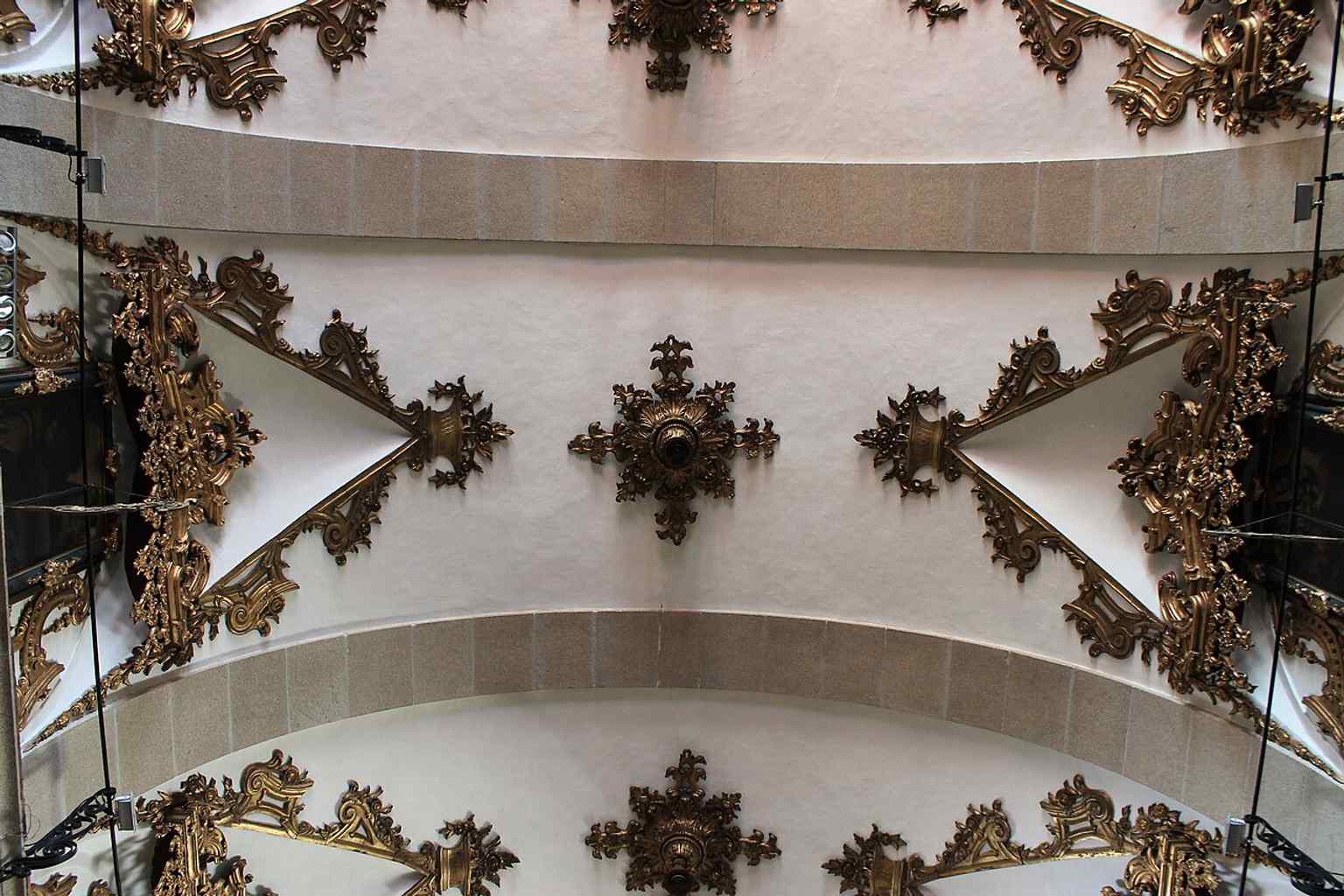
The church interior, where the single nave and ornate Baroque-Rococo decoration reflect the rich sanctuary completed after the exterior works.Photo: John Samuel, Wikimedia Commons, CC BY-SA 4.0. Cropped & resized. And one thing locals always notice: this church stands joined to the later Igreja do Carmo by the narrow Casa Escondida, the Hidden House, barely more than a metre wide. When the state classified the ensemble as a National Monument in two thousand and thirteen, it recognised exactly that layered life. Places like this keep every role they have ever played. From here, Carrancas Palace is about an eight-minute walk.
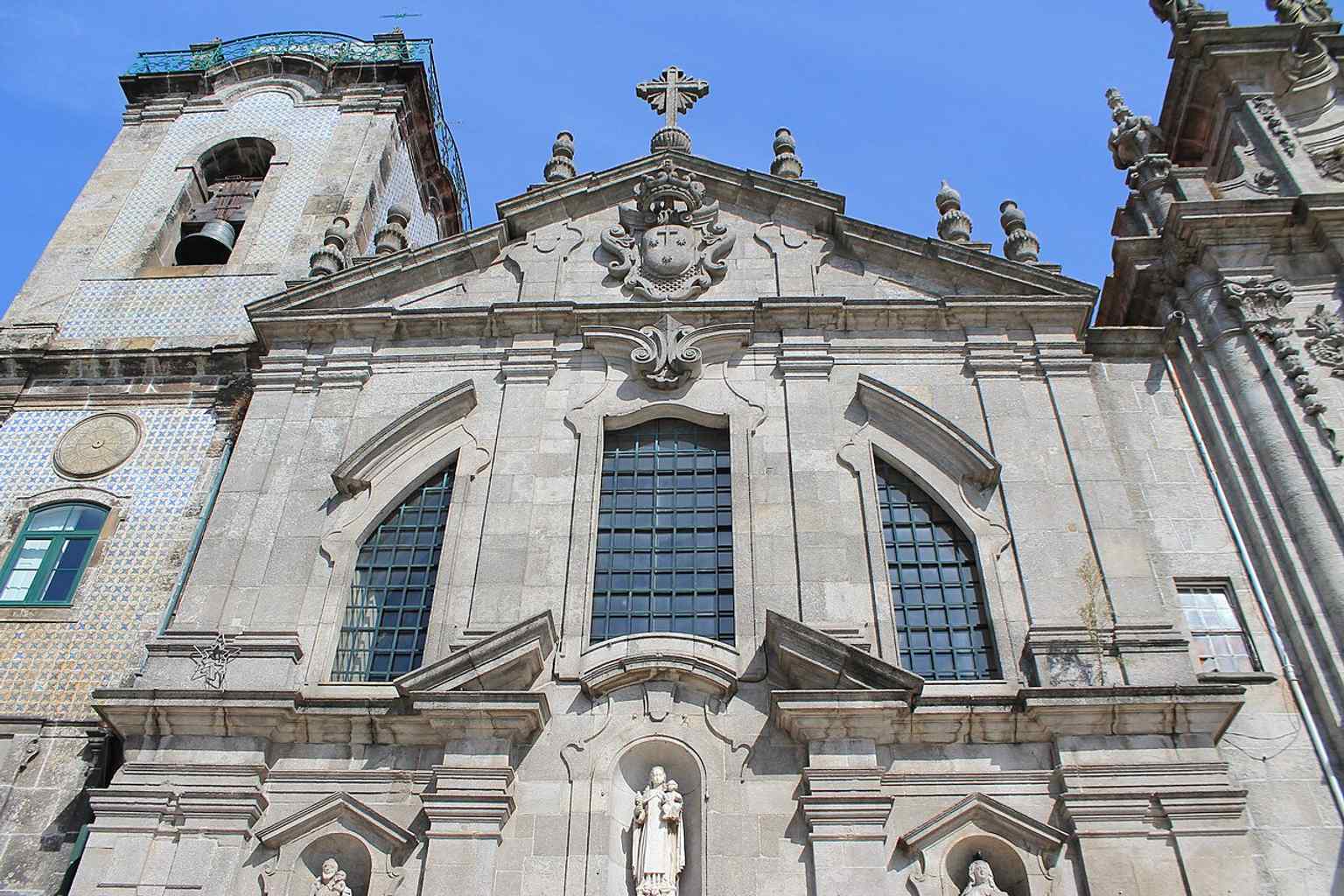
Front view of the Carmelite Church in Porto, showing the granite façade that forms part of the famous paired church complex beside Igreja do Carmo.Photo: John Samuel, Wikimedia Commons, CC BY-SA 4.0. Cropped & resized. 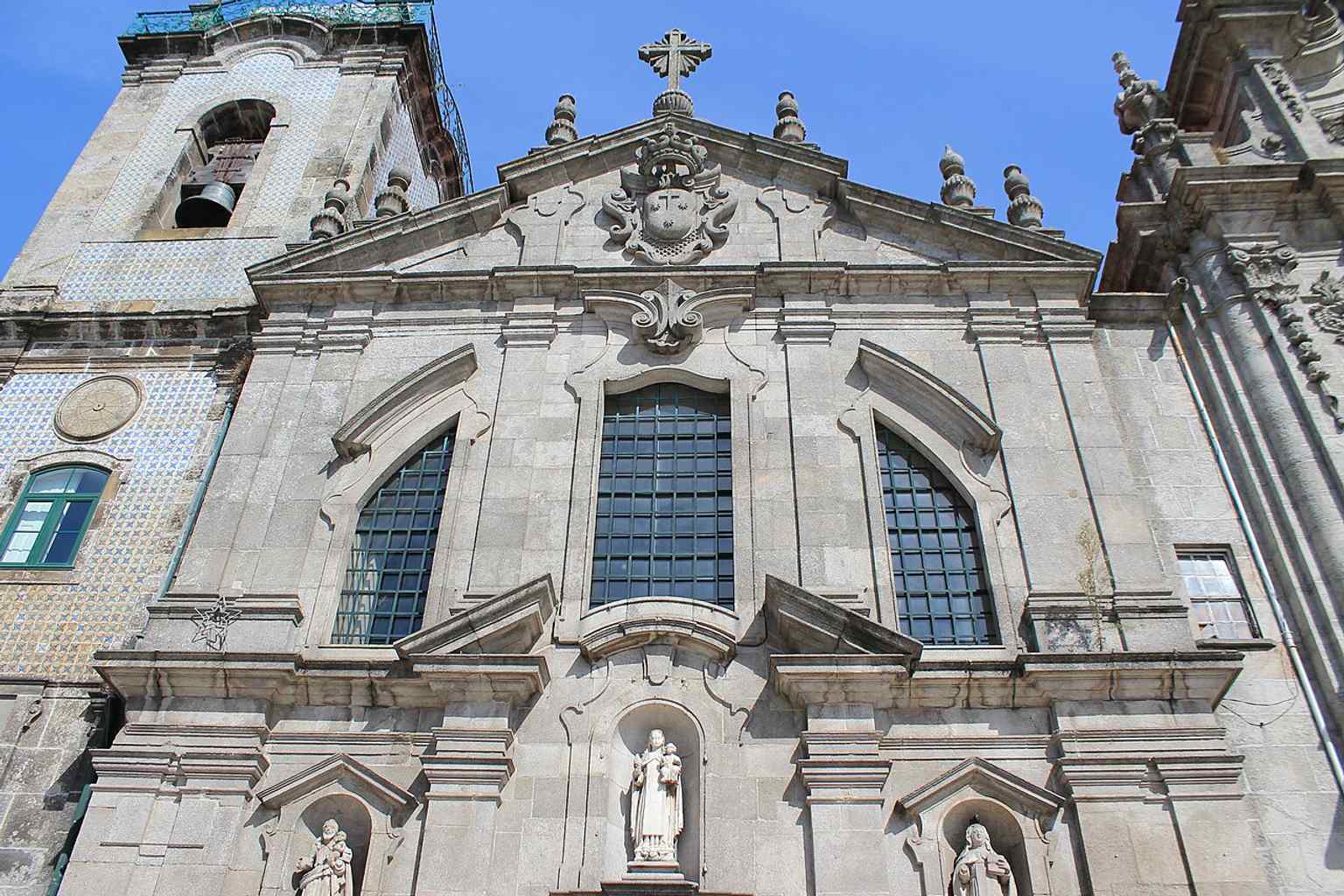
Another exterior angle of the Carmelite Church, useful for showing the church as one half of Porto’s tightly packed twin-church ensemble.Photo: John Samuel, Wikimedia Commons, CC BY-SA 4.0. Cropped & resized. 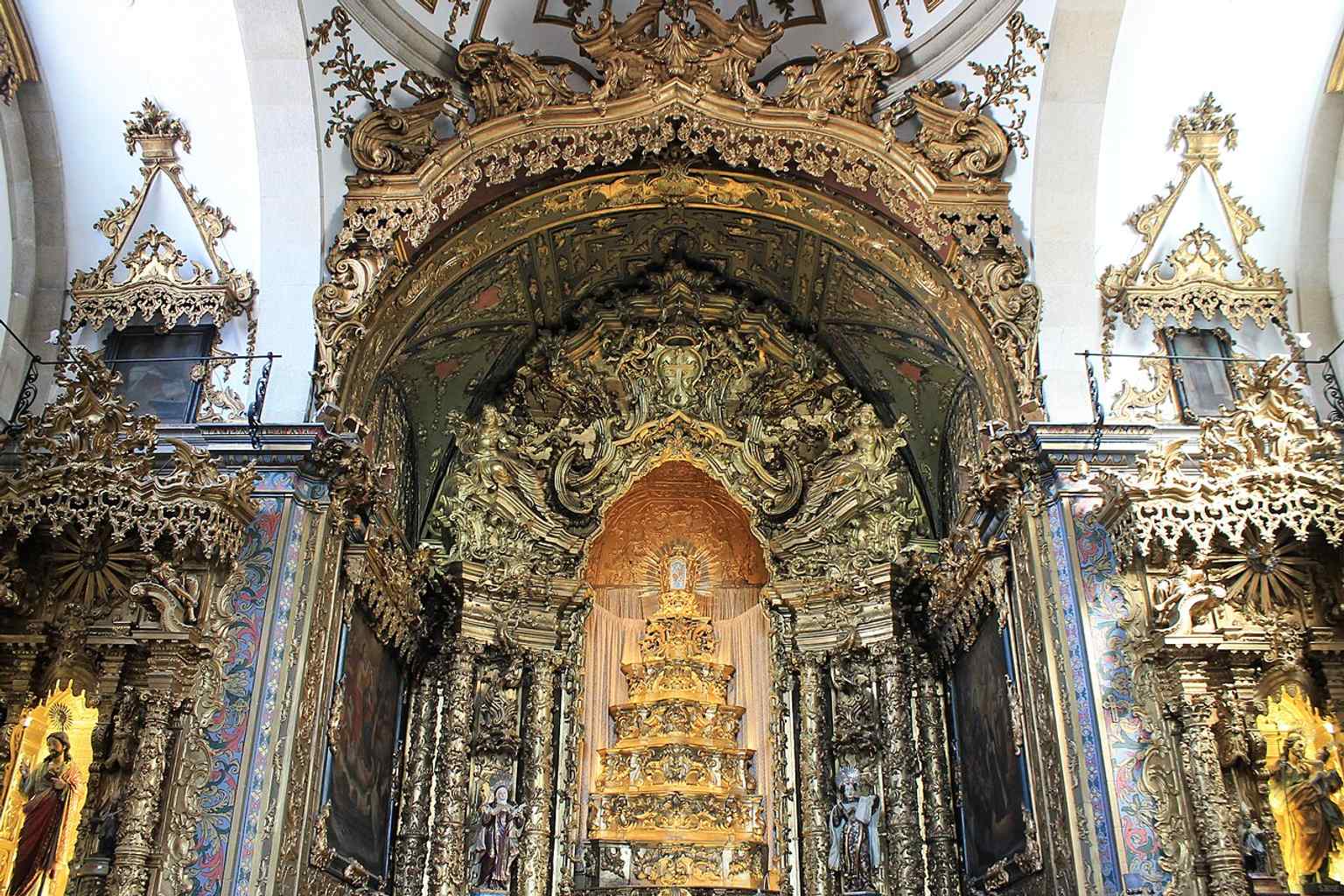
The main altar, highlighting the gilded retable associated with the Teixeira de Guimarães workshop named in the church’s history.Photo: John Samuel, Wikimedia Commons, CC BY-SA 4.0. Cropped & resized. On your right, look for a long pale-stone façade, three storeys high, with a central section pushed forward on three arches and a roofline dressed with stone urns. Carrancas…Read moreShow less
Open dedicated page →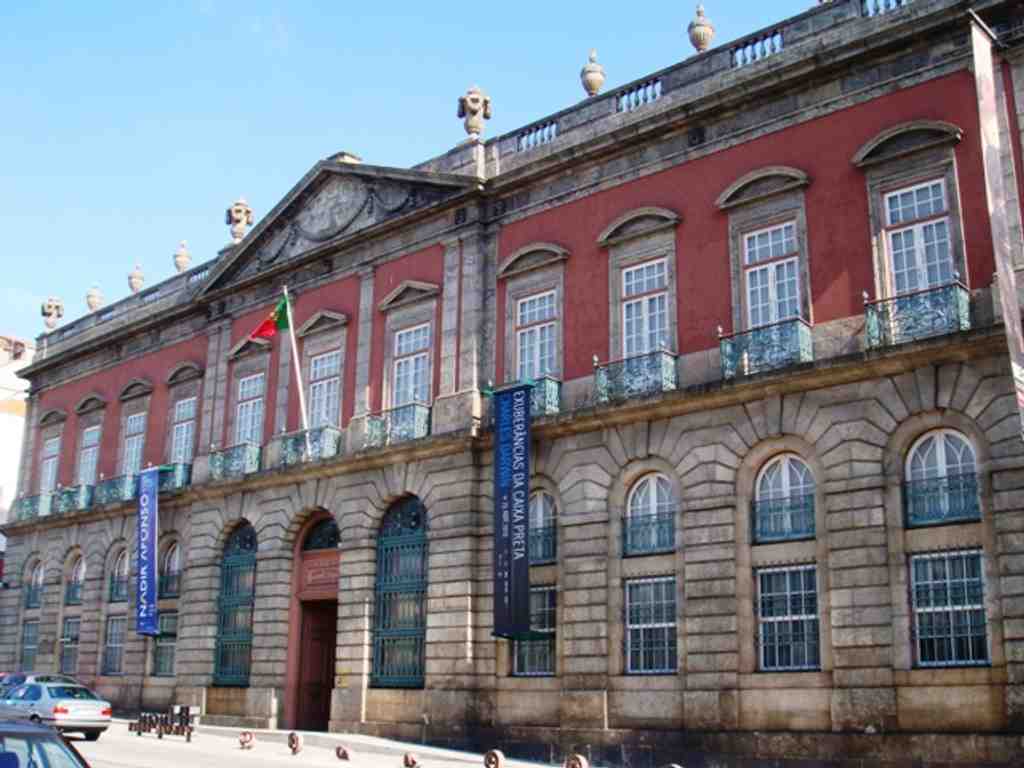
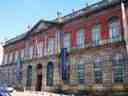
Carrancas PalacePhoto: User: (WT-shared) Shoestring at wts wikivoyage, Wikimedia Commons, CC BY-SA 4.0. Cropped & resized. On your right, look for a long pale-stone façade, three storeys high, with a central section pushed forward on three arches and a roofline dressed with stone urns.
Carrancas Palace wears ambition quite openly. In the late eighteenth century, D. Brites Maria Felizarda de Castro bought up a chain of plots here to create not only a grand residence, but a factory as well. That double purpose mattered. The Morais e Castro family, described as descendants of New Christians - families of Jewish origin who had converted to Christianity - made their fortune from a workshop on this very site producing gold and silver thread. So this was never just a handsome address. It was wealth at work, and wealth on display.
The family chose Joaquim da Costa Lima Sampaio to give that fortune a proper architectural language. He had already worked on the Hospital of Santo António and the British Factory House, and you can feel that English-influenced Neo-Palladian confidence here: balance, order, symmetry, and a façade determined to look rational and grand all at once. Inside, the Italian stucco artist Luigi Chiari decorated the rooms in seventeen ninety-five, shaping elegant plaster ornament and helping introduce the neoclassical taste that Porto’s rising elite found irresistible. If you glance at the image on your screen, you can see how the building’s sober exterior eventually gave way to museum interiors made for display rather than private life.
When the family moved in around eighteen hundred, they brought their coat of arms and a nickname with them: the Carrancas, meaning “the scowling ones.” A marvellous name for a palace, and not entirely unfair. The front does have a stern, self-possessed air.
But power attracts power. During the Peninsular Wars, the palace became valuable for more than its style. Marshal Soult occupied it during the French invasion, and after the French retreat, Arthur Wellesley set up his headquarters here as well. Later, General Beresford lived here, and during the siege of Porto, King Pedro the Fourth used the palace as his command centre for four months. One generation built a house-factory to project success; the next watched armies and kings claim the same rooms as a strategic prize.
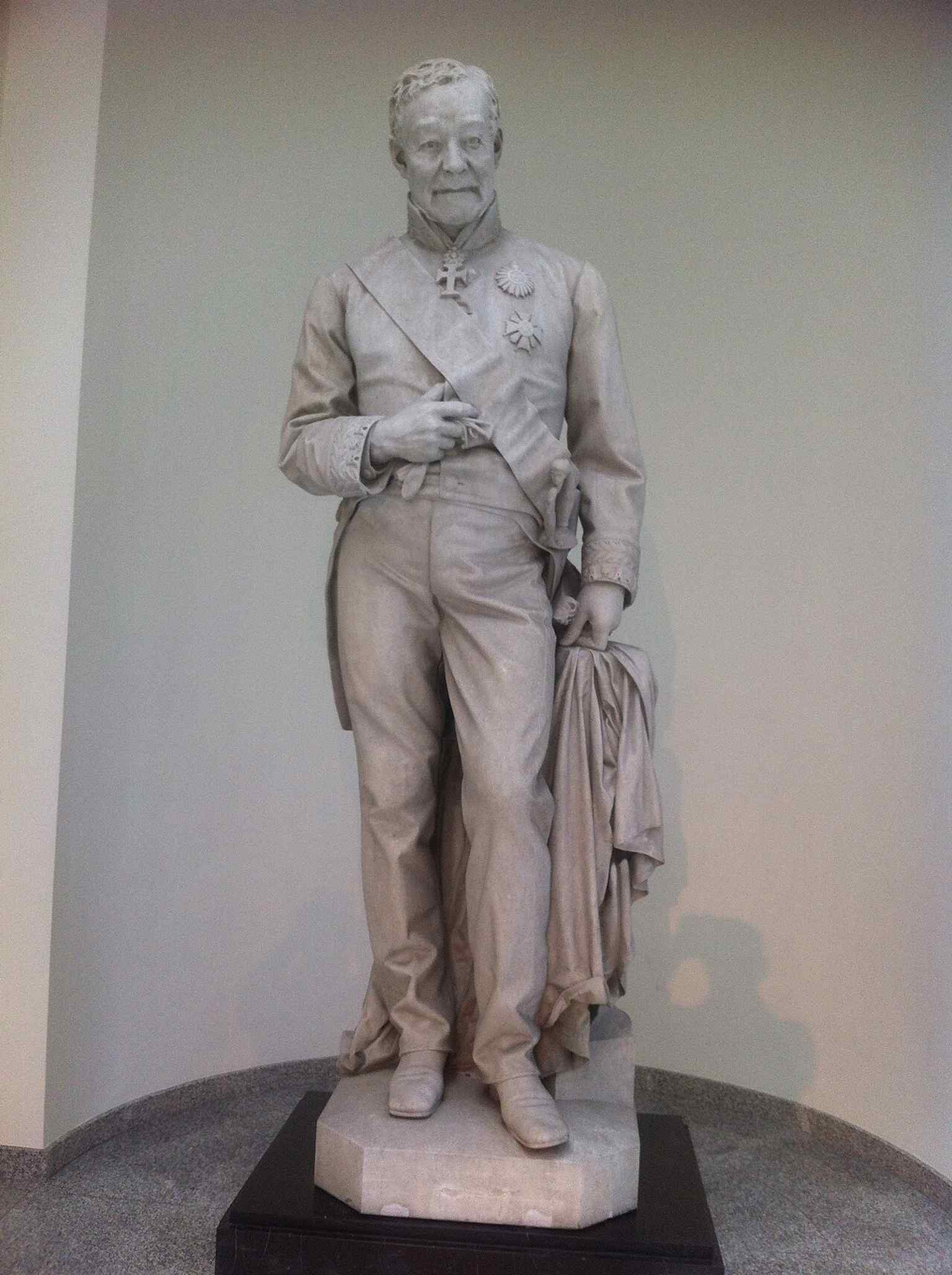
Then came another reinvention. In eighteen sixty-two, the royal family bought Carrancas and turned it into the Paço Real do Porto, their official residence in the city until the monarchy ended in nineteen ten. If Carlos Alberto Square hinted at the vulnerability of exile, this place shows its opposite: a residence designed to look unshakable. Yet even this confidence changed course. From exile in England, at Fulwell Park in Twickenham, Manuel the Second left the palace in his will to Porto’s Santa Casa da Misericórdia, hoping it would become a hospital. That plan fell away when the state took the building in nineteen thirty-seven and adapted it for the Soares dos Reis National Museum, which opened here in nineteen forty.
Even the grounds kept changing. In eighteen ninety-four they held a velodrome with a royal box and stands for thousands; later restorations under Fernando Távora turned part of that memory into an archaeological garden instead of wiping it clean. On your screen, image one captures the palace’s formal self-presentation rather well.
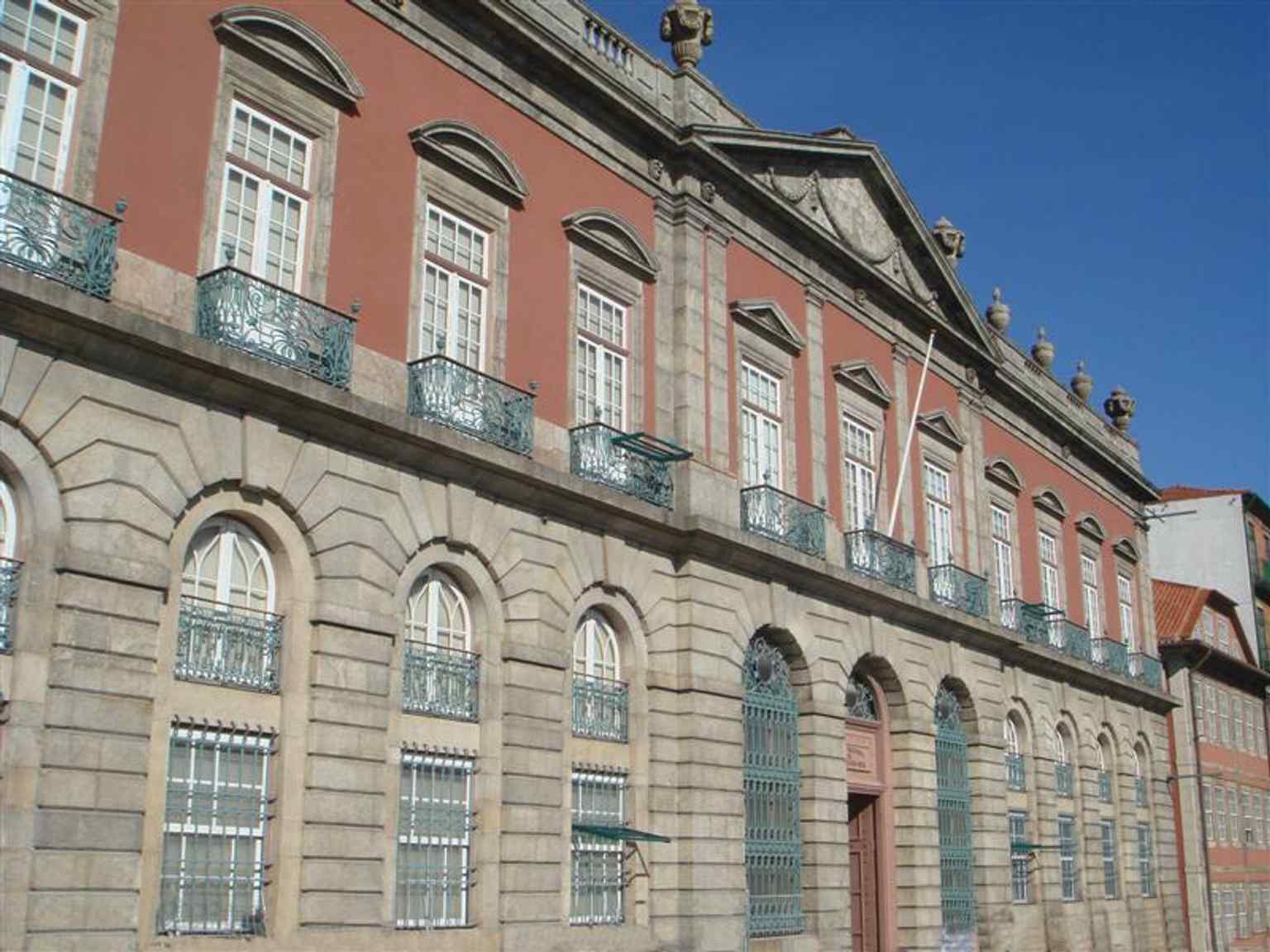
The Carrancas Palace façade in Porto, the former royal residence that now houses the Soares dos Reis National Museum.Photo: Jose Goncalves, Wikimedia Commons, Public domain. Cropped & resized. So here it stands: factory, mansion, headquarters, royal residence, museum. Next, we ask: what happens when a city decides one emblem of prestige is no longer enough? Make your way to the Super Bock Arena, about a six-minute walk from here.
A clear 2017 view of the palace as the Soares dos Reis Museum, showing the neoclassical building that was once Porto’s royal palace.Photo: Reis Quarteu, Wikimedia Commons, CC BY-SA 4.0. Cropped & resized. 
The museum-palace from the street, matching the Carrancas site where the royal family lived until the monarchy ended in 1910.Photo: Reis Quarteu, Wikimedia Commons, CC BY-SA 4.0. Cropped & resized. In front of you rises a huge concrete half-dome, smooth and low like an upturned bowl, with a ring of distinctive round windows set into its crown. This is the Super Bock Arena,…Read moreShow less
Open dedicated page →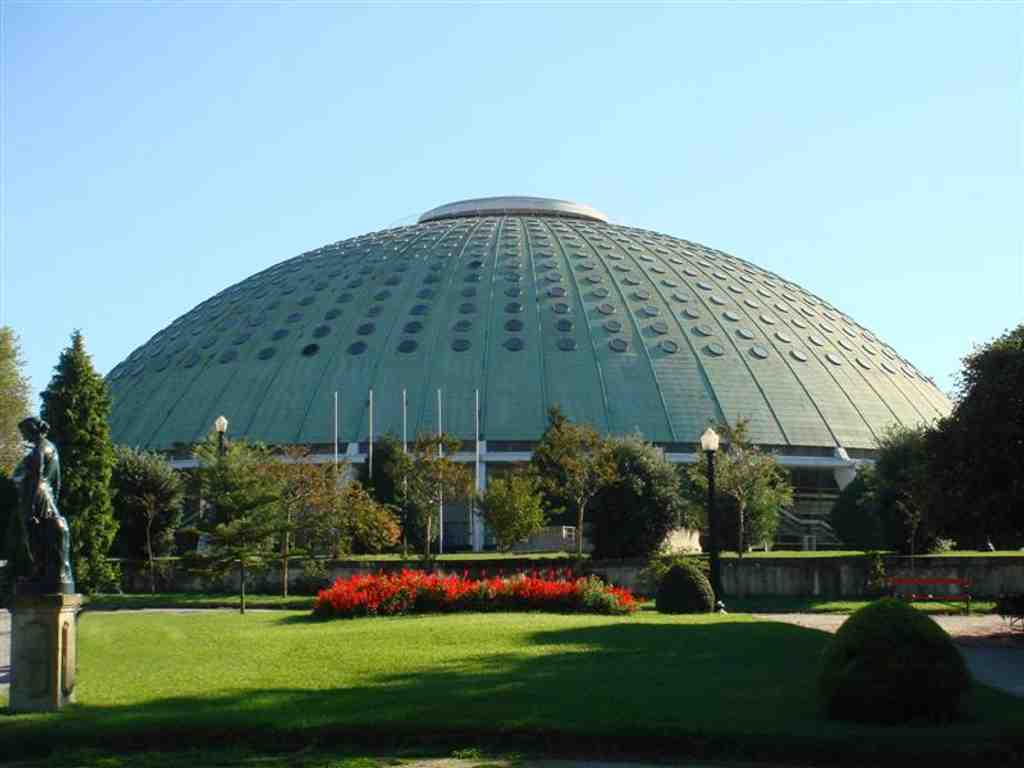
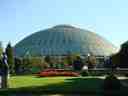
Super Bock ArenaPhoto: Jose Goncalves, Wikimedia Commons, Public domain. Cropped & resized. In front of you rises a huge concrete half-dome, smooth and low like an upturned bowl, with a ring of distinctive round windows set into its crown.
This is the Super Bock Arena, still called by many people the Pavilhão Rosa Mota, and by quite a few, even now, simply the Palácio de Cristal. That last name tells you almost everything about Porto’s stubborn memory.
On this very site, the city opened the original Palácio de Cristal in eighteen sixty-five, a glass-and-iron exhibition palace inspired by the famous Crystal Palace in London. People loved it. Then, in nineteen fifty-one, Porto chose to demolish it and replace it with a modern sports pavilion. The decision caused one of the city’s deepest heritage quarrels. Some losses arrive like the tragedy of the Ponte das Barcas, sudden and catastrophic. This one came by intention, with plans, votes, and arguments. It cut differently, but it marked the city just as surely.
Porto gave the new commission to José Carlos Loureiro, a startlingly young architect who had finished his course only a year earlier. Consider this: a man barely out of school was asked to redraw one of the most sensitive pieces of Porto’s public landscape. He answered with this great dome, a bold modern shell rising thirty metres high. Even before workers finished the roof, the pavilion entered local legend. In nineteen fifty-two, with the dome still incomplete, it hosted the Roller Hockey World Championship, and Portugal won. So the new building began not with quiet acceptance, but with patriotic triumph.
After that, it became one of those rare urban containers that can absorb almost anything. Hockey, basketball, boxing, judo, gymnastics, fencing, concerts, theatre, circus, congresses, exhibitions, even trade fairs once housed by the older palace. In other words, the function changed, but the site kept doing what it had long done: gathering the city indoors.
Then came another layer of feeling. In nineteen ninety-one, the pavilion took the name Rosa Mota, honouring Porto’s great marathon champion. Yet even naming turned awkward here. When the renovated venue reopened in twenty nineteen under the commercial title Super Bock Arena - Pavilhão Rosa Mota, Rosa Mota herself stayed away, saying she felt misled because she expected her name to come first. In a place already haunted by replacement, even the order of words mattered.
The recent rehabilitation kept Loureiro’s concrete structure and those emblematic windows while transforming the interior into a far more flexible hall, with seating for around five thousand five hundred and capacity for more than eight thousand at certain events. It also gained a congress centre below and modern systems to control sound and light. So yes, the building adapted. Porto insisted on usefulness. But usefulness never entirely settled the older grief.
And perhaps that is the real lesson standing before you: when a cherished building disappears, can a city repair the wound by keeping the name alive, or does something finer and harder to restore slip away all the same?
In a moment, continue into the Crystal Palace Gardens, where the old name survived the old building and still shades everything around it. If you plan to return inside, the venue is generally closed on Mondays and opens from ten to one and from two to six on the other days.
Look for stone terraces and curving garden paths beneath tall trees, with the great round dome of the old pavilion rising beyond the greenery. These gardens have the scale of a…Read moreShow less
Open dedicated page →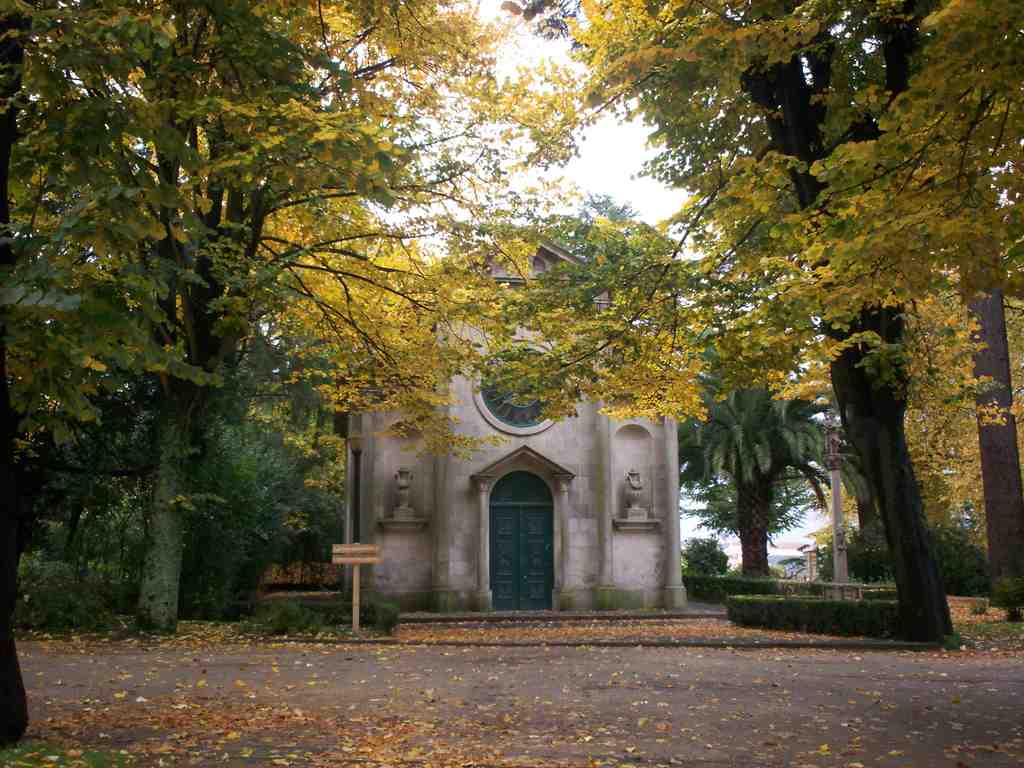
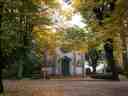
Crystal Palace GardensPhoto: Tuga9890, Wikimedia Commons, Public domain. Cropped & resized. Look for stone terraces and curving garden paths beneath tall trees, with the great round dome of the old pavilion rising beyond the greenery.
These gardens have the scale of a public park, but the heart of the place is more intimate than that. It is a landscape of memory. From here, the ground opens toward the Douro and even the sea, and Porto seems to spread out in layers: river city, trading city, grieving city, ambitious city.
Most visitors first notice the romantic layout that the German landscape designer Émile David shaped in the eighteen sixties. He gave the site avenues, fountains, statues of the seasons, and a carefully staged sequence of trees: rhododendrons, camellias, araucarias, ginkgos, and beeches. If you glance at the image on your screen, the view from Jardim Émile David shows that sense of composed depth rather well. But locals know something quieter, and more affecting. Before these gardens fully took their famous form, the Capela de Carlos Alberto was already here. In eighteen forty-nine, Princess Augusta de Montléart raised it in memory of her half-brother, Carlos Alberto of Sardinia-Piedmont. He had lost the Battle of Novara, fled into exile, and died here in Porto. So before this became a place of strolling and panoramas, it was already a place of private sorrow. That little chapel changes the whole mood of the grounds, if you let it.
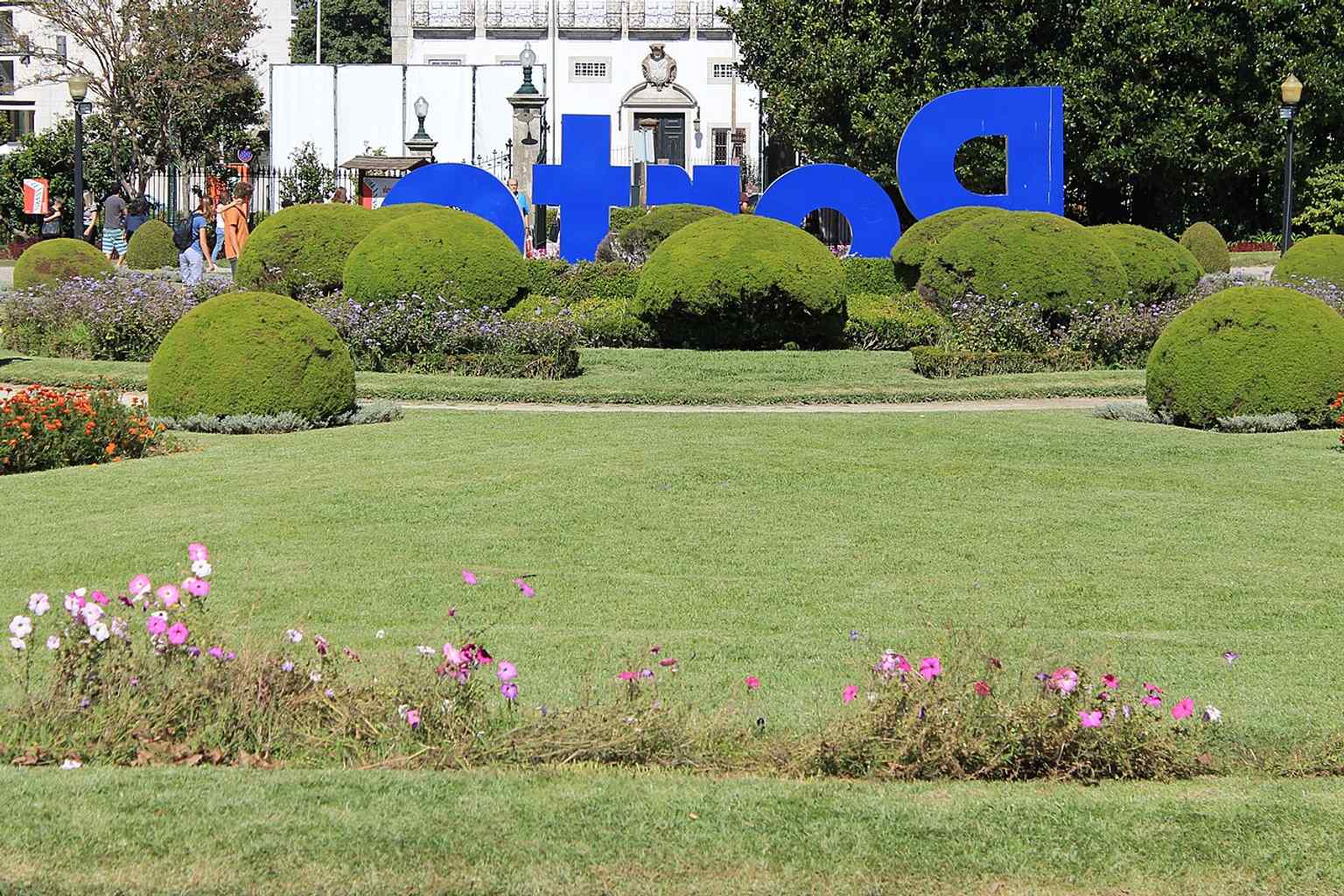
A view from Jardim Émile David, named after the 19th-century landscape architect who designed the romantic gardens in the 1860s.Photo: John Samuel, Wikimedia Commons, CC BY-SA 4.0. Cropped & resized. Then came a burst of civic confidence. In eighteen sixty-five, a group of progressive Porto citizens opened the original Crystal Palace here and welcomed King Luís and Queen Maria Pia. They filled the exhibition with three thousand one hundred and thirty-nine exhibitors from several countries. The building helped fix Porto’s reputation as an early champion of iron in architecture. Not long after, the site widened its purpose again. A rose exhibition in eighteen seventy-nine and a fine arts bazaar in eighteen eighty-one brought in artists such as Soares dos Reis, João Marques de Oliveira, and Henrique Pousão. Horticulture and modern art shared the same stage.
The stage kept changing. In nineteen twenty-two, the palace received Gago Coutinho and Sacadura Cabral after their South Atlantic flight. In nineteen thirty-four, the regime turned the grounds into the Portuguese Colonial Exhibition, with reconstructed overseas monuments, a zoo, and so-called indigenous villages, propaganda dressed as spectacle. And in nineteen fifty-one, despite bitter protest from many in Porto, workers demolished the Crystal Palace itself and replaced it with the sports pavilion you have already encountered nearby. The old name survived in the gardens because the city refused to let it vanish completely.
Even in our own century, people have defended this place with unusual vigilance. The lake you can see in the app image looks tranquil enough, yet when redevelopment threatened this area, residents organized and fought to protect it. Stand still for a moment and take the whole idea in. Exile, beauty, pride, art, propaganda, demolition, protest, and that long river view all belong to the same Porto. When you are ready, continue on to the Tower of Pedro-Sem, about a two-minute walk away. If you decide to return, the gardens generally open daily from eight in the morning until nine at night.
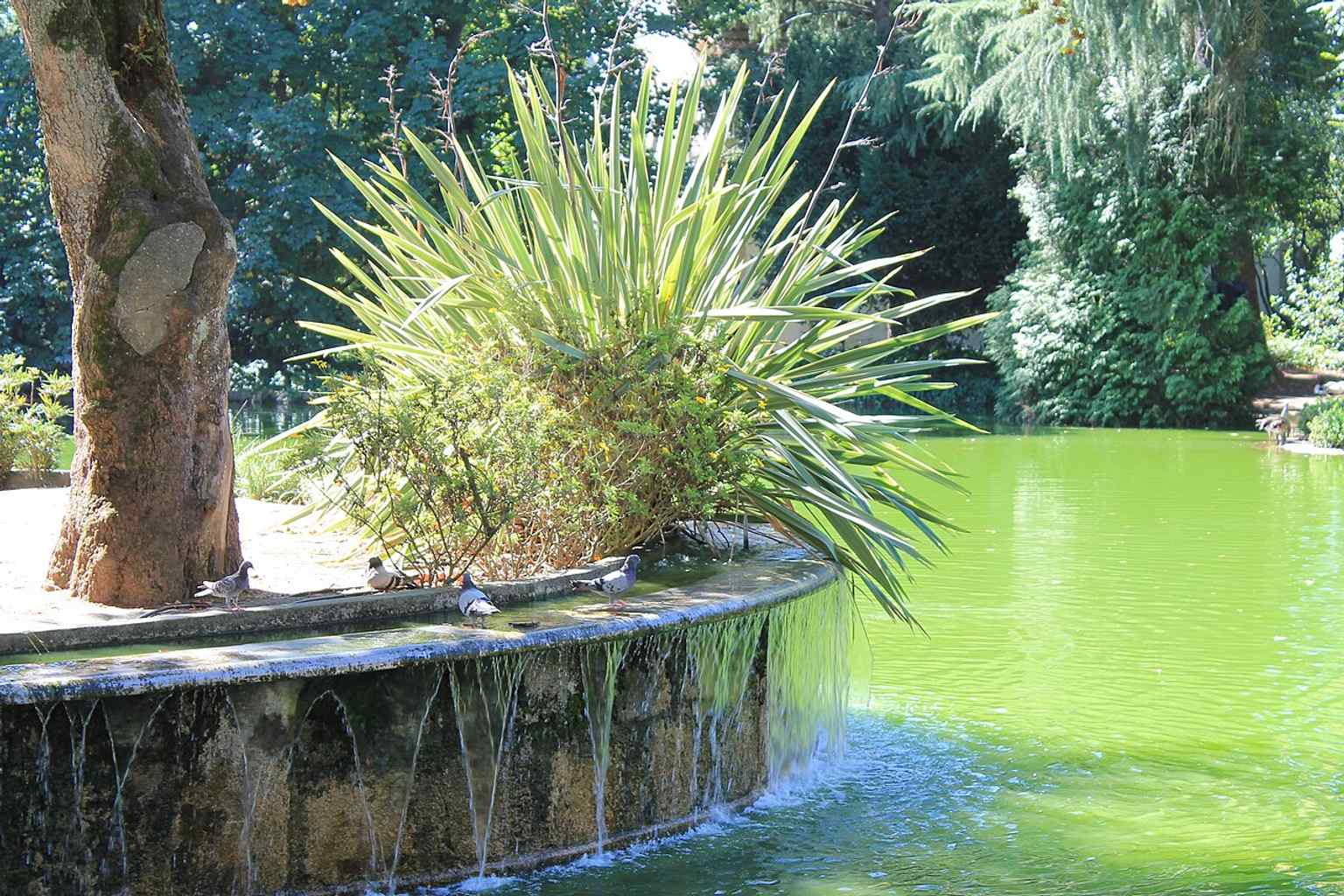
The lake at the heart of the gardens, once at the center of the 2009 and 2013 controversy over a proposed redevelopment.Photo: John Samuel, Wikimedia Commons, CC BY-SA 4.0. Cropped & resized. 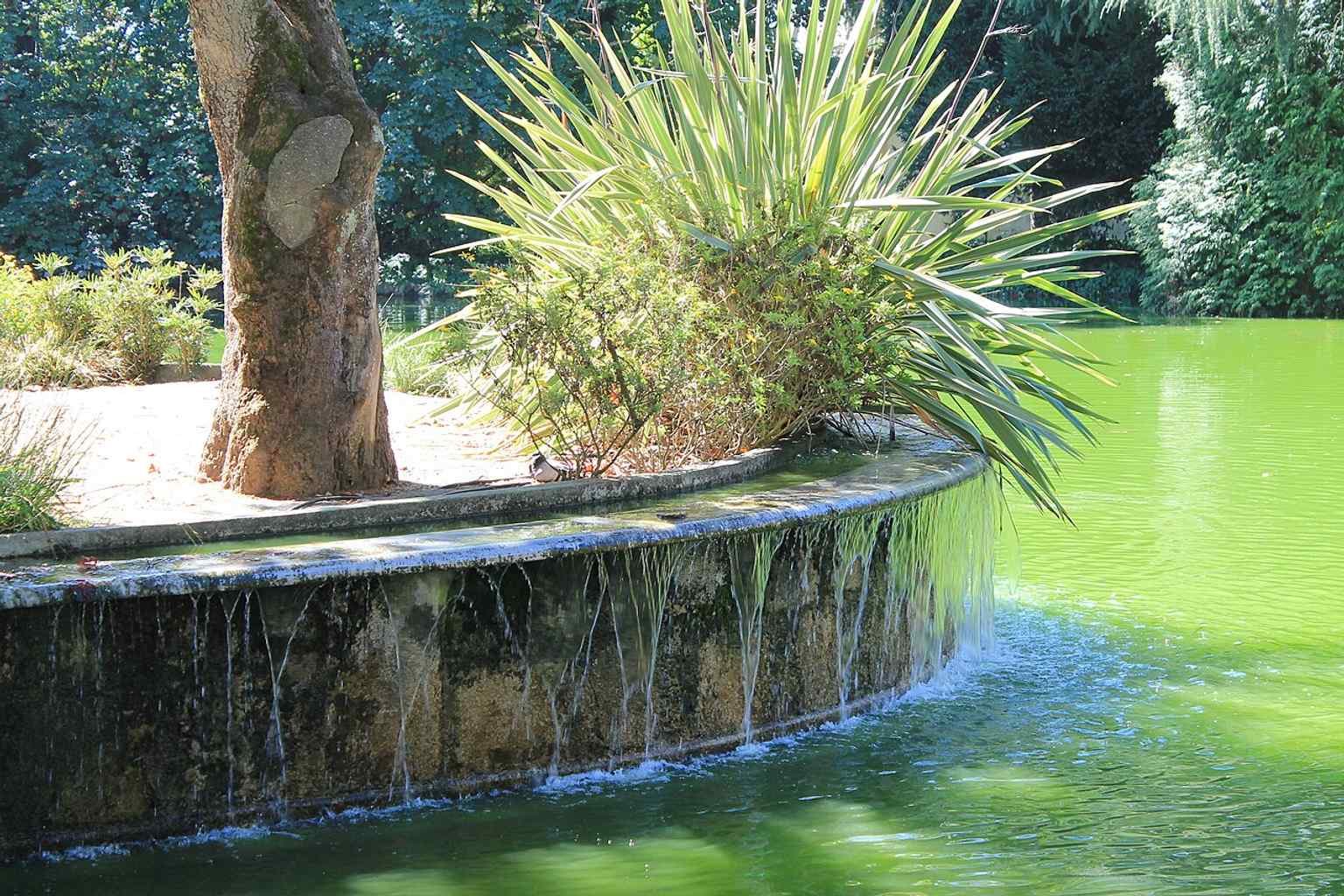
A second view of the park lake, useful for showing the tranquil landscape that was defended by local campaigners.Photo: John Samuel, Wikimedia Commons, CC BY-SA 4.0. Cropped & resized. 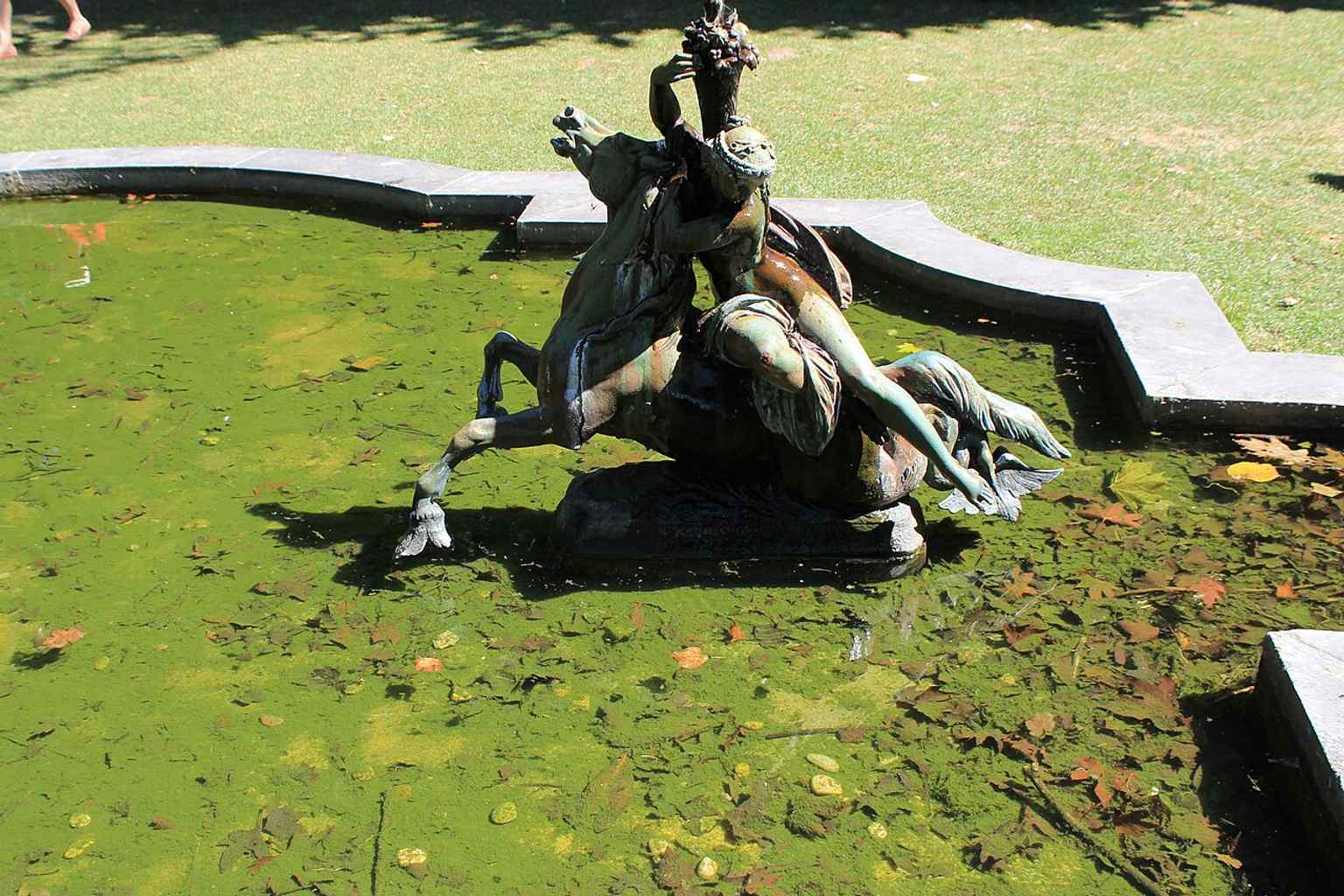
The Lago dos Cavalinhos adds a more intimate water feature to the gardens’ network of ponds and viewpoints.Photo: John Samuel, Wikimedia Commons, CC BY-SA 4.0. Cropped & resized. 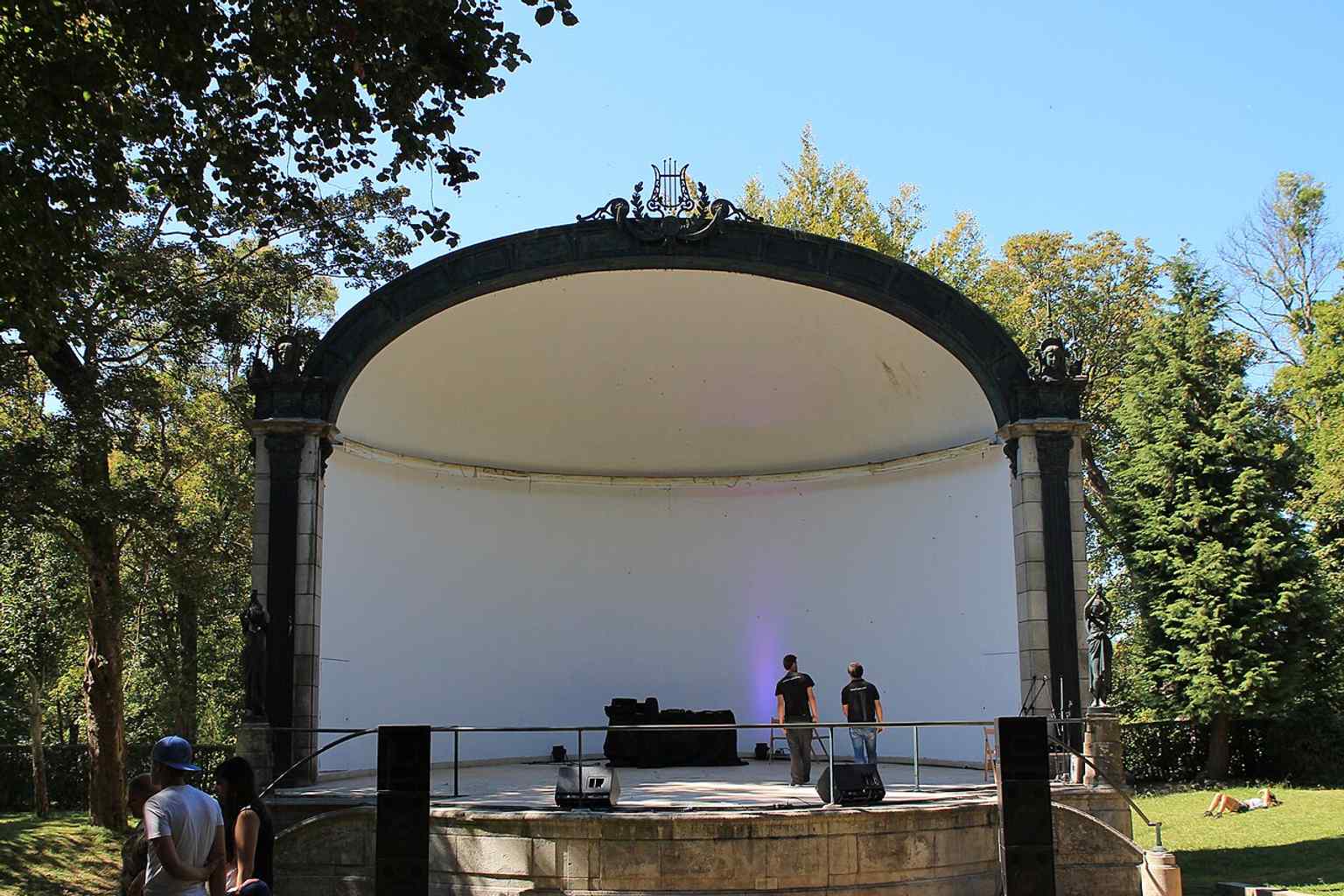
The Concha Acústica, one of the park’s cultural venues, reflects the gardens’ role as a stage for concerts and public events.Photo: John Samuel, Wikimedia Commons, CC BY-SA 4.0. Cropped & resized. 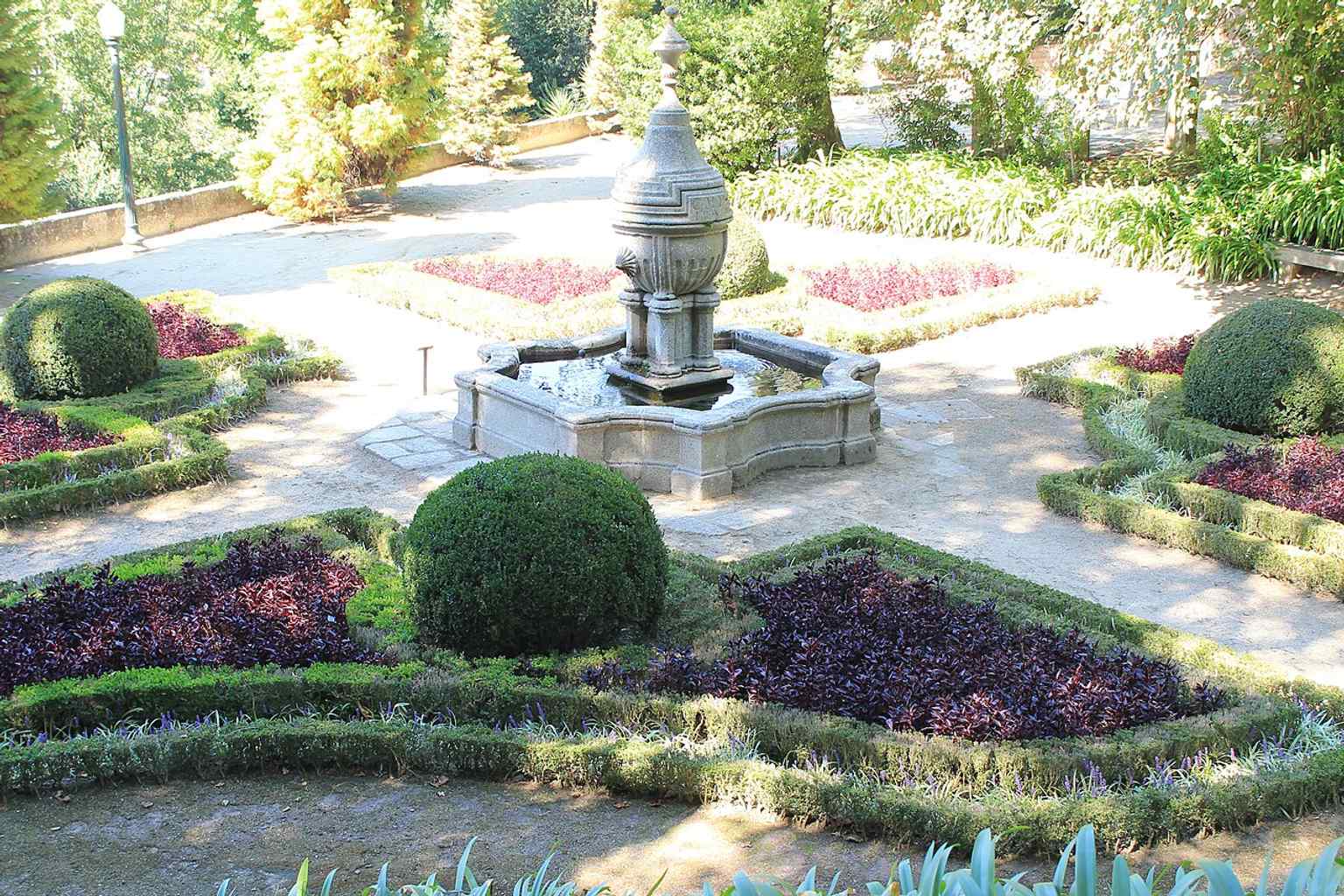
A fountain detail that fits the garden’s ornamental character, with water features and allegorical statuary mentioned in the source.Photo: John Samuel, Wikimedia Commons, CC BY-SA 4.0. Cropped & resized. 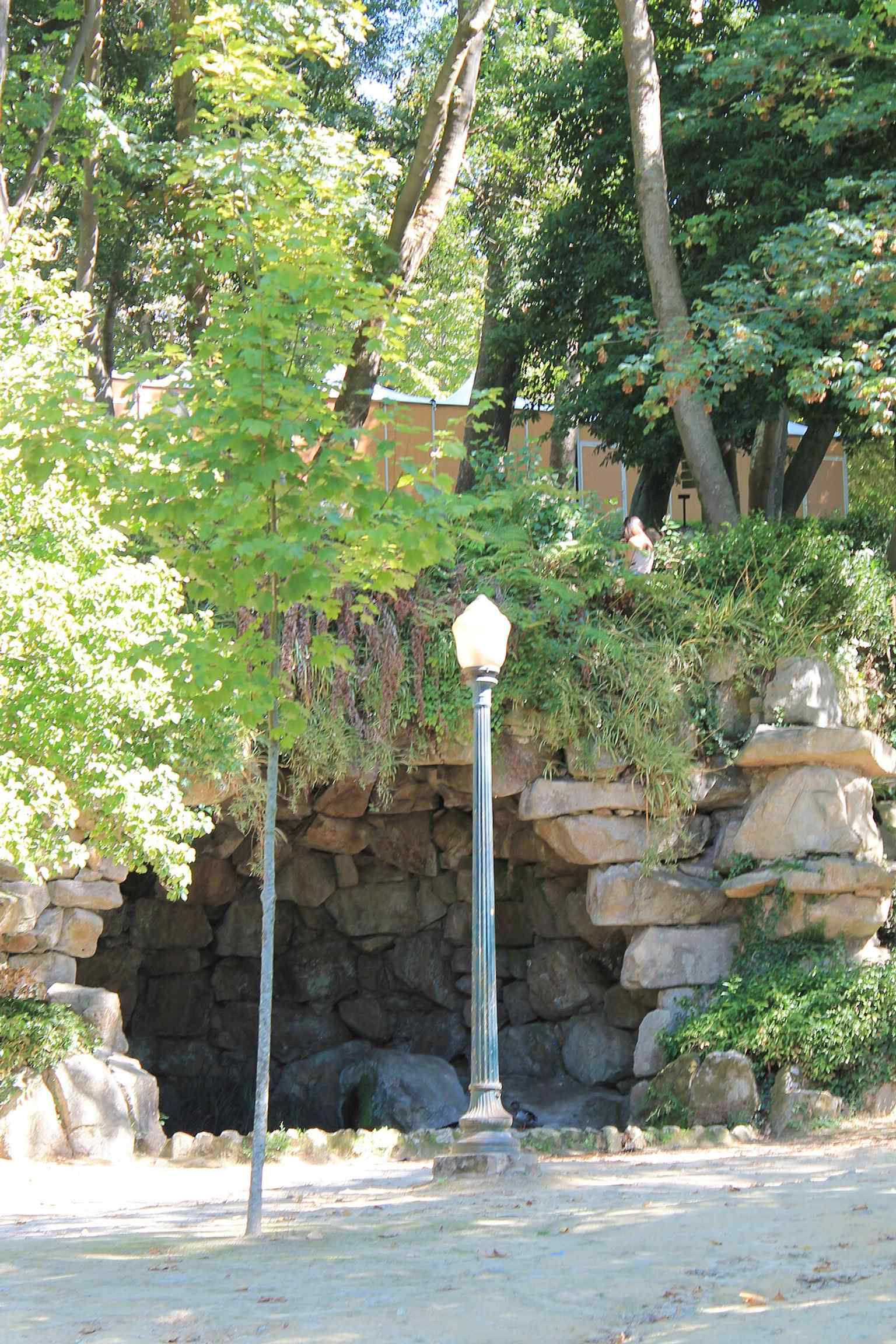
Gruta de Camões, one of the park’s more secluded landscape elements, showing the romantic side of the gardens.Photo: John Samuel, Wikimedia Commons, CC BY-SA 4.0. Cropped & resized. 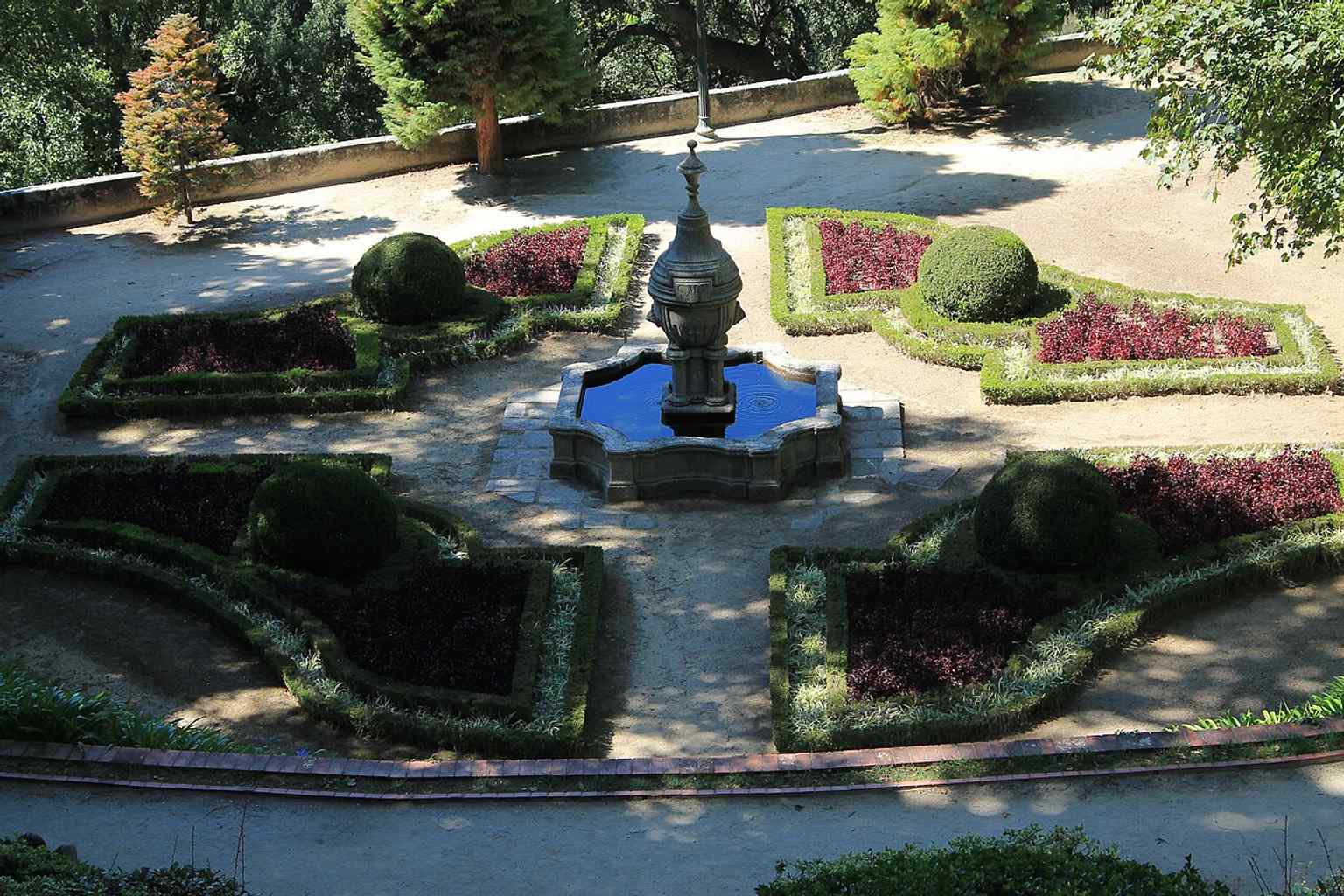
The Jardim do Buxo highlights the formal planting style that contrasts with the park’s broader scenic vistas.Photo: John Samuel, Wikimedia Commons, CC BY-SA 4.0. Cropped & resized. 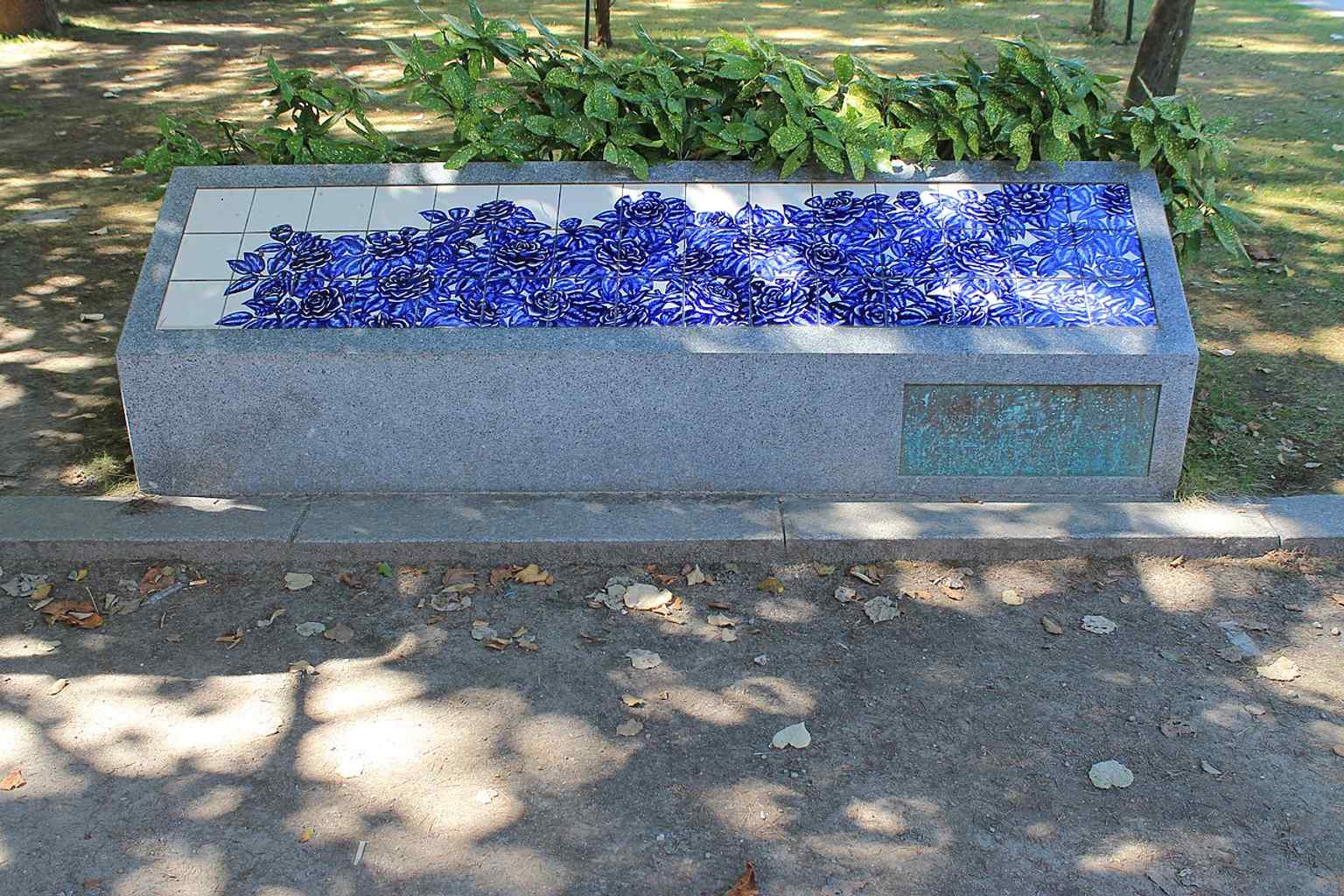
Sculptural and azulejo details that connect the gardens to Porto’s artistic heritage and decorative traditions.Photo: John Samuel, Wikimedia Commons, CC BY-SA 4.0. Cropped & resized. 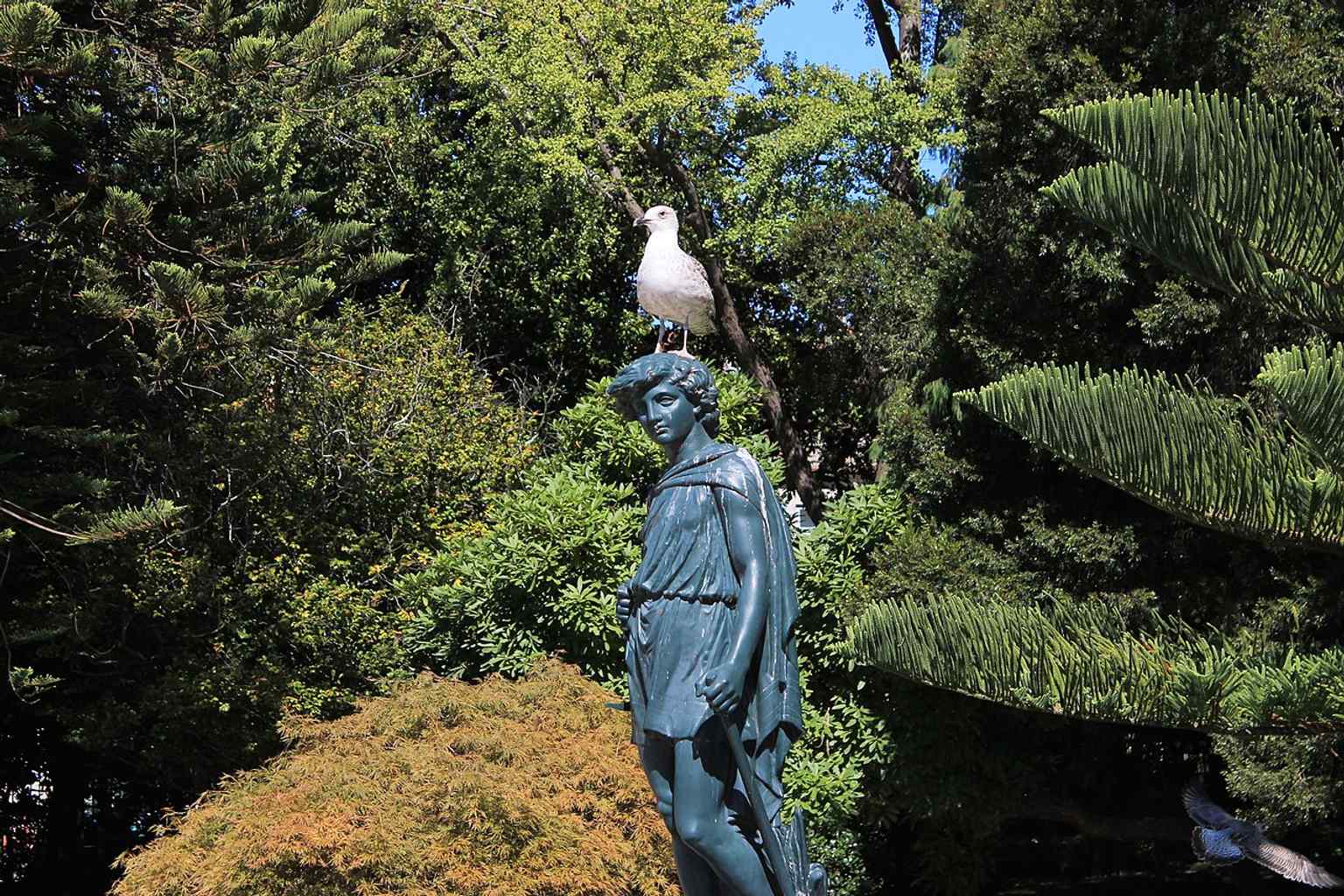
A sculpture of the Four Seasons, echoing the allegorical figures described among the garden’s decorative features.Photo: John Samuel, Wikimedia Commons, CC BY-SA 4.0. Cropped & resized. 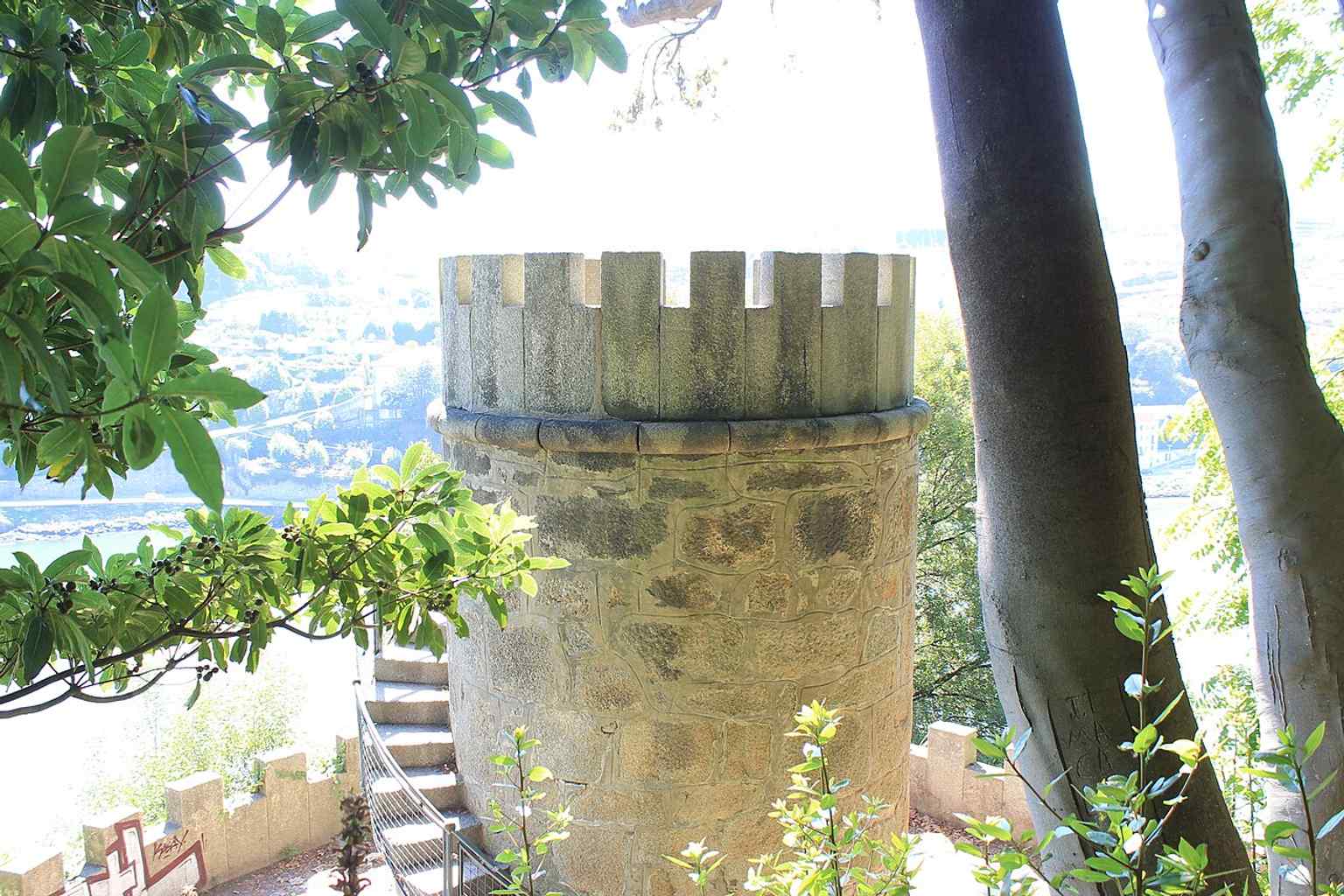
A viewpoint from the Torre miradouro, ideal for the sweeping panoramas over the Douro and the city.Photo: John Samuel, Wikimedia Commons, CC BY-SA 4.0. Cropped & resized. 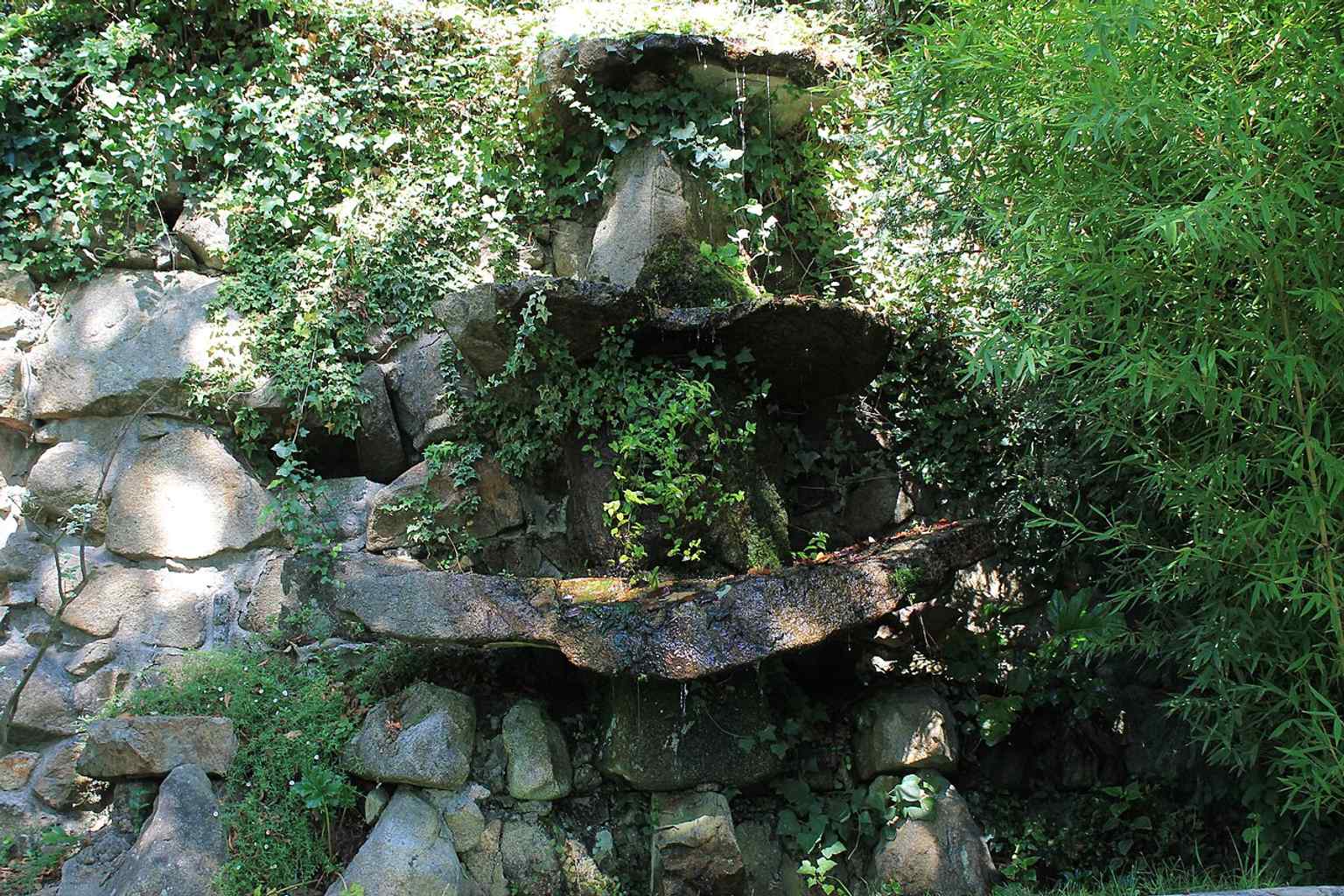
A broad garden view that helps convey the scale of Crystal Palace Gardens as a major green space in Porto.Photo: John Samuel, Wikimedia Commons, CC BY-SA 4.0. Cropped & resized. 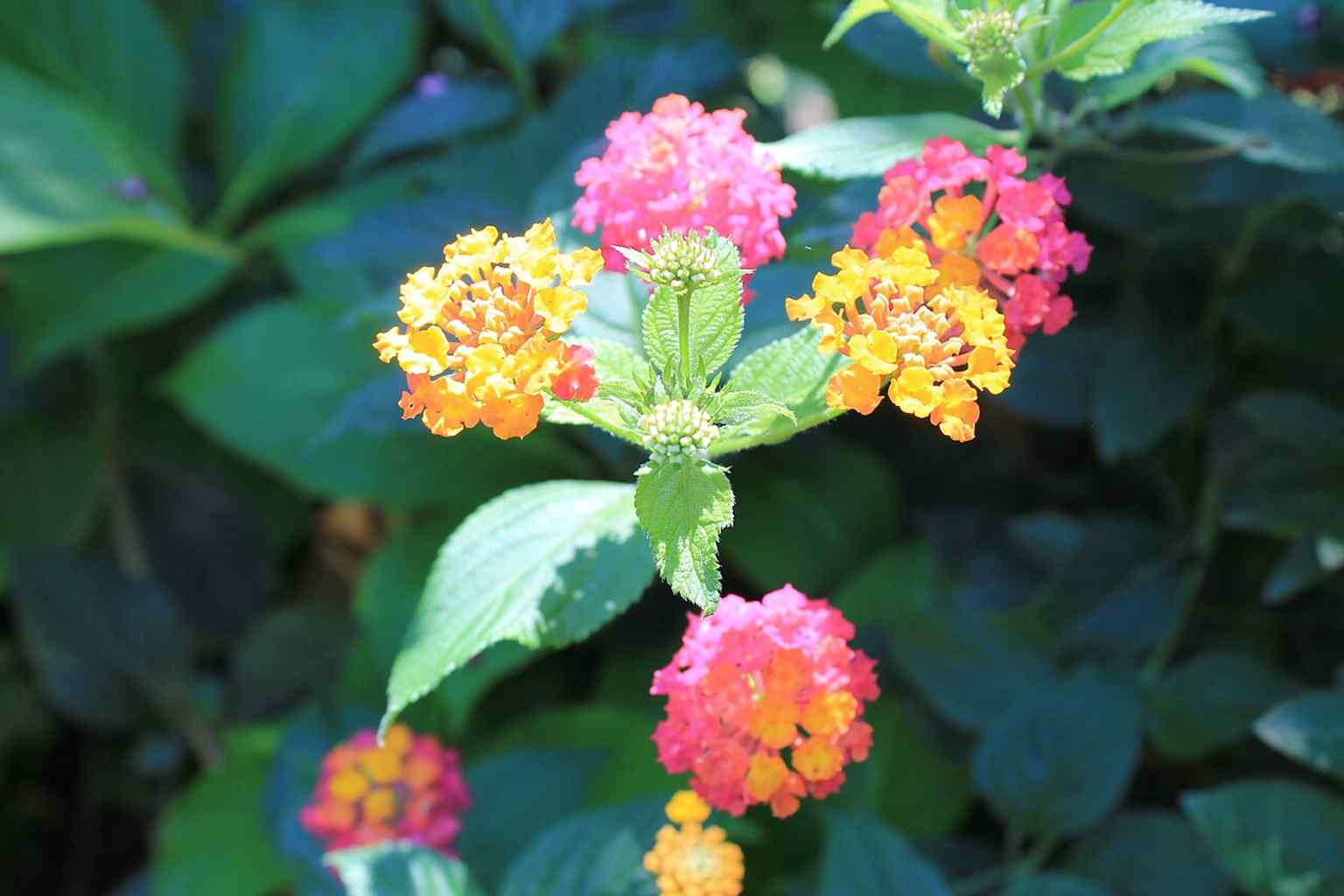
Another general exterior of the park, useful for showing the romantic landscaping and tree-filled setting.Photo: John Samuel, Wikimedia Commons, CC BY-SA 4.0. Cropped & resized. 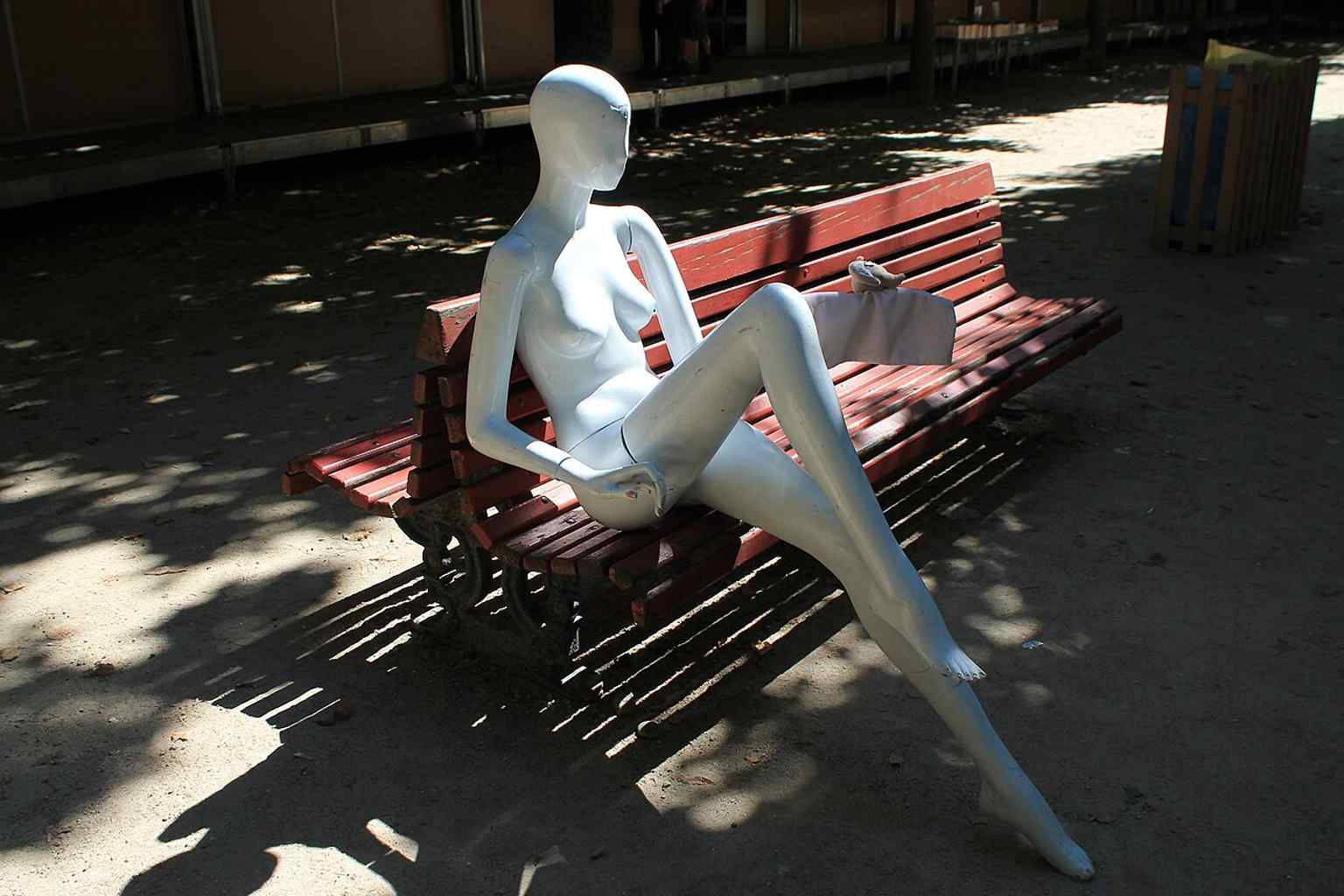
A simple park bench detail that suggests the gardens’ everyday use as a place to pause and enjoy the views.Photo: John Samuel, Wikimedia Commons, CC BY-SA 4.0. Cropped & resized. Look for a tall rectangular stone tower, partly folded into a larger palace block, with a crenellated top and small trilobed windows cut into its upper walls. This tower carries…Read moreShow less
Open dedicated page →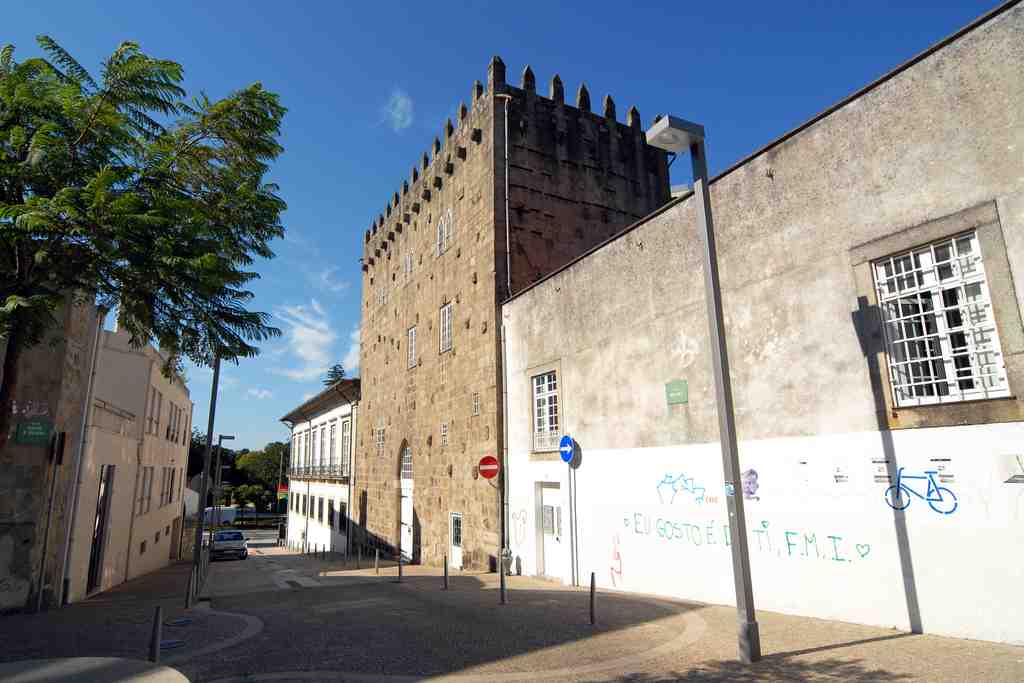
Tower of Pedro-SemPhoto: António Amen, Wikimedia Commons, CC BY-SA 3.0. Cropped & resized. Look for a tall rectangular stone tower, partly folded into a larger palace block, with a crenellated top and small trilobed windows cut into its upper walls.
This tower carries a harder message than many buildings in Porto. It does not simply say someone lived here. It says someone meant to be obeyed here.
Pedro de Sem, chancellor to King Dom Afonso the Fourth, ordered this tower in the first half of the fourteenth century. On the surface, it looks like a noble tower-house: a residence with the manners of a fort. But the Portuguese heritage survey, S-I-P-A, reads it more sharply. Pedro de Sem was a royal officer, and this tower helped project the crown’s authority at Porto’s edge while Afonso the Fourth’s new walls were rising. That matters. This was not only family property. It was a sign planted in stone, telling the city where power stood.
You can still read that double purpose in the building itself. The tower is defensive, with a battlemented crown and openings high above, yet it also belonged to an estate and served as the centre of a pre-urban property on the outskirts of the medieval town. Defensive shell or family home? In truth, both. And that blurred line tells you a great deal about medieval rule. Government did not always sit in a separate office. Quite often, it lived behind the same walls that guarded land, collected loyalties, and watched the road.
The family story stretched on. By the early fifteen hundreds, the estate had passed through Pedro de Sem’s descendants. One of them, Martim d’Océm, his great-grandson and also a royal chancellor, held it in fourteen thirty-one. Even his tomb led a second life, moved later from São Domingos in Santarém to the Museum of São João de Alporão. The family itself faded from the property, but its name clung to the stone.
Then the Brandão family took over, and in fifteen seventy-six Rui Brandão Sanches created what lawyers called a majorat, a legal arrangement meant to keep the estate bundled inside one inheritance line. That helps explain why this place stayed in the same family orbit for centuries. Later, the Brandãos added a palace beside the tower, and that is why so much of the medieval structure now seems absorbed into later architecture. Most people notice the age of the tower. Fewer notice how thoroughly later Porto tried to domesticate it without quite managing to erase it.
There is even a local legend that Pedro Sem, once wealthy, ended by begging beside his own tower. It is only a legend, and the details shift, but the tale survived because places like this invite moral stories about pride, rank, and decline.
Its later life kept changing. The Diocese of Porto bought the complex in nineteen nineteen. It served as a bishop’s residence, then as a Catholic cultural centre. In nineteen eighty-six, the architect Abrunhosa de Brito remade the interior almost entirely for residential use. So what stands before you is old stone with a much newer inside: another Porto habit, keeping the shell, rewriting the use.
And that is the lasting note here. Authority changes hands. Families vanish. Interiors are rebuilt. But the old line in the landscape remains.
In about thirteen minutes, at the Church of São Martinho de Cedofeita, we go deeper still, toward an earlier Porto: before grand civic life, before the modern city, when this was a frontier place learning how to endure.
On your right, the Church of São Martinho de Cedofeita appears as a low, dark-granite block with a simple rectangular body, a triple-arched Romanesque doorway, and a small bell…Read moreShow less
Open dedicated page →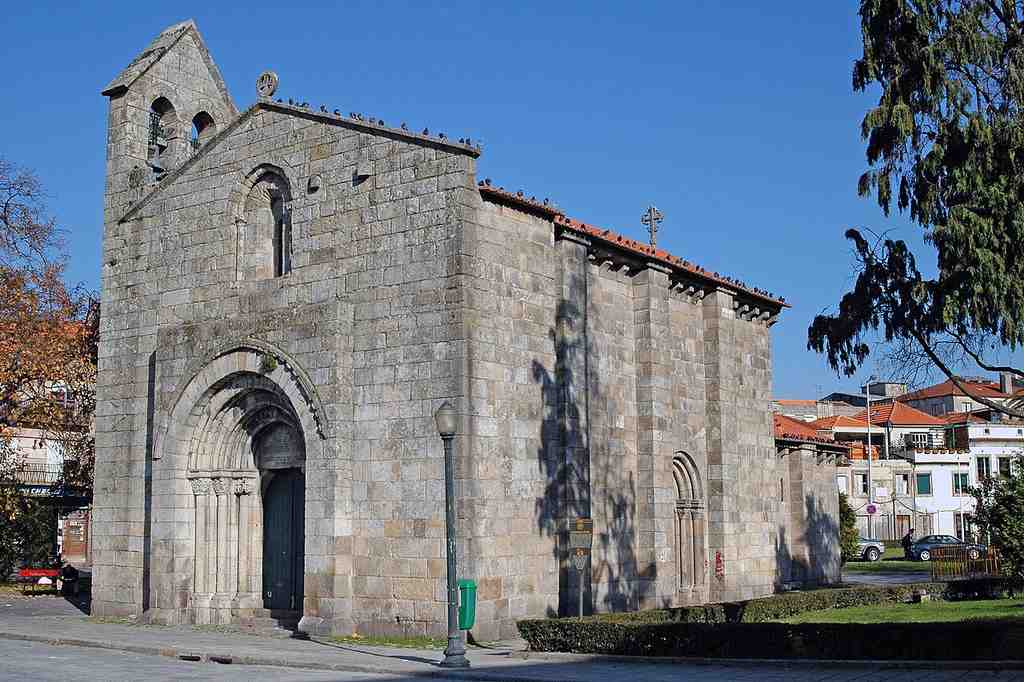
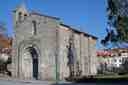
Church of São Martinho de CedofeitaPhoto: António Amen, Wikimedia Commons, CC BY-SA 3.0. Cropped & resized. On your right, the Church of São Martinho de Cedofeita appears as a low, dark-granite block with a simple rectangular body, a triple-arched Romanesque doorway, and a small bell gable perched at one corner.
This modest church is one of Porto’s deepest roots. It is a National Monument, and a rare one: a single-nave church, meaning one main hall without side aisles, covered by a barrel vault, a ceiling shaped like half a long stone tunnel. In the old Entre-Douro-e-Minho region, it is rare in that form.
The story here reaches back to the years when Porto was still a frontier place. After Vímara Peres retook the city in eight hundred and sixty-eight, tradition says he rebuilt a church on this very site. We cannot prove every line of that story, but the building keeps a persuasive memory of it: later masons reused older carved capitals, so the Romanesque church literally absorbed fragments of an earlier sacred place. In other words, the past here was not cleared away. It was folded in.
The first firm document comes from ten eighty-seven, when the church was consecrated and given funds for its upkeep. Another campaign followed soon after, and part of the main chapel, the space around the altar, still preserves work from that early phase. Some remains may even reach back to the late ninth or early tenth century.
Pause for a moment and study the stone around the entrance. The granite feels stern and local, but some carved pieces seem to belong to another age, almost another language of building. If you look at the image on your screen, you can see the west doorway more clearly: the three arches, the carved tympanum, and the inscription added in seventeen sixty-seven. That inscription tells a grand old tale. It claims the church began in the sixth century under King Theodemar, who vowed himself to Saint Martin of Tours to save his sick son, Ariamiro, and that Bishop Lucrécio consecrated it. It is a beautiful story, though the original stone behind it has never been found. So the doorway gives you both things at once: architecture you can touch, and memory that hovers just beyond proof.
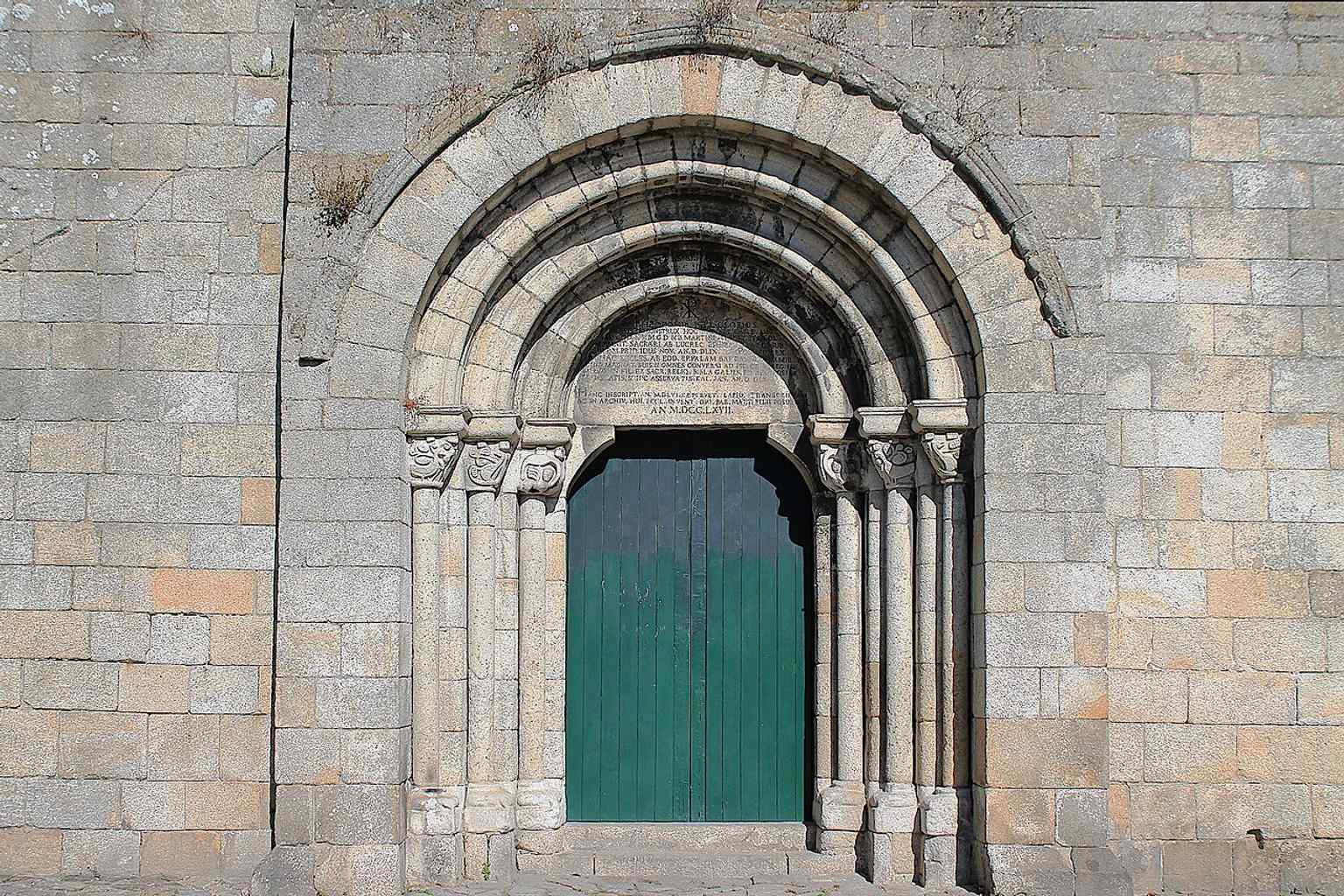
The main west doorway with its Romanesque arches and carved tympanum, where a 1767 inscription later added a legendary founding story.Photo: John Samuel, Wikimedia Commons, CC BY-SA 4.0. Cropped & resized. By the thirteenth century, Cedofeita joined the artistic orbit of Coimbra. Its carved birds, animals and foliage echo churches there, and some scholars even connect this work to the mason Soeiro Anes. If you open the stone detail in the app, you can see how refined those carvings are, despite the church’s overall plainness. Later generations altered it freely. Augustinian canons, the clergy attached to the church, served here for centuries. In the seventeenth and eighteenth centuries they added chapels, a tower, a cloister, and even proposed a levy of one real from parishioners to help rebuild it, a token sum worth only a few modern cents. Then, in the nineteen thirties, restorers removed many of those Baroque changes to make the church look more medieval again. Even this ancient face, then, is partly a twentieth-century choice.
And still it endured. The canons’ college ended in eighteen sixty-nine. The organ came and went. Electricity arrived only in nineteen ninety-one. Worship continued.
That may be the most truthful ending for Porto: not untouched beginnings, but a city strong enough to carry many centuries at once, without pressing them flat.
If you plan to return for the interior, the church generally opens only from four to seven in the afternoon, Tuesday through Friday.
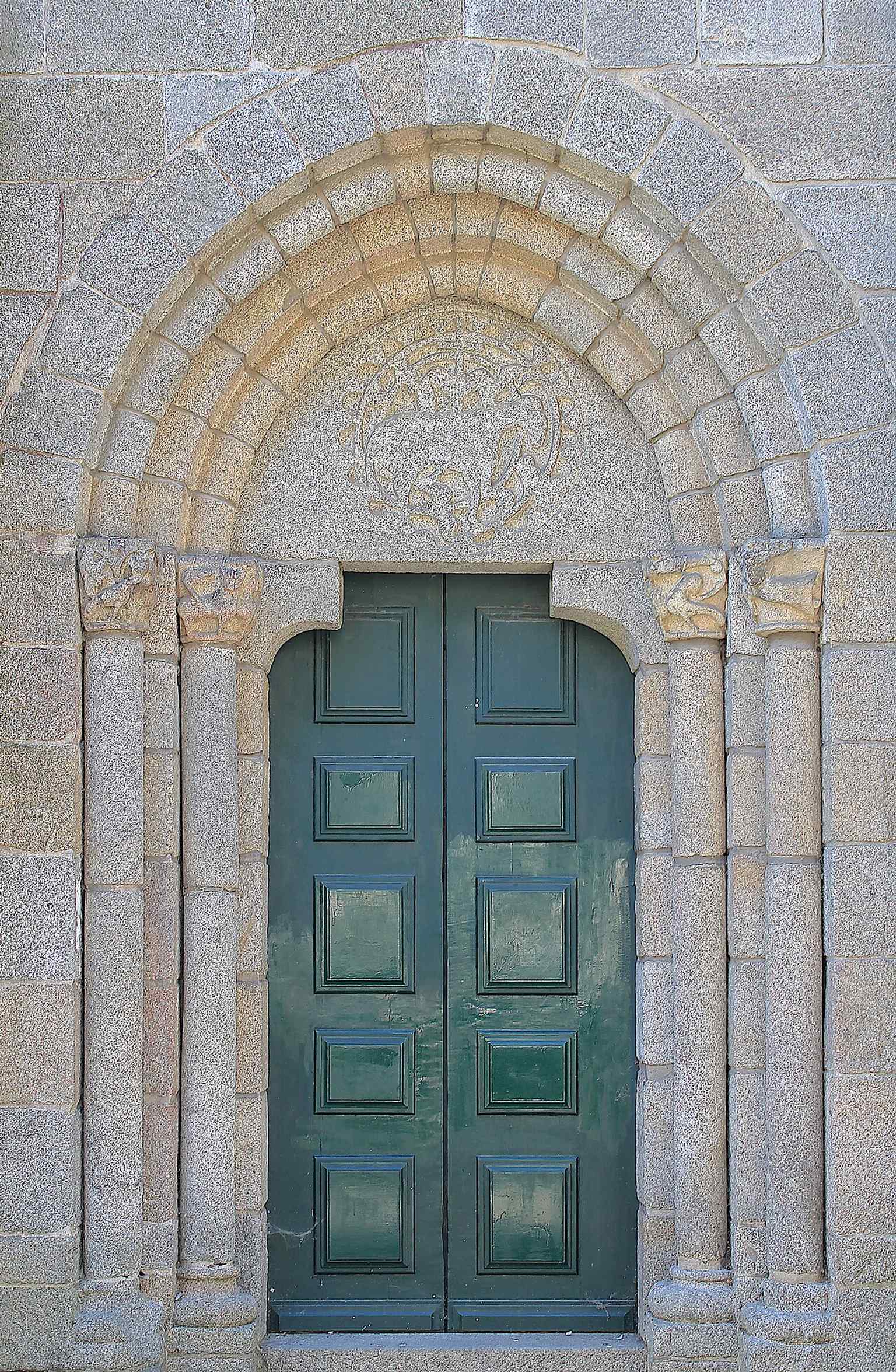
The smaller side doorway shows the church’s repeated Romanesque portico design, with sculpted capitals and a more intimate entrance.Photo: John Samuel, Wikimedia Commons, CC BY-SA 4.0. Cropped & resized. 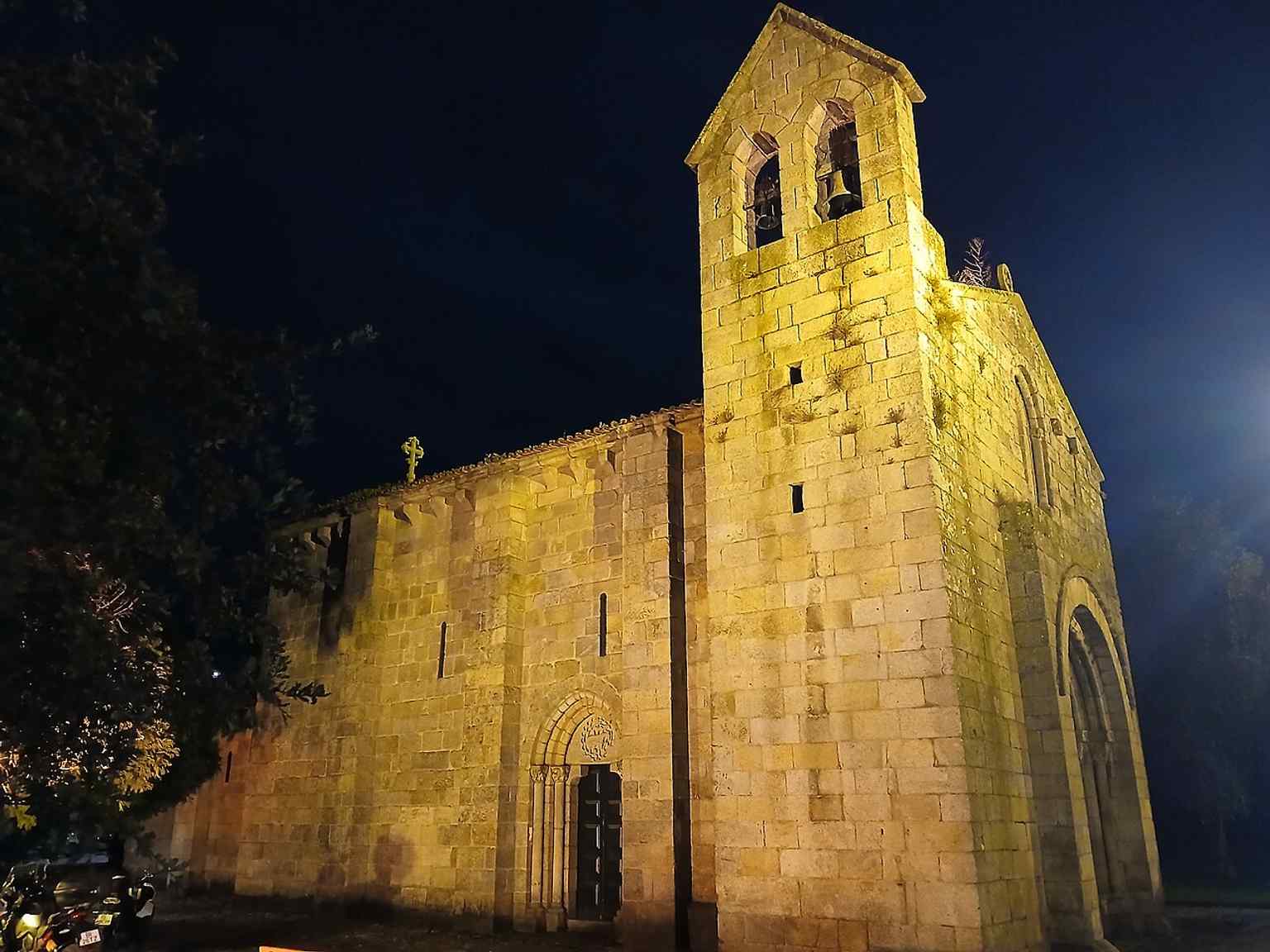
A night view of the church’s left side, where the heavy buttresses and narrow Romanesque windows reveal the single-vaulted medieval structure.Photo: SGP.bib, Wikimedia Commons, CC0. Cropped & resized.
Frequently asked questions
How do I start the tour?
After purchase, download the AudaTours app and enter your redemption code. The tour will be ready to start immediately - just tap play and follow the GPS-guided route.
Do I need internet during the tour?
No! Download the tour before you start and enjoy it fully offline. Only the chat feature requires internet. We recommend downloading on WiFi to save mobile data.
Is this a guided group tour?
No - this is a self-guided audio tour. You explore independently at your own pace, with audio narration playing through your phone. No tour guide, no group, no schedule.
How long does the tour take?
Most tours take 60–90 minutes to complete, but you control the pace entirely. Pause, skip stops, or take breaks whenever you want.
What if I can't finish the tour today?
No problem! Tours have lifetime access. Pause and resume whenever you like - tomorrow, next week, or next year. Your progress is saved.
What languages are available?
All tours are available in 50+ languages. Select your preferred language when redeeming your code. Note: language cannot be changed after tour generation.
Where do I access the tour after purchase?
Download the free AudaTours app from the App Store or Google Play. Enter your redemption code (sent via email) and the tour will appear in your library, ready to download and start.
If you don't enjoy the tour, we'll refund your purchase. Contact us at [email protected]
Checkout securely with 






%2001.jpg)
.jpg)


.jpg)


%2003.jpg)
%2002.jpg)
%2001.jpg)
%2004.jpg)


%2030.jpg)
%2006.jpg)
%2005.jpg)
%2021.jpg)
%2027.jpg)
%2018.jpg)
%2019.jpg)
%2020.jpg)
%2028.jpg)
%2031.jpg)
%2016.jpg)
%2012.jpg)
%2013.jpg)
%2025.jpg)


