AudaTours logoAudaTours

Stop 5 of 19

Porto Cathedral

headphones 04:31 Buy tour to unlock all 21 tracks

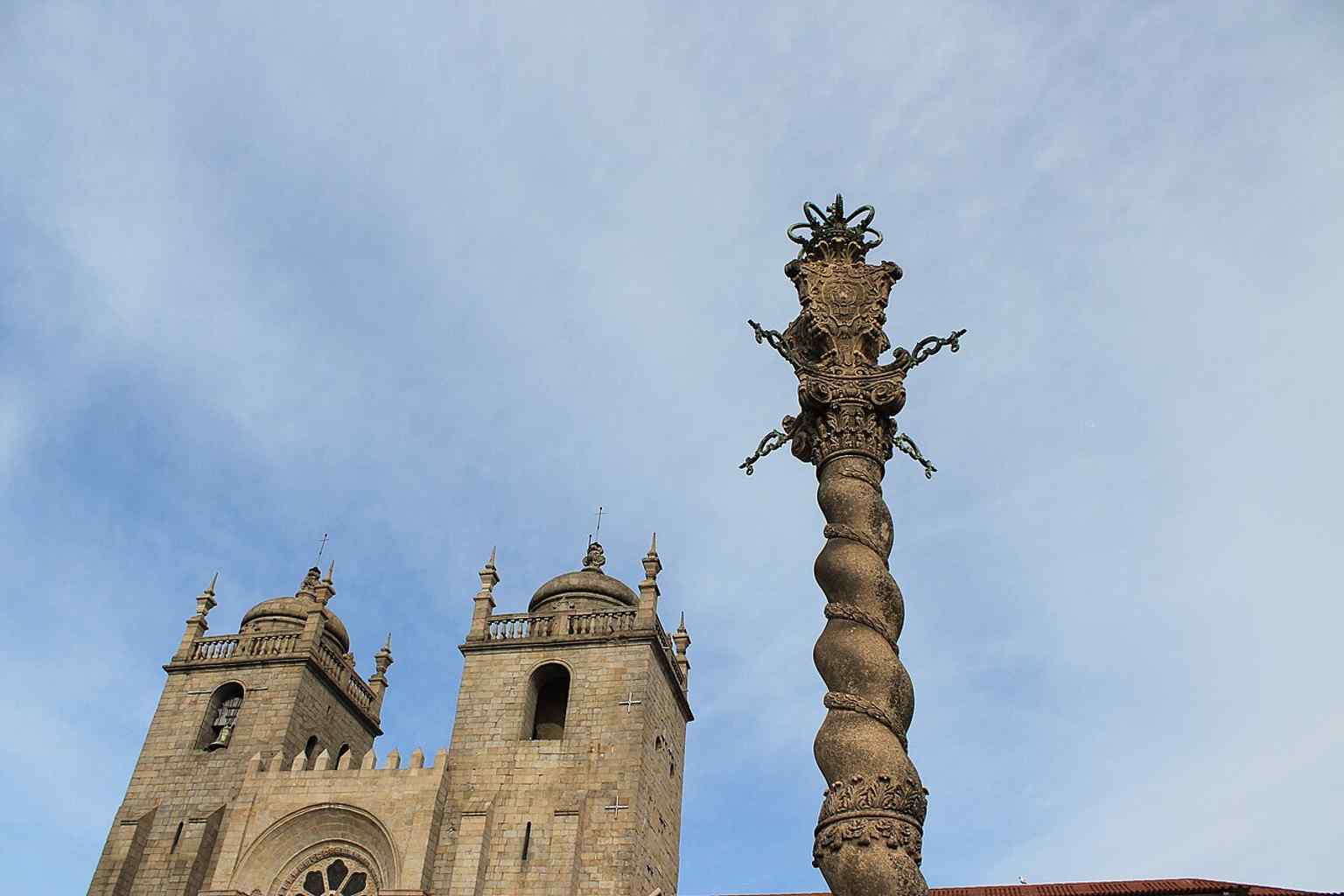
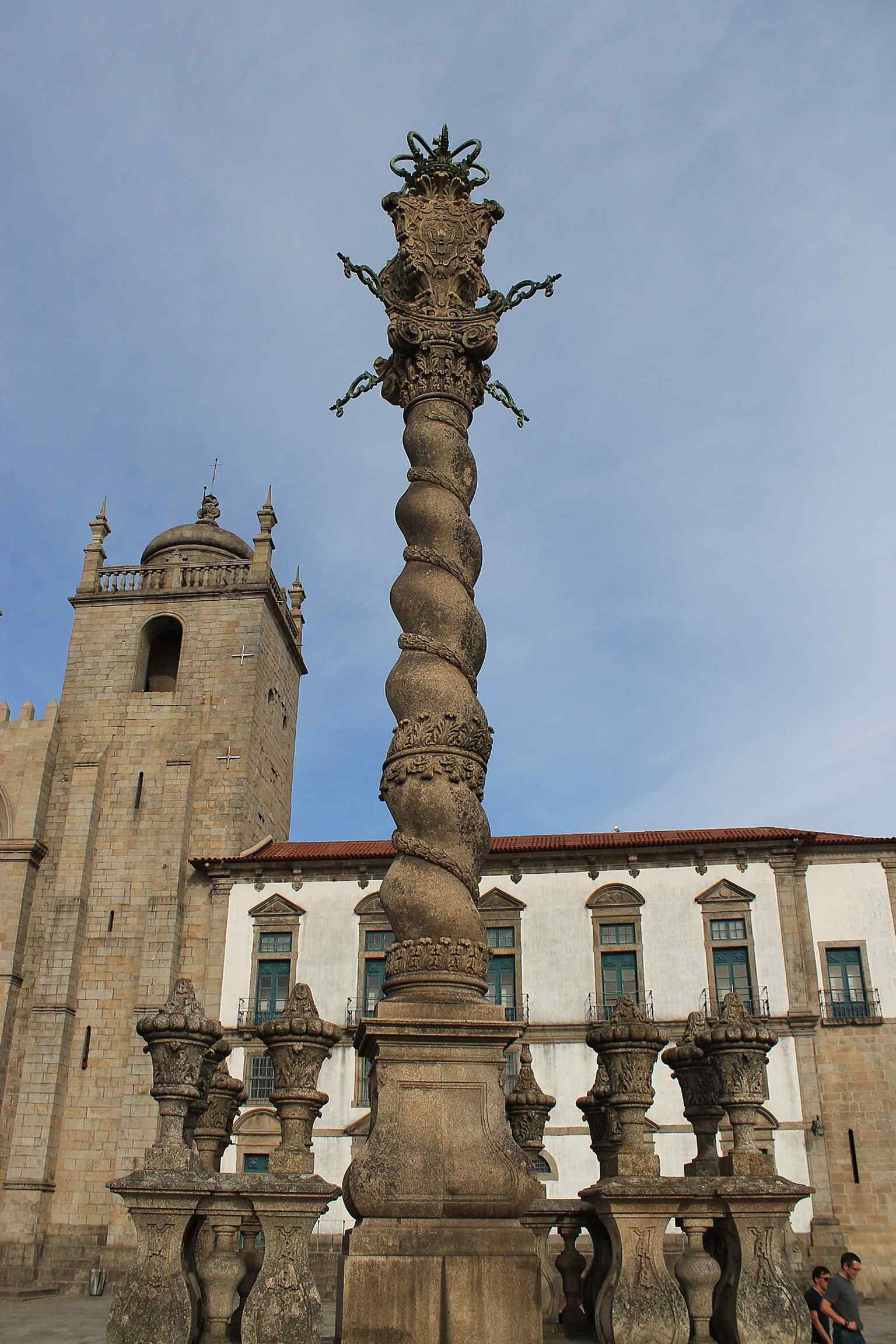
On your left rises a heavy granite church with two square towers, a circular rose window, and a battlement-like crown that makes it look almost like a fortress.

Porto Cathedral has the gravity of a place that learned, century by century, how to endure. People often speak of it as one of the city’s oldest monuments, and that is true, but even this great stone presence did not begin as a blank start. Before the cathedral stood here, this hill held an older sacred site: a chapel or hermitage founded by Henry of Burgundy and his wife in eleven oh eight. That earlier church still existed in eleven forty-seven, and then, in the second half of the twelfth century, builders began the cathedral you see now. They kept going, in one form or another, into the sixteenth century.

That long making explains the curious honesty of the façade. It does not pretend to come from a single age. The Romanesque body remains the backbone, especially in the rose window and the stern, defensive look, but later centuries kept editing the surface. The main portal changed in the eighteenth century. The tower cupolas changed too. And the Italian architect Nicolau Nasoni, who first came here in seventeen twenty-five to renovate the sacristy and chancel, added a graceful Baroque loggia to the side in seventeen thirty-six. If you glance at the image in the app, you can see that elegant addition quite clearly.

Now, take a proper look at the front. Notice how the cathedral feels both solid and slightly negotiated, as though several centuries sat down together and agreed on a truce in stone.

Inside, the oldest core is still Romanesque: a narrow nave, meaning the main central hall of the church, covered with a barrel vault, with side aisles tucked lower beside it. Builders even used flying buttresses here, those exterior stone supports that catch the sideways force of a heavy roof. For Portugal, that was early and ambitious.

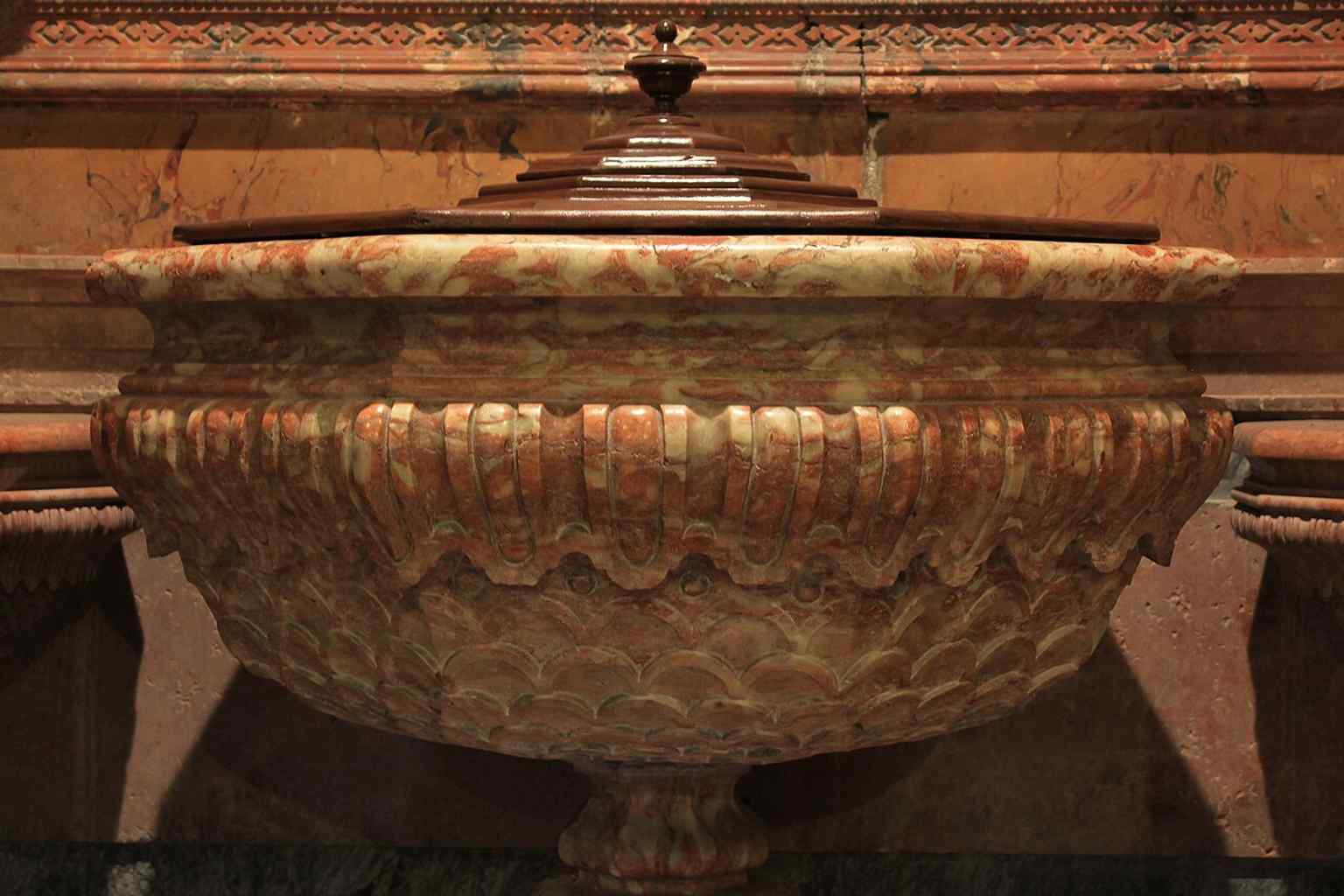
But this hill did not belong only to builders. It also gathered lives. In thirteen eighty-seven, King John the First and Philippa of Lancaster were blessed here on the second of February and married here on the fourteenth. Their union mattered far beyond Porto. It helped seal the long Anglo-Portuguese alliance, and Philippa later became known as the mother of Portugal’s so-called Illustrious Generation. One of those future stories begins here as well: tradition holds that Prince Henry the Navigator was baptized in this cathedral. If you want a glimpse of that space, the baptistery appears in the app images.
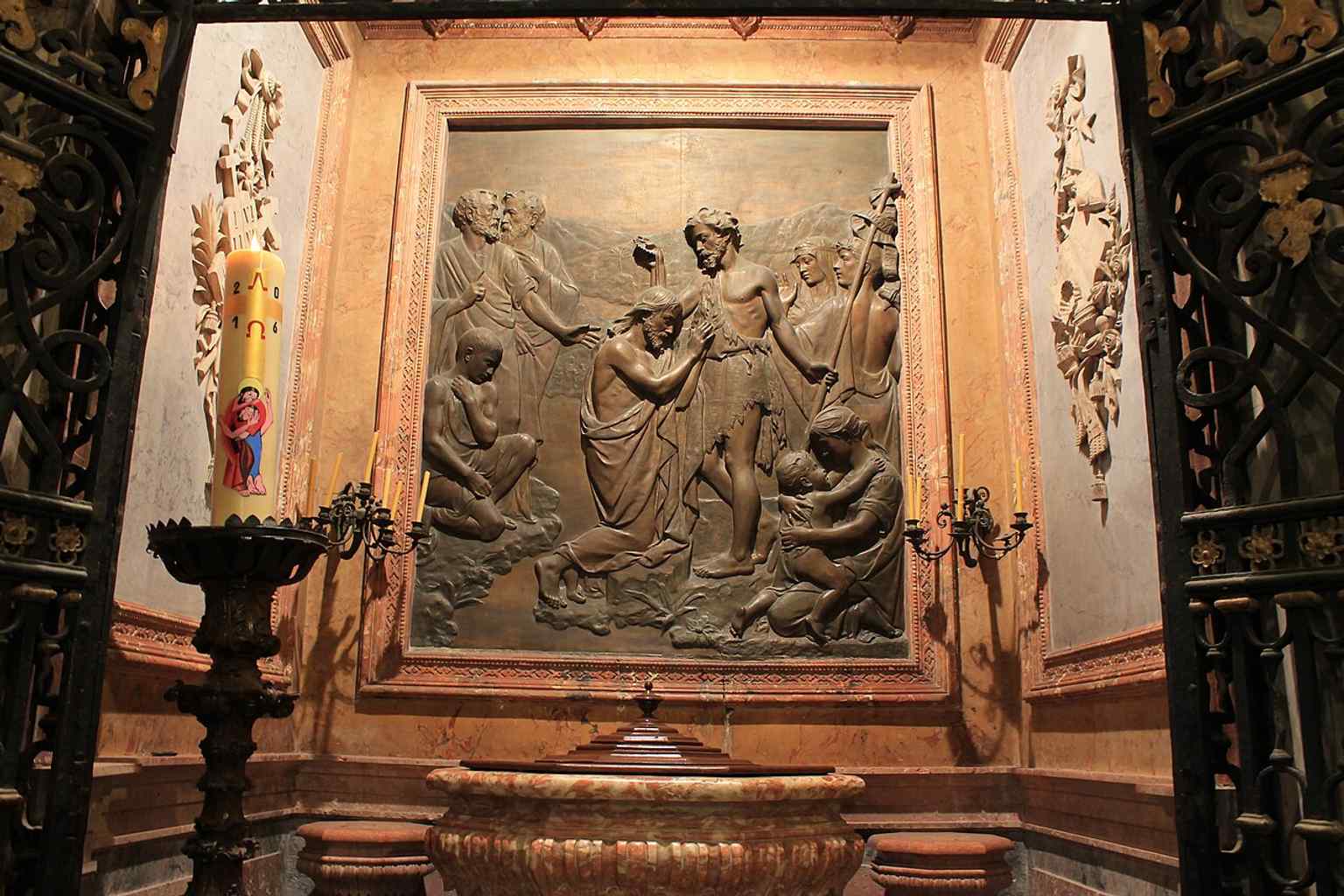
The baptistery, linked to the tradition that Prince Henry the Navigator was baptized here.
The baptistery, linked to the tradition that Prince Henry the Navigator was baptized here.Photo: John Samuel, Wikimedia Commons, CC BY-SA 4.0. Cropped & resized.

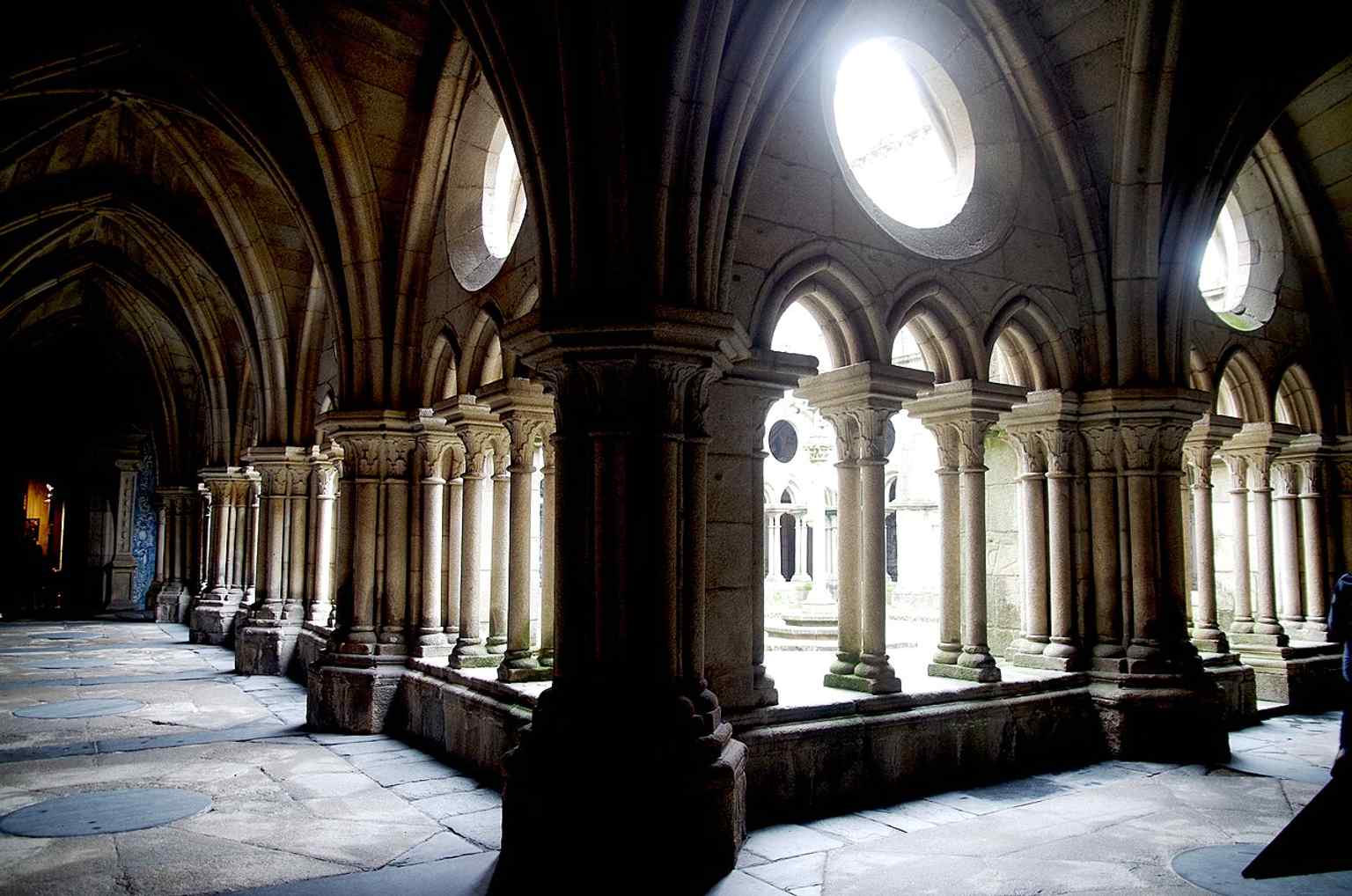
The Gothic cloister, added in the fourteenth and fifteenth centuries, later received Baroque azulejo tiles by Valentim de Almeida, and one chapel holds a remarkable silver altarpiece from the seventeenth century. That treasure inspired a favourite local legend: when Napoleon’s troops entered Porto in eighteen oh nine, someone coated the silver with plaster or lime so French soldiers would overlook it. Another version gives the credit to Canon Pedro Breiner, who supposedly tried to bargain for its safety.

So even here, at what seems Porto’s firmest point, certainty slips a little. This cathedral is not pure origin preserved under glass. It is a long accumulation of repairs, additions, royal ceremonies, wartime scares, and stubborn continuity. When you continue to the Monastery of Serra do Pilar, about eleven minutes from here, keep that in mind: in Porto, the oldest places are often the most revised. If you decide to return later, the cathedral generally opens daily from nine in the morning until half past six.
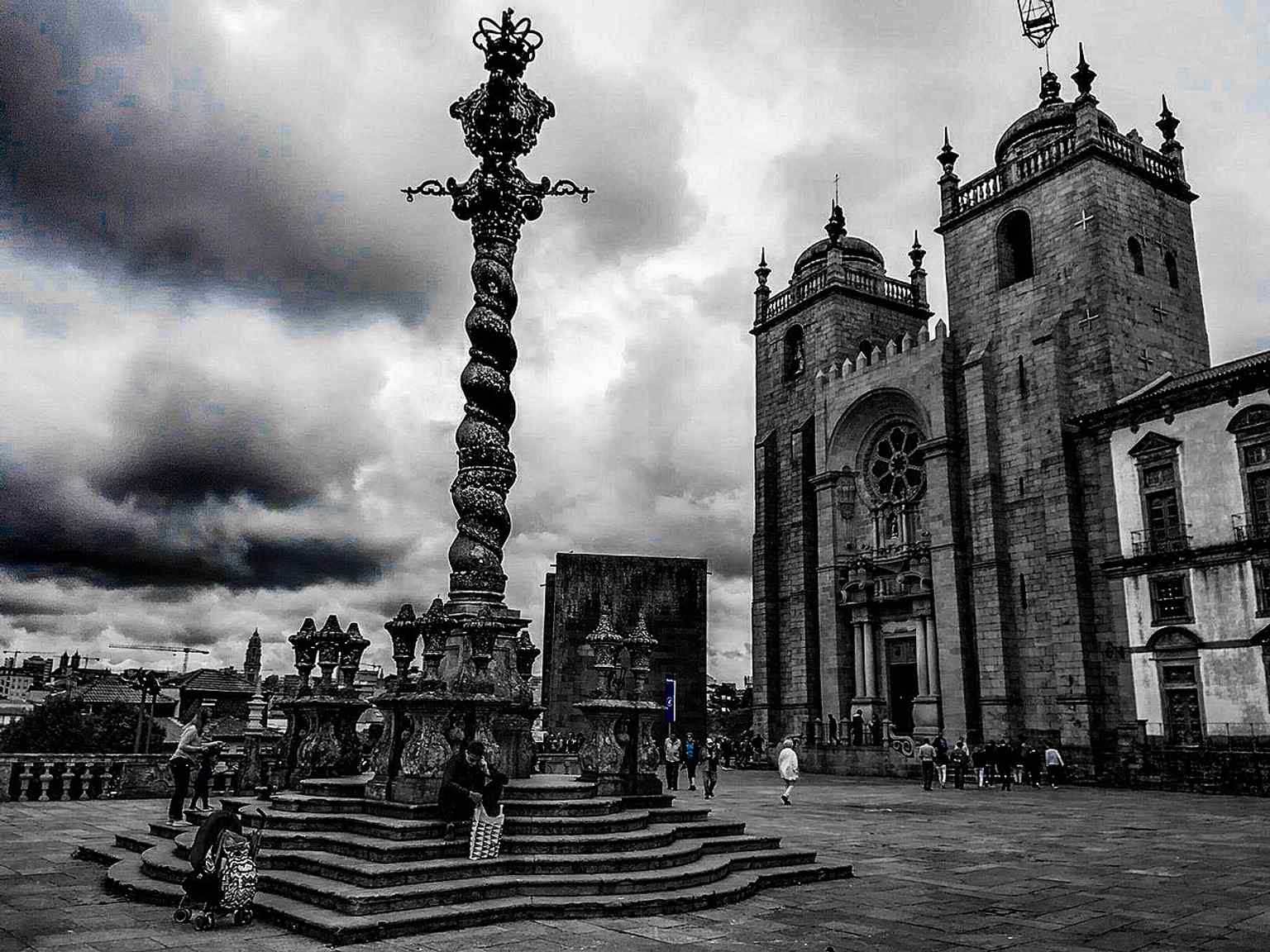
A clear daytime view of Porto Cathedral’s Romanesque façade, with the fortress-like towers and rose window that give it its defensive look.
A clear daytime view of Porto Cathedral’s Romanesque façade, with the fortress-like towers and rose window that give it its defensive look.Photo: Ivan Stesso, Wikimedia Commons, CC BY-SA 4.0. Cropped & resized.
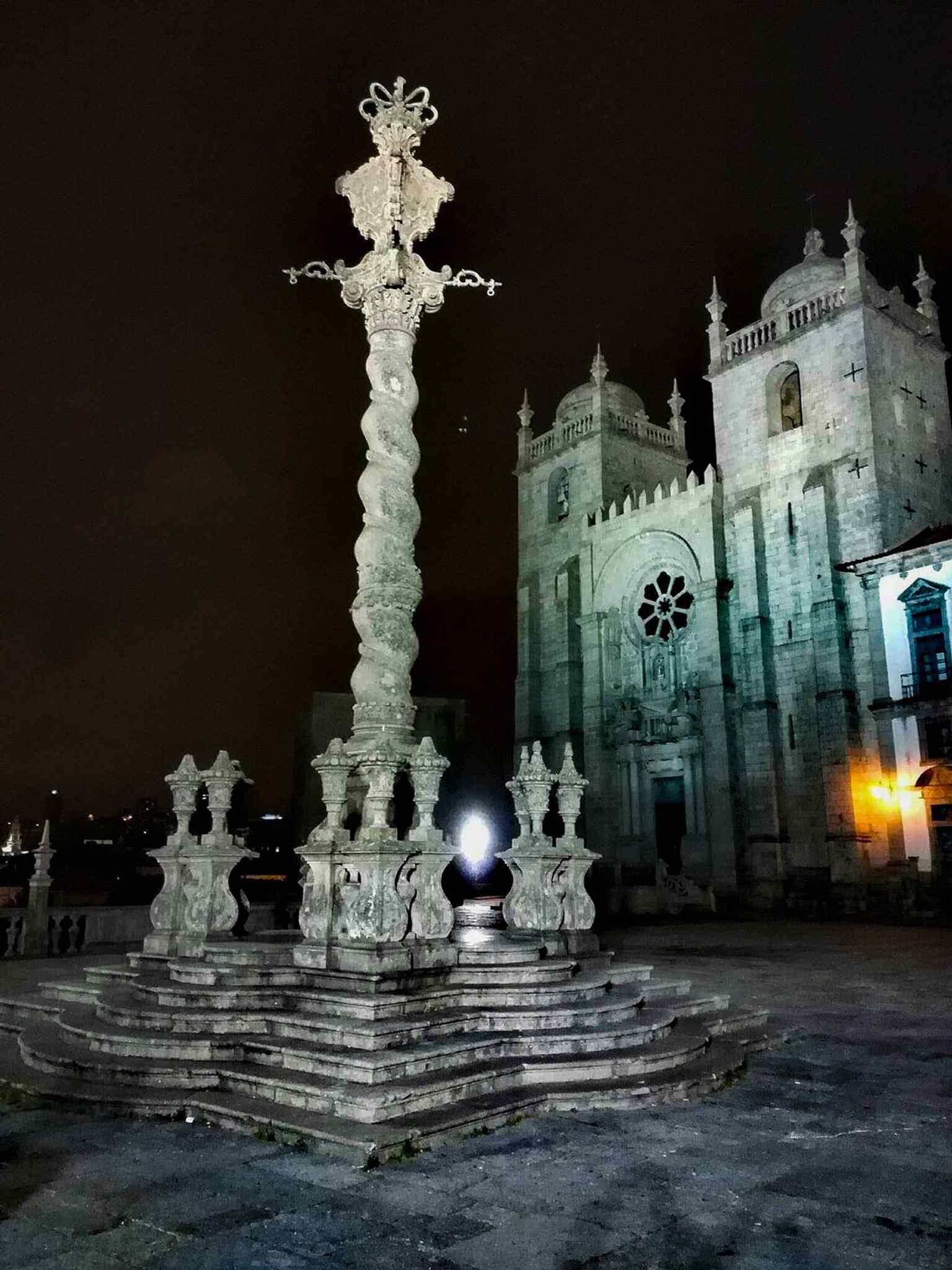
The cathedral at night, showing how the old monument still dominates Porto’s historic centre after dark.
The cathedral at night, showing how the old monument still dominates Porto’s historic centre after dark.Photo: Ivan Stesso, Wikimedia Commons, CC BY-SA 4.0. Cropped & resized.
A wider exterior view that helps place the cathedral in the city and shows its heavy Romanesque massing.
A wider exterior view that helps place the cathedral in the city and shows its heavy Romanesque massing.Photo: John Samuel, Wikimedia Commons, CC BY-SA 4.0. Cropped & resized.
Another strong façade angle, useful for highlighting the cathedral’s layered appearance after centuries of rebuilding.
Another strong façade angle, useful for highlighting the cathedral’s layered appearance after centuries of rebuilding.Photo: John Samuel, Wikimedia Commons, CC BY-SA 4.0. Cropped & resized.
The Gothic cloister of Porto Cathedral, built in the 14th–15th centuries and later decorated with azulejos.
The Gothic cloister of Porto Cathedral, built in the 14th–15th centuries and later decorated with azulejos.Photo: Cardilio, Wikimedia Commons, CC BY-SA 4.0. Cropped & resized.
A closer look inside the baptistery, where the Christian symbolism connects to Porto Cathedral’s royal and discovery-era stories.
A closer look inside the baptistery, where the Christian symbolism connects to Porto Cathedral’s royal and discovery-era stories.Photo: John Samuel, Wikimedia Commons, CC BY-SA 4.0. Cropped & resized.
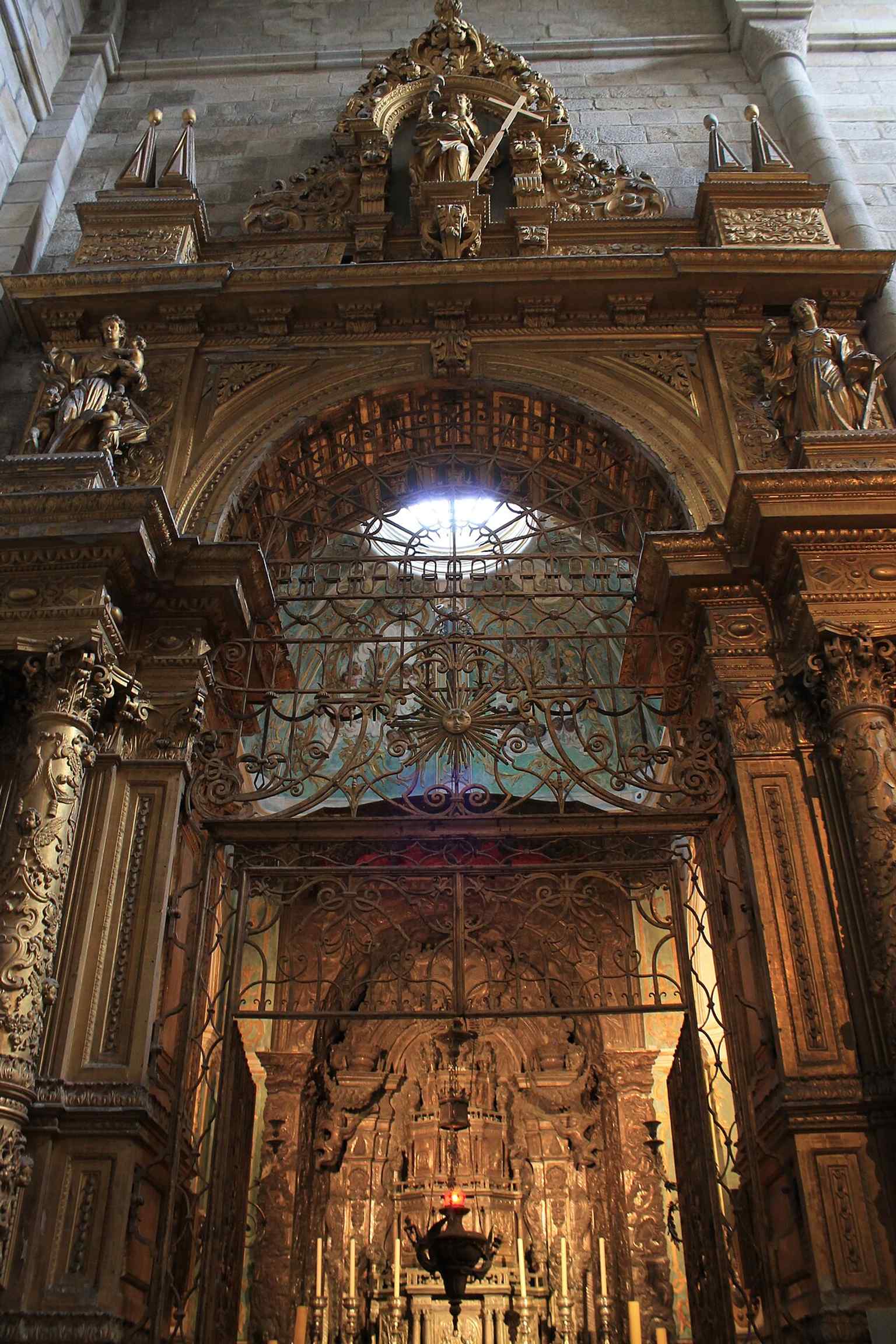
One of the chapels in the cathedral interior, part of the richly altered Baroque ensemble added over the centuries.
One of the chapels in the cathedral interior, part of the richly altered Baroque ensemble added over the centuries.Photo: John Samuel, Wikimedia Commons, CC BY-SA 4.0. Cropped & resized.
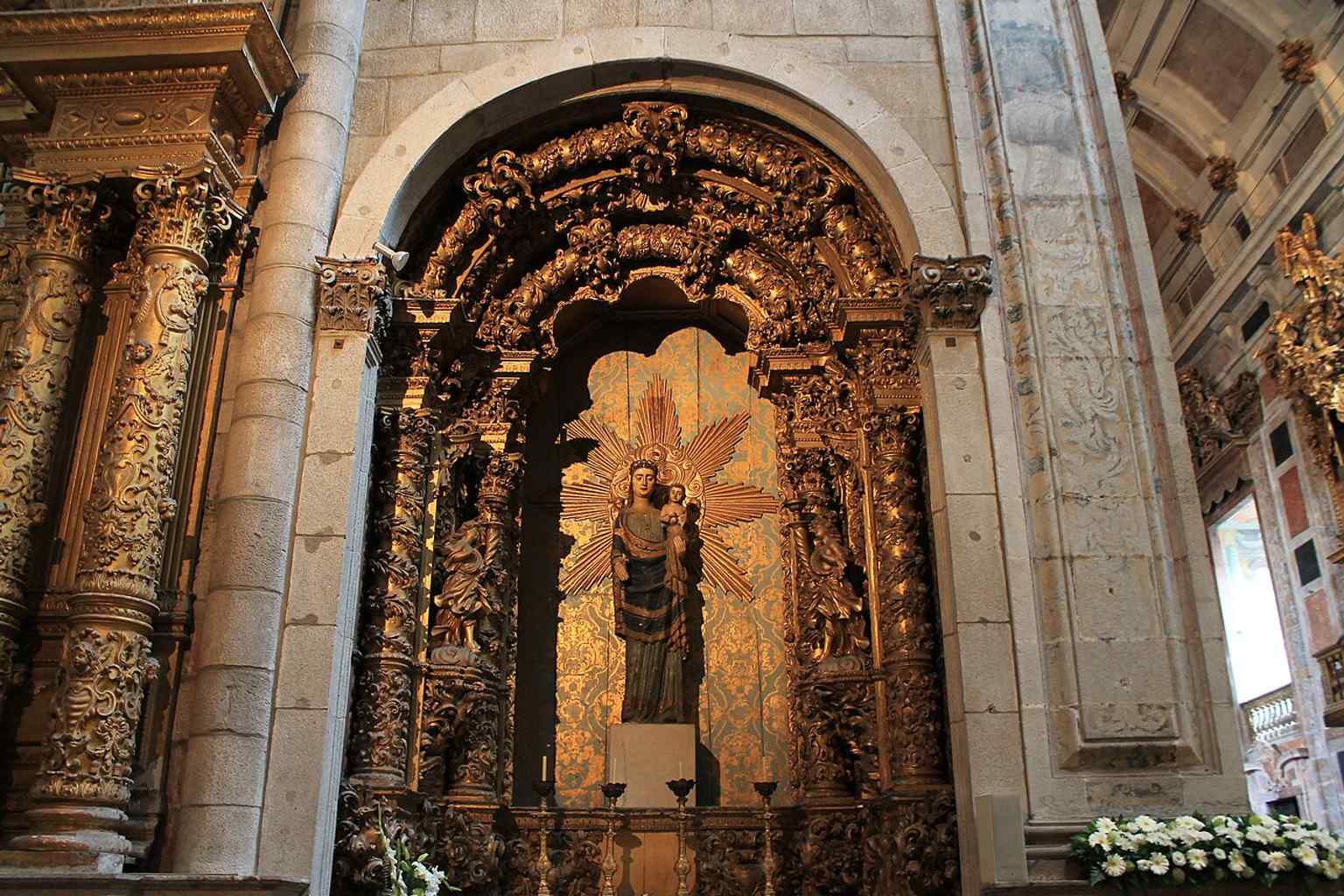
The altar of Nossa Senhora da Vandoma, part of the cathedral’s chapels and a reminder of its layered devotional history.
The altar of Nossa Senhora da Vandoma, part of the cathedral’s chapels and a reminder of its layered devotional history.Photo: John Samuel, Wikimedia Commons, CC BY-SA 4.0. Cropped & resized.
arrow_back Back to Porto Audio Tour: Cultural Treasures
Loved by travellers

Thousands of tours started.
Plenty of opinions.

4.8 across the App Store and Google Play. Here's a few we keep coming back to.

starstarstarstarstar
This was a solid way to get to know Brighton without feeling like a tourist. The narration had depth and context, but didn't overdo it.
Christoph
Christoph
Brighton Tour
starstarstarstarstar
Started this tour with a croissant in one hand and zero expectations. The app just vibes with you, no pressure, just you, your headphones, and some cool stories.
download Get the app

Pop your headphones in.
Step outside.

Free to download. Tours in every city. Start in 60 seconds — no account, no card.

Download on the App StoreGet it on Google Play
starstarstarstarstar_half
4.8
AudaTours app icon
headphones
~ 4 min until your first tour starts
public
1,000+ cities worldwide
all_inclusive
AudaTours
Unlimited

Every tour. Every city. One subscription.

3101 tours2271 cities138 countries50+ languages