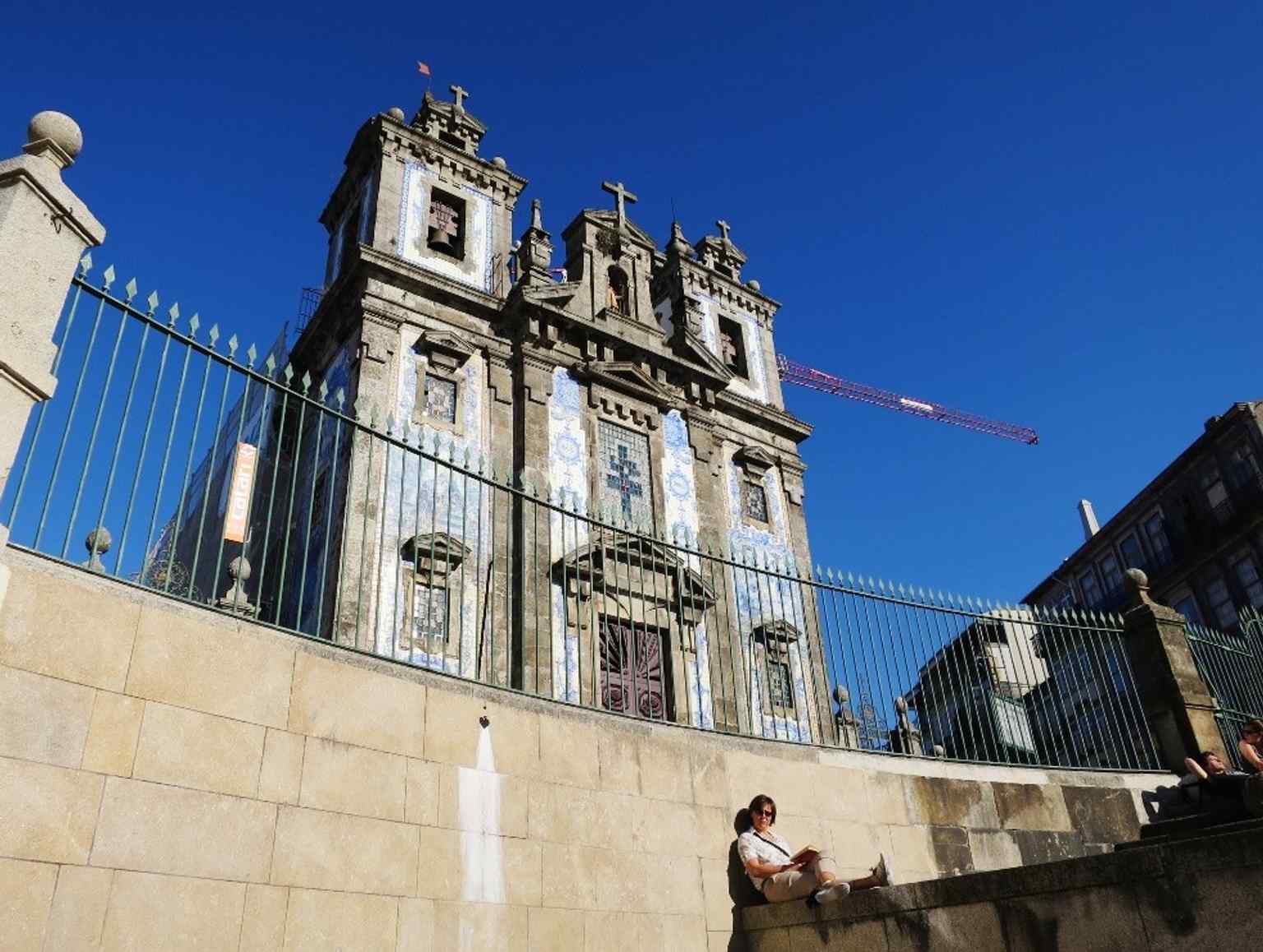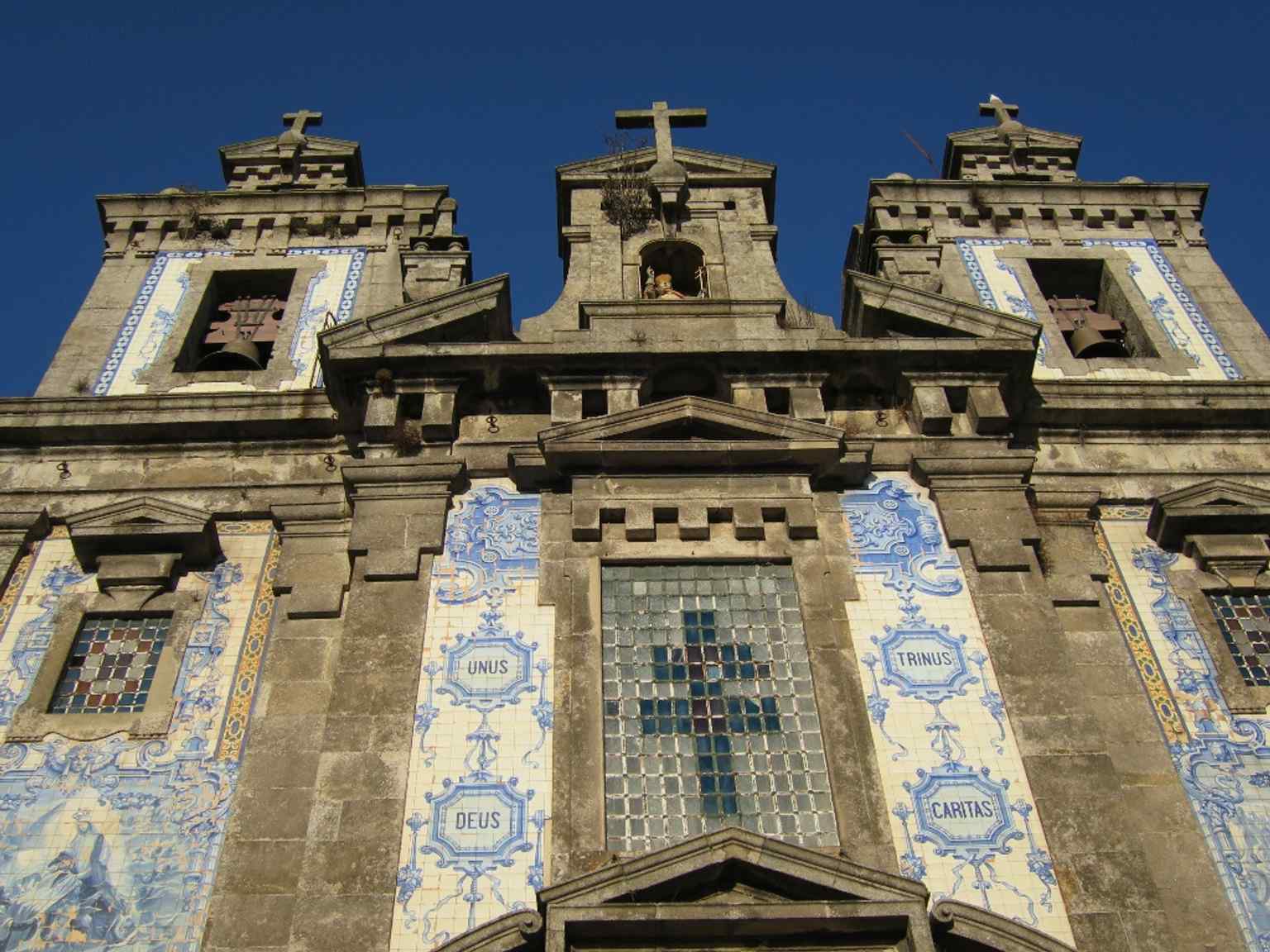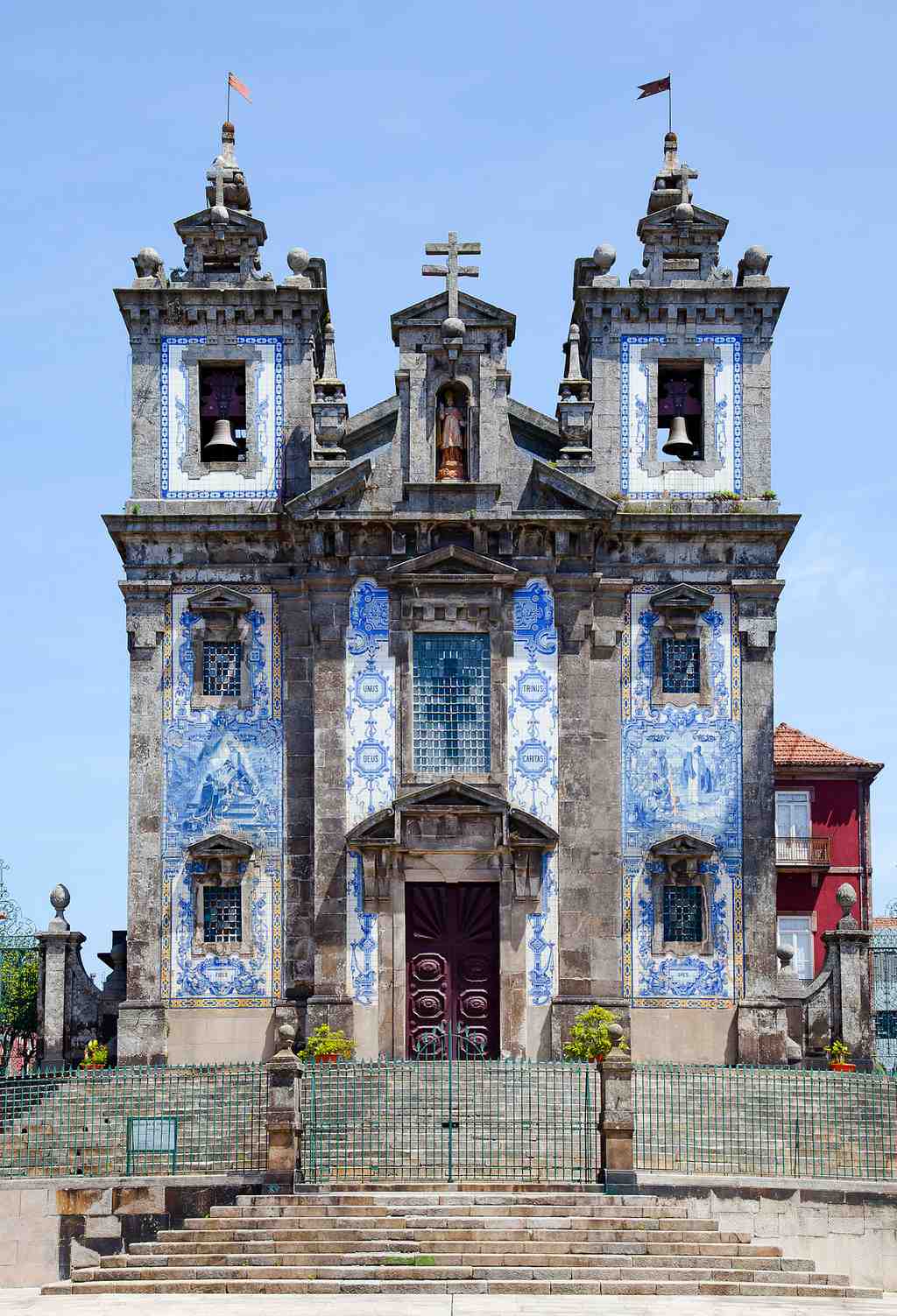
Ahead of you rises a pale stone church with a broad stair, twin bell towers, and a blue-and-white tiled façade crowned by a small niche holding its patron saint.
This is Santo Ildefonso, standing at Praça da Batalha, one of Porto’s great thresholds: a place where worship, traffic, argument, trade, and public memory have long pressed up against one another. The church faces the city almost like a stage set, but it has never been mere decoration. It has stood where private devotion meets the rougher business of urban life.
What you see now took shape across the eighteenth century. An older chapel here, known as Santo Alifon, had grown dangerously unstable. Texts mention it as early as twelve ninety-six, when Bishop Vicente Mendes recorded the site, and local tradition reaches even further back, saying Bishop Dom Pedro de Pitões consecrated a chapel here in the twelfth century. So this ground kept its sacred pull long before this building arrived.
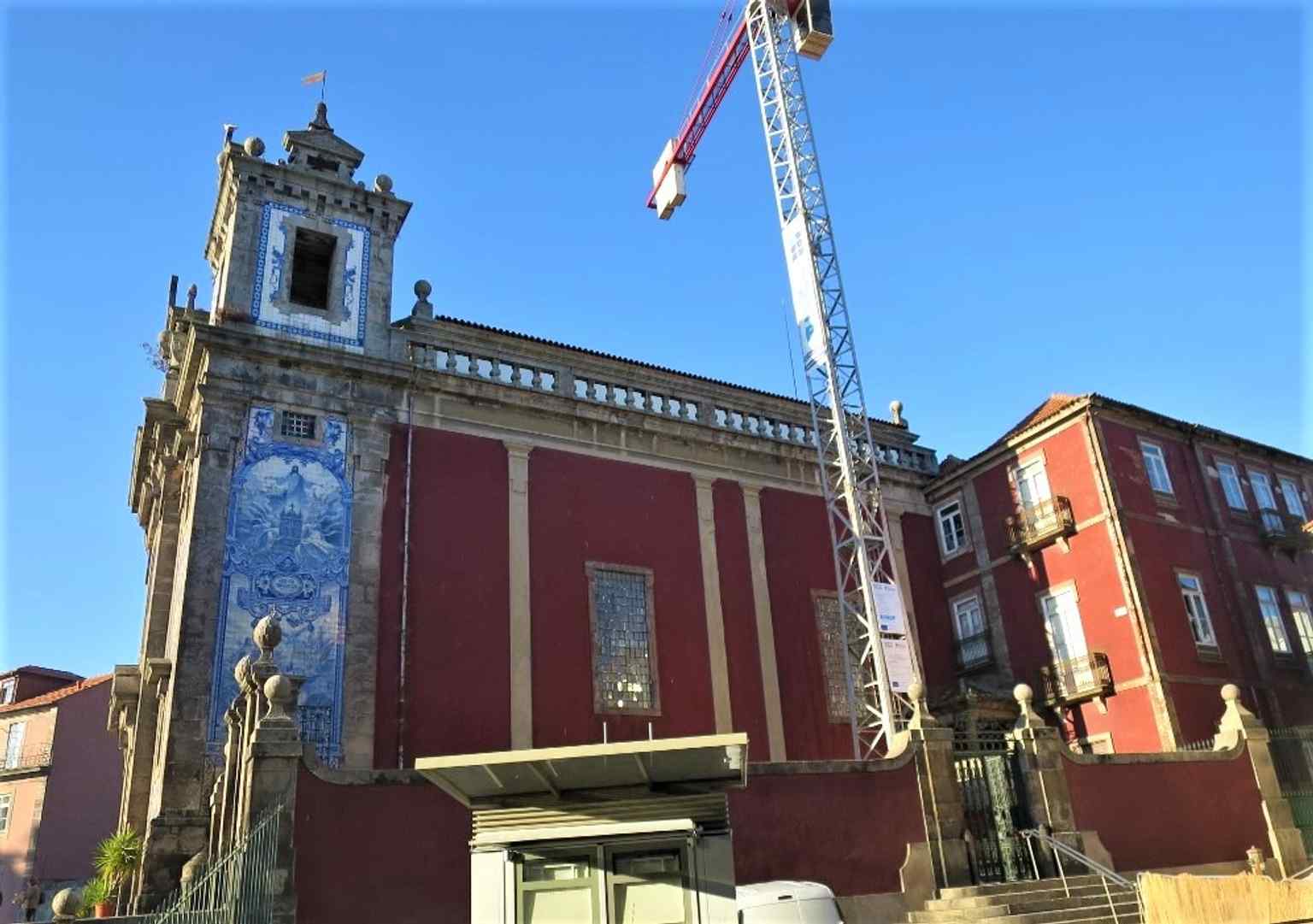
The old chapel came down in seventeen oh nine. Builders then spent roughly thirty years raising the church before blessing it in July of seventeen thirty-nine. The architect’s name slipped away, which is rather Porto, really: the city often remembers the monument more clearly than the hands that made it. Still, the front tells its own story. If you glance at the image on your screen, you can see how Jorge Colaço wrapped the façade in about eleven thousand tiles in nineteen thirty-two. He gave the church the face most people remember today, with scenes from the life of Saint Ildefonso and allegories of the Eucharist, while leaving the eighteenth-century structure beneath intact.
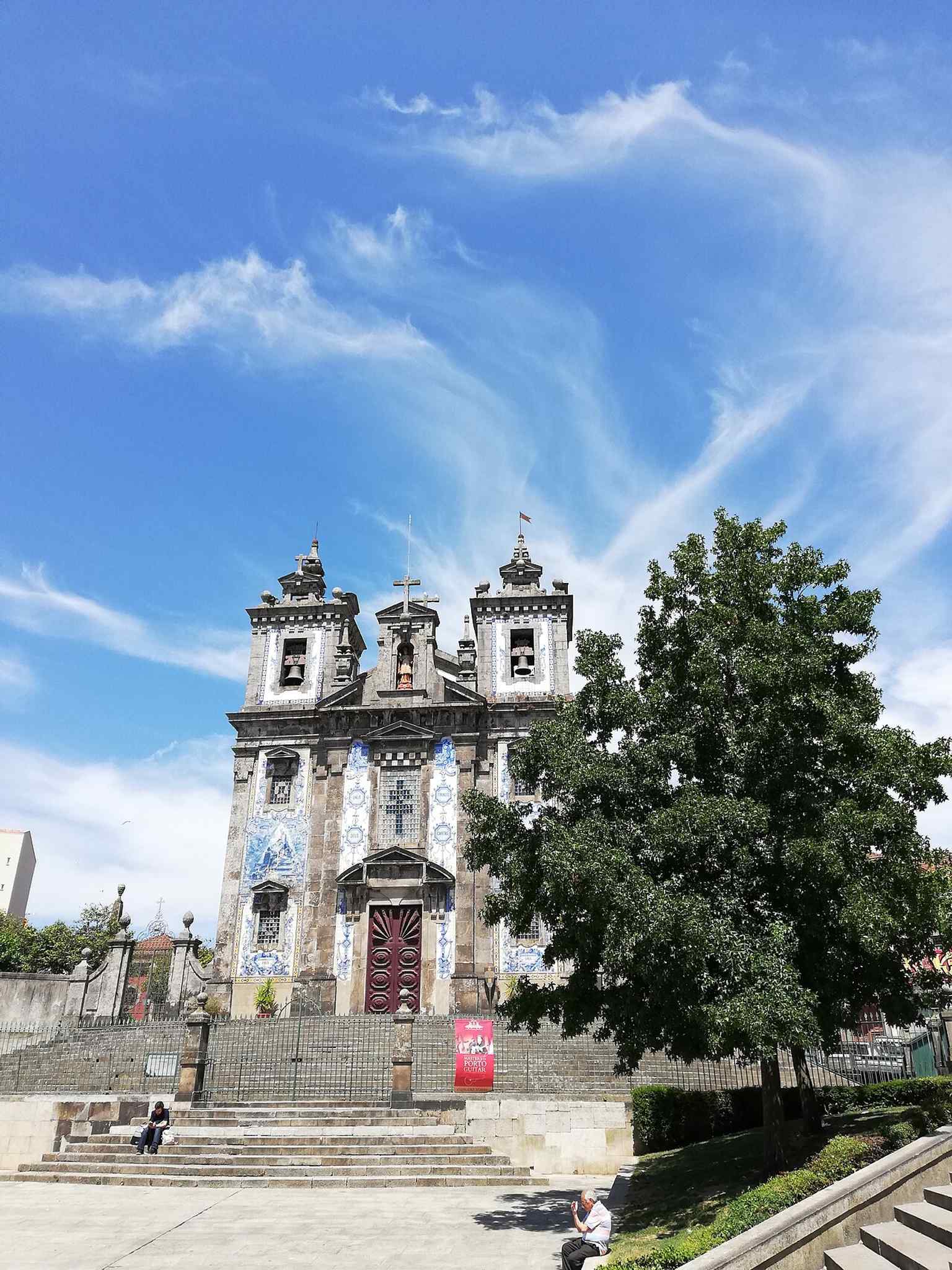
That layering matters. Behind this tiled skin lies an early Baroque church with a polygonal central hall, a wooden ceiling, Rococo carving, and a high altarpiece linked to Nicolau Nasoni. Yet even there, authorship blurs: records suggest Miguel Francisco da Silva executed and assembled that great altar in seventeen forty-five. One man drew it, another gave it substance. Porto is full of such handovers.
And then comes the sharper edge of the story. This church survived repairs after a violent storm in eighteen nineteen, then artillery damage during the Siege of Porto in eighteen thirty-three. Later still, on the thirty-first of January, eighteen ninety-one, these steps entered political history. The Municipal Guard positioned here opened fire on republican demonstrators, crushing the revolt and one of Portugal’s first attempts to establish a republic. That is the surprise in this splendid façade: beauty on the surface, gunfire in the memory of the stones. Even the nearby Rua Trinta e Um de Janeiro keeps the wound in its name.
During works in nineteen ninety-six, renovators opened the narthex, the entrance zone before the church, and uncovered nineteen graves. So beneath the stair and ceremony lay a burial ground all along.
In a moment, we head toward Liberty Square, where politics steps fully into the open. If you plan to look inside later, note that visiting hours vary by day, with openings split between late morning and afternoon on most weekdays and Saturdays.