
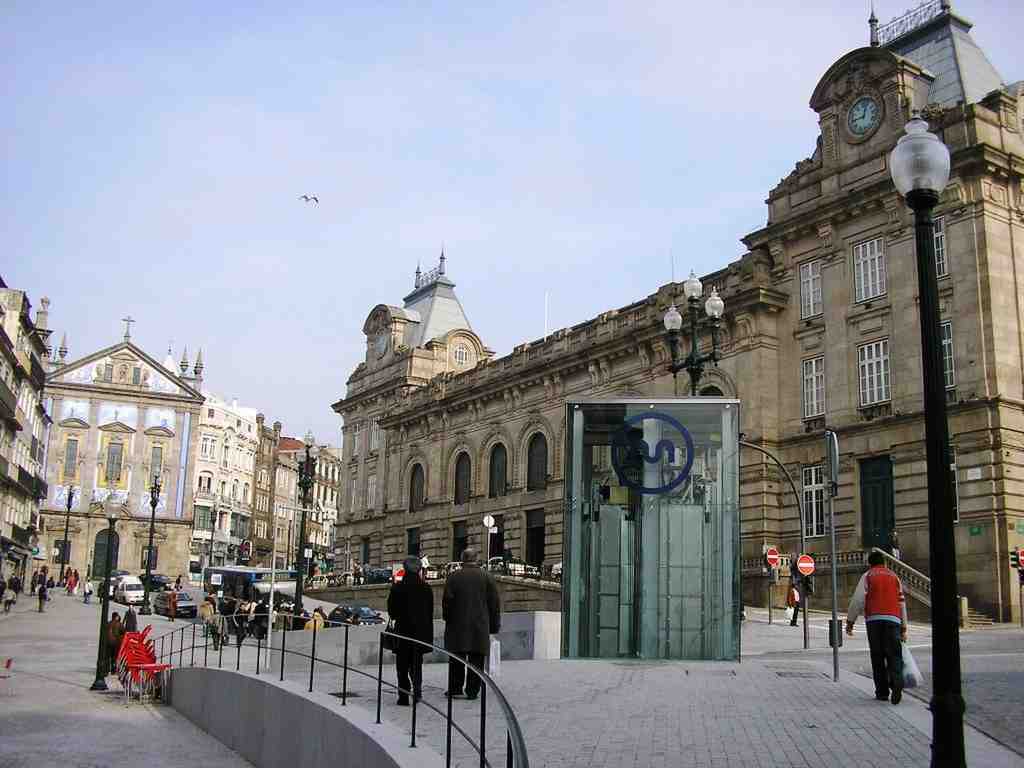
Look for the broad granite façade with its arched windows, central pediment, and formal main portal, a stately railway front standing above the metro stop below.
This is where Porto introduces itself rather honestly: not as a tidy sequence of eras, but as a stack of them. Beneath your feet, modern light rail runs through an underground station on line D, opened on the seventeenth of September, two thousand five. Above it stands one of the city’s best-known railway stations. And before either of them, this corner belonged for centuries to the Convent of São Bento de Avé-Maria.
That is the detail locals quietly enjoy telling you: the name São Bento does not come from the railway age at all. It comes from the vanished Benedictine convent that once occupied this very ground. The convent held on until the last nun died in May of eighteen ninety-two. Only then did the site open to a different kind of ritual: tickets, timetables, arrivals, departures.
Porto does this often. A sacred place becomes a civic one, but the older life never quite leaves. Here, even the station carries a whisper of the monastery it replaced. Popular legend says the last nun still wanders the corridors, and that in the quietest hours her prayers can still be heard. Folklore, certainly. But folklore tends to settle where memory has unfinished business.
Now, take a brief pause. Watch the flow of people entering and leaving, all that purposeful movement. Then imagine a very different rhythm once governing the same patch of earth: cloistered footsteps, bells, prayer.
The great tiled hall above the metro connection makes that layering visible. In nineteen oh five, the artist Jorge Colaço began the vast azulejo programme here. Azulejos are glazed ceramic tiles, and Colaço used about twenty thousand of them across roughly five hundred and fifty-one square metres. He worked for more than a decade, turning a transport building into a public history book. The panels show the Battle of Valdevez, the conquest of Ceuta, King João the First entering Porto after Aljubarrota, and scenes of rural life from the Douro and Minho. Commuters hurry through; history waits on the walls.
And the station keeps changing. The metro line now stretches far beyond its original route, and every proposed alteration here sparks debate, because this site sits inside Porto’s UNESCO-listed historic area. People still argue over what should be added, protected, or left untouched.
Just south of here, the trains emerge from the tunnel and head for the upper deck of the Dom Luís the First Bridge. If even a metro stop carries buried lives beneath its platforms, you can begin to sense what this city may reveal next. When you are ready, we’ll continue in about six minutes to the Igreja da Misericórdia do Porto.




