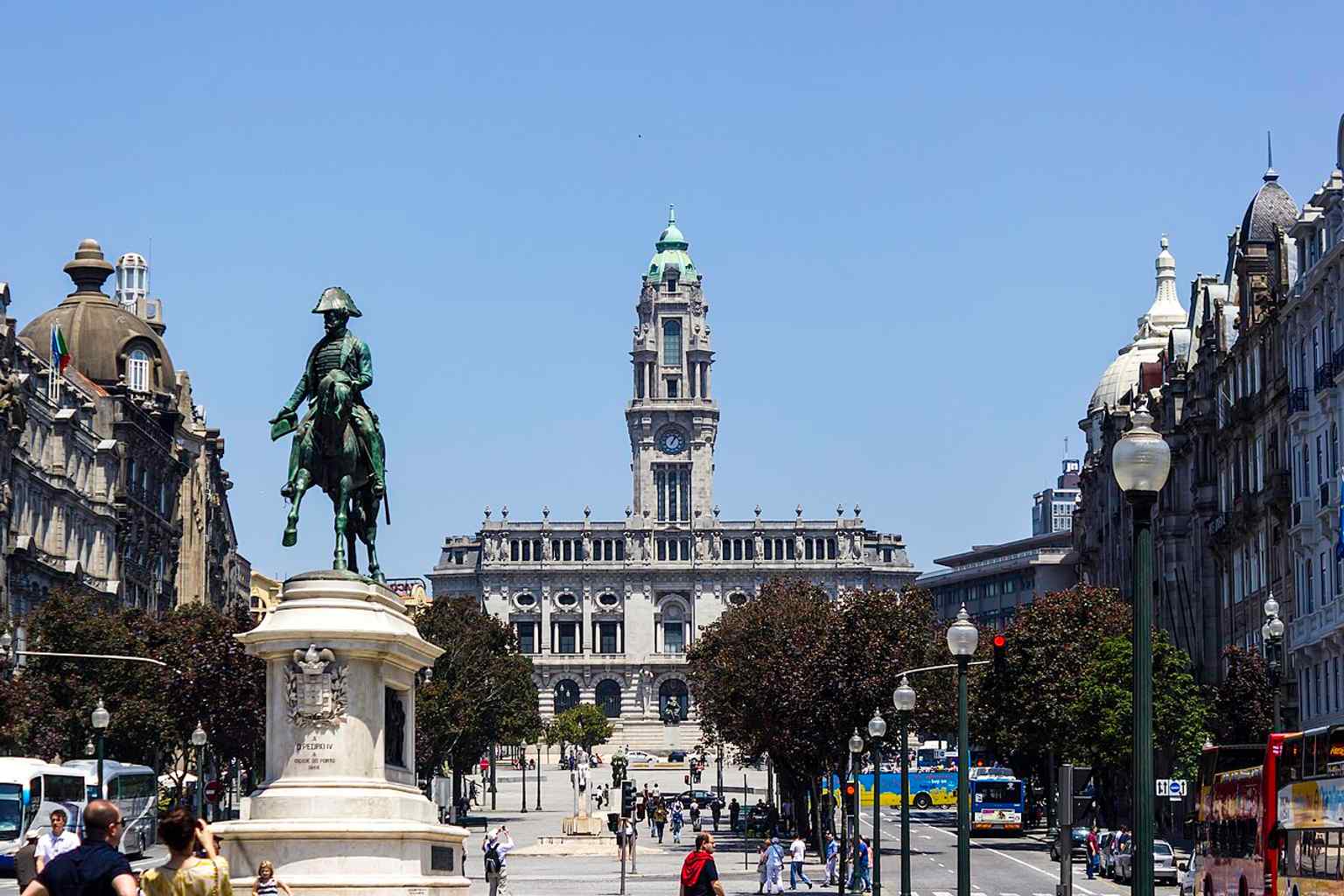
Look for a broad stone-paved square framed by grand granite façades, with a dark bronze horseman rising from a tall pedestal at its centre.
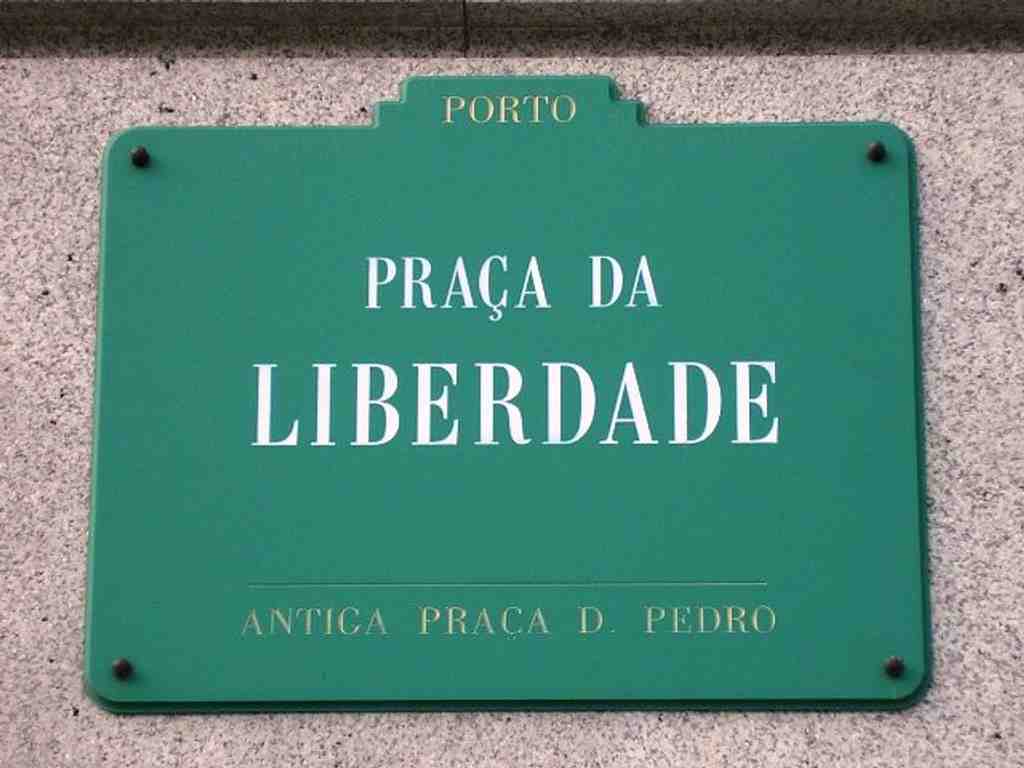
This is Praça da Liberdade, Liberty Square, though Porto has called this place many things before it settled on so confident a name. In the fifteenth century it answered to older, quieter names linked to fields and water. After a fountain arrived in sixteen eighty-two, people called it Praça da Natividade. Then came Hortas, the gardens. Then Praça Nova. In eighteen twenty, Praça da Constituição. In eighteen thirty-three, Praça de Dom Pedro the Fourth. For a few days in October of nineteen ten, it was even Praça da República. Only on the twenty-seventh of October, nineteen ten, did it become Praça da Liberdade, a title chosen to honour the new republican order.
That changing name tells you something essential about Porto. Even its ceremonial centre sits on layers of argument.
Originally, this ground belonged to the cathedral chapter, the Cabido da Sé, and lay outside the Fernandine walls, between the old gates of Porta de Carros and Santo Elói. Plans for a proper public square appeared in sixteen ninety-one and again in seventeen oh nine, but both came to nothing. At last, in seventeen eighteen, the cathedral chapter gave up the land, new streets were cut through, and Praça Nova began to take shape. To the north stood two small palaces that later housed the city council. To the east stood the Convent of the Congregados. To the south, part of the medieval wall came down in seventeen eighty-eight so the Convent of Santo Elói could rise there, the building you now know as the Palácio das Cardosas.
And yet elegance did not protect this place from brutality.
In eighteen twenty-nine, when this was still Praça Nova, the absolutist regime of Dom Miguel used the square as a theatre of warning. Twelve liberals connected to the revolts of eighteen twenty-eight died here: ten were hanged on the seventh of May, and two more on the ninth of October. Municipal memory records an uglier detail still: some severed heads were displayed near homes and public places. Standing in a square now linked with openness and movement, what does it do to the space to know that power once staged terror here, right in the civic heart of the city?
That is why the man in the middle matters. Dom Pedro the Fourth, mounted in bronze since October of eighteen sixty-six, does more than decorate the square. The sculptor Célestin Anatole Calmels and the architect Joaquim da Costa Lima turned his pedestal into a political statement. Its reliefs recall liberal memory: Pedro’s arrival at Mindelo, and the delivery of his heart to Porto, a gesture that bound the king to the city almost like a saintly relic.
By the nineteenth century, this became Porto’s favoured meeting place for politicians, journalists, merchants, and wealthy returnees from Brazil. Coffee houses filled the edges, then gradually gave way to banks, insurers, and offices as the square tightened its grip on the city’s business life. The opening of the Dom Luís bridge in eighteen eighty-seven, and the arrival of the railway at São Bento in eighteen ninety-six, only strengthened that role.
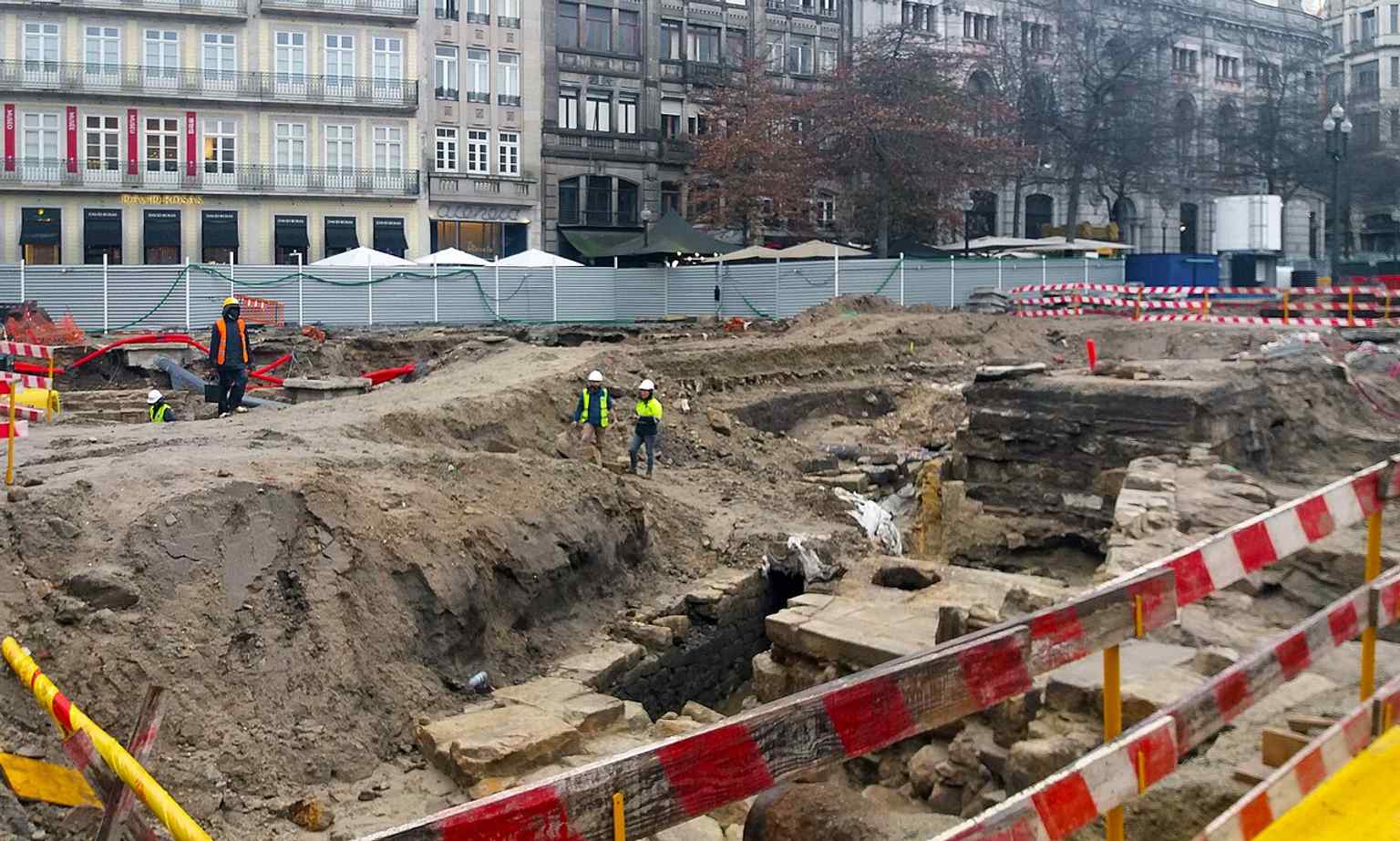
Then the square changed again. In nineteen sixteen, President Bernardino Machado attended the ceremonial start of demolition for the old town hall, clearing the way for Avenida dos Aliados and a grand new civic axis. Later plans imagined even harsher surgery, including elevated roads towards the cathedral, but some ambitions remained on paper. If you fancy, have a look at the before-and-after image in the app to see how the Metro works turned the square into an excavation site in two thousand and twenty-two.
So Liberty Square is not innocent. Squares with names like this often earn them only after coercion, renaming, and loss. When you are ready, we continue in about nine minutes to Praça de Carlos Alberto, another place where public life and private memory meet. And, fittingly for a true city square, this one remains open at all hours.