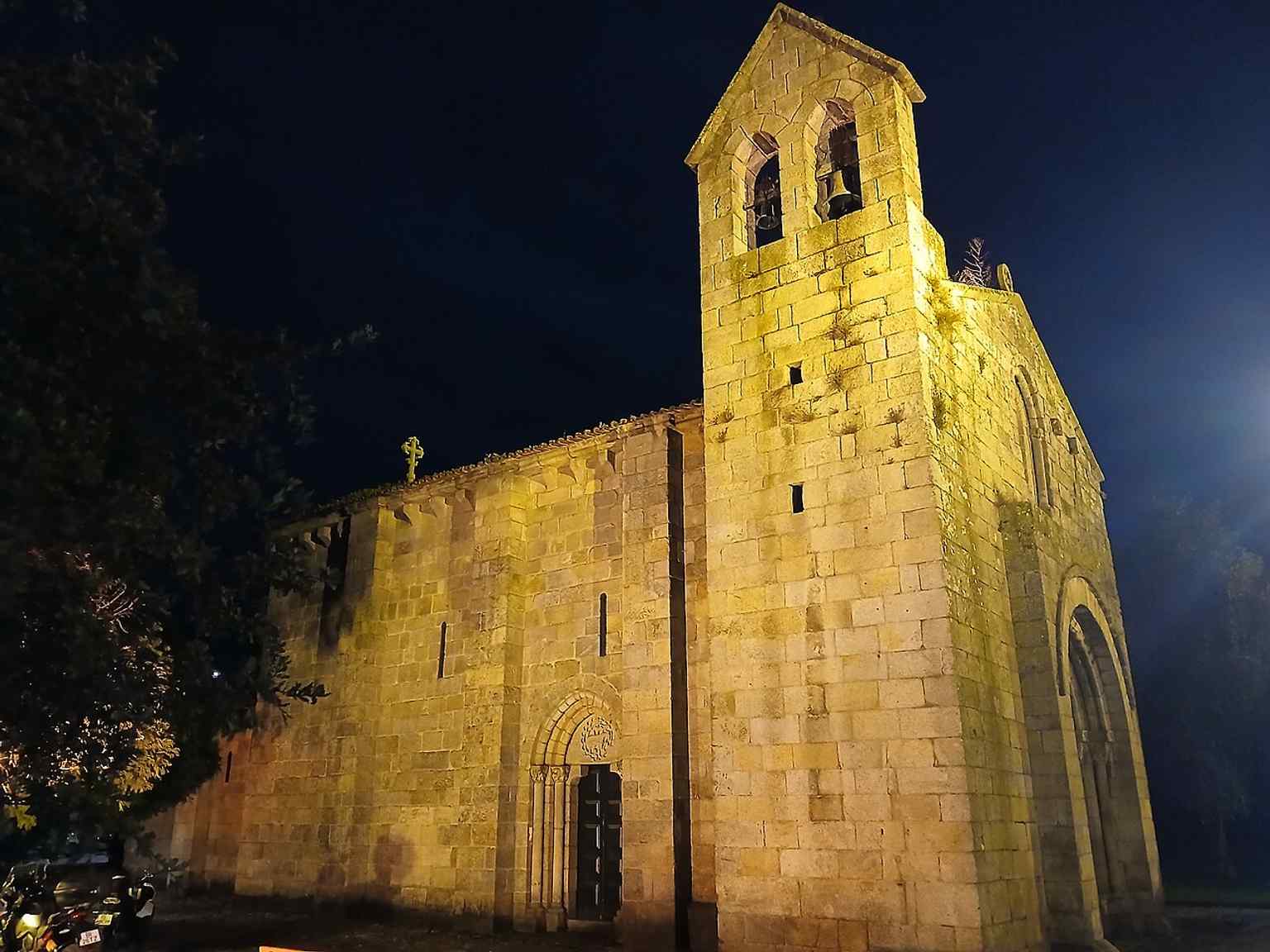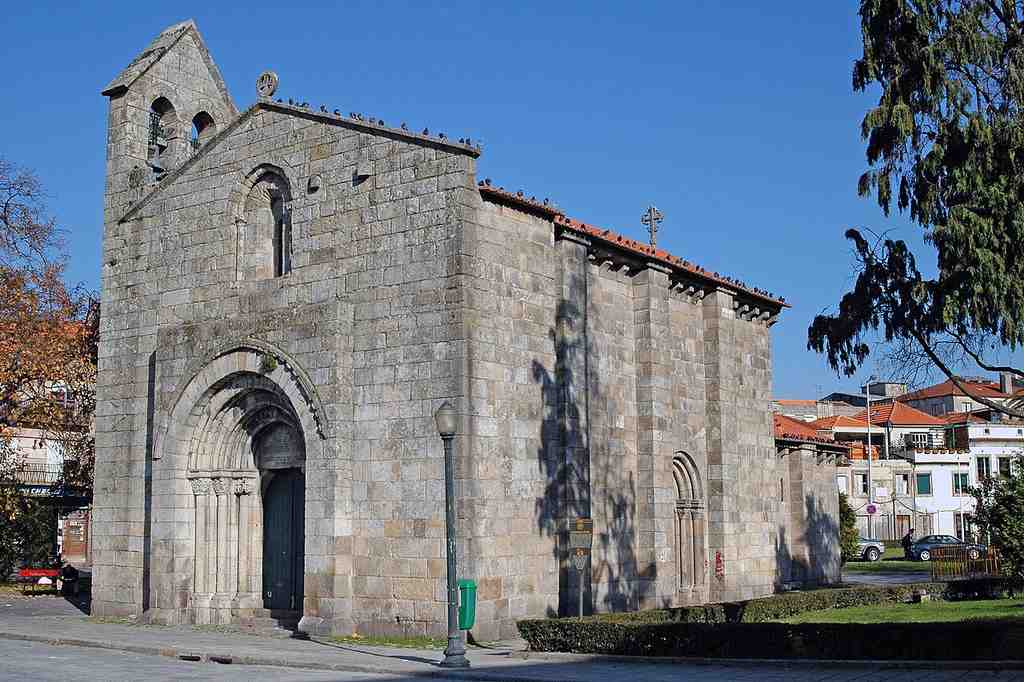
On your right, the Church of São Martinho de Cedofeita appears as a low, dark-granite block with a simple rectangular body, a triple-arched Romanesque doorway, and a small bell gable perched at one corner.
This modest church is one of Porto’s deepest roots. It is a National Monument, and a rare one: a single-nave church, meaning one main hall without side aisles, covered by a barrel vault, a ceiling shaped like half a long stone tunnel. In the old Entre-Douro-e-Minho region, it is rare in that form.
The story here reaches back to the years when Porto was still a frontier place. After Vímara Peres retook the city in eight hundred and sixty-eight, tradition says he rebuilt a church on this very site. We cannot prove every line of that story, but the building keeps a persuasive memory of it: later masons reused older carved capitals, so the Romanesque church literally absorbed fragments of an earlier sacred place. In other words, the past here was not cleared away. It was folded in.
The first firm document comes from ten eighty-seven, when the church was consecrated and given funds for its upkeep. Another campaign followed soon after, and part of the main chapel, the space around the altar, still preserves work from that early phase. Some remains may even reach back to the late ninth or early tenth century.
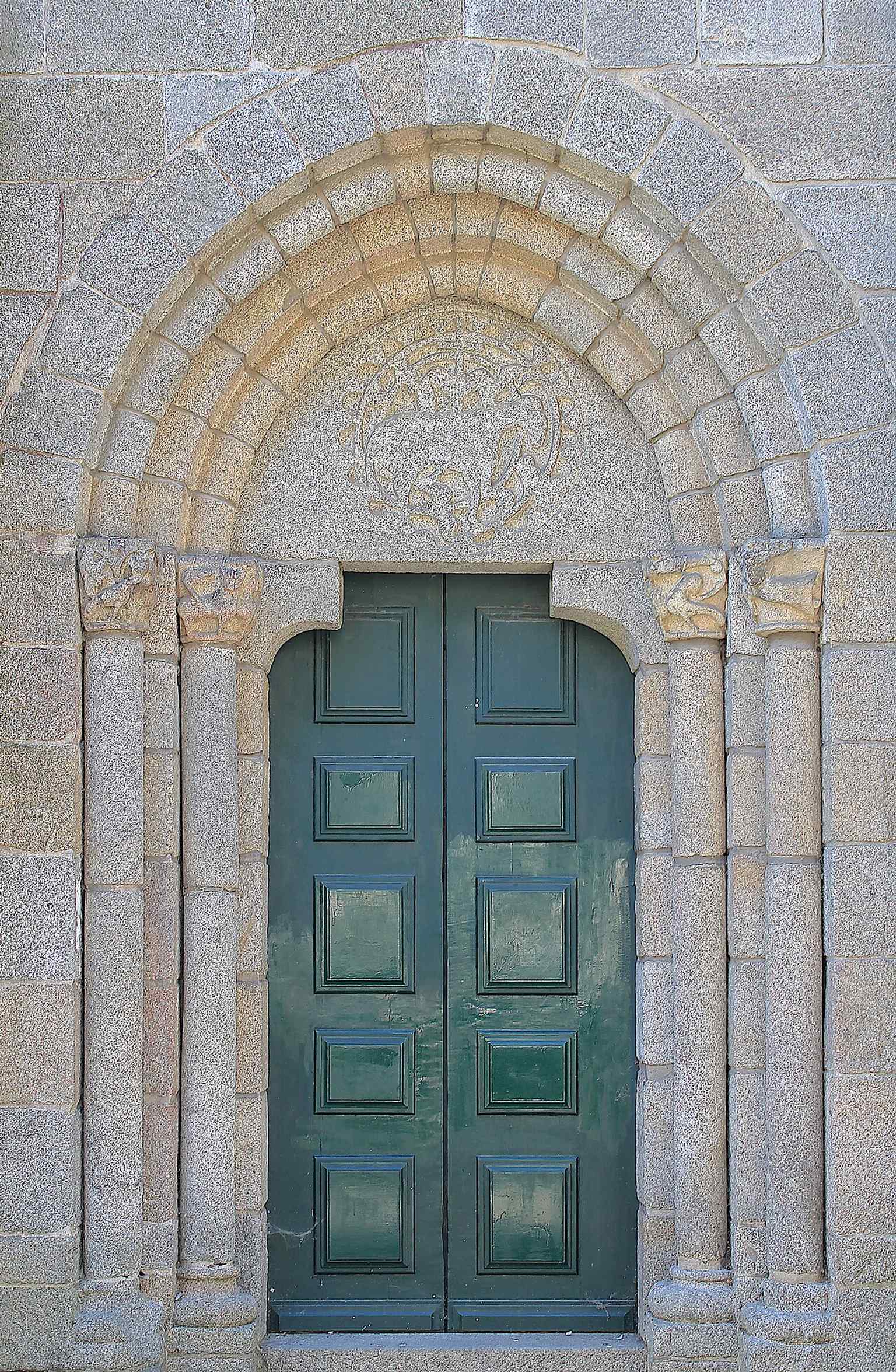
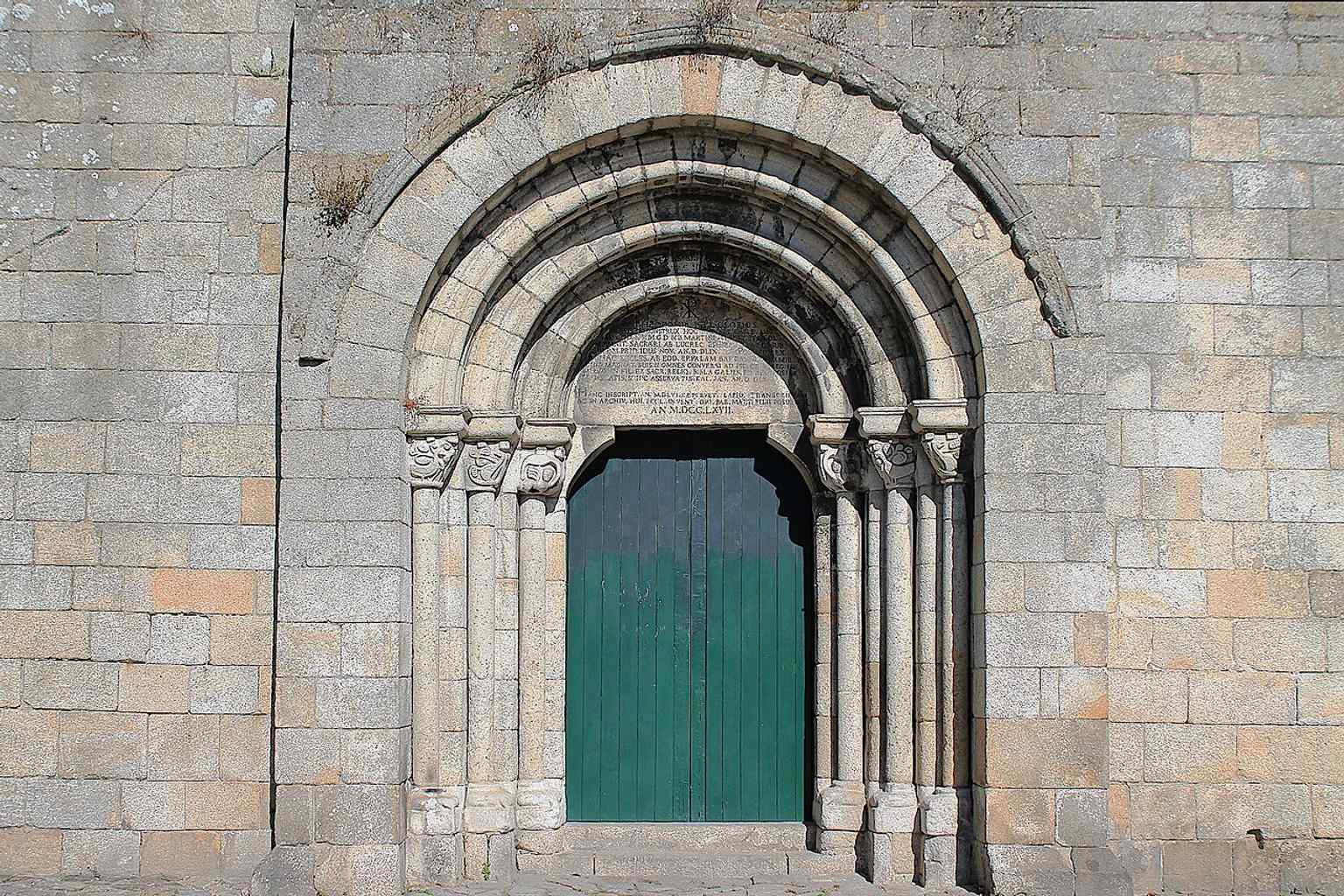
Pause for a moment and study the stone around the entrance. The granite feels stern and local, but some carved pieces seem to belong to another age, almost another language of building. If you look at the image on your screen, you can see the west doorway more clearly: the three arches, the carved tympanum, and the inscription added in seventeen sixty-seven. That inscription tells a grand old tale. It claims the church began in the sixth century under King Theodemar, who vowed himself to Saint Martin of Tours to save his sick son, Ariamiro, and that Bishop Lucrécio consecrated it. It is a beautiful story, though the original stone behind it has never been found. So the doorway gives you both things at once: architecture you can touch, and memory that hovers just beyond proof.
By the thirteenth century, Cedofeita joined the artistic orbit of Coimbra. Its carved birds, animals and foliage echo churches there, and some scholars even connect this work to the mason Soeiro Anes. If you open the stone detail in the app, you can see how refined those carvings are, despite the church’s overall plainness. Later generations altered it freely. Augustinian canons, the clergy attached to the church, served here for centuries. In the seventeenth and eighteenth centuries they added chapels, a tower, a cloister, and even proposed a levy of one real from parishioners to help rebuild it, a token sum worth only a few modern cents. Then, in the nineteen thirties, restorers removed many of those Baroque changes to make the church look more medieval again. Even this ancient face, then, is partly a twentieth-century choice.
And still it endured. The canons’ college ended in eighteen sixty-nine. The organ came and went. Electricity arrived only in nineteen ninety-one. Worship continued.
That may be the most truthful ending for Porto: not untouched beginnings, but a city strong enough to carry many centuries at once, without pressing them flat.
If you plan to return for the interior, the church generally opens only from four to seven in the afternoon, Tuesday through Friday.