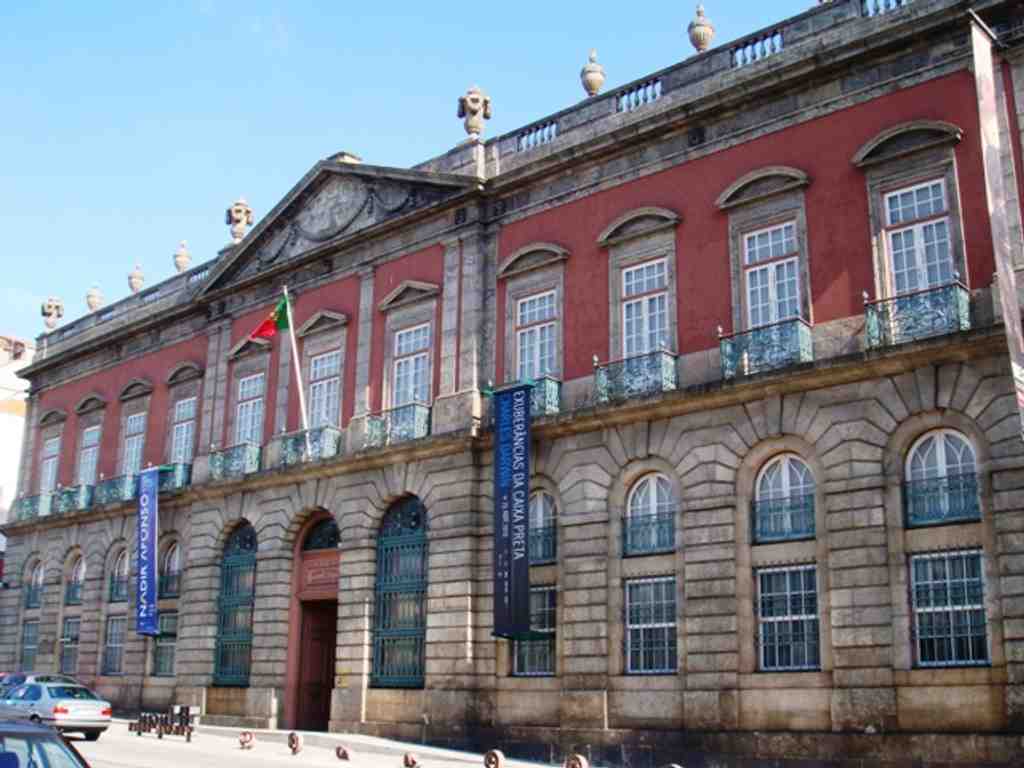
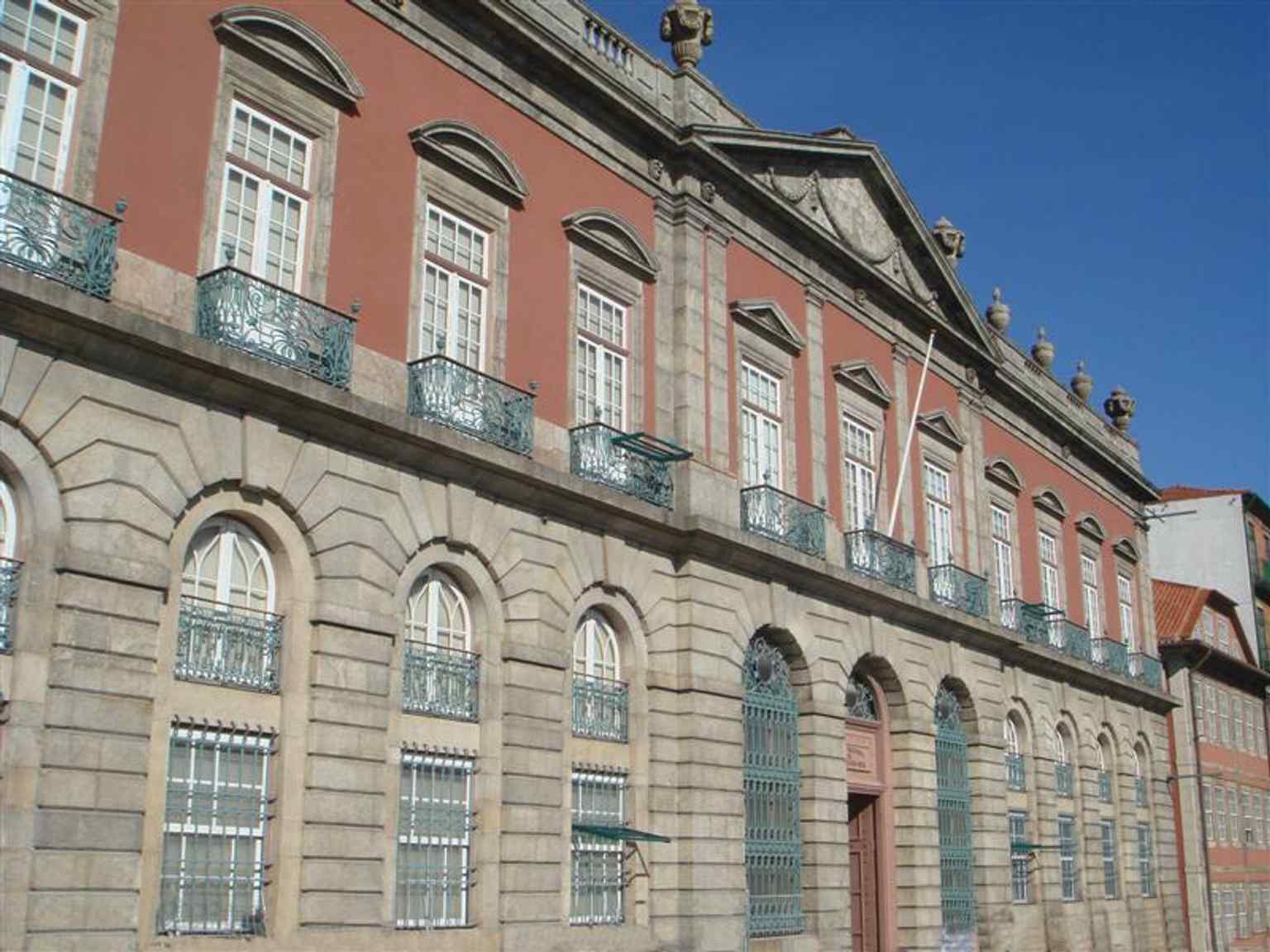
On your right, look for a long pale-stone façade, three storeys high, with a central section pushed forward on three arches and a roofline dressed with stone urns.
Carrancas Palace wears ambition quite openly. In the late eighteenth century, D. Brites Maria Felizarda de Castro bought up a chain of plots here to create not only a grand residence, but a factory as well. That double purpose mattered. The Morais e Castro family, described as descendants of New Christians - families of Jewish origin who had converted to Christianity - made their fortune from a workshop on this very site producing gold and silver thread. So this was never just a handsome address. It was wealth at work, and wealth on display.
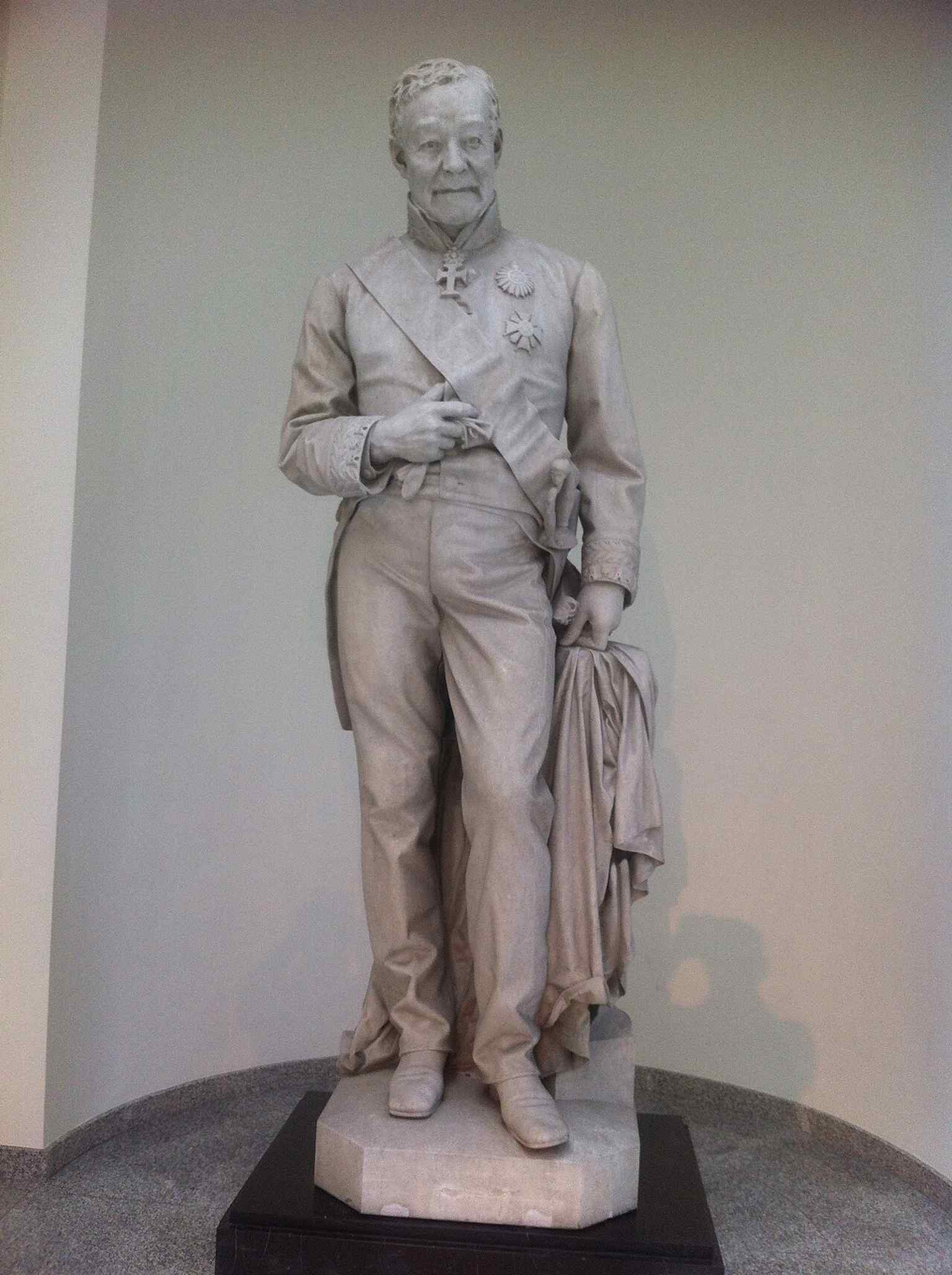
The family chose Joaquim da Costa Lima Sampaio to give that fortune a proper architectural language. He had already worked on the Hospital of Santo António and the British Factory House, and you can feel that English-influenced Neo-Palladian confidence here: balance, order, symmetry, and a façade determined to look rational and grand all at once. Inside, the Italian stucco artist Luigi Chiari decorated the rooms in seventeen ninety-five, shaping elegant plaster ornament and helping introduce the neoclassical taste that Porto’s rising elite found irresistible. If you glance at the image on your screen, you can see how the building’s sober exterior eventually gave way to museum interiors made for display rather than private life.
When the family moved in around eighteen hundred, they brought their coat of arms and a nickname with them: the Carrancas, meaning “the scowling ones.” A marvellous name for a palace, and not entirely unfair. The front does have a stern, self-possessed air.
But power attracts power. During the Peninsular Wars, the palace became valuable for more than its style. Marshal Soult occupied it during the French invasion, and after the French retreat, Arthur Wellesley set up his headquarters here as well. Later, General Beresford lived here, and during the siege of Porto, King Pedro the Fourth used the palace as his command centre for four months. One generation built a house-factory to project success; the next watched armies and kings claim the same rooms as a strategic prize.
Then came another reinvention. In eighteen sixty-two, the royal family bought Carrancas and turned it into the Paço Real do Porto, their official residence in the city until the monarchy ended in nineteen ten. If Carlos Alberto Square hinted at the vulnerability of exile, this place shows its opposite: a residence designed to look unshakable. Yet even this confidence changed course. From exile in England, at Fulwell Park in Twickenham, Manuel the Second left the palace in his will to Porto’s Santa Casa da Misericórdia, hoping it would become a hospital. That plan fell away when the state took the building in nineteen thirty-seven and adapted it for the Soares dos Reis National Museum, which opened here in nineteen forty.
Even the grounds kept changing. In eighteen ninety-four they held a velodrome with a royal box and stands for thousands; later restorations under Fernando Távora turned part of that memory into an archaeological garden instead of wiping it clean. On your screen, image one captures the palace’s formal self-presentation rather well.
So here it stands: factory, mansion, headquarters, royal residence, museum. Next, we ask: what happens when a city decides one emblem of prestige is no longer enough? Make your way to the Super Bock Arena, about a six-minute walk from here.