
Oviedo Highlights Audio Tour: Historic Gems and City Stories
Beneath the grey slate roofs of Oviedo lies a thousand years of blood, gold, and treason waiting for the right pair of ears. This city is not merely a collection of stones but a restless graveyard of empires and secret uprisings. Uncover these layers with this self guided audio tour. Experience the city at your own pace while peeling back the veneer of tourism to find the buried stories most travelers walk right over. What dark relic remains hidden within the Holy Chamber that once caused kings to tremble? How did a single act of defiance at the Valdecarzana Palace spark a chain of scandals that toppled local dynasties? Why does the Church of San Tirso keep its back turned to the modern square? Stroll through shadows and sunlit plazas. Feel the weight of history shifting under your boots. Unlock the secrets of Oviedo now.
Tour preview
About this tour
- scheduleDuration 70–90 minsGo at your own pace
- straighten1.9 km walking routeFollow the guided path
- location_on
- wifi_offWorks offlineDownload once, use anywhere
- all_inclusiveLifetime accessReplay anytime, forever
- location_onStarts at San Francisco Field (Oviedo)
Stops on this tour
lock_open 3 free previews · 12 unlock with purchase
Look for the iron railings, the wide paved walks opening in gentle lines through the grounds, and the formal park entrances that mark this old urban garden at the center of…Read moreShow less
Open dedicated page →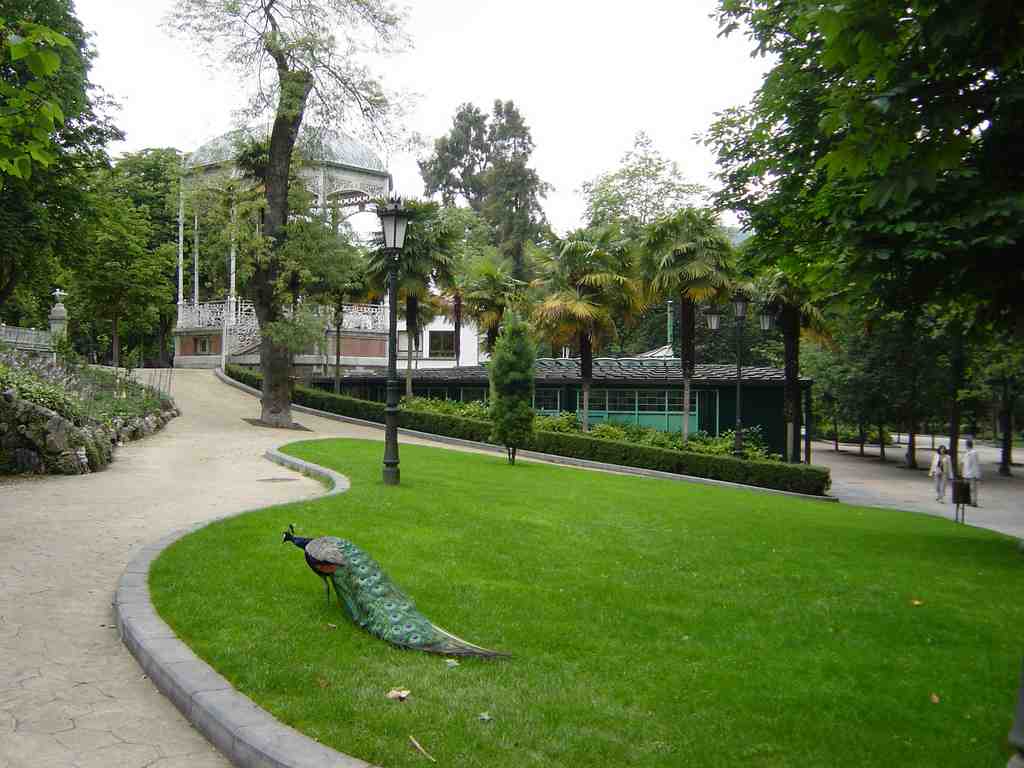
San Francisco Field (Oviedo)Photo: yo, Wikimedia Commons, CC BY-SA 3.0. Cropped & resized. Look for the iron railings, the wide paved walks opening in gentle lines through the grounds, and the formal park entrances that mark this old urban garden at the center of Oviedo.
A park is a funny place to begin a city story... and that is exactly why it works. Campo de San Francisco looks like a place for strolling, resting, maybe admiring a peacock with the confidence of a local politician. But Oviedo has a habit of remaking itself instead of freezing in place, and this park is one of the clearest early examples: orchard became convent land, convent land became public ground, and public ground kept changing as the city changed around it.
This beloved Campo, one of Oviedo’s great landmarks and one of the largest urban parks in Asturias, began as the orchards of the vanished Convent of San Francisco. The earliest written trace takes us back to the thirteenth century, when a canon named Gonzalo Bernaldo de Quirós donated a spring and a meadow here to the Franciscan friars. Those friars did practical work first, not poetry: they channeled water and laid out access paths. Monks, it turns out, also understood infrastructure.
Then came the bigger turn. In fifteen thirty-four, the city authorities and the cathedral chapter agreed to gather these scattered plots, once owned by church bodies, convents, and private hands, into a single public space. That mattered. Oviedo did not simply inherit a park; it learned how to turn enclosed land into shared civic ground.
Before we go further, take a moment to notice how this place opens outward. The paths do not feel like private garden walks. They spread like invitations... avenues, promenades, meeting points. What had once been bounded ground became a kind of outdoor stage for the whole city.
Over time, the Campo grew into a more formal park with the Paseo de los Álamos, the Paseo del Bombé, Avenida Italia, and other walks. Avenida Italia was the first major promenade, and for centuries it even lined up with the road out toward Galicia from what is now Plaza de la Escandalera. Later, nineteenth-century mayors Ramón Secades and José Longoria Carbajal pushed the Campo toward an English-style park, adding broad garden spaces and ornamental fountains like La Fuentona and the Fountain of the Frogs.
But don’t let the calm setting fool you. In May of eighteen oh eight, the park became a political flashpoint. Here, locals burned Murat’s proclamation. Students, artisans, clergy, and neighbors gathered, and two women, María Andallón and Joaquina Bobela, stood out by shouting that the decree must not be published. That scene helped tip Asturias toward resistance against Napoleonic France. So yes... even a park bench in Oviedo sits close to history with a bit of nerve in it.
If you check the app screen, the image of La Granja inside the park shows another chapter in that long habit of reuse: one site, many lives, now folded into everyday public culture.
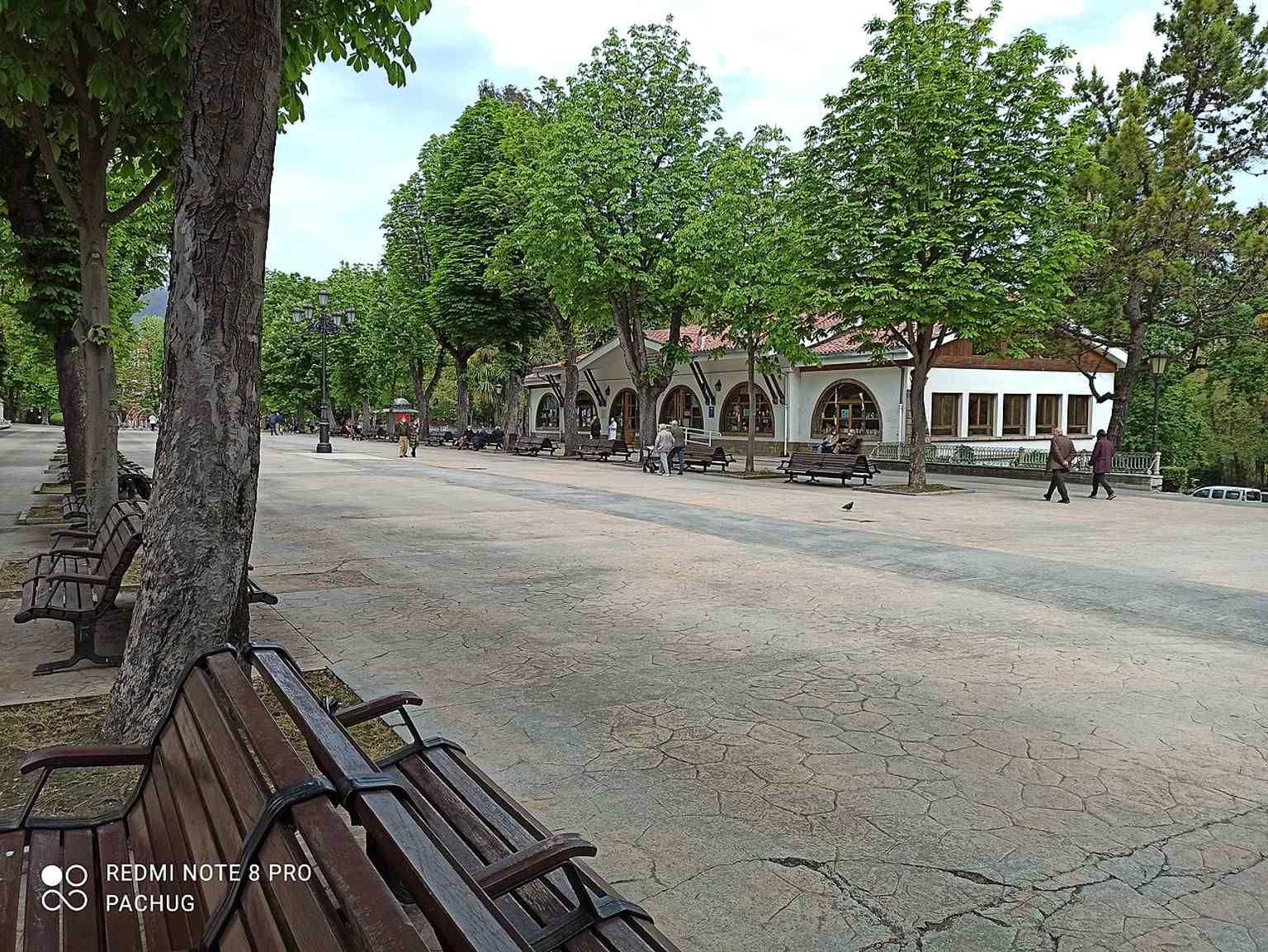
The La Granja municipal library, once one of the park’s evolving buildings, now reuses a historic spot inside Campo de San Francisco.Photo: Pachug, Wikimedia Commons, CC BY-SA 4.0. Cropped & resized. The Campo kept absorbing change. The famous Carbayón oak disappeared when the city opened Calle Uría in eighteen seventy-nine. The music kiosk arrived. Statues appeared. Later came ducks, peacocks, children’s play, and all the ordinary rituals that matter just as much as grand events.
From this shared open-air room, we’ll head next toward a place where public life moved indoors and turned into performance: the Campoamor Theatre, about a four-minute walk away. And if you feel like circling back later, this park stays open all day and all night.
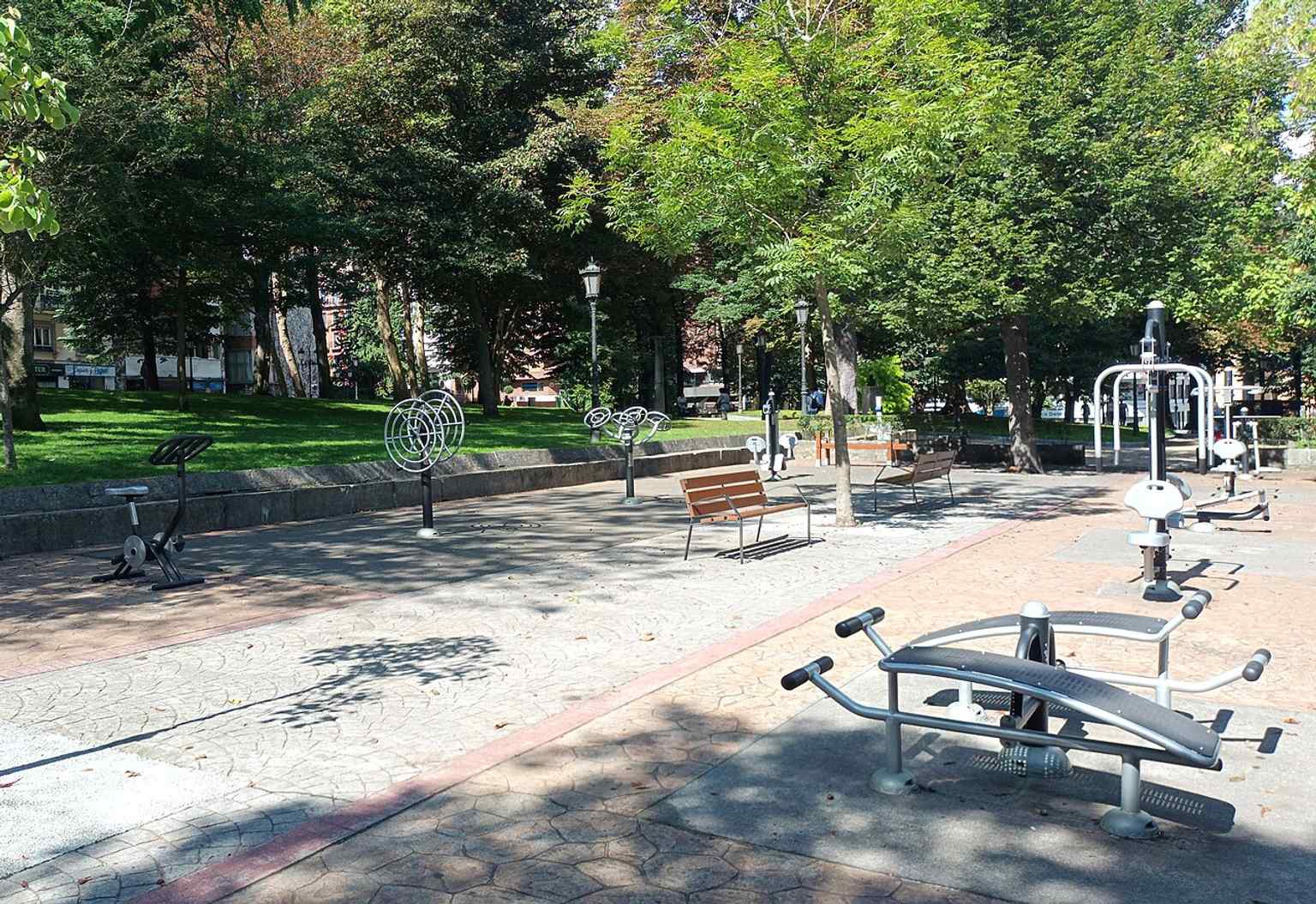
Outdoor fitness equipment in the park, showing how Campo de San Francisco has been adapted for everyday recreation and public use.Photo: Acediscovery, Wikimedia Commons, CC BY 4.0. Cropped & resized. On your left, Teatro Campoamor is an elegant stone theater with a broad symmetrical facade, tall arched windows, and a central pediment crowning the entrance. This is Teatro…Read moreShow less
Open dedicated page →On your left, Teatro Campoamor is an elegant stone theater with a broad symmetrical facade, tall arched windows, and a central pediment crowning the entrance.
This is Teatro Campoamor, Oviedo’s great prestige theater... the place where the city learned to present itself with a little polish, a little ceremony, and, let’s be honest, a very clear seating chart for who mattered most. It opened to the public on the seventeenth of September, eighteen ninety-two, when Oviedo’s rising middle and upper classes wanted a proper home for opera and drama instead of relying on the older theater at El Fontán.
The site itself tells you something important about Oviedo. This ground once belonged to the convent of Santa Clara. Then the city pushed outward, laid out new streets behind Uría, and turned former religious land into public culture. Same heartbeat, different clothes.
One man gave the building its name. Writer and councilman Leopoldo Alas, better known as Clarín, proposed honoring the Asturian poet Ramón de Campoamor. Campoamor could not attend the opening, so he sent his brother in his place and sent one thousand pesetas to be shared among the poor of Oviedo... a gift worth several thousand euros in practical terms today. A graceful gesture, though it also hints at the social world this theater served.
Here is the local clue most visitors miss: the first season’s ticket table almost advertised the city’s class ladder in plain sight. Boxes, those private little compartments along the sides, and the best floor seats cost far more than the upper gallery. The paradise, meaning the highest and cheapest seats tucked under the roof, sat at the bottom of the price scale. So yes, everyone entered the same building... but not everyone entered the same Oviedo once inside. Opera can be wonderfully democratic in theory and very selective in upholstery.
The first night featured Meyerbeer’s Les Huguenots, and this house went on to host one of Spain’s oldest regular opera seasons in Spain. If you glance at the image on your screen, you can see how firmly the theater anchors these central streets, almost like the city set a ceremonial stage right into the neighborhood grid.
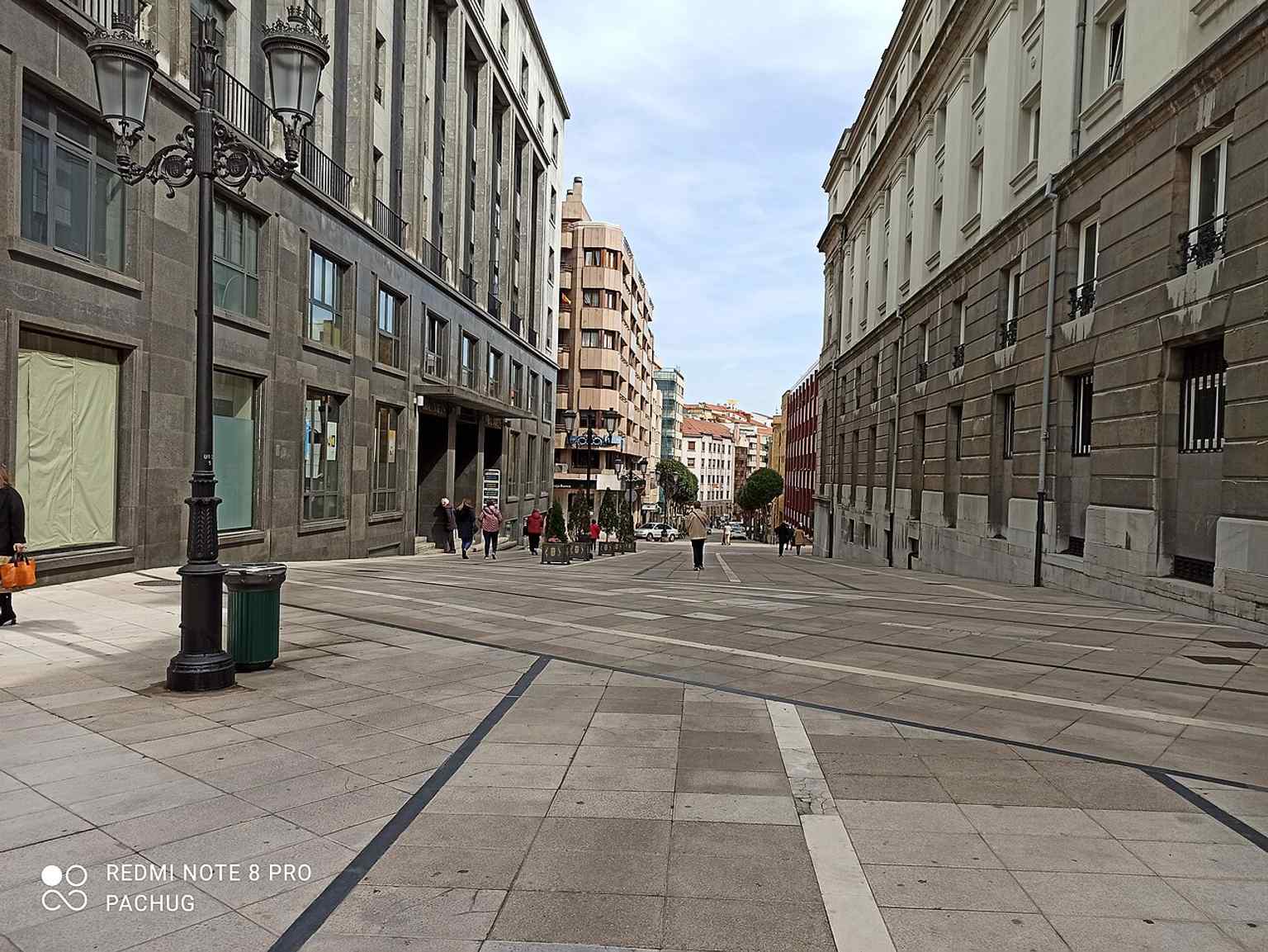
Calle Alonso de Quintanilla in Oviedo, part of the historic city center near the Teatro Campoamor, which has hosted the Princess of Asturias Awards since 1980s.Photo: Pachug, Wikimedia Commons, CC BY-SA 4.0. Cropped & resized. Then came fire. During the revolution of nineteen thirty-four, soldiers acting on orders from Camilo Alonso Vega burned the theater so revolutionaries could not use it against the nearby Santa Clara barracks. The blaze reduced almost everything to rubble. Only the main facade survived... the very face you’re looking at now. Reconstruction started in nineteen forty-one, and the theater reopened in September of nineteen forty-eight with Massenet’s Manon.
Later upgrades kept it alive rather than frozen. In nineteen eighty-eight, architect José Rivas, advised by stage designer Julio Galán Martín, modernized the stage, flattened its sloped floor, and enlarged the orchestra pit, the sunken space between audience and stage where the musicians play. Beneath the plaza and street nearby, the city also tucked in dressing rooms, rehearsal space, workshops, and technical rooms.
Today the Campoamor hosts opera and, above all, the Princesa de Asturias Awards. This is a fine Oviedo lesson early in our walk: the public face of a city is never neutral. It is arranged, priced, rebuilt, and argued over. Hold onto that thought as you head to Plaza de la Escandalera, about a minute away. If you want to check inside later, the theater generally opens every day from eleven to two and again from five to eight.
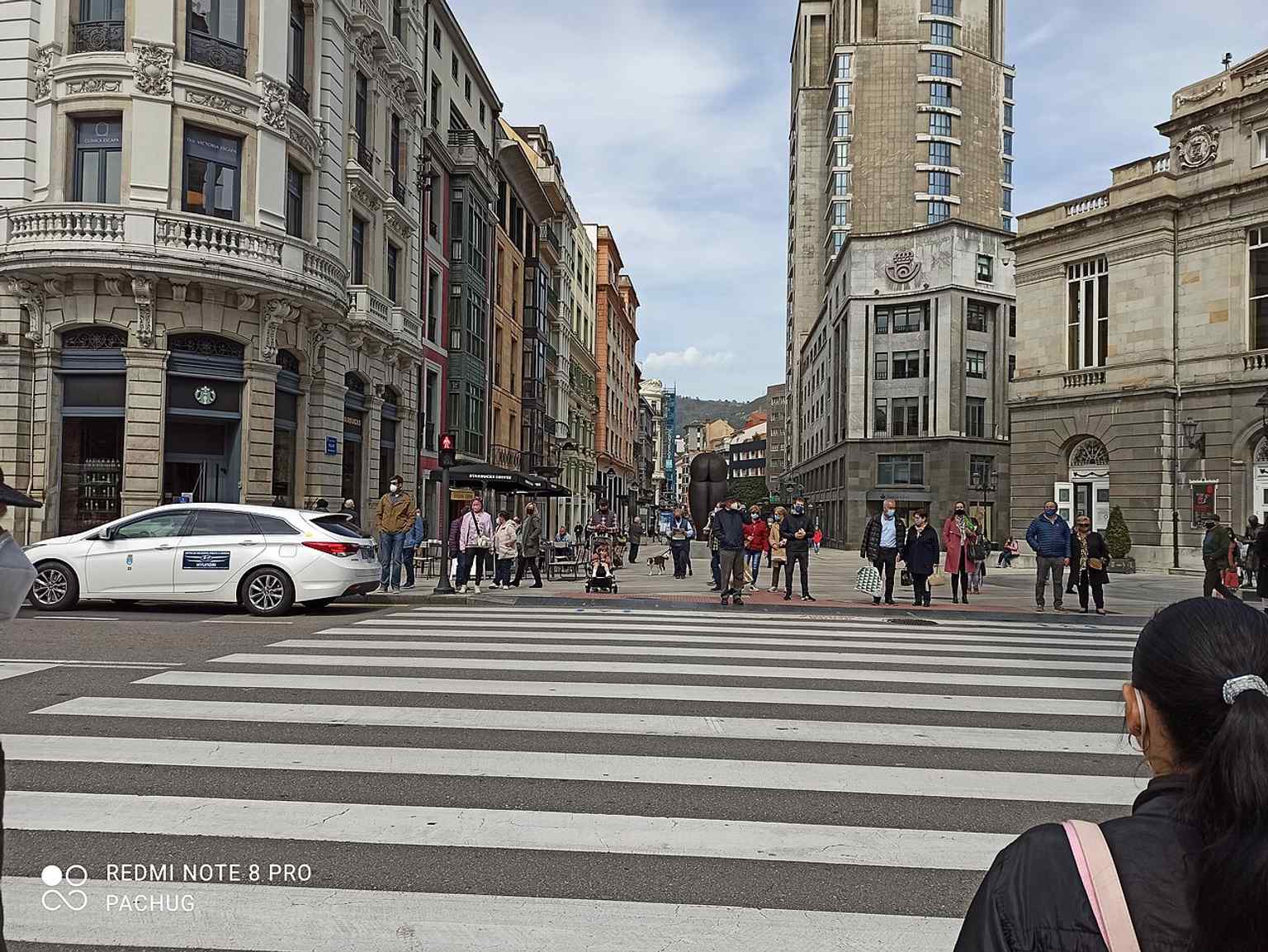
Calle Pelayo in central Oviedo, one of the streets leading into the Campoamor area where the theatre became a landmark for the city’s cultural life.Photo: Pachug, Wikimedia Commons, CC BY-SA 4.0. Cropped & resized.
Show 12 more stopsShow fewer stopsexpand_moreexpand_less
Look for the pale stone façade, the square tower above the roofline, and the carved coats of arms set into the long, orderly front of the old university building. This is the…Read moreShow less
Open dedicated page →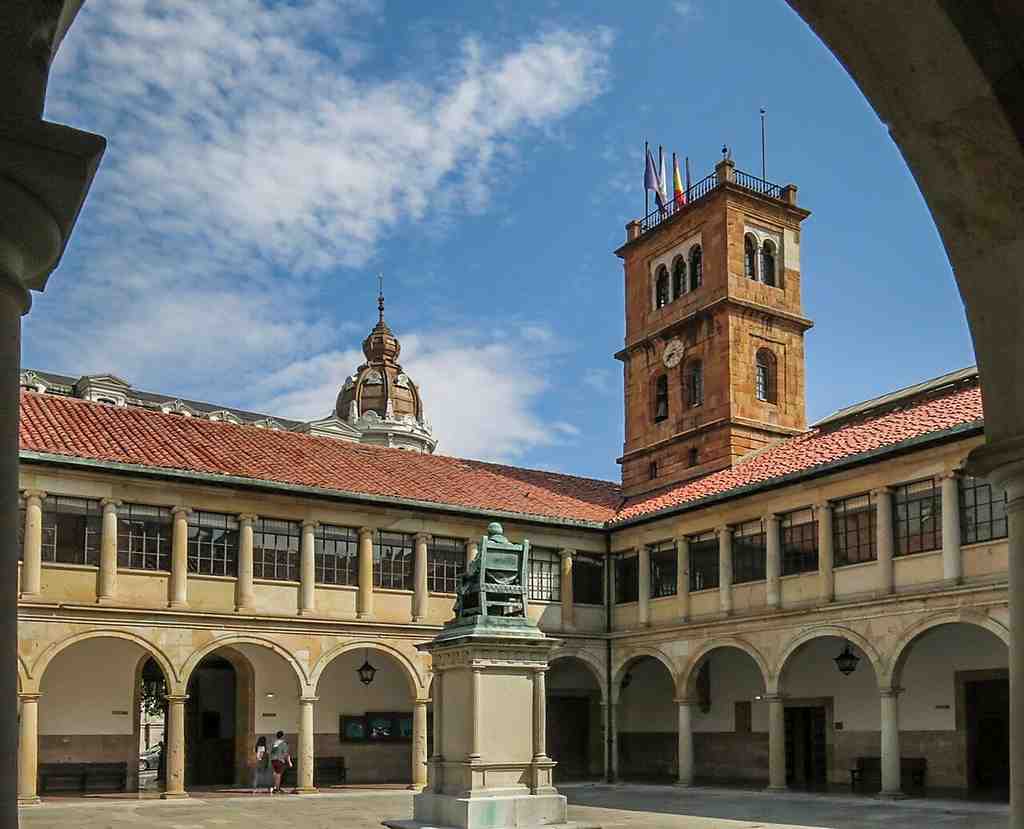
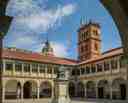
University of OviedoPhoto: Vicenç Salvador Torres Guerola, Wikimedia Commons, CC BY-SA 3.0. Cropped & resized. Look for the pale stone façade, the square tower above the roofline, and the carved coats of arms set into the long, orderly front of the old university building.
This is the historic heart of the University of Oviedo, the place where the city taught itself to think in public. Fernando Valdés Salas, an archbishop and powerful royal official, imagined this institution in the sixteen hundreds, and his plan finally took shape here in sixteen oh eight. That mattered enormously. At the time, Spain had only a small circle of universities, and Oviedo joined that club through his ambition. A town with churches and markets could now also claim a seat of learning... which is a fine way to make yourself harder to ignore.
If you glance at the app, you can see the founder still holding the symbolic center of the place in a statue inside the old cloister, the arcaded interior courtyard. And if you look at the university’s coat of arms on your screen, that emblem comes from the personal arms of Valdés Salas himself, not just the family line in general. Around here, even the heraldry has had footnotes and arguments. Very university.
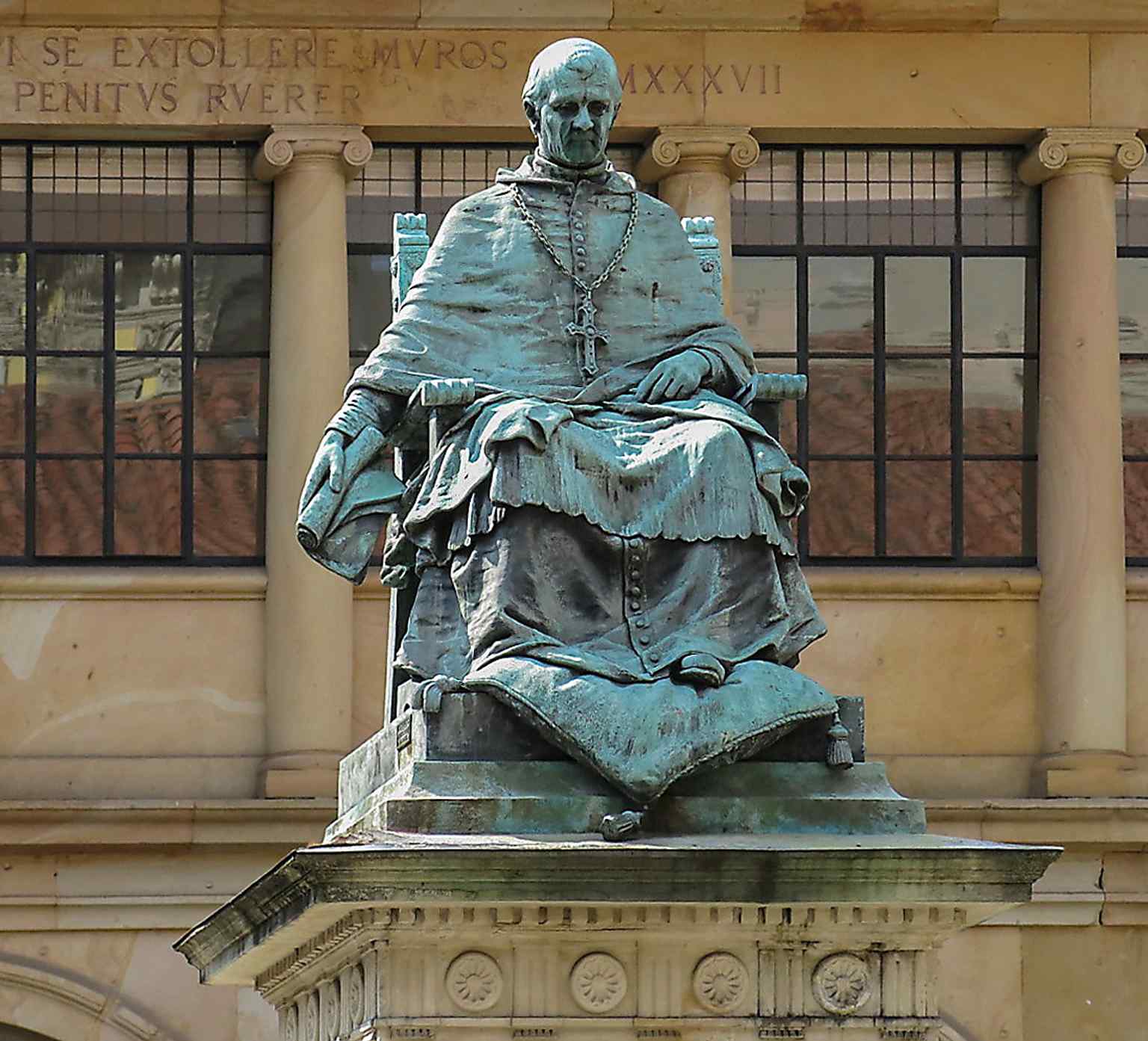
Statue of Fernando Valdés Salas in the old cloister — the archbishop who founded the University of Oviedo in 1608.Photo: Vicenç Salvador Torres Guerola, Wikimedia Commons, CC BY-SA 3.0. Cropped & resized. In its first two centuries, life inside ran on ceremony. Enrollment worked almost like an initiation. Classes followed strict formulas. Examinations did too. Even competitions for professorships - the permanent teaching chairs - unfolded by a carefully regulated script. At the Campoamor, performance happened onstage; here, performance happened in Latin phrases, formal disputes, and very serious exam rooms. Same city, different costumes.
The university did not glide forward on a velvet cushion. Money stayed tight for long stretches, so the early priority was not grandeur but survival: organize the teaching, hold the standards, keep the engine running. It taught arts, canon law, civil law, and theology at first, subjects that tied scholarship directly to church and state. That connection will matter again very soon.
And yet this place kept widening its reach. In the nineteenth century, Oviedo gained prestige through teachers linked to reformist ideas and public education, among them Leopoldo Alas, known as Clarín, Rafael Altamira, and Adolfo González Posada. They helped turn the university outward, not just inward, using lectures and public programs to shape civic life beyond these walls.
Then came the hardest blows. In the revolution of nineteen thirty-four, fire badly damaged this historic building. The library was completely destroyed, and part of the archive vanished with it. Reconstruction began quickly under the architect José Avelino Díaz y Fernández-Omaña, but the Civil War interrupted everything again. The university suspended classes, the building suffered more damage, and Rector Leopoldo García-Alas García-Argüelles - Clarín’s son - was executed in nineteen thirty-seven. His story gives this façade a different weight. It is not just old stone; it is a witness.
And still, the institution endured. After the war, people even considered moving the studies to Santander, which tells you how fragile things had become. But Oviedo held on. Today the university serves nearly twenty thousand students across campuses in Oviedo, Gijón, and Mieres, while this building remains the old nerve center.
For all its scholarship, this university never stood far from devotion. Its first faculties, its founder, and its rituals all grew beside sacred life... and our next stop makes that bond plain. Head on to the Church of San Isidoro, about four minutes away.
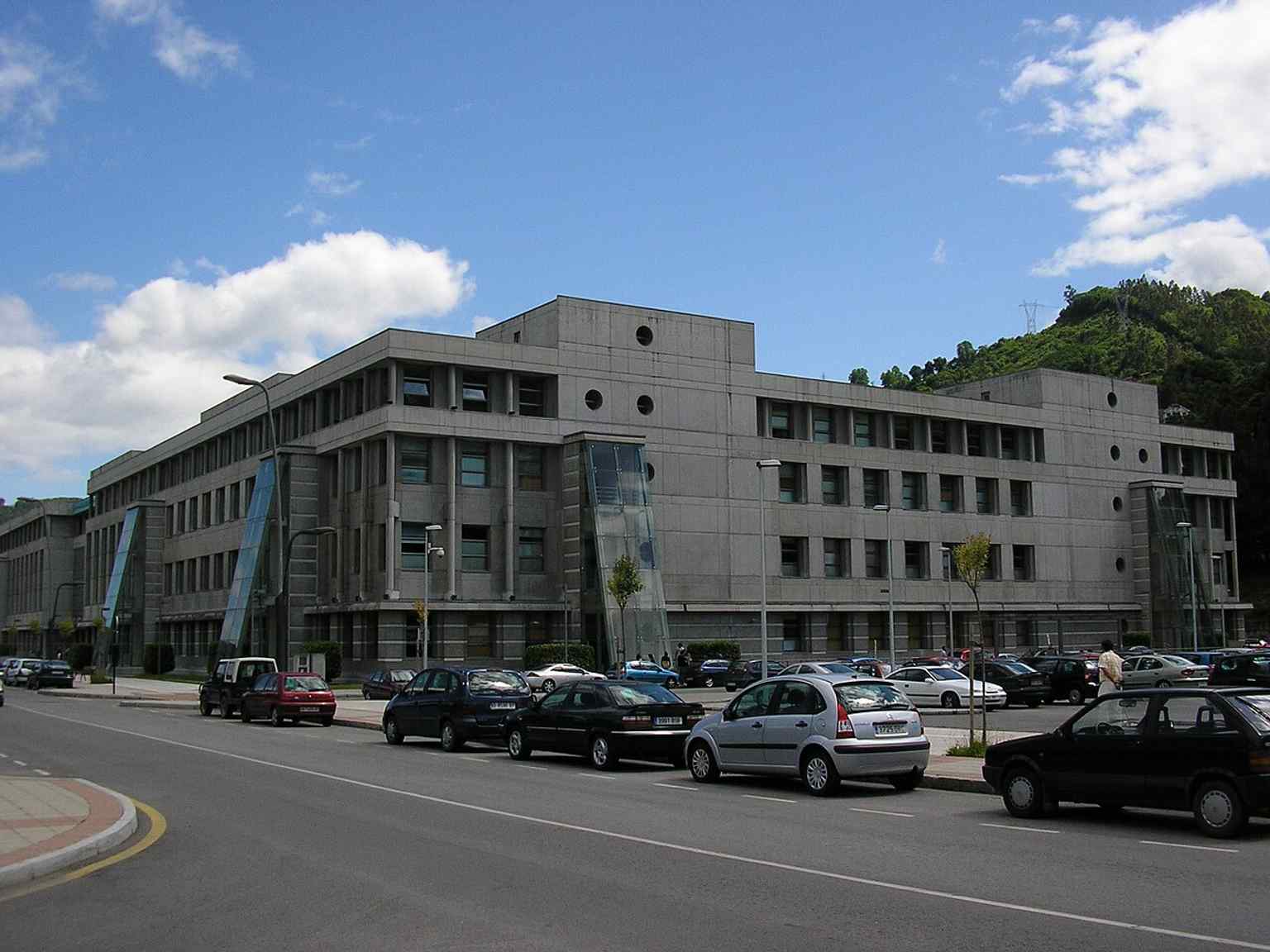
The Mieres campus shows how the university grew beyond Oviedo, becoming a multi-campus institution across Asturias.Photo: Montes, Wikimedia Commons, Public domain. Cropped & resized. 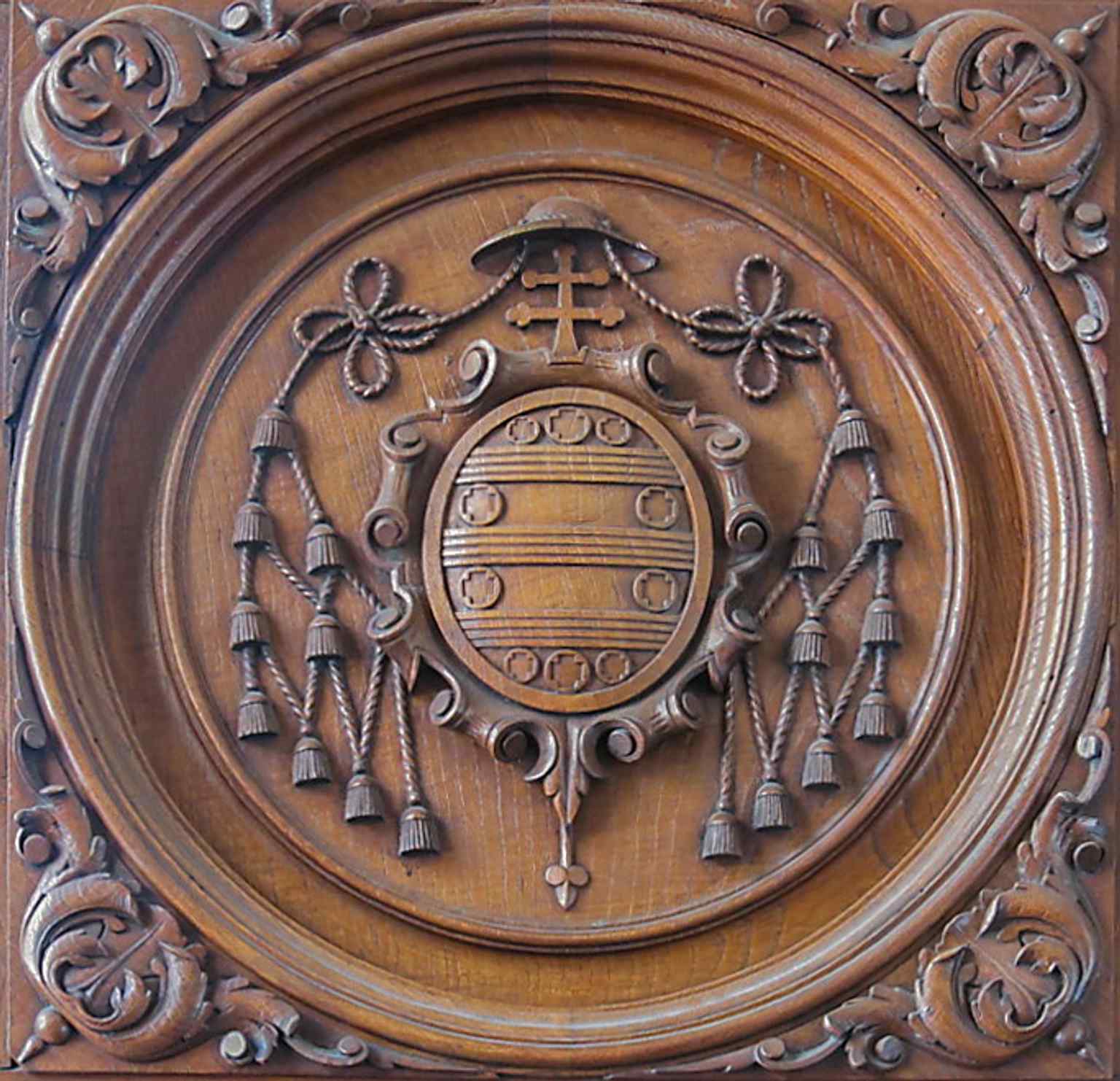
The university’s official coat of arms, based on the arms of its founder Fernando Valdés Salas.Photo: Vicenç Salvador Torres Guerola, Wikimedia Commons, CC BY-SA 3.0. Cropped & resized. 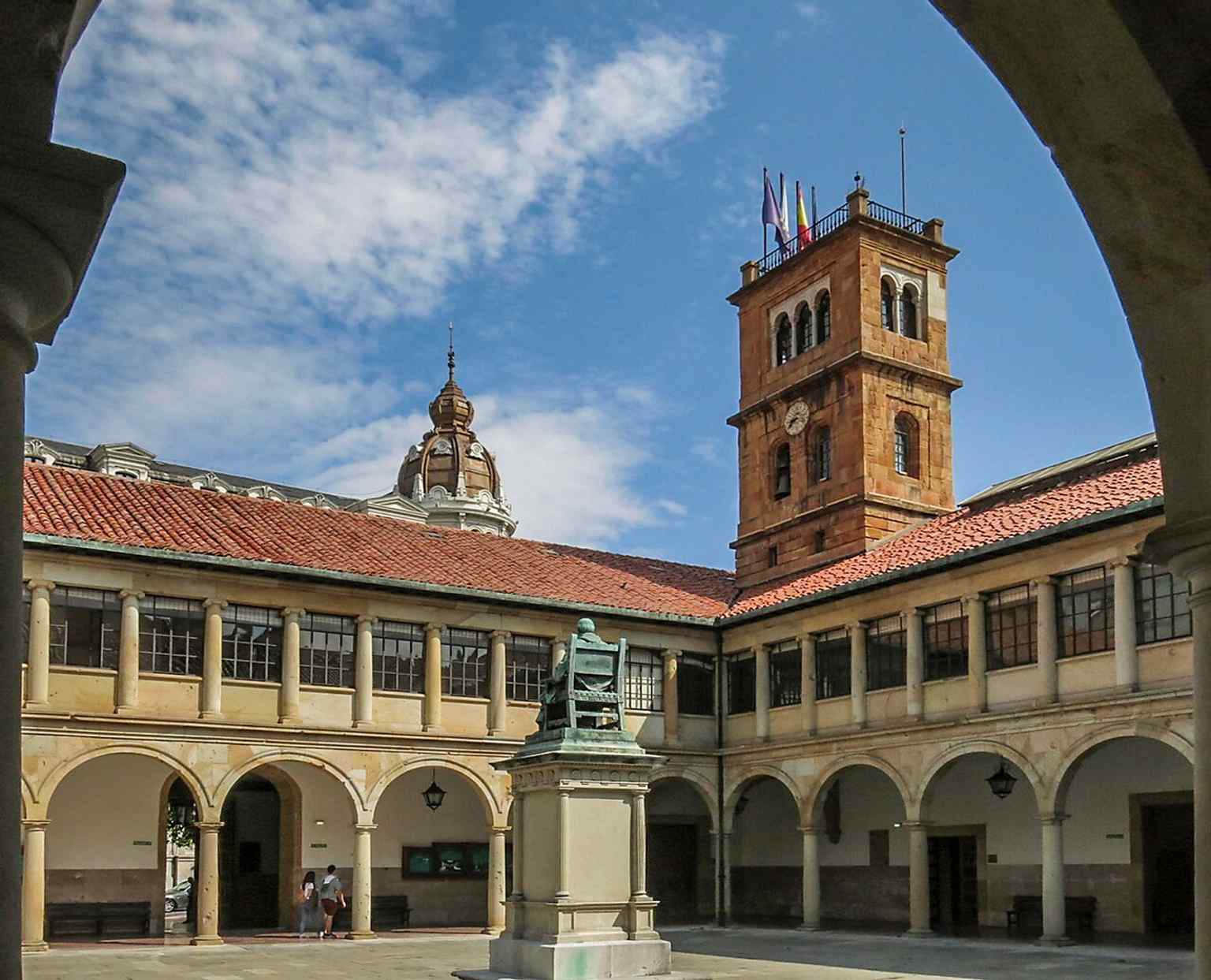
The historic cloister of the university, a symbolic heart of the old building on Calle San Francisco.Photo: Vicenç Salvador Torres Guerola, Wikimedia Commons, CC BY-SA 3.0. Cropped & resized. 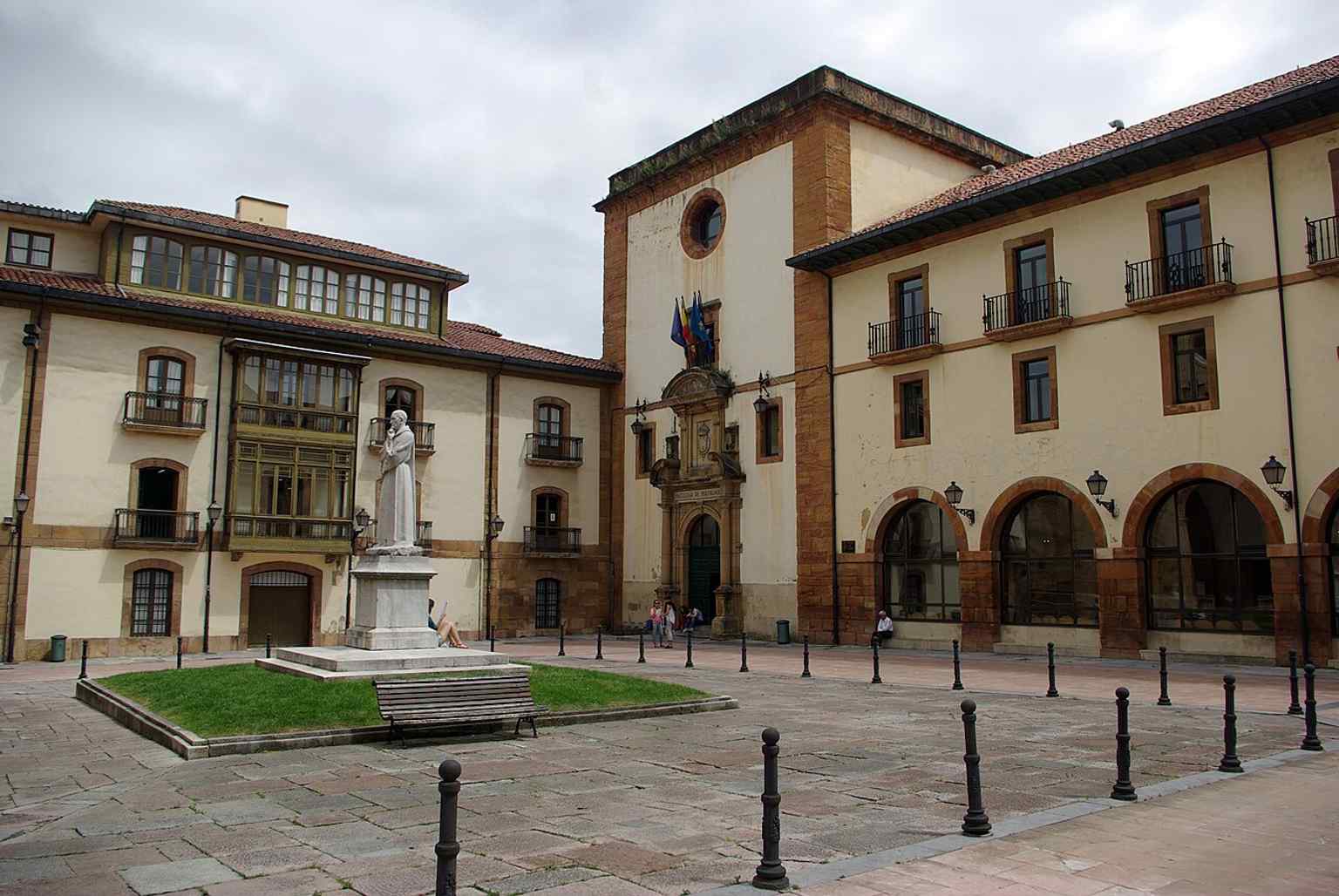
Plaza Feijoo by the Faculty of Psychology, part of the university’s modern urban presence in central Oviedo.Photo: David Perez, Wikimedia Commons, CC BY-SA 4.0. Cropped & resized. 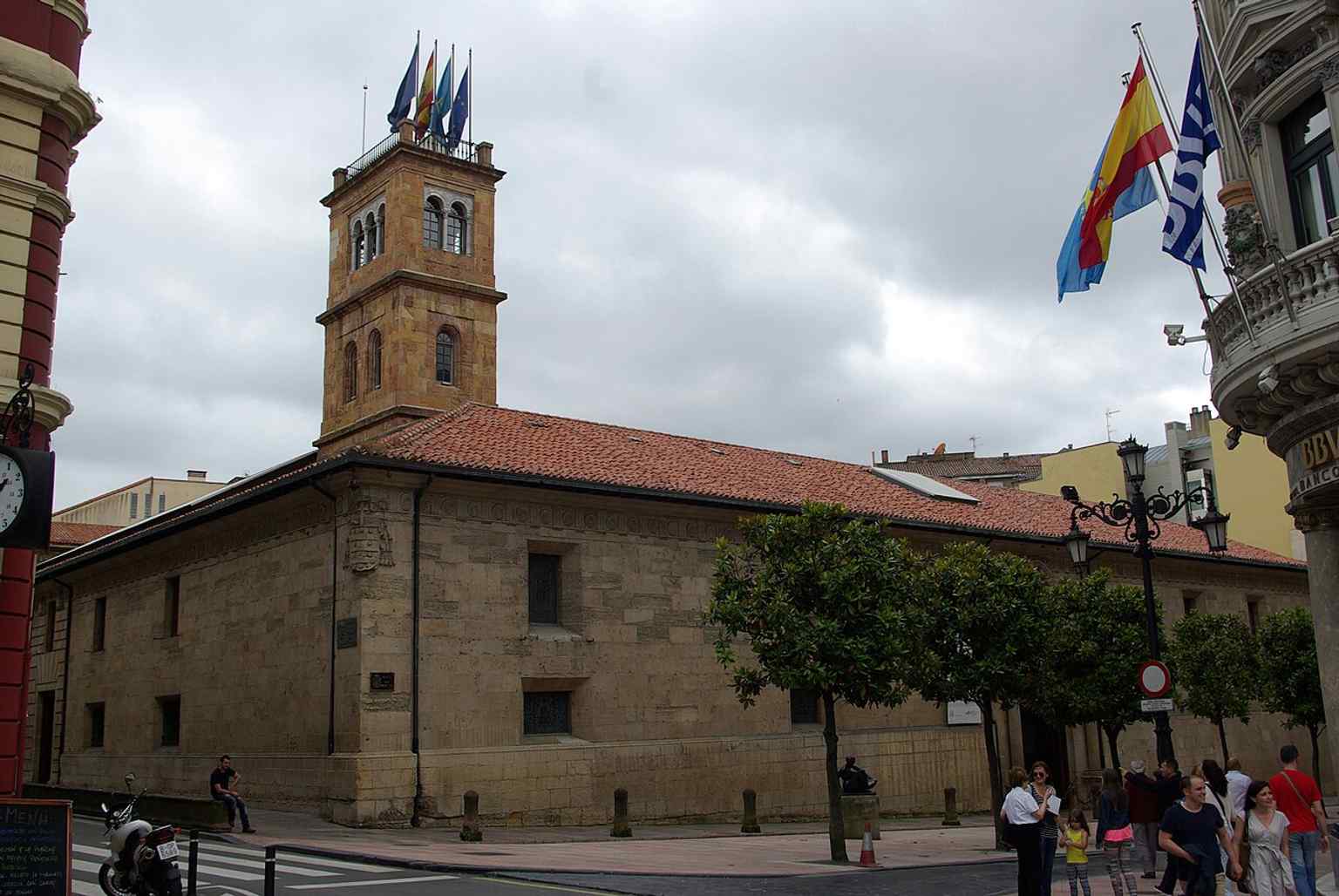
The historic university building and its tower on Calle San Francisco, the institution’s most recognisable landmark.Photo: David Perez, Wikimedia Commons, CC BY-SA 4.0. Cropped & resized. On your right, look for a pale stone façade arranged in stacked classical tiers, with a single tower and statue-filled niches above the entrance. Here on Plaza de la…Read moreShow less
Open dedicated page →On your right, look for a pale stone façade arranged in stacked classical tiers, with a single tower and statue-filled niches above the entrance.
Here on Plaza de la Constitución, beside the town hall, San Isidoro shows you one of Oviedo’s favorite habits: putting power, prayer, and public life shoulder to shoulder.
At first glance, this church seems self-contained. It is not. San Isidoro sits on top of older lives. Before this building, there was an earlier Romanesque church here, already recorded in the year twelve seventeen. That first church disappeared, almost entirely. Only its entrance arch survived, and the city moved it in nineteen twenty-five to the Campo de San Francisco. That survivor began its life here.
The woman who pushed the next chapter forward deserves to be named clearly: Magdalena de Ulloa. She was one of the great patrons of the Jesuits in sixteenth-century Spain, and patrons matter because they decide which ideas get stone, land, and staying power. Magdalena was also known for helping raise Don John of Austria, so when she supported a Jesuit college here in fifteen seventy-six, she was not making a small local donation. She was plugging Oviedo into a national web of religion, education, and influence.
If you glance at your screen, the wider view shows the church as the surviving piece of that larger Jesuit world. The college of San Matías once stood around it. Later, the city changed course. In eighteen seventy-three, workers demolished the college to make room for El Fontán Market beside the church. San Isidoro remained standing, like the last chapter left in a book after someone tore out the middle pages.
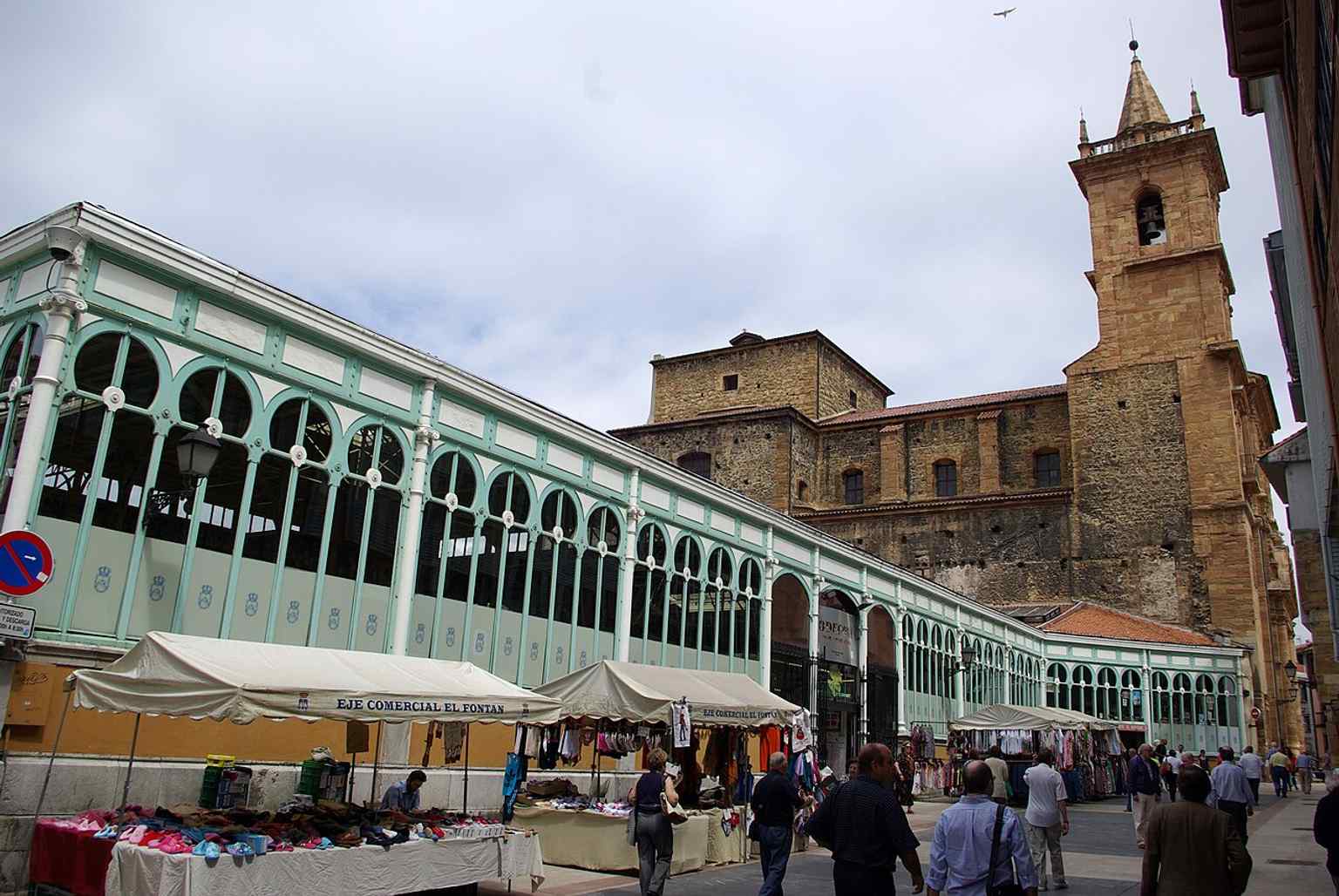
A wider view of San Isidoro with El Fontán market, showing how the church became the last surviving piece of the old Jesuit college.Photo: David Perez, Wikimedia Commons, CC BY-SA 4.0. Cropped & resized. The church you see now took shape slowly. Work stretched across decades, especially from sixteen forty-six to sixteen eighty-one, with several architects involved, including Francisco Menéndez Camina from Avilés. Inside, it follows a Jesuit layout: one main hall, called the nave, with side chapels opening off it so preaching could stay clear and direct. The original design planned for two towers. The budget, as usual, had other ideas, so Oviedo got one.
This place also keeps memory in a very physical form. Martín Carrillo Alderete, a former bishop of Oviedo who later became archbishop of Granada, signed the foundation document in sixteen forty-five. He is buried inside in an urn set into an arcosolium, a recessed tomb built into the wall near the altar area. That means the man who helped institutionalize this place still remains part of it, not just in paper records but in the building itself.
And San Isidoro never stopped collecting layers. It became a parish church, fostered a deep devotion to Our Lady of Sorrows, gained a special devotional connection with Santa Maria Maggiore in Rome, and still serves as a place where Oviedo gathers for Holy Week processions, funerals, and civic farewells. This is not frozen heritage. It is a working memory bank.
In Oviedo, the sacred and the everyday often lived wall to wall... and here, they quite literally did. When you are ready, El Fontán Market is about a minute away. It rises where part of this religious complex once stood, which tells you a lot about how this city keeps remaking itself without losing its pulse.
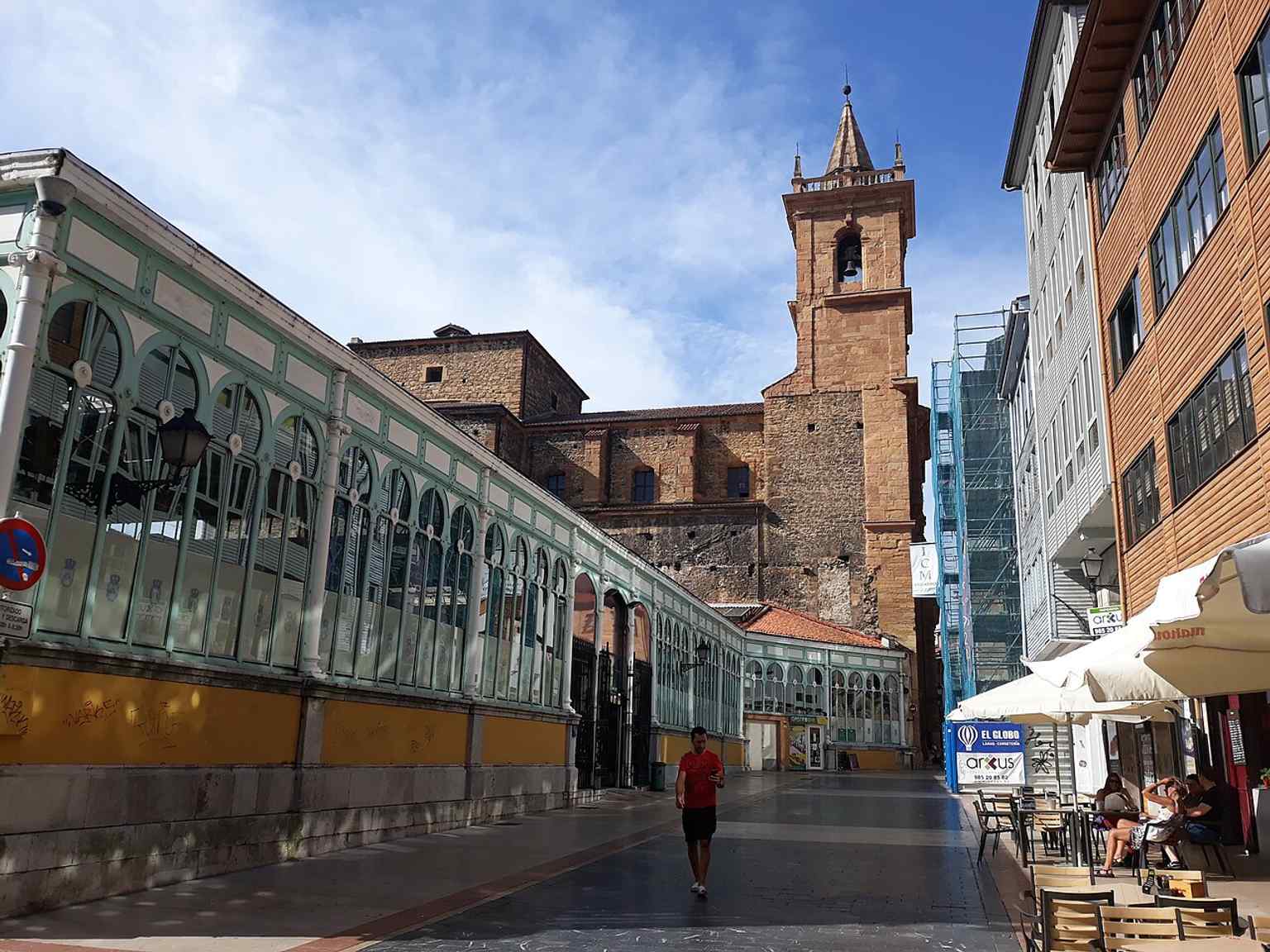
The church façade beside El Fontán market — San Isidoro was once part of the Jesuit complex that stood here before the market was built.Photo: Simon Burchell, Wikimedia Commons, CC BY-SA 4.0. Cropped & resized. On your right is a low stone-and-iron market hall with repeated tall arched openings, a roof that steps up in sections, and one side tucked tightly against San Isidoro. This is…Read moreShow less
Open dedicated page →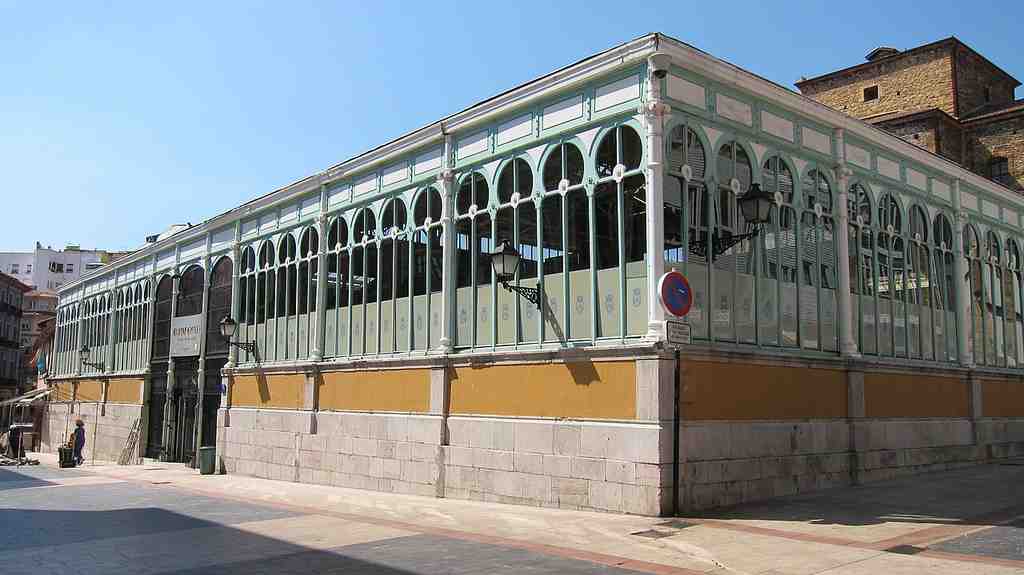
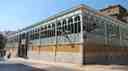
El Fontán MarketPhoto: Carlos Cunha, Wikimedia Commons, CC BY-SA 3.0. Cropped & resized. On your right is a low stone-and-iron market hall with repeated tall arched openings, a roof that steps up in sections, and one side tucked tightly against San Isidoro.
This is El Fontán, and locals use that name for more than a building. They mean a whole market world: the covered hall in front of you, the neighboring square, the open-air trading nearby, and the old habit of coming here to feed a household and catch up on the news.
Its story starts with disaster. On Christmas Eve in fifteen twenty-one, a huge fire tore through Oviedo. To help the city recover, Charles the Fifth granted a free market here, meaning traders could buy, sell, and barter with special privileges. That royal decision mattered because recovery did not happen in speeches... it happened in onions, bread, fish, beans, and hard bargaining. In Oviedo, rebuilding often begins at ground level.
The market you see now arrived much later, between eighteen eighty-two and eighteen eighty-five. Javier Aguirre Iturralde designed it on the site of the old Jesuit Colegio de San Matías. So here again, the city changed the use of its own skin: school ground turned public market, cloistered land turned everyday crossroads. Aguirre knew iron architecture well, and he gave Oviedo one of its signature urban structures.
Take a second and study the façade from where you stand. You can see the logic of it: a stone base, then regular bays with tall openings ending in horseshoe arches, framed by slender iron columns with Ionic capitals, those little curled tops borrowed from classical design. The roof rises in several levels, not just for show, but to bring in light and move air. Nineteenth-century planners cared deeply about that, because a healthy market needed ventilation as much as it needed customers. If you check the image on your screen, you can see especially clearly how oddly and neatly the market presses right up against the church beside it.
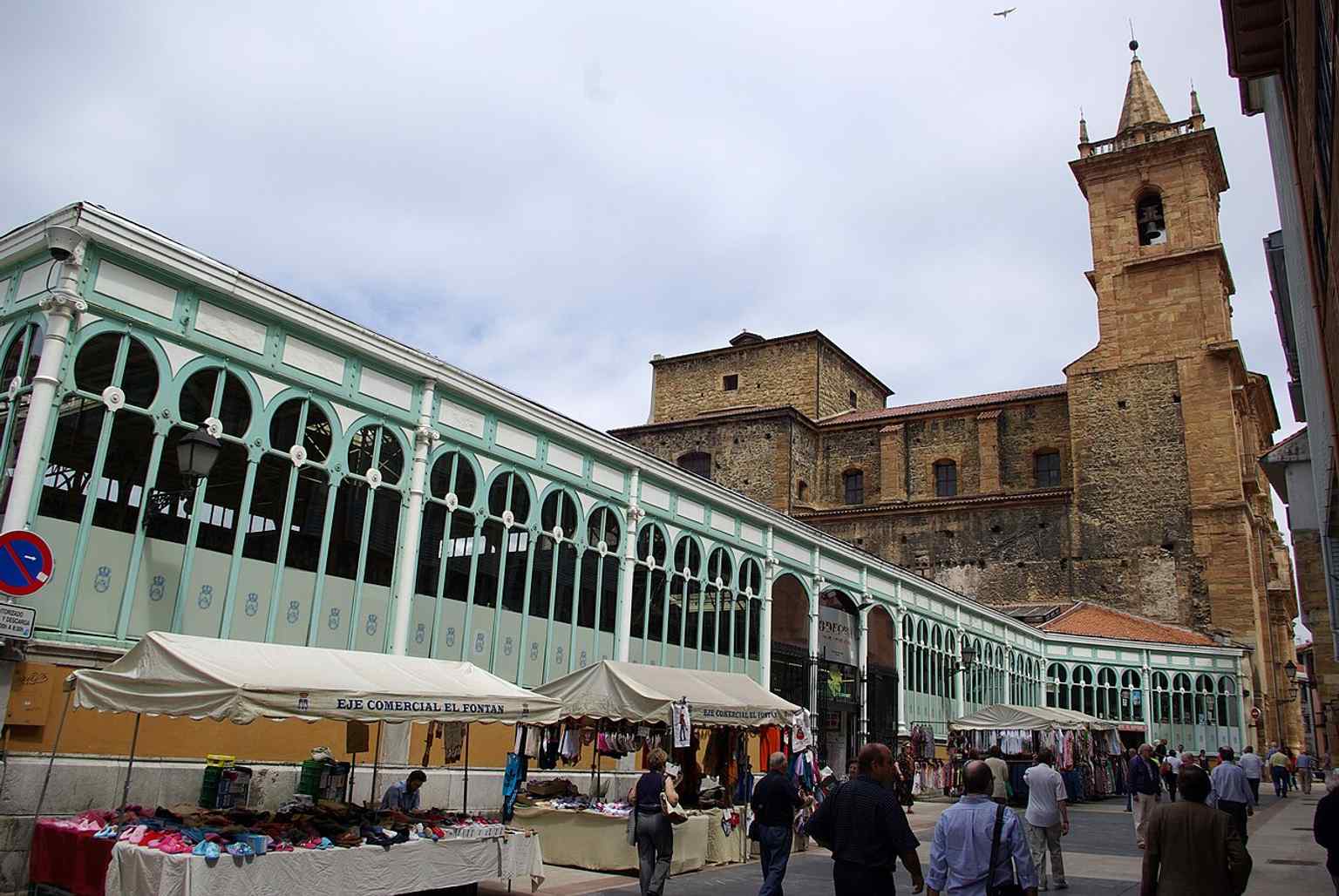
El Fontán Market beside San Isidoro Church — the market’s north side is built right against the church, reflecting its unusual fit within Oviedo’s historic center.Photo: David Perez, Wikimedia Commons, CC BY-SA 4.0. Cropped & resized. The building first took the name Mercado del Diecinueve de Octubre, after the square, and later borrowed the better-known name of El Fontán from the plaza next door, once home to a corral de comedias, an open-air theater courtyard, and the older traditional market. Oviedo likes reusing its stages; one century sells drama, the next sells dinner.
And this place still runs on routine, not nostalgia. Traders often begin arranging their goods around six in the morning so everything looks right when the doors open. On Thursdays and Saturdays, nearby streets fill with produce, flowers, and country goods, and the Sunday flea market keeps the older rhythm alive beyond the hall itself.
In nineteen ninety-four, the city restored El Fontán and gathered Oviedo’s separate municipal markets here, ending the old guild-by-guild split. That renovation also highlighted the iron frame and the covered-promenade feel of the place. More recently, in twenty twenty-four, a new renovation plan partly funded by European Next Generation money ran into fierce resistance from most traders, especially over a proposed hospitality zone. By early twenty twenty-five, city hall was still trying to find funding and common ground. Same market, new argument: how do you modernize without sanding off the soul?
That is El Fontán in a nutshell... proof that ordinary trade can shape a city just as firmly as a king’s decree or a church foundation. When you’re ready, continue about four minutes to the Museum of Fine Arts of Asturias; if you want to return inside El Fontán later, it generally opens Monday through Friday from eight to eight, Saturday from eight to three-thirty, and closes on Sunday.
On your right, look for the pale stone façade with tall rectangular windows, wrought-iron balconies, and a stately arched doorway joining several historic houses into one museum.…Read moreShow less
Open dedicated page →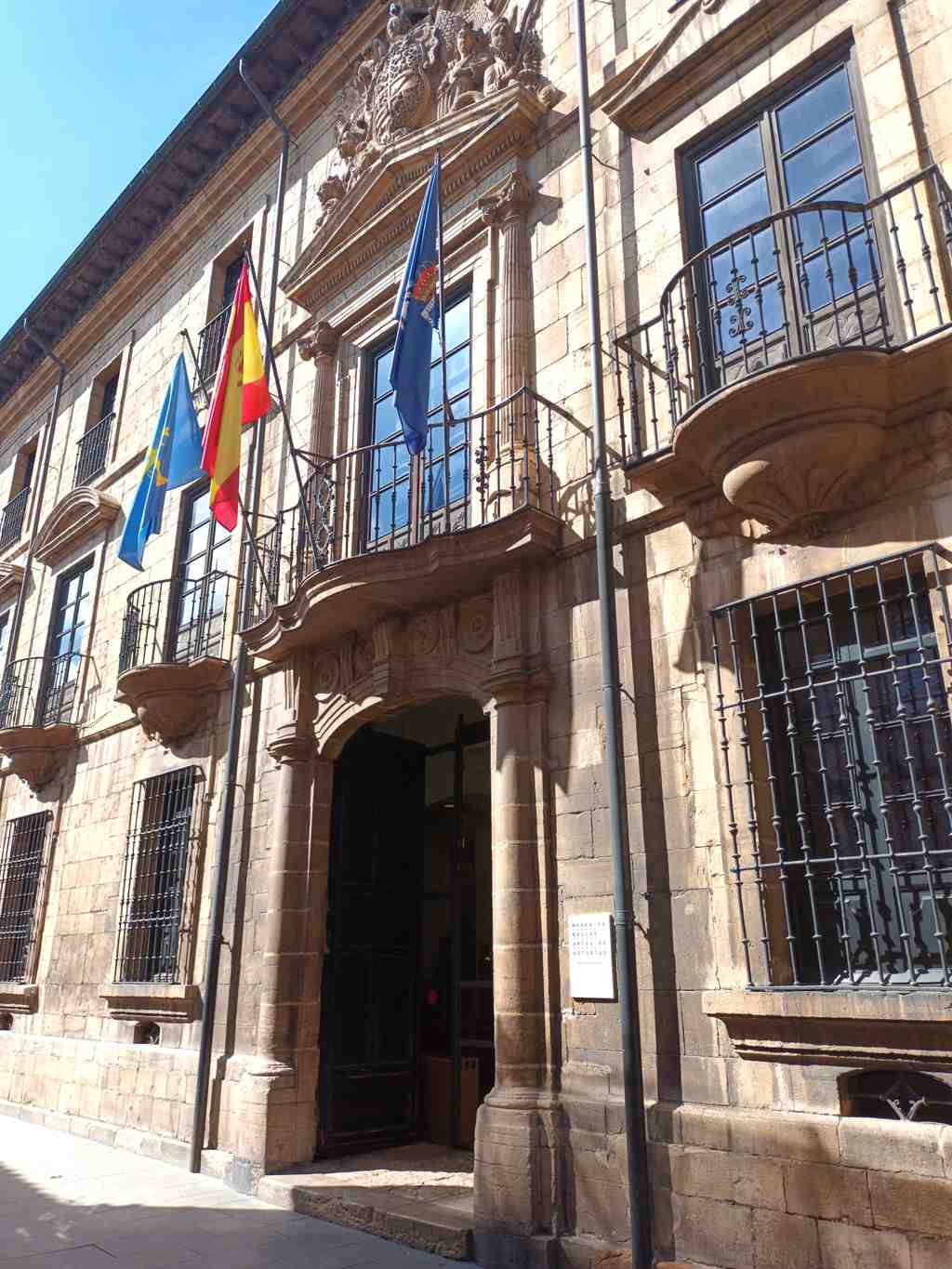
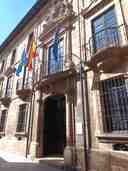
Museum of Fine Arts of AsturiasPhoto: Acediscovery, Wikimedia Commons, CC BY 4.0. Cropped & resized. On your right, look for the pale stone façade with tall rectangular windows, wrought-iron balconies, and a stately arched doorway joining several historic houses into one museum.
From where you’re standing, this place looks composed... almost courtly. But the Museum of Fine Arts of Asturias is really a headquarters for survival.
This is the most important art museum in Asturias, spread across three old city buildings: the Palacio de Velarde, the Casa de Oviedo-Portal, and the later extension through the Casa de Solís-Carbajal. And this address matters for more than art. In the October Revolution of nineteen thirty-four, this block became the blast center of central Oviedo. Fire and dynamite wrecked much of the surrounding area, including the University and the Campoamor Theatre we’ve already met. The Palacio de Velarde survived almost by miracle, and the stone nearby still carries the kind of evidence cities rarely advertise... bullet scars, small and stubborn.
When the museum opened on the nineteenth of May, nineteen eighty, it did not begin with one grand aristocratic hoard. It began with search parties. Emilio Marcos Vallaure and his right-hand man, Toto Castañón, went hunting through dim offices, dusty storage rooms, and forgotten corners of public buildings, even the Hotel Reconquista, rescuing paintings that had drifted out of view. They were not flashy heroes. They were curators, cataloguers, and caretakers - the sort of people who save a culture by writing things down properly, opening the right cupboard, and refusing to let the good stuff disappear.
That patient detective work built a collection of nearly fifteen thousand works, with around eight hundred on permanent display. Inside, you’ll find Goya, El Greco, Picasso, María Blanchard, José de Ribera, Flemish and Italian altarpieces - painted church screens made of many panels - along with Asturian painters, sculpture, photography, glass, and ceramics. Some of the industrial arts are wonderfully local: one glass factory represented here helped create the sidra bottle shape Asturias still knows by heart. Even the cider has an art-history chapter.
The jewel many locals quietly brag about is El Greco’s Apostolado de San Feliz, one of only three complete series of apostles by him that survive in the world. And here’s the little wrinkle most visitors miss: some of the names painted onto the canvases do not match the saints actually shown, because someone in the eighteenth century labeled them incorrectly, and restorers kept the mistake as part of the work’s own biography.
If you check the app, Murillo’s San Fernando gives you a taste of the museum’s Spanish Baroque strength. And that strength kept growing. In two thousand and fifteen, after eight years of interrupted works and the discovery of Roman and medieval remains, architect Francisco Mangado opened an expansion that nearly doubled the museum’s space. The biggest surprise lay underground: a pre-Romanesque fountain from the eighth or ninth century. Mangado redesigned the project so that hidden piece of water engineering could greet visitors in the vestibule instead of being buried again.
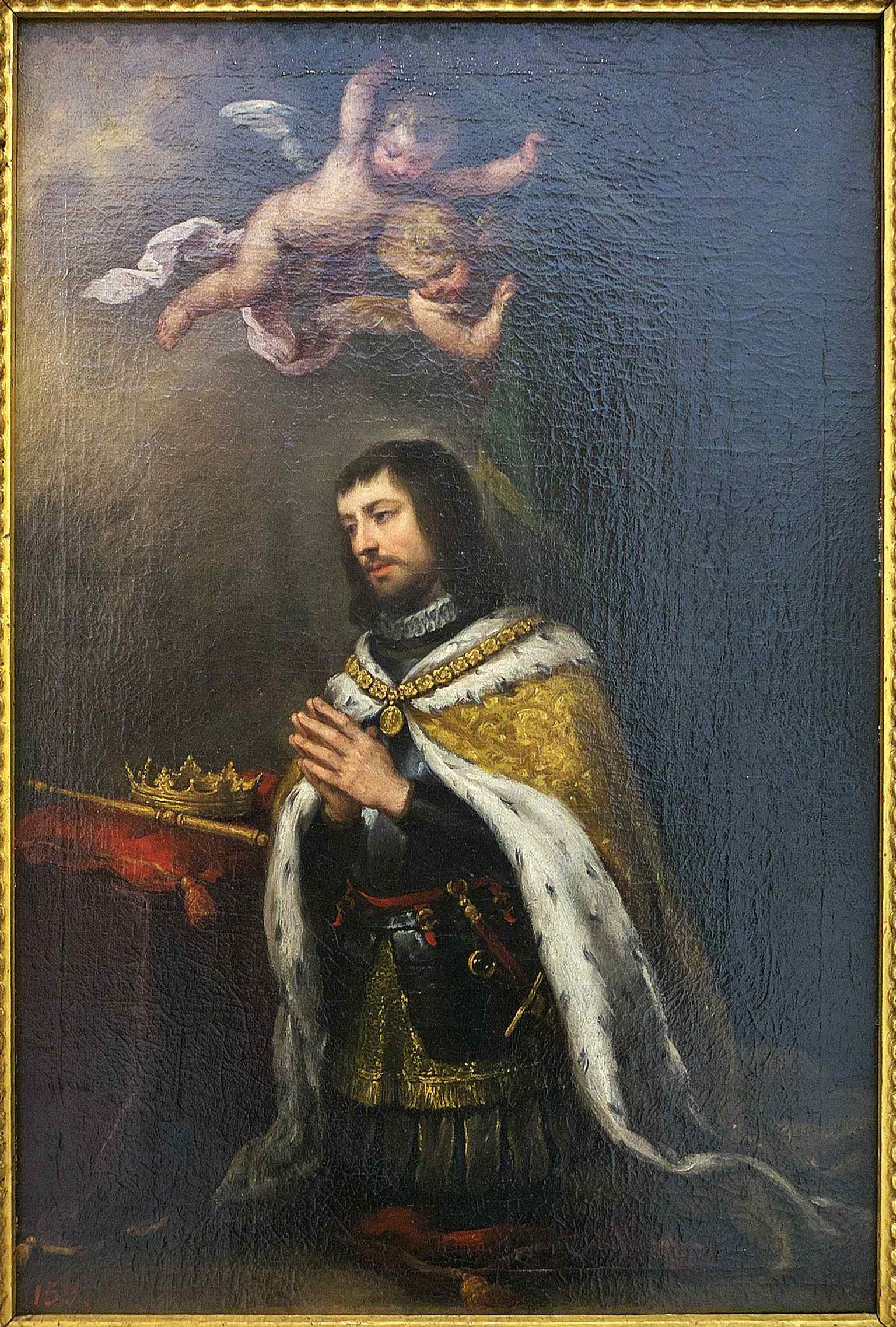
Murillo’s San Fernando in prayer, showing the museum’s important Spanish Baroque masterpieces alongside works by Goya and El Greco.Photo: Jl FilpoC, Wikimedia Commons, CC BY-SA 4.0. Cropped & resized. Then, in two thousand and seventeen, Plácido Arango Arias - born in Mexico to Asturian parents - donated thirty-three major works in tribute to his family, filling crucial gaps with artists like Zurbarán and Valdés Leal. And in November twenty twenty-five, the museum did something just as important as collecting: it returned two paintings seized by Franco’s regime to the grandchildren of Pedro Rico, the republican mayor of Madrid who died in exile. If you glance at the screen, that José Jiménez Aranda portrait hints at an artist tied to that longer story of loss and restitution.
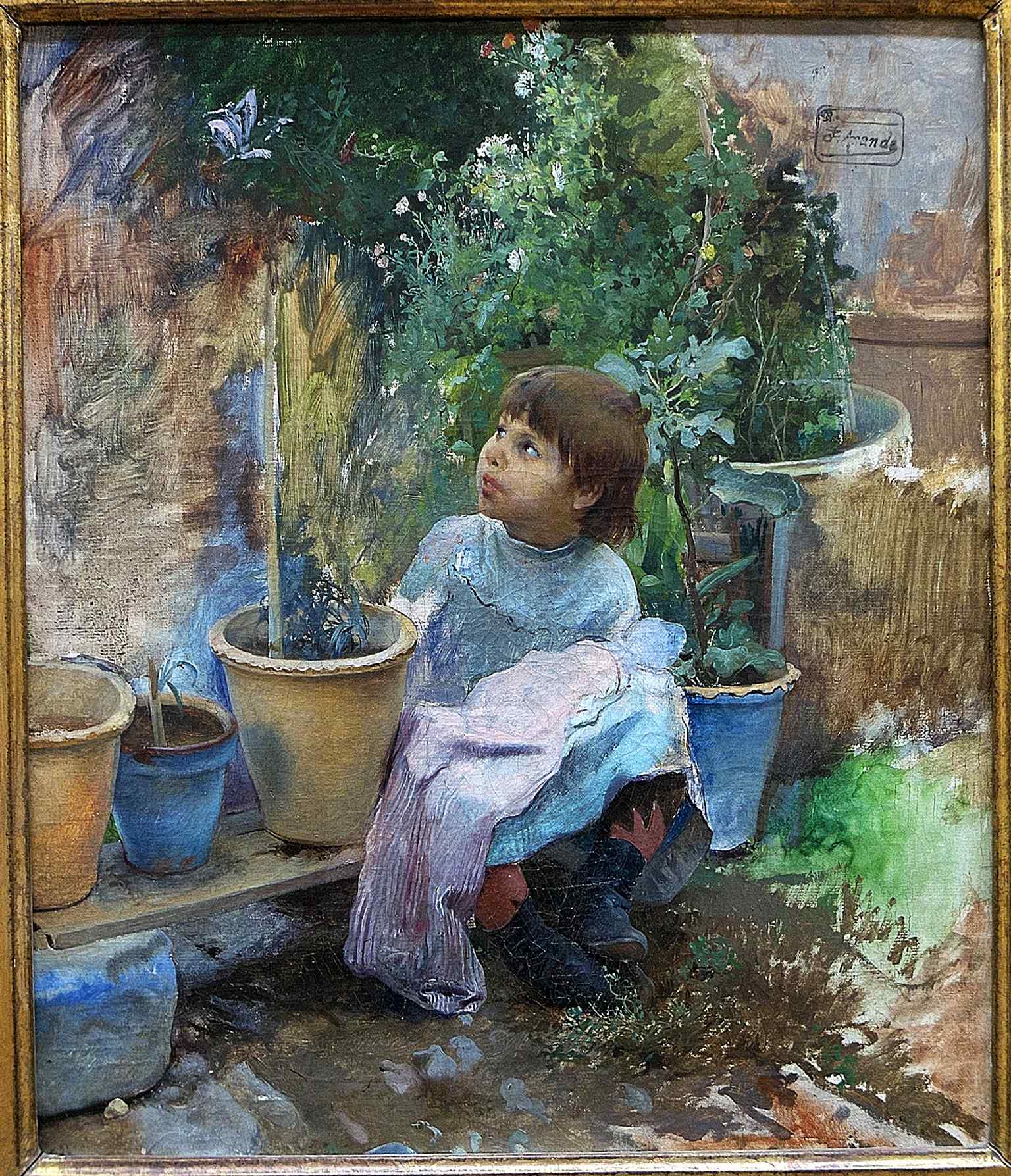
José Jiménez Aranda’s child portrait, notable because the museum also safeguarded and later restituted works by this artist.Photo: Jl FilpoC, Wikimedia Commons, CC BY-SA 4.0. Cropped & resized. So yes, this museum protects paintings. But it also proves that a city keeps its soul only when someone does the slow, unglamorous labor of rescue. And if artworks needed saving, so did the stories around them... which brings us, in about a one-minute walk, to the Valdecarzana-Heredia Palace, where status once helped decide which stories got polished and which were left in the dust. Entry here is free, and if you plan to come back, note that it’s usually closed on Mondays, with split hours most other days and shorter Sunday hours.
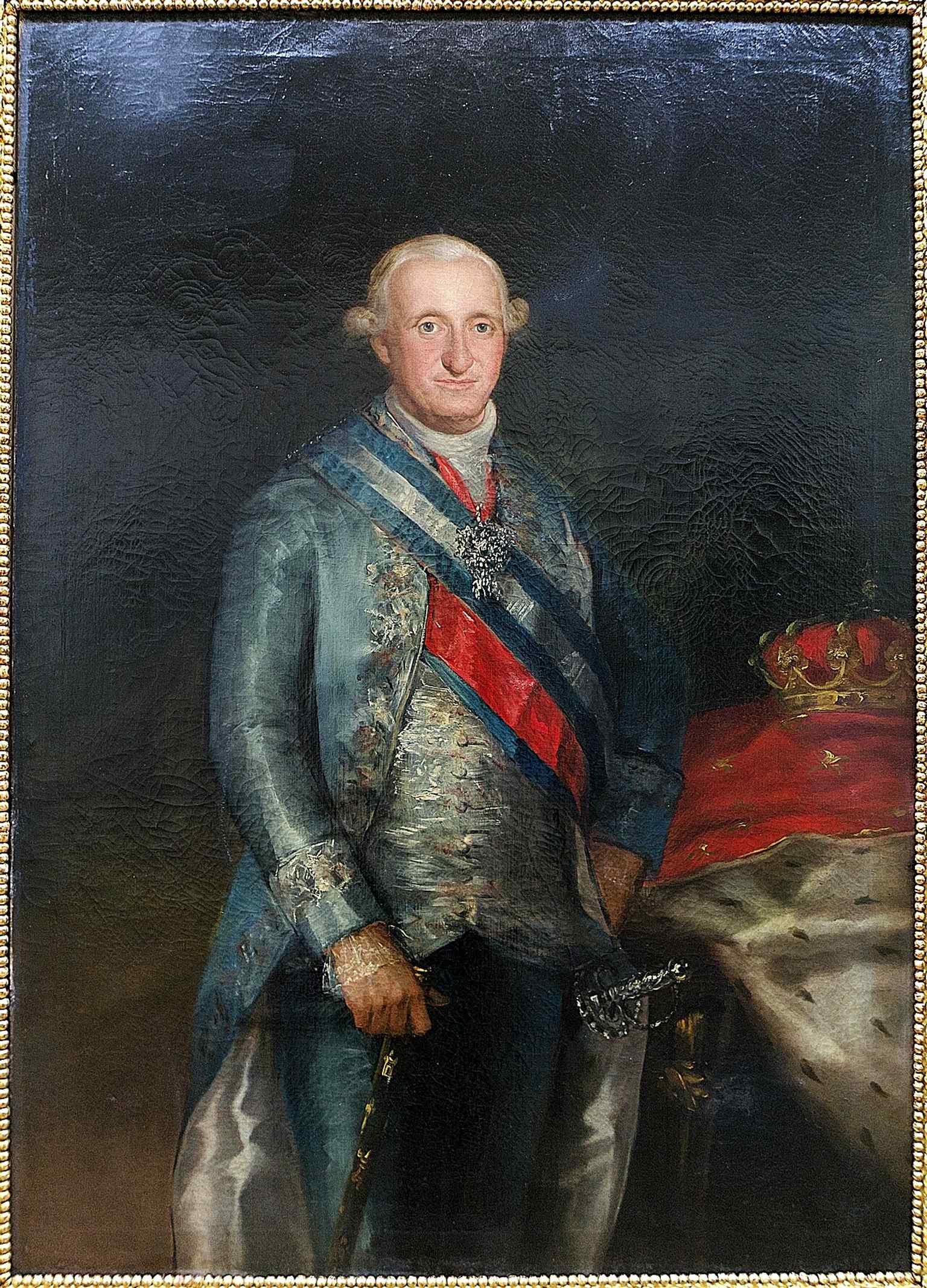
Carlos IV in court dress, linking the museum to Goya and to the portrait tradition highlighted in its permanent collection.Photo: Francisco Goya, Wikimedia Commons, CC BY-SA 4.0. Cropped & resized. 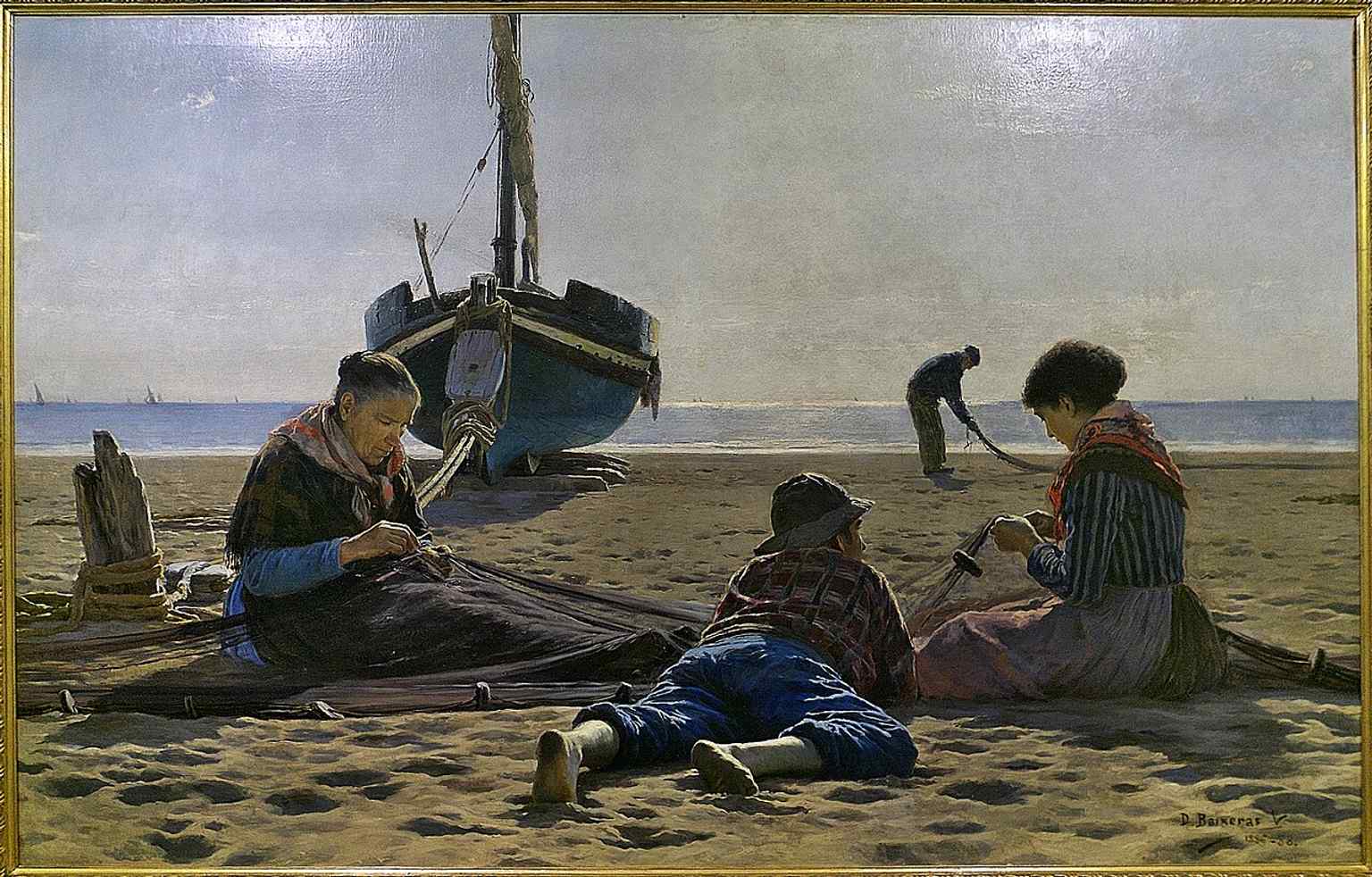
A 19th-century painting from the museum’s collection, helping show that the galleries extend well beyond Old Masters.Photo: Jl FilpoC, Wikimedia Commons, CC BY-SA 4.0. Cropped & resized. 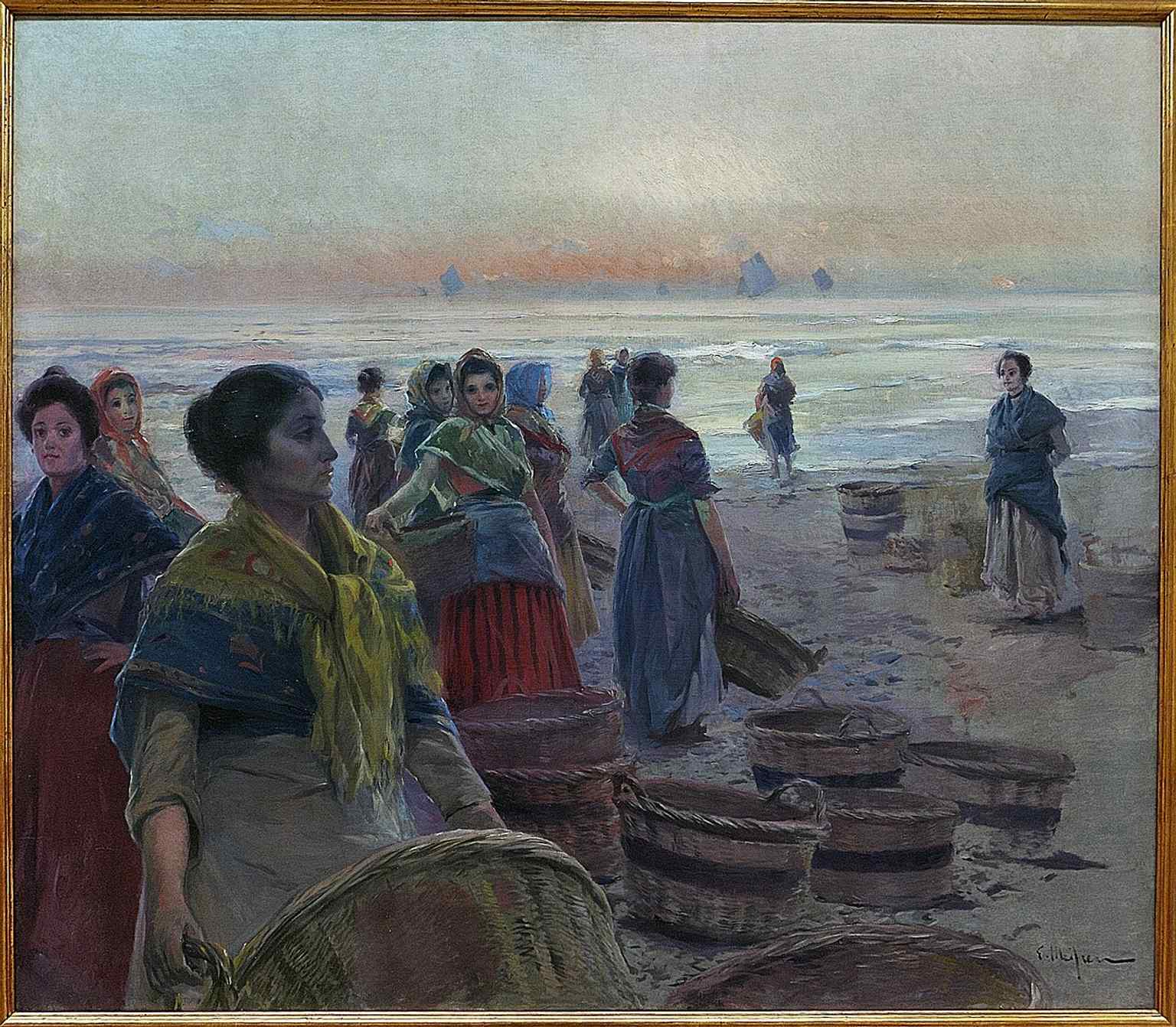
A luminous coastal scene by Eliseo Meifrén, capturing the museum’s 19th- and early 20th-century Spanish painting section.Photo: Jl FilpoC, Wikimedia Commons, CC BY-SA 4.0. Cropped & resized. 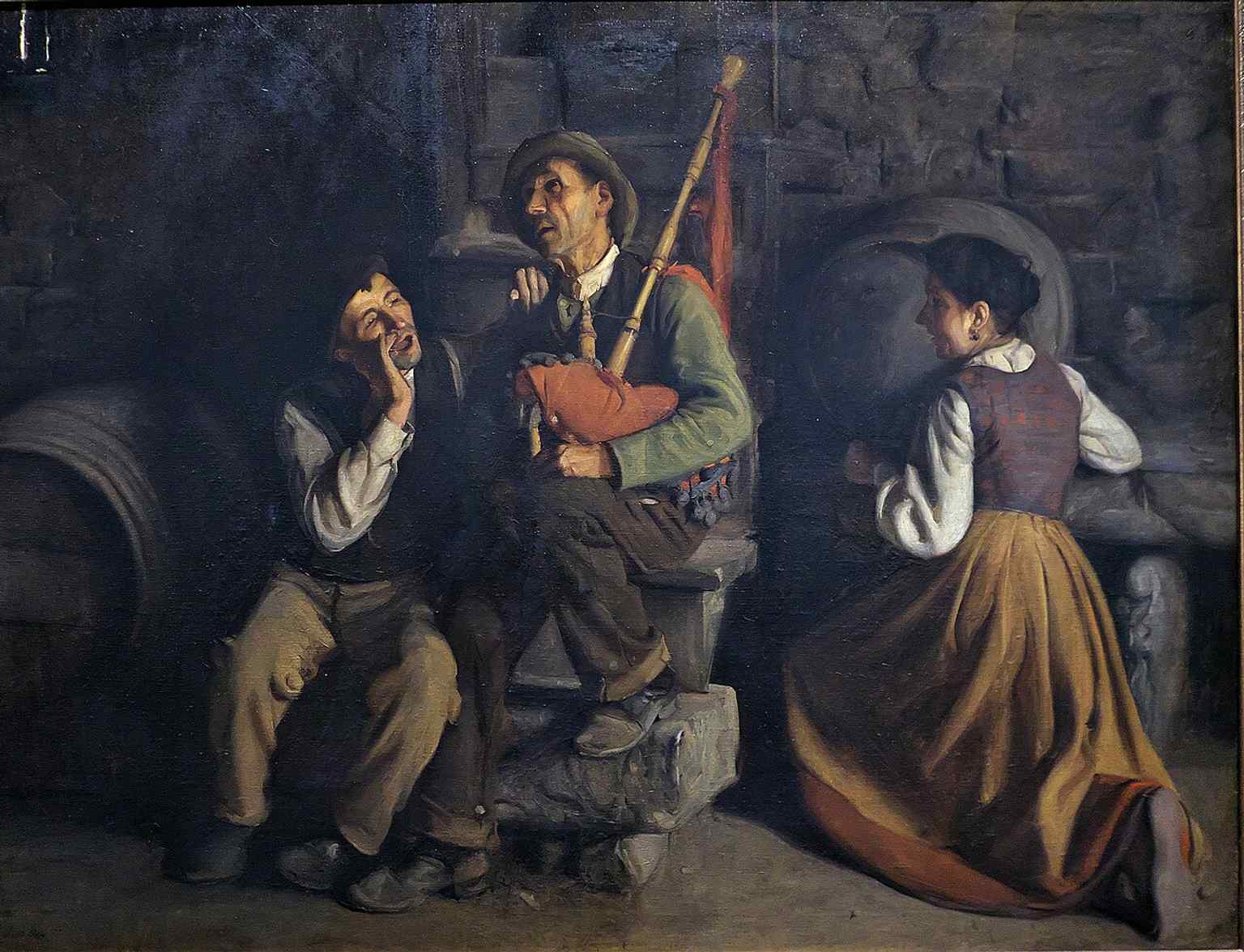
A work from the museum’s modern Asturian painting holdings, representing the regional art that complements the Old Master collection.Photo: Jl FilpoC, Wikimedia Commons, CC BY-SA 4.0. Cropped & resized. Look to your left for a broad ashlar-stone facade in three neat levels, centered on an ornate arched doorway and balcony, with a carved coat of arms rising above the cornice like…Read moreShow less
Open dedicated page →Look to your left for a broad ashlar-stone facade in three neat levels, centered on an ornate arched doorway and balcony, with a carved coat of arms rising above the cornice like a stone signature.
This palace teaches a useful Oviedo lesson: here, architecture is never just decoration. In the early modern city, Asturian noble lineages were not simply old families with long memories. They were rival power networks, and they wrote their status into the street in stone. The Mirandas, who ranked among the strongest houses in the principality, used this address near the cathedral the way a modern institution uses a headquarters... to announce influence, wealth, and who expected to be heard.
Diego de Miranda started that statement between sixteen twenty-seven and sixteen twenty-nine. Master builders including Juan de Naveda and Gonzalo Güemes Bracamonte likely helped shape it. The first version followed an early Asturian Baroque style, still very classical in spirit: a compact urban palace arranged around a large central courtyard, with two four-story towers flanking one side. Only one of those towers survives now. So even before you notice the details, the building already tells a story of loss and revision.
Now focus on the entrance. The doorway has a lowered arch, framed by pilasters, flat wall-columns, with recessed panels. Above it, the main balcony stands between Doric half-columns, and above those sits a broken pediment, a split triangular crown, supporting the shield. This is stone speaking the language of authority.
But here comes the turn. The facade in front of you is not Diego de Miranda's original face. In the late eighteenth century, Antonio Heredia Velarde, mayor of Oviedo, pushed a major redesign. He hired the Asturian architect Manuel Reguera González... and then the relationship collapsed. Another architect finished the job around seventeen seventy-four. So the elegant front you see came out of conflict, not smooth agreement. That's Oviedo in a nutshell: people keep remaking the city, and not always politely.
If you glance at the image on your screen, you can read that central composition more clearly and see how the whole facade channels your eye upward to the shield. That shield belongs to the Heredia family. It shows Hercules wrestling the Nemean lion, with a mask below and the date seventeen seventy-four inscribed like a small stone boast. Noble families did not exactly go in for understatement.
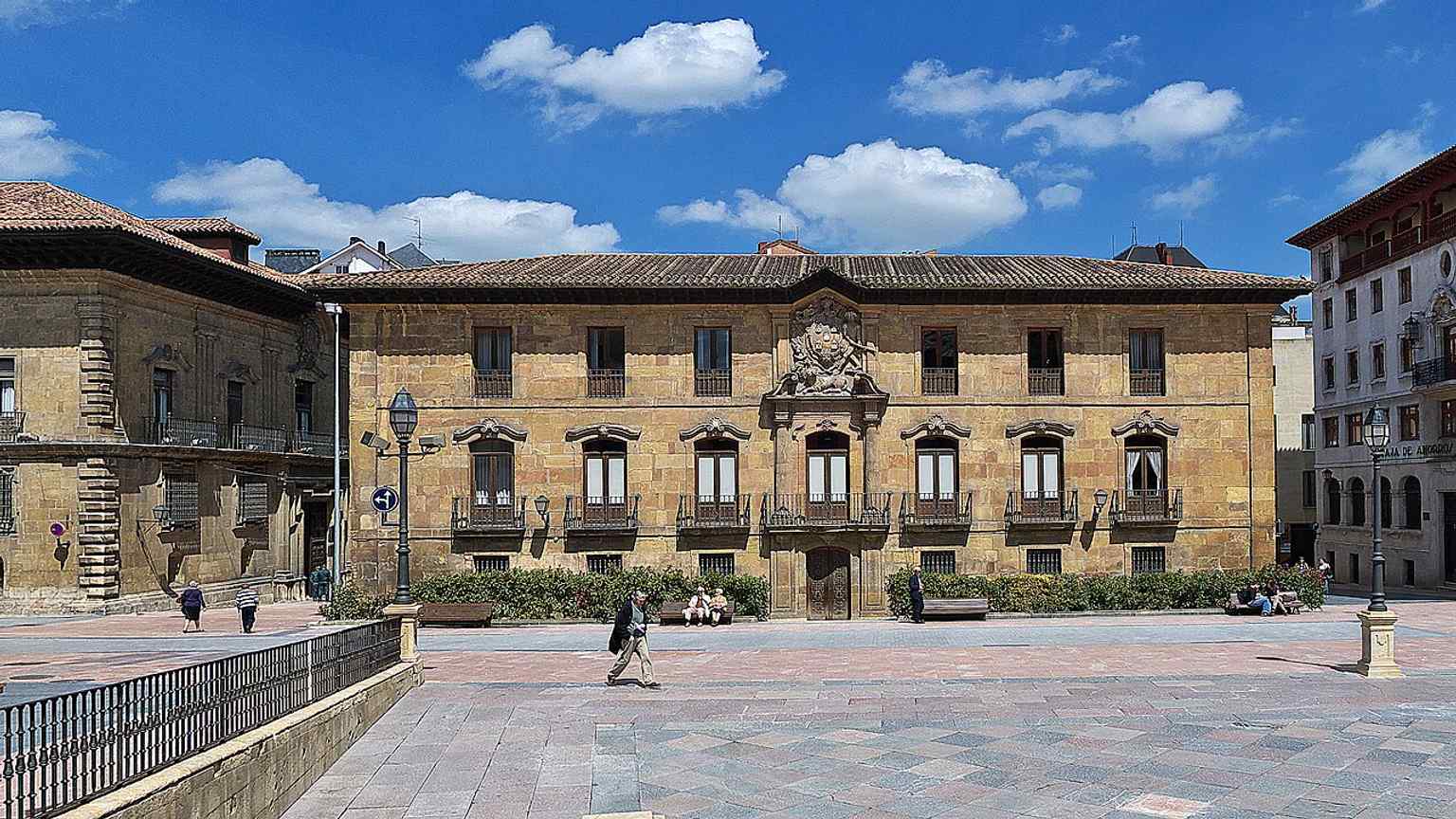
The palace’s main urban façade in Oviedo, built for the Miranda family and later remodeled in the 18th century to project noble power.Photo: José Luis Filpo Cabana, Wikimedia Commons, CC BY 3.0. Cropped & resized. Later, the palace changed uniforms again: in the nineteenth century it became a casino, then in nineteen thirty-one the Audiencia Territorial, a regional high court. Today it still serves public authority, which is a fine irony for a house born as private power. Official monument protection finally arrived in two thousand.
From these family emblems, we now turn toward an older source of authority altogether: the royal Oviedo of its earliest kings. San Tirso el Real is about a one-minute walk from here, and this exterior can be viewed at any hour.
On your right stands a compact stone church with a square tower and, high on its oldest wall, a distinctive triple-arched window set like a frame within the masonry. San Tirso…Read moreShow less
Open dedicated page →On your right stands a compact stone church with a square tower and, high on its oldest wall, a distinctive triple-arched window set like a frame within the masonry.
San Tirso can look modest at first glance... and that is the trick it plays. Most visitors read it as a small old church beside the cathedral. Locals know it began as something far more intimate and far more powerful: part of the palace world of Alfonso the Second, known as Alfonso the Chaste.
Alfonso the Second took the throne in the late eighth century and moved the political heart of his kingdom to Oviedo in seven ninety-one. He did not just rule from here; he reshaped the city on purpose, tying government, worship, and royal ceremony into one tight knot. He raised palaces, the early church of San Salvador, the Holy Chamber, defensive walls... and San Tirso, which served as an oratory, a private royal chapel, not simply a neighborhood parish. In plain English, this was once chapel access for the crown, not general admission.
That royal beginning is easy to miss because so much vanished. Almost the whole first church disappeared under later rebuilding. What survives from Alfonso’s time is mainly the end wall of the original sanctuary, with its remarkable window: three rounded arches resting on marble columns, some of them reused from older Roman pieces, with carved capitals decorated with acanthus leaves. The upper frame around the window stands out boldly, almost like a picture border cut into stone. If you tap open the exterior photo in the app, the tower helps you place the church in that old royal compound.
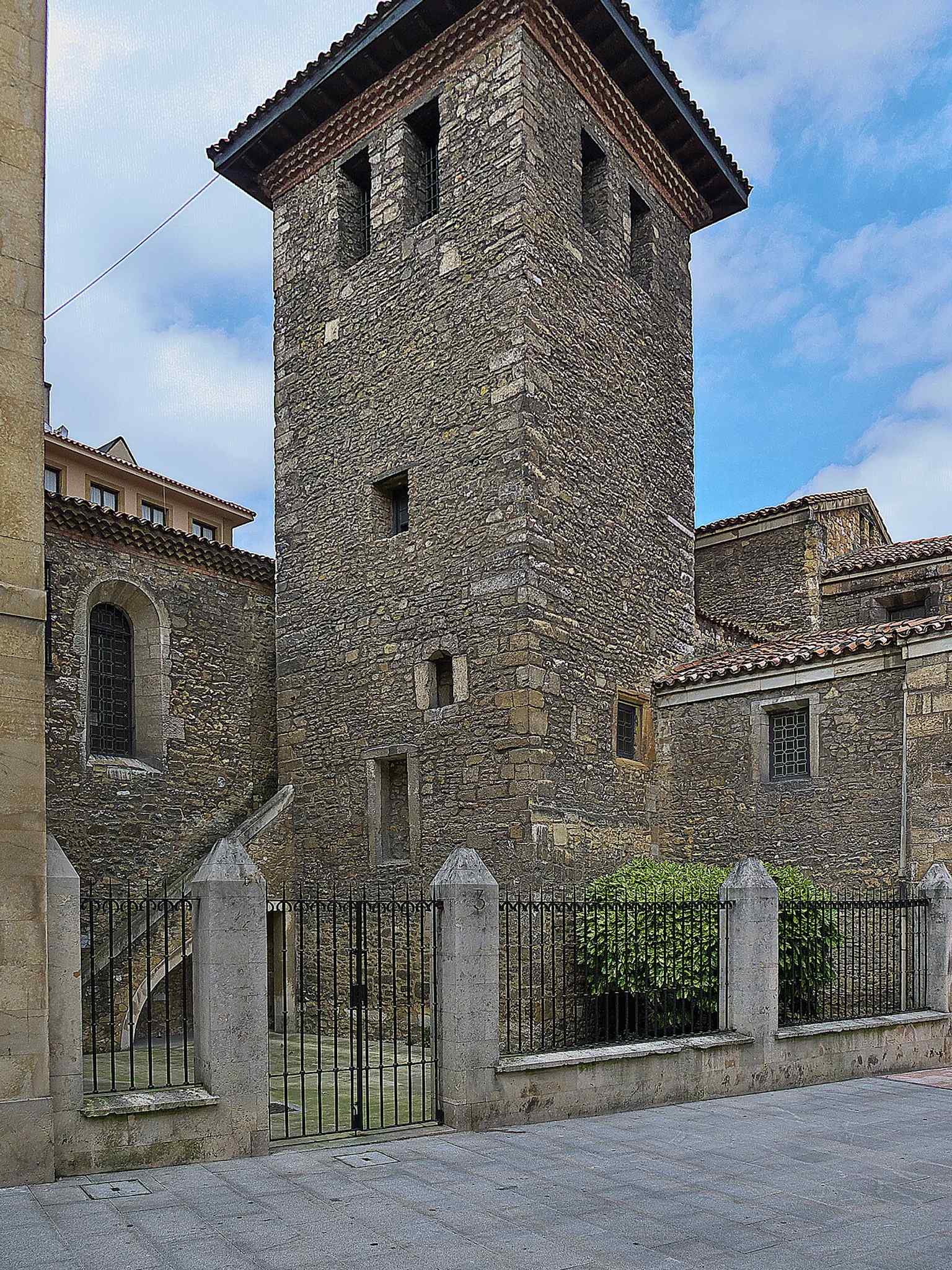
The church’s tower, once part of the royal Asturian complex, later rose to 14 meters and served as its bell tower.Photo: Jl FilpoC, Wikimedia Commons, CC BY-SA 4.0. Cropped & resized. And here comes the turn in the story. San Tirso is not a tidy relic preserved under glass. Fire tore through it in fifteen twenty-one and destroyed what remained of the old basilica. Builders rebuilt, then altered it again, first in Romanesque form in the twelfth century, then in later Gothic and Baroque phases. The twentieth century hit hard too: the Civil War left severe damage, and in the nineteen fifties Manzanares directed another partial reconstruction. So this church is not one clean medieval survivor. It is a survivor stitched together after repeated blows.
Even its details carry that stubbornness. The old masonry still shows small rough stone blocks with larger cut stone at the corners. Under the roofline, the projecting supports end in rounded forms locals compare to a pigeon’s breast, marked with neat stripes. Small things, maybe, but they are fingerprints from the first royal Oviedo.
Inside, the layers continue: an eighteenth-century main altarpiece by the Oviedo sculptor José Bernardo de la Meana, a much-loved image of San Tirso by Antonio Borja, and the tomb of Balesquita Giráldez, a local woman who left property to support a hospital for the poor. In two thousand and five, restorers even uncovered a painted Jerusalem hidden for centuries beneath later paint. This place keeps giving up its secrets one layer at a time.
Now turn your attention toward the cathedral. In about a one minute walk, Alfonso’s private chapel world opens outward into something much grander: San Salvador, the great sacred statement of his Oviedo.
On your left rises a honey-colored stone façade shaped like a giant Gothic screen, with a deep pointed arch at its base and a single slender spire climbing above it. This is…Read moreShow less
Open dedicated page →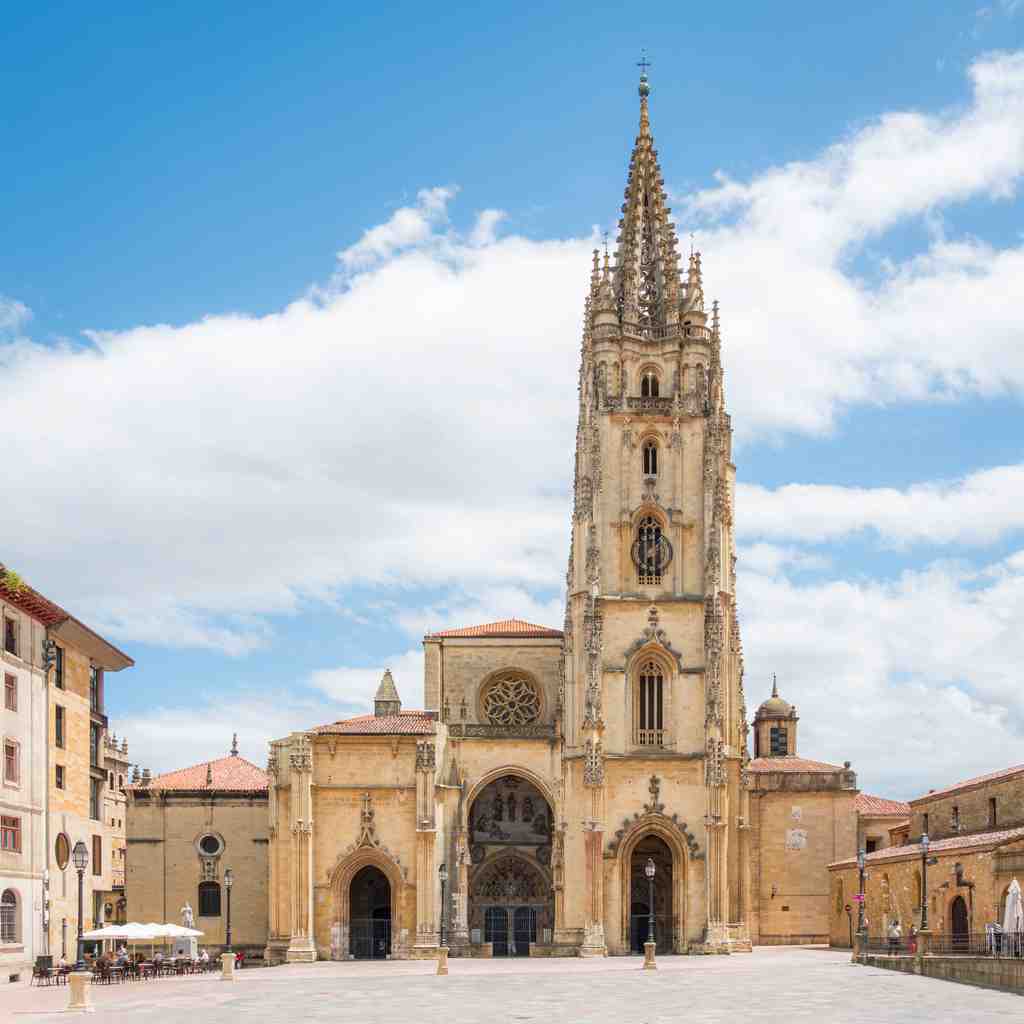
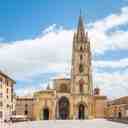
Oviedo CathedralPhoto: Fernando, Wikimedia Commons, CC BY-SA 4.0. Cropped & resized. On your left rises a honey-colored stone façade shaped like a giant Gothic screen, with a deep pointed arch at its base and a single slender spire climbing above it.
This is Oviedo playing at full scale. Not just a church, not just a pretty old monument... this was the spiritual engine of a royal capital. King Fruela the First founded the first church here in seven hundred eighty-one, and his son Alfonso the Second, Alfonso the Chaste, enlarged it in eight hundred two and created the bishop’s seat in eight hundred ten. In those early centuries, palace, churches, monasteries, baths, and stables stood together around this spot, so power and prayer were neighbors, practically sharing the same mailbox.
And then Oviedo stepped onto a much bigger map. In eight hundred thirty-four, Bishop Teodomiro told Alfonso the Second that the tomb of Saint James had been found in Compostela. Alfonso responded by traveling there himself, becoming the tradition’s first pilgrim, and that decision tied this cathedral forever to the Camino Primitivo, the oldest Camino route. If you glance at your screen, image fifteen captures that pilgrimage memory nicely.
Now, look carefully at the building in front of you. Let your eyes climb from the portal up toward the spire and ask yourself how many centuries are colliding in that stone. This cathedral is not one clean style. It carries traces of the pre-Romanesque kingdom that began here, Romanesque survivors, Gothic ambition, Renaissance adjustments, and Baroque additions... like a history book that refused to stay shut.
The church you see now began in thirteen eighty-eight, when Bishop Gutierre de Toledo pushed for a new Gothic cathedral on the site of the older basilica. Later builders kept the relay going: they raised the main chapel, the transept, the three aisles, the cloister, and the west front. They first imagined twin towers, then changed course and chose one mighty tower instead. Cardinal Francisco Mendoza de Bobadilla advanced it in the early sixteenth century, and Cristóbal de Rojas finished the tower with its octagonal pyramid. When lightning wrecked the original spire in fifteen seventy-five, Rodrigo Gil de Hontañón rebuilt it. So even that elegant point above you carries a comeback story.
And here is the twist in the tale: this place did not simply survive the Middle Ages and drift gently into old age. In October of nineteen thirty-four, during the Asturian Revolution, an explosion tore apart the Holy Chamber and brought down part of the cloister. Historian Manuel Gómez Moreno inspected the damage, and sculptor Víctor Hevia led the hard, delicate work of restoring shattered sculpture. Then, in nineteen seventy-seven, thieves broke into the Holy Chamber and stole jewels and reliquaries; some returned in nineteen eighty-one, but partly dismantled, needing repair all over again. So this great cathedral is not just ancient. It is patched, defended, and remembered by hand.
That matters because Oviedo became famous as Sancta Ovetensis, the holy Oviedo, a cathedral of relics. In ten seventy-five, Alfonso the Sixth ceremonially opened the Arca Santa, the Holy Chest, and strengthened the city’s reputation as a place where faith took physical form in treasured objects, bones, crosses, cloth, and royal memory. If you check image seven, you can see the guarded heart of that story waiting nearby.
We’ll head there next, to the Holy Chamber, where this immense public monument narrows into something far more intimate and fiercely protected. If you plan to return inside later, the cathedral usually opens Monday through Friday from ten to one and four to six, Saturday from ten to one and four to five, and stays closed on Sunday.
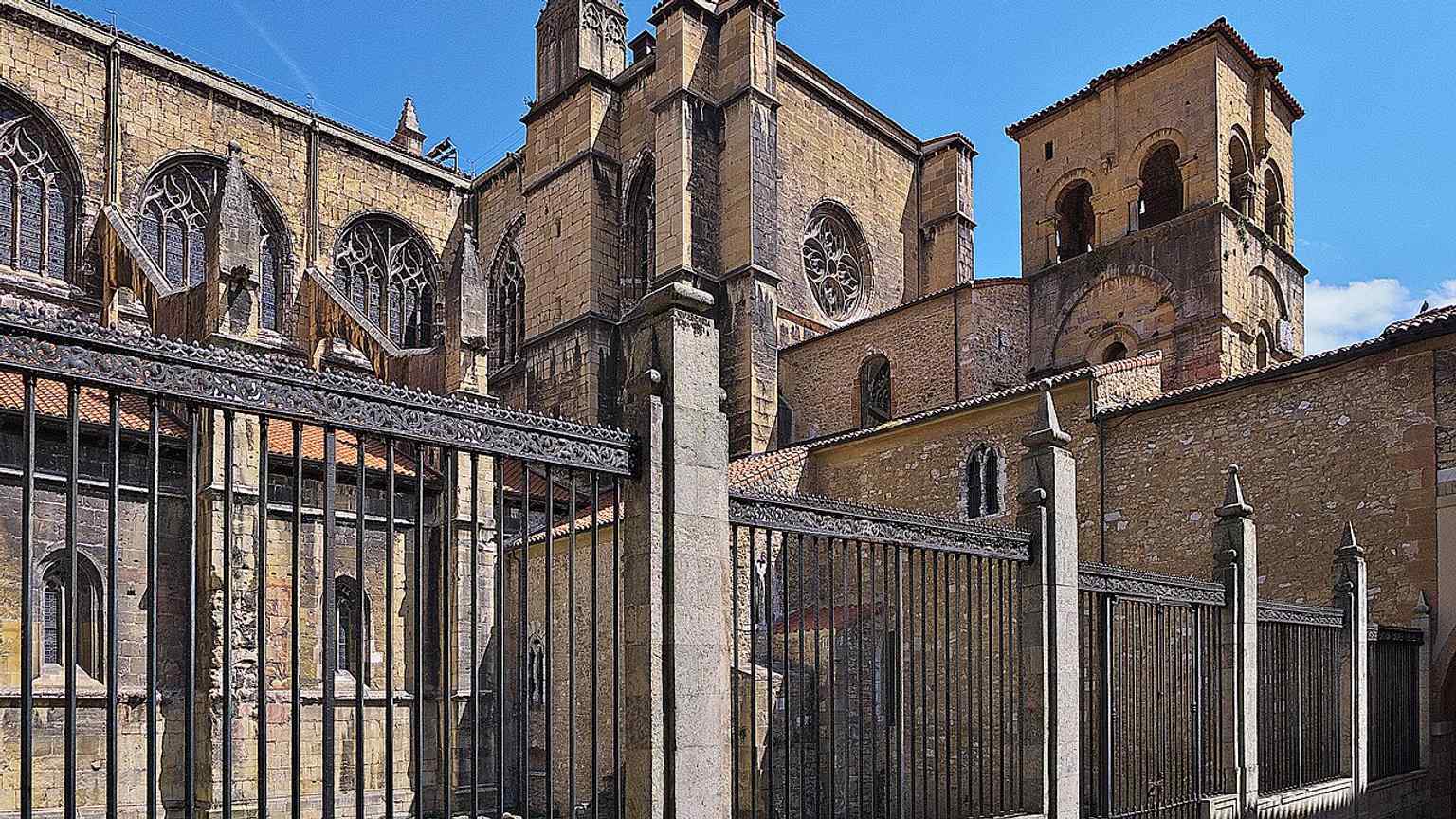
The cathedral’s exterior with the Old Tower and apse, showing the Gothic profile that grew over earlier medieval foundations.Photo: Jl FilpoC, Wikimedia Commons, CC BY-SA 4.0. Cropped & resized. 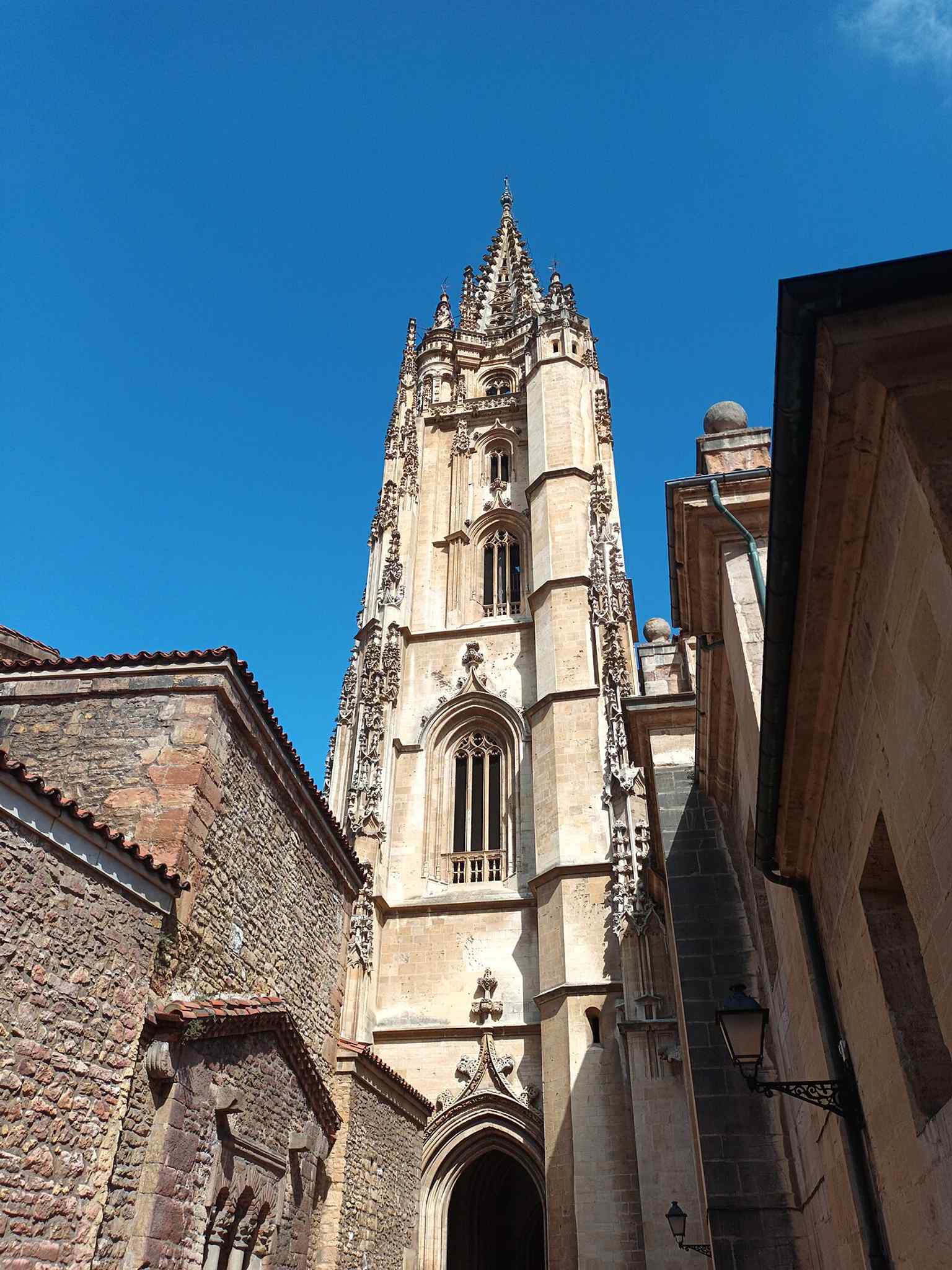
The main façade of Oviedo Cathedral, part of the late-Gothic rebuilding that finished the west front and tower.Photo: Acediscovery, Wikimedia Commons, CC BY 4.0. Cropped & resized. 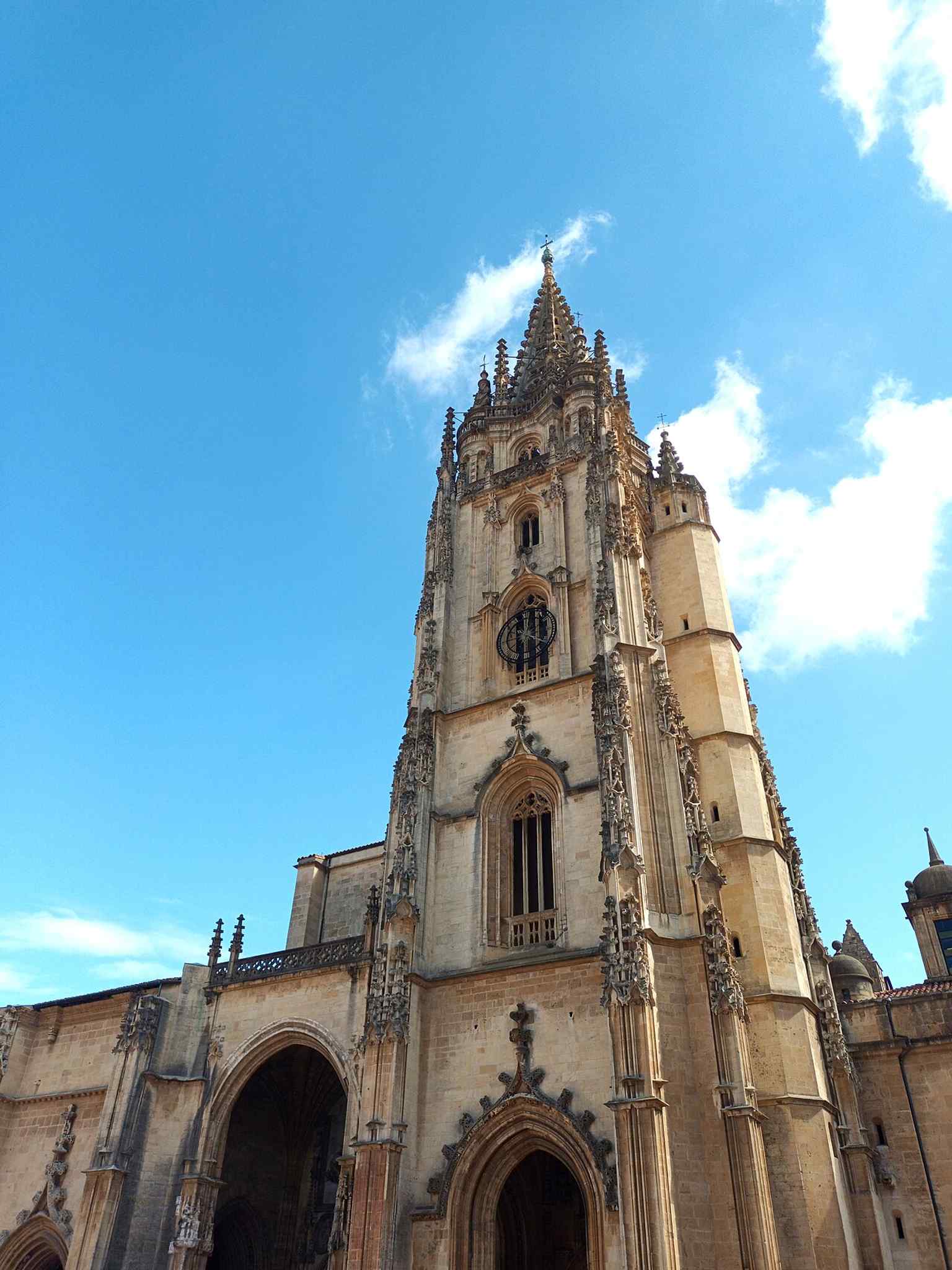
A full-height view of the cathedral’s western side, useful for seeing how the monument dominates the old city centre.Photo: Acediscovery, Wikimedia Commons, CC BY 4.0. Cropped & resized. 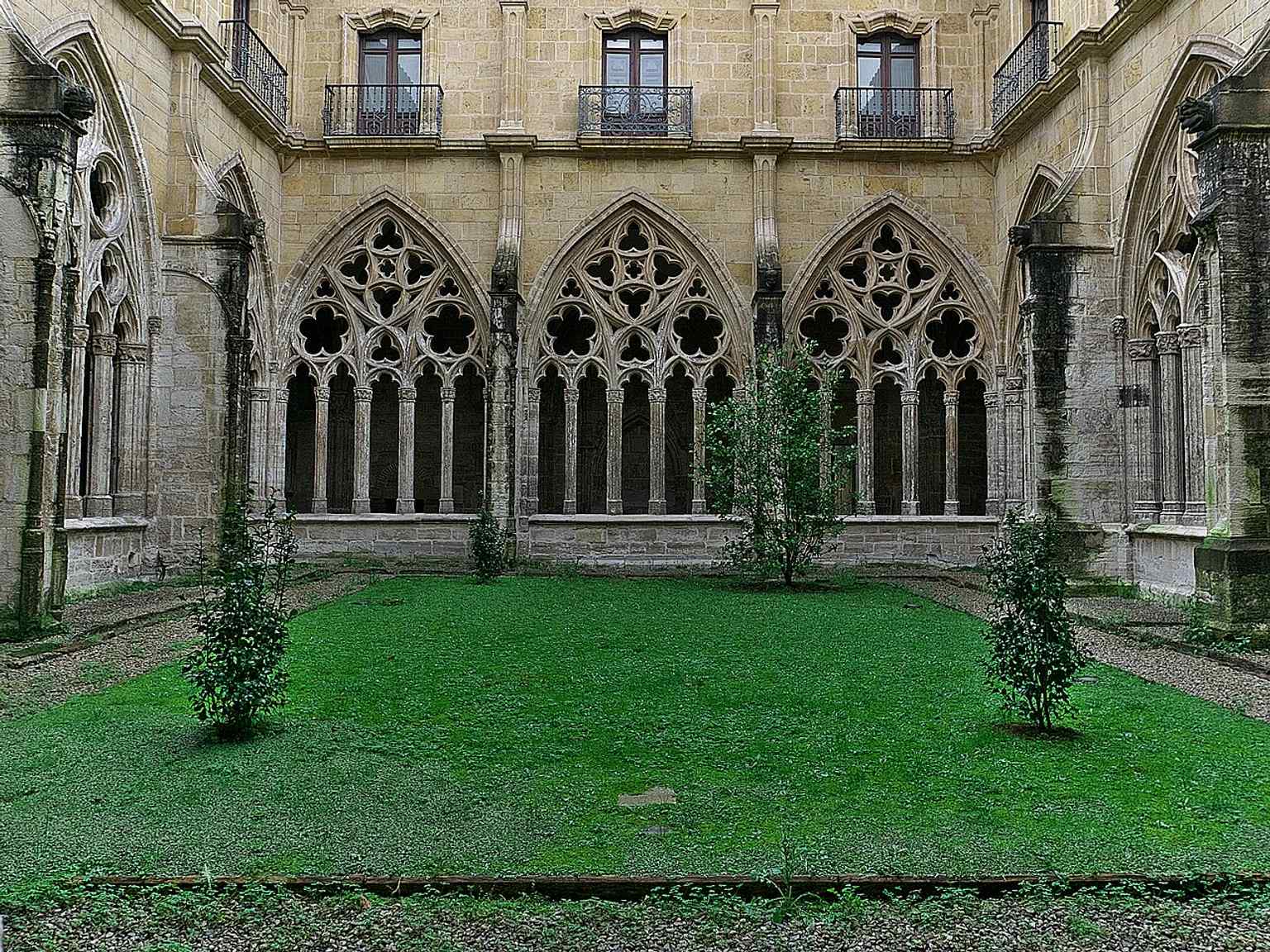
The Gothic cloister, finished in the mid-15th century, one of the cathedral’s key late-medieval spaces.Photo: Jl FilpoC, Wikimedia Commons, CC BY-SA 4.0. Cropped & resized. 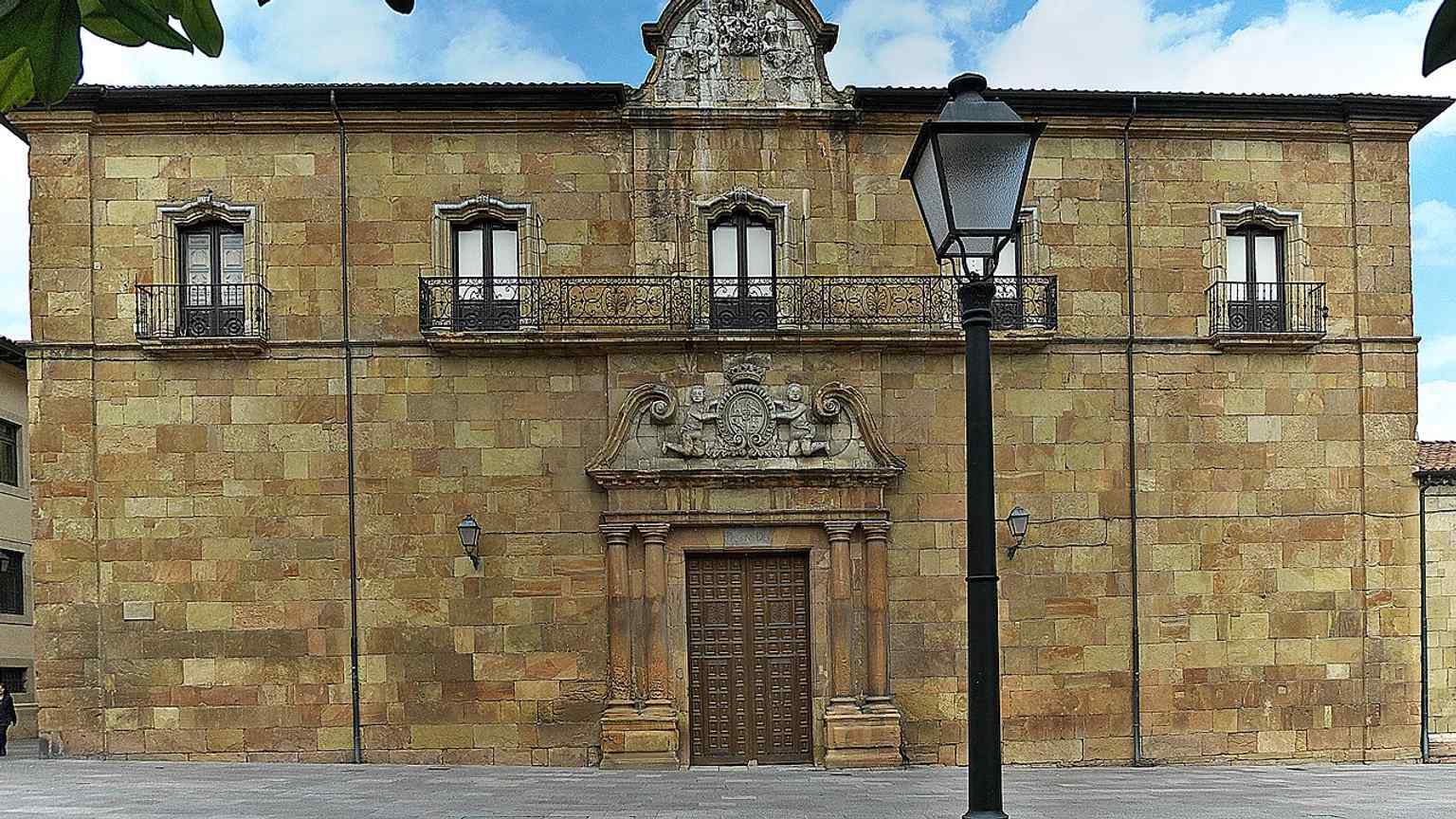
The Door of Alms on the cloister side, a surviving Baroque-era entrance on the cathedral complex.Photo: José Luis Filpo Cabana, Wikimedia Commons, CC BY 3.0. Cropped & resized. 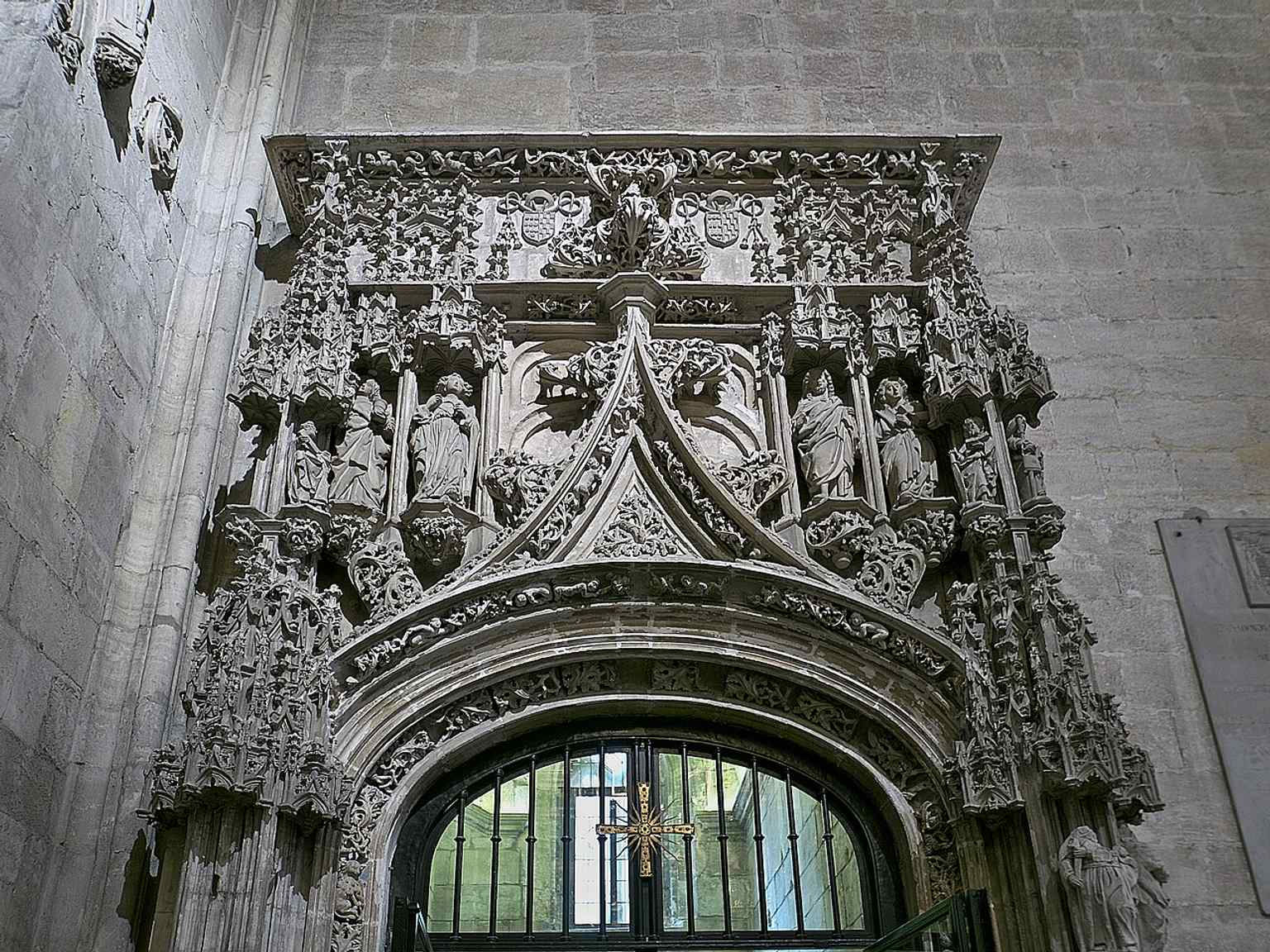
The entrance to the Cámara Santa, the shrine that protects Oviedo’s most treasured relics and royal objects.Photo: Jl FilpoC, Wikimedia Commons, CC BY-SA 4.0. Cropped & resized. 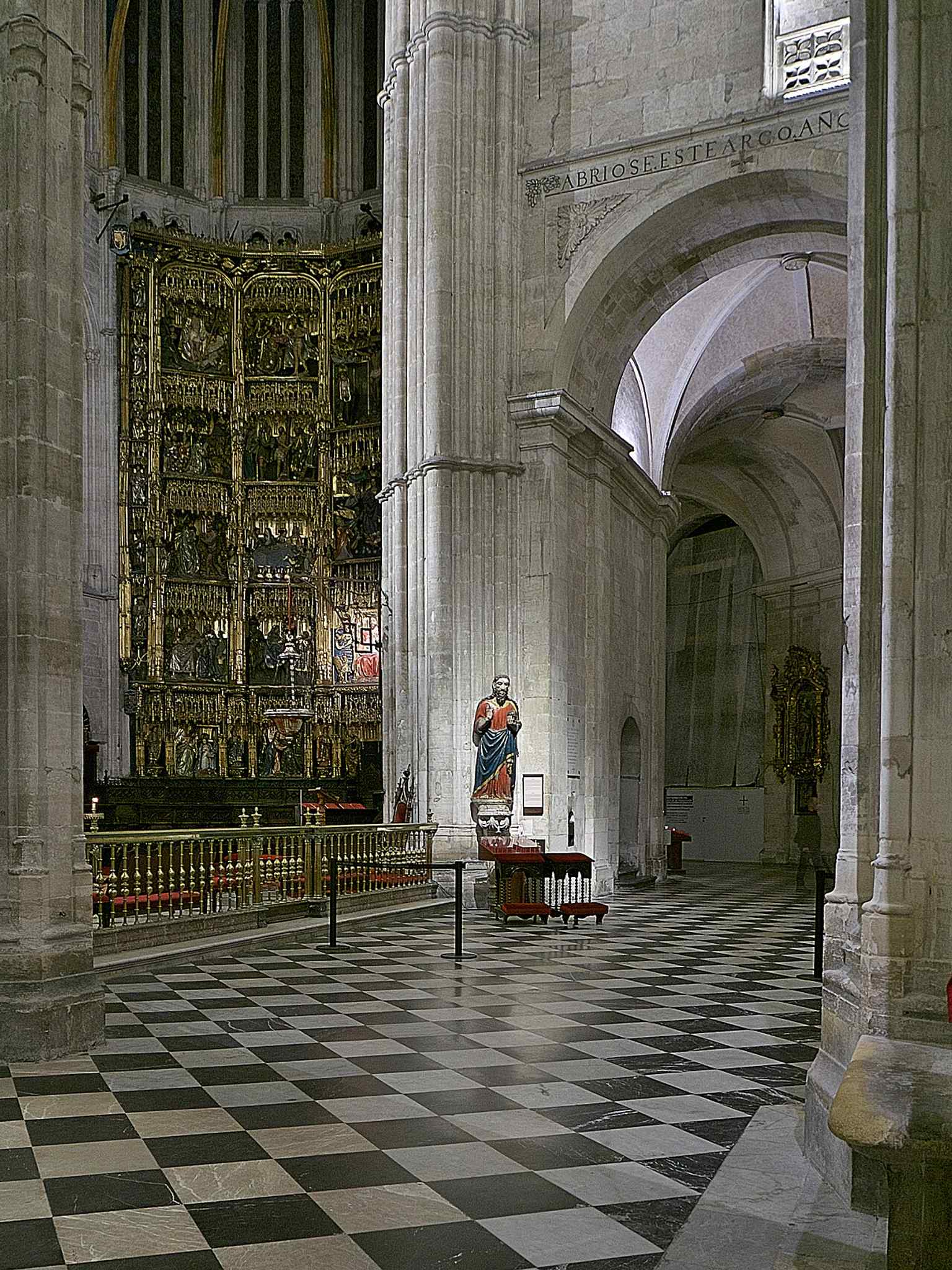
The nave interior, where the cathedral’s Gothic vaulting and later additions create its layered medieval look.Photo: Jl FilpoC, Wikimedia Commons, CC BY-SA 4.0. Cropped & resized. 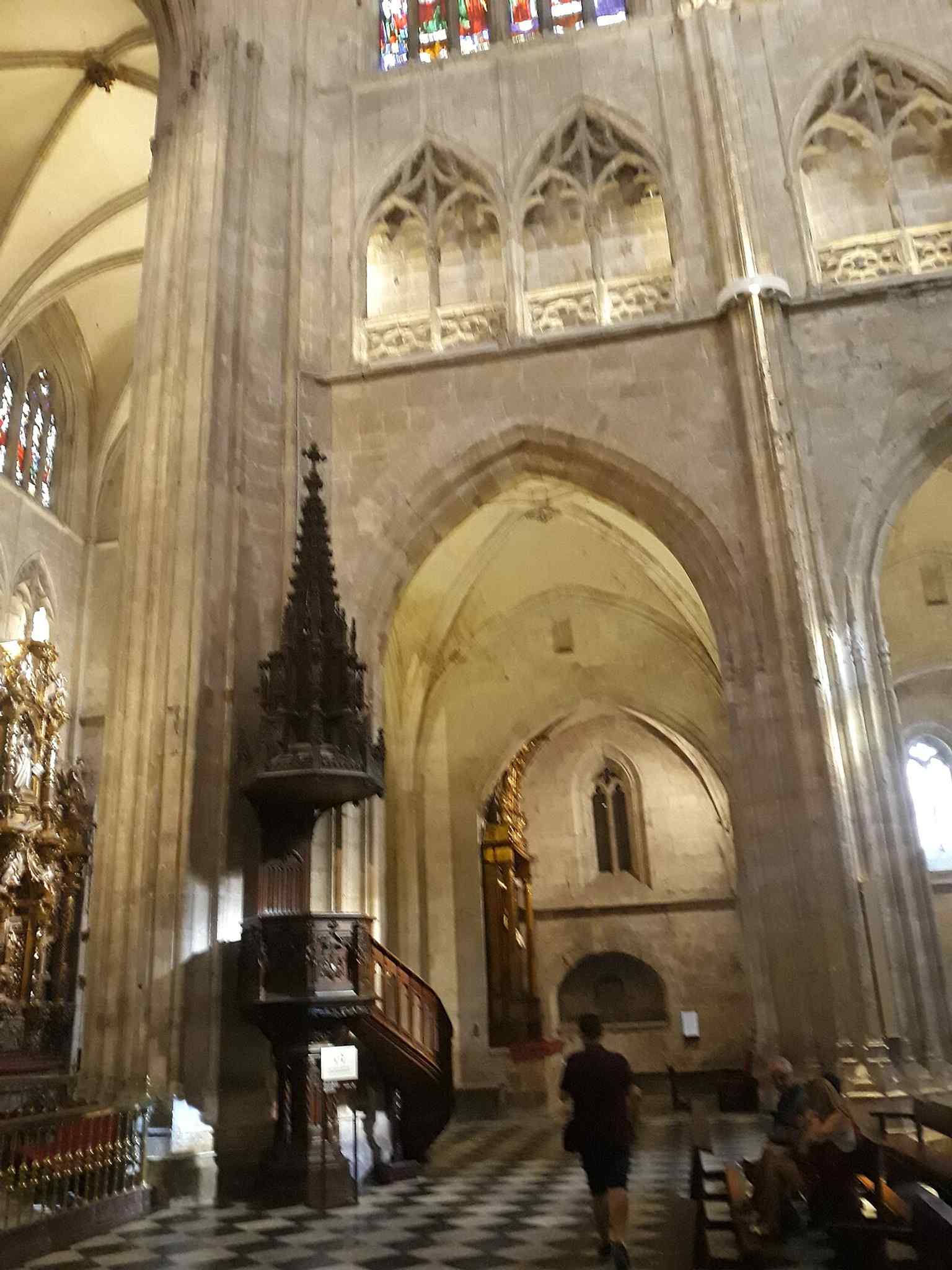
A broad interior view that helps show the cathedral’s scale after centuries of Gothic rebuilding and restoration.Photo: Simon Burchell, Wikimedia Commons, CC BY-SA 4.0. Cropped & resized. 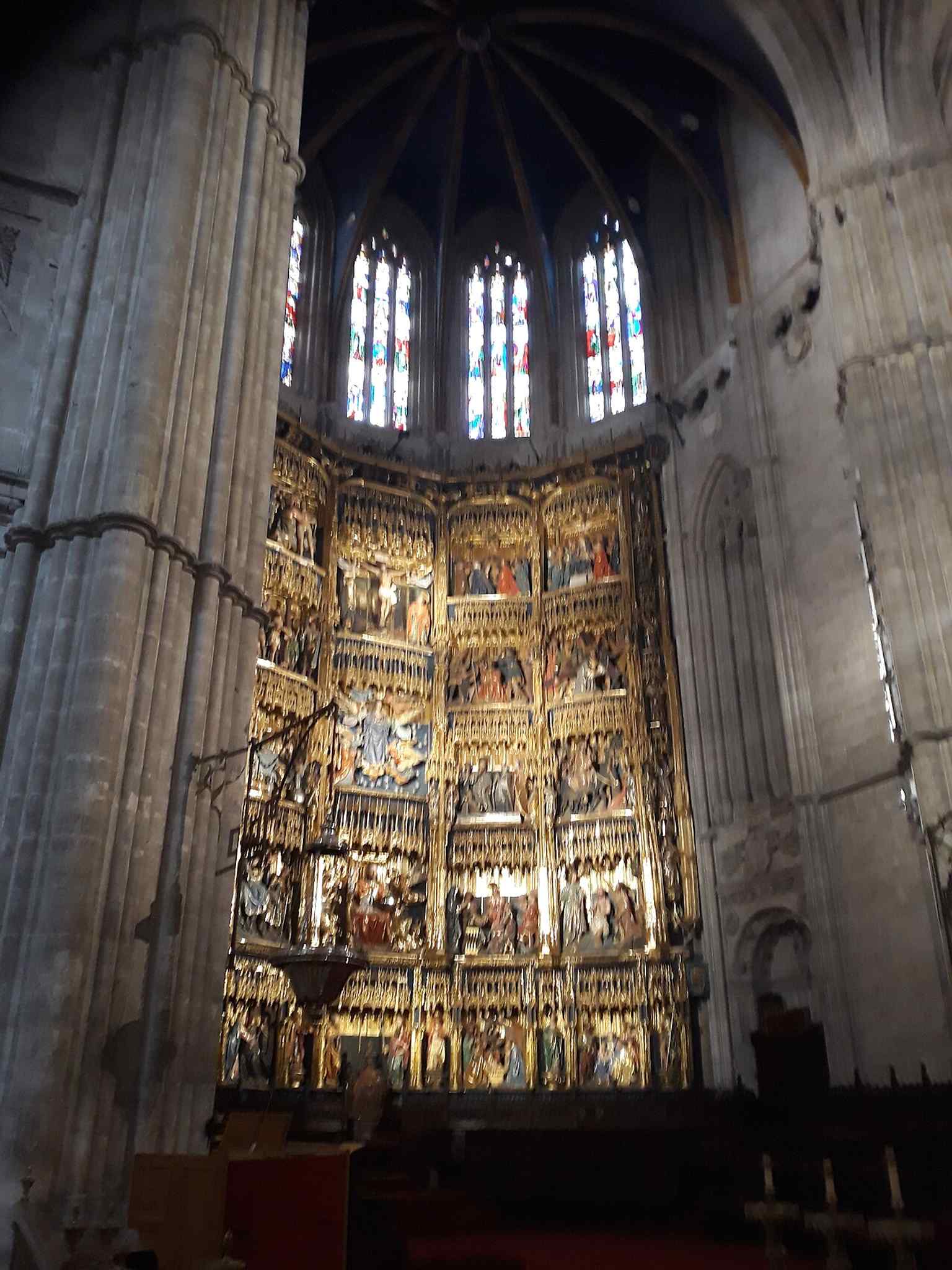
Another interior angle emphasizing the cathedral’s soaring arches and the atmosphere of the main worship space.Photo: Simon Burchell, Wikimedia Commons, CC BY-SA 4.0. Cropped & resized. 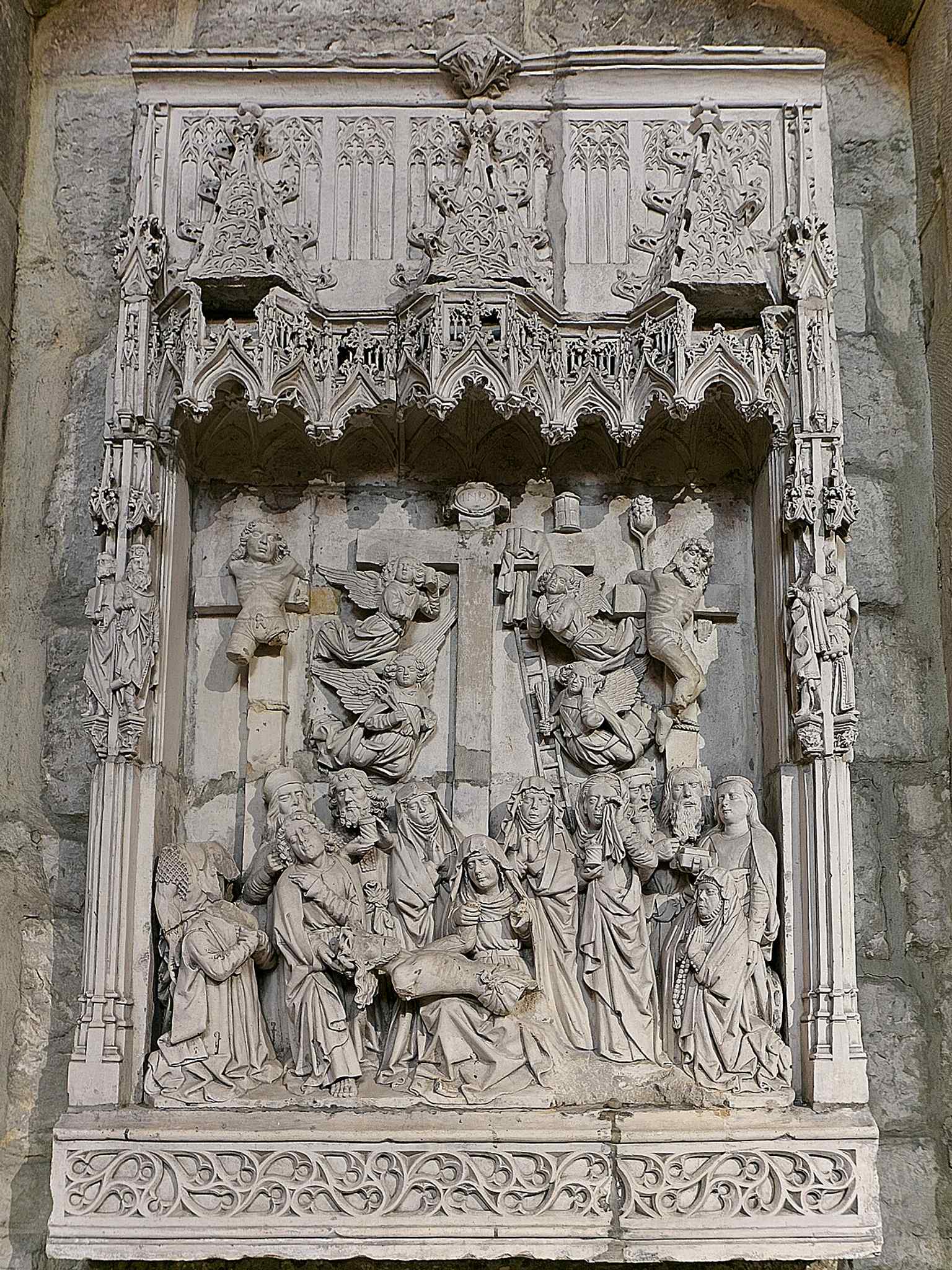
A Gothic altarpiece linked to a chapter-house burial, reflecting the cathedral’s dense funerary and artistic history.Photo: Jl FilpoC, Wikimedia Commons, CC BY-SA 4.0. Cropped & resized. 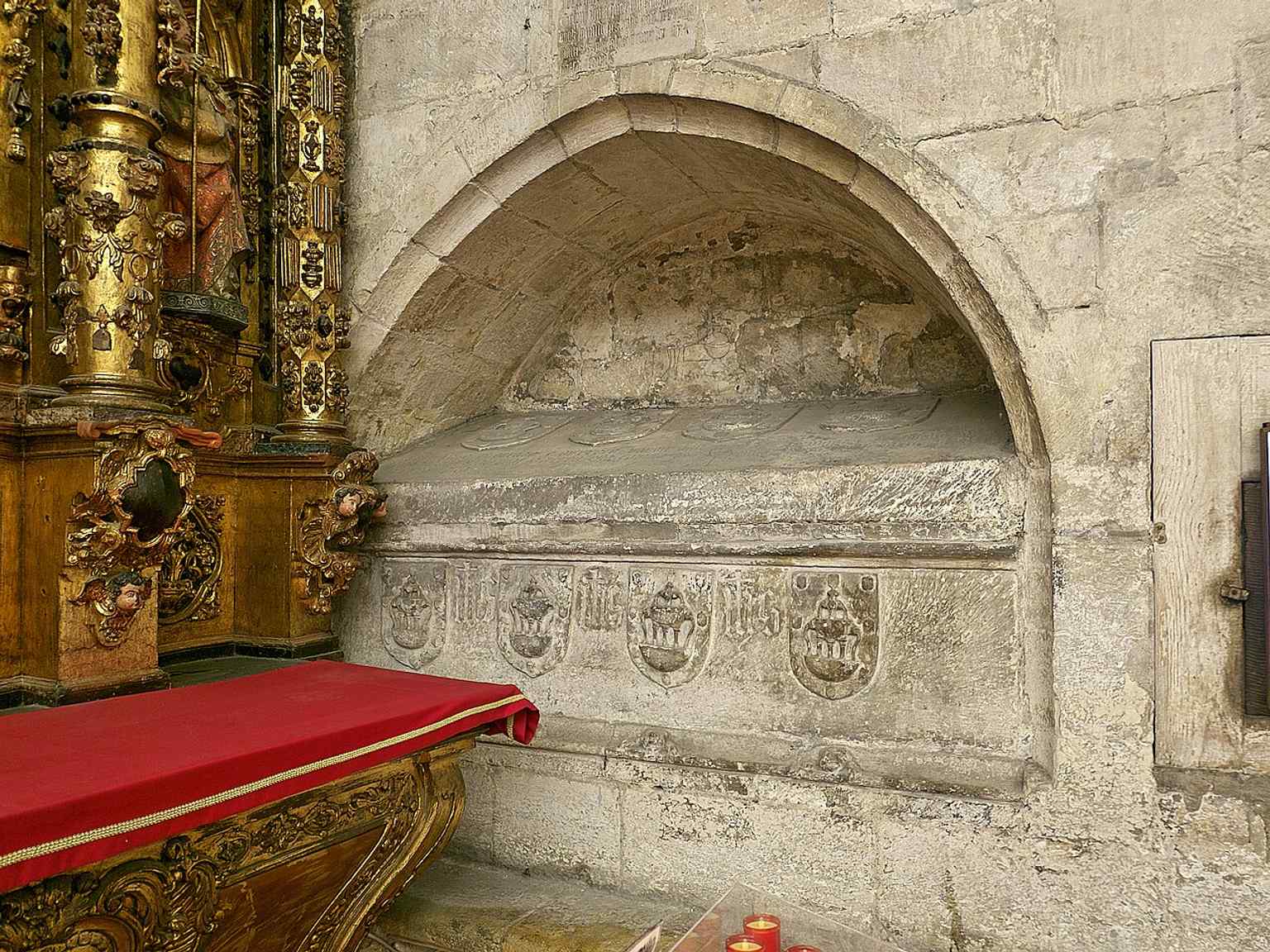
A late-15th-century tomb in one of the side chapels, echoing the cathedral’s role as a burial place for clergy and nobles.Photo: Jl FilpoC, Wikimedia Commons, CC BY-SA 4.0. Cropped & resized. 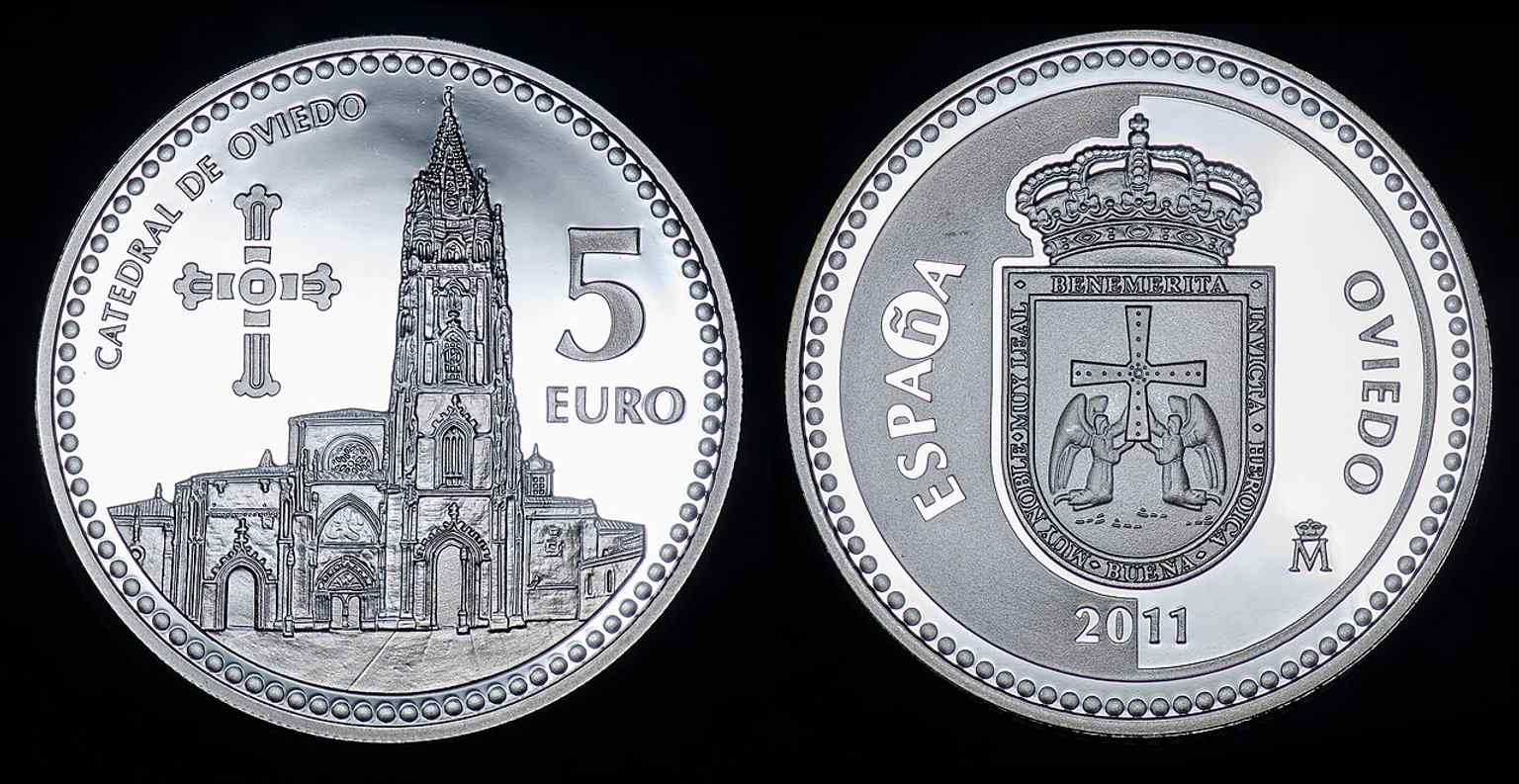
A commemorative coin featuring Oviedo Cathedral, a modern tribute to the city’s most iconic sacred monument.Photo: Amfeli, Wikimedia Commons, CC BY 4.0. Cropped & resized. On your left, look for a compact block of pale stone with a plain rectangular wall and two small lattice windows stacked one above the other, the lower for the crypt and the upper…Read moreShow less
Open dedicated page →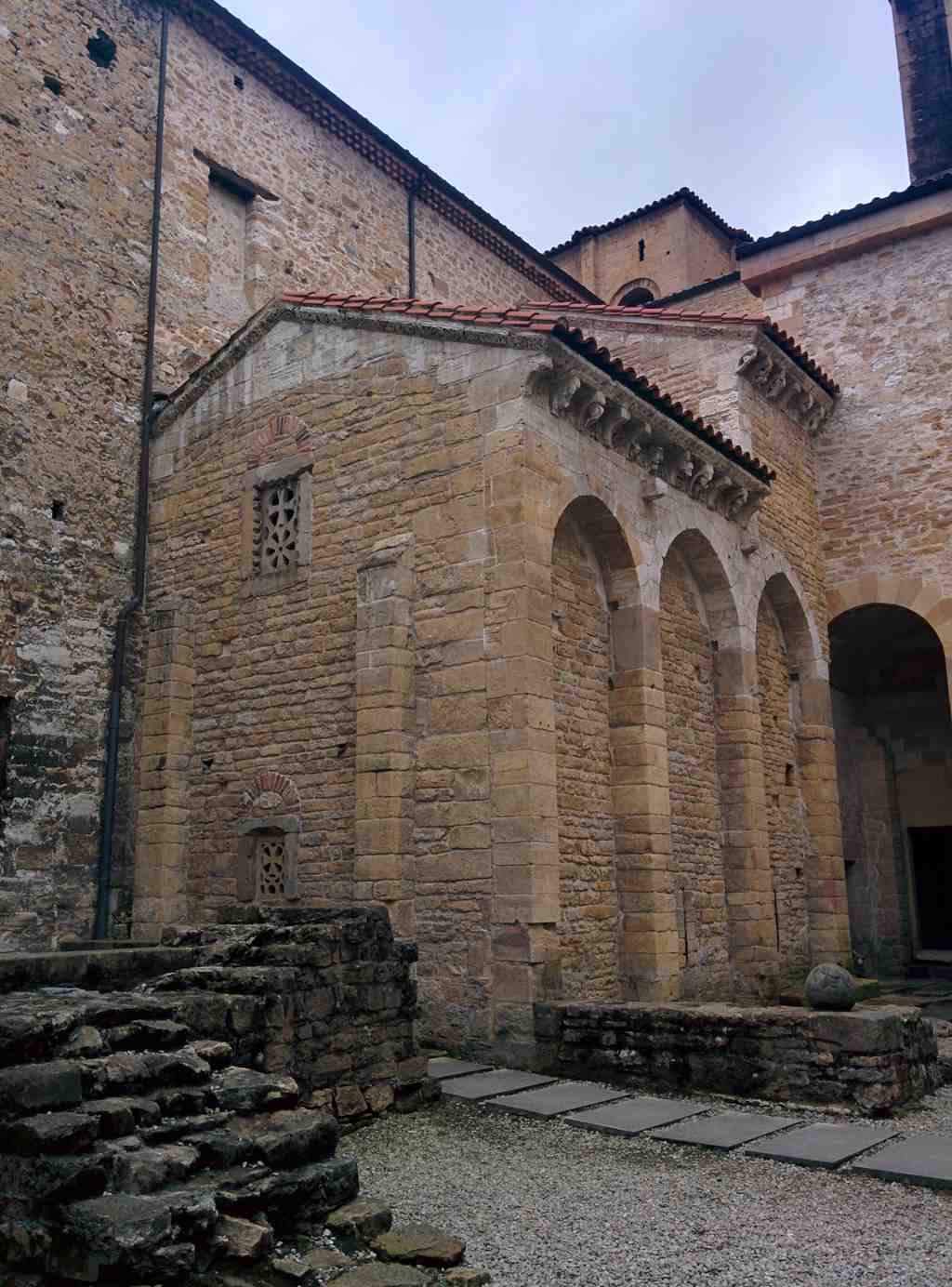
Holy Chamber of OviedoPhoto: Rodelar, Wikimedia Commons, CC BY-SA 4.0. Cropped & resized. On your left, look for a compact block of pale stone with a plain rectangular wall and two small lattice windows stacked one above the other, the lower for the crypt and the upper for the Holy Chamber itself.
This little building carries an awful lot of weight for its size. The Cámara Santa treasury became the devotional heart of Oviedo: a guarded chamber for relics, royal symbols, and cathedral treasures that helped turn this city into a destination for pilgrims across medieval Europe. That old saying about Santiago and San Salvador was not just pious bragging... it tells you Oviedo had enough spiritual pull to compete with the big leagues.
What you see outside is modest, almost shy. Inside, though, the place splits into two sanctuaries, one above the other, with no direct connection between them. Below sits the crypt of Santa Leocadia, a low barrel-vaulted chamber, meaning a tunnel-like stone ceiling, tied to the arrival of the martyrs Eulogio and Leocricia. Tradition says Dulcidio, an envoy moving between kingdoms and the emirate of Córdoba, brought their remains here in the late ninth century. That transfer gave this lower space its purpose and its prestige.
Above it, the upper chapel became the reliquary, the locked strongbox of a kingdom with a pulse. Here they kept the Arca Santa, the Holy Chest, along with the Sudarium of Oviedo, the Cross of the Angels, the Cross of Victory, and the Agates Casket. If you want to see one of those treasures clearly, take a look at your screen now... the Cross of Victory still carries the symbolic weight of Asturias like a crown carried in the hands instead of on the head.
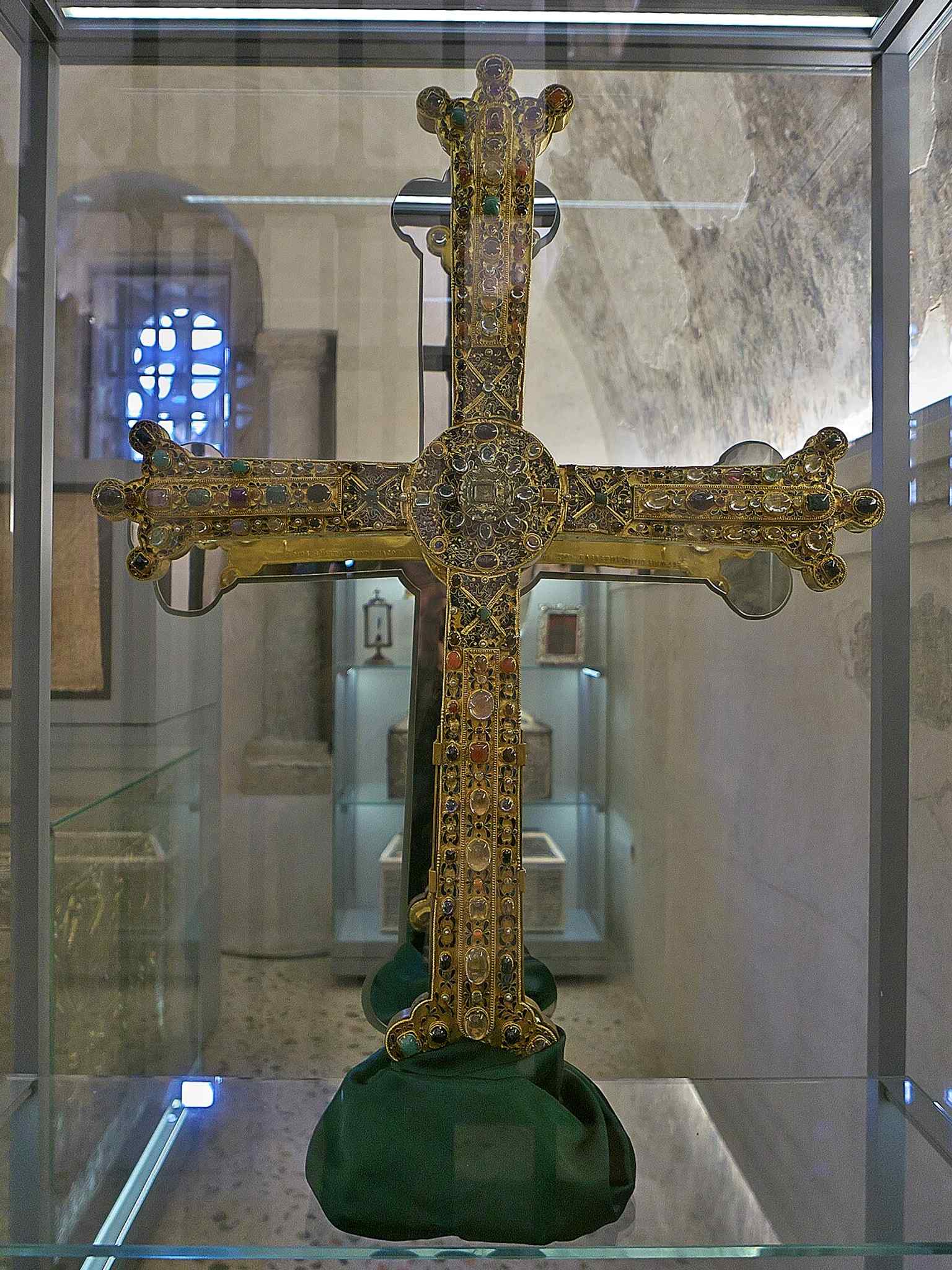
The Victory Cross, one of the chamber’s most treasured relics, kept in the Holy Chamber as a symbol of Asturias since 908.Photo: Jl FilpoC, Wikimedia Commons, CC BY-SA 4.0. Cropped & resized. And yet, for all its holiness, this chamber has always depended on very human things: doors, keys, hinges, watchfulness. In nineteen seventy-seven, that vulnerability snapped into view. Early in the morning, two cleaning women, not bishops, not police, found the main door forced. That is the local detail people often miss, and it matters. The chain of guardians here included the humble hands that opened up and noticed when something was wrong.
The theft shook Oviedo hard. The jewels were gone. Police later arrested one suspected author, José Domínguez Saavedra, in Oporto, giving the case an unexpected international chase. When the treasures finally returned in nineteen eighty-one, they came back partly dismantled, like a body after surgery. Restorers repaired them, and the pieces went back on display in nineteen eighty-four. Sacred objects, handled like evidence.
This chamber had already survived worse. In nineteen thirty-four, an explosion during the Asturian Revolution reduced it to rubble. Alejandro Ferrant and Manuel Gómez Moreno helped rescue what they could, and then Luis Menéndez Pidal rebuilt it piece by piece, reusing original stones with near-archaeological patience. If you glance at the image of the interior apostles, you can see the Romanesque figures added when the wooden roof gave way to a stone barrel vault in the twelfth century... they stand there like witnesses who have seen too much and kept quiet about it.
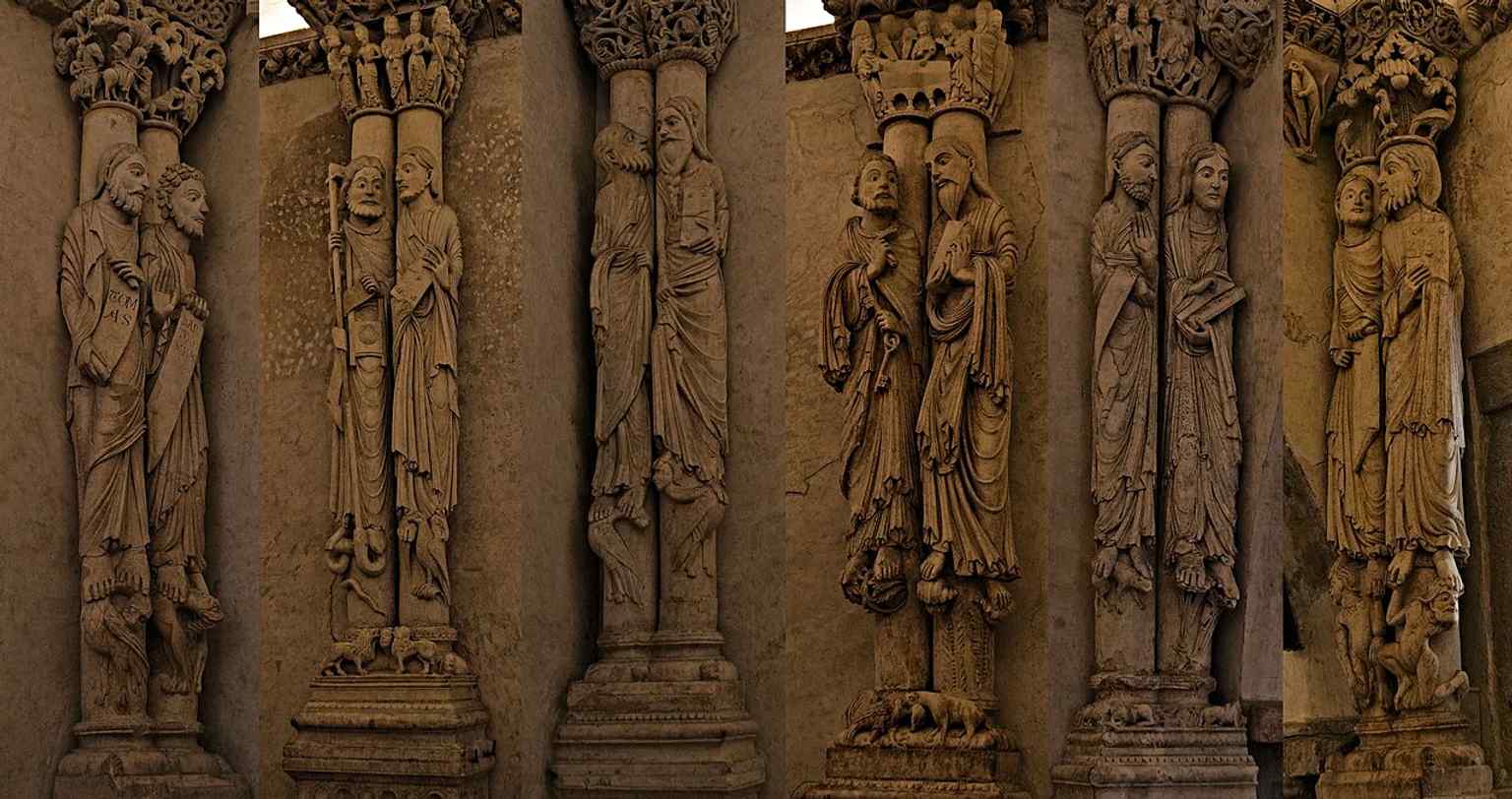
The Apostles inside the Holy Chamber — the Romanesque sculptural cycle that became one of the building’s most distinctive features.Photo: Coralma*, Wikimedia Commons, CC0. Cropped & resized. So this is Oviedo in miniature: faith protected by locks, memory restored by careful hands, and prestige carried by fragile objects that somehow keep surviving. In a couple of minutes, the Archaeological Museum of Asturias will continue that same story... whole eras recovered fragment by fragment, then guarded so they do not slip away again.
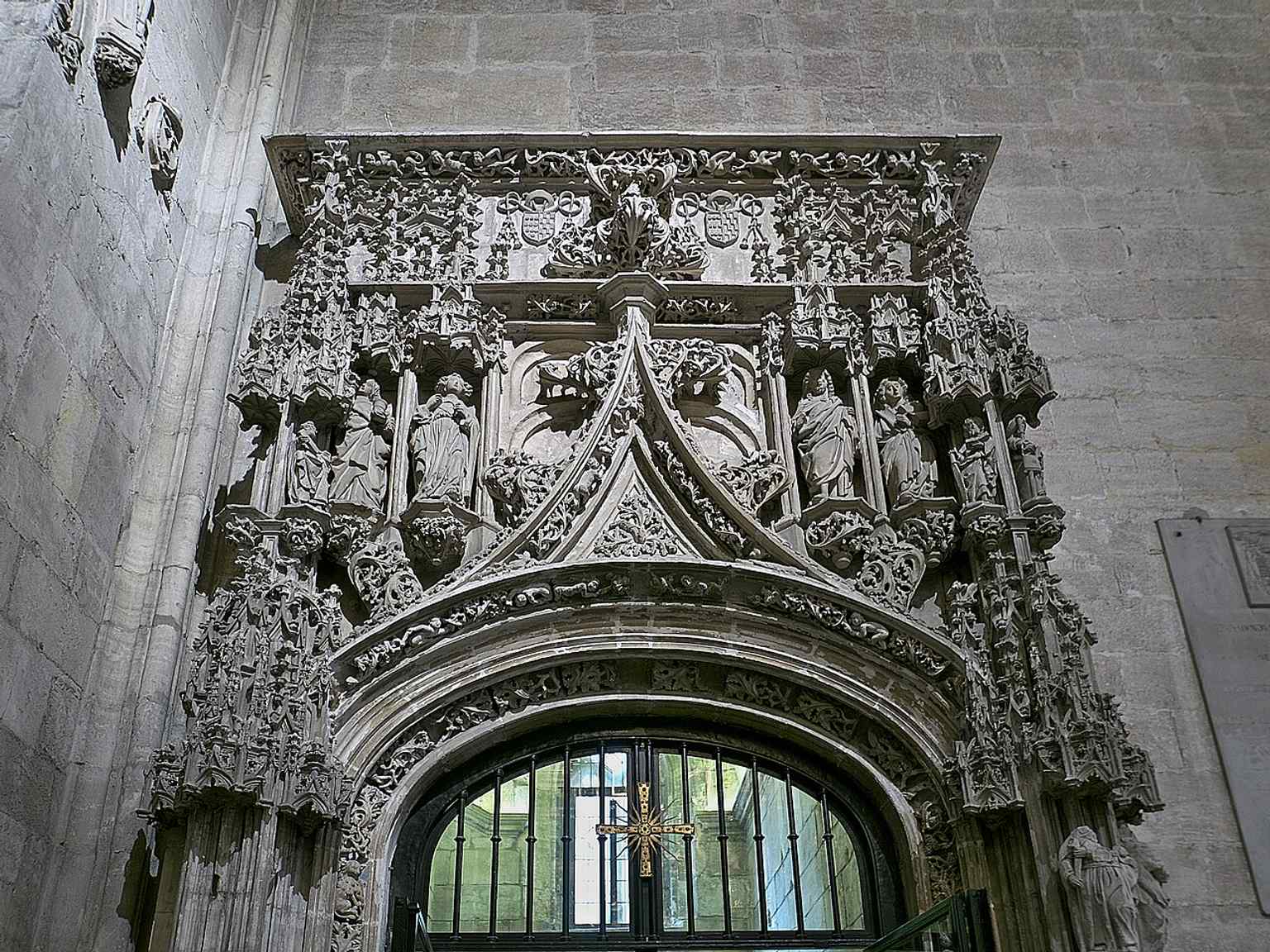
The Gothic entrance to the Holy Chamber of Oviedo, showing the access point into the reliquary that guarded the cathedral’s treasures.Photo: Jl FilpoC, Wikimedia Commons, CC BY-SA 4.0. Cropped & resized. On your left is a broad stone monastery front, stretched in a long rectangular block, with orderly rows of windows and a simpler church section folded into the larger complex.…Read moreShow less
Open dedicated page →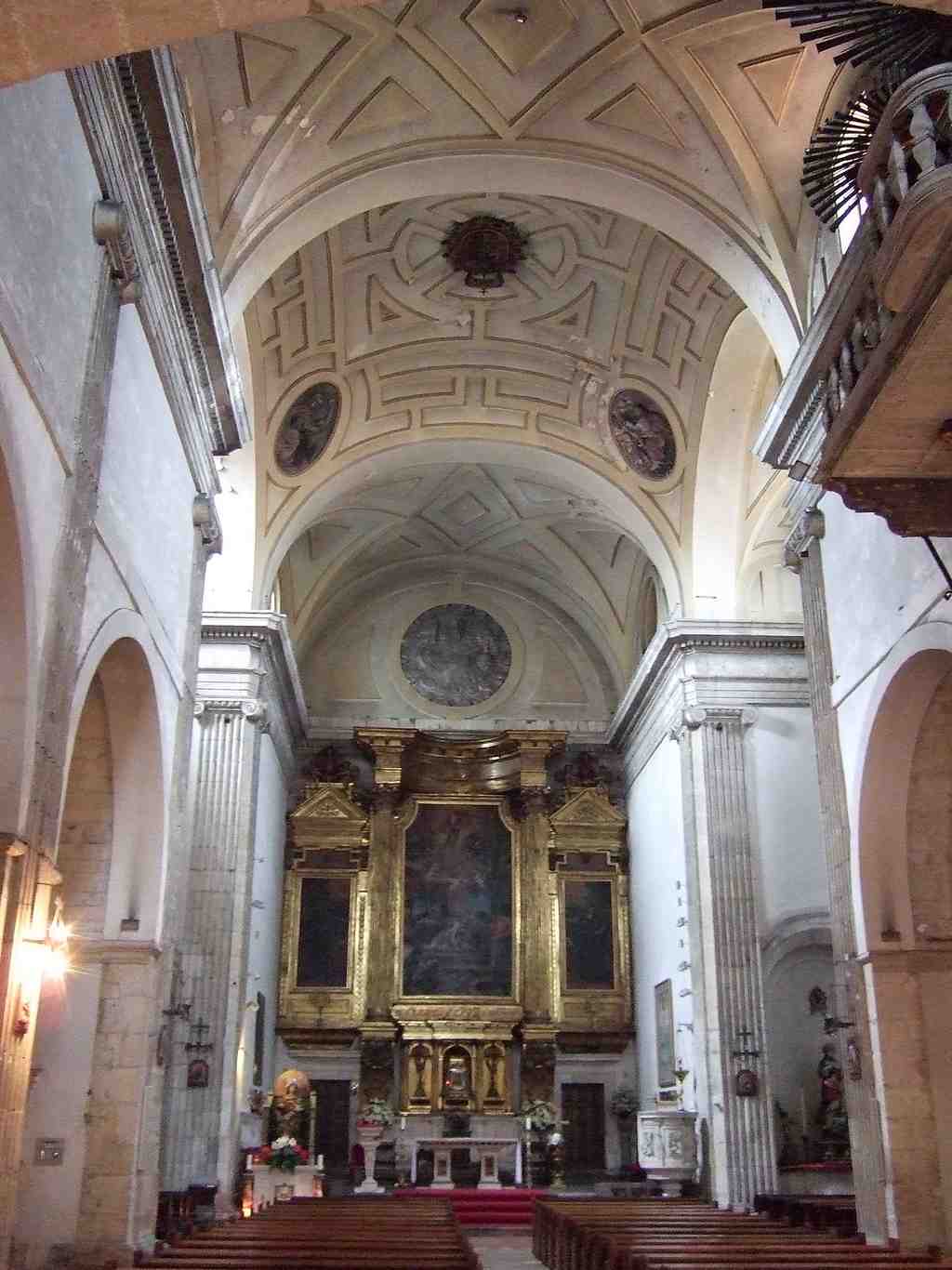
Monastery of San VicentePhoto: Ecelan, Wikimedia Commons, CC BY-SA 4.0. Cropped & resized. On your left is a broad stone monastery front, stretched in a long rectangular block, with orderly rows of windows and a simpler church section folded into the larger complex.
This place makes a good claim to being where Oviedo began... though, like many old beginnings, it comes to us part legend, part paperwork, and part rebuilding job. The key document dates to the twenty-fifth of November, seven eighty-one. In it, two men, Máximo and Fromestano, describe arriving about twenty years earlier, around seven sixty-one, at a place called Oueto. They came to found a basilica dedicated to Saint Vincent, the deacon and martyr from Valencia. Soon after, they and their followers raised a monastery here. At the start, it held twenty-six residents and followed the Rule of Saint Benedict, the practical guide that organized monastic life around prayer, work, and discipline.
That sounds neat and tidy. Real life rarely is. Royal favor and Asturian noble money kept the house growing, and church authority tied it closely to the bishop of Oviedo and even to San Salvador, the great religious center we met at the cathedral. But every century laid new hands on the place. Builders repaired, enlarged, replaced. Medieval structures faded piece by piece. The old Romanesque cloister disappeared, and the monastery we face now carries the marks of later generations.
The cloister you can visit began in the fifteen thirties under Juan de Badajoz the Younger. Then Juan de Cerecedo the Elder and his son finished it in the fifteen seventies. So although it feels unified, it is really a relay race in stone. The lower level uses twenty vaulted arcade bays. The upper level turns more ornate, in a plateresque style, meaning decoration as fine and busy as silversmith work, with carved masks and medallions on the supports. Oviedo does this a lot, by the way... it looks seamless until you notice the seams are the story.
One monk gives that story a very human face: Benito Jerónimo Feijoo. He spent most of his adult life here, long enough for the monastery to shape his thinking as much as he shaped its reputation. He wrote, studied, argued, and helped make this cloister a center of learning as well as devotion. Inside the museum, you can still visit a reconstructed Benedictine cell that recalls his world, along with his library.
Then came the great break of eighteen thirty-six, when the state dissolved the monastery. Until then, San Vicente ranked among the richest and most influential monastic houses in Asturias. After that, preservation passed to the Provincial Commission of Monuments, and from that effort grew the first provincial museum in eighteen seventy. The collection eventually moved here, turning a closed monastic precinct into a public home for memory. In nineteen thirty-nine, architect Luis Menéndez-Pidal took on the restoration, and the museum opened here in nineteen fifty-two. During a major overhaul in two thousand and four, workers uncovered a stretch of the eighth-century city wall, about one point six meters high, under the cloister arcades. Even the renovation found the original pulse still beating.
And San Vicente is not the end of that story. Nearby, women, abbesses, and even queens made monastic life serve prayer, protection, and politics all at once. In about a minute, we’ll meet them at San Pelayo.
On your left, look for the long stone facade, the square tower, and the grand Baroque doorway that gives this monastery the air of a palace with a veil on. This is San Pelayo...…Read moreShow less
Open dedicated page →On your left, look for the long stone facade, the square tower, and the grand Baroque doorway that gives this monastery the air of a palace with a veil on.
This is San Pelayo... and it holds one of Oviedo’s quietest kinds of power. Behind these walls, women preserved memory the way others held a frontier. The community still lives here in enclosure, and for centuries the monastery served as sanctuary, political shelter, and archive all at once.
It did not begin as San Pelayo. Early on, people knew this place as San Juan Bautista de las Dueñas. Research points to a very early church here, tied in style to the world of Alfonso the Second and buildings like San Tirso. But the figure who gives this place its human weight is Teresa Ansúrez, widow of King Sancho the First of León. After her son Ramiro the Third lost power in the mid-nine eighties, Teresa came to Oviedo and turned this monastery into something more than a convent. She made it a refuge for dynastic memory... a safe house for a fallen branch of royalty.
And she was not alone. Queen Velasquita Ramírez also withdrew from court, came here with her daughter Cristina, and took the habit while Teresa served as abbess. That tells you a lot. When politics slammed a door, San Pelayo opened one.
Then came the relic that changed everything. According to tradition, Pelayo was a boy from Galicia, held hostage in Córdoba in place of his uncle Hermigio, the bishop of Tuy. He spent four years in prison, refused the emir’s pressure, refused to abandon his faith, and died a martyr in nine twenty-five. Christians carried his remains north for safety, first to León, then here in nine ninety-four. After that, the monastery took his name, and its standing rose fast enough to draw kings. Fernando the First and Queen Sancha came in ten fifty-three and made a donation tied to the saint’s translation, proof that prayer and royal strategy often shared the same table.
If you check the image on your screen, you can see that formal, almost civic face the monastery wears today. That look came in layers: a rebuilt church in the late sixteen hundreds, a tower designed by Melchor de Velasco Agüero, and, in seventeen-oh-three, the Vicaría facade by Fray Pedro de Cardeña, bold as a noble residence. But the deeper treasure is paper, not stone. The nuns kept about three thousand five hundred medieval parchments, making San Pelayo one of Asturias’s great storehouses of memory. Not flashy... just civilization doing its filing.
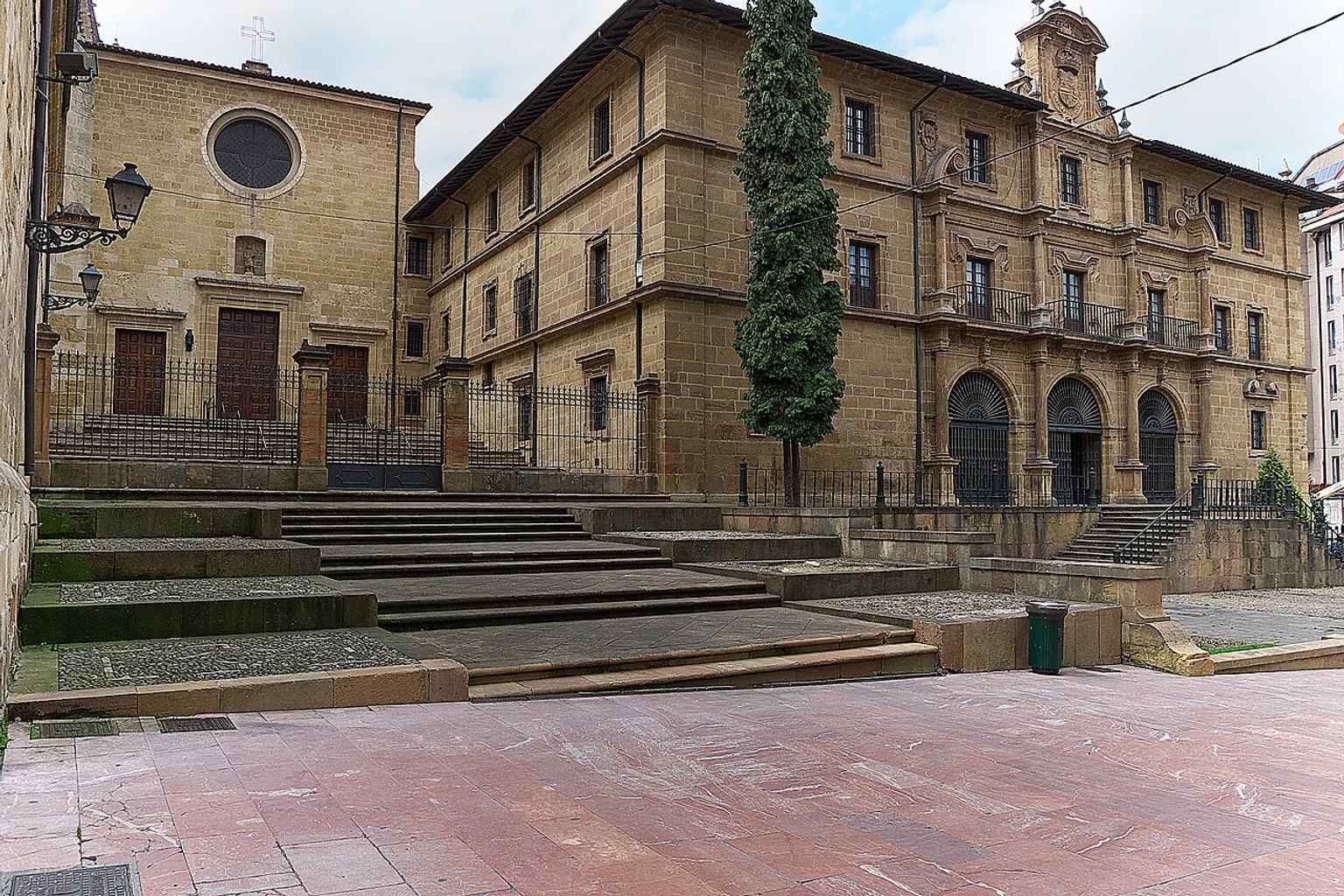
Front view of the Royal Monastery of San Pelayo in Oviedo, the Benedictine house that became one of Asturias’ great medieval archives.Photo: José Luis Filpo Cabana, Wikimedia Commons, CC BY 3.0. Cropped & resized. And there is a sweet little Oviedo twist: the cloistered nuns, still known as the Pelayas, are also loved for their secret recipes and pastries. Queens, relics, parchments, cookies... this place contains multitudes. So here’s a thought to carry with you: which leaves the deeper mark on a city, the ruler who founds a house, or the community that guards its story for centuries?
Our final stop moves from enclosed memory to a church shaped by public devotion, just a one-minute walk away at Santa María la Real de la Corte. If you plan to return, San Pelayo generally opens from mid-morning to early afternoon and again in the late afternoon, with shorter hours on Sundays.
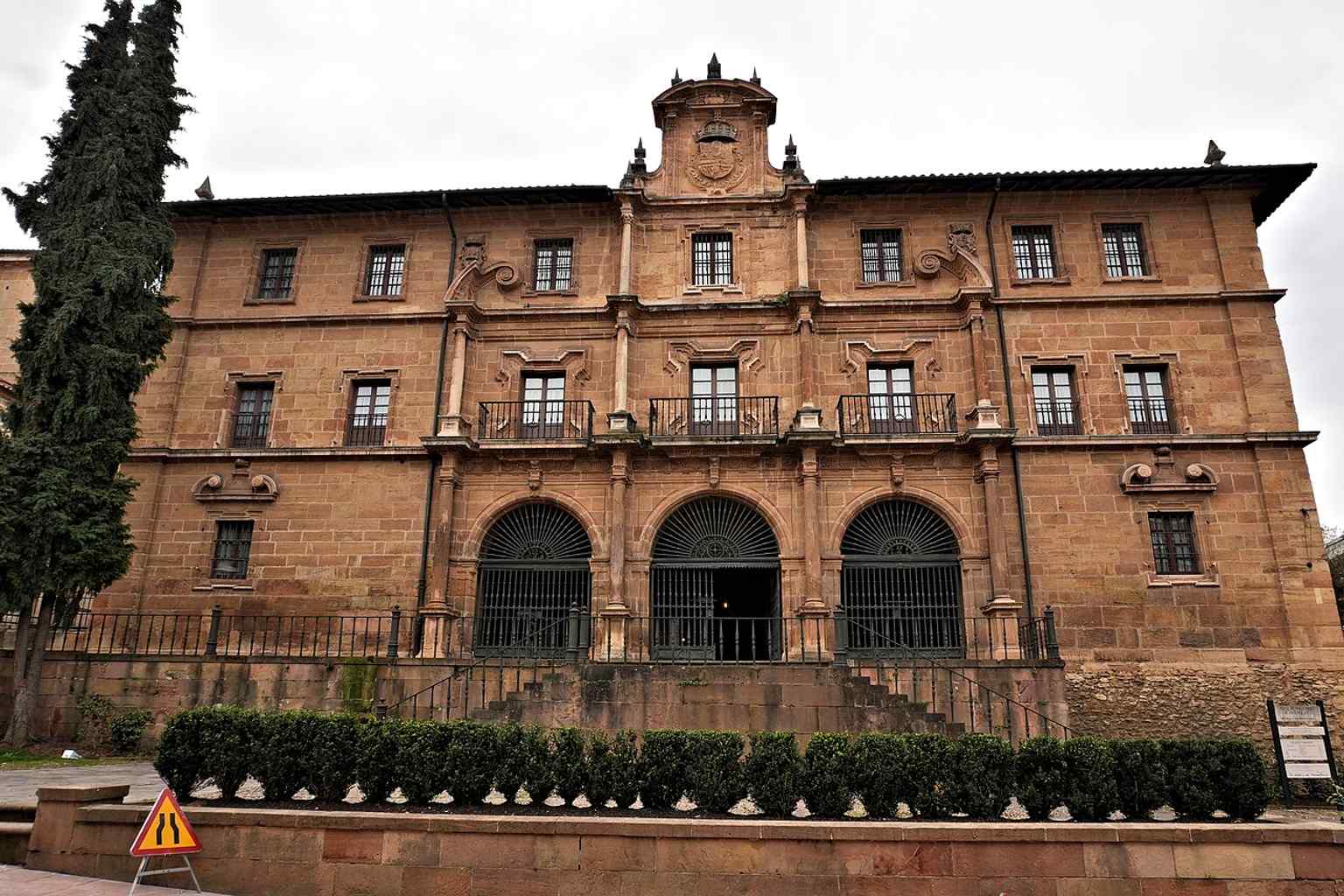
A modern view of the monastery of the Pelaya nuns, still a cloistered community in the historic heart of Oviedo.Photo: Coralma*, Wikimedia Commons, CC0. Cropped & resized. On your left is a pale stone church with an unfinished classical façade, one square tower, and a large round oculus set above the main arch. Santa María la Real de la Corte…Read moreShow less
Open dedicated page →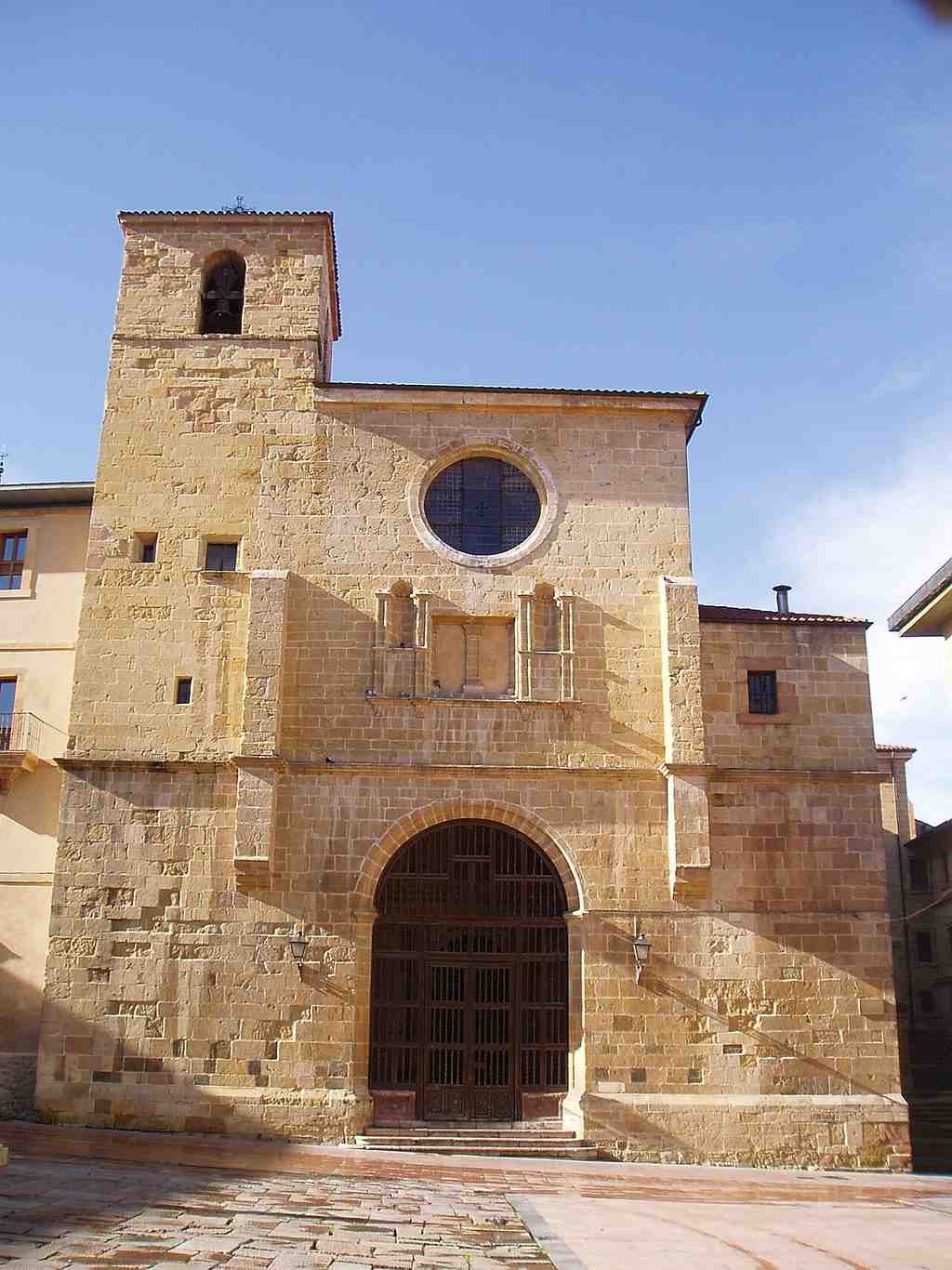
Church of Santa María la Real de la CortePhoto: AdelosRM, Wikimedia Commons, CC BY-SA 3.0. Cropped & resized. On your left is a pale stone church with an unfinished classical façade, one square tower, and a large round oculus set above the main arch.
Santa María la Real de la Corte makes a fitting final stop because it shows Oviedo doing what Oviedo does best: holding on, adapting, and carrying old habits into new times. This church stands tightly woven into the old sacred quarter, on the same historic block as the cloister of San Vicente and the Benedictine monastery of San Pelayo, as if the whole block learned centuries ago to live shoulder to shoulder.
Its story begins earlier than the seventeenth century. Go back to the mid-sixteenth century, when Juan de Cerecedo the Elder drew up plans to replace older Romanesque buildings here. After he died in fifteen sixty-eight, his nephew, Juan de Cerecedo the Younger, pushed the work forward between fifteen seventy and fifteen seventy-two. Then money ran short, which, as every city on earth knows, is one of history’s favorite plot twists. In fifteen eighty-seven, Juan del Ribero Rada took over and gave the church its firm classical character, all balance and restraint, and the building was consecrated in fifteen ninety-two.
If you glance at the image on your screen, you can spot Ribero Rada’s crisp design clearly: a central front meant to be flanked by two towers, though only the left one ever rose. That unfinished face is part of the church’s charm now, with its broad round-arched doorway below and that big circular oculus above.
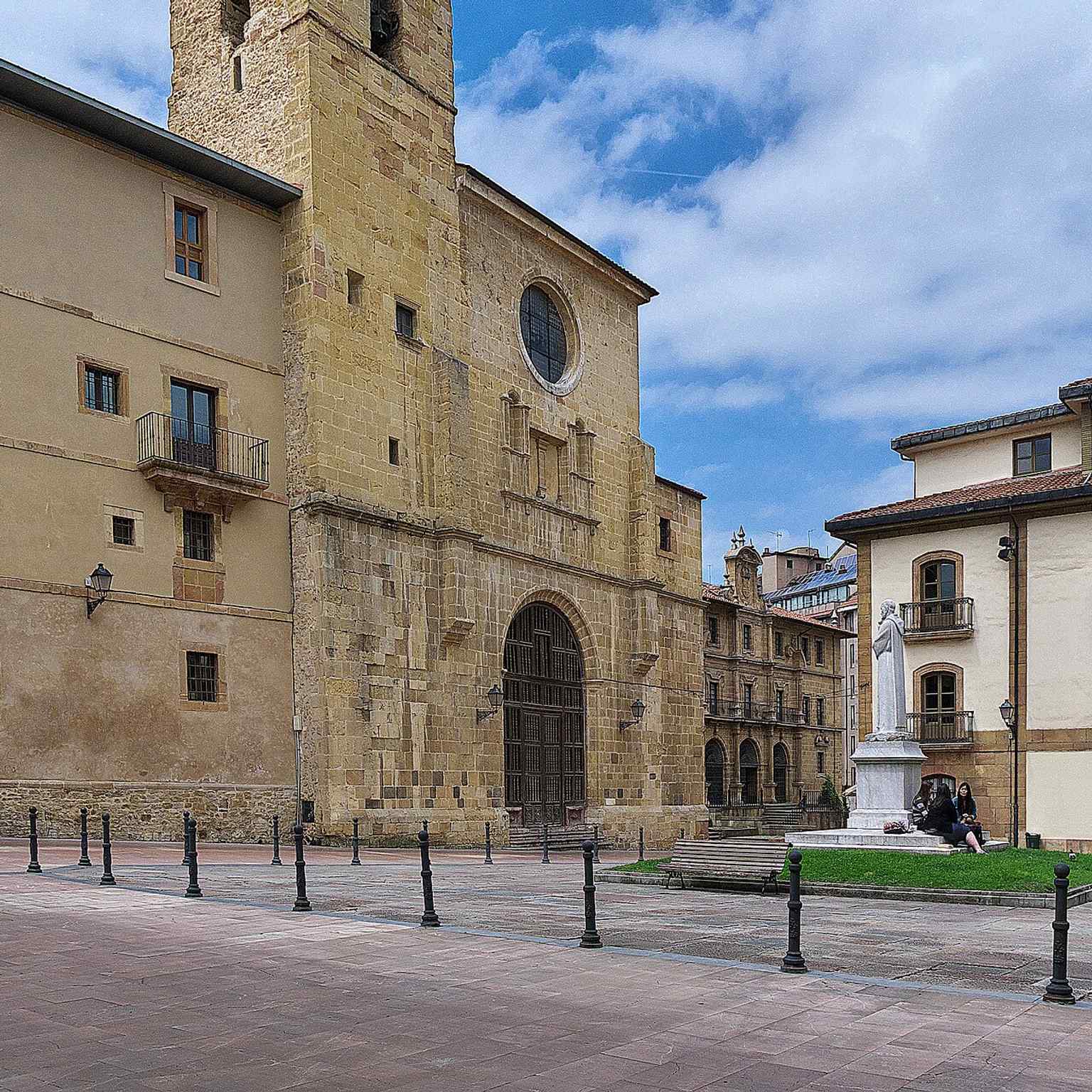
The church’s unfinished classical façade on Plaza Feijóo, designed by Juan de Ribero Rada, with only one of the planned towers actually built.Photo: Jl FilpoC, Wikimedia Commons, CC BY-SA 4.0. Cropped & resized. Inside, the plan is monastic and practical: one wide nave, meaning the main hall of the church, with side chapels tucked between the buttresses, the supporting outer walls. Ribero Rada organized the interior with restrained Ionic pilasters, barrel vaults overhead, and geometric decoration across the ceilings. The church also keeps one of Asturias’s finest treasures in working order: a baroque organ from seventeen oh five, repaired in modern times so it could keep speaking with its own old voice.
And then there is Benito Jerónimo Feijoo. He was a monk of San Vicente, an abbot, a teacher, and one of Spain’s great Enlightenment writers. He once heard Mass here from an upper gallery connected to his cell, a wonderfully efficient arrangement for a learned man. Today, inside the crossing, his grave lies beneath a red marble slab. So even here, reason and devotion do not cancel each other out; they share the same room.
The church changed again after the ecclesiastical confiscations of eighteen thirty-six. In eighteen forty-five, the parish of Santa María la Real de la Corte moved into this former monastic space, and in eighteen fifty-nine it gained ownership. That shift matters. A place once enclosed became a neighborhood church.
You can feel that most strongly in Holy Week. In nineteen forty-one, this church joined Oviedo’s general Santo Entierro procession with two pasos, or carried sculptural groups: Calvary and the Agony in the Garden. When that general procession ended in nineteen forty-five, this parish welcomed a new lay brotherhood, the Cofradía del Silencio. On Holy Thursday night they processed from here with drums, cornets, and the Oración en el Huerto. The brotherhood reorganized again in two thousand and one, proving the ritual was not a fossil in a case. It still had people willing to carry it.
That may be the best last picture of Oviedo: not a city preserving its past under glass, but one that keeps handing it from one generation to the next, like a candle passed carefully along a line.
If you want to return when the doors are open, the church usually welcomes visitors Monday from six to eight, Tuesday through Saturday from twelve to one and again from six to eight, and Sunday from eleven to one.
Frequently asked questions
How do I start the tour?
After purchase, download the AudaTours app and enter your redemption code. The tour will be ready to start immediately - just tap play and follow the GPS-guided route.
Do I need internet during the tour?
No! Download the tour before you start and enjoy it fully offline. Only the chat feature requires internet. We recommend downloading on WiFi to save mobile data.
Is this a guided group tour?
No - this is a self-guided audio tour. You explore independently at your own pace, with audio narration playing through your phone. No tour guide, no group, no schedule.
How long does the tour take?
Most tours take 60–90 minutes to complete, but you control the pace entirely. Pause, skip stops, or take breaks whenever you want.
What if I can't finish the tour today?
No problem! Tours have lifetime access. Pause and resume whenever you like - tomorrow, next week, or next year. Your progress is saved.
What languages are available?
All tours are available in 50+ languages. Select your preferred language when redeeming your code. Note: language cannot be changed after tour generation.
Where do I access the tour after purchase?
Download the free AudaTours app from the App Store or Google Play. Enter your redemption code (sent via email) and the tour will appear in your library, ready to download and start.
If you don't enjoy the tour, we'll refund your purchase. Contact us at [email protected]
Checkout securely with 






.jpg)
.jpg)
.jpg)
.jpg)


.jpg)


.jpg)
.jpg)


.jpg)

