
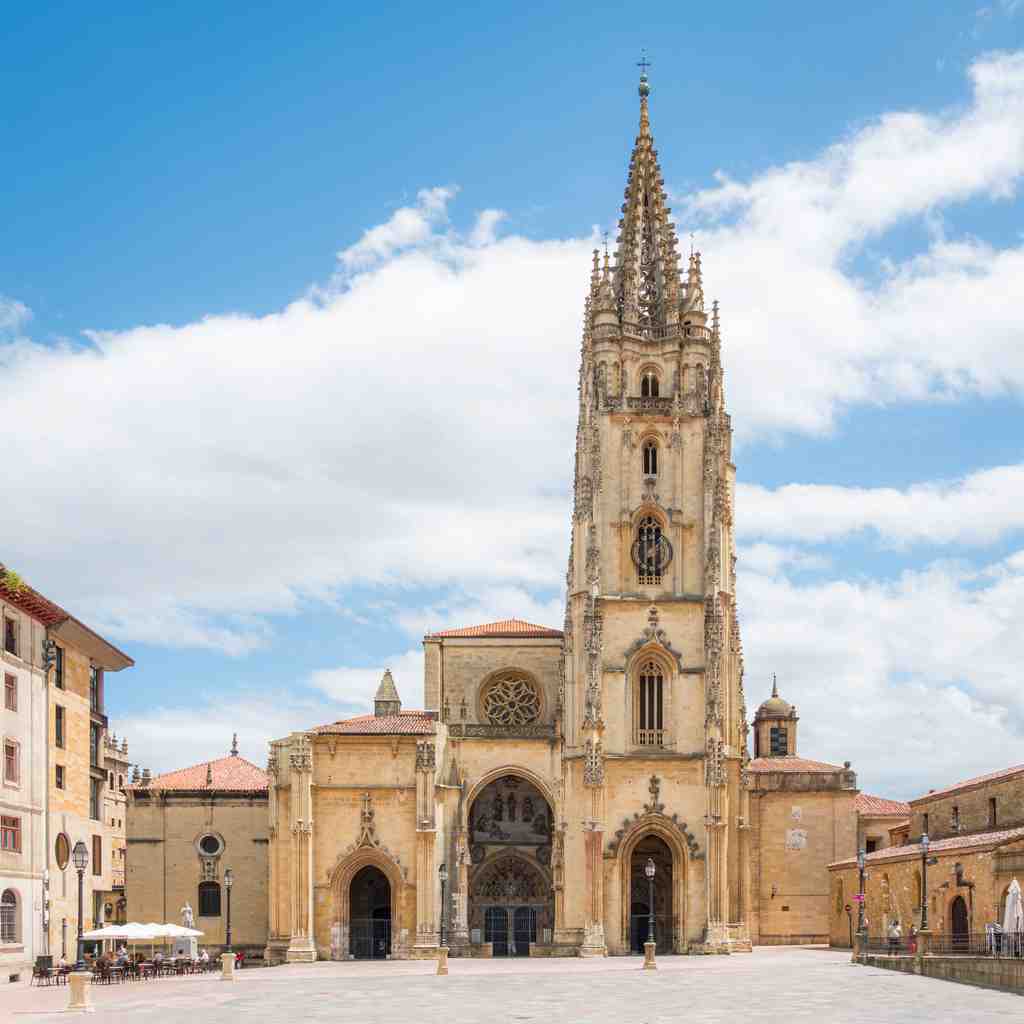
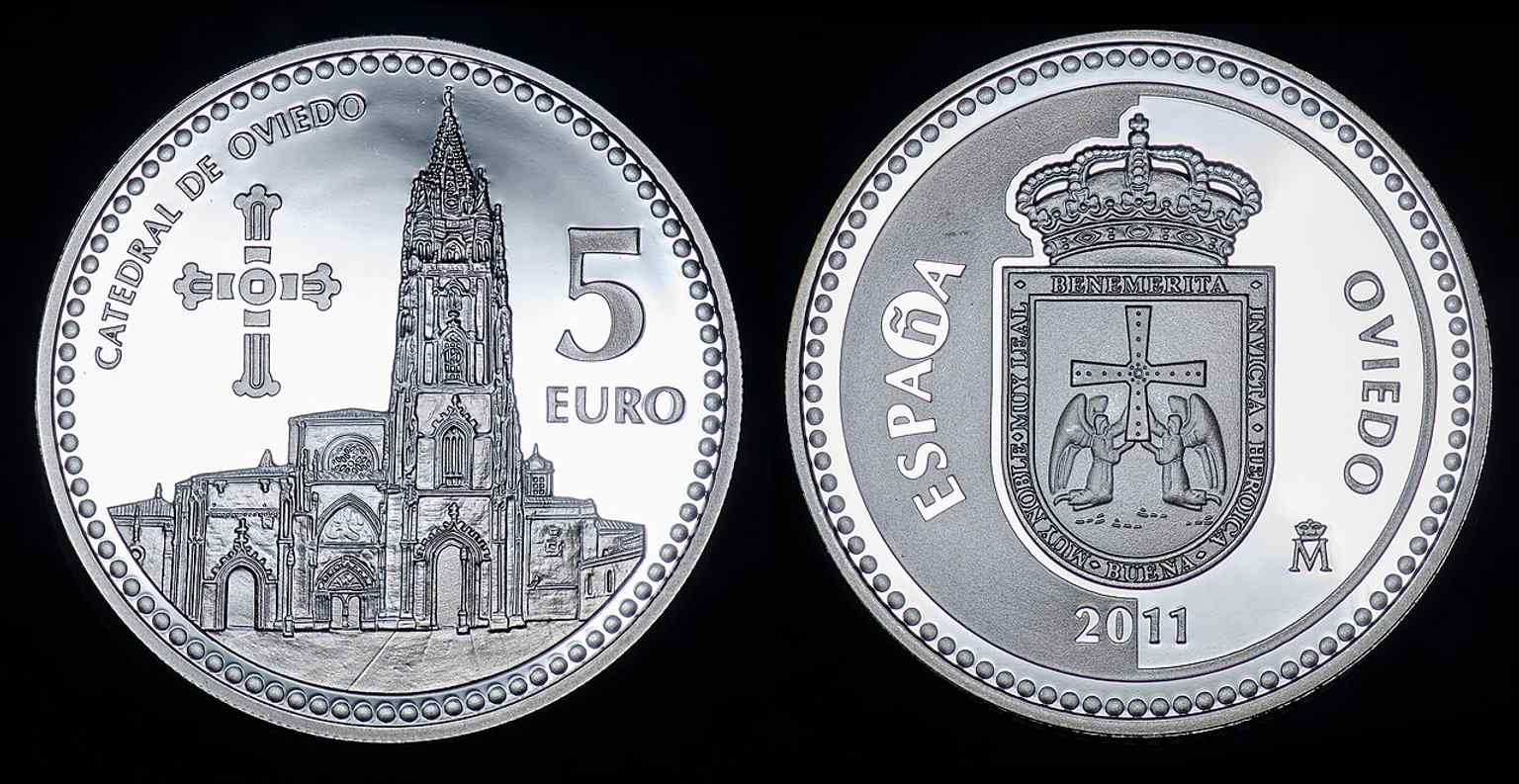
On your left rises a honey-colored stone façade shaped like a giant Gothic screen, with a deep pointed arch at its base and a single slender spire climbing above it.
This is Oviedo playing at full scale. Not just a church, not just a pretty old monument... this was the spiritual engine of a royal capital. King Fruela the First founded the first church here in seven hundred eighty-one, and his son Alfonso the Second, Alfonso the Chaste, enlarged it in eight hundred two and created the bishop’s seat in eight hundred ten. In those early centuries, palace, churches, monasteries, baths, and stables stood together around this spot, so power and prayer were neighbors, practically sharing the same mailbox.
And then Oviedo stepped onto a much bigger map. In eight hundred thirty-four, Bishop Teodomiro told Alfonso the Second that the tomb of Saint James had been found in Compostela. Alfonso responded by traveling there himself, becoming the tradition’s first pilgrim, and that decision tied this cathedral forever to the Camino Primitivo, the oldest Camino route. If you glance at your screen, image fifteen captures that pilgrimage memory nicely.
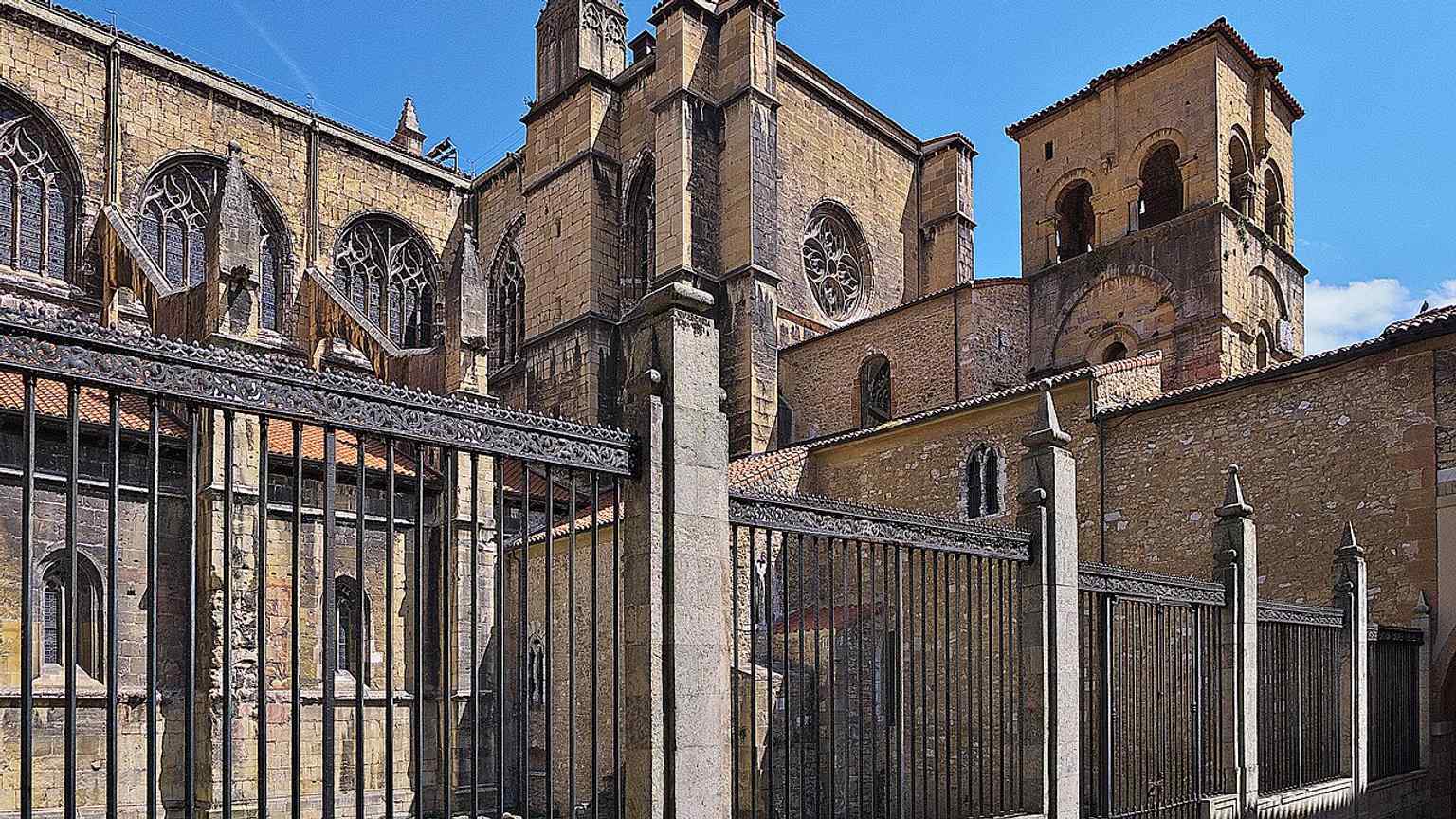
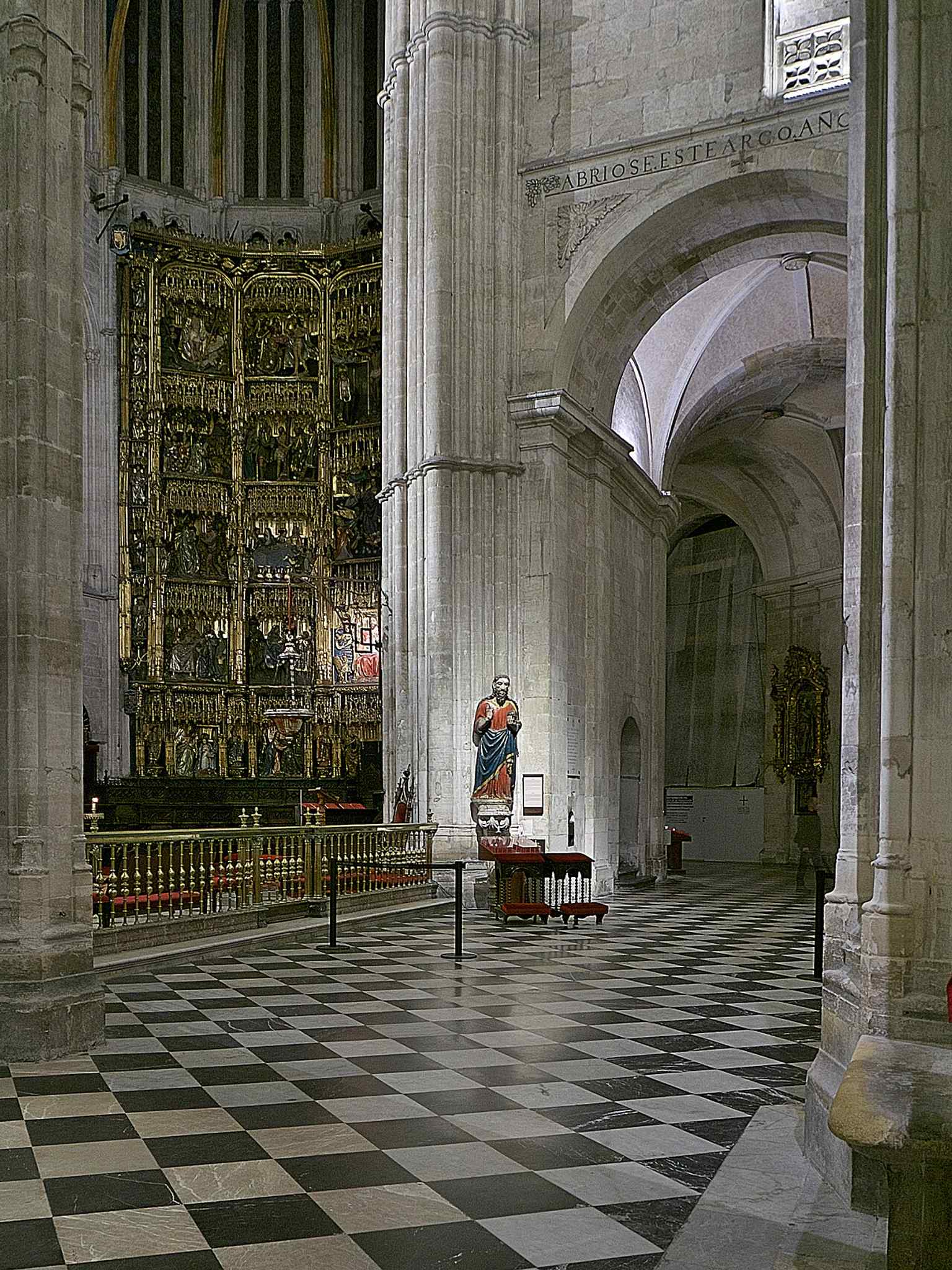
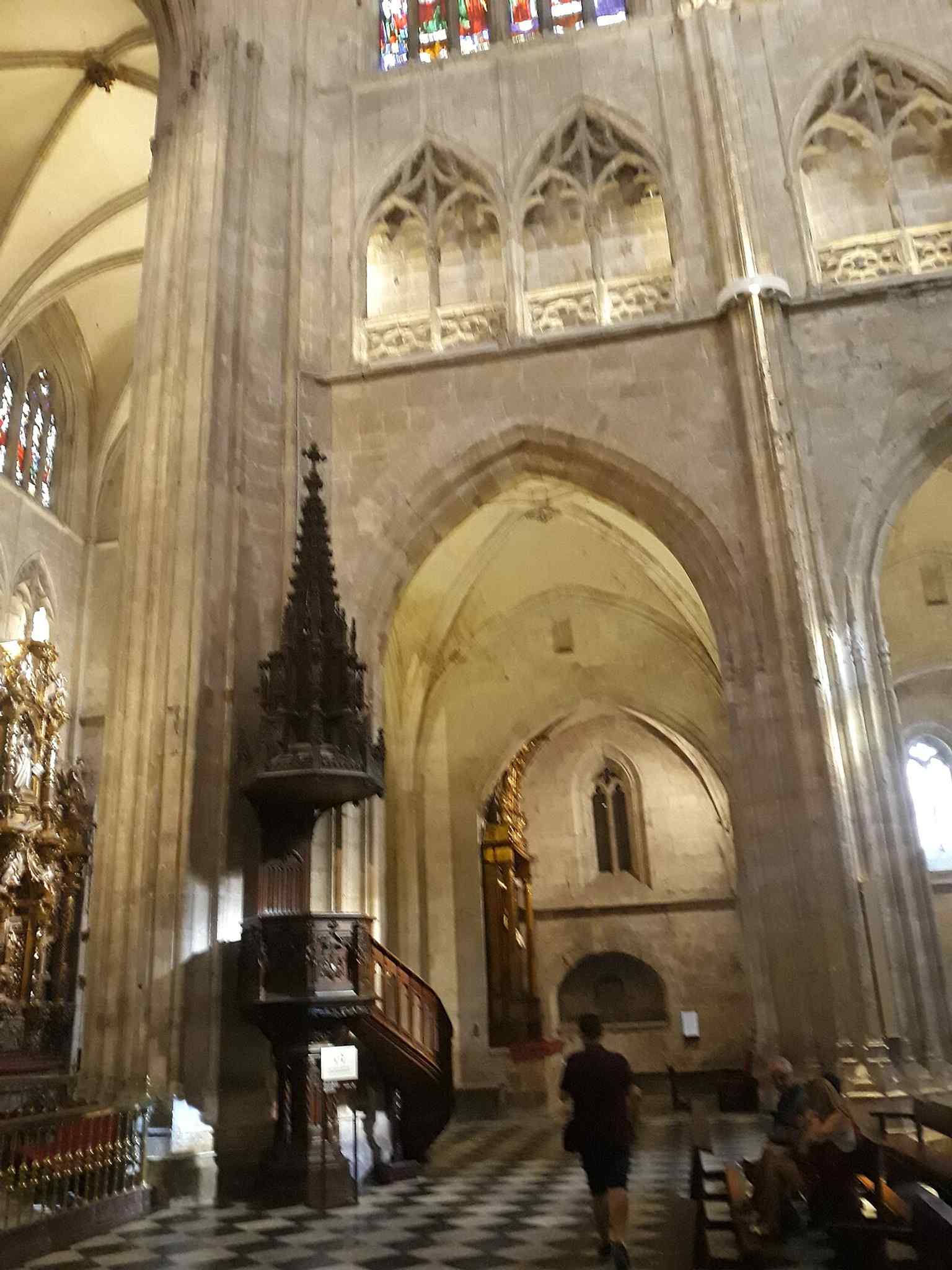
Now, look carefully at the building in front of you. Let your eyes climb from the portal up toward the spire and ask yourself how many centuries are colliding in that stone. This cathedral is not one clean style. It carries traces of the pre-Romanesque kingdom that began here, Romanesque survivors, Gothic ambition, Renaissance adjustments, and Baroque additions... like a history book that refused to stay shut.
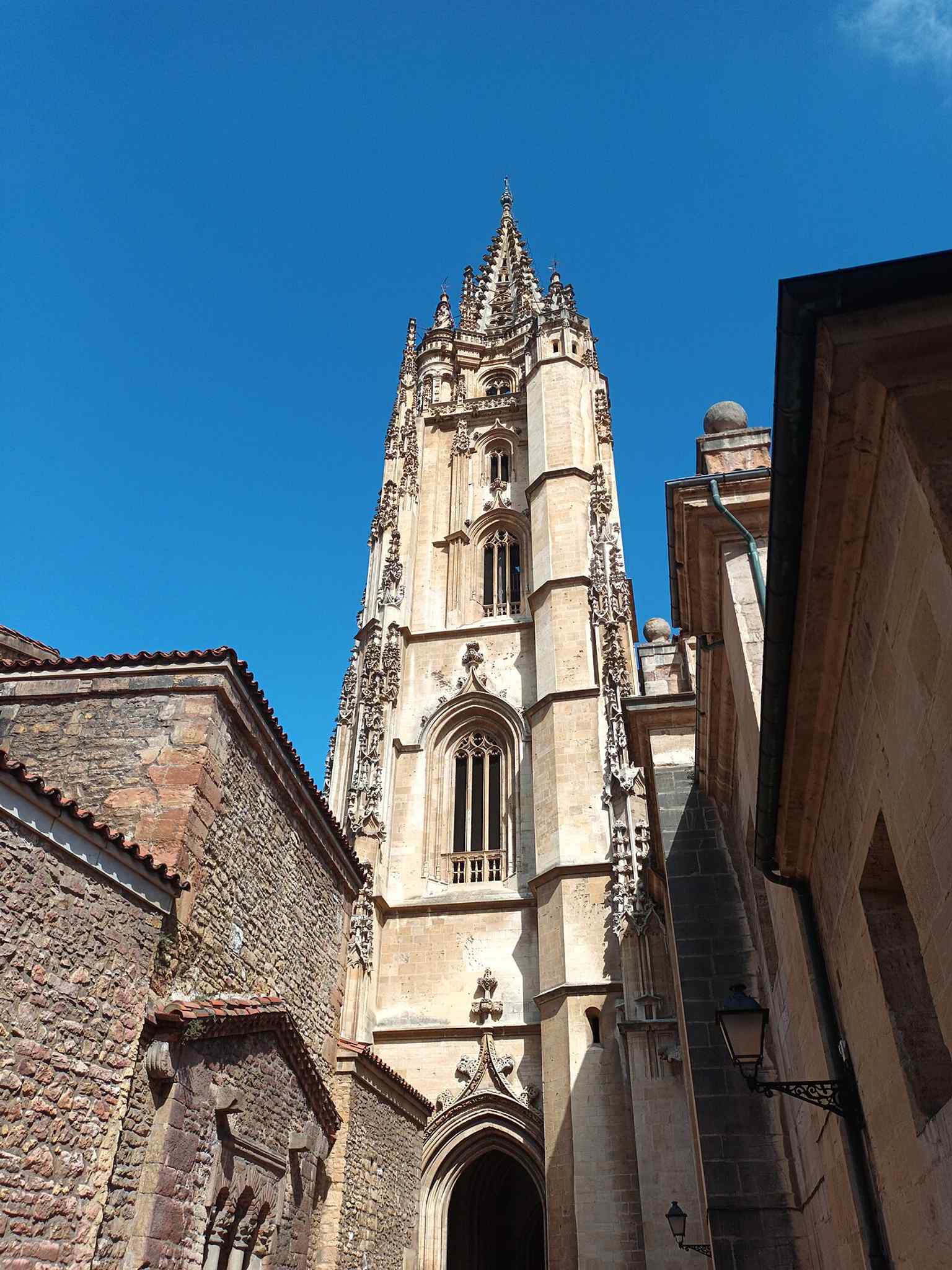
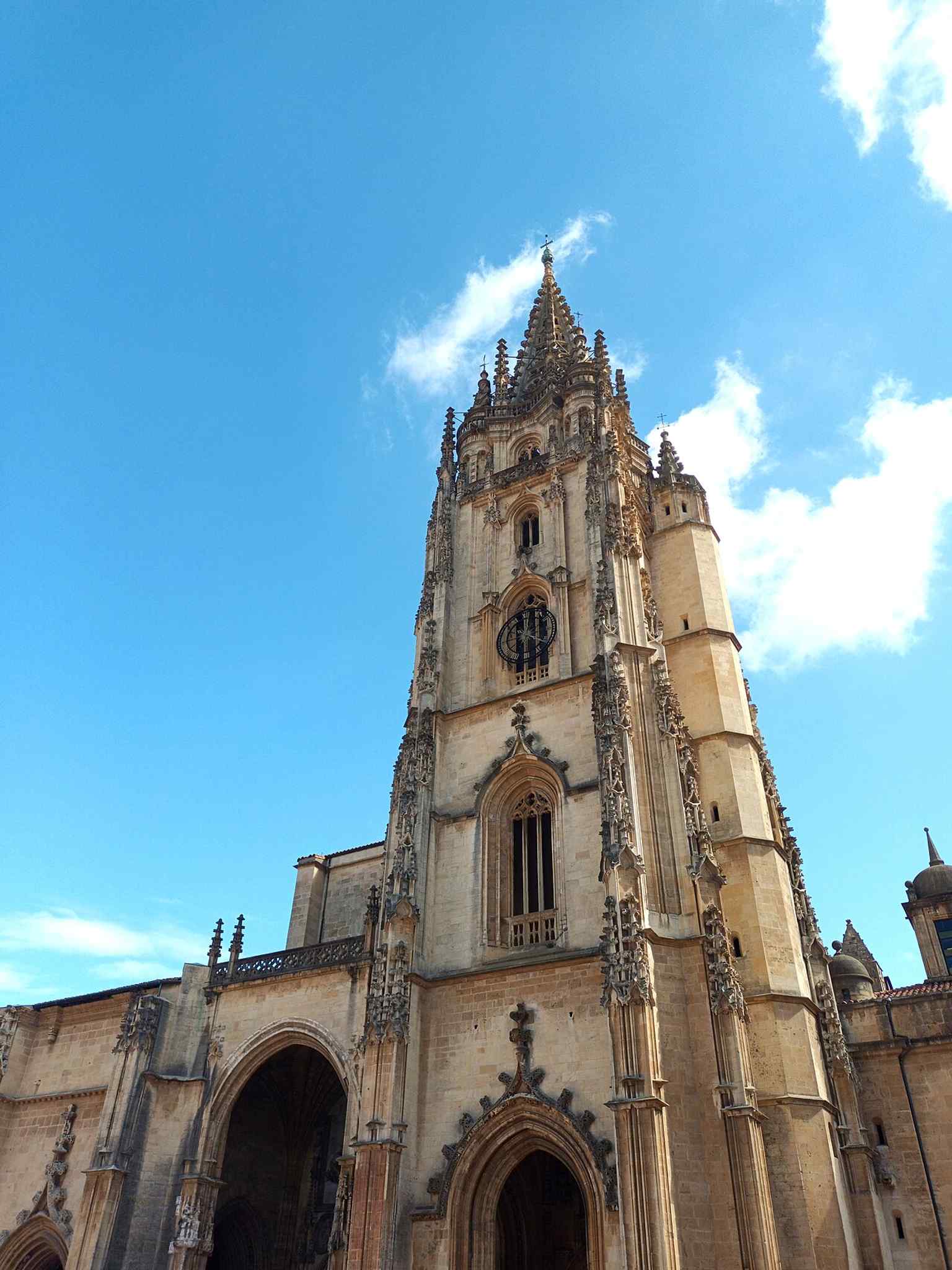
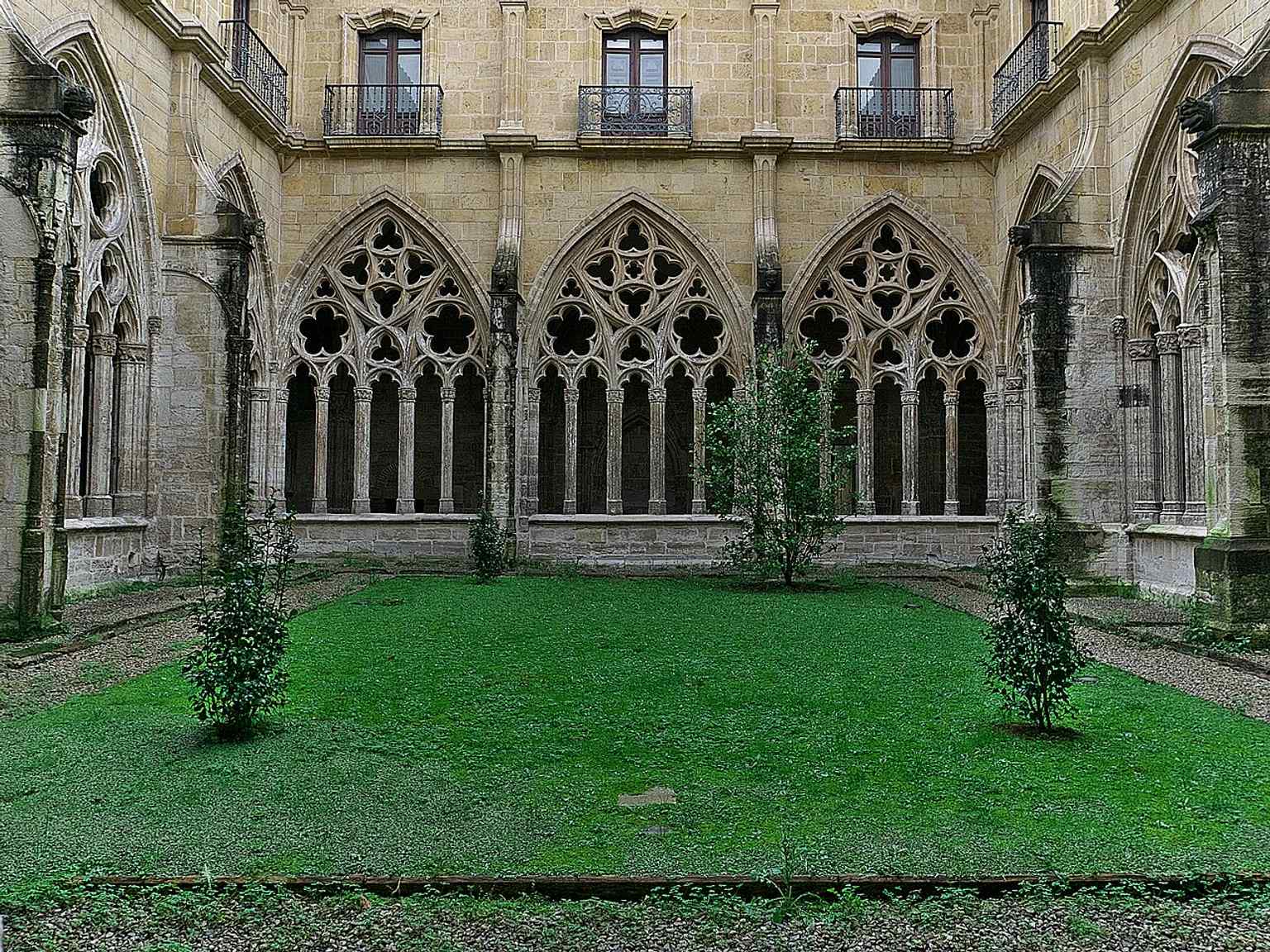
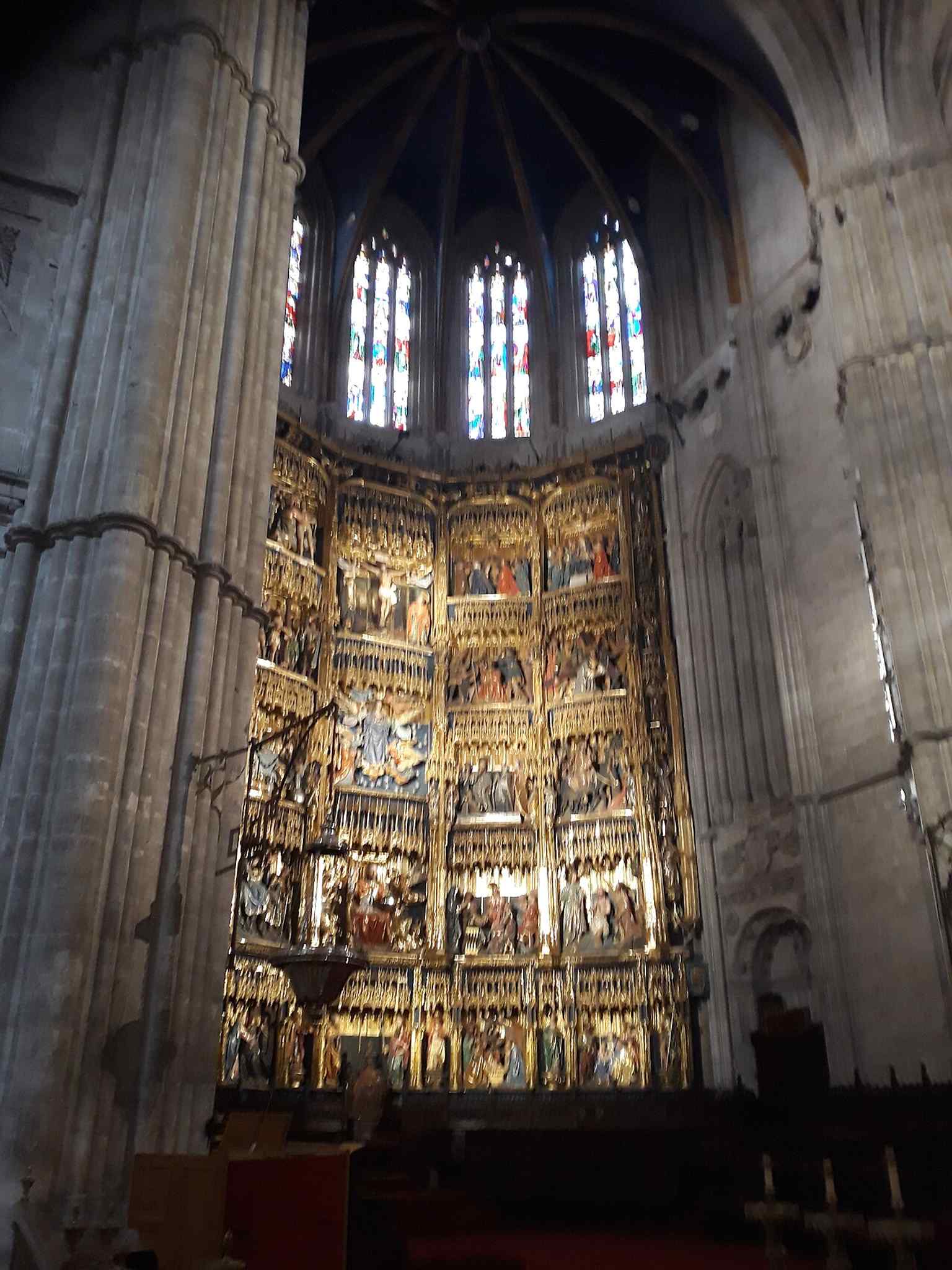
The church you see now began in thirteen eighty-eight, when Bishop Gutierre de Toledo pushed for a new Gothic cathedral on the site of the older basilica. Later builders kept the relay going: they raised the main chapel, the transept, the three aisles, the cloister, and the west front. They first imagined twin towers, then changed course and chose one mighty tower instead. Cardinal Francisco Mendoza de Bobadilla advanced it in the early sixteenth century, and Cristóbal de Rojas finished the tower with its octagonal pyramid. When lightning wrecked the original spire in fifteen seventy-five, Rodrigo Gil de Hontañón rebuilt it. So even that elegant point above you carries a comeback story.
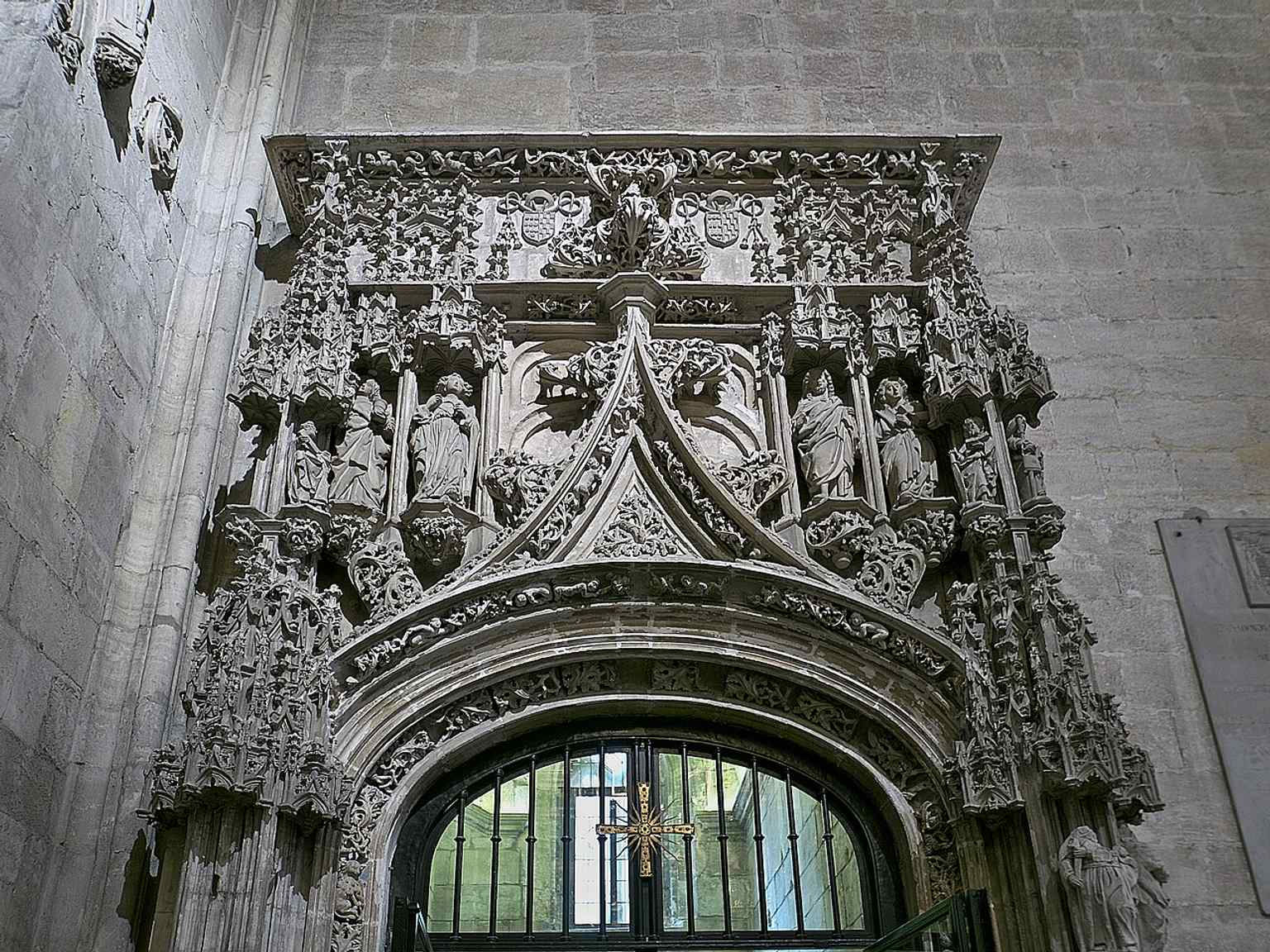
And here is the twist in the tale: this place did not simply survive the Middle Ages and drift gently into old age. In October of nineteen thirty-four, during the Asturian Revolution, an explosion tore apart the Holy Chamber and brought down part of the cloister. Historian Manuel Gómez Moreno inspected the damage, and sculptor Víctor Hevia led the hard, delicate work of restoring shattered sculpture. Then, in nineteen seventy-seven, thieves broke into the Holy Chamber and stole jewels and reliquaries; some returned in nineteen eighty-one, but partly dismantled, needing repair all over again. So this great cathedral is not just ancient. It is patched, defended, and remembered by hand.
That matters because Oviedo became famous as Sancta Ovetensis, the holy Oviedo, a cathedral of relics. In ten seventy-five, Alfonso the Sixth ceremonially opened the Arca Santa, the Holy Chest, and strengthened the city’s reputation as a place where faith took physical form in treasured objects, bones, crosses, cloth, and royal memory. If you check image seven, you can see the guarded heart of that story waiting nearby.
We’ll head there next, to the Holy Chamber, where this immense public monument narrows into something far more intimate and fiercely protected. If you plan to return inside later, the cathedral usually opens Monday through Friday from ten to one and four to six, Saturday from ten to one and four to five, and stays closed on Sunday.






.jpg)


.jpg)
.jpg)
