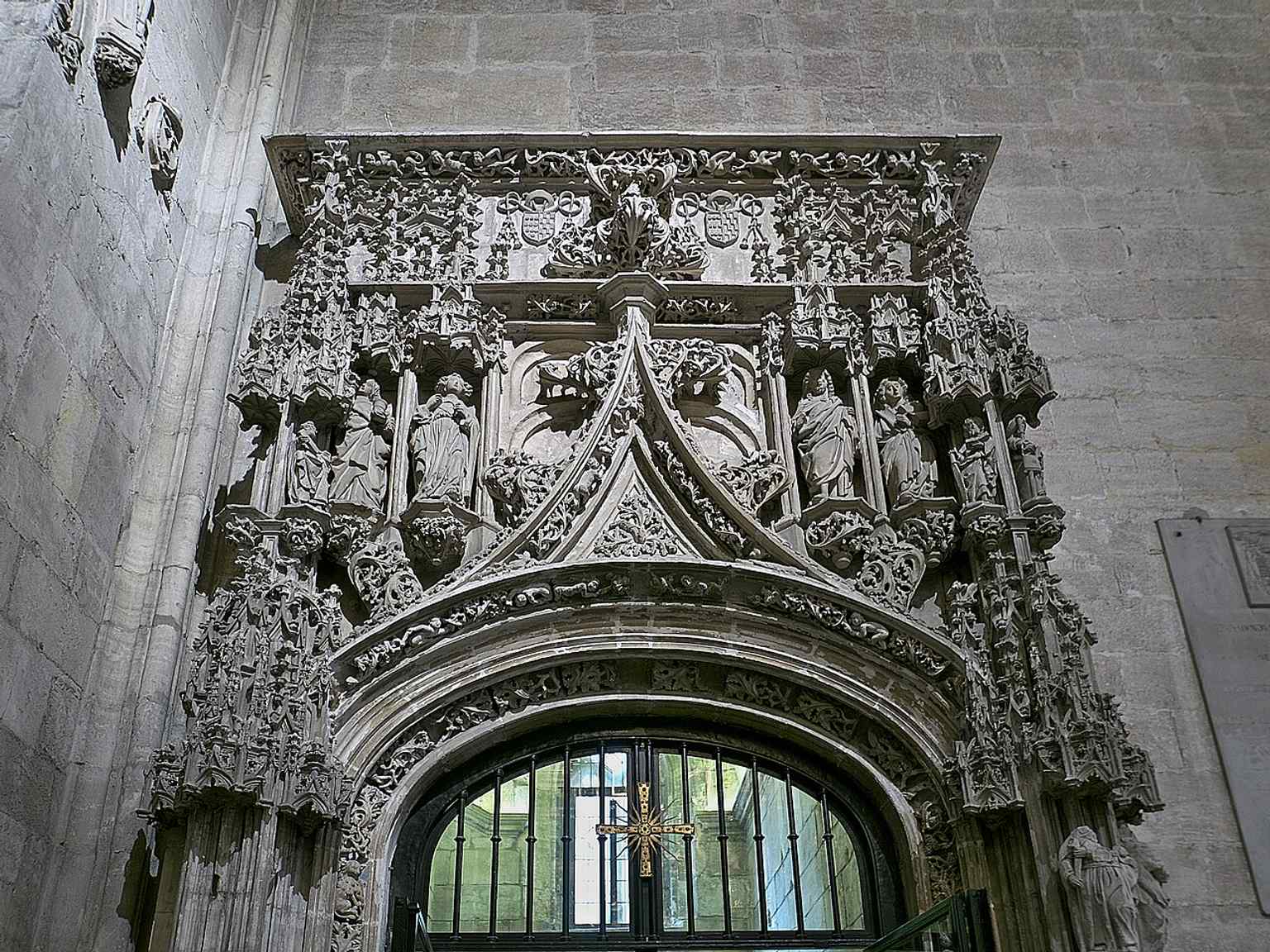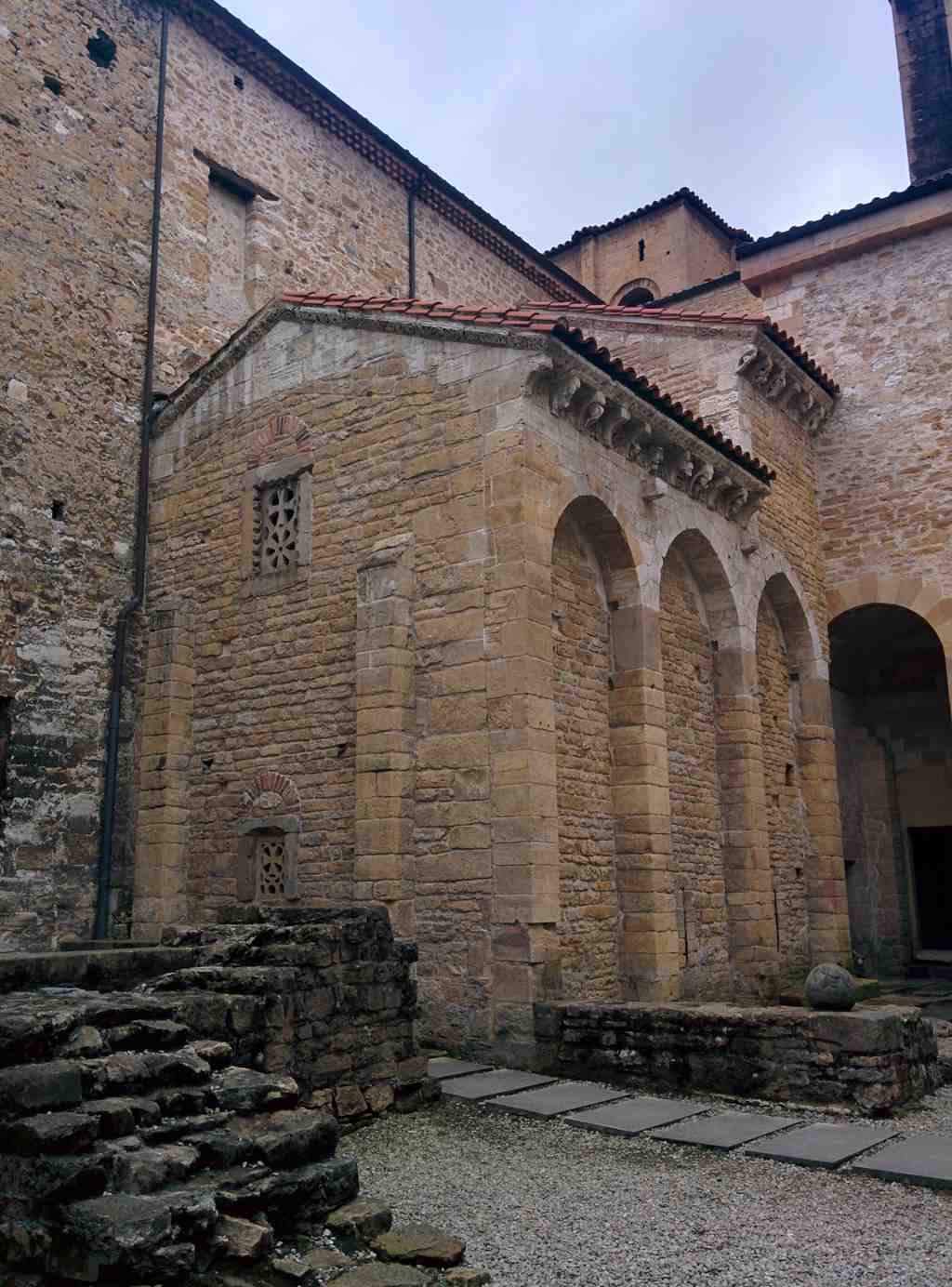
On your left, look for a compact block of pale stone with a plain rectangular wall and two small lattice windows stacked one above the other, the lower for the crypt and the upper for the Holy Chamber itself.
This little building carries an awful lot of weight for its size. The Cámara Santa treasury became the devotional heart of Oviedo: a guarded chamber for relics, royal symbols, and cathedral treasures that helped turn this city into a destination for pilgrims across medieval Europe. That old saying about Santiago and San Salvador was not just pious bragging... it tells you Oviedo had enough spiritual pull to compete with the big leagues.
What you see outside is modest, almost shy. Inside, though, the place splits into two sanctuaries, one above the other, with no direct connection between them. Below sits the crypt of Santa Leocadia, a low barrel-vaulted chamber, meaning a tunnel-like stone ceiling, tied to the arrival of the martyrs Eulogio and Leocricia. Tradition says Dulcidio, an envoy moving between kingdoms and the emirate of Córdoba, brought their remains here in the late ninth century. That transfer gave this lower space its purpose and its prestige.
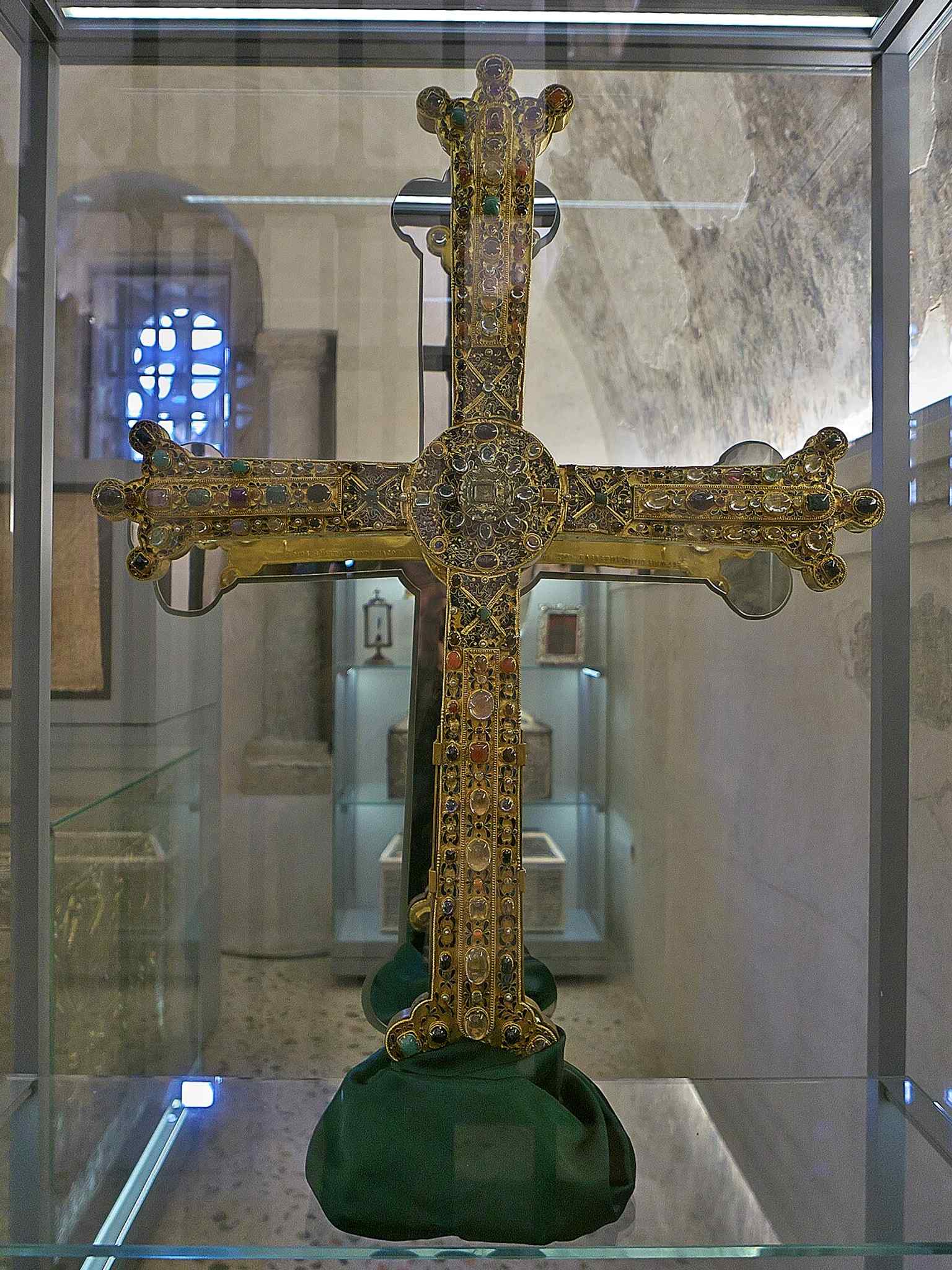
Above it, the upper chapel became the reliquary, the locked strongbox of a kingdom with a pulse. Here they kept the Arca Santa, the Holy Chest, along with the Sudarium of Oviedo, the Cross of the Angels, the Cross of Victory, and the Agates Casket. If you want to see one of those treasures clearly, take a look at your screen now... the Cross of Victory still carries the symbolic weight of Asturias like a crown carried in the hands instead of on the head.
And yet, for all its holiness, this chamber has always depended on very human things: doors, keys, hinges, watchfulness. In nineteen seventy-seven, that vulnerability snapped into view. Early in the morning, two cleaning women, not bishops, not police, found the main door forced. That is the local detail people often miss, and it matters. The chain of guardians here included the humble hands that opened up and noticed when something was wrong.
The theft shook Oviedo hard. The jewels were gone. Police later arrested one suspected author, José Domínguez Saavedra, in Oporto, giving the case an unexpected international chase. When the treasures finally returned in nineteen eighty-one, they came back partly dismantled, like a body after surgery. Restorers repaired them, and the pieces went back on display in nineteen eighty-four. Sacred objects, handled like evidence.
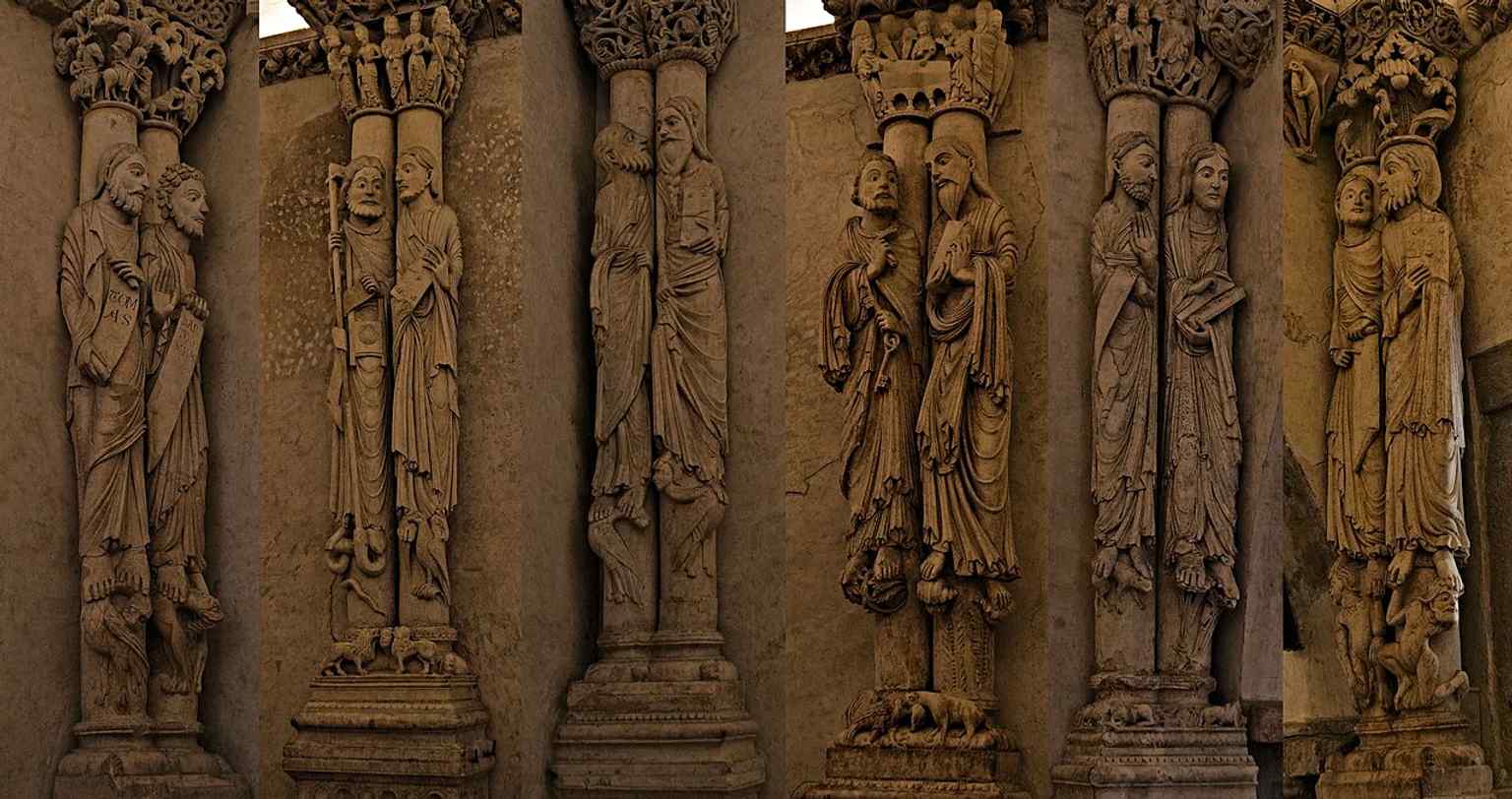
This chamber had already survived worse. In nineteen thirty-four, an explosion during the Asturian Revolution reduced it to rubble. Alejandro Ferrant and Manuel Gómez Moreno helped rescue what they could, and then Luis Menéndez Pidal rebuilt it piece by piece, reusing original stones with near-archaeological patience. If you glance at the image of the interior apostles, you can see the Romanesque figures added when the wooden roof gave way to a stone barrel vault in the twelfth century... they stand there like witnesses who have seen too much and kept quiet about it.
So this is Oviedo in miniature: faith protected by locks, memory restored by careful hands, and prestige carried by fragile objects that somehow keep surviving. In a couple of minutes, the Archaeological Museum of Asturias will continue that same story... whole eras recovered fragment by fragment, then guarded so they do not slip away again.