
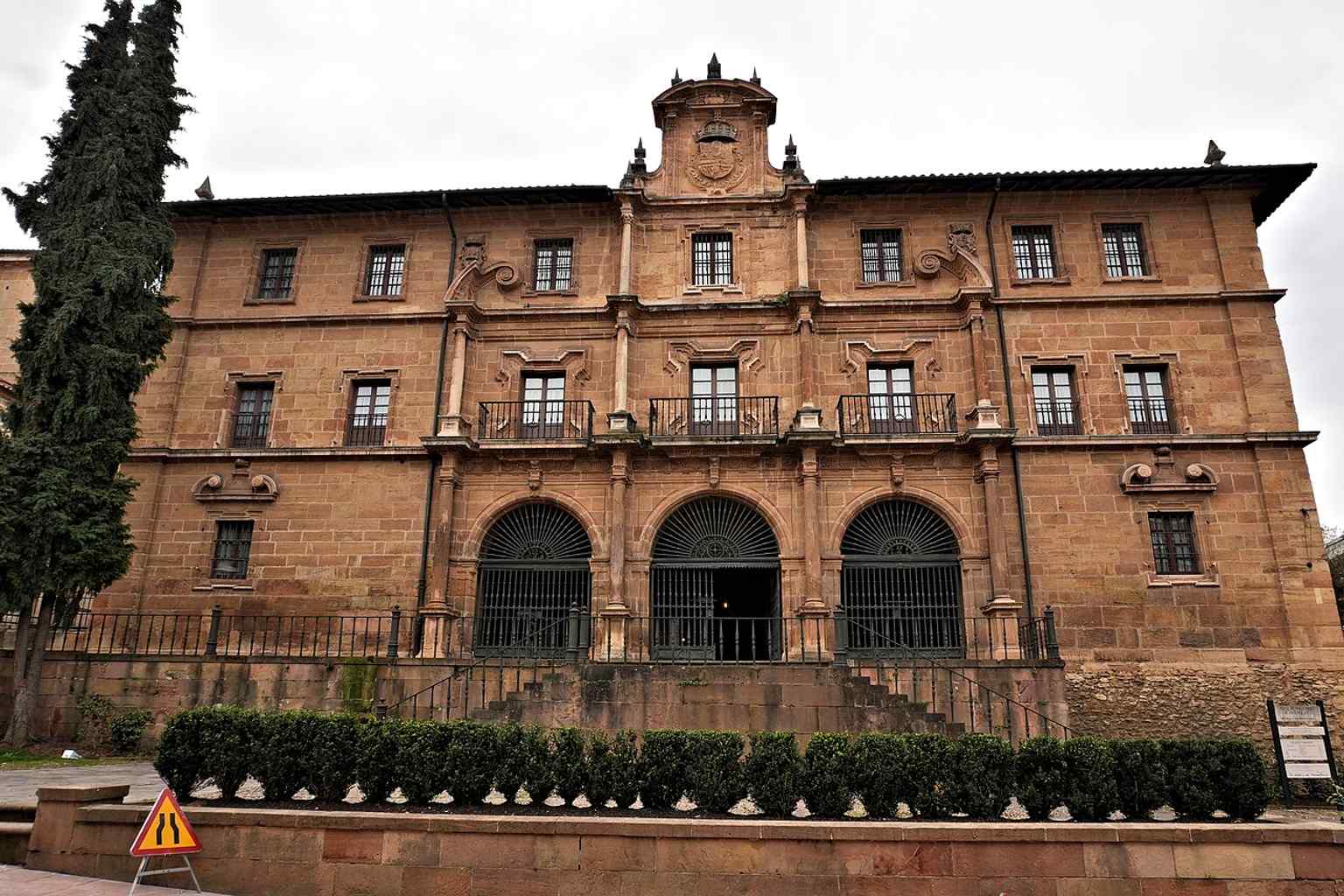
On your left, look for the long stone facade, the square tower, and the grand Baroque doorway that gives this monastery the air of a palace with a veil on.
This is San Pelayo... and it holds one of Oviedo’s quietest kinds of power. Behind these walls, women preserved memory the way others held a frontier. The community still lives here in enclosure, and for centuries the monastery served as sanctuary, political shelter, and archive all at once.
It did not begin as San Pelayo. Early on, people knew this place as San Juan Bautista de las Dueñas. Research points to a very early church here, tied in style to the world of Alfonso the Second and buildings like San Tirso. But the figure who gives this place its human weight is Teresa Ansúrez, widow of King Sancho the First of León. After her son Ramiro the Third lost power in the mid-nine eighties, Teresa came to Oviedo and turned this monastery into something more than a convent. She made it a refuge for dynastic memory... a safe house for a fallen branch of royalty.
And she was not alone. Queen Velasquita Ramírez also withdrew from court, came here with her daughter Cristina, and took the habit while Teresa served as abbess. That tells you a lot. When politics slammed a door, San Pelayo opened one.
Then came the relic that changed everything. According to tradition, Pelayo was a boy from Galicia, held hostage in Córdoba in place of his uncle Hermigio, the bishop of Tuy. He spent four years in prison, refused the emir’s pressure, refused to abandon his faith, and died a martyr in nine twenty-five. Christians carried his remains north for safety, first to León, then here in nine ninety-four. After that, the monastery took his name, and its standing rose fast enough to draw kings. Fernando the First and Queen Sancha came in ten fifty-three and made a donation tied to the saint’s translation, proof that prayer and royal strategy often shared the same table.
If you check the image on your screen, you can see that formal, almost civic face the monastery wears today. That look came in layers: a rebuilt church in the late sixteen hundreds, a tower designed by Melchor de Velasco Agüero, and, in seventeen-oh-three, the Vicaría facade by Fray Pedro de Cardeña, bold as a noble residence. But the deeper treasure is paper, not stone. The nuns kept about three thousand five hundred medieval parchments, making San Pelayo one of Asturias’s great storehouses of memory. Not flashy... just civilization doing its filing.
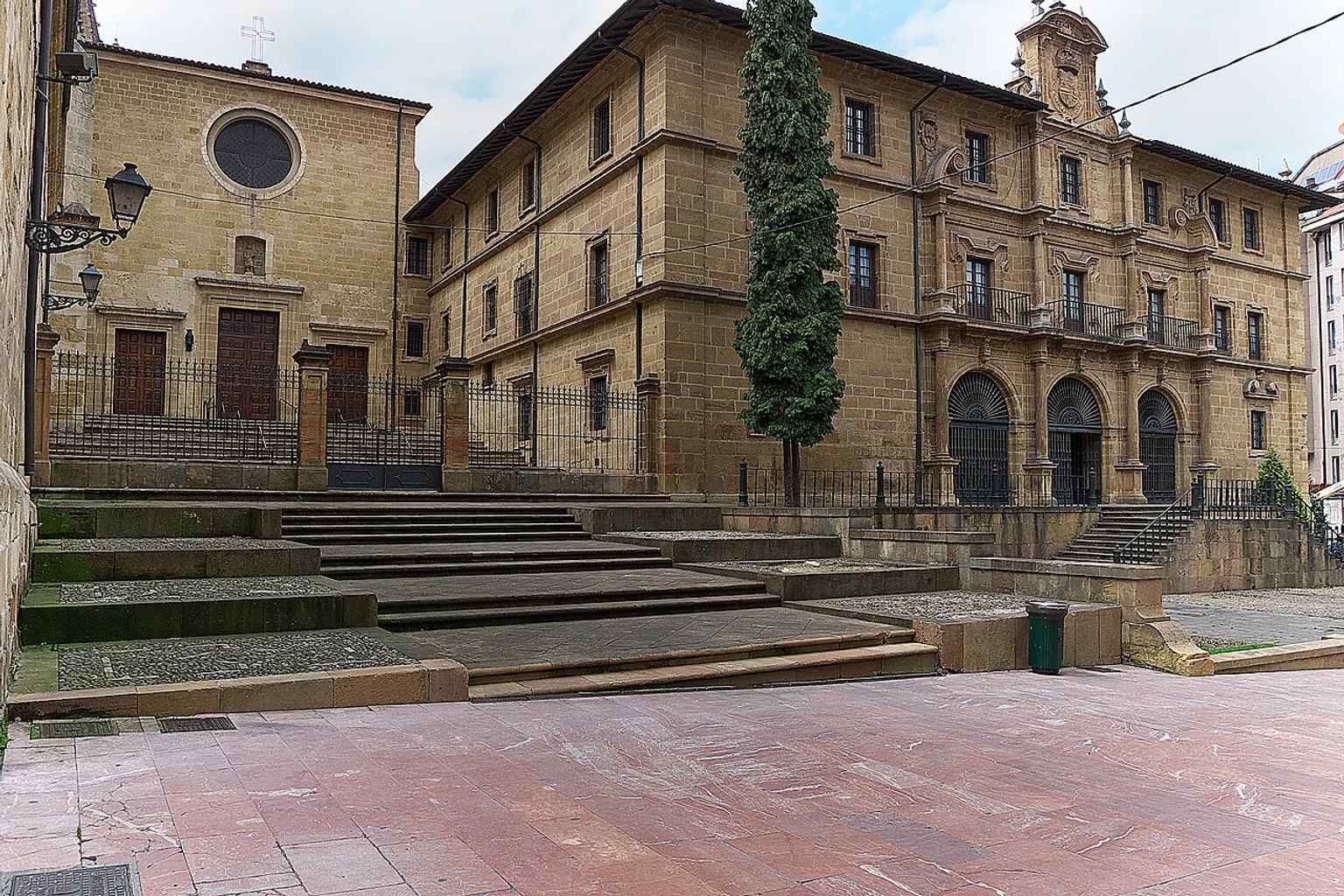
And there is a sweet little Oviedo twist: the cloistered nuns, still known as the Pelayas, are also loved for their secret recipes and pastries. Queens, relics, parchments, cookies... this place contains multitudes. So here’s a thought to carry with you: which leaves the deeper mark on a city, the ruler who founds a house, or the community that guards its story for centuries?
Our final stop moves from enclosed memory to a church shaped by public devotion, just a one-minute walk away at Santa María la Real de la Corte. If you plan to return, San Pelayo generally opens from mid-morning to early afternoon and again in the late afternoon, with shorter hours on Sundays.





.jpg)
