On your right, look for a pale stone façade arranged in stacked classical tiers, with a single tower and statue-filled niches above the entrance.
Here on Plaza de la Constitución, beside the town hall, San Isidoro shows you one of Oviedo’s favorite habits: putting power, prayer, and public life shoulder to shoulder.
At first glance, this church seems self-contained. It is not. San Isidoro sits on top of older lives. Before this building, there was an earlier Romanesque church here, already recorded in the year twelve seventeen. That first church disappeared, almost entirely. Only its entrance arch survived, and the city moved it in nineteen twenty-five to the Campo de San Francisco. That survivor began its life here.
The woman who pushed the next chapter forward deserves to be named clearly: Magdalena de Ulloa. She was one of the great patrons of the Jesuits in sixteenth-century Spain, and patrons matter because they decide which ideas get stone, land, and staying power. Magdalena was also known for helping raise Don John of Austria, so when she supported a Jesuit college here in fifteen seventy-six, she was not making a small local donation. She was plugging Oviedo into a national web of religion, education, and influence.
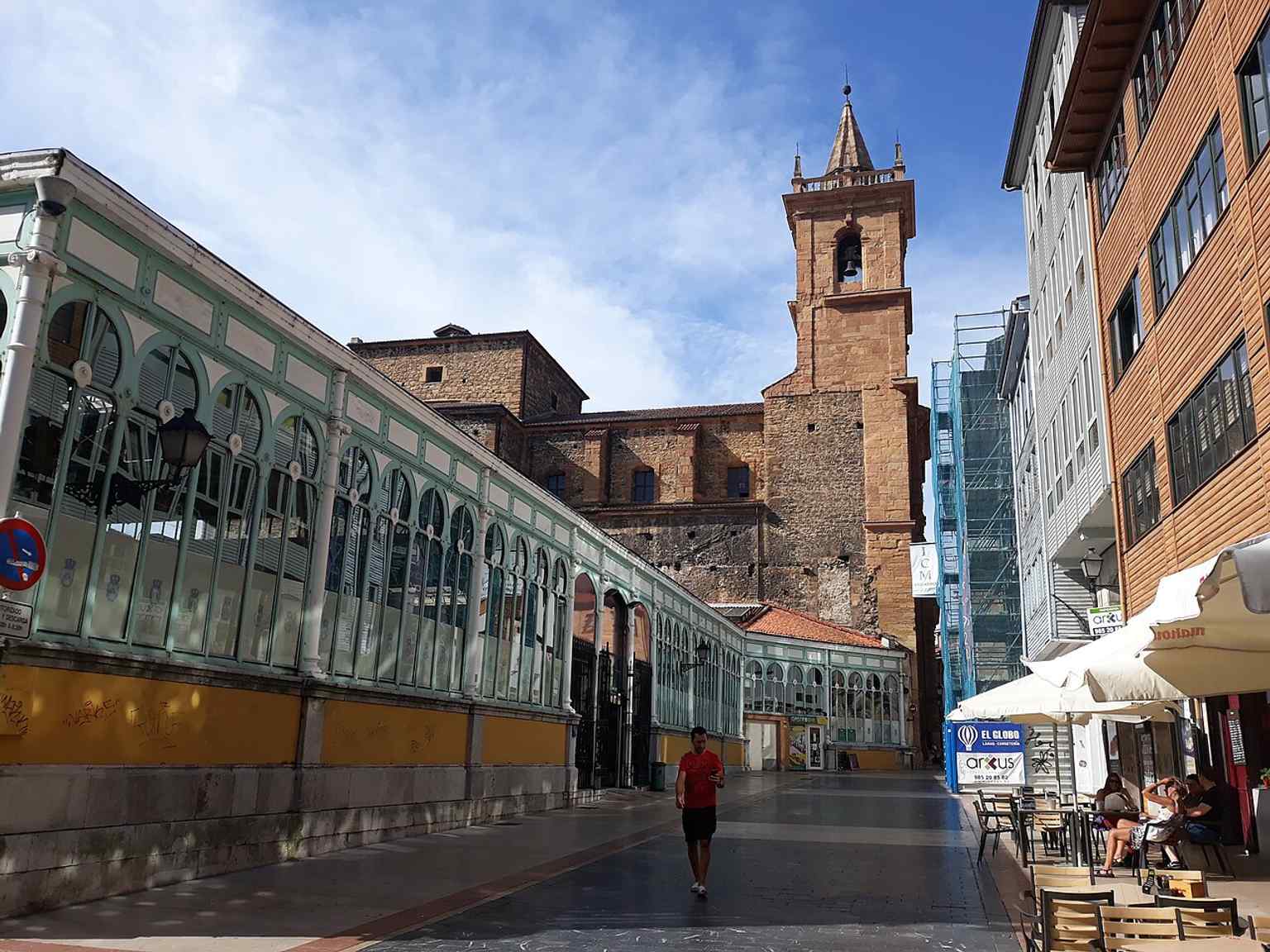
If you glance at your screen, the wider view shows the church as the surviving piece of that larger Jesuit world. The college of San Matías once stood around it. Later, the city changed course. In eighteen seventy-three, workers demolished the college to make room for El Fontán Market beside the church. San Isidoro remained standing, like the last chapter left in a book after someone tore out the middle pages.
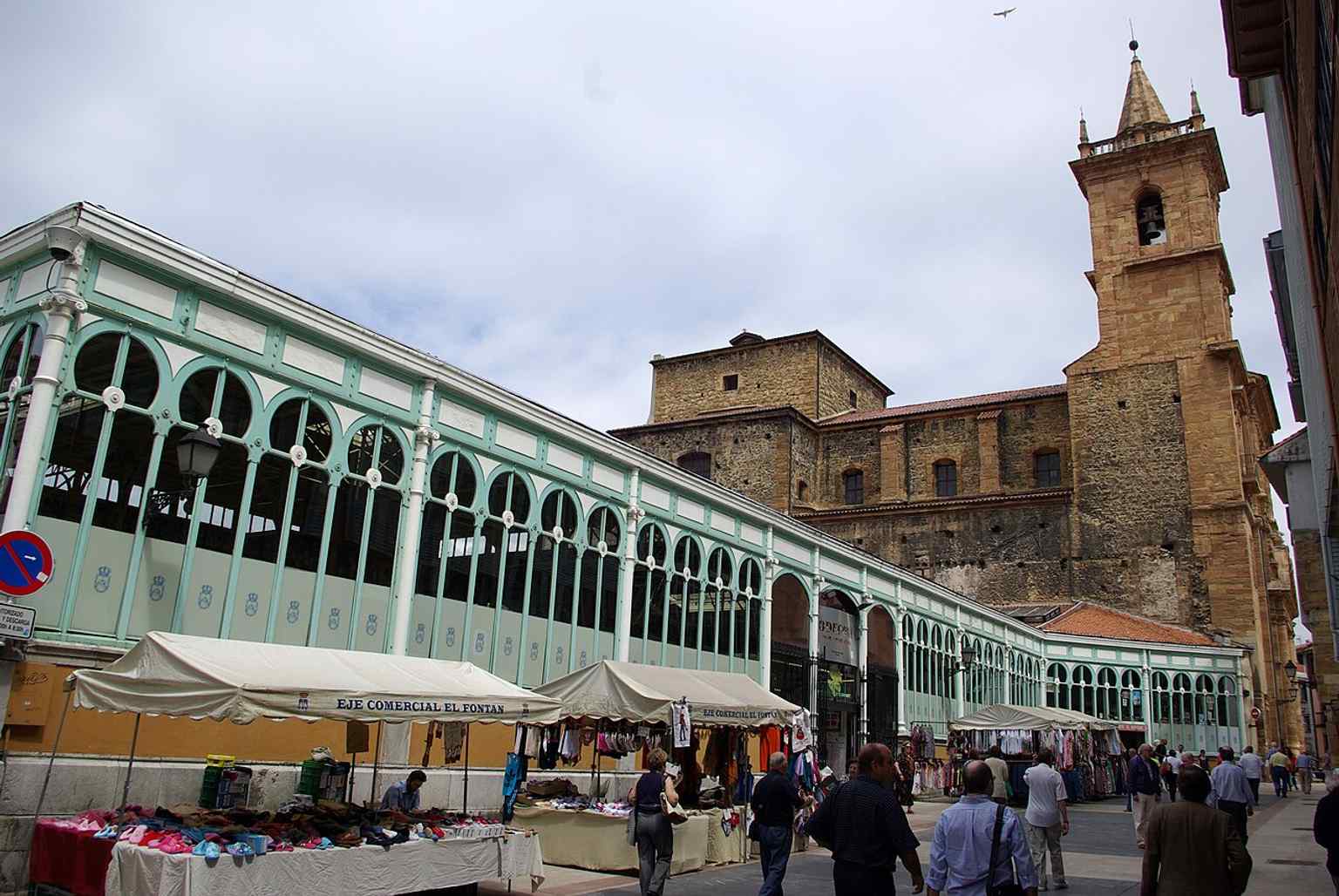
The church you see now took shape slowly. Work stretched across decades, especially from sixteen forty-six to sixteen eighty-one, with several architects involved, including Francisco Menéndez Camina from Avilés. Inside, it follows a Jesuit layout: one main hall, called the nave, with side chapels opening off it so preaching could stay clear and direct. The original design planned for two towers. The budget, as usual, had other ideas, so Oviedo got one.
This place also keeps memory in a very physical form. Martín Carrillo Alderete, a former bishop of Oviedo who later became archbishop of Granada, signed the foundation document in sixteen forty-five. He is buried inside in an urn set into an arcosolium, a recessed tomb built into the wall near the altar area. That means the man who helped institutionalize this place still remains part of it, not just in paper records but in the building itself.
And San Isidoro never stopped collecting layers. It became a parish church, fostered a deep devotion to Our Lady of Sorrows, gained a special devotional connection with Santa Maria Maggiore in Rome, and still serves as a place where Oviedo gathers for Holy Week processions, funerals, and civic farewells. This is not frozen heritage. It is a working memory bank.
In Oviedo, the sacred and the everyday often lived wall to wall... and here, they quite literally did. When you are ready, El Fontán Market is about a minute away. It rises where part of this religious complex once stood, which tells you a lot about how this city keeps remaking itself without losing its pulse.