
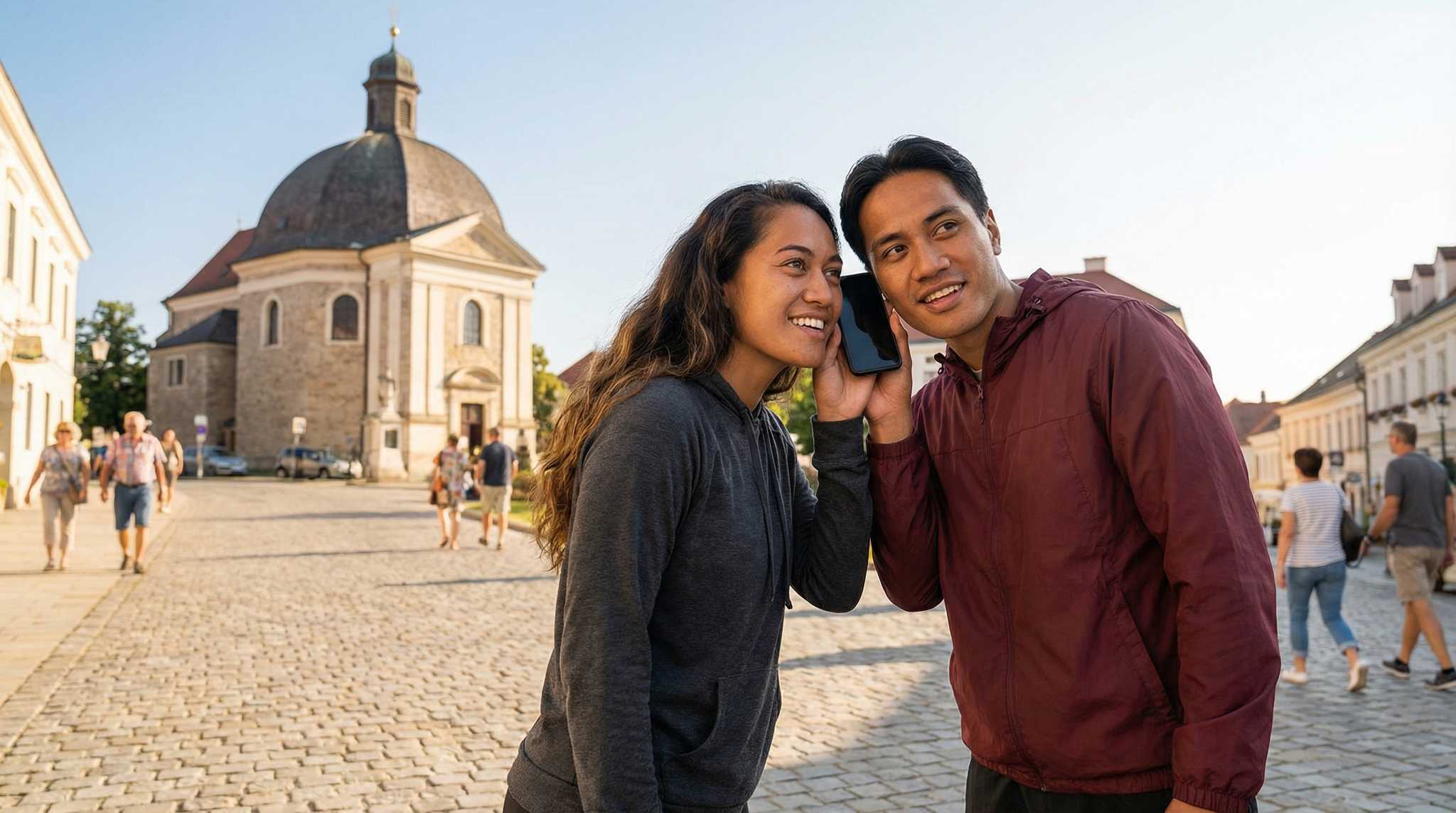
Eisenstadt Highlights Audio Tour: Cultural Treasures and Baroque Legacy
Eisenstadt hides its true face behind the gilded walls of royalty and the solemn silence of stone. Beneath the polished surface of Esterházy Palace lies a history carved by political ambition and the desperate whispers of forgotten scandals. Unlock this history through a self guided audio tour designed to bypass the common tourist trails. Unearth the secrets buried deep within the architecture that most casual travelers walk past without a second glance. Which desperate rebellion was plotted in the shadows of the Mountain Church? What dark secret forced St. Martin’s Cathedral to lock its heavy doors for decades? Why does a specific local legend claim a restless ghost still paces the halls of the palace at midnight? Surrender to a journey of sensory discovery where history breathes again. Feel the pulse of an imperial past as you navigate the narrow alleys and dramatic echoes of this city. Start your walk and expose the truth behind the gilded mask.
Tour preview
About this tour
- scheduleDuration 80–100 minsGo at your own pace
- straighten2.5 km walking routeFollow the guided path
- location_onLocationEisenstadt, Austria
- wifi_offWorks offlineDownload once, use anywhere
- all_inclusiveLifetime accessReplay anytime, forever
- location_onStarts at St. Martin's Cathedral (Eisenstadt)
Stops on this tour
lock_open 3 free previews · 11 unlock with purchase
Ahead of you stands a pale stone late-Gothic church with a broad steep-roofed body and an unmistakably uneven west front, where one tower rises tall while its partner stops…Read moreShow less
Open dedicated page →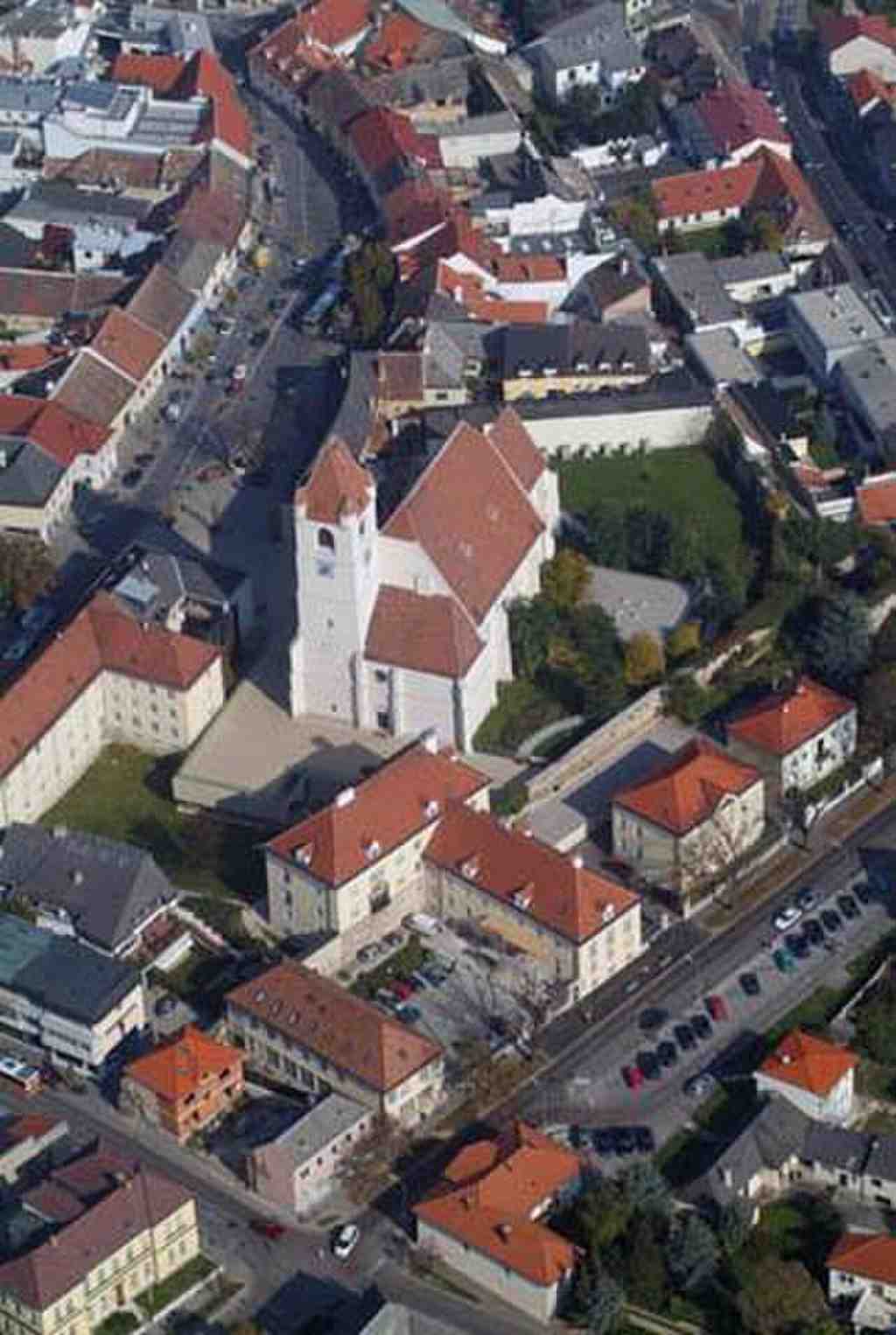
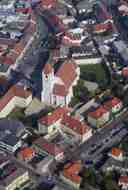
St. Martin's Cathedral (Eisenstadt)Photo: Civertan, Wikimedia Commons, CC BY-SA 3.0. Cropped & resized. Ahead of you stands a pale stone late-Gothic church with a broad steep-roofed body and an unmistakably uneven west front, where one tower rises tall while its partner stops short.
This is St. Martin’s Cathedral, but it began much smaller... as a chapel first mentioned in the year twelve sixty-four. That little dedication to Saint Martin mattered so much that the settlement itself picked up his name: minor Martin, later Kleinmartinsdorf, Kismarton. Under the area of today’s sanctuary, the holy space around the altar, part of that Romanesque foundation still survives like a buried first draft.
Then the building kept growing as the town did. In the thirteenth century, builders added an early Gothic choir. In the fourteenth, they tucked on a family chapel. And in fourteen sixty, city captain Johann Siebenhirter pushed for something tougher: a new church designed as a fortified church, because after the fall of Constantinople in fourteen fifty-three, people here expected Ottoman attack. Faith, in other words, needed thick walls as well as prayer.
Take a moment and study the front... especially the towers. The church was planned as a twin-tower west front, but only the north tower reached its full height. The south tower stopped at two stories, and that unfinished ambition still gives the cathedral its slightly lopsided character. If you want a clearer look, check the west view on your screen. It’s a handsome reminder that even major churches don’t always get to finish their grand plans.
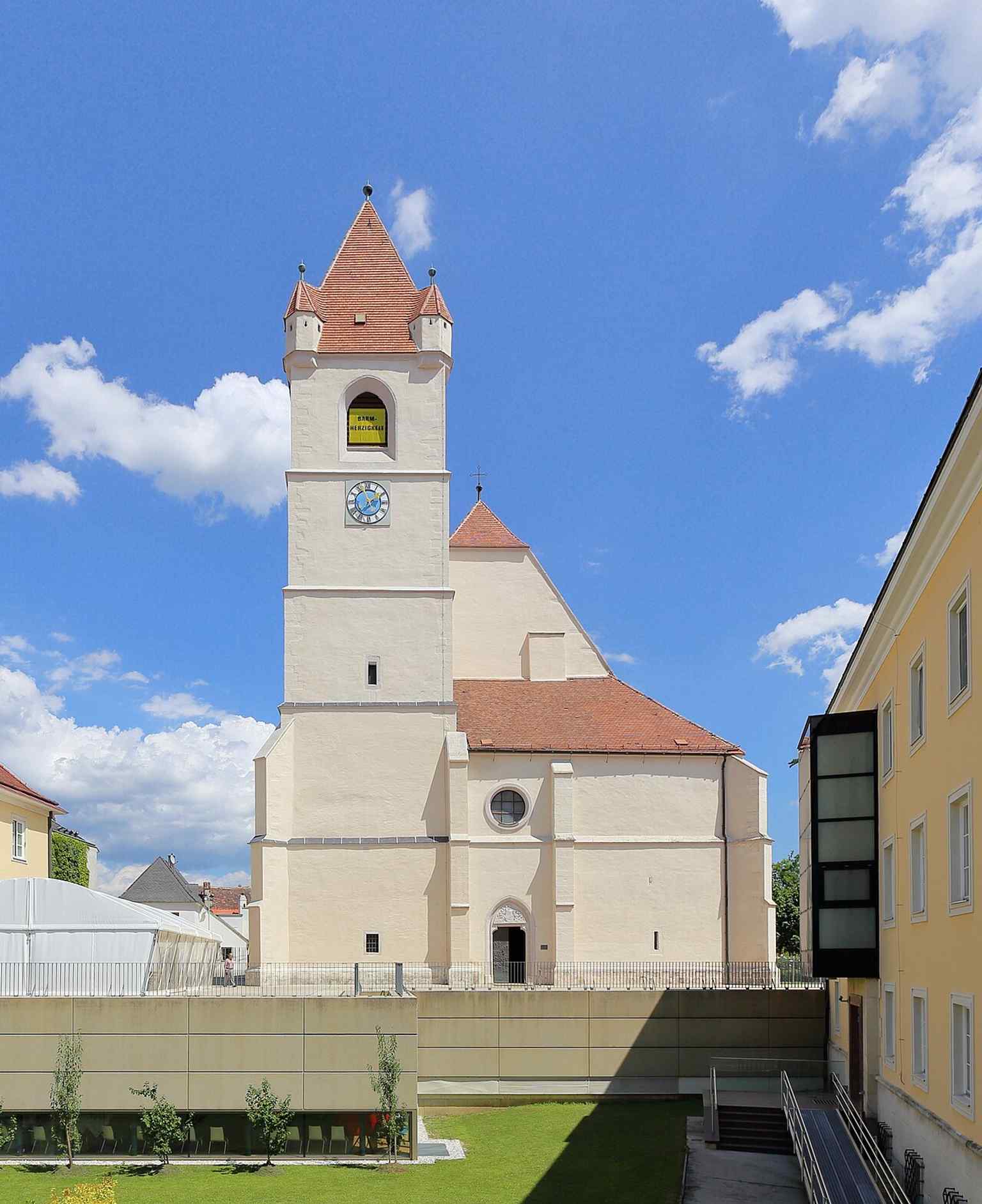
A west view that highlights the cathedral’s asymmetrical twin-tower design — only the north tower was fully built.Photo: C.Stadler/Bwag, Wikimedia Commons, CC BY-SA 4.0. Cropped & resized. And here’s the part locals tend to remember: after the great fire of fifteen eighty-nine, the central body of the church burned out, the vault crashed down, and this place stood without a roof for roughly forty years. Forty years. Imagine a sacred building open to the sky, stripped of dignity, waiting. In Eisenstadt, that rhythm turns up again and again: damage first, then the stubborn work of reshaping what remains. The church people see now carries that long habit of repair in its bones.
By sixteen twenty-nine, workers finally restored it. Much later, in seventeen seventy-seven and seventeen seventy-eight, another layer arrived: a grand altarpiece by Stephan Dorfmeister showing the Transfiguration of Saint Martin, and a new organ by the Viennese builder Johann Gottfried Malleck. Joseph Haydn enters the story here not as some marble bust of genius, but as the practical man asked to solve a real problem. The older organ no longer satisfied anyone, and Haydn helped guide the search for a better sound. Very glamorous, really: not composing immortality for a moment, just fixing church acoustics. If you glance at the organ image in the app, you’re seeing the descendant of that living musical tradition.
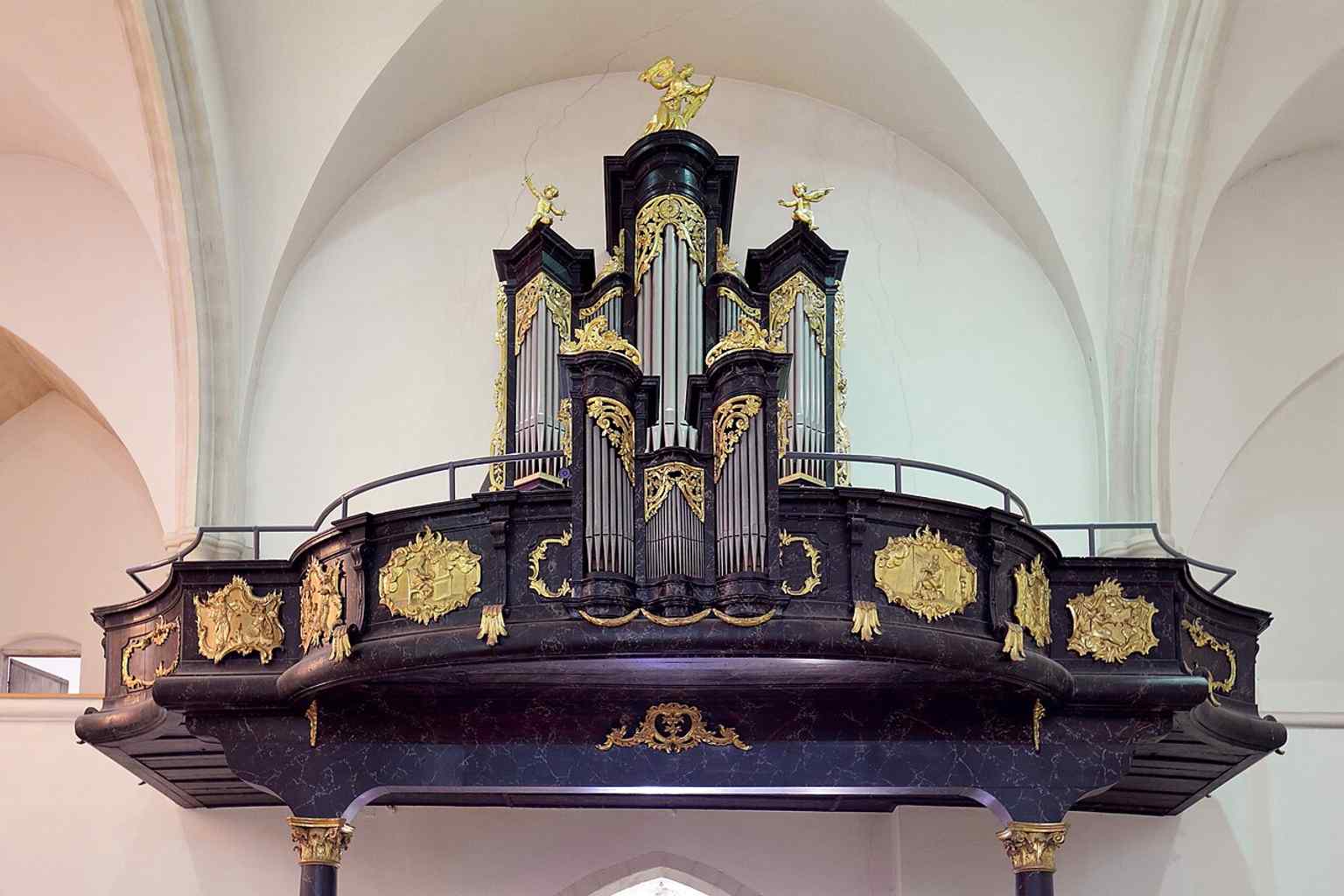
The Malleck organ on its gallery, linked to the 1778 instrument commissioned with Joseph Haydn’s help.Photo: C.Stadler/Bwag, Wikimedia Commons, CC BY-SA 4.0. Cropped & resized. The church changed again in the twentieth century, then became the cathedral of the Diocese of Eisenstadt in nineteen sixty. Another major redesign in two thousand and three gave the altar area a distinctly modern use of glass. So even here, in a building rooted in the Middle Ages, nothing stayed frozen for long.
That may be the first thing Eisenstadt asks you to notice: its sacred places are old, yes, but never settled. When you’re ready, head on toward the Town Hall, about a two-minute walk from here.
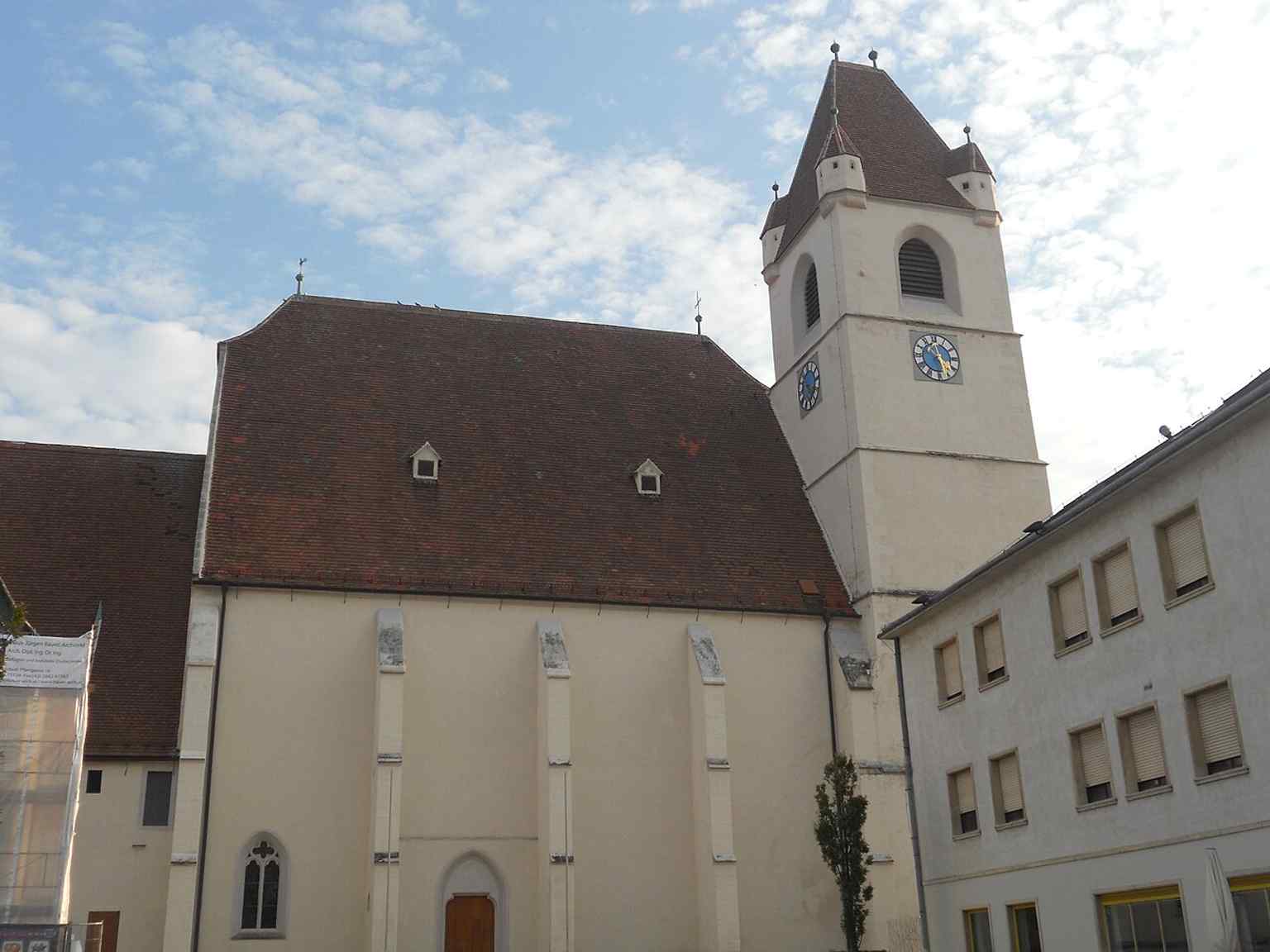
The cathedral seen from outside at street level, showing the church that became Eisenstadt’s cathedral in 1960.Photo: Clemens, Wikimedia Commons, CC BY-SA 3.0 at. Cropped & resized. 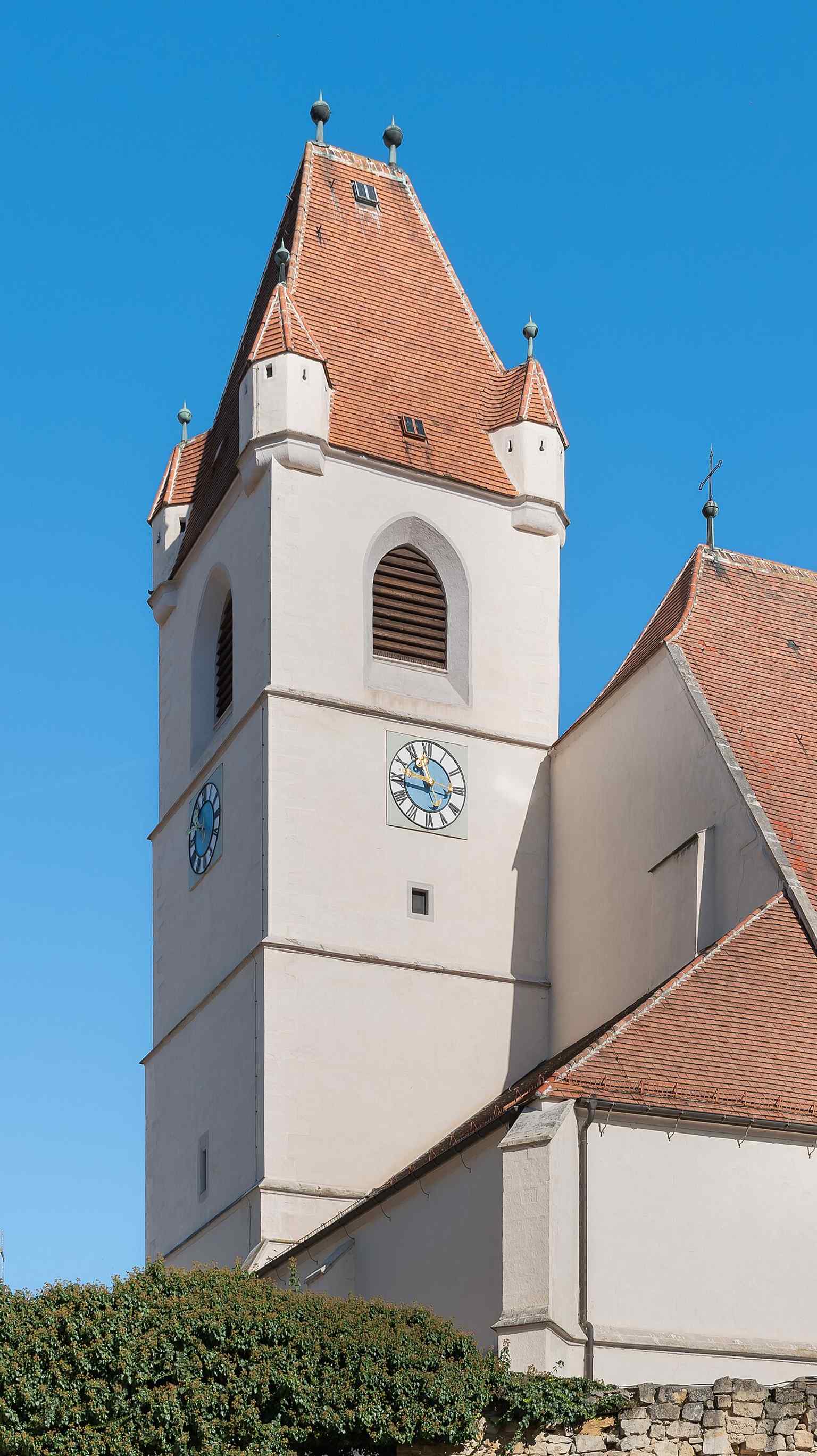
A close look at the bell tower, recalling the cathedral’s modern seven-bell ring added in 2013.Photo: Krzysztof Golik, Wikimedia Commons, CC BY-SA 4.0. Cropped & resized. 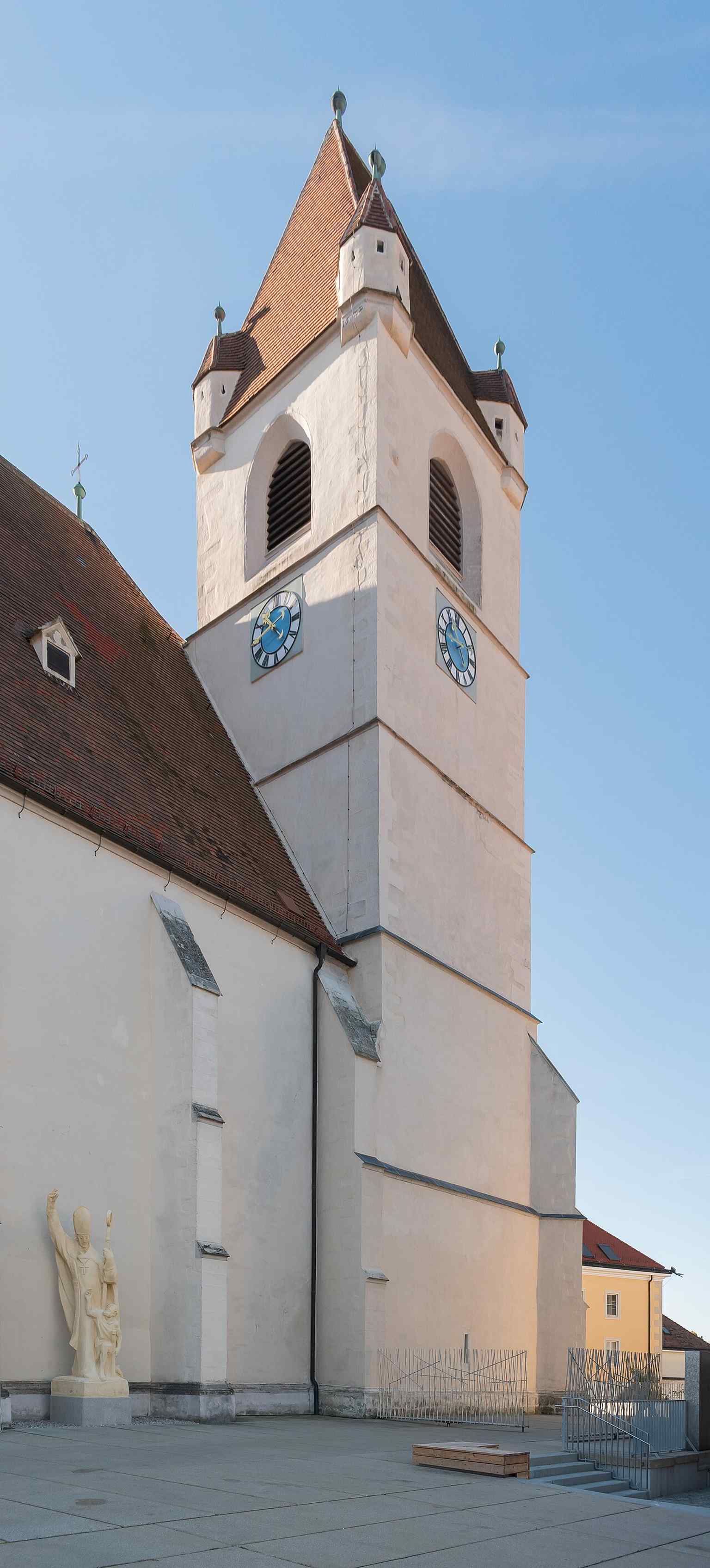
A clear exterior view of St. Martin’s Cathedral, the former parish church raised to cathedral status in 1960.Photo: Krzysztof Golik, Wikimedia Commons, CC BY-SA 4.0. Cropped & resized. 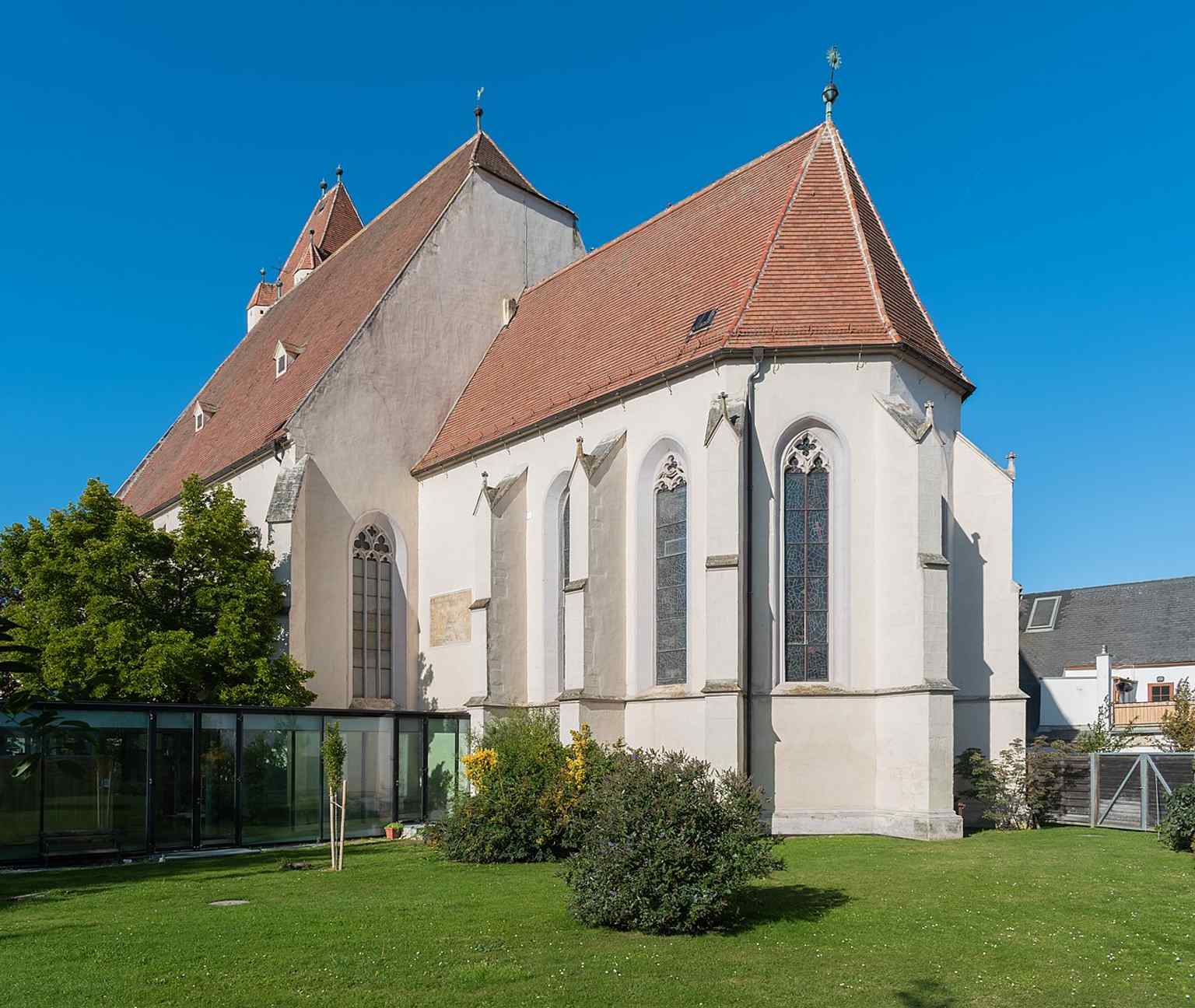
Another wide exterior view of the cathedral, useful for showing the building’s overall late-Gothic form and elevated setting.Photo: Krzysztof Golik, Wikimedia Commons, CC BY-SA 4.0. Cropped & resized. On your left is a pale stucco building with a broad rectangular facade, angular bay windows, and the composed, official look of a place that has been issuing decisions for a very…Read moreShow less
Open dedicated page →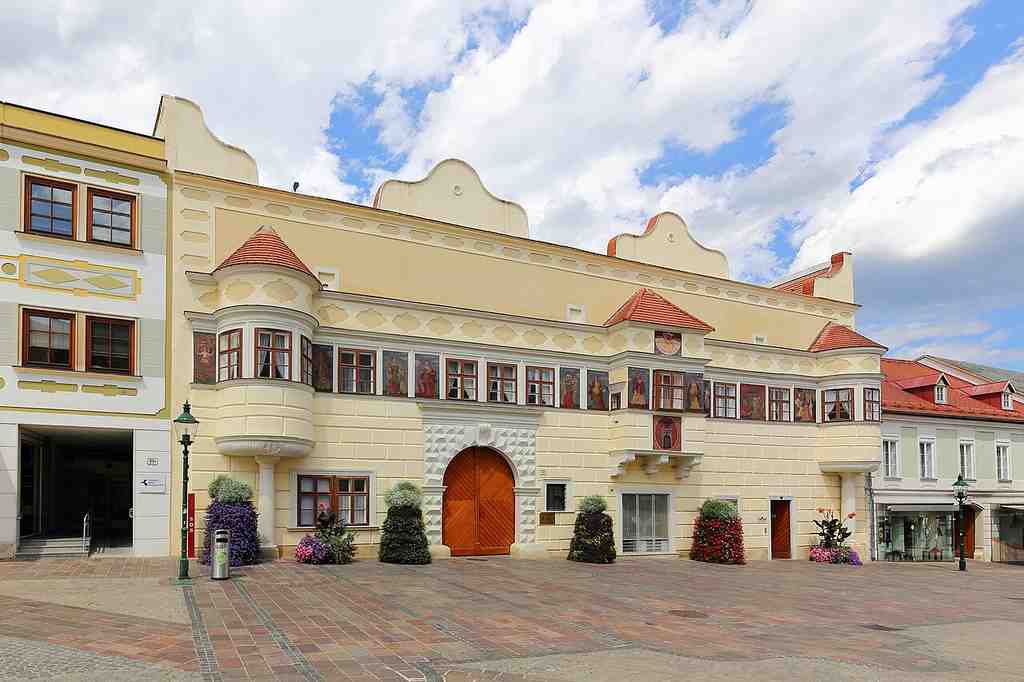
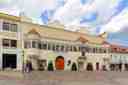
Eisenstadt Town HallPhoto: C.Stadler/Bwag, Wikimedia Commons, CC BY-SA 4.0. Cropped & resized. On your left is a pale stucco building with a broad rectangular facade, angular bay windows, and the composed, official look of a place that has been issuing decisions for a very long time.
A city shows sacred and civic authority in different costumes. The cathedral speaks through ritual and salvation; the town hall speaks through laws, seals, tax rolls, and meeting minutes. Both are stages where a place tells the world, and itself, who it is.
This Rathaus began around fifteen sixty as an ordinary urban building. Only after Eisenstadt became a royal free city in sixteen forty-eight - meaning the crown granted it important self-governing rights, instead of leaving it under tighter noble control - did the city recast this house as its town hall. Suddenly the facade had a job to do. It displayed female figures for the seven virtues and biblical scenes like the Judgment of Solomon, Judith and Holofernes, and Solomon with the Queen of Sheba. In other words, local government decided it should look morally qualified.
If you glance at the photo in the app, you can see that formal street face more clearly. The bay window in the other image is a good reminder that this started life as a sixteenth-century house before it learned official manners.
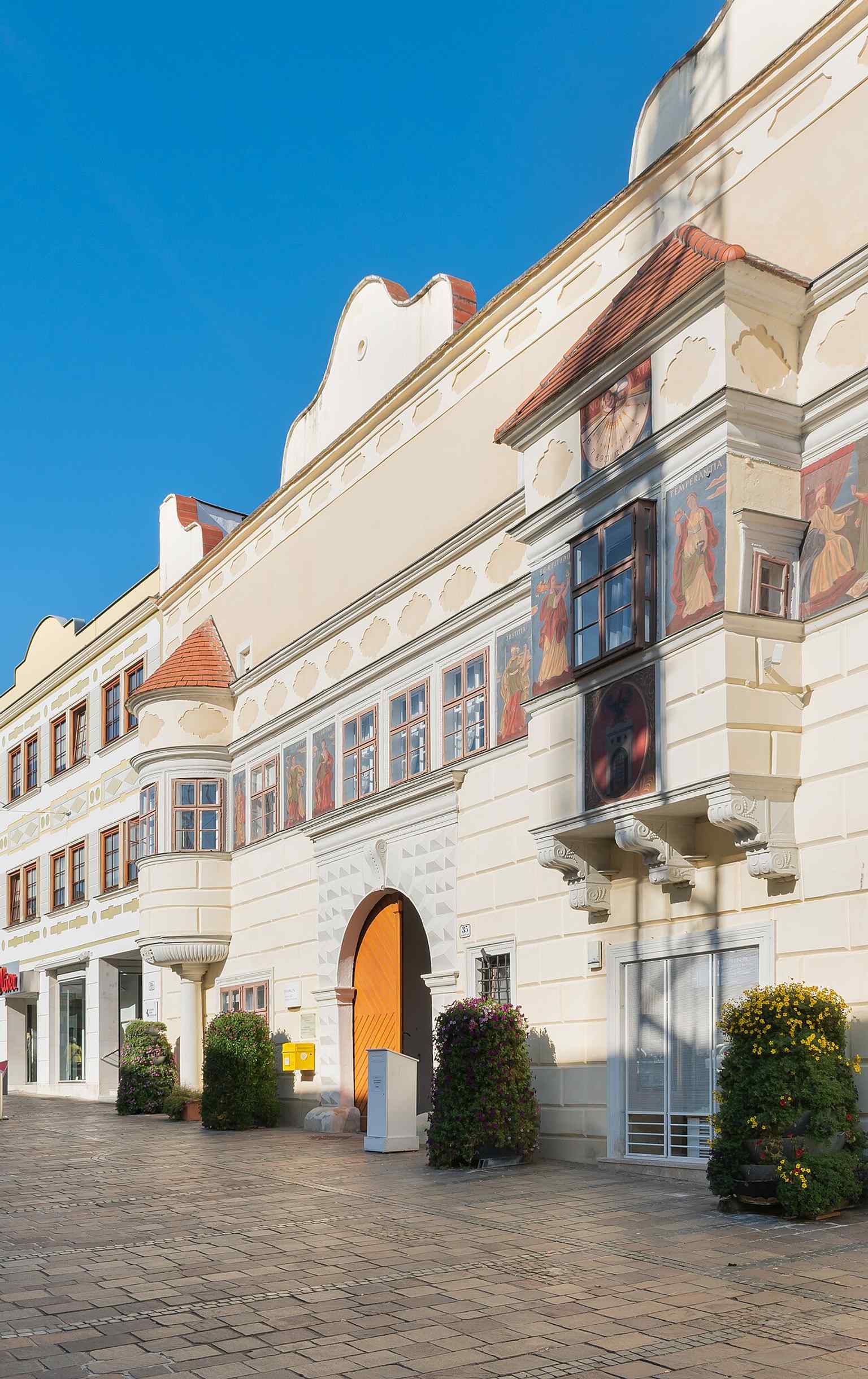
The street facade of Eisenstadt Town Hall, whose historic exterior once carried virtue figures and biblical scenes as a moral program for the city.Photo: Krzysztof Golik, Wikimedia Commons, CC BY-SA 4.0. Cropped & resized. In nineteen twenty-one, after Burgenland joined Austria, Bohemian-born Aemilian Necesany became Eisenstadt’s first mayor in the new order. This building became the desk, stage, and filing cabinet of a political handover. And yes, the filing part matters. In nineteen twenty-four, archivist Fritz Antonius finally organized the city records. Then a nineteen thirty-nine renovation squeezed them into a cramped room, and by nineteen forty the city had to rent three rooms in the Franciscan monastery because the attic failed fire-safety rules. Memory, it turns out, needs storage.
After the war, Professor Franz Elek-Eiweck - school inspector and artist in one inconveniently interesting person - helped restore schools and launched an art exhibition in November nineteen forty-six. By nineteen forty-eight, city leaders were debating where to place courts, schools, post offices, and bus garages as Eisenstadt rebuilt its administrative center. Then in nineteen ninety-nine, the city remodeled the Rathaus again, adding a modern steel-and-glass circulation system beside old fire walls to make government more transparent, literally and bureaucratically.
Files, offices, and city status can shape memory just as much as altars and towers do. From here, head about two minutes to the Franciscan Church and Monastery of Saint Michael. If you need the working Rathaus rather than the historical one, it generally opens on weekdays, with shorter hours on Friday.
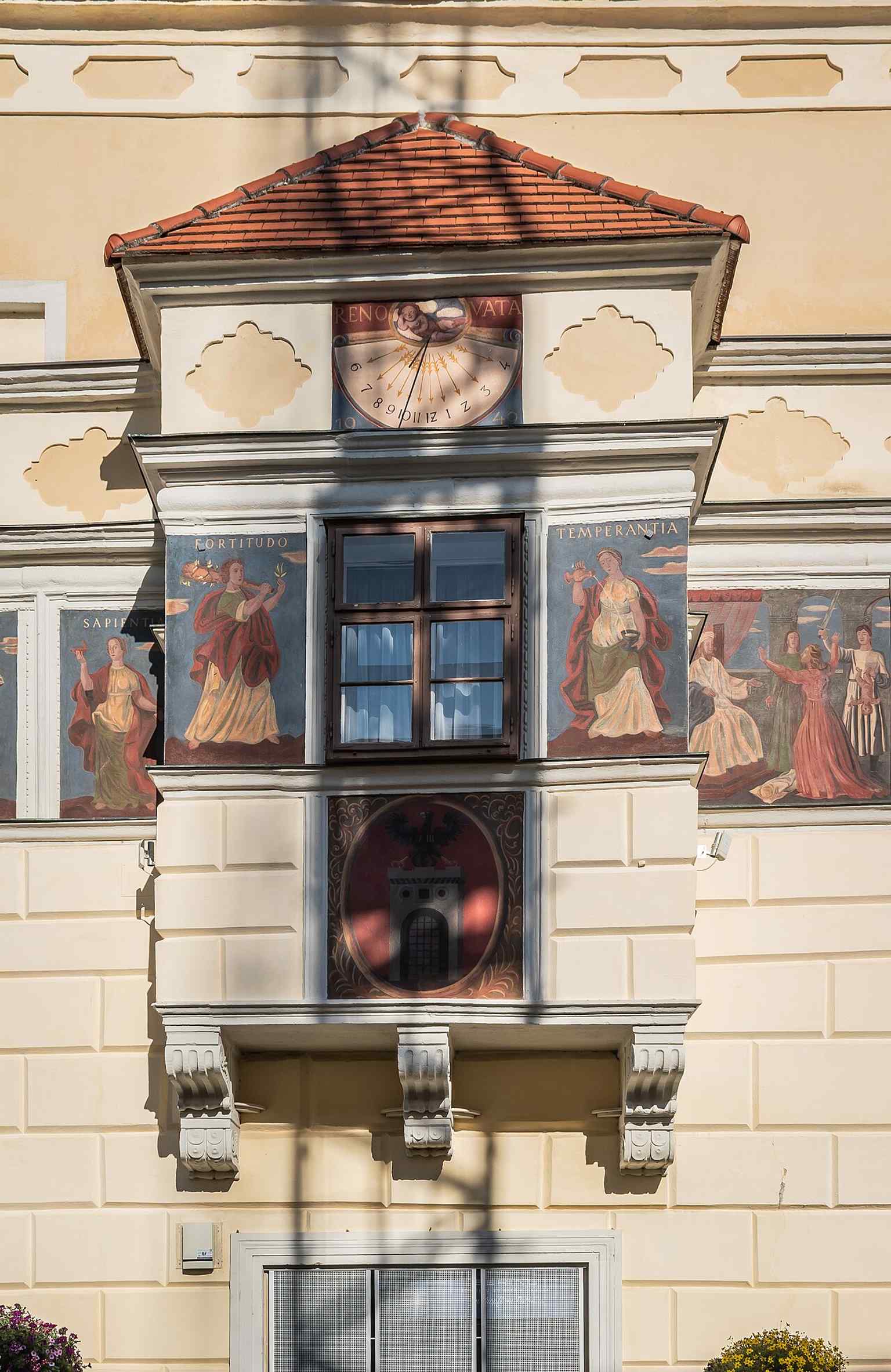
One of the Rathaus bay windows, a reminder that this mid-16th-century building was later adapted into Eisenstadt’s civic center after 1648.Photo: Krzysztof Golik, Wikimedia Commons, CC BY-SA 4.0. Cropped & resized. On your right, look for the pale church façade with its tall baroque tower, simple gabled roofline, and the attached monastery wing pressed close along one side. At first glance,…Read moreShow less
Open dedicated page →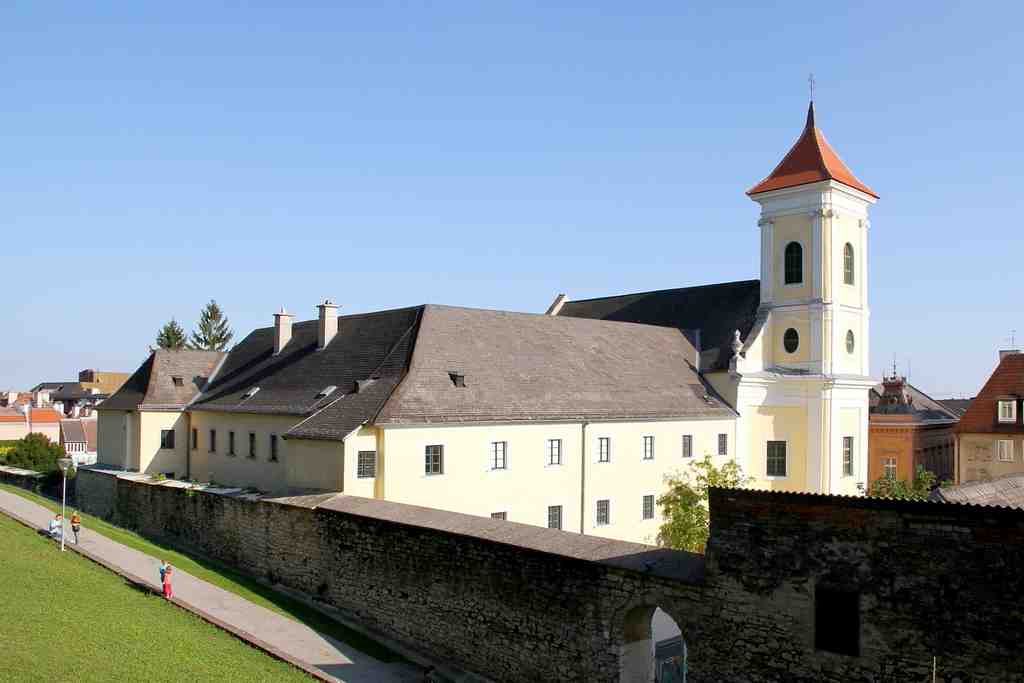
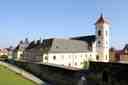
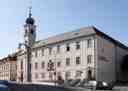
Franciscan Church and Monastery of St. MichaelPhoto: C.Stadler/Bwag, Wikimedia Commons, CC BY-SA 3.0. Cropped & resized. On your right, look for the pale church façade with its tall baroque tower, simple gabled roofline, and the attached monastery wing pressed close along one side.
At first glance, this place seems almost plain... which is exactly how it sneaks up on you. The Franciscan church and monastery of Saint Michael hold one of Eisenstadt’s longest, most tangled memories.
This ground had a religious life long before the present buildings. In thirteen eighty-six, Archbishop Johann Kanizsai established a monastery and church here, back when Eisenstadt had only just become a walled town. Later, a Minorite house and the church of Saint John the Evangelist stood on this spot, until the Ottoman attack of fifteen twenty-nine destroyed them. After that, the place lay empty for decades, a scar right in the town.
Then Count Nikolaus Esterházy stepped in. In sixteen twenty-five, he founded a Franciscan monastery here, and between sixteen twenty-five and sixteen twenty-nine the friars and their patrons raised the church you see now, folding some older Gothic building parts into the new work. They consecrated it in sixteen thirty.
This is also where the Esterházy family enters religious space in a very intimate way. They were the great ruling house of Eisenstadt, and they did not keep power neatly inside a palace. In seventeen oh five, Prince Paul the First Esterházy chose this complex as the family burial place, and the friars took on the care of that crypt along with their pastoral work. Most visitors never realize that the princely dead are here at all, because inside the church you do not see grand tombstones advertising the fact; the family crypt sits in the monastery wing and opens only from the cloister. Power, here, learned to whisper.
Eisenstadt also kept meeting the same harsh editor over and over again: fire. In seventeen sixty-eight, one of the city’s recurring fires badly damaged this church and monastery. It did not stop there. The same blaze also spread into the surrounding neighborhood, so this cloister belongs to the city’s domestic story too, whether either building asked for the connection or not. Another fire in seventeen seventy-six struck again, and Prince Nikolaus the First financed repairs.
Even after disaster, the place kept shaping culture. In seventeen seventy, Stephan Dorfmeister painted the refectory, the friars’ dining hall, with scenes including the Last Supper. By seventeen ninety-three, the organist here was the Franciscan Gaudentius Dettelbach, a remarkable scholar who spoke German, Latin, Hungarian, and Slovak, and compiled a large handwritten collection of church music for the order. So this monastery did not just pray and bury princes; it helped decide what sacred music would sound like.
Inside, the church still preserves early baroque altars from around sixteen thirty, crafted by Italian artists who usually worked for the court. And the story keeps moving: since nineteen eighty, part of the monastery has housed the diocesan museum. In twenty eighteen, after the last two Franciscan friars left, the diocese took over the complex.
Monastery walls rarely boast, but they often keep more of a city’s biography than any grand façade. From here, Haydn House is about a one-minute walk away... and now you know the two places already share a burn mark in history. If you want to return later, the site generally keeps daily hours from nine to six.
Show 11 more stopsShow fewer stopsexpand_moreexpand_less
Look for the light gray two-story house with a low gabled roof, four front windows set in a neat row, and a broad arched gate edged with simple white baroque plaster. This is…Read moreShow less
Open dedicated page →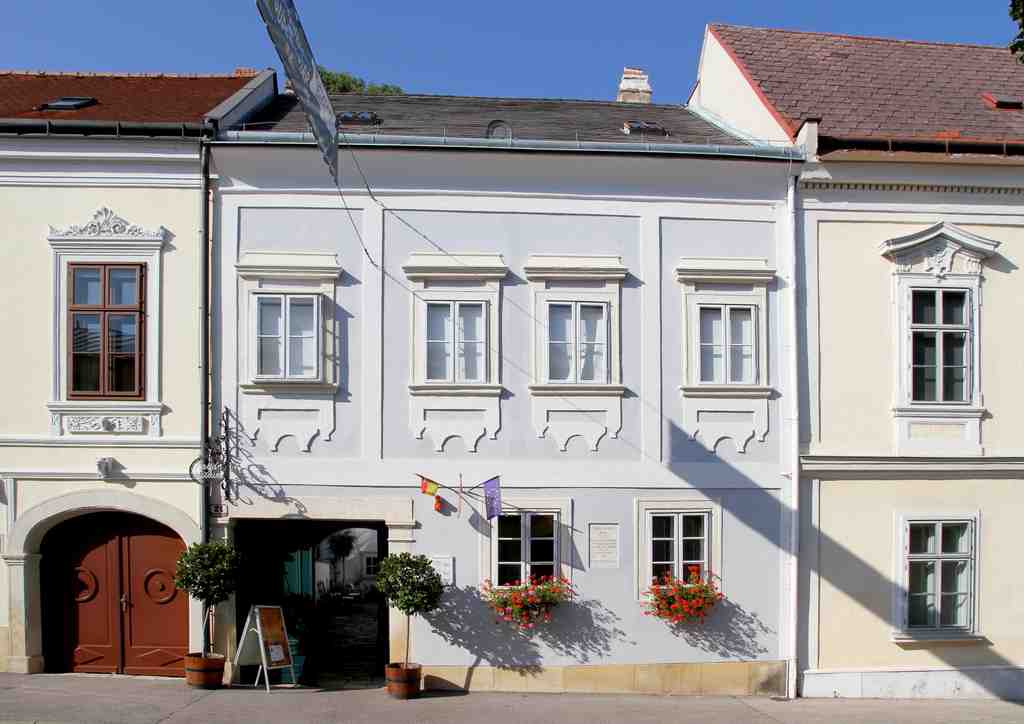
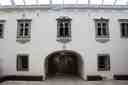
Haydn House EisenstadtPhoto: C.Stadler/Bwag, Wikimedia Commons, CC BY-SA 3.0. Cropped & resized. Look for the light gray two-story house with a low gabled roof, four front windows set in a neat row, and a broad arched gate edged with simple white baroque plaster.
This is Haydn’s house and neighborhood... one of the rare places where Joseph Haydn stops being a famous name and turns back into a resident with neighbors, bills, and rooms to maintain. The same Joseph Haydn who solved musical problems for church and court also had to manage a household here, which is honestly much less glamorous and much more revealing.
The house itself is older than Haydn. A Gothic window uncovered inside points back to the sixteenth century, and the date seventeen forty-seven on the cellar entrance marks the last major rebuilding before he arrived. In seventeen sixty-six, Haydn bought the property from a widow. She stayed on in the ground floor until she died in seventeen sixty-seven, and only then did the house fully become his. After that, some of his students moved in downstairs, while Haydn and his wife, Maria Anna Theresia, lived in five rooms on the upper floor.
Through that big gate, there’s a small courtyard, and behind the front house later wings run back toward where the old city wall once stood. So this was not some isolated shrine to genius. It was a working town property, tucked into the daily life of Eisenstadt.
And yes, genius did not cancel installment payments. Haydn bought the house on credit, and when the widow died and the remaining balance suddenly came due, he had to ask his Esterházy employer for a loan. Even great composers sometimes need help with the mortgage.
Then came fire... twice. City fires damaged the house in seventeen sixty-eight and again in seventeen seventy-six, part of that recurring local pattern where whole lives could be rewritten in a few brutal hours. After the second fire, someone compiled an inventory of what had been lost: furniture, household goods, the ordinary things that make a life feel solid until they vanish. If strangers had to rebuild your life from a list of ruined belongings alone, what would they learn about you?
That inventory later became strangely precious. When restorers worked here from two thousand and eight onward, they peeled back twenty-six layers of paint and uncovered Haydn-era wall decoration in three of the original five rooms. The fire-loss records helped them reconstruct the interior with unusual honesty, not as a legend, but as a home recovering itself. If you want a quick glimpse of that domestic world, have a look at the kitchen image in the app. And if you’re curious how this modest facade shifted from ordinary street house to museum front, the before-and-after image is worth a glance.
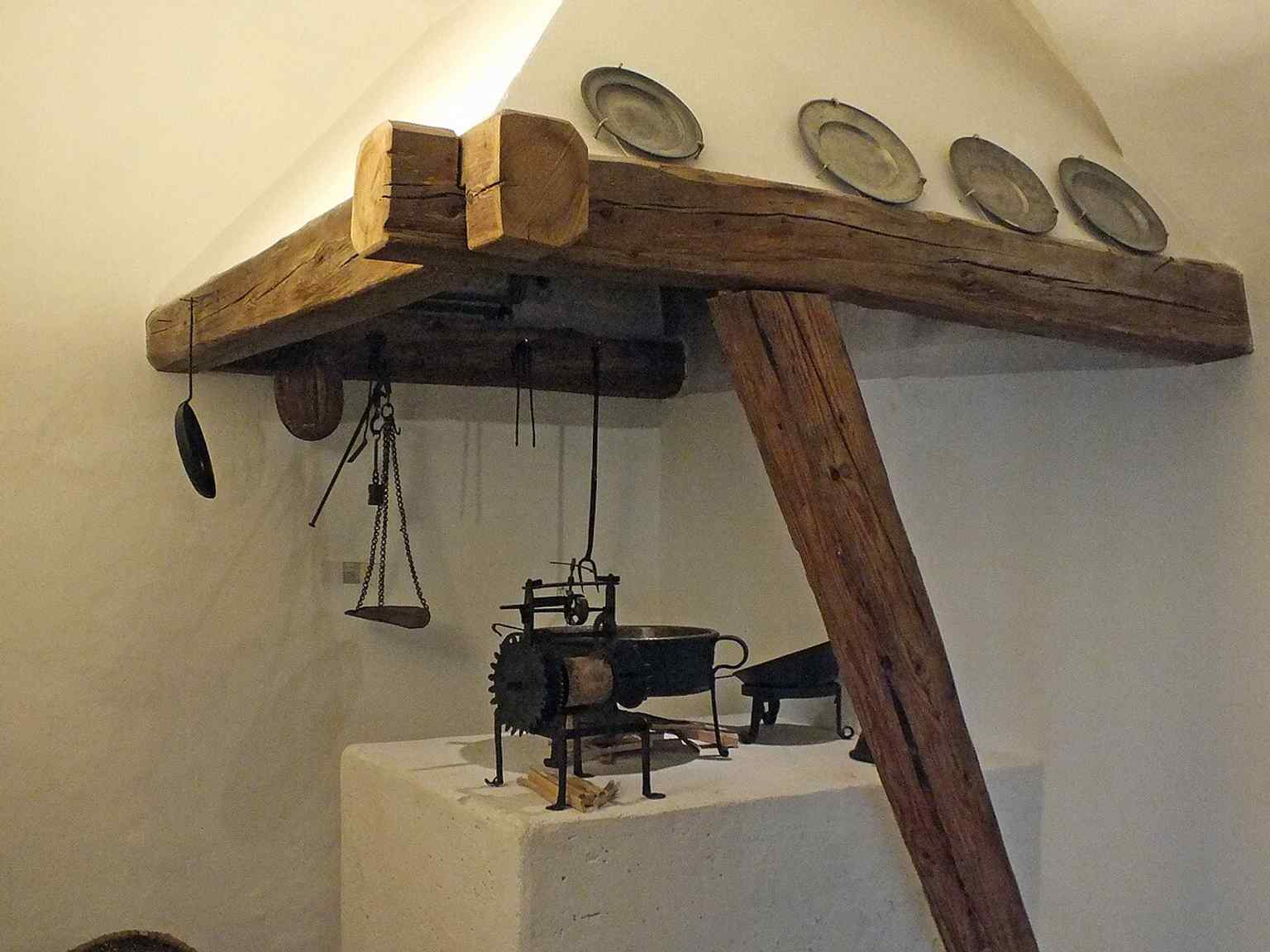
Haydn’s kitchen room, evoking the everyday domestic life that the museum reconstructs from the composer’s time.Photo: Martin Geisler, Wikimedia Commons, CC BY-SA 4.0. Cropped & resized. Inside, the museum leans into private life: original portraits, letters, music manuscripts, and even an Anton Walter hammerflügel from around seventeen eighty. It also gives Maria Anna Theresia more than a polite cameo, which is only fair.
For all the grandeur attached to Joseph Haydn, he becomes most vivid here through damage lists, repairs, and household arrangements... fame on one floor, practical survival on the other. When you’re ready, continue to Esterházy Palace, about a five-minute walk away; if you want to come back inside later, the museum is closed on Monday, open from nine to five Tuesday through Friday, and ten to five on weekends.
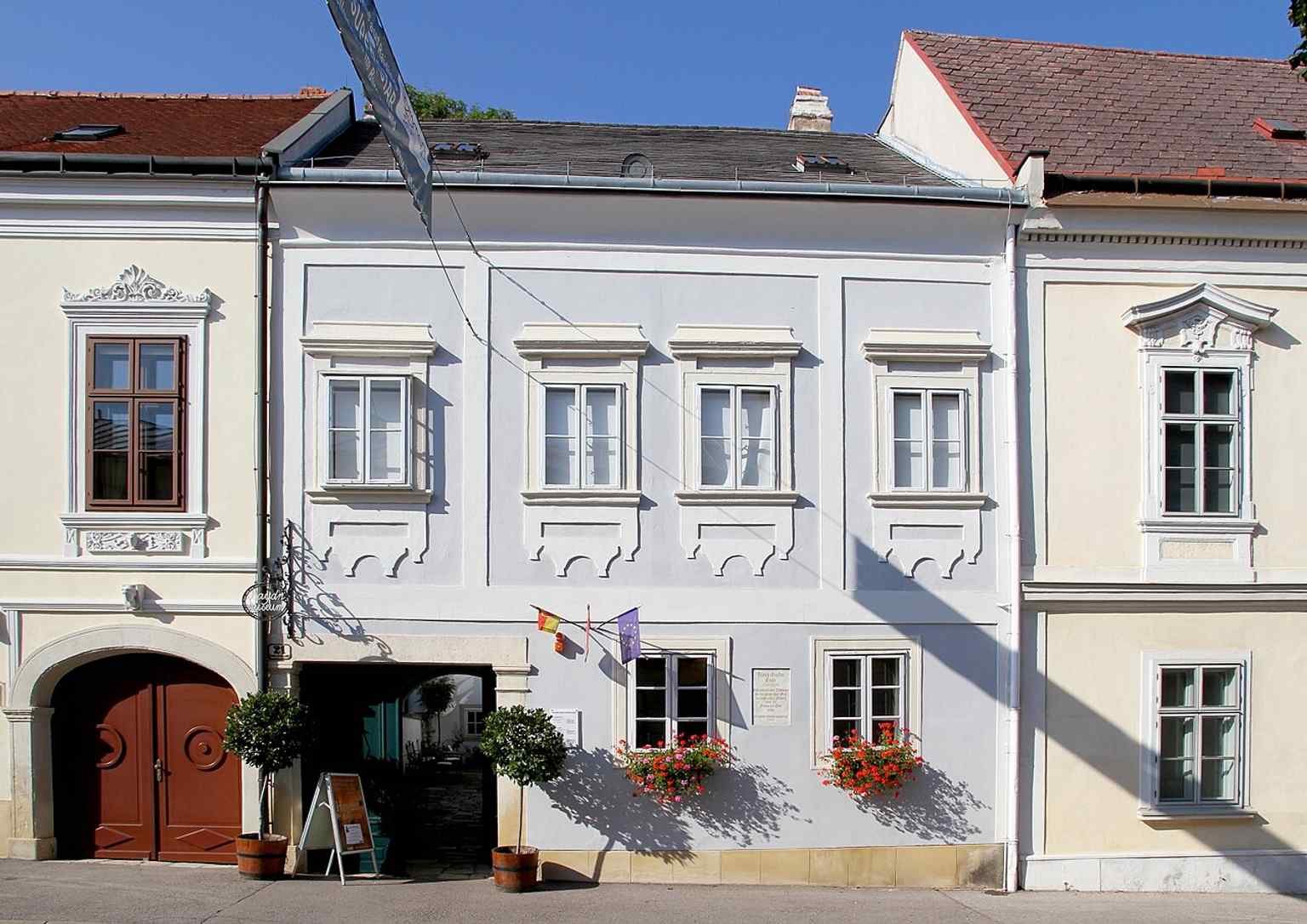
The listed facade of Haydn House on Joseph Haydn Gasse, where Joseph Haydn lived from 1766 to 1778 and later received a museum dedication.Photo: C.Stadler/Bwag, Wikimedia Commons, CC BY-SA 3.0. Cropped & resized. 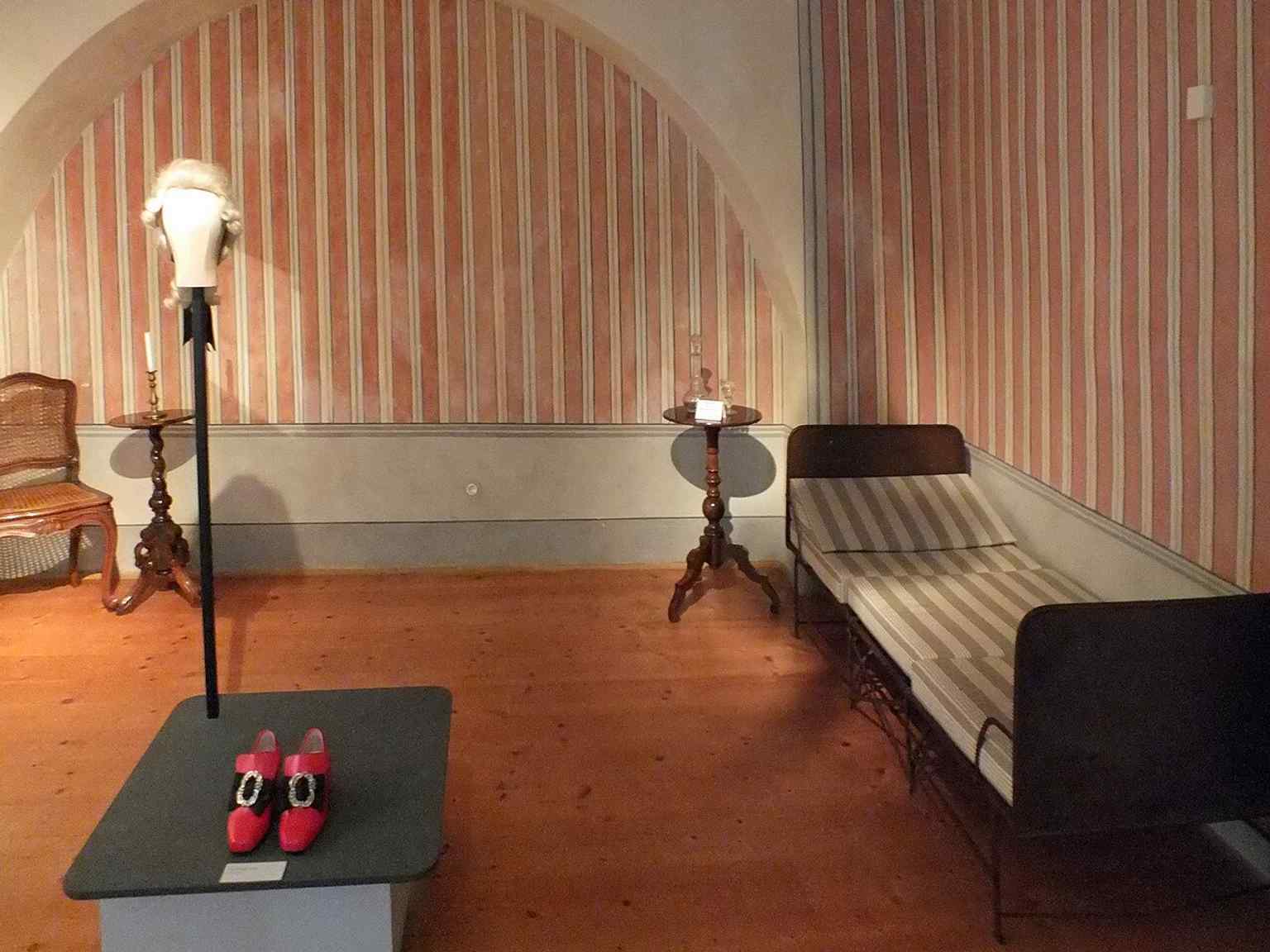
The bedroom in Haydn House, part of the reconstructed living rooms where Haydn and his wife lived on the upper floor.Photo: Martin Geisler, Wikimedia Commons, CC BY-SA 4.0. Cropped & resized. 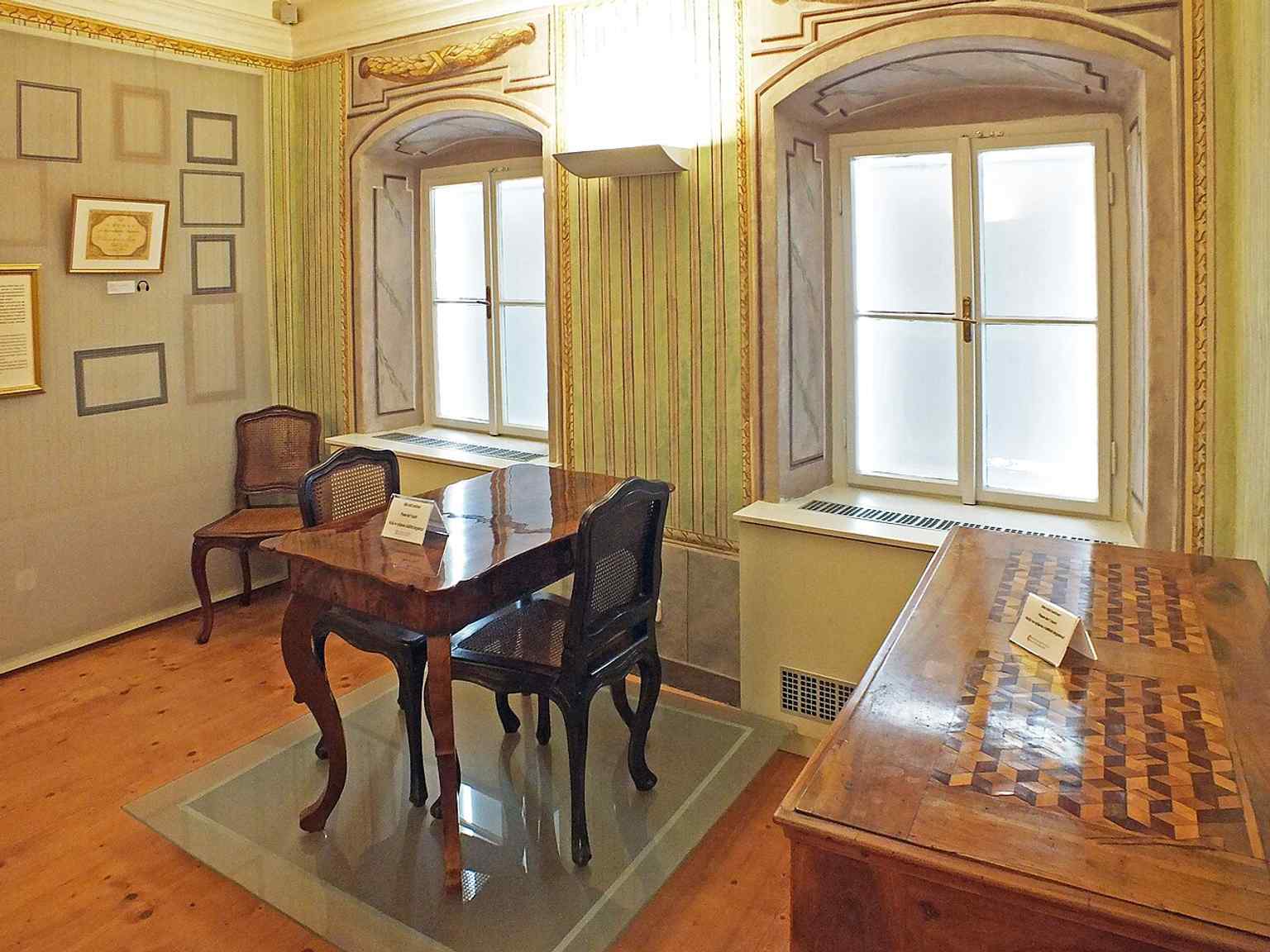
A furnished living room from the museum presentation, showing the restored domestic atmosphere based on Haydn-era wall paintings and furniture.Photo: Martin Geisler, Wikimedia Commons, CC BY-SA 4.0. Cropped & resized. On your right rises a pale stucco palace with a long, symmetrical façade, corner towers, and the Esterházy coat of arms above the entrance. This was Eisenstadt’s power center...…Read moreShow less
Open dedicated page →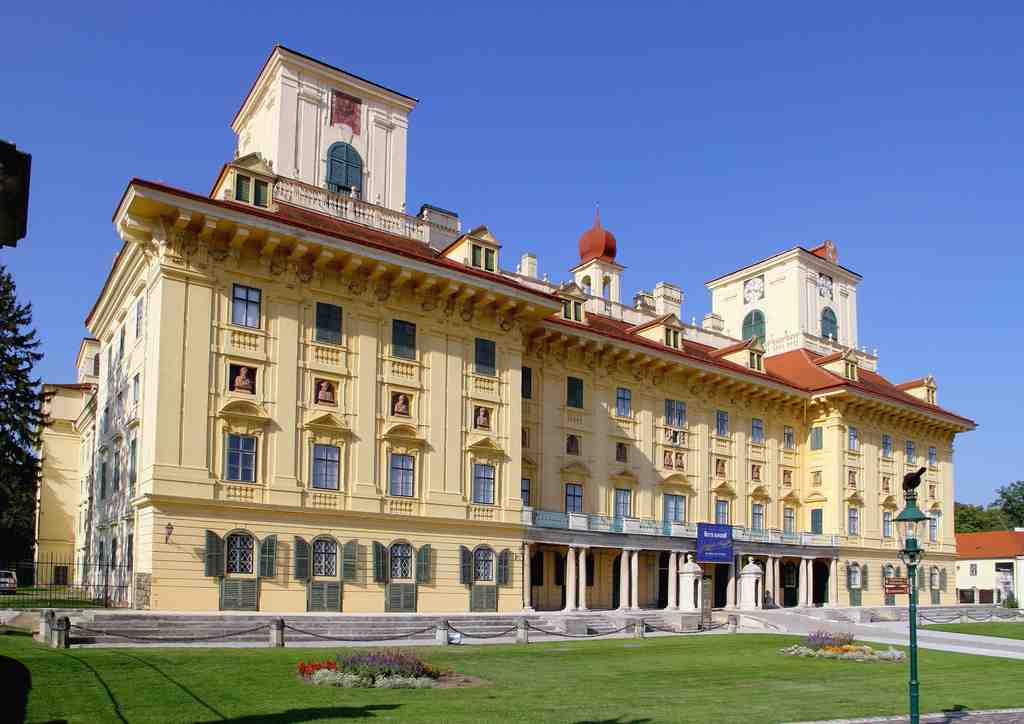
Esterházy Palace (Eisenstadt)Photo: C.Stadler/Bwag, Wikimedia Commons, CC BY-SA 3.0. Cropped & resized. On your right rises a pale stucco palace with a long, symmetrical façade, corner towers, and the Esterházy coat of arms above the entrance.
This was Eisenstadt’s power center... the place where rank, money, taste, and ceremony radiated outward into the streets, churches, and houses around you. If the town hall expressed civic pride and the churches claimed spiritual ground, this palace answered with aristocratic scale. Nobility rarely whispers.
The story starts as a Gothic fortress in the thirteenth century. First the Gutk family held it, then the Kanizsay family enlarged it, and with permission from King Louis the Great they folded it into Eisenstadt’s defensive wall. So this elegant frontage began life as something much grimmer: a stronghold with a moat, part residence, part warning.
Everything changed in the seventeenth century. In sixteen twenty-two, Nikolaus Esterházy gained the castle in a political exchange after the Peace of Nikolsburg. Then his son Ladislaus bought it outright from Emperor Ferdinand the Third in sixteen forty-nine, and the estate has remained in Esterházy hands ever since. That continuity matters. It meant one family could keep reshaping not just a building, but the city around it.
After Ladislaus died, his brother Paul the First pushed hardest. Between sixteen sixty-three and sixteen seventy-two, he hired Carlo Martino Carlone to turn the old fortress into a Baroque palace fit for rising princely ambition. Stone masters from Kaisersteinbruch carved its details. Work slowed in sixteen eighty-three during the second Ottoman siege crisis, because history has a habit of interrupting architecture.
If you glance at the image on your screen, the aerial view shows something odd: the palace feels long, but not quite as vast as it wants to be. That is the ghost of another reinvention. From eighteen oh five to eighteen fifteen, Prince Nikolaus the Second brought in architect Charles de Moreau, with Karl Ehmann overseeing work, to refashion the palace in a classical style. Moreau planned a residence more than twice this size, with the grand approach from the garden side, a columned portico, and a sala terrena, a ground-floor passage hall open to arrival and display. Then Napoleonic troops occupied Eisenstadt, money ran thin, and the dream stopped half-finished. Even princes meet a budget eventually.
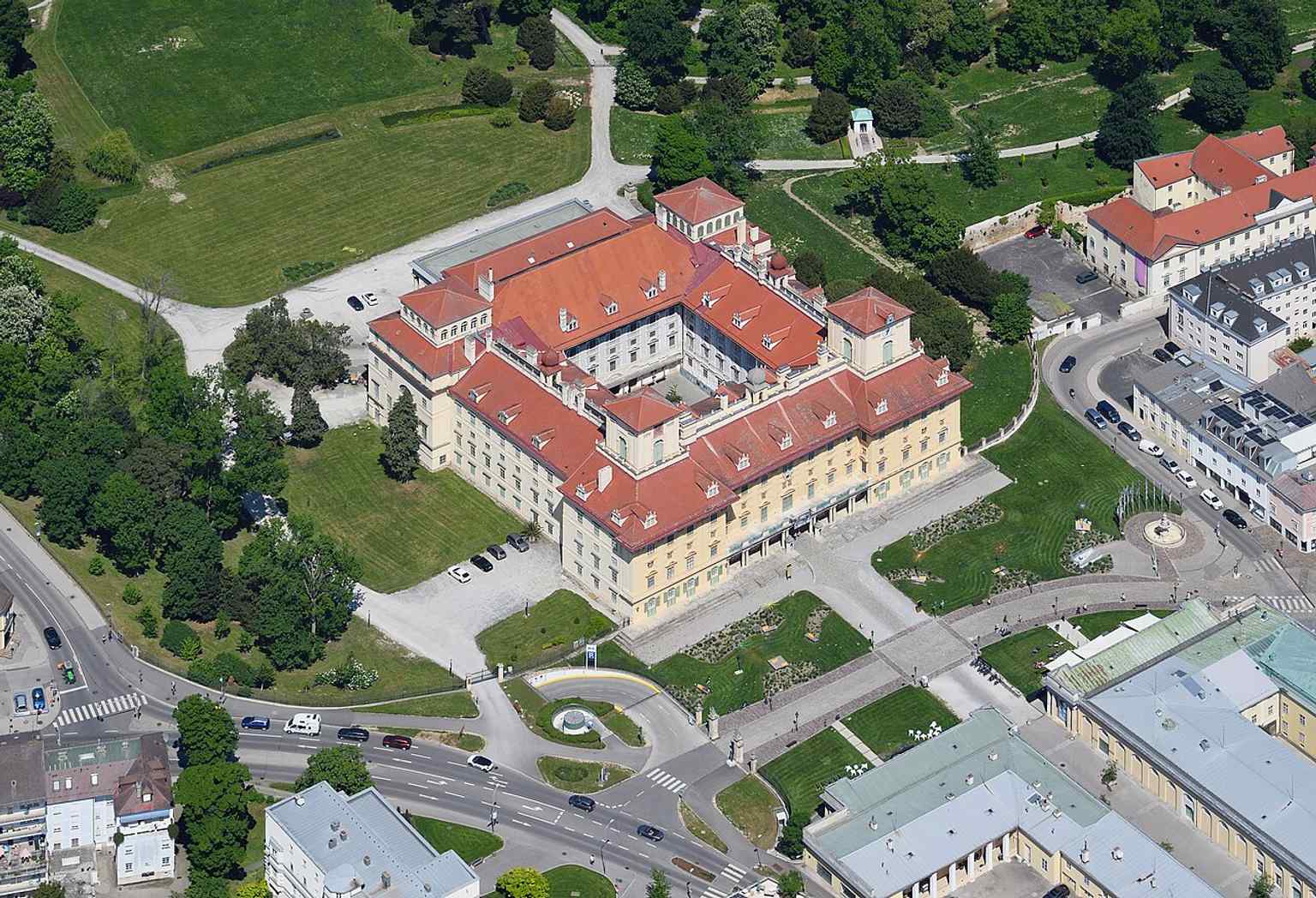
A clear aerial view from the south showing the palace and its long classical footprint, shaped by the unfinished 19th-century redesign.Photo: Carsten Steger, Wikimedia Commons, CC BY-SA 4.0. Cropped & resized. Inside, the palace became one of Europe’s musical engines. Joseph Haydn served the Esterházy court from seventeen sixty-one to eighteen oh three, and the great hall you can see in the app became today’s Haydn Hall, still used for concerts. So this was never just a home. It was a machine for prestige, performance, and patronage.
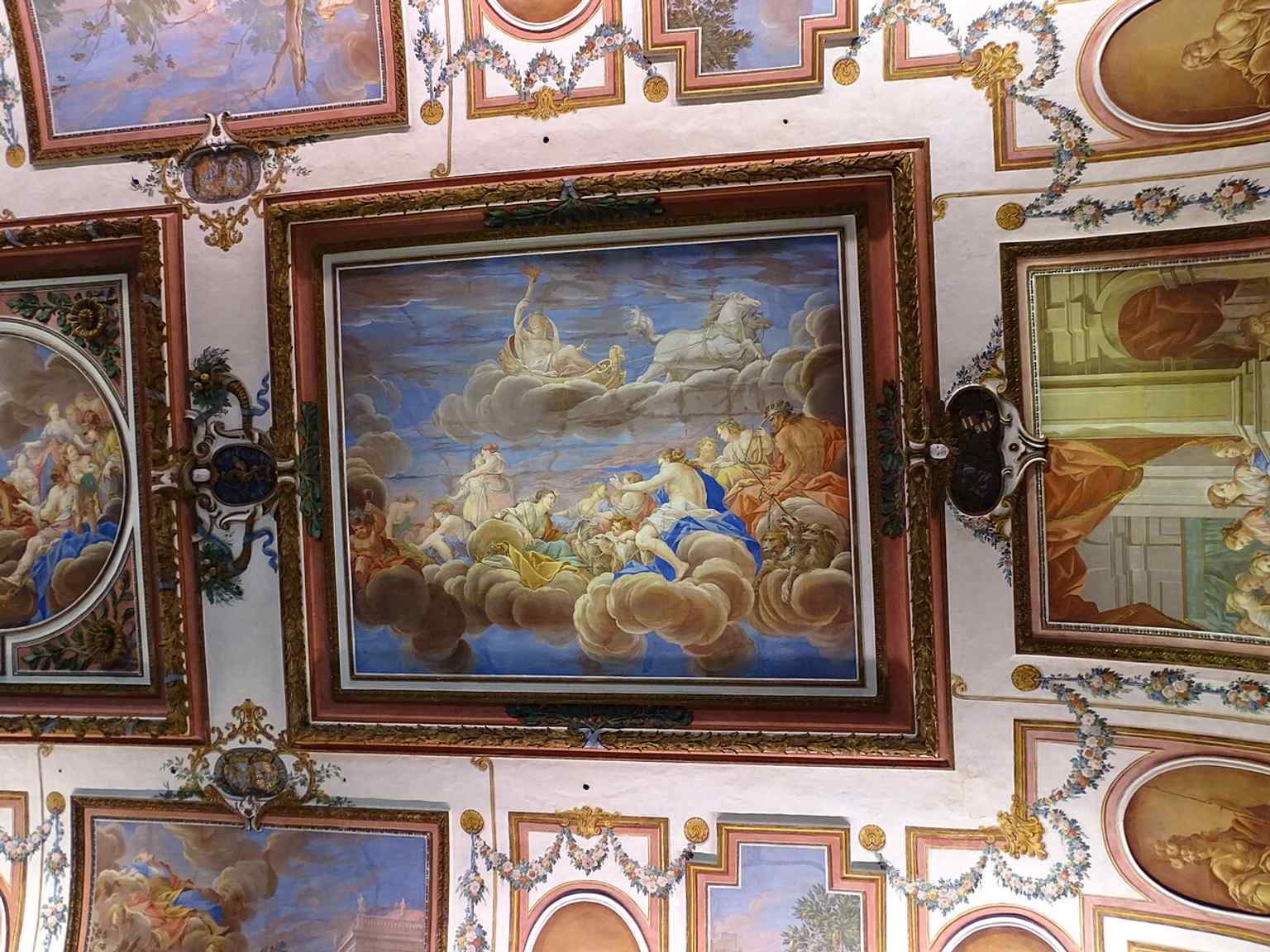
The Haydn Hall ceiling, in the concert room once known as the Great Hall, now central to the palace’s music life.Photo: Liuthalas, Wikimedia Commons, CC BY-SA 4.0. Cropped & resized. In the twentieth century, war and politics changed its use again, and Melinda Esterházy later helped place the family heritage into private foundations so it would stay intact and publicly accessible. The palace kept adapting, right down to major roof and tower restoration completed in twenty twenty-one.
To understand Eisenstadt’s skyline, you have to ask who had the power to redraw it. Next, in about three minutes, we’ll meet a very different answer at the Church of the Resurrection. If you plan to go inside here later, the palace is open daily from ten to four.
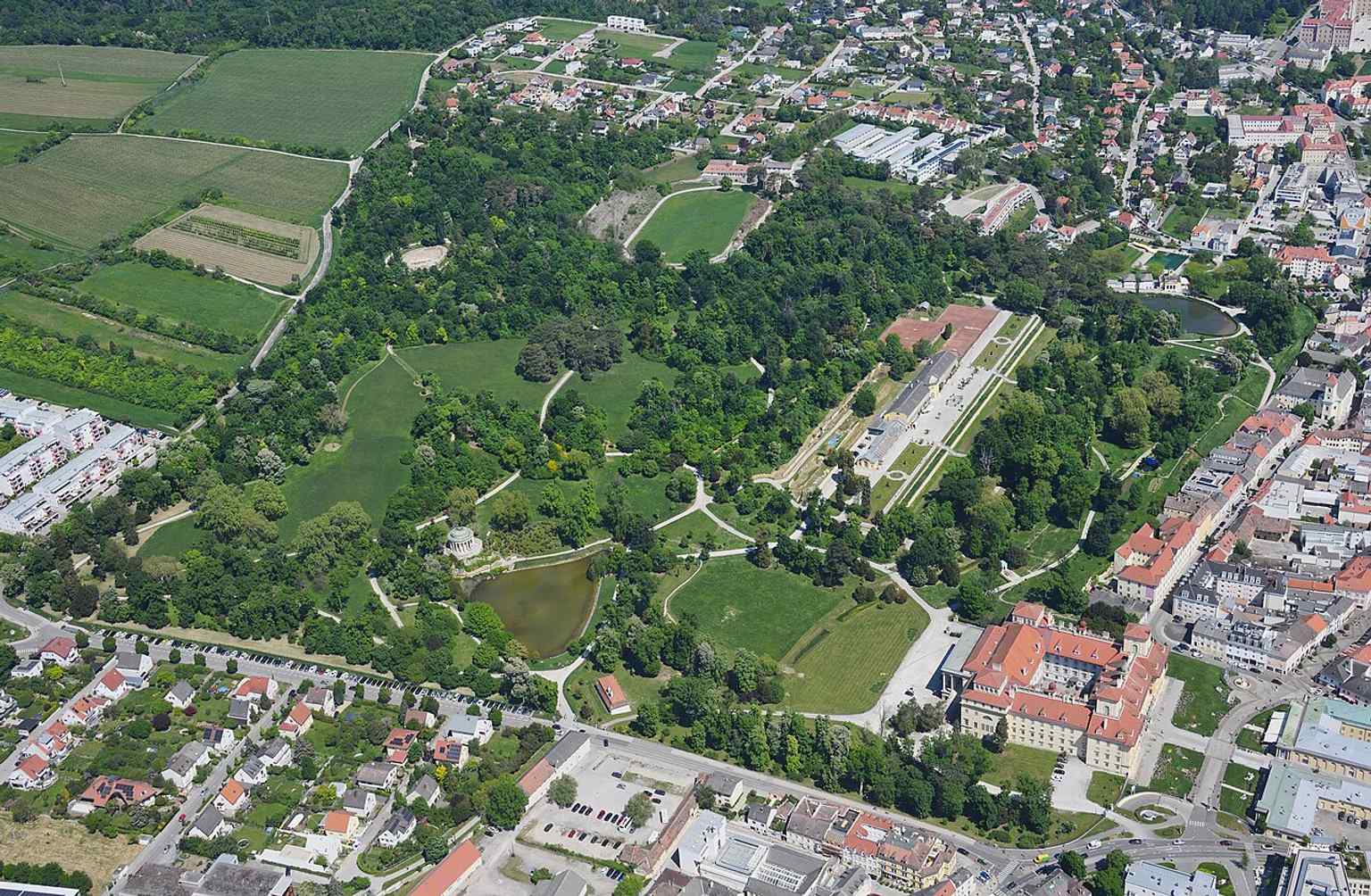
The castle park from above, highlighting the 50-hectare landscape garden that became one of Eisenstadt’s green landmarks.Photo: Carsten Steger, Wikimedia Commons, CC BY-SA 4.0. Cropped & resized. 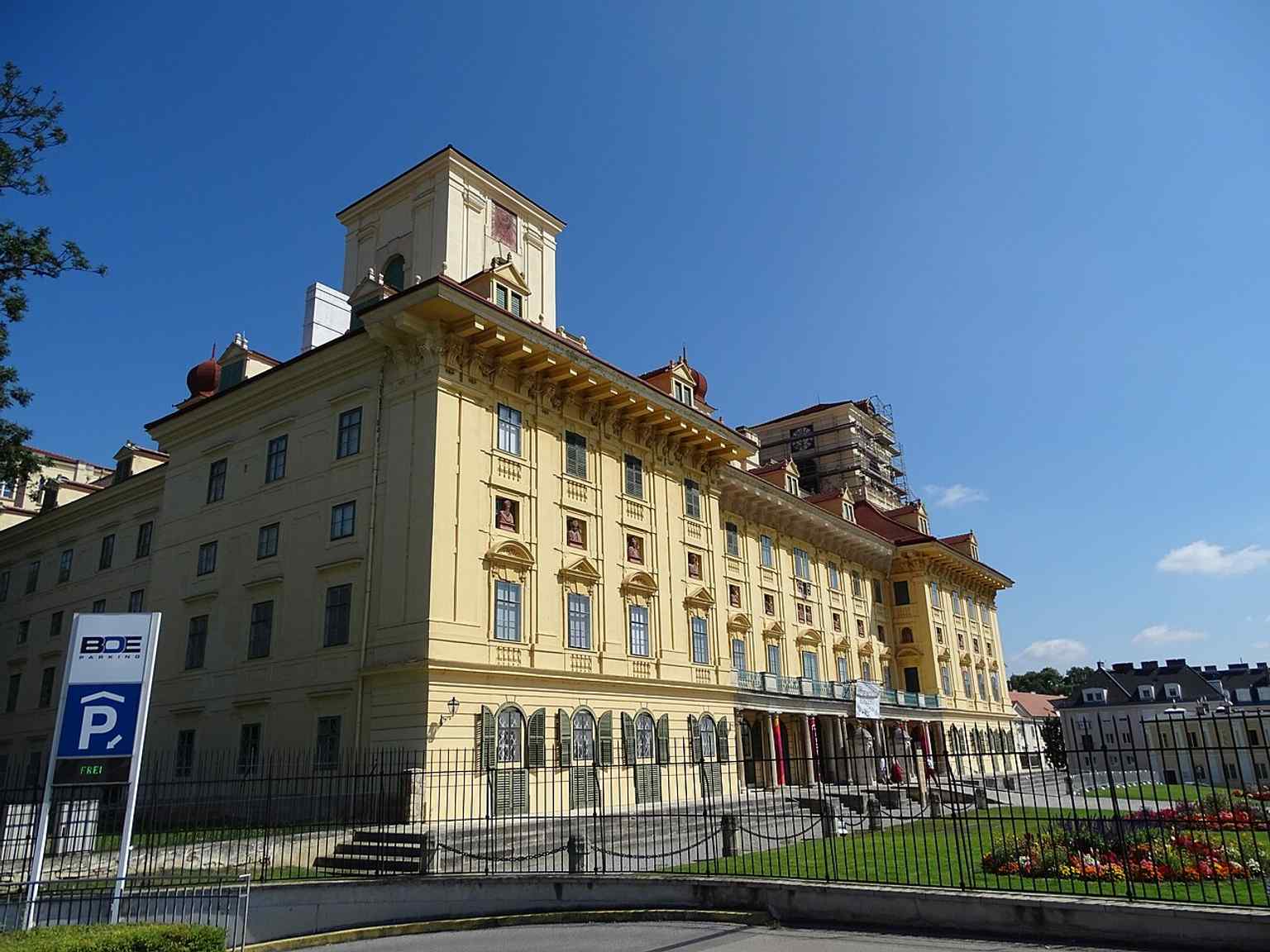
The main front toward Schlossplatz, where the palace presents its formal urban face after centuries of rebuilding.Photo: Liuthalas, Wikimedia Commons, CC BY-SA 4.0. Cropped & resized. 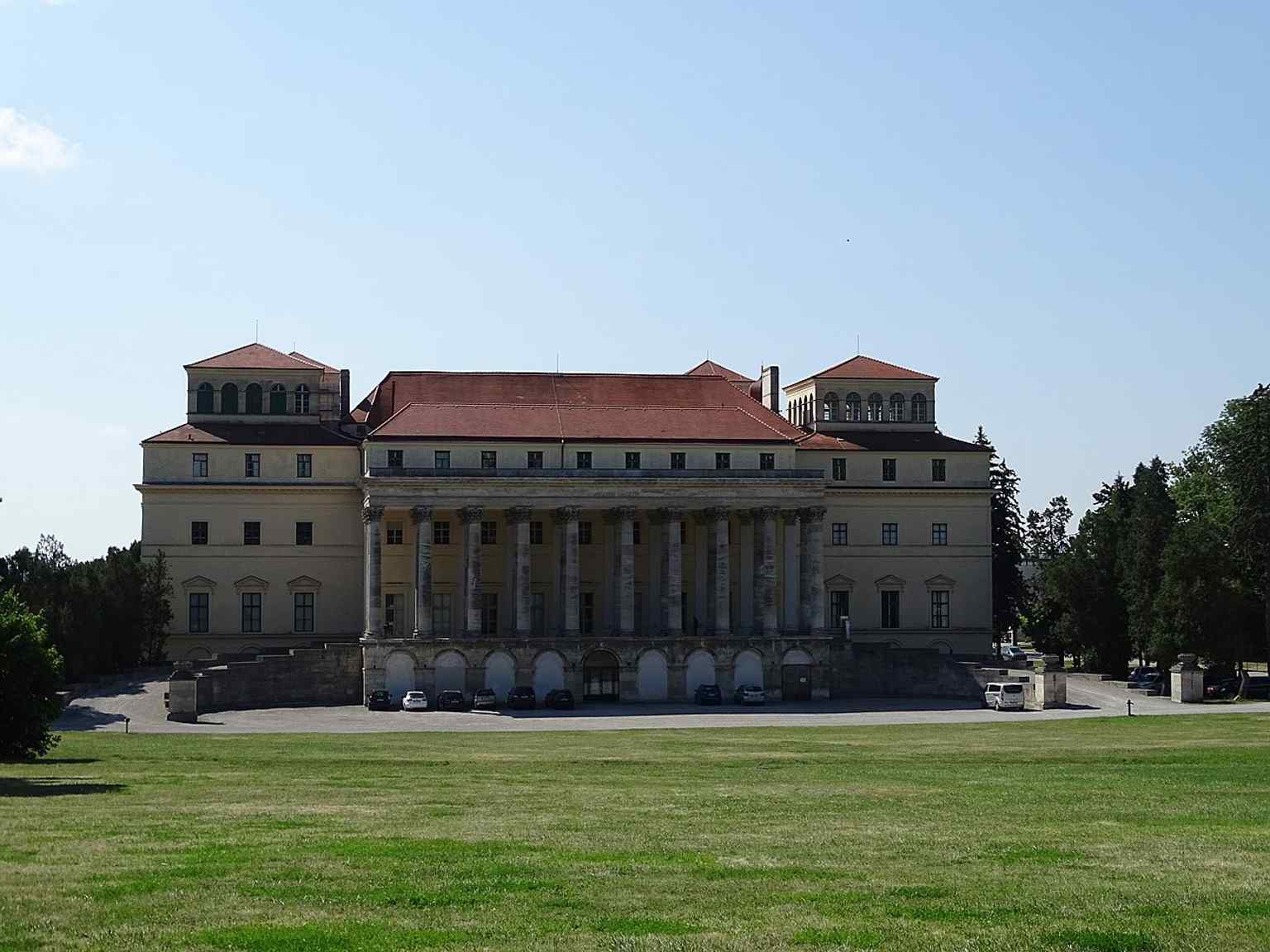
The park side of the palace, reflecting Moreau’s idea that the grand representative entrance should face the garden.Photo: Liuthalas, Wikimedia Commons, CC BY-SA 4.0. Cropped & resized. 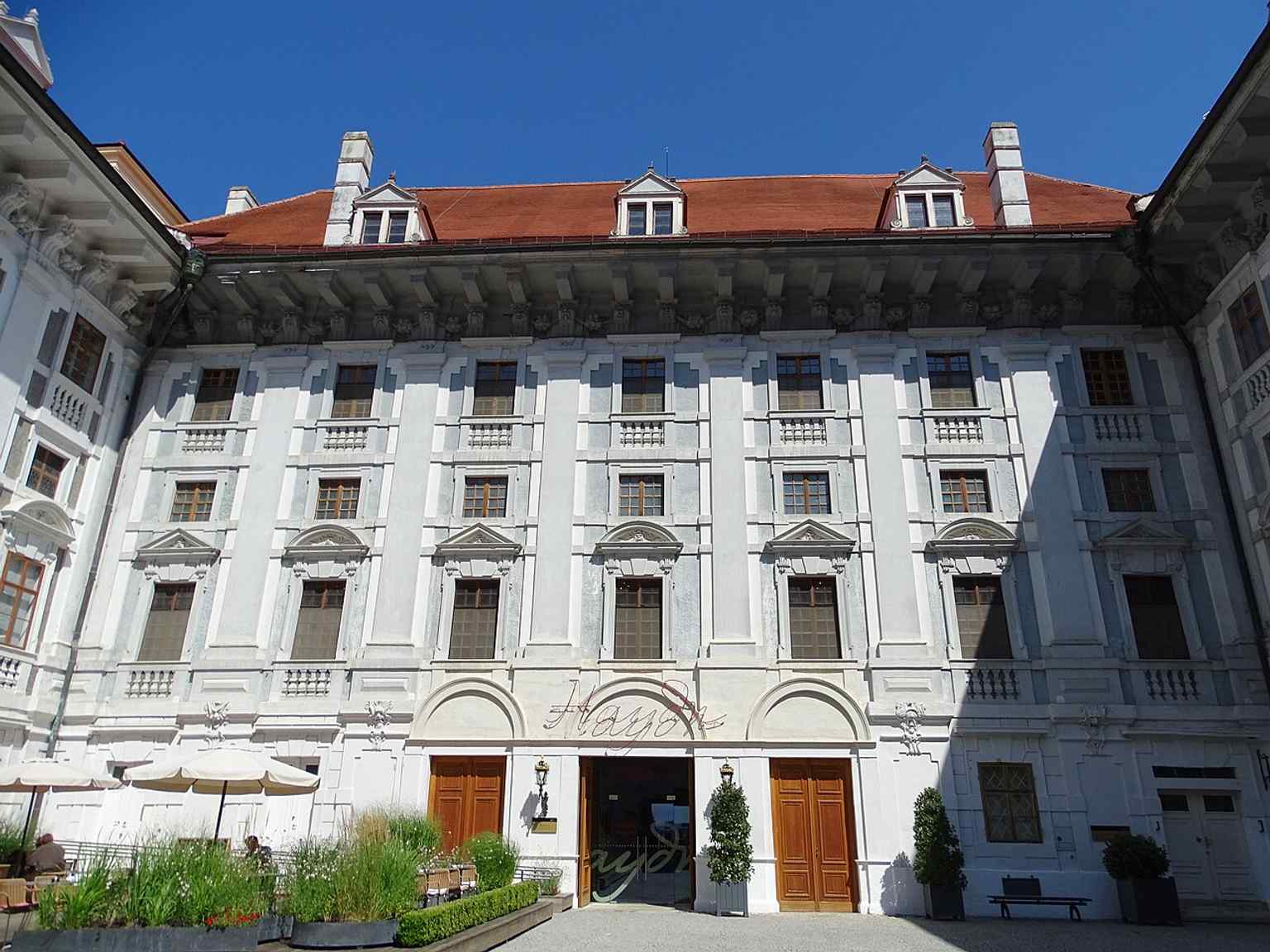
The inner courtyard reveals the layered palace complex, where baroque and later classical elements meet.Photo: Liuthalas, Wikimedia Commons, CC BY-SA 4.0. Cropped & resized. 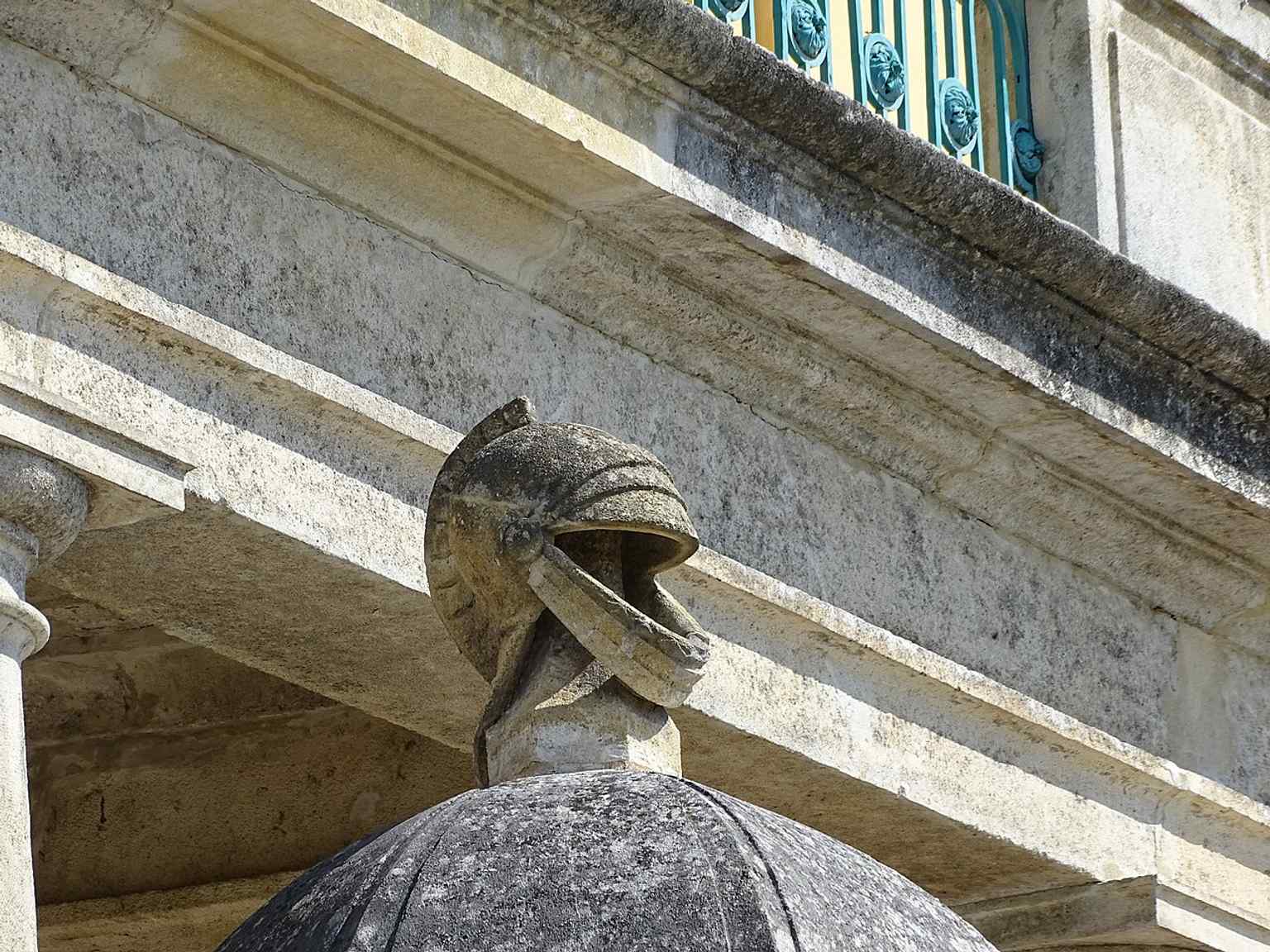
A watchhouse at the entrance, a reminder that the estate includes not just the palace but also its service and gate structures.Photo: Liuthalas, Wikimedia Commons, CC BY-SA 4.0. Cropped & resized. 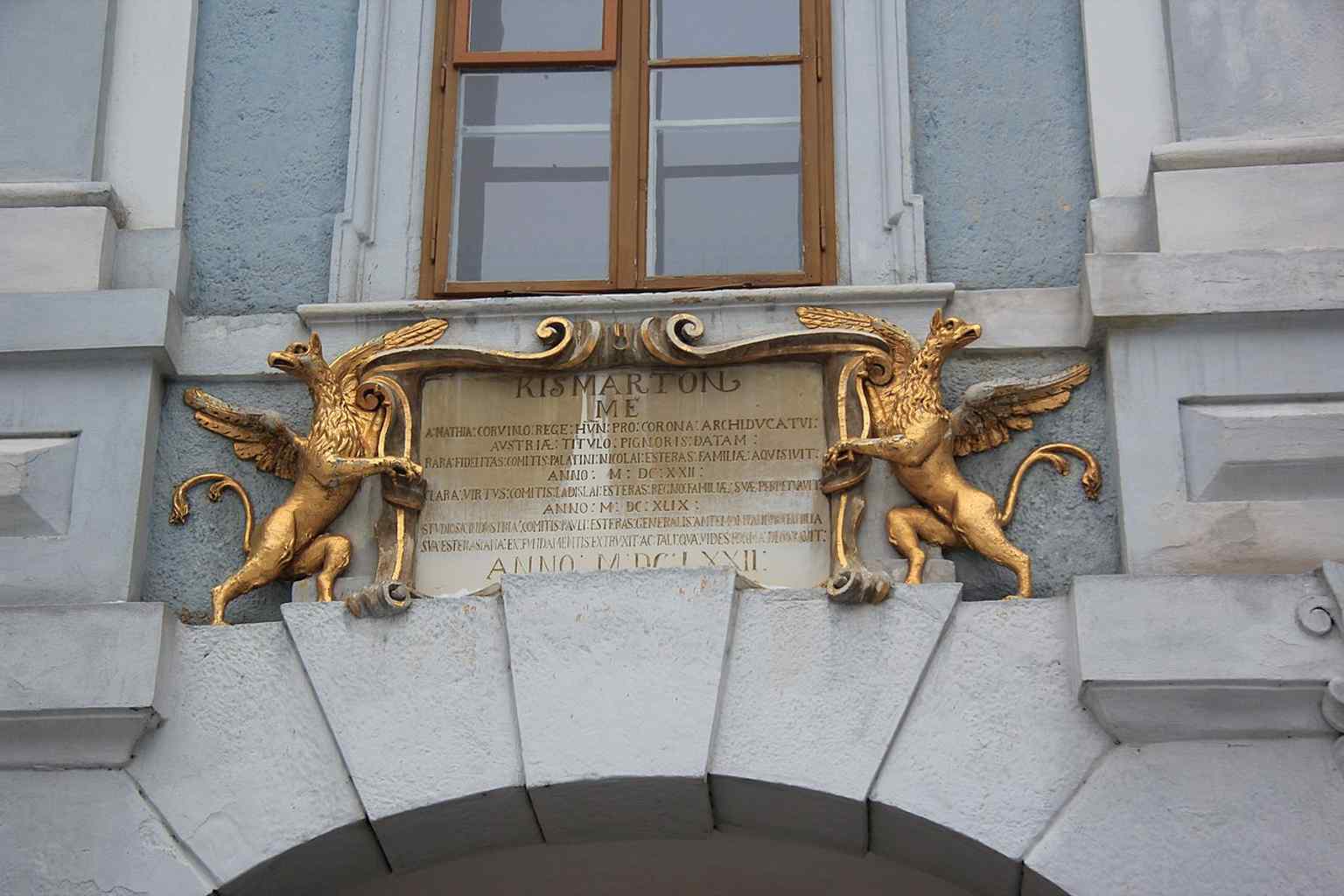
The coat of arms above the entrance underscores the Esterházy family’s long, continuous ownership since the 17th century.Photo: Karl Gruber, Wikimedia Commons, CC BY 3.0 at. Cropped & resized. 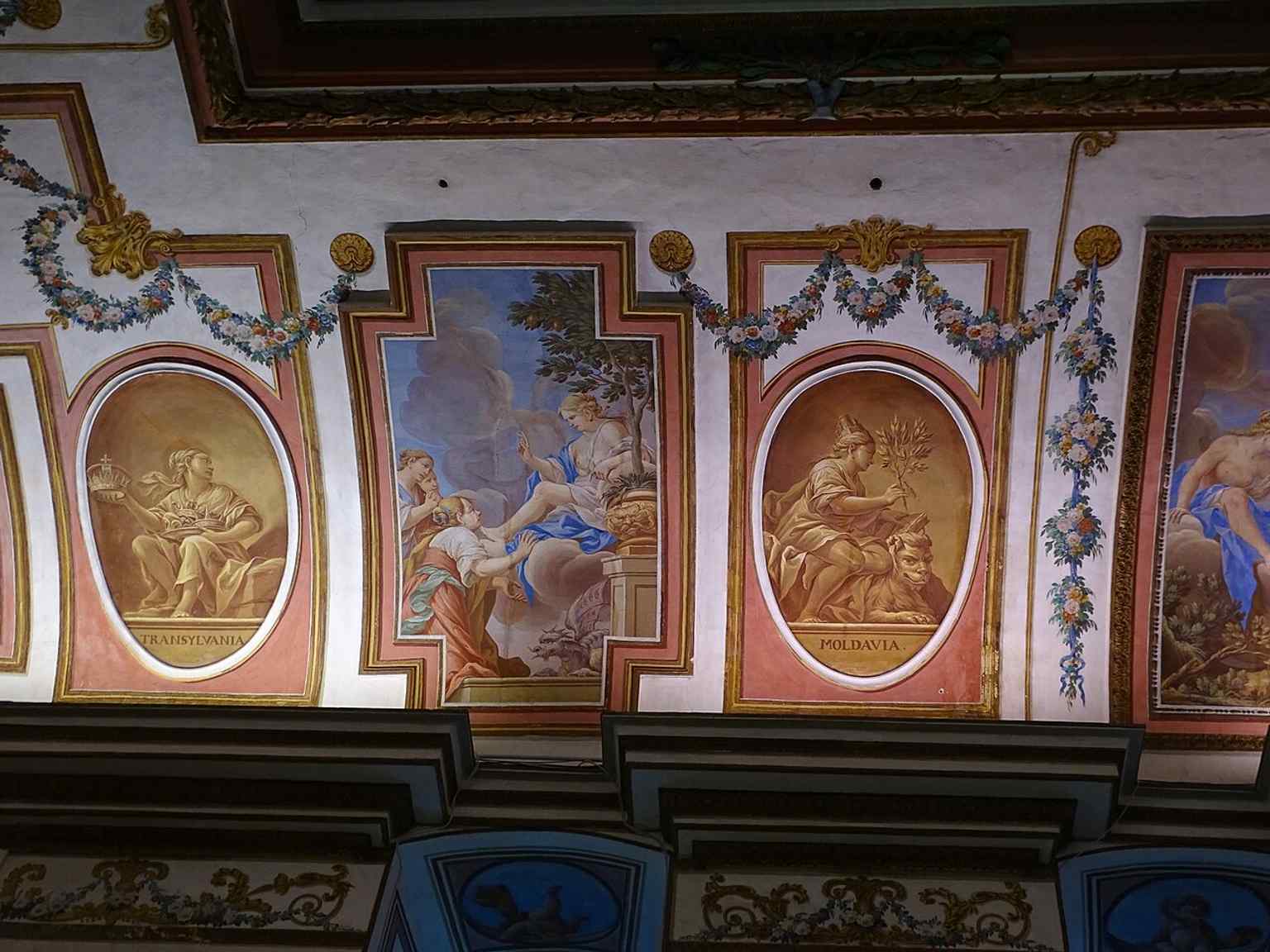
A ceiling detail in the Haydn Hall, linking the room’s decoration to the palace’s rich aristocratic and musical heritage.Photo: Liuthalas, Wikimedia Commons, CC BY-SA 4.0. Cropped & resized. 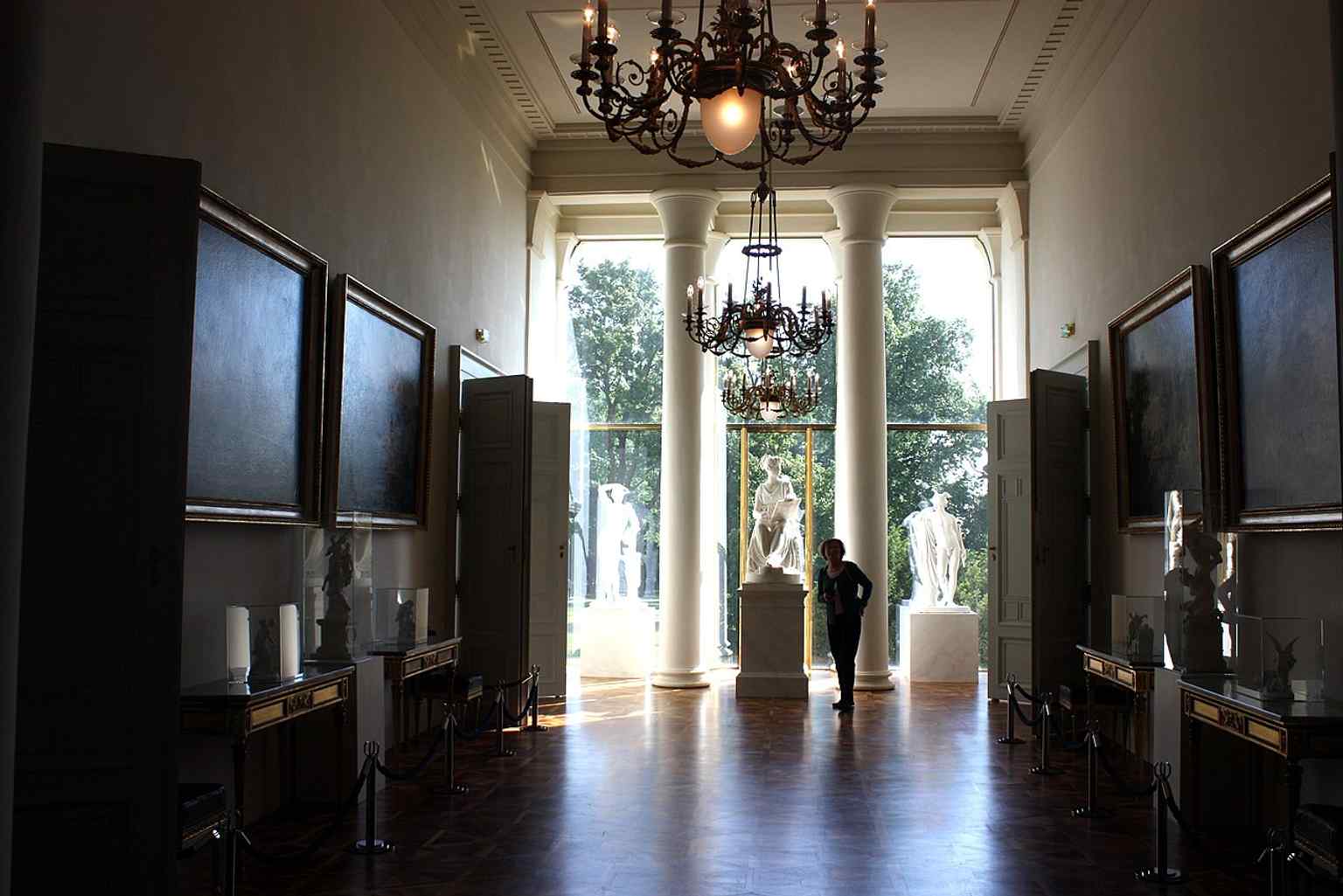
The passage hall shows how the palace’s circulation spaces were adapted during the classical redesign.Photo: Dguendel, Wikimedia Commons, CC BY 3.0. Cropped & resized. 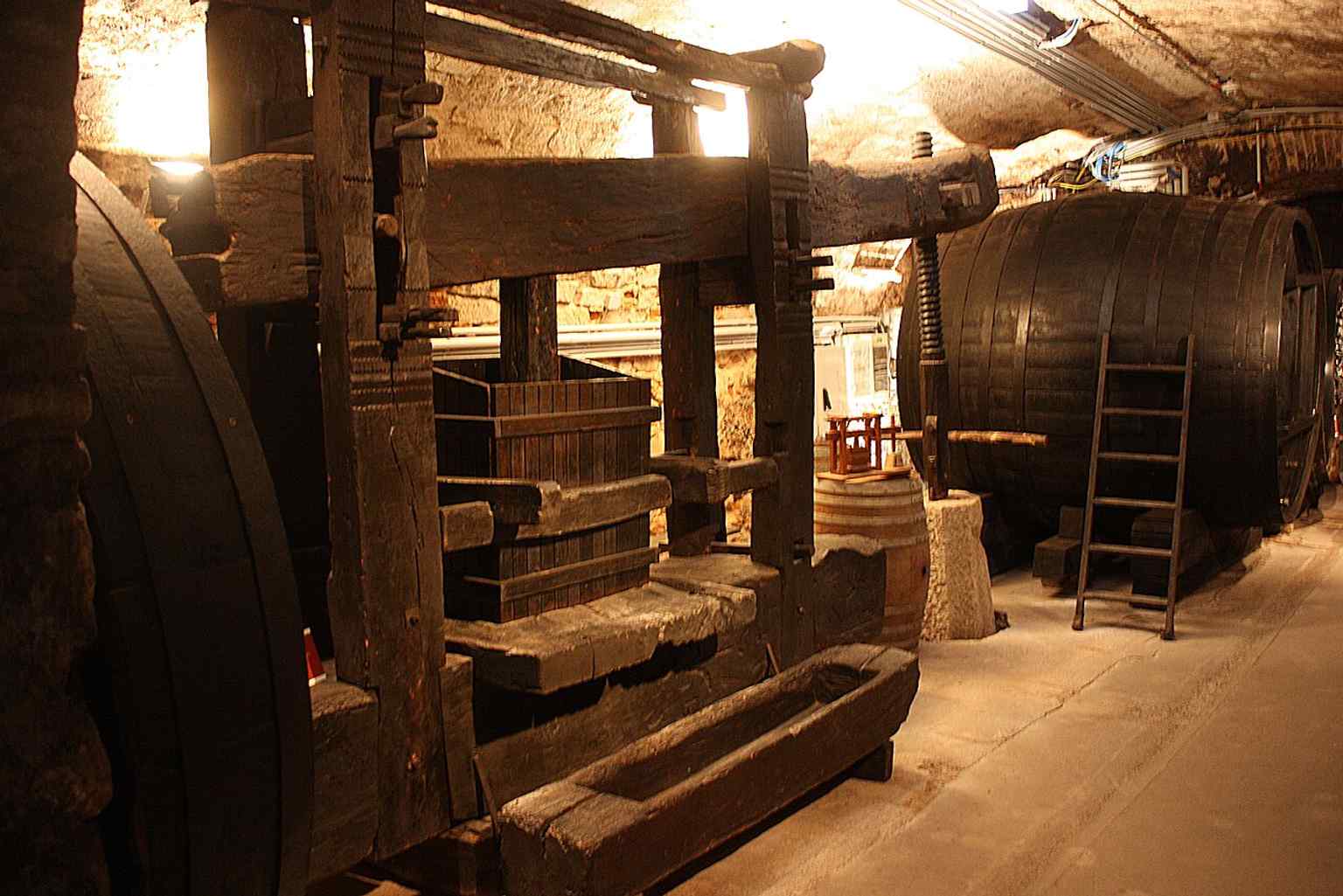
Inside the wine cellar, a nod to the palace’s exhibitions and the long regional tradition of wine culture.Photo: Dguendel, Wikimedia Commons, CC BY 3.0. Cropped & resized. 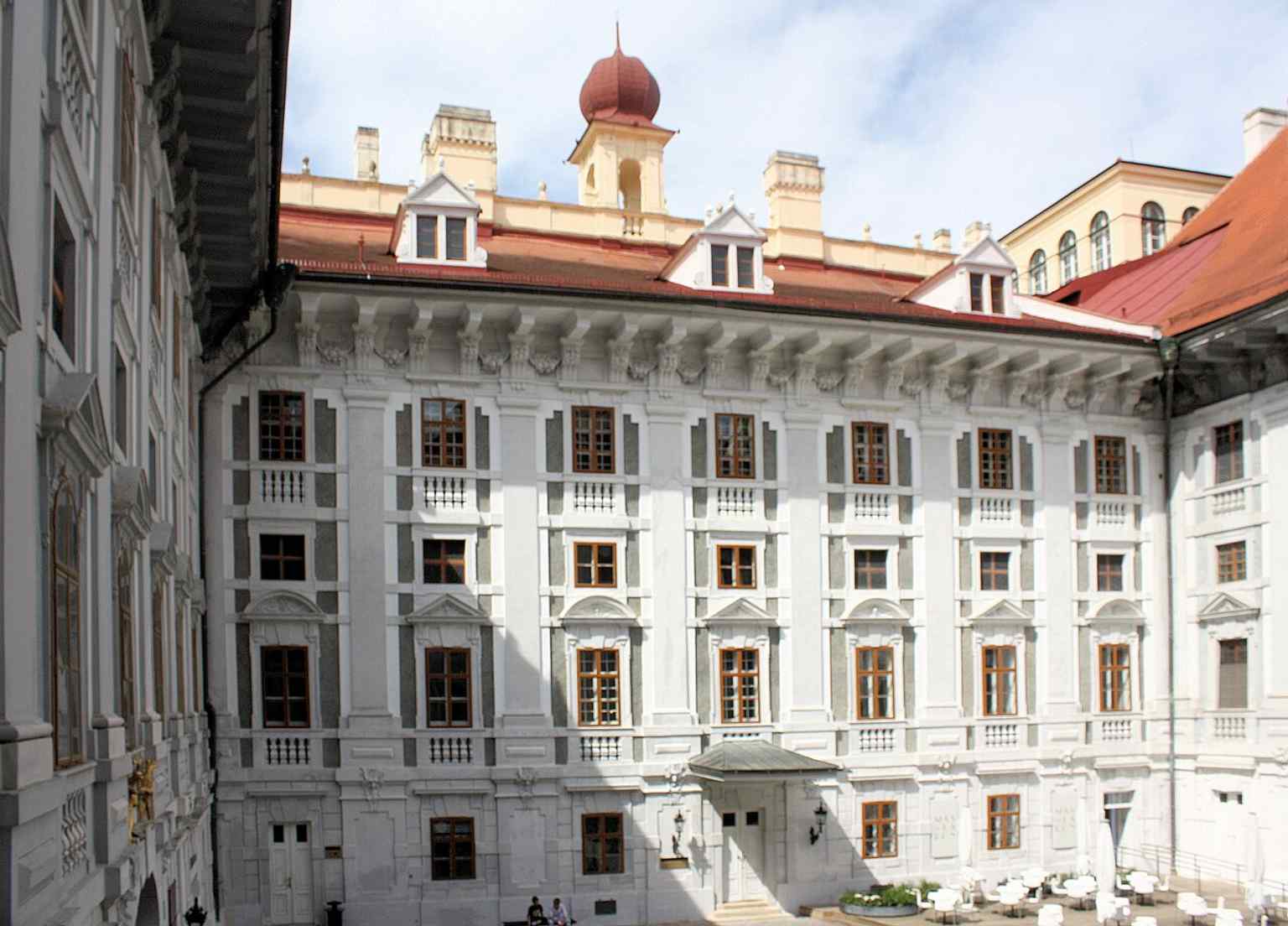
The courtyard perspective gives a sense of the palace as a lived-in complex rather than a single façade.Photo: Dguendel, Wikimedia Commons, CC BY 3.0. Cropped & resized. 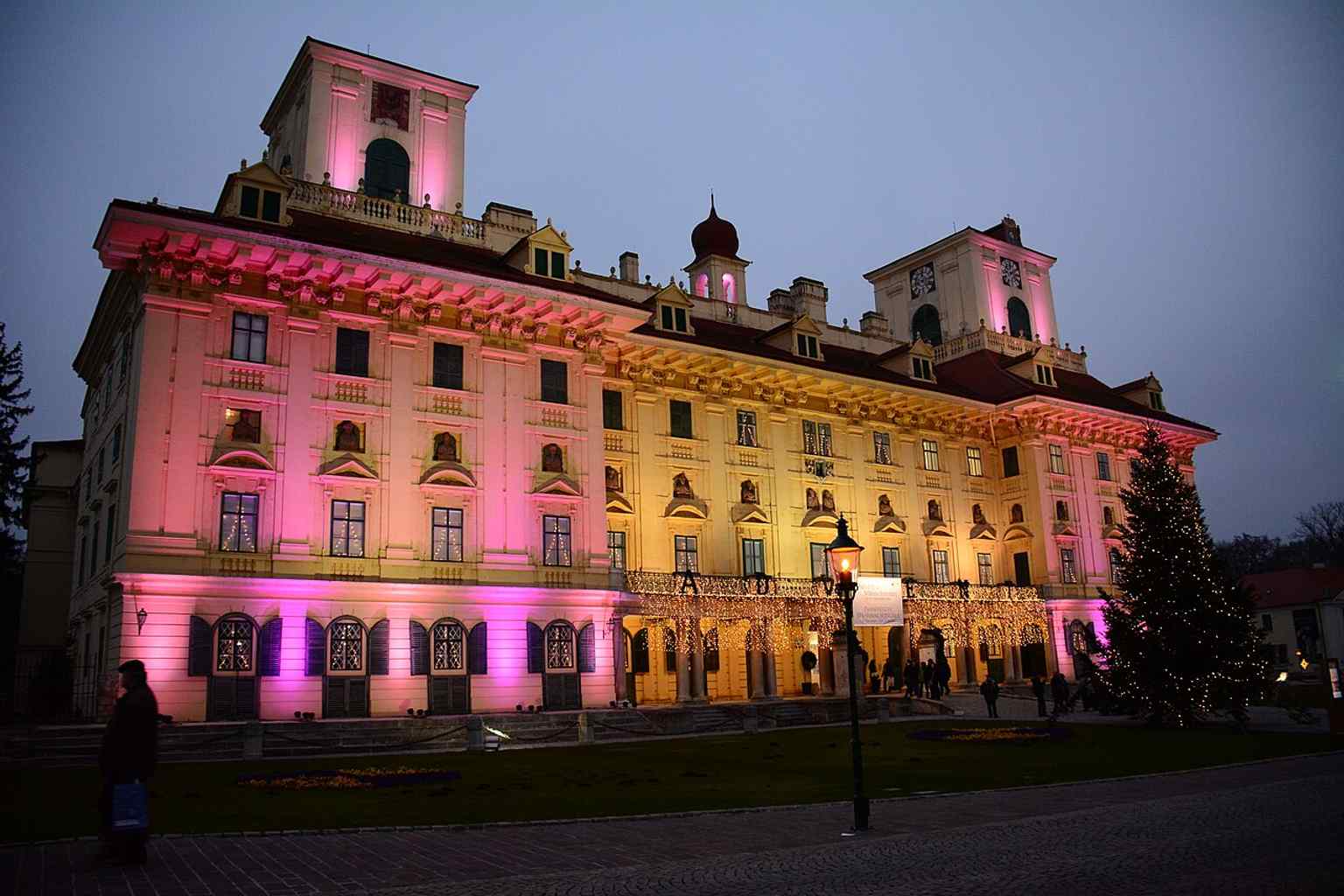
A broad 2013 view of the entire palace complex, useful for showing the scale of the Esterházy residence.Photo: GuentherZ, Wikimedia Commons, CC BY-SA 3.0 at. Cropped & resized. 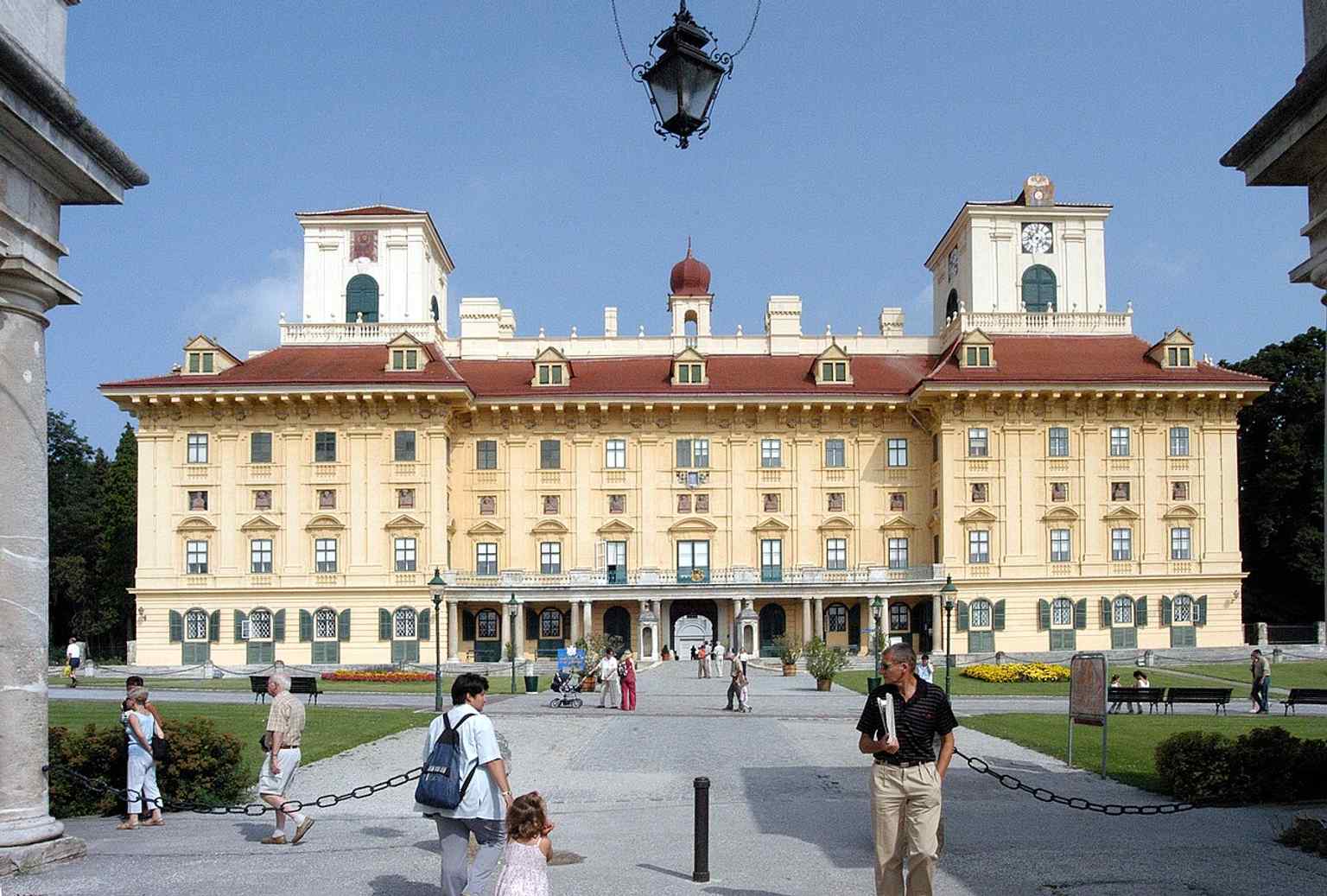
An earlier view from 2003, documenting the palace before the most recent restoration campaigns.Photo: Johann Jaritz, Wikimedia Commons, CC BY-SA 3.0. Cropped & resized. 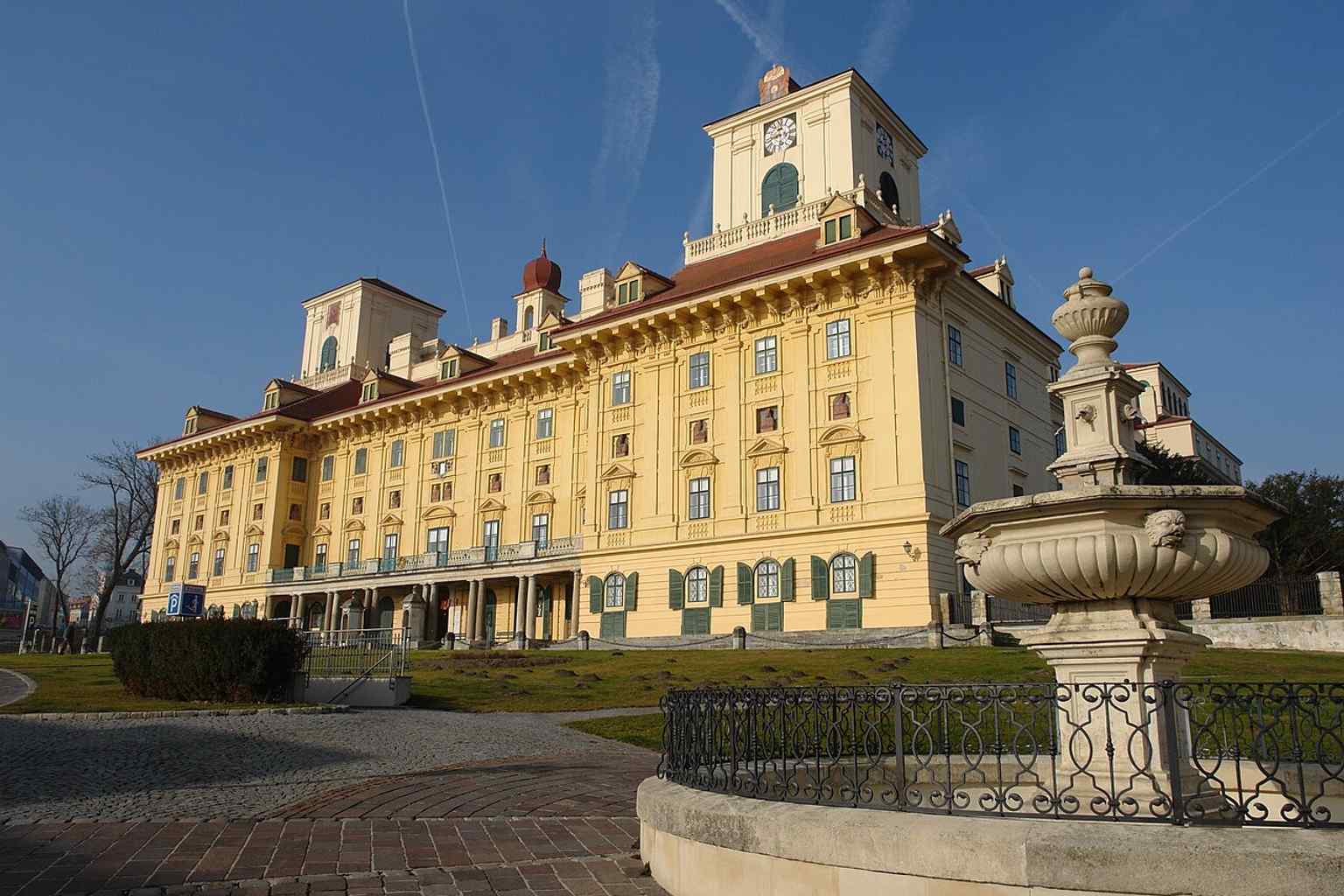
A historic-looking exterior view of Esterházy Palace in Eisenstadt, useful for showing the building’s enduring presence in the city.Photo: Thaler Tamas, Wikimedia Commons, CC BY-SA 3.0 at. Cropped & resized. On your left, look for a pale church with a simple rectangular body, a steep red-tiled roof, and a slender tower set between the church and the parsonage. This building matters…Read moreShow less
Open dedicated page →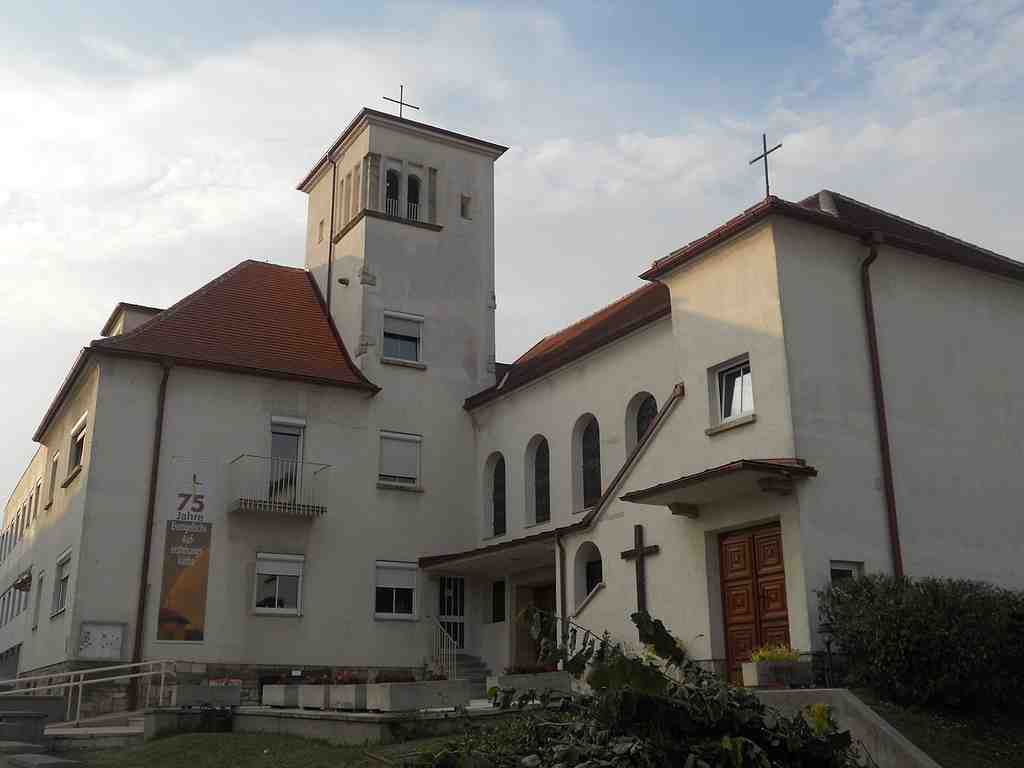
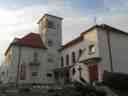
Church of the ResurrectionPhoto: Clemen, Wikimedia Commons, CC BY-SA 3.0 AT. Cropped & resized. On your left, look for a pale church with a simple rectangular body, a steep red-tiled roof, and a slender tower set between the church and the parsonage.
This building matters because it shows a newer layer of Eisenstadt taking shape. By now you’ve seen Catholic power in several forms, but this church reminds you that the city also grew through confessional plurality... meaning Catholic, Protestant, and Jewish communities lived side by side under changing political conditions, not as an abstract ideal, but because politics, migration, and administration shifted the map. In Eisenstadt, religious diversity did not just drift in gently; it followed concrete decisions about who governed, where they governed, and who suddenly mattered.
The Lutheran community here started small. In eighteen eighty-five, Josef Paul von Király helped organize a branch congregation linked to Ödenburg, and in eighteen eighty-eight they held their first public service. Small numbers, yes... but not no numbers. That distinction changed everything.
The key figure was Theophil Beyer, the first Protestant superintendent of Burgenland after nineteen twenty-four. A superintendent, in plain English, is a regional church leader. When the provincial government chose Eisenstadt as its seat in nineteen twenty-five, Beyer understood immediately that sacred and civic authority were reshuffling the city together. If the capital was moving here, Protestant life needed to be visible here too.
So in nineteen thirty-five, engineer Ecker moved with startling speed: foundation stone on Easter Monday, consecration on the first Sunday of Advent. Church, parsonage, tower... done in one year. In the political atmosphere of Austria’s corporate state, that large public dedication was anything but routine. If you check the image on your screen, you can read the ensemble clearly as one statement rather than three separate buildings.
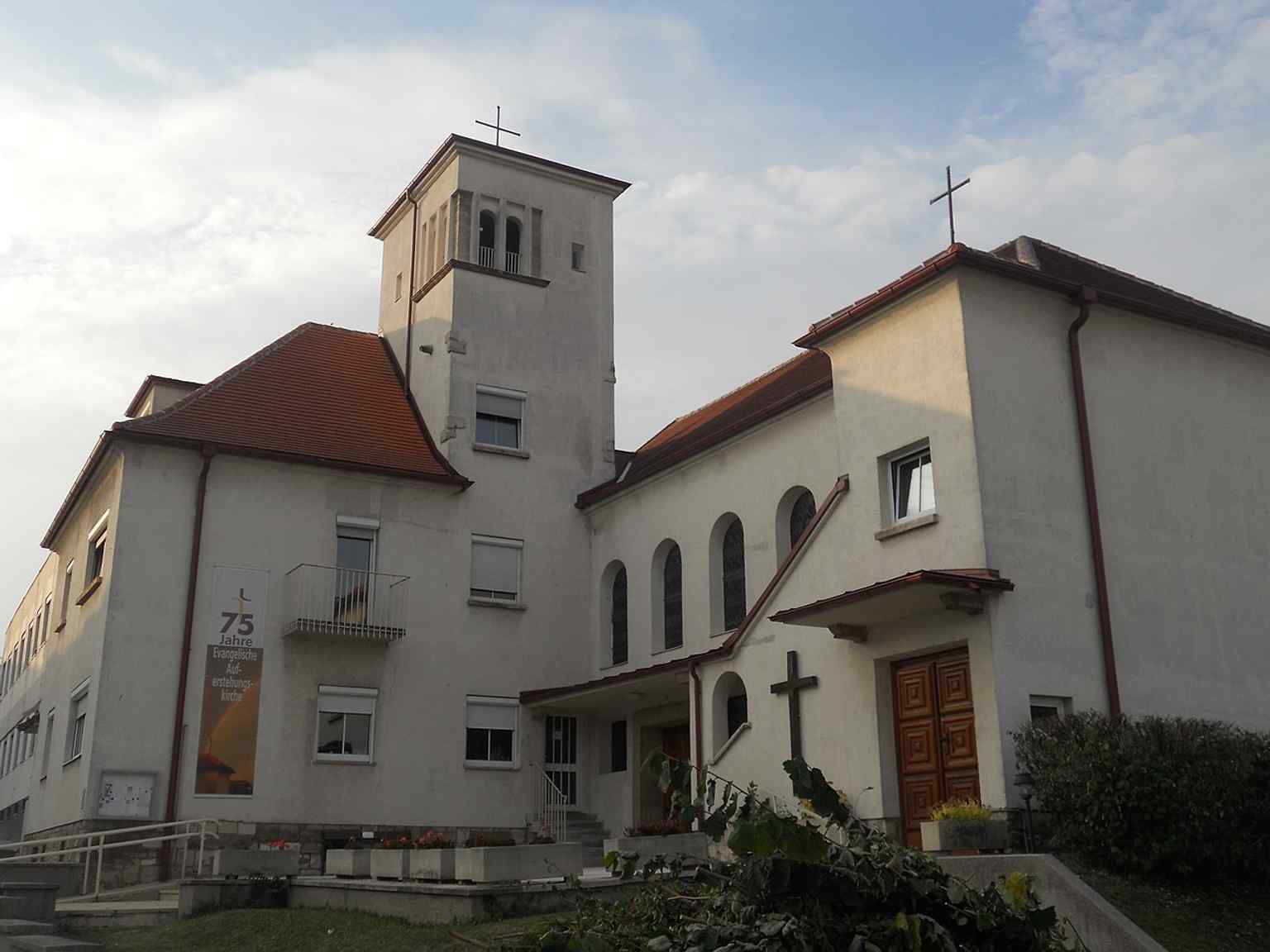
The Evangelical parish church and parsonage at St.-Rochus-Straße 1 — the 1935 church ensemble that grew out of Eisenstadt’s small but established Lutheran community.Photo: Clemens, Wikimedia Commons, CC BY-SA 3.0 at. Cropped & resized. One detail I like: parish tradition says individual donors paid for the windows, and their names still appear in Fraktur, that old German black-letter script, along the bottoms of the round-arched panes. Even the glass keeps receipts.
Since nineteen fifty-six, when the Protestant regional church administration settled in Eisenstadt, this became the main evangelical church of Burgenland. Modern Eisenstadt, in other words, was not simply inherited; people reorganized it, and faith communities reorganized with it. From here, Leinnerhaus is about a three-minute walk away. If you want to return later, the church is generally open daily from eight in the morning to seven in the evening.
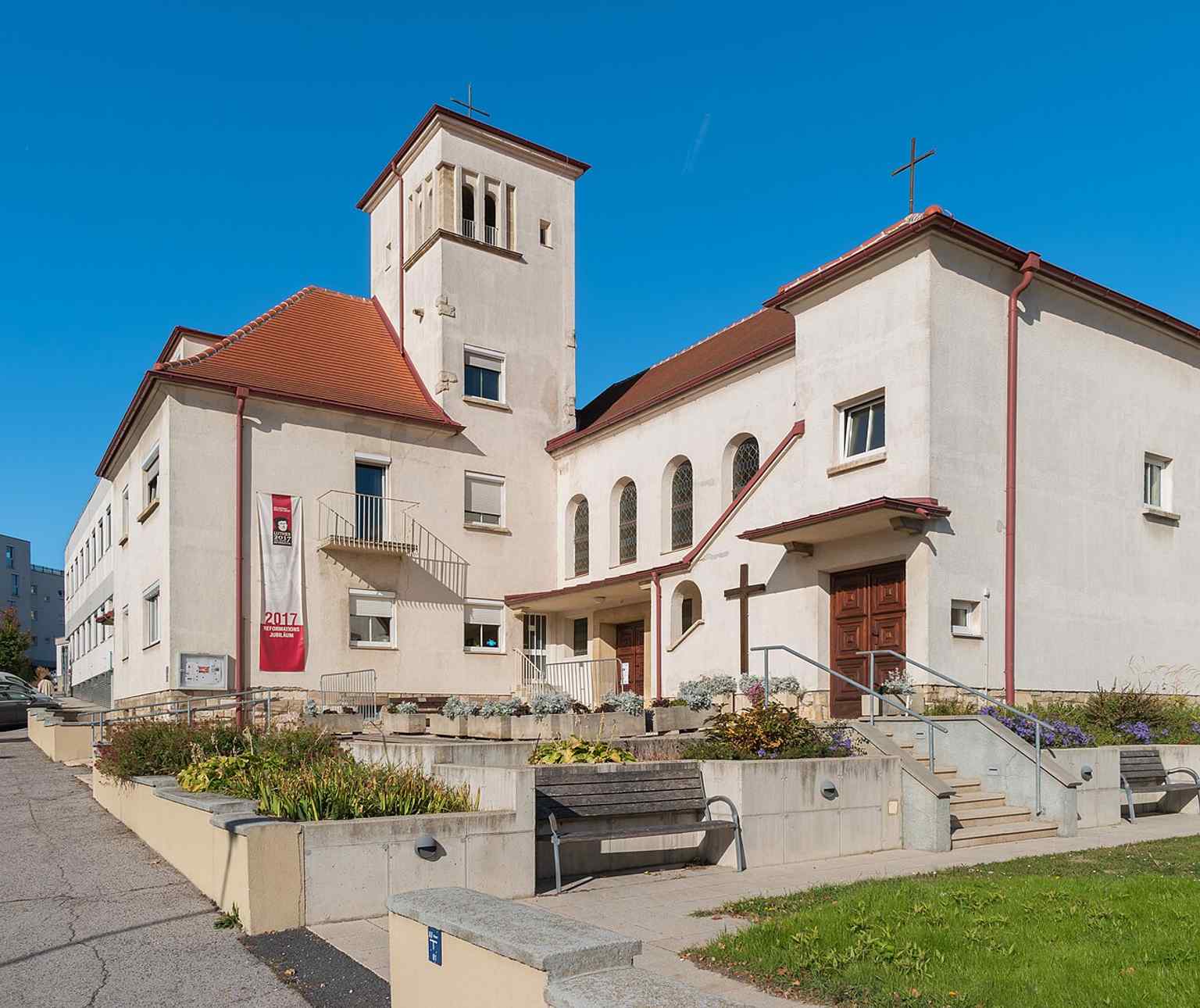
A clear modern view of the Resurrection Church in Eisenstadt, the main evangelical church in Burgenland after the superintendent’s seat moved to the city in 1956.Photo: Krzysztof Golik, Wikimedia Commons, CC BY-SA 4.0. Cropped & resized. On your right, look for a pale Baroque house behind an enclosing wall, with a broad two-story facade and a rounded stone portal marked by a coat of arms and the date seventeen…Read moreShow less
Open dedicated page →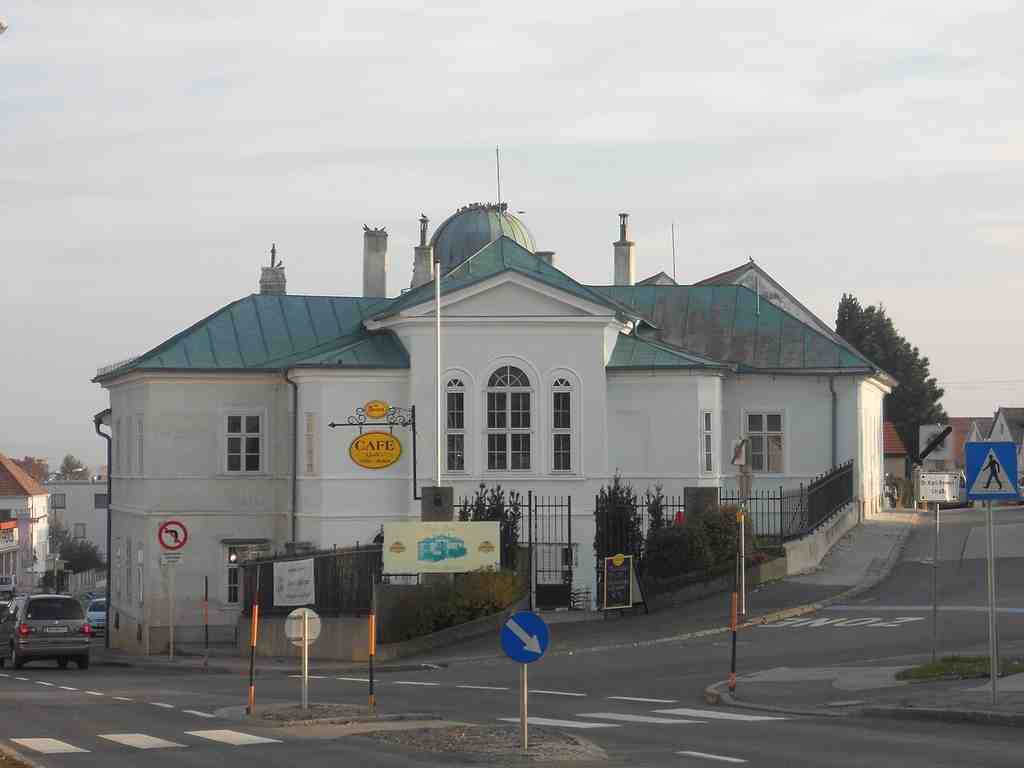
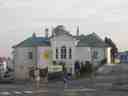
LeinnerhausPhoto: Clemen, Wikimedia Commons, CC BY-SA 3.0 AT. Cropped & resized. On your right, look for a pale Baroque house behind an enclosing wall, with a broad two-story facade and a rounded stone portal marked by a coat of arms and the date seventeen sixty-nine.
Leinnerhaus began as the kind of place that kept a city running rather than dazzling it. Karl Straub, a wine merchant from the Palatinate, bought the old Pfanschen Stadl in eighteen sixteen and rebuilt it by eighteen twenty. Then Michael Leinner took it over in eighteen forty-two and pushed his own wine trade from here. If you catch the portal details, notice the Rocaille decoration - those shell-like Baroque curls - around a shield with winegrowers’ tools. The building was practically introducing itself.
But houses in Eisenstadt rarely stick to one job. Around eighteen sixty, a hall was likely added, and from eighteen seventy-five to nineteen twenty-one the Casinoverein used the place especially for music. So this former merchant’s house joined the same wider cultural network we’ve already felt around Haydn and the palace... only here it ran through clubs, classrooms, and civic ambition. The new state middle school even began teaching here in eighteen eighty-one.
A museum, and later an archive, does not simply store things. It decides what a place thinks is worth remembering, and that is delicate work. In nineteen twenty-six, a local collector offered this house as the provisional home of the new Burgenland State Museum for one schilling a year - a token rent, only a few euros in today’s buying power, really just a gesture. If you glance at the image in the app, you can see that sturdy, almost private exterior hiding a much larger cultural role. He wanted the young province to have a memory of its own, and he brought in the museum expert Dr. Alphons Barb to help build it.
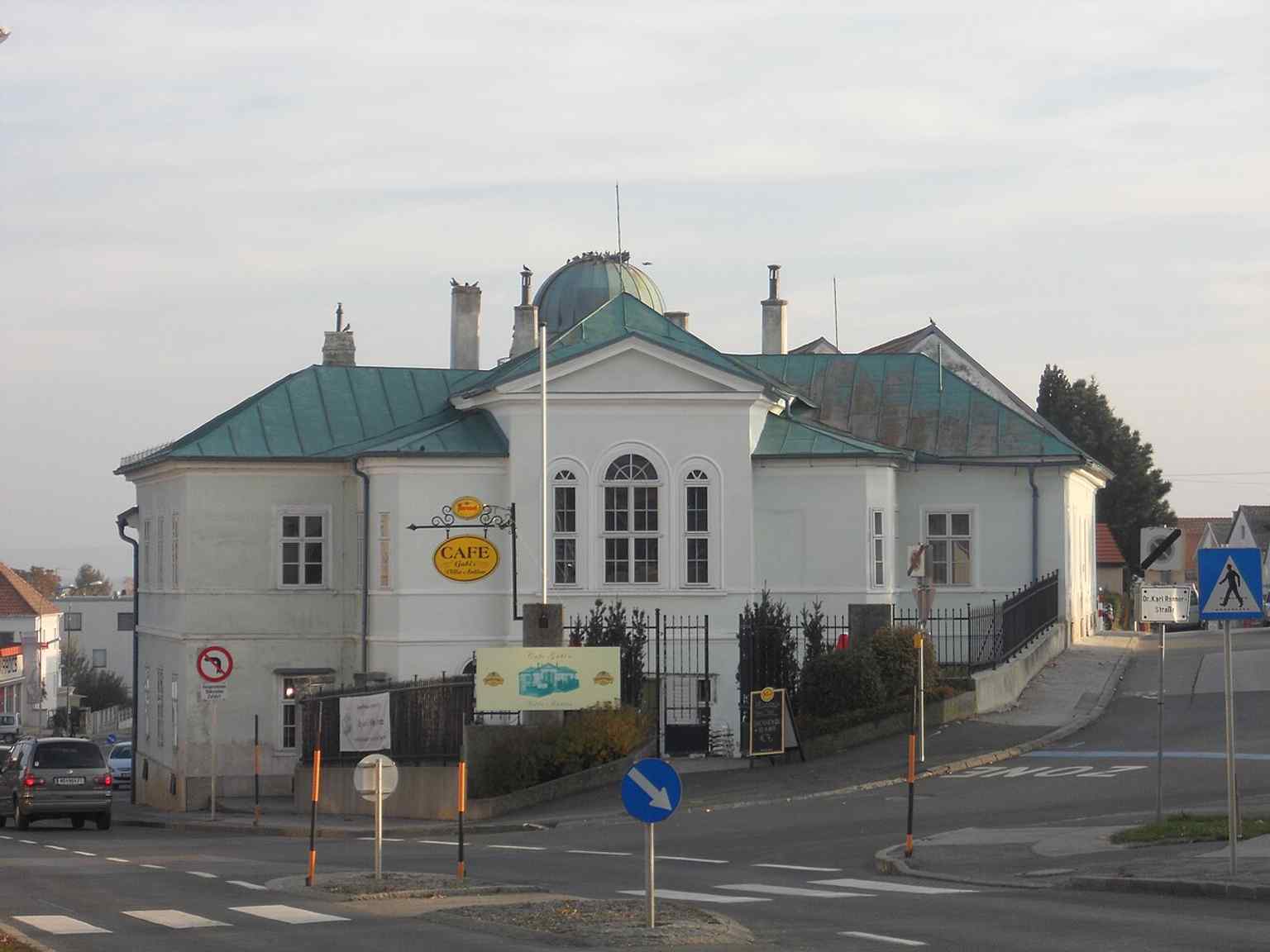
The Baroque Leinnerhaus and its enclosing wall in Eisenstadt — this protected building later housed the Burgenland State Museum, archive, and today a gallery and event venue.Photo: Clemens, Wikimedia Commons, CC BY-SA 3.0 at. Cropped & resized. Then came nineteen thirty-eight. After Austria’s annexation into Nazi Germany, Barb lost his post at once, the museum was stripped of its independence, and parts of the collection were handed off elsewhere. Wolf had to flee. Some of his collection scattered, some returned later, some had to be bought back.
That is the unnerving lesson here: what a city chooses to preserve can be undone with terrifying speed. When you’re ready, head about four minutes onward to the Liszt Monument.
On your right, look for a white marble figure seated slightly sideways on a marble bench above a large rectangular base, with Liszt’s name and dates carved into the front. This…Read moreShow less
Open dedicated page →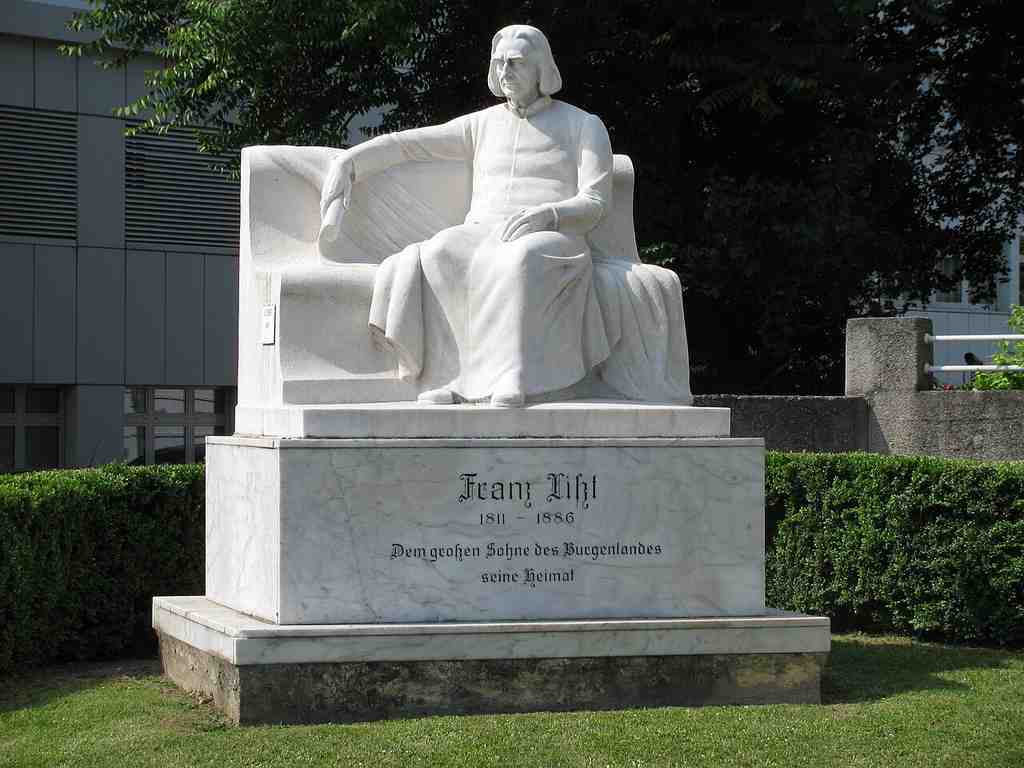
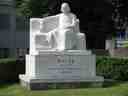
Liszt MonumentPhoto: Zenit, Wikimedia Commons, CC BY-SA 3.0. Cropped & resized. On your right, look for a white marble figure seated slightly sideways on a marble bench above a large rectangular base, with Liszt’s name and dates carved into the front.
This monument honors Franz Liszt, the pianist and composer born in eighteen eleven, but it also reveals what Eisenstadt wanted to say about itself. For decades, newspapers in Ödenburg said surprisingly little about Liszt’s life and work. Then, in nineteen thirty-six, the city made a deliberate point of claiming him as the great son of Burgenland... in marble, no less.
This was not some tidy city-hall purchase. Eisenstadt raised the money through public donations, which tells you something important: public memory needed public buy-in. Under Mayor Geza Stanics, the monument joined other cultural projects meant to sharpen the city’s image, alongside Haydn commemorations and efforts to raise Eisenstadt’s status.
If you check the detail image on your screen, you can see how sculptor Alexander Sandor Jaray set Liszt slightly off-center on the bench. Jaray matters here too. Later records had to sort out confusion between his work and that of an uncle with the same name, so this statue quietly helps keep the right artist attached to the right stone.
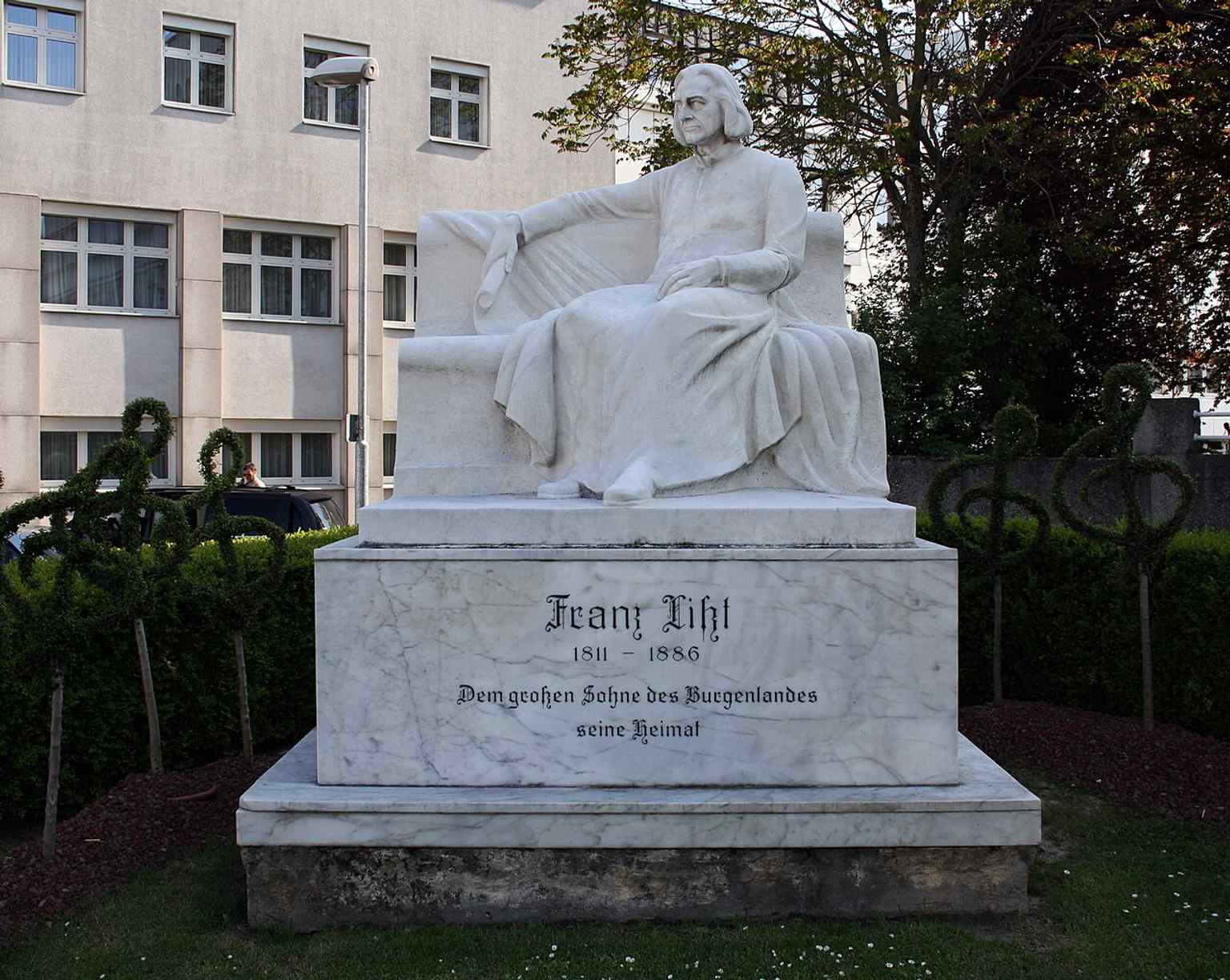
The statue’s seated figure and marble base are visible here, matching the monument described as white marble on a rectangular pedestal.Photo: Usien, Wikimedia Commons, CC BY-SA 3.0. Cropped & resized. At the unveiling on the twenty-first of June, nineteen thirty-six, Dr. Eduard von Liszt Junior and his wife, Maria Julia, laid a wreath. The ceremony also formed part of a wider Liszt year, marking fifty years since his death.
So the question lingers: who gets monumentalized, and who must wait for donations, archives, or luck to be remembered? We’ll carry that thought to the Burgenland State Museum, about a three-minute walk away. This monument is accessible at any hour, day or night.
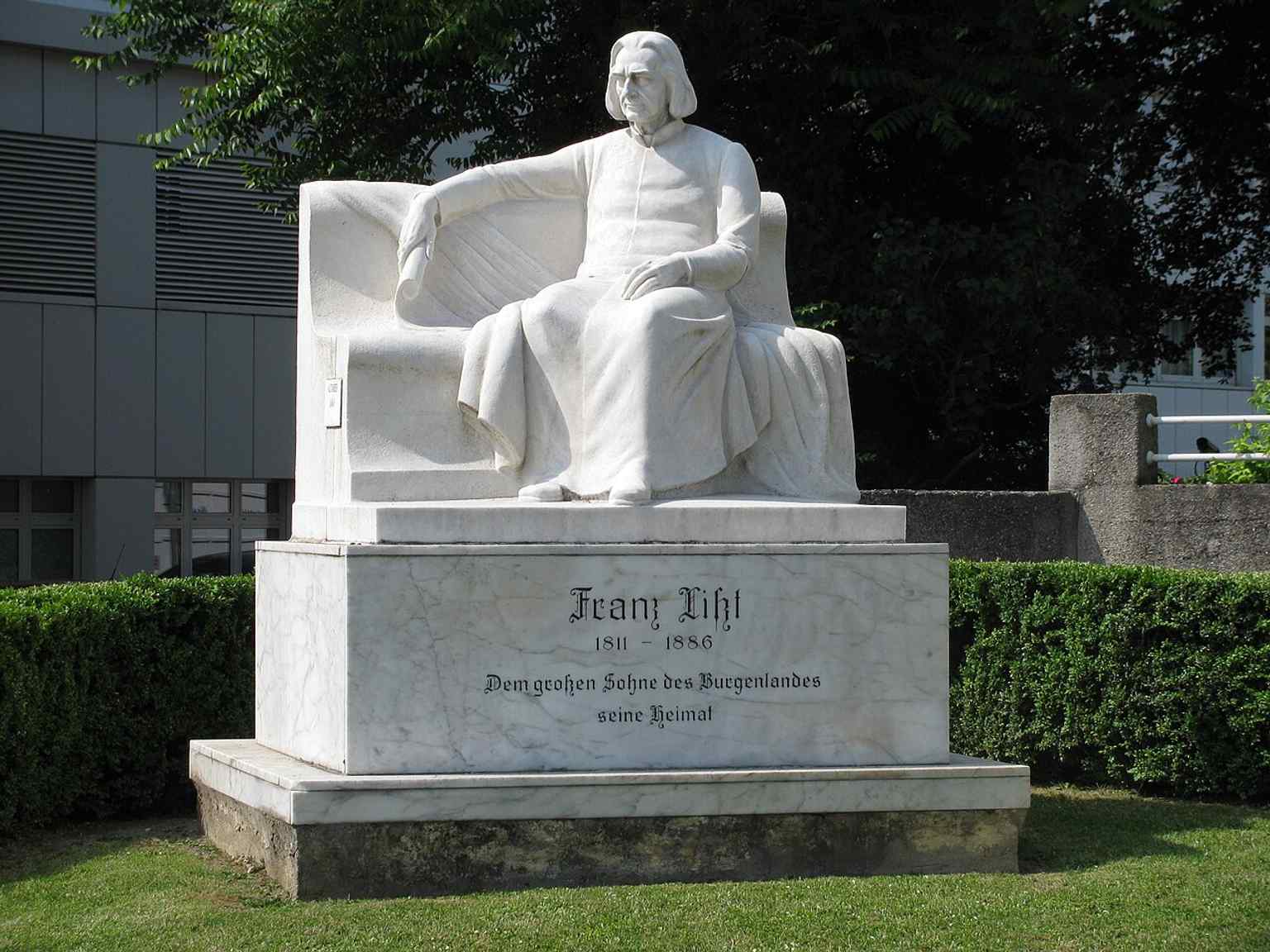
A clear view of the Liszt Monument in Eisenstadt, the white marble tribute that was unveiled in 1936 for Franz Liszt’s 125th birthday.Photo: Zenit, Wikimedia Commons, CC BY-SA 3.0. Cropped & resized. 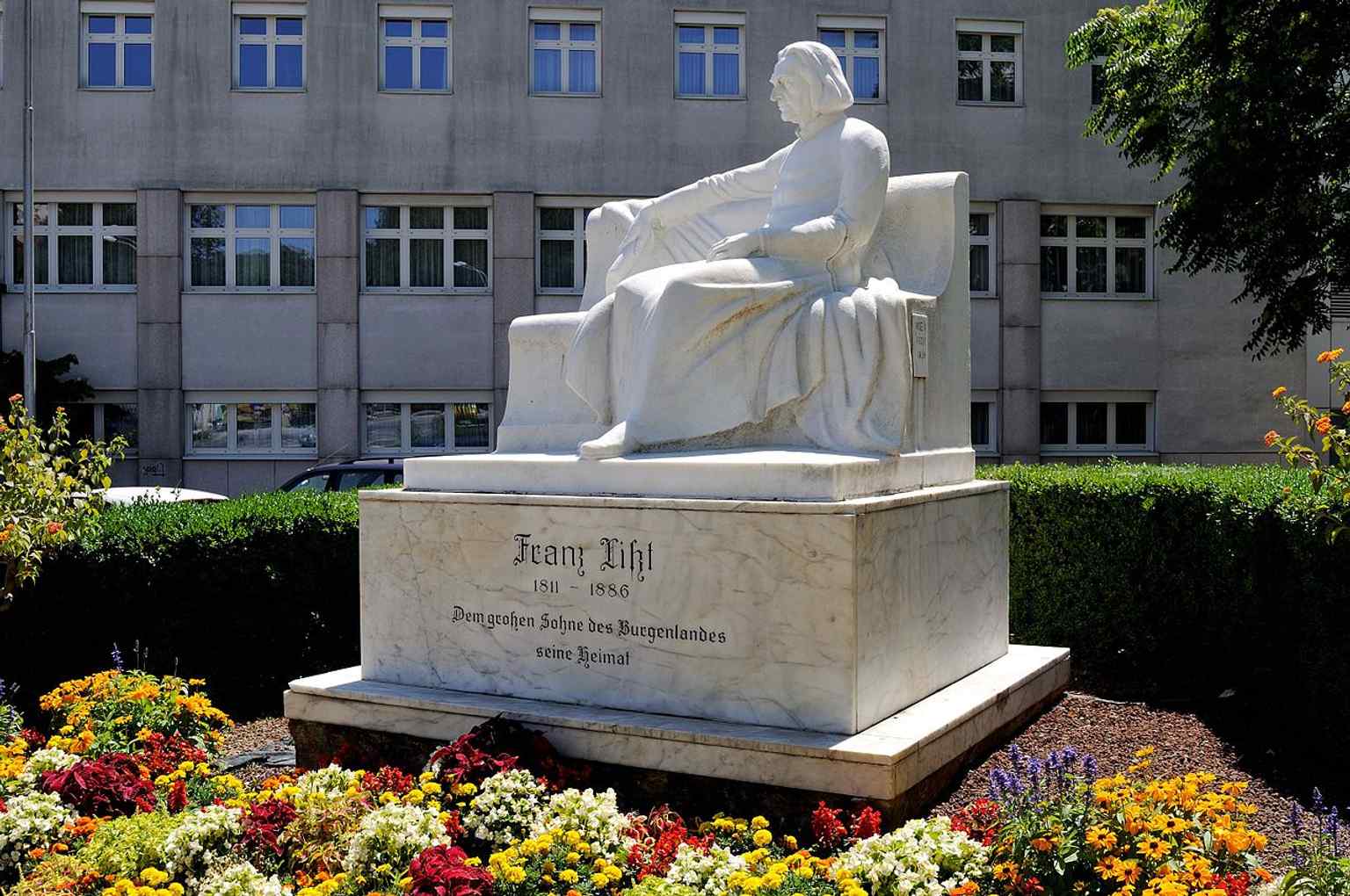
Another sharp view of the Eisenstadt Liszt memorial, honoring the composer as “the great son of Burgenland.”Photo: Linie29, Wikimedia Commons, CC BY-SA 4.0. Cropped & resized. 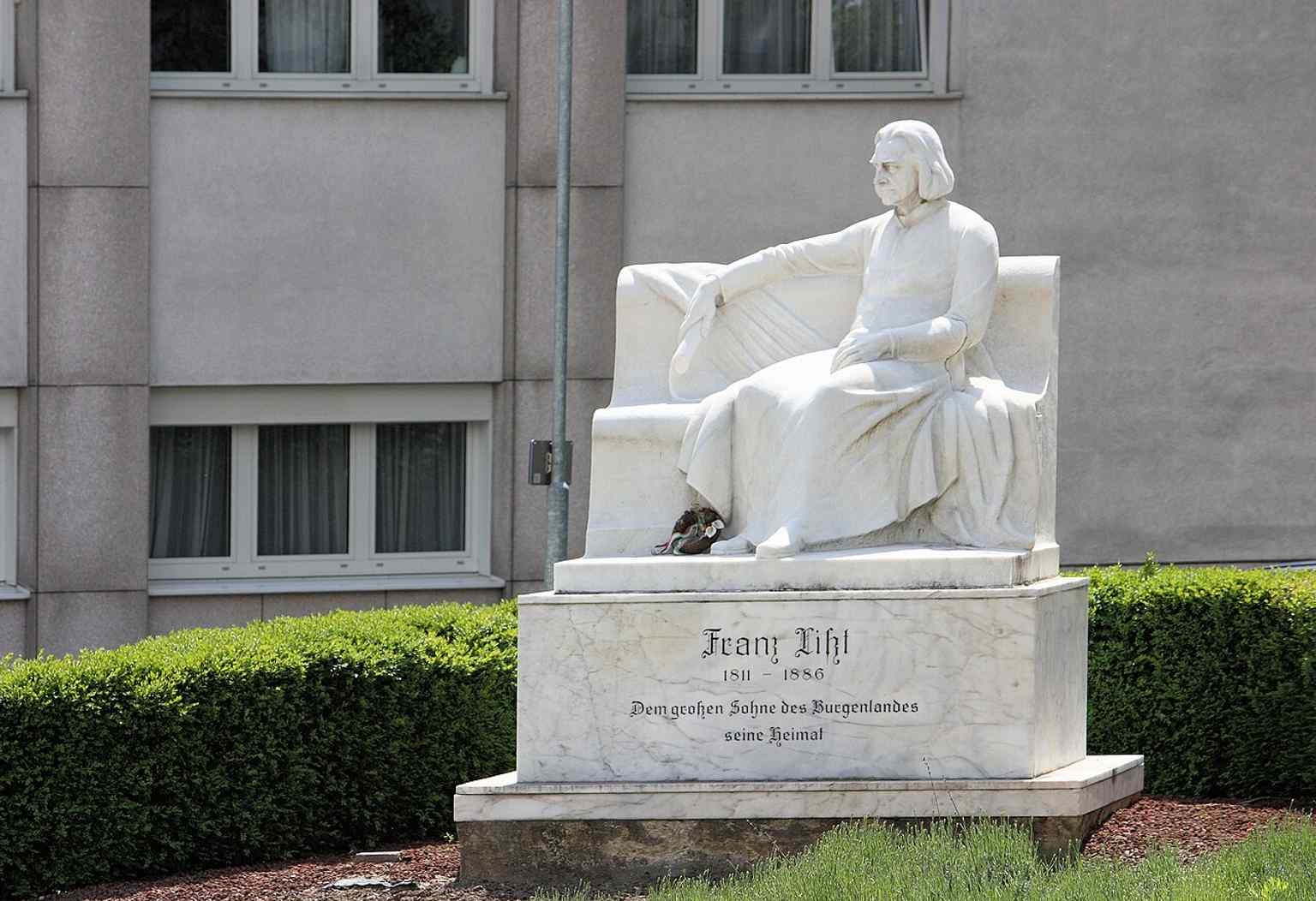
The Liszt Monument on Esterhazyplatz, a civic memorial that was funded by public donations rather than only by the city budget.Photo: Dguendel, Wikimedia Commons, CC BY 3.0. Cropped & resized. On your left, look for a pale historic facade with a broad rectangular front, rows of tall windows, and a simple arched entrance that marks the Burgenland State Museum. This…Read moreShow less
Open dedicated page →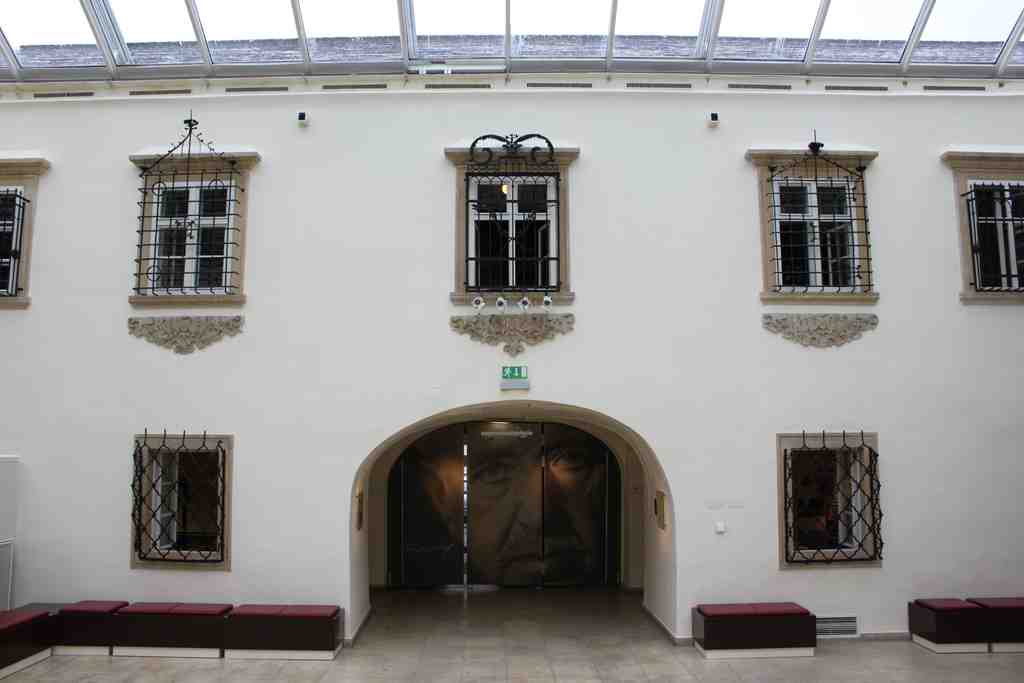
Burgenland State MuseumPhoto: Anton-kurt, Wikimedia Commons, CC BY-SA 3.0 AT. Cropped & resized. On your left, look for a pale historic facade with a broad rectangular front, rows of tall windows, and a simple arched entrance that marks the Burgenland State Museum.
This building holds more than objects... it holds an argument about who gets to tell a region what it is.
After Burgenland joined Austria in nineteen twenty-one as the country’s ninth federal state, people here needed more than new borders on a map. They needed a story. And that story found an unlikely builder in Sándor Wolf, an Eisenstadt wine merchant. His collecting life began, of all things, with a single Roman coin around nineteen hundred. One coin led to a private collection, then a public one, and by nineteen twenty-six he gave the former Leinnerhaus to the new museum. By nineteen thirty, he had gathered around six thousand objects: archaeology, art, decorative arts, and Judaica... the material evidence of many Burgenlands layered on top of one another.
If you glance at your screen, the courtyard image shows the later solution architects found here: old inner spaces kept alive inside a modernized museum, not frozen like a relic under glass.
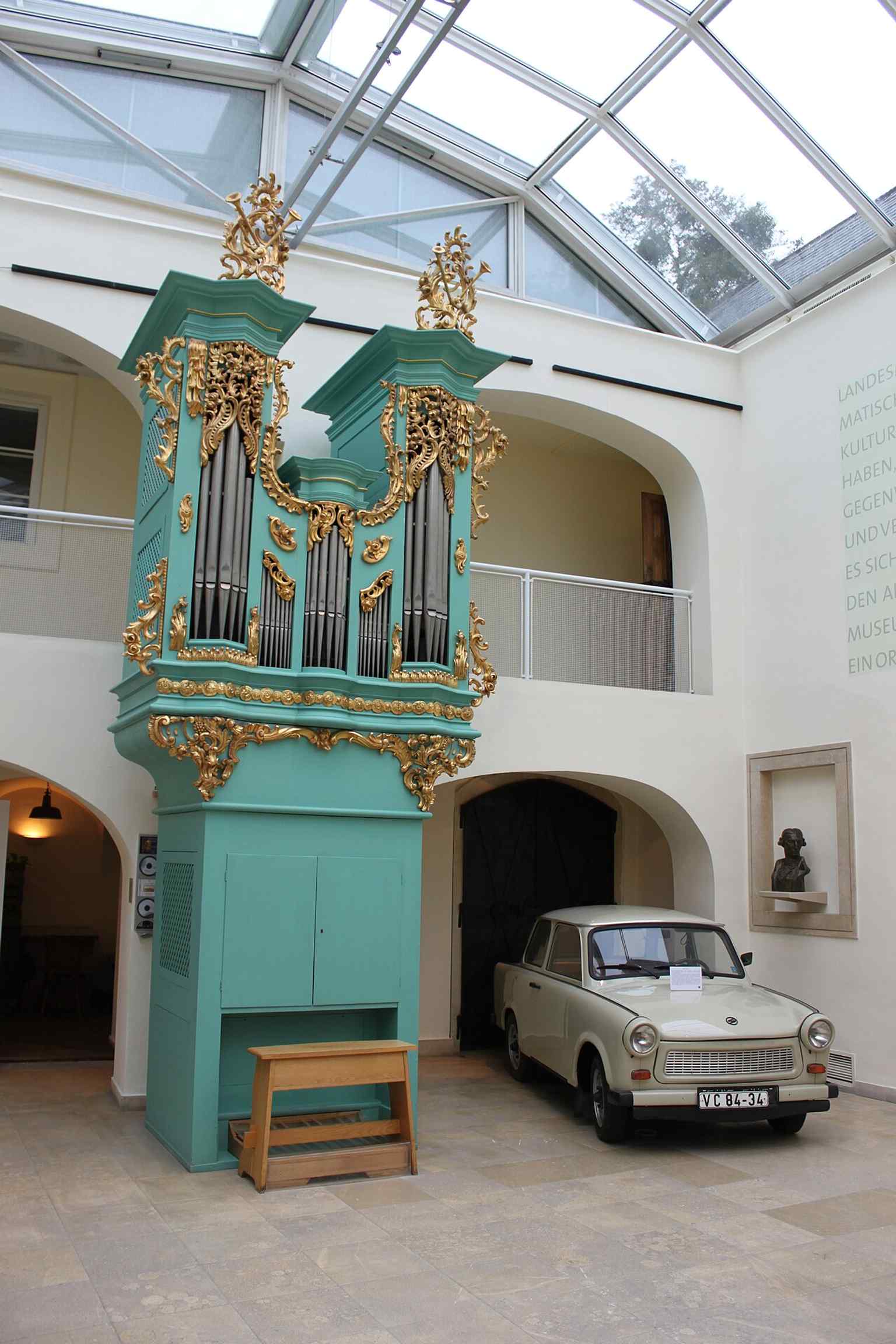
The covered courtyard of the Burgenland State Museum, a key part of the 1976 redesign that kept the historic inner spaces intact.Photo: Anton-kurt (talk), Wikimedia Commons, CC BY-SA 3.0 at. Cropped & resized. Then history turned vicious. In nineteen thirty-eight, after the Anschluss, the annexation of Austria into Nazi Germany, local National Socialist authorities confiscated Wolf’s property and collection. They forced him to flee to Palestine. He later wrote that he would not return, because, in effect, they had beaten the love of homeland out of him. That is a brutal sentence. He died in Haifa in nineteen forty-six.
And here is the twist: the museum did not simply lose his collection. When it moved in nineteen thirty-nine into the so-called Wolf houses, the expropriated private museum stayed together as the core of the state museum. So the institution that claimed to preserve Burgenland’s memory also carried the wound of how that memory had been stolen.
After the war, restitution dragged on. In nineteen fifty-eight, part of Wolf’s archaeological holdings came back through an auction purchase, and some Judaica returned through later acquisitions. In the nineteen sixties and seventies, architects Hans Puchhammer and Günther Wawrik expanded the museum, preserving historic facades and courtyards while adding a modern wing. The result, shown in the exterior view on your phone, is a building that quite literally patches old and new together.
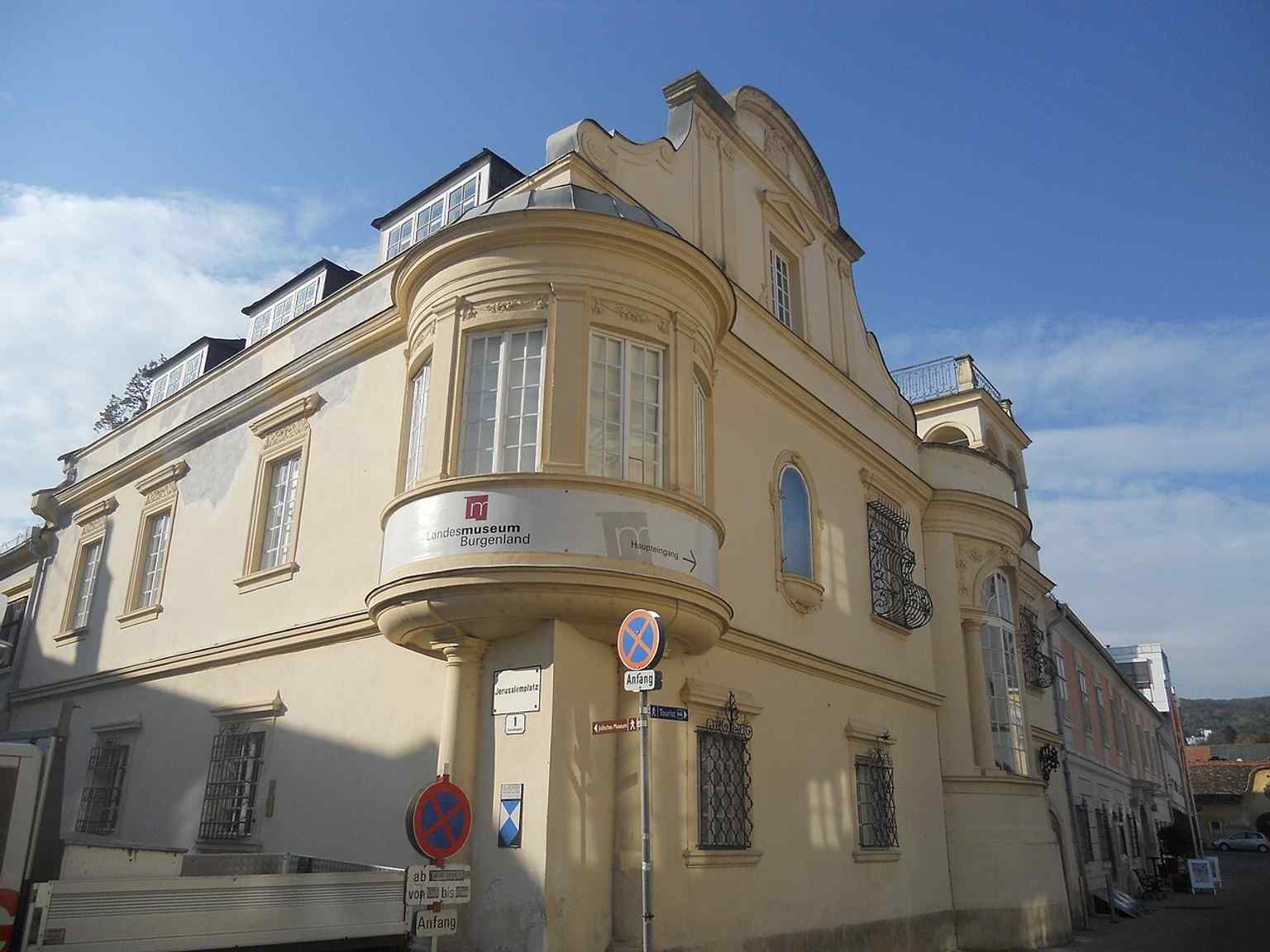
The Jerusalemplatz 1 building front of the Burgenland State Museum in Eisenstadt, the museum’s current address during the ongoing closure and renovation.Photo: Clemens, Wikimedia Commons, CC BY-SA 3.0 at. Cropped & resized. The museum is closed now for a major renovation, and the leadership says it wants to reopen as a place of encounter and public participation. Fair enough. But the harder question lingers: when a community hands its memory to a museum, a collector, or a state... who protects that memory when power turns on the people who built it?
Walk on to the Wertheimerhaus, about one minute away. Normally, the museum lists daily opening hours from nine in the morning to six in the evening, though it is currently closed for renovation.
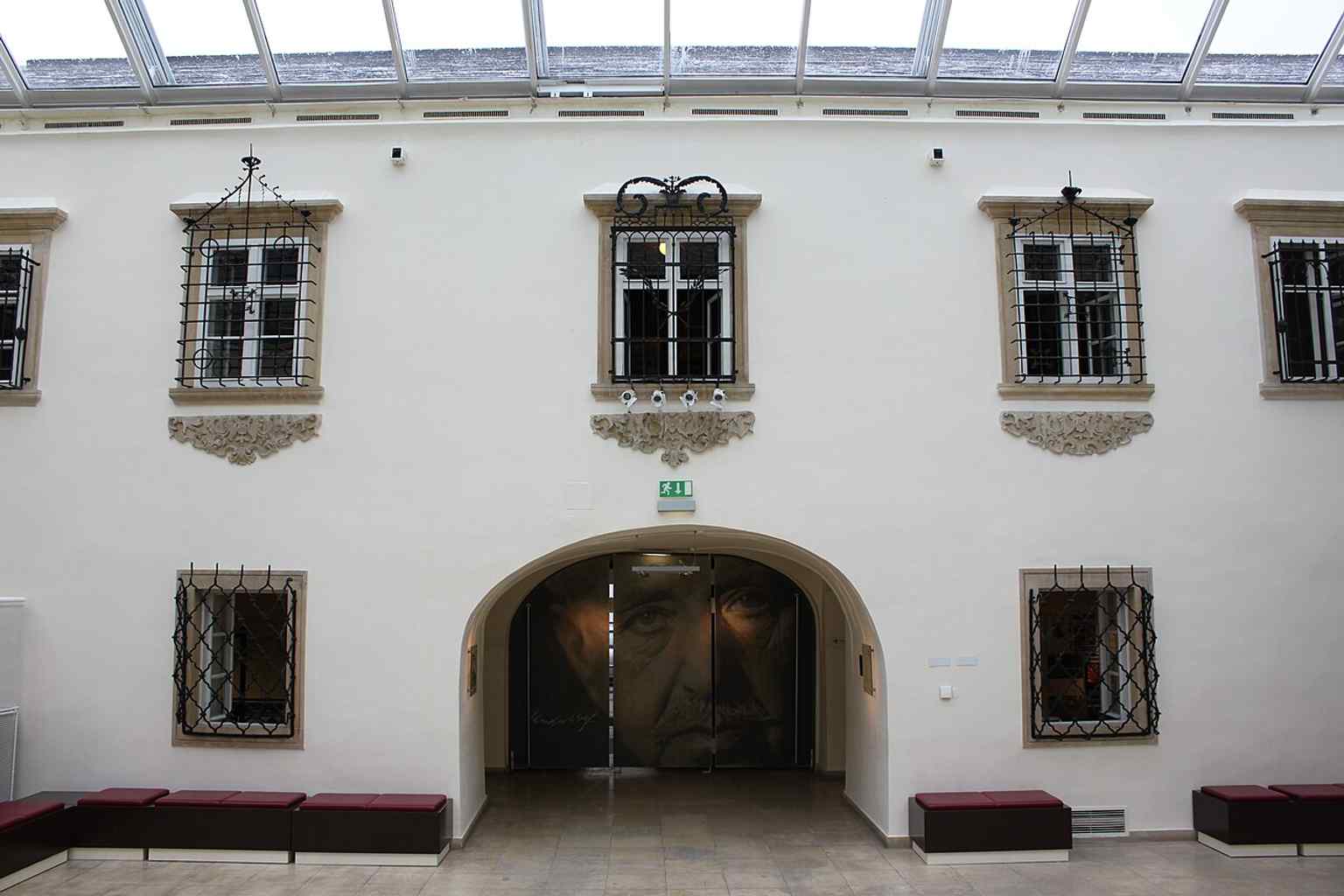
The museum’s covered courtyard, where the old building fabric was preserved during the major modernization described in the story.Photo: Anton-kurt (talk), Wikimedia Commons, CC BY-SA 3.0 at. Cropped & resized. 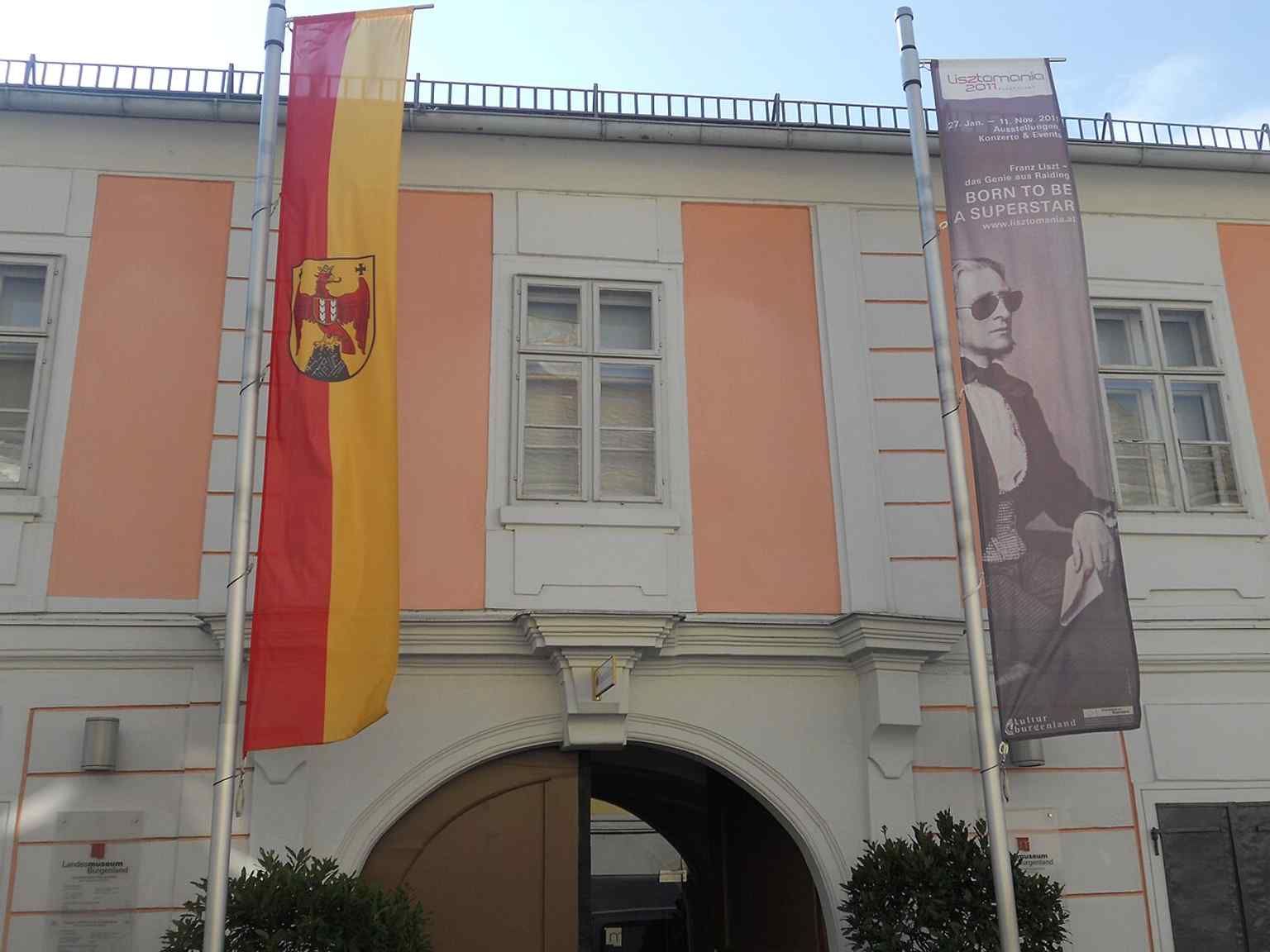
The main entrance of the Burgenland State Museum, a useful view of the institution that began with Sándor Wolf’s collection and later grew through reconstruction and expansion.Photo: Clemens, Wikimedia Commons, CC BY-SA 3.0 at. Cropped & resized. On your right stands a two-story plastered town house with a rounded corner bay and a formal civic façade, marked by the memorial plaque that identifies the Wertheimerhaus. This…Read moreShow less
Open dedicated page →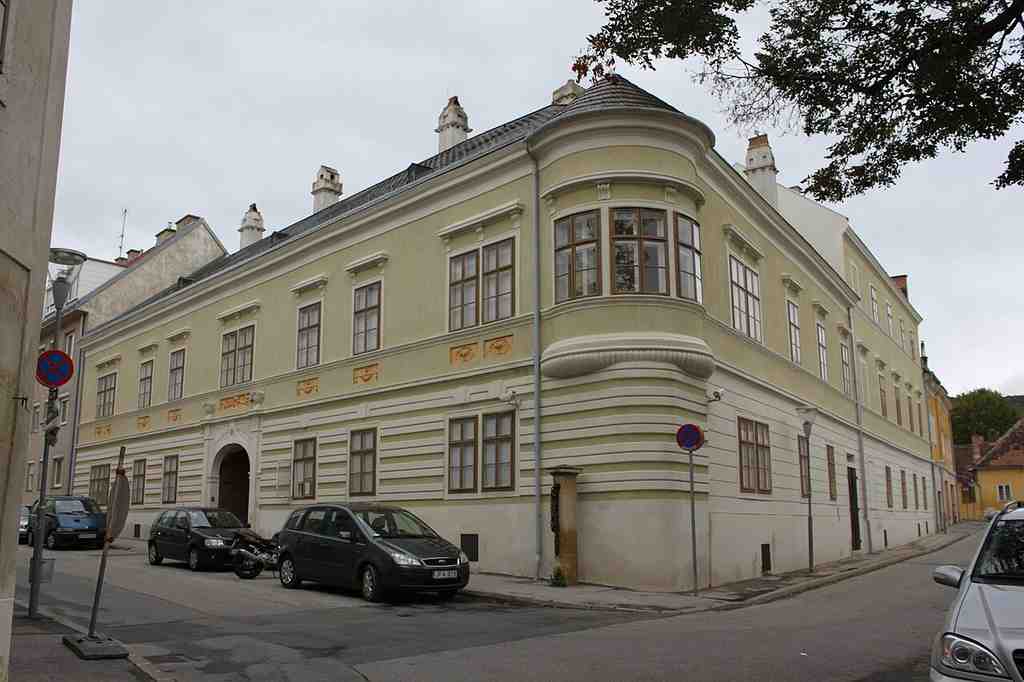
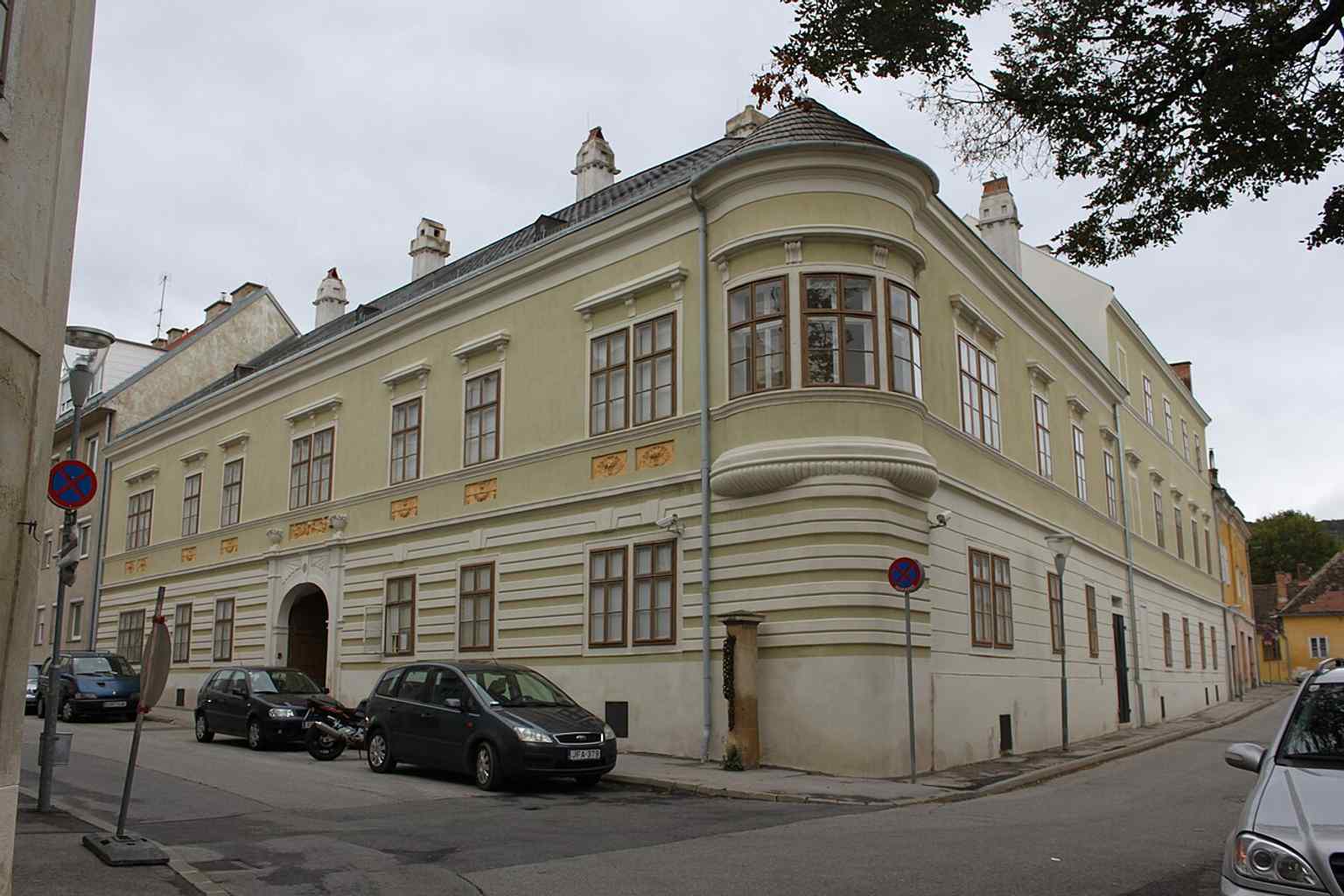
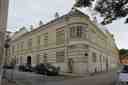
Wertheimerhaus (Eisenstadt)Photo: Anton-kurt, Wikimedia Commons, CC BY-SA 3.0 AT. Cropped & resized. On your right stands a two-story plastered town house with a rounded corner bay and a formal civic façade, marked by the memorial plaque that identifies the Wertheimerhaus.
This house opens one of Eisenstadt’s deepest chapters. Samson Wertheimer, the man behind its name, was no local eccentric with a large key ring; he was a major Jewish court figure, named honorary rabbi of Eisenstadt and rabbi for Hungary in sixteen ninety-three, a learned man who also supported Hebrew printing. The Esterházys valued him enough to finance this residence, completed in seventeen nineteen.
Jewish Eisenstadt never lived in one single building. It stretched across homes, prayer rooms, trade, scholarship, and burial grounds, and this house is one point in that wider map of memory. That matters here, because Eisenstadt’s religious story was never only told by churches; Jewish life stood firmly inside the city’s public and private world too.
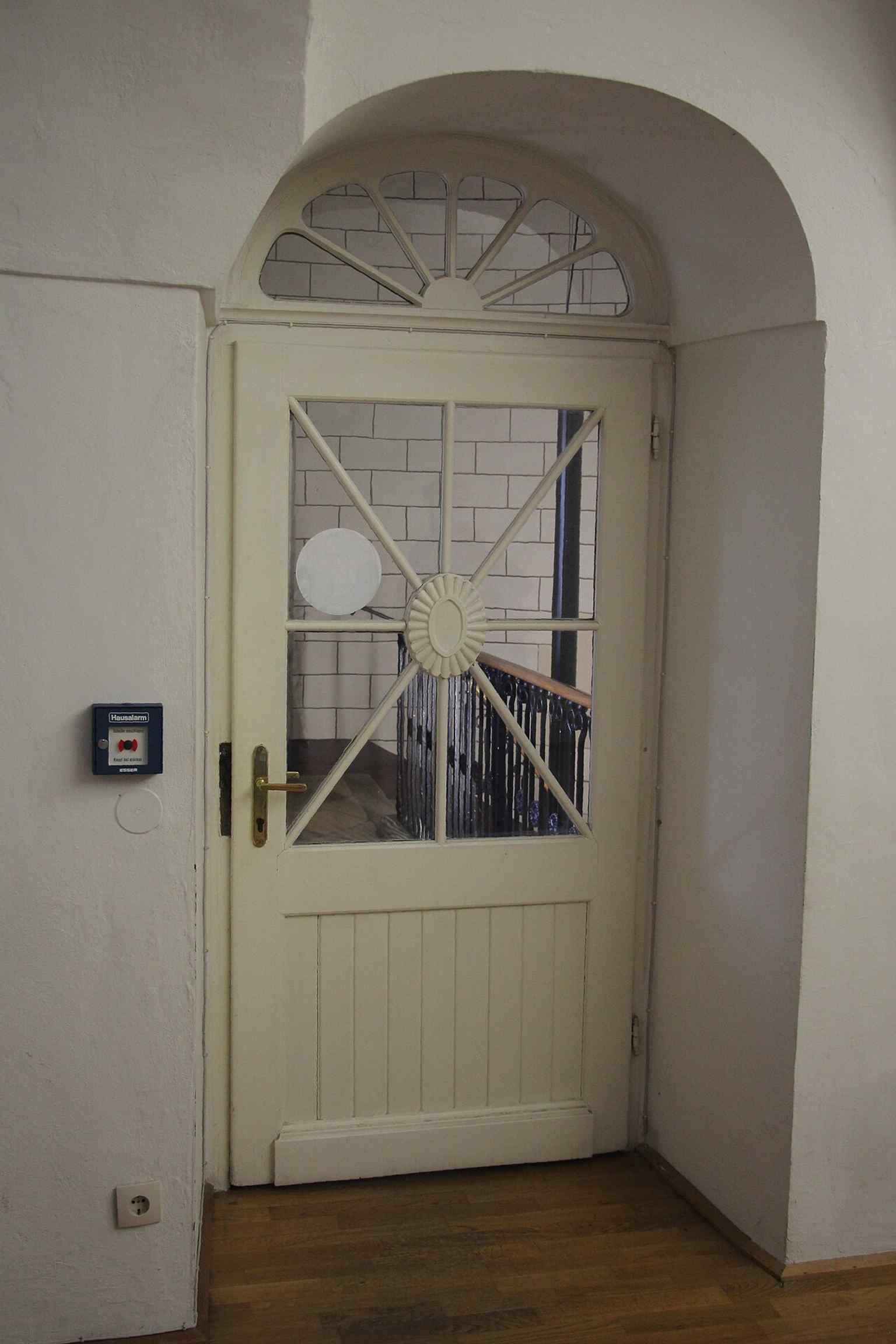
From the beginning, this was more than a palace-like home. Prince Paul Esterházy already called it “the house with the synagogue” in sixteen ninety-six. Upstairs, on the first floor, Wertheimer’s private synagogue took shape with a separate women’s room, giving the building an unusual double life: residence below, sacred space above. If you look at the image on your screen, you can see that prayer room still intact.
The private synagogue room inside the Wertheimerhaus — the oldest synagogue in Austria that still survives in its original function.Photo: Anton-kurt (talk), Wikimedia Commons, CC BY-SA 3.0 at. Cropped & resized. Later, the Wolf family bought the house in eighteen seventy-five and ran the wine firm Leopold Wolf’s Sons here, while family members and staff lived inside. The synagogue kept serving the neighborhood; it even had its own rabbi until eighteen forty, then became a place for Jewish youth from eighteen fifty onward. One of the most intimate traces is a Torah curtain that Hermine Wolf commissioned in nineteen ten in memory of her late husband, Ignatz Wolf.
Most visitors never hear this part: one of the synagogue’s old memorial plaques, used to mark annual remembrance in Jewish life, turned up in the attic only in the nineteen nineties... memory, quite literally, waiting overhead. Inside, there are seven hundred fifty-five original plaques, and after the war, sacred objects from Eisenstadt’s demolished main synagogue were brought here too. Since nineteen seventy-nine, this has housed the Austrian Jewish Museum, while remaining the seat of the state rabbi and the only consecrated synagogue in Burgenland.
In a moment, we’ll head toward the old Jewish cemetery, where remembrance moves from rooms and objects into open ground. If you want to come back inside, the museum is generally open from ten AM to four fifteen PM, and closed on Friday and Saturday.
A full view of the Wertheimerhaus in Eisenstadt, home to the Austrian Jewish Museum and the historic private synagogue.Photo: Karl Gruber, Wikimedia Commons, CC BY-SA 4.0. Cropped & resized. 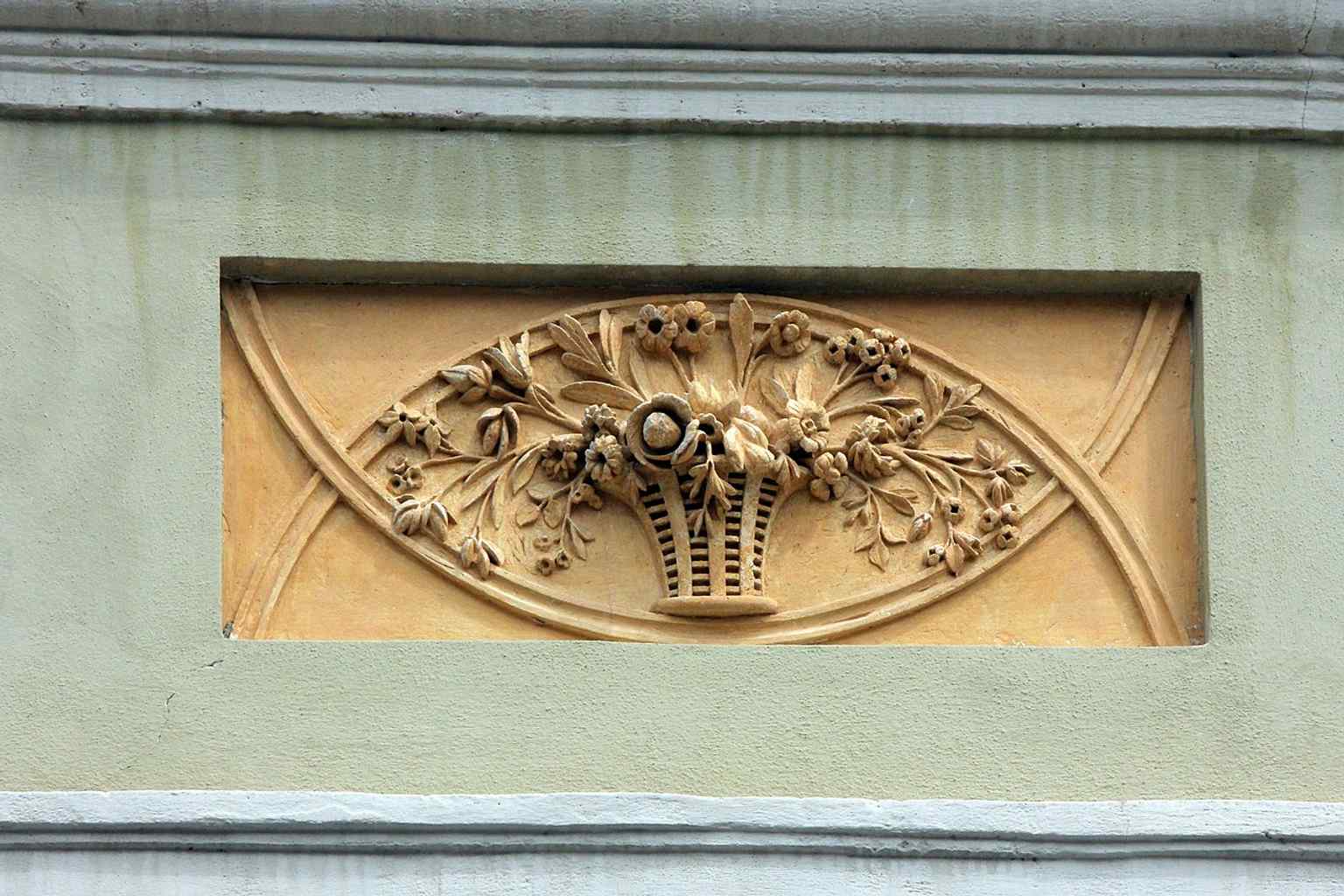
A close look at the house façade, showing the refined civic-palace character of Samson Wertheimer’s former Freihaus.Photo: Karl Gruber, Wikimedia Commons, CC BY-SA 4.0. Cropped & resized. 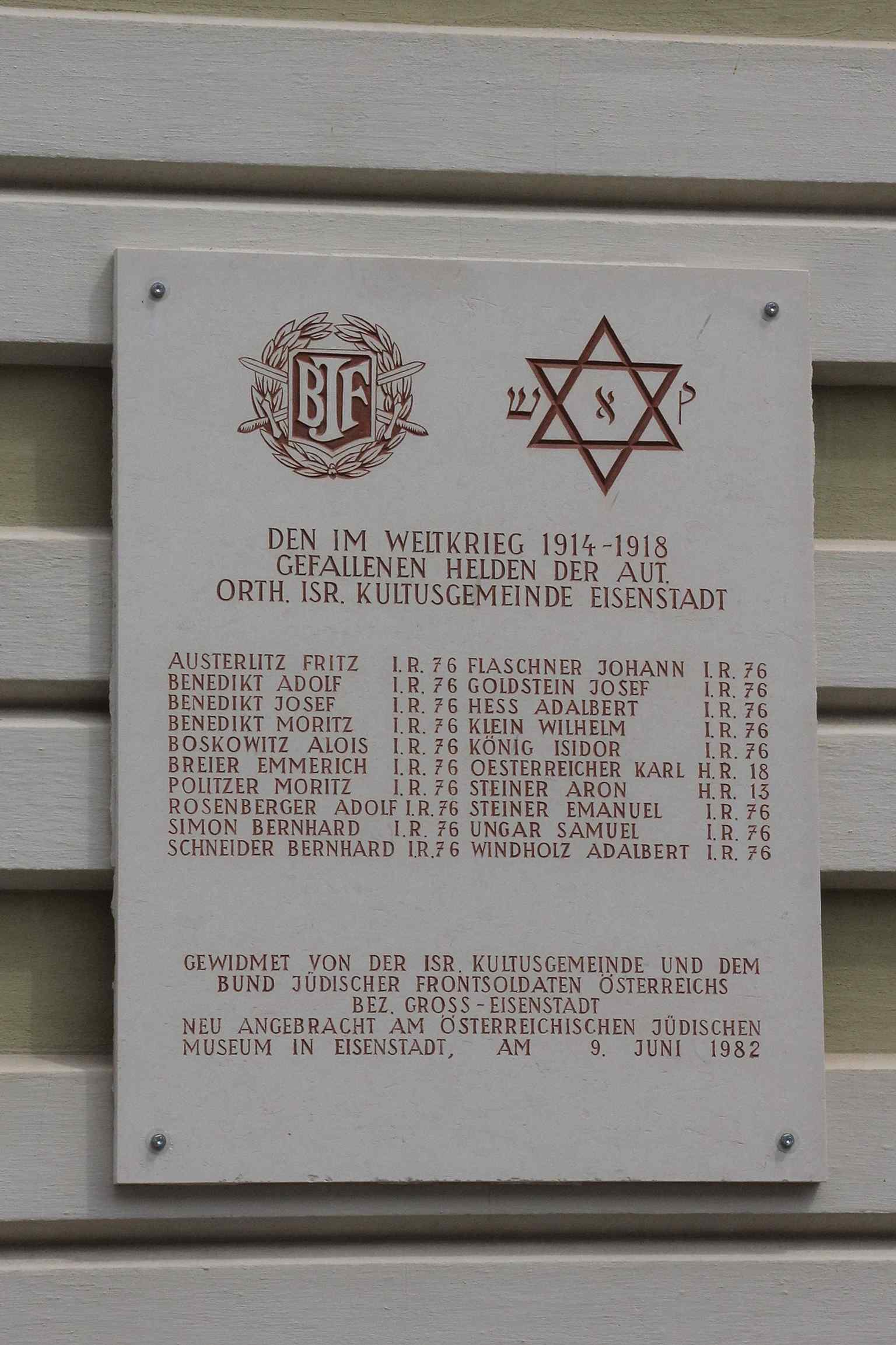
The commemorative plaque on the Wertheimerhaus — a reminder that this building preserves centuries of Jewish memory.Photo: Karl Gruber, Wikimedia Commons, CC BY-SA 4.0. Cropped & resized. 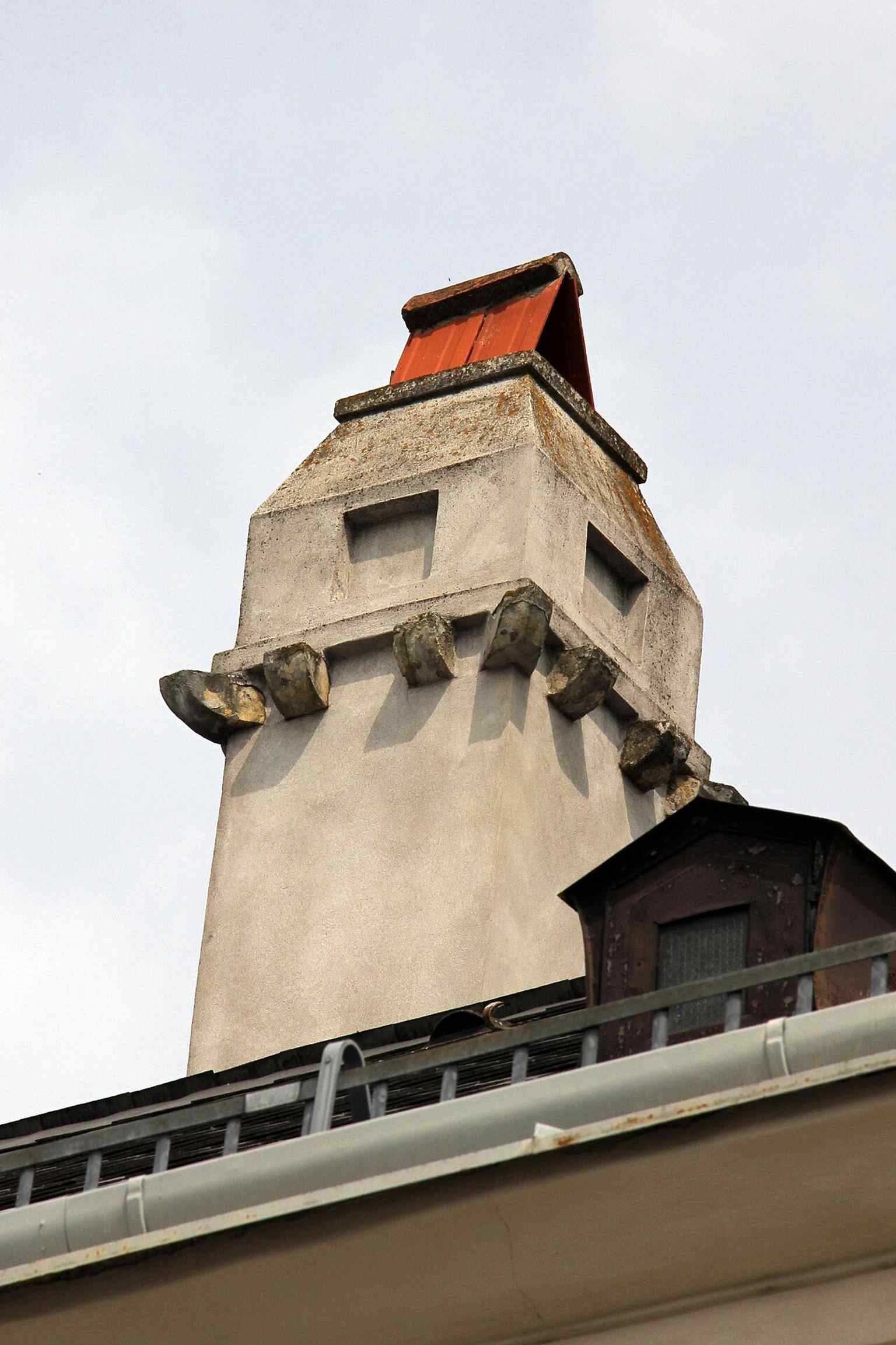
The roofline, chimney, and dormer of the Wertheimerhaus, reflecting the long-preserved fabric of the historic building.Photo: Karl Gruber, Wikimedia Commons, CC BY-SA 4.0. Cropped & resized. 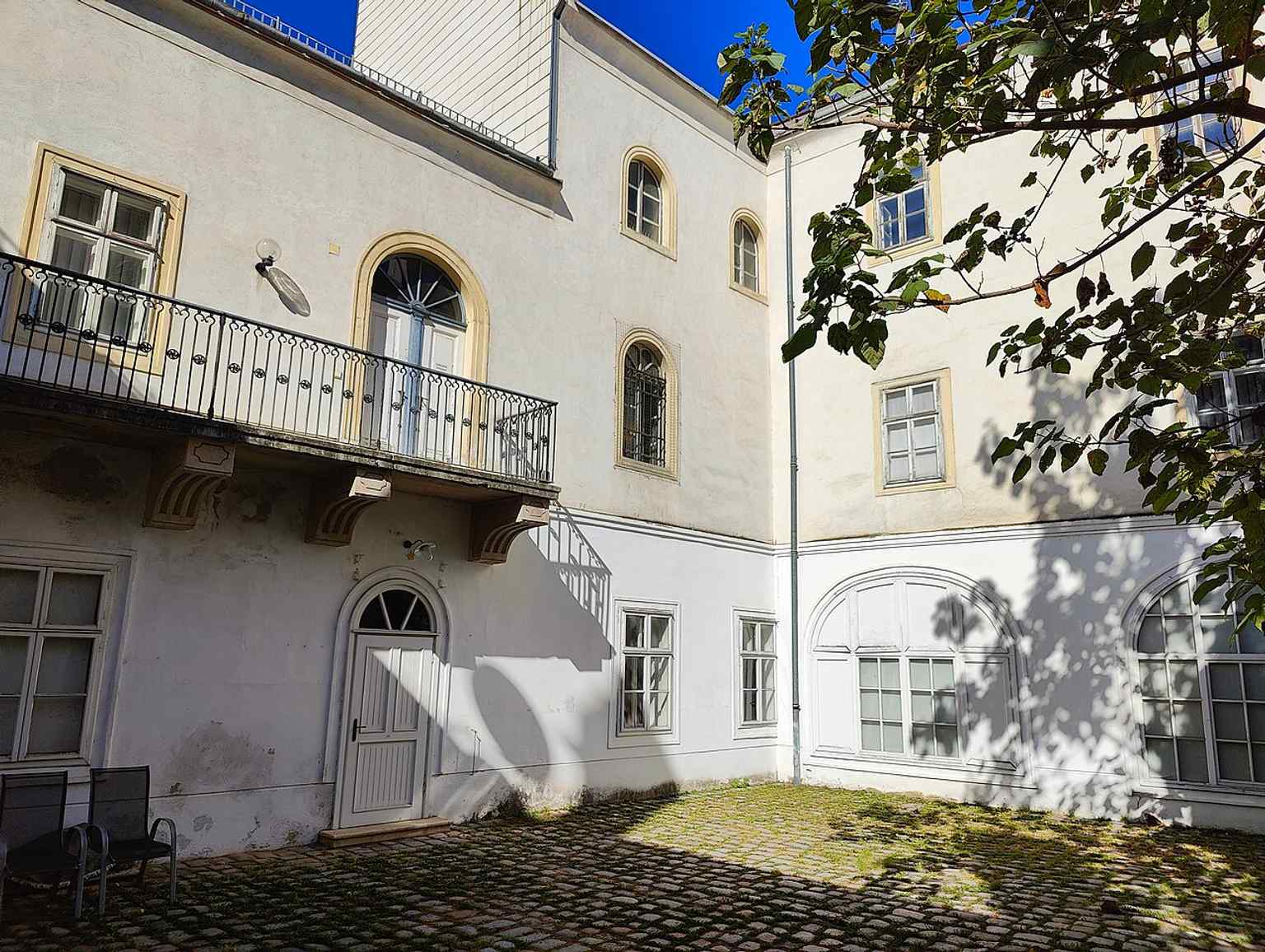
The courtyard of the Wertheimerhaus — part of a building that served both as residence and as a protected Jewish site.Photo: Niki.L, Wikimedia Commons, CC BY-SA 4.0. Cropped & resized. 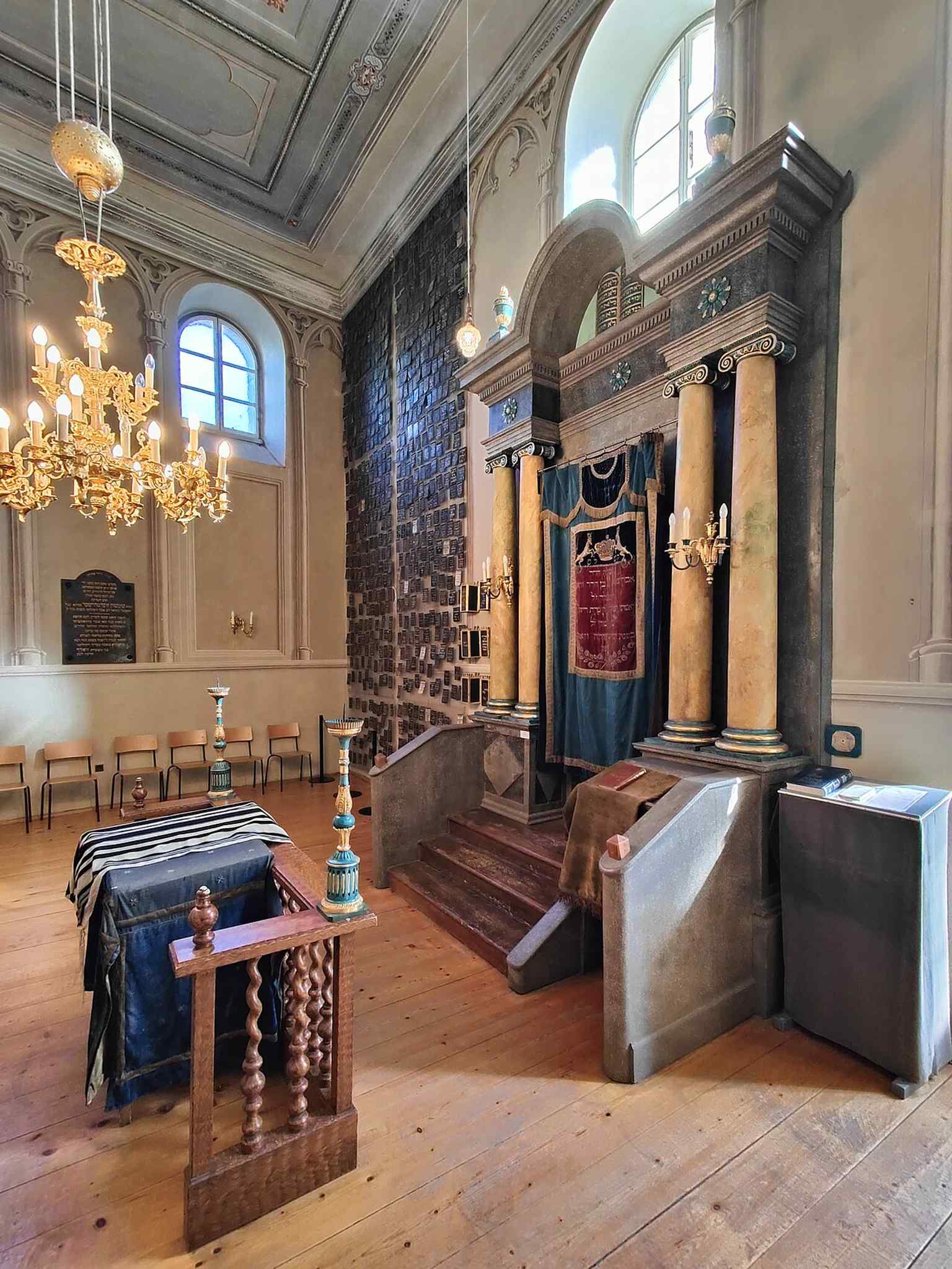
Inside the private synagogue of the Wertheimerhaus, where the historic prayer room still survives as a living memorial space.Photo: Niki.L, Wikimedia Commons, CC BY-SA 4.0. Cropped & resized. On your left, look for the enclosed rectangular burial ground with dense rows of upright stone slabs, their weathered surfaces marked by Hebrew inscriptions. This cemetery asks…Read moreShow less
Open dedicated page →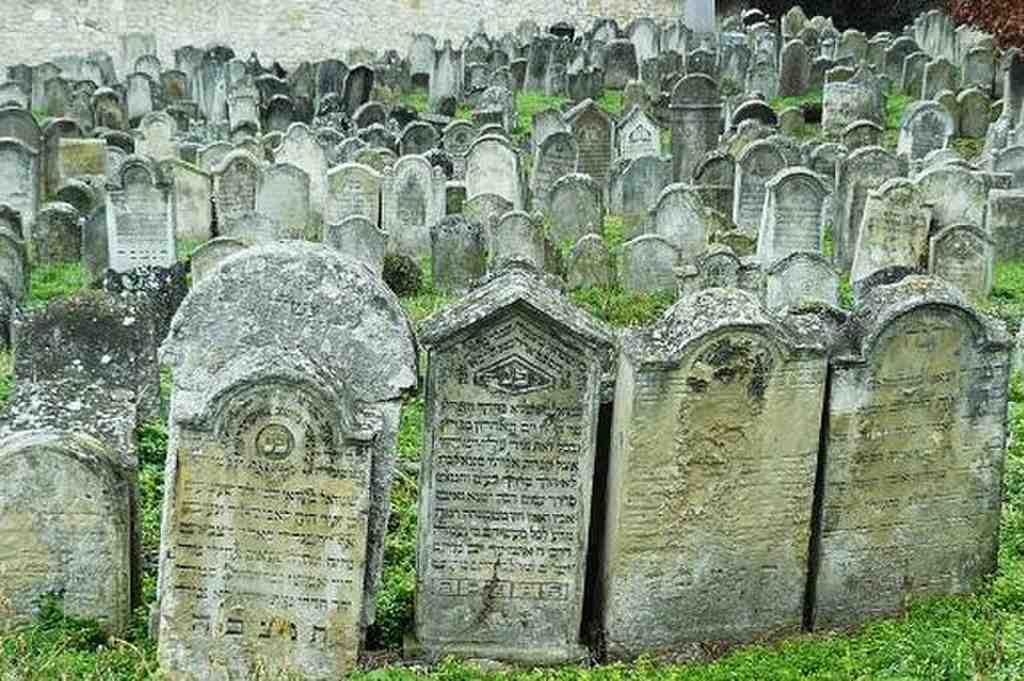
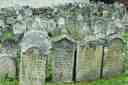
Jewish Cemetery Eisenstadt (old)Photo: MOs810, Wikimedia Commons, CC BY-SA 4.0. Cropped & resized. On your left, look for the enclosed rectangular burial ground with dense rows of upright stone slabs, their weathered surfaces marked by Hebrew inscriptions.
This cemetery asks for a quieter kind of attention. The oldest dated stone here reaches back to sixteen seventy-nine. By eighteen seventy-five, the ground was already full... which tells you something about how long Jewish life in Eisenstadt put down roots, endured, and kept returning to its own sacred places.
One grave, especially, keeps that thread alive: Rabbi Meir Eisenstadt, the eighteenth-century scholar whose arrival here owed much to Samson Wertheimer’s influence. Rabbi Meir built a Talmud school - a school for the close study of Jewish law and teaching - and students came from far beyond this town. He is not only remembered here; he is still visited. Jewish pilgrims continue to come to his grave, and his writings are still studied.
What does it mean when a grave is both evidence for historians and a destination for living devotion?
If you glance at your screen, the wider view shows how tightly the stones fill this space. And the close-up of a marker reveals why scholars worked so hard here. In nineteen twenty-two, Bernhard Wachstein published the inscriptions. Then, in twenty fifteen, the Austrian Jewish Museum documented one thousand eighty-two stones, linked them to one thousand one hundred five people, and put photos, plans, and transcriptions online... a project considered unique in Austria.
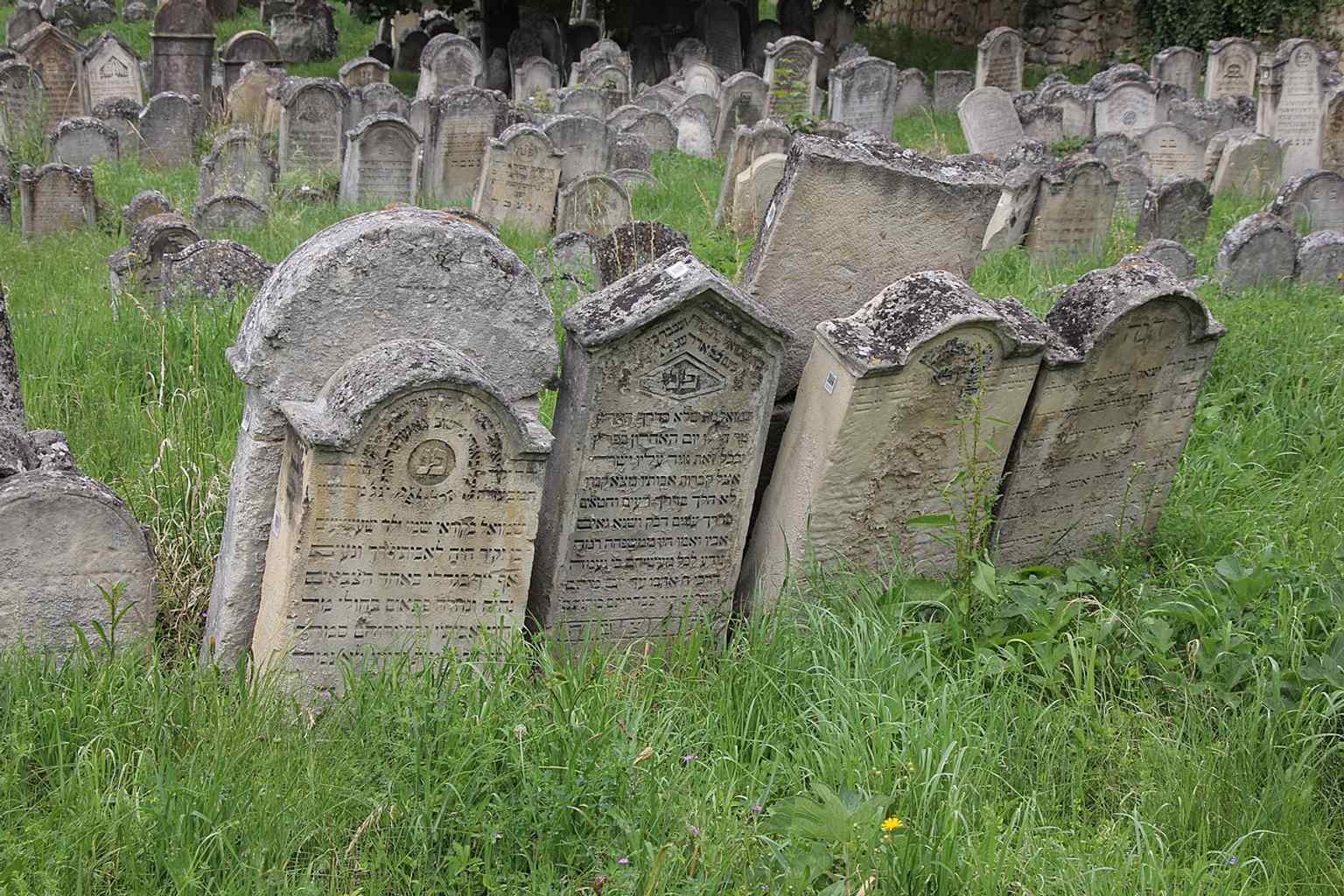
Another wide cemetery view showing the dense layout of graves that makes this site such an important historical document.Photo: Karl Gruber, Wikimedia Commons, CC BY-SA 4.0. Cropped & resized. Rabbi Meir’s own grave received a major restoration in twenty eighteen, nearly three centuries after his death. The cemetery is protected and generally locked, even though it is officially listed as open around the clock; the key is kept by the Austrian Jewish Museum.
Some places survive not by spectacle, but by people choosing, again and again, to come back. When you’re ready, we’ll continue to the Hospital of the Brothers of Mercy, about three minutes away.
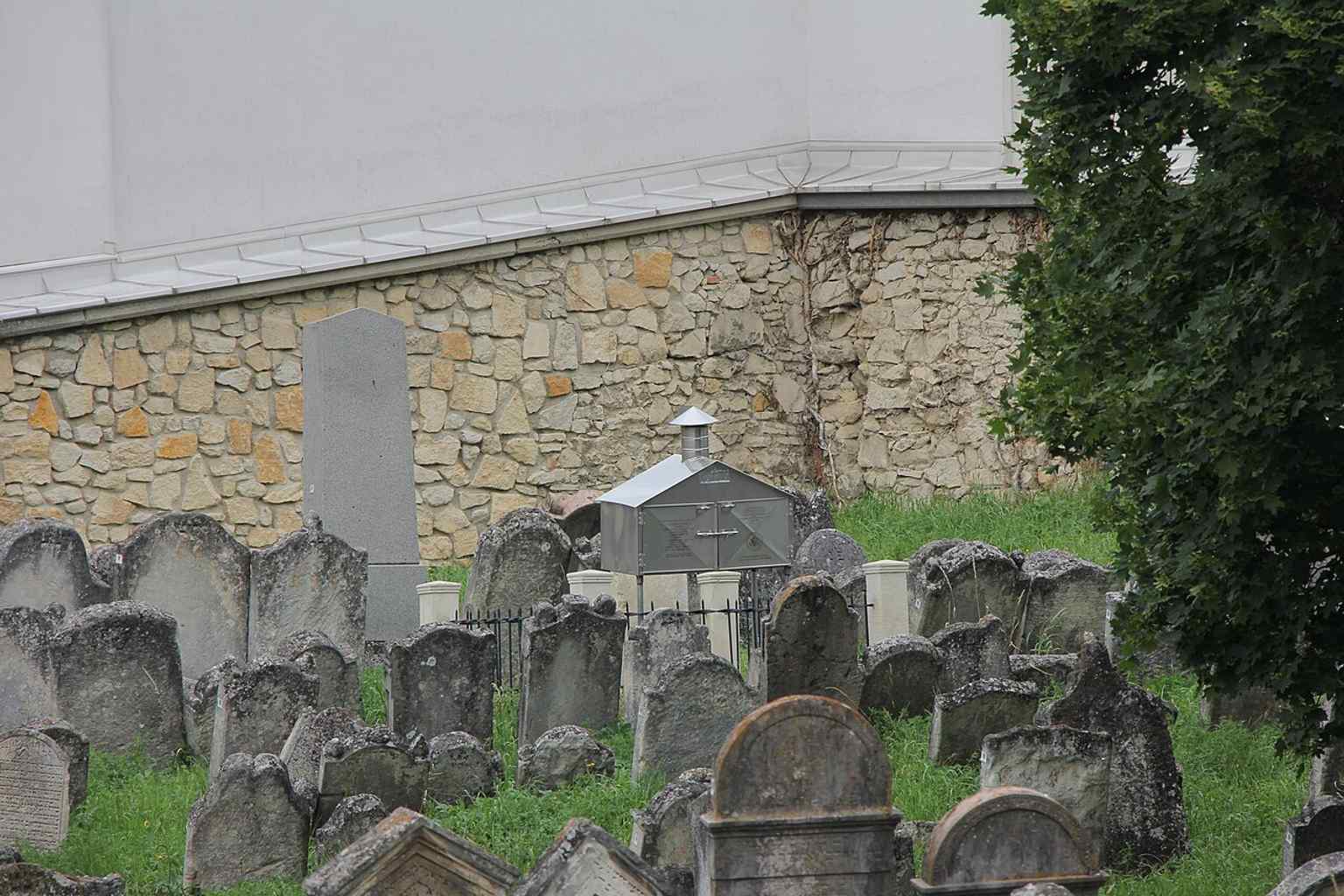
A longer perspective across the old Jewish cemetery, emphasizing its preserved, enclosed character and many surviving stones.Photo: Karl Gruber, Wikimedia Commons, CC BY-SA 4.0. Cropped & resized. 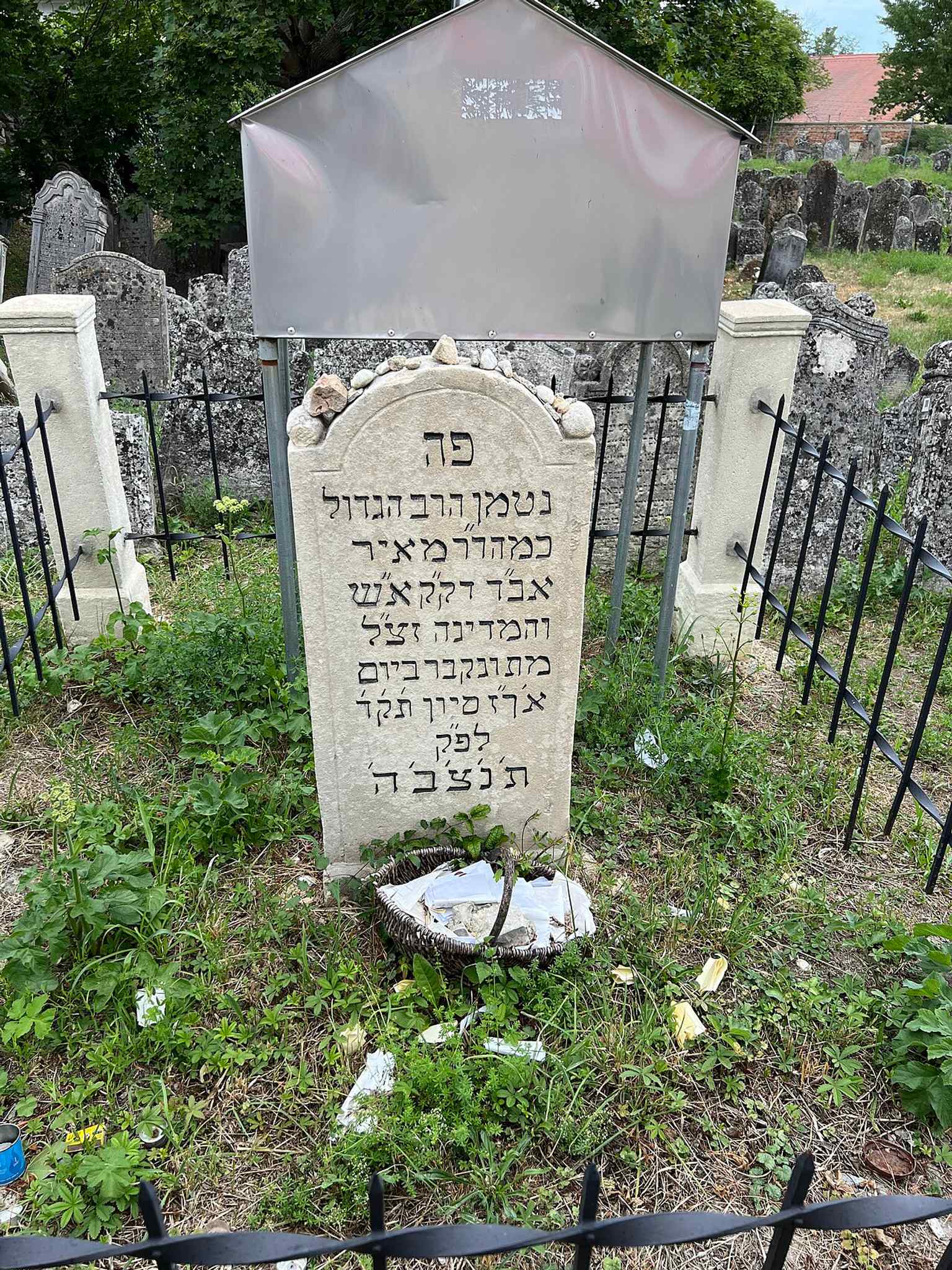
A close look at a gravestone in the cemetery, representative of the Hebrew inscriptions that researchers have catalogued and transcribed.Photo: Eisense, Wikimedia Commons, CC BY-SA 4.0. Cropped & resized. On your right, look for the pale, three-story hospital block with a central gable, the Esterházy coat of arms, and a niche holding a statue of Saint John of God. This place tells…Read moreShow less
Open dedicated page →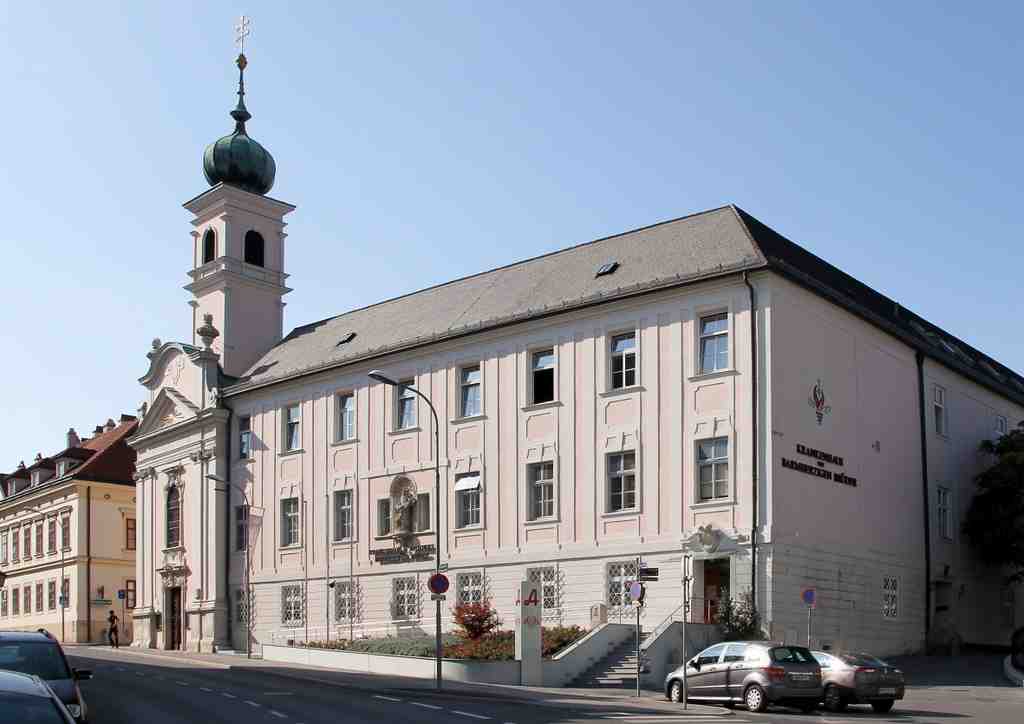
Hospital of the Brothers of MercyPhoto: C.Stadler/Bwag, Wikimedia Commons, CC BY-SA 3.0. Cropped & resized. On your right, look for the pale, three-story hospital block with a central gable, the Esterházy coat of arms, and a niche holding a statue of Saint John of God.
This place tells a quieter kind of power story... not who ruled, but who got cared for when life went sideways. Around the year fifteen hundred, Eisenstadt already had a poorhouse where brothers of the Order of Saint George nursed the sick and wounded. After the Esterházy family made the city their residence in sixteen twenty-two, they kept a civic hospital here in town. So the habit in Eisenstadt was old: authority, yes, but with a bed, a remedy, and someone at your side.
The turning point came with Prince Paul Anton the Second Esterházy. In seventeen fifty-nine, and formally in seventeen sixty with Empress Maria Theresa’s approval, he handed this complex to the Brothers of Mercy: hospital, church, and pharmacy together. Very efficient, really. One donation, several forms of salvation.
If you peek at the app image, you can catch that long historic frontage as part of a living medical campus, not a museum fossil.
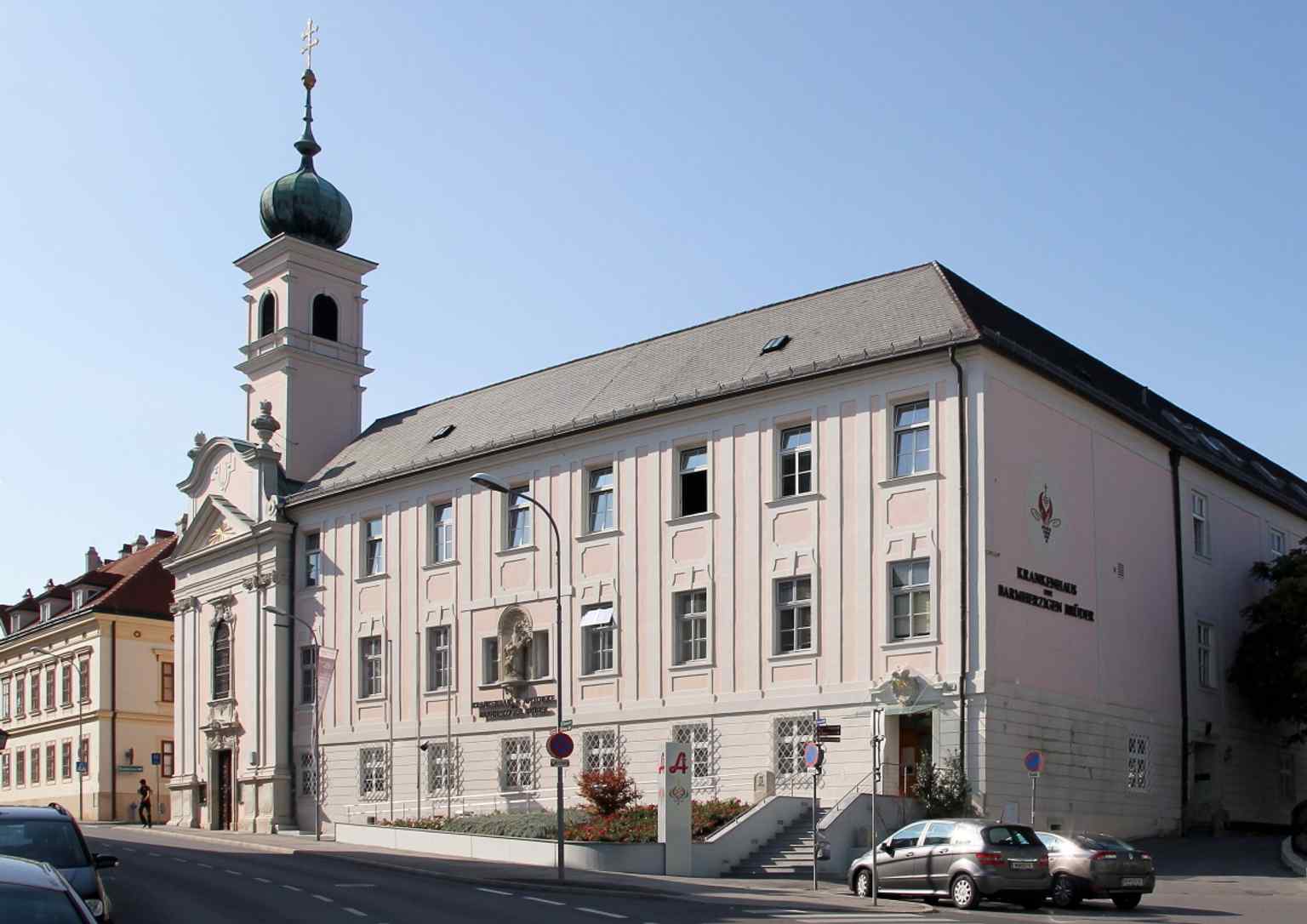
The Brothers of Mercy Hospital in Eisenstadt — the historic hospital complex that grew from a 1760 donation by Prince Paul Anton Esterházy.Photo: C.Stadler/Bwag, Wikimedia Commons, CC BY-SA 3.0. Cropped & resized. The church attached to the old hospital was already standing by seventeen thirty-nine. Inside, it holds a tiny baroque organ with just eight stops, meaning eight sets of pipes to shape the sound. And that modest instrument matters because Joseph Haydn likely wrote his Missa brevis Sancti Joannis de Deo for it, and tradition says he played here himself. So even in a hospital chapel, Eisenstadt found room for music... because healing the spirit has always been part of the treatment plan.
This house also absorbed the region’s harder history. Until the mid nineteenth century, the Brothers here belonged to the Hungarian order province, and the site stayed tied to Hungary until nineteen twenty-two. Then in nineteen thirty-eight, the Nazi state expropriated the hospital. That same year, after church schools were shut, the first Sister of the Divine Redeemer arrived to nurse here. What began as a stopgap became a long partnership with generations of sisters, ending only when the order finally withdrew.
After the Second World War, this was the only medical provider for northern and central Burgenland. New departments followed: internal medicine in nineteen forty-seven, then ear, nose and throat care, gynecology, pediatrics, trauma surgery, anesthesia, and intensive care. In recent years the hospital added a palliative ward, a stroke unit for urgent brain-attack treatment, a central laboratory, and even a Da Vinci surgical robot in twenty twenty-five. Baroque charity, meet high-tech medicine.
There is one more lovely Eisenstadt detail: the Brothers also kept a wine cellar here for more than two hundred and fifty years. Because of course in this town, even a hospital comes with a connection to music, faith, and wine.
From here, we head toward a different sort of recovery: public distraction, flickering screens, and a city learning to entertain itself. Haydn Cinema is about a four-minute walk from here.
And fittingly for a hospital, this place never really closes; it is open twenty-four hours a day.
On your left stands a pale plaster cinema block with a broad, boxy front, a raised central parapet, and the Haydn Kino name still marking the facade. This place matters because…Read moreShow less
Open dedicated page →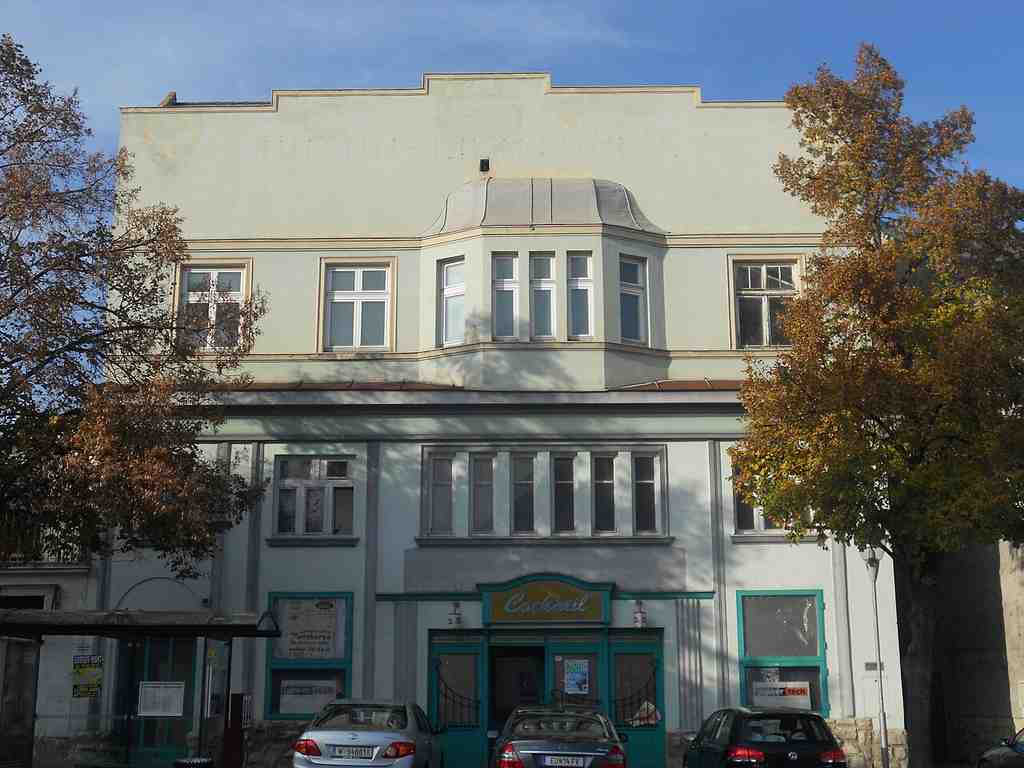
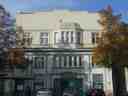
Haydn CinemaPhoto: Clemen, Wikimedia Commons, CC BY-SA 3.0 AT. Cropped & resized. On your left stands a pale plaster cinema block with a broad, boxy front, a raised central parapet, and the Haydn Kino name still marking the facade.
This place matters because Eisenstadt did not save culture only for palaces, churches, and concert halls. In nineteen twenty-four, architect Johann Schweifer designed this building as a real cinema from the start, not just a long rural hall with chairs shoved in. He gave it the feel of a small theater, with room for about four hundred and fifty people and even a balcony level, so moviegoing here began with a little ceremony built right into the walls.
Josefa Horak founded the Haydn Cinema that same year, and her family kept it until her great-grandson Eduard Tschida closed it in the late nineteen eighties. Most tourists never hear the odd detail locals enjoy repeating: at the beginning, the first license seems to have belonged not to a private owner, but to the municipality of Oberberg Eisenstadt itself. So this was civic culture with popcorn ambitions... a very Austrian combination.
After the war, the Red Army used the cinema to screen films about Russian culture. When the house reopened in December nineteen forty-five, with four hundred and fifty-two seats, the mood was hopeful but hardly glamorous. People lacked money, the walk home in darkness felt uncertain, and yes, locals remembered a serious flea infestation. Nothing says postwar recovery quite like trying to enjoy a film while wondering what else bought a ticket.
If you glance at the image on your screen, you can see that purpose-built theatrical front for yourself. And because Eisenstadt lacked other big halls, this building also hosted political meetings. People gathered here not just to watch stories, but to rebuild public life together.
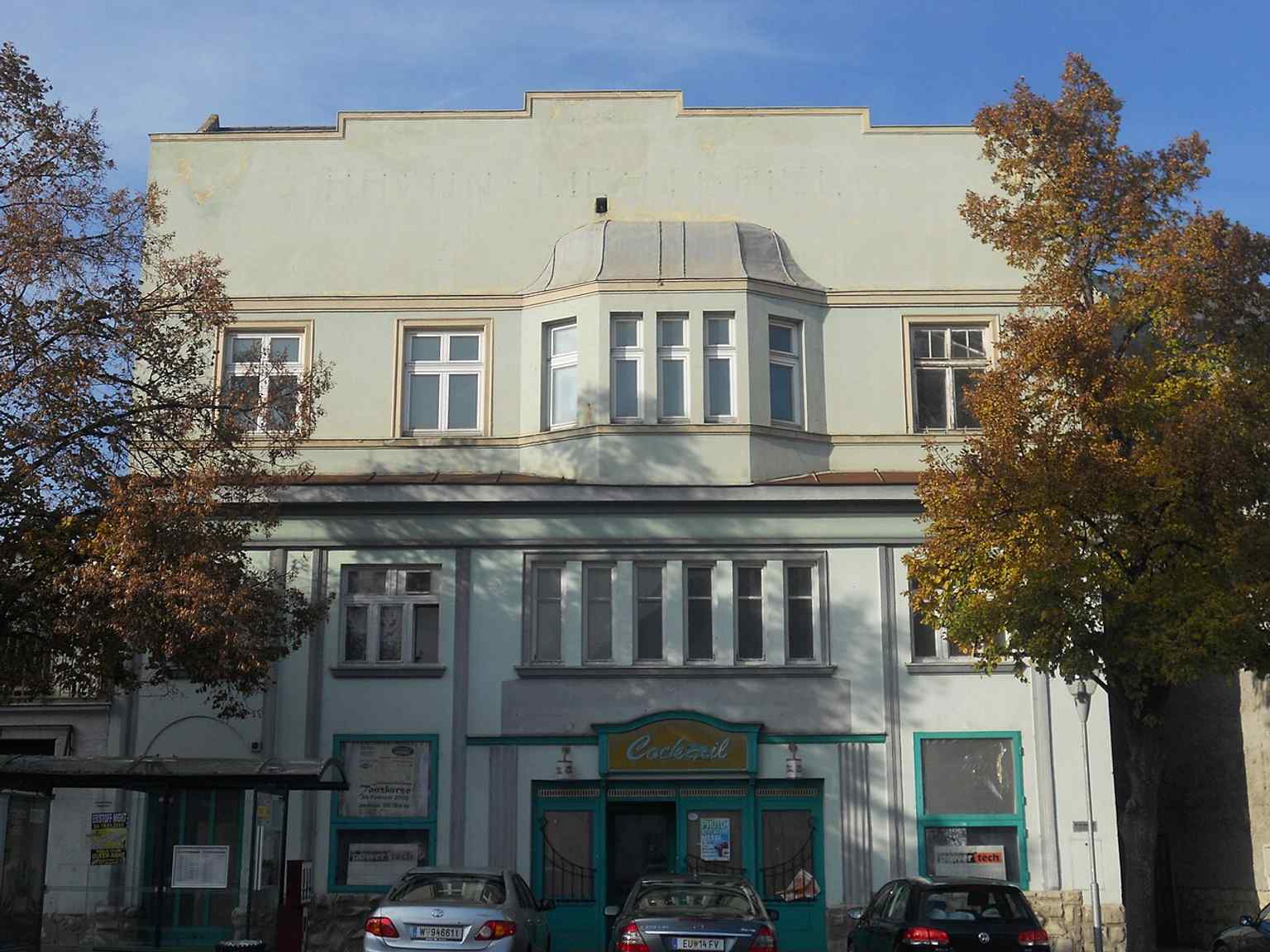
The former Haydn Cinema on Kalvarienbergplatz, a protected building in Eisenstadt that was purpose-built in 1924 as a theatre-like movie house.Photo: Clemens, Wikimedia Commons, CC BY-SA 3.0 at. Cropped & resized. After its cinema years, it drifted through new roles: cocktail bar, dance classes, billiards, gambling, the place some still recall as Paradiso. Then the city bought it back in two thousand twenty-two, partly because Eisenstadt had become the only Austrian state capital without a cinema. That stung.
From here, head to the Mountain Church, about three minutes away. The city’s shared life did not survive only in sacred or grand places... it survived anywhere people insisted on meeting again.
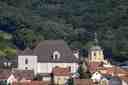
On your left, the Mountain Church stands out as a pale, block-like church with a broad hipped roof, a two-story entrance porch, and two squat tower stumps capped with tent-shaped…Read moreShow less
Open dedicated page →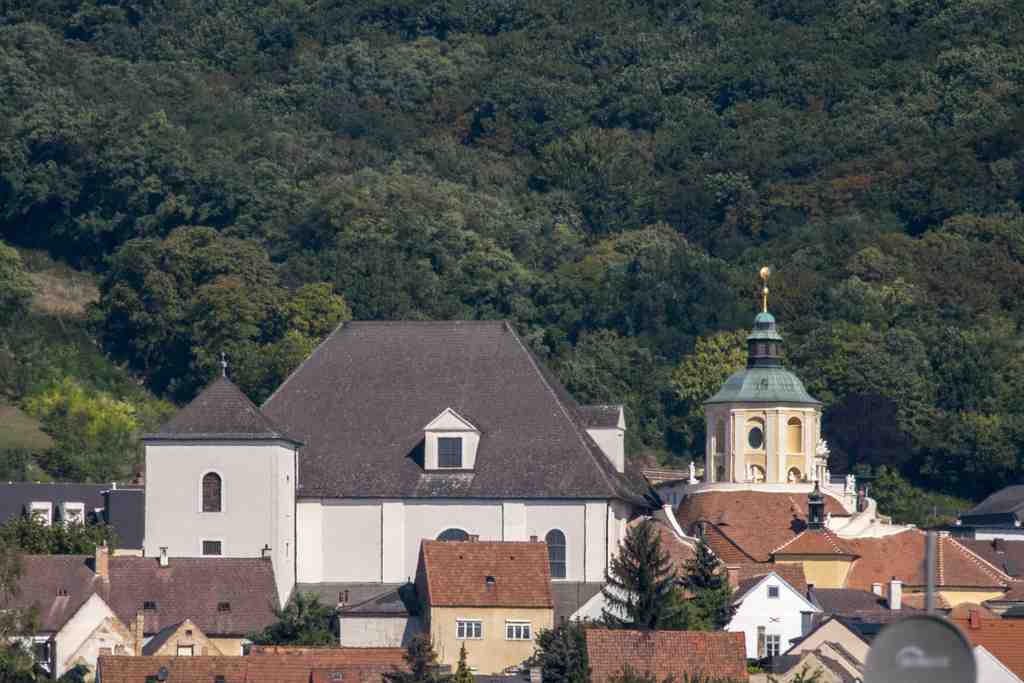
Mountain Church (Eisenstadt)Photo: Thomas Ledl, Wikimedia Commons, CC BY-SA 4.0. Cropped & resized. On your left, the Mountain Church stands out as a pale, block-like church with a broad hipped roof, a two-story entrance porch, and two squat tower stumps capped with tent-shaped roofs.
This is the Bergkirche, also called the Haydn Church or Calvary Church, and it feels like a final gathering point for Eisenstadt’s many threads. Prince Paul Esterházy imagined a grand pilgrimage church here, beside a Calvary hill modeled on Maria Lanzendorf. A Calvary hill, by the way, is a devotional landscape with chapels that let pilgrims physically follow Christ’s Passion. Fittingly, this sacred place began with a story: a Marian image commissioned by Paul Esterházy survived fire and destruction in seventeen oh seven, and after a reported healing in seventeen eleven, people started coming here in hope.
What makes that more striking is that Oberberg was not some ancient holy summit. It was woods, marsh, and quarry. The sacred landscape had to be invented... and then built into memory.
Construction began in seventeen fifteen, stalled when enthusiasm faded, then Nikolaus the First Joseph Esterházy pushed it forward around seventeen sixty-five. The church was finally consecrated in eighteen oh three. You can sense the ambition and the compromise together. The original plan was enormous; reality trimmed it back. Architecture, like politics, occasionally meets a budget.
Joseph Haydn gives this place its human heartbeat. When he arrived in Eisenstadt in seventeen sixty-one, he first lived right next door in the Musikerhaus, the musicians’ house. From here, the church became part of his working routine, not just his legend. From seventeen ninety-six on, Haydn’s six late Masses for Princess Maria Josepha Hermenegild Esterházy’s name day were performed here. If you check the image on your screen, you can see the organ inside, built in seventeen ninety-seven by Johann Gottfried Malleck to Haydn’s own specification. That instrument is one of the few direct pieces of his daily musical world still with us.
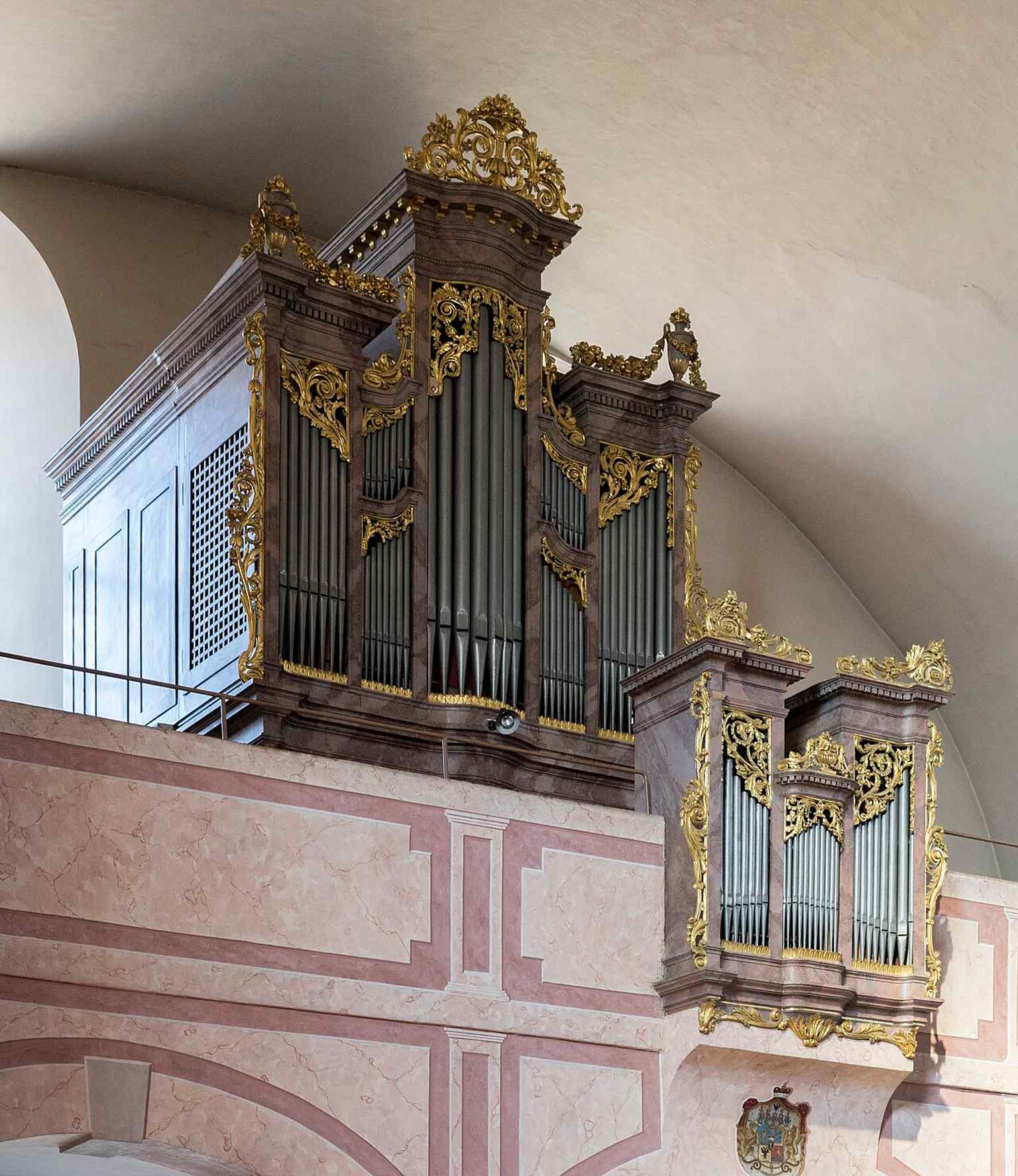
The Haydn organ, central to the church’s musical history and to the performances of Haydn’s late Masses here.Photo: Thomas Ledl, Wikimedia Commons, CC BY-SA 4.0. Cropped & resized. And then came his afterlife, which got... complicated. Haydn died in eighteen oh nine, his remains came to Eisenstadt in eighteen twenty, and in nineteen thirty-two a mausoleum was prepared here under the north tower. Even after death, Haydn needed project management. His skull had been kept separately in Vienna and only returned in nineteen fifty-four, when the sculptor Gustinus Ambrosi brought it back so the remains could finally be reunited. If you want a detail of that strange epilogue, the inscription image in the app points to it.
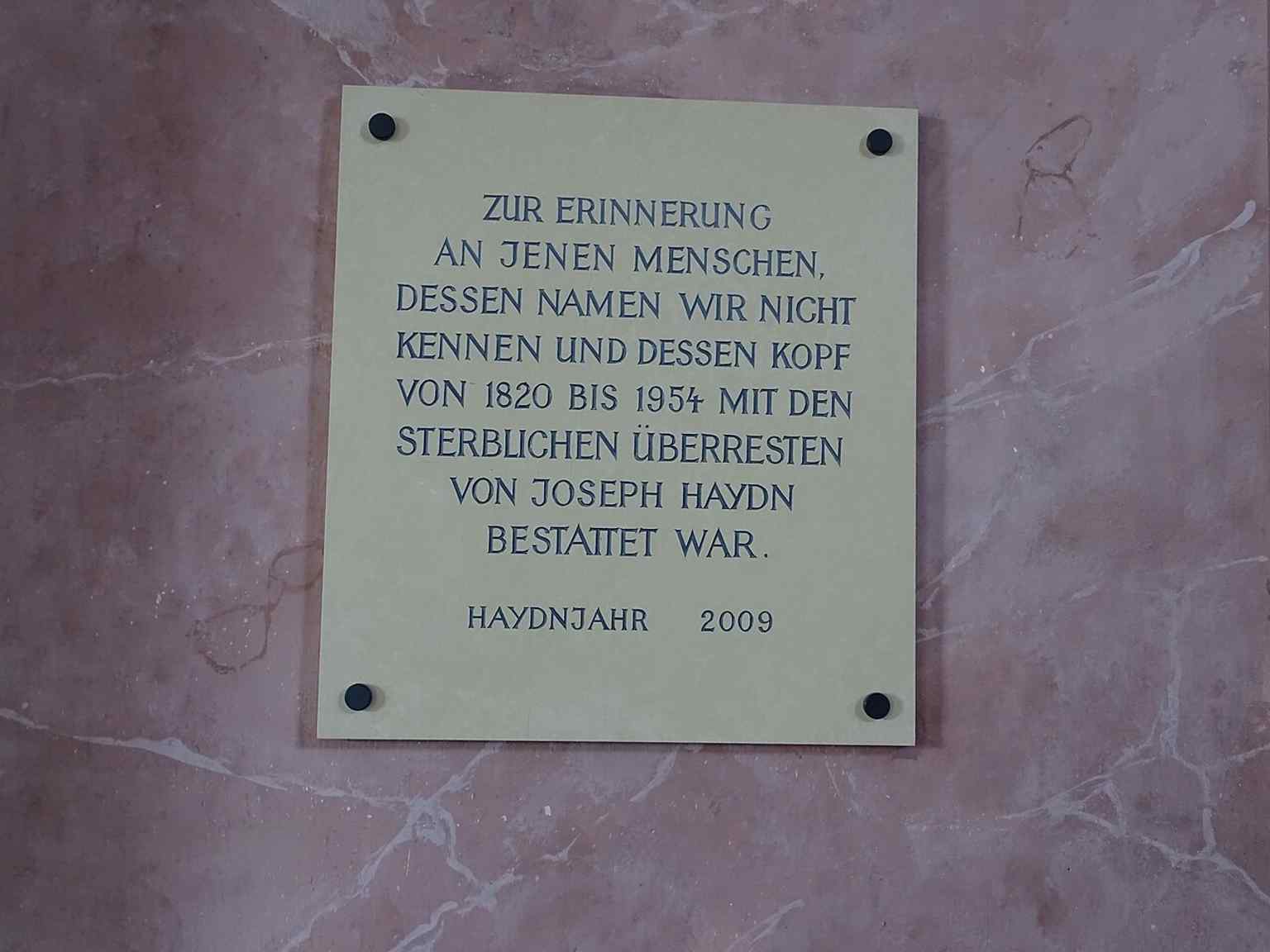
Another inscription linked to Haydn’s burial and the story of his remains, part of the church’s unusual memorial history.Photo: Liuthalas, Wikimedia Commons, CC BY-SA 4.0. Cropped & resized. Before you go, look at the church and the Calvary setting together. You can read the whole idea from the outside: worship, procession, princely ambition, and remembrance all folded into one place. For this city, memory was never passive. It had to be composed, rebuilt, and sung into stone.
If you want to go inside another time, regular opening is very limited: Sunday from ten thirty A-M to noon.
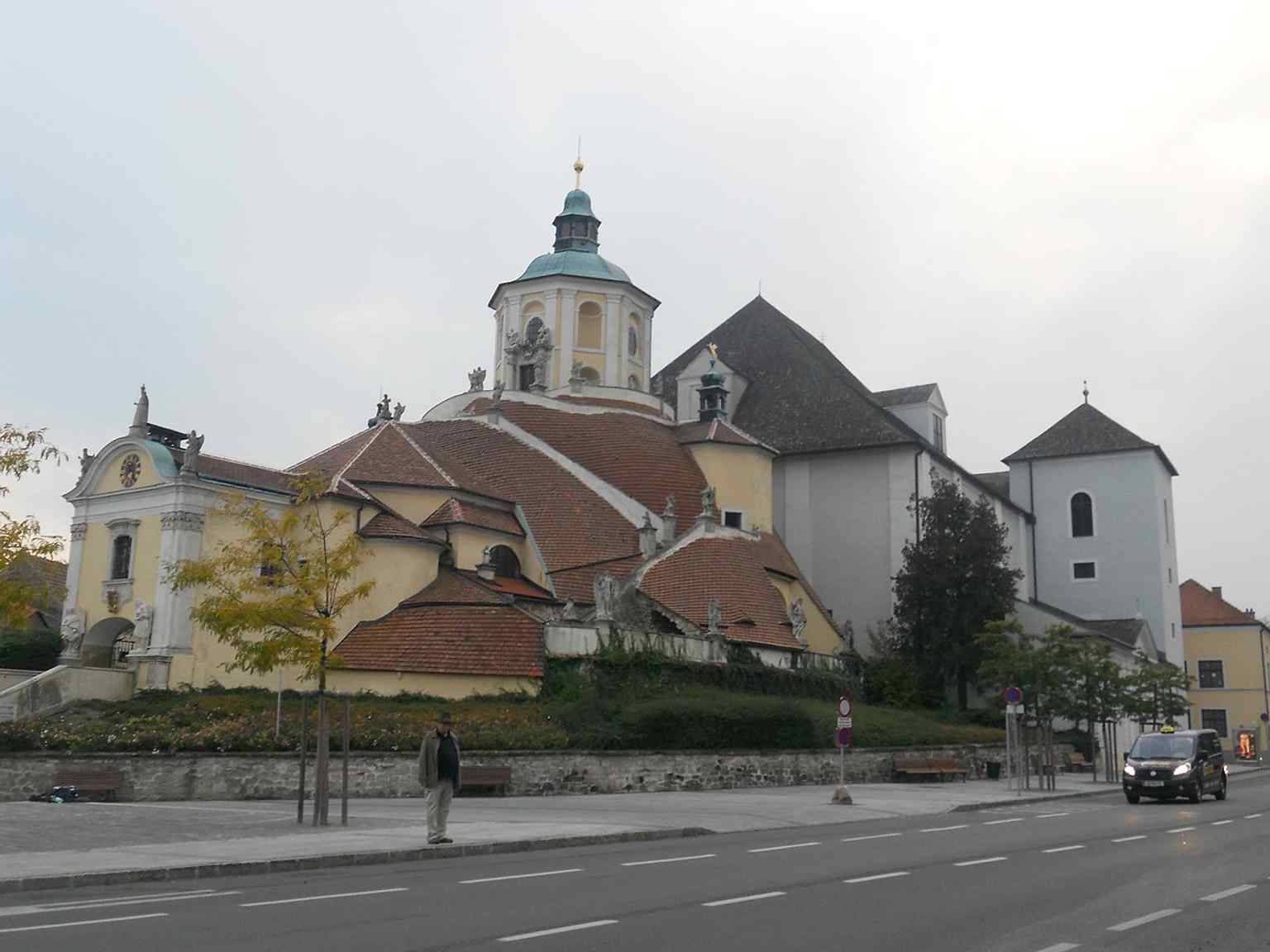
A full view of the Bergkirche with the Kalvarienberg beside it — this is the pilgrimage setting that made the church a landmark in Eisenstadt.Photo: Clemens, Wikimedia Commons, CC BY-SA 3.0 at. Cropped & resized. 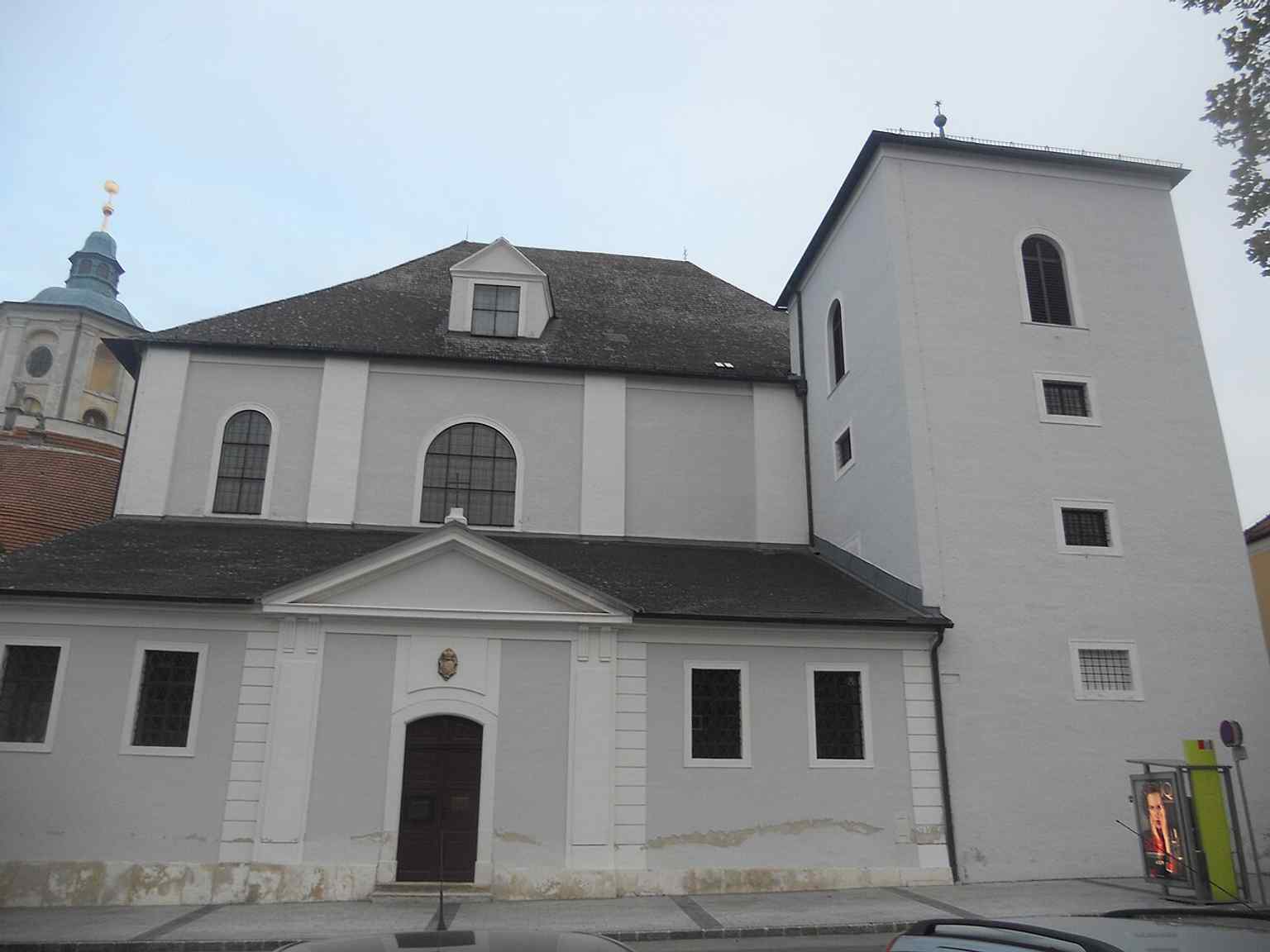
The church façade in daylight, showing the distinctive west front of the Haydnkirche and its historic pilgrimage architecture.Photo: Clemens, Wikimedia Commons, CC BY-SA 3.0 at. Cropped & resized. 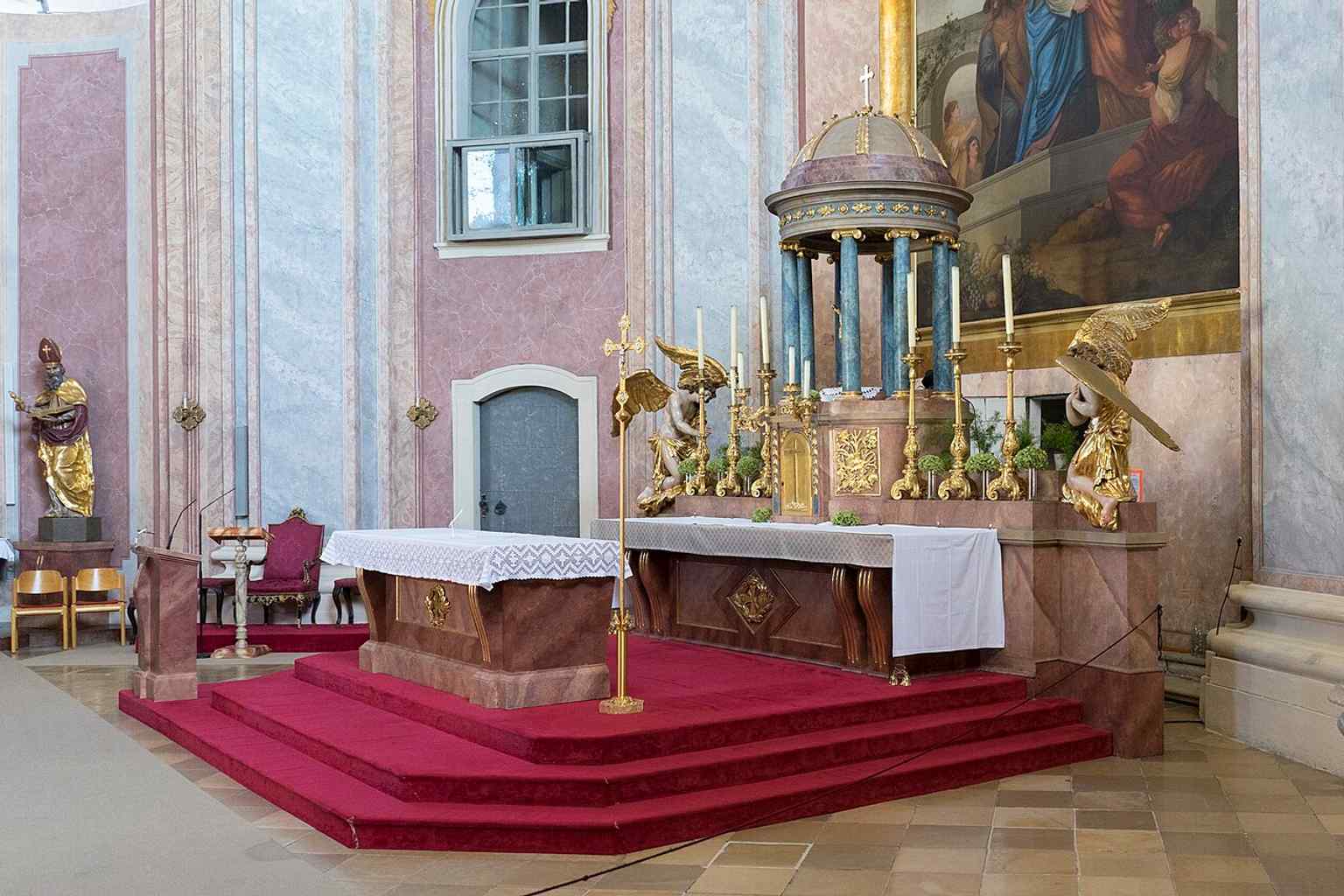
The altar area with the passage toward the Kalvarienberg behind it — a reminder that the church is tightly linked to the adjacent pilgrimage hill.Photo: Thomas Ledl, Wikimedia Commons, CC BY-SA 4.0. Cropped & resized. 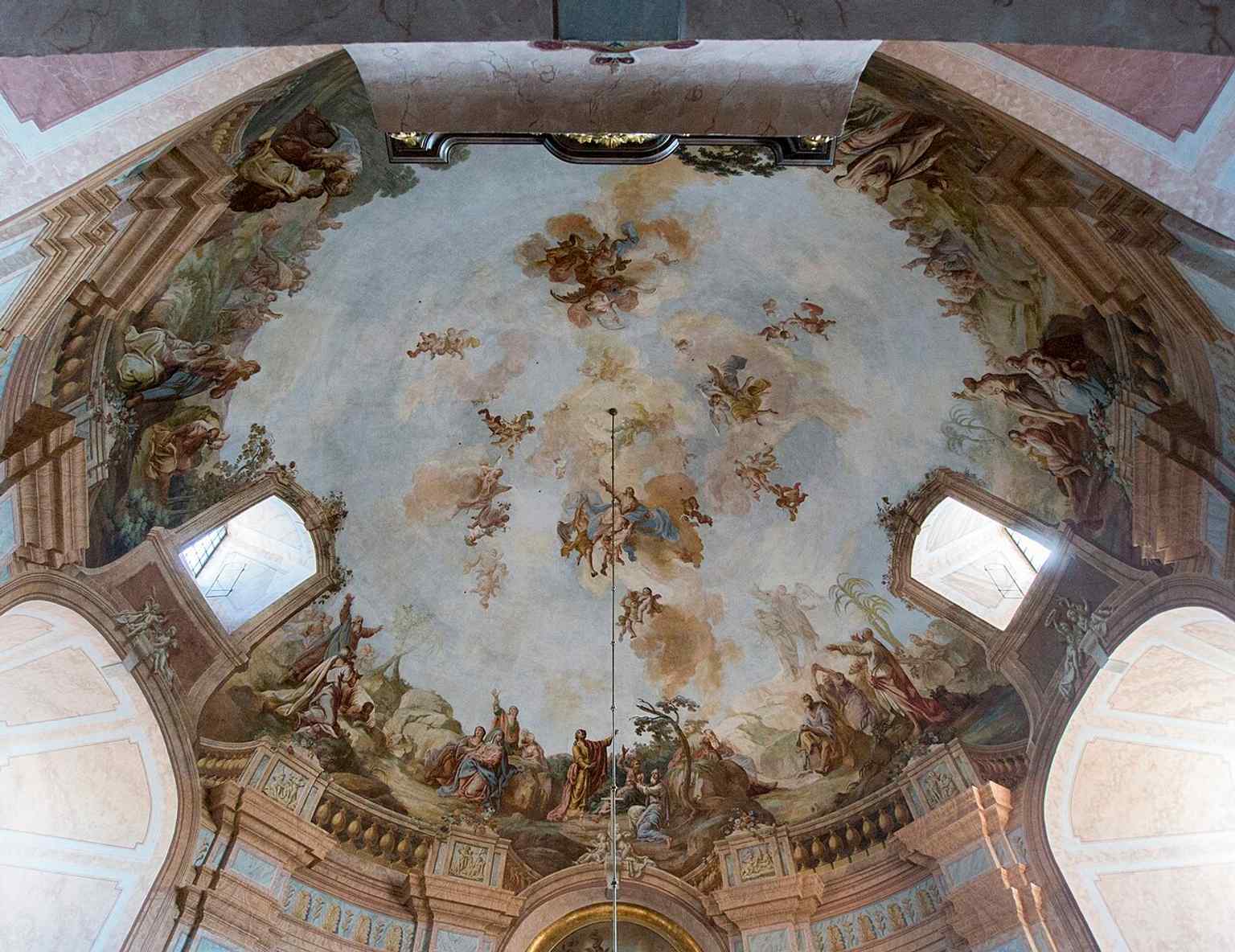
The ceiling painting in the dome — one of the church’s most important artworks, created in the 18th-century interior decoration.Photo: Thomas Ledl, Wikimedia Commons, CC BY-SA 4.0. Cropped & resized. 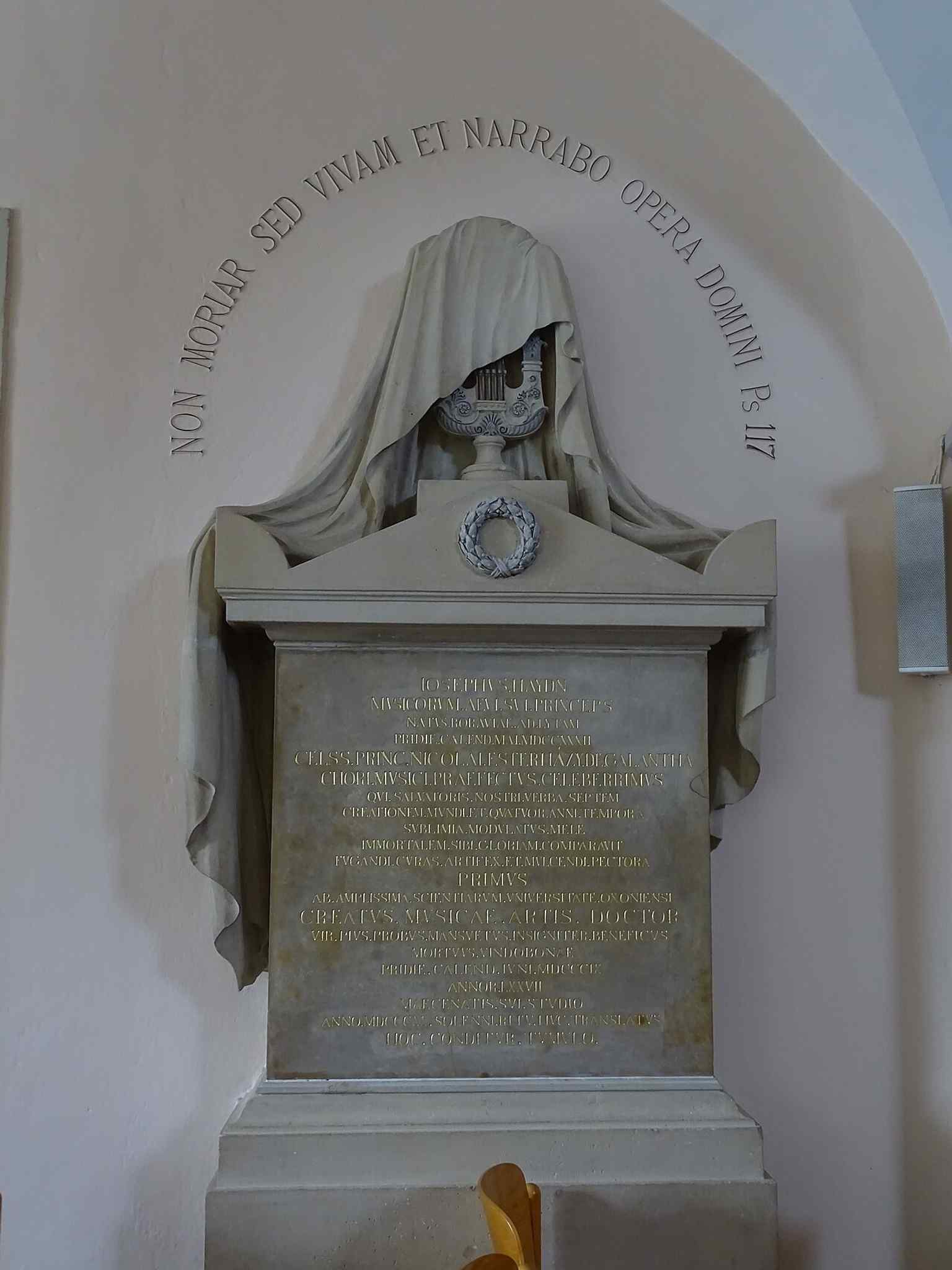
A commemorative inscription for Joseph Haydn — a direct trace of the composer’s lasting connection to the church.Photo: Liuthalas, Wikimedia Commons, CC BY-SA 4.0. Cropped & resized. 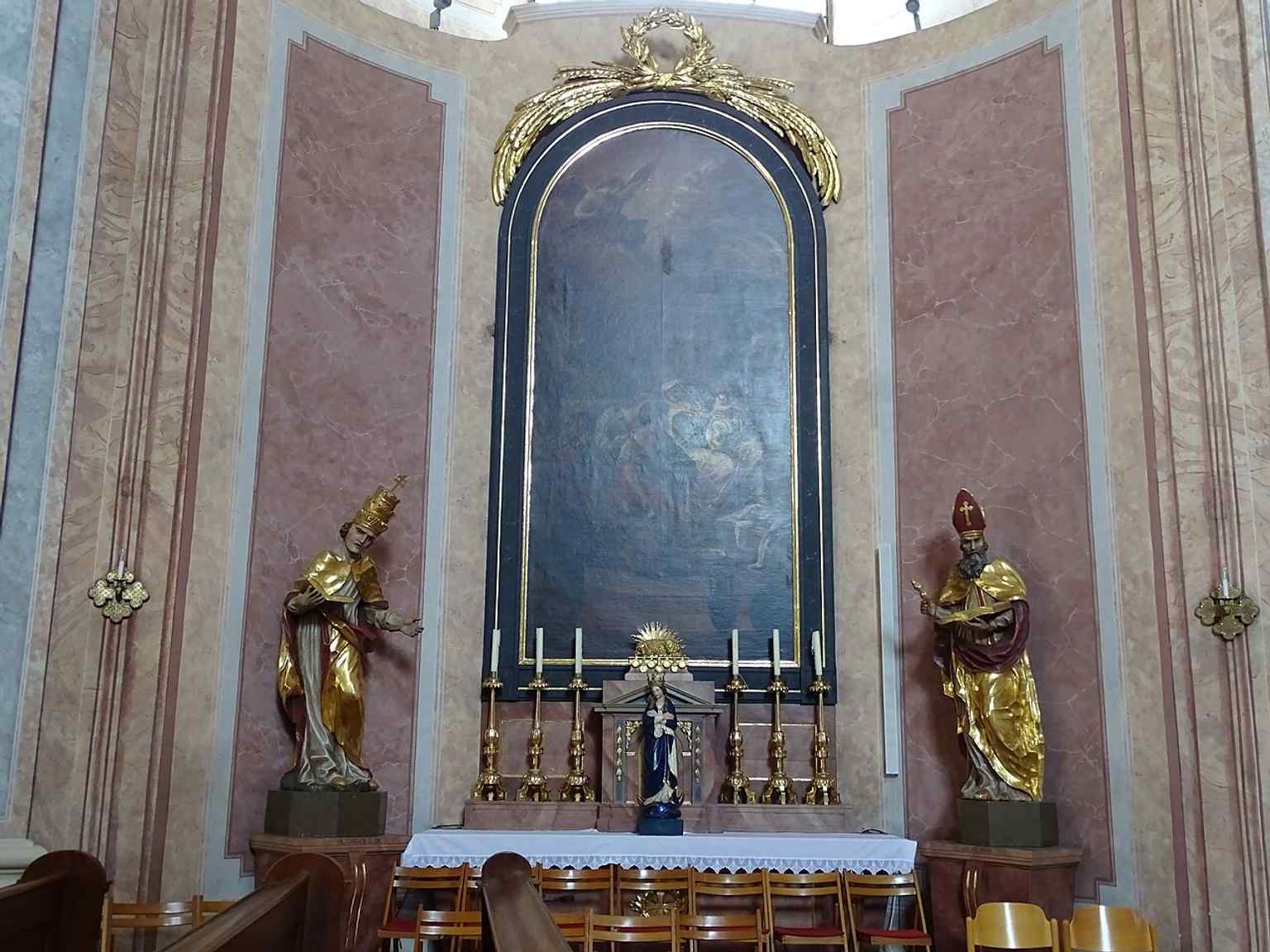
The left side altar, showing the rich devotional interior beyond the main altar and organ.Photo: Liuthalas, Wikimedia Commons, CC BY-SA 4.0. Cropped & resized. 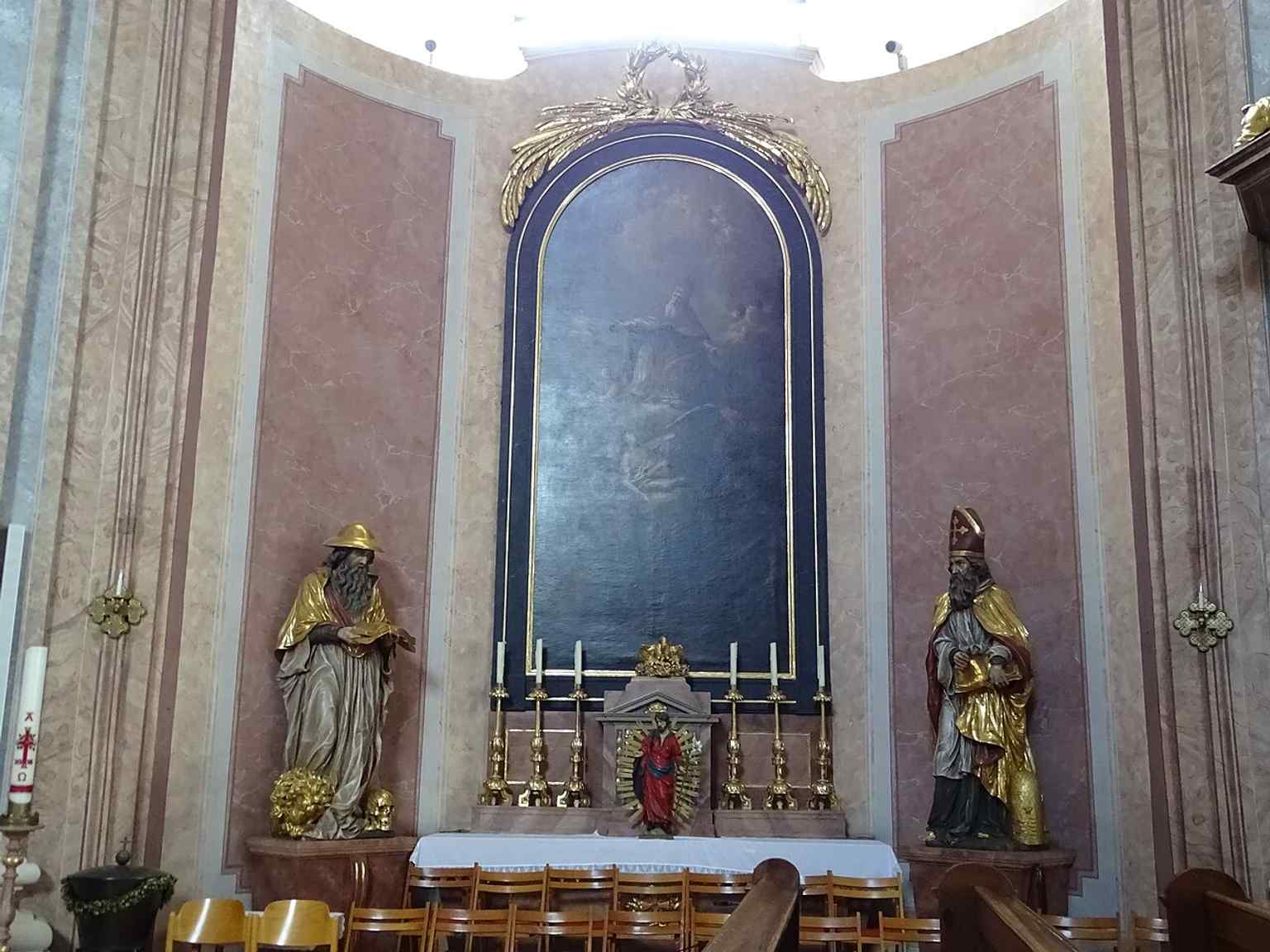
The right side altar, giving a second view of the church’s balanced Baroque interior arrangement.Photo: Liuthalas, Wikimedia Commons, CC BY-SA 4.0. Cropped & resized. 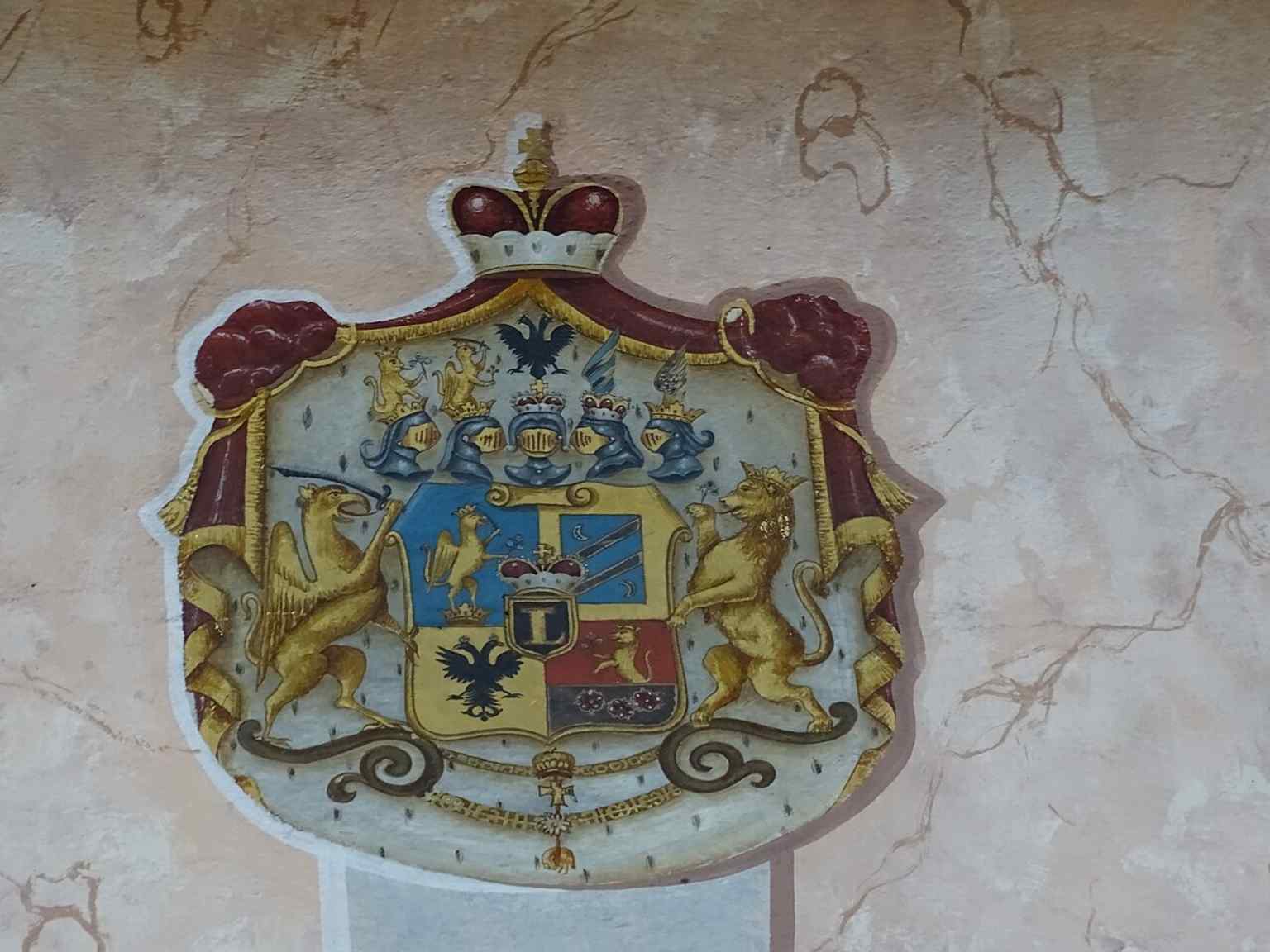
The family coat of arms inside the church, reflecting the Esterházy patronage behind the Bergkirche’s creation.Photo: Liuthalas, Wikimedia Commons, CC BY-SA 4.0. Cropped & resized.
Reviews
Frequently asked questions
How do I start the tour?
After purchase, download the AudaTours app and enter your redemption code. The tour will be ready to start immediately - just tap play and follow the GPS-guided route.
Do I need internet during the tour?
No! Download the tour before you start and enjoy it fully offline. Only the chat feature requires internet. We recommend downloading on WiFi to save mobile data.
Is this a guided group tour?
No - this is a self-guided audio tour. You explore independently at your own pace, with audio narration playing through your phone. No tour guide, no group, no schedule.
How long does the tour take?
Most tours take 60–90 minutes to complete, but you control the pace entirely. Pause, skip stops, or take breaks whenever you want.
What if I can't finish the tour today?
No problem! Tours have lifetime access. Pause and resume whenever you like - tomorrow, next week, or next year. Your progress is saved.
What languages are available?
All tours are available in 50+ languages. Select your preferred language when redeeming your code. Note: language cannot be changed after tour generation.
Where do I access the tour after purchase?
Download the free AudaTours app from the App Store or Google Play. Enter your redemption code (sent via email) and the tour will appear in your library, ready to download and start.
If you don't enjoy the tour, we'll refund your purchase. Contact us at [email protected]
Checkout securely with 





.JPG)


.jpg)
.jpg)
.jpg)
.jpg)
.jpg)


.jpg)

.jpg)


