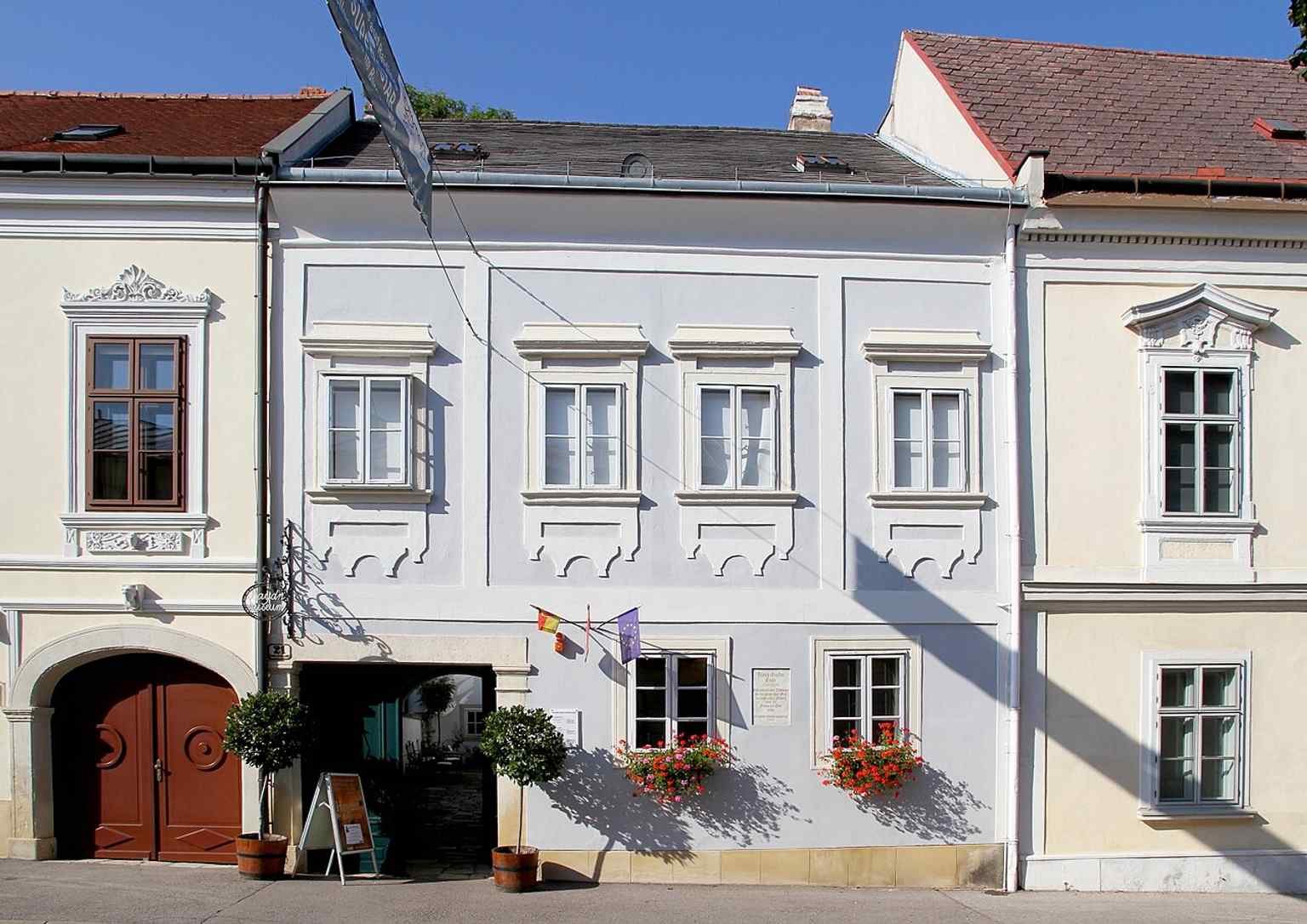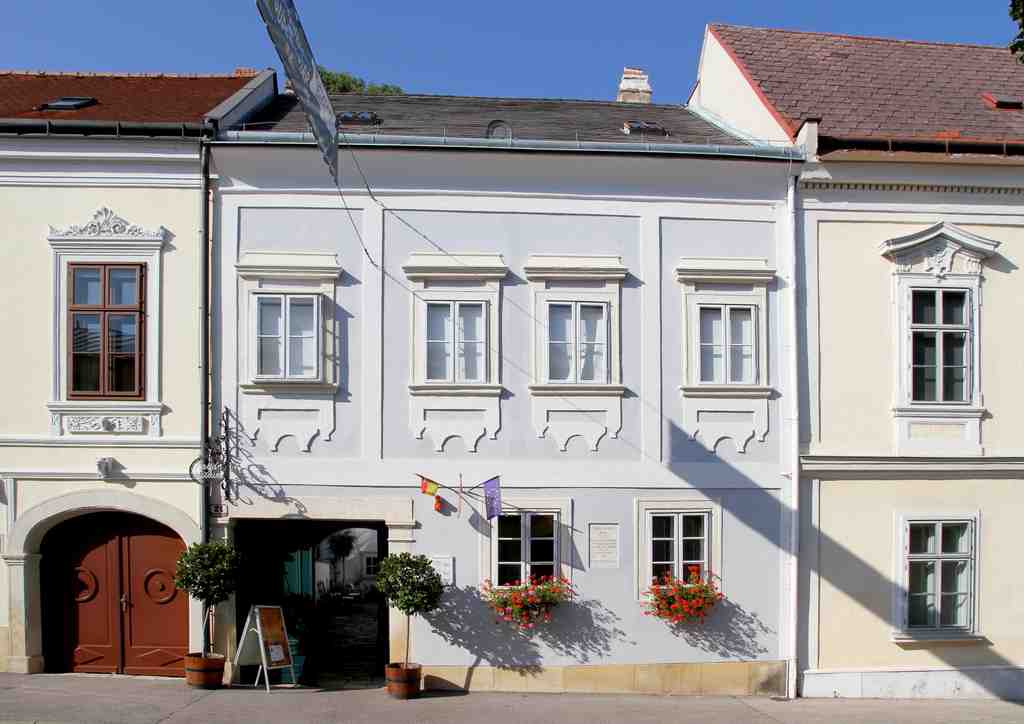
Look for the light gray two-story house with a low gabled roof, four front windows set in a neat row, and a broad arched gate edged with simple white baroque plaster.
This is Haydn’s house and neighborhood... one of the rare places where Joseph Haydn stops being a famous name and turns back into a resident with neighbors, bills, and rooms to maintain. The same Joseph Haydn who solved musical problems for church and court also had to manage a household here, which is honestly much less glamorous and much more revealing.
The house itself is older than Haydn. A Gothic window uncovered inside points back to the sixteenth century, and the date seventeen forty-seven on the cellar entrance marks the last major rebuilding before he arrived. In seventeen sixty-six, Haydn bought the property from a widow. She stayed on in the ground floor until she died in seventeen sixty-seven, and only then did the house fully become his. After that, some of his students moved in downstairs, while Haydn and his wife, Maria Anna Theresia, lived in five rooms on the upper floor.
Through that big gate, there’s a small courtyard, and behind the front house later wings run back toward where the old city wall once stood. So this was not some isolated shrine to genius. It was a working town property, tucked into the daily life of Eisenstadt.
And yes, genius did not cancel installment payments. Haydn bought the house on credit, and when the widow died and the remaining balance suddenly came due, he had to ask his Esterházy employer for a loan. Even great composers sometimes need help with the mortgage.
Then came fire... twice. City fires damaged the house in seventeen sixty-eight and again in seventeen seventy-six, part of that recurring local pattern where whole lives could be rewritten in a few brutal hours. After the second fire, someone compiled an inventory of what had been lost: furniture, household goods, the ordinary things that make a life feel solid until they vanish. If strangers had to rebuild your life from a list of ruined belongings alone, what would they learn about you?
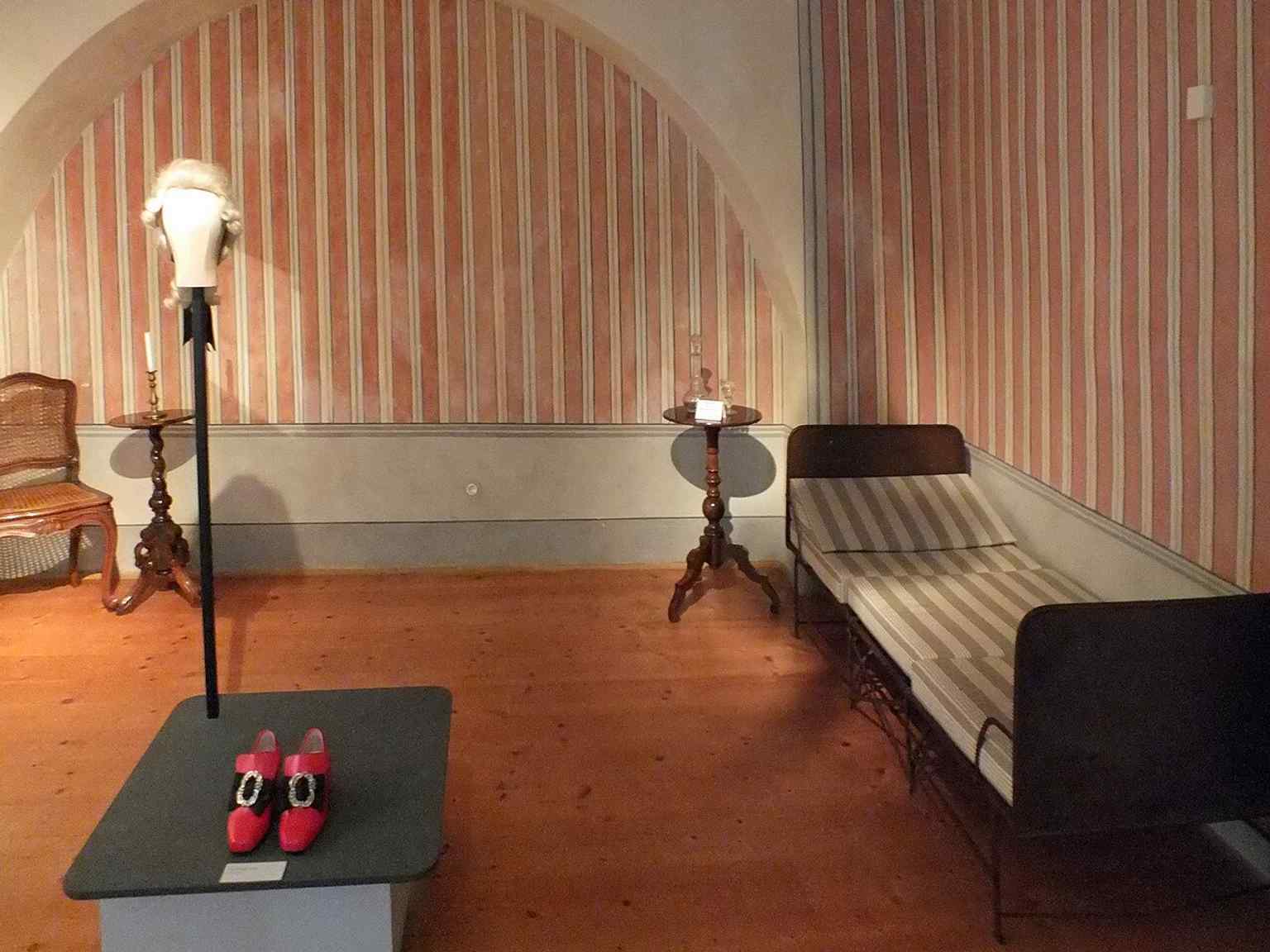
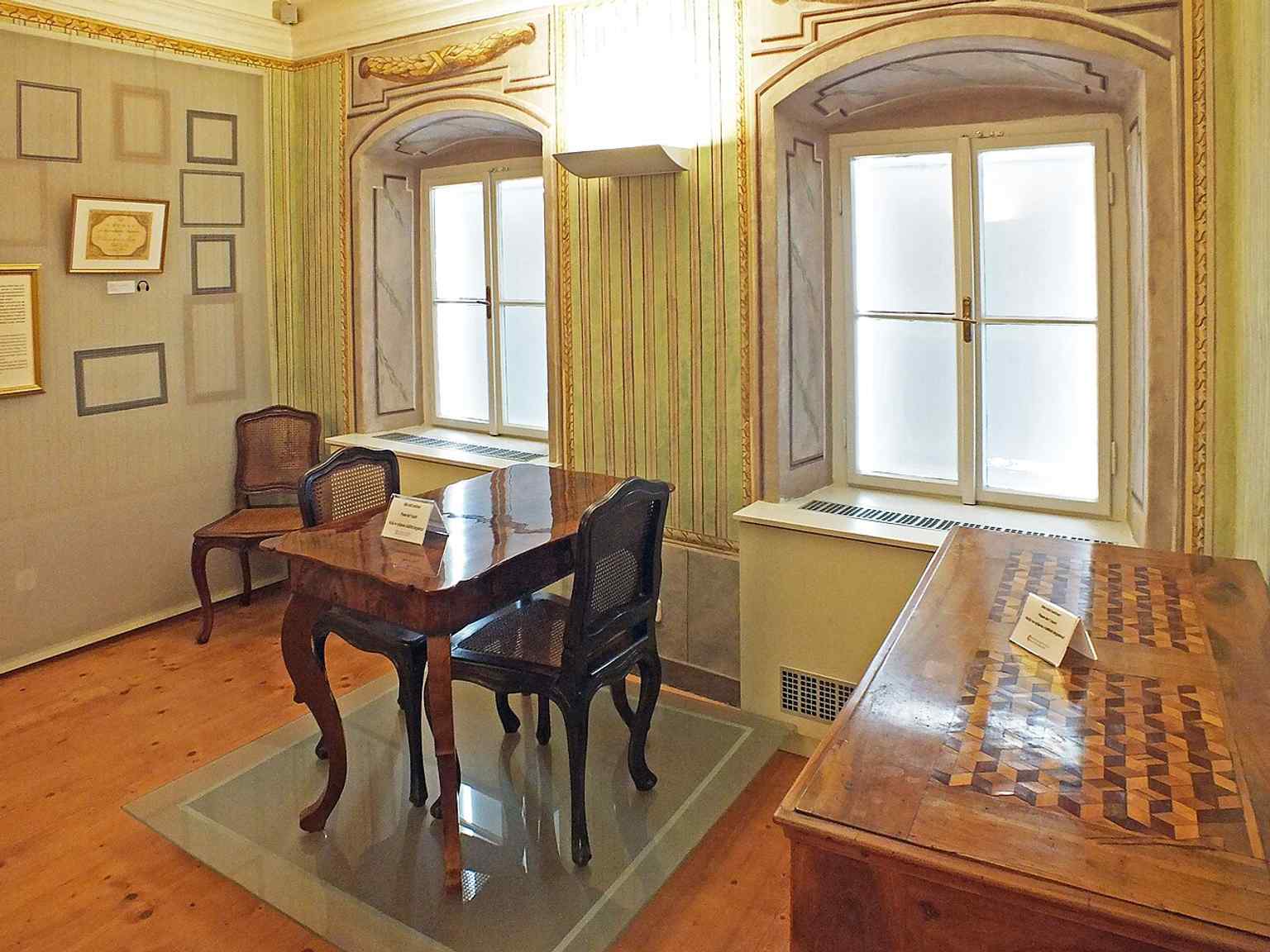
That inventory later became strangely precious. When restorers worked here from two thousand and eight onward, they peeled back twenty-six layers of paint and uncovered Haydn-era wall decoration in three of the original five rooms. The fire-loss records helped them reconstruct the interior with unusual honesty, not as a legend, but as a home recovering itself. If you want a quick glimpse of that domestic world, have a look at the kitchen image in the app. And if you’re curious how this modest facade shifted from ordinary street house to museum front, the before-and-after image is worth a glance.
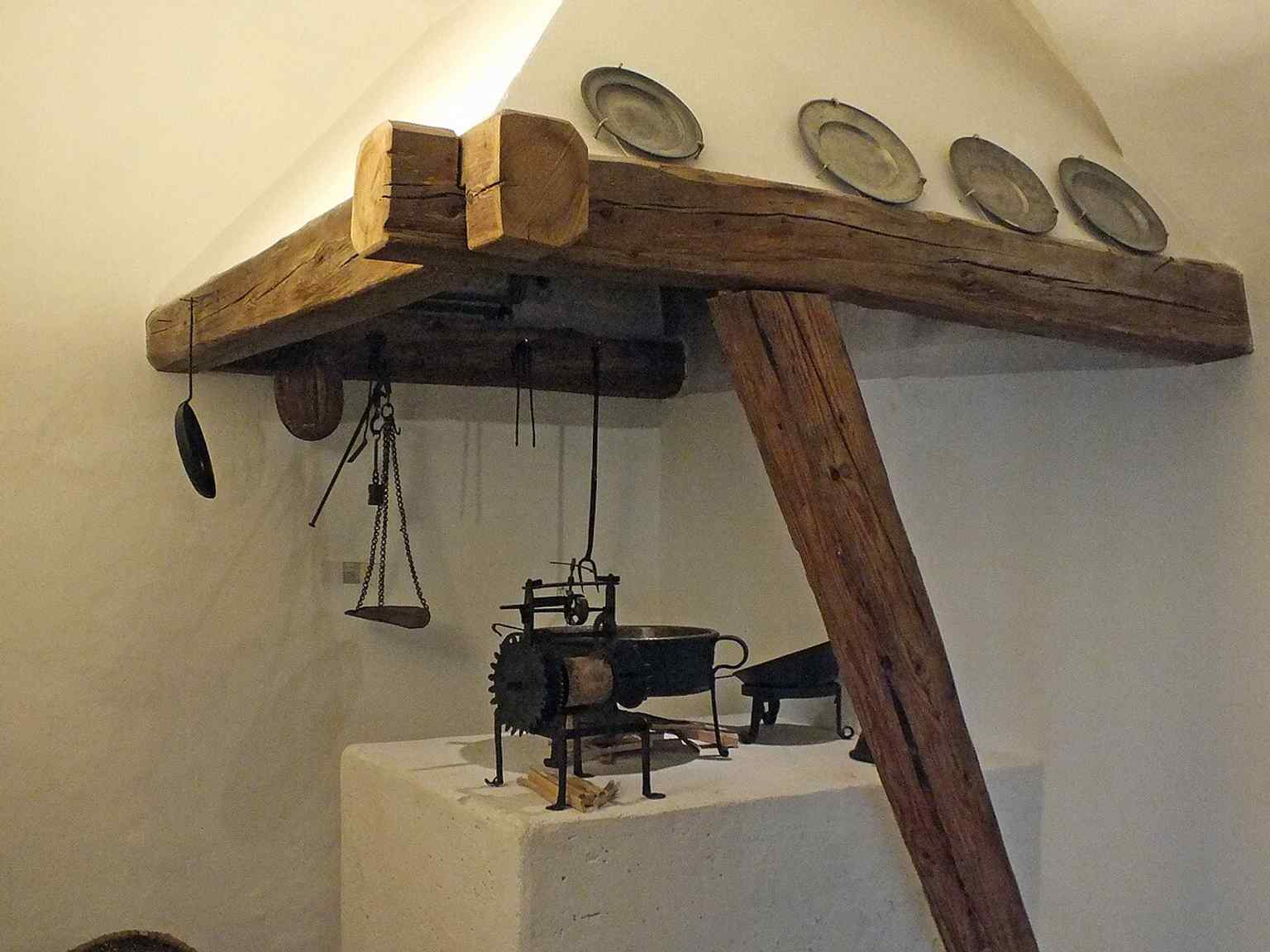
Inside, the museum leans into private life: original portraits, letters, music manuscripts, and even an Anton Walter hammerflügel from around seventeen eighty. It also gives Maria Anna Theresia more than a polite cameo, which is only fair.
For all the grandeur attached to Joseph Haydn, he becomes most vivid here through damage lists, repairs, and household arrangements... fame on one floor, practical survival on the other. When you’re ready, continue to Esterházy Palace, about a five-minute walk away; if you want to come back inside later, the museum is closed on Monday, open from nine to five Tuesday through Friday, and ten to five on weekends.