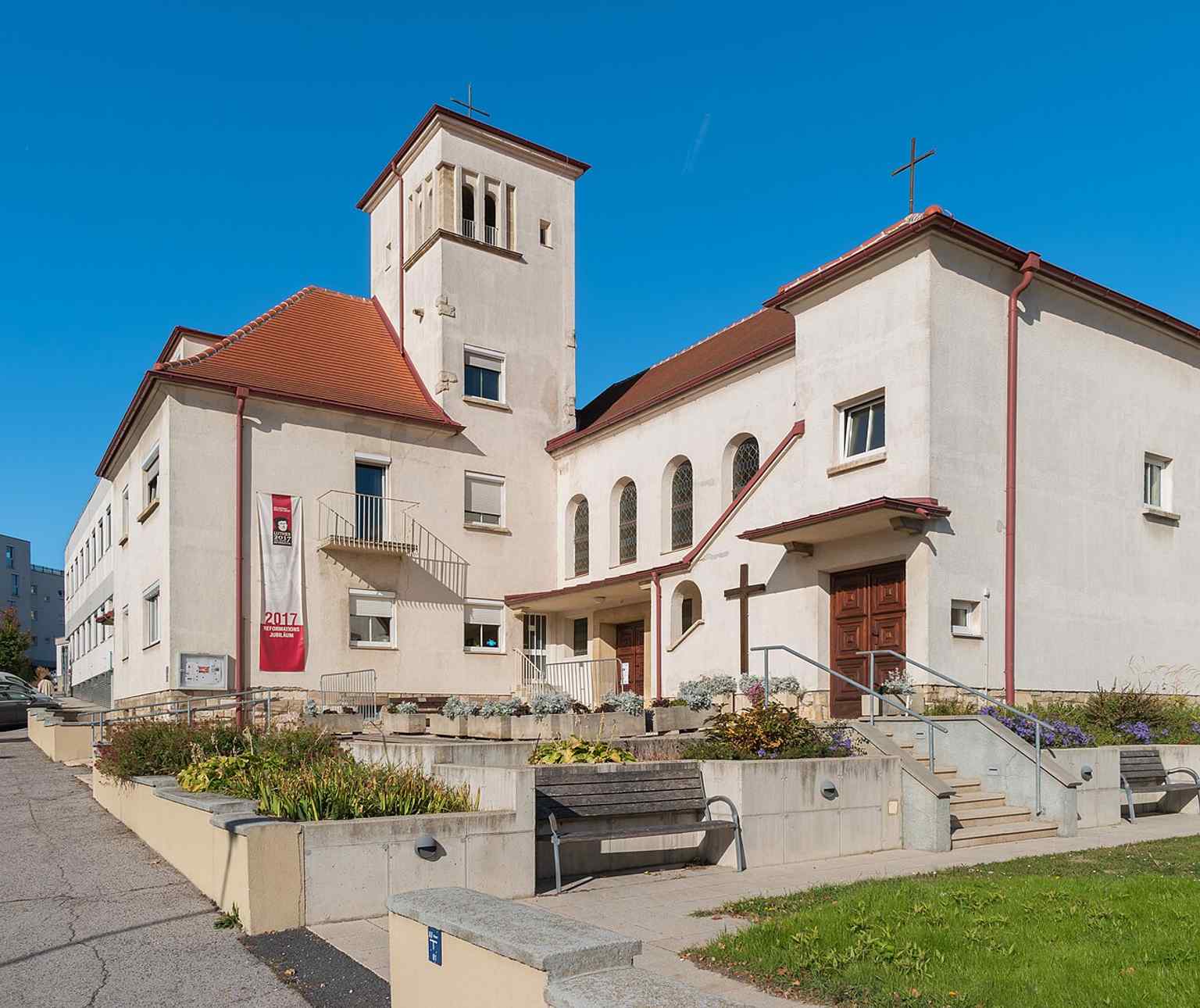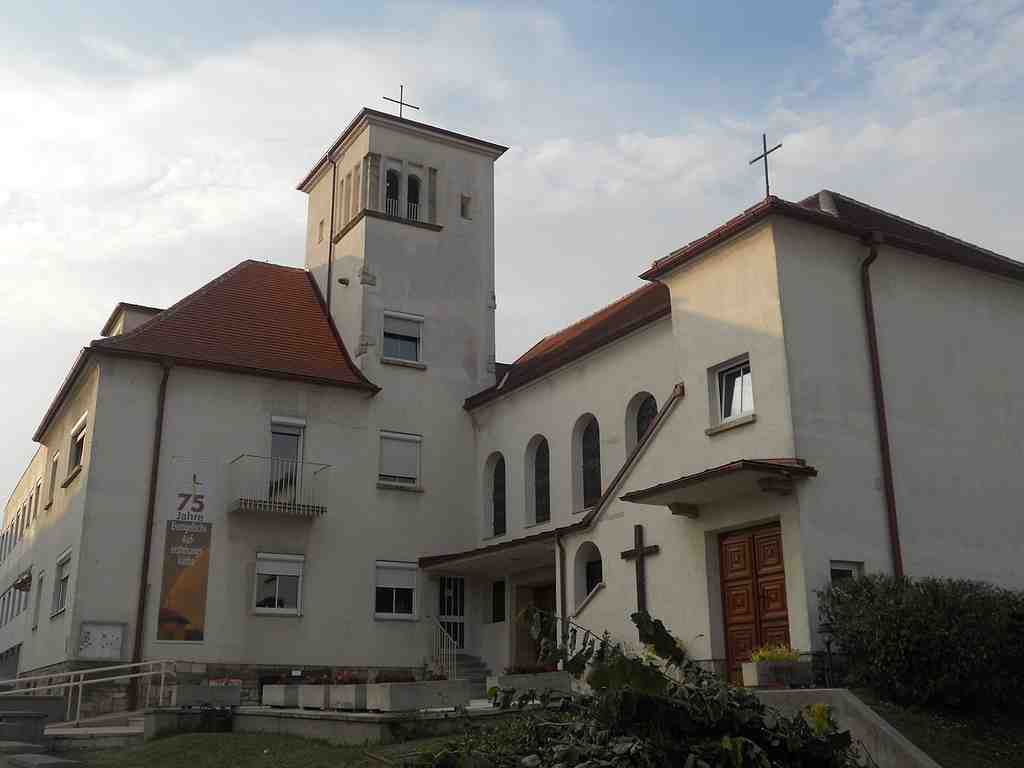
On your left, look for a pale church with a simple rectangular body, a steep red-tiled roof, and a slender tower set between the church and the parsonage.
This building matters because it shows a newer layer of Eisenstadt taking shape. By now you’ve seen Catholic power in several forms, but this church reminds you that the city also grew through confessional plurality... meaning Catholic, Protestant, and Jewish communities lived side by side under changing political conditions, not as an abstract ideal, but because politics, migration, and administration shifted the map. In Eisenstadt, religious diversity did not just drift in gently; it followed concrete decisions about who governed, where they governed, and who suddenly mattered.
The Lutheran community here started small. In eighteen eighty-five, Josef Paul von Király helped organize a branch congregation linked to Ödenburg, and in eighteen eighty-eight they held their first public service. Small numbers, yes... but not no numbers. That distinction changed everything.
The key figure was Theophil Beyer, the first Protestant superintendent of Burgenland after nineteen twenty-four. A superintendent, in plain English, is a regional church leader. When the provincial government chose Eisenstadt as its seat in nineteen twenty-five, Beyer understood immediately that sacred and civic authority were reshuffling the city together. If the capital was moving here, Protestant life needed to be visible here too.
So in nineteen thirty-five, engineer Ecker moved with startling speed: foundation stone on Easter Monday, consecration on the first Sunday of Advent. Church, parsonage, tower... done in one year. In the political atmosphere of Austria’s corporate state, that large public dedication was anything but routine. If you check the image on your screen, you can read the ensemble clearly as one statement rather than three separate buildings.
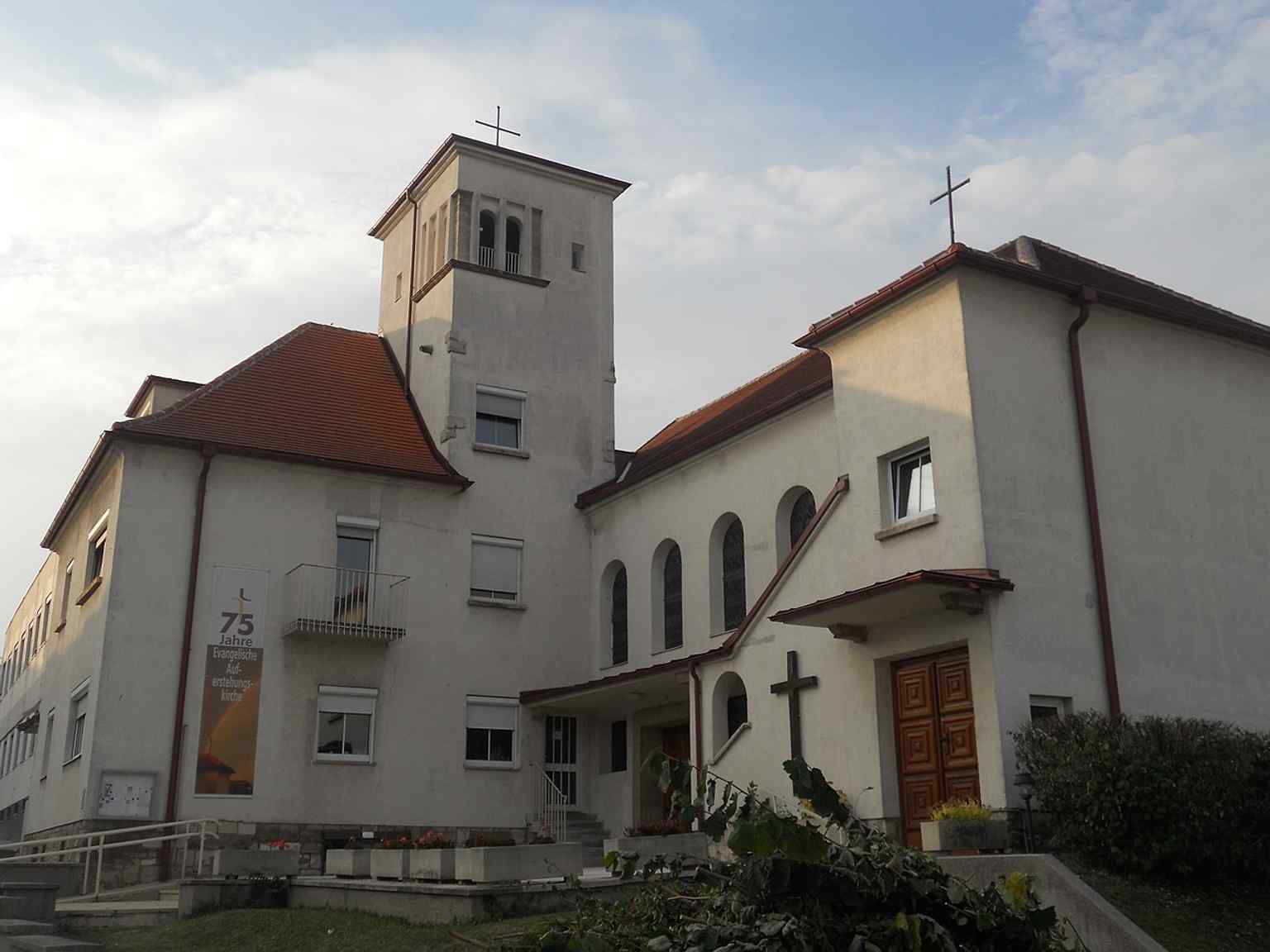
One detail I like: parish tradition says individual donors paid for the windows, and their names still appear in Fraktur, that old German black-letter script, along the bottoms of the round-arched panes. Even the glass keeps receipts.
Since nineteen fifty-six, when the Protestant regional church administration settled in Eisenstadt, this became the main evangelical church of Burgenland. Modern Eisenstadt, in other words, was not simply inherited; people reorganized it, and faith communities reorganized with it. From here, Leinnerhaus is about a three-minute walk away. If you want to return later, the church is generally open daily from eight in the morning to seven in the evening.