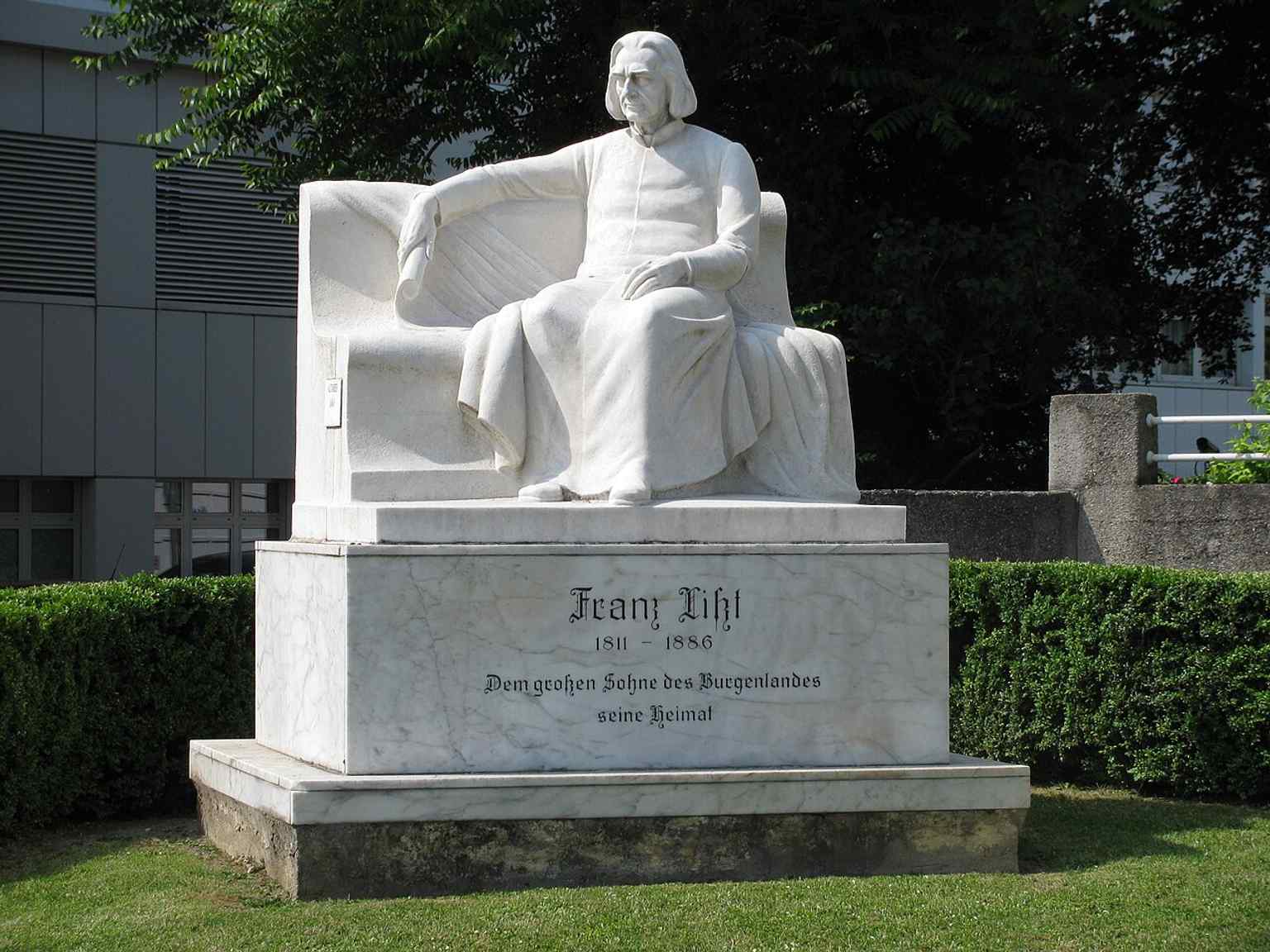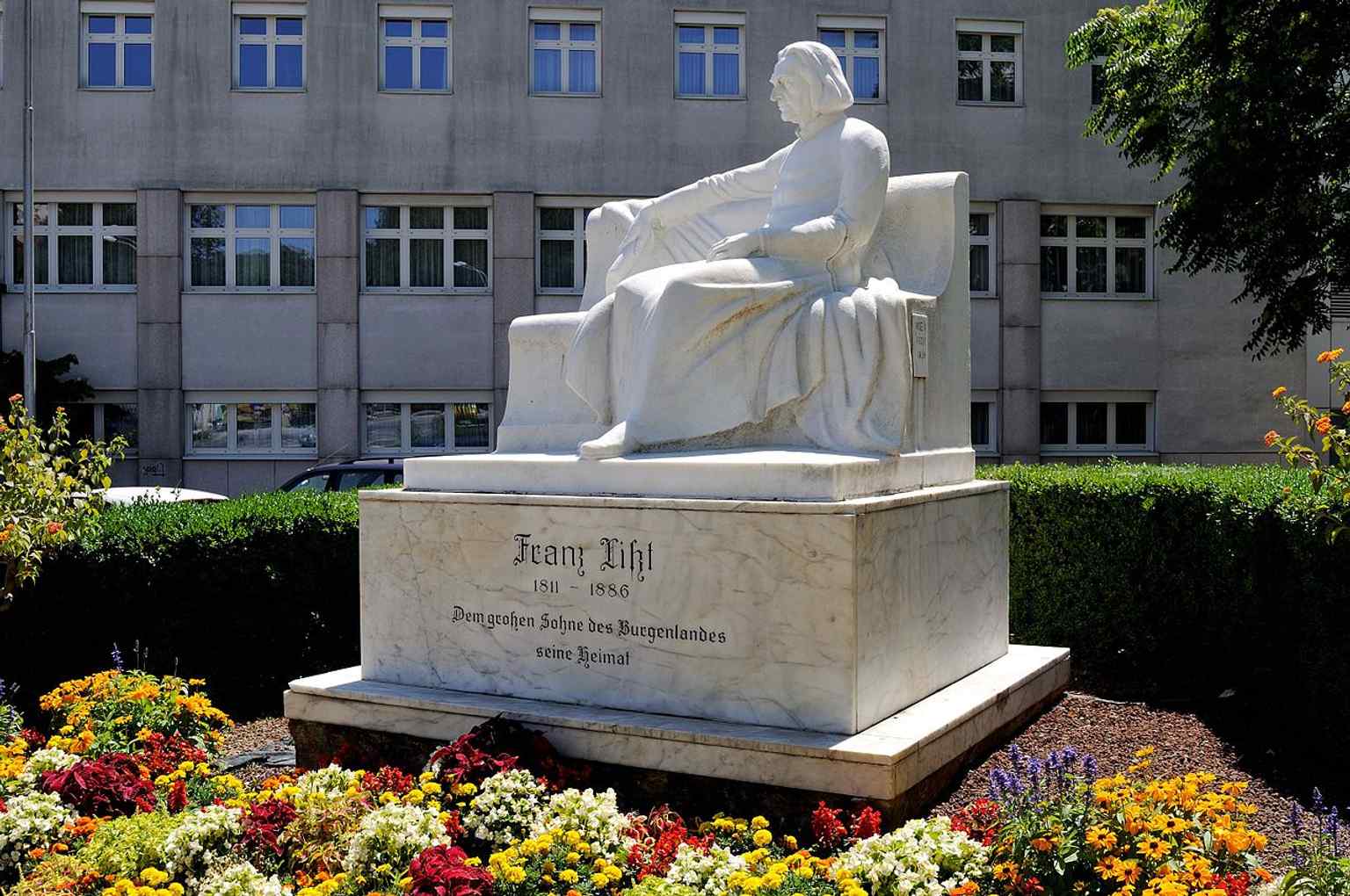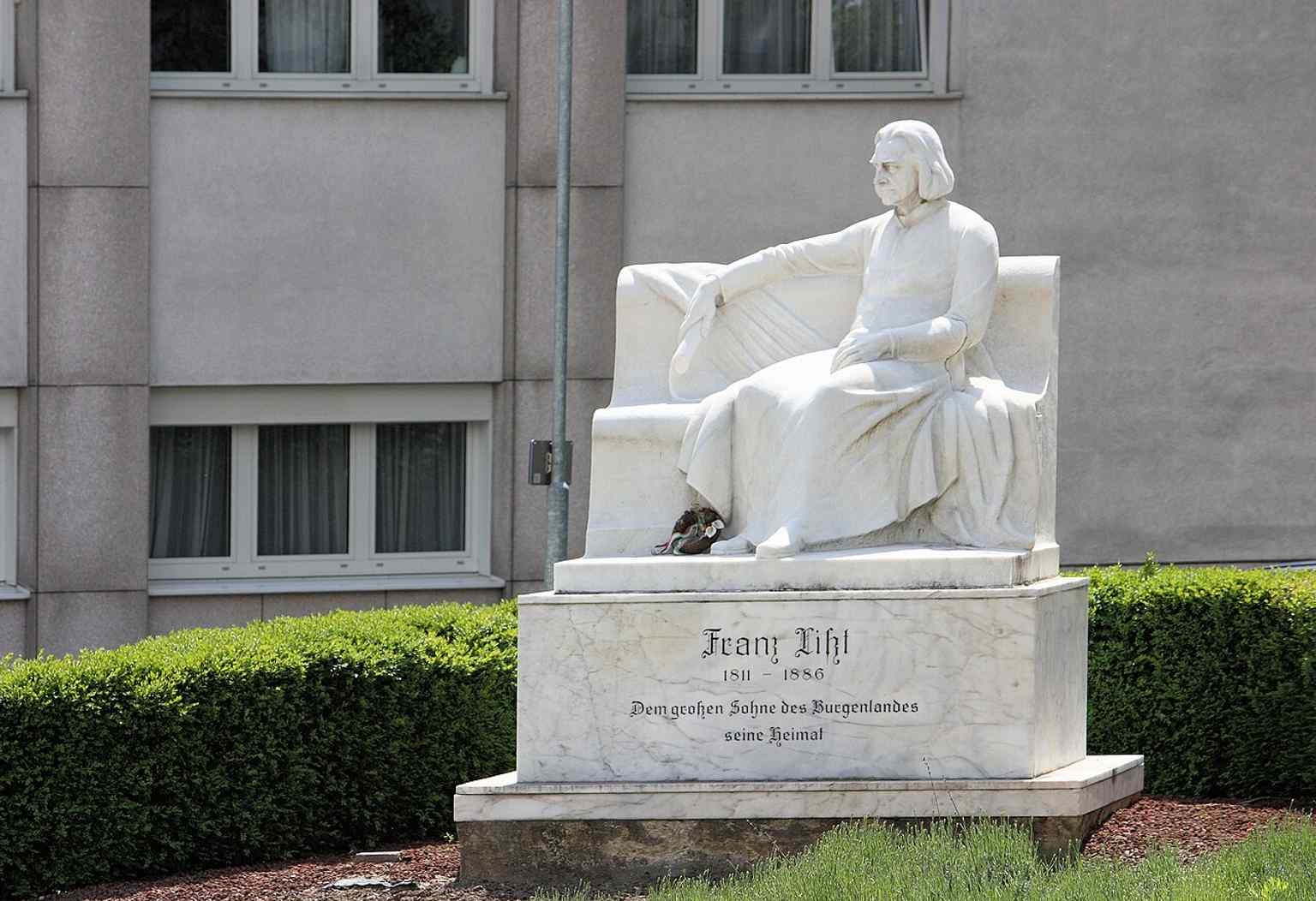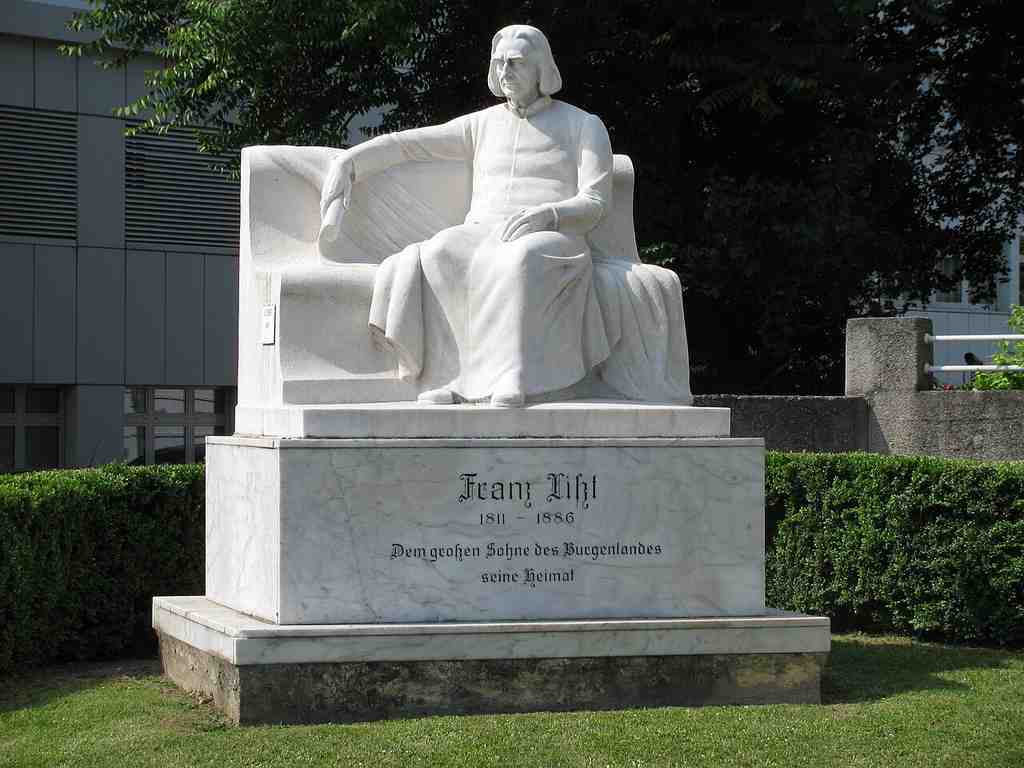
On your right, look for a white marble figure seated slightly sideways on a marble bench above a large rectangular base, with Liszt’s name and dates carved into the front.
This monument honors Franz Liszt, the pianist and composer born in eighteen eleven, but it also reveals what Eisenstadt wanted to say about itself. For decades, newspapers in Ödenburg said surprisingly little about Liszt’s life and work. Then, in nineteen thirty-six, the city made a deliberate point of claiming him as the great son of Burgenland... in marble, no less.
This was not some tidy city-hall purchase. Eisenstadt raised the money through public donations, which tells you something important: public memory needed public buy-in. Under Mayor Geza Stanics, the monument joined other cultural projects meant to sharpen the city’s image, alongside Haydn commemorations and efforts to raise Eisenstadt’s status.
If you check the detail image on your screen, you can see how sculptor Alexander Sandor Jaray set Liszt slightly off-center on the bench. Jaray matters here too. Later records had to sort out confusion between his work and that of an uncle with the same name, so this statue quietly helps keep the right artist attached to the right stone.
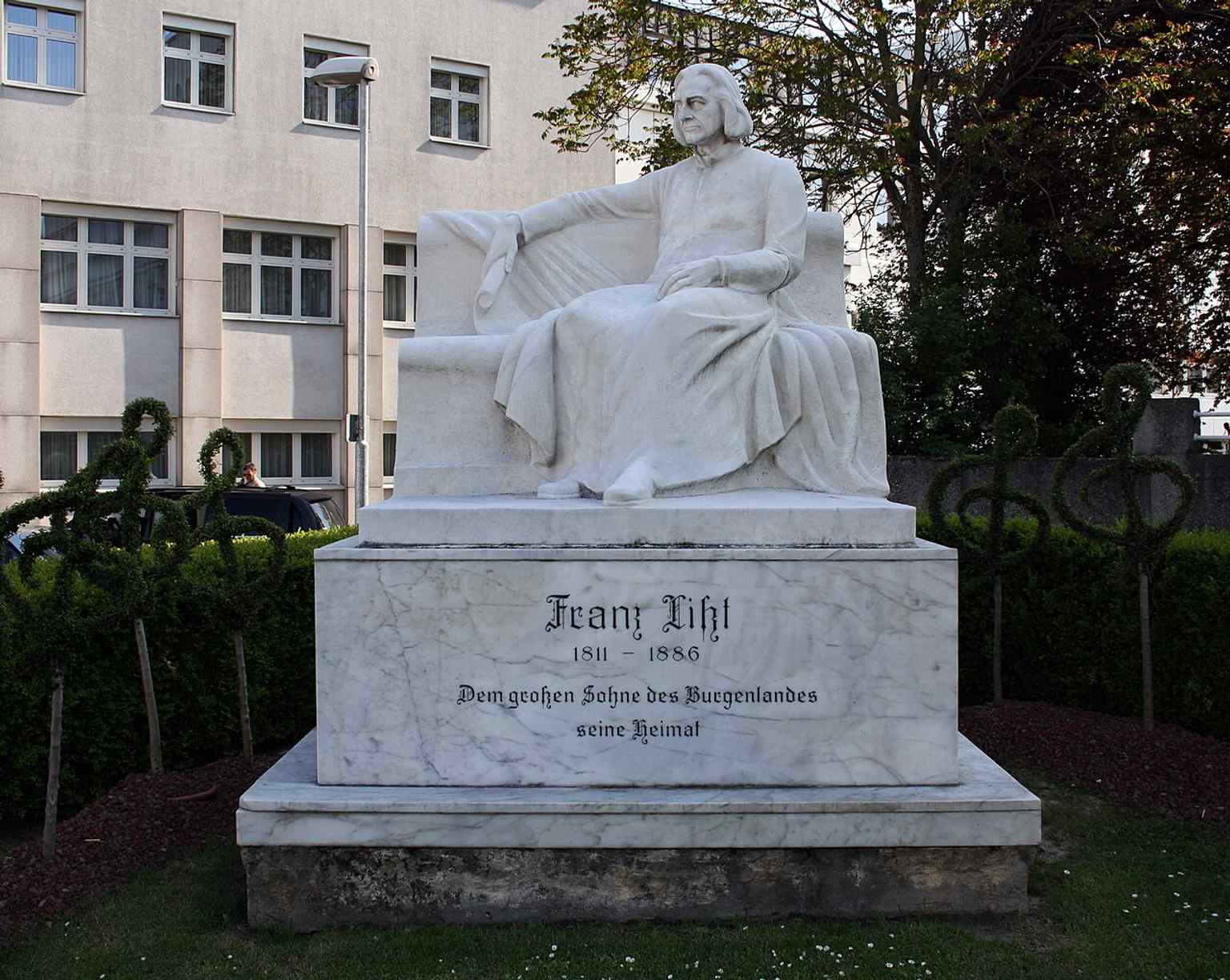
At the unveiling on the twenty-first of June, nineteen thirty-six, Dr. Eduard von Liszt Junior and his wife, Maria Julia, laid a wreath. The ceremony also formed part of a wider Liszt year, marking fifty years since his death.
So the question lingers: who gets monumentalized, and who must wait for donations, archives, or luck to be remembered? We’ll carry that thought to the Burgenland State Museum, about a three-minute walk away. This monument is accessible at any hour, day or night.