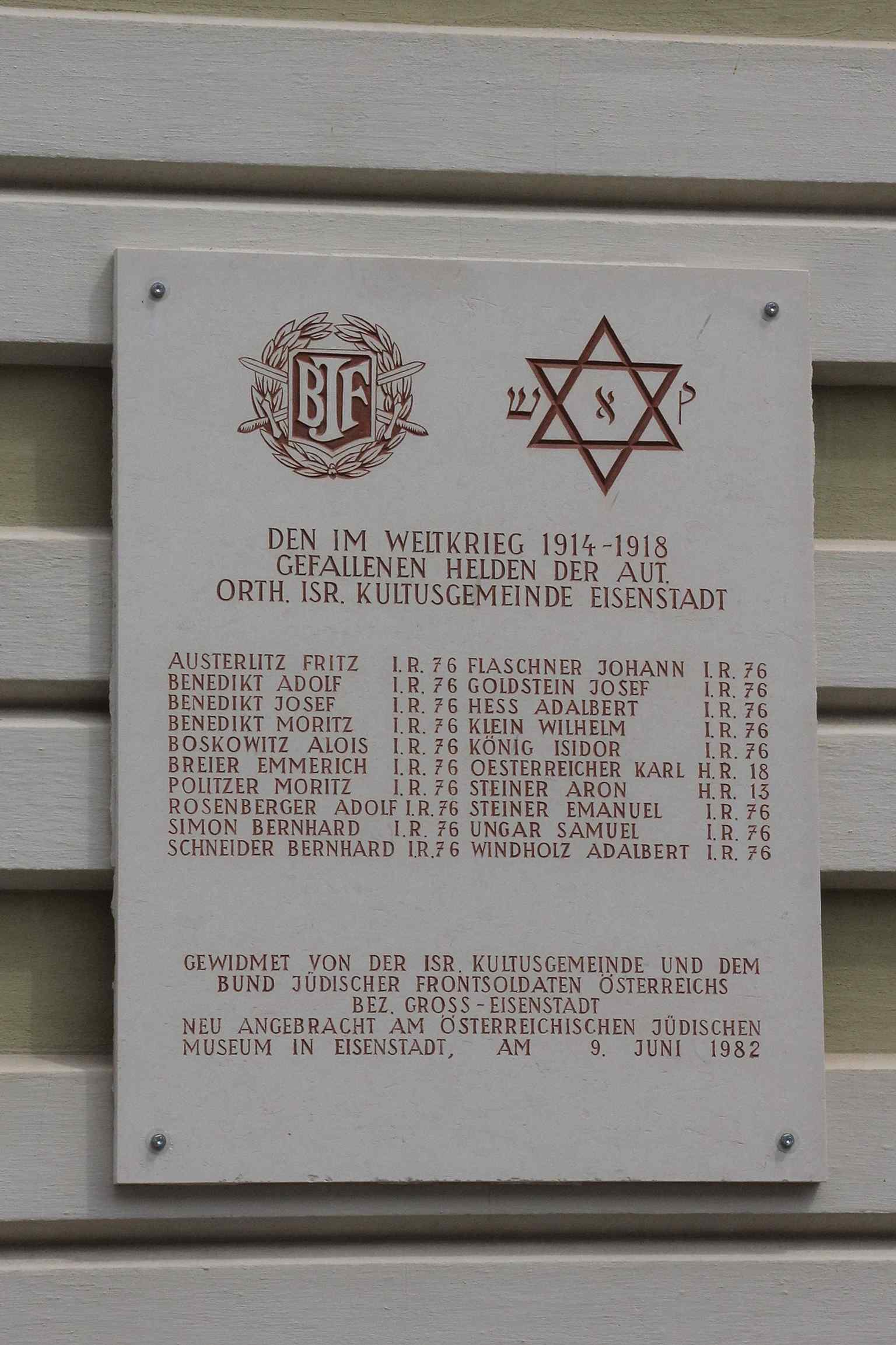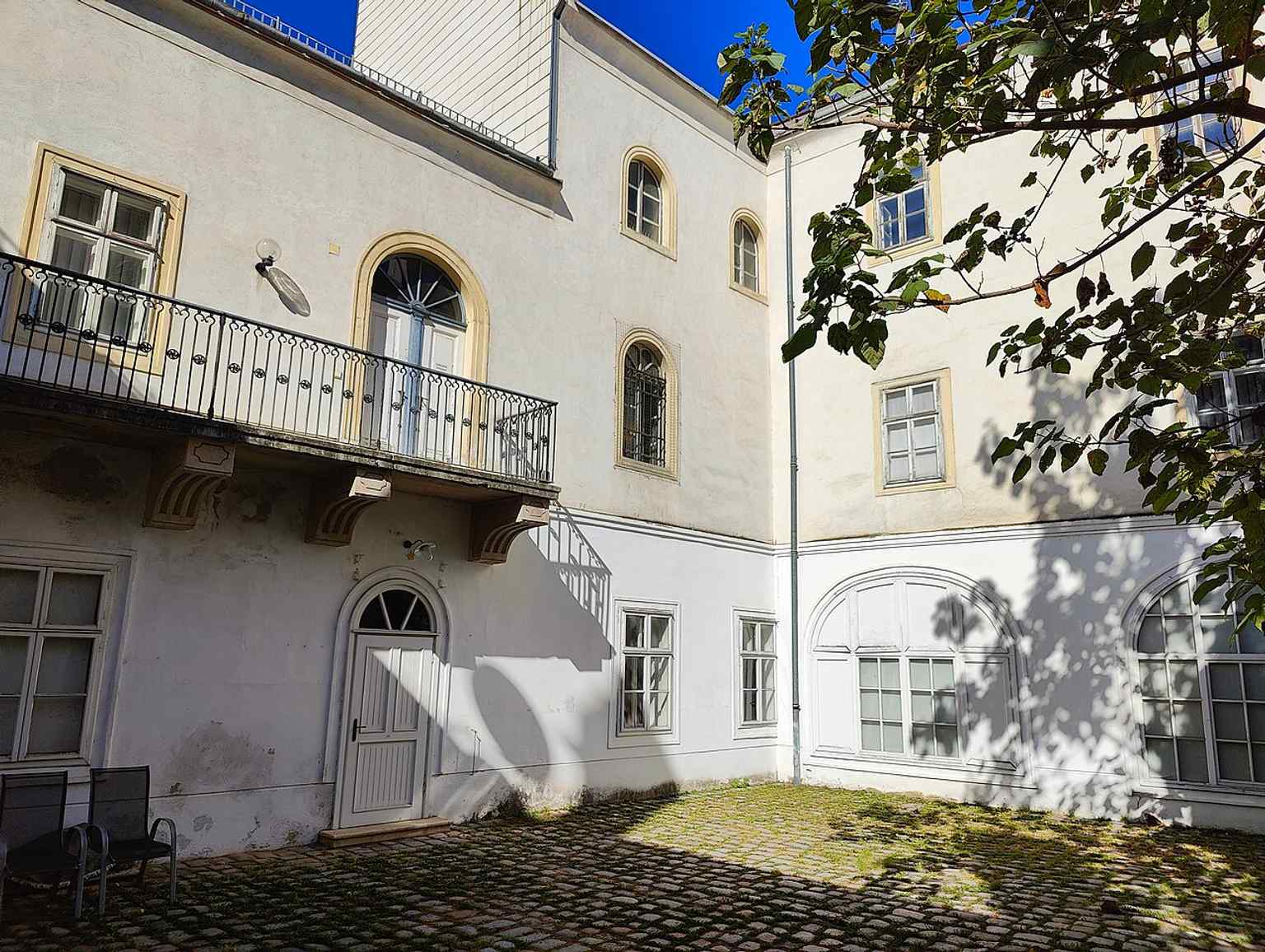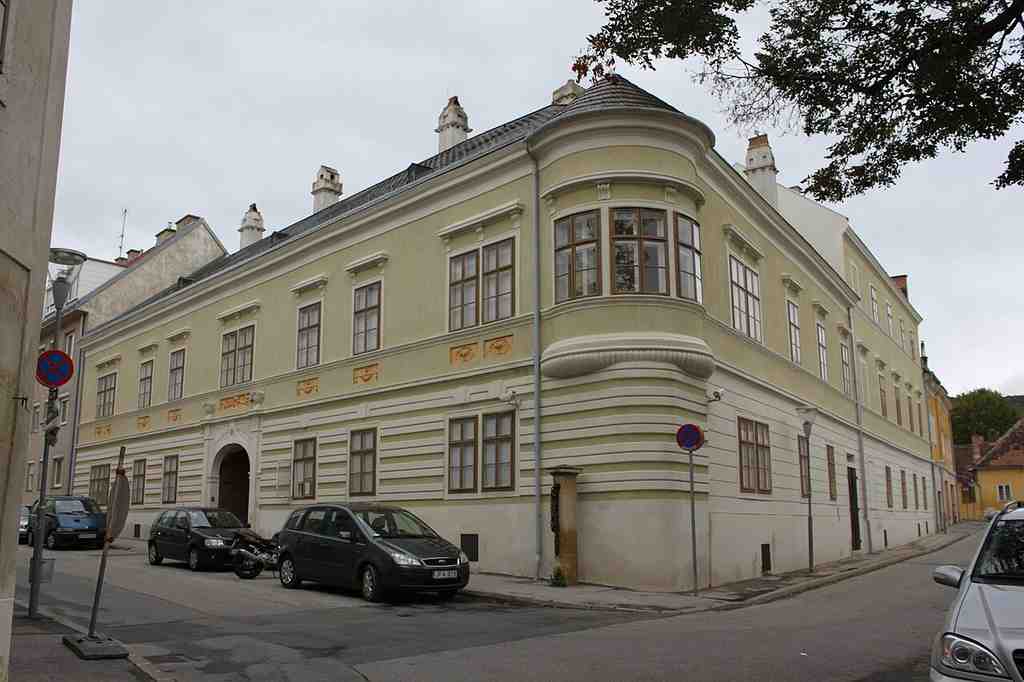
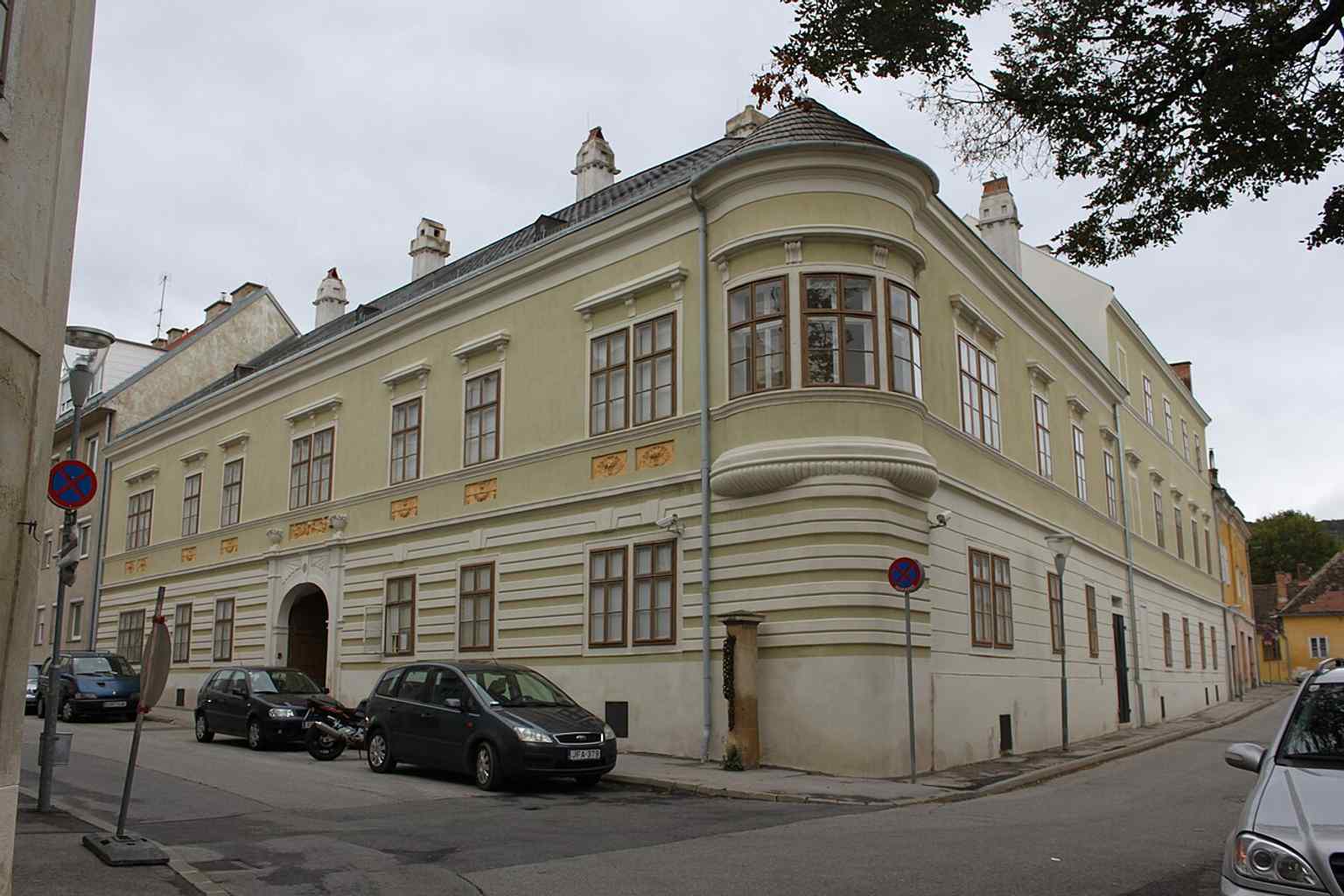
On your right stands a two-story plastered town house with a rounded corner bay and a formal civic façade, marked by the memorial plaque that identifies the Wertheimerhaus.
This house opens one of Eisenstadt’s deepest chapters. Samson Wertheimer, the man behind its name, was no local eccentric with a large key ring; he was a major Jewish court figure, named honorary rabbi of Eisenstadt and rabbi for Hungary in sixteen ninety-three, a learned man who also supported Hebrew printing. The Esterházys valued him enough to finance this residence, completed in seventeen nineteen.
Jewish Eisenstadt never lived in one single building. It stretched across homes, prayer rooms, trade, scholarship, and burial grounds, and this house is one point in that wider map of memory. That matters here, because Eisenstadt’s religious story was never only told by churches; Jewish life stood firmly inside the city’s public and private world too.
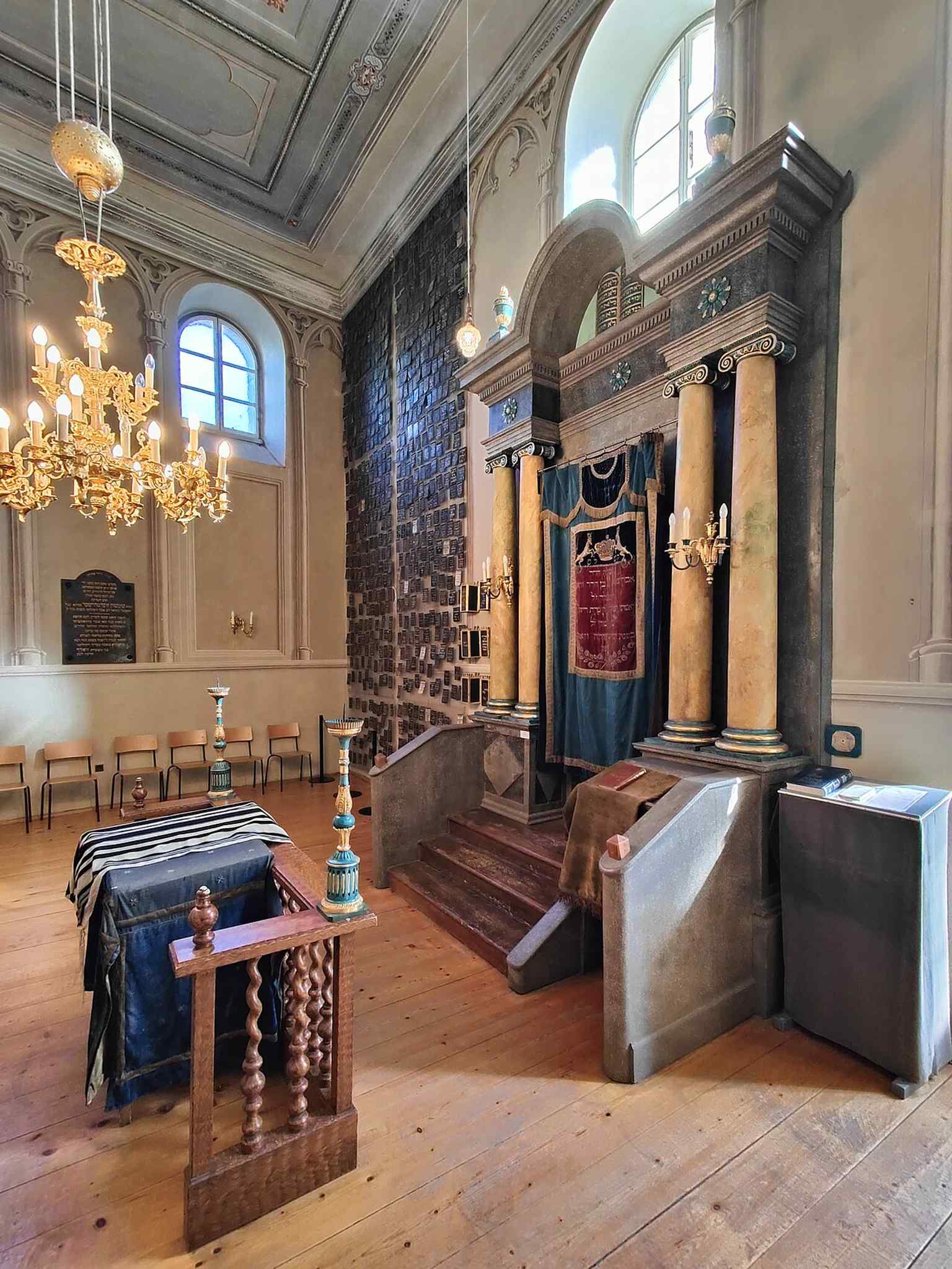
From the beginning, this was more than a palace-like home. Prince Paul Esterházy already called it “the house with the synagogue” in sixteen ninety-six. Upstairs, on the first floor, Wertheimer’s private synagogue took shape with a separate women’s room, giving the building an unusual double life: residence below, sacred space above. If you look at the image on your screen, you can see that prayer room still intact.
Later, the Wolf family bought the house in eighteen seventy-five and ran the wine firm Leopold Wolf’s Sons here, while family members and staff lived inside. The synagogue kept serving the neighborhood; it even had its own rabbi until eighteen forty, then became a place for Jewish youth from eighteen fifty onward. One of the most intimate traces is a Torah curtain that Hermine Wolf commissioned in nineteen ten in memory of her late husband, Ignatz Wolf.
Most visitors never hear this part: one of the synagogue’s old memorial plaques, used to mark annual remembrance in Jewish life, turned up in the attic only in the nineteen nineties... memory, quite literally, waiting overhead. Inside, there are seven hundred fifty-five original plaques, and after the war, sacred objects from Eisenstadt’s demolished main synagogue were brought here too. Since nineteen seventy-nine, this has housed the Austrian Jewish Museum, while remaining the seat of the state rabbi and the only consecrated synagogue in Burgenland.
In a moment, we’ll head toward the old Jewish cemetery, where remembrance moves from rooms and objects into open ground. If you want to come back inside, the museum is generally open from ten AM to four fifteen PM, and closed on Friday and Saturday.