
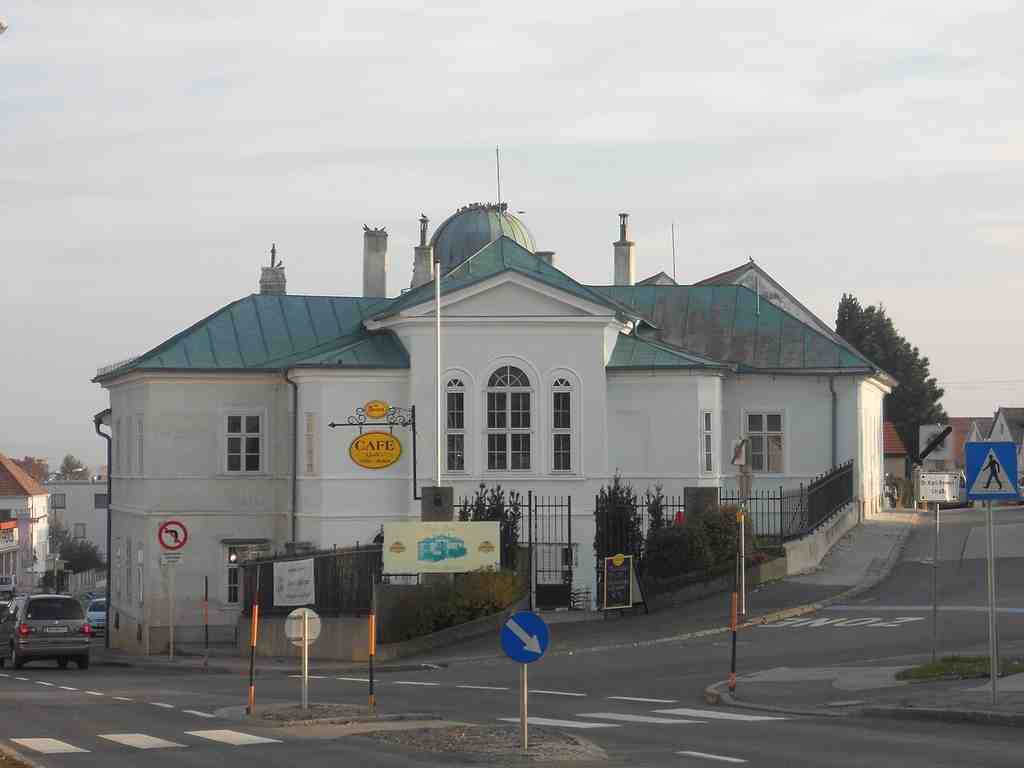
On your right, look for a pale Baroque house behind an enclosing wall, with a broad two-story facade and a rounded stone portal marked by a coat of arms and the date seventeen sixty-nine.
Leinnerhaus began as the kind of place that kept a city running rather than dazzling it. Karl Straub, a wine merchant from the Palatinate, bought the old Pfanschen Stadl in eighteen sixteen and rebuilt it by eighteen twenty. Then Michael Leinner took it over in eighteen forty-two and pushed his own wine trade from here. If you catch the portal details, notice the Rocaille decoration - those shell-like Baroque curls - around a shield with winegrowers’ tools. The building was practically introducing itself.
But houses in Eisenstadt rarely stick to one job. Around eighteen sixty, a hall was likely added, and from eighteen seventy-five to nineteen twenty-one the Casinoverein used the place especially for music. So this former merchant’s house joined the same wider cultural network we’ve already felt around Haydn and the palace... only here it ran through clubs, classrooms, and civic ambition. The new state middle school even began teaching here in eighteen eighty-one.
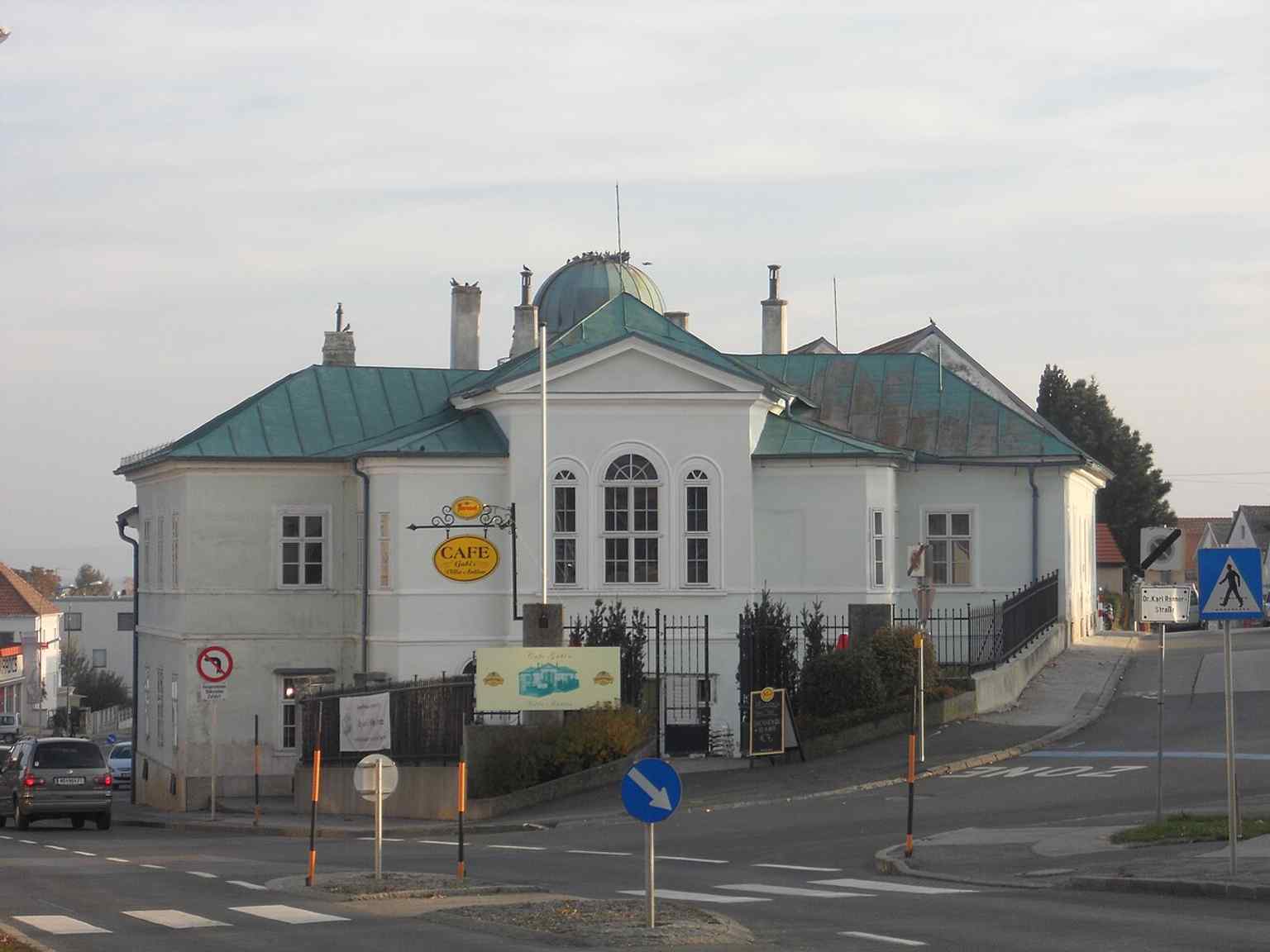
A museum, and later an archive, does not simply store things. It decides what a place thinks is worth remembering, and that is delicate work. In nineteen twenty-six, a local collector offered this house as the provisional home of the new Burgenland State Museum for one schilling a year - a token rent, only a few euros in today’s buying power, really just a gesture. If you glance at the image in the app, you can see that sturdy, almost private exterior hiding a much larger cultural role. He wanted the young province to have a memory of its own, and he brought in the museum expert Dr. Alphons Barb to help build it.
Then came nineteen thirty-eight. After Austria’s annexation into Nazi Germany, Barb lost his post at once, the museum was stripped of its independence, and parts of the collection were handed off elsewhere. Wolf had to flee. Some of his collection scattered, some returned later, some had to be bought back.
That is the unnerving lesson here: what a city chooses to preserve can be undone with terrifying speed. When you’re ready, head about four minutes onward to the Liszt Monument.





