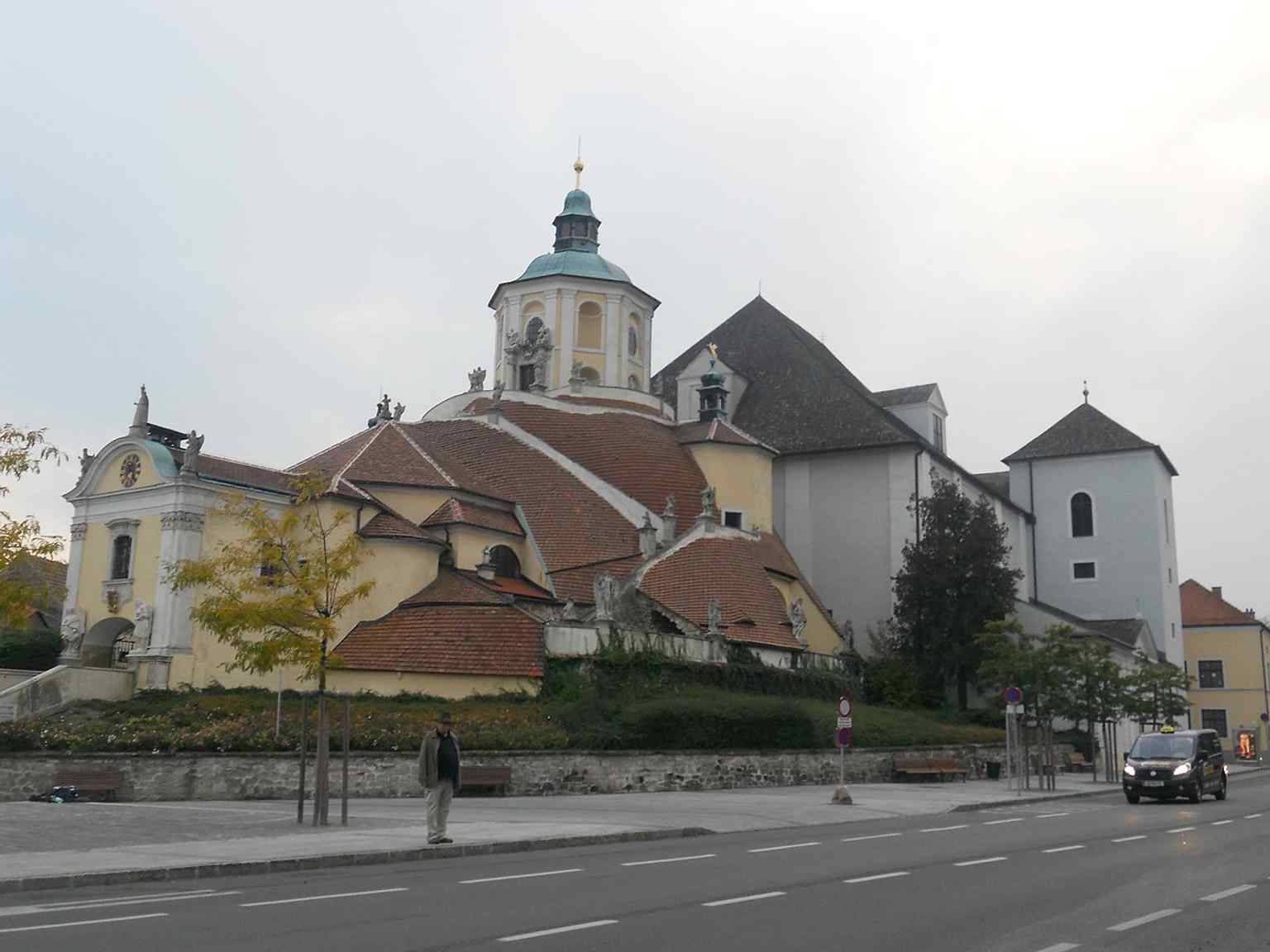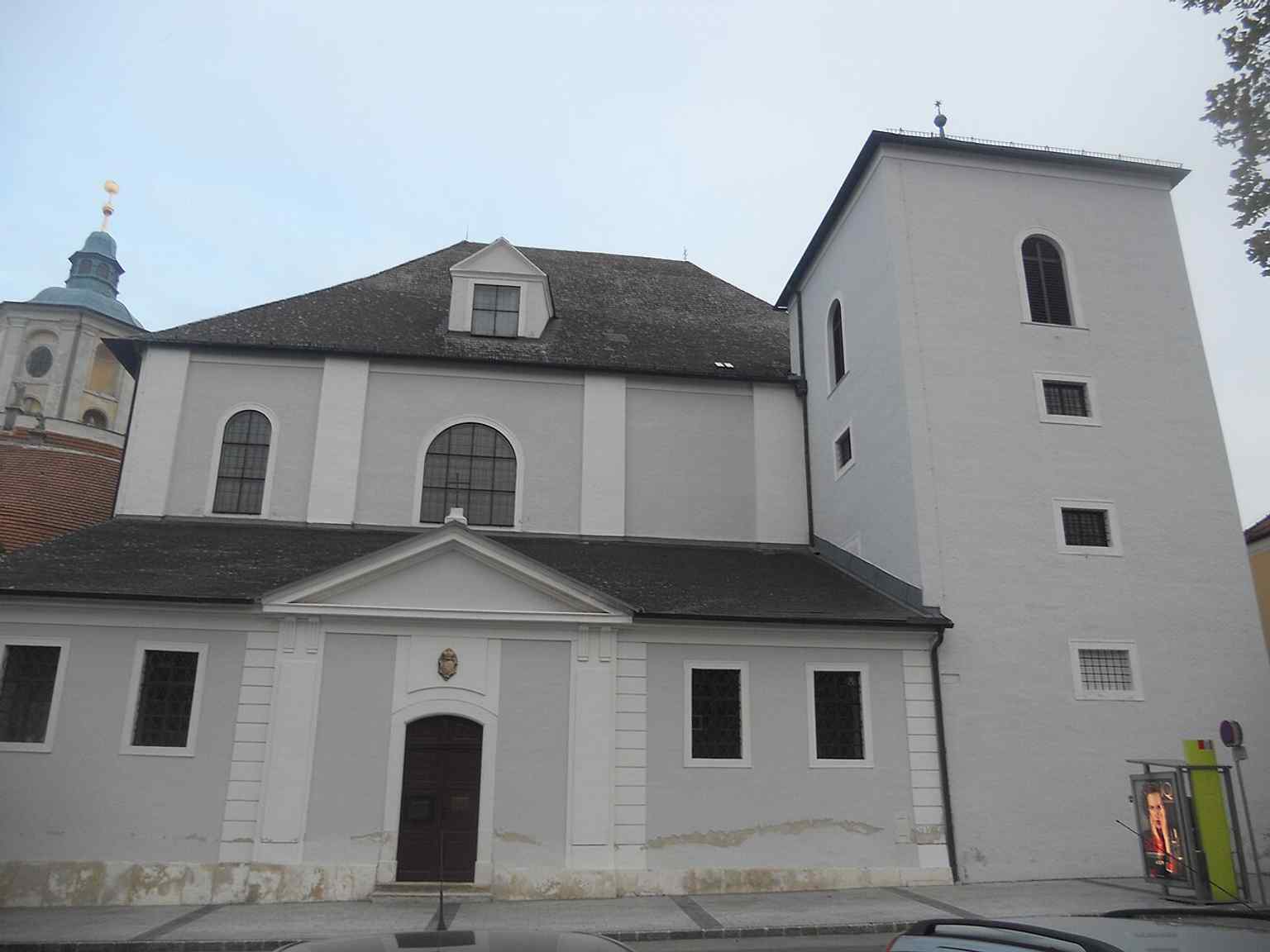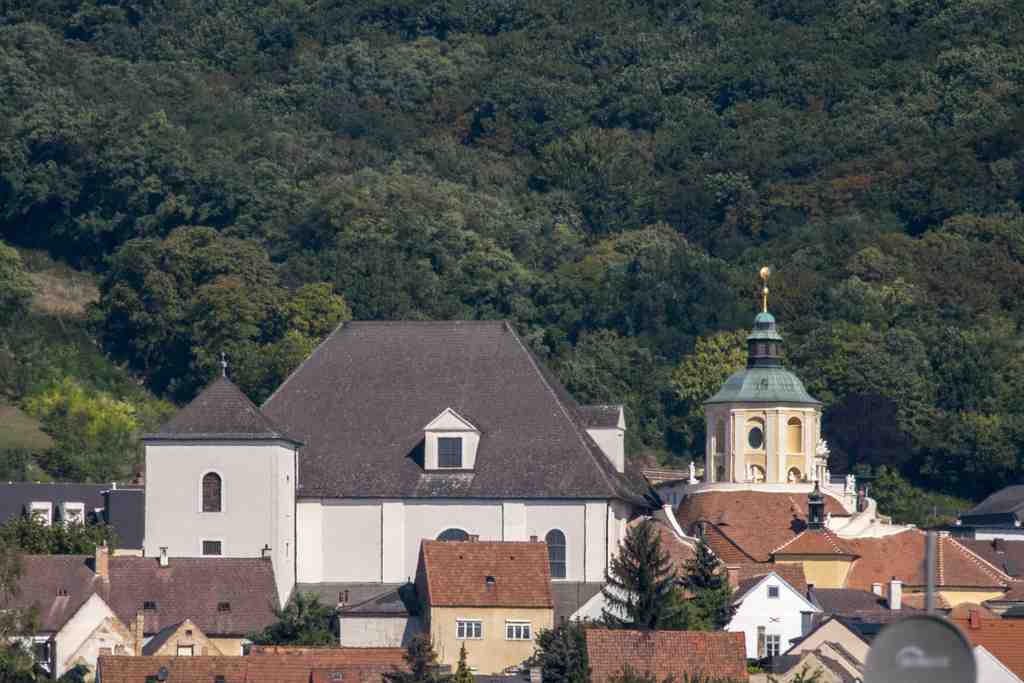
On your left, the Mountain Church stands out as a pale, block-like church with a broad hipped roof, a two-story entrance porch, and two squat tower stumps capped with tent-shaped roofs.
This is the Bergkirche, also called the Haydn Church or Calvary Church, and it feels like a final gathering point for Eisenstadt’s many threads. Prince Paul Esterházy imagined a grand pilgrimage church here, beside a Calvary hill modeled on Maria Lanzendorf. A Calvary hill, by the way, is a devotional landscape with chapels that let pilgrims physically follow Christ’s Passion. Fittingly, this sacred place began with a story: a Marian image commissioned by Paul Esterházy survived fire and destruction in seventeen oh seven, and after a reported healing in seventeen eleven, people started coming here in hope.
What makes that more striking is that Oberberg was not some ancient holy summit. It was woods, marsh, and quarry. The sacred landscape had to be invented... and then built into memory.
Construction began in seventeen fifteen, stalled when enthusiasm faded, then Nikolaus the First Joseph Esterházy pushed it forward around seventeen sixty-five. The church was finally consecrated in eighteen oh three. You can sense the ambition and the compromise together. The original plan was enormous; reality trimmed it back. Architecture, like politics, occasionally meets a budget.
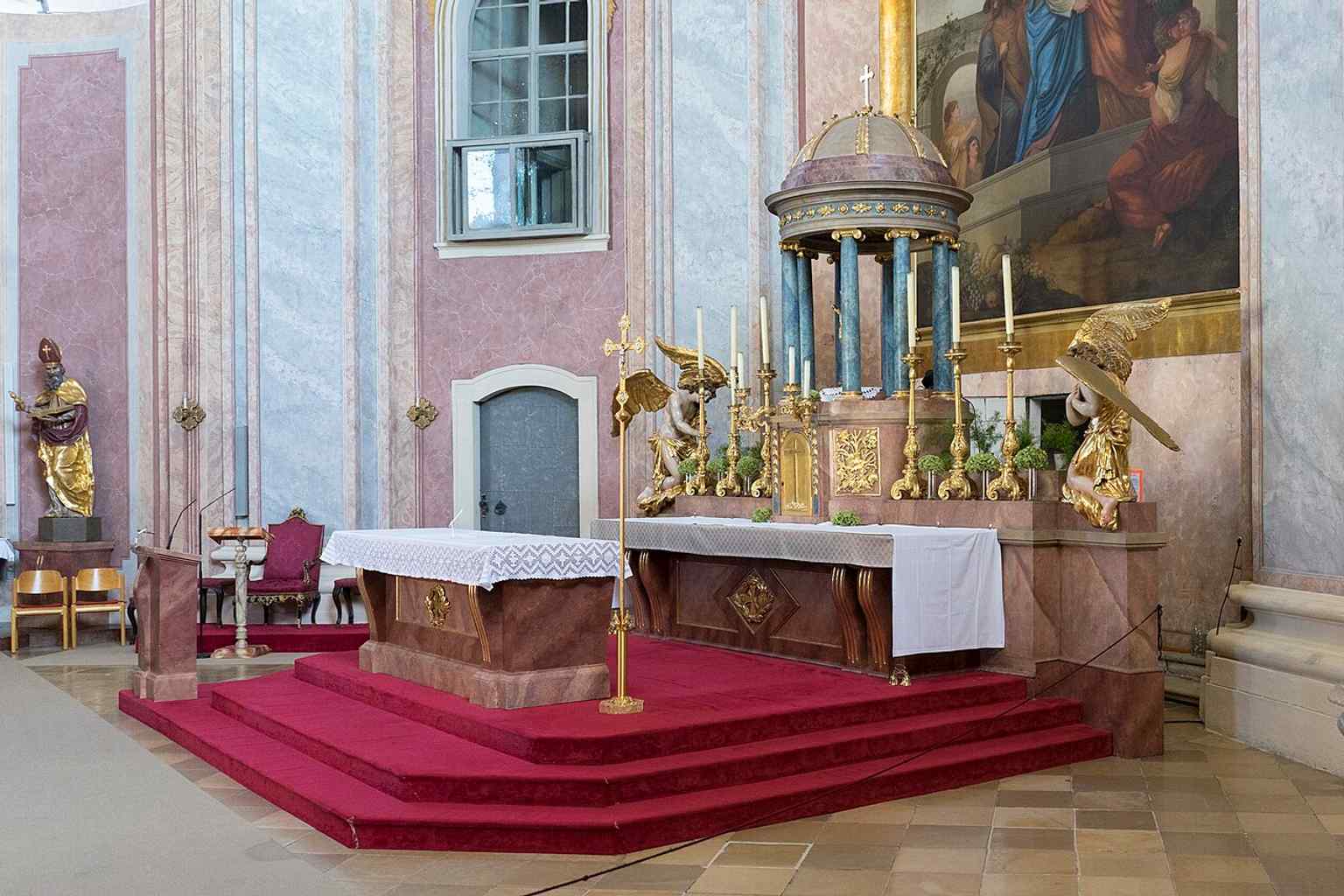
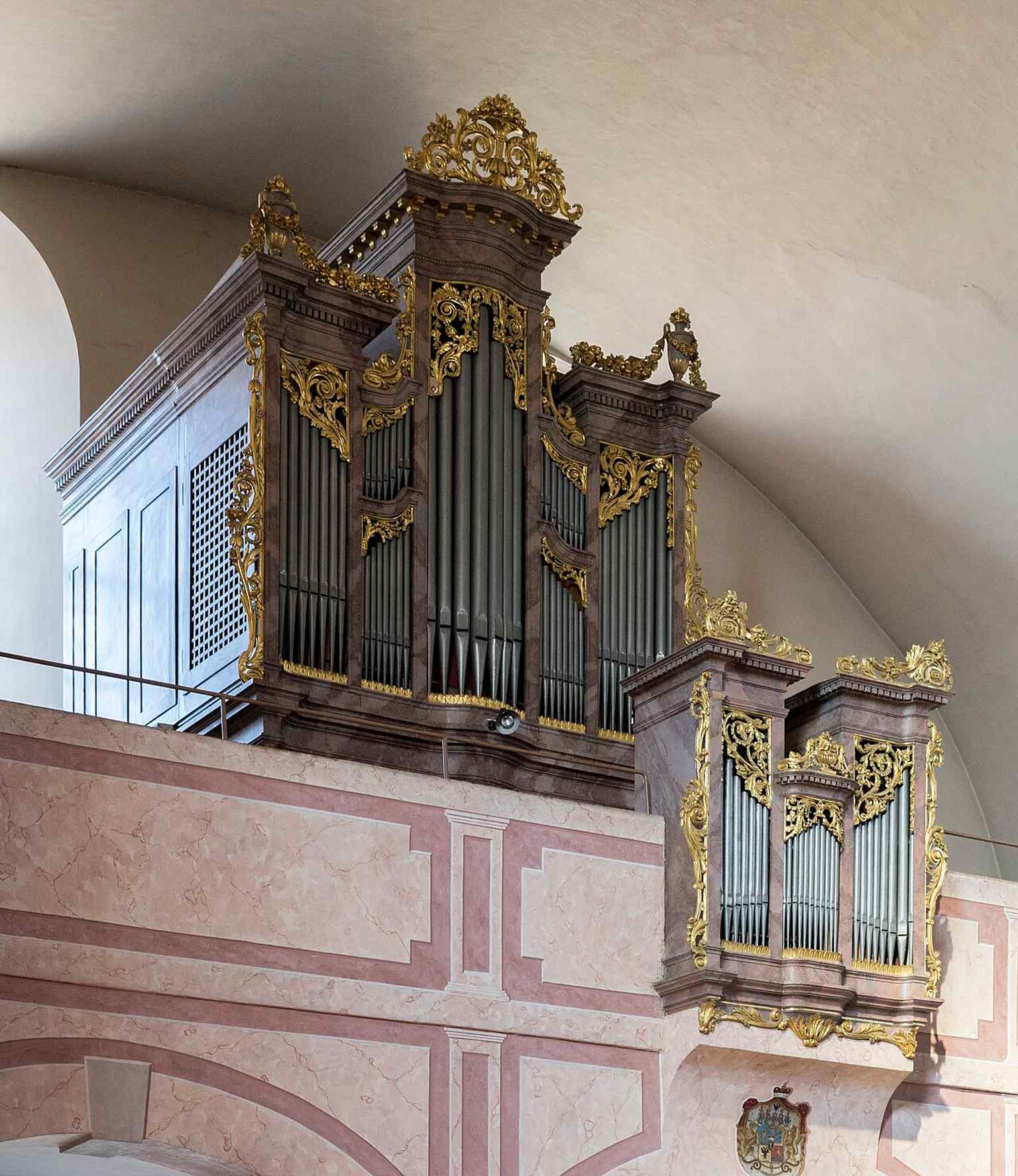
Joseph Haydn gives this place its human heartbeat. When he arrived in Eisenstadt in seventeen sixty-one, he first lived right next door in the Musikerhaus, the musicians’ house. From here, the church became part of his working routine, not just his legend. From seventeen ninety-six on, Haydn’s six late Masses for Princess Maria Josepha Hermenegild Esterházy’s name day were performed here. If you check the image on your screen, you can see the organ inside, built in seventeen ninety-seven by Johann Gottfried Malleck to Haydn’s own specification. That instrument is one of the few direct pieces of his daily musical world still with us.
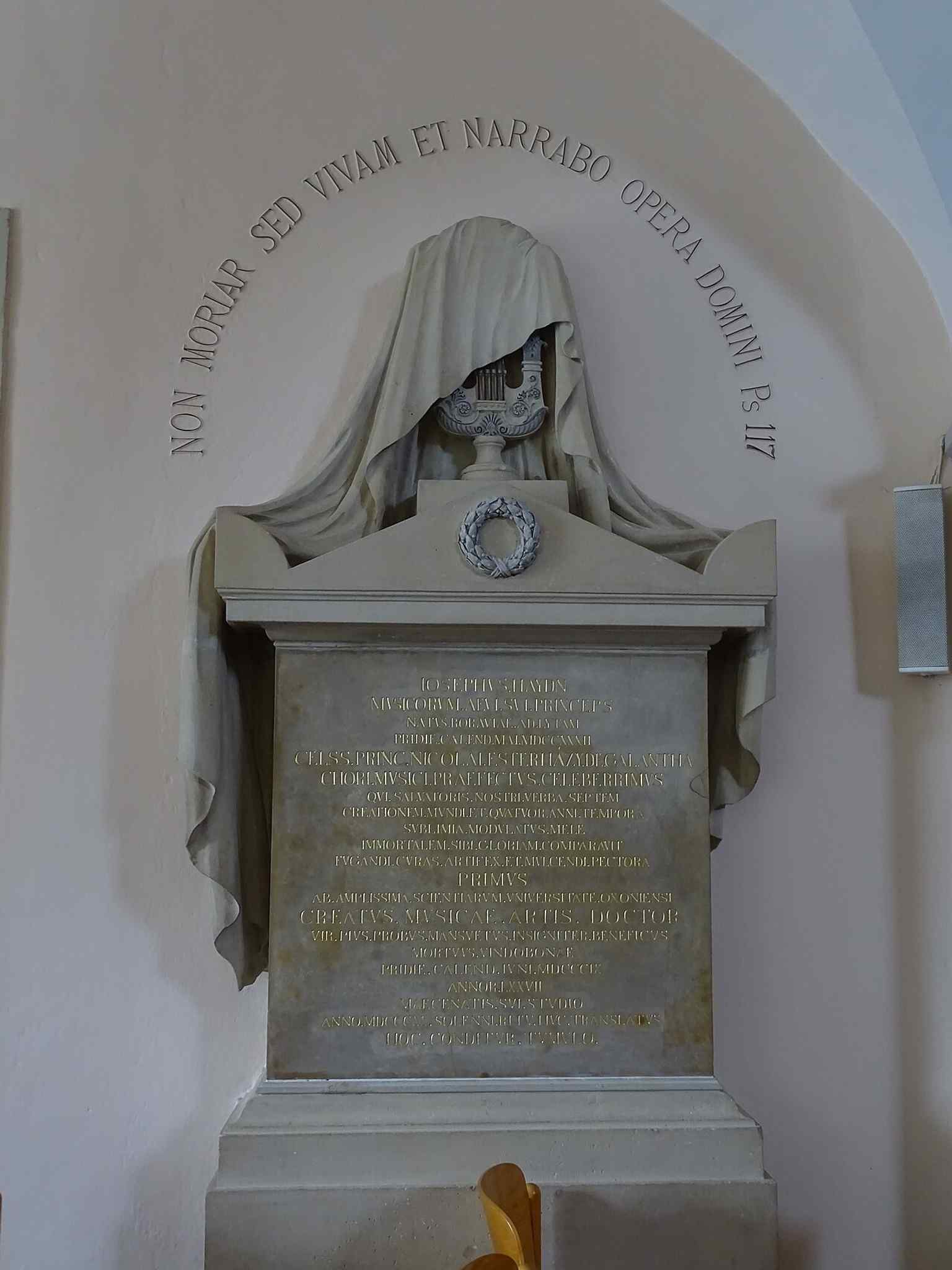
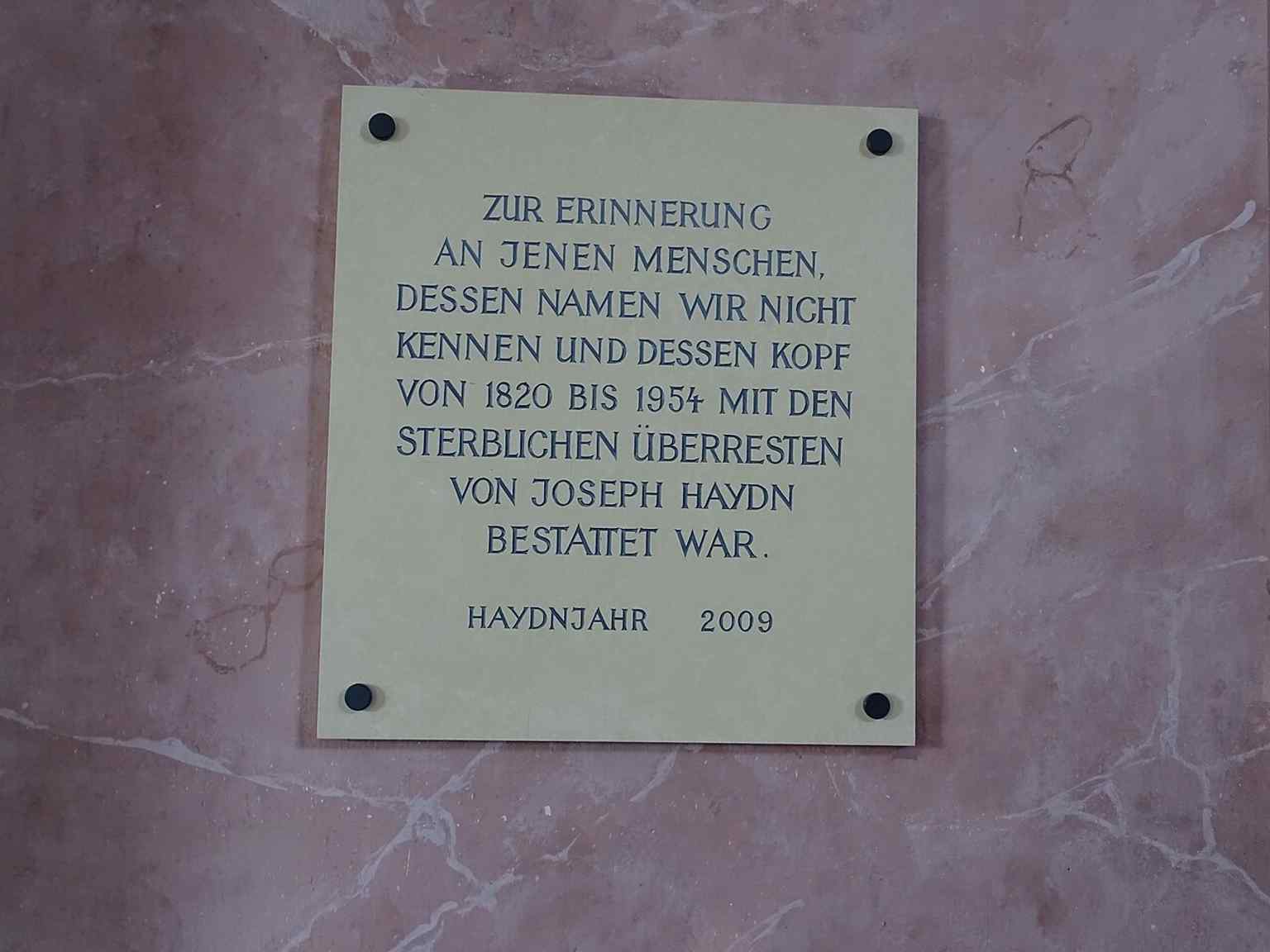
And then came his afterlife, which got... complicated. Haydn died in eighteen oh nine, his remains came to Eisenstadt in eighteen twenty, and in nineteen thirty-two a mausoleum was prepared here under the north tower. Even after death, Haydn needed project management. His skull had been kept separately in Vienna and only returned in nineteen fifty-four, when the sculptor Gustinus Ambrosi brought it back so the remains could finally be reunited. If you want a detail of that strange epilogue, the inscription image in the app points to it.
Before you go, look at the church and the Calvary setting together. You can read the whole idea from the outside: worship, procession, princely ambition, and remembrance all folded into one place. For this city, memory was never passive. It had to be composed, rebuilt, and sung into stone.
If you want to go inside another time, regular opening is very limited: Sunday from ten thirty A-M to noon.