
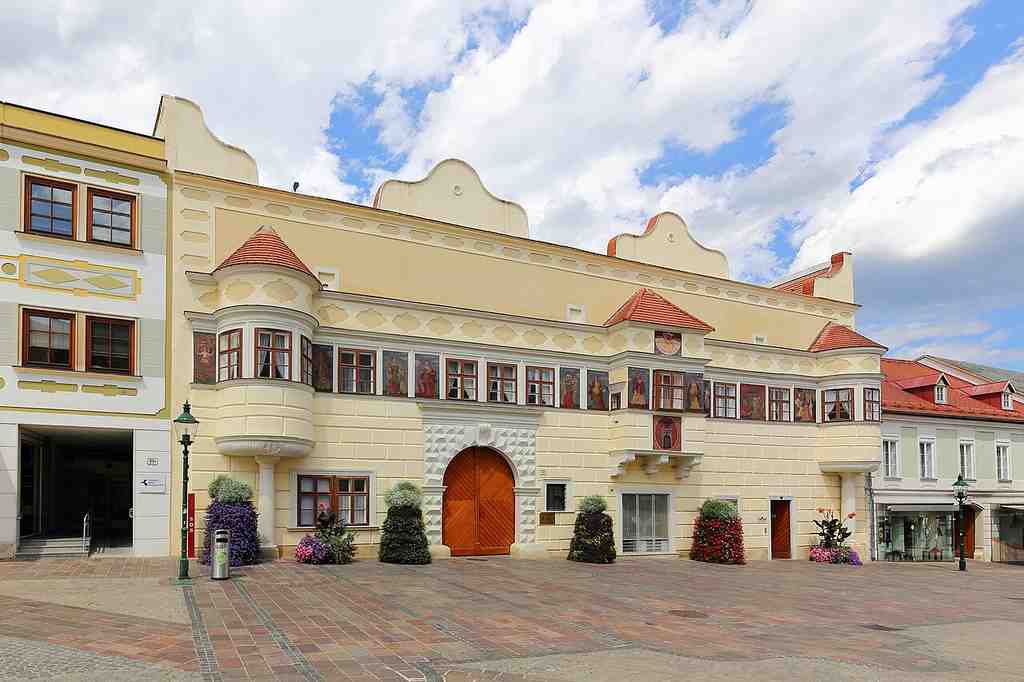
On your left is a pale stucco building with a broad rectangular facade, angular bay windows, and the composed, official look of a place that has been issuing decisions for a very long time.
A city shows sacred and civic authority in different costumes. The cathedral speaks through ritual and salvation; the town hall speaks through laws, seals, tax rolls, and meeting minutes. Both are stages where a place tells the world, and itself, who it is.
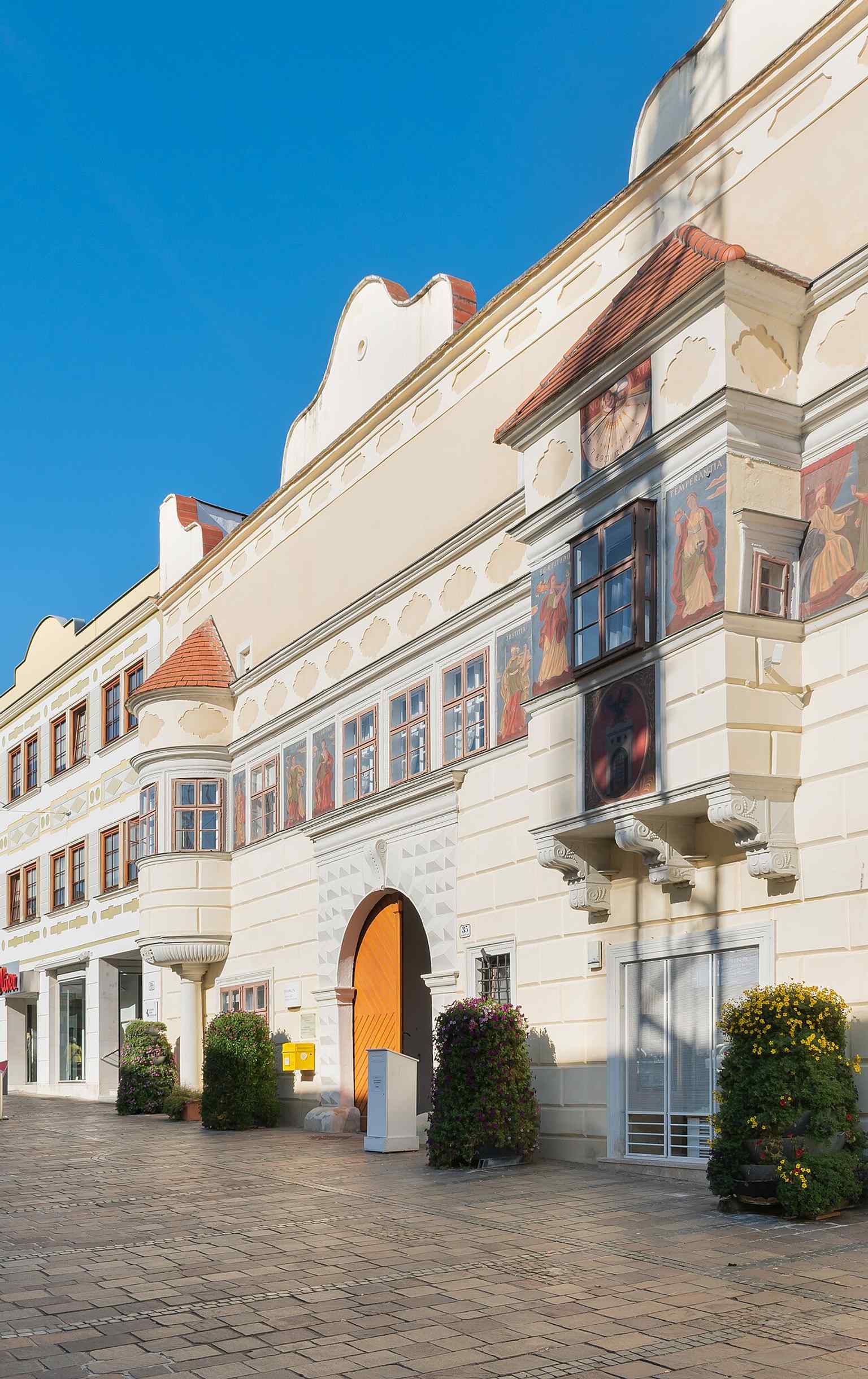
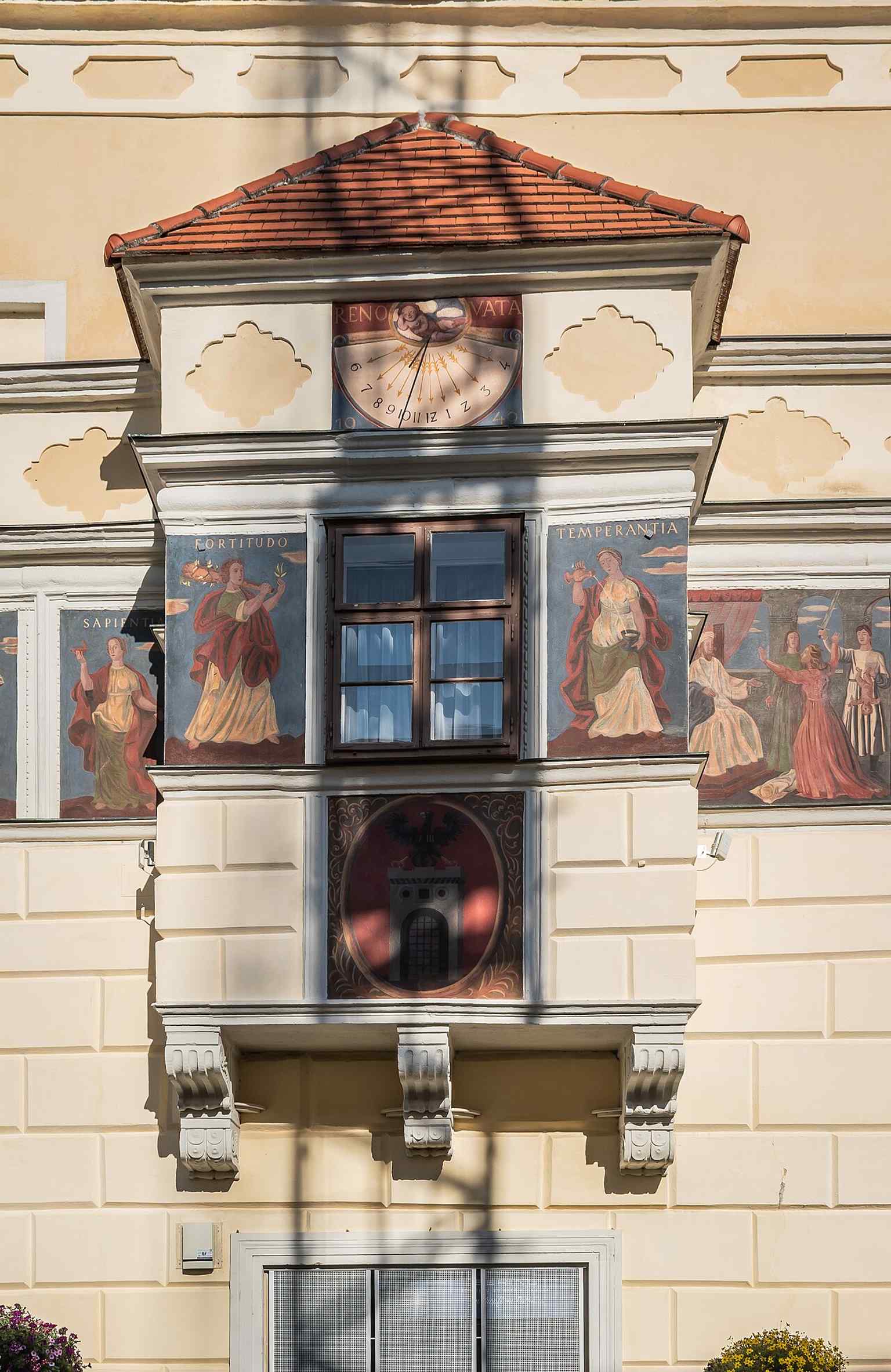
This Rathaus began around fifteen sixty as an ordinary urban building. Only after Eisenstadt became a royal free city in sixteen forty-eight - meaning the crown granted it important self-governing rights, instead of leaving it under tighter noble control - did the city recast this house as its town hall. Suddenly the facade had a job to do. It displayed female figures for the seven virtues and biblical scenes like the Judgment of Solomon, Judith and Holofernes, and Solomon with the Queen of Sheba. In other words, local government decided it should look morally qualified.
If you glance at the photo in the app, you can see that formal street face more clearly. The bay window in the other image is a good reminder that this started life as a sixteenth-century house before it learned official manners.
In nineteen twenty-one, after Burgenland joined Austria, Bohemian-born Aemilian Necesany became Eisenstadt’s first mayor in the new order. This building became the desk, stage, and filing cabinet of a political handover. And yes, the filing part matters. In nineteen twenty-four, archivist Fritz Antonius finally organized the city records. Then a nineteen thirty-nine renovation squeezed them into a cramped room, and by nineteen forty the city had to rent three rooms in the Franciscan monastery because the attic failed fire-safety rules. Memory, it turns out, needs storage.
After the war, Professor Franz Elek-Eiweck - school inspector and artist in one inconveniently interesting person - helped restore schools and launched an art exhibition in November nineteen forty-six. By nineteen forty-eight, city leaders were debating where to place courts, schools, post offices, and bus garages as Eisenstadt rebuilt its administrative center. Then in nineteen ninety-nine, the city remodeled the Rathaus again, adding a modern steel-and-glass circulation system beside old fire walls to make government more transparent, literally and bureaucratically.
Files, offices, and city status can shape memory just as much as altars and towers do. From here, head about two minutes to the Franciscan Church and Monastery of Saint Michael. If you need the working Rathaus rather than the historical one, it generally opens on weekdays, with shorter hours on Friday.





.jpg)
.jpg)