
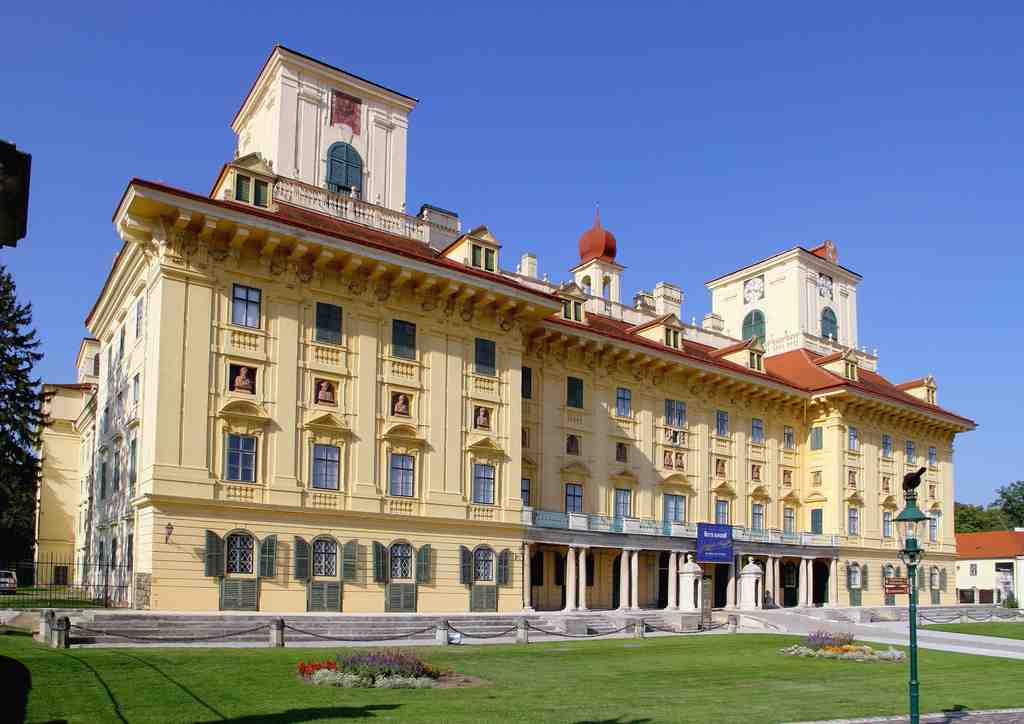
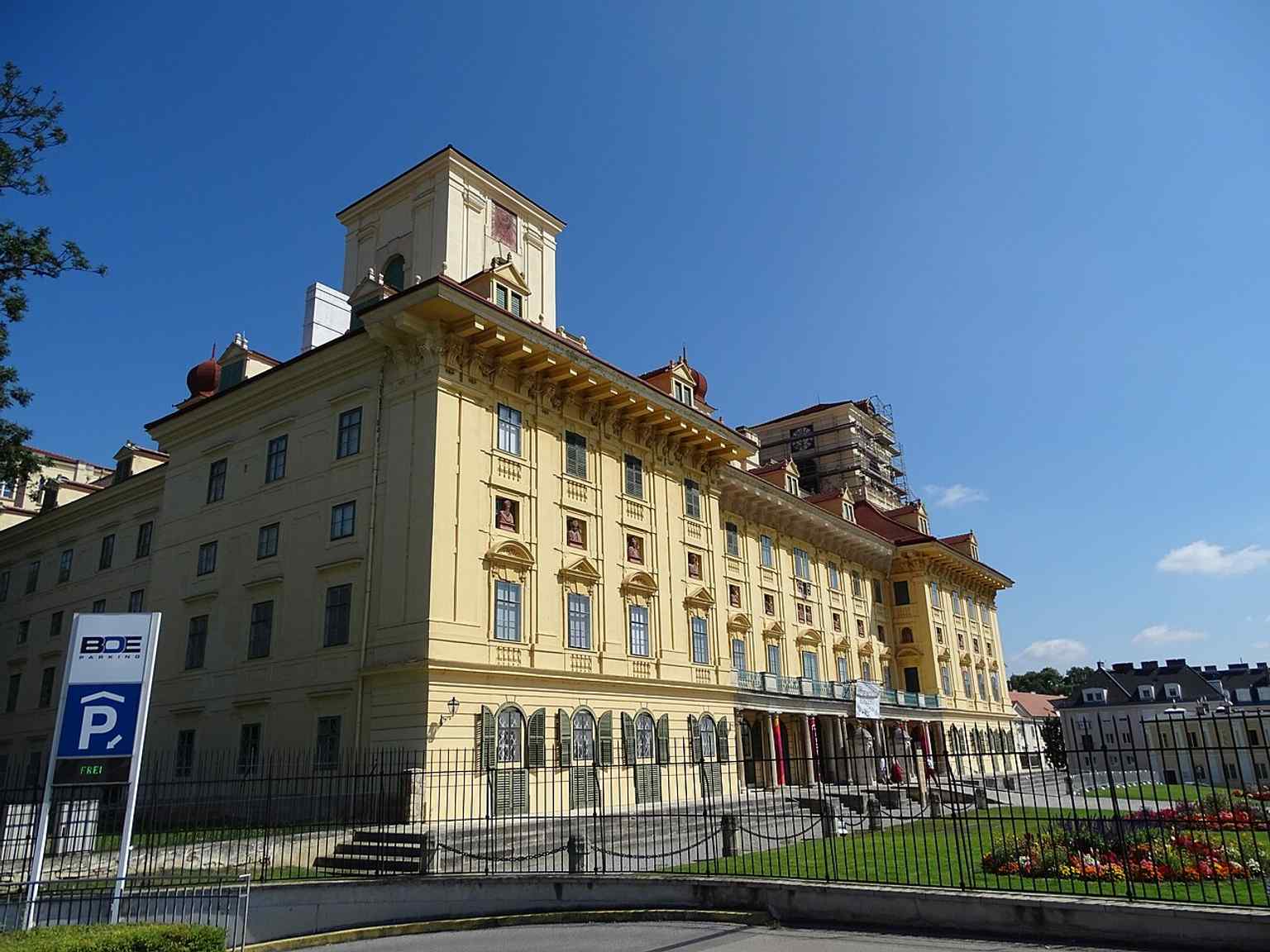
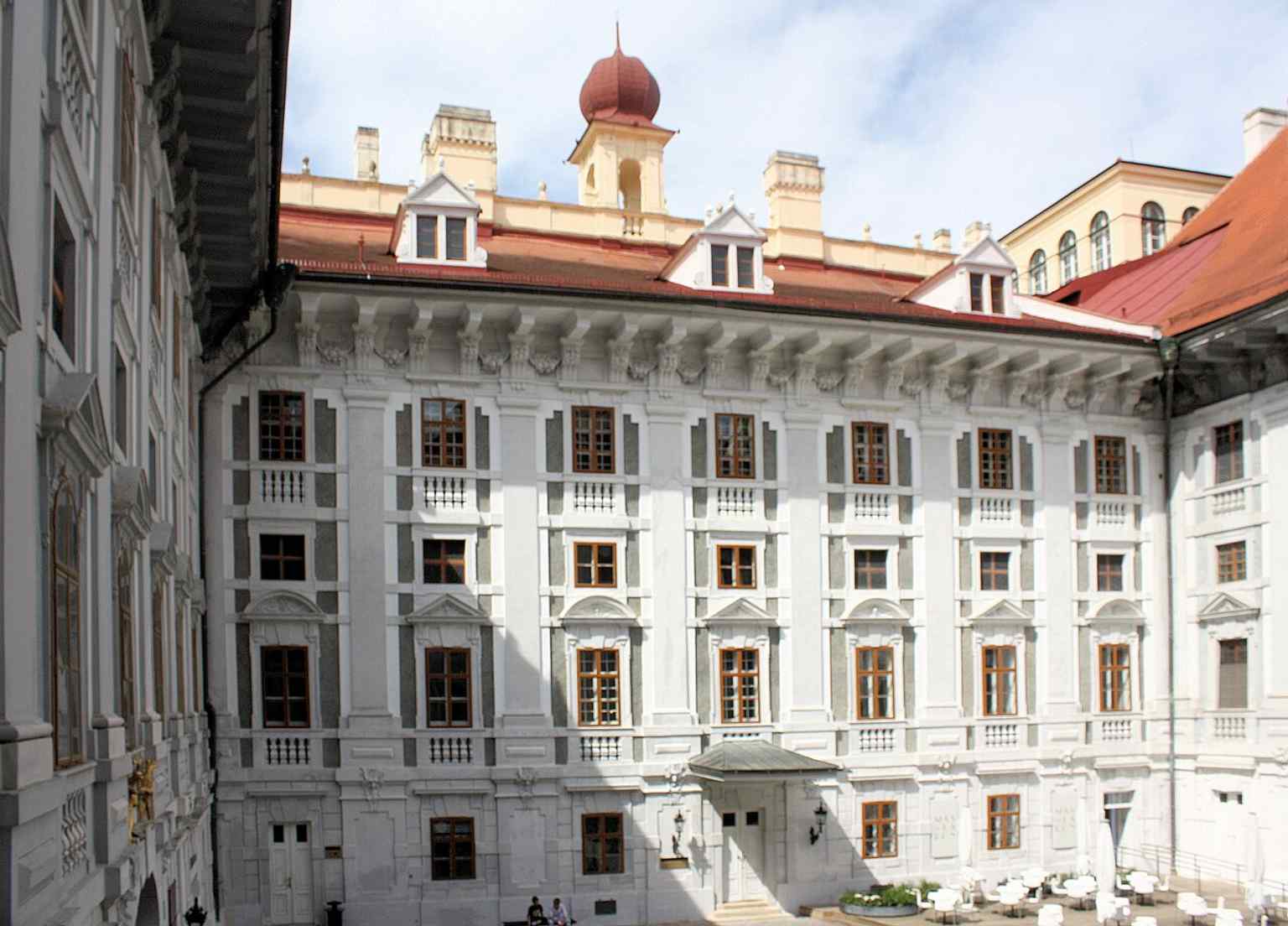
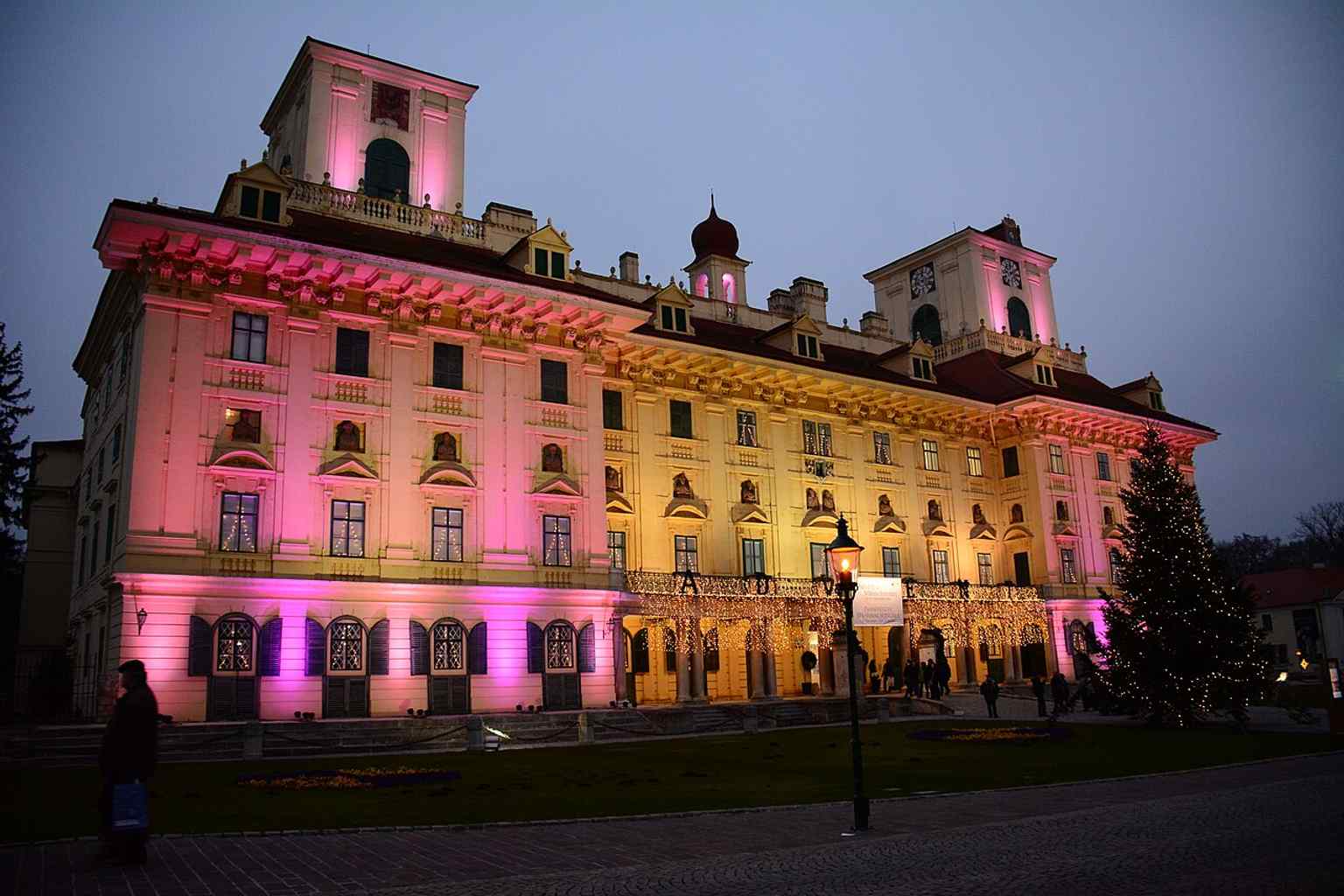
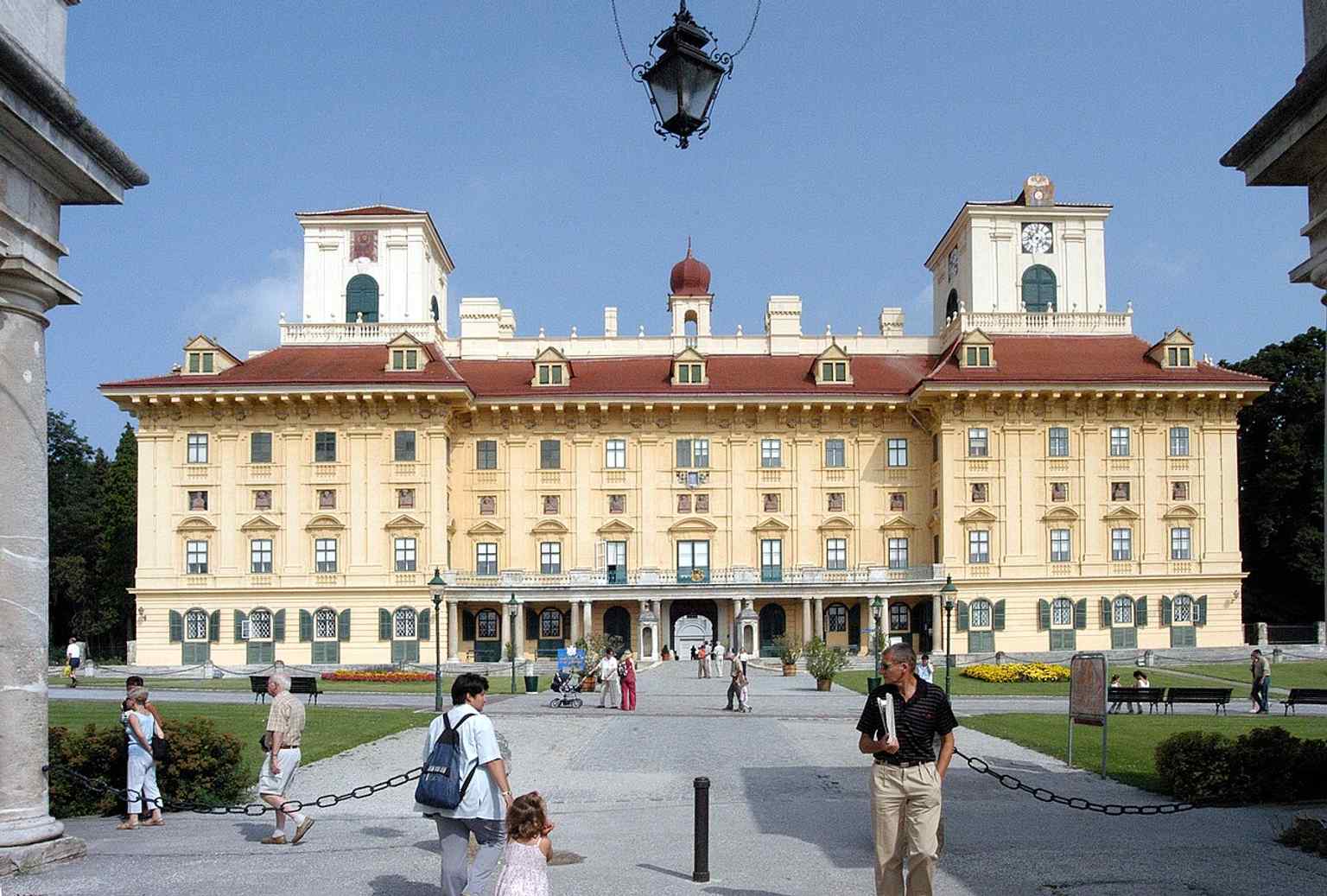
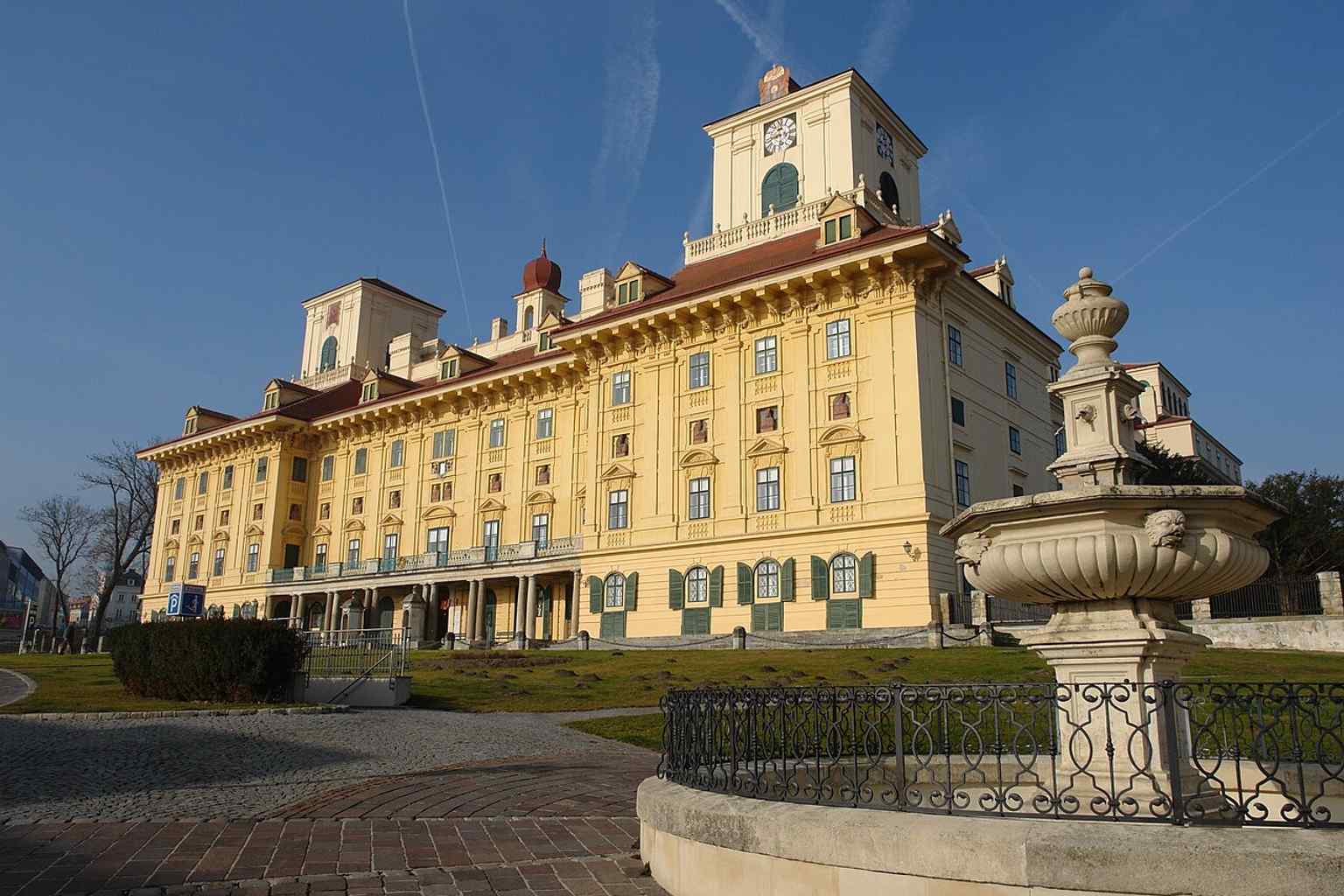
On your right rises a pale stucco palace with a long, symmetrical façade, corner towers, and the Esterházy coat of arms above the entrance.
This was Eisenstadt’s power center... the place where rank, money, taste, and ceremony radiated outward into the streets, churches, and houses around you. If the town hall expressed civic pride and the churches claimed spiritual ground, this palace answered with aristocratic scale. Nobility rarely whispers.
The story starts as a Gothic fortress in the thirteenth century. First the Gutk family held it, then the Kanizsay family enlarged it, and with permission from King Louis the Great they folded it into Eisenstadt’s defensive wall. So this elegant frontage began life as something much grimmer: a stronghold with a moat, part residence, part warning.
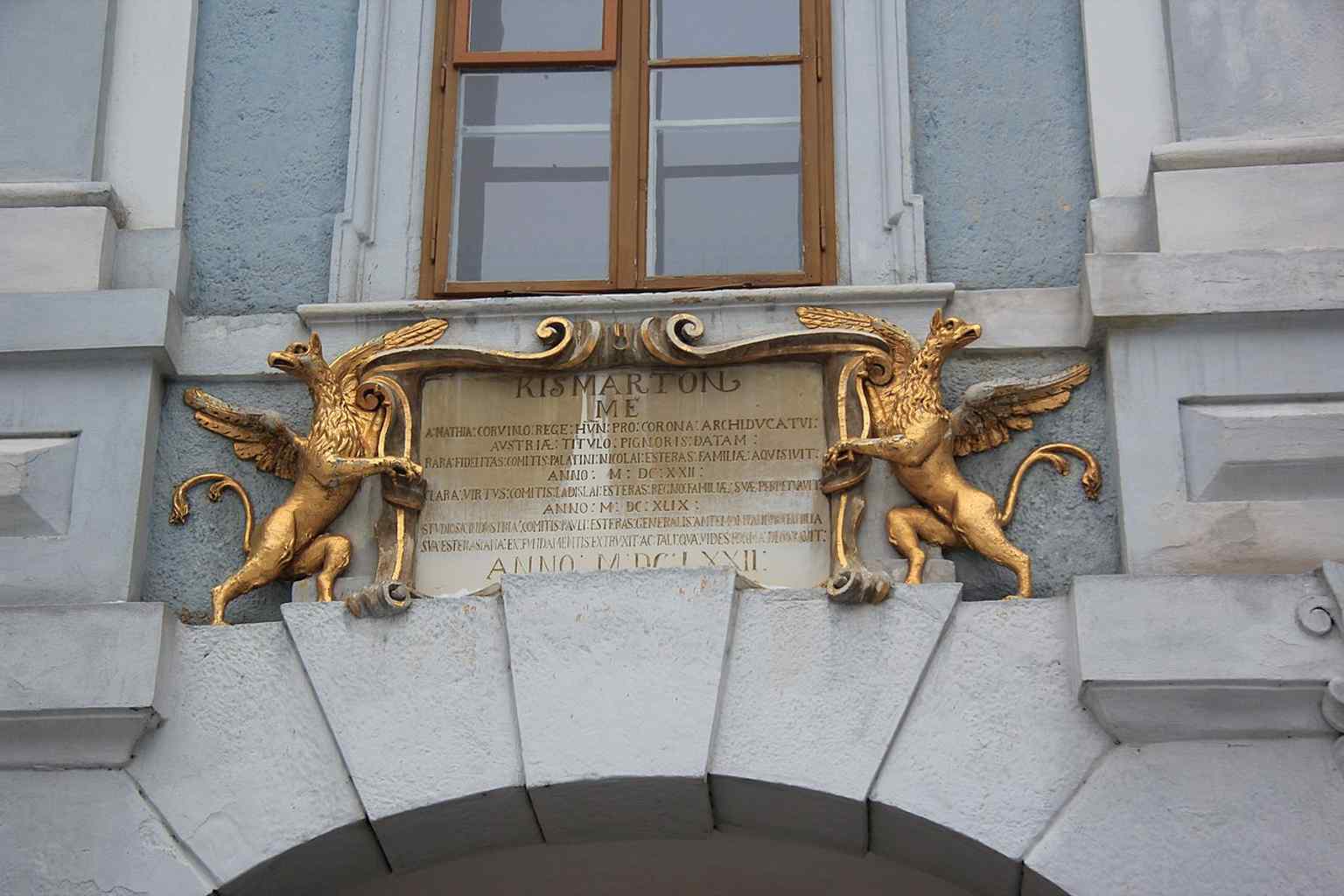
Everything changed in the seventeenth century. In sixteen twenty-two, Nikolaus Esterházy gained the castle in a political exchange after the Peace of Nikolsburg. Then his son Ladislaus bought it outright from Emperor Ferdinand the Third in sixteen forty-nine, and the estate has remained in Esterházy hands ever since. That continuity matters. It meant one family could keep reshaping not just a building, but the city around it.
After Ladislaus died, his brother Paul the First pushed hardest. Between sixteen sixty-three and sixteen seventy-two, he hired Carlo Martino Carlone to turn the old fortress into a Baroque palace fit for rising princely ambition. Stone masters from Kaisersteinbruch carved its details. Work slowed in sixteen eighty-three during the second Ottoman siege crisis, because history has a habit of interrupting architecture.
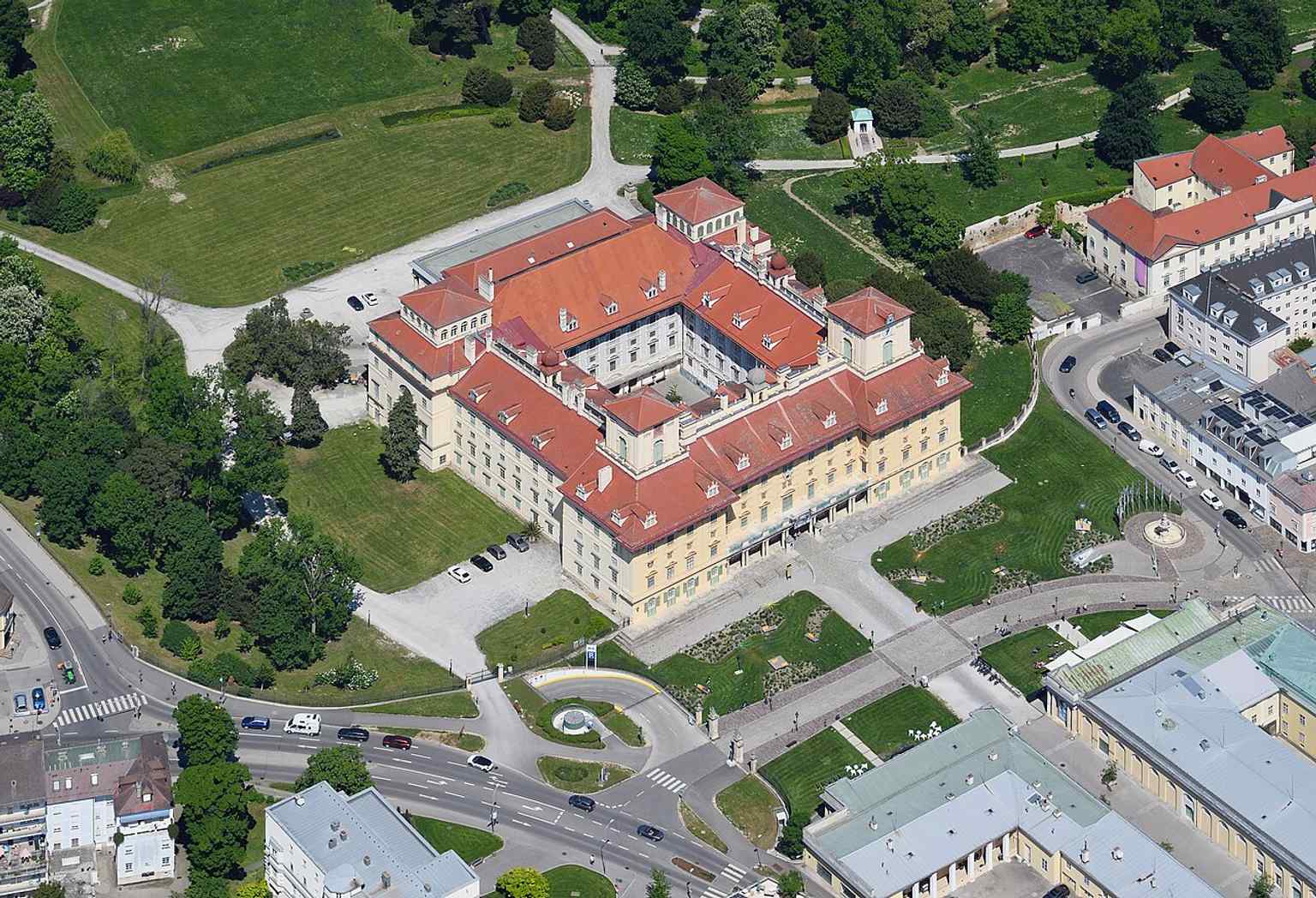
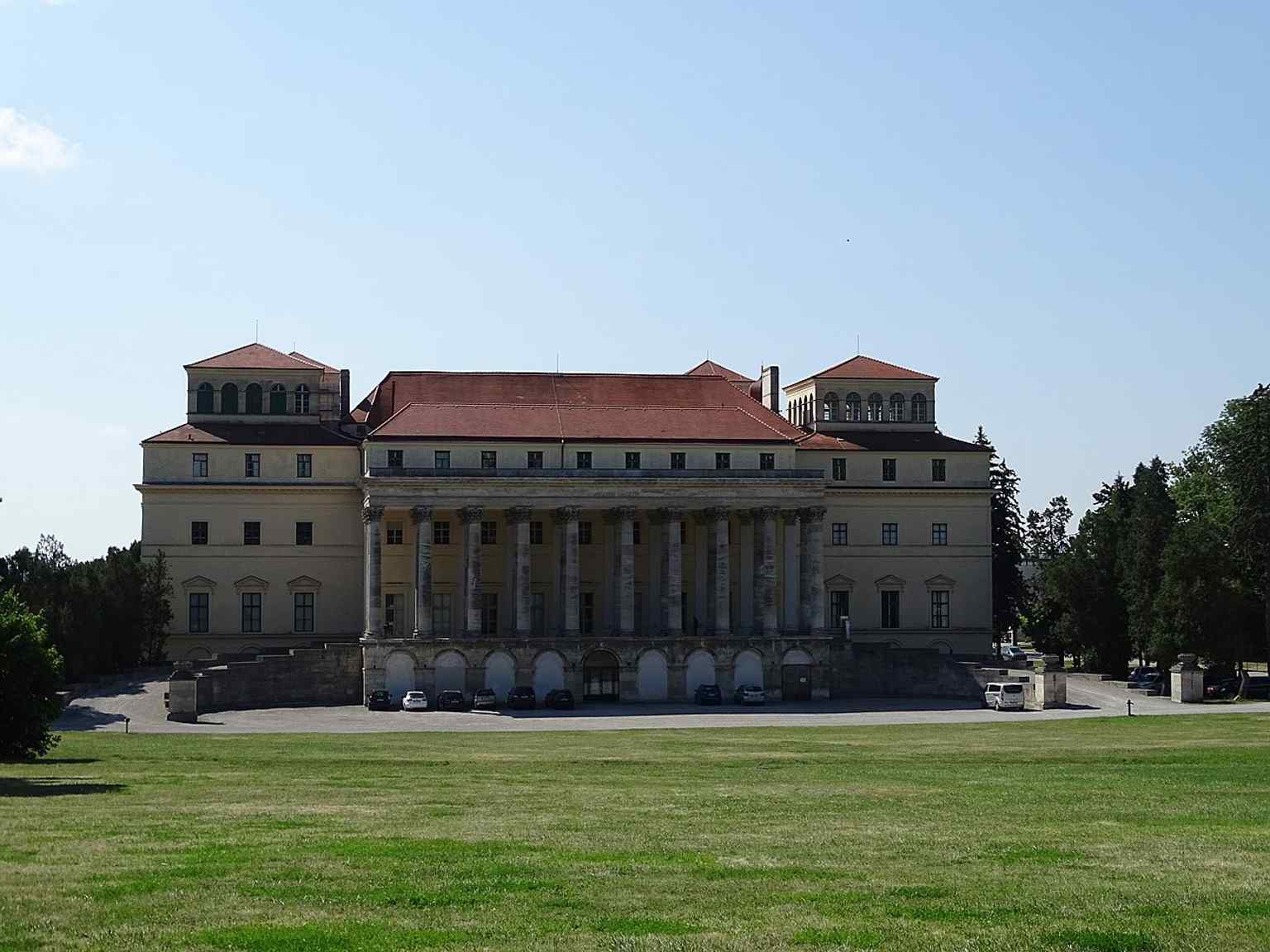
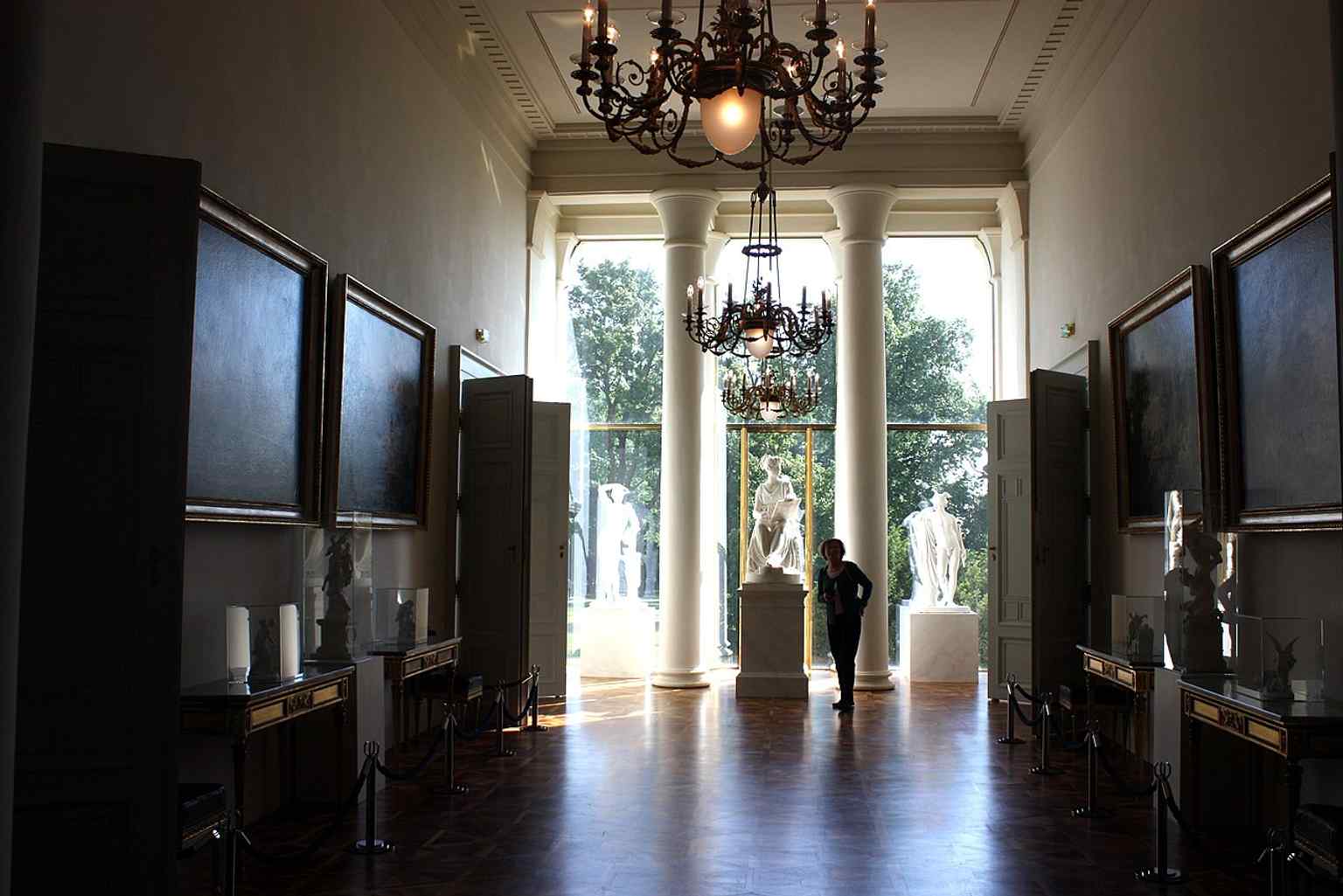
If you glance at the image on your screen, the aerial view shows something odd: the palace feels long, but not quite as vast as it wants to be. That is the ghost of another reinvention. From eighteen oh five to eighteen fifteen, Prince Nikolaus the Second brought in architect Charles de Moreau, with Karl Ehmann overseeing work, to refashion the palace in a classical style. Moreau planned a residence more than twice this size, with the grand approach from the garden side, a columned portico, and a sala terrena, a ground-floor passage hall open to arrival and display. Then Napoleonic troops occupied Eisenstadt, money ran thin, and the dream stopped half-finished. Even princes meet a budget eventually.
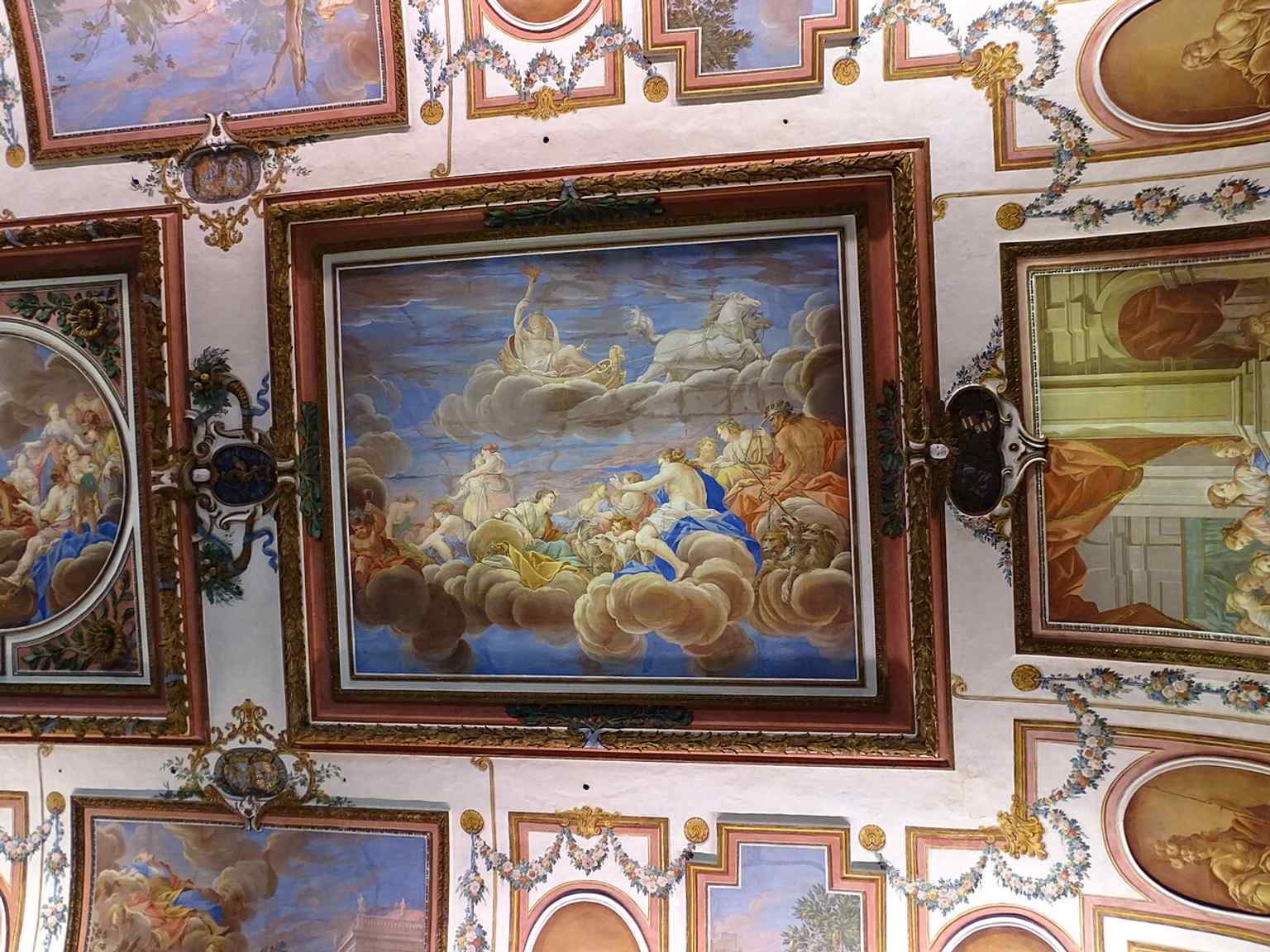
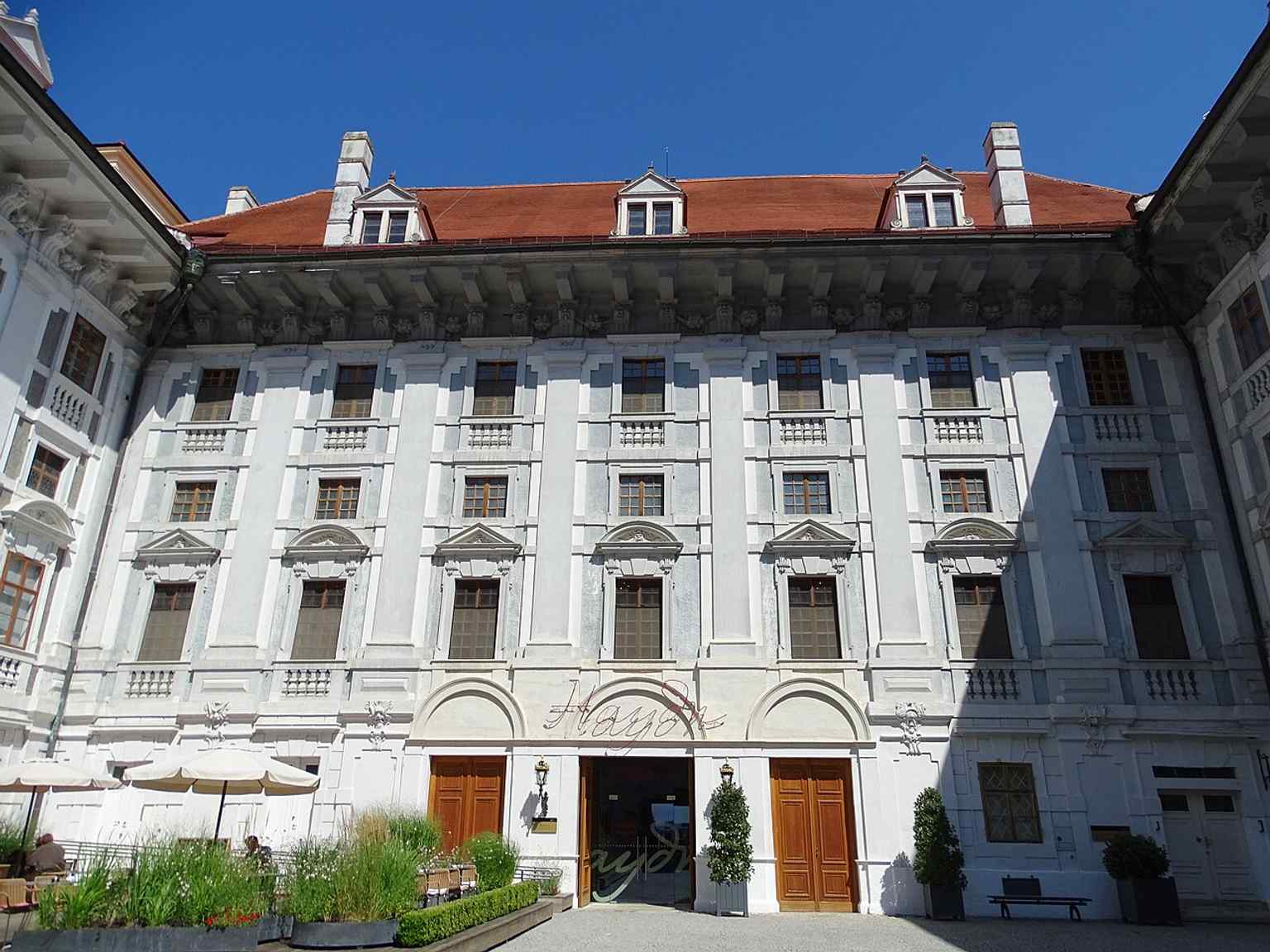
Inside, the palace became one of Europe’s musical engines. Joseph Haydn served the Esterházy court from seventeen sixty-one to eighteen oh three, and the great hall you can see in the app became today’s Haydn Hall, still used for concerts. So this was never just a home. It was a machine for prestige, performance, and patronage.
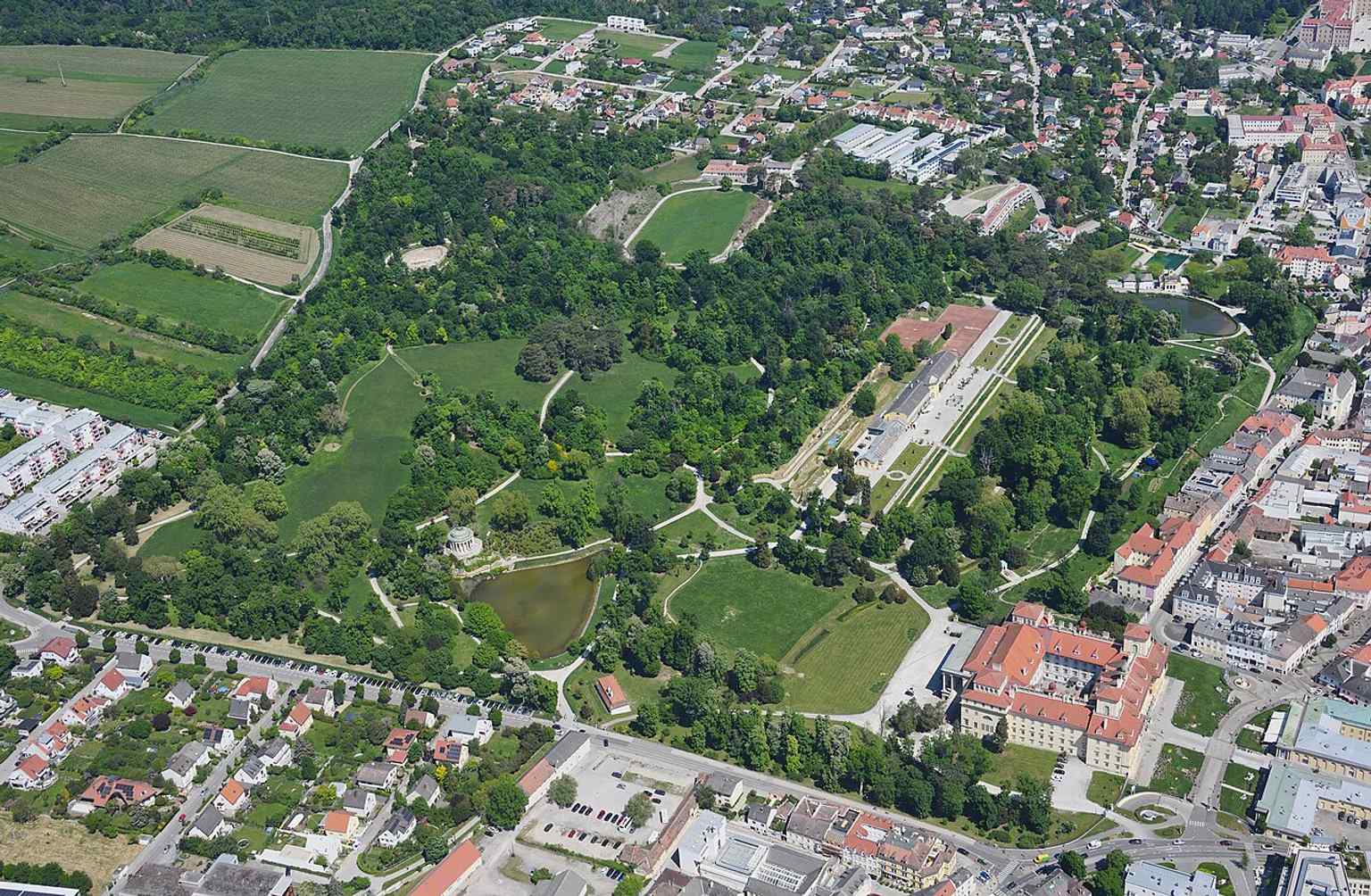
In the twentieth century, war and politics changed its use again, and Melinda Esterházy later helped place the family heritage into private foundations so it would stay intact and publicly accessible. The palace kept adapting, right down to major roof and tower restoration completed in twenty twenty-one.
To understand Eisenstadt’s skyline, you have to ask who had the power to redraw it. Next, in about three minutes, we’ll meet a very different answer at the Church of the Resurrection. If you plan to go inside here later, the palace is open daily from ten to four.





.jpg)

.jpg)


