
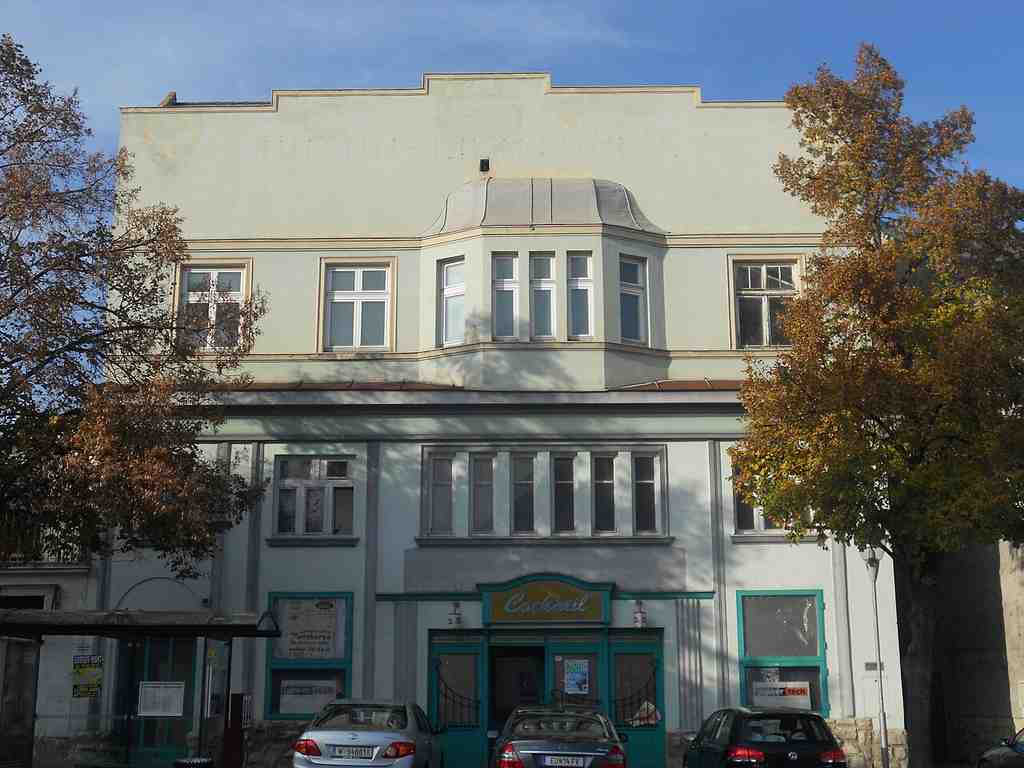
On your left stands a pale plaster cinema block with a broad, boxy front, a raised central parapet, and the Haydn Kino name still marking the facade.
This place matters because Eisenstadt did not save culture only for palaces, churches, and concert halls. In nineteen twenty-four, architect Johann Schweifer designed this building as a real cinema from the start, not just a long rural hall with chairs shoved in. He gave it the feel of a small theater, with room for about four hundred and fifty people and even a balcony level, so moviegoing here began with a little ceremony built right into the walls.
Josefa Horak founded the Haydn Cinema that same year, and her family kept it until her great-grandson Eduard Tschida closed it in the late nineteen eighties. Most tourists never hear the odd detail locals enjoy repeating: at the beginning, the first license seems to have belonged not to a private owner, but to the municipality of Oberberg Eisenstadt itself. So this was civic culture with popcorn ambitions... a very Austrian combination.
After the war, the Red Army used the cinema to screen films about Russian culture. When the house reopened in December nineteen forty-five, with four hundred and fifty-two seats, the mood was hopeful but hardly glamorous. People lacked money, the walk home in darkness felt uncertain, and yes, locals remembered a serious flea infestation. Nothing says postwar recovery quite like trying to enjoy a film while wondering what else bought a ticket.
If you glance at the image on your screen, you can see that purpose-built theatrical front for yourself. And because Eisenstadt lacked other big halls, this building also hosted political meetings. People gathered here not just to watch stories, but to rebuild public life together.
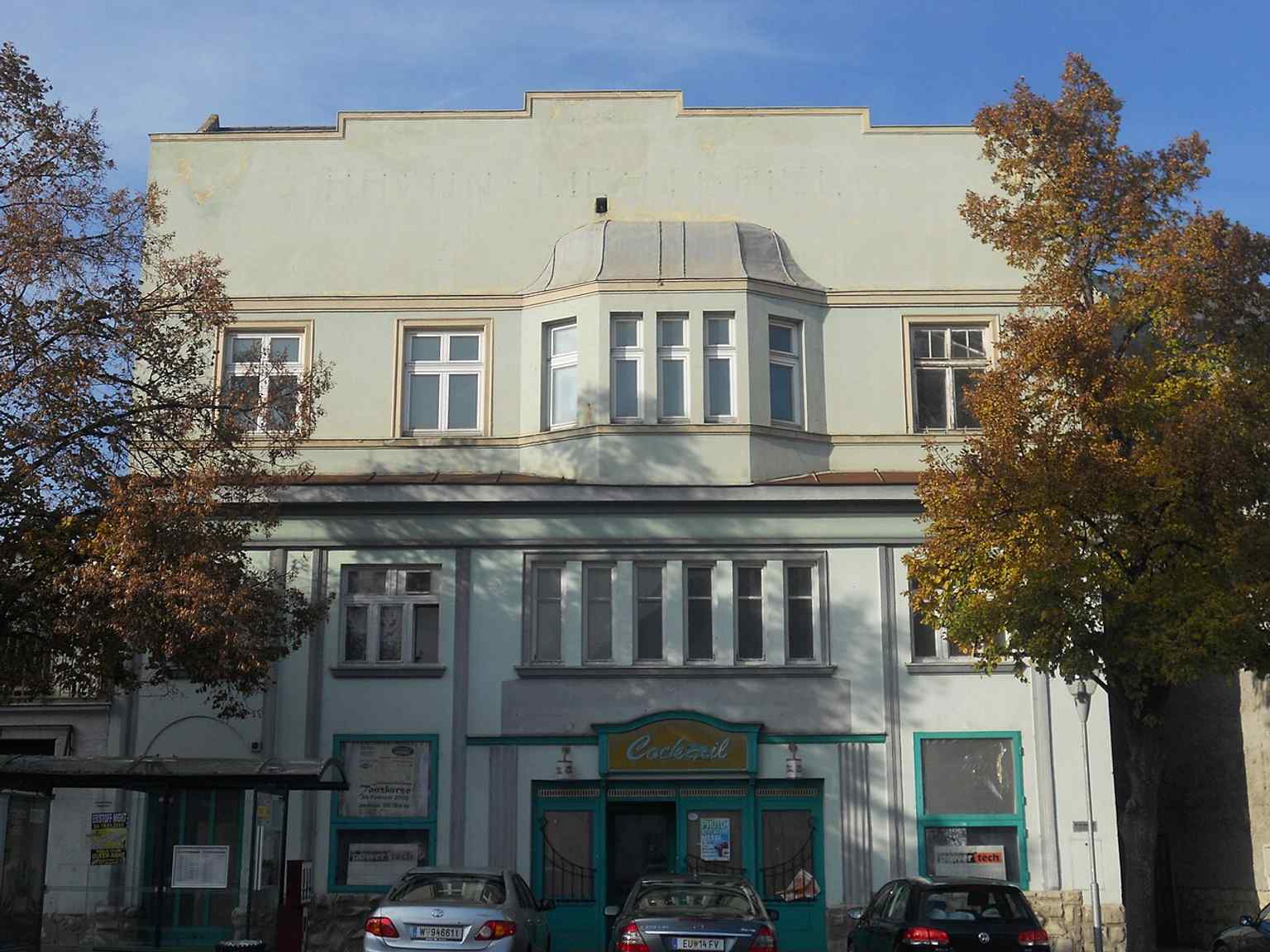
After its cinema years, it drifted through new roles: cocktail bar, dance classes, billiards, gambling, the place some still recall as Paradiso. Then the city bought it back in two thousand twenty-two, partly because Eisenstadt had become the only Austrian state capital without a cinema. That stung.
From here, head to the Mountain Church, about three minutes away. The city’s shared life did not survive only in sacred or grand places... it survived anywhere people insisted on meeting again.





