
New York City Audio Tour: Gilded Grandeur & Hidden Gems of Manhattan
High above Manhattan’s rush, grand mansions watch from behind carved stone and gilded ironwork, holding secrets deeper than their marble facades reveal. This self-guided audio tour leads you along twisting streets and silent corridors where power was bartered, legends were born, and rivalries festered. Trace the city’s hidden stories in places most visitors walk right past. Did a single scandal at the Carlyle Hotel reshape the fate of the city’s elite overnight? What secret roles did the Payne Whitney and Benjamin N. Duke Houses play beneath their glittering social surfaces? Who slipped through a side door in 1921 and vanished without a trace? Let each step pull you further into whispers of midnight deals, lost fortunes, grand designs, and shadowy intrigue. See iconic landmarks in new light as the true heartbeat of Manhattan pulses beneath your feet. Unlock the doors of old New York. The city’s secrets are waiting. Start now.
Tour preview
About this tour
- scheduleDuration 90–110 minsGo at your own pace
- straighten2.9 km walking routeFollow the guided path
- location_onLocationManhattan, United States
- wifi_offWorks offlineDownload once, use anywhere
- all_inclusiveLifetime accessReplay anytime, forever
- location_onStarts at Payne Whitney House
Stops on this tour
lock_open 3 free previews · 12 unlock with purchase
Look directly at the five-story pale gray-granite building characterized by its prominent horizontal stone bands, known as entablatures, and a grand row of round-arched windows…Read moreShow less
Open dedicated page →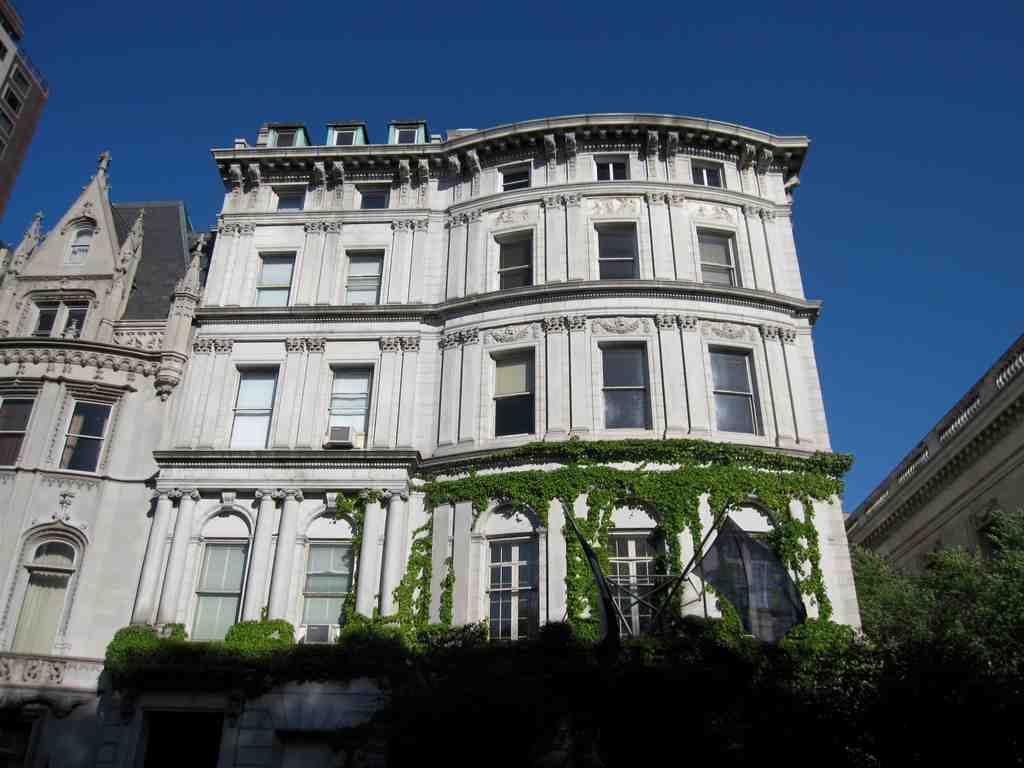
Payne Whitney HousePhoto: Gryffindor, Wikimedia Commons, CC BY-SA 3.0. Cropped & resized. Look directly at the five-story pale gray-granite building characterized by its prominent horizontal stone bands, known as entablatures, and a grand row of round-arched windows along the second floor.
This is the Payne Whitney House, commissioned back in nineteen hundred and two as a wedding gift by a reclusive Standard Oil tycoon for his nephew.
But do not let this serene, perfectly ordered exterior fool you. Behind this immaculate gray-granite facade lies a masterclass in architectural delays and escalating frustration. The bride, Helen Hay, waited so long for her bespoke home that she gave birth to two children before the doors ever opened. The construction dragged on for so many years that Helen became thoroughly exasperated. She told her architect she felt like chucking the whole project to just buy a nice, ready-made house.
The architect responsible for her misery was the legendary Stanford White. White was utterly obsessed with perfection. Instead of simply building the house, he spent years scouring Europe, buying up antique doors, tapestries, and entire centuries-old ceilings. He even purchased a marble statue of a naked youth to install in the entranceway. The family largely ignored the sculpture as a simple garden ornament for nearly a century, constantly splashing it with fountain water, until art historians finally authenticated it as a genuine work carved by a teenage Michelangelo.
Between the art and the antiques, White blew over one million dollars on furnishings alone, which is roughly thirty-five million dollars today. You can imagine the uncle's reaction to that invoice.
Take a moment to step back and look closely at the shape of the front wall. Notice how the entire granite face is not actually flat. It bows slightly outward toward Fifth Avenue. That curve is a subtle but incredibly expensive architectural flex, precisely engineered to catch the light from different angles and give the heavy stone an almost fluid, living quality.
White, unfortunately, never saw his curving masterpiece completed. He was murdered on the roof of Madison Square Garden in nineteen hundred and six. Because he had personally hand-selected every single item, his firm had to painstakingly decipher his remaining sketches to finish the interiors exactly as he intended. The family finally moved in in nineteen hundred and nine.
It is a brilliant example of how families in this neighborhood used architecture to project absolute power. We will see another dramatic example of this ambition just a one-minute walk south at the James B. Duke House.
Oh, and if you want to peek inside, the French embassy operates a bookstore here, open until six PM most days and five PM on Sundays.
Look to your left and you will see a massive, rectangular pale limestone mansion crowned by a classical roofline balustrade, with a grand pillared portico right in the…Read moreShow less
Open dedicated page →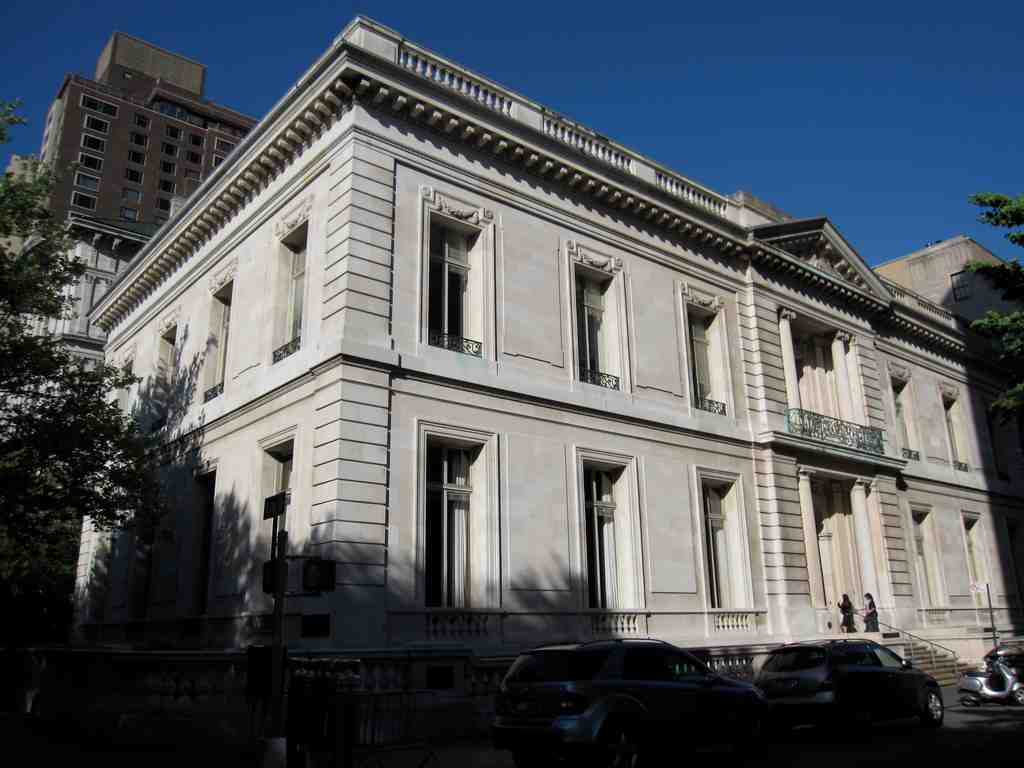
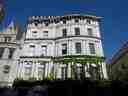
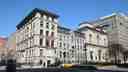
James B. Duke HousePhoto: Gryffindor, Wikimedia Commons, CC BY-SA 3.0. Cropped & resized. Look to your left and you will see a massive, rectangular pale limestone mansion crowned by a classical roofline balustrade, with a grand pillared portico right in the center.
This is the James B. Duke House. At the turn of the twentieth century, James Buchanan Duke had amassed a tobacco fortune of sixty million dollars, which translates to over two billion dollars today. But he also had a significant public relations problem. He was embroiled in a spectacularly messy divorce from his first wife. Suspecting her of infidelity, he hired private investigators to track her every move. He finally secured the divorce in nineteen oh six, tossing her a settlement of five hundred thousand dollars, an absolute pittance compared to his empire.
Duke needed to scrub off the scandal and project unquestionable respectability for his new bride, Nanaline. His strategy was simple. He decided to invent a past. To give his family instant aristocratic pedigree, Duke commissioned a near exact replica of an eighteenth century French chateau, Château Labottière in Bordeaux.
The architecture firm of Horace Trumbauer took the job, though the actual genius behind the limestone was Julian Abele. Abele was a brilliant African American architect who served as the firm's chief designer, though his contributions were hidden for decades due to the era's severe racial barriers. Abele designed this mansion to be an absolute fortress of elegance. If you pull up the app, you can see how carefully the exterior was proportioned. Abele cleverly hid twelve servant suites in the attic behind that roofline balustrade, making this colossal structure look like a modest two-story pavilion from the street. A modest pavilion that just happened to be the most expensive home on Fifth Avenue.
But a manufactured French pedigree does not guarantee a peaceful life. When James Duke died in nineteen twenty-five, his final words to his daughter Doris were, trust no one. It was solid advice. His will inadvertently ordered his executors to sell off his real estate to fund his endowment, pitting Nanaline against fourteen-year-old Doris. The teenager effectively sued her own mother to block the sale of the house. Doris won, keeping the property and cementing a deeply guarded personality that lasted her entire life.
Eventually, the family surrendered the mansion to N-Y-U in nineteen fifty-eight to house its Institute of Fine Arts. While other Gilded Age palaces on Fifth Avenue were demolished and replaced by anonymous apartment blocks, the Duke house survived by becoming an academic institution. It traded debutante balls for library shelves and bitter family lawsuits for bitter neighborhood zoning disputes. Truly, the circle of life in Manhattan.
Our next stop is the New York Society Library, which is about a four-minute walk away.
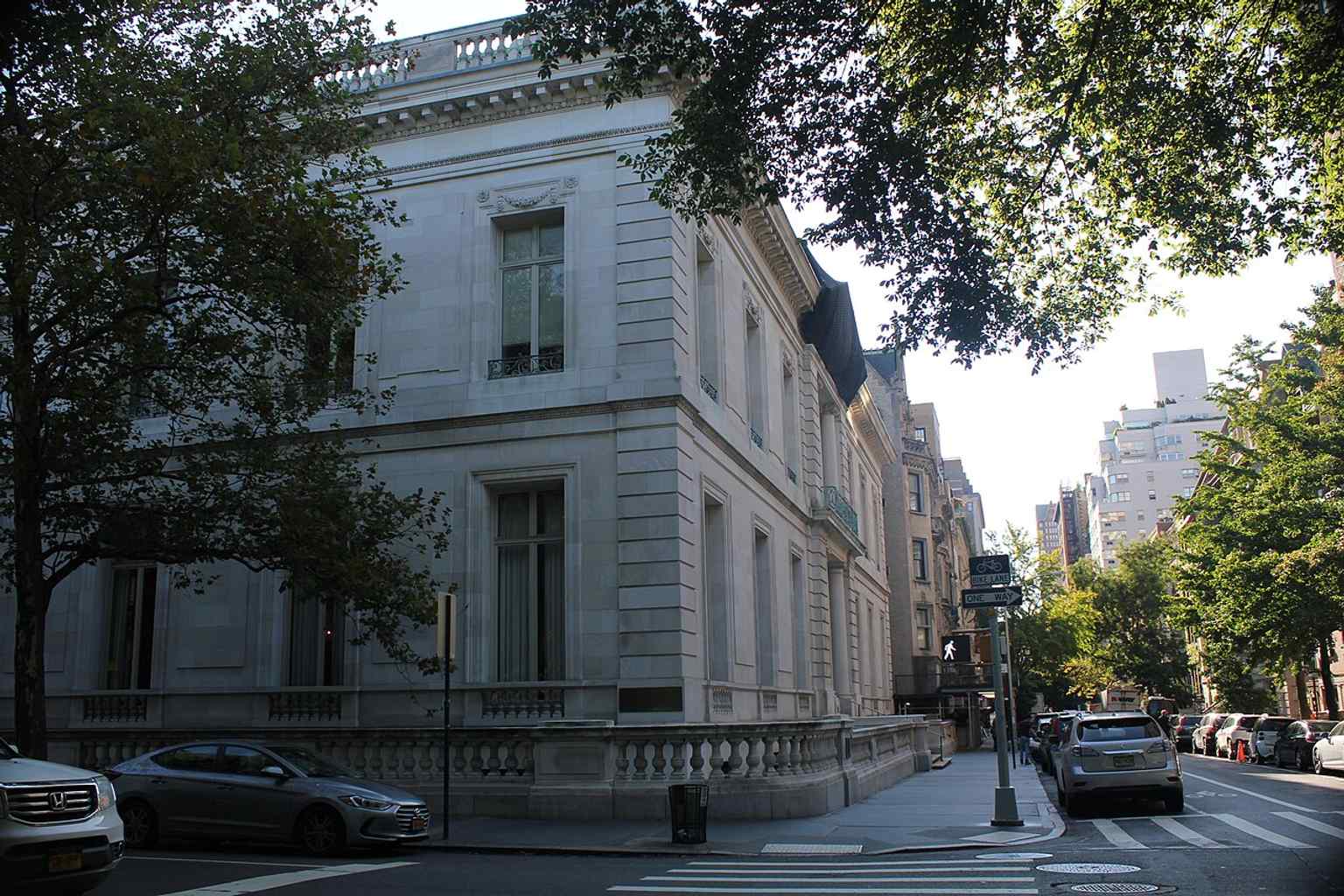
The grand limestone facade of the James B. Duke House, designed by Horace Trumbauer based on Château Labottière, was a deliberate move by James B. Duke to 'invent a past' and provide his family with an architectural pedigree.Photo: Gryffindor, Wikimedia Commons, CC BY-SA 3.0. Cropped & resized. 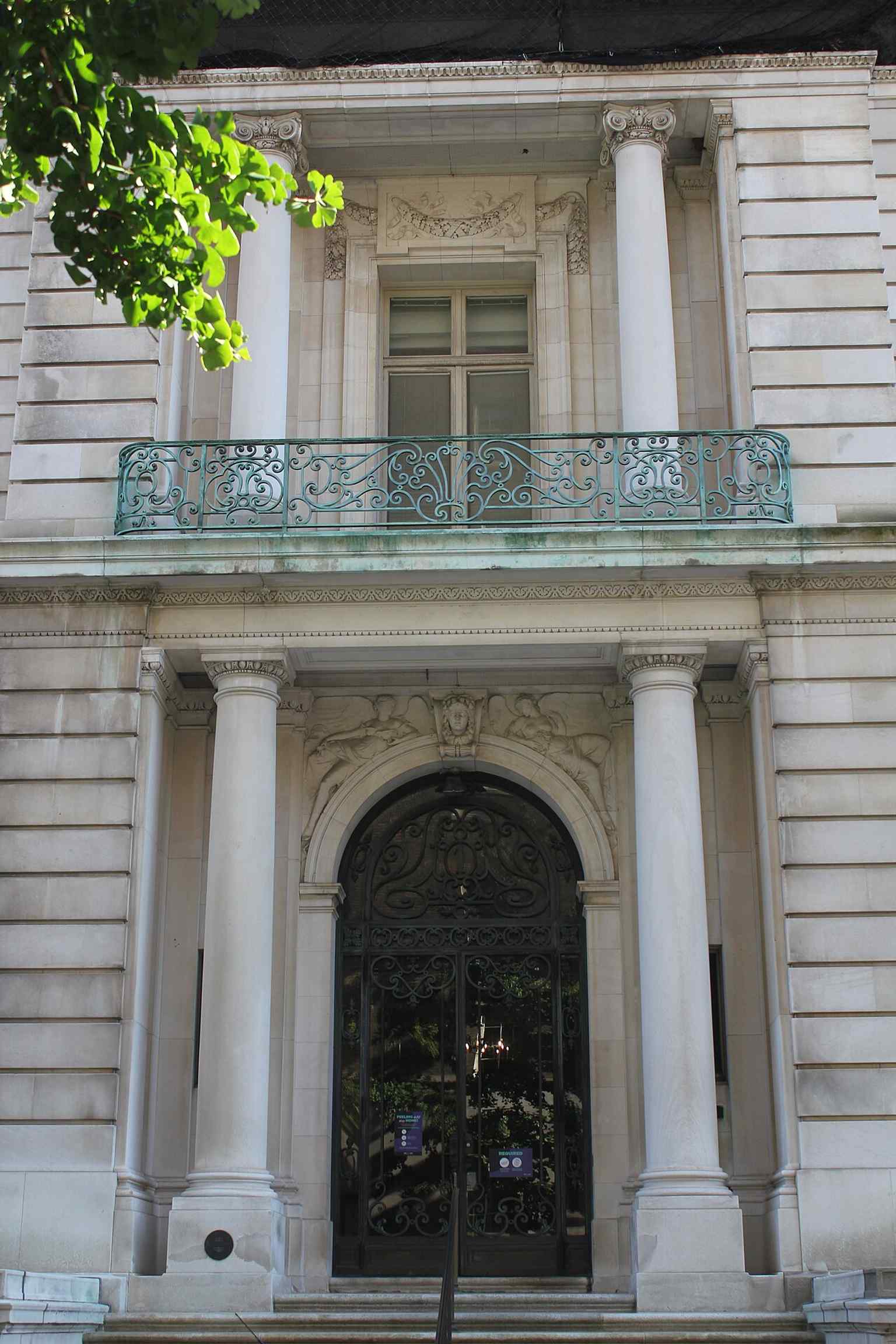
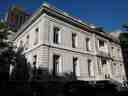
This view highlights the James B. Duke House's prominent location on the northeast corner of Fifth Avenue and 78th Street, directly across from Central Park.Photo: smilly, Wikimedia Commons, CC BY-SA 3.0. Cropped & resized.
Show 12 more stopsShow fewer stopsexpand_moreexpand_less
Look to your left to see the Carlyle Hotel, an imposing rectangular structure featuring a smooth pale stone base that transitions into gray brick on the upper stories, anchored by…Read moreShow less
Open dedicated page →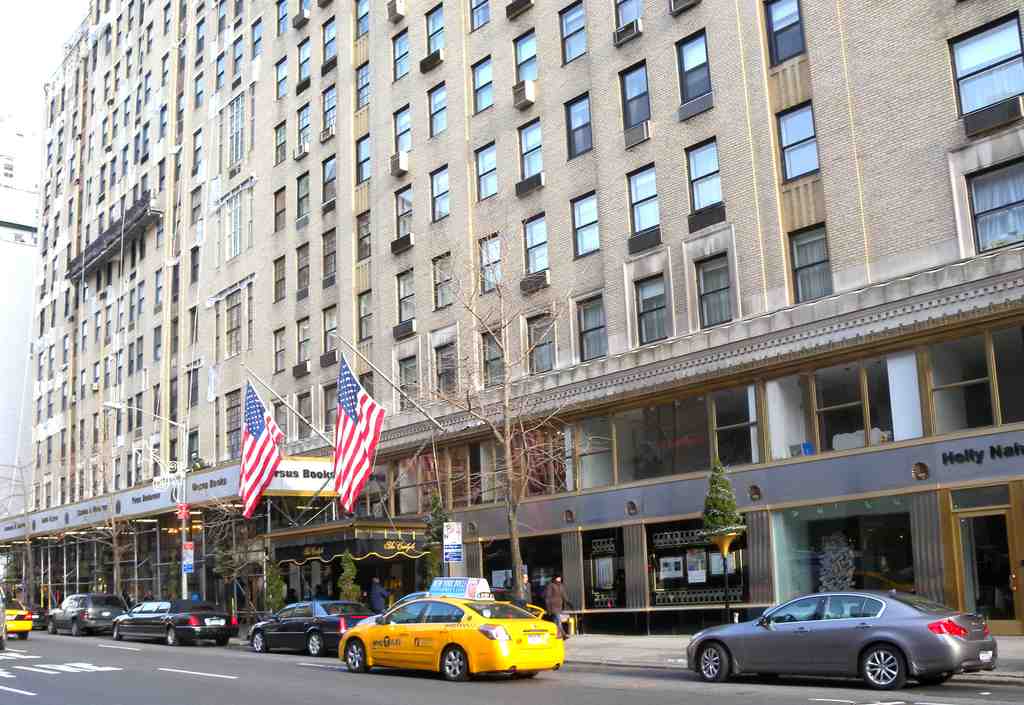
Carlyle HotelPhoto: Jim.henderson, Wikimedia Commons, CC0. Cropped & resized. Look to your left to see the Carlyle Hotel, an imposing rectangular structure featuring a smooth pale stone base that transitions into gray brick on the upper stories, anchored by a prominent dark entrance canopy with gold lettering.
This building is a monument to a spectacular, heartbreaking gamble. Back in nineteen twenty-eight, a Polish-born banker named Moses Ginsberg had a vision. He wanted to build an apartment hotel that fused European sophistication with the booming American appetite for skyscrapers. He knew the economic shadows were gathering, but he pushed forward anyway, pouring millions of his own money into erecting this massive forty-story Art Deco tower. He even let his daughter name it after the Scottish essayist Thomas Carlyle.
The hotel opened its doors in November nineteen thirty, charging up to one million dollars a year for an apartment in today's money. But his timing was tragically flawless. The Great Depression had just hit. Ginsberg faced complete financial ruin. By nineteen thirty-two, he had lost his masterpiece to foreclosure.
Think about pouring your entire fortune into a soaring forty-story monument to luxury, only to have it ripped from your hands within two years. How do you stomach a failure of that magnitude?
Yet, the building survived its creator's downfall. The new owners smartly shifted the hotel's strategy. Instead of flashy glitz, they cultivated a quiet, almost domestic atmosphere. It became a fortress of absolute discretion. Take a look at the historic comparison on your screen to see how the hotel has maintained its dignified presence on this corner over the decades.
Eventually, the Carlyle evolved into the ultimate hideout for the global elite. It earned the nickname the Palace of Secrets. The staff culture strictly forbade gossiping. They say John F. Kennedy used a network of underground tunnels to sneak Marilyn Monroe into his suite. You can check your screen to see a rare shot of Kennedy in his presidential suite, effectively treating the Carlyle as the White House of Manhattan. From Princess Diana to George Clooney, the world's most famous people have treated this place as a sanctuary because the staff treats them like ordinary family members, completely shielding them from the press.
Ginsberg lost his shirt, but his dream of a lasting legacy was realized by the very people who took his building away. The upper crust of this city is always finding new ways to repackage failure into enduring prestige.
Now it is time to move on from commercial triumphs and look at how this neighborhood approaches high art. Our next stop is the Met Breuer, just a two-minute walk away. By the way, the Carlyle Hotel operates twenty-four hours a day, seven days a week, should you ever need a discreet place to hide.
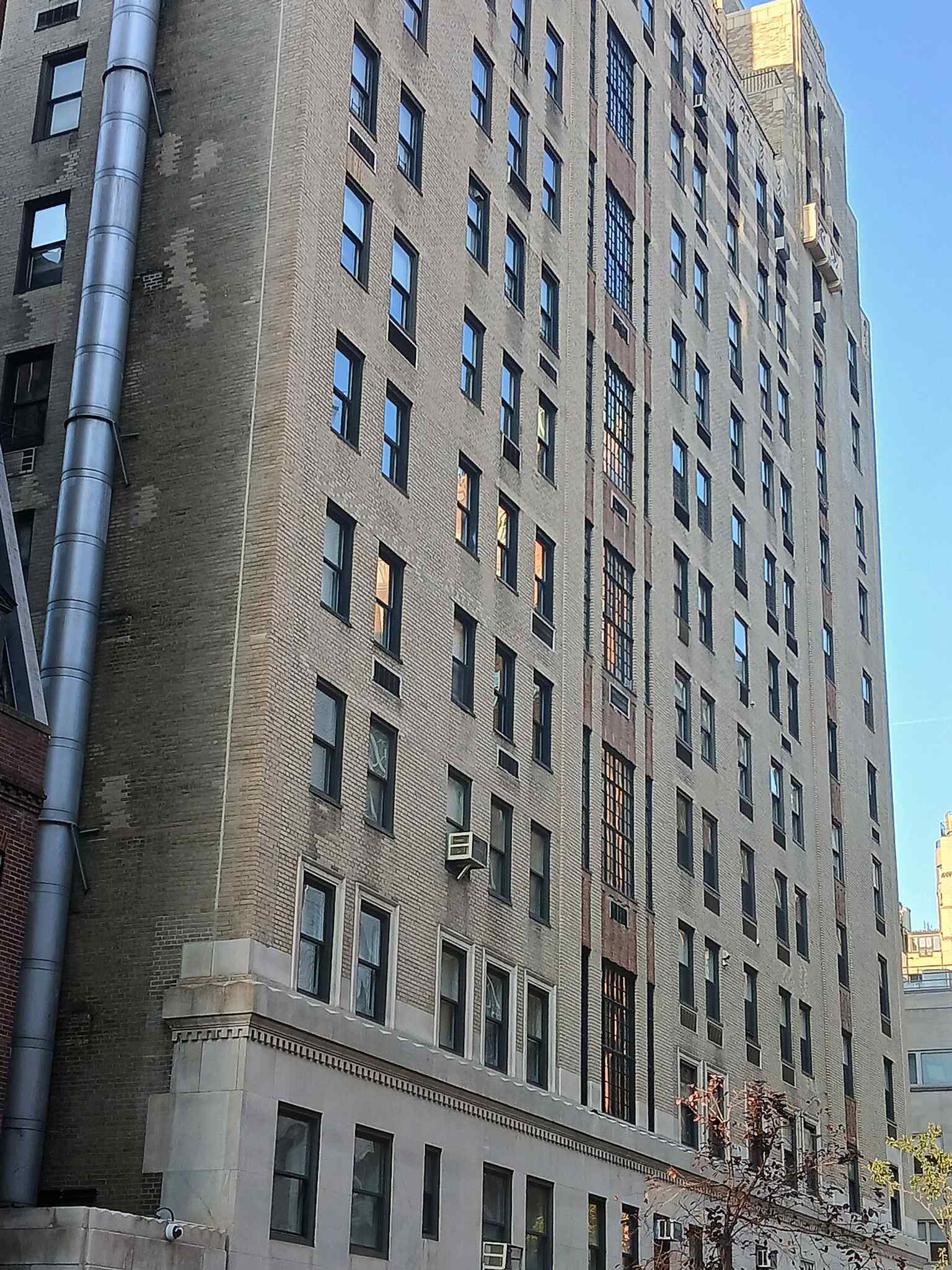
The 40-story Carlyle Hotel, designed in the Art Deco style by Sylvan Bien and Harry M. Prince, stands prominently on Manhattan's Upper East Side, celebrated for its unique architecture.Photo: Epicgenius, Wikimedia Commons, CC BY-SA 4.0. Cropped & resized. 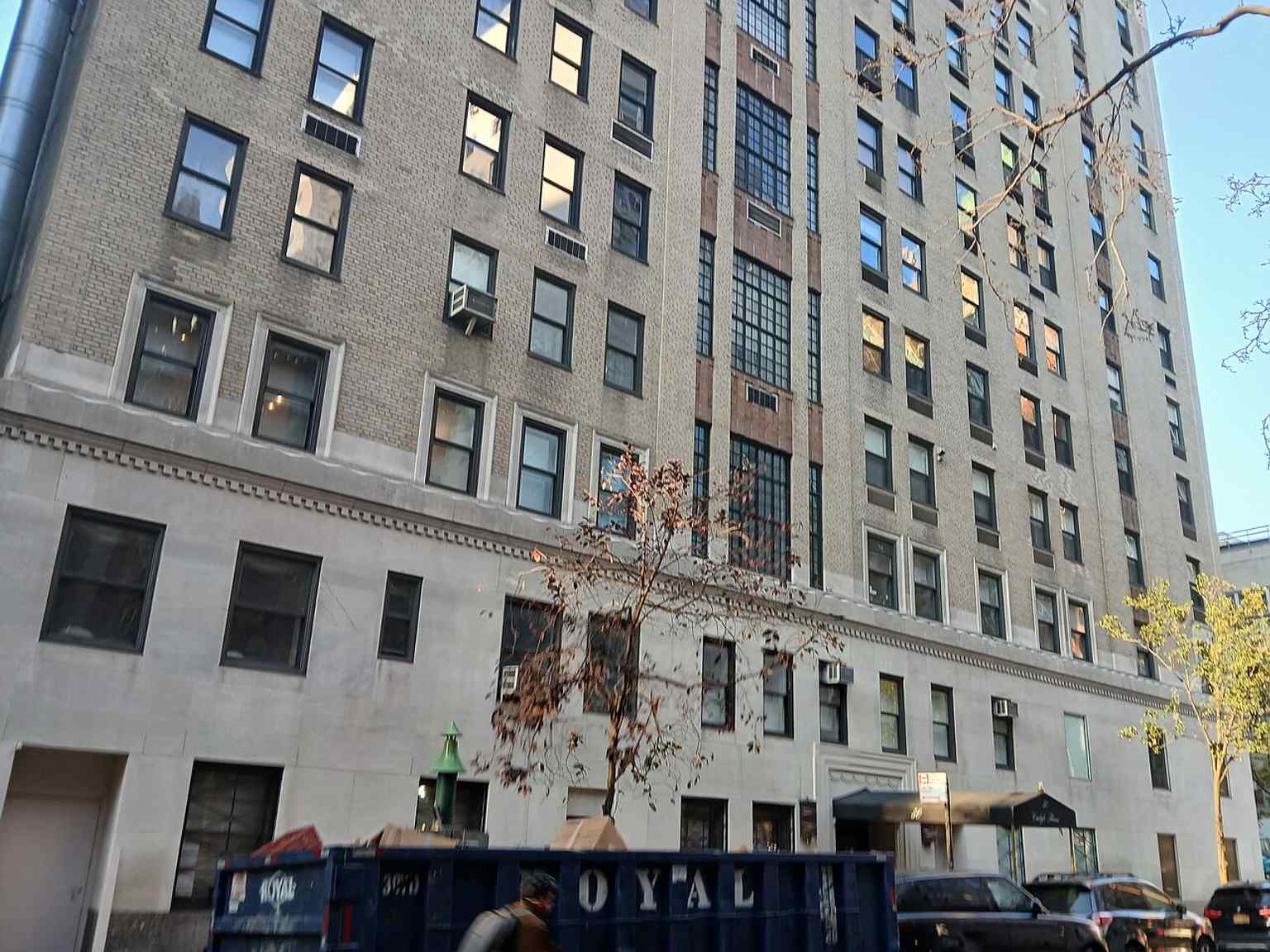
The lower stories of the Carlyle Hotel, clad with limestone and granite, house luxury stores and dining areas such as Dowling's, Cafe Carlyle, and Bemelmans Bar.Photo: Epicgenius, Wikimedia Commons, CC BY-SA 4.0. Cropped & resized. Look to your right and you will see a top-heavy, inverted pyramid constructed of dark grey stone, punctuated by asymmetrical, protruding trapezoidal windows. When it debuted in…Read moreShow less
Open dedicated page →Look to your right and you will see a top-heavy, inverted pyramid constructed of dark grey stone, punctuated by asymmetrical, protruding trapezoidal windows. When it debuted in nineteen sixty-six, this brutalist structure... brutalism being an architectural movement famous for raw, imposing concrete and massive, blocky geometric forms... severely shocked the neighborhood. New York Times critic Ada Louise Huxtable called it harshly handsome, noting that an appreciation for its mass grows on you slowly, like a taste for olives or warm beer. Other critics were less kind, calling it an oppressive bunker or a giant one-eyed step pyramid looming over the polite traditional townhouses. The architect, Marcel Breuer, defended his work as an architecture of resistance. He wanted to seal visitors away from the commercial vitality of the street.
Take a look at the first image in your app to see Breuer's intended effect on the fourth floor. He wanted a quiet, monastic interior designed to focus your attention entirely on the art.
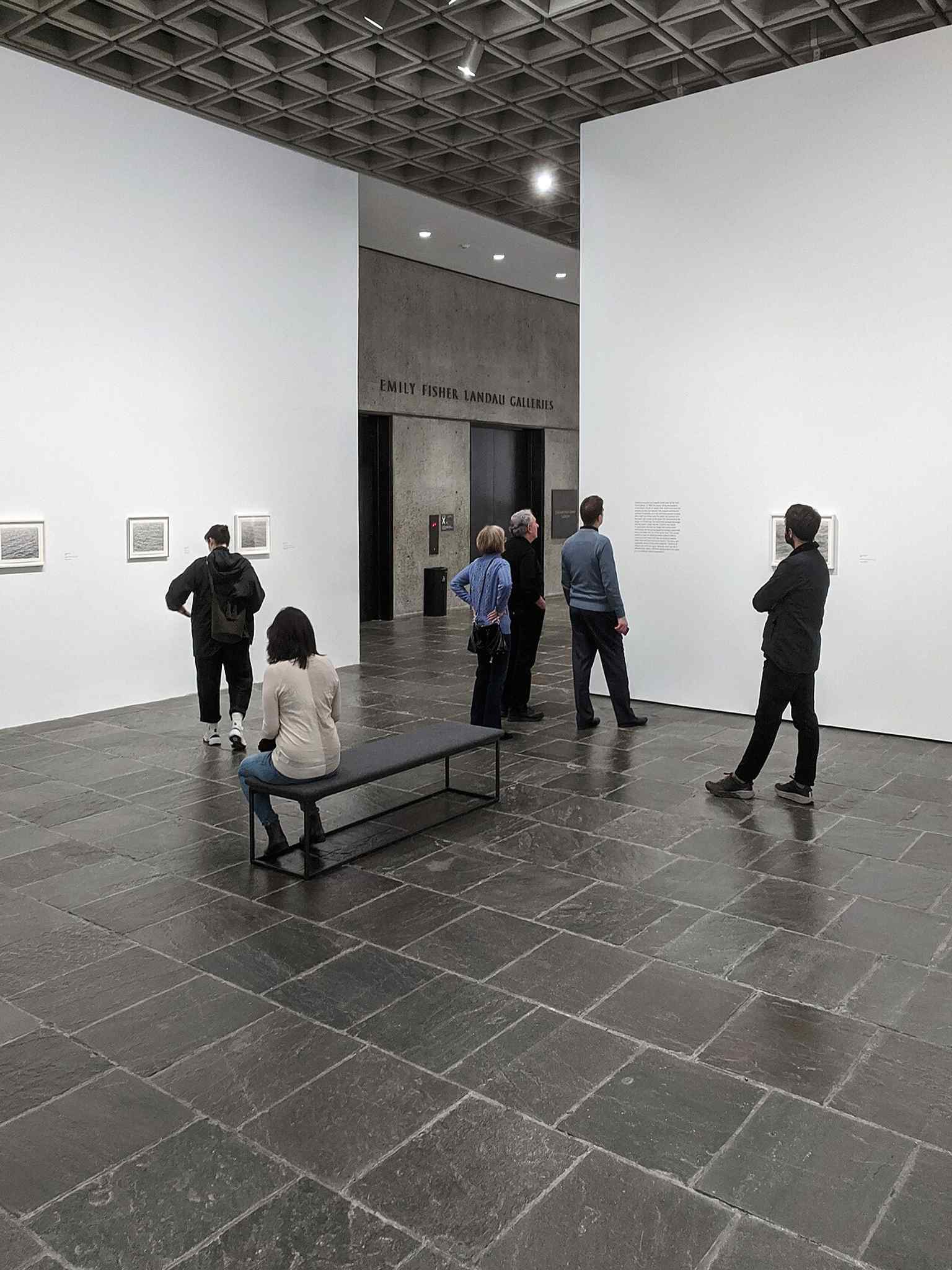
An interior view of the Met Breuer's 4th floor in its final year, reflecting architect Marcel Breuer's intention to create a "monastic sense of interiority" to focus visitors on the art.Photo: DanielPenfield, Wikimedia Commons, CC BY-SA 4.0. Cropped & resized. Naturally, in this neighborhood, even a concrete bunker meant to resist commerce eventually becomes a high-priced asset. The Whitney Museum originally commissioned the building. When they finally vacated, the Metropolitan Museum of Art took over in two thousand and sixteen. Before moving in, they spent a fortune scraping decades of institutional detritus from the site... including wads of chewing gum stuck into the textured walls... and waxing the bluestone floors to perfectly restore Breuer's somber aesthetic.
They branded it the Met Breuer, a grand expansion of their modern art empire. They hosted brilliant, sometimes baffling shows. One inaugural exhibition focused on unfinished art, featuring an eighteenth-century portrait of a Spanish noblewoman with a hauntingly blank white space where her face and lapdog should be. Another, a triumphant retrospective by Kerry James Marshall, paired his large-scale paintings of Black life with Old Master works to challenge the historical exclusion of Black figures from Western art history.
But prestige is expensive. The seventeen million dollar annual operating cost helped blow a forty million dollar hole in the Met's budget, forcing the museum's director, Thomas Campbell, to resign. After just four years, the Met retreated. The final exhibit in two thousand and twenty featured Gerhard Richter's powerful abstract paintings based on photographs from the Auschwitz-Birkenau concentration camp. Due to a global pandemic, the public only saw them for nine days.
The Frick Collection then leased the space temporarily to house their masterworks during a renovation. Finally, in two thousand and twenty-three, the Whitney sold the building for roughly one hundred million dollars to Sotheby's, the international auction house. After nearly sixty years as a public sanctuary for art, the structure was neatly converted into a corporate flagship for the global art market. A fitting pivot for a district defined by the constant acquisition and repackaging of cultural capital.
Art and money certainly build impressive monuments here, but they are not the only forces shaping the skyline. Let us pivot to the religious institutions of the neighborhood and their origins. Keep walking. Temple Israel of the City of New York is just a three minute walk away.
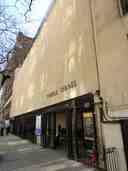
Look for the massive, windowless limestone facade that juts out dramatically over a recessed, dark metal entrance, easily identified by the name Temple Israel carved directly into…Read moreShow less
Open dedicated page →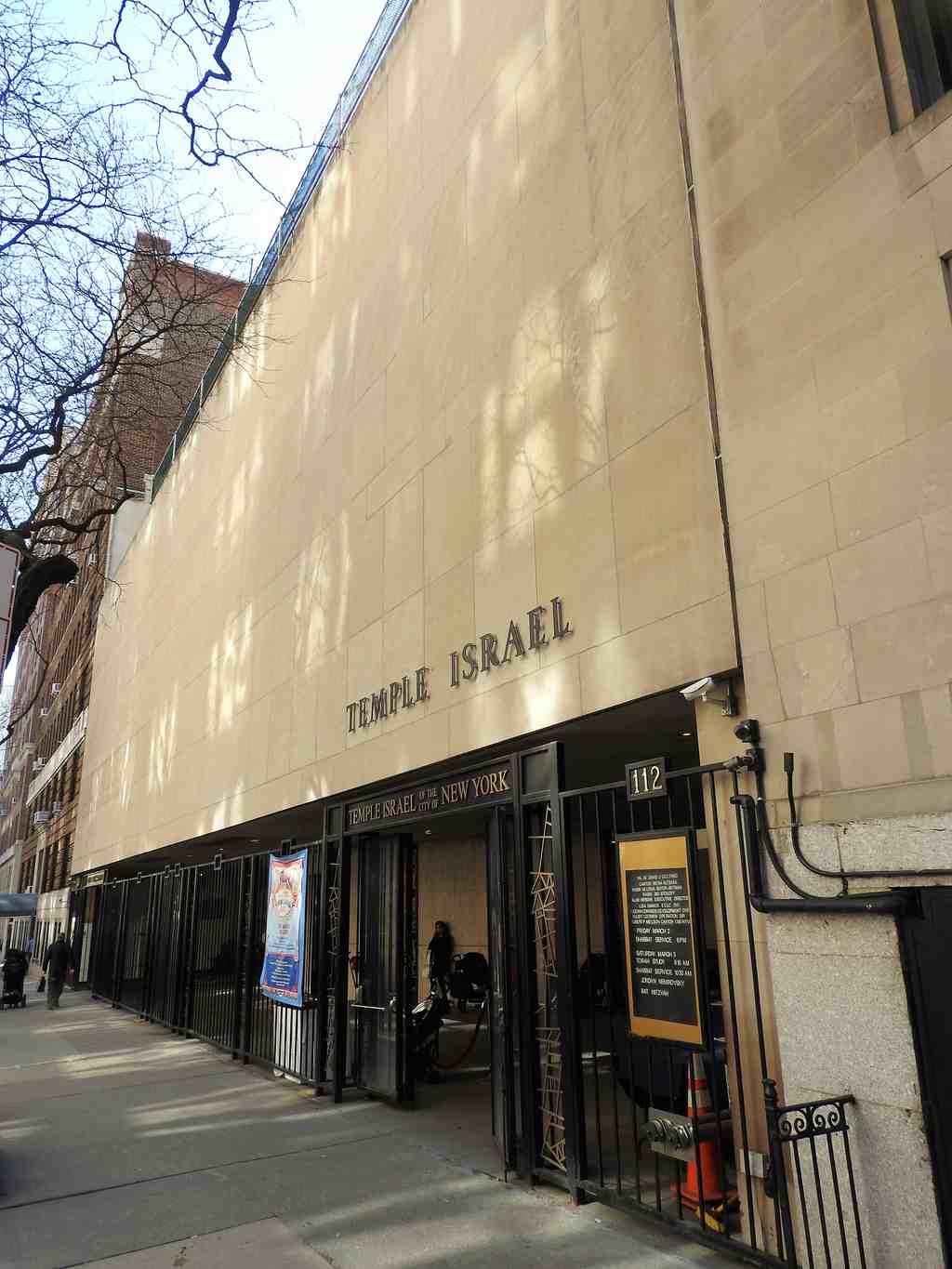
Temple Israel of the City of New YorkPhoto: Jim.henderson, Wikimedia Commons, CC BY-SA 4.0. Cropped & resized. Look for the massive, windowless limestone facade that juts out dramatically over a recessed, dark metal entrance, easily identified by the name Temple Israel carved directly into the smooth stone block.
This blocky, imposing structure is a prime example of brutalist architecture, projecting an absolute sense of permanence and sanctuary. It looks as though it has stood here since the dawn of time, funded by old money. But that is exactly the illusion this neighborhood loves to project.
In eighteen seventy-three, this congregation began far away from these elite avenues, founded by working-class German Jewish immigrants in Harlem. These early congregants operated small retail shops on Third Avenue, selling everyday goods to their neighbors. At the end of a long shift, they retreated to cramped, modest living quarters tucked directly behind their storefronts. They first worshipped above a printing shop, a far cry from a custom-engineered limestone fortress.
As the members prospered, their buildings grew grander. Take a look at your screen to see what I mean. In nineteen oh seven, they built a soaring Neoclassical temple that looked more like a Roman monument than a traditional synagogue, drawing crowds so huge they had to lock the doors to prevent a stampede. They moved again in nineteen twenty to a larger space on the Upper West Side. Check your app for a glimpse of that one. By the time they arrived here on East seventy-fifth Street in nineteen sixty-seven, they had fully transformed from a small neighborhood collective into a cultural powerhouse of the city.
The man who guided much of that early ascent was Rabbi Maurice Harris. He led the congregation for nearly fifty years. Yet, his tenure ended with a deeply ironic logistical nightmare. When Harris died in nineteen thirty, his own sanctuary was undergoing a massive redecoration and was completely unusable. So, more than a thousand mourners had to pack into a rival congregation's building just to hold his funeral.
The synagogue's modern history proves it still knows how to stand its ground. In two thousand and six, they hired Senior Rabbi David Gelfand right after he endured a highly publicized, acrimonious exit from the Jewish Center of the Hamptons. A wealthy board out there had accused him of financial improprieties and plagiarizing sermons, sparking a million-dollar contract dispute and multiple lawsuits. Hundreds of congregants protested on the lawn to defend him. Temple Israel investigated, declared the accusations baseless, and boldly hired him, rejecting what his supporters called McCarthyite tactics.
It is quite a journey from a cramped room over a Harlem print shop to a forty million dollar capital campaign in one of the most exclusive zip codes on Earth. But that is how legacies are forged here. Another massive institution nearby also started from absolutely nothing. Let us walk two minutes away to find it, the Saint Jean Baptiste Roman Catholic Church.
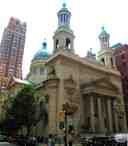
On your right is a massive limestone structure anchored by a prominent portico of Corinthian columns, flanked by twin bell towers, and crowned with a striking ribbed copper dome.…Read moreShow less
Open dedicated page →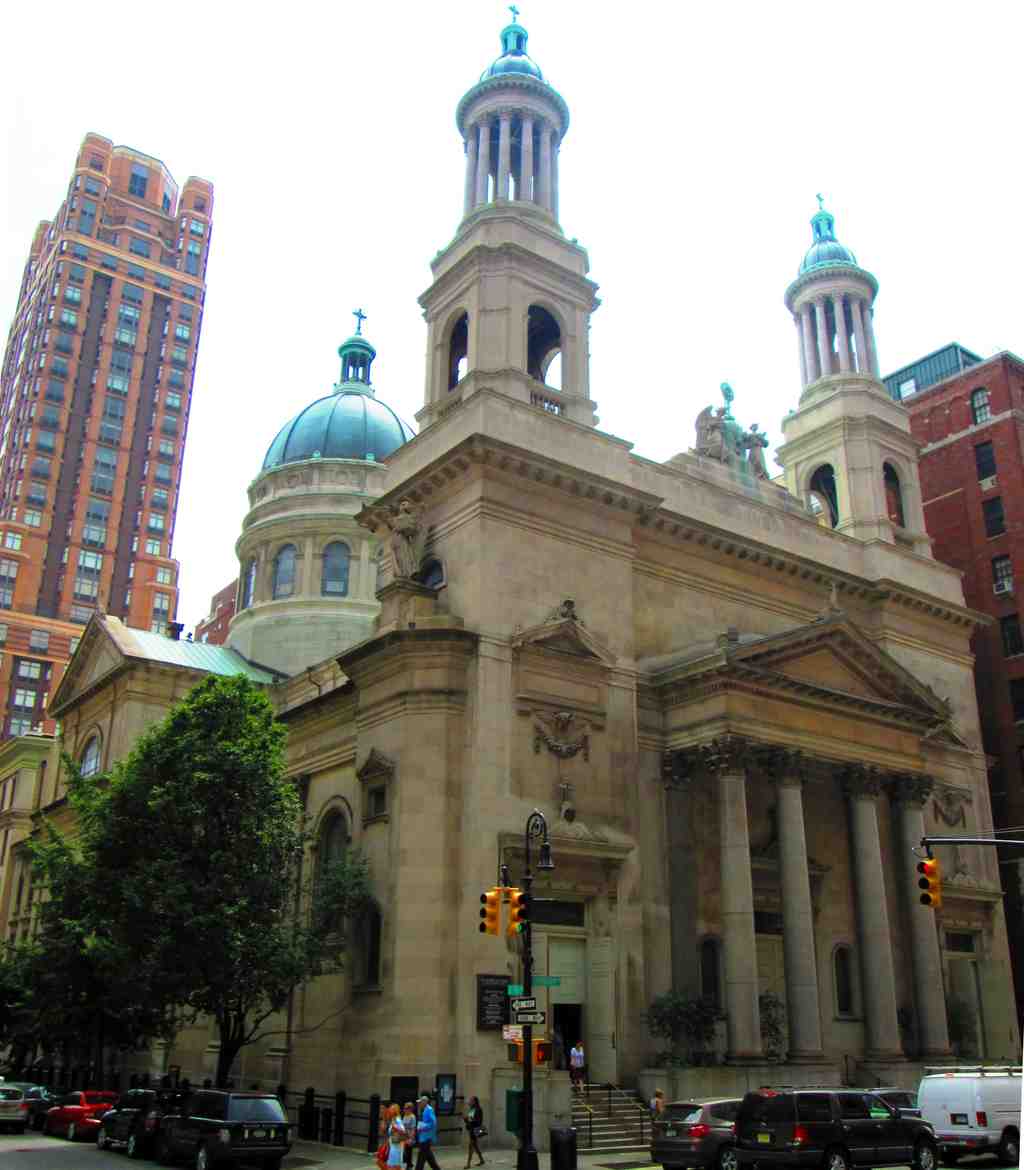
St. Jean Baptiste Roman Catholic ChurchPhoto: Beyond My Ken, Wikimedia Commons, CC BY-SA 4.0. Cropped & resized. On your right is a massive limestone structure anchored by a prominent portico of Corinthian columns, flanked by twin bell towers, and crowned with a striking ribbed copper dome. Looking at it now, it projects an air of absolute, unquestionable authority. But despite its current grandeur, this massive congregation actually started out holding services in a rented hall situated directly above a smelly horse stable. Parishioners called it the Crib of Bethlehem, mostly because the solemnity of Mass was constantly interrupted by the clattering of hooves, rattling chains, and the highly potent aroma of manure wafting through the floorboards.
But of course, this is a neighborhood that refuses to remain unassuming. As fortunes grew, the humble chapel was inevitably replaced by something built to echo eternity. That upgrade arrived courtesy of Thomas Fortune Ryan, a spectacularly wealthy financier. Legend has it that Ryan showed up late for Mass one Sunday and was forced to stand. Clearly, standing was not for a man of his stature. He asked the pastor how much a proper new church would cost. The priest estimated about three hundred thousand dollars, roughly ten million today. Ryan simply said, Very well. Have your plans made and I will pay for the church.
He hired architect Nicholas Serracino to design this Italian Renaissance Revival marvel. If you look at your screen, you can see the sheer scale of Serracino's design, which actually won first prize at an international exhibition in Turin in nineteen eleven. Ryan was initially skeptical of that one hundred and seventy-two-foot dome, but once he saw the praise the model received, he happily signed off on the extra cost.
Building it required serious engineering. Bedrock was twenty-five feet deeper than expected because this area used to be a marsh. Foundation costs multiplied eightfold, but Ryan just kept writing checks, eventually pouring six hundred thousand dollars into the limestone facade and those massive columns you see on your app.
The finished church was so magnificent, it even became a dramatic backdrop for local chaos. In nineteen eighteen, a carjacker engaged in a shootout with police right through the main entrance, running up the center aisle and firing shots from the choir loft before running out of bullets and surrendering.
Later, the church installed breathtaking stained glass windows from the famous studios of Chartres, France. When those fragile windows needed restoring in the late nineteen nineties, artisans had to build a massive thirteen-story scaffold entirely inside the church, working directly inside the dome to avoid moving the glass. It is a stunning evolution, completely overwriting its modest origins to leave a legacy of unapologetic splendor.
The church is open daily for prayer, usually from seven A-M to one thirty P-M on weekdays, with extended hours on weekends.
Now, let us move from the pursuit of spiritual health to the business of physical health, as we walk to Lenox Hill Hospital, about three minutes away.
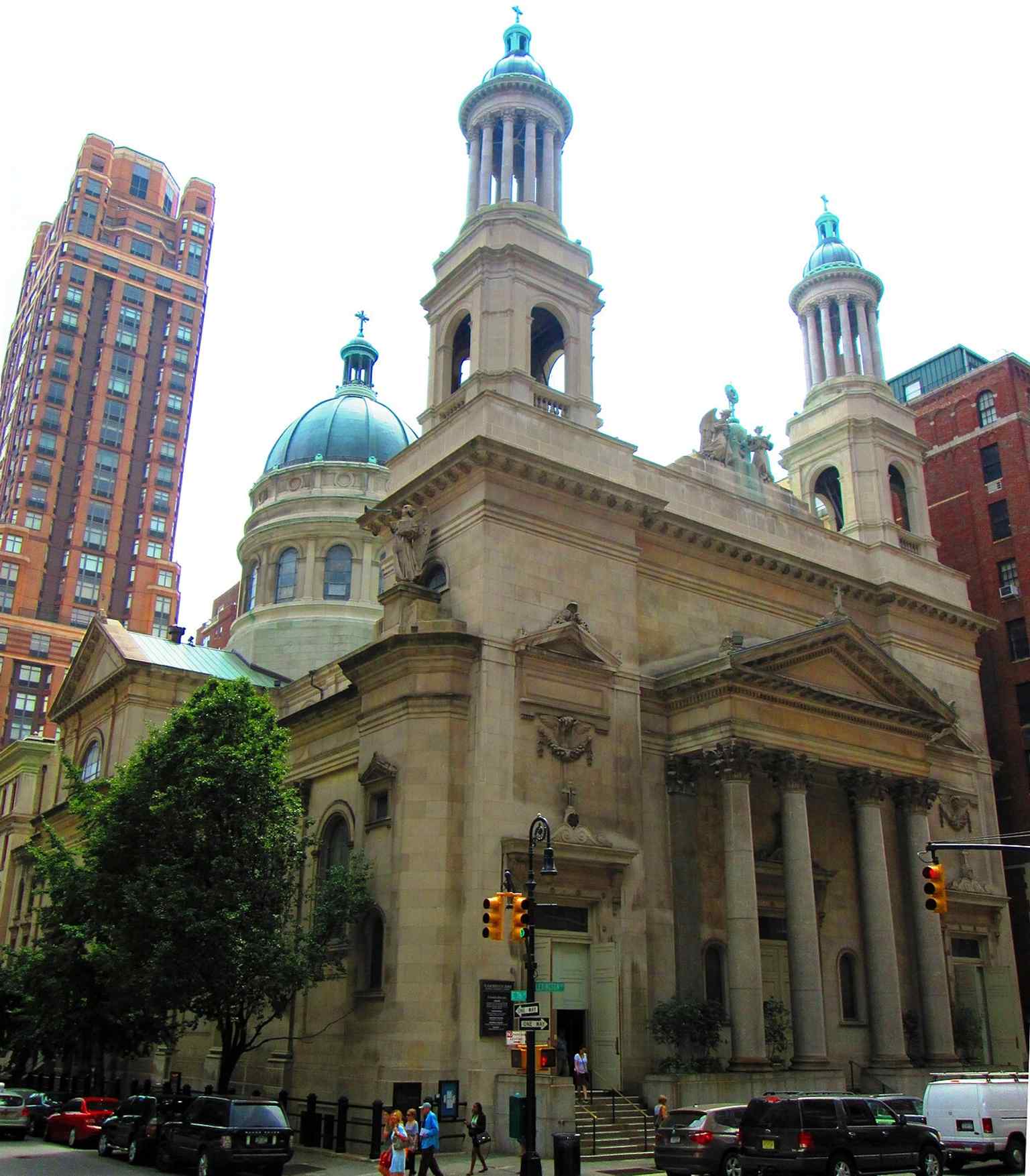
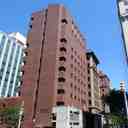
This view shows the St. Jean Baptiste Church and its rectory, which were collectively listed on the National Register of Historic Places in 1980.Photo: Americasroof, Wikimedia Commons, CC BY-SA 3.0. Cropped & resized. Look to your left to find Lenox Hill Hospital, easily recognizable by its massive, fortress-like tower of dark red brick punctuated by deeply recessed, angled window slits and a…Read moreShow less
Open dedicated page →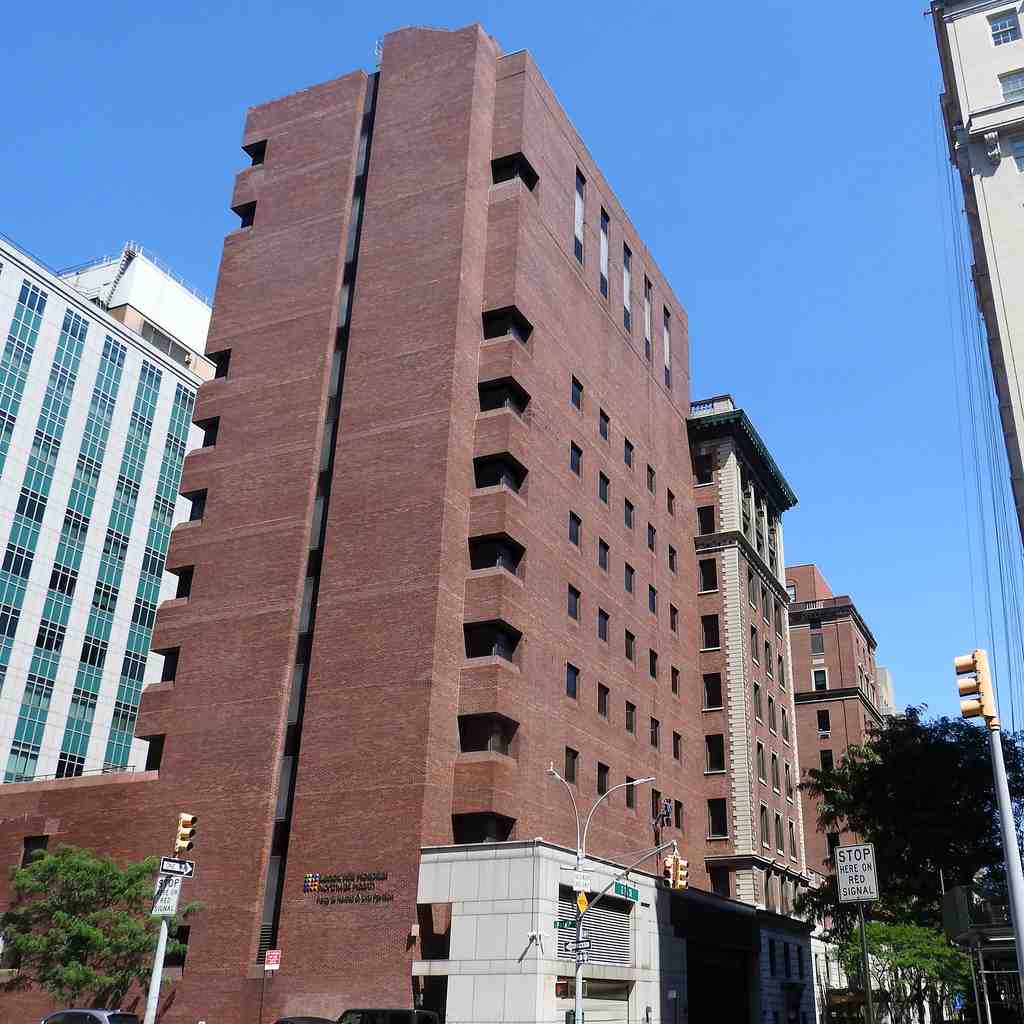
Lenox Hill HospitalPhoto: Jim.henderson, Wikimedia Commons, CC BY-SA 4.0. Cropped & resized. Look to your left to find Lenox Hill Hospital, easily recognizable by its massive, fortress-like tower of dark red brick punctuated by deeply recessed, angled window slits and a flat, unadorned roofline.
It is a formidable piece of nineteen seventies architecture, replacing much older structures to accommodate an ever-expanding need for space. Today, this massive complex is a towering monument to Upper East Side prestige, famous for multi-million dollar medical suites, celebrity births, and billionaire board members continuously reshaping the block to secure their own grand legacies.
But the absolute irony of this sprawling, high-end medical empire is how it actually started.
Check your screen for the fifth image. That is an eighteen sixty-eight etching of this institution when people knew it simply as the German Hospital. A physician named Dr. Abraham Jacobi founded it in eighteen fifty-seven. Jacobi was not a wealthy philanthropist. He was an exiled German revolutionary who had fought in the uprisings of eighteen forty-eight. Authorities sent him to prison for high treason, but he escaped to England, and literally bunked with Karl Marx and Friedrich Engels.
When Jacobi arrived in America, he brought that radical energy right here to New York. In eighteen fifty-seven, the exact same year he opened this hospital as a free clinic for impoverished immigrants, he also founded the New York Communist Club. You really cannot make this up.
Jacobi deeply distrusted large, institutional wealth. He famously declared that the larger the institution, the surer is death. He designed his clinic to provide hyper-personalized, native-language care for the city's poorest, most marginalized laborers.
Obviously, things took a turn.
As the neighborhood transformed into a haven for the ultra-wealthy, the hospital continuously adapted to survive and attract high-society patrons. During World War One, administrators strategically dropped the word German from their name to dodge anti-German sentiment and keep the domestic donation money flowing, rebranding as Lenox Hill Hospital. Over the next century, the institution relentlessly expanded, tearing down old tenements to build newer, sleeker pavilions funded by banking and publishing tycoons.
The ultimate punchline to Jacobi's socialist dream arrived in two thousand twelve. To accommodate the birth of Beyonce and Jay-Z's daughter, Blue Ivy, the couple reportedly paid one point three million dollars to lock down an entire floor, complete with private security blocking other parents from the neonatal unit. Truly, a victory for the proletariat.
Today, the hospital operates twenty-four hours a day, a ceaseless machine of medical innovation and high-society drama.
Let us keep moving. We are heading to another religious institution shaped by charismatic leadership, the Unitarian Church of All Souls, which is just about a five-minute walk from here.
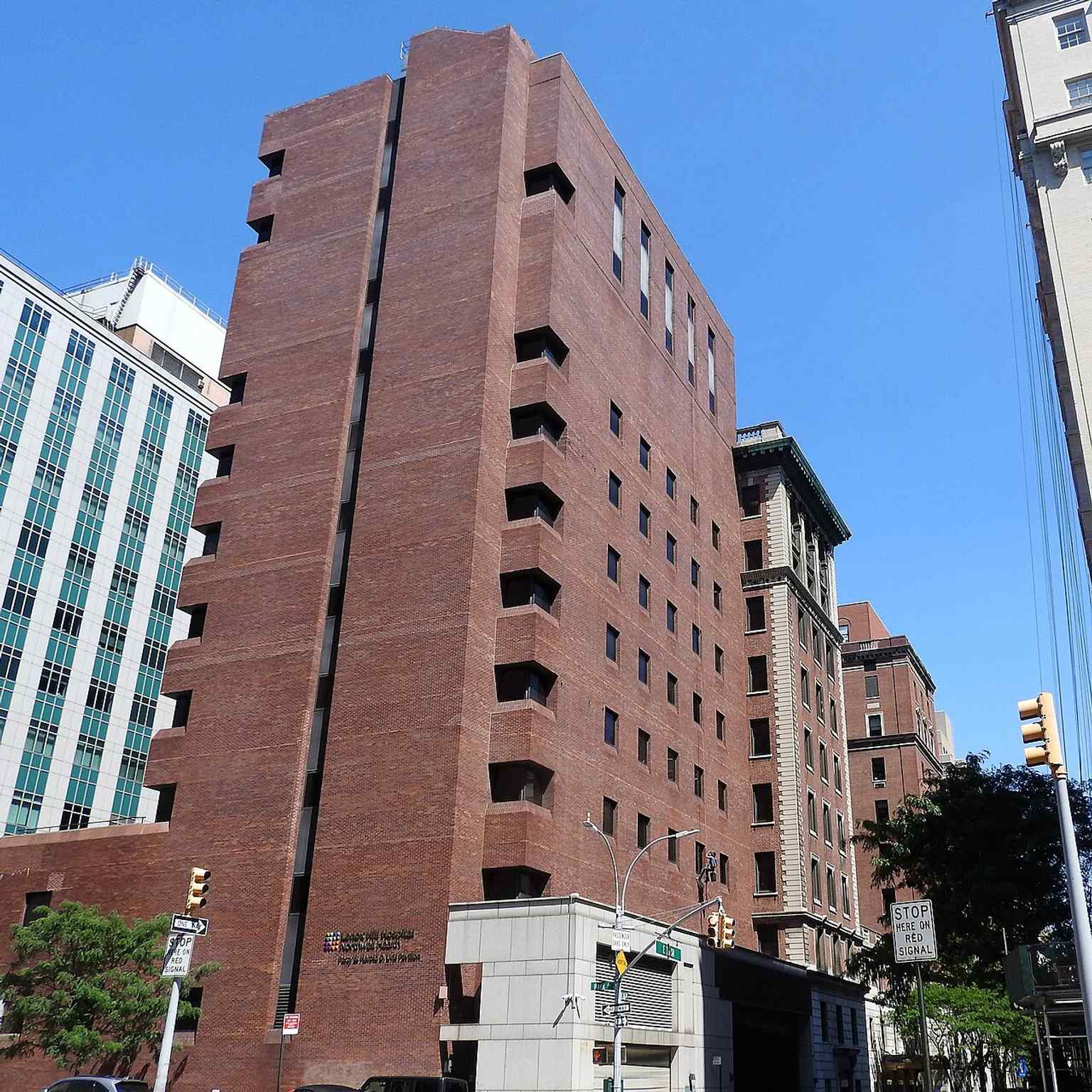
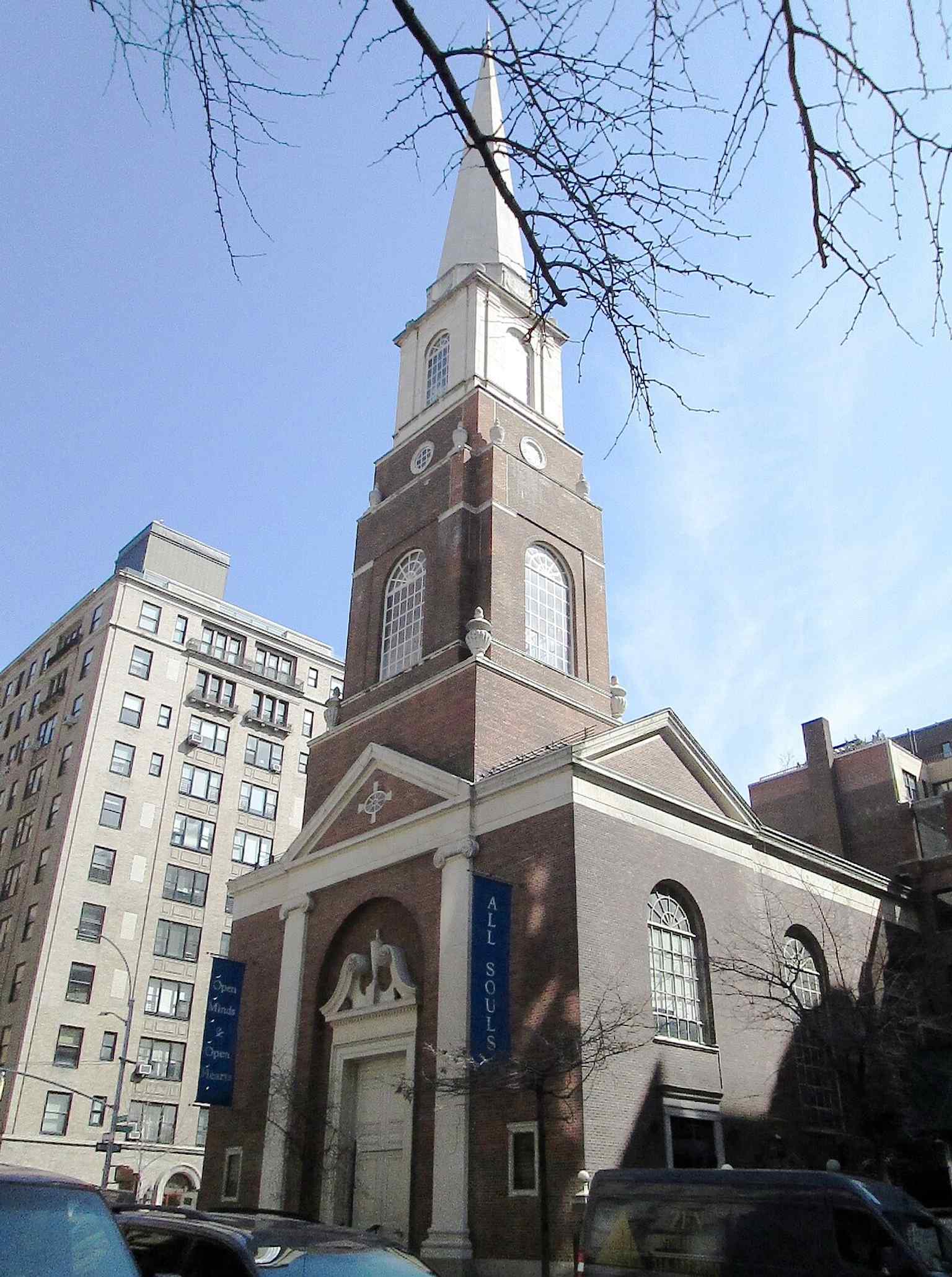
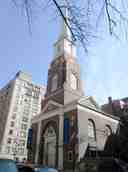
The current Lenox Hill Hospital complex on Park Avenue, the site proposed for a controversial $2 billion redevelopment project by Northwell Health.Photo: Jim.henderson, Wikimedia Commons, CC BY-SA 4.0. Cropped & resized. Look for the tall white octagonal steeple rising above the symmetrical red brick facade with its classical arched windows. This is the Unitarian Church of All Souls. Today, it…Read moreShow less
Open dedicated page →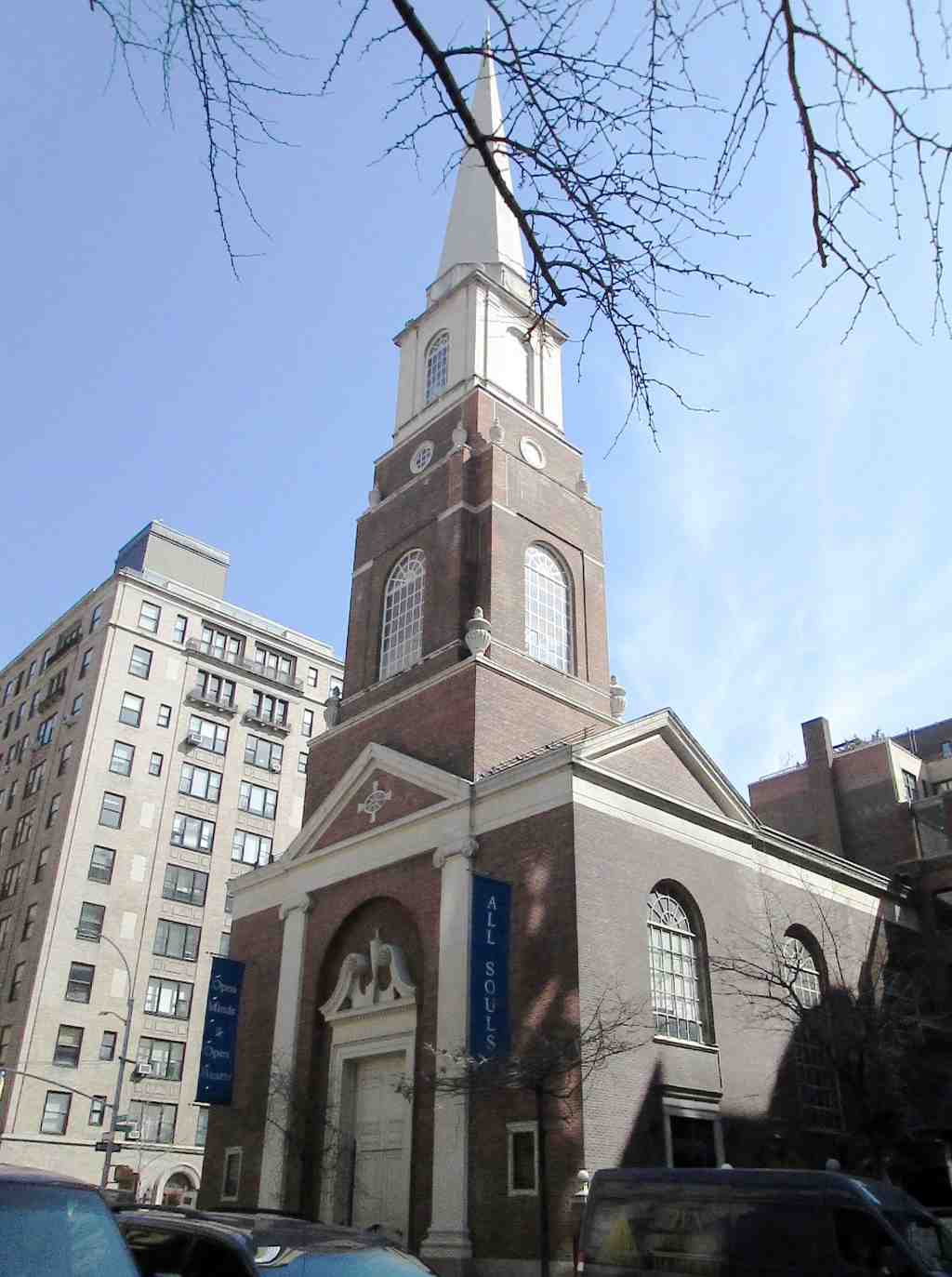
Unitarian Church of All SoulsPhoto: Beyond My Ken, Wikimedia Commons, CC BY-SA 4.0. Cropped & resized. Look for the tall white octagonal steeple rising above the symmetrical red brick facade with its classical arched windows. This is the Unitarian Church of All Souls.
Today, it sits comfortably among the grand estates of the Upper East Side, projecting an image of quiet, established power. But this congregation did not begin with polished brick and towering spires. It started in a crowded downtown living room.
In eighteen nineteen, a woman named Lucy Channing Russell invited forty friends into her parlor to hear her brother speak. Her brother, William Ellery Channing, was a prominent minister visiting from Boston. He was in such poor health that he had to deliver his entire address while sitting in a chair. Yet, his reasoned approach to faith so moved the displaced New Englanders in the room that they immediately formed a Unitarian society, a movement that rejected strict dogma in favor of reason and individual ethical inquiry. Talk about modest origins.
Finding a permanent minister for this new experiment in New York proved difficult. New England ministers were comfortably settled and hesitant to risk their careers in the wild frontier of Manhattan. Finally, in eighteen twenty-one, they scored what seemed like a major victory by hiring William Ware. Ware had an impeccable pedigree. He was a brilliant writer, and his father-in-law was the famous physician who introduced the smallpox vaccine to the United States. He looked perfect on paper. There was just one slight problem. He was, by the accounts of his own parishioners, a remarkably bad preacher. In an era that demanded fiery, thundering oratory from the pulpit, Ware was entirely uninspiring.
Despite his lackluster sermons, the congregation survived and began to build its legacy. They eventually constructed a massive sanctuary in eighteen fifty-five. Pull up the historical photo on your screen to see what it looked like. They hired an eccentric architect who blew the budget by forty-eight thousand dollars-roughly one and a half million dollars today-to build a sprawling structure with alternating bands of red and white stone. New Yorkers promptly mocked it as the Holy Zebra.
They eventually outgrew the Zebra, which was later destroyed in a spectacular fire, and arrived at this spot in nineteen thirty-two. The move perfectly mirrored the northward migration of New York's elite. As families amassed staggering fortunes during the Gilded Age and the roaring nineteen twenties, they constantly reinvented themselves, building grander estates further uptown to cement their newly minted status. This elegant Colonial Revival building, an architectural style designed to evoke early American heritage, gave the congregation a permanent anchor amidst that restless pursuit of legacy.
The church is generally open from nine in the morning to five in the evening every day if you want to glimpse the interior.
When you are ready, our next destination, the East Eightieth Street Houses, is just a one-minute walk away.
An interior view of the Unitarian Church of All Souls at 1157 Lexington Avenue, the congregation's fourth sanctuary, which opened in 1932.Photo: Aunger67, Wikimedia Commons, CC0. Cropped & resized. On your right, you will see a grand row of stately brick and stone townhouses, defined by their classical pediments, those decorative triangular structures above the roofline, and…Read moreShow less
Open dedicated page →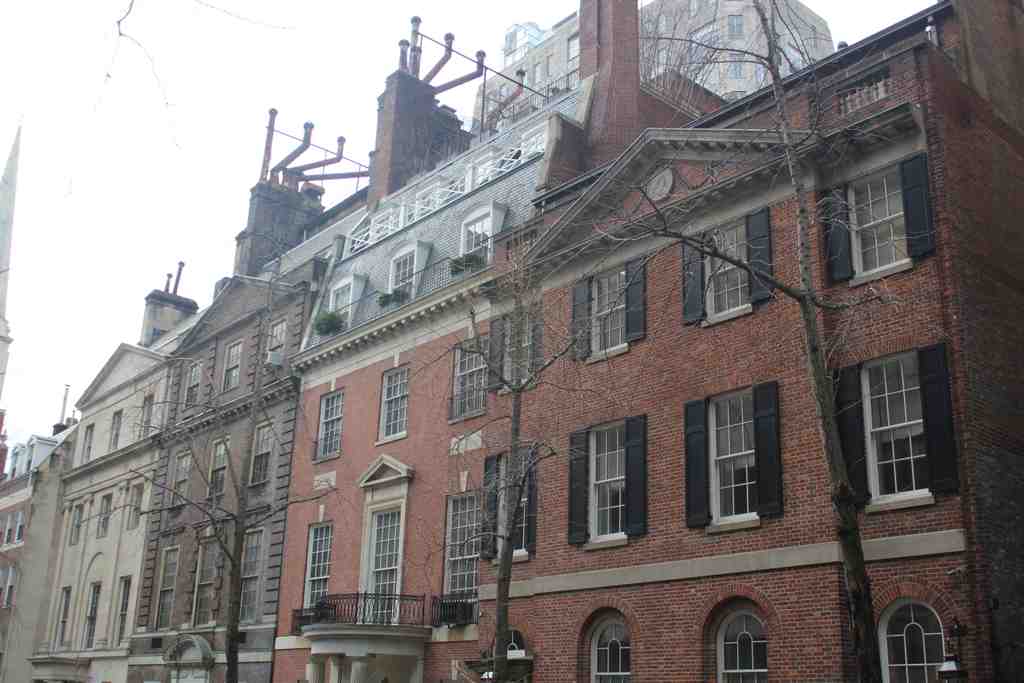
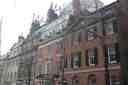
East 80th Street HousesPhoto: Epicgenius, Wikimedia Commons, CC BY-SA 4.0. Cropped & resized. On your right, you will see a grand row of stately brick and stone townhouses, defined by their classical pediments, those decorative triangular structures above the roofline, and steeply pitched slate roofs dotted with projecting dormer windows.
In the nineteen twenties, the ultra-wealthy faced a uniquely urban problem. Other people's buildings were blocking their sunlight. Truly a tragedy. But if you were a Whitney, an Astor, a Morris, or a Dillon, you did not just buy a house. You bought the entire block behind it on East Seventy-Ninth Street just to stop developers from erecting high-rise apartments. They created sweeping, sun-drenched private gardens right here in the middle of Manhattan.
Take a look at your screen to see the easternmost house in this row, number one thirty. That elegant facade made of French limestone belonged to Vincent and Helen Astor. Helen turned the interior into a sprawling musical salon, famously hosting the legendary conductor Arturo Toscanini for a massive gala before he left for Europe in nineteen thirty-eight. The Junior League of New York eventually took over the building in nineteen forty-nine. The organization found the eighteenth-century style interiors so pristine, they barely had to change a thing to move in. You can still see people coming and going, as the Junior League operates out of here Monday through Friday from nine A-M to five thirty P-M.
But here is the thing about architectural legacies in this neighborhood. They are constantly mutating. What starts as a titan's private sanctuary inevitably becomes a stage for something else entirely. What starts as a titan's private sanctuary inevitably becomes a stage for something else entirely.
Take number one twenty-four, the brick neo-Georgian mansion, an architectural style mimicking the formal symmetry of old English estates, sitting just down the row. For decades, it served as the residence for Iraq's ambassador to the U-N. Behind that elegant exterior, the house fell into bizarre neglect. The famed decorator Mario Buatta lived next door and noted the inside remained entirely empty, save for a single, life-sized portrait of Saddam Hussein. In two thousand and three, during the fall of Baghdad, the last Hussein-era ambassador shouted his love for New York to a swarm of reporters, right before suffering a final indignity. His driver accidentally parked in the wrong spot and locked him out of his own chauffeur-driven limousine. Decades later, neighbors caught the Republic of Iraq illegally running a commercial gym out of the basement. City officials shut that down rather quickly.
I will let you in on a detail most locals do not even know. When the city finally started protecting its architectural soul, the Landmarks Preservation Commission designated these specific houses as the very first protected structures on the Upper East Side, starting in nineteen sixty-seven. They set the absolute precedent for historic preservation in New York.
Wealth built these walls, but the law froze them in time. Next, we are going to look at what happens when ambition ignores the laws of physics. We are heading to a church that almost collapsed under its own architectural weight. The Church of St. Ignatius Loyola is an eight-minute walk away.
On your left, you will see a massive, classical limestone facade featuring a prominent arched window and a sweeping central pediment. Pull up your screen to see the full scale of…Read moreShow less
Open dedicated page →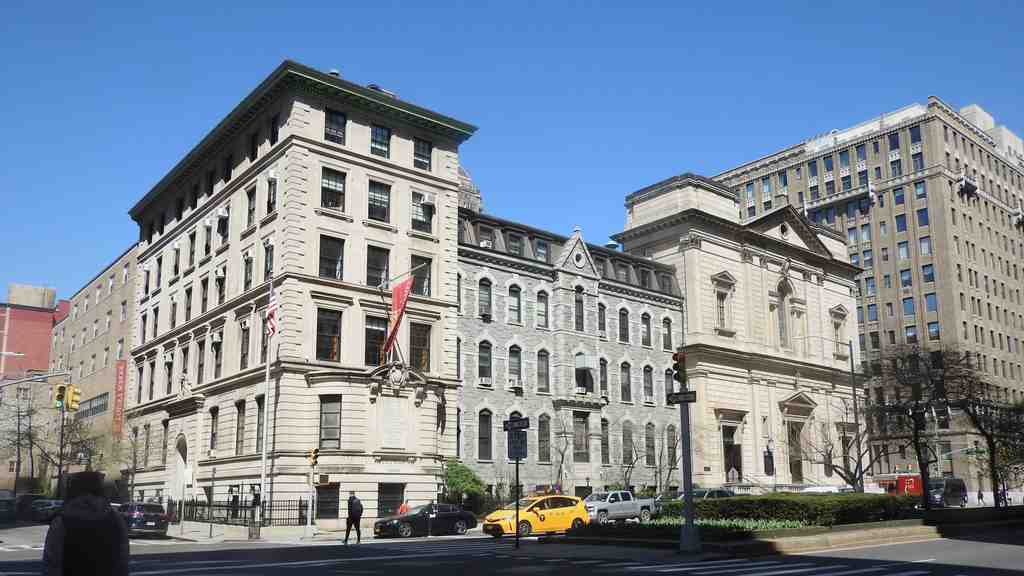
Church of St. Ignatius LoyolaPhoto: Jim.henderson, Wikimedia Commons, CC BY 4.0. Cropped & resized. On your left, you will see a massive, classical limestone facade featuring a prominent arched window and a sweeping central pediment. Pull up your screen to see the full scale of this towering Jesuit complex as it stands today.
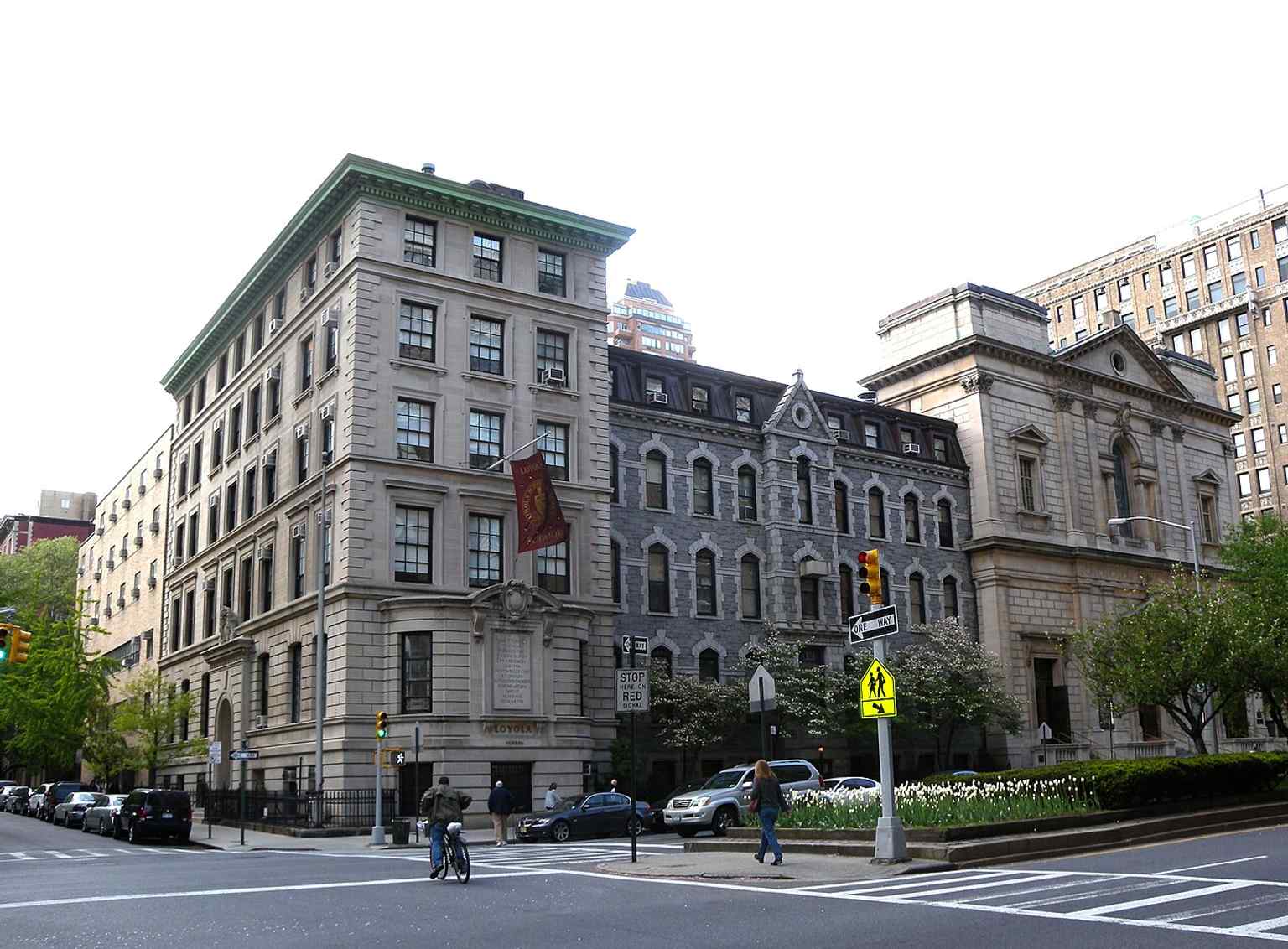
This image shows the Church of St. Ignatius Loyola complex from Park Avenue, the centerpiece of a large Jesuit complex designated a New York City Landmark in 1969.Photo: Jim.henderson, Wikimedia Commons, CC0. Cropped & resized. But the story of this site is a cautionary tale about an ambitious builder whose vision outstripped reality. Back in eighteen fifty-four, this parish was a modest wooden structure serving a community of working-class Irish immigrants. The parish's second pastor, Reverend Eugene O'Reilly, looked at that humble wood and saw a neighborhood on the rise. He decided his flock needed a grand, permanent Romanesque-style stone building.
There was just one minor issue. His parishioners simply did not have the money to pay for it. O'Reilly pressed forward anyway. His grand vision plunged the congregation straight into financial ruin. The parish drowned in a decade of crushing debt, only surviving because the Jesuits took over in eighteen sixty-six, with the priests literally emptying their own pockets and contributing their salaries just to keep the doors open.
It took an act of gravity to finally change their fortunes. On a Sunday in November, eighteen eighty-six, a massive section of the old church ceiling suddenly collapsed into the sanctuary during a crowded Mass. Miraculously, no one was injured. The congregation took this not as a sign of shoddy engineering, but as a mandate from Heaven to finally build something better.
The sheer wealth of the Upper East Side was rapidly expanding, and a new pastor, Father Neil McKinnon, decided to harness it. He famously found the church of brick and left it of marble. Take a glance at your app to see the staggering interior he commissioned, an absolute cavern of pink Tennessee and yellow Siena marble. The parish had finally secured the money to build a legacy that matched the sheer financial gravity of Park Avenue.
This view looks from the Chancel towards the rear wall of the Nave, showcasing the vast interior space constructed of American, European, and African marbles.Photo: Bestbudbrian, Wikimedia Commons, CC BY-SA 3.0. Cropped & resized. This neighborhood has always been about trading up, turning wood to stone, and stone to polished marble. That same drive to acquire and display prestige flows right into the contemporary art world and its own hidden histories. We are going to explore that next as we head to Galerie Buchholz, just a four minute walk away. The church is open to visitors every day of the week from eight thirty A-M to nine P-M.
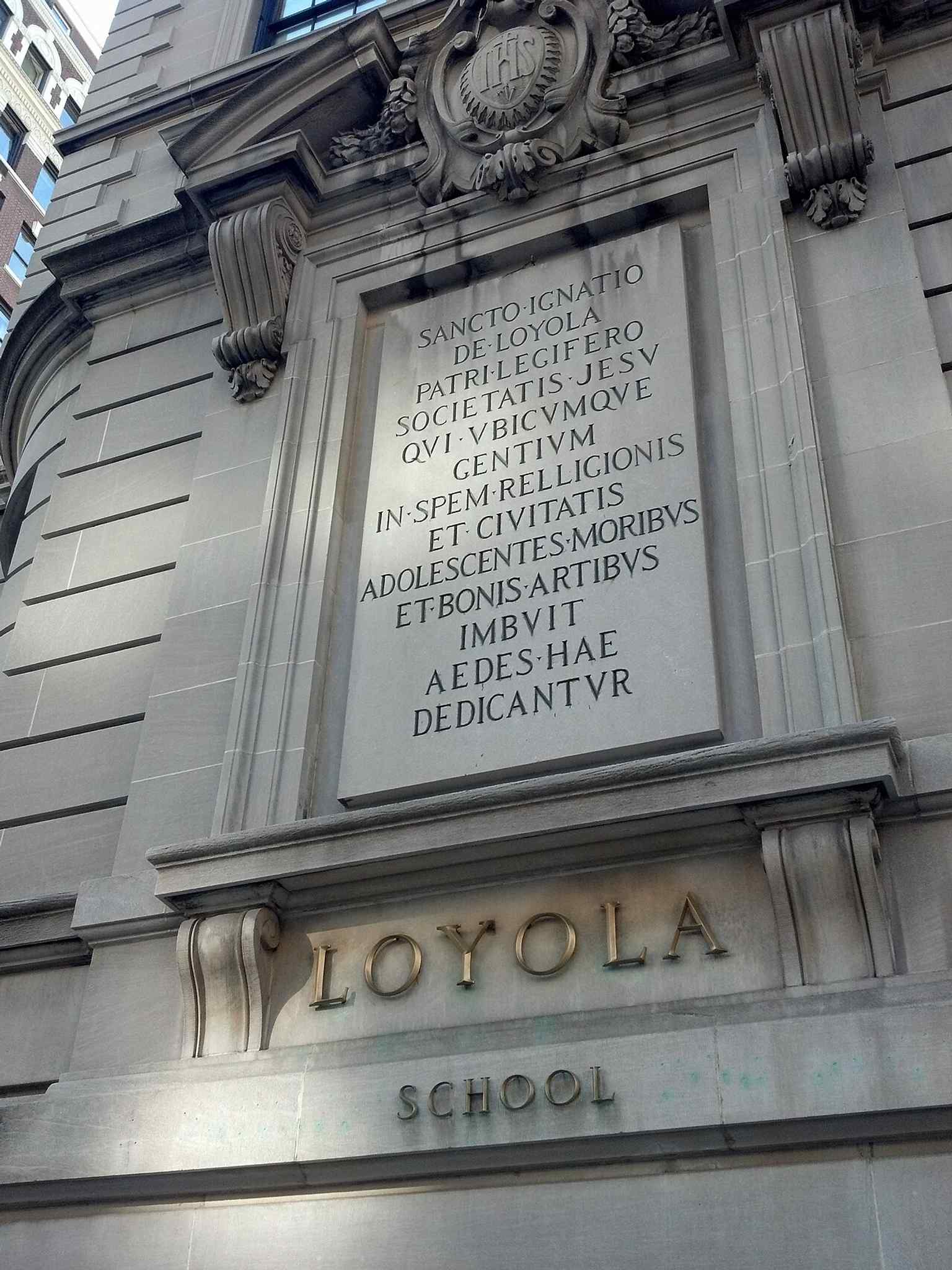
An exterior view of the Church of St. Ignatius Loyola, which was added to the National Register of Historic Places in 1980.Photo: smilly, Wikimedia Commons, CC BY-SA 3.0. Cropped & resized. 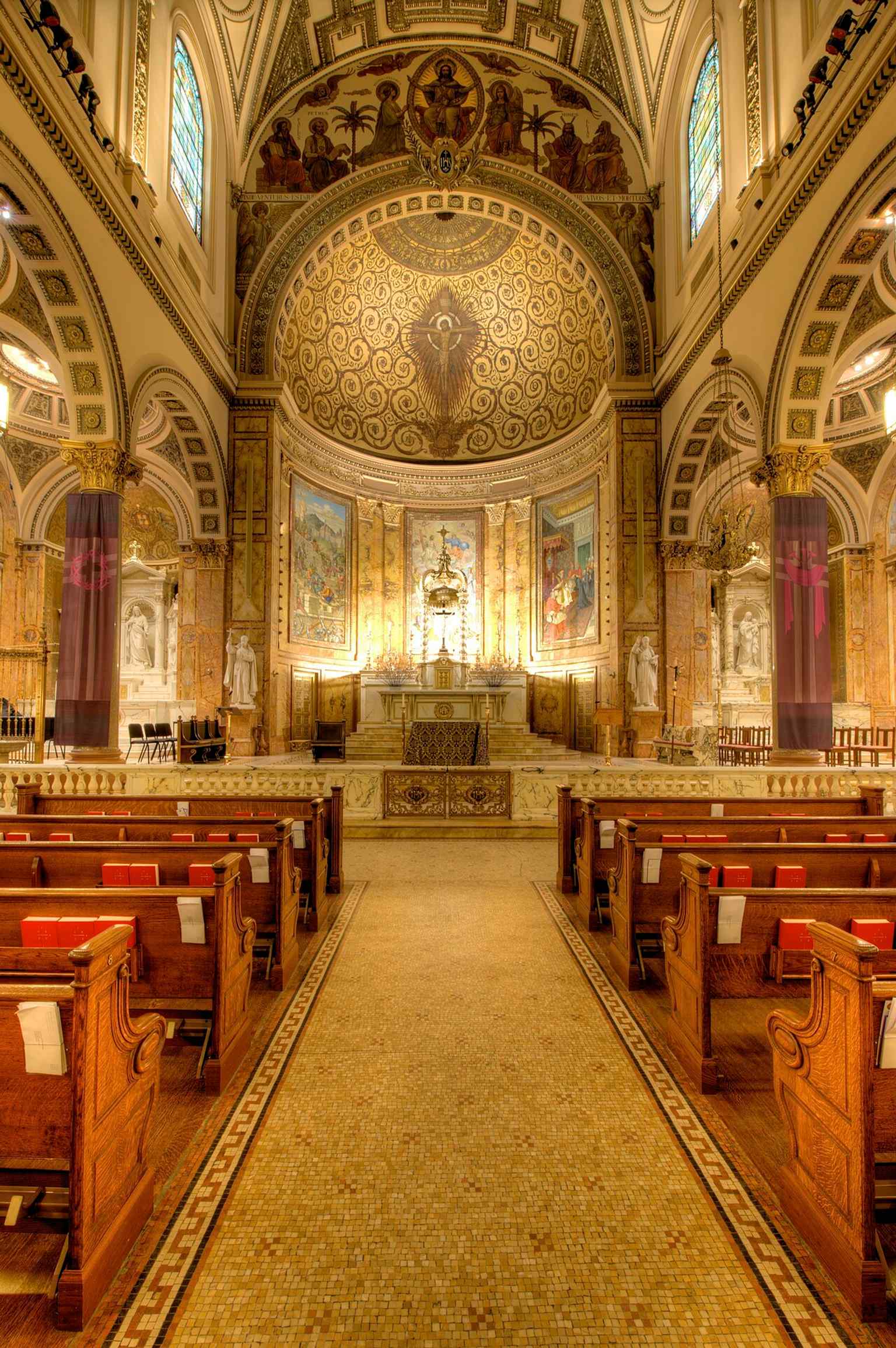
The grand limestone edifice of the Church of St. Ignatius Loyola, a testament to the growing affluence and confidence of the Catholic community on New York's Upper East Side.Photo: smilly, Wikimedia Commons, CC BY-SA 3.0. Cropped & resized. 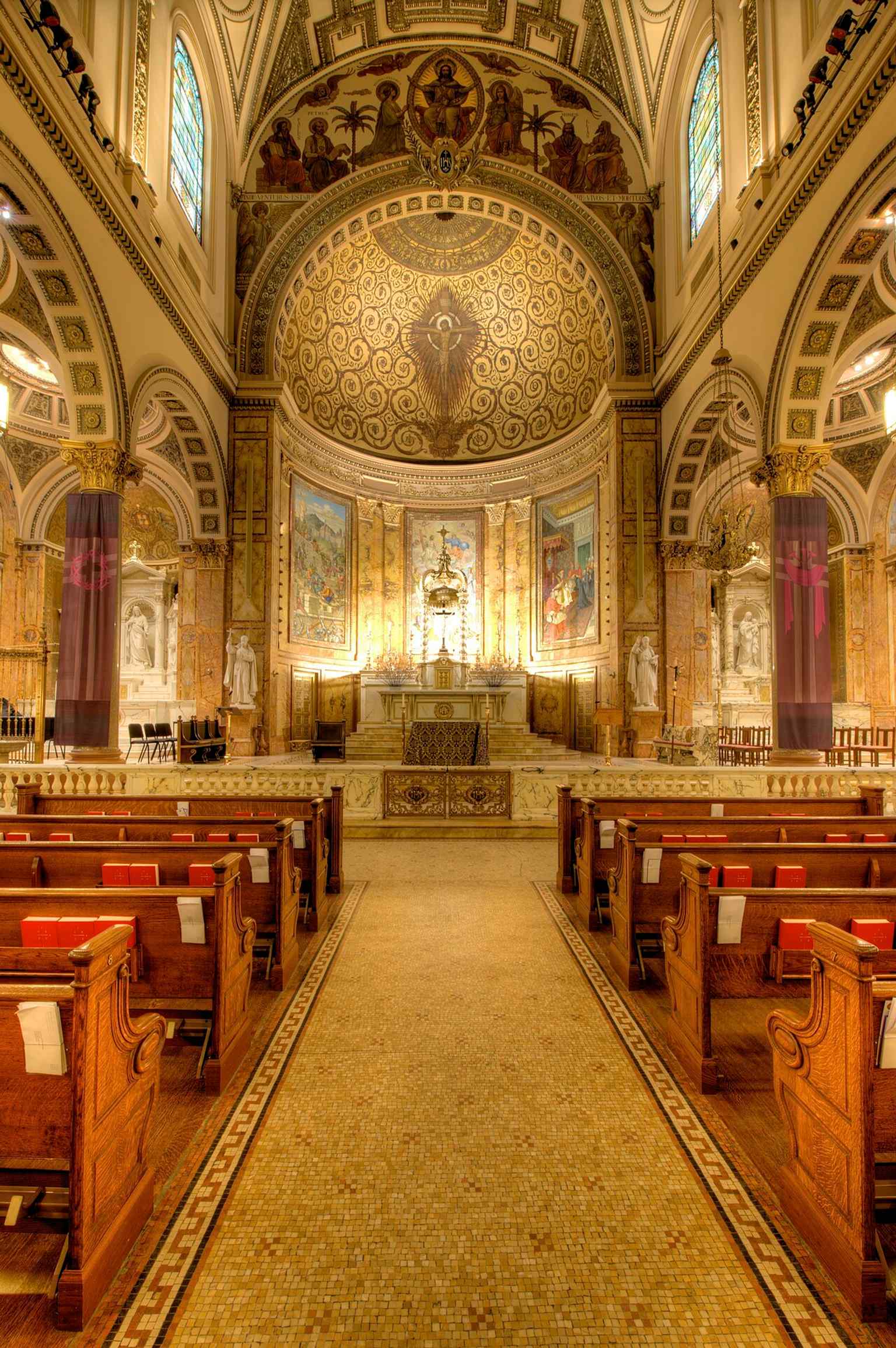
This central aisle view shows the Chancel of the church, where the new upper church was dedicated to St. Ignatius while the lower church retained the name of St. Lawrence O'Toole.Photo: Bestbudbrian, Wikimedia Commons, CC BY-SA 3.0. Cropped & resized. 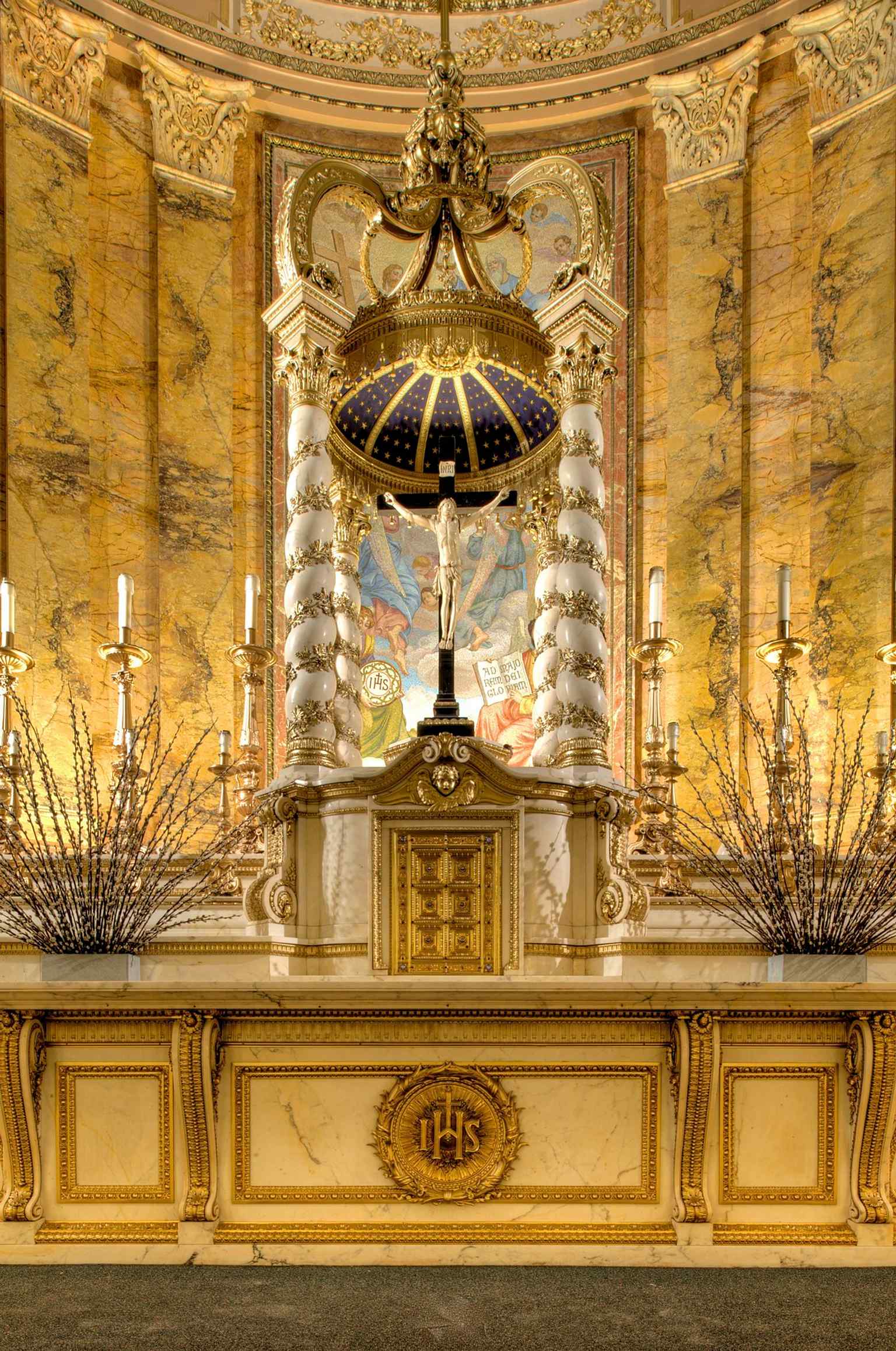
A wide-angle view of the Chancel, featuring mosaics manufactured by Salviati & Company after designs by Professor Paoletti, commemorating moments in the life of St. Ignatius.Photo: Bestbudbrian, Wikimedia Commons, CC BY-SA 3.0. Cropped & resized. 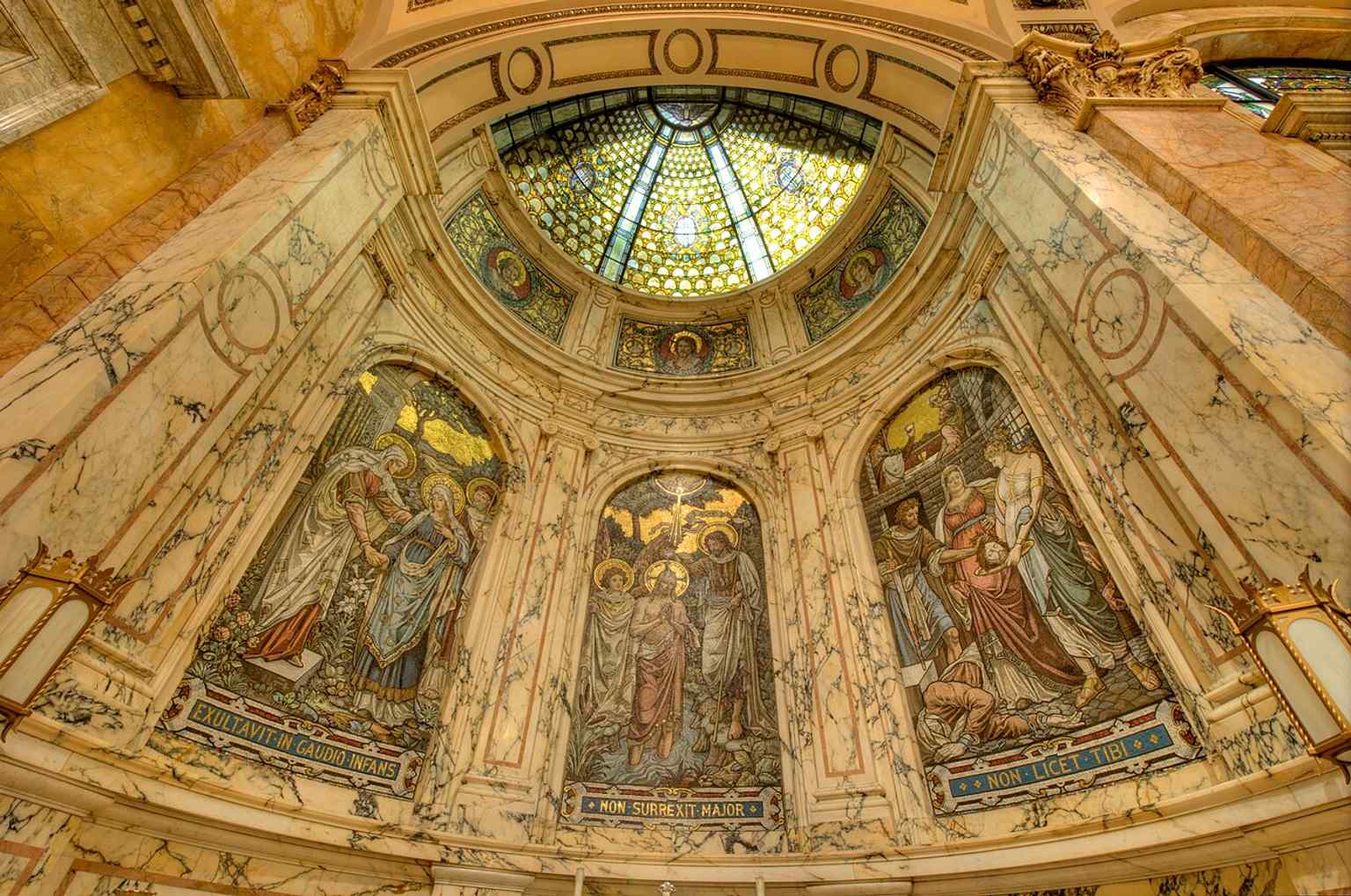
A side view of the Altar and Chancel, highlighting the intricate marble work executed by James G. Batterson Jr. and John Eisele of New York.Photo: Bestbudbrian, Wikimedia Commons, CC BY-SA 3.0. Cropped & resized. 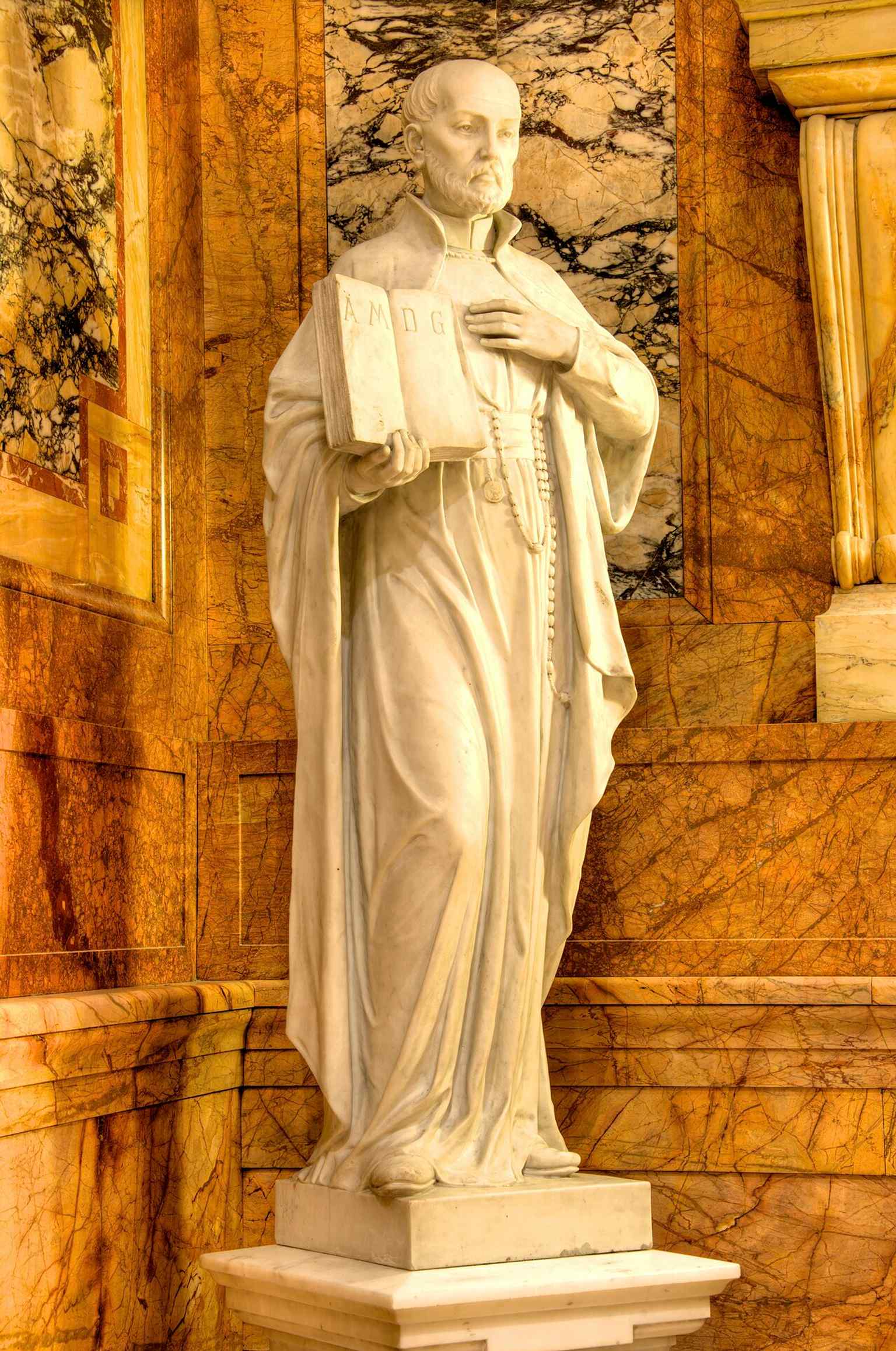
A close-up of the main Altar, crafted from Pavonazzo marble and gilt-bronze, which is part of the church's interior decorated with diverse precious marbles.Photo: Bestbudbrian, Wikimedia Commons, CC BY-SA 3.0. Cropped & resized. 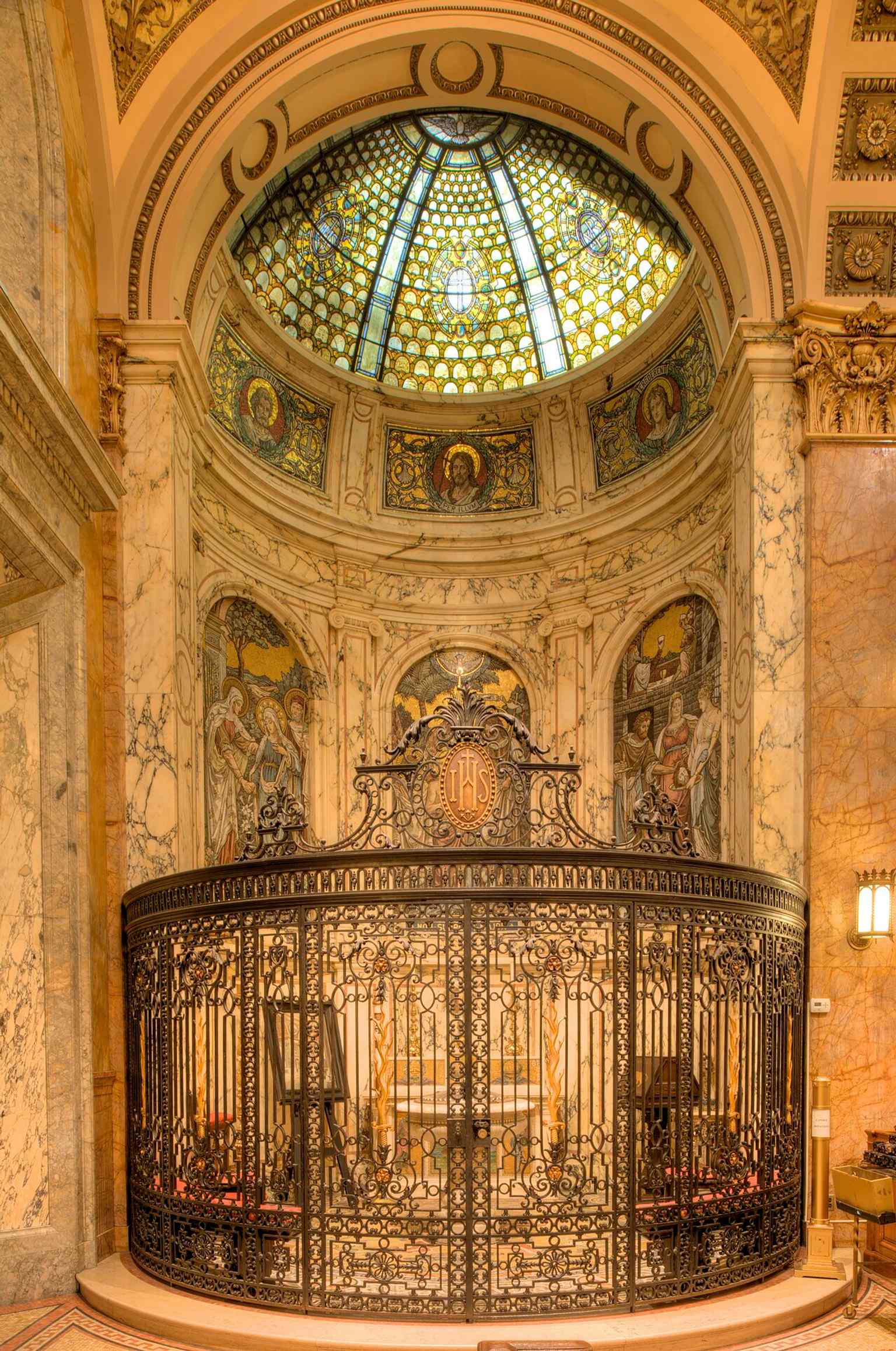
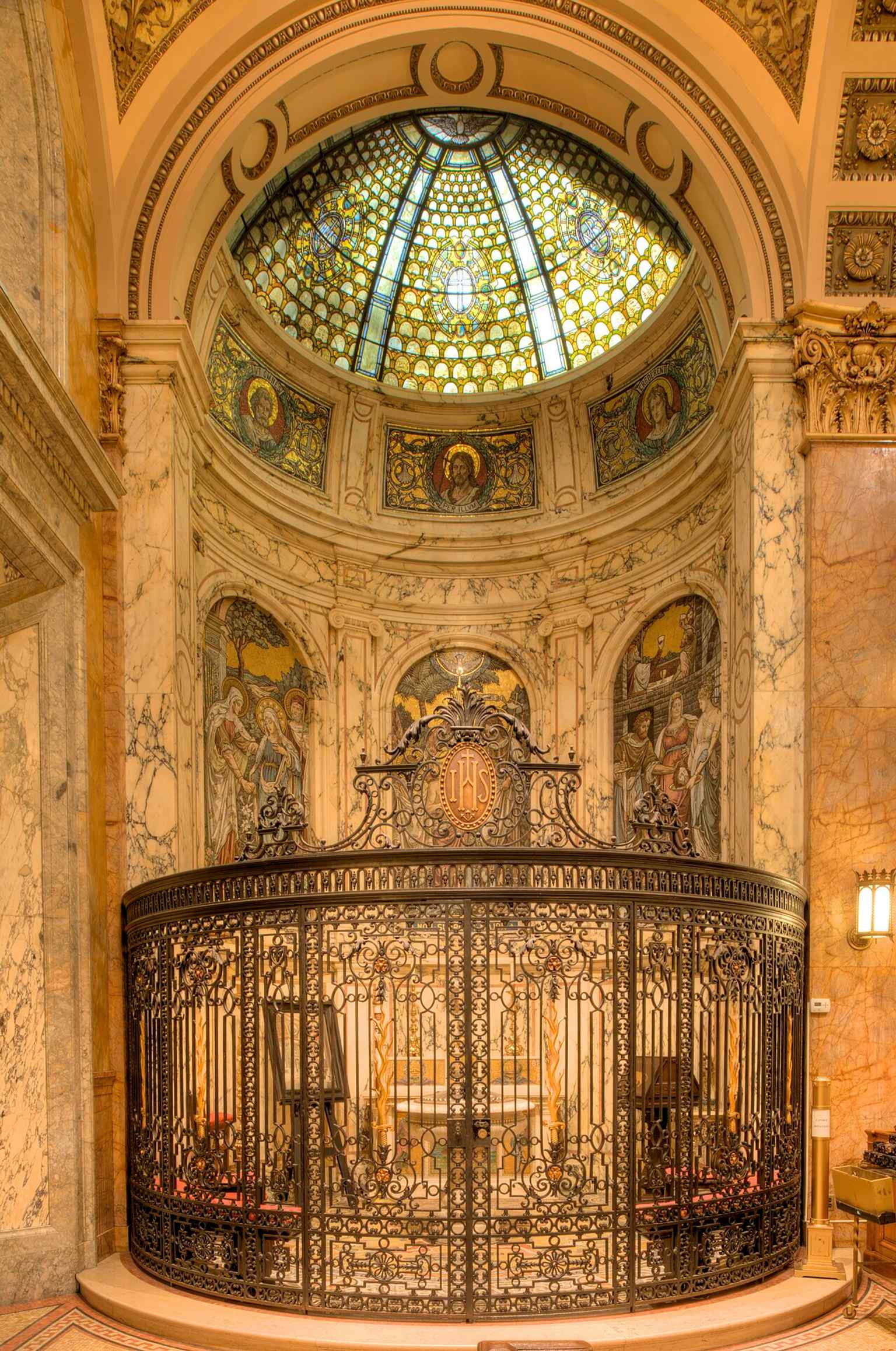
This view shows the Baptistery from the Nave, a richly decorated area featuring Louis Comfort Tiffany"s Favrile glass mosaics and a wrought-iron screen.Photo: Bestbudbrian, Wikimedia Commons, CC BY-SA 3.0. Cropped & resized. 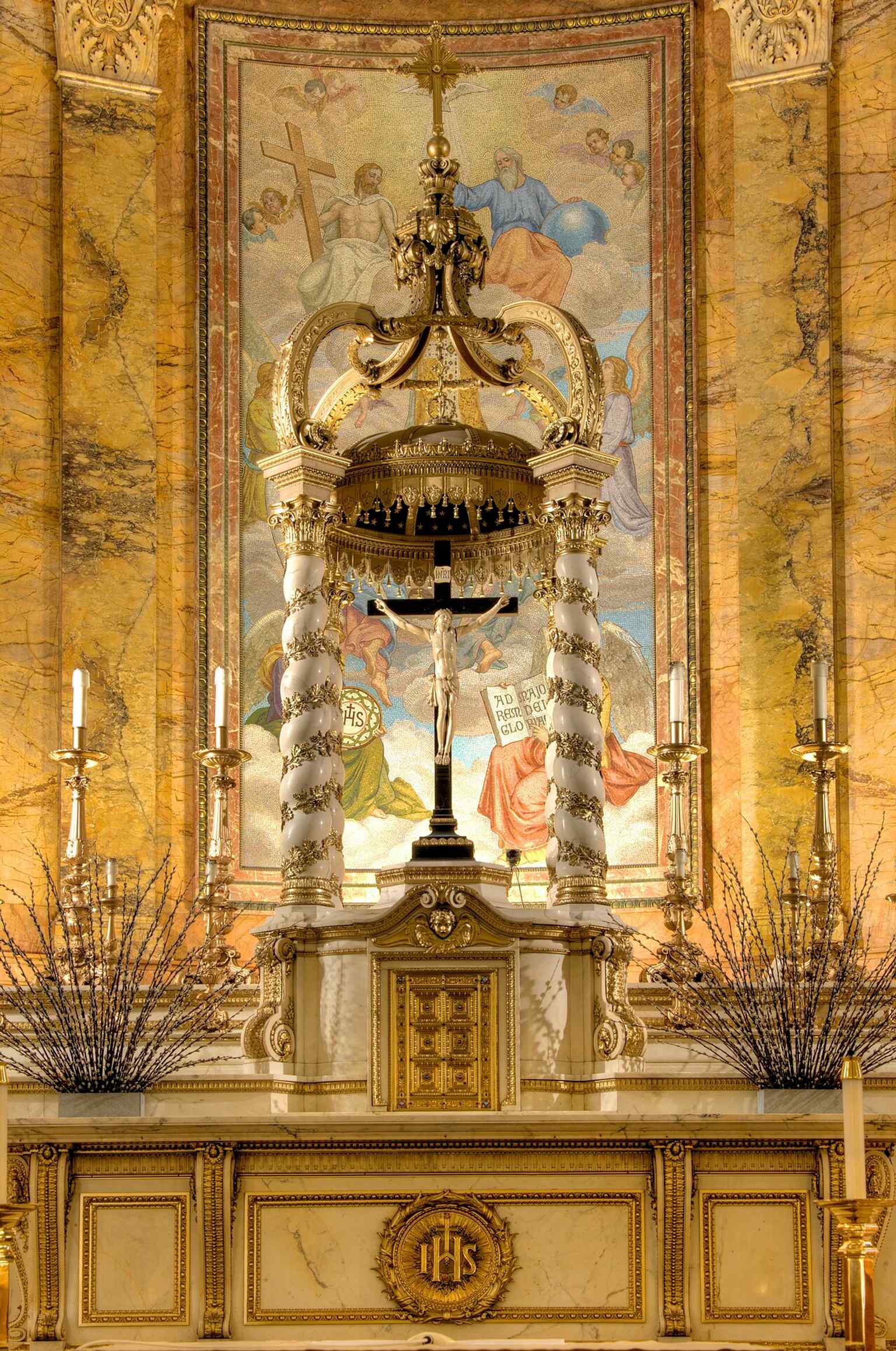
A detailed view of the Baldachin over the Altar, part of the extensive marble work found throughout the church's interior.Photo: Bestbudbrian, Wikimedia Commons, CC BY-SA 3.0. Cropped & resized. 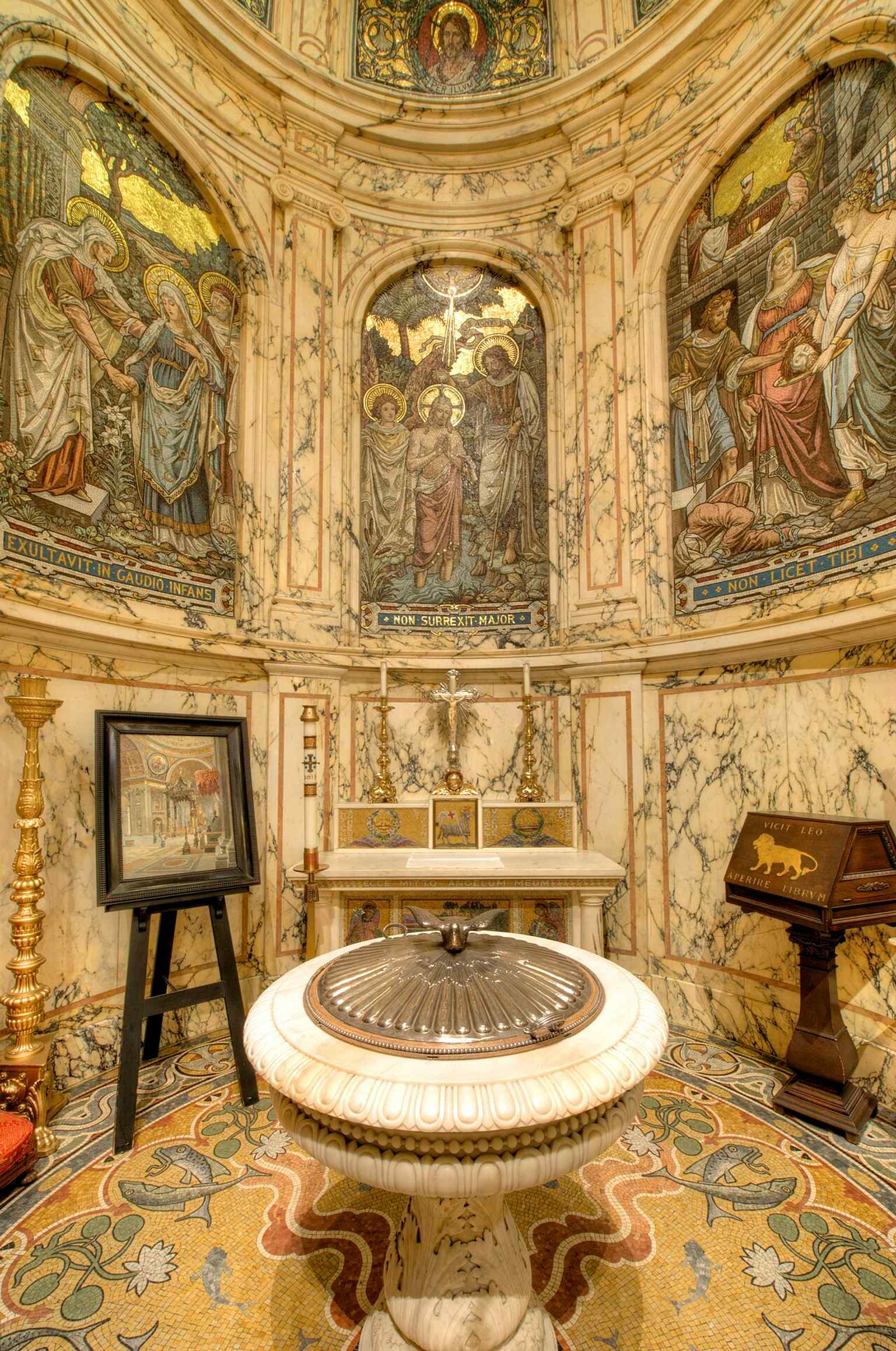
The Baptistery's front view, showcasing mosaics designed by Heaton, Butler & Bayne depicting scenes from John the Baptist's life, created using Tiffany's opalescent Favrile glass.Photo: Bestbudbrian, Wikimedia Commons, CC BY-SA 3.0. Cropped & resized. 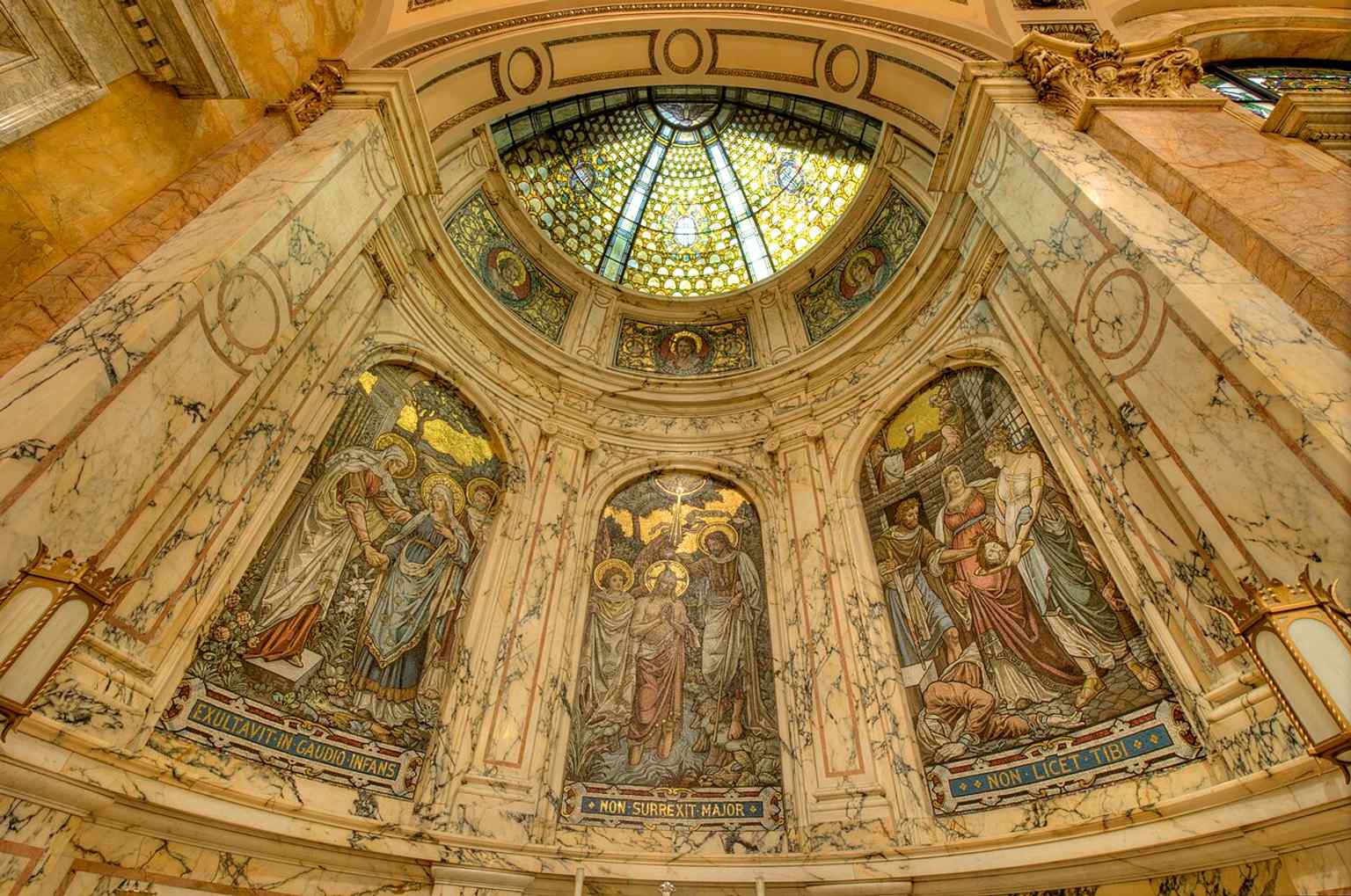
The semi-dome of the Baptistery, created by Tiffany Glass and Decorating Company using "jewel" glass, with a dove at its apex representing the Holy Spirit.Photo: Bestbudbrian, Wikimedia Commons, CC BY-SA 3.0. Cropped & resized. 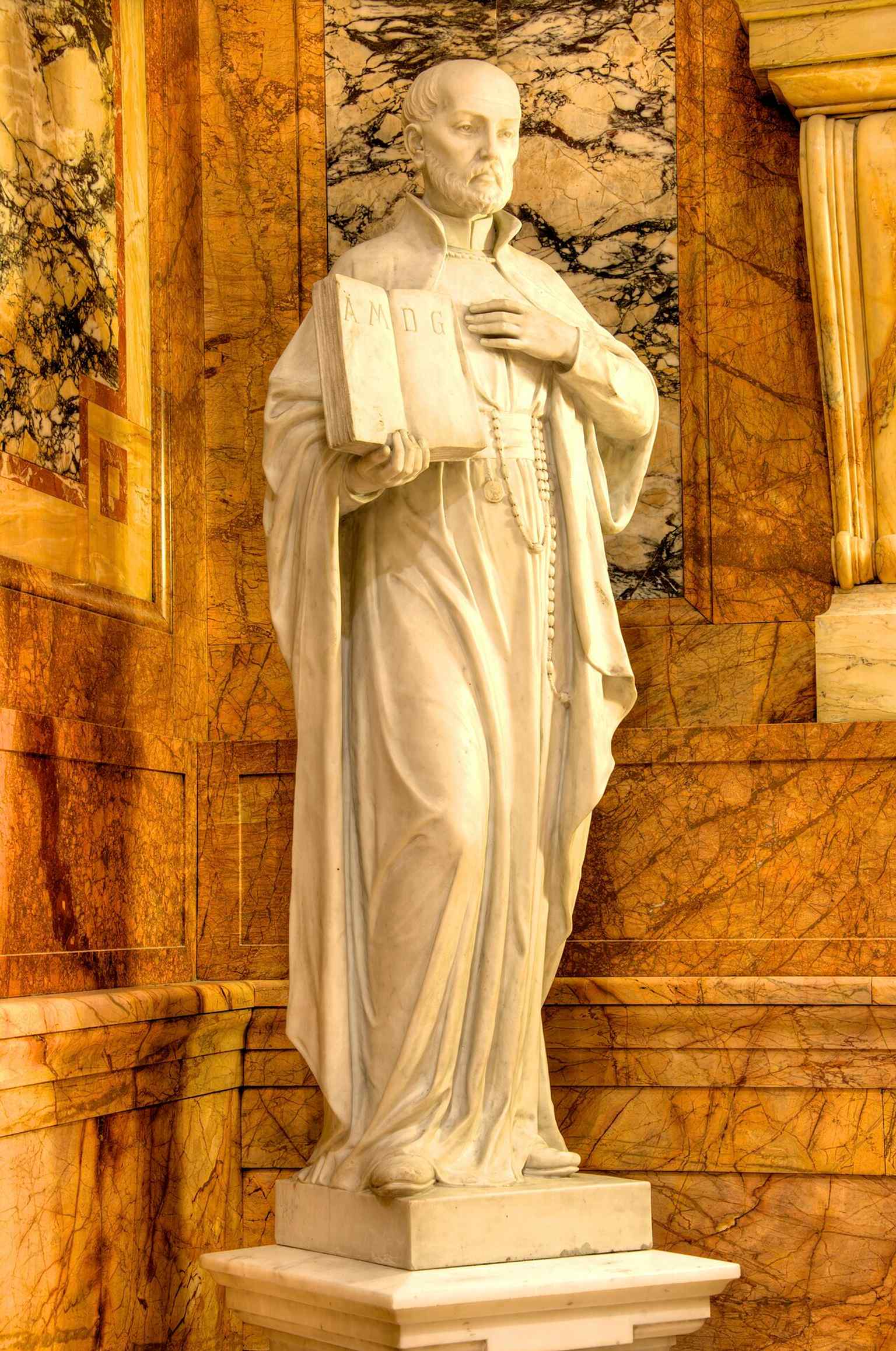
A statue in the Nave, featuring the Jesuit motto "Ad Majorem Dei Gloriam" (To the Greater Glory of God), which is also prominently displayed on the church's exterior facade.Photo: Bestbudbrian, Wikimedia Commons, CC BY-SA 3.0. Cropped & resized. 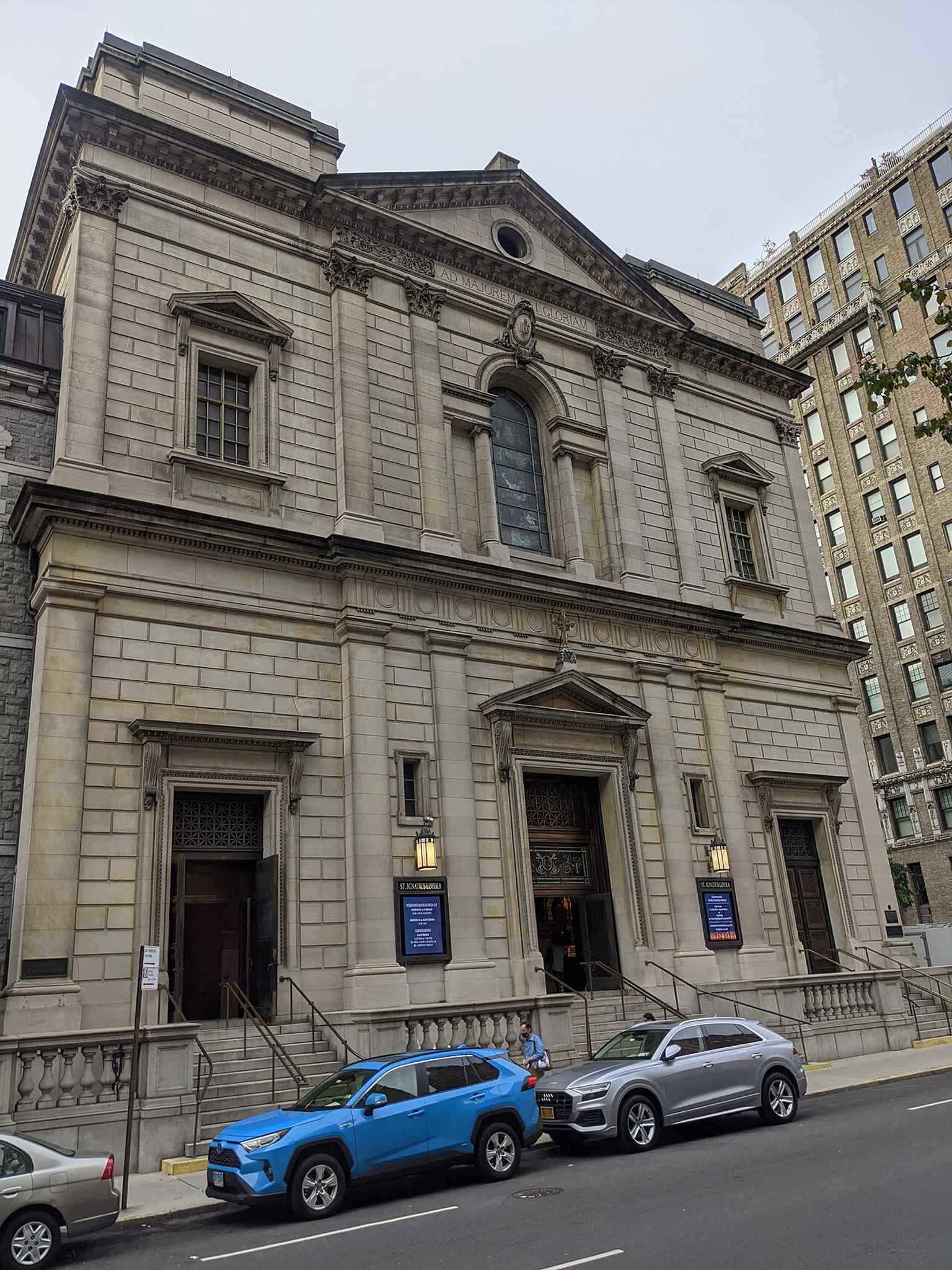
The exterior of the Church of St. Ignatius Loyola, a Roman Catholic parish church on the Upper East Side of Manhattan, originally established in 1851 as St. Lawrence O'Toole's Church.Photo: AllanMarcus2468, Wikimedia Commons, CC BY-SA 4.0. Cropped & resized. Look for the stark white facade featuring deep horizontal grooves, large rectangular upper windows, and a prominent arched entryway with heavy wooden doors. You are standing…Read moreShow less
Open dedicated page →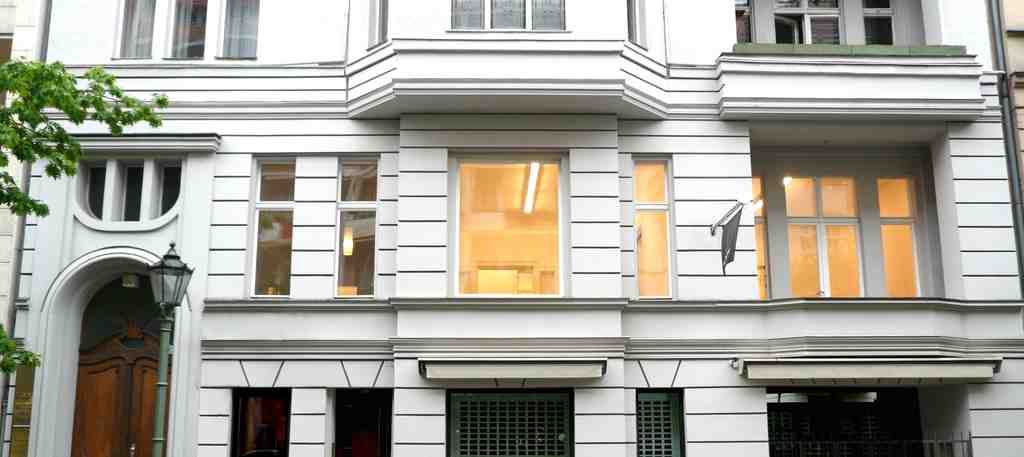
Galerie BuchholzPhoto: Galerie Daniel Buchholz, Wikimedia Commons, CC BY-SA 4.0. Cropped & resized. Look for the stark white facade featuring deep horizontal grooves, large rectangular upper windows, and a prominent arched entryway with heavy wooden doors. You are standing outside Galerie Buchholz, one of the most respected contemporary art galleries in the world. But to understand the weight of this space, we have to rewind to nineteen eighty-six and a sixteen-year-old kid in Cologne, Germany. Daniel Buchholz did not start with a trust fund or a shiny Manhattan lease. He started by sweeping floors and organizing shelves as an apprentice in a renowned bookstore.
That early exposure to paper and print shaped everything that followed. Today, this gallery occupies what used to be a private doctor's office, transforming a space of quiet East Side privilege into a stage for the global avant-garde. It is a perfect example of how the elite corners of this city constantly morph, shedding old skins to build completely new cultural dynasties. When they opened this New York branch in two thousand and fifteen, they completely ignored standard commercial art trends. Instead, their inaugural show was a meticulously researched tribute to the French writer Raymond Roussel, featuring, among other things, a single cookie the author had saved from a nineteen twelve lunch, enshrined like a holy relic.
Now, here is a detail most visitors completely miss when they admire the gallery's pristine international presence. The entire Buchholz empire is rooted in a literal back room. When Daniel Buchholz needed a primary exhibition space in nineteen ninety-three, he took over the storage closet behind his father's antiquarian bookstore. We are talking about a room of maybe nine square meters. In fact, Buchholz jokes that the original space is so tiny it is exactly where the gallery's computer servers sit today.
That cramped, intimate setting forced a completely different way of showing art, far away from massive, impersonal white rooms. In nineteen ninety-three, a young artist named Wolfgang Tillmans showed up from London carrying his photos in a suitcase. He bypassed traditional frames entirely, simply taping and pinning his raw prints directly to the walls of that tiny storage room. That do-it-yourself defiance challenged the established artistic hierarchy and helped launch Tillmans to global fame.
The gallery also has a history of embracing genuine architectural danger. In nineteen ninety, Buchholz hosted an installation by Chris Burden called Samson. Burden connected a hundred-ton mechanical jack to a turnstile at the gallery entrance. Every single time a visitor walked through, the jack expanded by a fraction of a millimeter, applying immense pressure to the primary load-bearing walls of the building. It moved like a glacier. Slow, silent, and with the very real threat that if a few too many art lovers showed up, the entire building would collapse into a pile of rubble. It was a massive gamble, but the building ultimately held together.
If you want to step inside, they are open Tuesday through Saturday from ten AM to six PM, but closed Sunday and Monday.
Let us keep moving toward the final monumental mansions of our route, heading next to the Benjamin N. Duke House, which is just a two-minute walk away.
Look to your right for a narrow, red brick and limestone mansion featuring three gracefully curved bow windows and a striking copper mansard roof perched on top. This is the…Read moreShow less
Open dedicated page →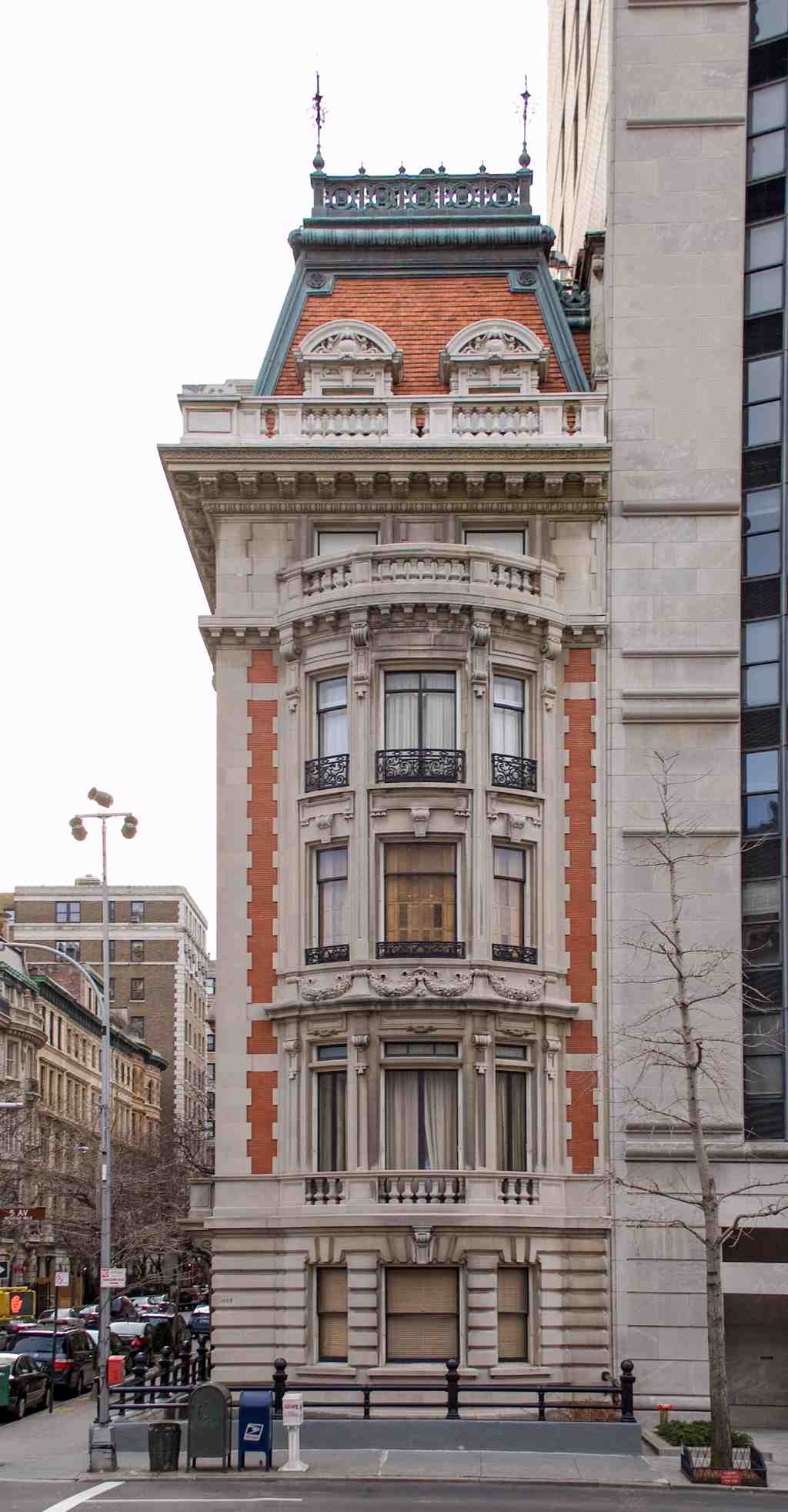
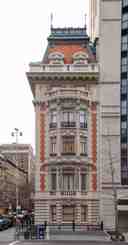
Benjamin N. Duke HousePhoto: A. Balet, Wikimedia Commons, CC BY 3.0. Cropped & resized. Look to your right for a narrow, red brick and limestone mansion featuring three gracefully curved bow windows and a striking copper mansard roof perched on top.
This is the Benjamin N. Duke House, a quintessential survivor of the Gilded Age. The developers, William and Thomas Hall, built this Beaux-Arts confection on speculation between eighteen ninety-nine and nineteen oh one. They had a clever marketing trick. They would briefly move into their own newly built mansions, furnishing them lavishly, basically turning them into high stakes showrooms for the city's new industrial titans.
It worked perfectly. Benjamin Duke, chairman of the American Tobacco Company, bought the house for a small fortune. But he did not actually move in. Instead, he lived at a hotel for years. Why enjoy a sprawling mansion when you have room service?
Instead, the house became the setting for a bizarre game of billionaire musical chairs. Benjamin's brother, James Buchanan Duke, met his future wife at a party here. James bought the house from Benjamin in nineteen oh seven. Yes, the same James whose massive estate we saw earlier. James actually lived here, notably defending his tobacco monopoly from his bedroom in nineteen oh eight while battling severe rheumatism. Federal prosecutors literally had to crowd around his bed to take his testimony. Once his grander mansion up the street was finished in nineteen twelve, he moved out, and Benjamin’s children moved in.
Take a look at the image on your app to see the magnificent copper roof up close. That roof is a masterpiece of historical reproduction. In the nineteen eighties, the descendants of the original blacksmith who crafted the metalwork in nineteen oh one were hired to rebuild it. They had to buy a custom hydraulic press just to replicate the nineteenth century manufacturing methods.
The elaborate copper mansard roof, adorned with finials and cresting, was meticulously recreated during the 1980s restoration by Joseph Fiebiger, grandson of the original metalworker.Photo: Epicgenius, Wikimedia Commons, CC BY-SA 4.0. Cropped & resized. Over the decades, this limestone and brick fortress has witnessed a continual cycle of new fortunes trying to buy a piece of old prestige. Sometimes with mixed results. In two thousand and six, a former taxi driver turned billionaire named Tamir Sapir bought the house for forty million dollars. He planned to turn it into a private museum for his massive ivory collection. But federal authorities discovered he had been illegally importing endangered species products on his yacht. The scandal derailed his grand plans, and the house sat largely empty until Mexican telecom magnate Carlos Slim bought it for forty-four million dollars.
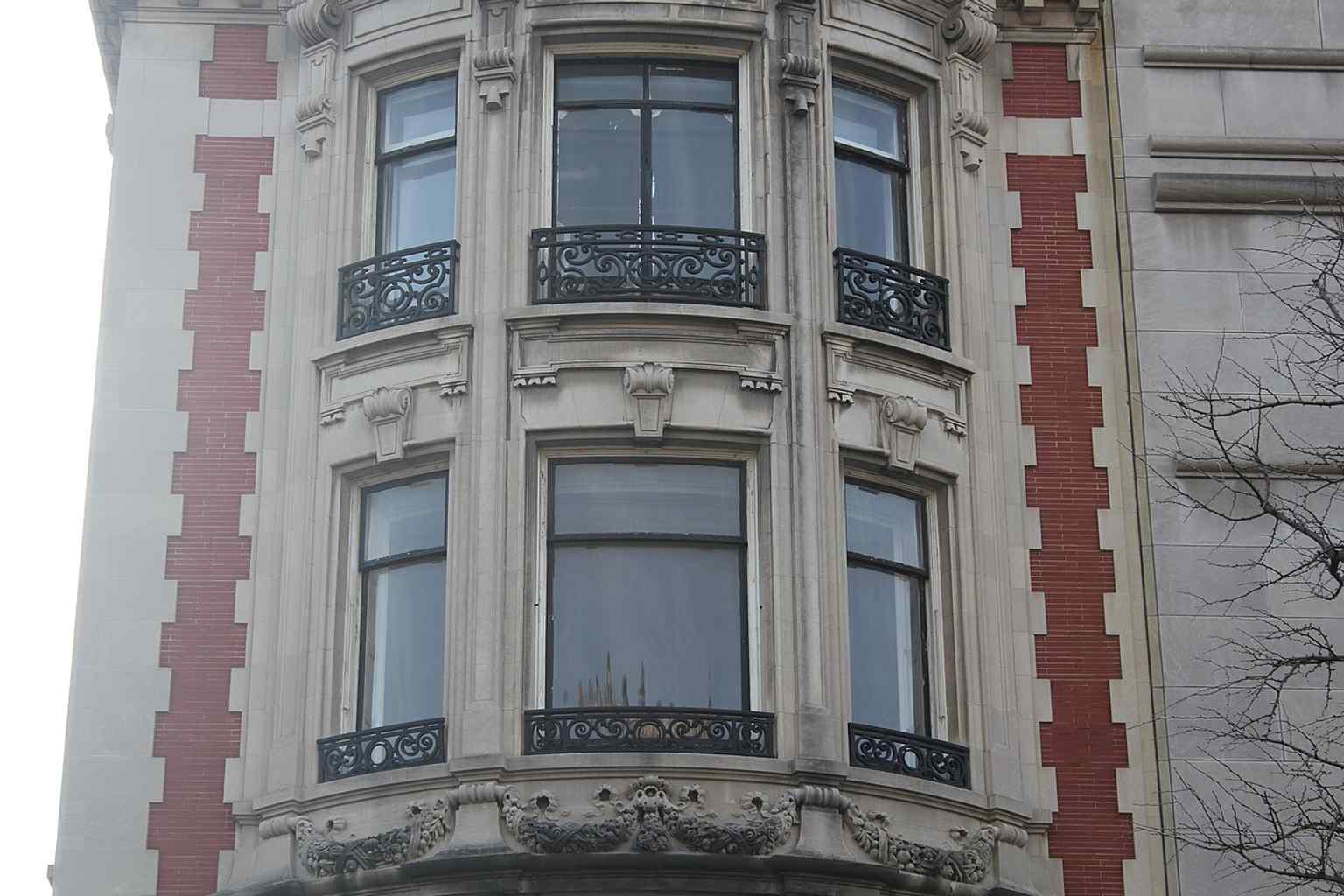
Check your screen once more to appreciate the intricate limestone balustrades on the Fifth Avenue side. Notice how the bays curve outward in a grand, Baroque gesture. It is a house designed to be noticed, even as the names on the deed constantly change.
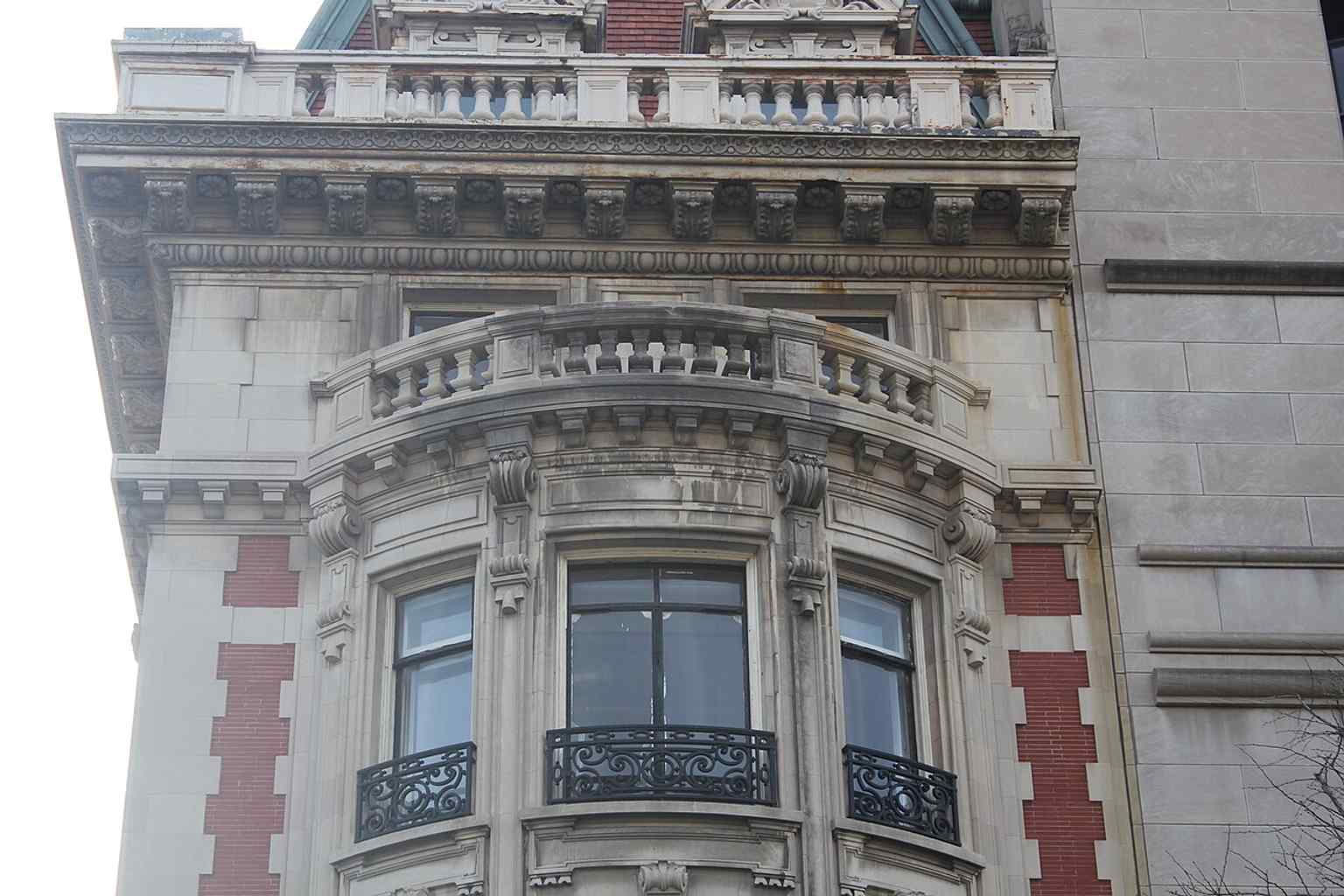
A closer look at one of the curved bays on Fifth Avenue emphasizes the Baroque-influenced curvature and the intricate limestone balustrades.Photo: Epicgenius, Wikimedia Commons, CC BY-SA 4.0. Cropped & resized. Our final stop is just a two minute walk away. We are heading to nine nine eight Fifth Avenue, a building that fundamentally changed the rules of luxury housing on the Upper East Side. Let us go see how the elite finally learned to share a roof.
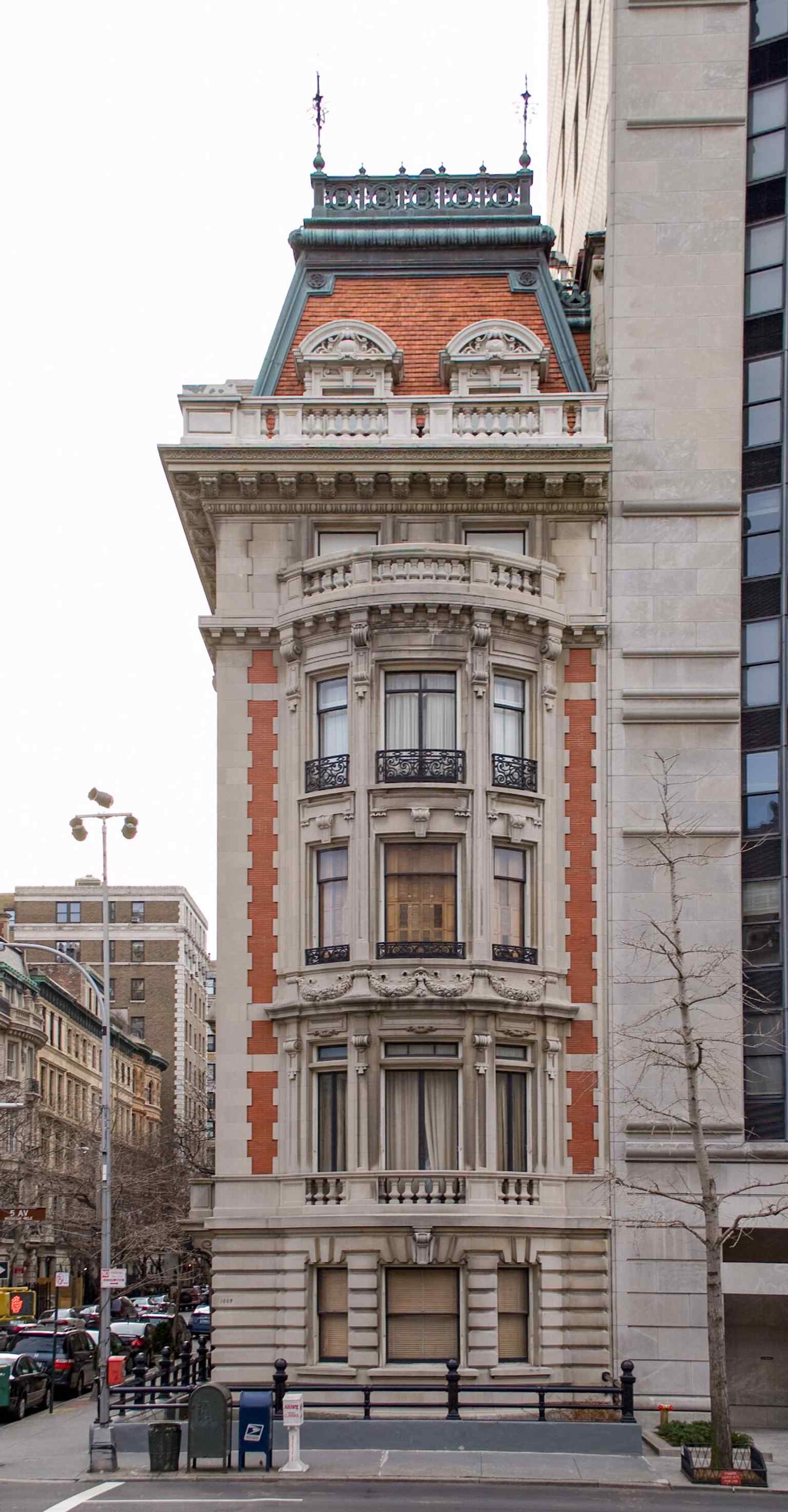
This overall view captures the grandeur of the Benjamin N. Duke House, one of the few remaining private mansions on Fifth Avenue, built between 1899 and 1901.Photo: Epicgenius, Wikimedia Commons, CC BY-SA 4.0. Cropped & resized. 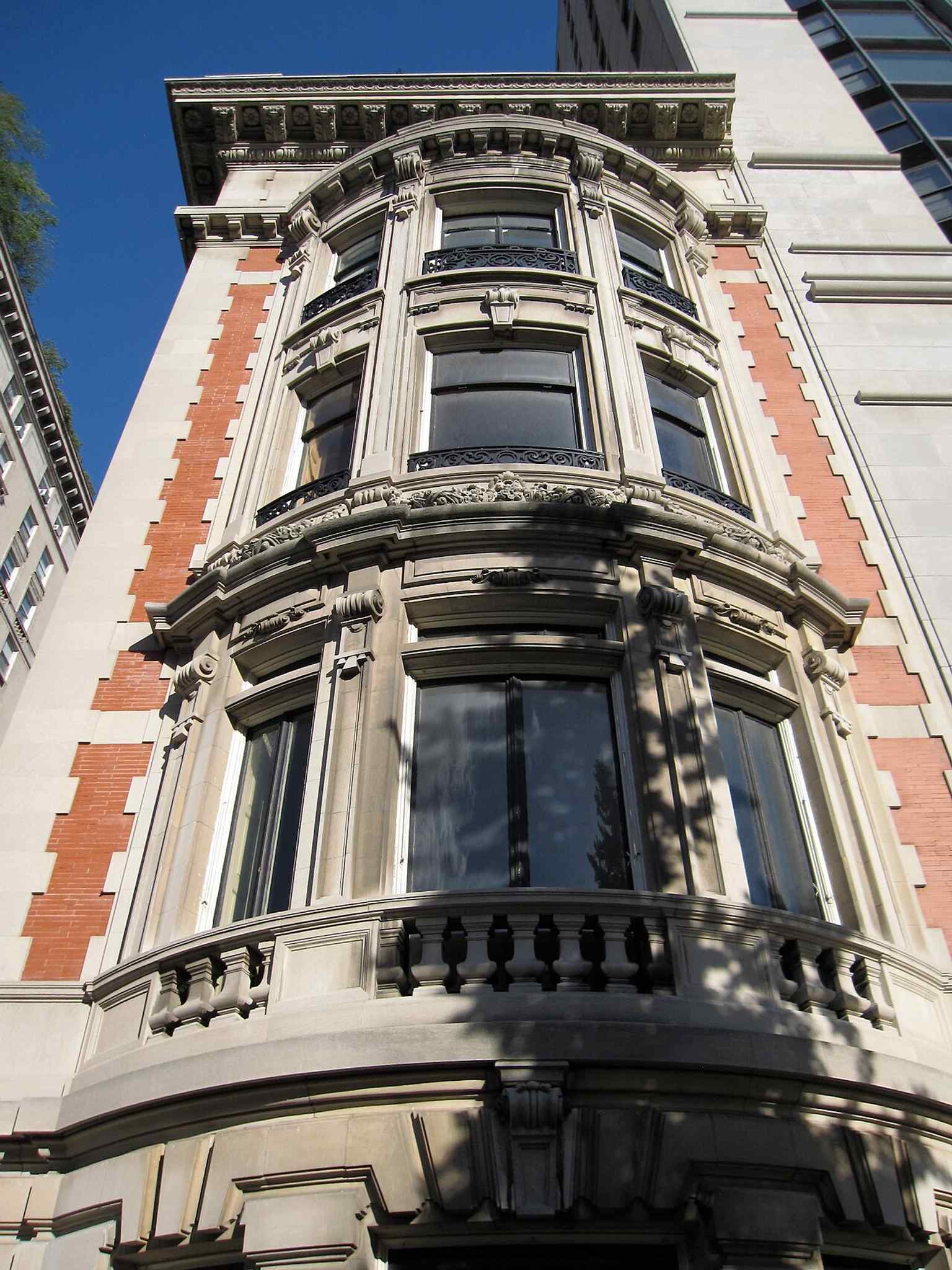
The Fifth Avenue facade showcases the house's Beaux-Arts style, featuring three distinctive curved bays, a design choice described as resembling the Baroque style.Photo: Epicgenius, Wikimedia Commons, CC BY-SA 4.0. Cropped & resized. 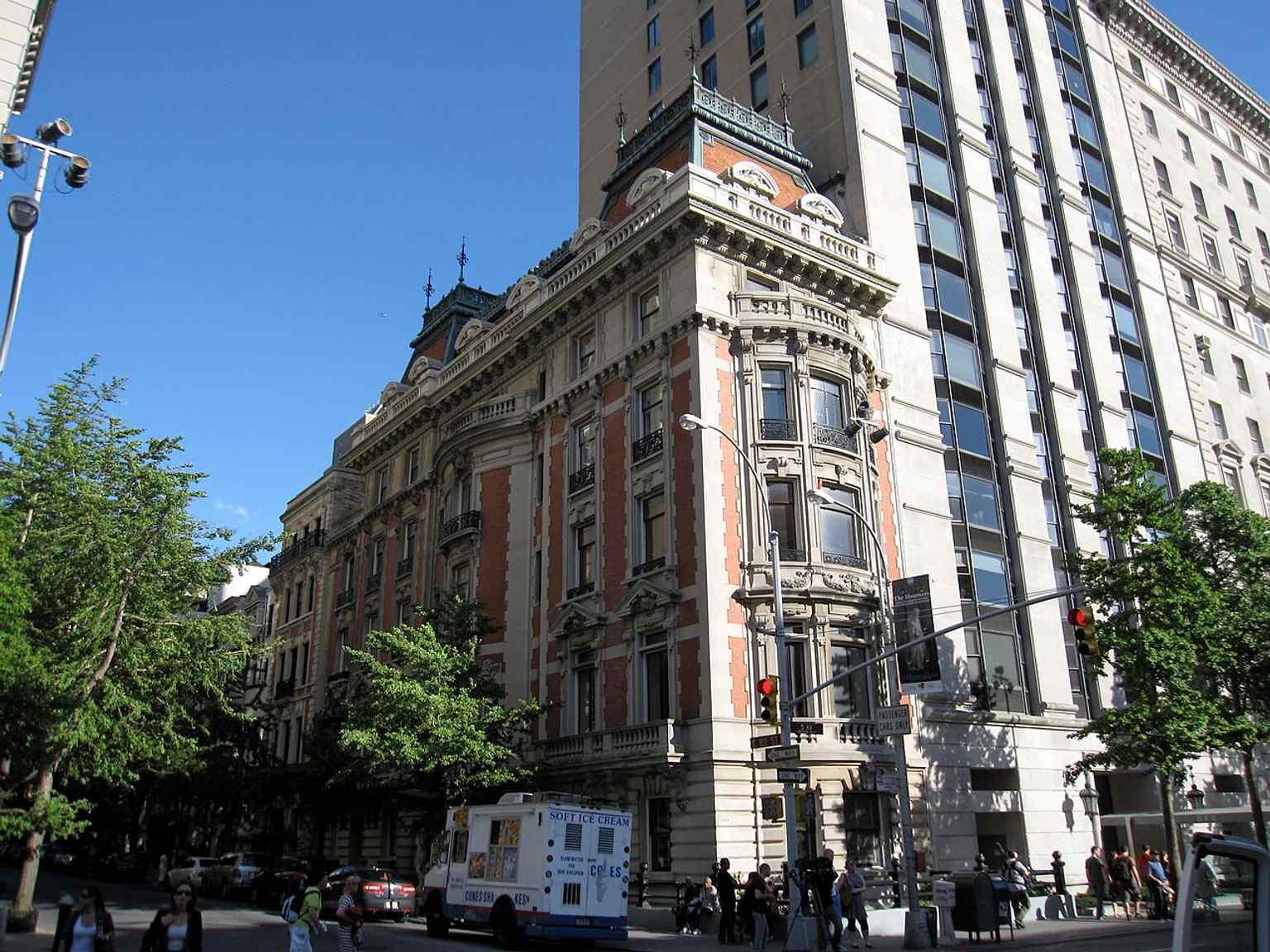
This horizontal view of the 82nd Street facade reveals the full width of the mansion, with projecting side pavilions flanking the central entrance bay.Photo: Epicgenius, Wikimedia Commons, CC BY-SA 4.0. Cropped & resized. 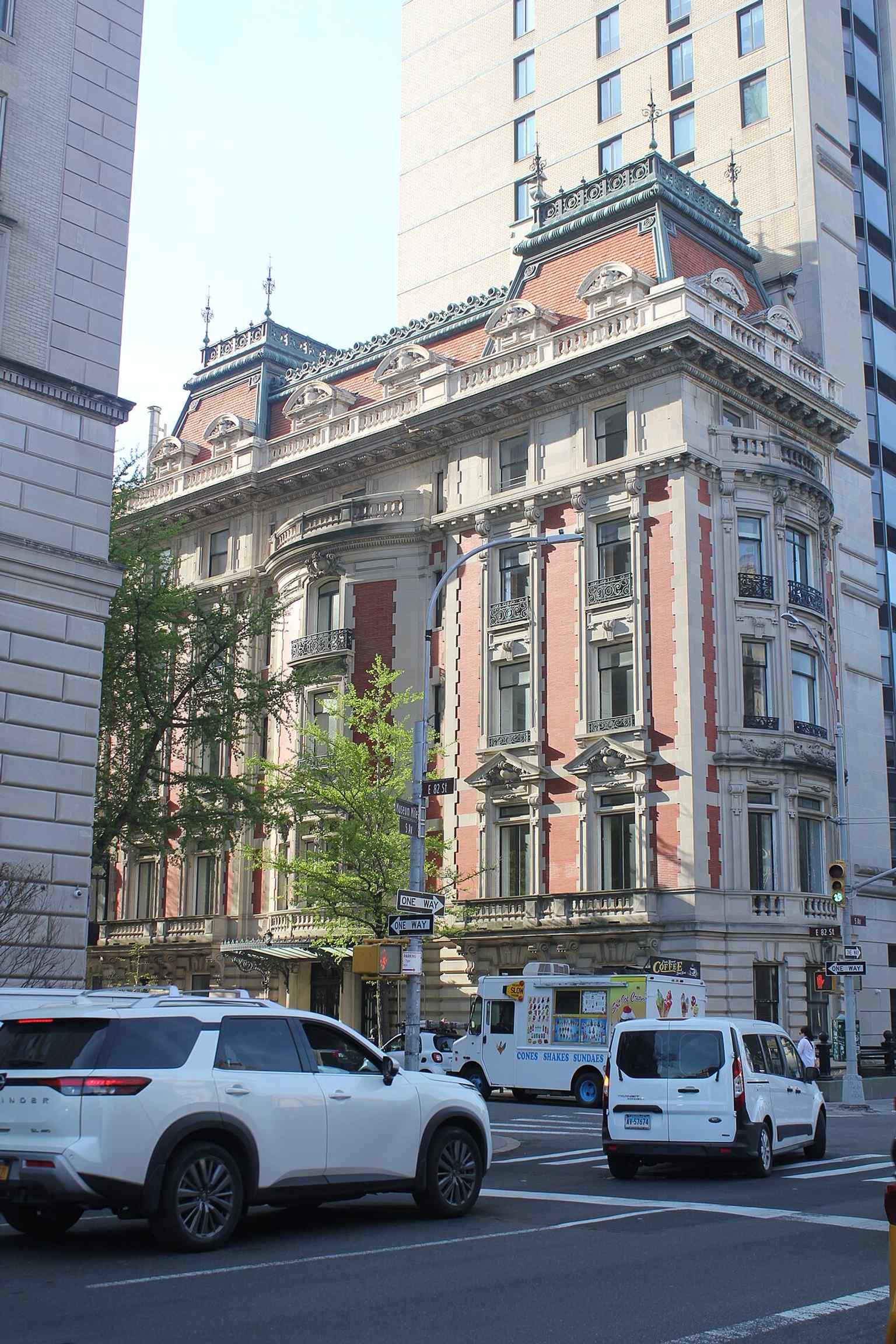
The ornate main entrance on 82nd Street, with its metal-and-glass marquee and wrought-iron doors, serves as the primary entry point to the mansion.Photo: Epicgenius, Wikimedia Commons, CC BY-SA 4.0. Cropped & resized. 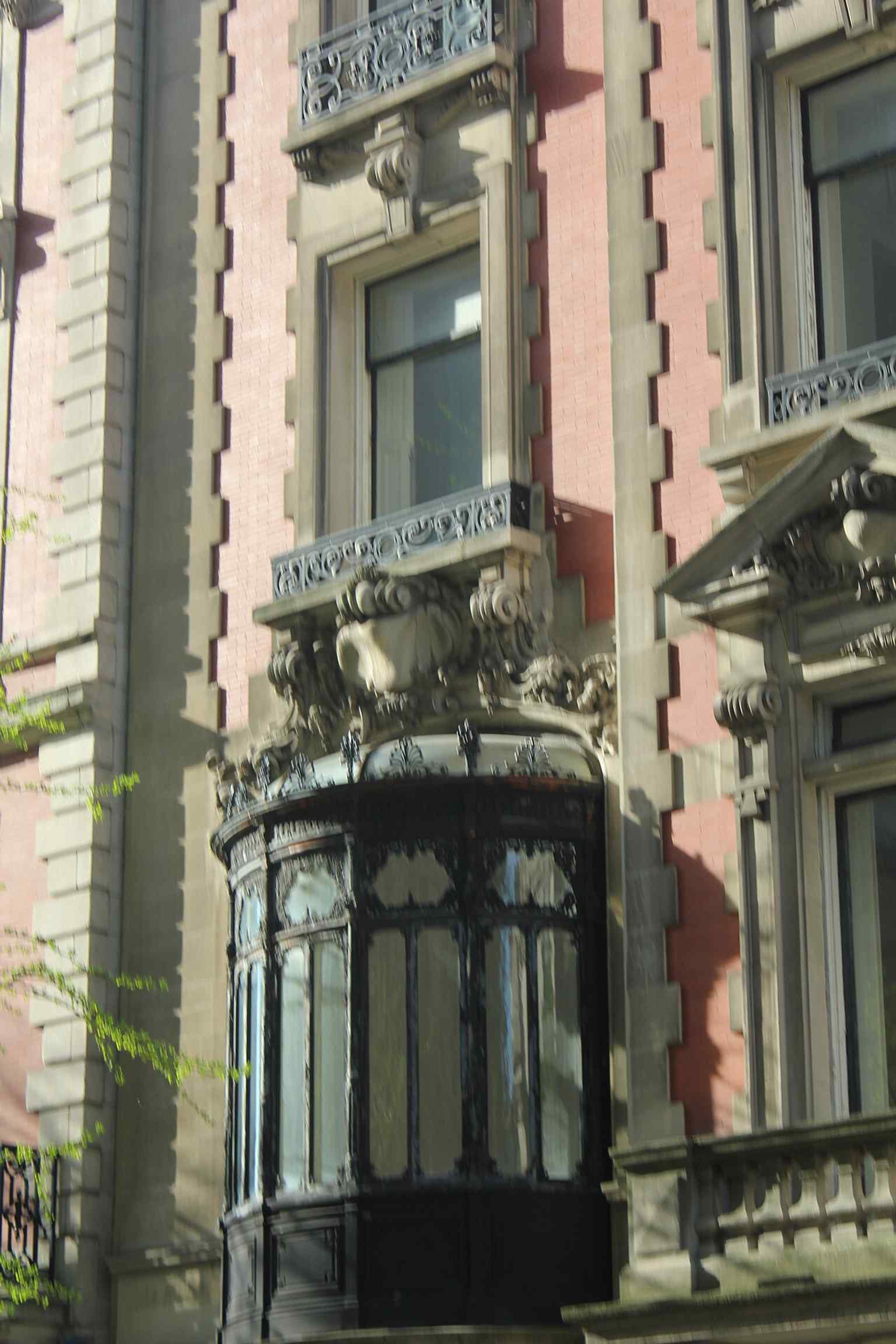
This image highlights the unique oriel window on the eastern end of the 82nd Street facade, a feature that was described as resembling a conservatory.Photo: Epicgenius, Wikimedia Commons, CC BY-SA 4.0. Cropped & resized. 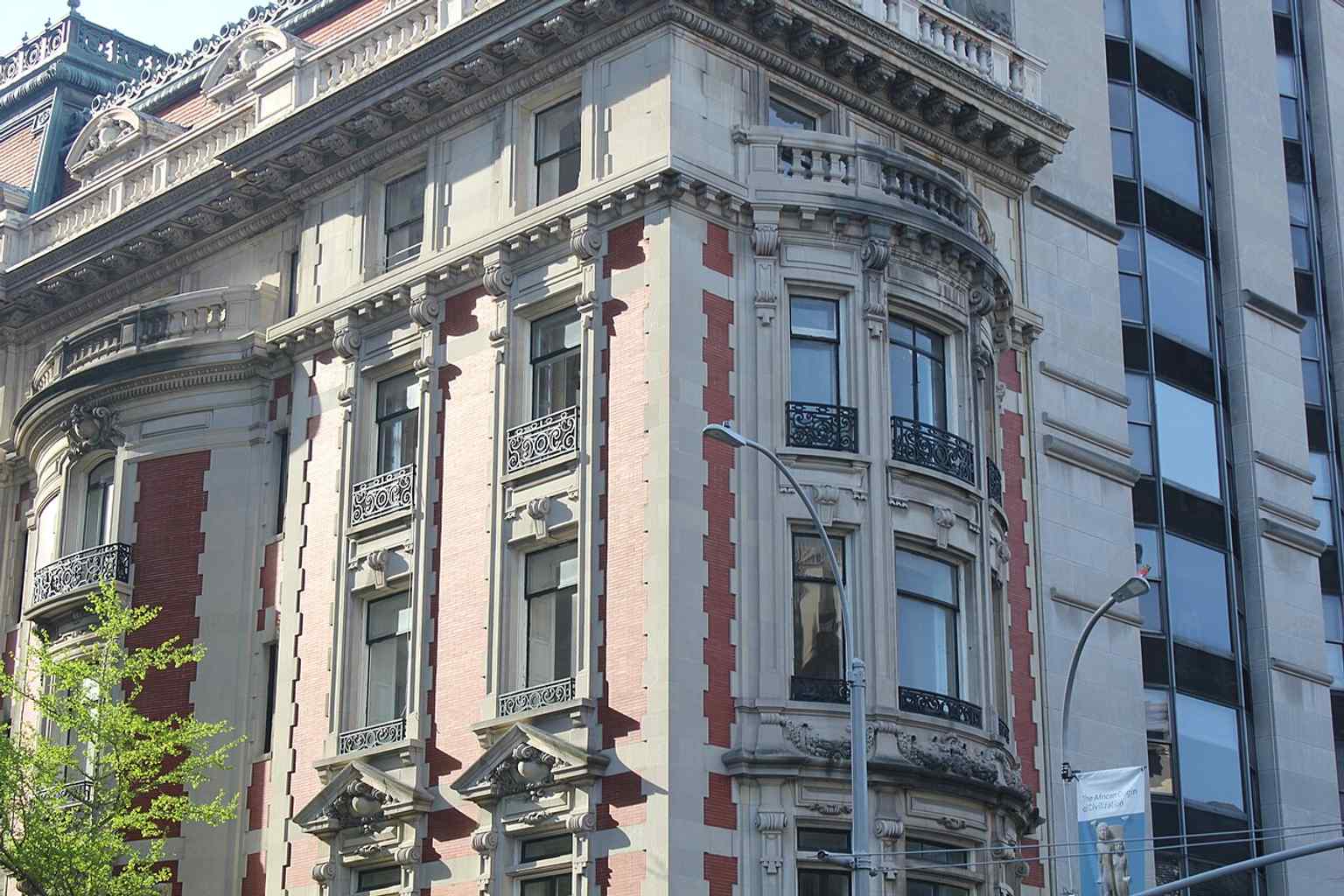
The rusticated limestone blocks of the ground floor and basement provide a robust foundation for the Benjamin N. Duke House, a hallmark of its Beaux-Arts design.Photo: Epicgenius, Wikimedia Commons, CC BY-SA 4.0. Cropped & resized. 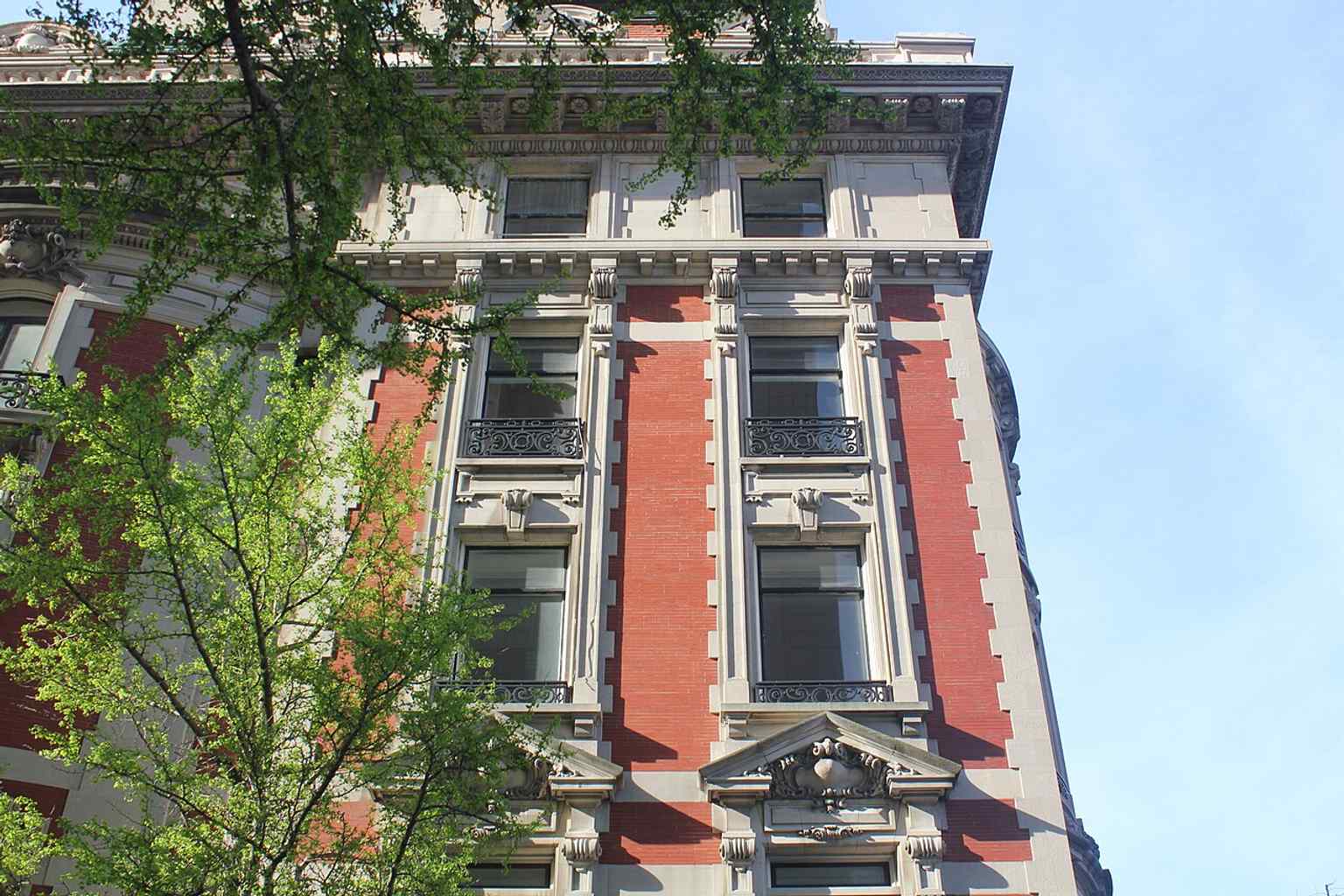
The red brick facade of the upper floors, punctuated by limestone quoins and wrought-iron window guards, was restored to its original Gilded Age coloration in the 1980s.Photo: Epicgenius, Wikimedia Commons, CC BY-SA 4.0. Cropped & resized. 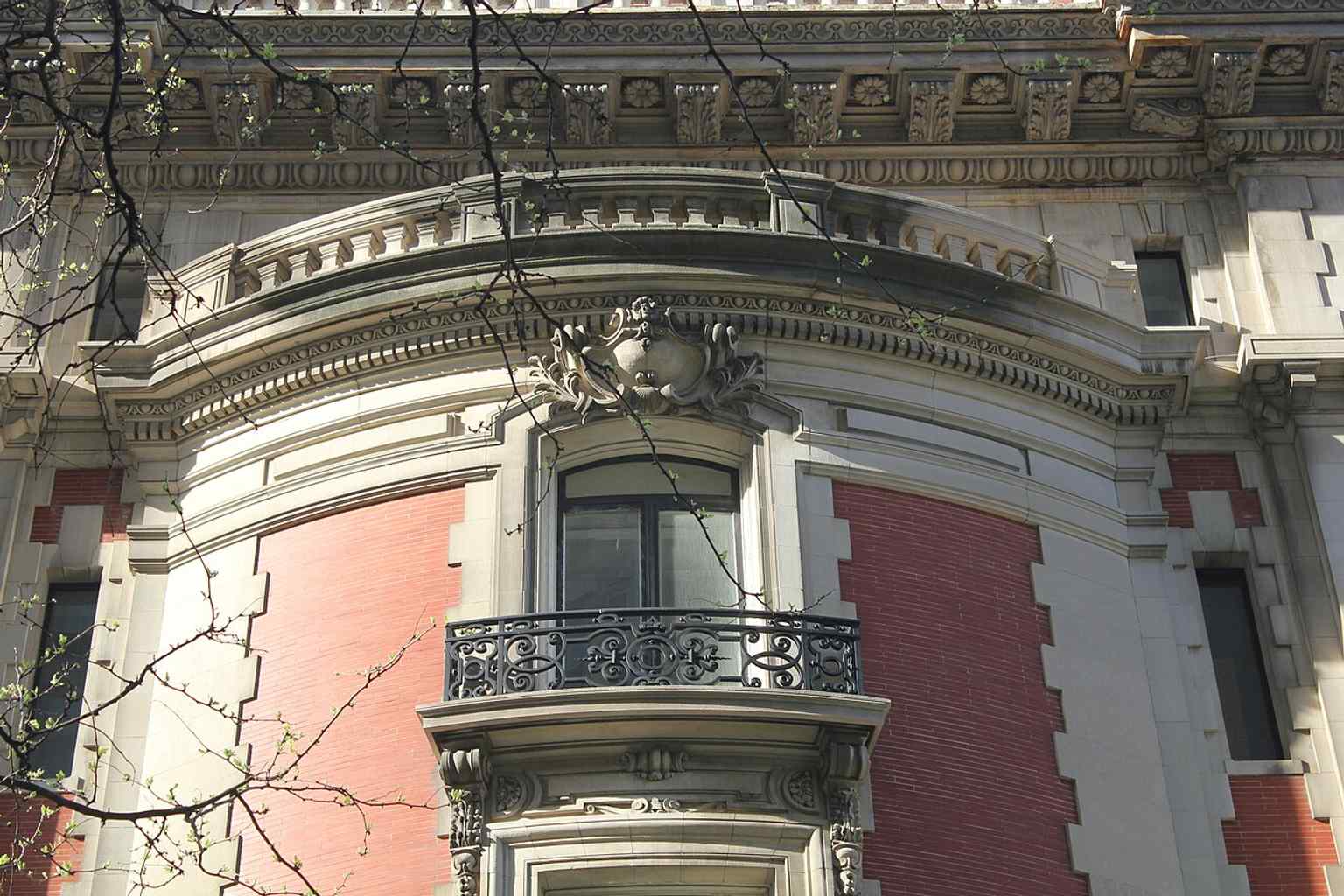
These second-story balconies, supported by brackets and topped by triangular pediments, add a distinct classical flair to the 82nd Street elevation.Photo: Epicgenius, Wikimedia Commons, CC BY-SA 4.0. Cropped & resized. 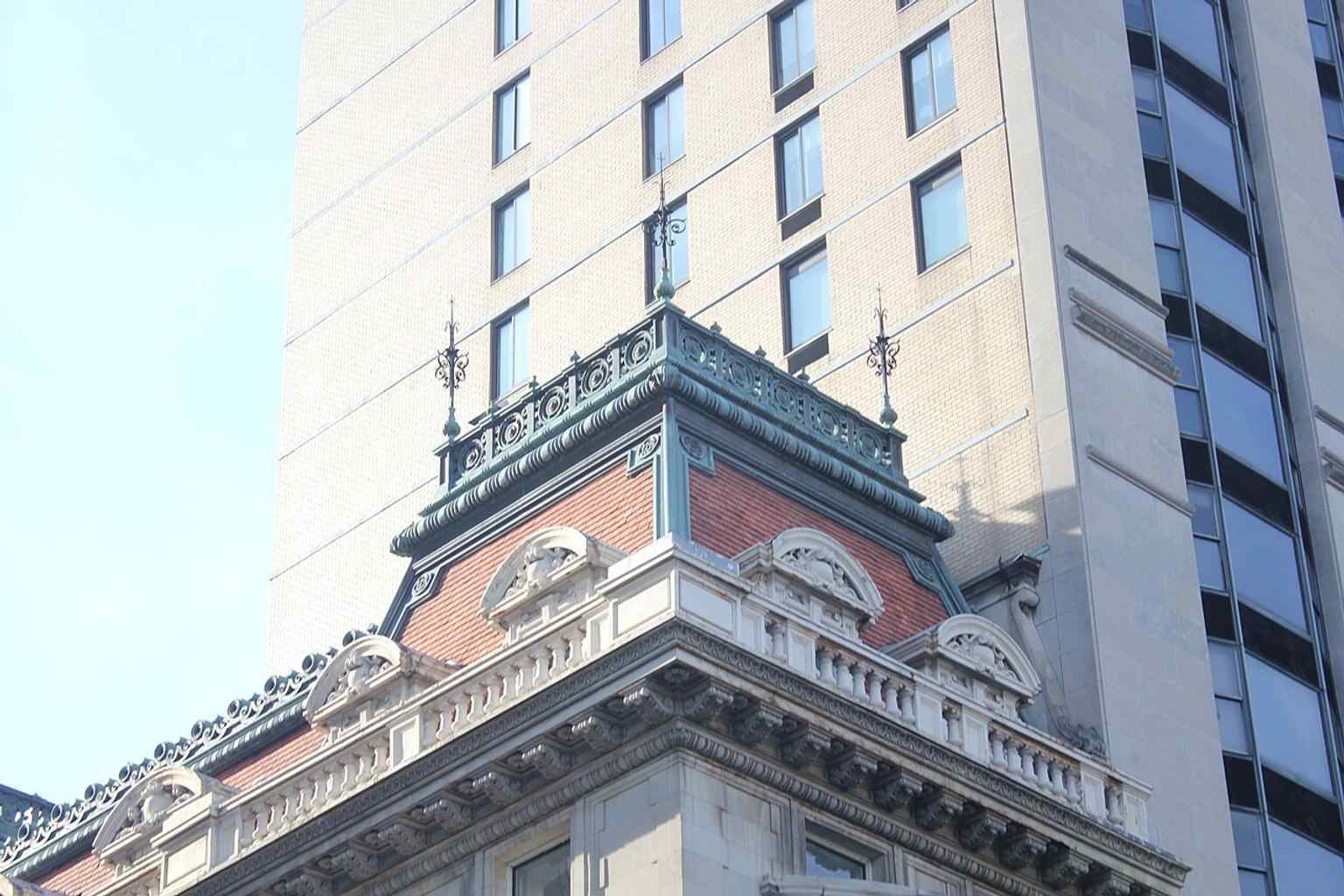
The mansion stands prominently among its modern neighbors, showcasing its enduring presence as a New York City designated landmark despite surrounding development.Photo: Epicgenius, Wikimedia Commons, CC BY-SA 4.0. Cropped & resized. 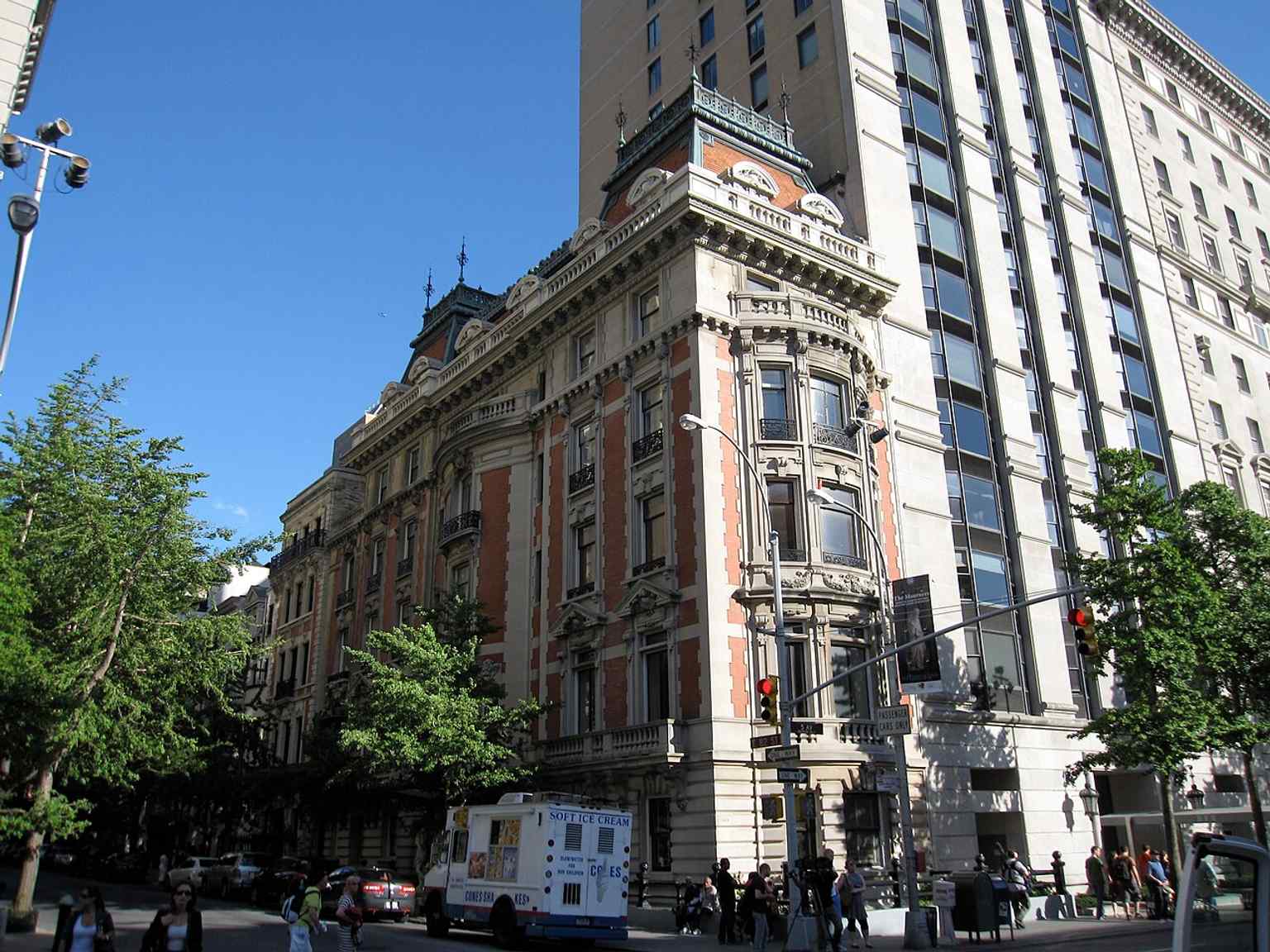
This perspective provides a broader view of the entire mansard roof and its prominent position on the Upper East Side skyline.Photo: Gryffindor, Wikimedia Commons, CC BY-SA 3.0. Cropped & resized. Approaching on your left is a massive twelve-story rectangular fortress of pale limestone, crowned by a deeply overhanging terra cotta roof ledge. It is nineteen ten. The very…Read moreShow less
Open dedicated page →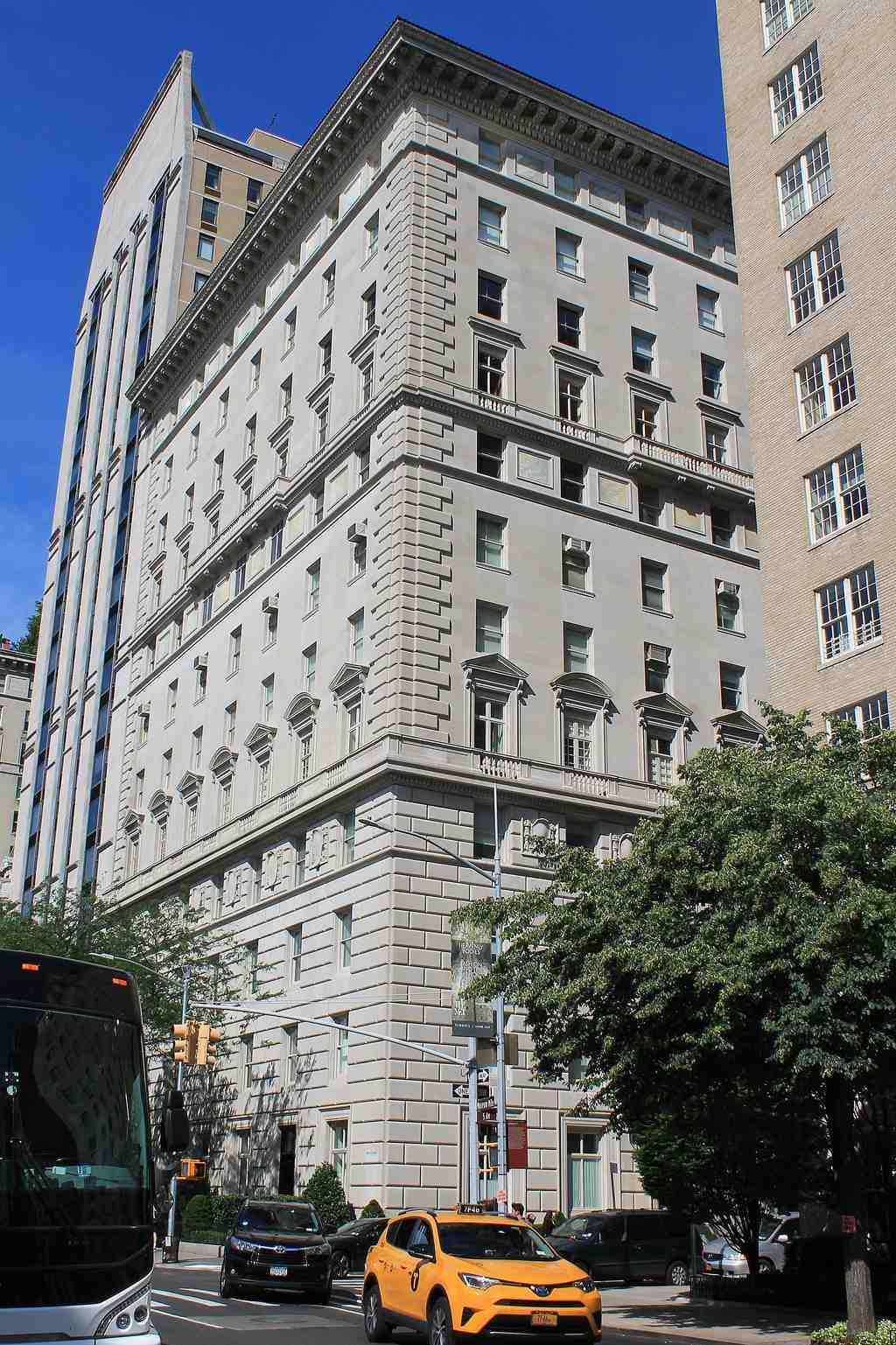
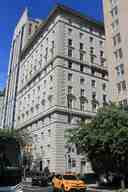
998 Fifth AvenuePhoto: Godsfriendchuck, Wikimedia Commons, CC BY-SA 4.0. Cropped & resized. Approaching on your left is a massive twelve-story rectangular fortress of pale limestone, crowned by a deeply overhanging terra cotta roof ledge.
It is nineteen ten. The very idea of New York’s elite sharing a roof with strangers is laughable. They live in private mansions. Apartments are for the nouveau riche, or worse... the middle class. But a sharp real estate lawyer named James T. Lee - who just happens to be Jacqueline Kennedy Onassis's grandfather - decides to roll the dice.
He buys a plot of land way up on Eighty-First Street. Everyone thinks it is too far north, a guaranteed disaster. Lee hires the legendary firm McKim, Mead and White and tells them to build an Italian Renaissance palace, specifically inspired by the sixteenth-century Farnese Palace in Rome. He spares absolutely no expense. Take a look at your screen. Notice those triangular pediments over the windows and the horizontal moldings sticking out from the stone? Architectural critics at the time actually hated them, calling them sliced-off Tootsie Rolls. But Lee knew his audience. He wasn't building for critics. He was building for dynasty makers.
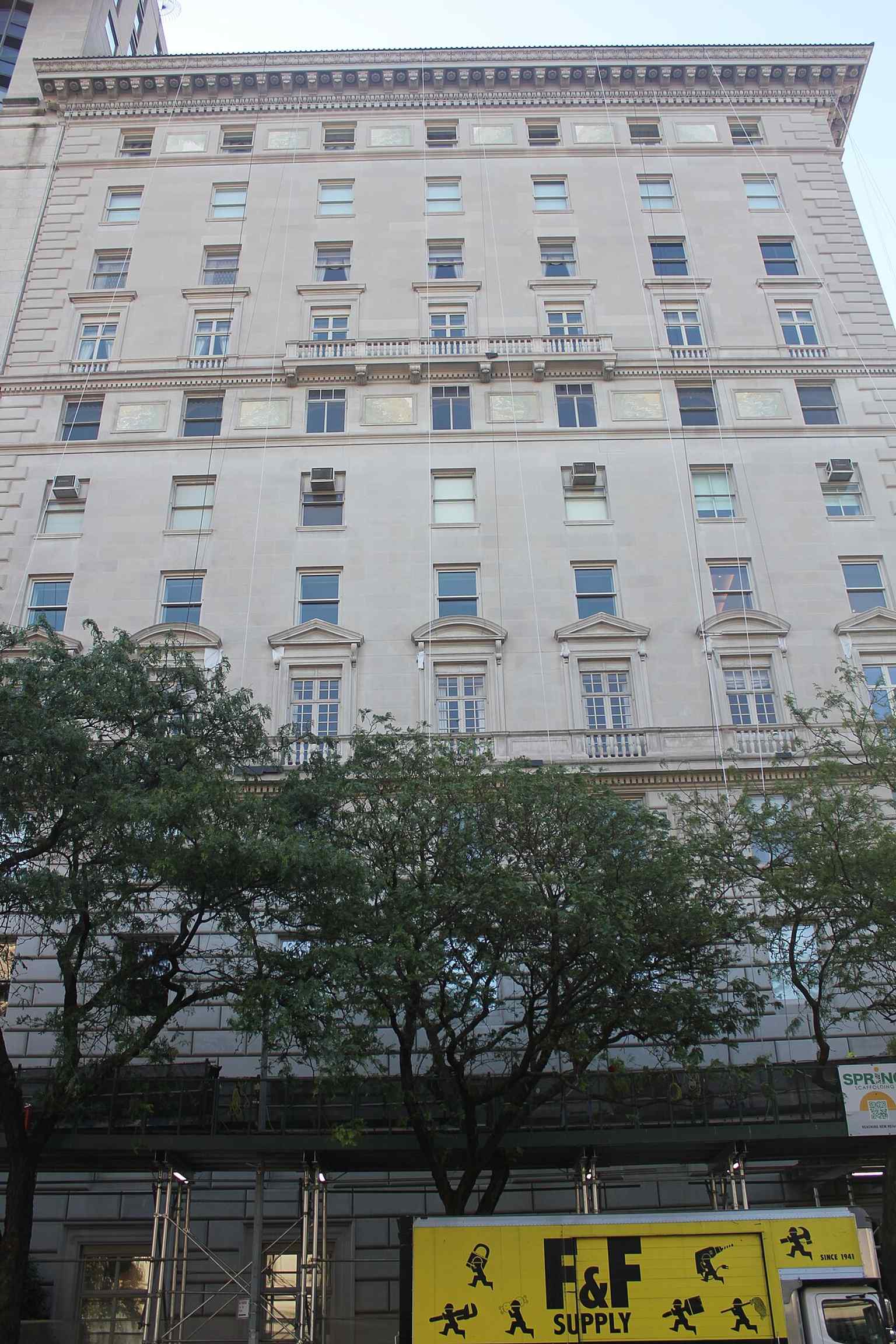
Architectural details of the facade, including window pediments and prominent horizontal moldings, showcasing the building's Italian Renaissance inspiration.Photo: Epicgenius, Wikimedia Commons, CC BY-SA 4.0. Cropped & resized. He gave them two-foot-thick fireproof walls, individual refrigerated wine cellars in the basement - an absolute technological marvel in nineteen twelve - and sprawling apartments up to eight thousand seven hundred and fifty square feet. He even faced the interior courtyards with high-grade off-white stone instead of cheap brick, just so the live-in servants would have a dignified view.
To lure the absolute top tier of society, Lee and his broker, Douglas Elliman, needed a loss leader. They offered Senator Elihu Root a heavily discounted lease of fifteen thousand dollars a year, which was ten thousand dollars less than the going rate, roughly four hundred thousand dollars today. Once a man of Root's stature moved in, the floodgates opened. Soon, titans like Murry Guggenheim were moving in and covering their ceilings in gold leaf.
This single building shifted the entire paradigm of the city. Within twenty years, over ninety percent of New York's wealthiest families had abandoned their standalone mansions for multi-story apartment buildings. In nineteen fifty-three, it became a cooperative. Today it commands prices up to forty million dollars, guarded by a notoriously ruthless co-op board that has famously rejected even billionaires looking to buy in. You can see the impeccable quality of the stonework they guard so closely on your app.
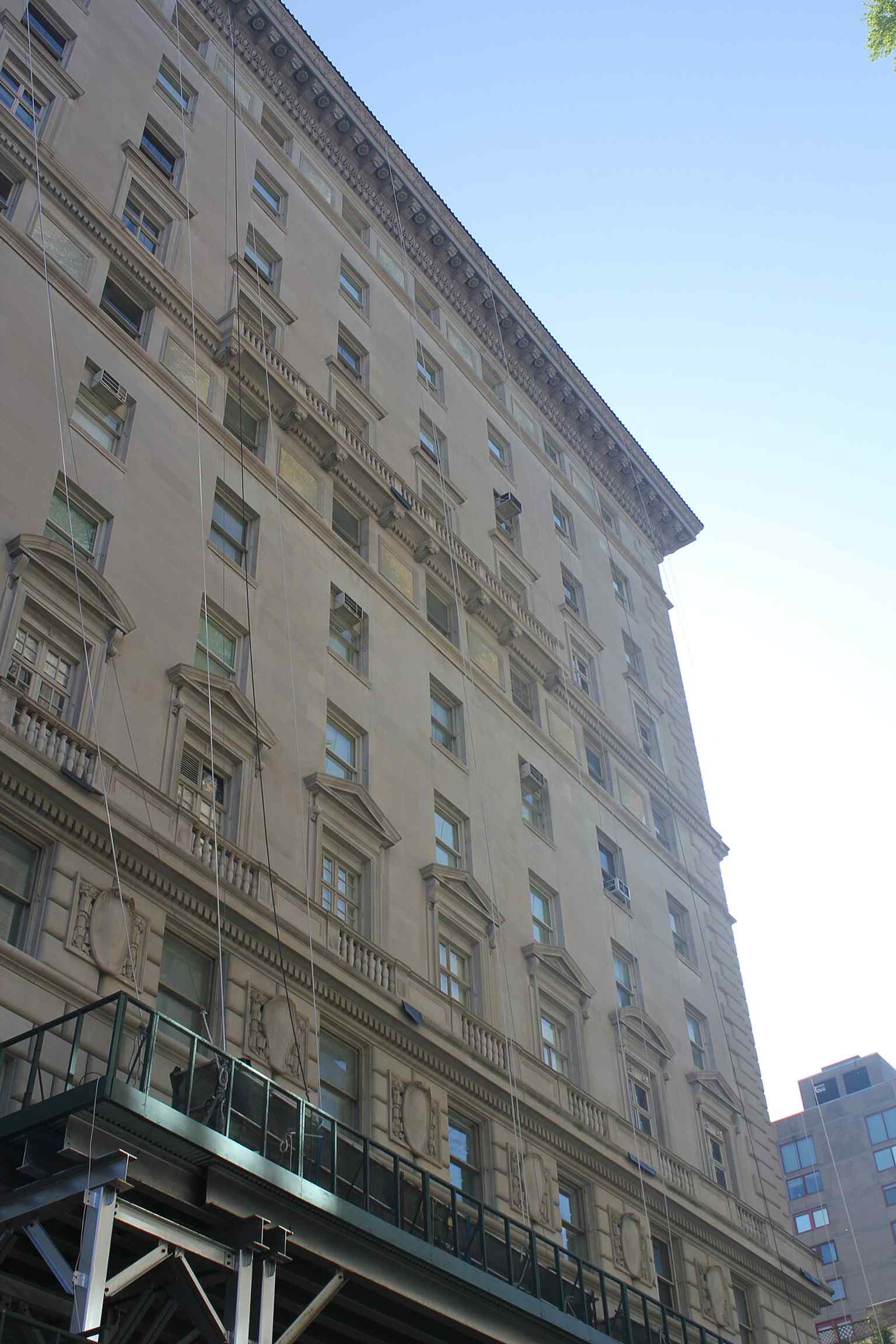
A close-up highlighting the quality of the limestone facade, reflecting the architect's 'unlimited permission' to use the best materials, including two-foot thick fireproof walls.Photo: Epicgenius, Wikimedia Commons, CC BY-SA 4.0. Cropped & resized. As we conclude our tour, look up at those stone balustrades - the carved railings running horizontally across the facade, dividing the base from the upper floors. Notice how completely it mimics the imposing, impenetrable fortress of an ancient Roman palazzo. It is the ultimate expression of an invented past, convincing the modern titans of industry to stack their mansions on top of each other, forever changing the skyline of the city.
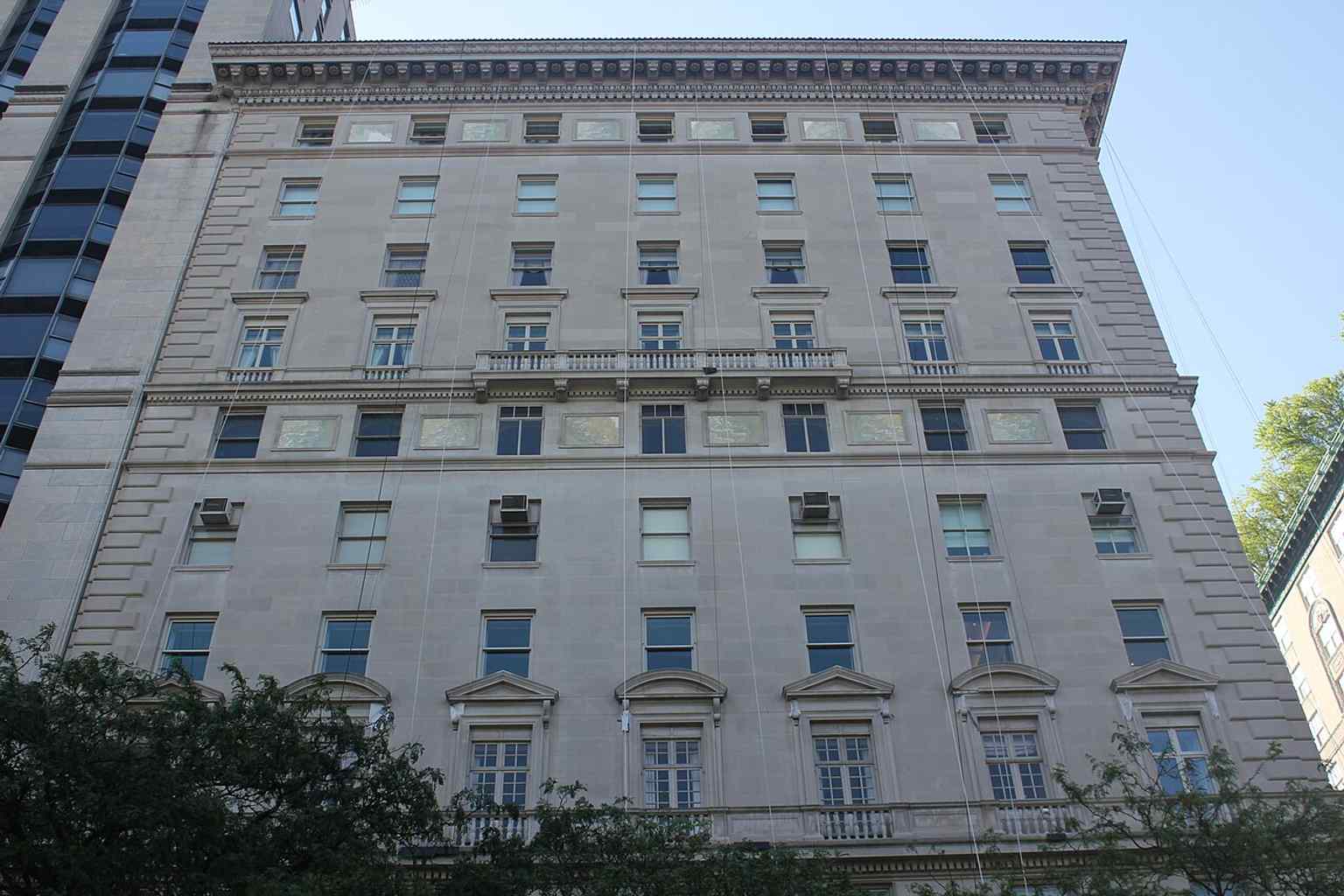
The imposing 12-story limestone facade of 998 Fifth Avenue, designed in the Italian Renaissance Palazzo-style by McKim, Mead & White, stands proudly on the Upper East Side.Photo: Epicgenius, Wikimedia Commons, CC BY-SA 4.0. Cropped & resized. 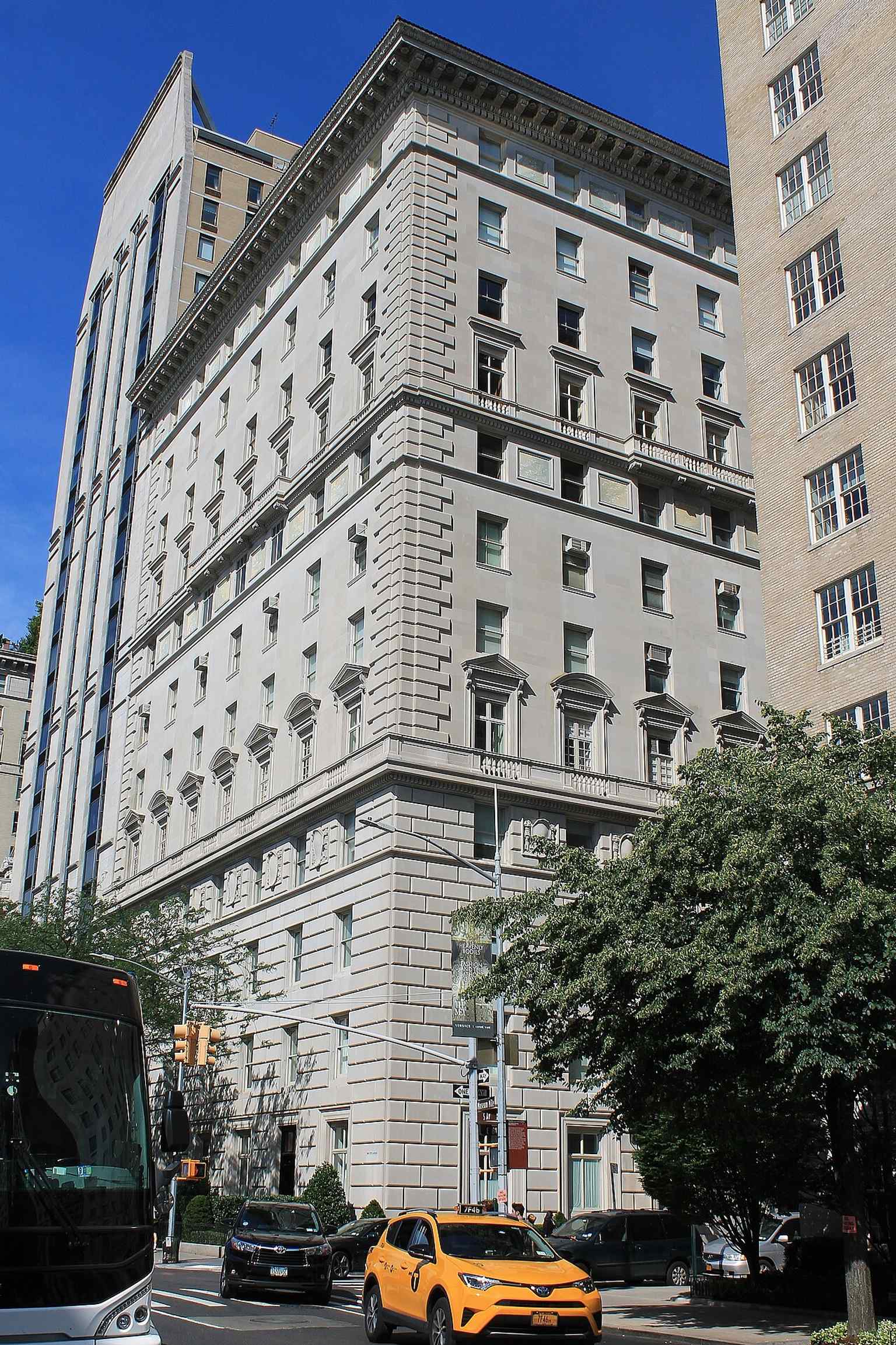
A grand view of 998 Fifth Avenue from the street, highlighting its prestigious location on Fifth Avenue, a gamble that paid off for developer James T. Lee.Photo: Epicgenius, Wikimedia Commons, CC BY-SA 4.0. Cropped & resized. 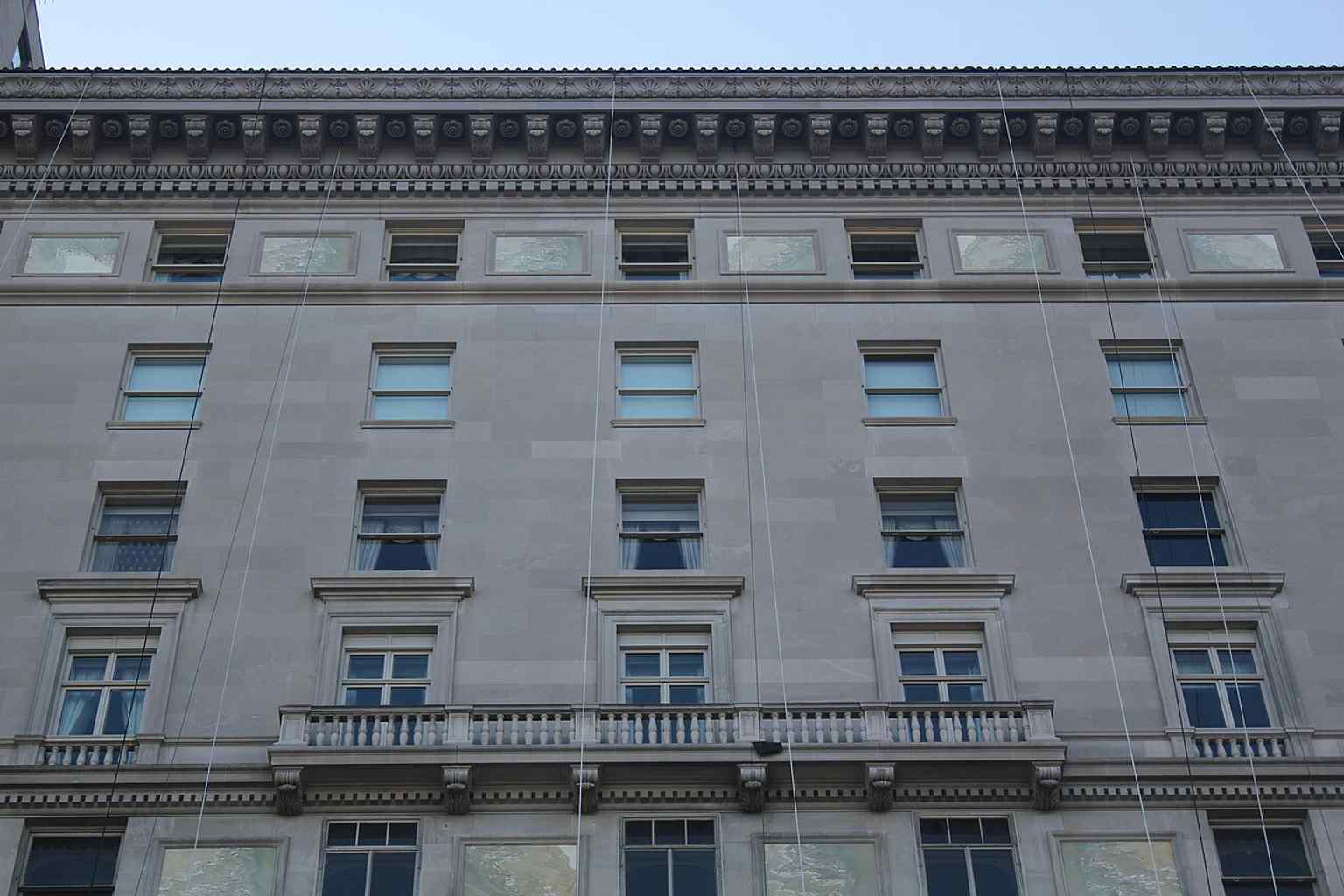
A close-up of the building's distinctive terra cotta cornice, part of the detailed design that aimed to attract New York's wealthiest residents.Photo: Epicgenius, Wikimedia Commons, CC BY-SA 4.0. Cropped & resized. 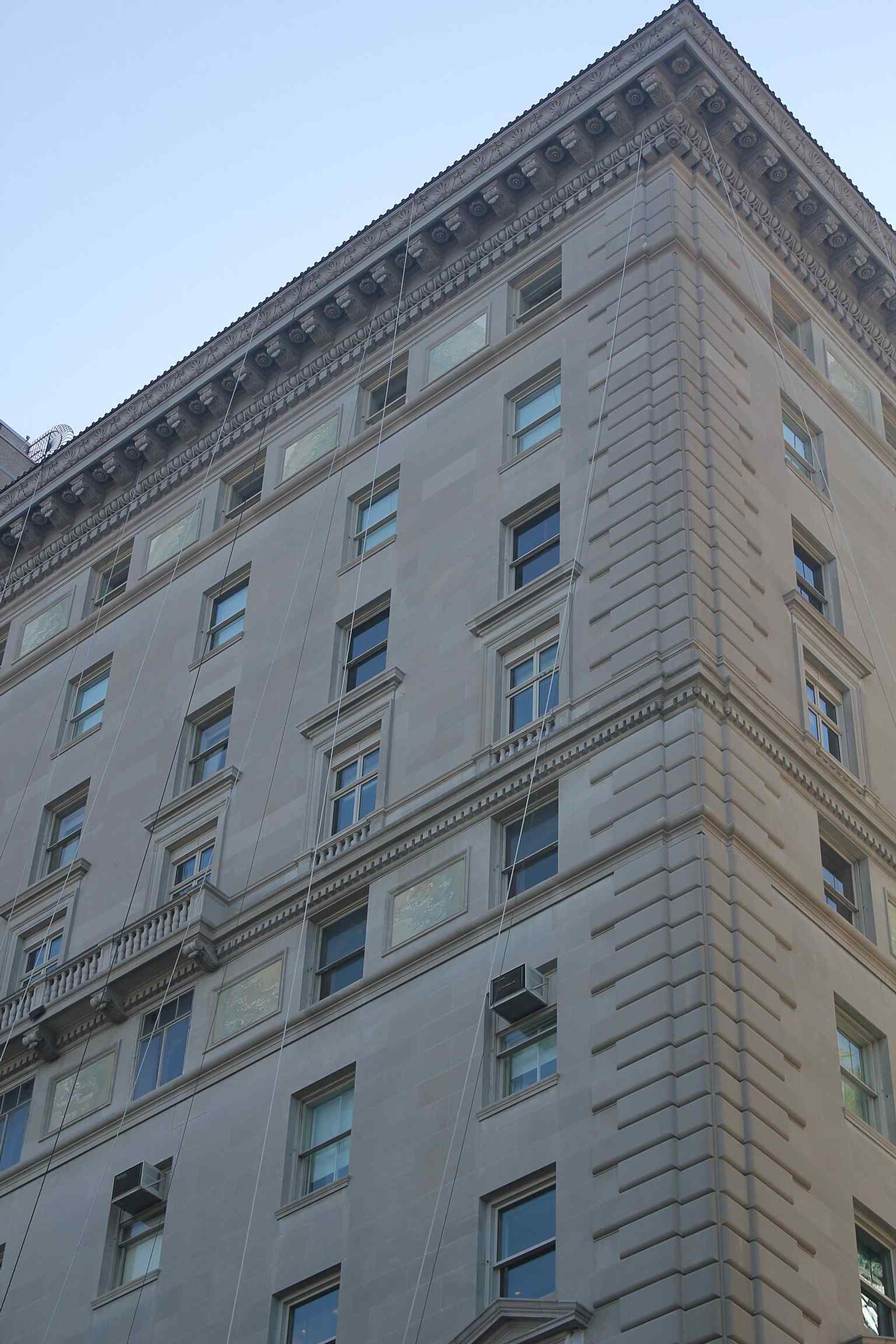
Decorative panels featuring escutcheons and light-yellow marble, which adorn the structure horizontally at four-floor intervals, adding to its luxurious aesthetic.Photo: Epicgenius, Wikimedia Commons, CC BY-SA 4.0. Cropped & resized. 
A detailed view of the building's heavily rusticated base and lower floors, a design feature reminiscent of Italian Renaissance palazzi.Photo: Epicgenius, Wikimedia Commons, CC BY-SA 4.0. Cropped & resized. 
A street-level perspective of 998 Fifth Avenue, showcasing its significant presence on the Upper East Side, a neighborhood that eventually embraced luxury apartment living.Photo: Epicgenius, Wikimedia Commons, CC BY-SA 4.0. Cropped & resized. 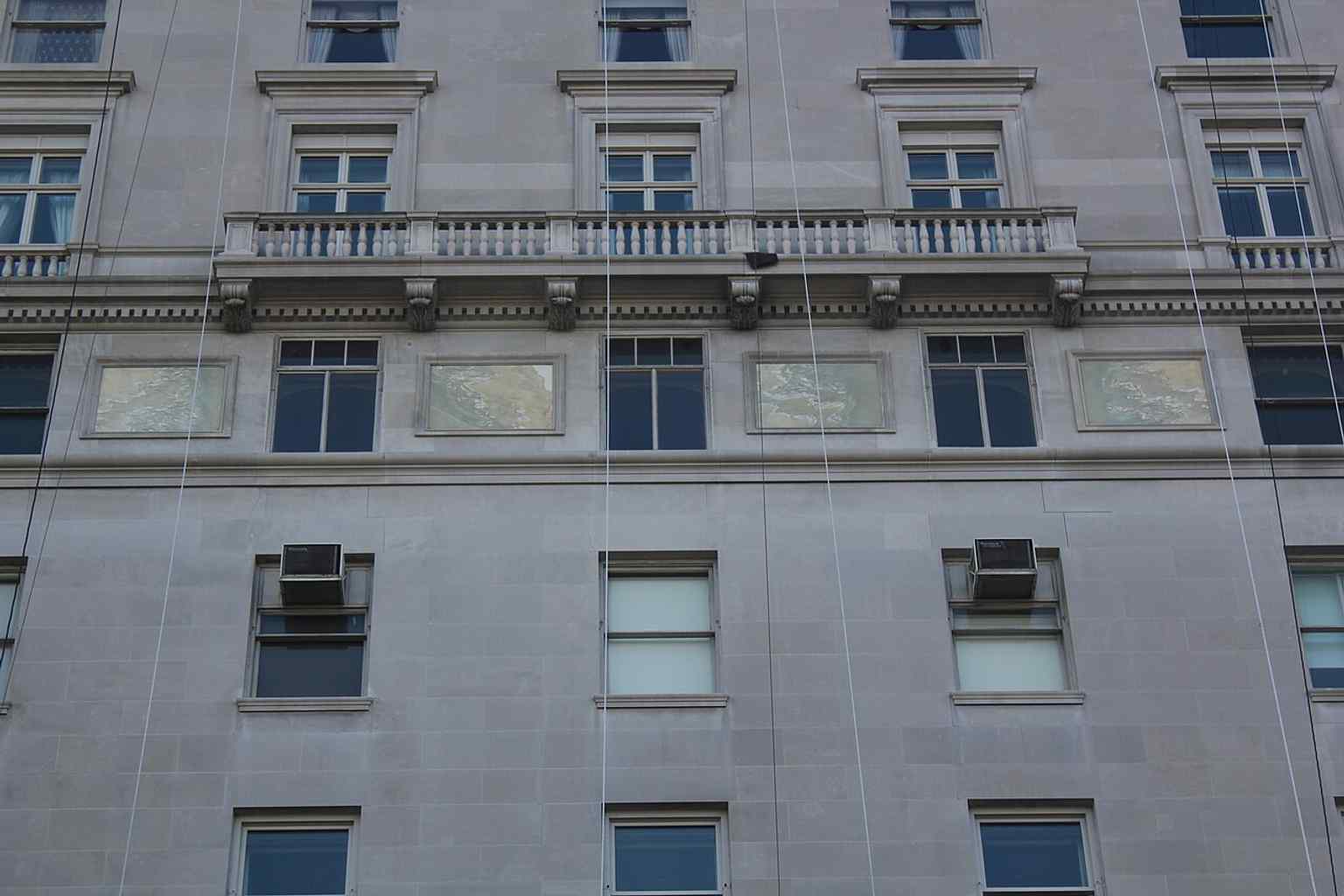
A detail of the upper facade with its pronounced horizontal moldings, which some early architectural critics famously disparaged as 'sliced-off Tootsie Rolls'.Photo: Epicgenius, Wikimedia Commons, CC BY-SA 4.0. Cropped & resized. 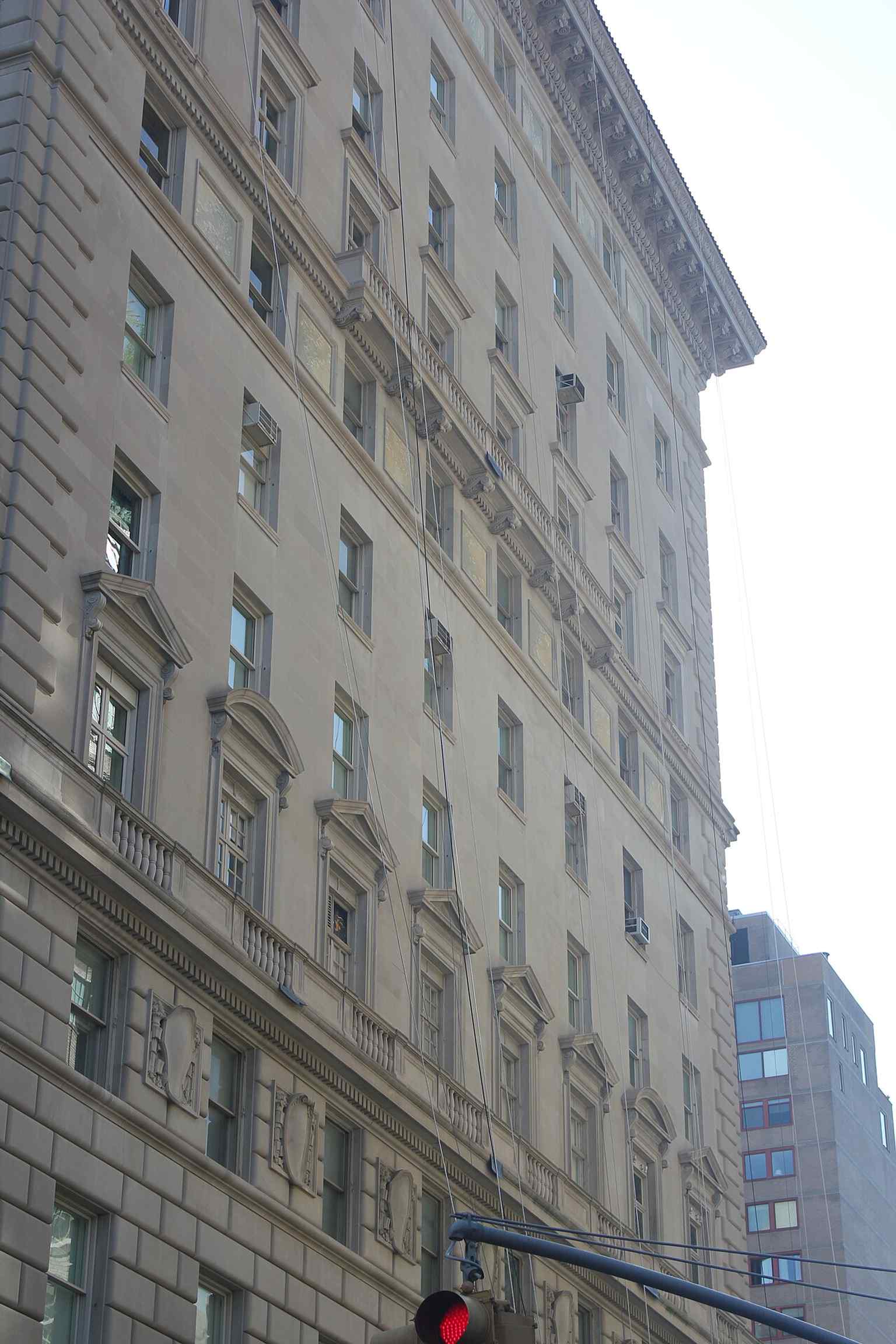
A focus on the balustrade stringcourses that visually define the divisions between the base, body, and top of the building's impressive design.Photo: Epicgenius, Wikimedia Commons, CC BY-SA 4.0. Cropped & resized. 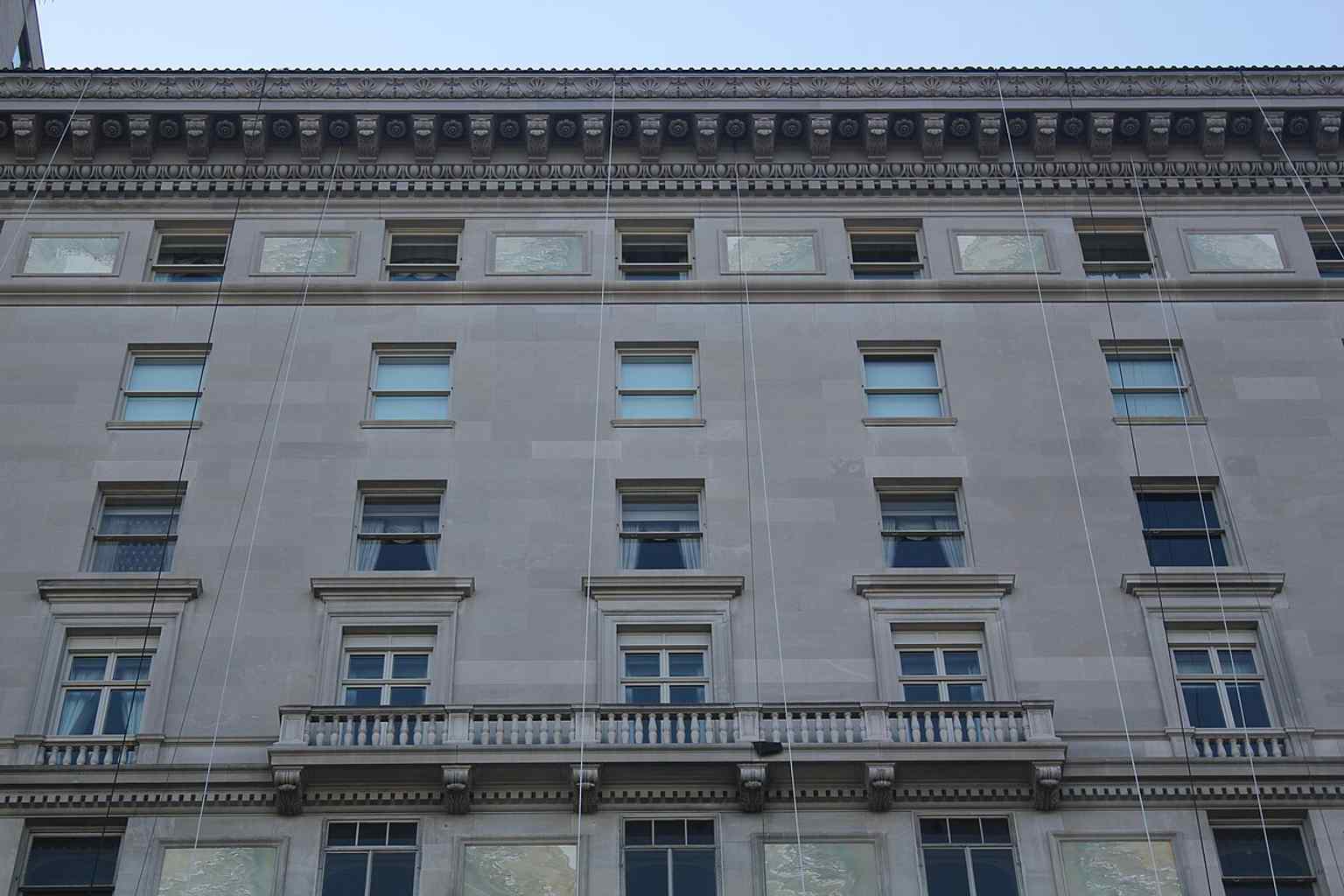
A perspective showcasing the building's impressive frontage on Fifth Avenue and its equally grand presence on the corner of East 81st Street.Photo: Epicgenius, Wikimedia Commons, CC BY-SA 4.0. Cropped & resized.

Reviews
Frequently asked questions
How do I start the tour?
After purchase, download the AudaTours app and enter your redemption code. The tour will be ready to start immediately - just tap play and follow the GPS-guided route.
Do I need internet during the tour?
No! Download the tour before you start and enjoy it fully offline. Only the chat feature requires internet. We recommend downloading on WiFi to save mobile data.
Is this a guided group tour?
No - this is a self-guided audio tour. You explore independently at your own pace, with audio narration playing through your phone. No tour guide, no group, no schedule.
How long does the tour take?
Most tours take 60–90 minutes to complete, but you control the pace entirely. Pause, skip stops, or take breaks whenever you want.
What if I can't finish the tour today?
No problem! Tours have lifetime access. Pause and resume whenever you like - tomorrow, next week, or next year. Your progress is saved.
What languages are available?
All tours are available in 50+ languages. Select your preferred language when redeeming your code. Note: language cannot be changed after tour generation.
Where do I access the tour after purchase?
Download the free AudaTours app from the App Store or Google Play. Enter your redemption code (sent via email) and the tour will appear in your library, ready to download and start.
If you don't enjoy the tour, we'll refund your purchase. Contact us at [email protected]
Checkout securely with 






.jpg)


