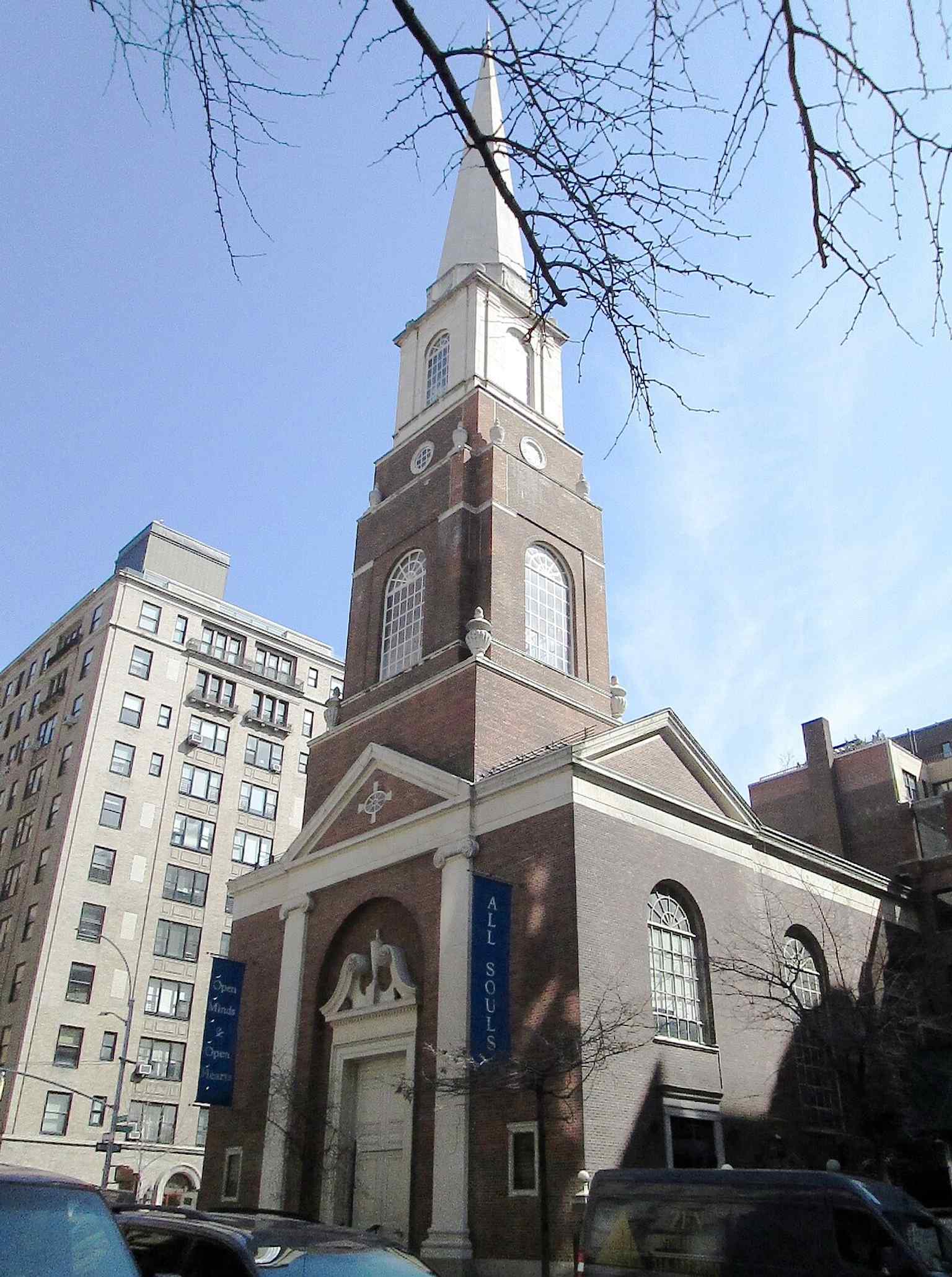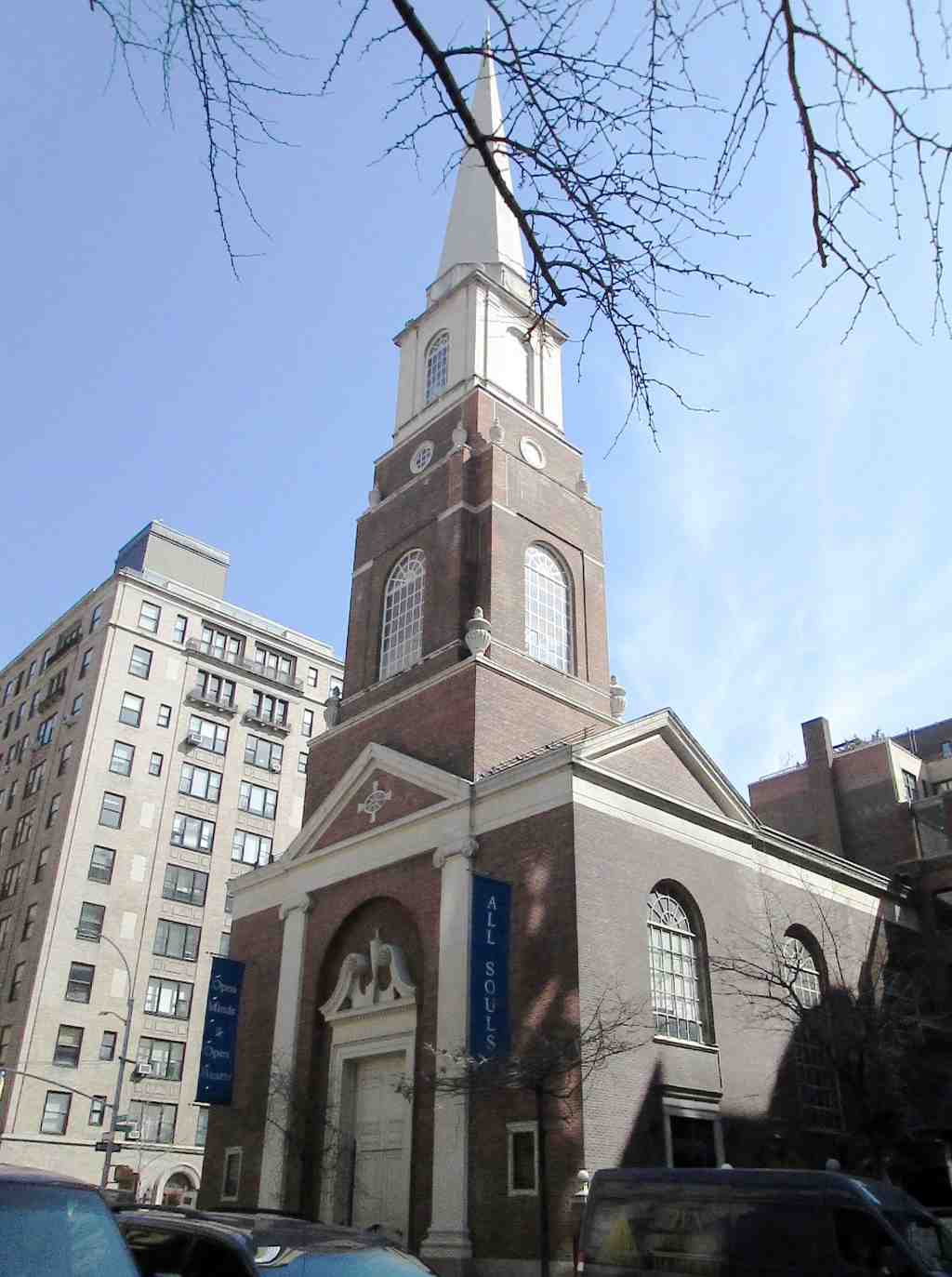
Look for the tall white octagonal steeple rising above the symmetrical red brick facade with its classical arched windows. This is the Unitarian Church of All Souls.
Today, it sits comfortably among the grand estates of the Upper East Side, projecting an image of quiet, established power. But this congregation did not begin with polished brick and towering spires. It started in a crowded downtown living room.
In eighteen nineteen, a woman named Lucy Channing Russell invited forty friends into her parlor to hear her brother speak. Her brother, William Ellery Channing, was a prominent minister visiting from Boston. He was in such poor health that he had to deliver his entire address while sitting in a chair. Yet, his reasoned approach to faith so moved the displaced New Englanders in the room that they immediately formed a Unitarian society, a movement that rejected strict dogma in favor of reason and individual ethical inquiry. Talk about modest origins.
Finding a permanent minister for this new experiment in New York proved difficult. New England ministers were comfortably settled and hesitant to risk their careers in the wild frontier of Manhattan. Finally, in eighteen twenty-one, they scored what seemed like a major victory by hiring William Ware. Ware had an impeccable pedigree. He was a brilliant writer, and his father-in-law was the famous physician who introduced the smallpox vaccine to the United States. He looked perfect on paper. There was just one slight problem. He was, by the accounts of his own parishioners, a remarkably bad preacher. In an era that demanded fiery, thundering oratory from the pulpit, Ware was entirely uninspiring.
Despite his lackluster sermons, the congregation survived and began to build its legacy. They eventually constructed a massive sanctuary in eighteen fifty-five. Pull up the historical photo on your screen to see what it looked like. They hired an eccentric architect who blew the budget by forty-eight thousand dollars-roughly one and a half million dollars today-to build a sprawling structure with alternating bands of red and white stone. New Yorkers promptly mocked it as the Holy Zebra.
They eventually outgrew the Zebra, which was later destroyed in a spectacular fire, and arrived at this spot in nineteen thirty-two. The move perfectly mirrored the northward migration of New York's elite. As families amassed staggering fortunes during the Gilded Age and the roaring nineteen twenties, they constantly reinvented themselves, building grander estates further uptown to cement their newly minted status. This elegant Colonial Revival building, an architectural style designed to evoke early American heritage, gave the congregation a permanent anchor amidst that restless pursuit of legacy.
The church is generally open from nine in the morning to five in the evening every day if you want to glimpse the interior.
When you are ready, our next destination, the East Eightieth Street Houses, is just a one-minute walk away.