
Look to your right and you will see a top-heavy, inverted pyramid constructed of dark grey stone, punctuated by asymmetrical, protruding trapezoidal windows. When it debuted in nineteen sixty-six, this brutalist structure... brutalism being an architectural movement famous for raw, imposing concrete and massive, blocky geometric forms... severely shocked the neighborhood. New York Times critic Ada Louise Huxtable called it harshly handsome, noting that an appreciation for its mass grows on you slowly, like a taste for olives or warm beer. Other critics were less kind, calling it an oppressive bunker or a giant one-eyed step pyramid looming over the polite traditional townhouses. The architect, Marcel Breuer, defended his work as an architecture of resistance. He wanted to seal visitors away from the commercial vitality of the street.
Take a look at the first image in your app to see Breuer's intended effect on the fourth floor. He wanted a quiet, monastic interior designed to focus your attention entirely on the art.
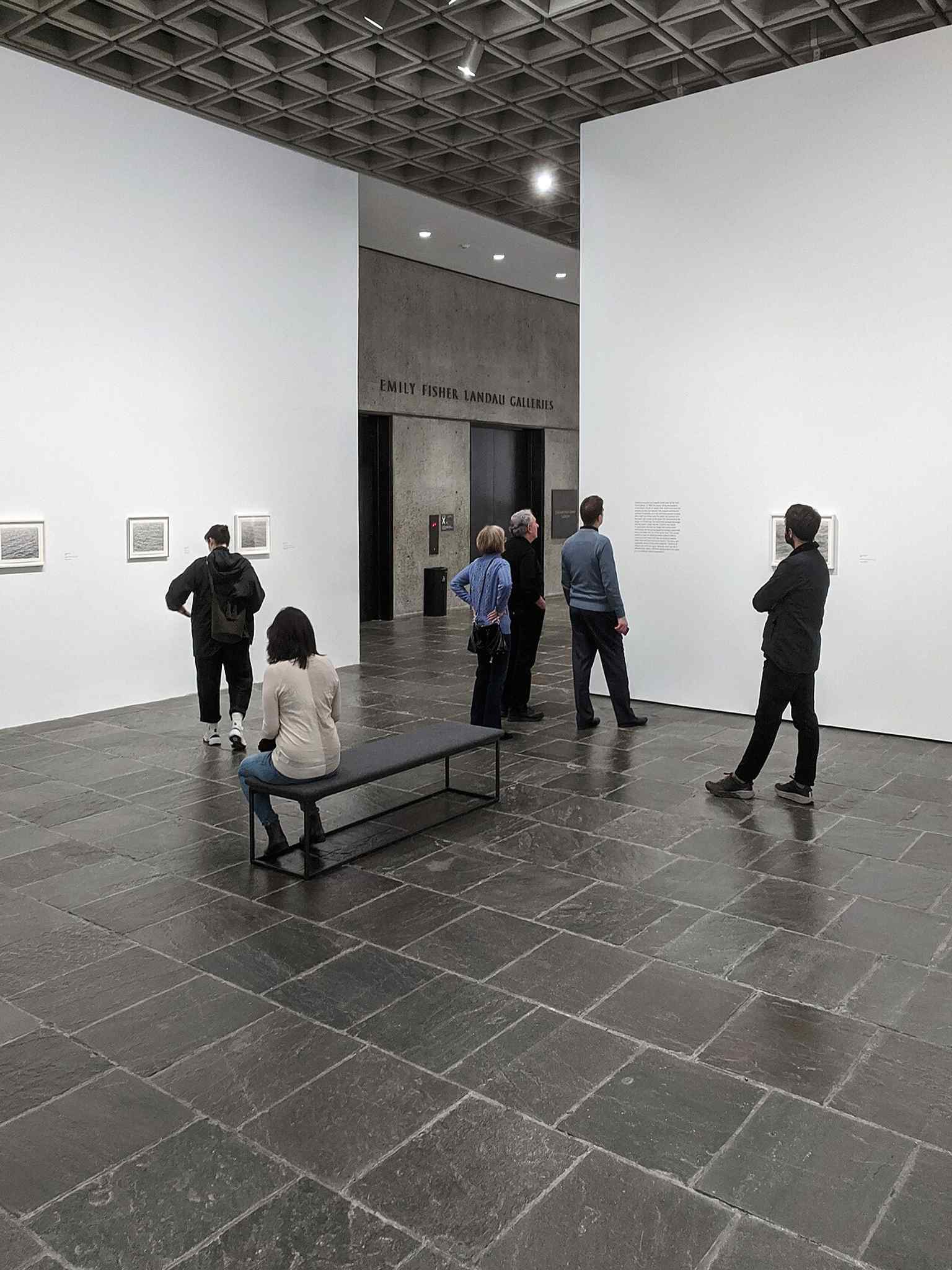
Naturally, in this neighborhood, even a concrete bunker meant to resist commerce eventually becomes a high-priced asset. The Whitney Museum originally commissioned the building. When they finally vacated, the Metropolitan Museum of Art took over in two thousand and sixteen. Before moving in, they spent a fortune scraping decades of institutional detritus from the site... including wads of chewing gum stuck into the textured walls... and waxing the bluestone floors to perfectly restore Breuer's somber aesthetic.
They branded it the Met Breuer, a grand expansion of their modern art empire. They hosted brilliant, sometimes baffling shows. One inaugural exhibition focused on unfinished art, featuring an eighteenth-century portrait of a Spanish noblewoman with a hauntingly blank white space where her face and lapdog should be. Another, a triumphant retrospective by Kerry James Marshall, paired his large-scale paintings of Black life with Old Master works to challenge the historical exclusion of Black figures from Western art history.
But prestige is expensive. The seventeen million dollar annual operating cost helped blow a forty million dollar hole in the Met's budget, forcing the museum's director, Thomas Campbell, to resign. After just four years, the Met retreated. The final exhibit in two thousand and twenty featured Gerhard Richter's powerful abstract paintings based on photographs from the Auschwitz-Birkenau concentration camp. Due to a global pandemic, the public only saw them for nine days.
The Frick Collection then leased the space temporarily to house their masterworks during a renovation. Finally, in two thousand and twenty-three, the Whitney sold the building for roughly one hundred million dollars to Sotheby's, the international auction house. After nearly sixty years as a public sanctuary for art, the structure was neatly converted into a corporate flagship for the global art market. A fitting pivot for a district defined by the constant acquisition and repackaging of cultural capital.
Art and money certainly build impressive monuments here, but they are not the only forces shaping the skyline. Let us pivot to the religious institutions of the neighborhood and their origins. Keep walking. Temple Israel of the City of New York is just a three minute walk away.





