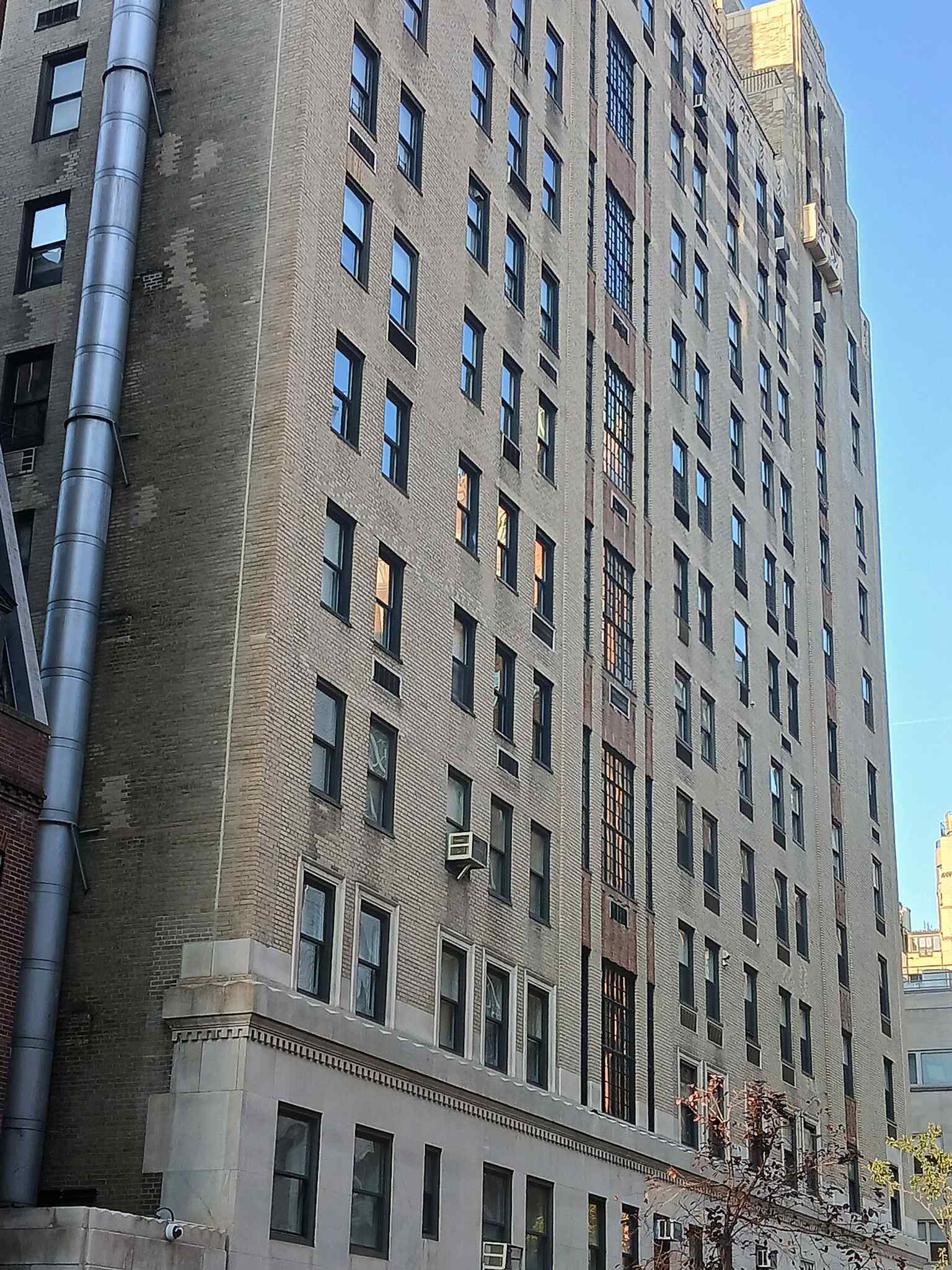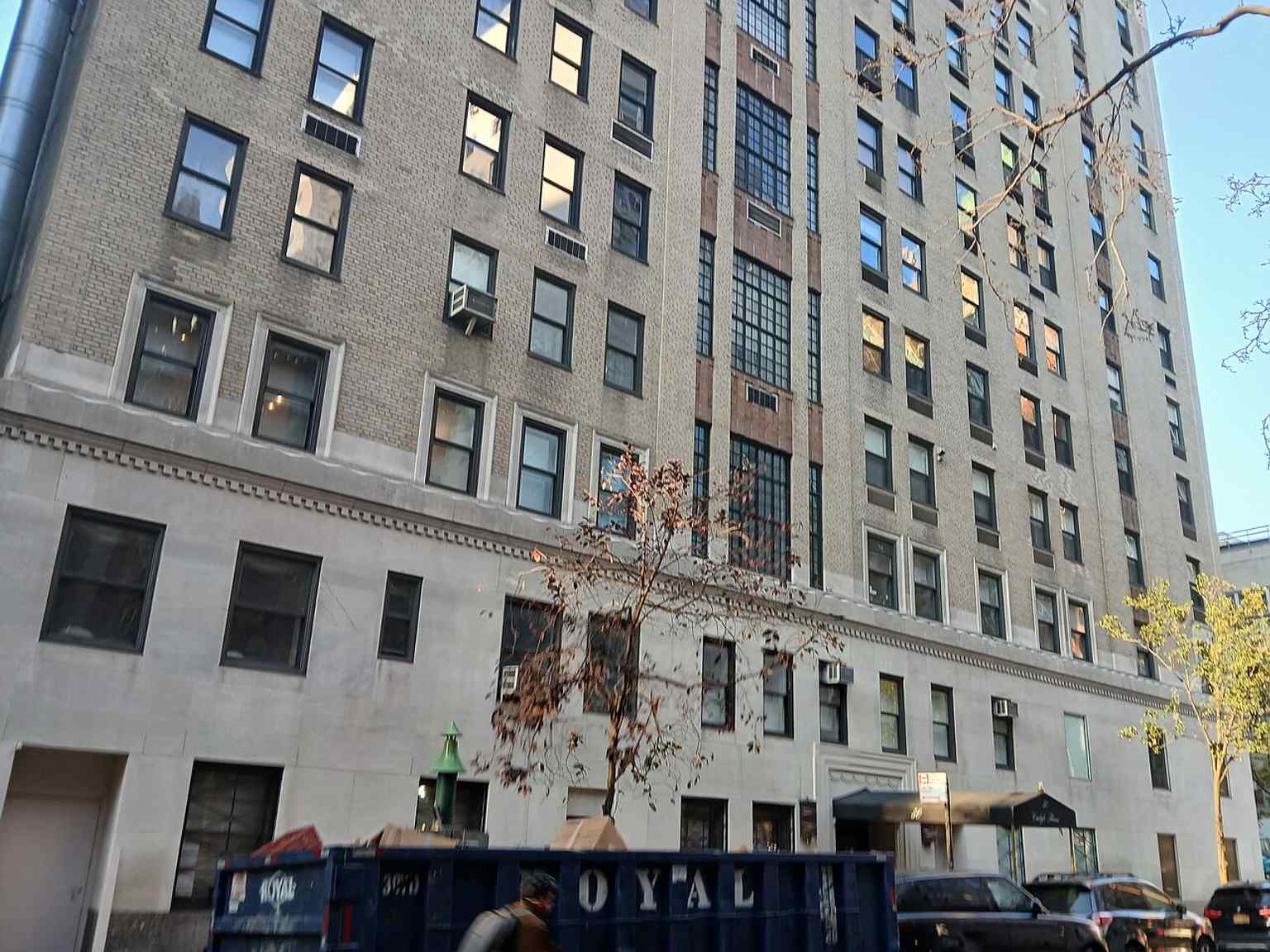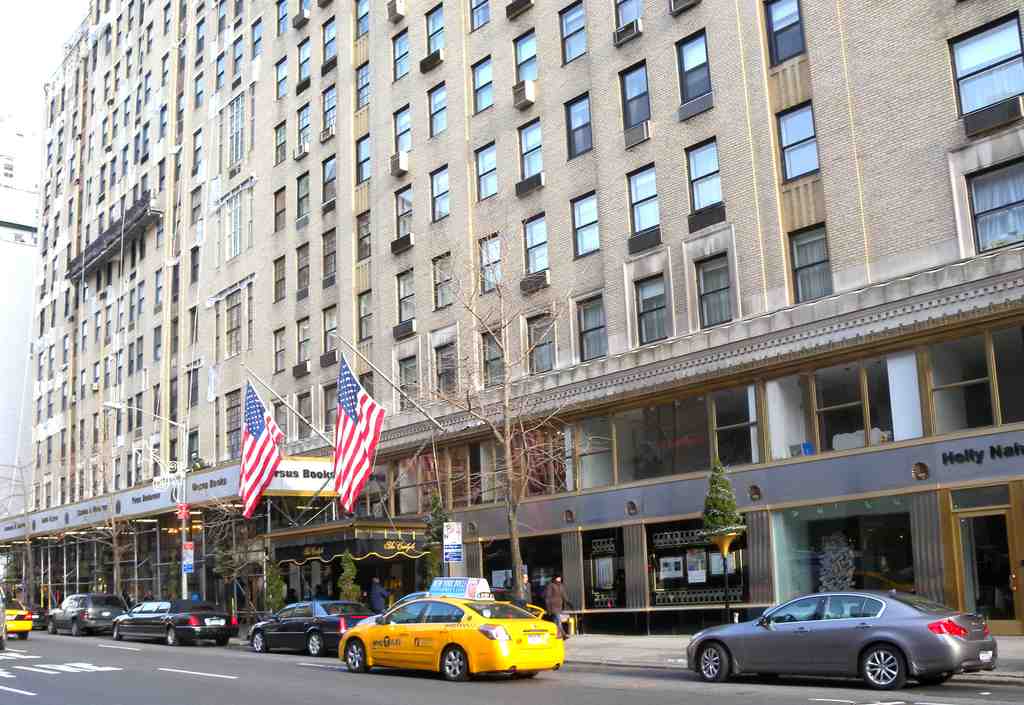
Look to your left to see the Carlyle Hotel, an imposing rectangular structure featuring a smooth pale stone base that transitions into gray brick on the upper stories, anchored by a prominent dark entrance canopy with gold lettering.
This building is a monument to a spectacular, heartbreaking gamble. Back in nineteen twenty-eight, a Polish-born banker named Moses Ginsberg had a vision. He wanted to build an apartment hotel that fused European sophistication with the booming American appetite for skyscrapers. He knew the economic shadows were gathering, but he pushed forward anyway, pouring millions of his own money into erecting this massive forty-story Art Deco tower. He even let his daughter name it after the Scottish essayist Thomas Carlyle.
The hotel opened its doors in November nineteen thirty, charging up to one million dollars a year for an apartment in today's money. But his timing was tragically flawless. The Great Depression had just hit. Ginsberg faced complete financial ruin. By nineteen thirty-two, he had lost his masterpiece to foreclosure.
Think about pouring your entire fortune into a soaring forty-story monument to luxury, only to have it ripped from your hands within two years. How do you stomach a failure of that magnitude?
Yet, the building survived its creator's downfall. The new owners smartly shifted the hotel's strategy. Instead of flashy glitz, they cultivated a quiet, almost domestic atmosphere. It became a fortress of absolute discretion. Take a look at the historic comparison on your screen to see how the hotel has maintained its dignified presence on this corner over the decades.
Eventually, the Carlyle evolved into the ultimate hideout for the global elite. It earned the nickname the Palace of Secrets. The staff culture strictly forbade gossiping. They say John F. Kennedy used a network of underground tunnels to sneak Marilyn Monroe into his suite. You can check your screen to see a rare shot of Kennedy in his presidential suite, effectively treating the Carlyle as the White House of Manhattan. From Princess Diana to George Clooney, the world's most famous people have treated this place as a sanctuary because the staff treats them like ordinary family members, completely shielding them from the press.
Ginsberg lost his shirt, but his dream of a lasting legacy was realized by the very people who took his building away. The upper crust of this city is always finding new ways to repackage failure into enduring prestige.
Now it is time to move on from commercial triumphs and look at how this neighborhood approaches high art. Our next stop is the Met Breuer, just a two-minute walk away. By the way, the Carlyle Hotel operates twenty-four hours a day, seven days a week, should you ever need a discreet place to hide.