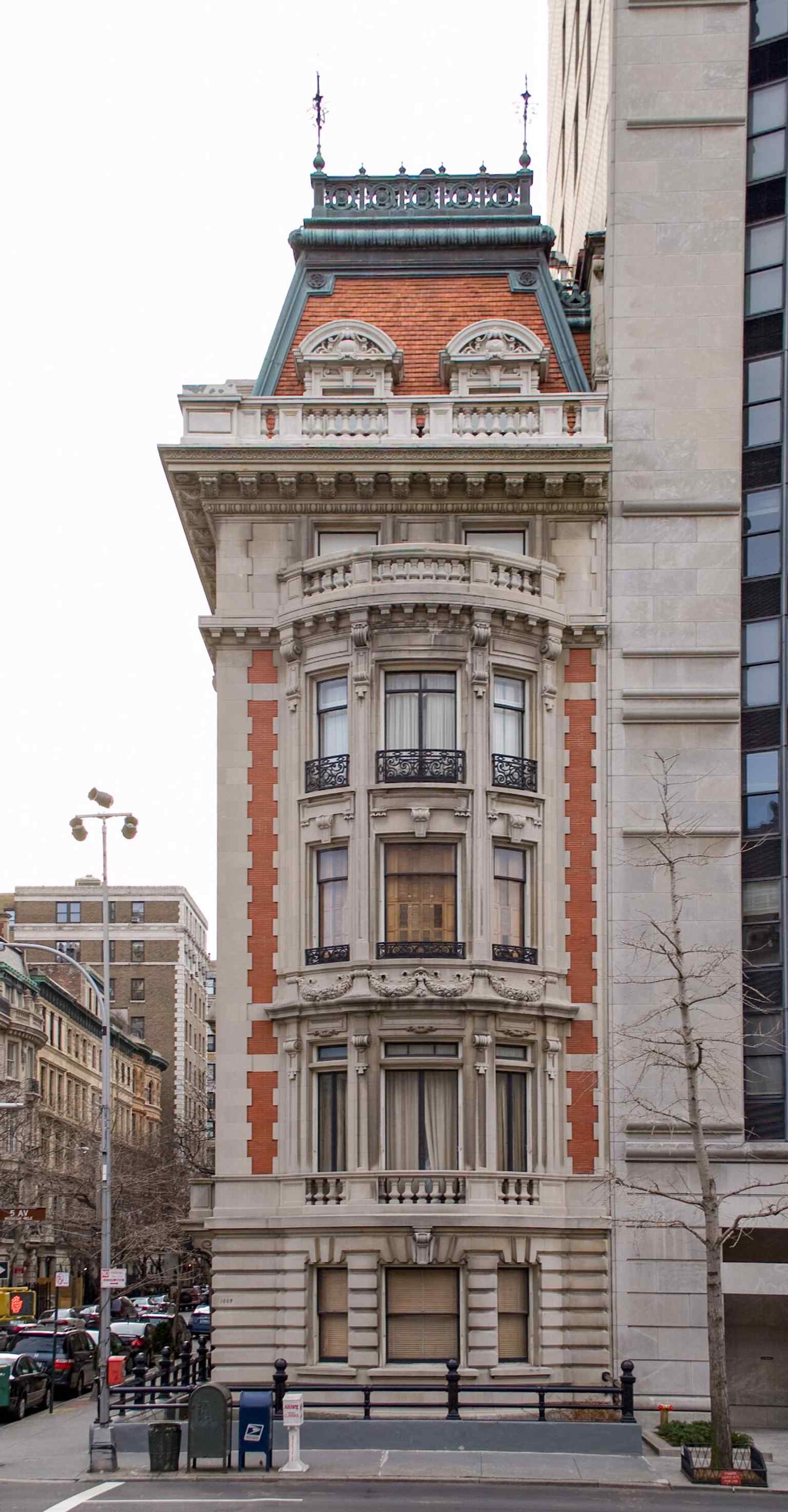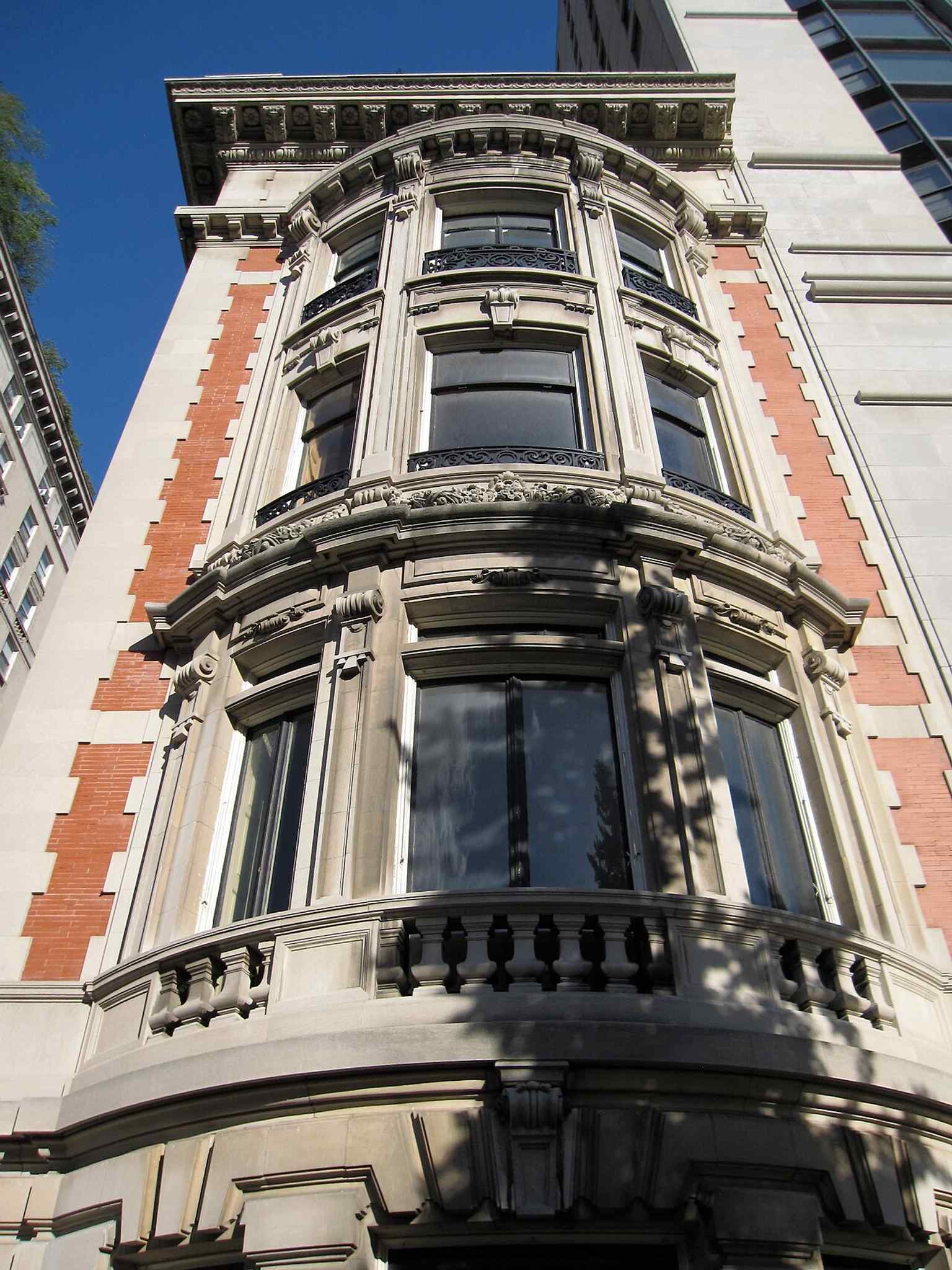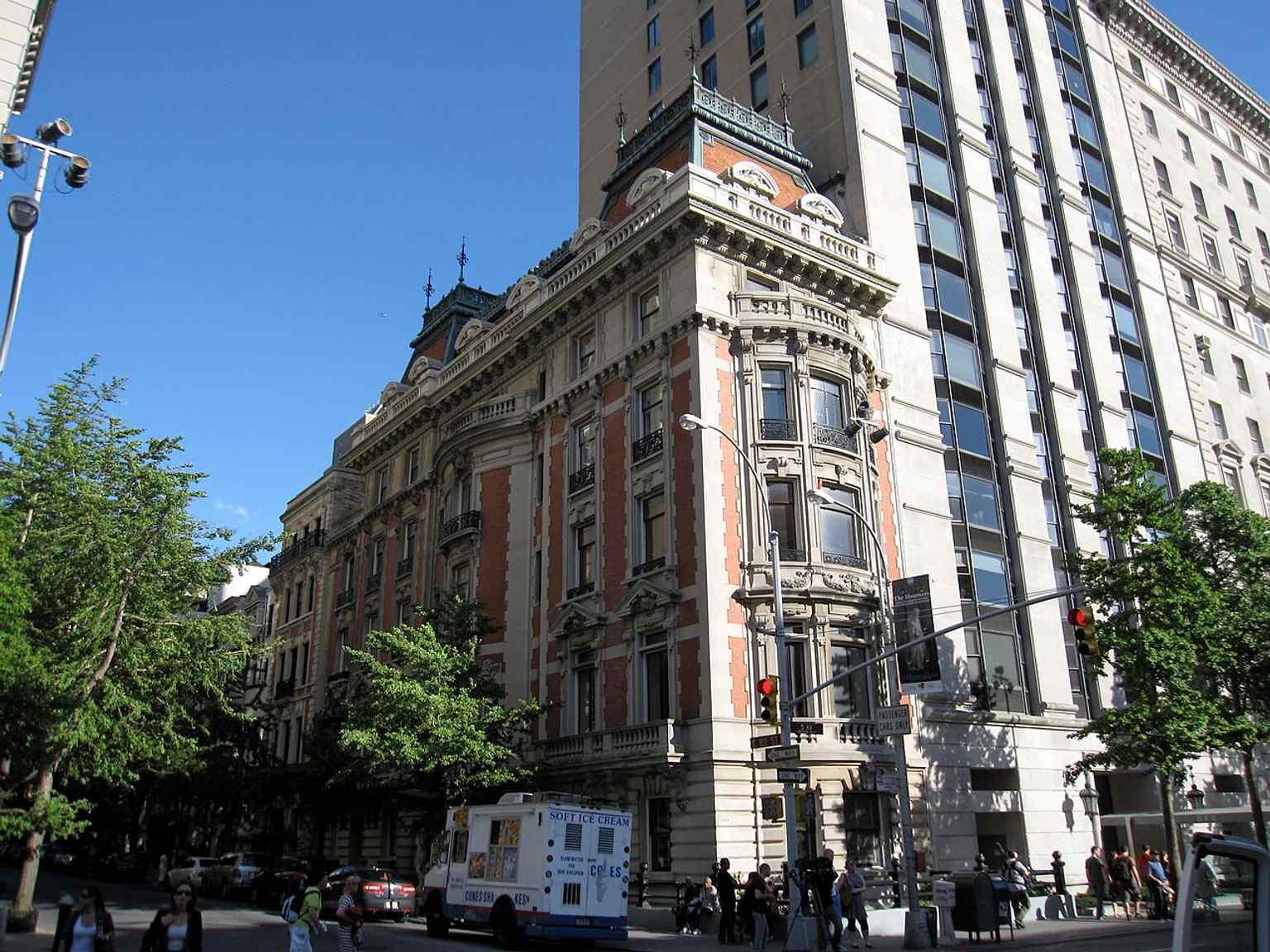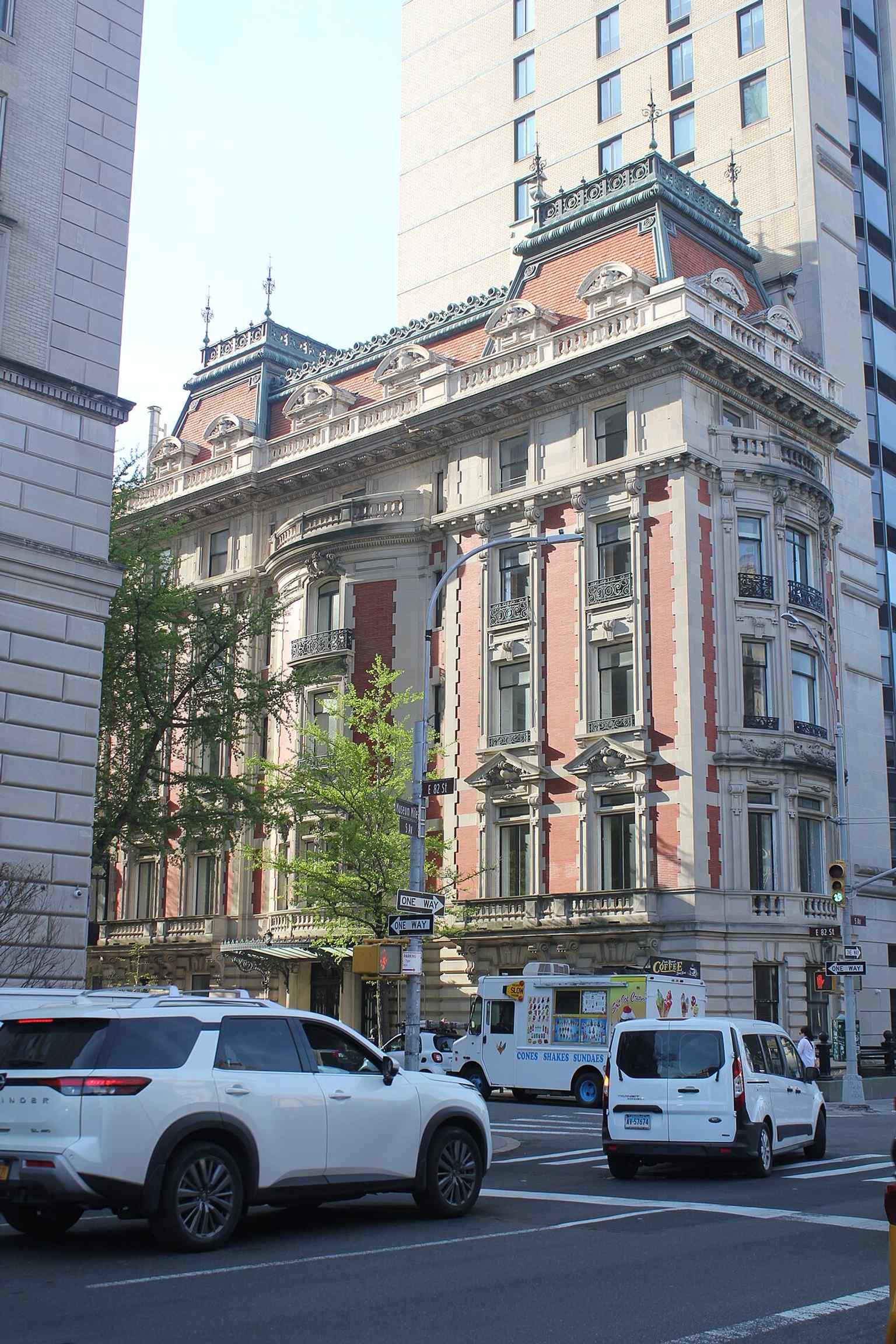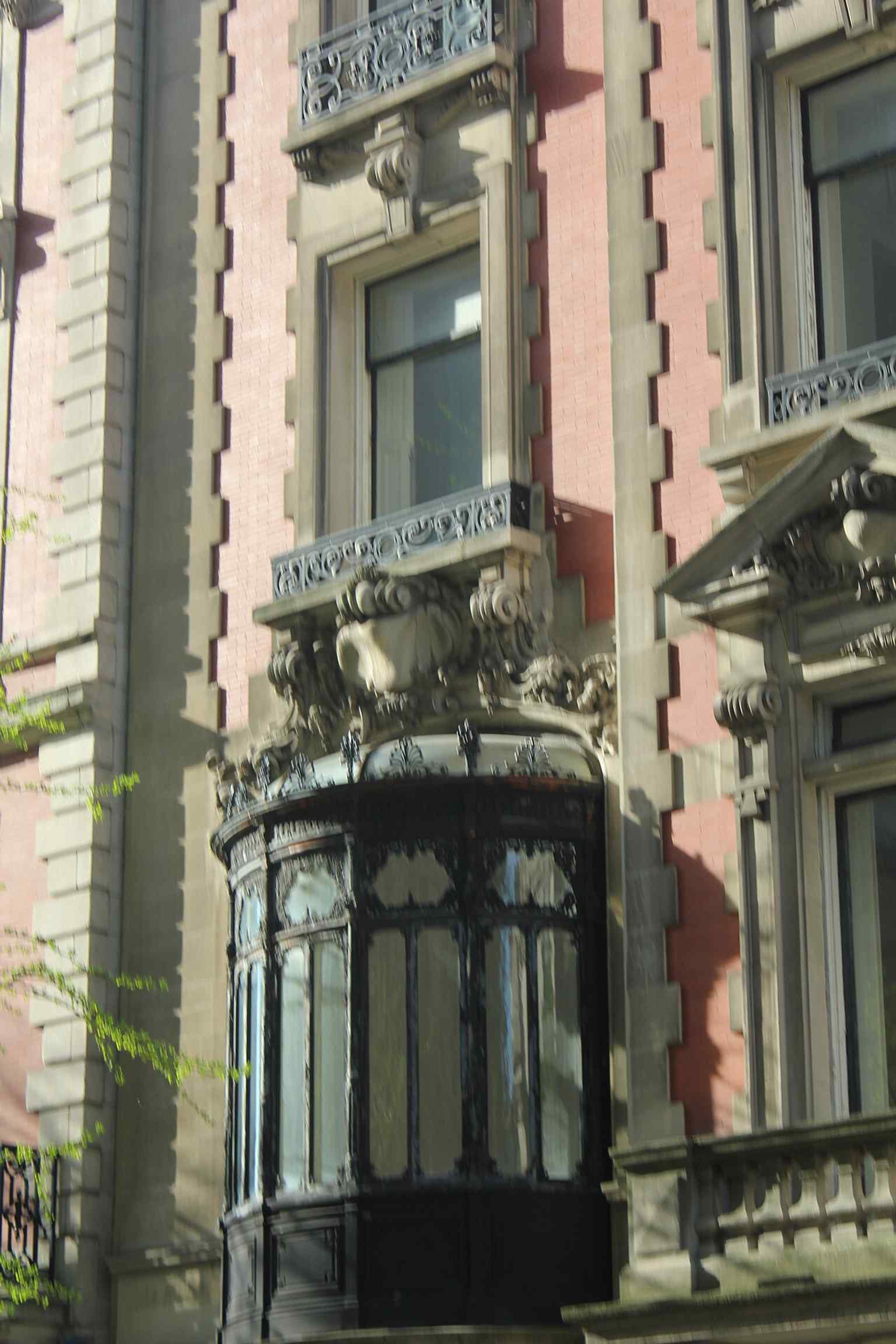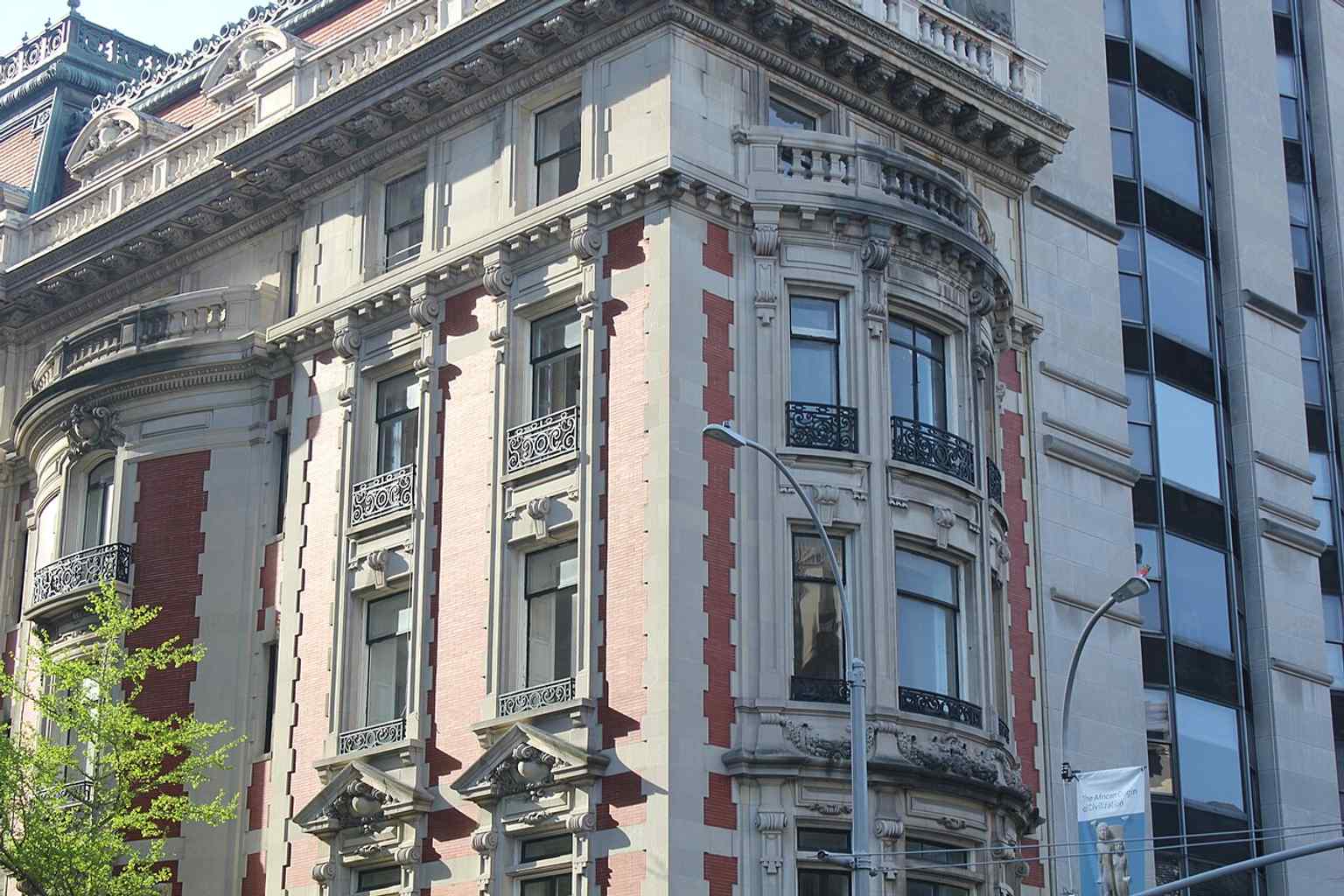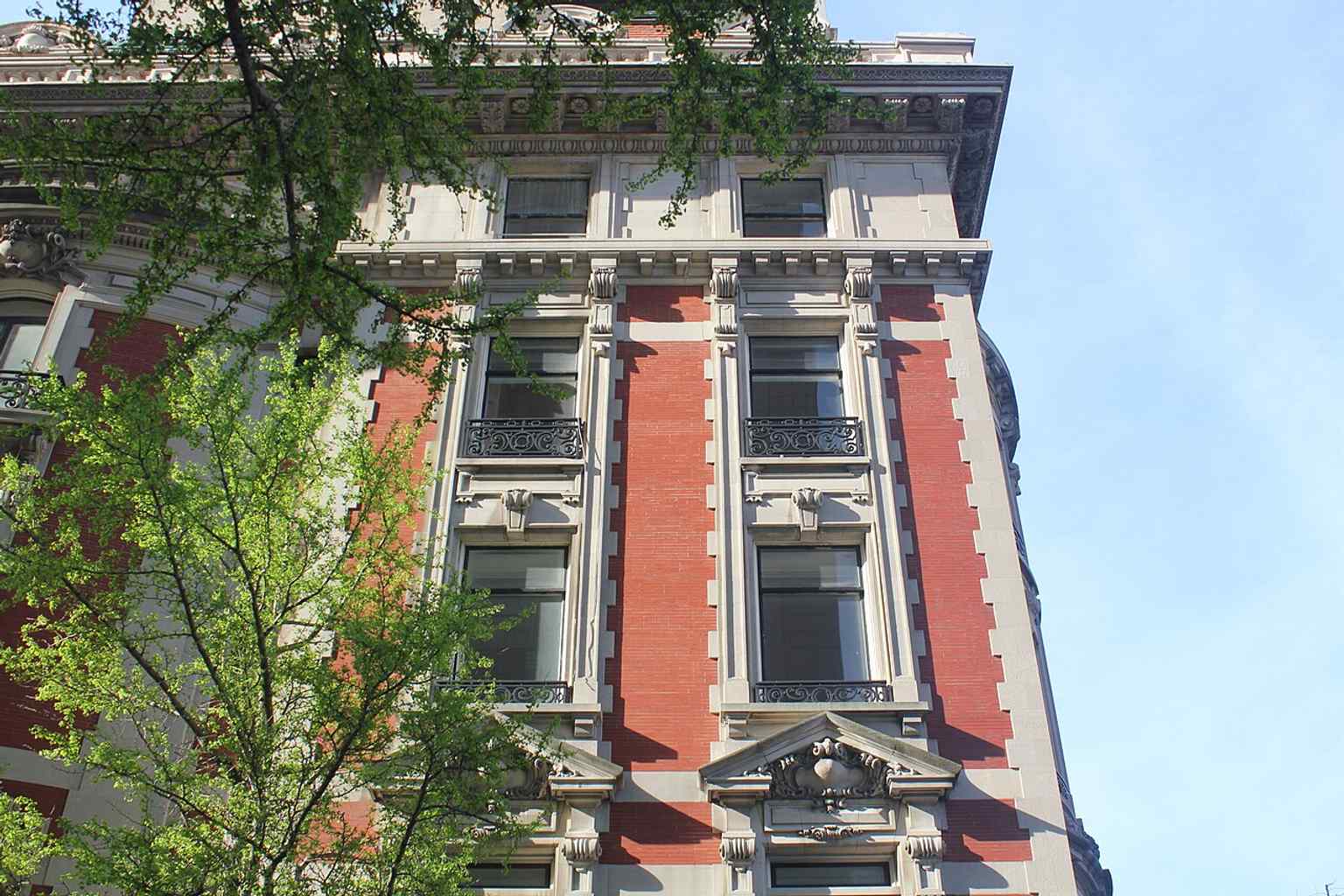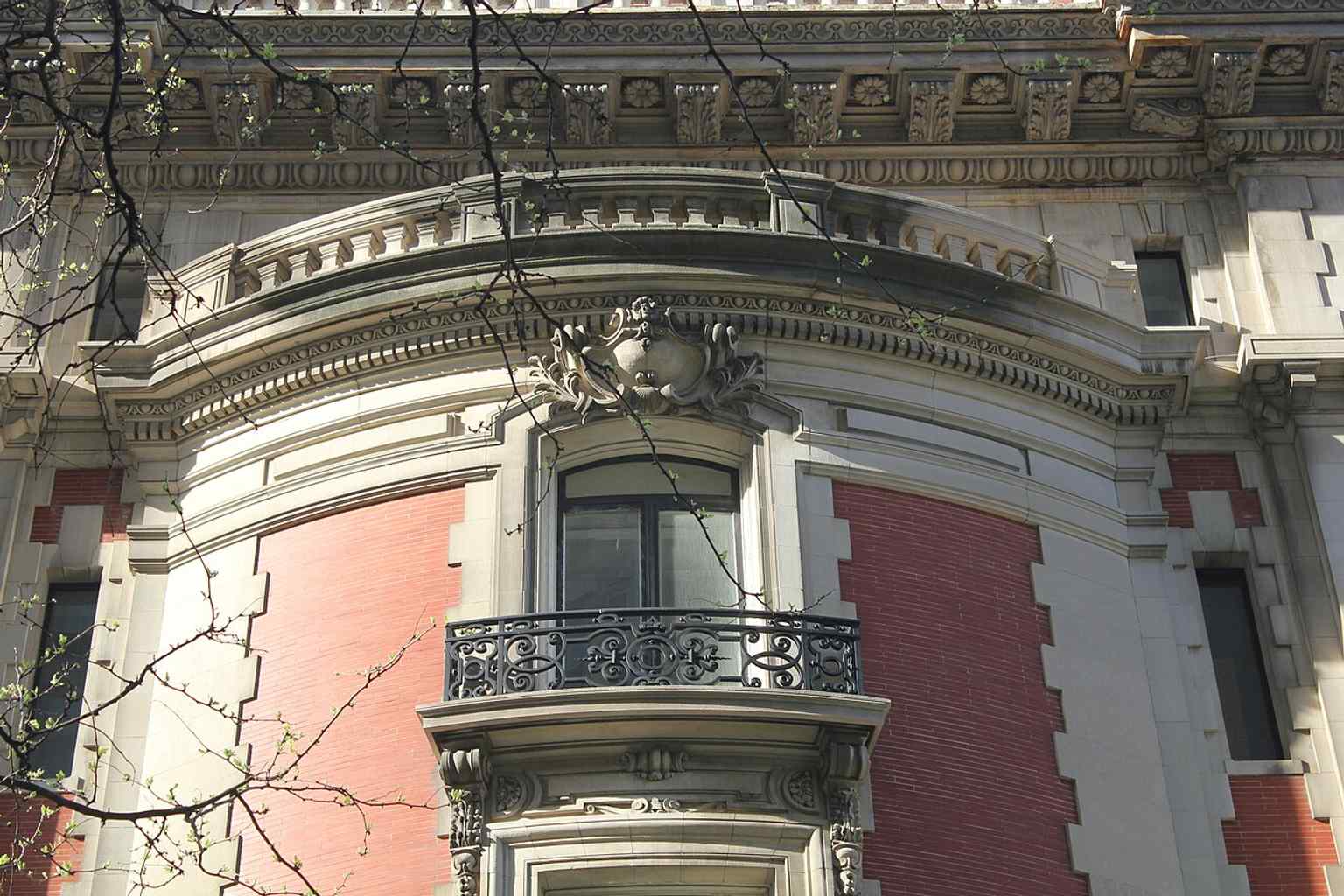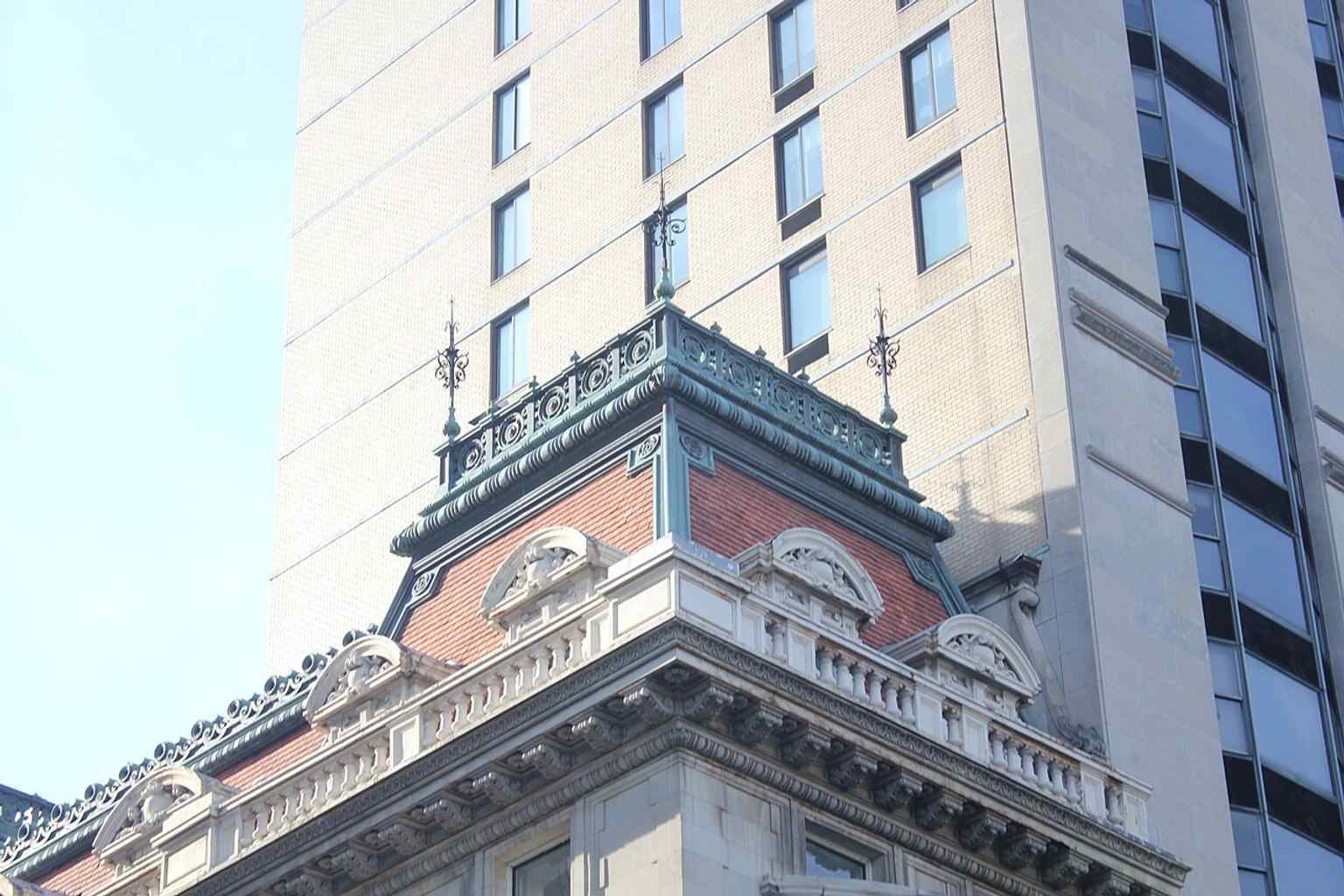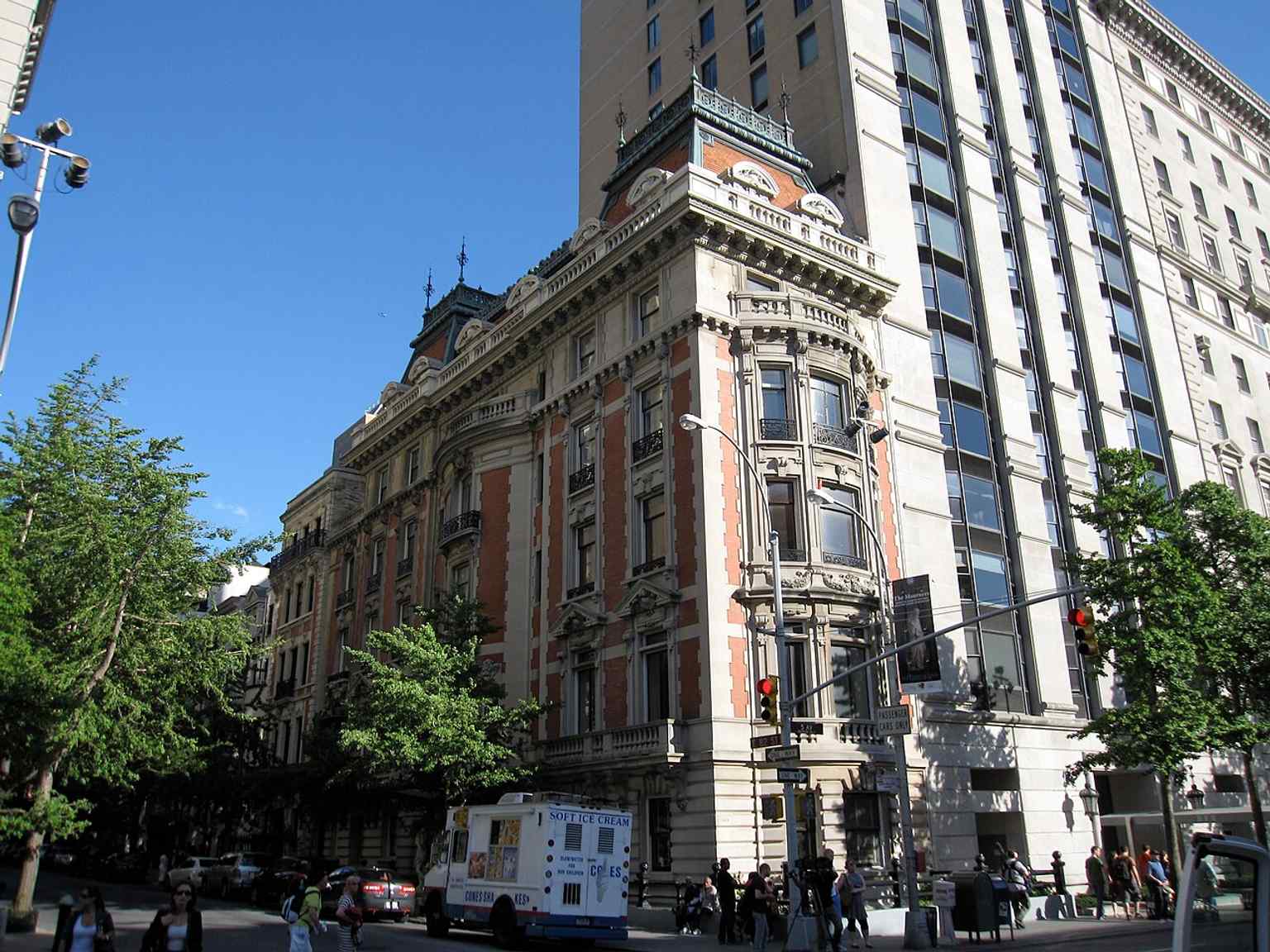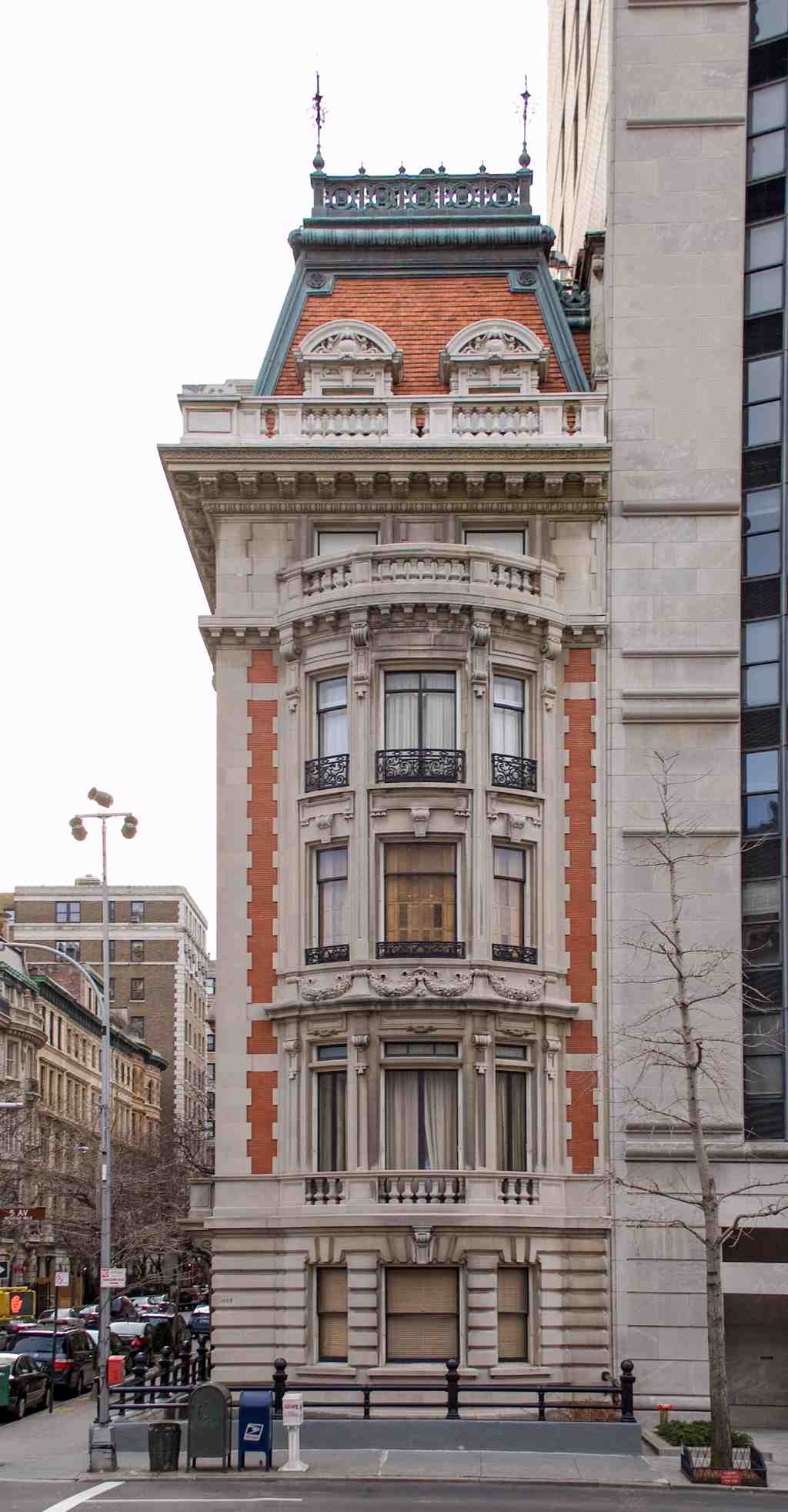
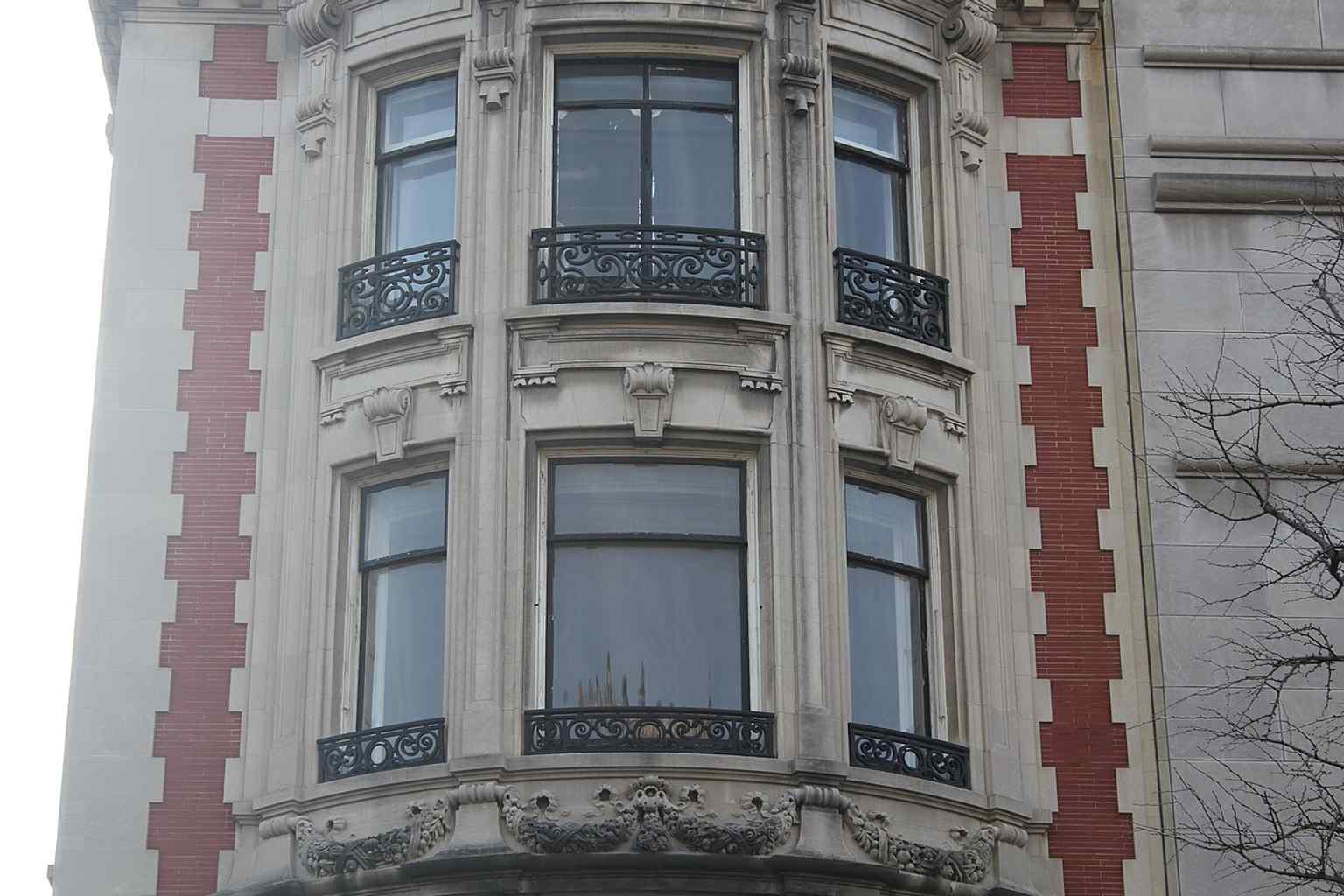
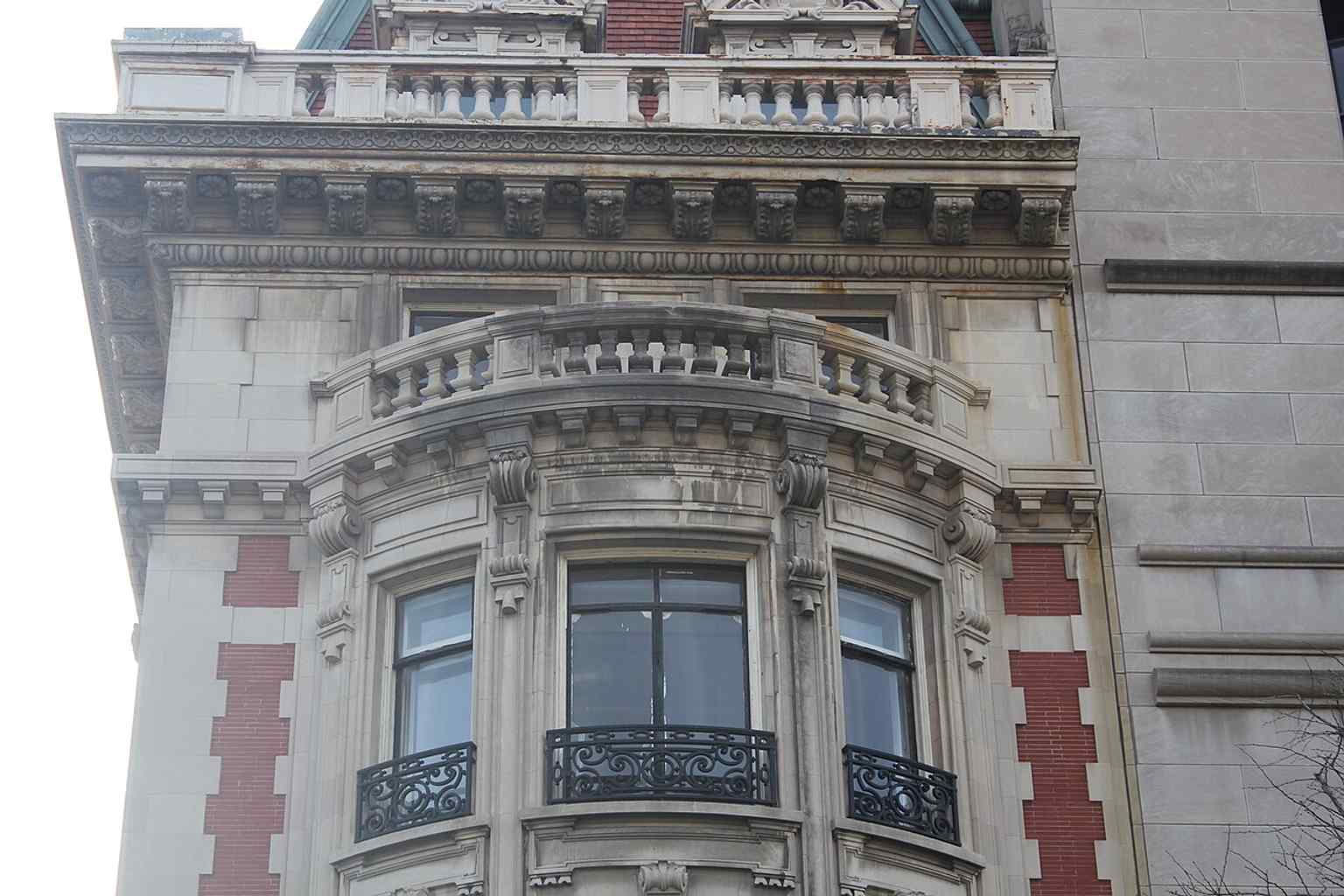
Look to your right for a narrow, red brick and limestone mansion featuring three gracefully curved bow windows and a striking copper mansard roof perched on top.
This is the Benjamin N. Duke House, a quintessential survivor of the Gilded Age. The developers, William and Thomas Hall, built this Beaux-Arts confection on speculation between eighteen ninety-nine and nineteen oh one. They had a clever marketing trick. They would briefly move into their own newly built mansions, furnishing them lavishly, basically turning them into high stakes showrooms for the city's new industrial titans.
It worked perfectly. Benjamin Duke, chairman of the American Tobacco Company, bought the house for a small fortune. But he did not actually move in. Instead, he lived at a hotel for years. Why enjoy a sprawling mansion when you have room service?
Instead, the house became the setting for a bizarre game of billionaire musical chairs. Benjamin's brother, James Buchanan Duke, met his future wife at a party here. James bought the house from Benjamin in nineteen oh seven. Yes, the same James whose massive estate we saw earlier. James actually lived here, notably defending his tobacco monopoly from his bedroom in nineteen oh eight while battling severe rheumatism. Federal prosecutors literally had to crowd around his bed to take his testimony. Once his grander mansion up the street was finished in nineteen twelve, he moved out, and Benjamin’s children moved in.
Take a look at the image on your app to see the magnificent copper roof up close. That roof is a masterpiece of historical reproduction. In the nineteen eighties, the descendants of the original blacksmith who crafted the metalwork in nineteen oh one were hired to rebuild it. They had to buy a custom hydraulic press just to replicate the nineteenth century manufacturing methods.
Over the decades, this limestone and brick fortress has witnessed a continual cycle of new fortunes trying to buy a piece of old prestige. Sometimes with mixed results. In two thousand and six, a former taxi driver turned billionaire named Tamir Sapir bought the house for forty million dollars. He planned to turn it into a private museum for his massive ivory collection. But federal authorities discovered he had been illegally importing endangered species products on his yacht. The scandal derailed his grand plans, and the house sat largely empty until Mexican telecom magnate Carlos Slim bought it for forty-four million dollars.
Check your screen once more to appreciate the intricate limestone balustrades on the Fifth Avenue side. Notice how the bays curve outward in a grand, Baroque gesture. It is a house designed to be noticed, even as the names on the deed constantly change.
Our final stop is just a two minute walk away. We are heading to nine nine eight Fifth Avenue, a building that fundamentally changed the rules of luxury housing on the Upper East Side. Let us go see how the elite finally learned to share a roof.