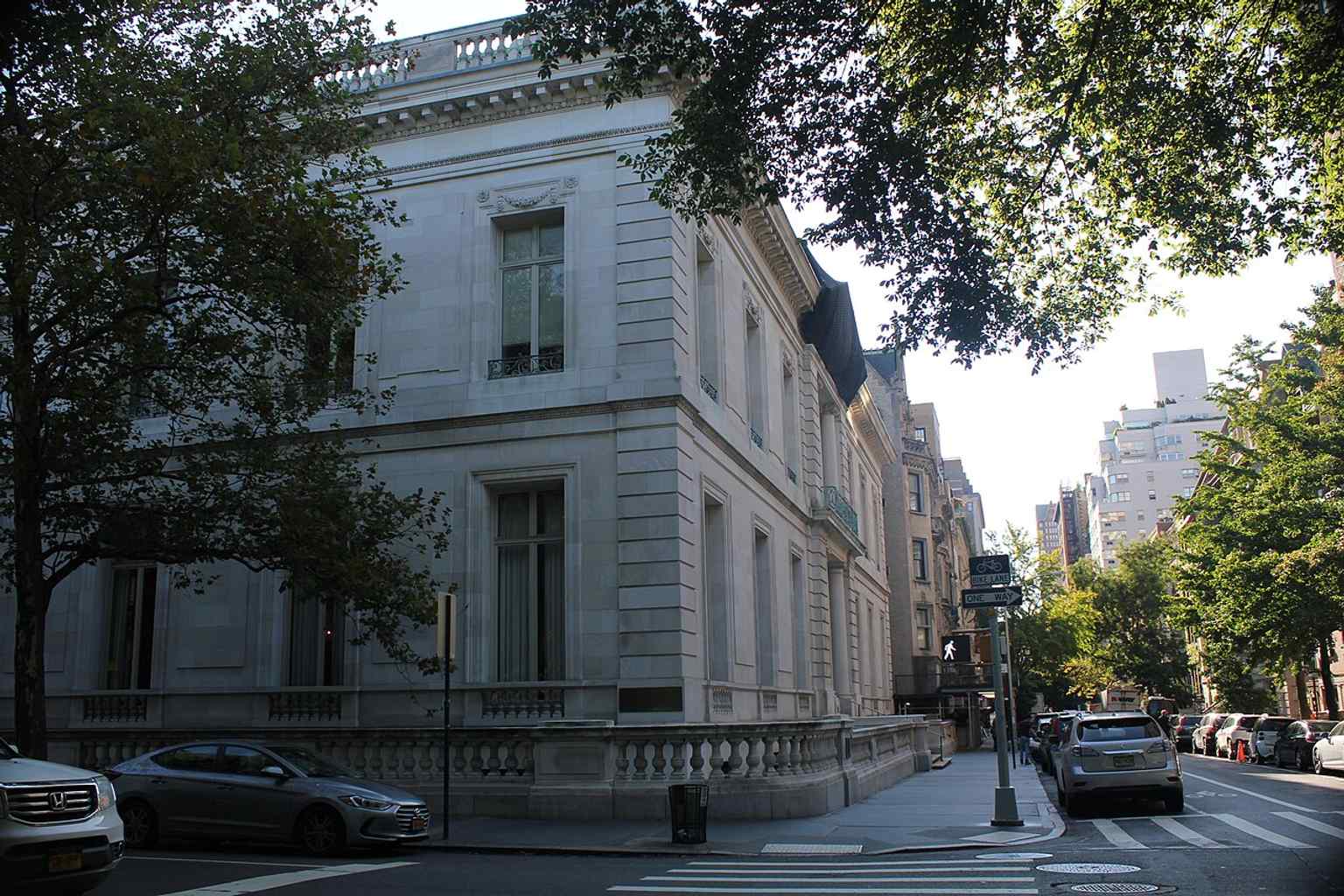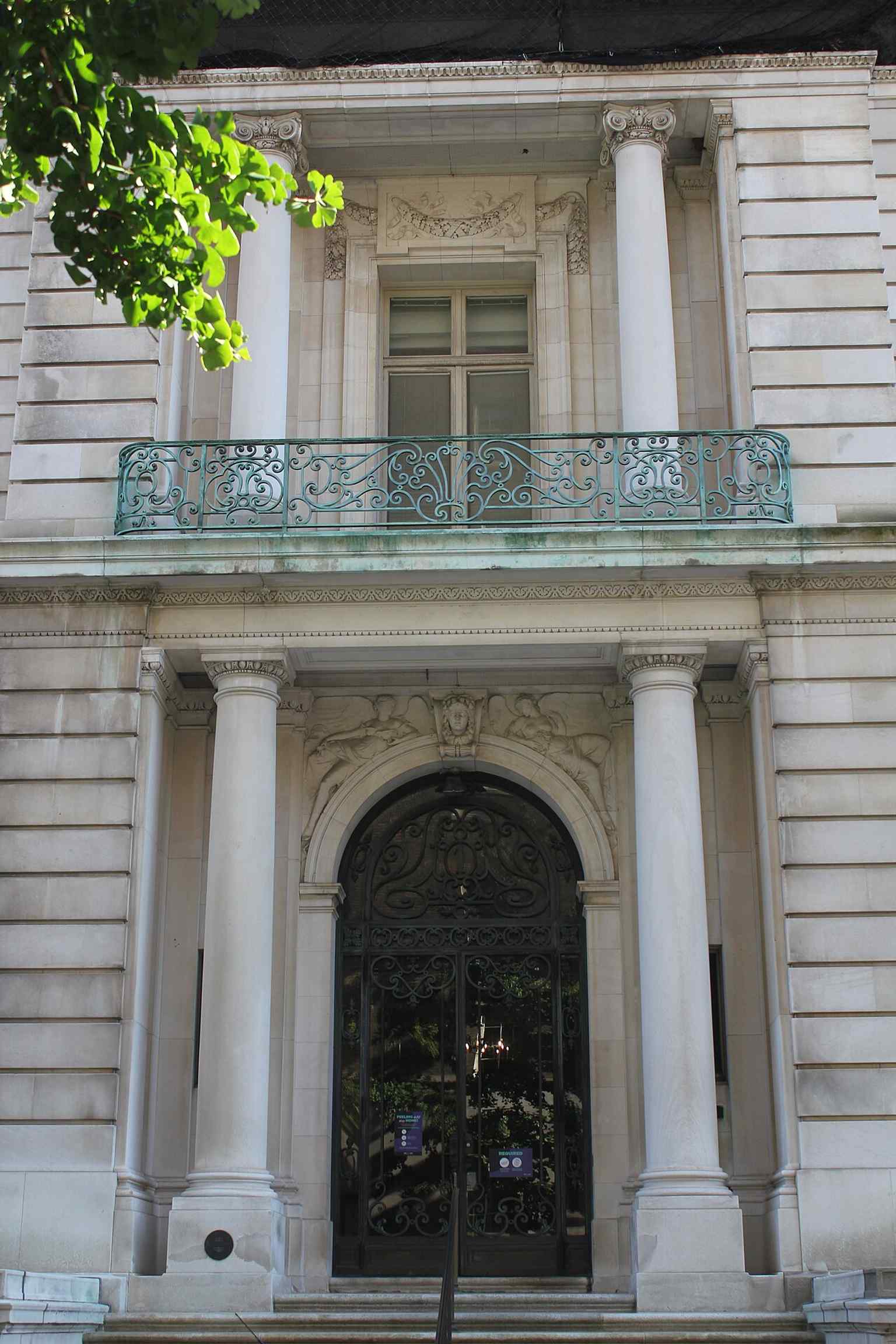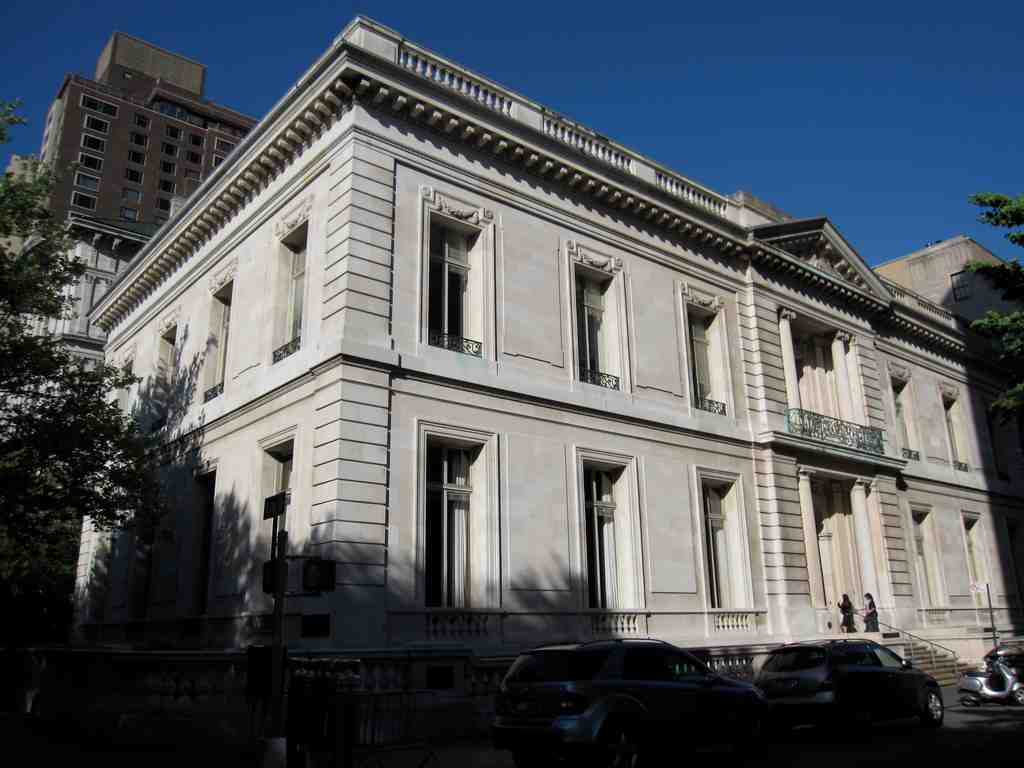
Look to your left and you will see a massive, rectangular pale limestone mansion crowned by a classical roofline balustrade, with a grand pillared portico right in the center.
This is the James B. Duke House. At the turn of the twentieth century, James Buchanan Duke had amassed a tobacco fortune of sixty million dollars, which translates to over two billion dollars today. But he also had a significant public relations problem. He was embroiled in a spectacularly messy divorce from his first wife. Suspecting her of infidelity, he hired private investigators to track her every move. He finally secured the divorce in nineteen oh six, tossing her a settlement of five hundred thousand dollars, an absolute pittance compared to his empire.
Duke needed to scrub off the scandal and project unquestionable respectability for his new bride, Nanaline. His strategy was simple. He decided to invent a past. To give his family instant aristocratic pedigree, Duke commissioned a near exact replica of an eighteenth century French chateau, Château Labottière in Bordeaux.
The architecture firm of Horace Trumbauer took the job, though the actual genius behind the limestone was Julian Abele. Abele was a brilliant African American architect who served as the firm's chief designer, though his contributions were hidden for decades due to the era's severe racial barriers. Abele designed this mansion to be an absolute fortress of elegance. If you pull up the app, you can see how carefully the exterior was proportioned. Abele cleverly hid twelve servant suites in the attic behind that roofline balustrade, making this colossal structure look like a modest two-story pavilion from the street. A modest pavilion that just happened to be the most expensive home on Fifth Avenue.
But a manufactured French pedigree does not guarantee a peaceful life. When James Duke died in nineteen twenty-five, his final words to his daughter Doris were, trust no one. It was solid advice. His will inadvertently ordered his executors to sell off his real estate to fund his endowment, pitting Nanaline against fourteen-year-old Doris. The teenager effectively sued her own mother to block the sale of the house. Doris won, keeping the property and cementing a deeply guarded personality that lasted her entire life.
Eventually, the family surrendered the mansion to N-Y-U in nineteen fifty-eight to house its Institute of Fine Arts. While other Gilded Age palaces on Fifth Avenue were demolished and replaced by anonymous apartment blocks, the Duke house survived by becoming an academic institution. It traded debutante balls for library shelves and bitter family lawsuits for bitter neighborhood zoning disputes. Truly, the circle of life in Manhattan.
Our next stop is the New York Society Library, which is about a four-minute walk away.