
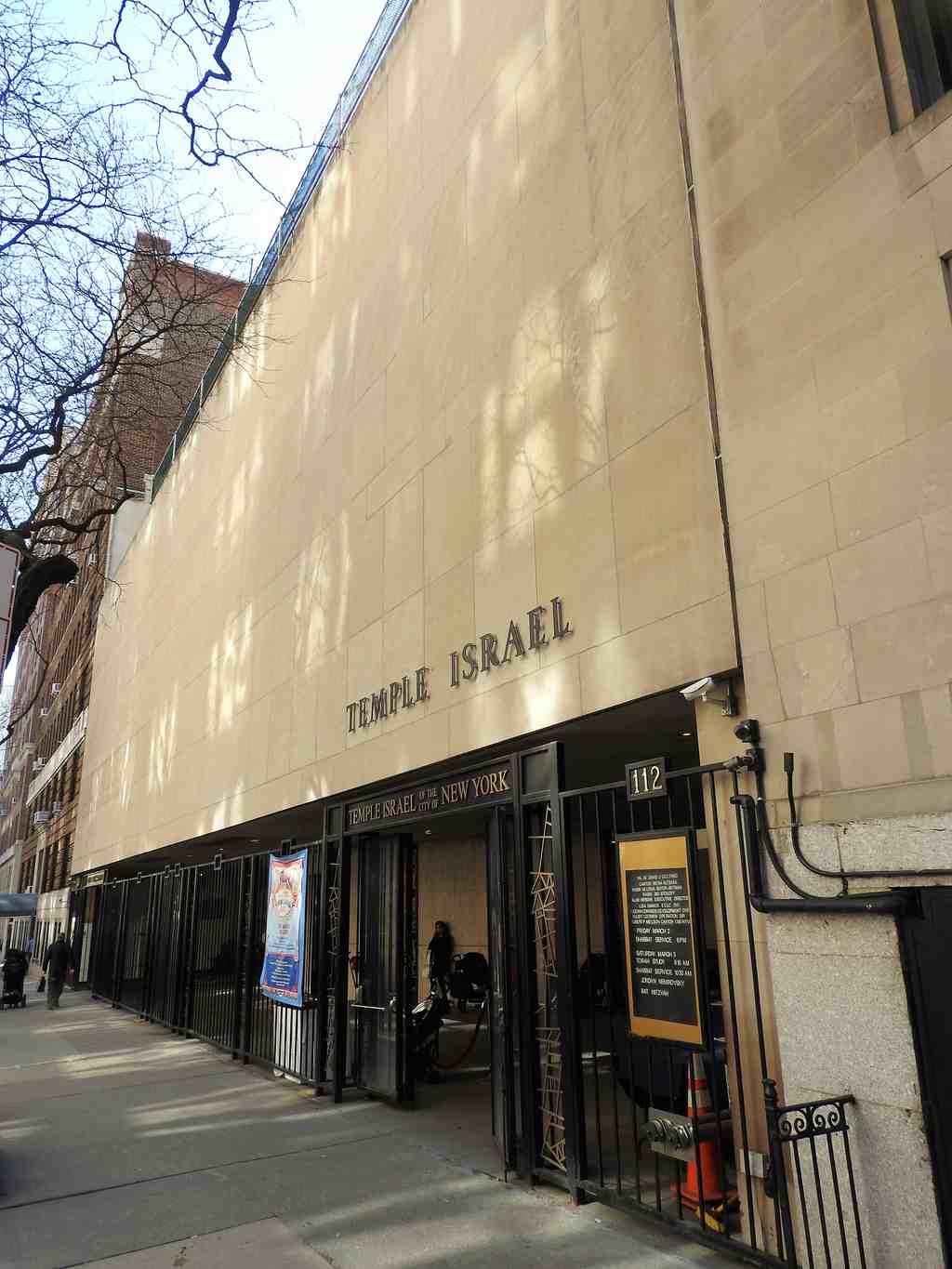
Look for the massive, windowless limestone facade that juts out dramatically over a recessed, dark metal entrance, easily identified by the name Temple Israel carved directly into the smooth stone block.
This blocky, imposing structure is a prime example of brutalist architecture, projecting an absolute sense of permanence and sanctuary. It looks as though it has stood here since the dawn of time, funded by old money. But that is exactly the illusion this neighborhood loves to project.
In eighteen seventy-three, this congregation began far away from these elite avenues, founded by working-class German Jewish immigrants in Harlem. These early congregants operated small retail shops on Third Avenue, selling everyday goods to their neighbors. At the end of a long shift, they retreated to cramped, modest living quarters tucked directly behind their storefronts. They first worshipped above a printing shop, a far cry from a custom-engineered limestone fortress.
As the members prospered, their buildings grew grander. Take a look at your screen to see what I mean. In nineteen oh seven, they built a soaring Neoclassical temple that looked more like a Roman monument than a traditional synagogue, drawing crowds so huge they had to lock the doors to prevent a stampede. They moved again in nineteen twenty to a larger space on the Upper West Side. Check your app for a glimpse of that one. By the time they arrived here on East seventy-fifth Street in nineteen sixty-seven, they had fully transformed from a small neighborhood collective into a cultural powerhouse of the city.
The man who guided much of that early ascent was Rabbi Maurice Harris. He led the congregation for nearly fifty years. Yet, his tenure ended with a deeply ironic logistical nightmare. When Harris died in nineteen thirty, his own sanctuary was undergoing a massive redecoration and was completely unusable. So, more than a thousand mourners had to pack into a rival congregation's building just to hold his funeral.
The synagogue's modern history proves it still knows how to stand its ground. In two thousand and six, they hired Senior Rabbi David Gelfand right after he endured a highly publicized, acrimonious exit from the Jewish Center of the Hamptons. A wealthy board out there had accused him of financial improprieties and plagiarizing sermons, sparking a million-dollar contract dispute and multiple lawsuits. Hundreds of congregants protested on the lawn to defend him. Temple Israel investigated, declared the accusations baseless, and boldly hired him, rejecting what his supporters called McCarthyite tactics.
It is quite a journey from a cramped room over a Harlem print shop to a forty million dollar capital campaign in one of the most exclusive zip codes on Earth. But that is how legacies are forged here. Another massive institution nearby also started from absolutely nothing. Let us walk two minutes away to find it, the Saint Jean Baptiste Roman Catholic Church.




