
Riga Audio Tour: Legends, Guilds, and Timeless Stones
A bell once tolled across Riga and the city changed forever—its echoes still linger on the cobbled lanes where secrets hide in plain sight. Your self-guided audio tour plunges you into the city’s living history, revealing its hidden drama and the whispered tales woven through towering cathedrals and bustling squares. Every corner reveals another layer lost to most visitors. Who risked everything atop the spires of St. James' Cathedral on a bitter winter morning? What shadowy intrigue stalked the corridors behind the gilded doors of the Dome Cathedral? And why did a single rowdy celebration at Town Hall Square stir up a scandal that shattered alliances? Wander through Riga’s winding streets, where past and present collide, epic stories rise, and every step peels back the city’s grand façade. See Riga’s heart beat anew with each discovery. Begin your journey now—and let the city’s untold stories call to you again.
Tour preview
About this tour
- scheduleDuration 70–90 minsGo at your own pace
- straighten2.2 km walking routeFollow the guided path
- location_on
- wifi_offWorks offlineDownload once, use anywhere
- all_inclusiveLifetime accessReplay anytime, forever
- location_onStarts at Yes, it is a sesame
Stops on this tour
lock_open 3 free previews · 12 unlock with purchase
Look for a narrow arched stone passage that opens into a compact courtyard, framed by pale historic facades and a heavy stretch of medieval wall. This is Yanya Seta, Saint John’s…Read moreShow less
Open dedicated page →Look for a narrow arched stone passage that opens into a compact courtyard, framed by pale historic facades and a heavy stretch of medieval wall.
This is Yanya Seta, Saint John’s Courtyard, and for a place barely over five hundred and thirty square meters, it has had an absurdly busy life. In the early twelve hundreds, this patch of ground held the first bishop’s court in Riga, effectively his first castle. Right beside it stood the territory of the Swordbrothers, a military religious order, and legend says a single willow tree marked the line between those two powers. Riga, even then, understood the value of a dramatic property boundary.
In twelve thirty-four, Archbishop Nicholas sold the bishop’s residence and the surrounding land to the Dominicans, the preaching monks who had already settled in Riga. They reshaped the site into a monastery yard. Fragments of their cloister still survive from the thirteen thirties. A cloister is the covered walkway that runs around a monastic courtyard, built for prayer, movement, and the occasional serious conversation. The Dominicans also enclosed the yard with a thick wall and a gate on Skarnu Street marked by an unusual arched image known as the view of a donkey’s back. Odd name, very deliberate message: Christians should follow Christ, who entered Jerusalem on a donkey, not a warhorse. Humility, in masonry.
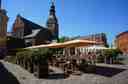
If you want a clearer sense of the layout, glance at the picture on your screen. It shows the historic passage opening into the old complex beside Saint John’s Church.
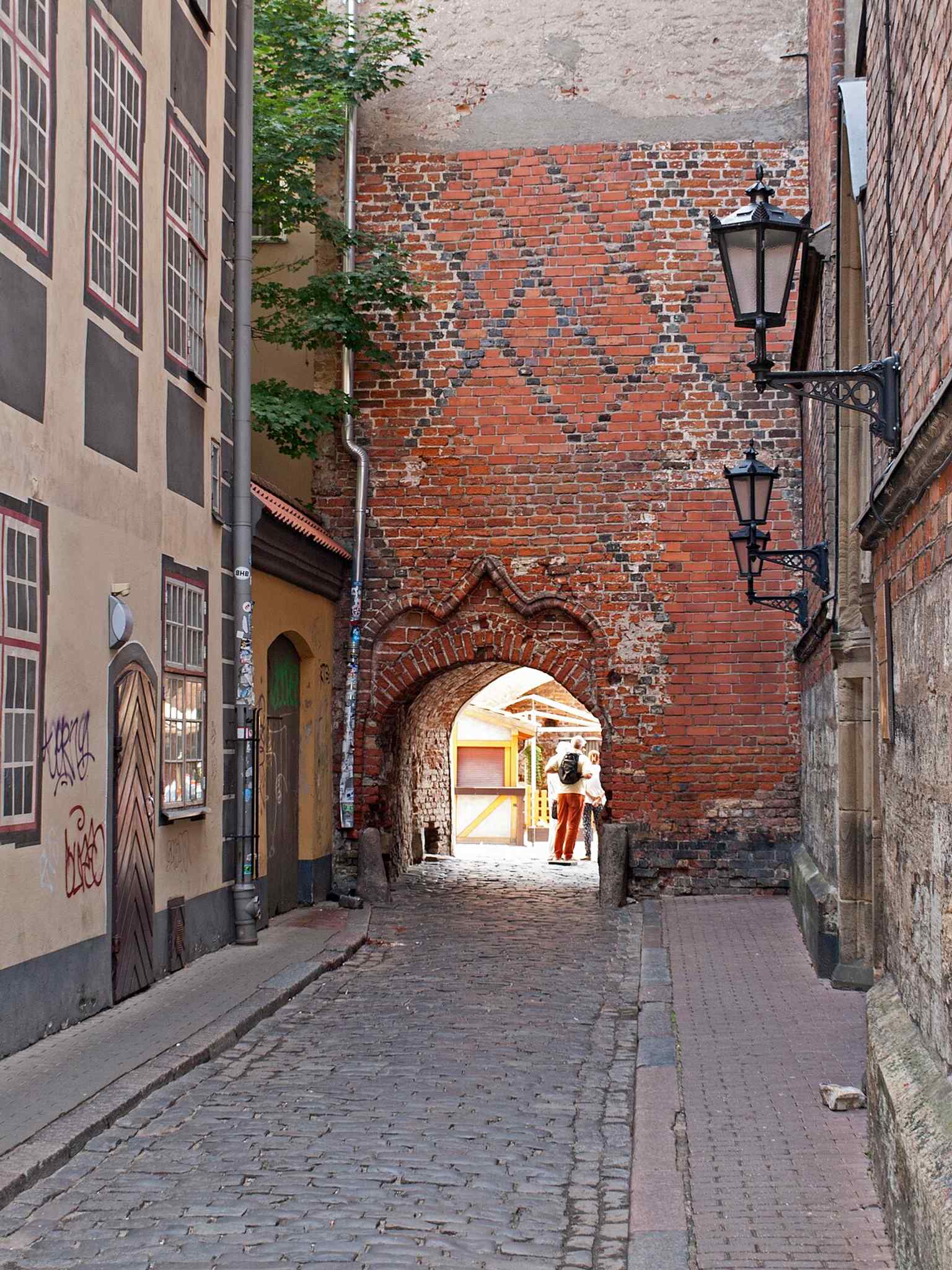
A southwest view into Jāņa sēta, the former Dominican courtyard beside St. John’s Church, still showing the historic passageway that opens into the old complex.Photo: Ymblanter, Wikimedia Commons, CC BY-SA 4.0. Cropped & resized. After the Reformation tore through Riga in the fifteen twenties, the city took over the monastery buildings and used them with impressive practicality and very little nostalgia. One house became a forced workhouse for petty offenders, and Saint John’s Church even added a standing gallery for them. Later, the same yard housed Saint Nicholas almshouse, then the main city police barracks from eighteen twenty-eight until nineteen oh-two. So this one courtyard served monks, the poor, minor lawbreakers, and police officers in succession... which feels like a fairly complete survey of urban life.
It also became a place of learning. In the fifteen eighties, King Stephen Bathory gave one building here to the Latvian Lutheran community, which opened Riga’s first school teaching in Latvian. Then, in nineteen thirty-eight, workers demolishing that school uncovered part of the medieval city wall along Kaleju Street. That wall once defended the city from the old Riga River branch of the Daugava. The blacksmiths maintained this section after city officials pushed them out toward the river for causing fires and too much noise. Not an entirely unfair review of blacksmithing.
At present, the old monastic garden survives in gentler form, with a beer garden where monks once grew apples and medicinal herbs, and a jazz club in a side building.
This little courtyard is Riga in miniature: sacred, practical, fortified, and slightly eccentric.
When you’re ready, continue on to Saint Peter’s Church.
On your left stands a red-brick Gothic church with a long, sturdy body, a tall tapering spire, and a rooster perched at the very top like it owns the skyline. This is Saint…Read moreShow less
Open dedicated page →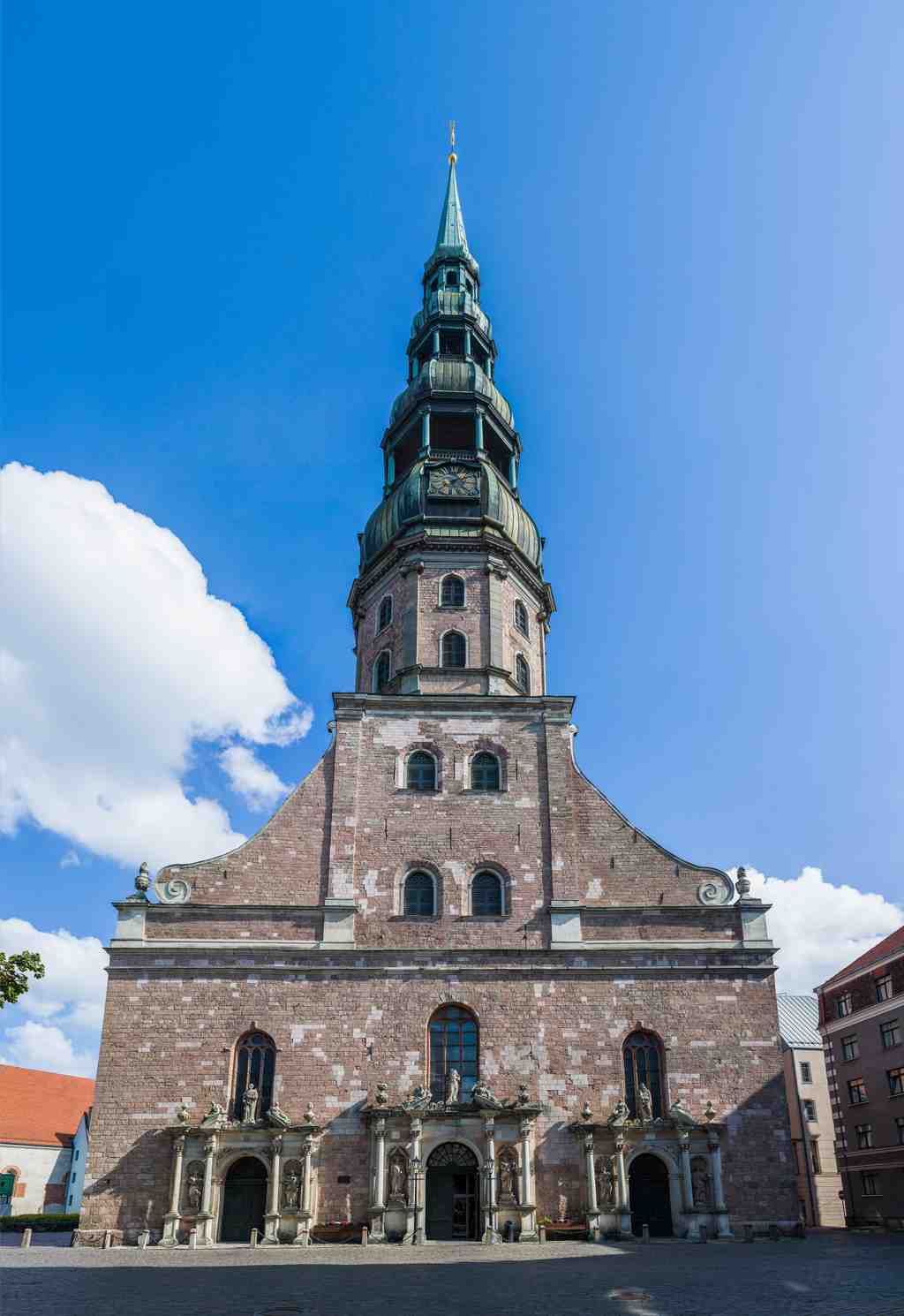
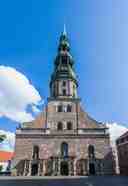
St. Peter's ChurchPhoto: Diliff, Wikimedia Commons, CC BY-SA 3.0. Cropped & resized. On your left stands a red-brick Gothic church with a long, sturdy body, a tall tapering spire, and a rooster perched at the very top like it owns the skyline.
This is Saint Peter’s Church, one of Riga’s great symbols and the city’s oldest known church, first mentioned in twelve oh nine. It began as something a little unusual: not the cathedral of bishops and grand hierarchy, but a people’s church. Merchants, craftsmen, and townspeople helped fund it, so this place belonged to Riga’s burghers - the privileged city residents - as much as to the clergy.
The building grew in layers. The earliest church here was probably a simple hall with three equal-height aisles, meaning three parallel interior spaces under one broad roof. In the early fifteen hundreds, masters expanded it in the restrained North European Gothic style. Then, in the seventeenth century, Riga gave it the more theatrical front you see now, with three richly decorated doorways. Churches, like cities, rarely resist a renovation.
But of course the real show-off is the tower. At one hundred twenty-three and a half meters, with sixty-four and a half meters just in the spire, it dominated Riga for centuries, right up until the television tower arrived in nineteen eighty-five and spoiled the contest. A clock appeared on the tower as early as thirteen fifty-two, which is a nice reminder that medieval cities loved two things: trade and knowing exactly who was late.
That spire has lived a dramatic life. One version collapsed in sixteen sixty-six, crushing a house and killing eight people. Another burned. In seventeen twenty-one, lightning struck again, and even Tsar Peter the Great joined the firefighting. Admirable effort... useless result. The spire burned almost completely and folded inward as it fell, which spared the surrounding city. Peter then ordered it rebuilt.
Look up, and if the rooster seems tiny from down here, the close-up in the app shows it nicely. It is a rooster-shaped wind vane, and in old Riga it doubled as business intelligence. One side was black, the other gold: when the gold side turned toward town, merchants knew sea winds favored arriving ships; black meant no ships, no deals.
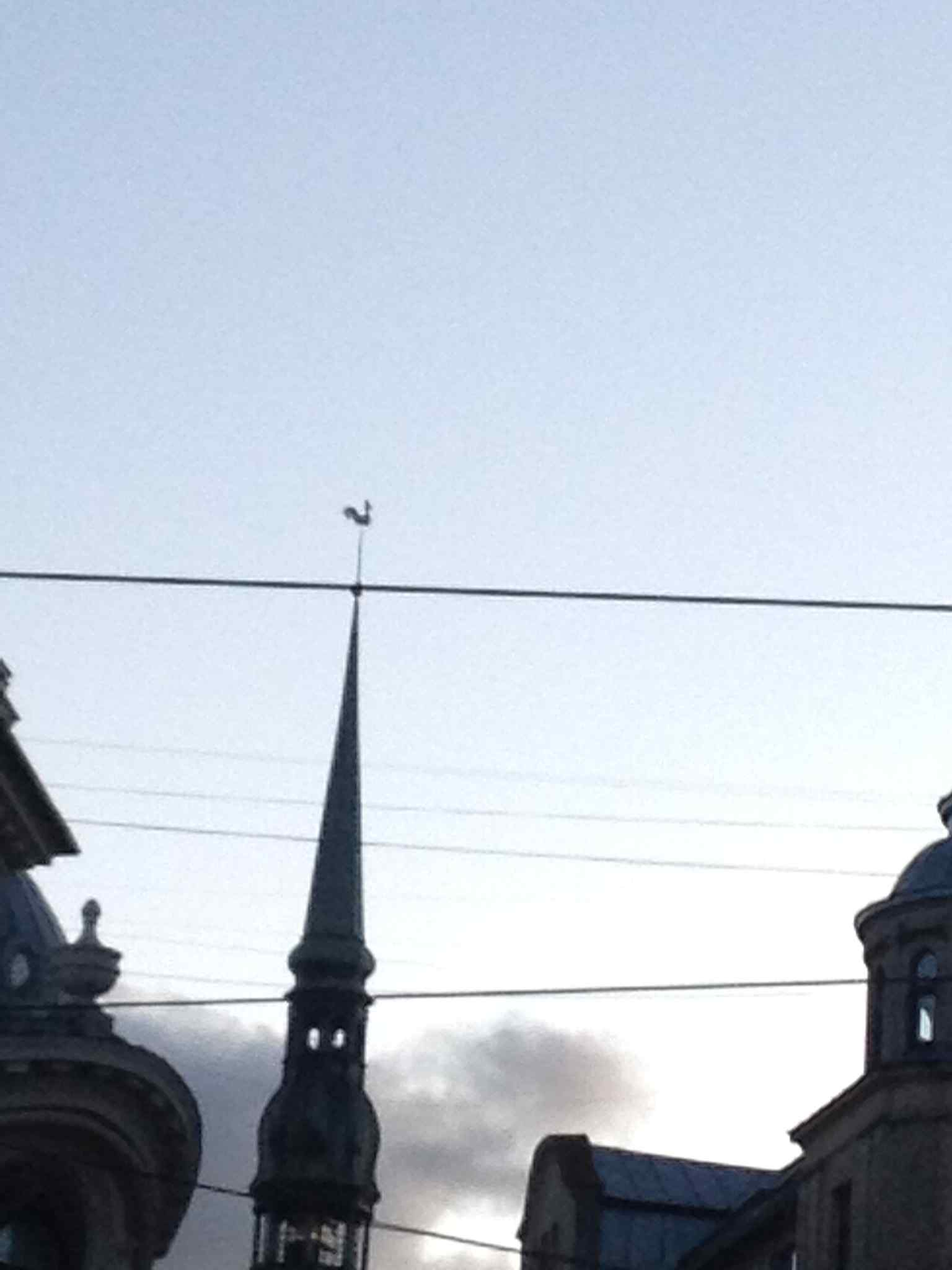
A close look at the weathercock on the spire — the little golden-and-black rooster that once helped Riga merchants read the wind.Photo: Pitadzi, Wikimedia Commons, CC BY-SA 4.0. Cropped & resized. War nearly erased all this. In nineteen forty-one, shelling and fire destroyed the roofs, the spire, and most of the interior. For years the church stood in ruins. If you want a quick sense of that transformation, check the before-and-after image in the app. Restoration began in earnest in the nineteen sixties, the new metal spire rose in nineteen seventy-three, and the interior work continued into nineteen eighty-three.
If you want to go up later, the church usually opens from ten A-M to six P-M, with Friday and Saturday extended until ten P-M.
Saint Peter’s is Riga in one building: proud, battered, rebuilt, and still looking upward.
When you’re ready, continue on to Town Hall and meet the city’s civic side.
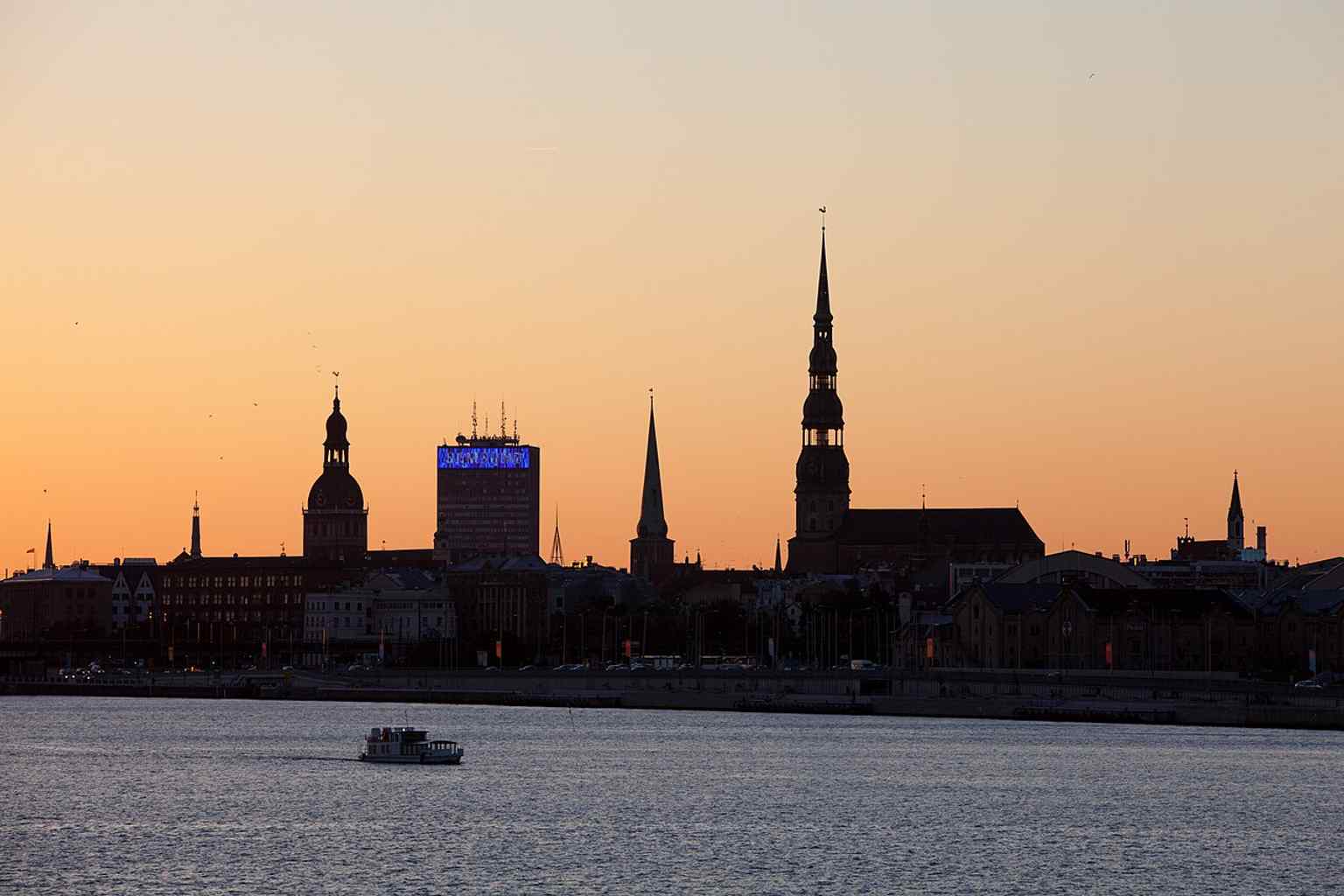
A sweeping panorama of St. Peter’s Church rising over Riga’s Old Town, showing why its 123.5-meter tower was once the city’s tallest landmark.Photo: Karlis Ustups, Wikimedia Commons, CC BY-SA 4.0. Cropped & resized. 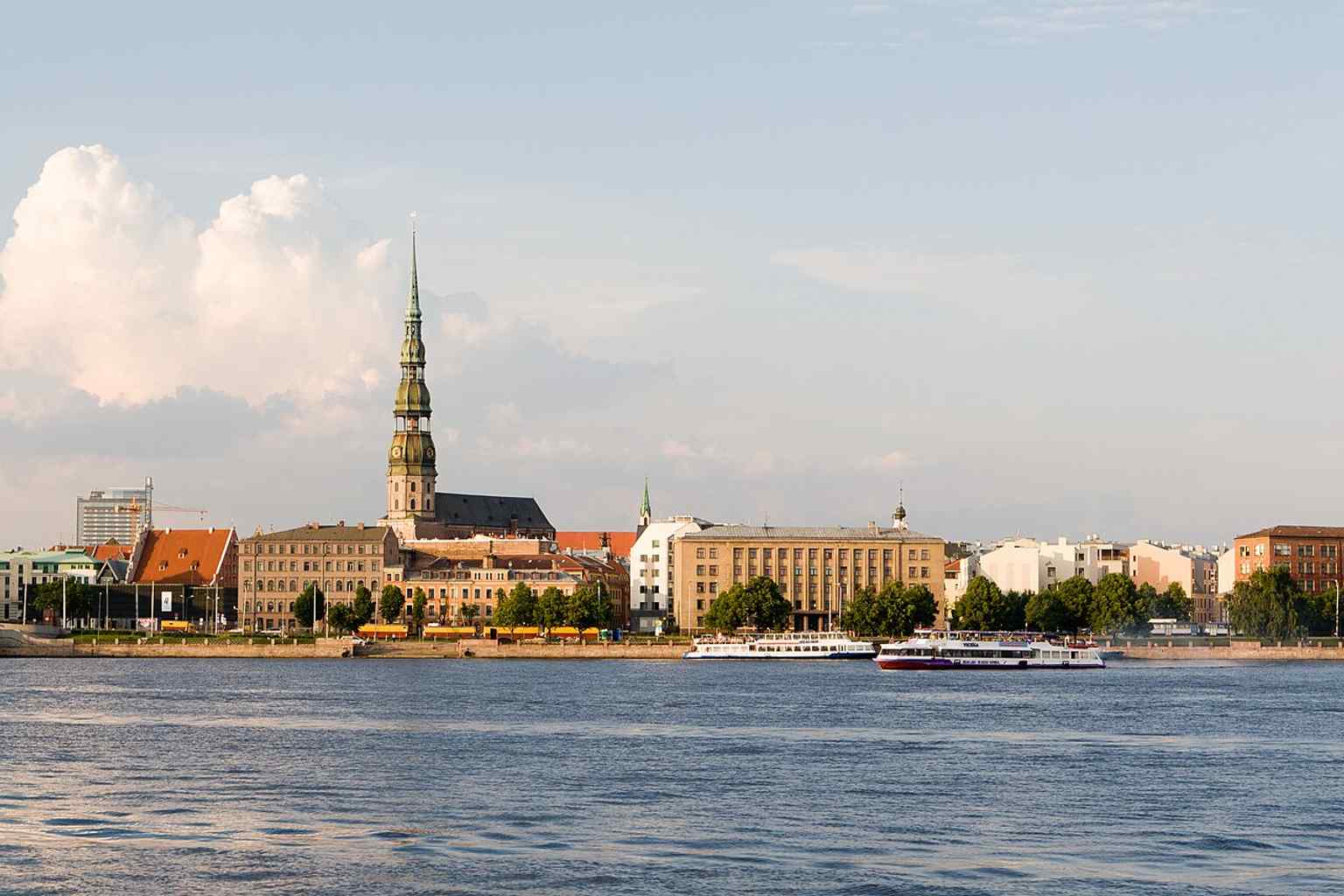
An older panoramic view of the church in Riga’s skyline, useful for showing how long St. Peter’s has dominated the Old Town silhouette.Photo: Karlis Ustups, Wikimedia Commons, CC BY-SA 4.0. Cropped & resized. 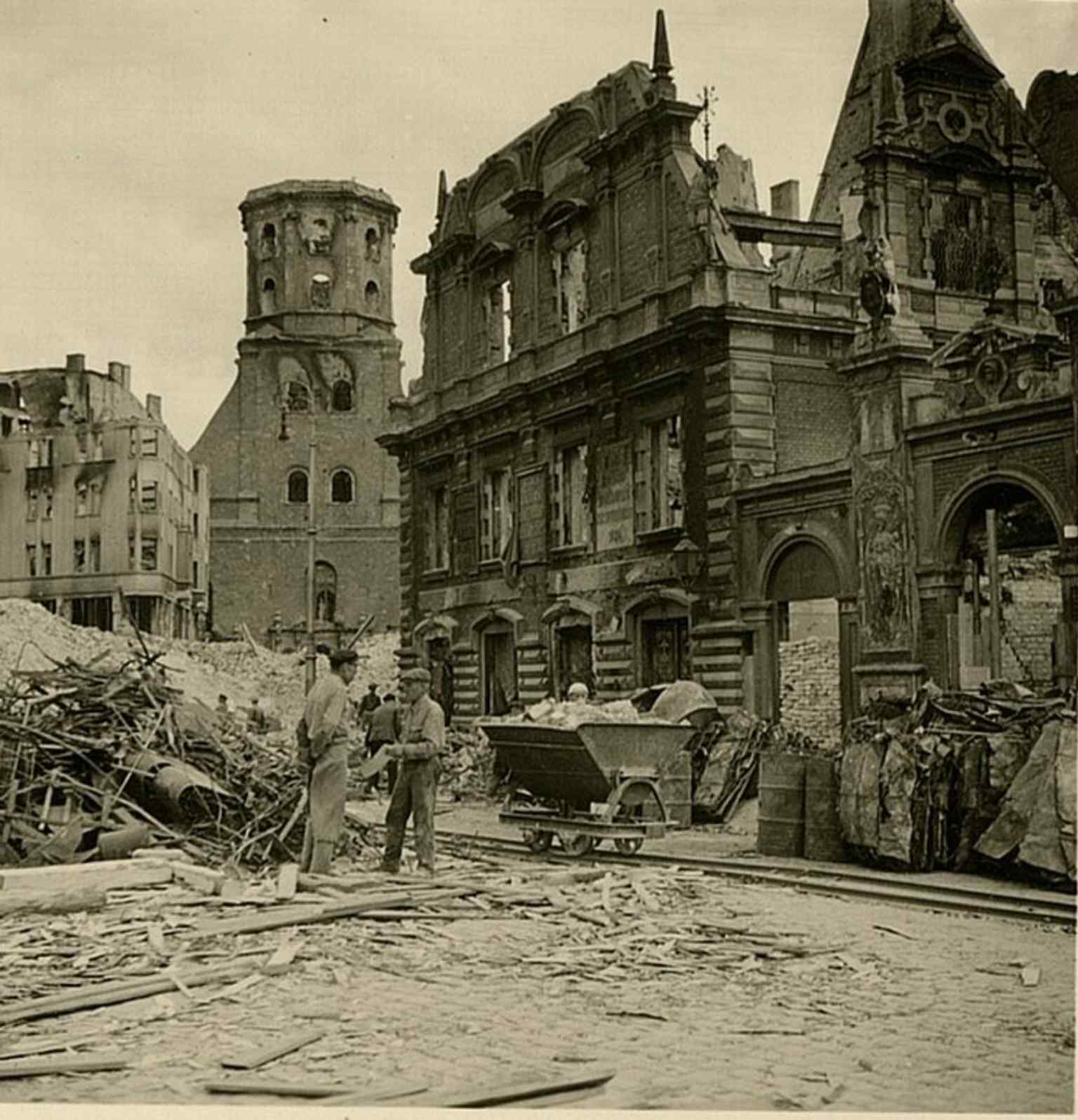
War damage in the Old Town during World War II, including St. Peter’s Church after the fires and shelling that destroyed its roof and spire.Photo: Carl Kadelke, National Library of Latvia, Wikimedia Commons, CC BY 4.0. Cropped & resized. 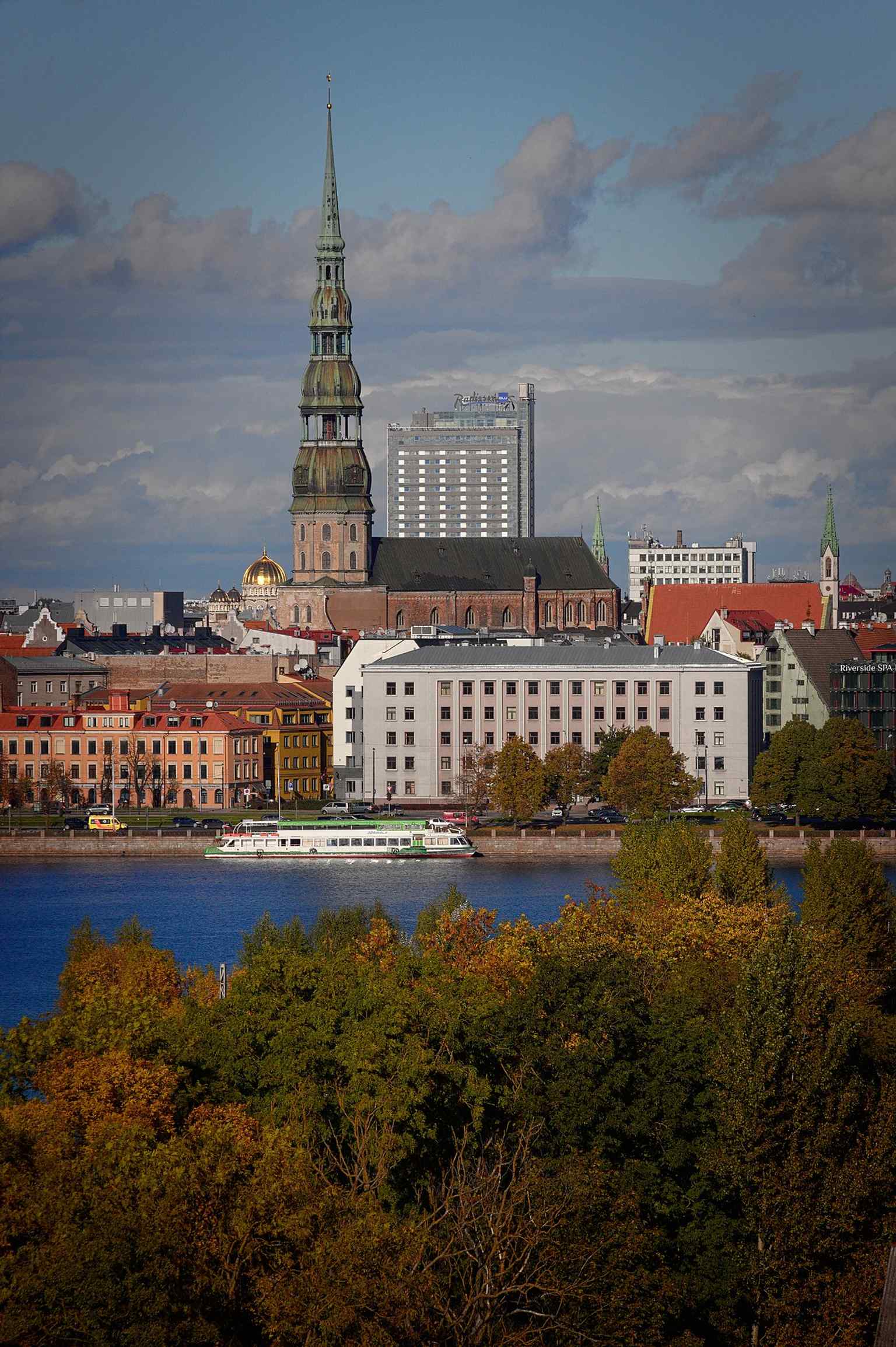
A clear modern exterior view of St. Peter’s Church, with the famous spire that makes it one of Riga’s most recognizable symbols.Photo: Kārlis Kalviškis, Wikimedia Commons, CC BY-SA 4.0. Cropped & resized. 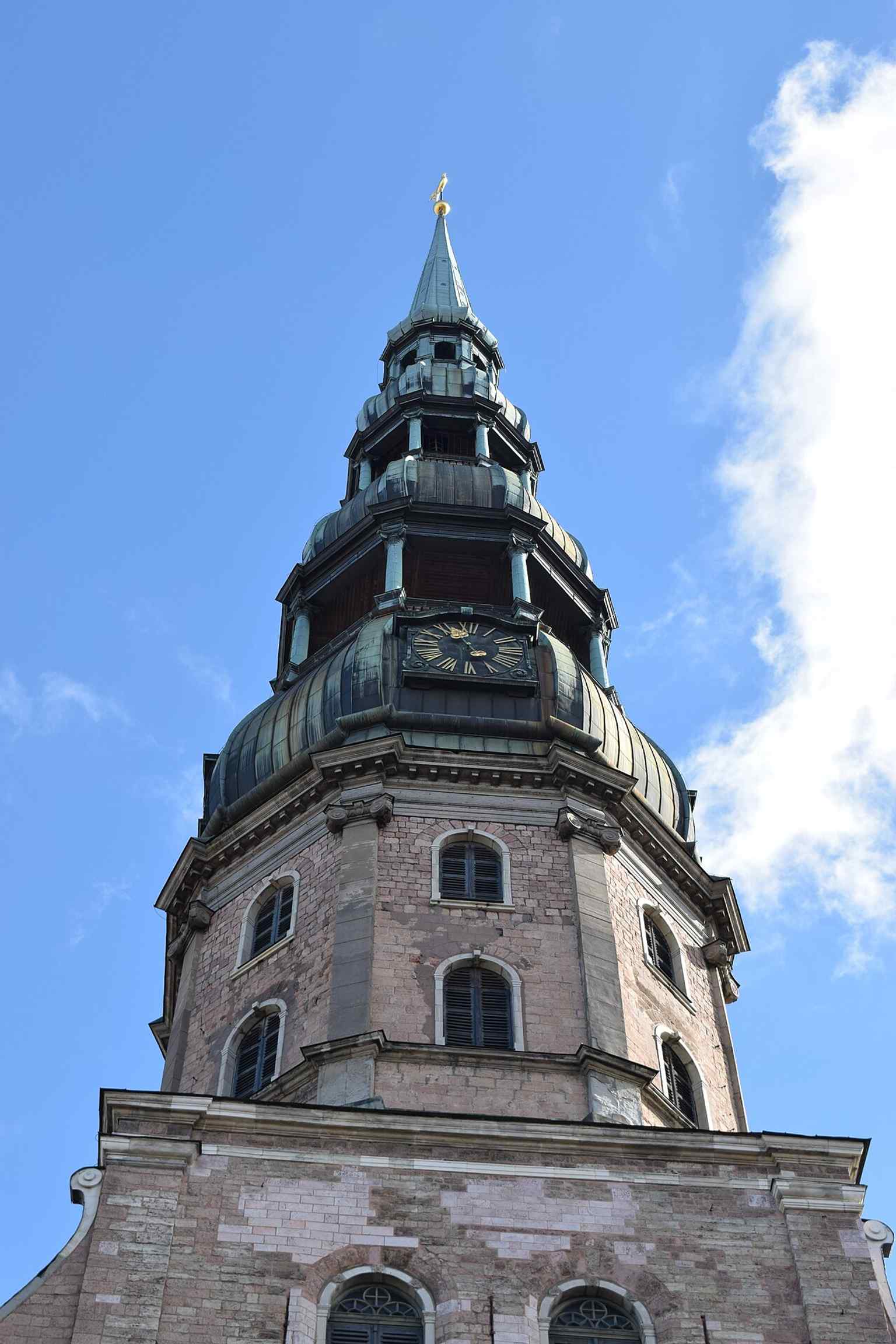
The tower close-up highlights the church’s dramatic vertical profile and the rebuilt spire that now defines the Riga skyline.Photo: Zhagatasligzda, Wikimedia Commons, CC BY-SA 4.0. Cropped & resized. 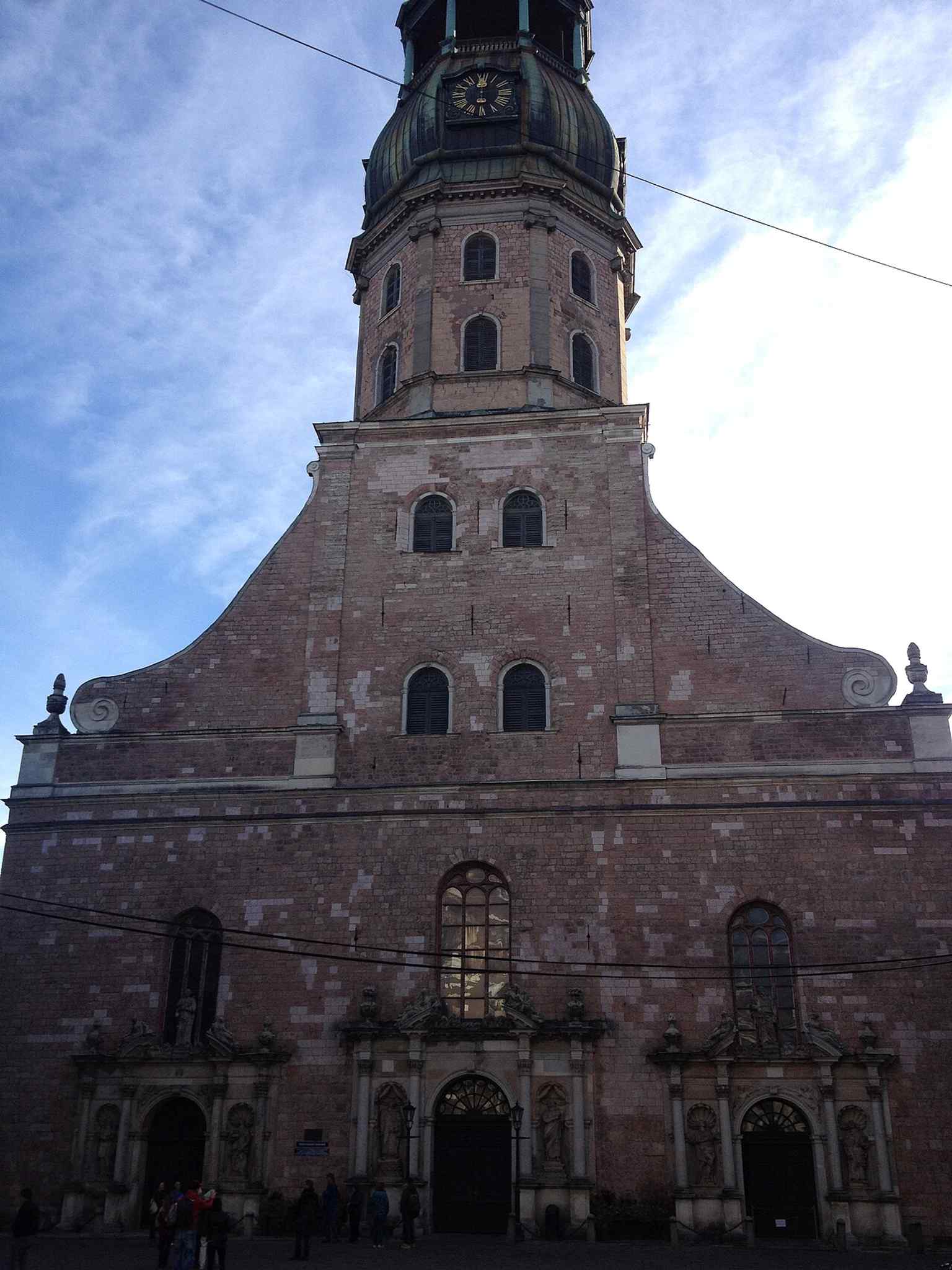
Another detail view of the spire’s weathercock, echoing the church’s long role as a landmark for sailors and traders.Photo: Pitadzi, Wikimedia Commons, CC BY-SA 4.0. Cropped & resized. 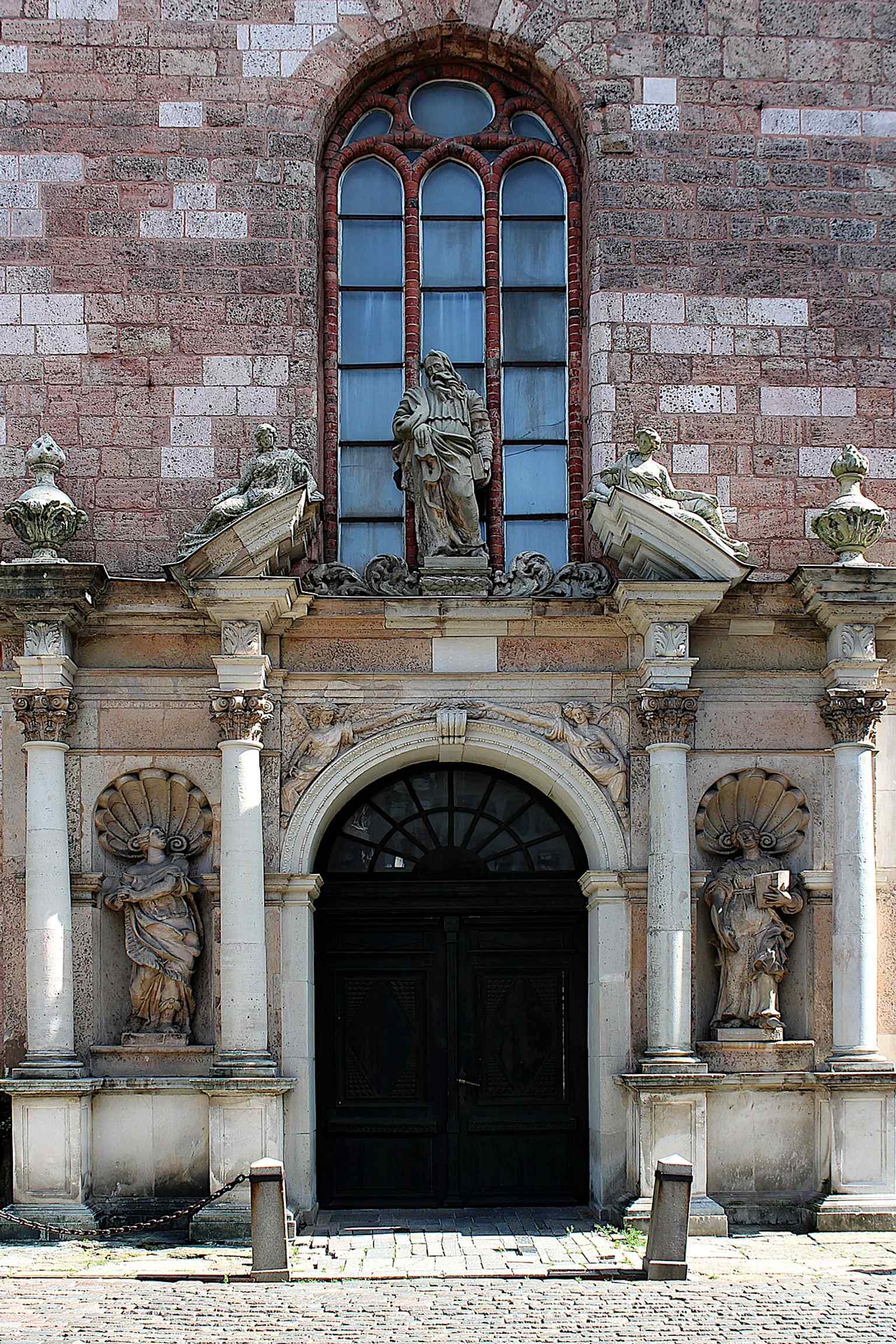
The church’s door detail adds a human-scale view of the building’s exterior, contrasting with the soaring tower above.Photo: John Samuel, Wikimedia Commons, CC BY-SA 4.0. Cropped & resized. 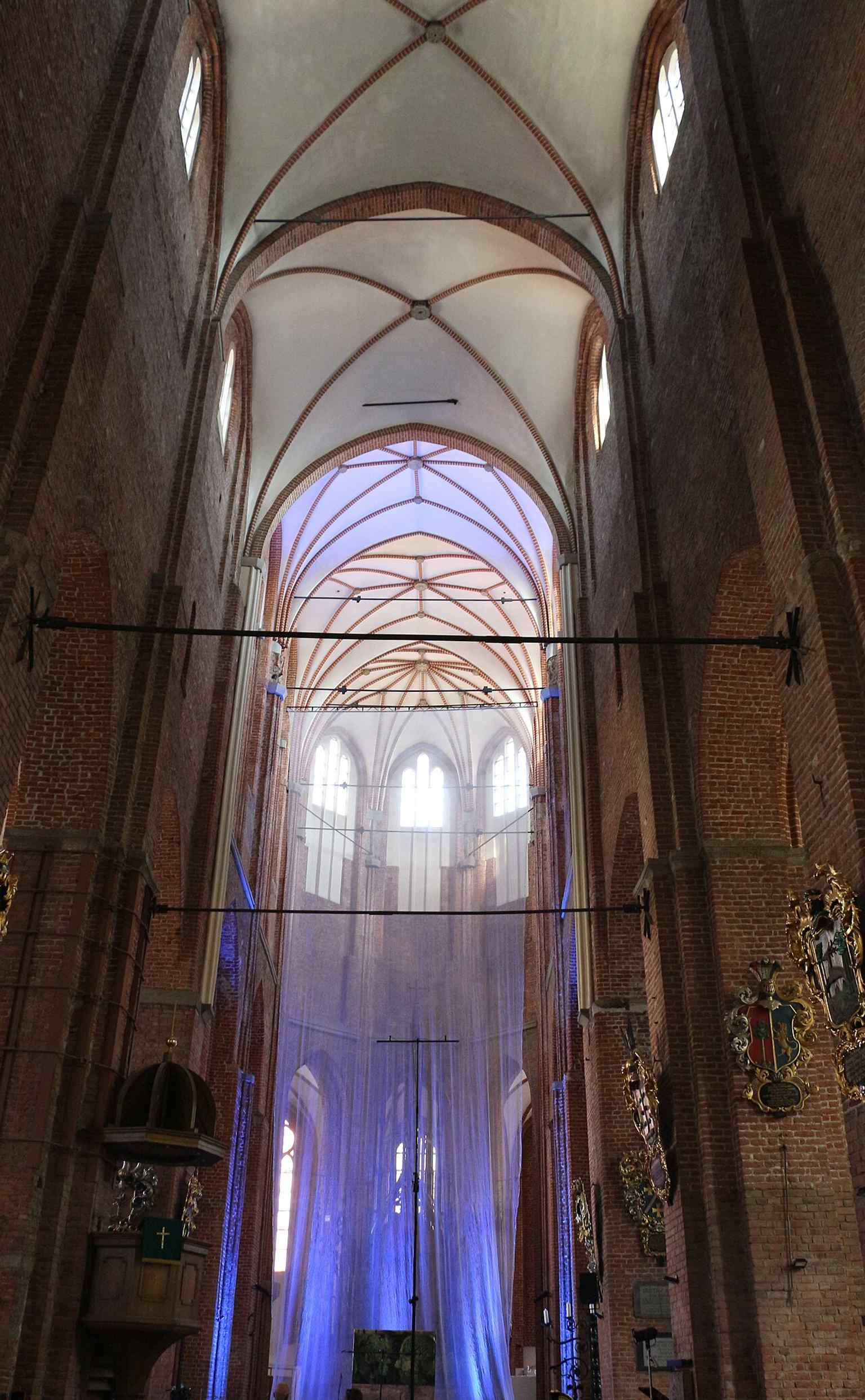
The church interior shows the restored worship space inside the medieval shell, where old stone structure meets later rebuilding.Photo: Agnete, Wikimedia Commons, CC BY-SA 4.0. Cropped & resized. 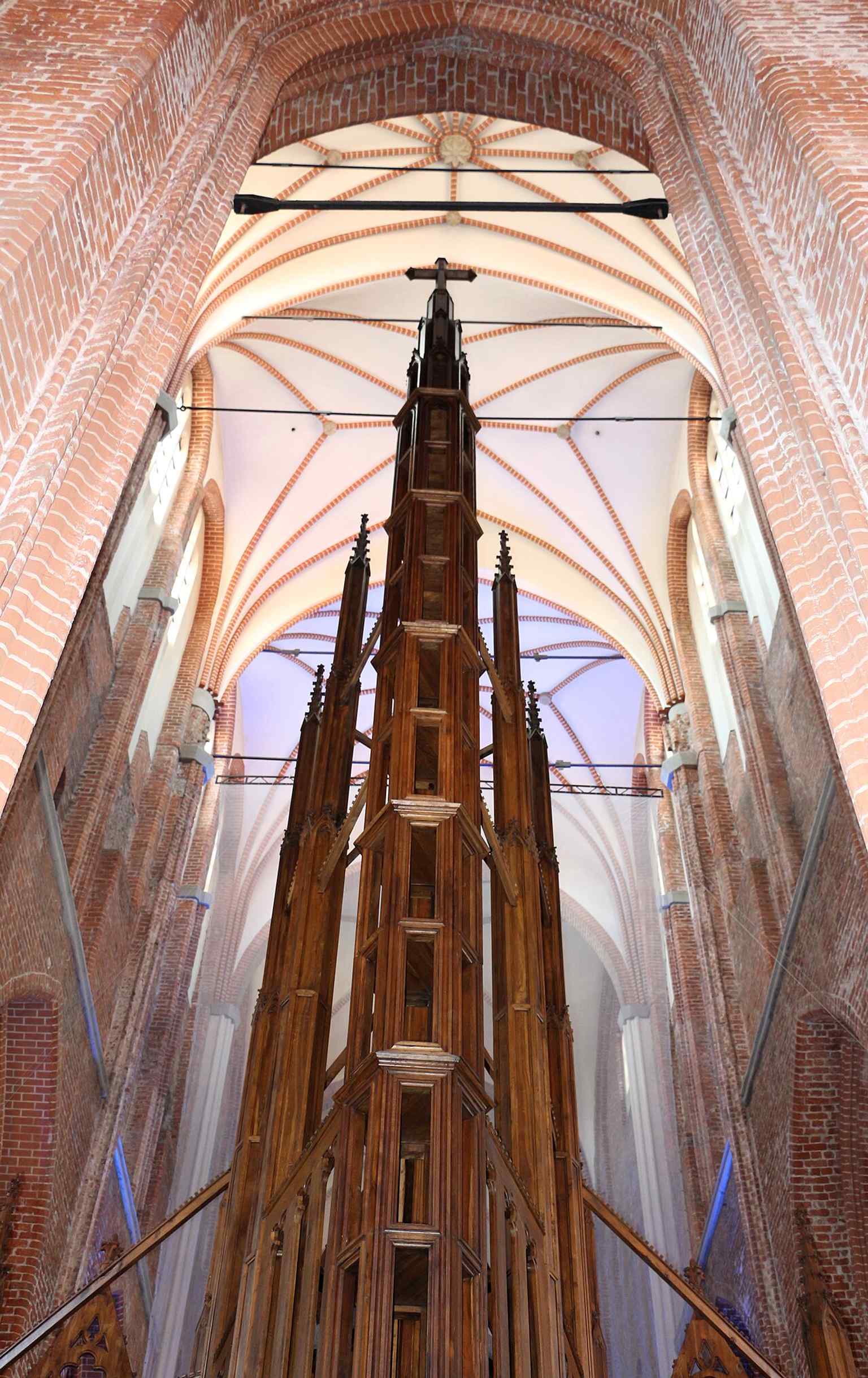
A view behind the altar area, ideal for illustrating the church’s layered history and its postwar interior restoration.Photo: Agnete, Wikimedia Commons, CC BY-SA 4.0. Cropped & resized. 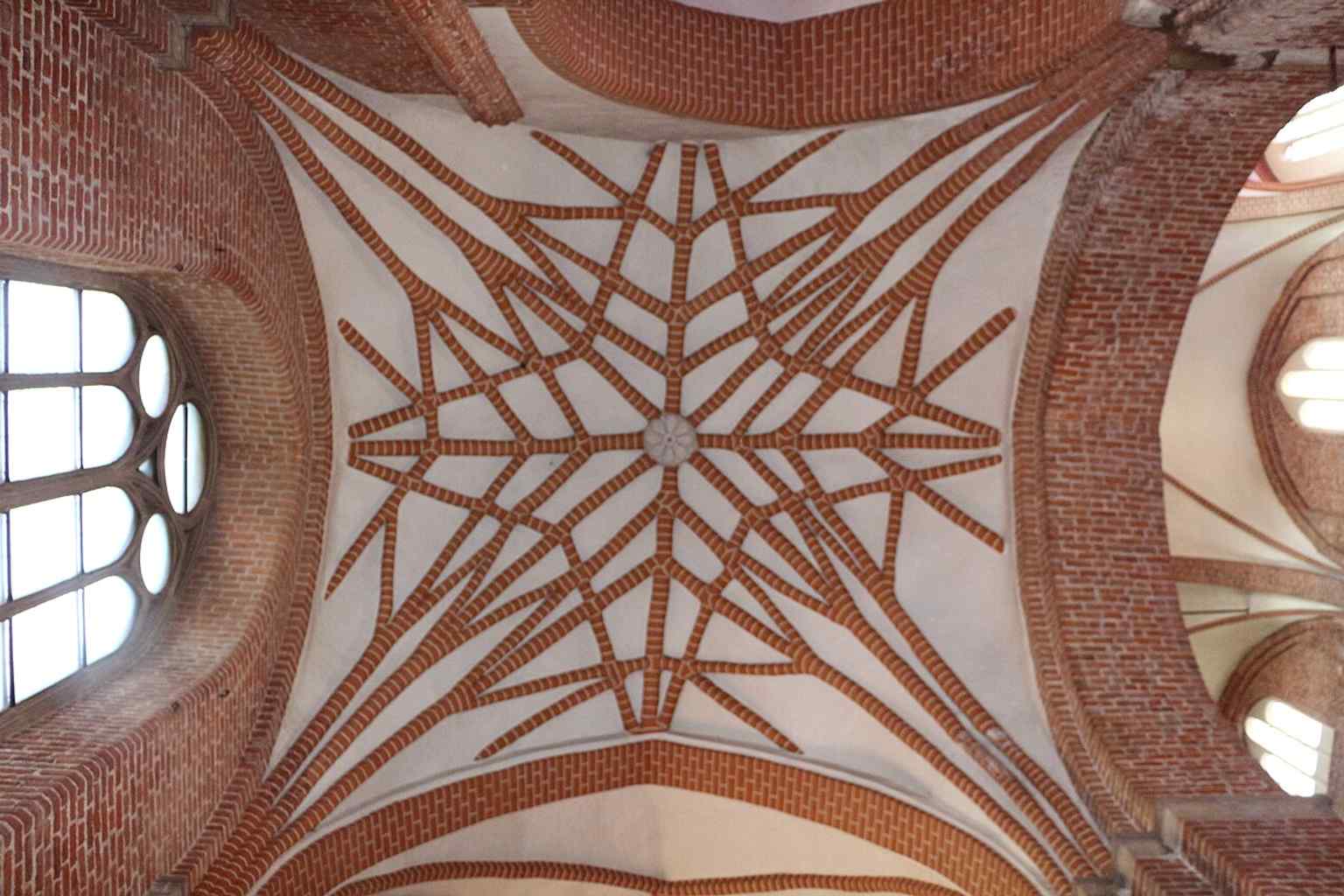
The side nave vaults reveal the Gothic character of the rebuilt interior, echoing the church’s North European medieval roots.Photo: Agnete, Wikimedia Commons, CC BY-SA 4.0. Cropped & resized. 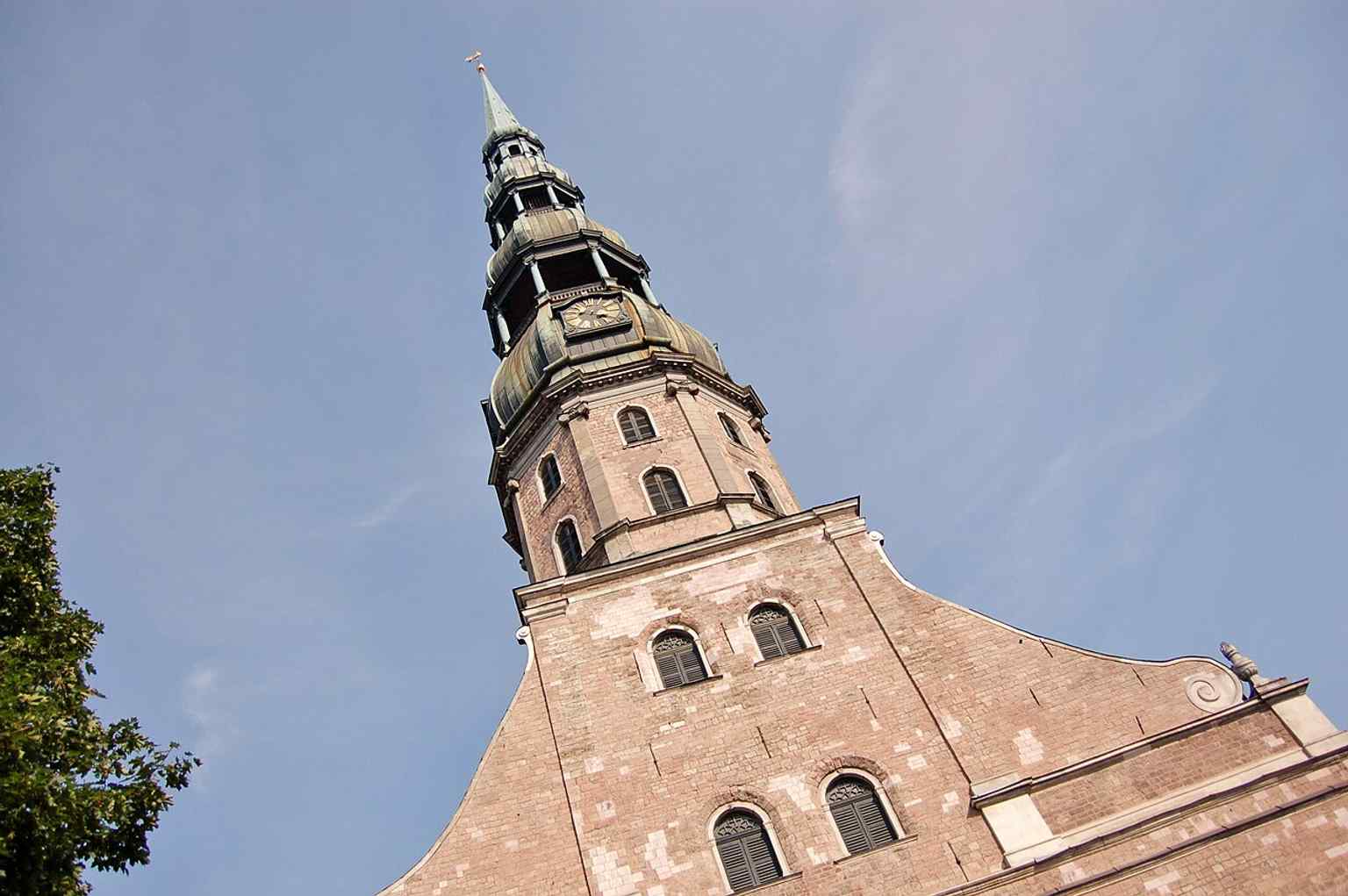
A 2006 exterior photograph of St. Peter’s Church, useful as a clean documentary view of the landmark before more recent changes.Photo: Bahnfrend, Wikimedia Commons, CC BY-SA 4.0. Cropped & resized. 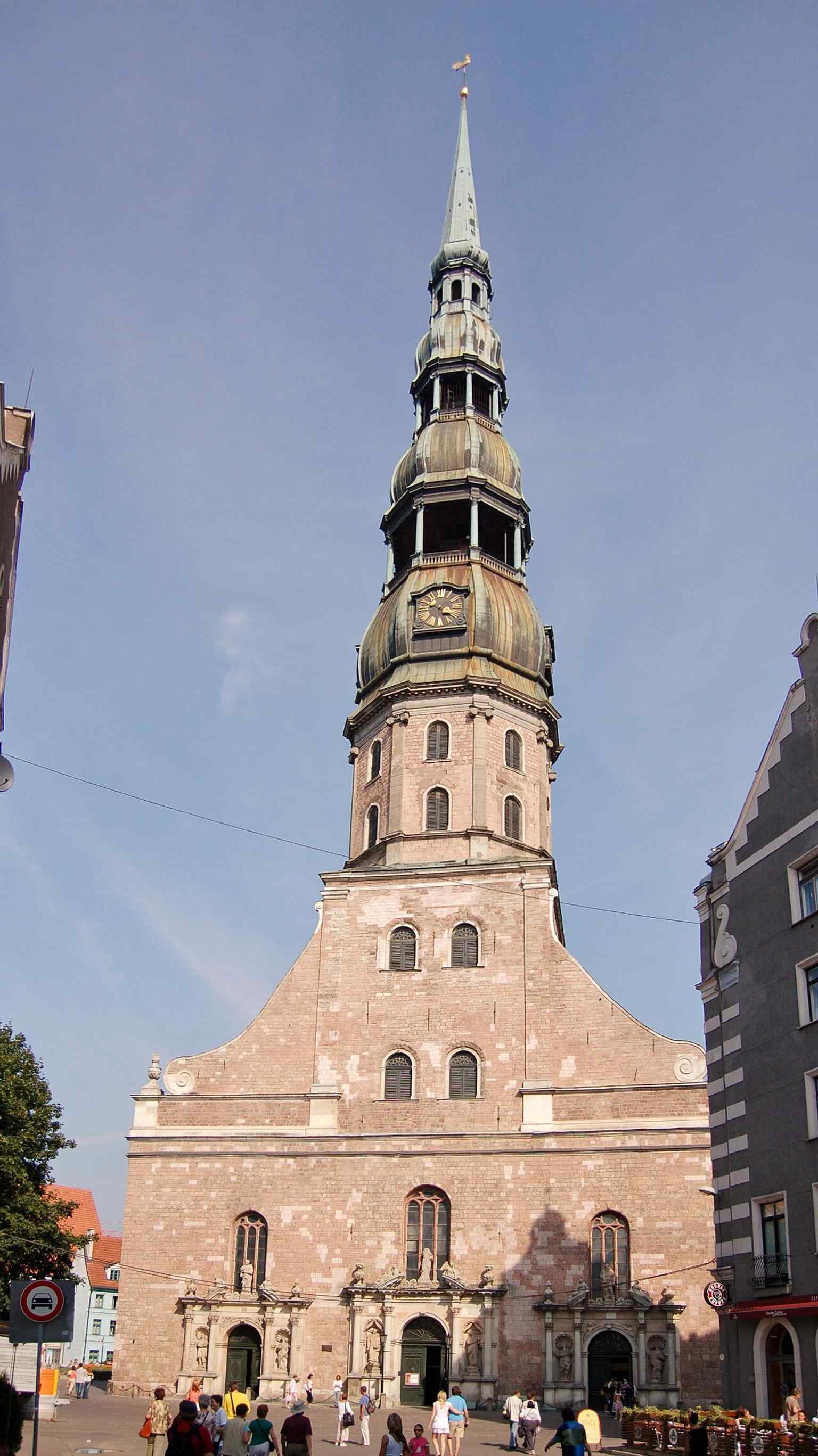
Another older view of the church, offering a straightforward record of the building’s form and the restored tower.Photo: Bahnfrend, Wikimedia Commons, CC BY-SA 4.0. Cropped & resized. 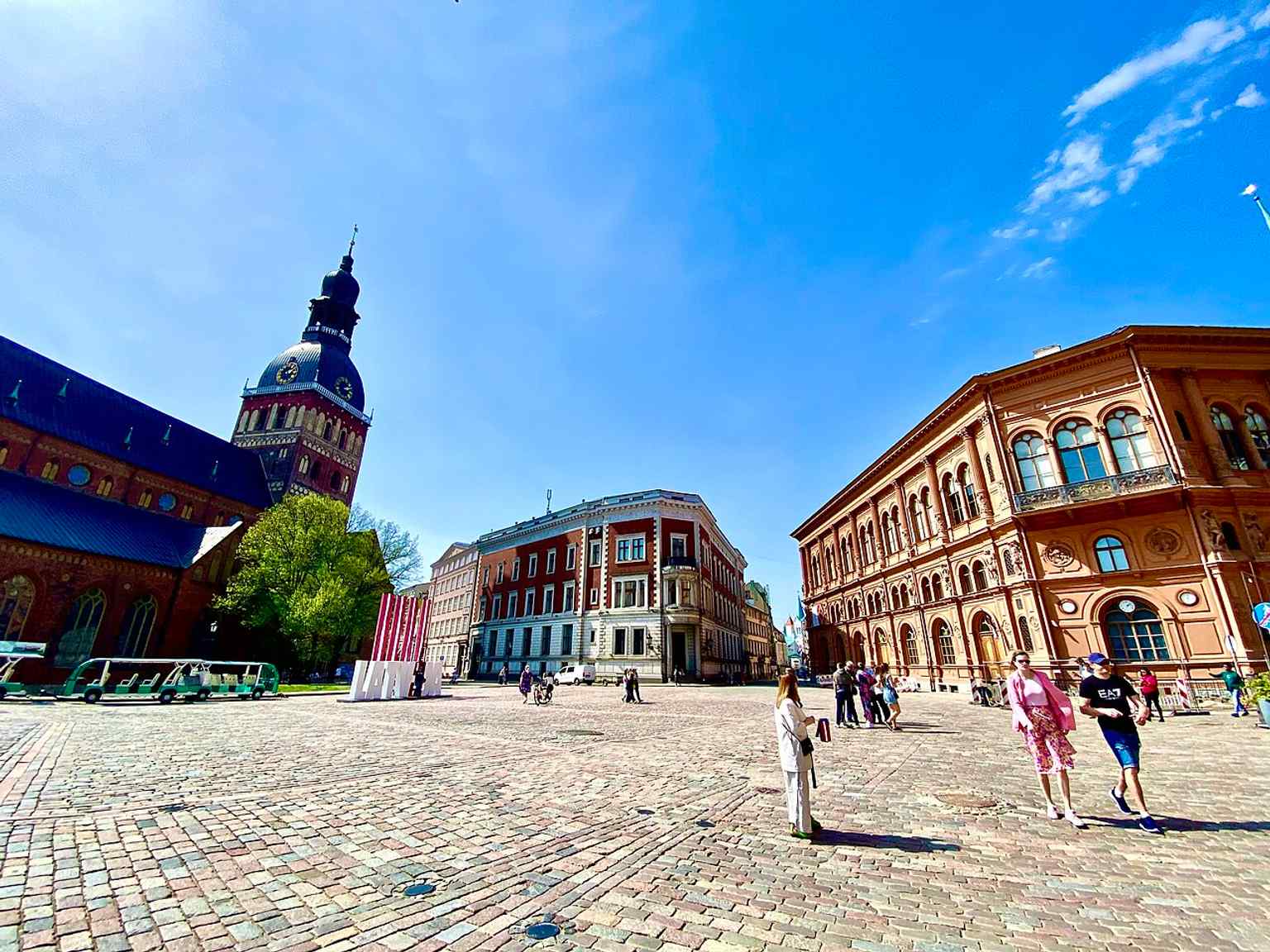
The church from Dome Square, placing St. Peter’s in the heart of Riga Old Town where it has stood since its first mention in 1209.Photo: Steven1991, Wikimedia Commons, CC BY-SA 4.0. Cropped & resized. On your right, Riga Town Hall is a broad pale stone building with a symmetrical rectangular façade, a portico of stout columns, and a central tower that neatly pins the whole…Read moreShow less
Open dedicated page →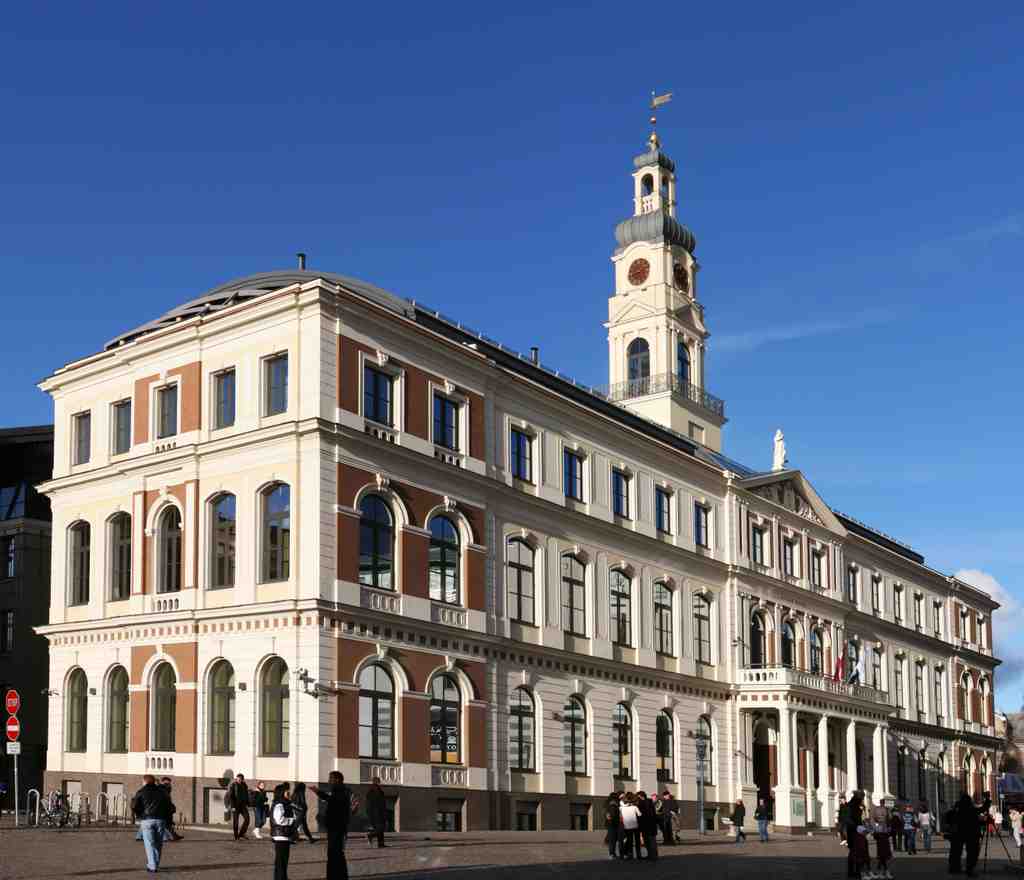
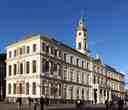
Riga Town HallPhoto: Mettmann, Wikimedia Commons, CC BY 3.0. Cropped & resized. On your right, Riga Town Hall is a broad pale stone building with a symmetrical rectangular façade, a portico of stout columns, and a central tower that neatly pins the whole composition together.
This is Riga’s seat of city government... and like many city halls, it has spent centuries trying to look calm while politics did their usual untidy work.
Riga earned the right to govern itself after a revolt in the thirteen-twenties, when townspeople pushed back against the power of Bishop Albert. By thirteen twenty-six, the city had its own council, called the rat, and a town hall to match. The first one stood near the old main gate. The version that stood here on the market square appears in records by thirteen thirty-four.
That medieval town hall was smaller and Gothic, with a steep roof, a balcony, and an open staircase. From that balcony, a town crier read out the city’s rules in public speeches called bursprake, basically official announcements for everyone within earshot. Some of those rules were about taxes and beer monopolies. Some were what we’d now call dress codes with delusions of grandeur: the council told people who could wear silk, velvet, or gold, and who had better stick to plain cloth. Nothing says civic pride like policing your neighbor’s sleeves. After the fifteen seventies, a city musician also played from the balcony every hour, not just for flair, but to signal that the watch was alert.
This spot also saw blood. During the Calendar Riots, a fierce fight over the new Gregorian calendar and Catholic influence, rebel leaders Martin Giese and Johann Bricken seized power with guild support. Then the Polish king Stephen Batory crushed the revolt, and on the second of August, fifteen eighty-nine, both men lost their heads right in front of the entrance.
Later, Peter the Great’s siege damaged the town hall so badly that the city replaced it in the eighteenth century. A military engineer from Saint Petersburg, Johann Daniel Ettinger, gave it a stern classical face with strong columns and a more theatrical tower. If you check the image on your screen, those entrance columns still echo that redesign. Inside and below, civic order had teeth: the building held courtrooms, debtors’ cells, and even pillories outside for public shaming.
Then came the catastrophe of the twenty-ninth of June, nineteen forty-one. German artillery fired from across the Daugava at Saint Peter’s spire, which Soviet spotters were using. The burning tower fell, flames spread, and Town Hall Square went up with it. This building burned, its ruins lingered until nineteen fifty-four, and later a Soviet technical institute block took its place. In one of history’s drier jokes, the old statue of Themis, goddess of justice, survived and ended up decorating that very Soviet building before returning here. The hall you see now is a reconstruction completed in the early two thousands, and it serves Riga’s city council again. A fuller view in the app helps show that recreated civic stage set.
If you want to return later, the building keeps weekday office hours and closes on weekends.
Riga keeps rebuilding its authority here, stone by stone.
When you’re ready, continue into the square, where the city’s public face gets even more theatrical.
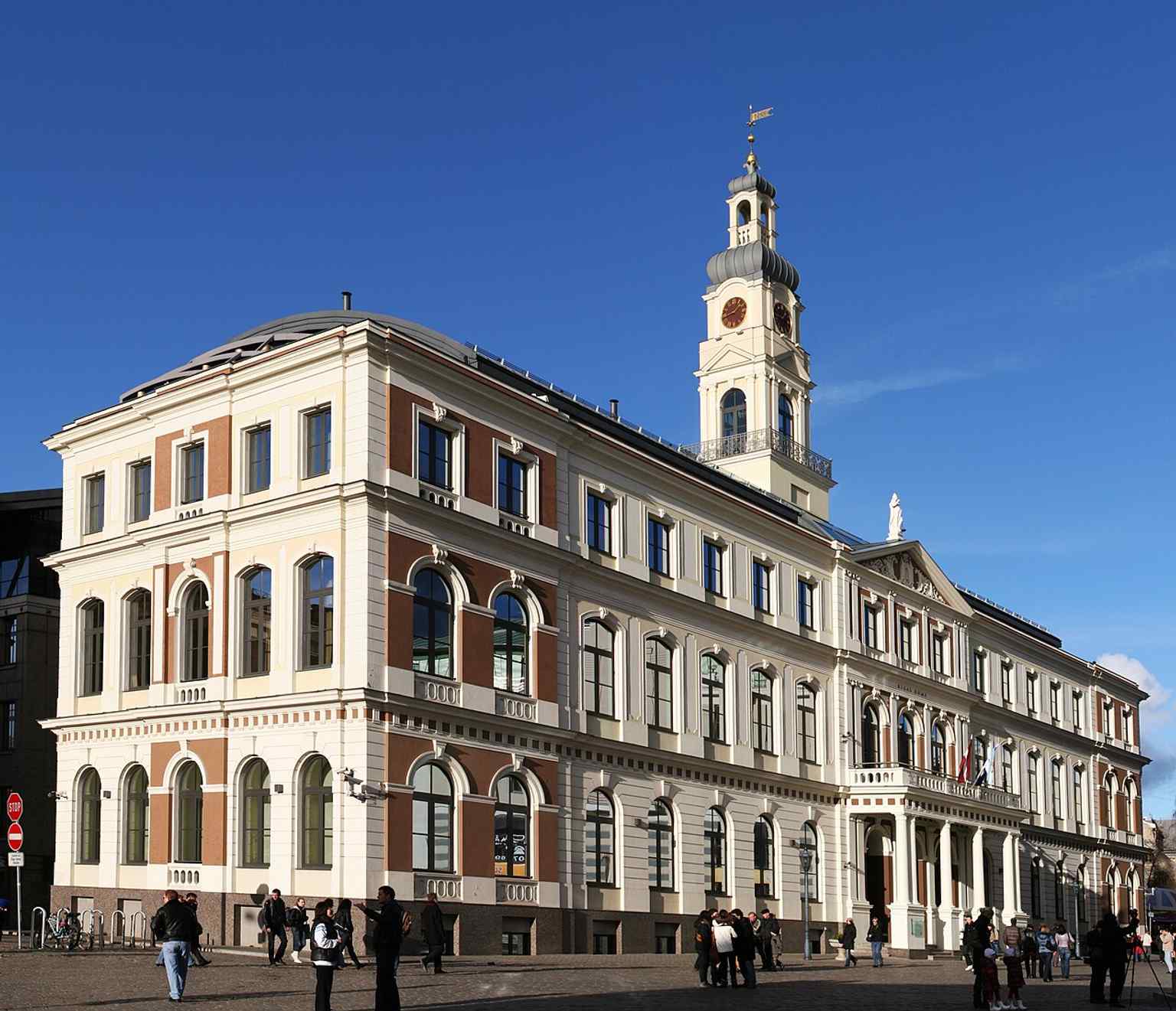
The Town Hall façade in Riga’s Old Town, linking the present building to the historic municipal center described in the source.Photo: Mettmann, Wikimedia Commons, CC BY 3.0. Cropped & resized. 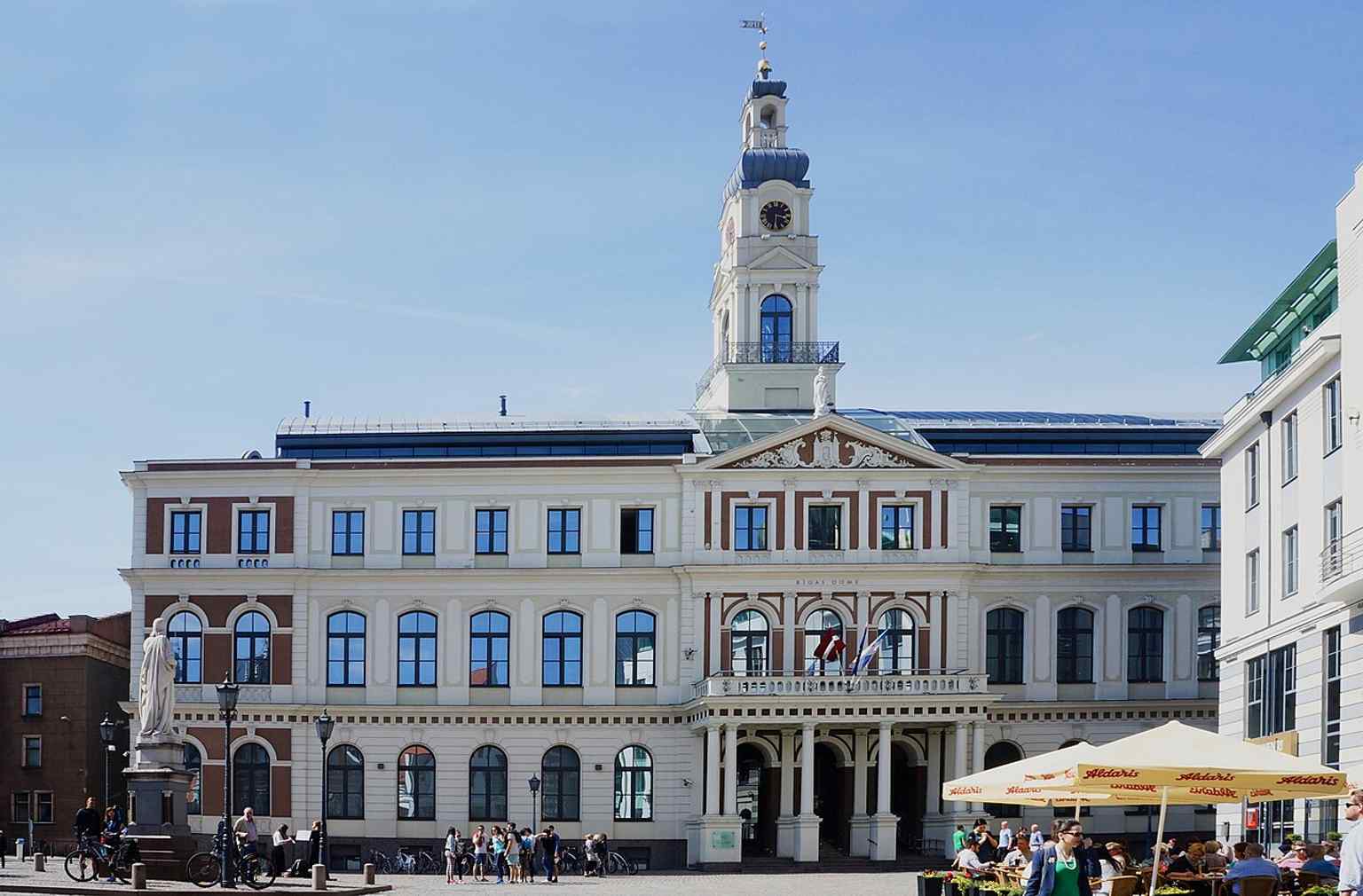
Riga Town Hall seen from Rātslaukums, the square where the medieval and later versions of the building once stood.Photo: PIERRE ANDRE LECLERCQ, Wikimedia Commons, CC BY-SA 4.0. Cropped & resized. 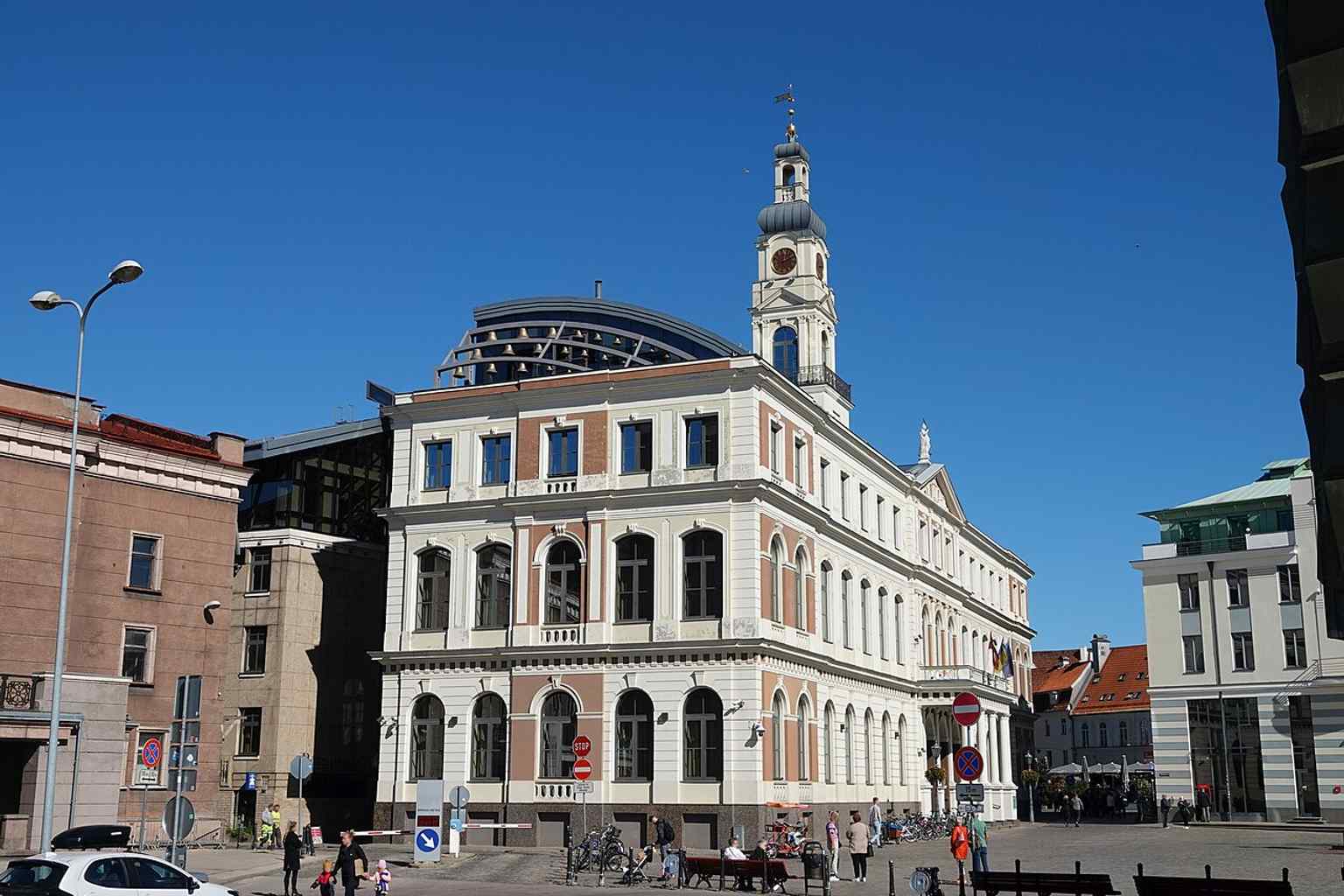
A contemporary full view of Riga Town Hall, showing the reconstructed building that now houses the Riga City Council.Photo: Nenea hartia, Wikimedia Commons, CC BY-SA 4.0. Cropped & resized.
Show 12 more stopsShow fewer stopsexpand_moreexpand_less
On your left is a broad, cobblestone square with a slightly trapezoid shape, framed by ornate stone façades and marked by the statue of Roland rising near its center. Town Hall…Read moreShow less
Open dedicated page →On your left is a broad, cobblestone square with a slightly trapezoid shape, framed by ornate stone façades and marked by the statue of Roland rising near its center.
Town Hall Square is one of Riga’s oldest public stages... though it began in a far less glamorous role. In the thirteenth century, this was simply the city market. Merchants rolled in with goods, noise, arguments, and, for a while, fish. The city authorities eventually banned fish sales here because the smell offended medieval burgher sensibilities. Civilization, apparently, has limits. So the fish stalls got pushed beyond the little defensive wall to Herring Street.
As Riga expanded after twelve eleven, this open space grew into the city’s main commercial and ceremonial heart. By the second half of the thirteenth century, the market complex had taken shape. Then, in thirteen thirty-four, a major new landmark appeared here: the building later known as the House of the Blackheads, though at first traders called it simply the New House. Around the same period, Riga raised its second Town Hall, and this square spread to about one and a half hectares.
But this was never just a place to buy bread or meat. Medieval Riga turned the square into its public theater. Guard inspections happened here. City contests crowned the best defender of Riga. Dominican friars staged religious plays - mystery plays, meaning dramatized Bible stories - on three-level platforms. Carnivals and civic celebrations filled the space too. So yes, trade paid the bills, but spectacle kept the square alive.
Over time, the market shifted toward the Daugava embankment, closer to the harbor, and the last stalls disappeared in fifteen seventy-one. Solid houses replaced them, with shops on the ground floor. The square kept shrinking, especially when the Town Hall expanded in the late sixteenth century.
If you glance at your screen, you can see the old weighing house, or Vazhnya, that once stood here in the early nineteenth century. It held the city’s official scales. Six or seven weighers - often Latvians from non-German guilds - measured incoming goods and collected fees for the magistrate. Merchants hated the repeated weighing, and grain often had to be sifted and measured again. Nothing says “welcome to Riga” like extra paperwork with your cargo.
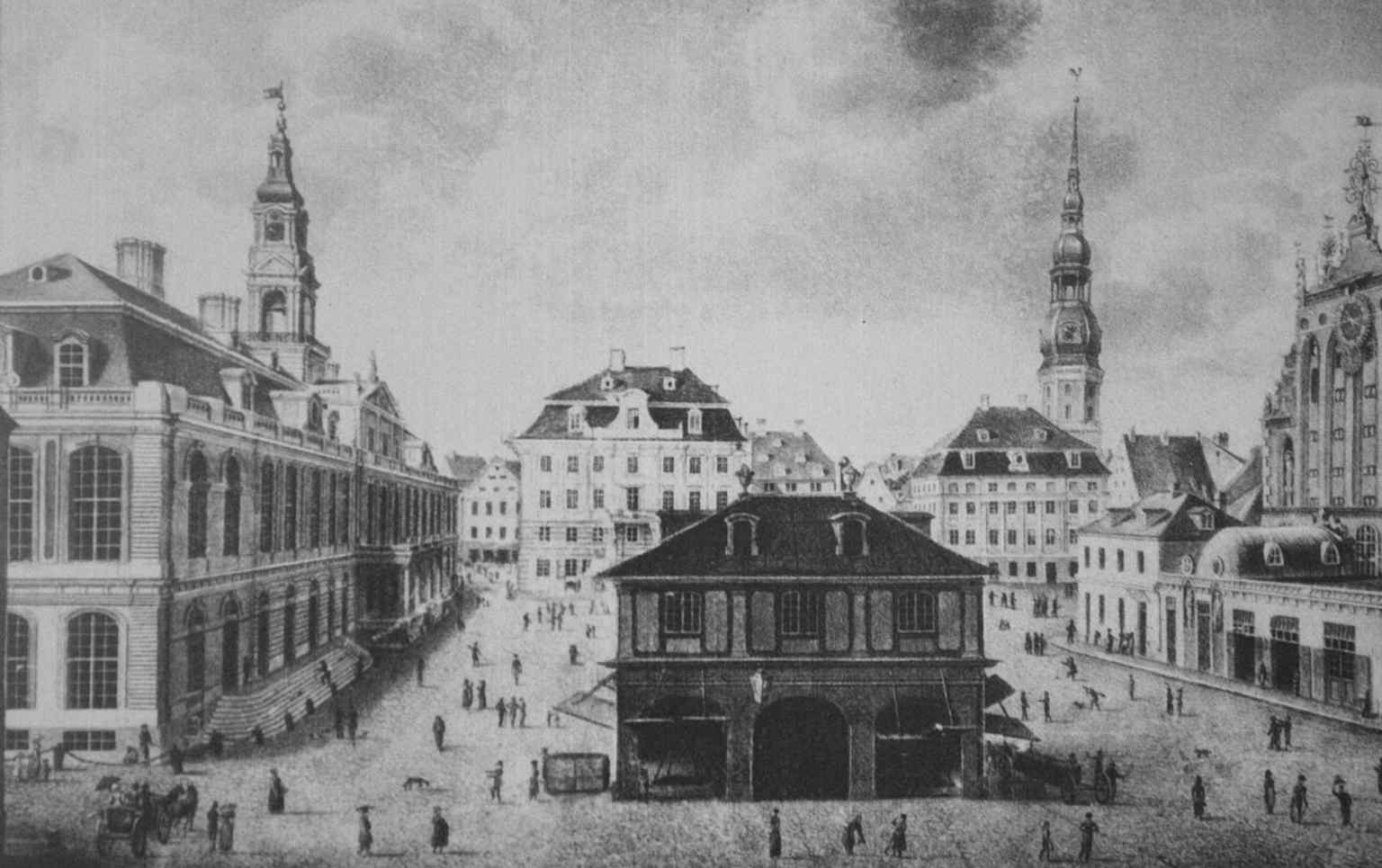
The Old Town weighing house, where incoming goods were measured and taxed on their way into Riga’s market district.Photo: Unknown, Wikimedia Commons, Public domain. Cropped & resized. The figure in the square’s center, Roland, symbolized a free city with its own laws and markets. The original late nineteenth-century statue now lives in Saint Peter’s Church museum; the one here is a copy placed in two thousand five.
Then came disaster. On the twenty-ninth of June, nineteen forty-one, German forces attacking from across the Daugava struck the area around Saint Peter’s tower, and fires tore through the Town Hall Square ensemble. Much of what you see around you had to be rebuilt at the turn of the twenty-first century.
The square is always open, which suits a place that has spent centuries refusing to stay quiet.
Town Hall Square condenses the city’s public life: trade, pride, damage, and stubborn reconstruction. When you’re ready, keep going toward the House of the Blackheads and we’ll meet the square’s grand show-off up close.
On your left, look for a red-brick facade with a tall stepped gable, pale stone trim, and a striking astronomical clock set high above the square. This is the House of the…Read moreShow less
Open dedicated page →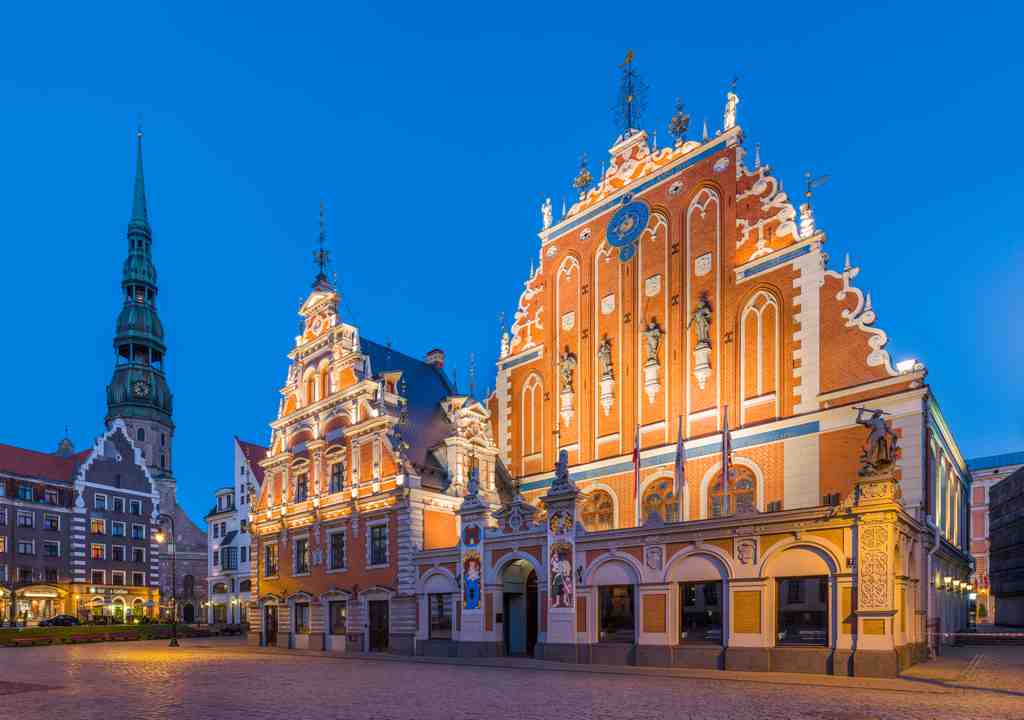
House of the BlackheadsPhoto: Diliff, Wikimedia Commons, CC BY-SA 3.0. Cropped & resized. On your left, look for a red-brick facade with a tall stepped gable, pale stone trim, and a striking astronomical clock set high above the square.
This is the House of the Blackheads, and yes, the name lands with a bit of a thud until you know the story. The Blackheads were a brotherhood of young, unmarried foreign merchants in Riga. They first gathered under Saint George, then later chose Saint Maurice as their patron... a Roman soldier and Christian martyr traditionally shown as a dark-skinned Moor in armor. His black head became their emblem, and eventually their name.
In fourteen seventy-seven, the Blackheads rented rooms here from the city magistrate, starting with the upper floor. Over time they poured money into the place, decorated it, rebuilt it, and more or less made it their own. By day, this building worked as a kind of exchange, where goods and deals moved through Riga. By evening, it changed character completely and hosted concerts, balls, ceremonies, and very serious social drinking.
And these men did take their rituals seriously. New members served older brothers at table and drank from goblets shaped like deer legs. If someone misbehaved, say by starting a fight or grabbing another brother by the hair, the fine came in wax, not cash. Wax mattered; it lit halls, churches, and altars. Medieval discipline, with a surprisingly practical payment system.
One of Riga’s favorite legends starts right here in the square outside. In fifteen ten, the brotherhood reportedly set up a large Christmas tree, decorated it with paper flowers, danced around it, sang, and then burned it at the end of the celebration. Riga and Tallinn still argue over who did the first decorated tree. Cities, like siblings, keep score forever.
Look up at the facade. The version you see follows the early seventeenth-century design in northern European Mannerism, meaning architecture that loves drama, ornament, and showing off a little. The astronomical clock, first created in sixteen twenty-six, did more than tell time; it tracked moon phases, weekdays, and zodiac signs too. A proper merchant’s clock: practical, theatrical, and slightly smug.
This house also stood in larger history. The brotherhood helped defend Riga, backed the Reformation, and much later, on the eighteenth of March, nineteen twenty-one, delegations from Poland and Soviet Russia signed the Treaty of Riga here, helping redraw the map of eastern Europe.
Then came catastrophe. German shelling in nineteen forty-one wrecked the building, the ruins stood for years, and officials finally cleared them away in nineteen forty-eight. If you want, check the before-and-after slider in the app; it really shows how dramatic that loss and return were. In the late nineteen nineties, Riga rebuilt the house on its original medieval cellars, and more than five thousand people joined a campaign called “I build the House of the Blackheads,” each donating five lati for a named brick.
If you decide to go inside later, it’s open daily from ten in the morning to five in the afternoon.
For a merchant clubhouse, this place managed to become a symbol for the whole city. When you’re ready, continue on toward the Palace of Peter the First.
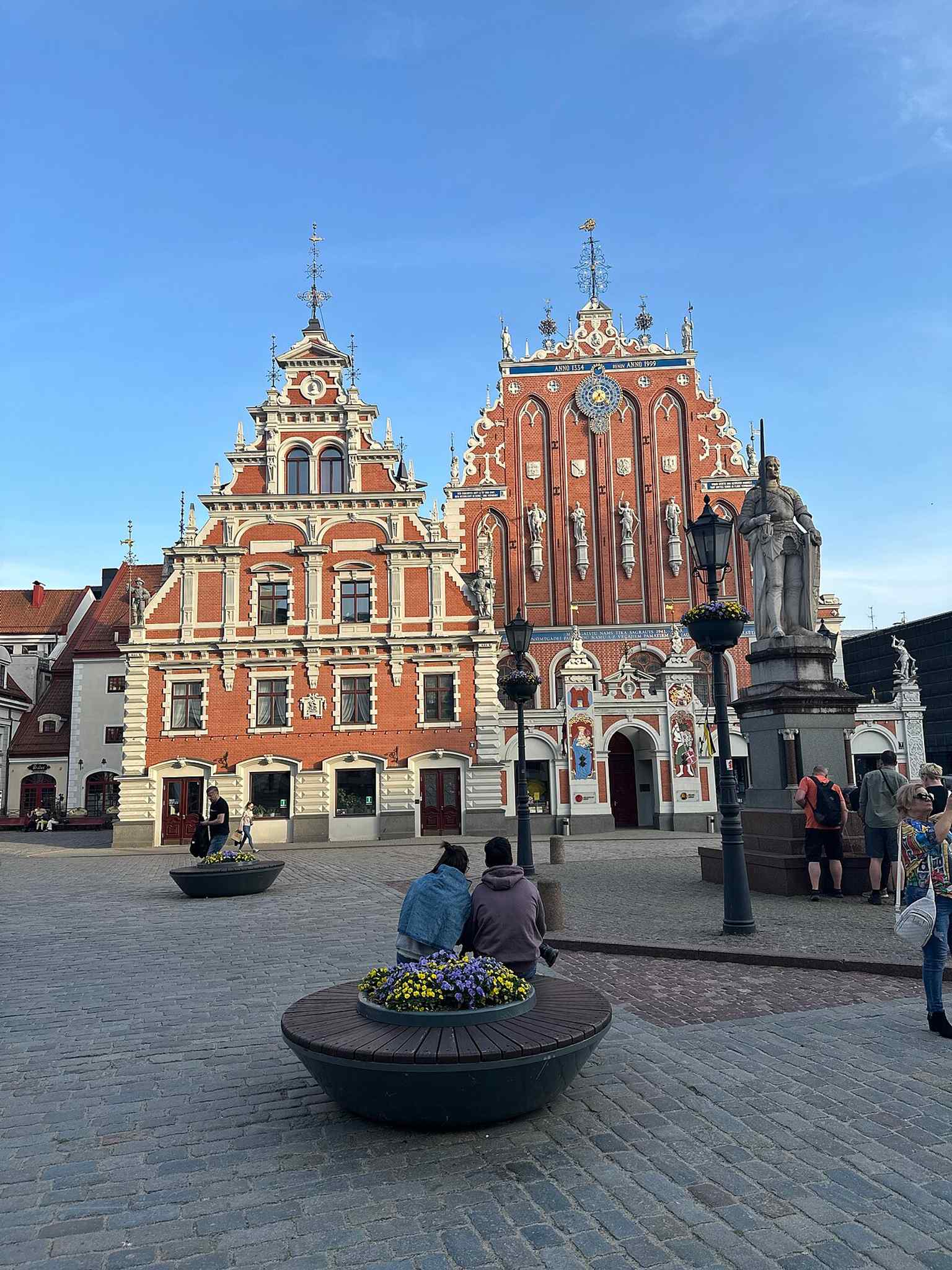
A clean daytime view of the rebuilt House of the Blackheads on Riga’s Town Hall Square, showing the landmark’s ornate Mannerist façade in its full restored form.Photo: Geogrfr3ak, Wikimedia Commons, CC0. Cropped & resized. 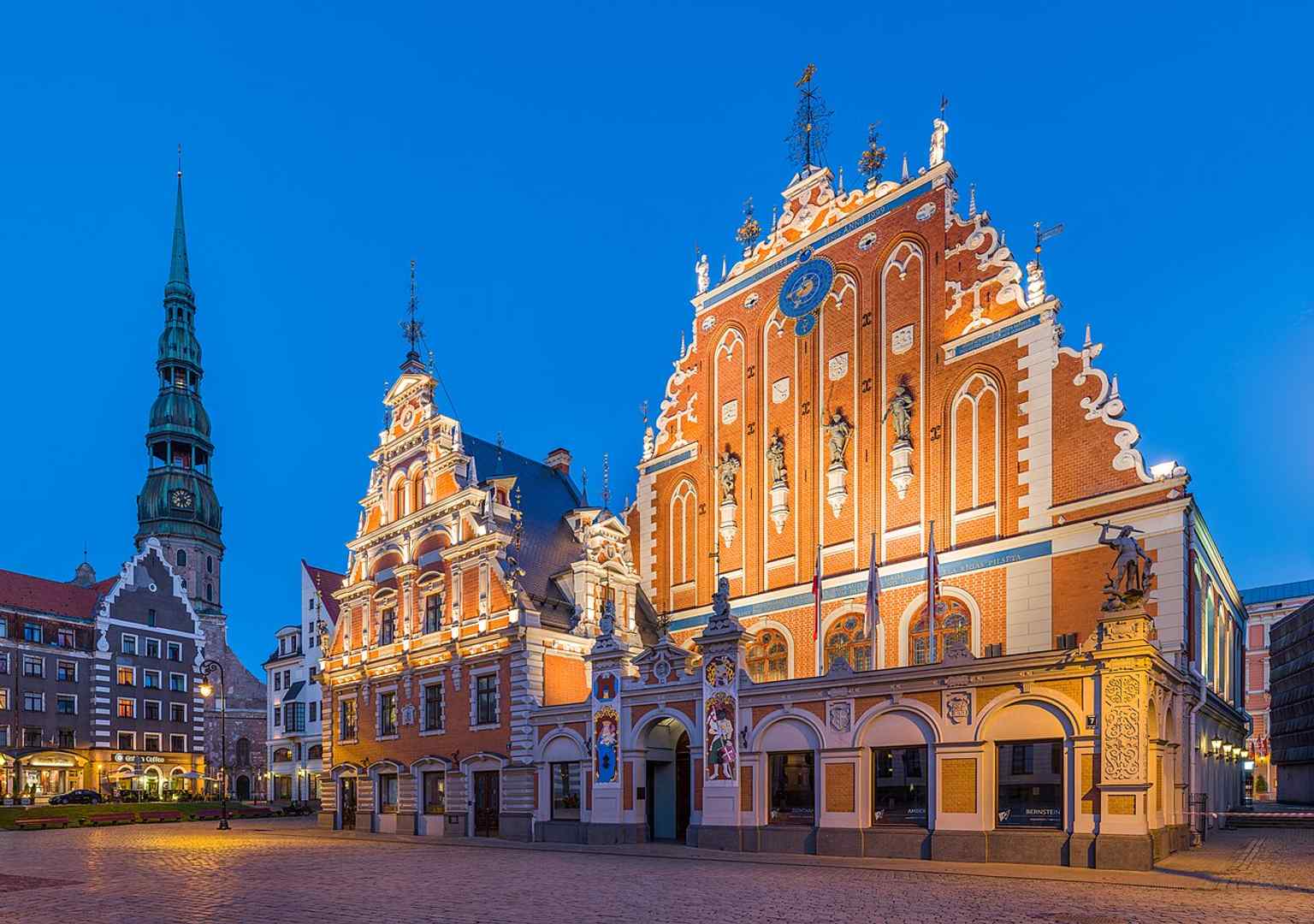
The House of the Blackheads beside St. Peter’s Church at dusk — a dramatic skyline view that places the landmark in Riga’s historic center.Photo: Diliff, Wikimedia Commons, CC BY-SA 3.0. Cropped & resized. 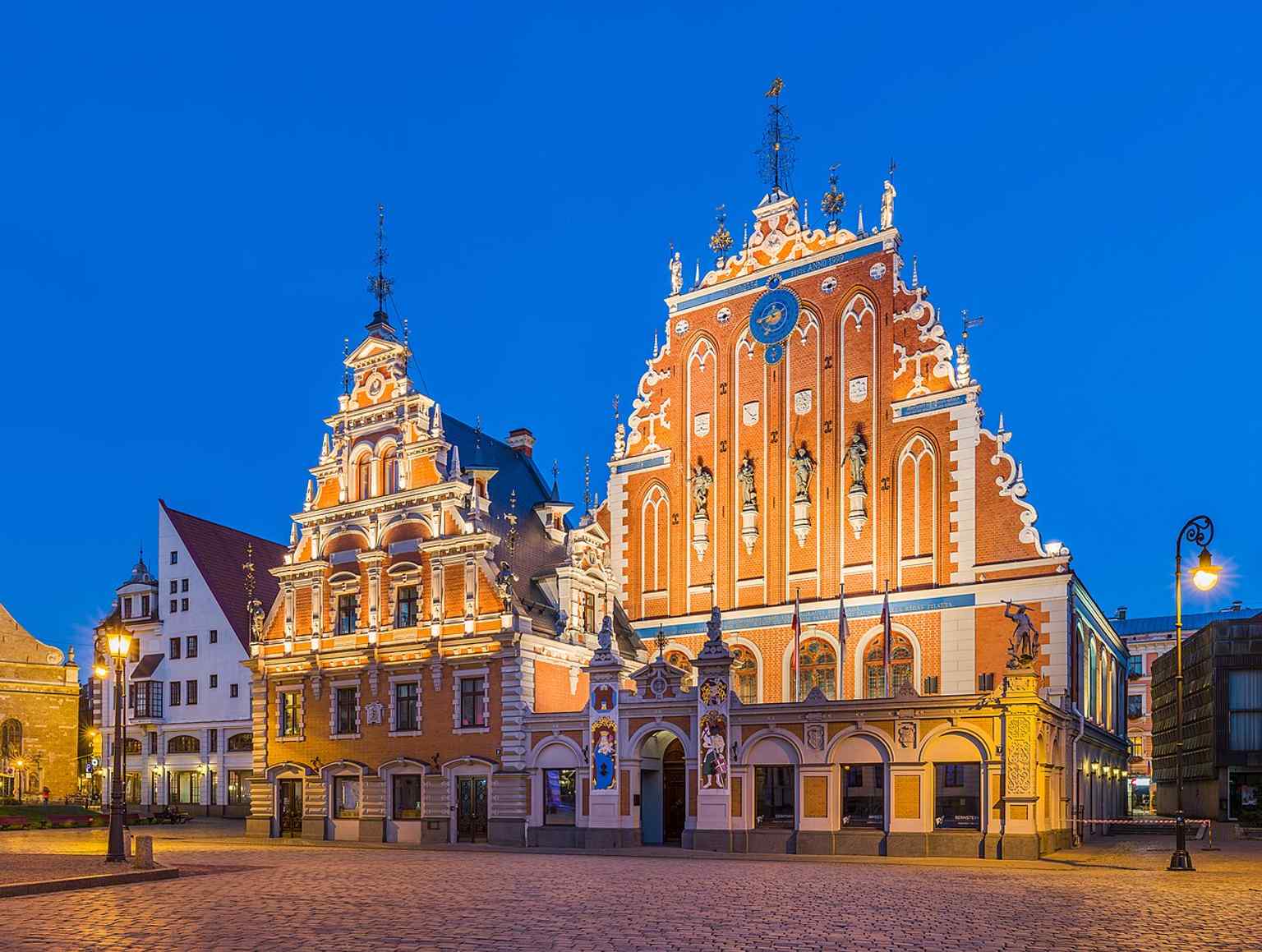
A warm dusk portrait of the façade, ideal for showing the building’s rich decorative gable and its prominent place on the square.Photo: Diliff, Wikimedia Commons, CC BY-SA 3.0. Cropped & resized. 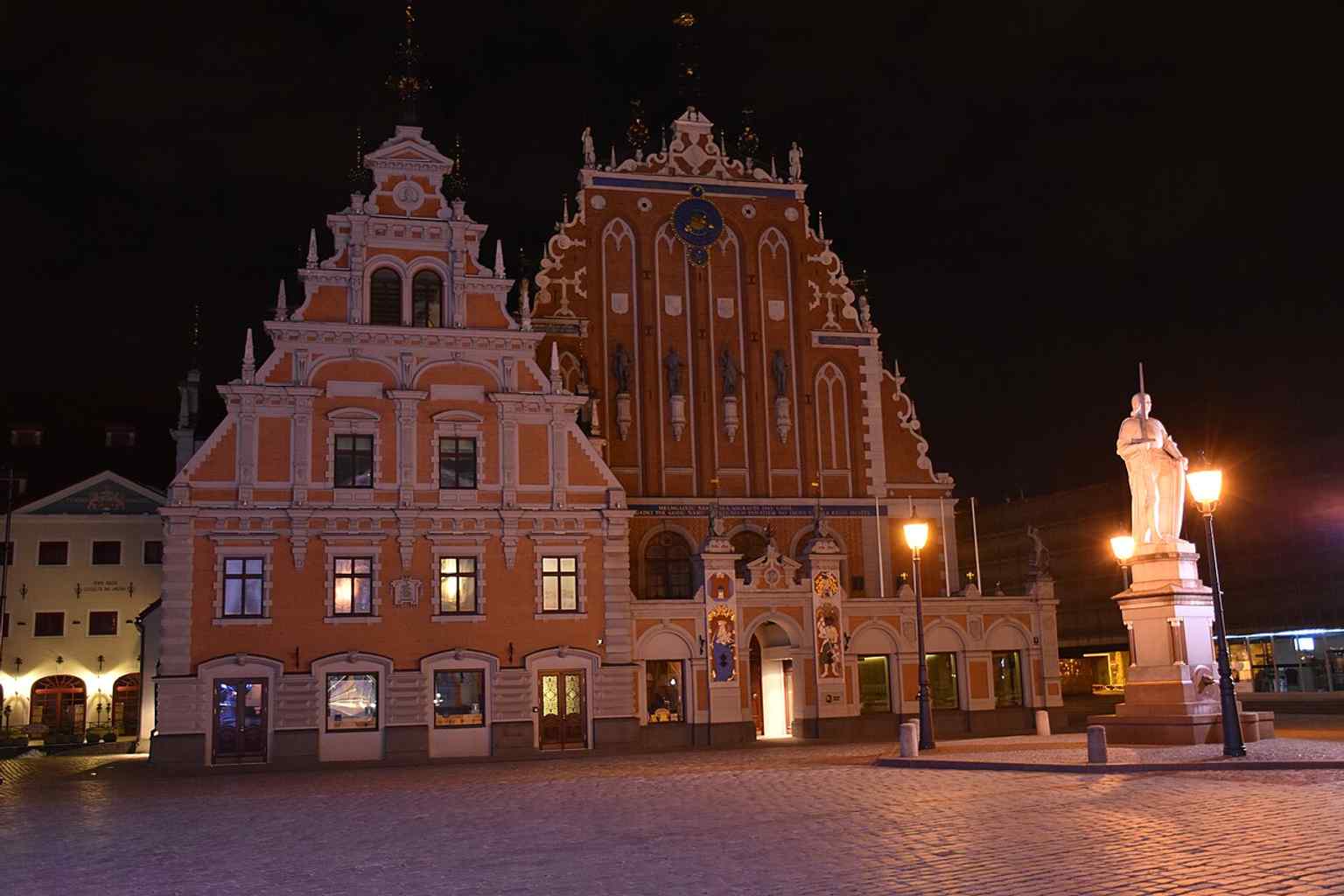
Night illumination brings out the façade’s sculptural details, echoing the building’s role as one of Riga’s most ceremonial and photographed monuments.Photo: Vasyatka1, Wikimedia Commons, CC BY-SA 4.0. Cropped & resized. 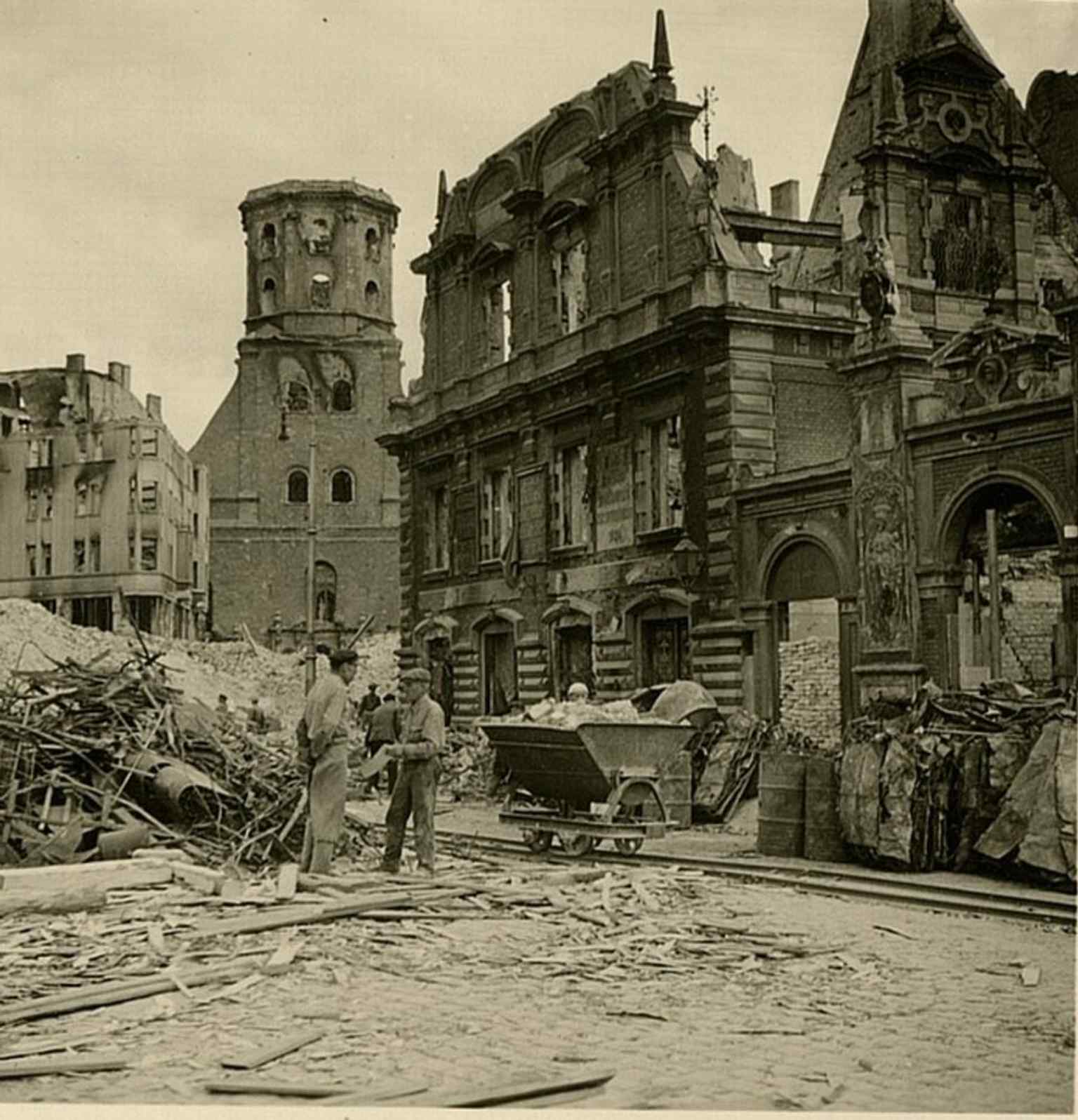
A wartime image of the Old Town damage from 1941, including the House of the Blackheads — a reminder that the original building was destroyed during World War II.Photo: Carl Kadelke, National Library of Latvia, Wikimedia Commons, CC BY 4.0. Cropped & resized. 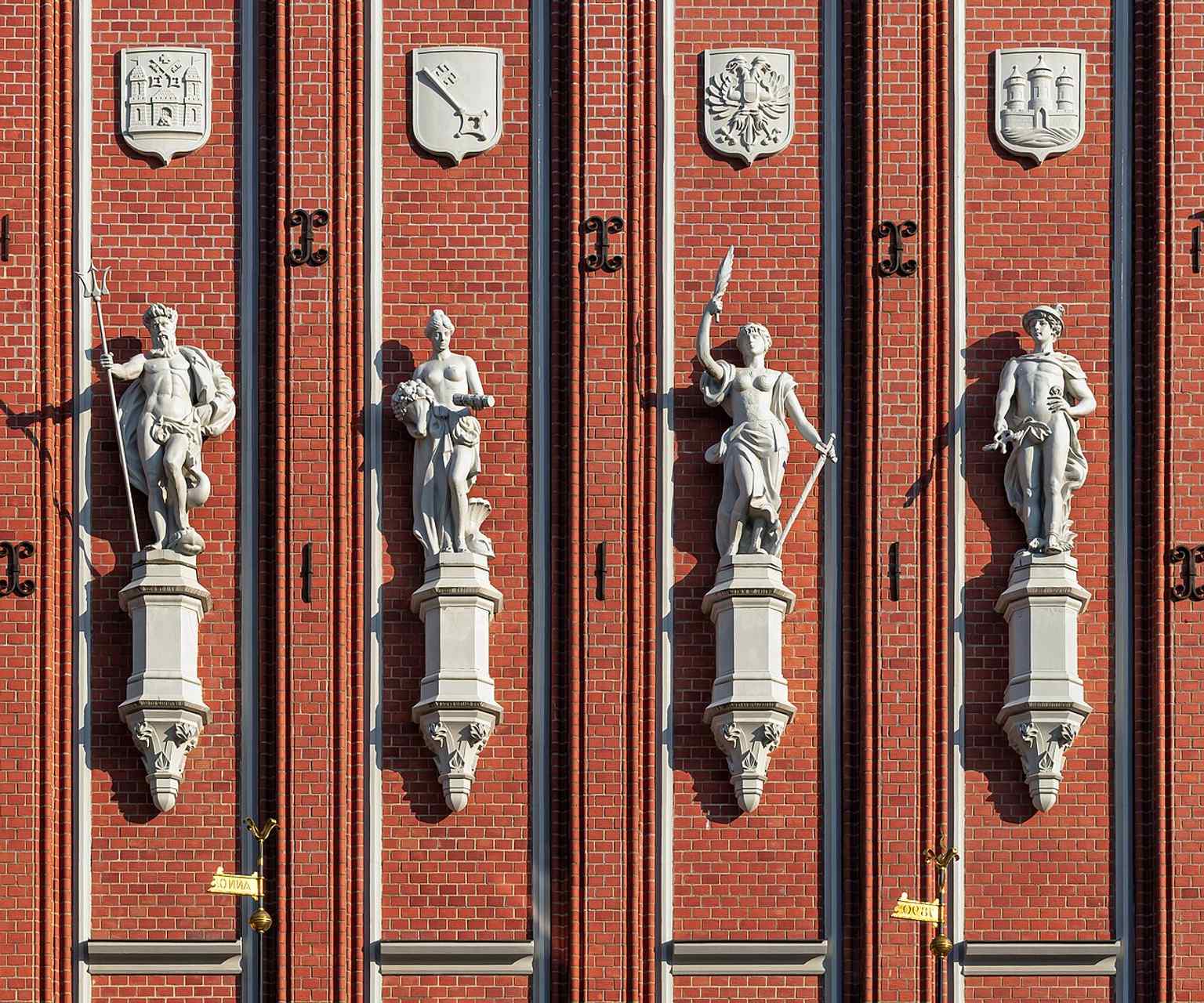
Close-up of the gable sculptures and Hanseatic coats of arms, highlighting the symbols of maritime trade and the merchant world that shaped the brotherhood.Photo: Photograph: Radomianin, Wikimedia Commons, Public domain. Cropped & resized. 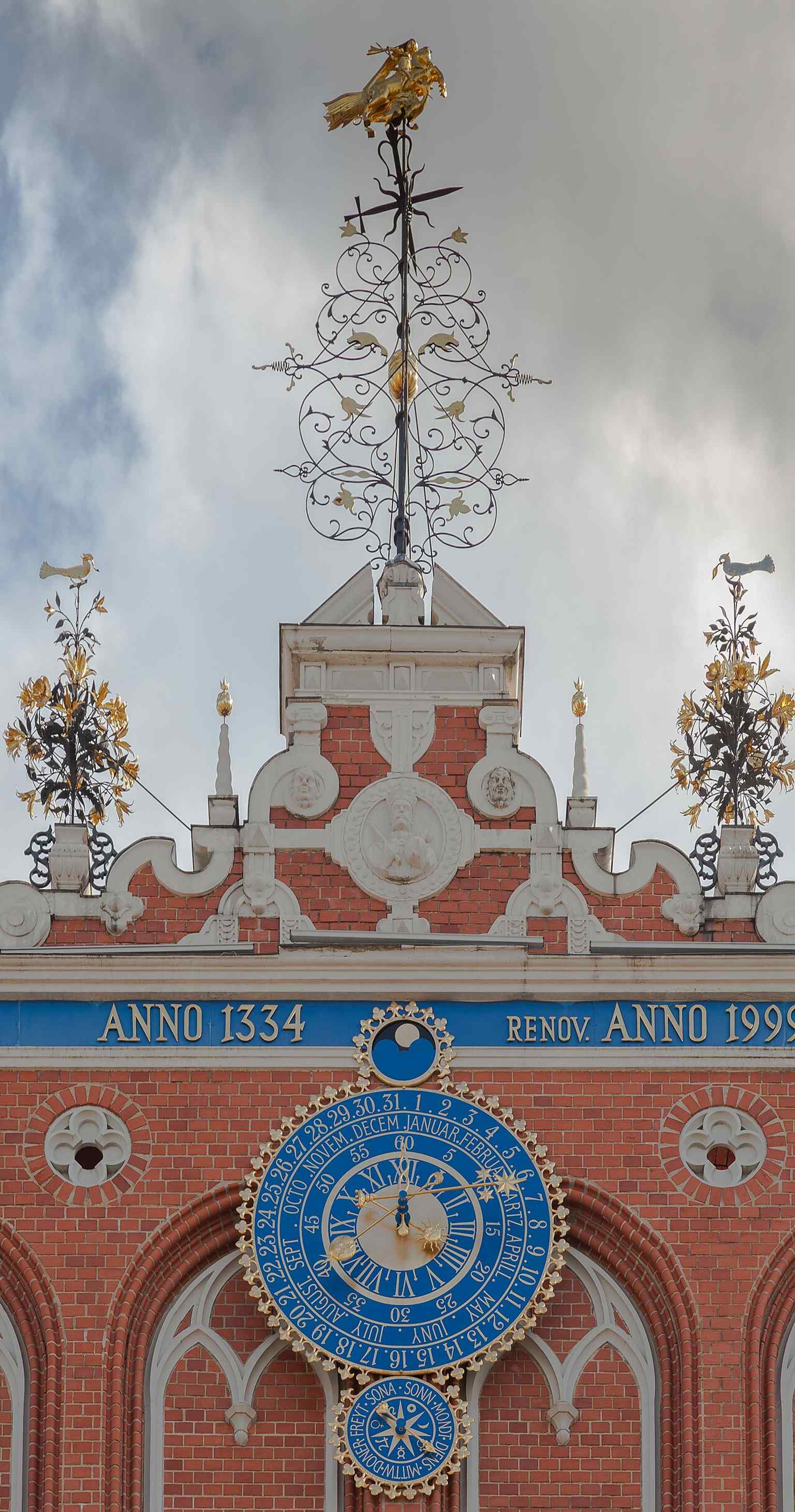
A tight view of the façade’s upper section, where the famous astronomical clock once displayed time, lunar phases, and zodiac signs.Photo: Diego Delso, Wikimedia Commons, CC BY-SA 3.0. Cropped & resized. 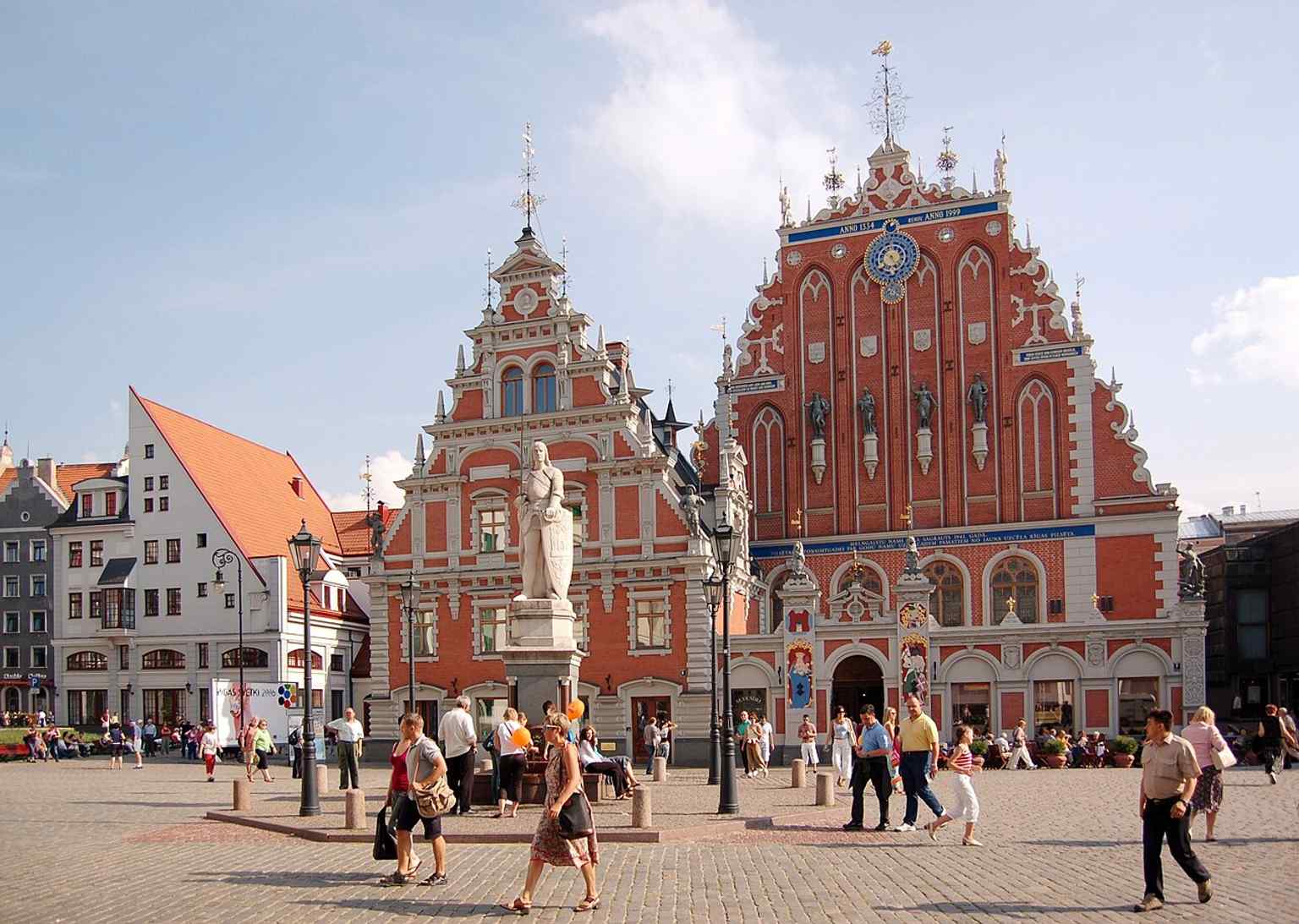
An earlier daytime view of the restored façade, useful for showing the building’s symmetrical front and richly ornamented windows before later photo sets.Photo: Bahnfrend, Wikimedia Commons, CC BY-SA 4.0. Cropped & resized. 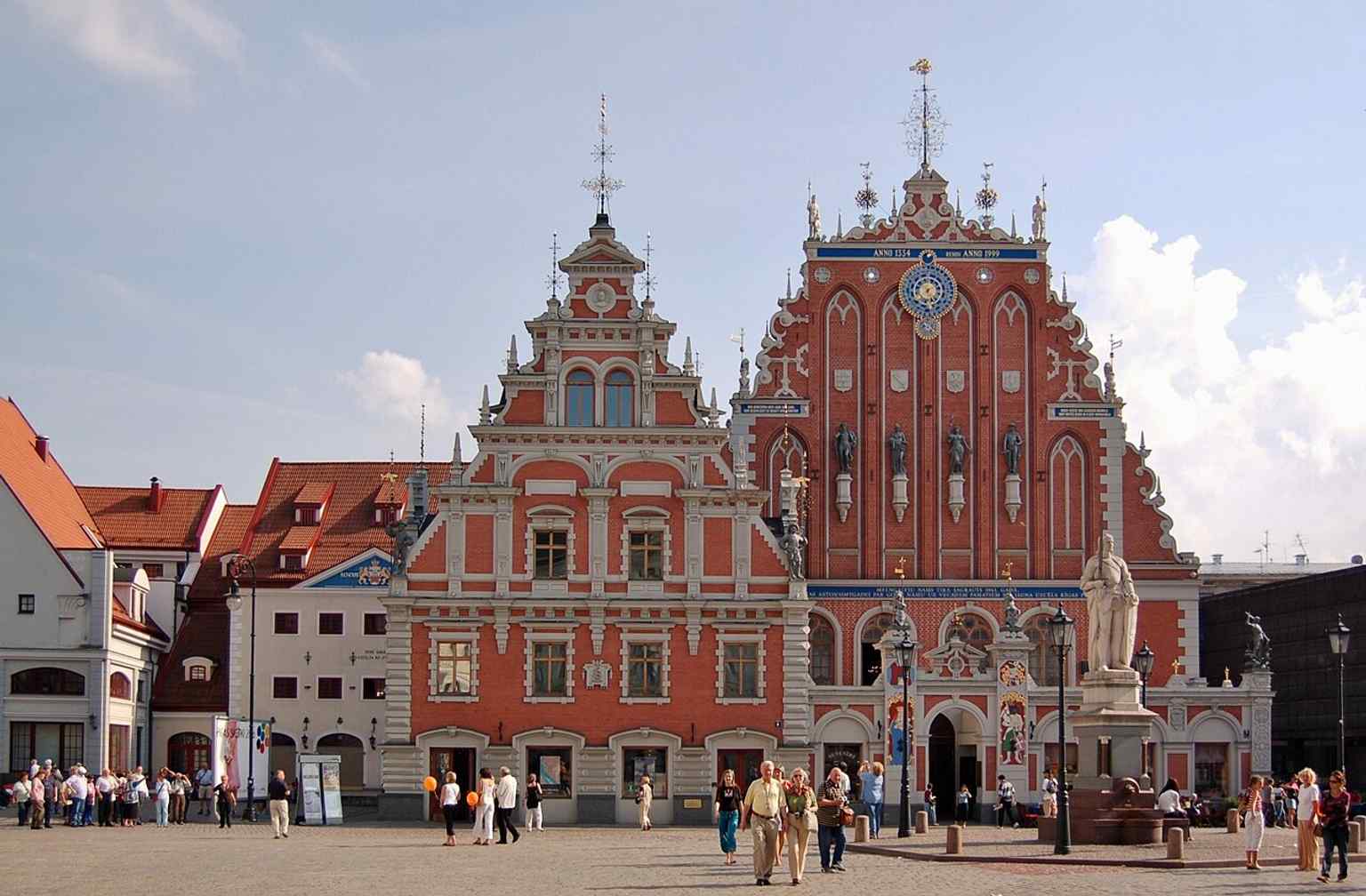
Another clear exterior angle from 2006, helping show the House of the Blackheads as a fully rebuilt centerpiece of the square.Photo: Bahnfrend, Wikimedia Commons, CC BY-SA 4.0. Cropped & resized. 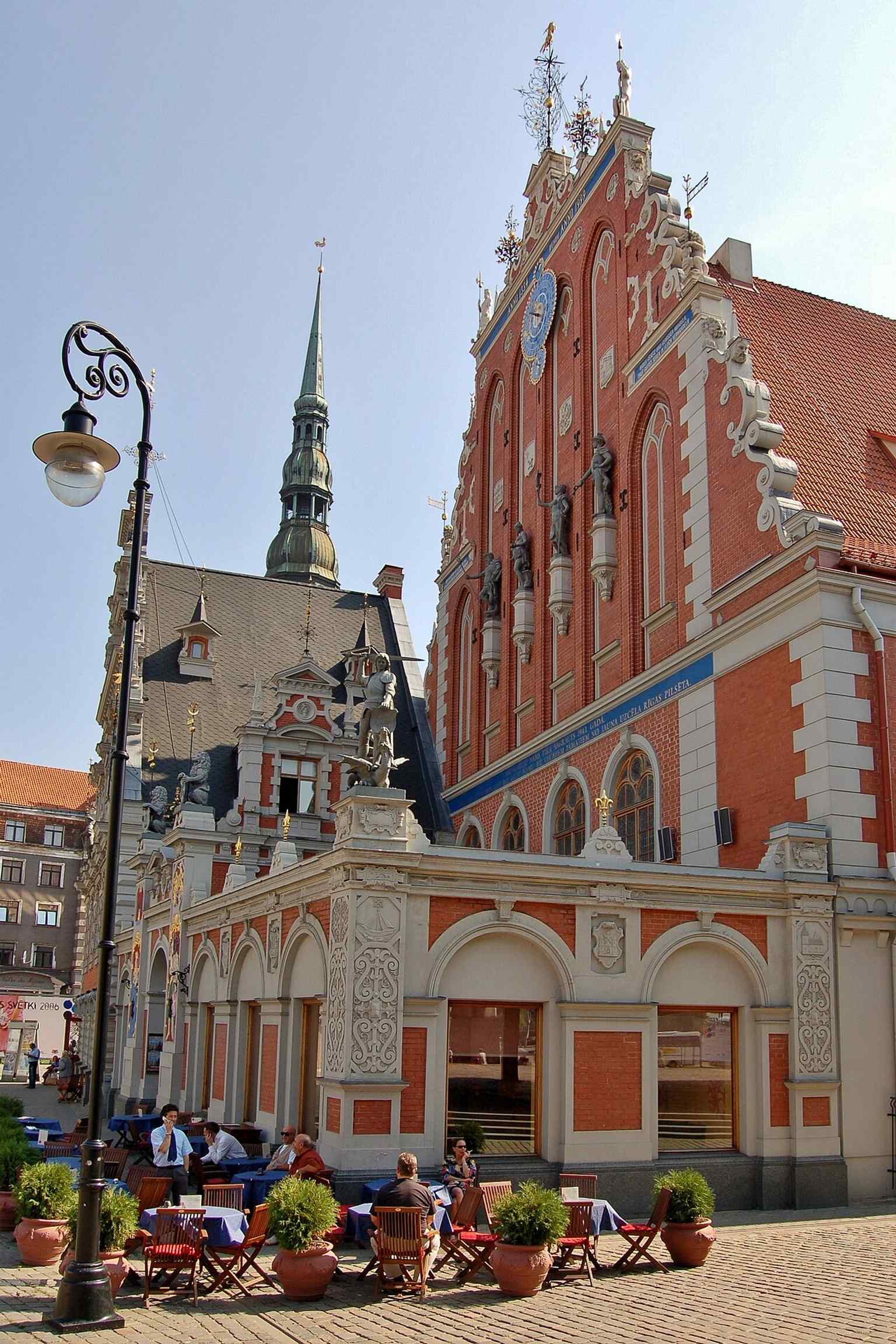
A taller framing of the landmark emphasizes the full height of the gable and the vertical rhythm of the façade’s decorative architecture.Photo: Bahnfrend, Wikimedia Commons, CC BY-SA 4.0. Cropped & resized. 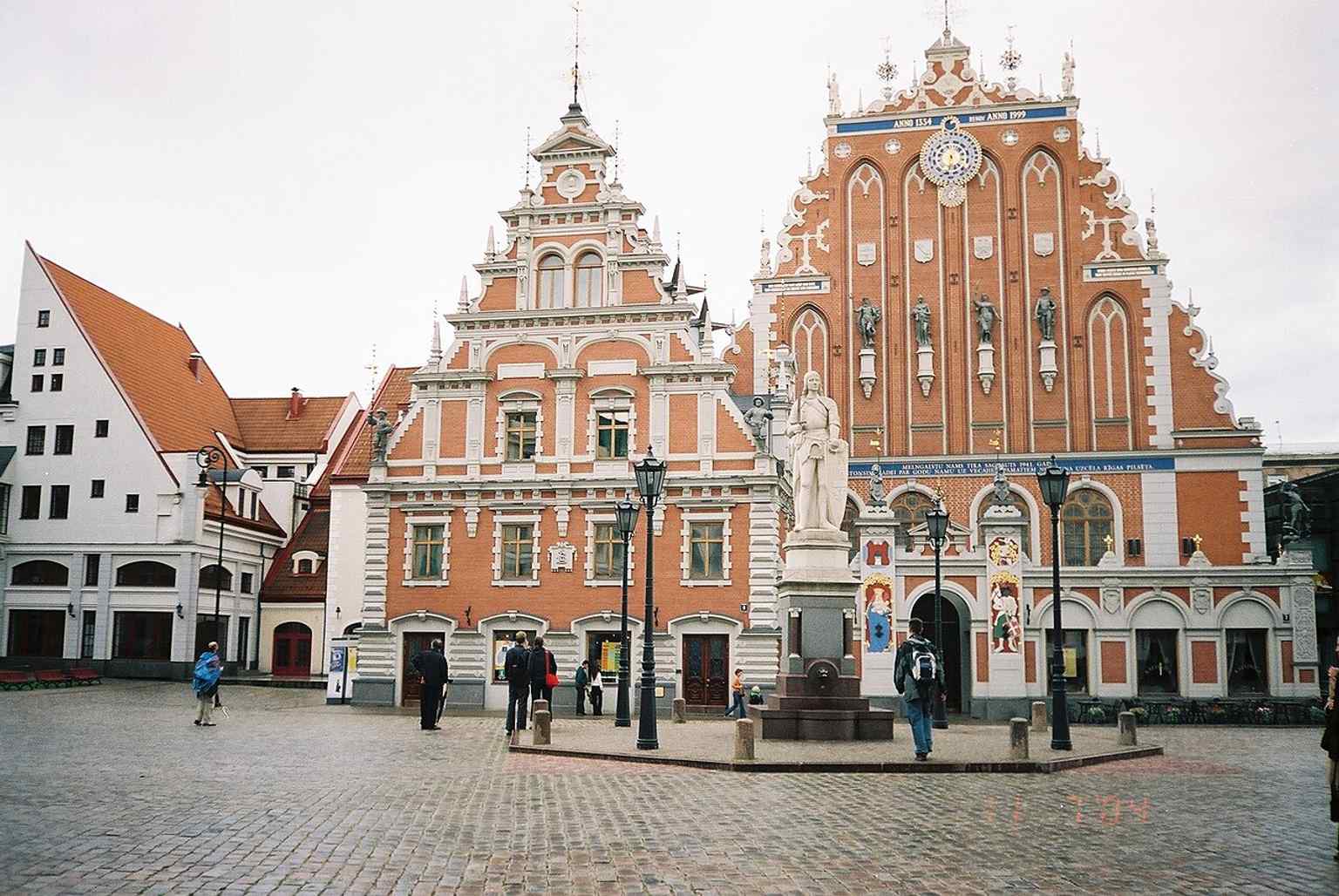
A broader view of Town Hall Square places the House of the Blackheads in its urban setting, where the famous Christmas-tree legend unfolded.Photo: Julo, Wikimedia Commons, Public domain. Cropped & resized. On your right, this pale stucco building has a long rectangular façade, rows of evenly spaced windows, and a memorial plaque fixed to the wall. Peter the Great stayed here eight…Read moreShow less
Open dedicated page →On your right, this pale stucco building has a long rectangular façade, rows of evenly spaced windows, and a memorial plaque fixed to the wall.
Peter the Great stayed here eight times when Riga pulled him in for business, war, or both. After he captured the city, he bought the property from the councillor Renenberg for five thousand crowns... a very serious sum, roughly the value of a high-end property in modern money. Then, in classic Peter fashion, he kept expanding it. In seventeen twelve he ordered provincial architects to rebuild the place, and the palace gradually grew out of several separate houses he bought over time, including one above the New Gate facing the Daugava. So this was not one neat royal project; it was more like an imperial habit with walls.
Originally, in Dutch classical style, it had two floors, a high roof, broad flat columns running up the façade, and an ornate gable with a coat of arms above the central entrance. If you glance at your screen, image two helps show how the later third floor changed those original proportions. Peter’s last visit came in February of seventeen twenty-one. He stayed about three months, ordered another rebuild, and never saw it finished. He did, however, get his curious hanging garden above the fortress casemates, the vaulted military chambers inside the rampart.
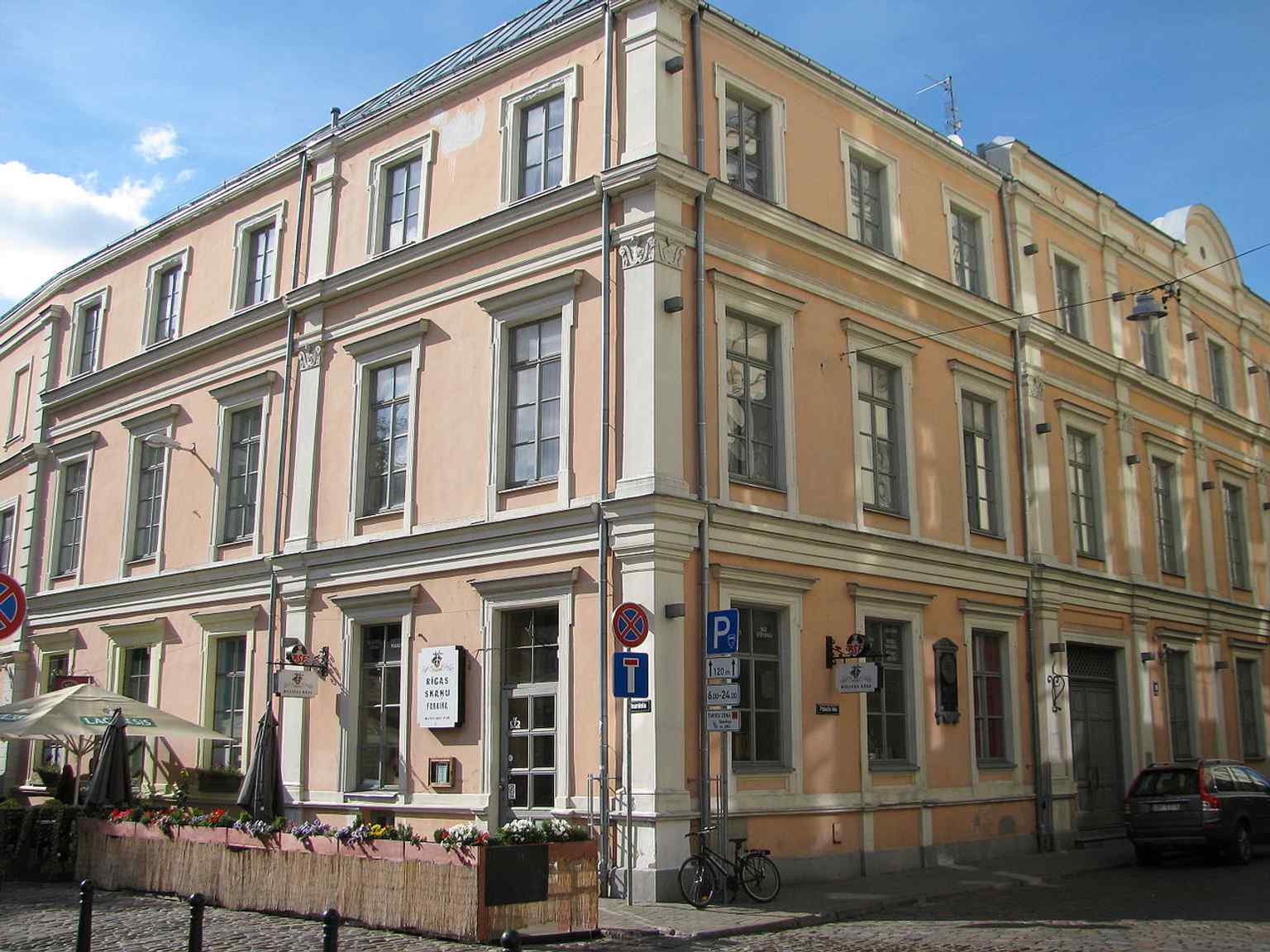
A clear street-side view of the palace façade, which was rebuilt and later gained its present three-storey look in the 1860s.Photo: Voll, Wikimedia Commons, CC BY-SA 4.0. Cropped & resized. Later this place served as a court, then a school, then offices. In two thousand, Ernesto Preatoni restored it, and now it holds shops, a restaurant, and luxury apartments.
This palace is really a stitched-together record of power, renovation, and restless ambition. If you're curious later, it generally opens from eleven to seven except Tuesdays, and when you're ready, continue to the next stop.
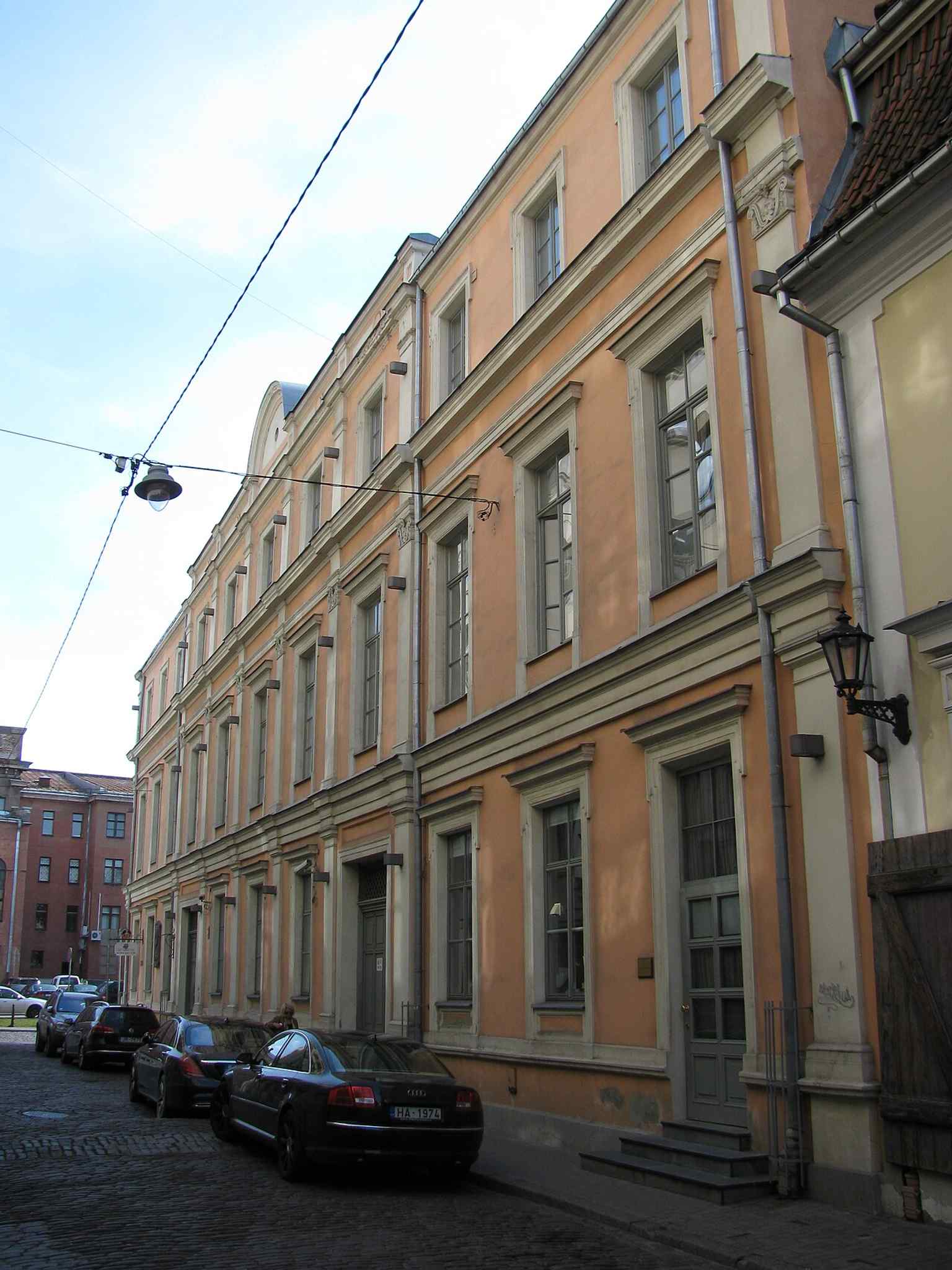
The Palace of Peter I on Palasta Street — the former royal residence where Peter the Great stayed in Riga eight times.Photo: Voll, Wikimedia Commons, CC BY-SA 4.0. Cropped & resized. On your left, look for a massive pale stone-and-brick church with a long rectangular body, a steep dark roof, and a central tower topped by a rounded Baroque dome with a golden…Read moreShow less
Open dedicated page →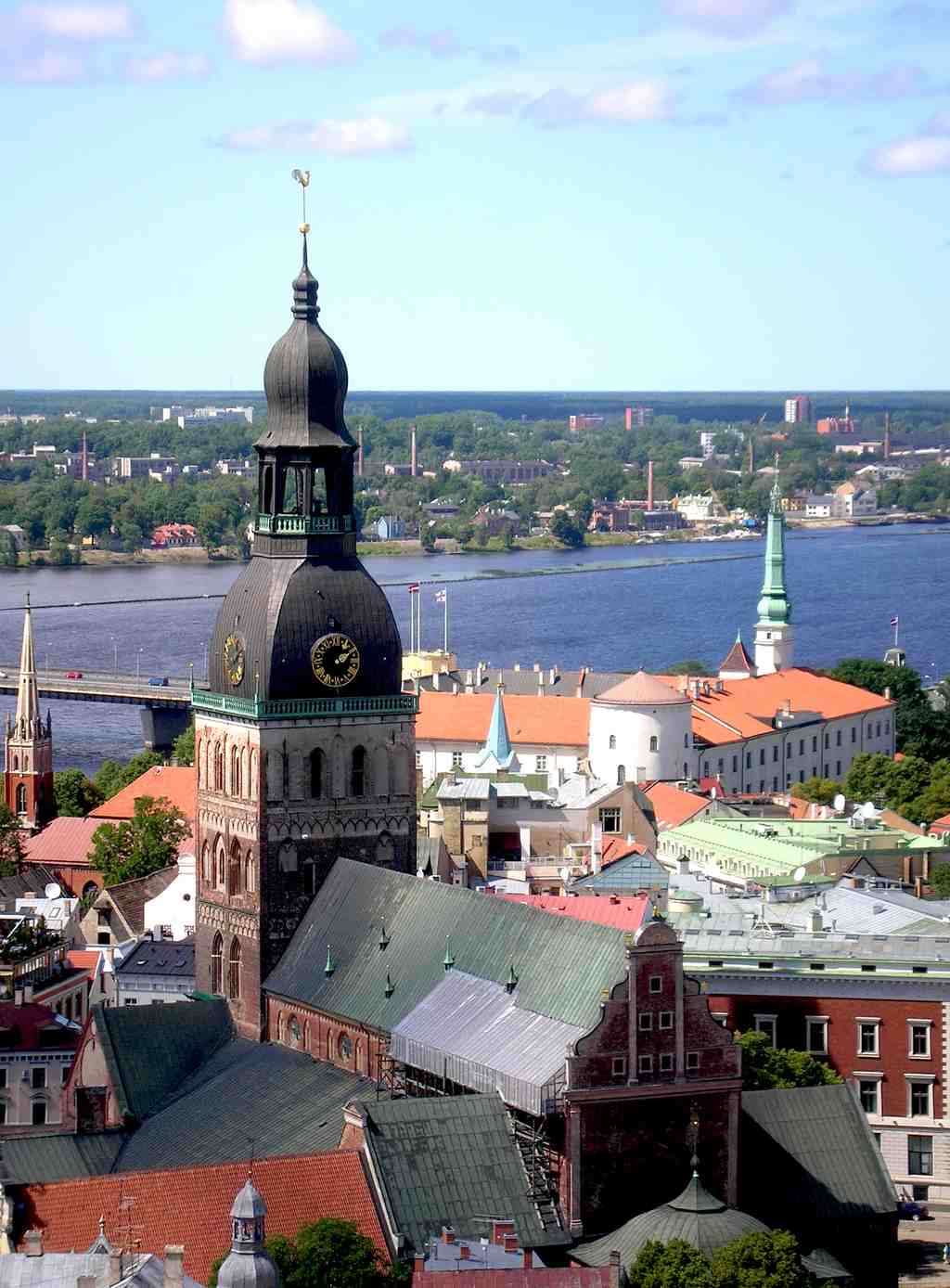
Dome CathedralPhoto: Véronique Dauge, Wikimedia Commons, CC BY-SA 3.0 IGO. Cropped & resized. On your left, look for a massive pale stone-and-brick church with a long rectangular body, a steep dark roof, and a central tower topped by a rounded Baroque dome with a golden rooster.
This is Dome Cathedral, the great church of Riga and, in a city that enjoys vertical drama, one of its main skyline anchors. Its name comes through the German word Dom, from the Latin domus Dei, meaning “house of God.” Modest name, really, for the largest medieval church in the Baltics.
Bishop Albert of Buxhoeveden founded it on the twenty-fifth of July, twelve eleven, and he kept a very close eye on the project, mostly because he poured serious money into it. German master builders led much of the work, and construction stretched on until about twelve seventy. The earliest church belonged to a “transitional” style, meaning it stood halfway between heavy Romanesque architecture and the taller, sharper lines of northern Gothic. So even from outside, you’re looking at a building that began as an architectural negotiation.
That negotiation never really ended. The Reformation in fifteen twenty-four stripped away the original decoration, and a fire in fifteen forty-seven finished off much of what remained. The builders had planned two towers, but money intervened, as it so often does, and only one rose in the center of the facade. In fifteen ninety-five they heightened that tower with a wooden spire, and for a while it actually beat nearby Saint Peter’s for height. Riga, apparently, has never been above a little tower rivalry. The wooden spire proved needy, though, so in seventeen sixty-six people removed it and gave the tower the lower Baroque dome you see now. With the rooster on top, it reaches ninety-six meters.
That rooster is not just decoration. For centuries it worked as a weather vane, and locals read it like a practical little oracle. If its gilded side faced the Daugava, ships could enter Riga and trade; if the black side turned that way, captains knew to wait for a better wind. Commerce and theology sharing a roof... very Riga.
If you glance at your screen, the nave, the cathedral’s soaring central hall, shows how Gothic structure still carries later decoration with surprising ease. Inside, the great celebrity is the organ. Take a look at the app image of it. The firm E. F. Walcker and Company of Ludwigsburg installed the current instrument in eighteen eighty-three and eighteen eighty-four. It stands about twenty-five meters tall, uses more than six thousand seven hundred pipes, and when it was new, it was the largest organ in the world. Composers including Franz Liszt and Max Reger wrote music for it, which is not bad company for a church instrument.
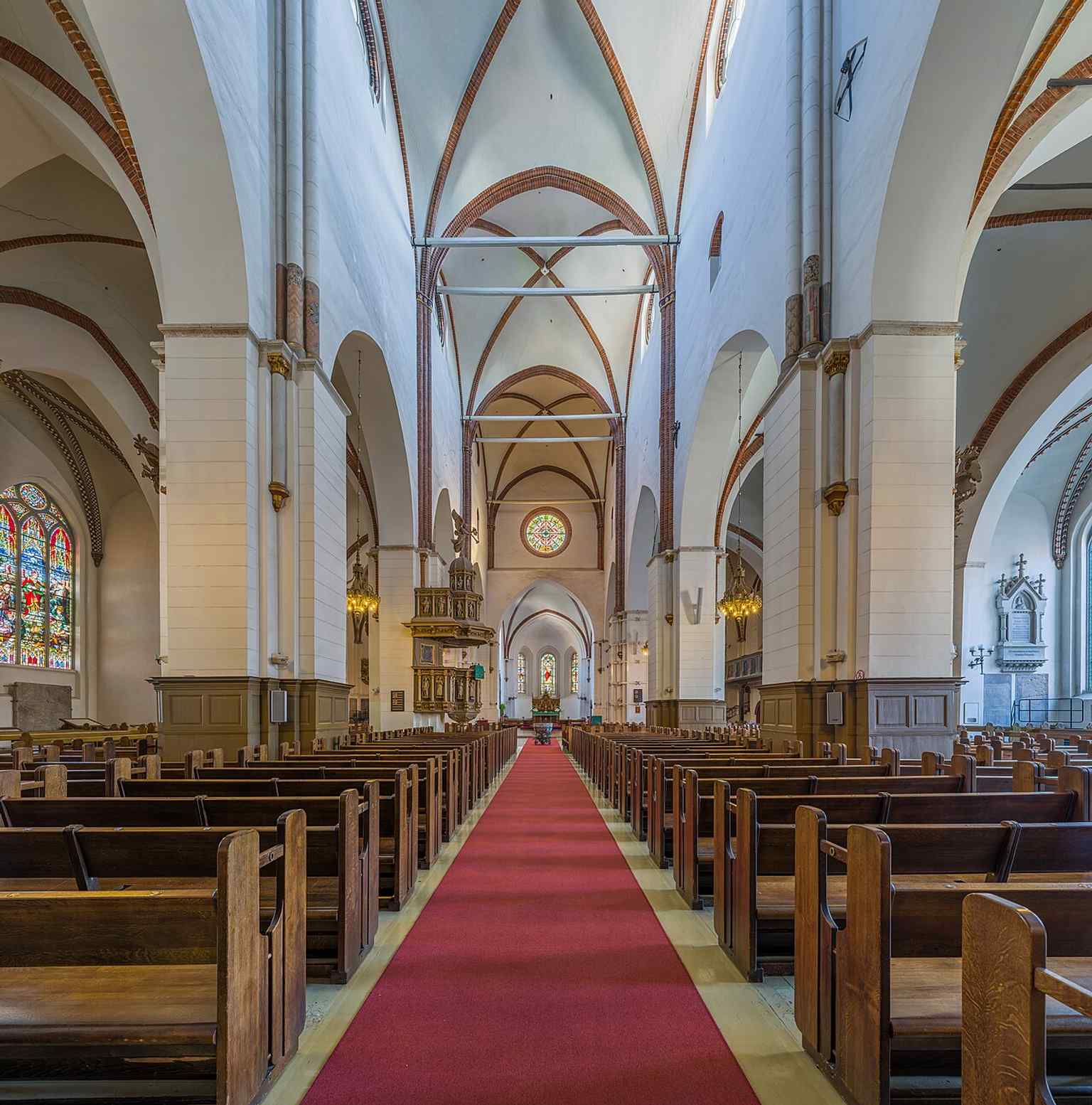
The nave interior, where the cathedral’s Gothic character is most visible beneath later decorative additions.Photo: Diliff, Wikimedia Commons, CC BY-SA 3.0. Cropped & resized. The cathedral also sits oddly low. Over centuries, Riga raised its streets with gravel to protect them from Daugava floods, so the church floor ended up far below street level. Later excavations around parts of the building made the effect even stronger, as if the cathedral had settled into the city and decided to stay put.
Since the nineteen eighties, restorers have worked steadily here, and a major campaign that began in two thousand eleven tackled the roof, tower, facades, stained glass, and interior spaces. If you want to go inside later, the cathedral usually opens from ten in the morning to five in the afternoon most days, and from two in the afternoon to five on Sundays.
Dome Cathedral feels like Riga in stone: layered, resilient, and a little competitive. When you’re ready, continue on toward Dome Square and let the space around this giant finally open up.
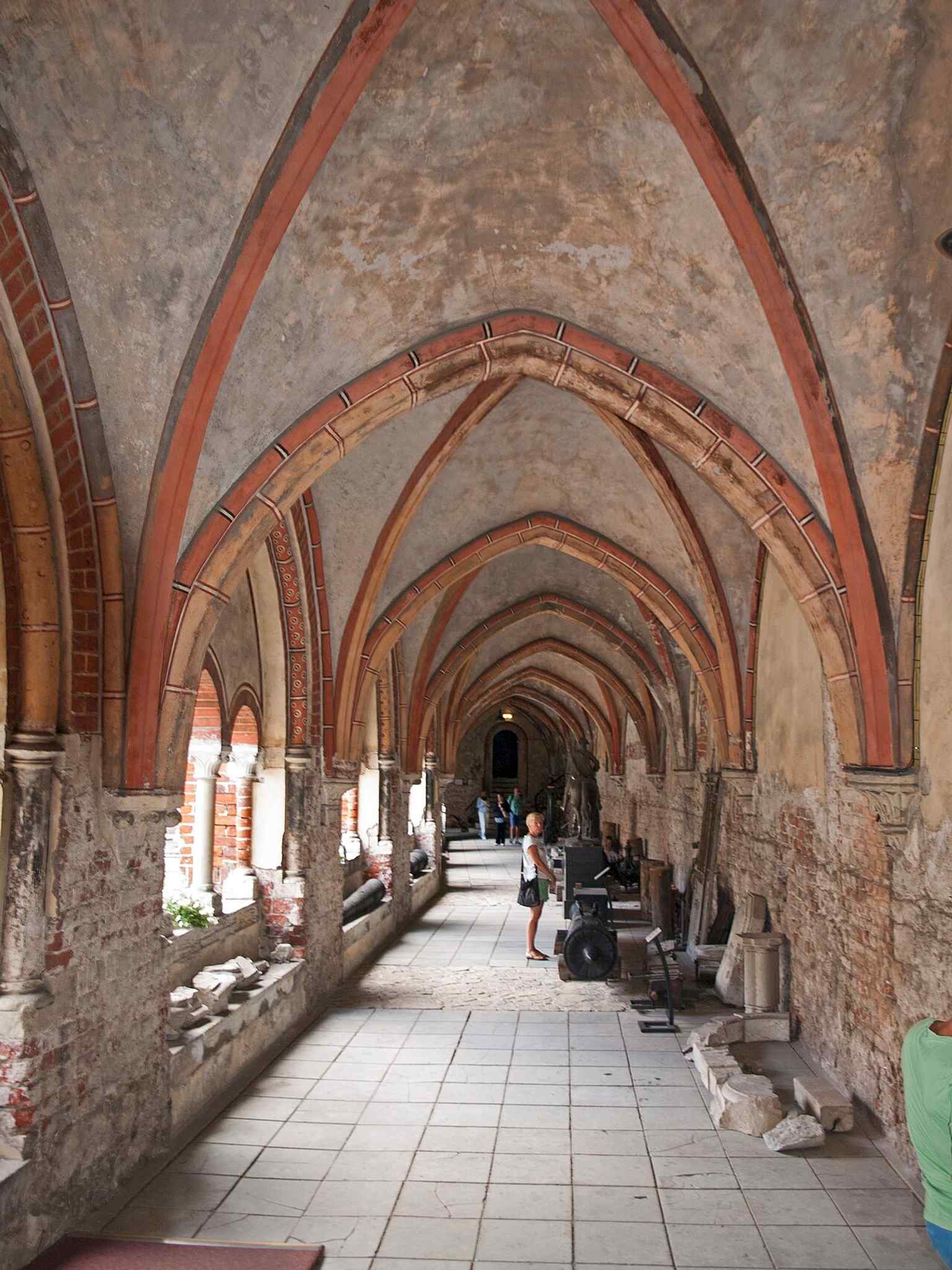
The cloisters inside the cathedral complex, reflecting the medieval monastic setting around the church.Photo: Ymblanter, Wikimedia Commons, CC BY-SA 4.0. Cropped & resized. 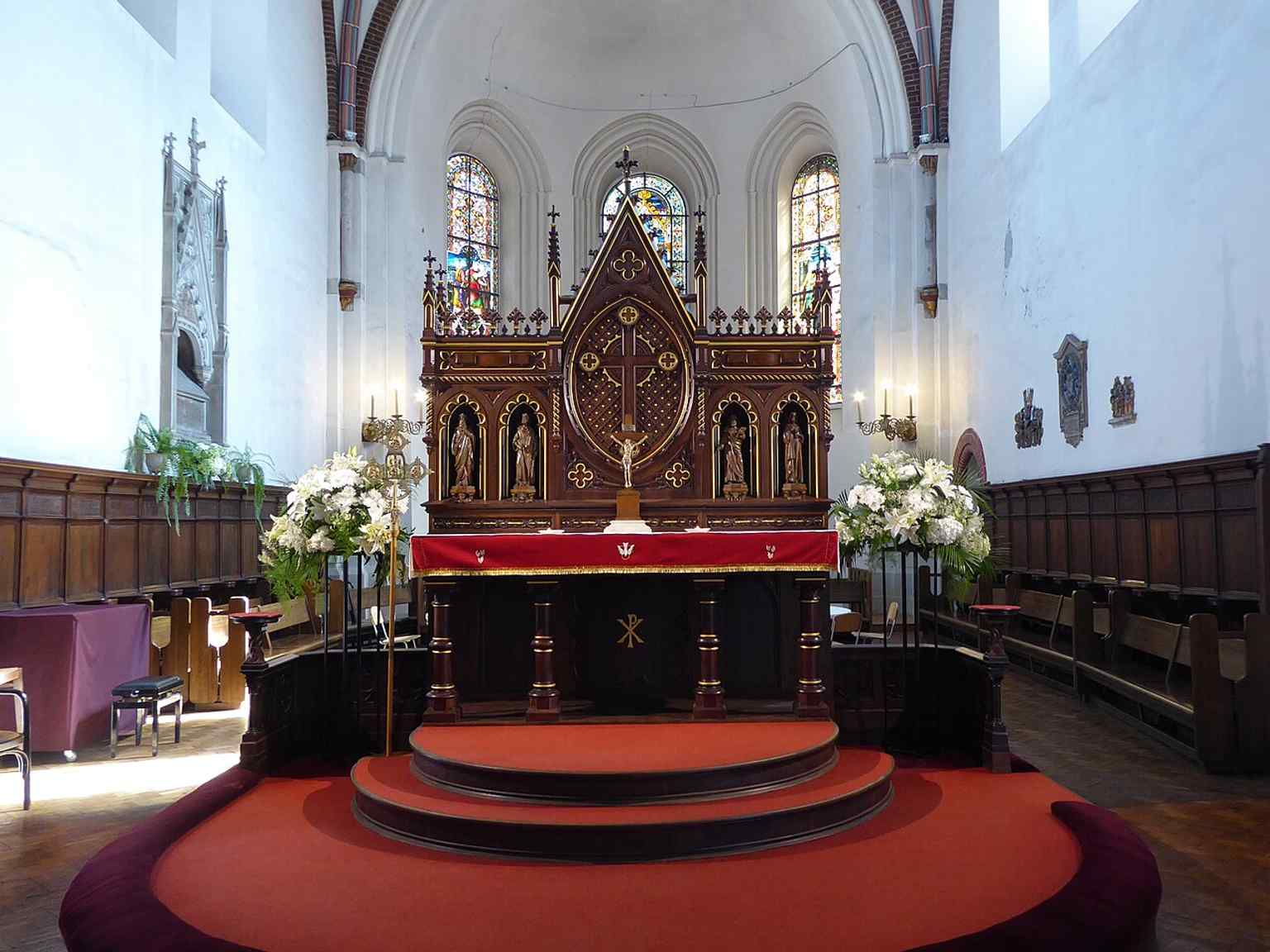
The altar area, showing the church’s richly preserved interior after centuries of rebuilding and restoration.Photo: Syrio, Wikimedia Commons, CC BY-SA 4.0. Cropped & resized. On your left, Dome Square opens as a broad stone-paved rectangle framed by pale masonry facades, with the huge brick-and-stone mass of the Dome Cathedral acting as its…Read moreShow less
Open dedicated page →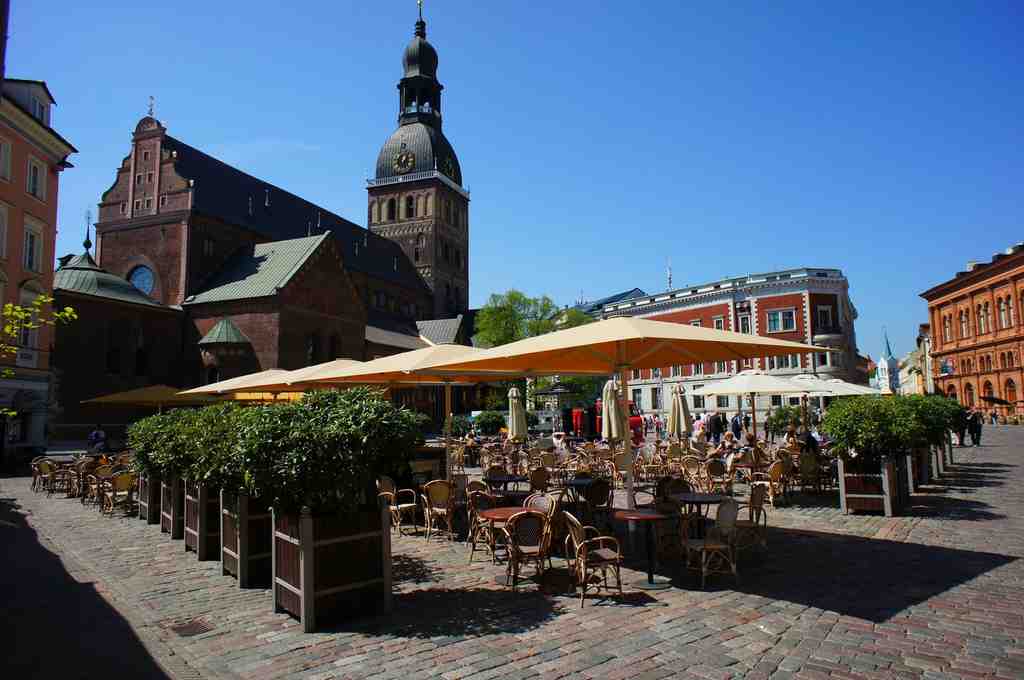
Dome SquarePhoto: Konrad Wąsik, Wikimedia Commons, CC BY 3.0. Cropped & resized. On your left, Dome Square opens as a broad stone-paved rectangle framed by pale masonry facades, with the huge brick-and-stone mass of the Dome Cathedral acting as its unmistakable anchor.
This space feels old... but that is Riga being clever with atmosphere. As an architectural ensemble, Dome Square is relatively young. In the eighteen sixties, the clergy of the cathedral pushed to remove houses packed against the church on the north side. About twenty years later, workers cleared more on the northwest side, and in nineteen thirty-six the city knocked down the last twelve houses to the north and northeast. The reasons were practical: reduce fire risk, make it easier to reach the church, and give people a proper view of the building instead of a medieval traffic jam. If you glance at your screen, one photo helps show just how open this space became through that long process of clearing and rebuilding.
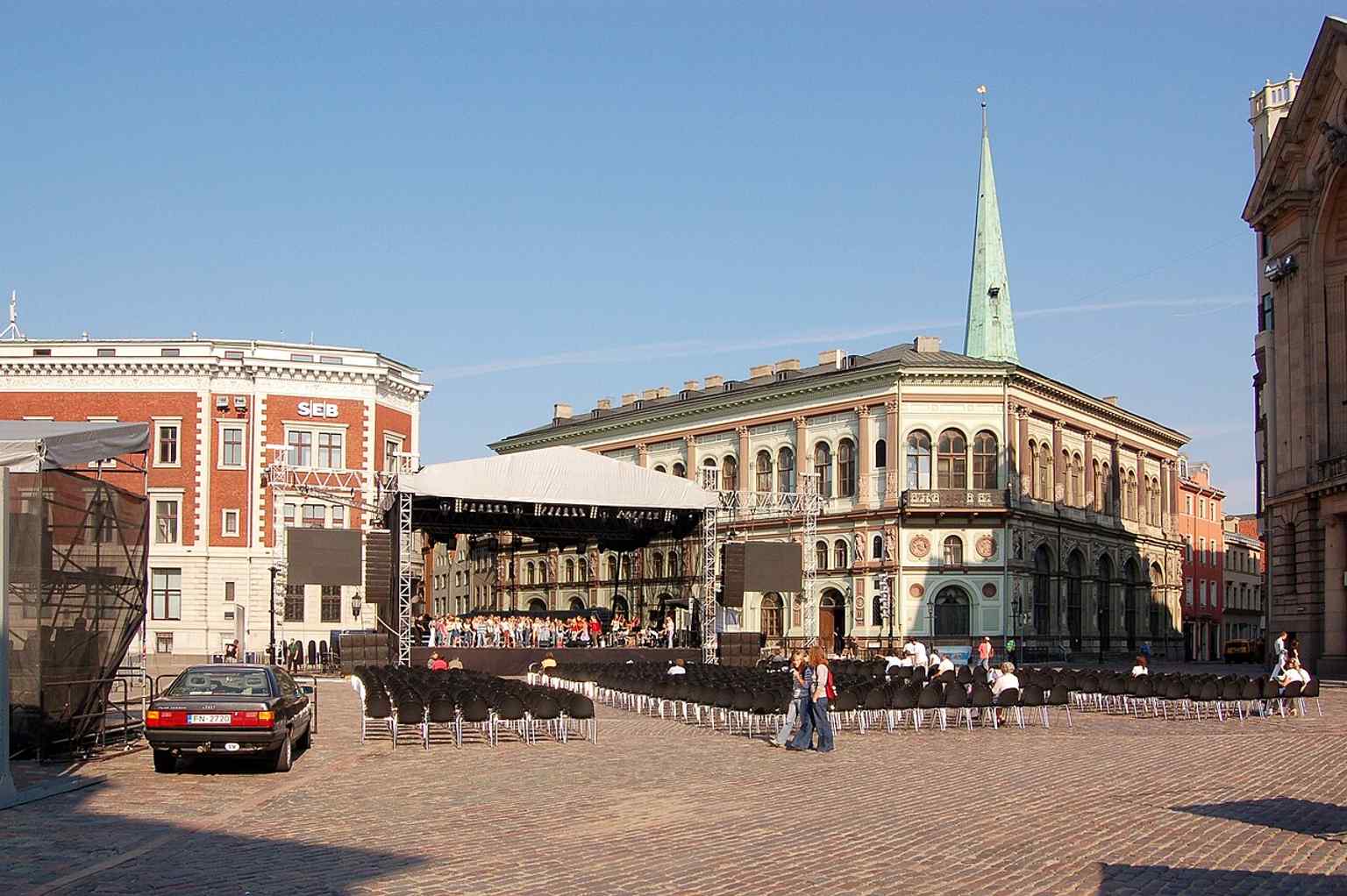
Dome Square in 2006 with a temporary event stage, showing the open urban space around the cathedral that was enlarged during 19th- and 20th-century redevelopment.Photo: Bahnfrend, Wikimedia Commons, CC BY-SA 4.0. Cropped & resized. The square took its name from the cathedral in eighteen eighty-six. Then politics barged in. After the coup of nineteen thirty-four, officials renamed it Fifteenth of May Square. After Soviet troops entered Latvia on the seventeenth of June, nineteen forty, the new authorities renamed it Seventeenth of June Square on the twenty-ninth of July. Only in nineteen eighty-seven did Riga restore the historic name, Dome Square.
There is older ground under your feet than the square suggests. During regeneration work in the Old Town, engineers lowered the southern side near the cathedral to the level of the thirteenth century. Then, in nineteen eighty-six and nineteen eighty-seven, archaeologist A. V. Caune uncovered an early thirteenth-century medieval cemetery here. So yes, this open square sits over a much denser past.
Look around the edges and the story keeps going: the Riga Stock Exchange imitates a Venetian palazzo in neo-Renaissance style, and the Latvian Radio building began life as Riga's first commercial bank, designed by Paul Mandelstam, with a surviving facade relief called Golden Age. In the center, a brass rondo marks Riga's place on the UNESCO, the United Nations Educational, Scientific and Cultural Organization, World Heritage list.
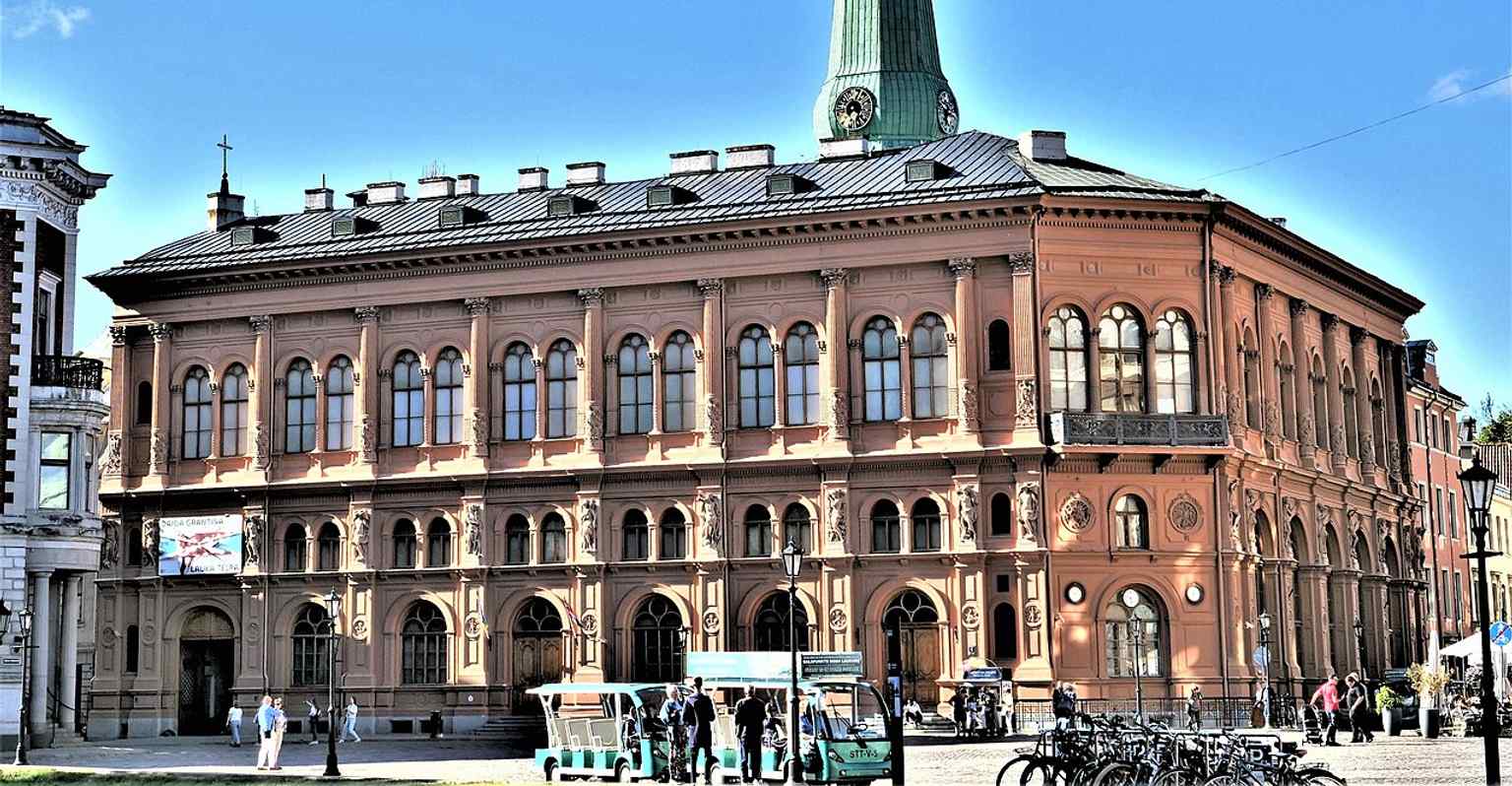
The Riga Stock Exchange on Dome Square — one of the square’s key historic buildings, housed in a neo-Renaissance palace-style façade.Photo: Barnos, Wikimedia Commons, CC BY-SA 4.0. Cropped & resized. Dome Square never really closes, open twenty-four hours a day, and it carries Riga's memory with almost suspicious efficiency.
When you're ready, continue on to the next stop.
Look for a light stone facade with a broad rectangular wall and a dark metal marker, set apart by engraved battle imagery. This stop remembers the siege of Riga in sixteen…Read moreShow less
Open dedicated page →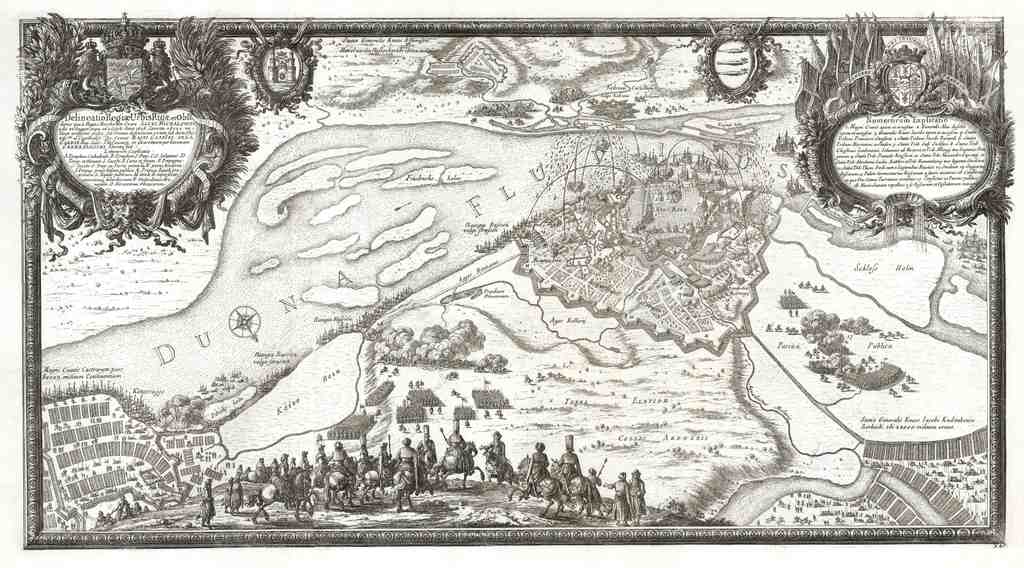
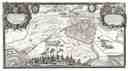
Siege of RigaPhoto: Adam Pérelle, Wikimedia Commons, Public domain. Cropped & resized. Look for a light stone facade with a broad rectangular wall and a dark metal marker, set apart by engraved battle imagery.
This stop remembers the siege of Riga in sixteen fifty-six, when Tsar Alexei Mikhailovich decided to hit Sweden first rather than wait for trouble to arrive at his door. Sweden had just surged through Poland and Lithuania, and the Lithuanian grand hetman Janusz Radziwiłł accepted Swedish protection in the Union of Kėdainiai. That wiped out a good deal of Russia’s recent gains and blocked the road to the Baltic. So Alexei changed course, made a truce with Poland, and declared war on Sweden.
Now here is the part with real ambition. In the upper reaches of the Western Dvina, Alexei’s men built a river fleet of six hundred strugs, shallow transport boats. Some stretched to roughly sixteen to thirty-five meters and could carry about fifty soldiers each. Others hauled food, wounded men, and, most importantly, siege guns. Livonian roads were miserable for heavy artillery, so the Russians simply floated the problem downstream. Logistics is rarely glamorous... but it wins arguments.
After taking Dinaburg and Kokenhausen, the army reached Riga. The Swedish commander, Magnus de la Gardie, pulled back behind the city’s stronger defenses. In one early clash, the Swedish cavalry commander, Count Heinrich von Thurn, rode into an ambush and lost his head, literally. In a grim little moment of seventeenth-century honor, the Russians sent his severed head back into Riga with respect, on orders from Colonel Vladimir Fonvizin, who later died in the same campaign.
The Russians worked fast. Using the abandoned suburban gardens for cover, soldiers and streltsy, musketeer units, built twelve earthen shelters and gun positions. On the first of September, they opened a brutal bombardment. They fired iron cannonballs, grenades, heated shot meant to start fires, and even newer mortars that threw stone balls. On one day alone, the city endured about one thousand seven hundred shots. Prisoners said townspeople begged the governor to surrender, while the soldiers refused and waited for help from their king.
Help arrived because the sea stayed open. Russia failed to seal Riga off from the water, and the Danish fleet never solved that problem. Then a Swedish relief force got through with food and ammunition. Alexei called a war council. General Avram Leslie and several colonels advised retreat. The tsar wanted an assault anyway.
Before the Russians could storm the city on the second of October, the Swedes struck first with a sudden attack out of the gates. They smashed four regiments, broke a streltsy unit, and captured seventeen banners. After that came rumors of plague inside Riga, and that changed the math very quickly. On the fifth of October, Alexei lifted the siege.
So Riga survived not by miracle, but by walls, timing, supply lines, and a refusal to panic. When you’re ready, continue on and let the next stop show you the city that outlasted the guns. If this venue interests you, it’s open Wednesday through Sunday from ten to six, and closed Monday and Tuesday.
On your right is a pale stone neo-Gothic hall with pointed windows, a steep gabled facade, and a corner statue of Saint John the Baptist. This is the Small Guild, home of Riga’s…Read moreShow less
Open dedicated page →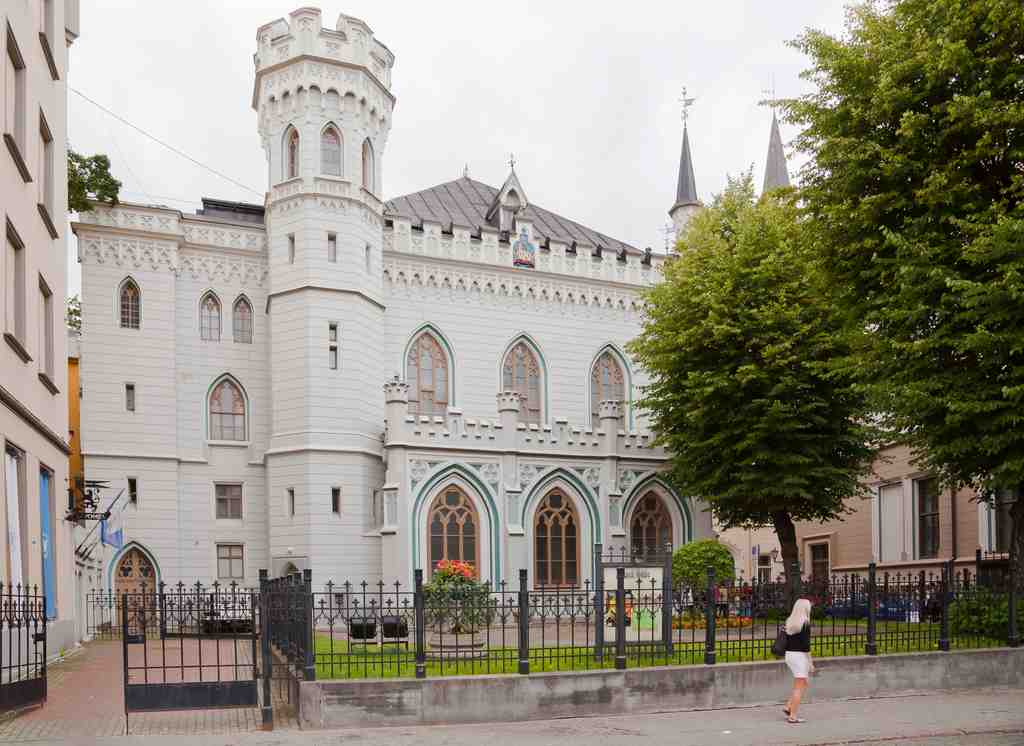
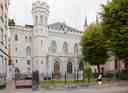
Small GuildPhoto: Diego Delso, Wikimedia Commons, CC BY-SA 3.0. Cropped & resized. On your right is a pale stone neo-Gothic hall with pointed windows, a steep gabled facade, and a corner statue of Saint John the Baptist.
This is the Small Guild, home of Riga’s craftsmen. “Small” did not mean minor; it meant this was the guild of makers rather than merchants. Riga’s first common guild formed in twelve twenty-six for the city’s German citizens, then split in the mid-fourteenth century into two bodies: Saint Mary’s Guild for merchants, and Saint John’s Guild for artisans. If you wanted to become a proper master in medieval Riga, this place held the keys... and it did not hand them out generously.
A guild was basically a licensed club that controlled a trade. Join, and you could work legally, train apprentices, and sell as a master. Stay outside, and you were stuck. In fact, the Small Guild helped monopolize craft work across the city. Medieval professional networking... with sharper elbows.
The climb to master status was a small obstacle course. First, a journeyman - a trained worker not yet independent - had to produce a “masterpiece,” originally meaning a test object proving skill, not something for a museum. Then he had to travel through Hanseatic trade cities and report back on each place’s “three wonders.” Riga’s own three included a floating bridge across the Daugava, the giant figure of Great Christopher, and the alarm bell at Saint James’ that rang for fires, floods, invasions, plague, and even executions in Town Hall Square. Efficient little city, when it came to bad news.
And there was more. Some new masters had to pay for the ceremonial feast themselves, which hit the wallet hard enough to spark unrest among journeymen. Work illegally, and punishment turned theatrical: the city executioner could publicly destroy your tools in the square. Repeat offenders could lose citizenship and get thrown out beyond the walls. That is one way to settle a labor dispute.
The guild even had its own internal folk politics. Ordinary craftsmen were represented by an official called the Dockmann, a kind of “voice of the people,” who often moved up when one of the twenty-nine elders finally vacated a seat - usually by dying. Cheerful system, really.
Now, the building in front of you plays a neat trick. It looks deeply medieval, but the version you see is nineteenth-century theater of the highest quality. Architect Johann Daniel Felsko demolished the actual medieval guildhall and, between eighteen sixty-four and eighteen sixty-six, replaced it with a more romantic vision of the Middle Ages. So yes, this facade is younger than it looks and more medieval-looking than the medieval original. If you check the photo in the app, you can see that polished Gothic fantasy clearly. And the interior image shows the ceremonial hall where craftsmen once gathered under carved wood and stained glass portraits of their leaders.
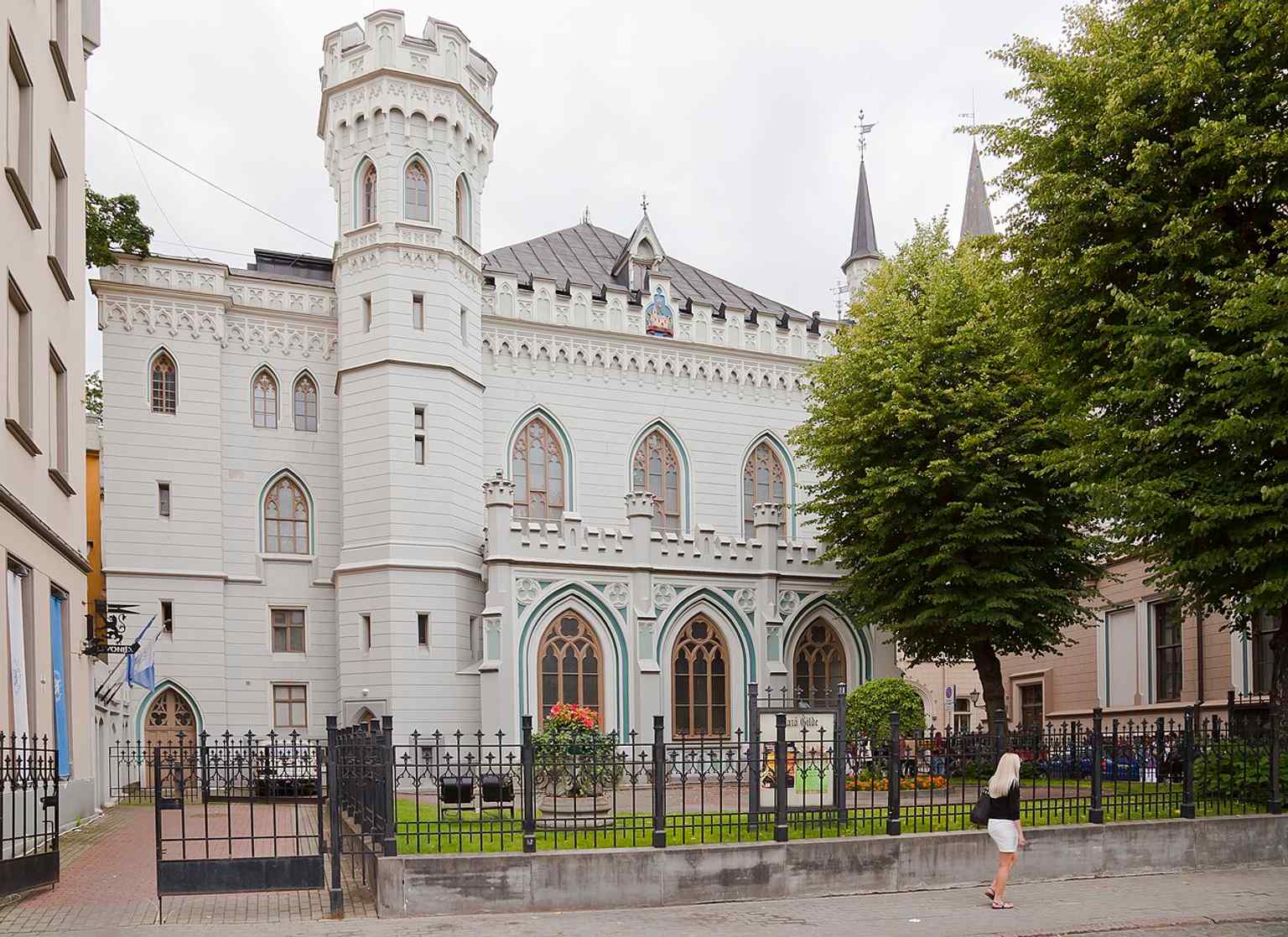
The Small Guild’s ornate neo-Gothic facade on Amatu Street, rebuilt in the 19th century to evoke a romanticized medieval guild hall.Photo: Diego Delso, Wikimedia Commons, CC BY-SA 3.0. Cropped & resized. The guild itself finally ended in nineteen thirty-six, when Kārlis Ulmanis’s government replaced the old German guilds with a state-controlled Chamber of Crafts.
Today the building usually opens weekdays from ten in the morning to six thirty in the evening, and stays closed on weekends.
A handsome building, then, but also a reminder that craft, pride, and power have always traveled together. When you’re ready, continue on to the Great Guild, where Riga’s merchants made their own rules.
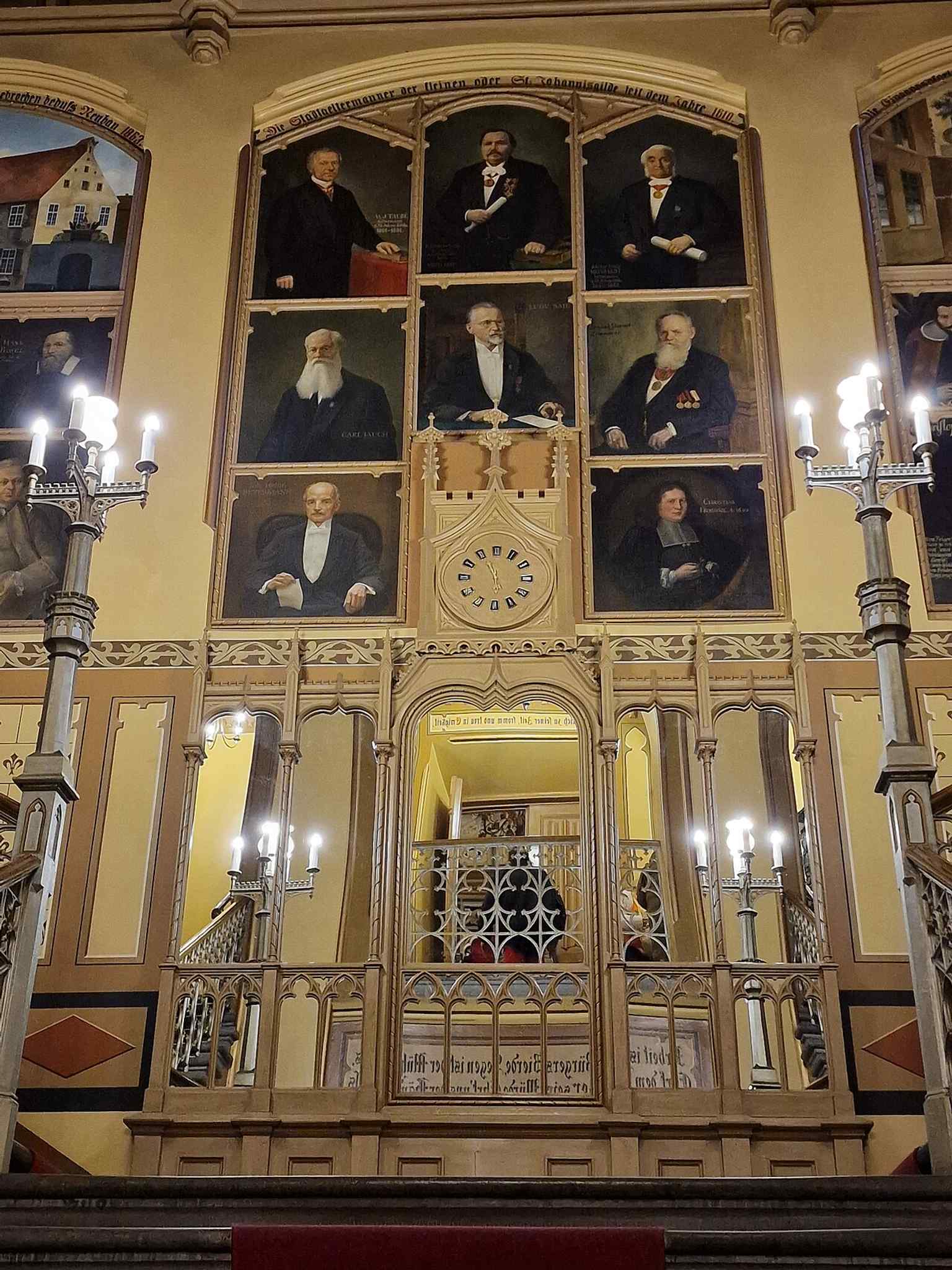
The guild interior, where artisans once gathered under the rules of Saint John’s brotherhood and its strict path to master status.Photo: Mona, Wikimedia Commons, CC BY-SA 4.0. Cropped & resized. 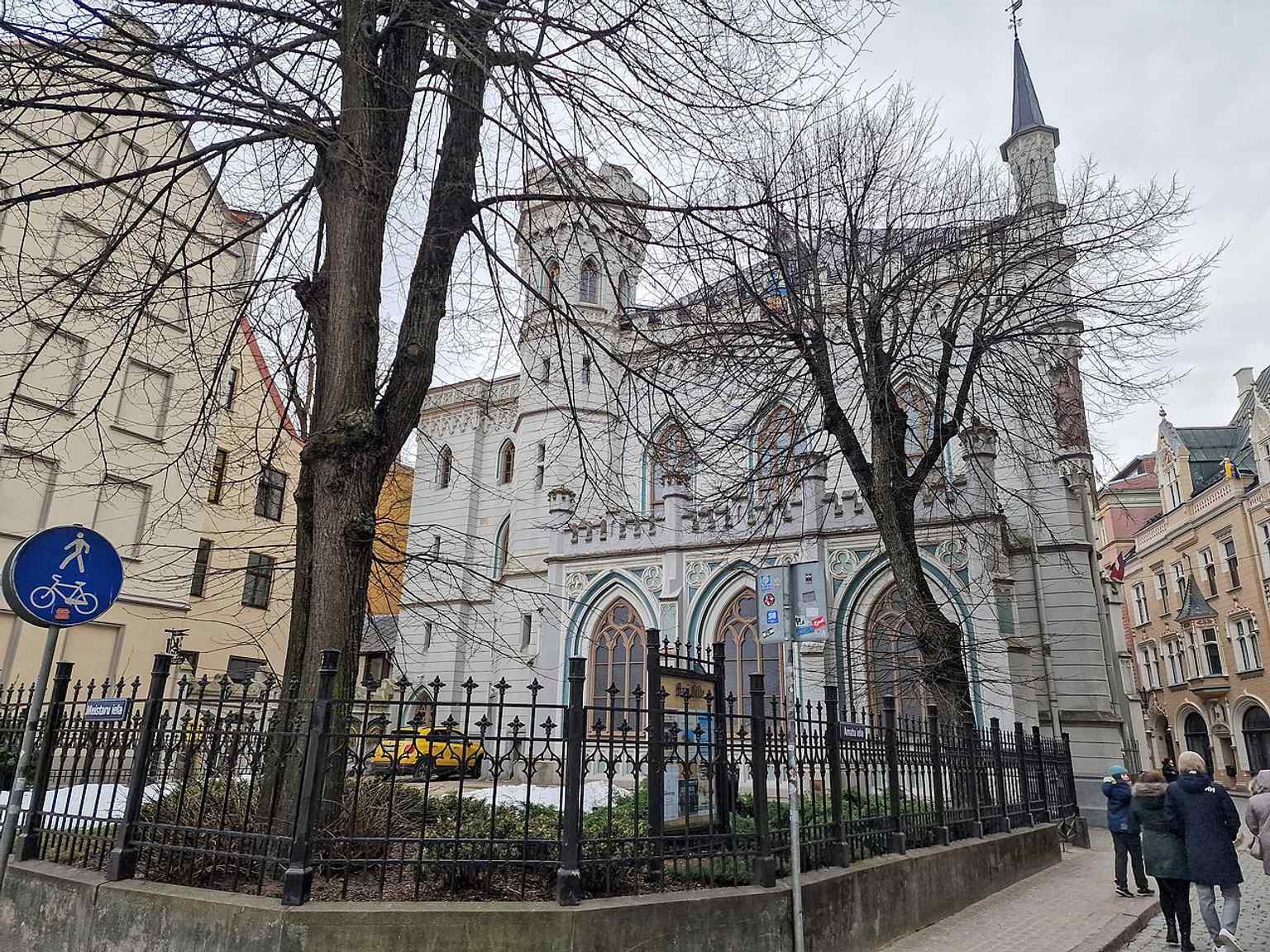
A clear street-level view of the Small Guild building, opposite the Great Guild on Livs Square, showing its historic civic presence.Photo: Mona, Wikimedia Commons, CC BY-SA 4.0. Cropped & resized. 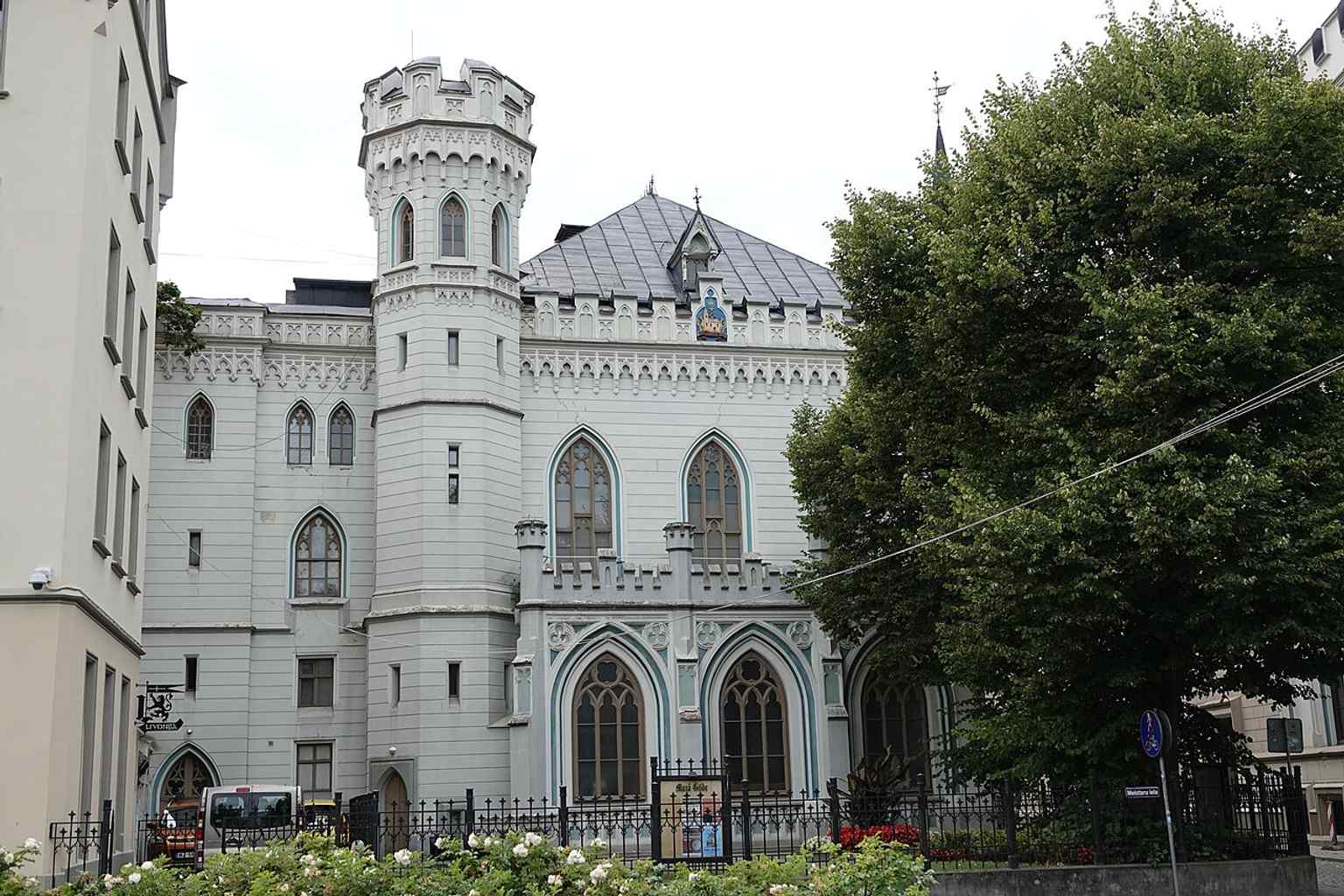
The Small Guild in Riga from another angle, useful for showing the landmark as it stands today on the edge of Livs Square.Photo: Nenea hartia, Wikimedia Commons, CC BY-SA 4.0. Cropped & resized. On your right rises a tall cylindrical tower of dark red brick, slightly tapering as it climbs, with a pointed roof and narrow defensive openings cut into its thick walls. This…Read moreShow less
Open dedicated page →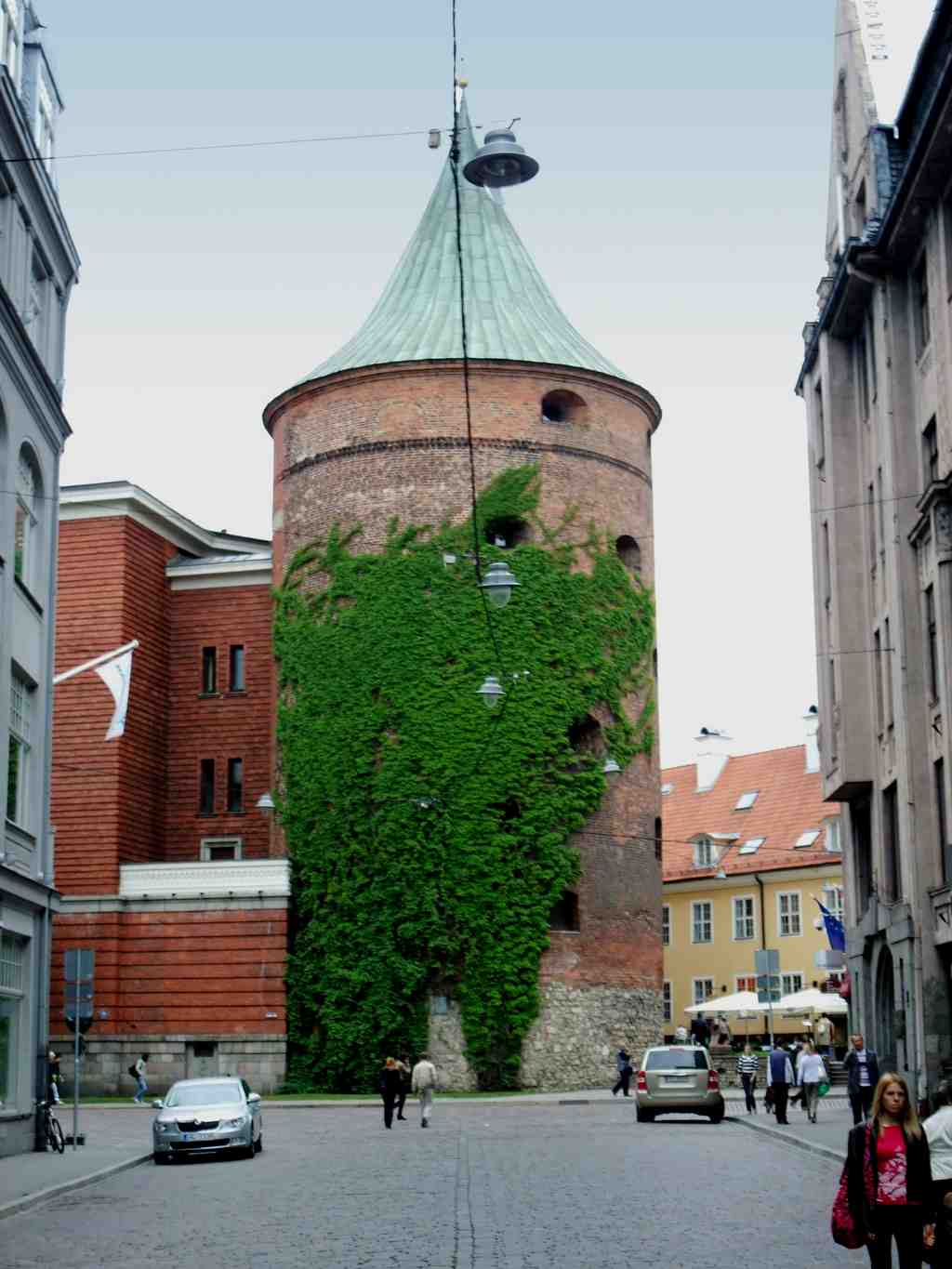
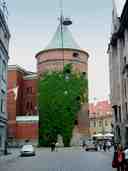
Powder TowerPhoto: Nikater, Wikimedia Commons, CC BY-SA 3.0. Cropped & resized. On your right rises a tall cylindrical tower of dark red brick, slightly tapering as it climbs, with a pointed roof and narrow defensive openings cut into its thick walls.
This is the Powder Tower, the last surviving tower of Riga’s medieval fortifications... which is a polite way of saying every other tower lost its argument with modern city planning.
The story starts in the early fourteen hundreds? Not quite. The tower first appears in records in thirteen thirty, right after the Livonian Order forced Riga back under its control. Chroniclers describe a cannon shot blasting a breach in the city wall so Master Eberhardt von Monheim could make a suitably dramatic entrance. Conquerors do love theater. Soon after, the Order strengthened the defenses here, where the old Great Sandy Road approached the city. That is why this was first called the Sand Tower.
It may even be older, from the late thirteenth century. At first it had a horseshoe shape, open on one side. By the middle of the fourteenth century, builders rebuilt it into the round form you see now, better for deflecting attack and guarding Riga’s northern edge. If you check the image on your screen, you can see how this tower sat inside a much larger defensive system near the old Sand Gate route.
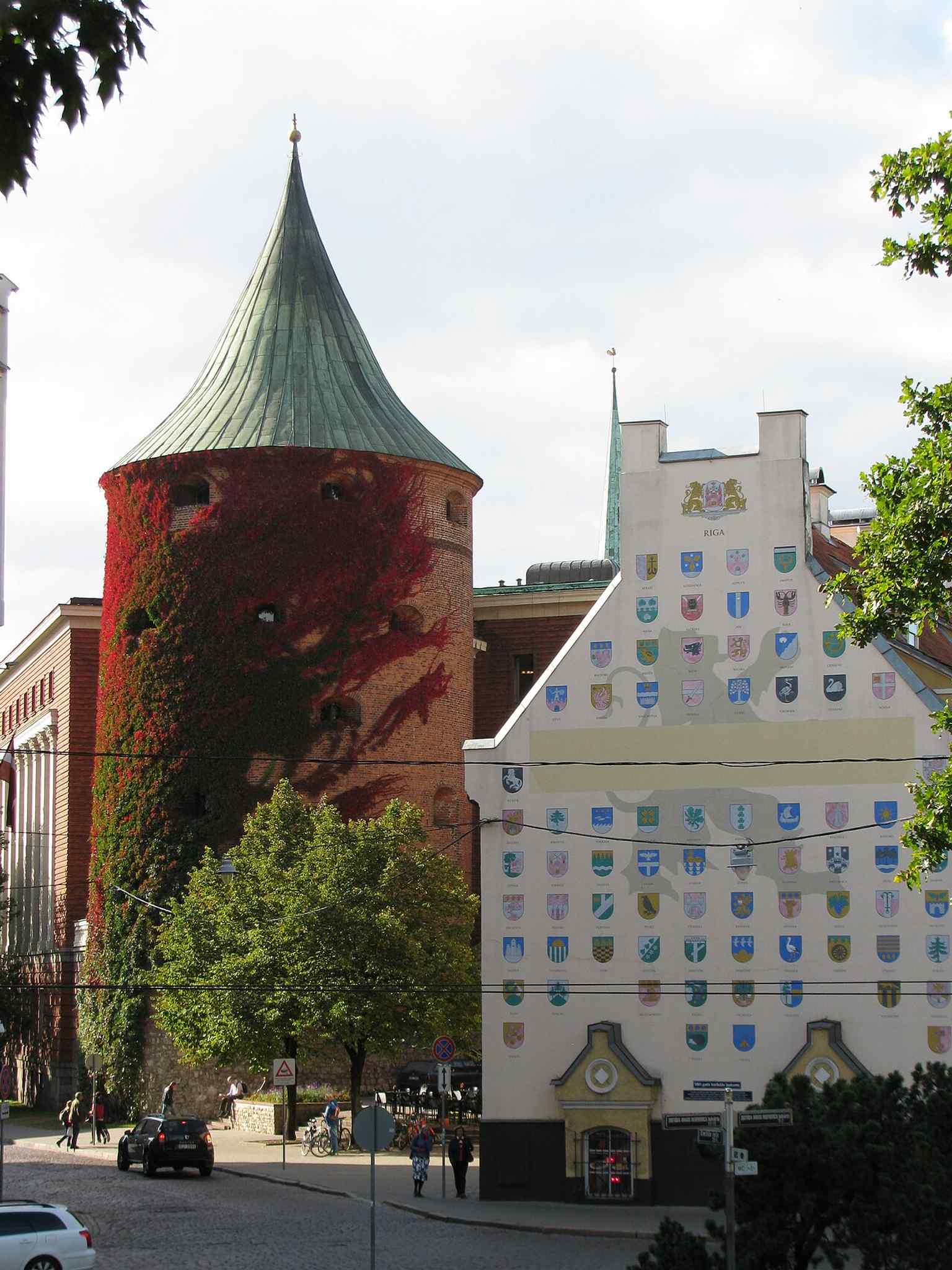
The tower beside Jēkaba Barracks, showing its place in Riga’s former city defenses near the old Sand Gate route.Photo: VardeCe, Wikimedia Commons, CC BY-SA 4.0. Cropped & resized. In the Middle Ages, Riga had twenty-eight towers. This one became especially clever after another rebuild turned it into a six-story stronghold. Between the fifth and sixth floors, engineers created what was essentially a cannonball trap: a chamber packed with crossing oak and pine logs meant to catch enemy shot and hold it in place. Medieval problem-solving... very sturdy, very Latvian, and not at all subtle.
War kept testing it. In sixteen twenty-one, during the Polish-Swedish conflict, the tower took heavy damage. The Swedes rebuilt it, and around then people likely started calling it the Powder Tower. Some say it stored gunpowder, though that sounds like a terrible idea in a building people kept shooting at. In sixteen fifty-six, Russian forces hit it with nine cannonballs during the siege by Tsar Alexei Mikhailovich. Then in seventeen oh nine, during Peter the Great’s campaign, more shot struck the tower. Legend says Peter himself fired some of them. Three cannonballs on one side and nine on the other remained embedded in the walls for centuries.
Later, peace almost finished what war did not. In eighteen fifty-seven, officials planned to clear away Riga’s old fortifications, but they spared this tower as a historical monument. Then, in eighteen ninety-two, the student fraternity Rubonia moved in, repaired it, and partly funded the job by selling years of accumulated pigeon droppings to local gardeners. History is not always glamorous. Their cannonball trap became a fencing hall, and the tower also hosted dancing and beer.
Since then, it has served as a museum, a police facility, a naval school, a Soviet ideological museum, and now again part of the Latvian War Museum, in the neighboring complex you can see beside it.
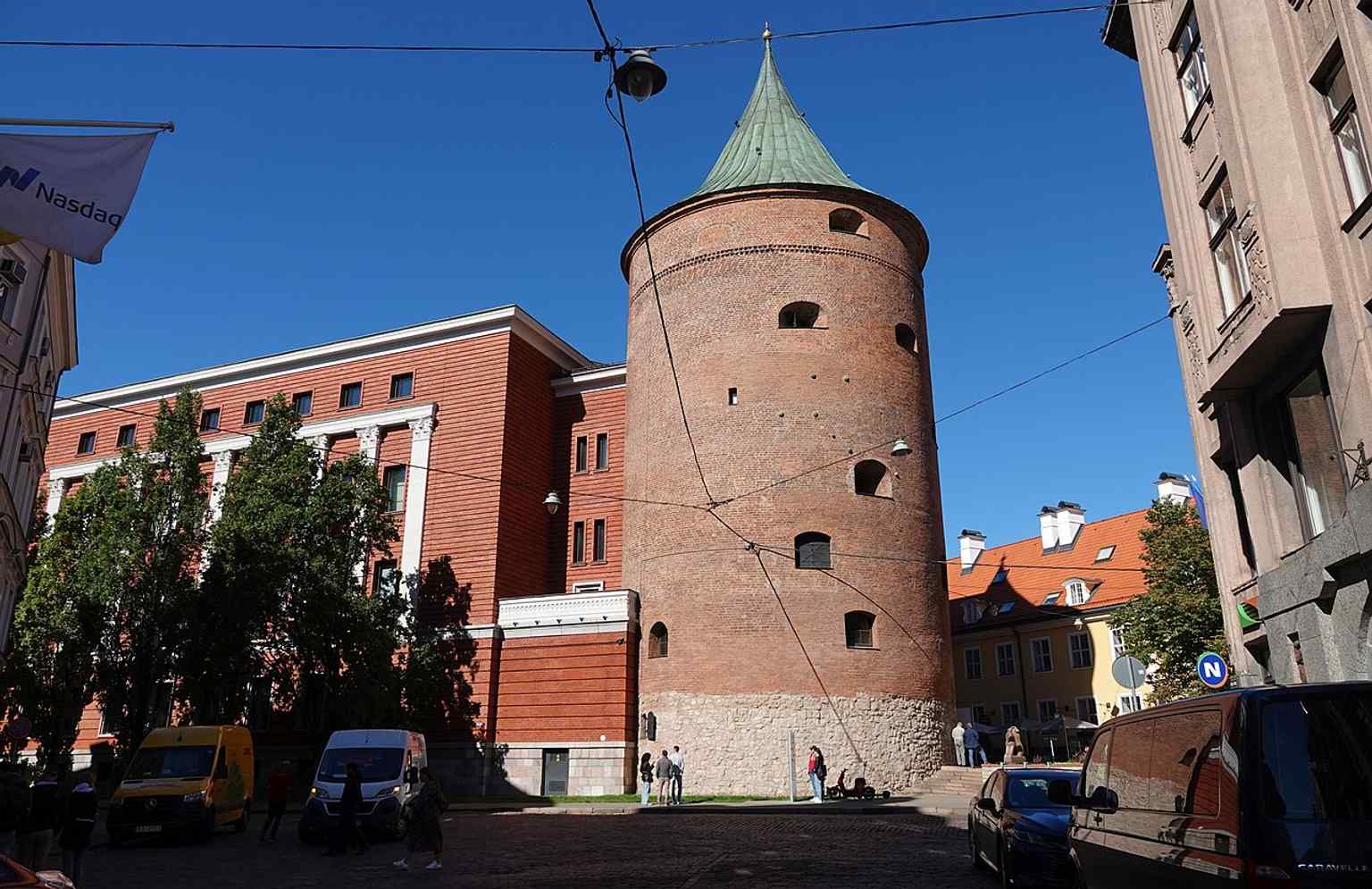
A recent view of the Powder Tower’s restored exterior, now part of the Latvian War Museum complex.Photo: Nenea hartia, Wikimedia Commons, CC BY-SA 4.0. Cropped & resized. If you want to go inside later, the museum is open Wednesday through Sunday from ten to five, and closed Monday and Tuesday.
For a building made for gunpowder and impact, it has had an oddly successful second career in memory.
When you’re ready, continue on toward St. James’ Cathedral.
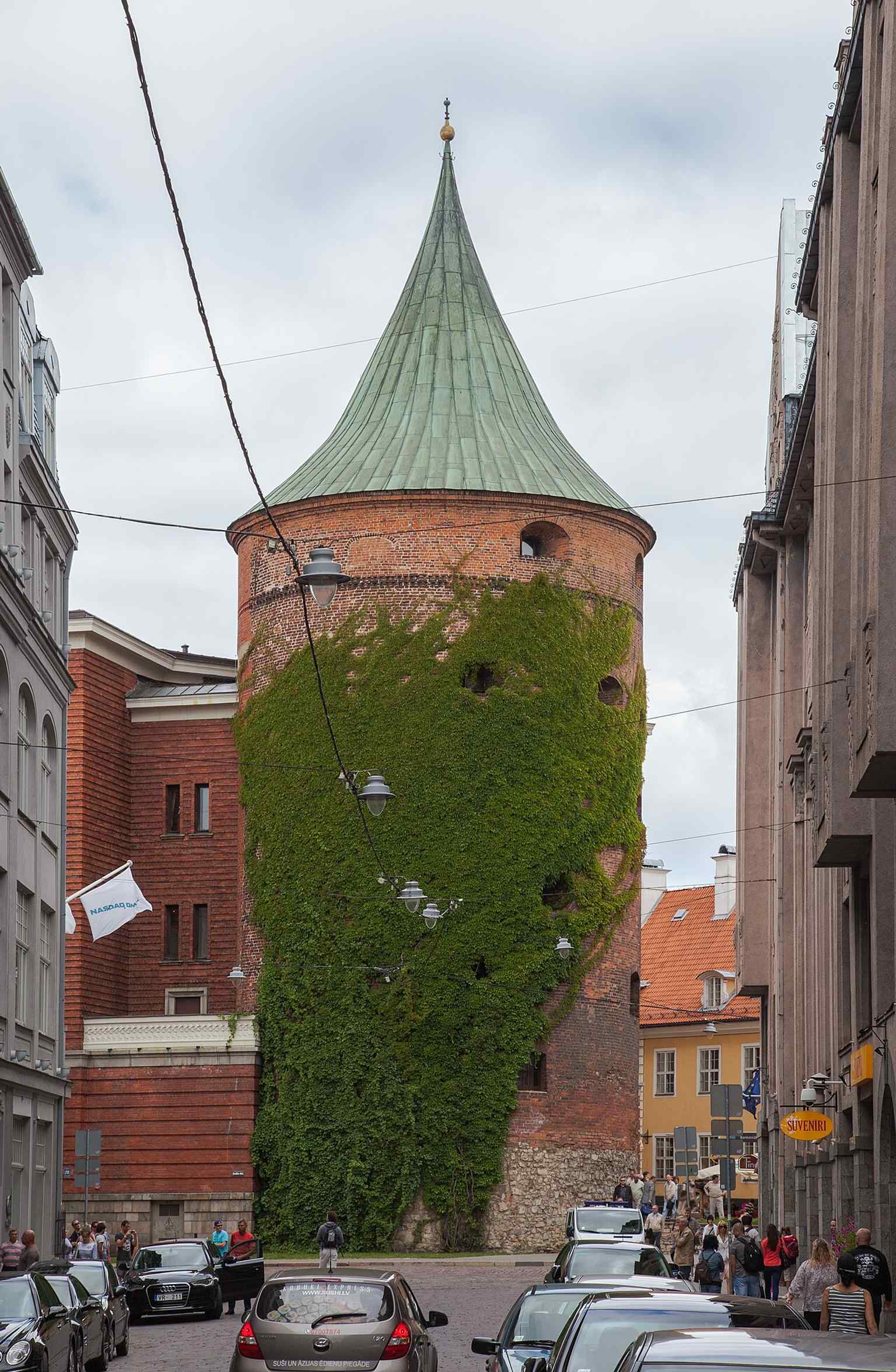
The Powder Tower’s tall medieval brick shaft, one of the few surviving pieces of Riga’s old fortifications.Photo: Diego Delso, Wikimedia Commons, CC BY-SA 3.0. Cropped & resized. 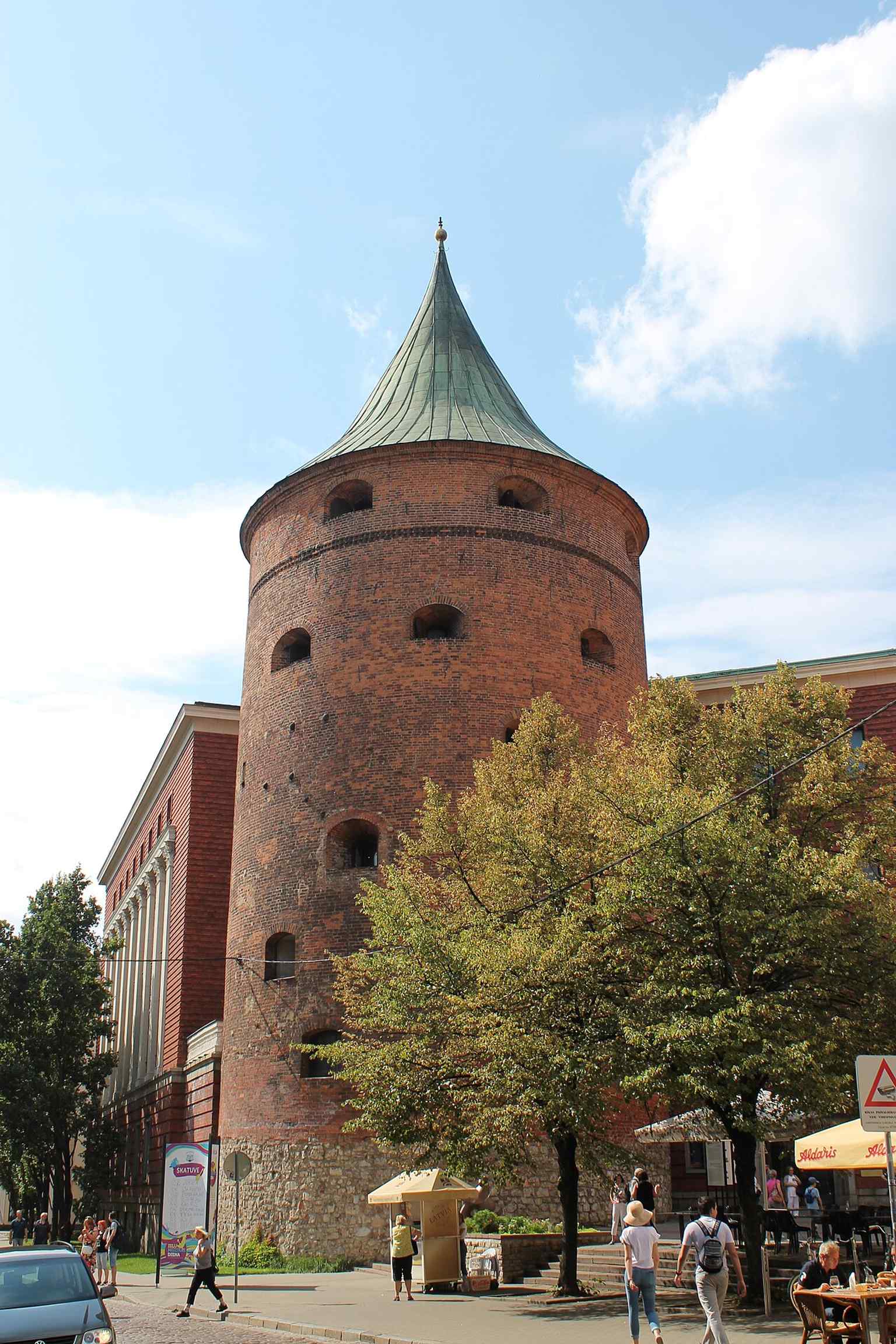
A clear street-level view of the Powder Tower in modern Riga, the last surviving tower of the city fortifications.Photo: John Samuel, Wikimedia Commons, CC BY-SA 4.0. Cropped & resized. 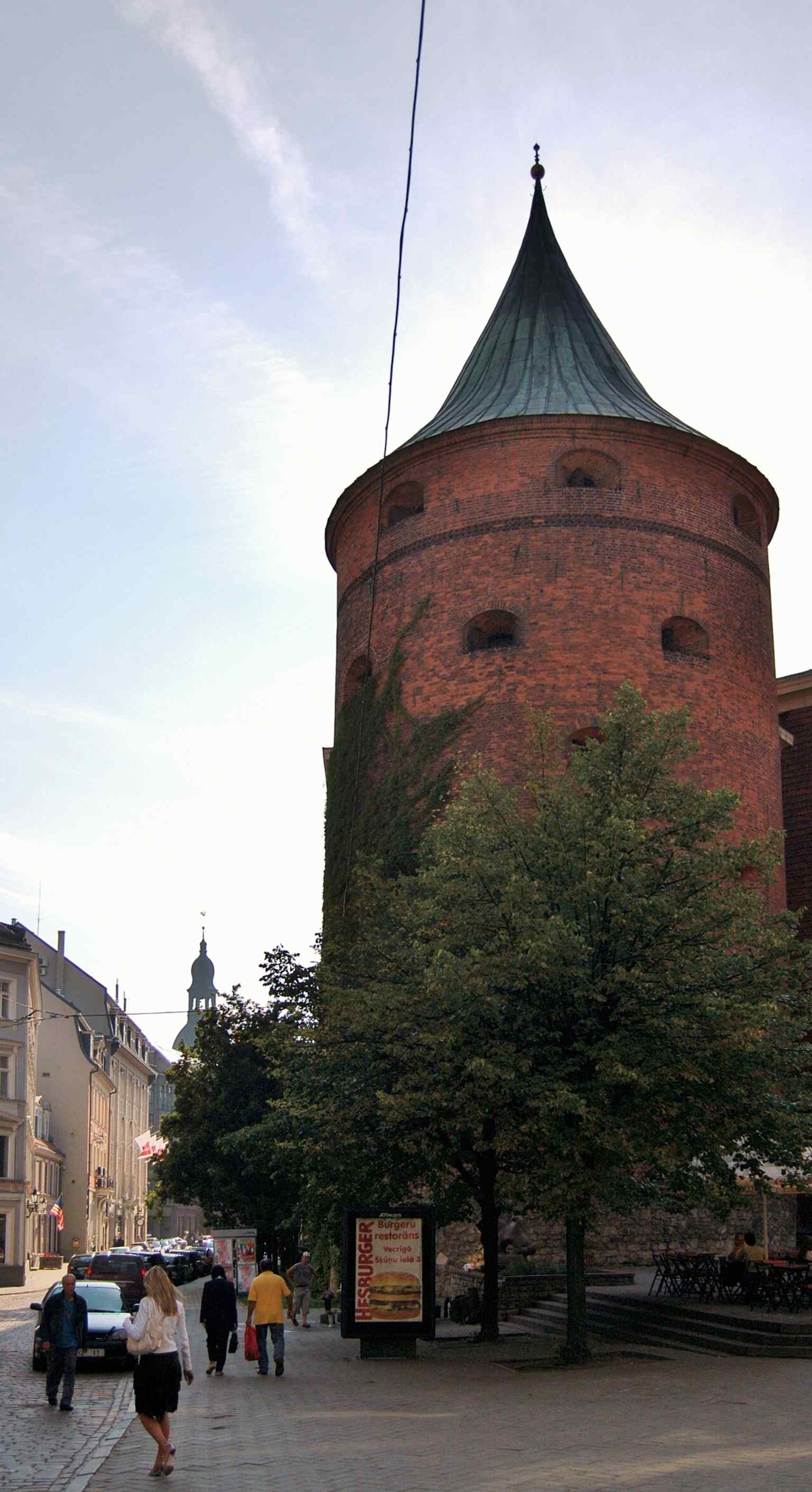
An older 2006 photograph of the Powder Tower, useful for showing the landmark before more recent restoration work.Photo: Bahnfrend, Wikimedia Commons, CC BY-SA 4.0. Cropped & resized. On your right stands a long red-brick church with narrow Gothic lines, a tall octagonal spire, and a rooster weather vane perched at the top. This is Saint James’ Cathedral,…Read moreShow less
Open dedicated page →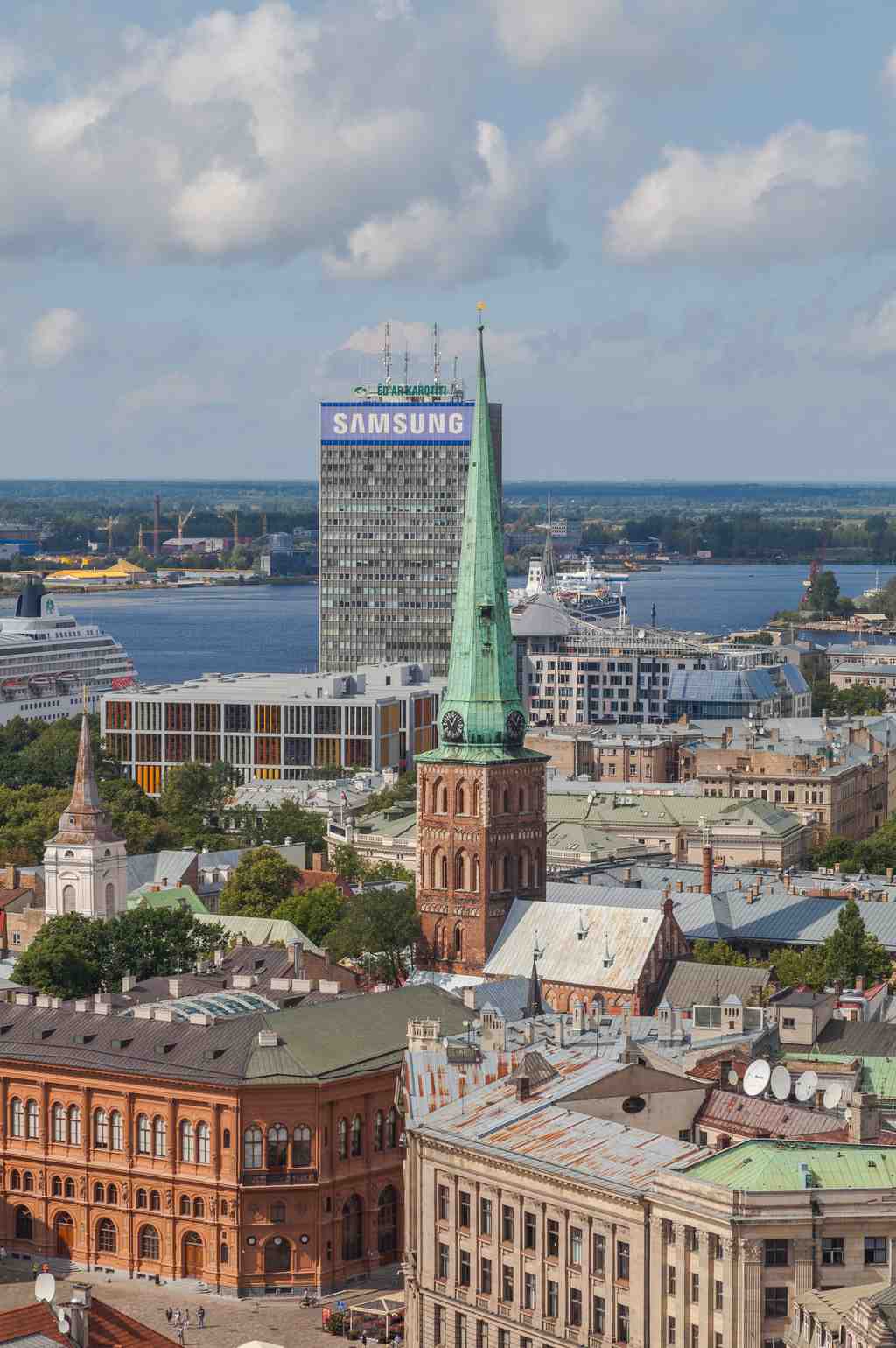
St. James' CathedralPhoto: Diego Delso, Wikimedia Commons, CC BY-SA 3.0. Cropped & resized. On your right stands a long red-brick church with narrow Gothic lines, a tall octagonal spire, and a rooster weather vane perched at the top.
This is Saint James’ Cathedral, Riga’s main Catholic church, though it took a rather scenic route to get that title. The first church here appears in records in the year twelve twenty-five, when this spot still sat outside the medieval walls. Back then it served the suburb, which later earned it the charming nickname “the most famous rural church in Latvia.” Not exactly grand branding... but memorable.
Its architecture sits between Romanesque and Gothic, so you get that solid, weighty medieval body with sharper, more vertical ambition pushing upward. In twelve sixty-two, Riga expanded its defenses and swallowed this district into the city, and Saint James instantly moved up in the world.
The church then spent centuries changing confession the way some people change political opinions. Knights of the Livonian Order worshipped here, and nearby Cistercian nuns from the convent of Saint Mary - locals called them the “singing maidens” - used it too. In fifteen twenty-two, Riga heard its first Lutheran service here. Two years later, anti-Catholic riots wrecked the interior. By fifteen twenty-five, the church had become the leading Lutheran church in Livonia.
Then came the Jesuits. In fifteen eighty-two, King Stephen Batory handed the church to them, and in fifteen eighty-four an angry crowd stormed inside during worship and trashed the place while protesting the new Gregorian calendar - yes, a liturgical riot over date-keeping. History can be oddly specific.
Under Swedish rule, it turned Lutheran again. King Gustavus Adolphus removed the church’s famous alarm bell and sent it to Stockholm as war loot. That was payback: in sixteen oh five, that bell had helped rouse Riga’s defenders against an earlier Swedish attack. Bells hold grudges too, apparently.
Look closely at the facade and you may spot one of the church’s bluntest historical footnotes: cannonballs from the Russian siege of sixteen fifty-six were built into the walls as souvenirs with terrible manners. The tower you see now gained its pointed octagonal spire in seventeen fifty-six, crowned with that rooster.
If you check the app, the interior view shows how restrained the main hall is - a basilica, meaning a church with a tall central space and side aisles - despite all its upheavals. Another image helps you read the tower and roofline, which keep the exterior surprisingly unified even after so many eras pulled at it.
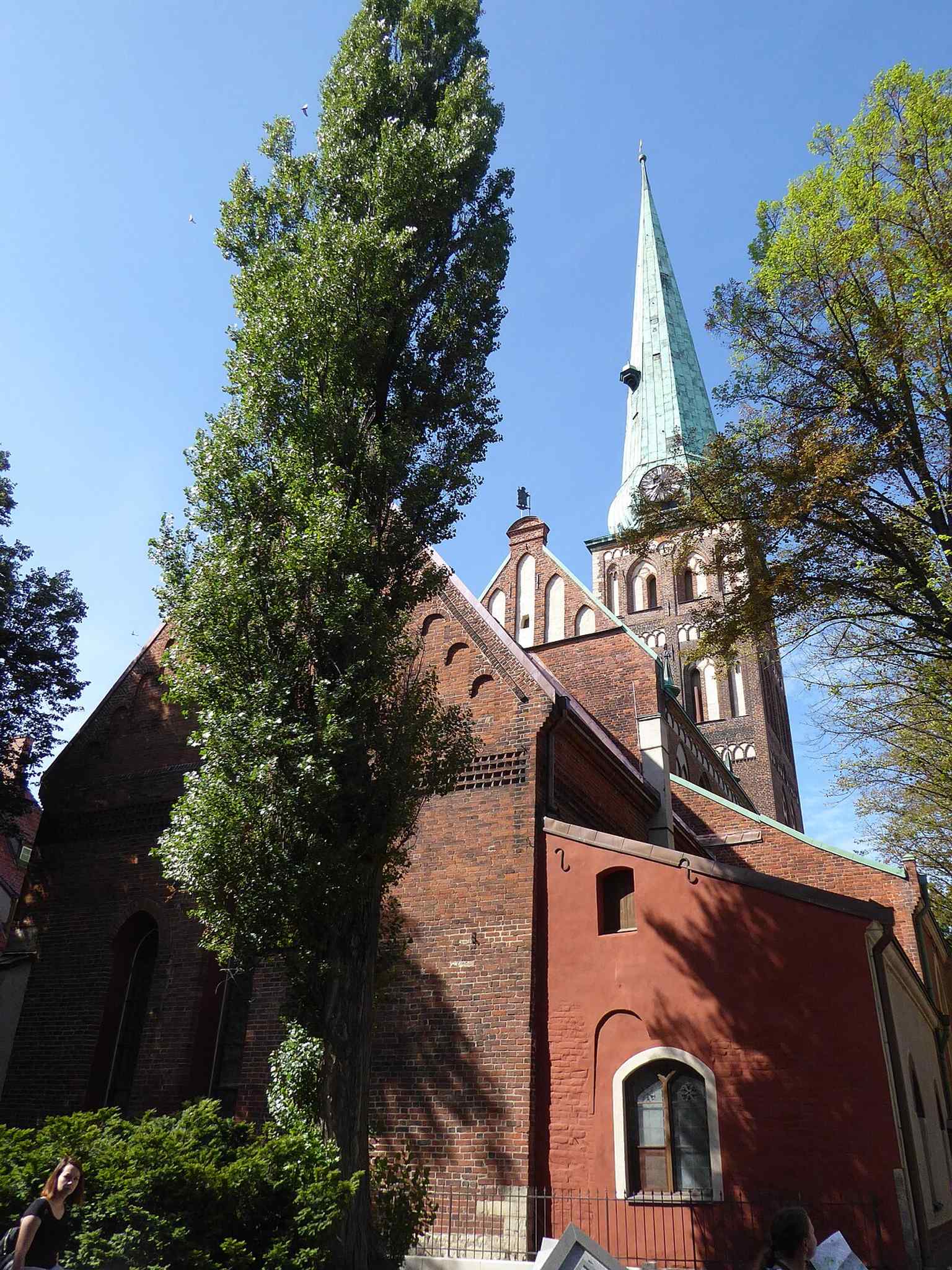
A wide interior view that helps tell the story of the cathedral’s many transformations from Lutheran church to Catholic cathedral.Photo: Syrio, Wikimedia Commons, CC BY-SA 4.0. Cropped & resized. In nineteen twenty-four, independent Latvia finally gave Saint James back to the Catholics, and in nineteen ninety-three Pope John Paul the Second visited, sealing its role as the heart of Catholic Latvia.
If you want to go inside later, it usually opens from seven to one and from two-thirty to six, with longer hours on Sunday.
Saint James gathers Riga’s recurring themes into one church: battered, repurposed, stubborn, and still standing.
When you’re ready, continue on to Saint Mary Magdalene, where one chapter of this church’s interior story quietly reappears.
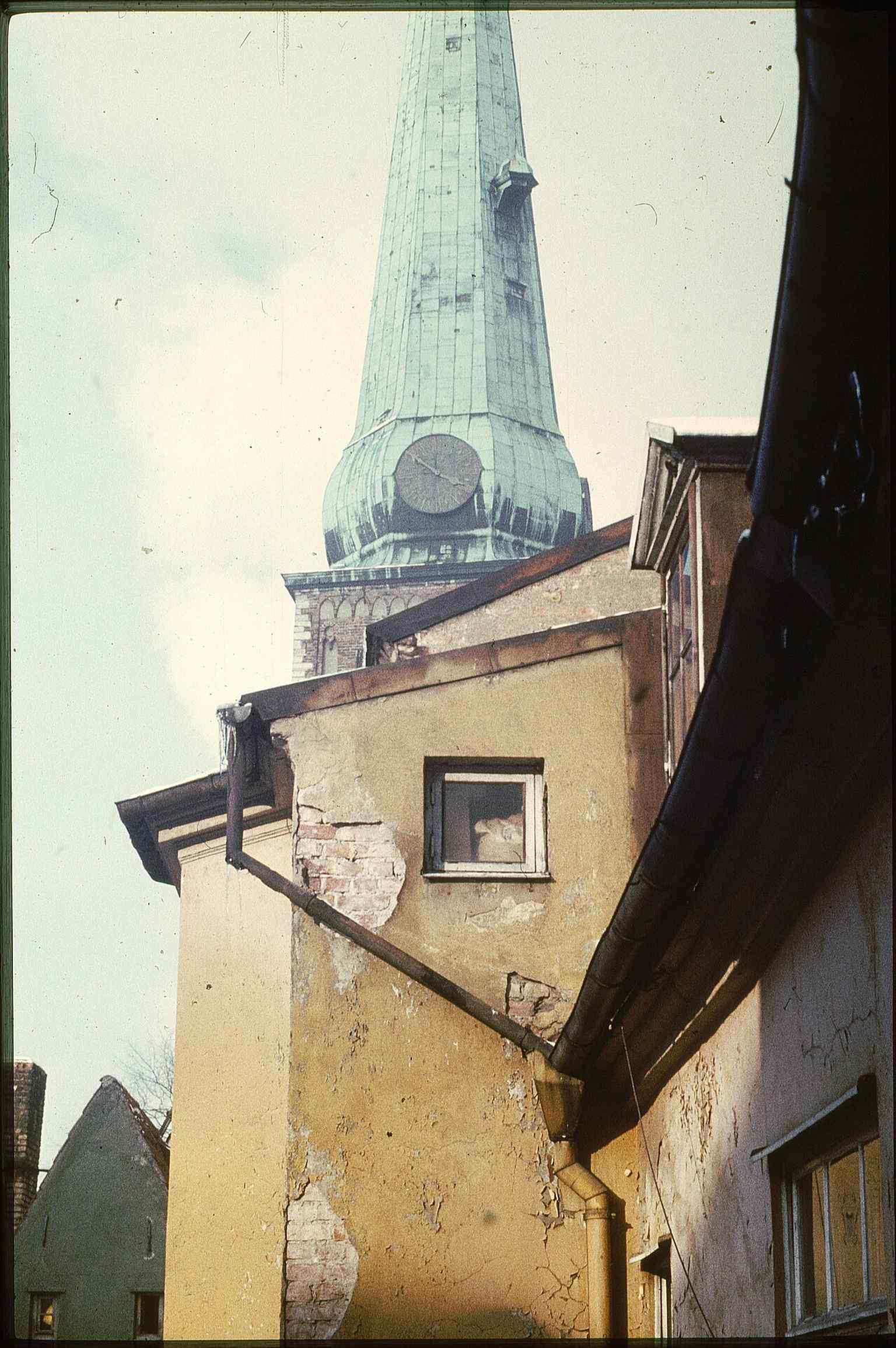
A rare older view of St. James’ Cathedral, useful for showing how the church looked before later restorations and interior changes.Photo: Juris Zalāns, Wikimedia Commons, CC BY-SA 4.0. Cropped & resized. 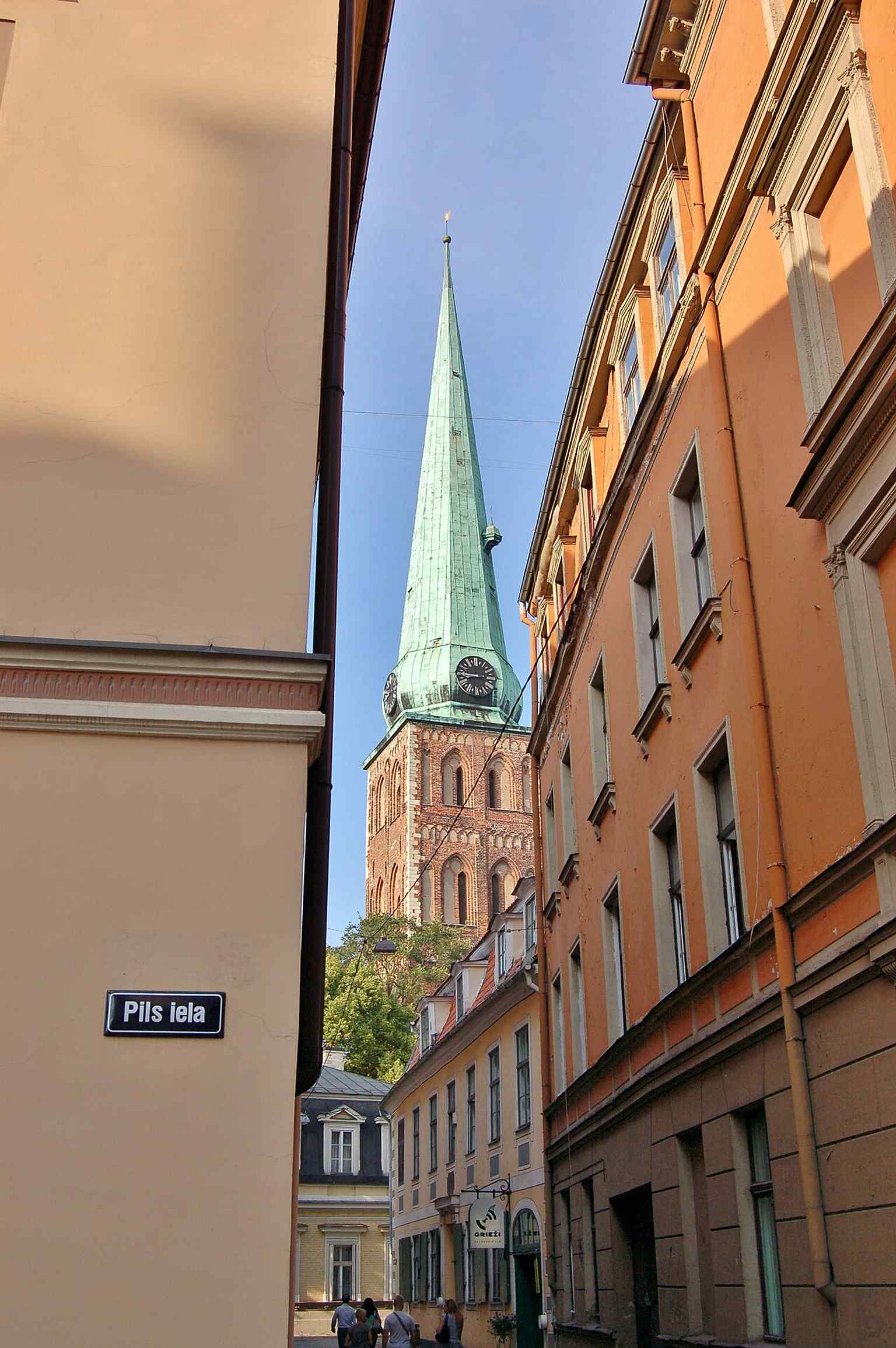
Another exterior angle of the cathedral, helping cover its brick Gothic massing and urban streetscape.Photo: Bahnfrend, Wikimedia Commons, CC BY-SA 4.0. Cropped & resized. 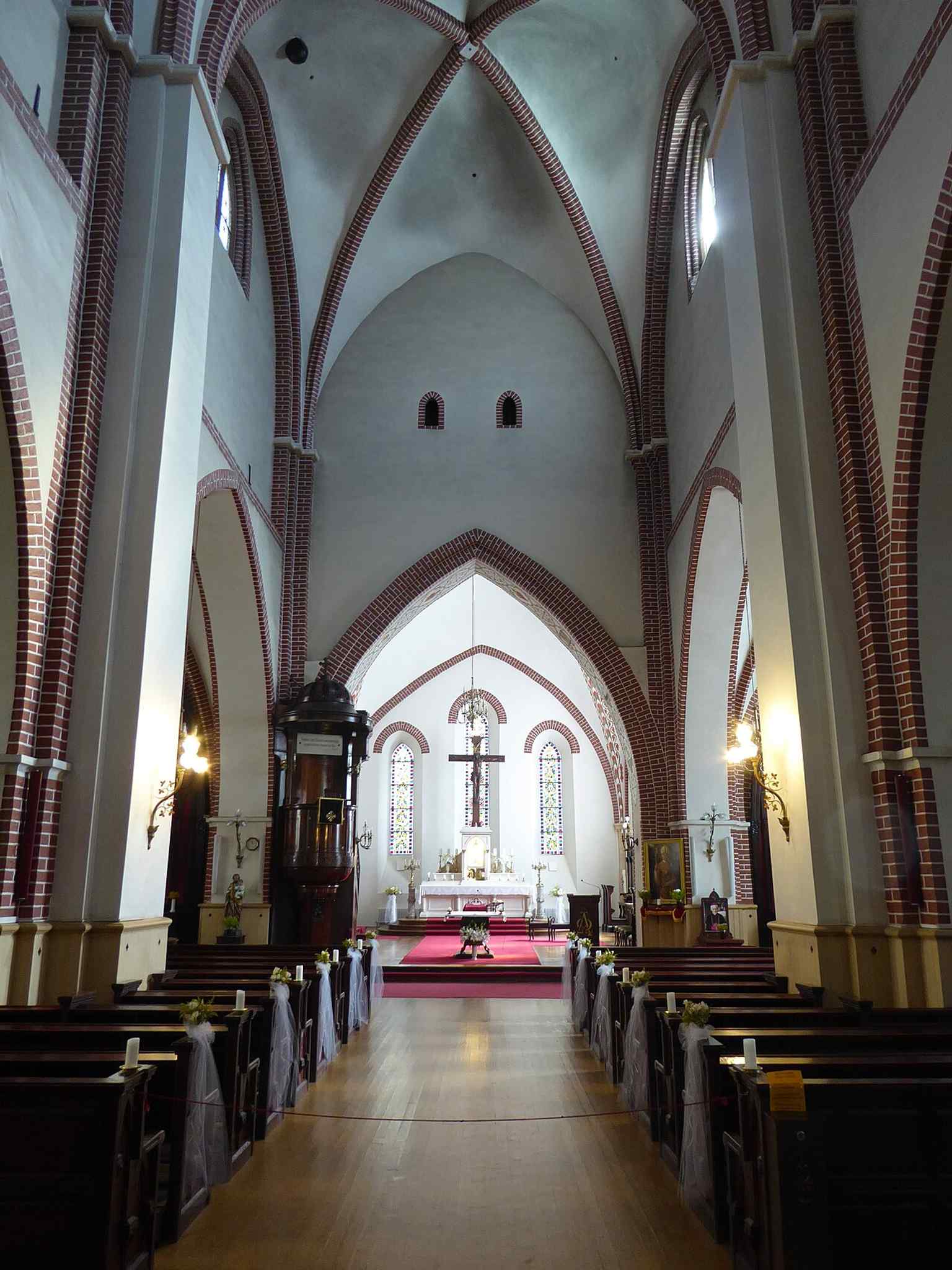
The nave and altar area, where the cathedral’s simple basilica form and layered historic details are visible.Photo: Syrio, Wikimedia Commons, CC BY-SA 4.0. Cropped & resized. 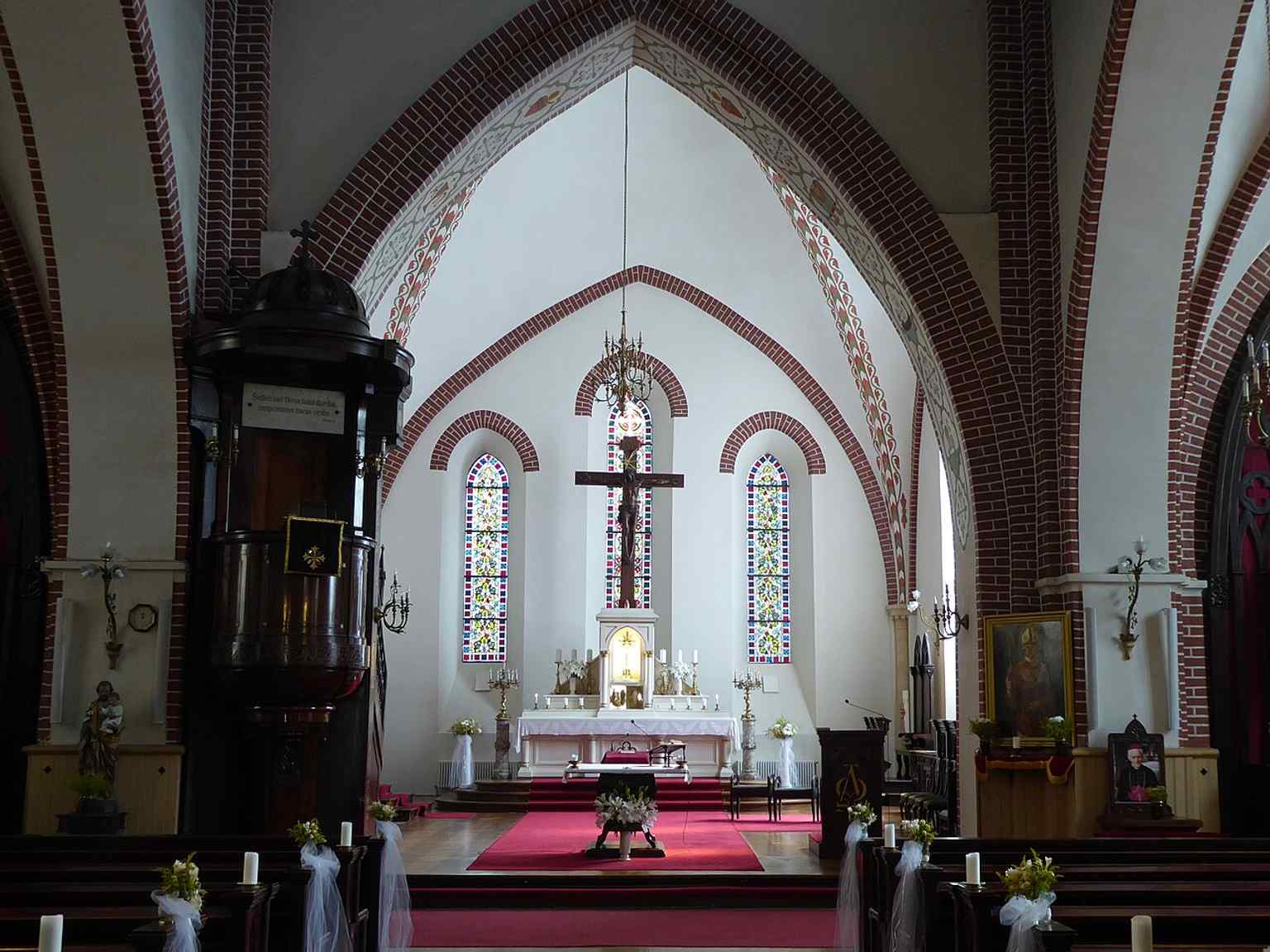
An interior perspective that highlights the church’s sober Gothic structure and later Catholic fittings.Photo: Syrio, Wikimedia Commons, CC BY-SA 4.0. Cropped & resized. 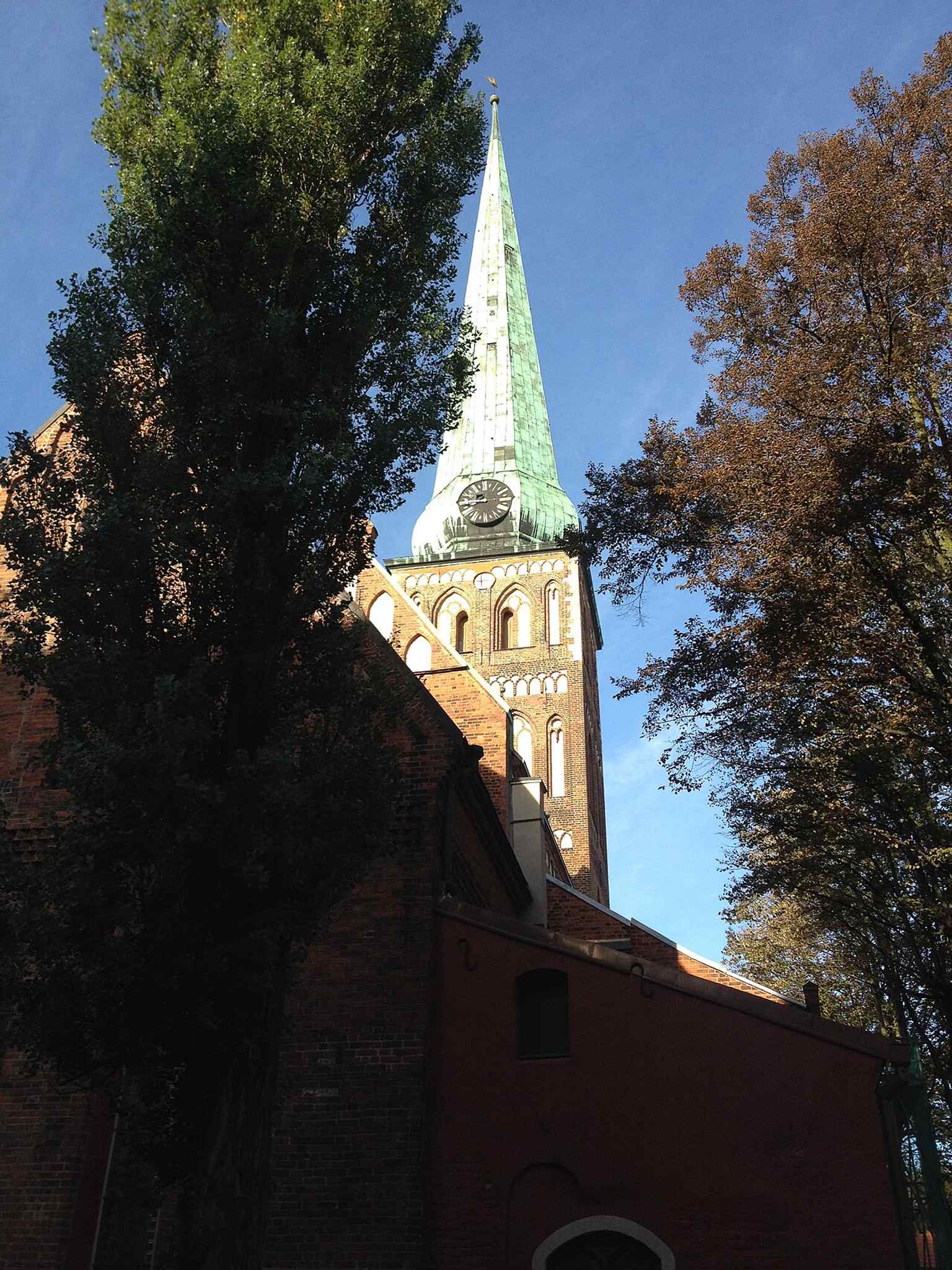
A closer exterior detail of the cathedral, good for the tower and roofline that dominate Riga’s skyline.Photo: Pitadzi, Wikimedia Commons, CC BY-SA 4.0. Cropped & resized. Look to your left for a pale plaster church with a long, simple hall, a square tower, and a slender dark spire rising above the roofline. For a relatively modest church, this…Read moreShow less
Open dedicated page →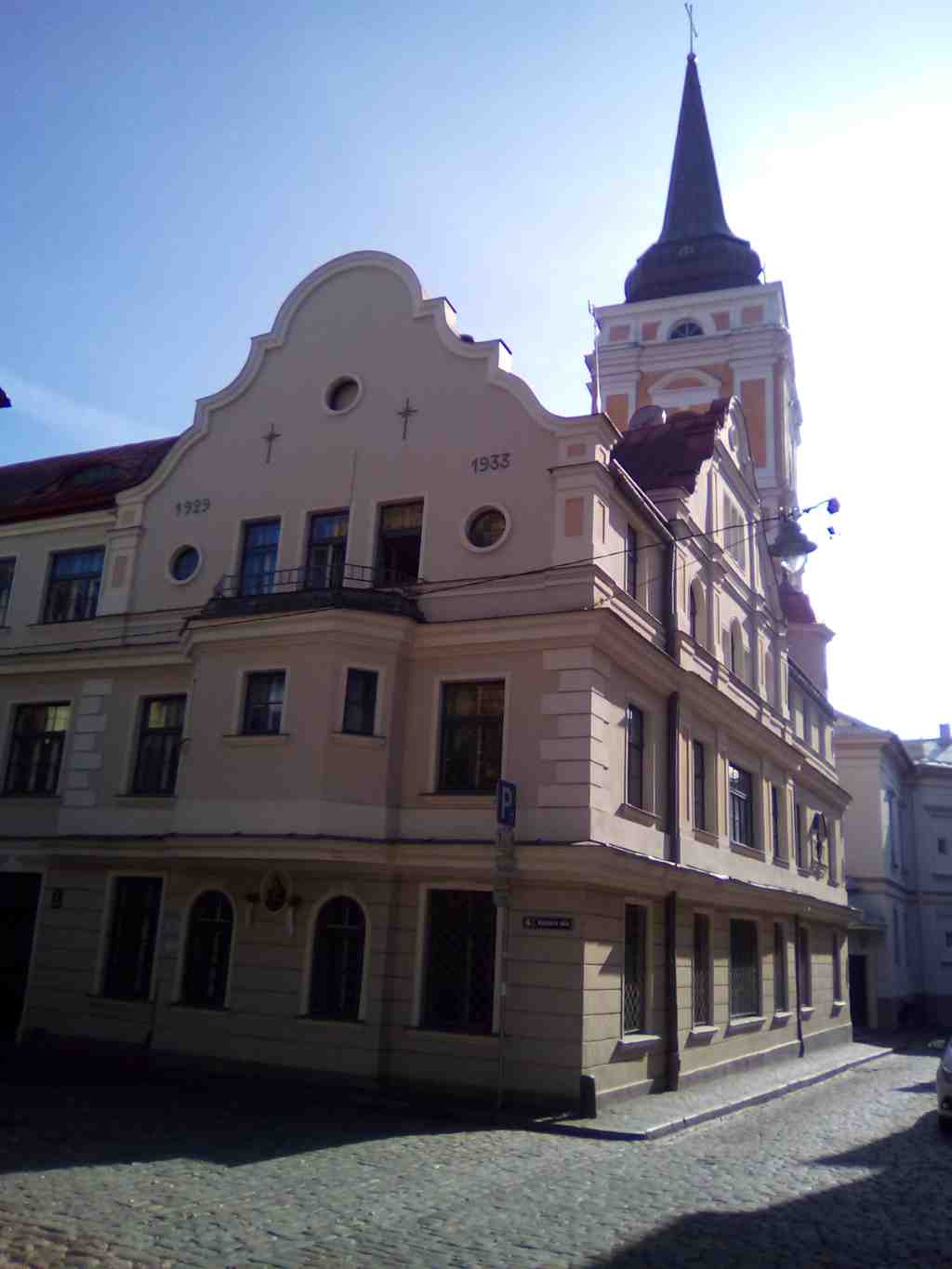
Church of Mary MagdalenePhoto: VardeCe, Wikimedia Commons, CC BY-SA 4.0. Cropped & resized. Look to your left for a pale plaster church with a long, simple hall, a square tower, and a slender dark spire rising above the roofline.
For a relatively modest church, this building has had an almost overqualified biography. It likely began sometime between the late fourteenth and early fifteenth century as the church of a Cistercian convent here in Old Riga. The convent housed unmarried daughters of wealthy burghers and landowners, along with widows, and locals nicknamed it the monastery of the singing maidens... which sounds charming, and probably also a little strict.
That first chapter ended in fifteen eighty-two, when the convent closed. Without its community, the church slipped into neglect. Then came another sharp turn. In sixteen twenty-one, during the Swedish capture of Riga, forces acting with the knowledge of King Gustavus Adolphus deliberately ruined the building. Always reassuring when kings take a personal interest in demolition. But then, after sixteen thirty-two, that same Gustavus Adolphus ordered it rebuilt under the terms worked out after the long Swedish-Polish conflict. Swedish garrison architects oversaw the work from sixteen thirty-two to sixteen thirty-nine, and Latvian stonemasons helped raise the new structure. Once finished, they consecrated it as a Swedish Lutheran garrison church for soldiers.
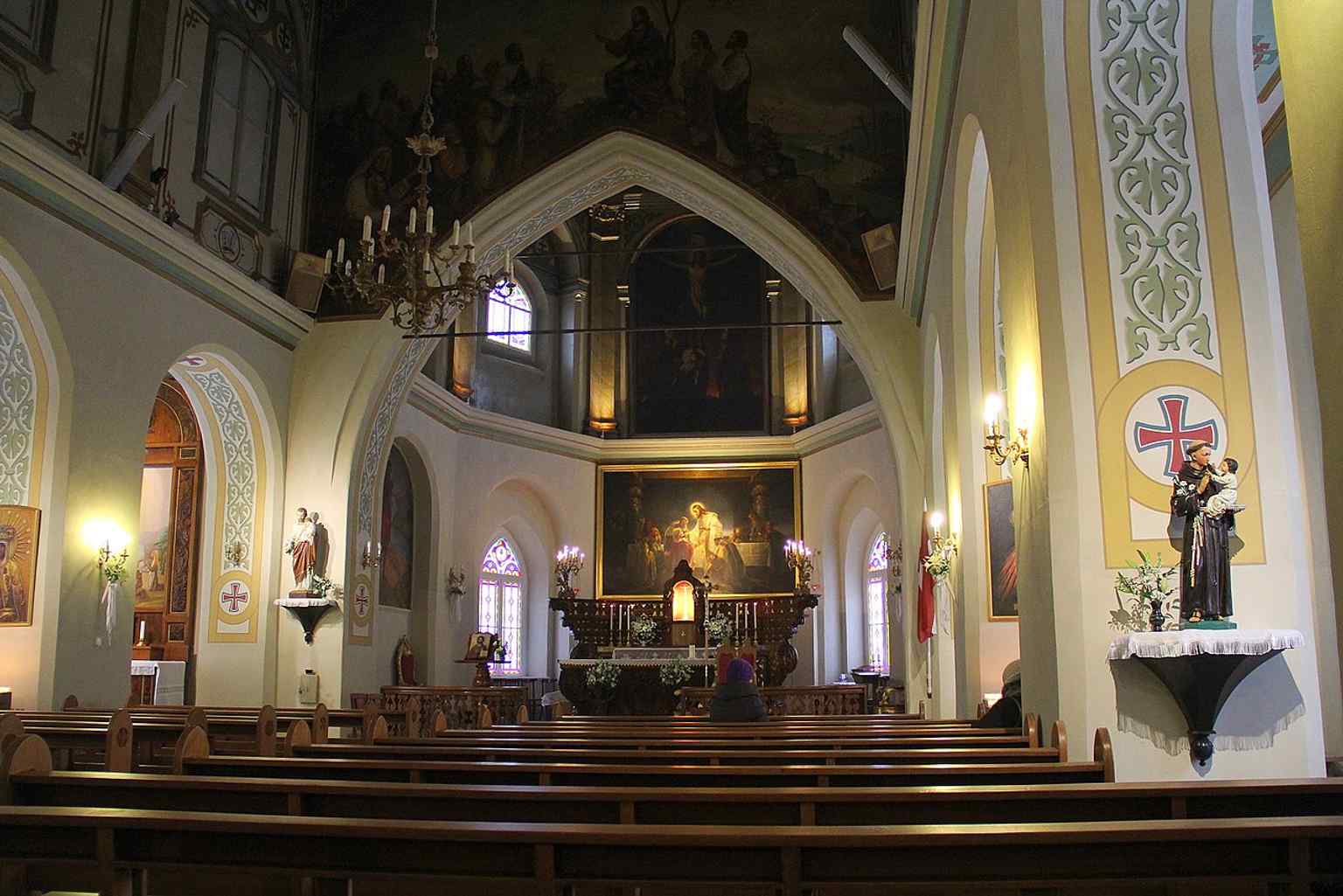
Its identity changed again after the bombardment of seventeen ten. When Boris Sheremetev entered Riga on the fourteenth of July, Peter the First decided the ruins here should become an Orthodox church dedicated to Saint Alexis, the Man of God, the heavenly patron of Peter’s father, Tsar Alexei Mikhailovich. Overnight, this small former garrison church became the main Orthodox church in the region. Two members of the Repnin family, including Riga’s first famous governor-general, were buried here, though no one can now point to the exact spots.
The church you see took on much of its present form in the Russian imperial period. In the seventeen forties, architect Nikolai Vasilyev redesigned the tower and altar end, and he gave the facades and interior a Baroque character - more movement, more flourish, a little more confidence. If you glance at the image on your screen, you can compare an older view of its Orthodox chapter with the building’s later changes. And the modern exterior photo in the app helps you spot the spire reshaped in nineteen twenty-nine by Artur Mödlinger, a student of Eižens Laube’s older contemporary, Konstantīns Pēkšēns.
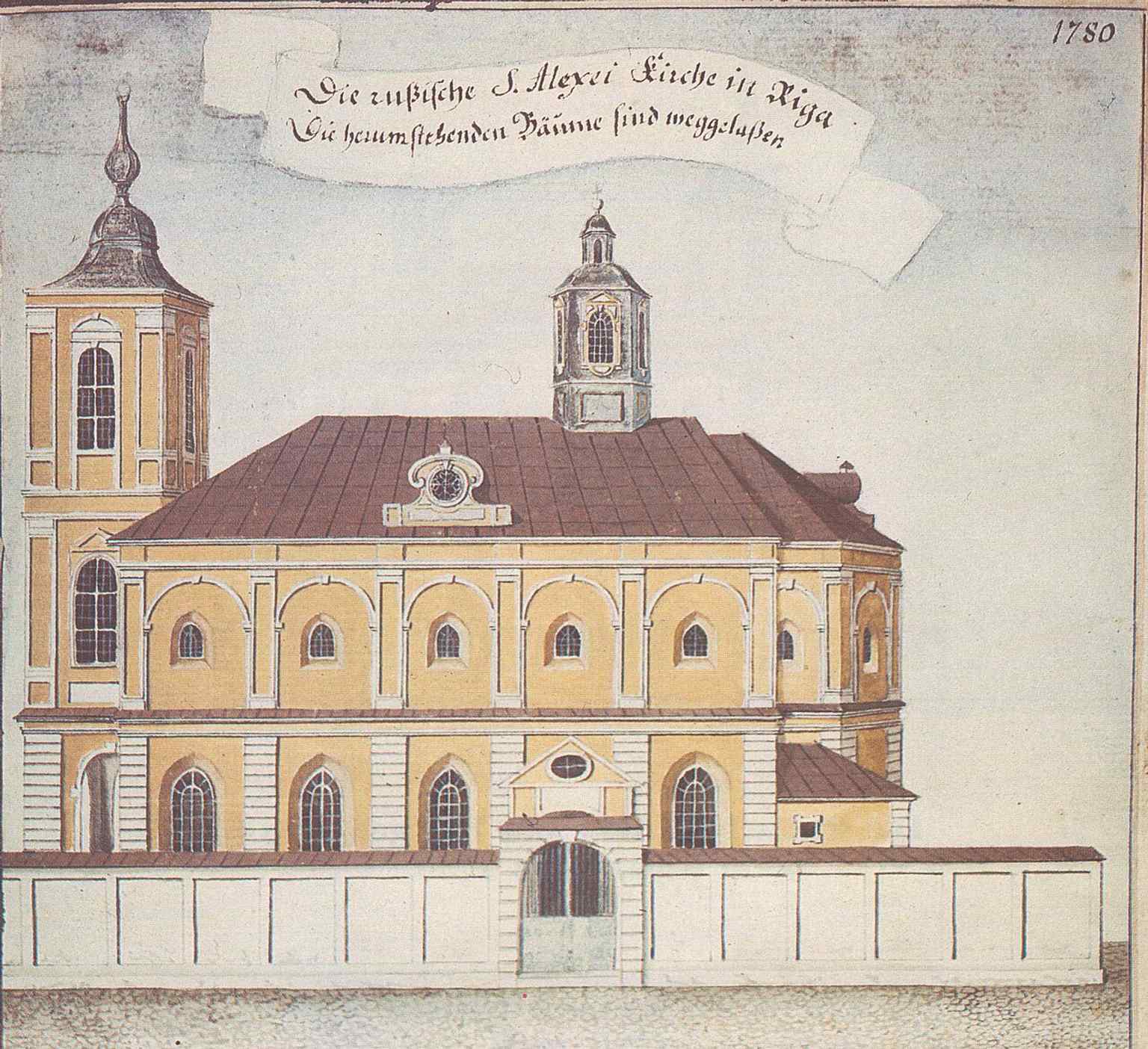
An 18th-century view of the church before later changes, useful for the building’s long history from its Orthodox era to today.Photo: Johann Christoph Brotze, Wikimedia Commons, Public domain. Cropped & resized. In nineteen twenty-three, independent Latvia transferred the church to the Catholic parish, and it returned to the name Mary Magdalene; the adjacent Franciscan convent continues that religious life, even though the old Cistercian monastery buildings themselves are gone.
If you want to return later, the church is generally open daily from six thirty in the morning until eight in the evening.
This place wears its many faiths lightly, but it remembers every one of them. When you’re ready, continue on to the final stop, where another church tells a very different Riga story.
The present-day Church of Mary Magdalene in Riga, now a Catholic church after its 1923 transfer from the Orthodox parish.Photo: Romualdsb, Wikimedia Commons, CC BY-SA 4.0. Cropped & resized. 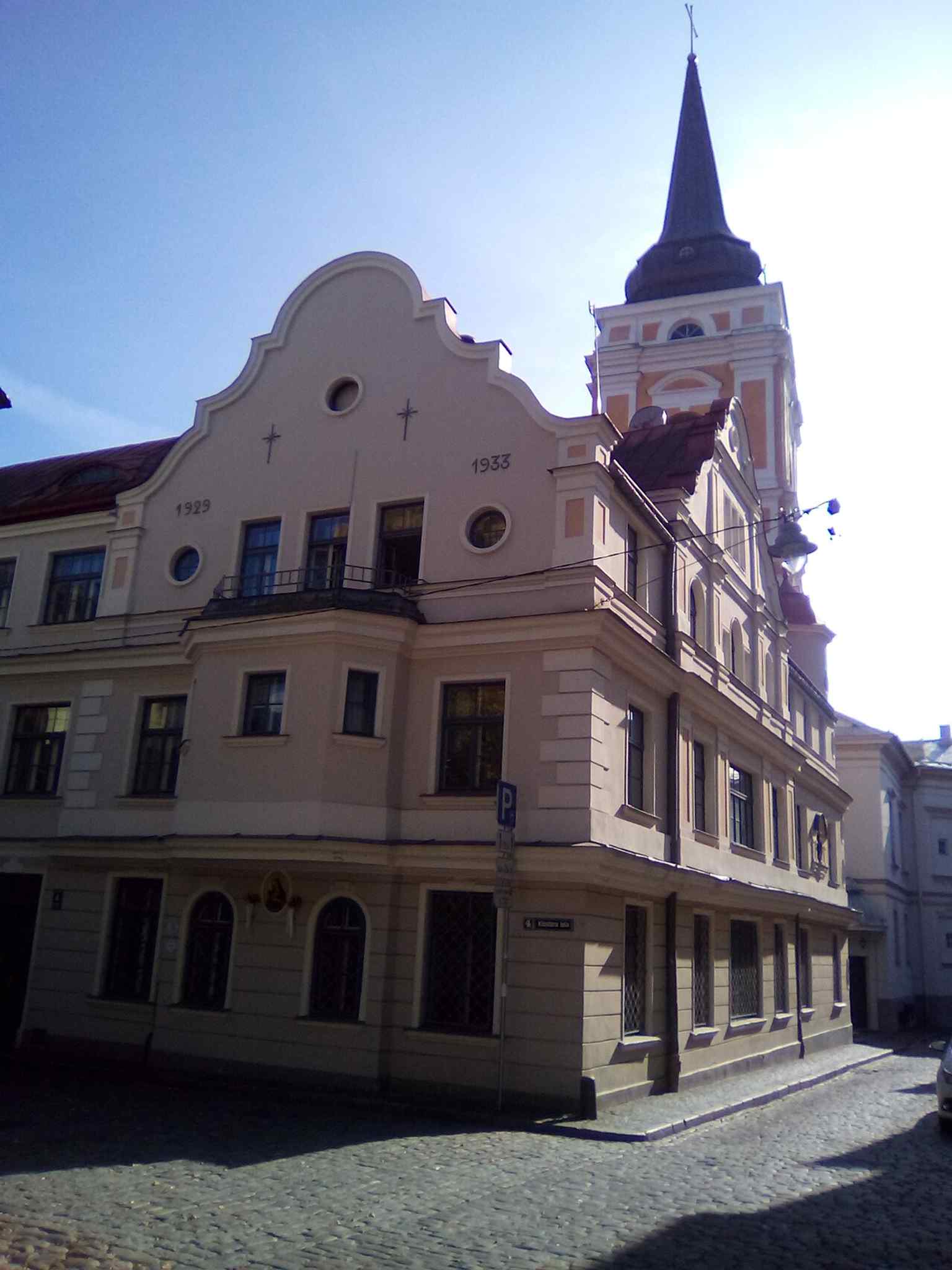
A clear modern exterior view of the church, whose current form was shaped by 18th-century reconstruction and a 1929 spire redesign.Photo: VardeCe, Wikimedia Commons, CC BY-SA 4.0. Cropped & resized. On your left, look for a vivid red-brick neo-Gothic church with a steep gabled front, narrow pointed windows, and a slender tower edged with stepped buttresses. This is Saint…Read moreShow less
Open dedicated page →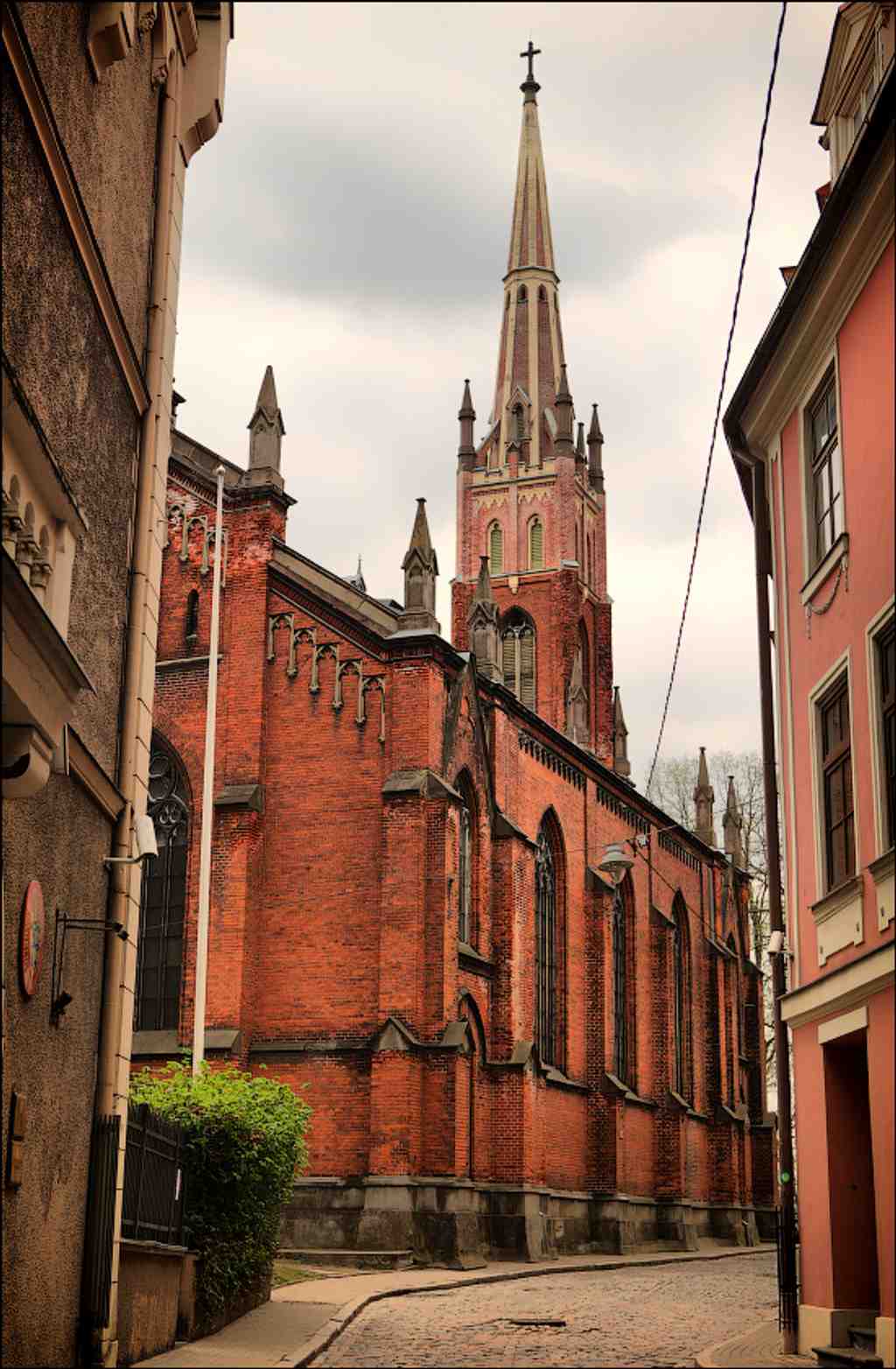
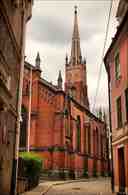
St. Redeemer's Anglican ChurchPhoto: http://fgb.by/viewtopic.php?p=60515#60515, Wikimedia Commons, CC BY-SA 3.0. Cropped & resized. On your left, look for a vivid red-brick neo-Gothic church with a steep gabled front, narrow pointed windows, and a slender tower edged with stepped buttresses.
This is Saint Redeemer’s Anglican Church, and Riga does not have another church quite like it. Architect Johann Daniel Felsko designed it in the eighteen fifties for British sailors and merchants, the people who drifted into Riga as trade with Britain expanded from the late eighteenth century onward. By eighteen thirty, the Anglican community here was official, but for years they had to borrow space in the Reformed Church. Eventually they wanted a home of their own... fair enough, even sailors like a regular address.
The city gave them this plot in eighteen fifty-two near Castle Square, right beside old Swedish fortifications. To make room, builders flattened the Paul Bastion, a defensive earthwork once planned by the Swedish governor and military engineer Erik Dahlberg. Work started under master builder Wilhelm Krieger, then the Crimean War interrupted everything. After the Paris peace, work resumed, and Felsko carried the project through to completion between eighteen fifty-five and eighteen fifty-nine.
Here is the wonderfully stubborn part: parishioners shipped in the sandstone, the bright red brick, and even soil for the foundation from Britain. If you want your church to count as British ground forever, apparently you do not travel light. On the sixteenth of June, eighteen fifty-seven, British consul Richard Levinge Swift laid the foundation stone in front of a full diplomatic audience. Two years later, on the twenty-sixth of July, eighteen fifty-nine, Bishop Trower consecrated the church.
If you glance at your screen, the exterior photo shows that almost theatrical brick color beautifully. Notice the buttresses, those projecting supports along the walls, and the decorative Gothic details: little pinnacles, pointed arches, and tiny gables above windows. Most unusual of all, the spire carries supporting half-arches, basically flying buttresses, a feature unique among Riga’s churches.
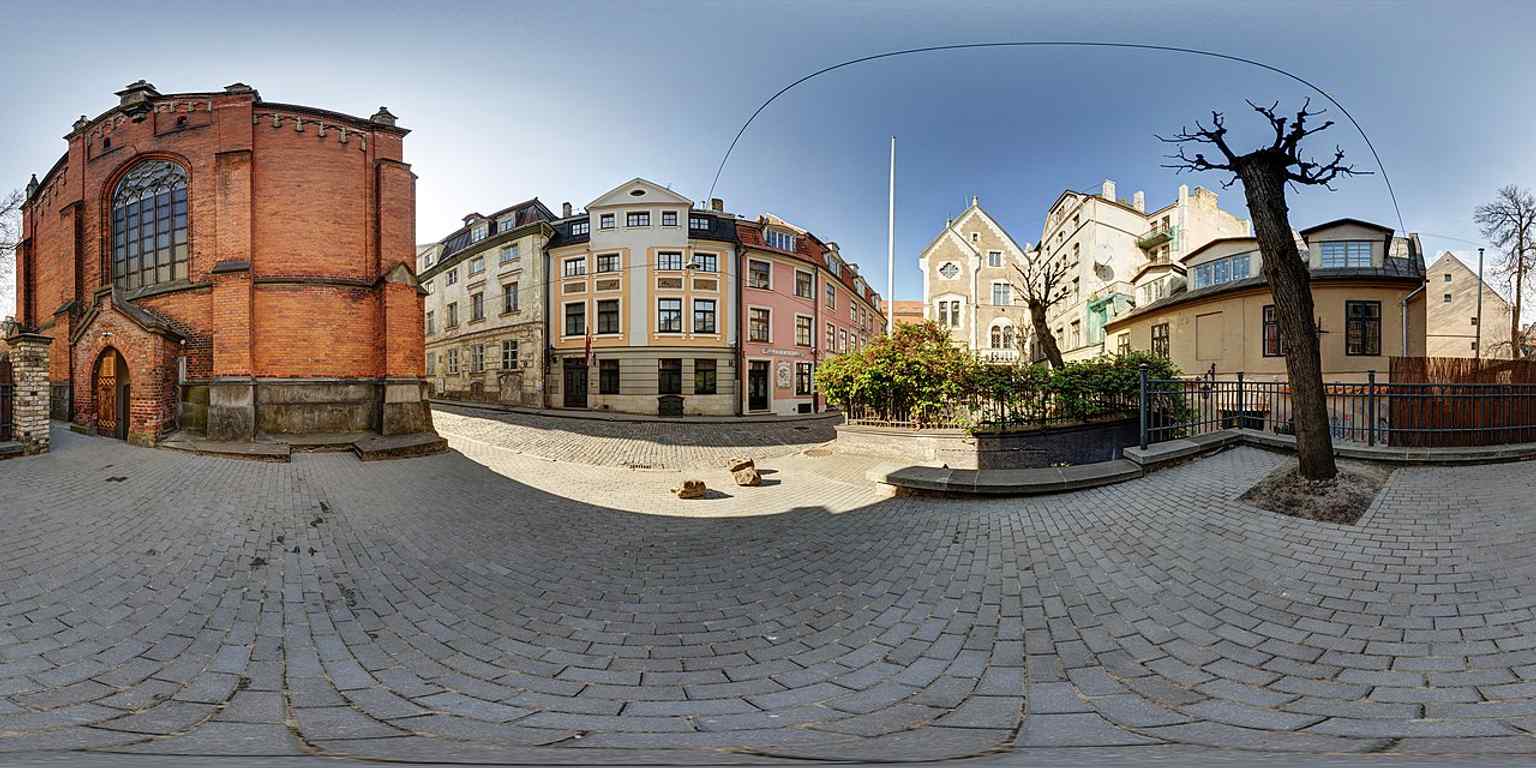
The vivid red-brick neo-Gothic church facing the Daugava — built in the 1850s for Riga’s British Anglican community.Photo: Igors Jefimovs, Wikimedia Commons, CC BY-SA 4.0. Cropped & resized. Above the entrance stood the formal name: “The Factory Church of Saint Savior, Riga.” “Factory” here meant a foreign merchants’ trading community, not a place full of smoke and machinery. Inside, the church forms a single hall, or nave, with plastered wooden vaults. The apse, the altar end, had star-shaped vaulting. Wealthy members of the Armistead family funded an elegant interior with oak furnishings, stained glass, and room for about two hundred worshippers. An Italian church painter, Bellentini, created the altar painting. You can see the restored interior space on your phone here.
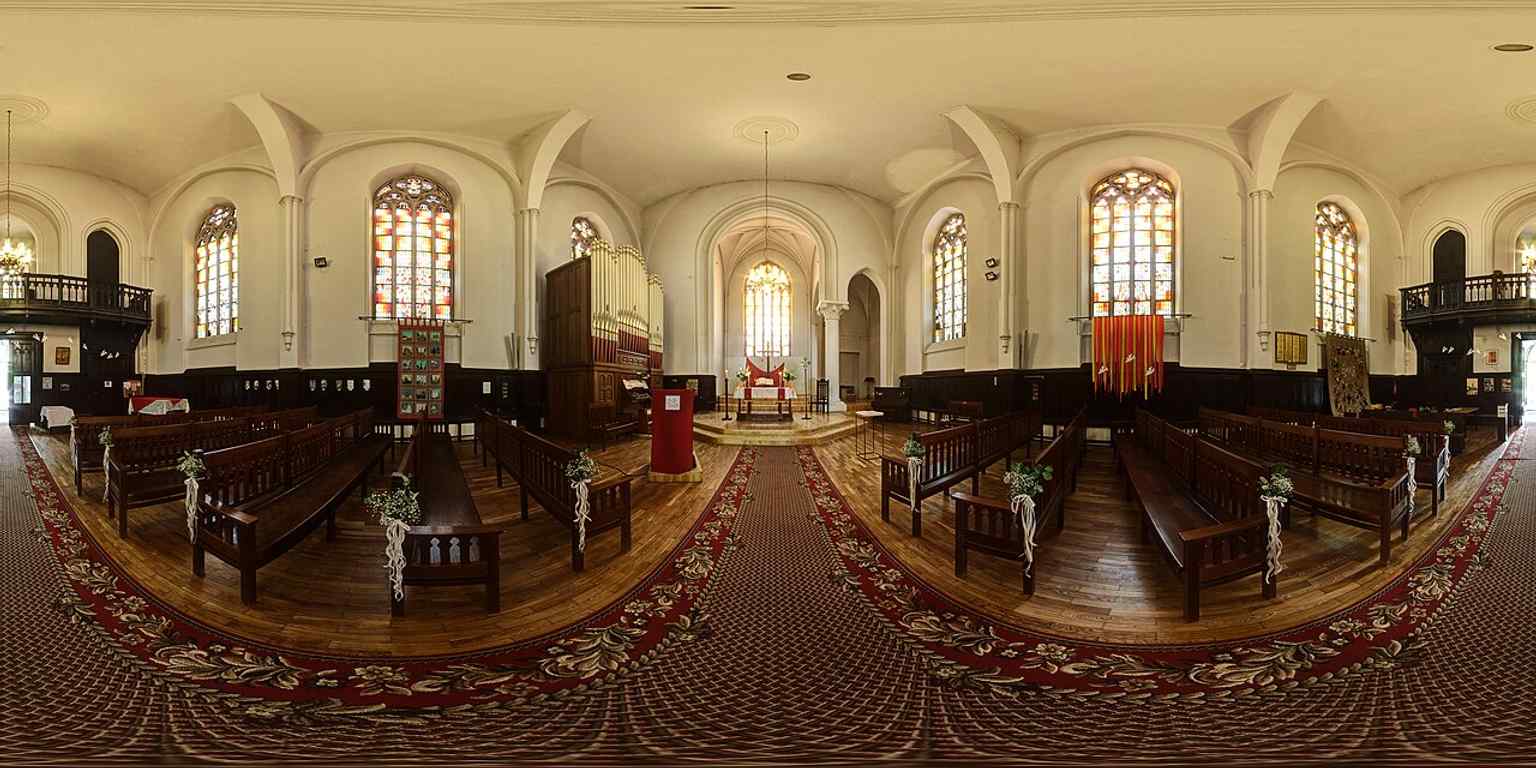
The church’s nave interior, where restored stained glass and the single-vessel hall create the acoustic space later used for concerts and recordings.Photo: Igors Jefimovs, Wikimedia Commons, CC BY-SA 4.0. Cropped & resized. The twentieth century knocked it around. Soviet authorities seized it in nineteen forty. In nineteen forty-one, architects adapted it for a Latvian Lutheran parish, and shelling during the fighting for Riga damaged the building. Later it sat largely empty, then became student housing and a library for Riga Technical University. Its acoustics were so good that people used it as a recording studio in the nineteen seventies and eighties. Since nineteen ninety-two, the Anglican parish has returned, and today several congregations share the church.
If you want to step inside another time, it is generally open only on Sundays from nine AM to twelve thirty PM.
Frequently asked questions
How do I start the tour?
After purchase, download the AudaTours app and enter your redemption code. The tour will be ready to start immediately - just tap play and follow the GPS-guided route.
Do I need internet during the tour?
No! Download the tour before you start and enjoy it fully offline. Only the chat feature requires internet. We recommend downloading on WiFi to save mobile data.
Is this a guided group tour?
No - this is a self-guided audio tour. You explore independently at your own pace, with audio narration playing through your phone. No tour guide, no group, no schedule.
How long does the tour take?
Most tours take 60–90 minutes to complete, but you control the pace entirely. Pause, skip stops, or take breaks whenever you want.
What if I can't finish the tour today?
No problem! Tours have lifetime access. Pause and resume whenever you like - tomorrow, next week, or next year. Your progress is saved.
What languages are available?
All tours are available in 50+ languages. Select your preferred language when redeeming your code. Note: language cannot be changed after tour generation.
Where do I access the tour after purchase?
Download the free AudaTours app from the App Store or Google Play. Enter your redemption code (sent via email) and the tour will appear in your library, ready to download and start.
If you don't enjoy the tour, we'll refund your purchase. Contact us at [email protected]
Checkout securely with 






.jpg)
.jpg)


.02.jpg)


.jpg)


%2C%202006%20(01).jpg)
%2C%202006%20(02).jpg)
%2C%202006%20(03).jpg)

.JPG)
.JPG)


%2C%202006%20(01).jpg)


.01.jpg)
.jpg)
.jpg)


.jpg)


.jpg)


by%20Brotze.jpg)


