
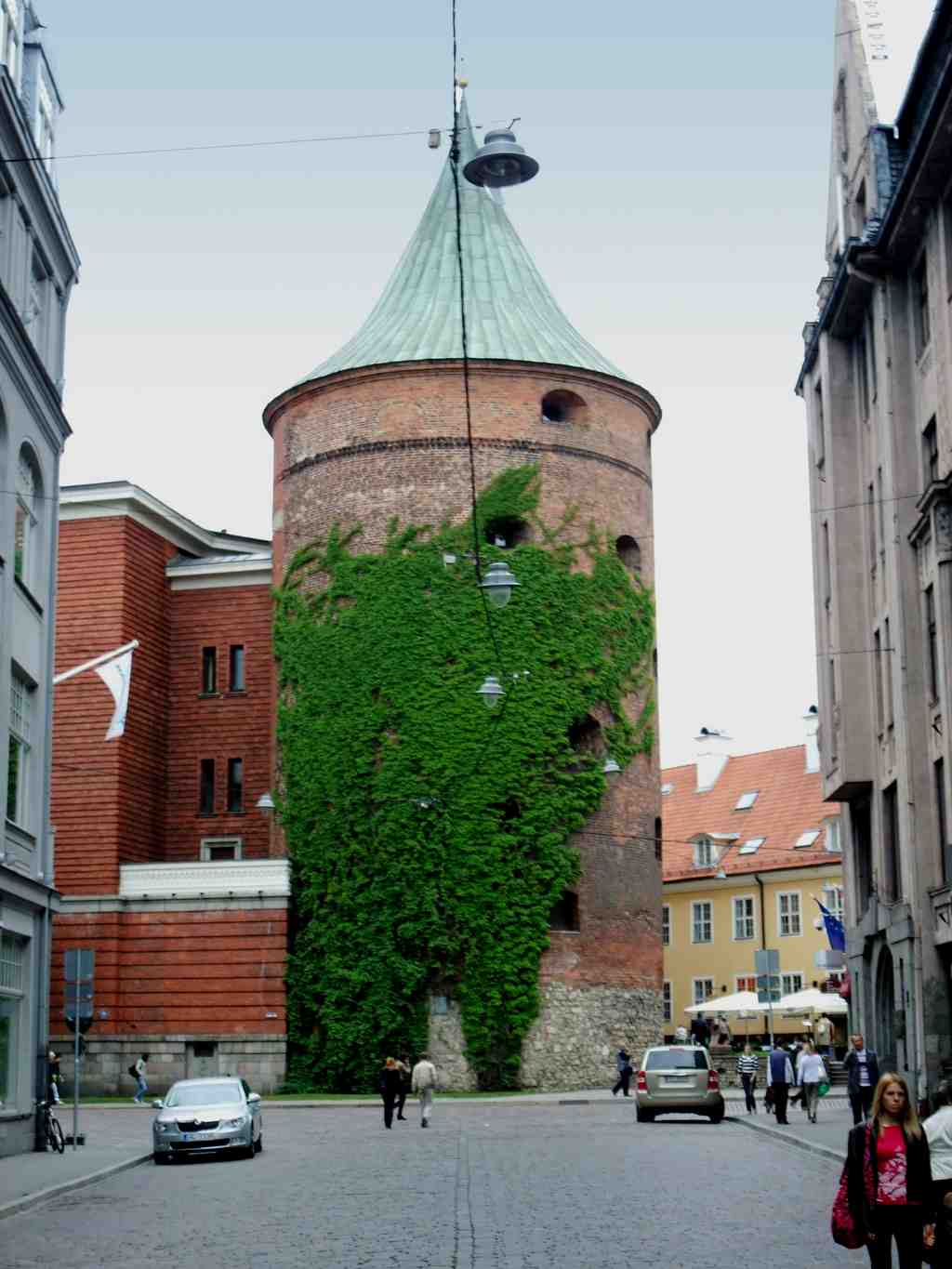
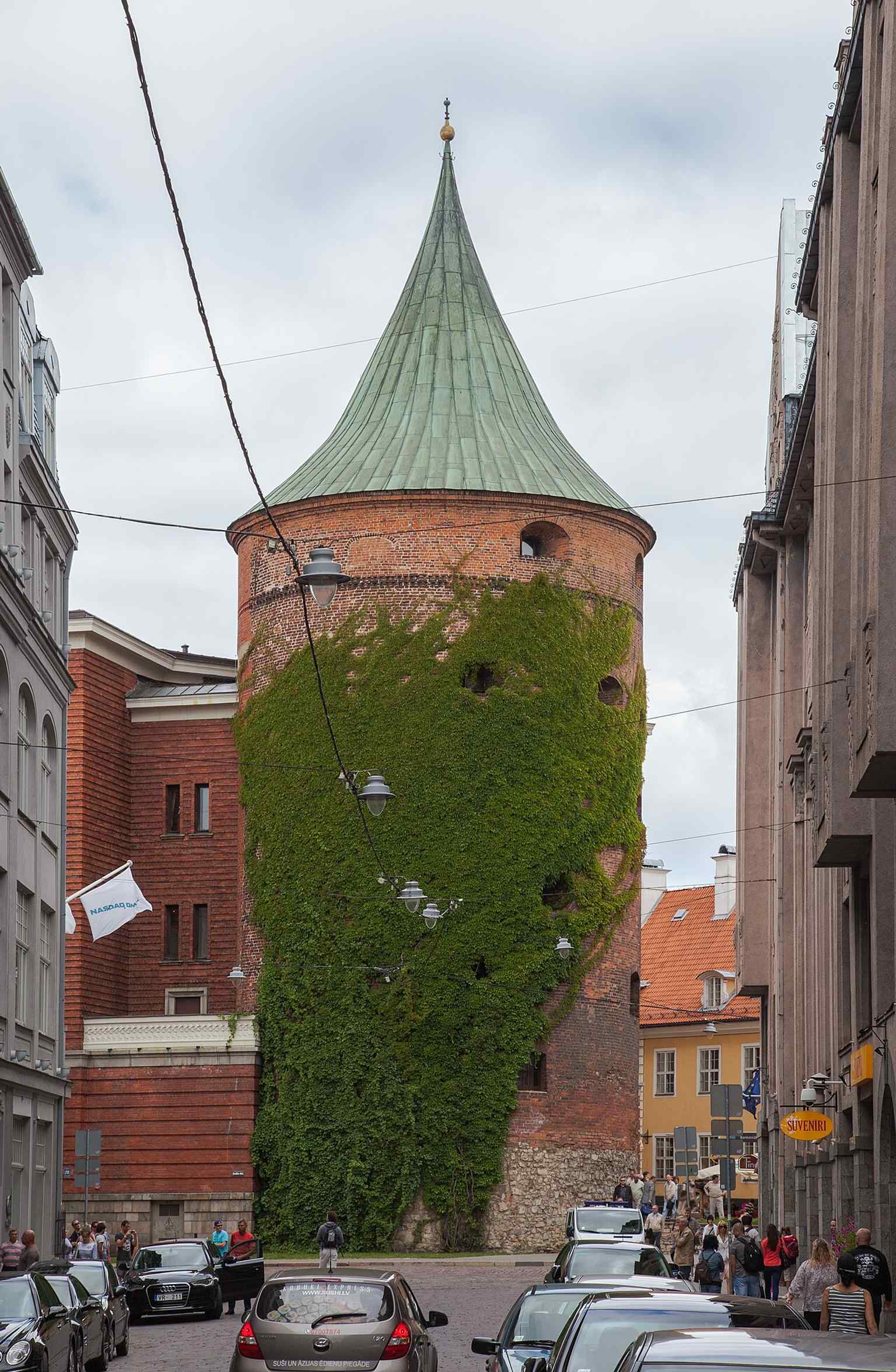
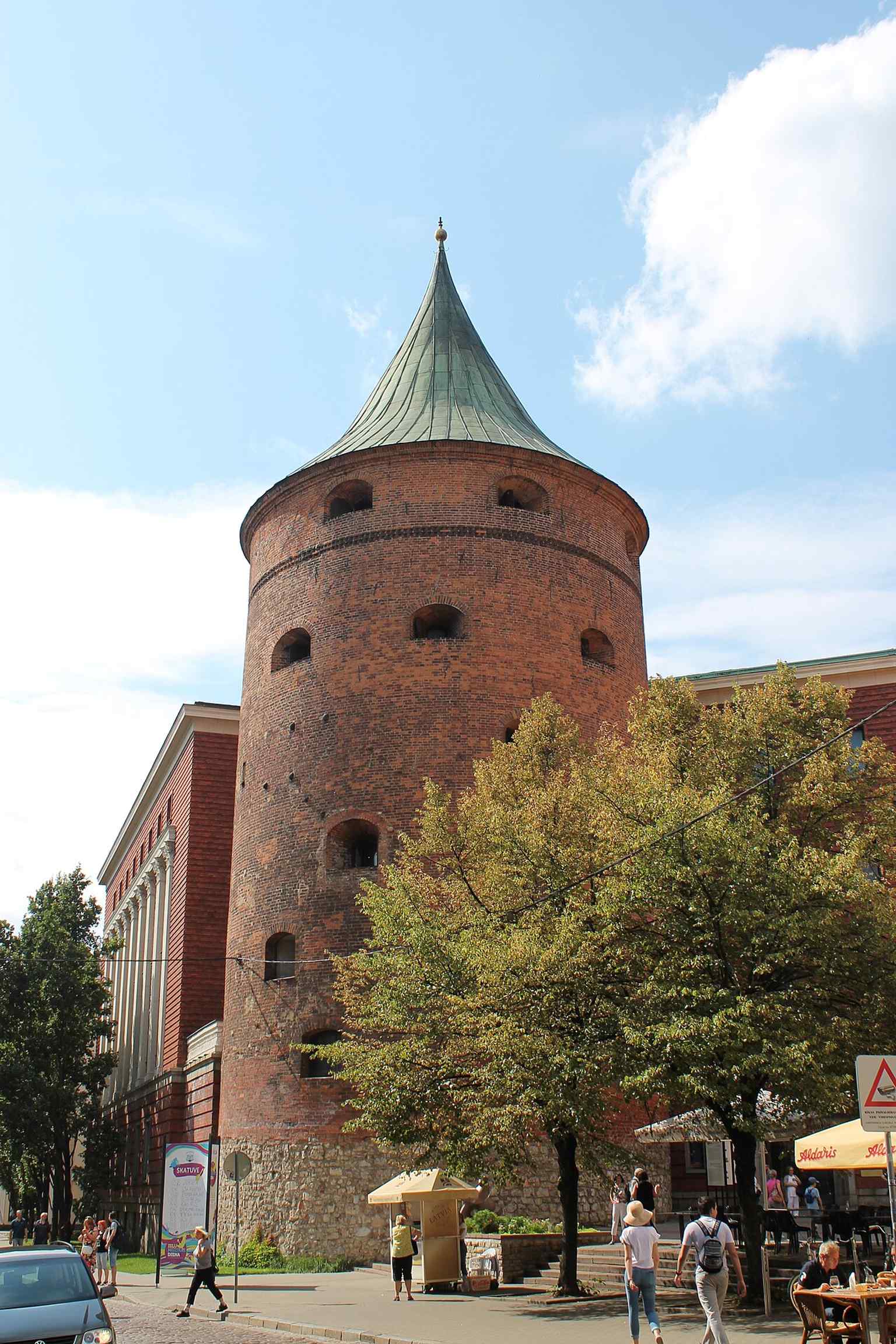
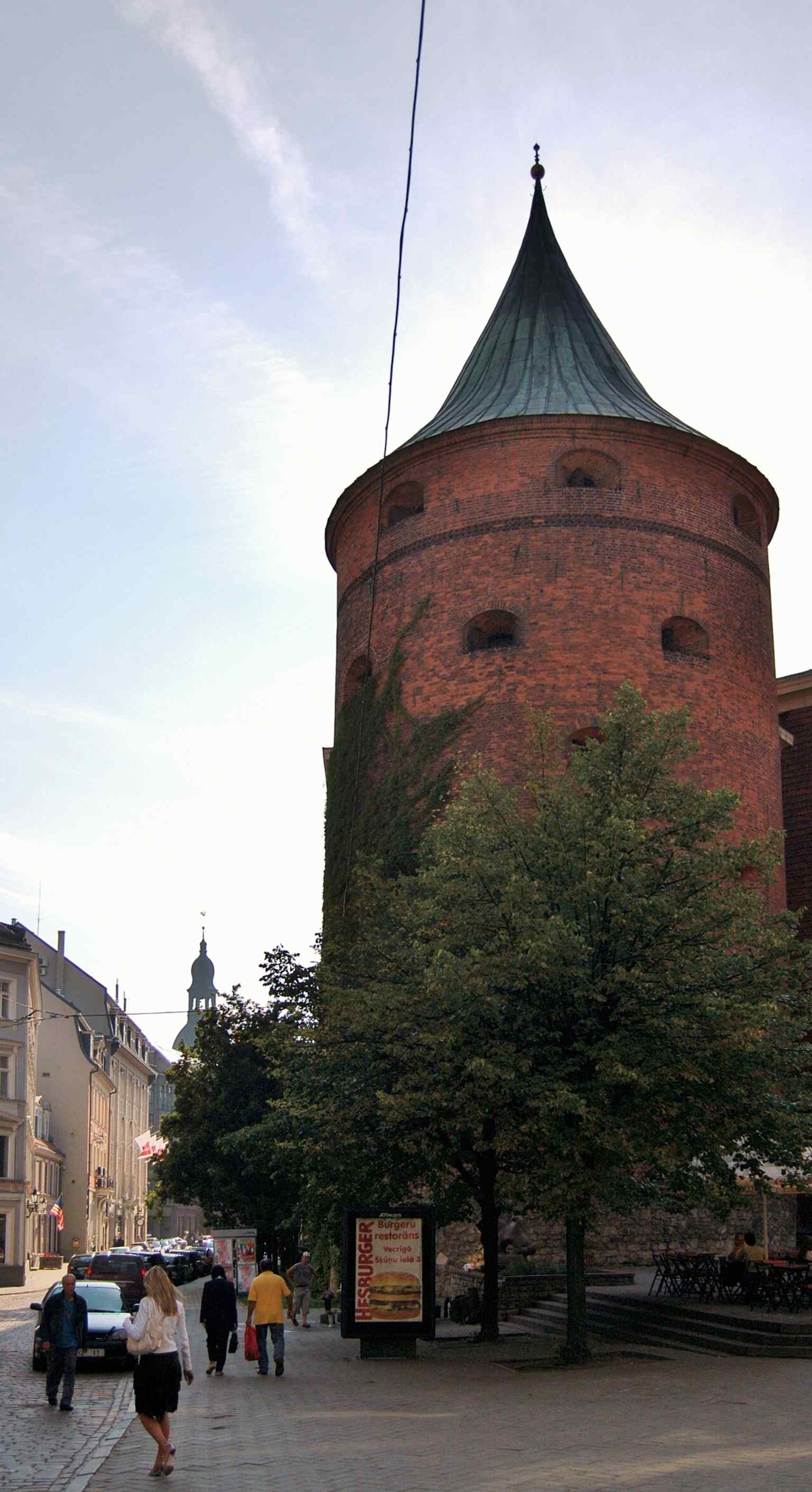
On your right rises a tall cylindrical tower of dark red brick, slightly tapering as it climbs, with a pointed roof and narrow defensive openings cut into its thick walls.
This is the Powder Tower, the last surviving tower of Riga’s medieval fortifications... which is a polite way of saying every other tower lost its argument with modern city planning.
The story starts in the early fourteen hundreds? Not quite. The tower first appears in records in thirteen thirty, right after the Livonian Order forced Riga back under its control. Chroniclers describe a cannon shot blasting a breach in the city wall so Master Eberhardt von Monheim could make a suitably dramatic entrance. Conquerors do love theater. Soon after, the Order strengthened the defenses here, where the old Great Sandy Road approached the city. That is why this was first called the Sand Tower.
It may even be older, from the late thirteenth century. At first it had a horseshoe shape, open on one side. By the middle of the fourteenth century, builders rebuilt it into the round form you see now, better for deflecting attack and guarding Riga’s northern edge. If you check the image on your screen, you can see how this tower sat inside a much larger defensive system near the old Sand Gate route.
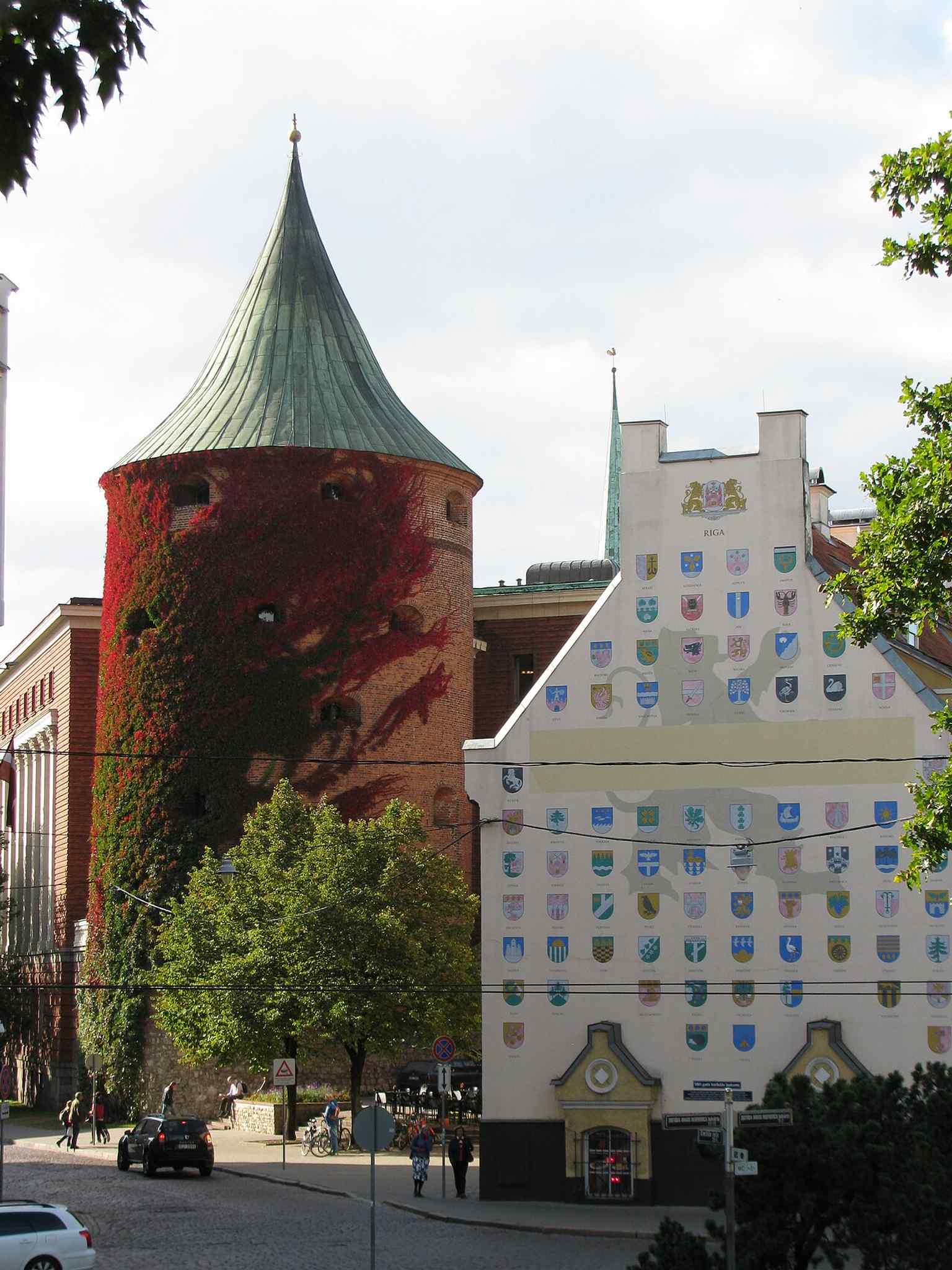
In the Middle Ages, Riga had twenty-eight towers. This one became especially clever after another rebuild turned it into a six-story stronghold. Between the fifth and sixth floors, engineers created what was essentially a cannonball trap: a chamber packed with crossing oak and pine logs meant to catch enemy shot and hold it in place. Medieval problem-solving... very sturdy, very Latvian, and not at all subtle.
War kept testing it. In sixteen twenty-one, during the Polish-Swedish conflict, the tower took heavy damage. The Swedes rebuilt it, and around then people likely started calling it the Powder Tower. Some say it stored gunpowder, though that sounds like a terrible idea in a building people kept shooting at. In sixteen fifty-six, Russian forces hit it with nine cannonballs during the siege by Tsar Alexei Mikhailovich. Then in seventeen oh nine, during Peter the Great’s campaign, more shot struck the tower. Legend says Peter himself fired some of them. Three cannonballs on one side and nine on the other remained embedded in the walls for centuries.
Later, peace almost finished what war did not. In eighteen fifty-seven, officials planned to clear away Riga’s old fortifications, but they spared this tower as a historical monument. Then, in eighteen ninety-two, the student fraternity Rubonia moved in, repaired it, and partly funded the job by selling years of accumulated pigeon droppings to local gardeners. History is not always glamorous. Their cannonball trap became a fencing hall, and the tower also hosted dancing and beer.
Since then, it has served as a museum, a police facility, a naval school, a Soviet ideological museum, and now again part of the Latvian War Museum, in the neighboring complex you can see beside it.
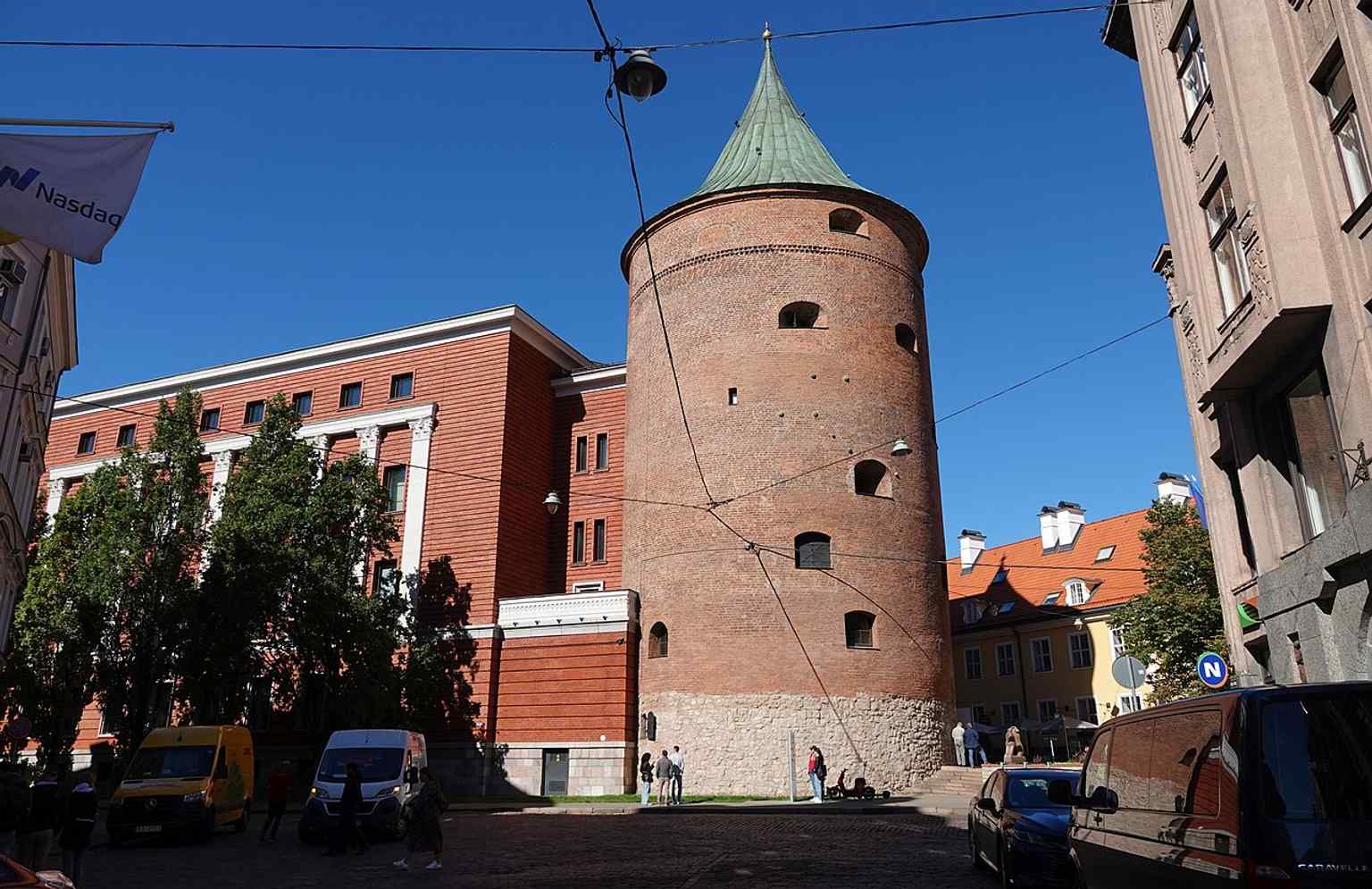
If you want to go inside later, the museum is open Wednesday through Sunday from ten to five, and closed Monday and Tuesday.
For a building made for gunpowder and impact, it has had an oddly successful second career in memory.
When you’re ready, continue on toward St. James’ Cathedral.





.jpg)
.jpg)


.jpg)