
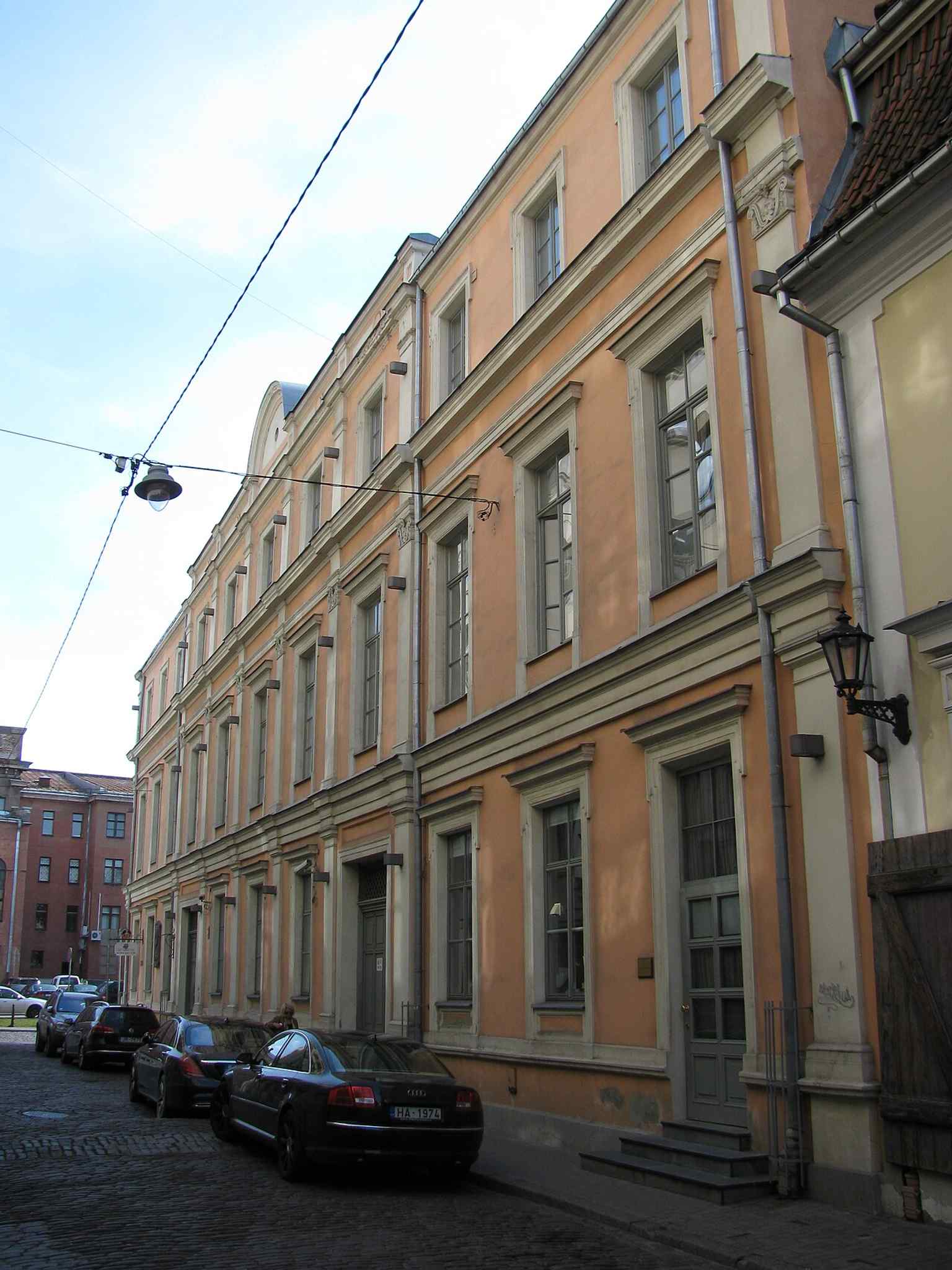
On your right, this pale stucco building has a long rectangular façade, rows of evenly spaced windows, and a memorial plaque fixed to the wall.
Peter the Great stayed here eight times when Riga pulled him in for business, war, or both. After he captured the city, he bought the property from the councillor Renenberg for five thousand crowns... a very serious sum, roughly the value of a high-end property in modern money. Then, in classic Peter fashion, he kept expanding it. In seventeen twelve he ordered provincial architects to rebuild the place, and the palace gradually grew out of several separate houses he bought over time, including one above the New Gate facing the Daugava. So this was not one neat royal project; it was more like an imperial habit with walls.
Originally, in Dutch classical style, it had two floors, a high roof, broad flat columns running up the façade, and an ornate gable with a coat of arms above the central entrance. If you glance at your screen, image two helps show how the later third floor changed those original proportions. Peter’s last visit came in February of seventeen twenty-one. He stayed about three months, ordered another rebuild, and never saw it finished. He did, however, get his curious hanging garden above the fortress casemates, the vaulted military chambers inside the rampart.
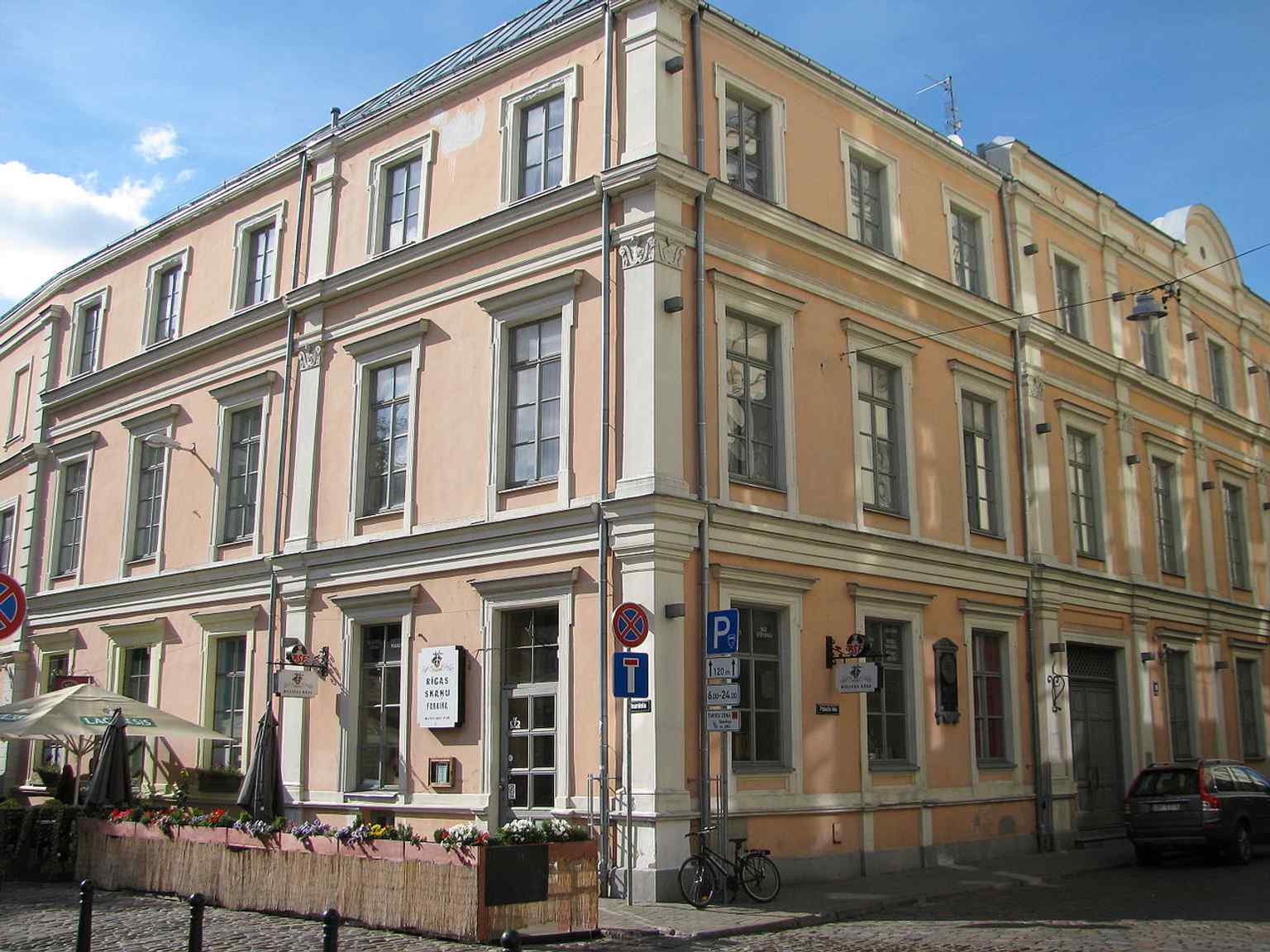
Later this place served as a court, then a school, then offices. In two thousand, Ernesto Preatoni restored it, and now it holds shops, a restaurant, and luxury apartments.
This palace is really a stitched-together record of power, renovation, and restless ambition. If you're curious later, it generally opens from eleven to seven except Tuesdays, and when you're ready, continue to the next stop.





.JPG)
.JPG)