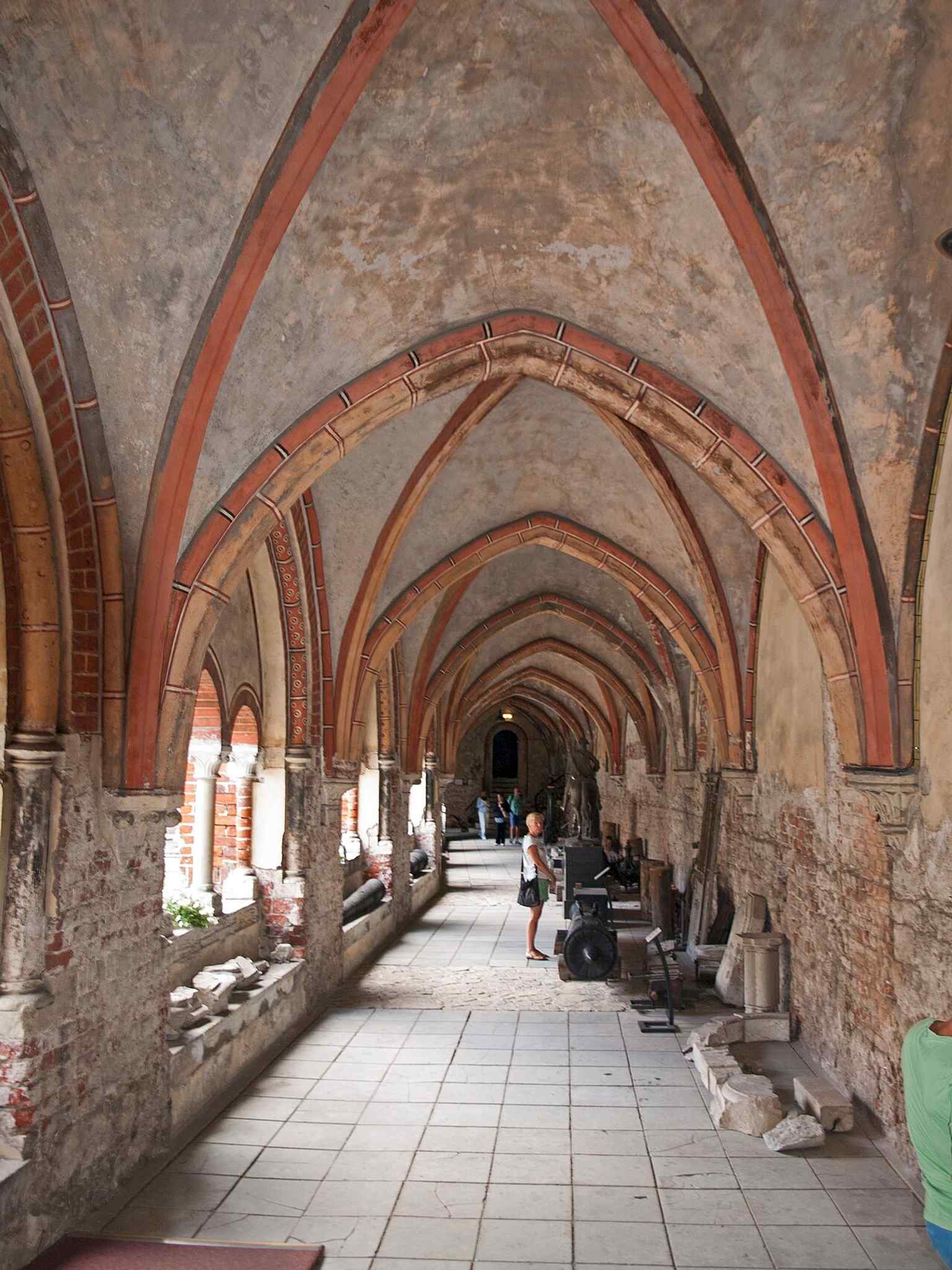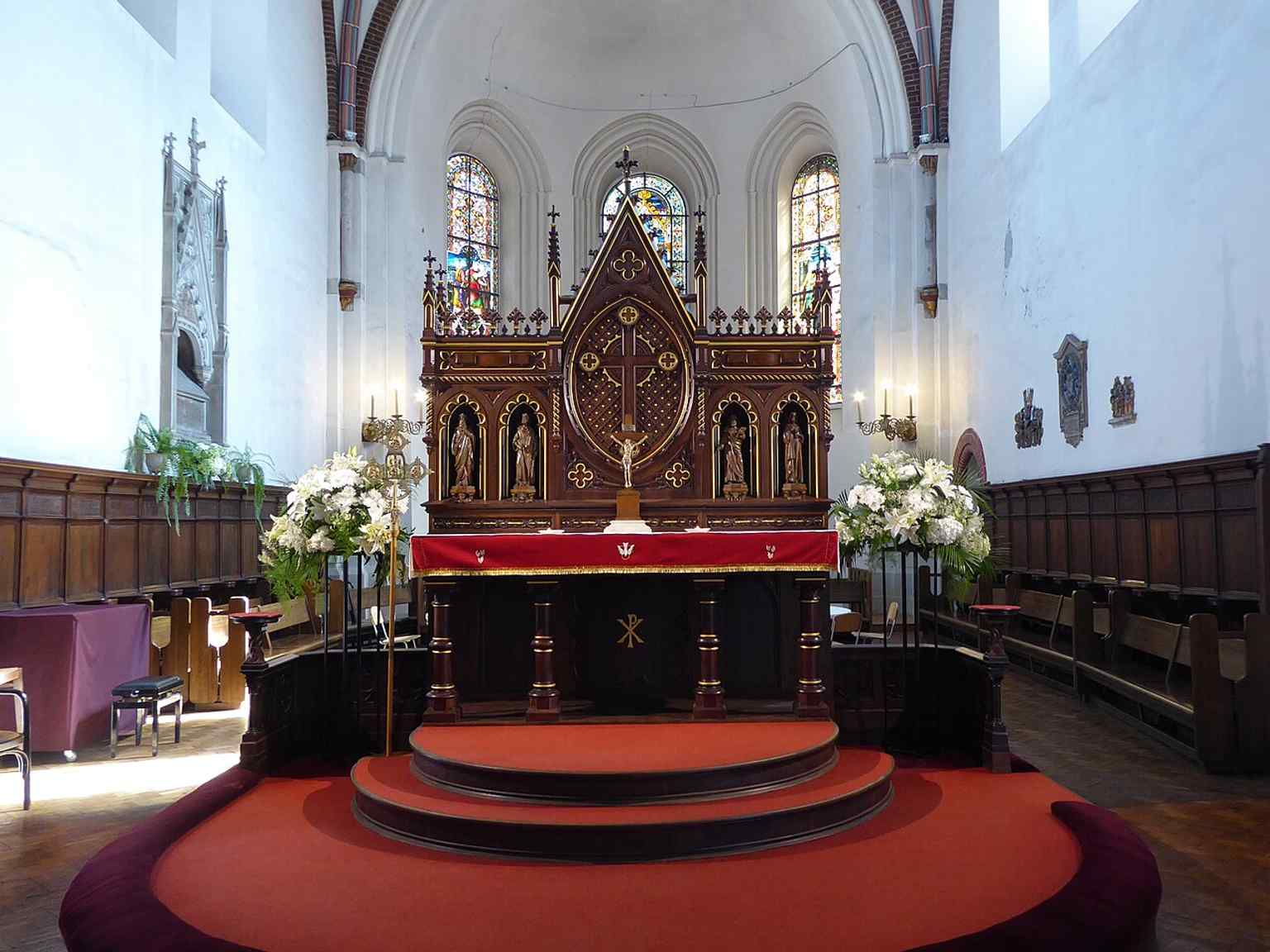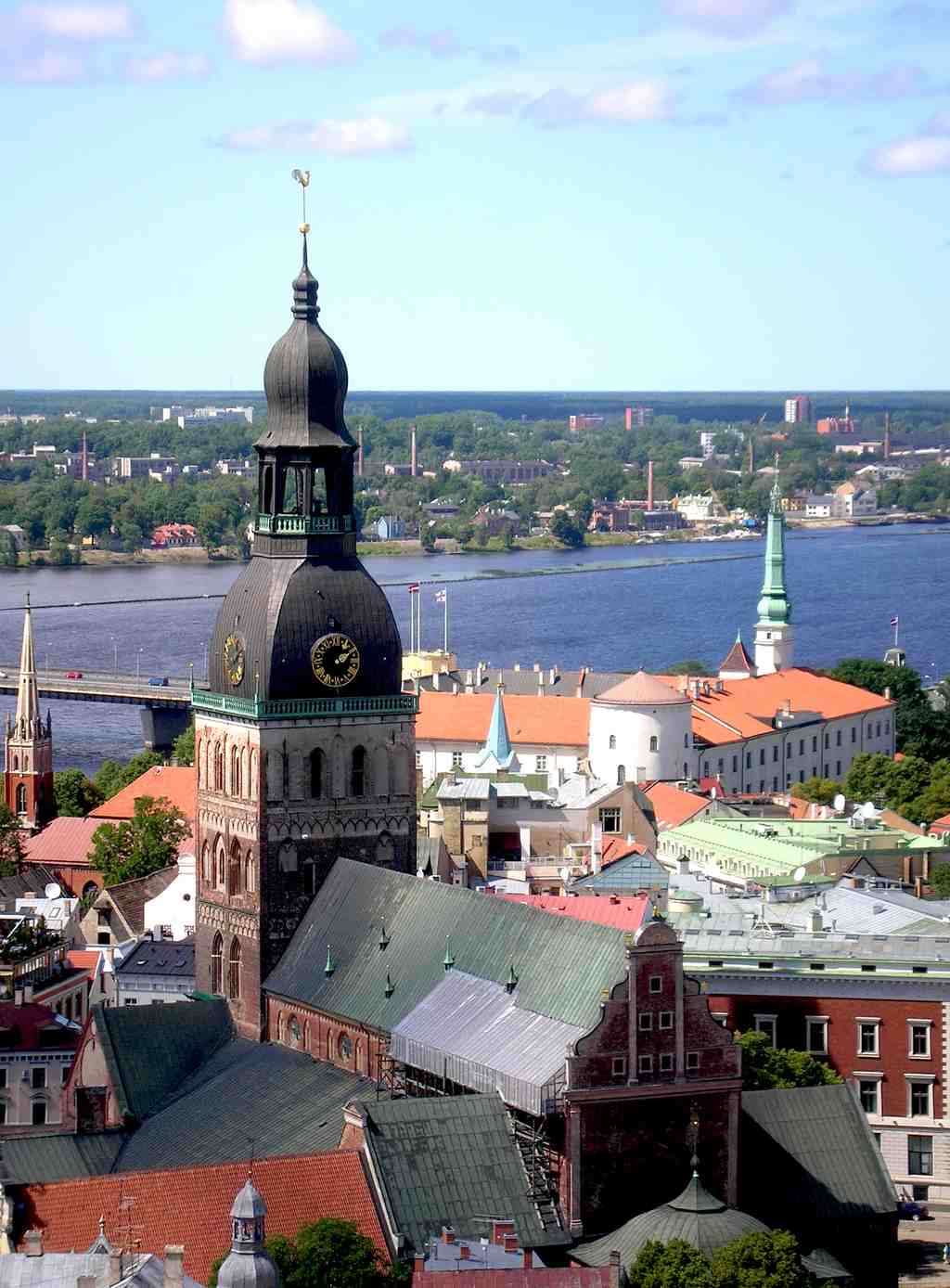
On your left, look for a massive pale stone-and-brick church with a long rectangular body, a steep dark roof, and a central tower topped by a rounded Baroque dome with a golden rooster.
This is Dome Cathedral, the great church of Riga and, in a city that enjoys vertical drama, one of its main skyline anchors. Its name comes through the German word Dom, from the Latin domus Dei, meaning “house of God.” Modest name, really, for the largest medieval church in the Baltics.
Bishop Albert of Buxhoeveden founded it on the twenty-fifth of July, twelve eleven, and he kept a very close eye on the project, mostly because he poured serious money into it. German master builders led much of the work, and construction stretched on until about twelve seventy. The earliest church belonged to a “transitional” style, meaning it stood halfway between heavy Romanesque architecture and the taller, sharper lines of northern Gothic. So even from outside, you’re looking at a building that began as an architectural negotiation.
That negotiation never really ended. The Reformation in fifteen twenty-four stripped away the original decoration, and a fire in fifteen forty-seven finished off much of what remained. The builders had planned two towers, but money intervened, as it so often does, and only one rose in the center of the facade. In fifteen ninety-five they heightened that tower with a wooden spire, and for a while it actually beat nearby Saint Peter’s for height. Riga, apparently, has never been above a little tower rivalry. The wooden spire proved needy, though, so in seventeen sixty-six people removed it and gave the tower the lower Baroque dome you see now. With the rooster on top, it reaches ninety-six meters.
That rooster is not just decoration. For centuries it worked as a weather vane, and locals read it like a practical little oracle. If its gilded side faced the Daugava, ships could enter Riga and trade; if the black side turned that way, captains knew to wait for a better wind. Commerce and theology sharing a roof... very Riga.
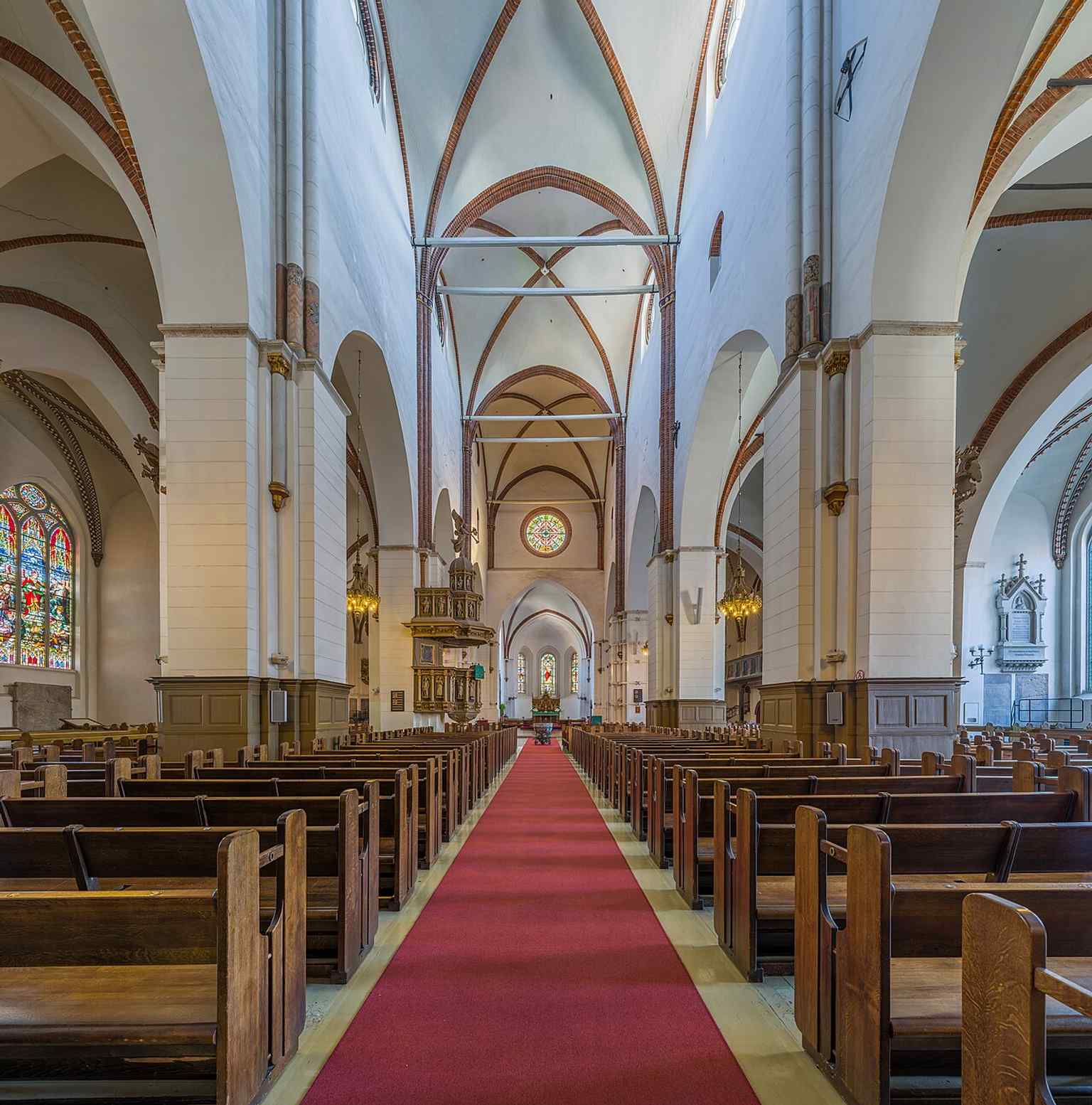
If you glance at your screen, the nave, the cathedral’s soaring central hall, shows how Gothic structure still carries later decoration with surprising ease. Inside, the great celebrity is the organ. Take a look at the app image of it. The firm E. F. Walcker and Company of Ludwigsburg installed the current instrument in eighteen eighty-three and eighteen eighty-four. It stands about twenty-five meters tall, uses more than six thousand seven hundred pipes, and when it was new, it was the largest organ in the world. Composers including Franz Liszt and Max Reger wrote music for it, which is not bad company for a church instrument.
The cathedral also sits oddly low. Over centuries, Riga raised its streets with gravel to protect them from Daugava floods, so the church floor ended up far below street level. Later excavations around parts of the building made the effect even stronger, as if the cathedral had settled into the city and decided to stay put.
Since the nineteen eighties, restorers have worked steadily here, and a major campaign that began in two thousand eleven tackled the roof, tower, facades, stained glass, and interior spaces. If you want to go inside later, the cathedral usually opens from ten in the morning to five in the afternoon most days, and from two in the afternoon to five on Sundays.
Dome Cathedral feels like Riga in stone: layered, resilient, and a little competitive. When you’re ready, continue on toward Dome Square and let the space around this giant finally open up.