
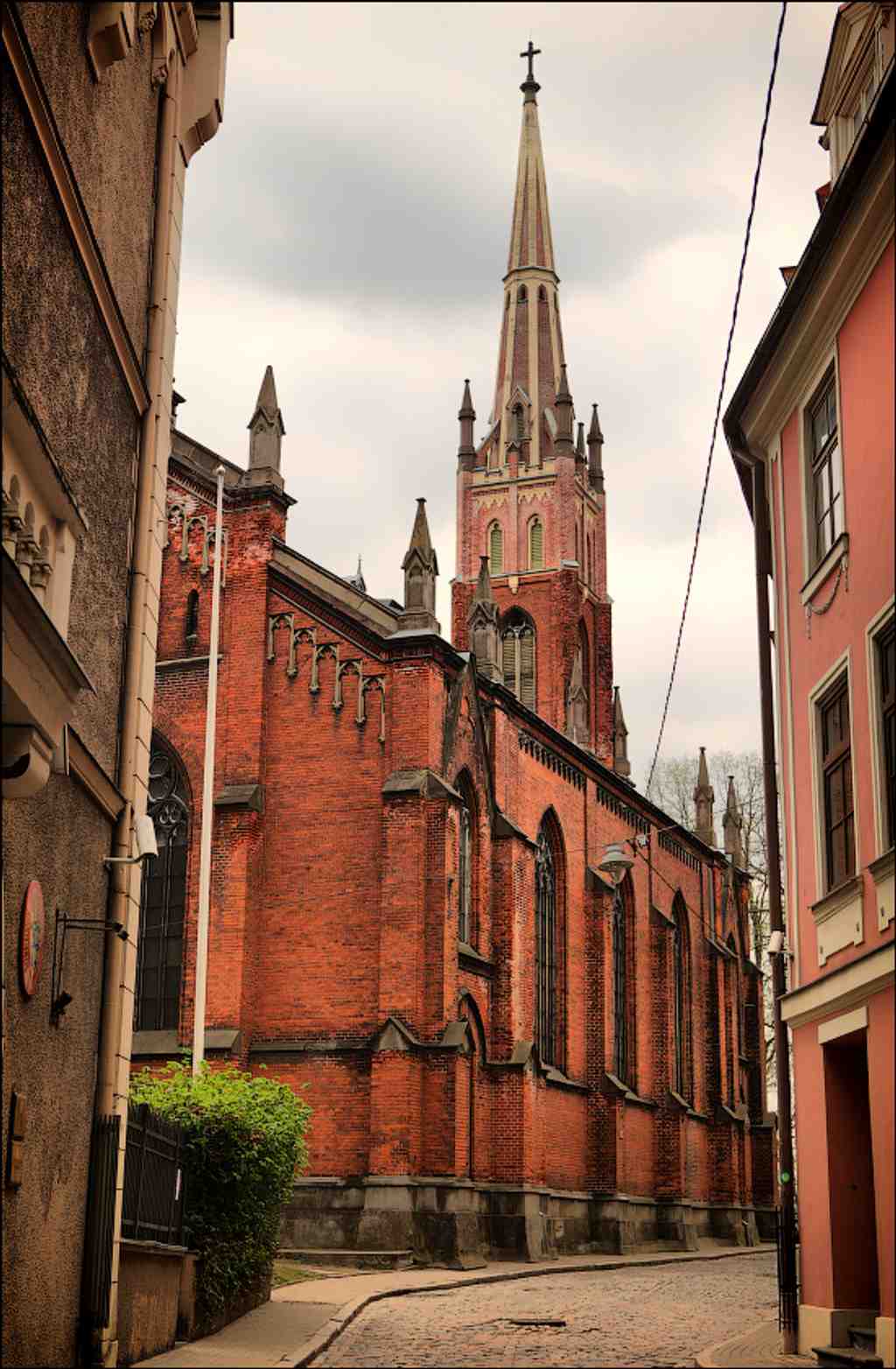
On your left, look for a vivid red-brick neo-Gothic church with a steep gabled front, narrow pointed windows, and a slender tower edged with stepped buttresses.
This is Saint Redeemer’s Anglican Church, and Riga does not have another church quite like it. Architect Johann Daniel Felsko designed it in the eighteen fifties for British sailors and merchants, the people who drifted into Riga as trade with Britain expanded from the late eighteenth century onward. By eighteen thirty, the Anglican community here was official, but for years they had to borrow space in the Reformed Church. Eventually they wanted a home of their own... fair enough, even sailors like a regular address.
The city gave them this plot in eighteen fifty-two near Castle Square, right beside old Swedish fortifications. To make room, builders flattened the Paul Bastion, a defensive earthwork once planned by the Swedish governor and military engineer Erik Dahlberg. Work started under master builder Wilhelm Krieger, then the Crimean War interrupted everything. After the Paris peace, work resumed, and Felsko carried the project through to completion between eighteen fifty-five and eighteen fifty-nine.
Here is the wonderfully stubborn part: parishioners shipped in the sandstone, the bright red brick, and even soil for the foundation from Britain. If you want your church to count as British ground forever, apparently you do not travel light. On the sixteenth of June, eighteen fifty-seven, British consul Richard Levinge Swift laid the foundation stone in front of a full diplomatic audience. Two years later, on the twenty-sixth of July, eighteen fifty-nine, Bishop Trower consecrated the church.
If you glance at your screen, the exterior photo shows that almost theatrical brick color beautifully. Notice the buttresses, those projecting supports along the walls, and the decorative Gothic details: little pinnacles, pointed arches, and tiny gables above windows. Most unusual of all, the spire carries supporting half-arches, basically flying buttresses, a feature unique among Riga’s churches.
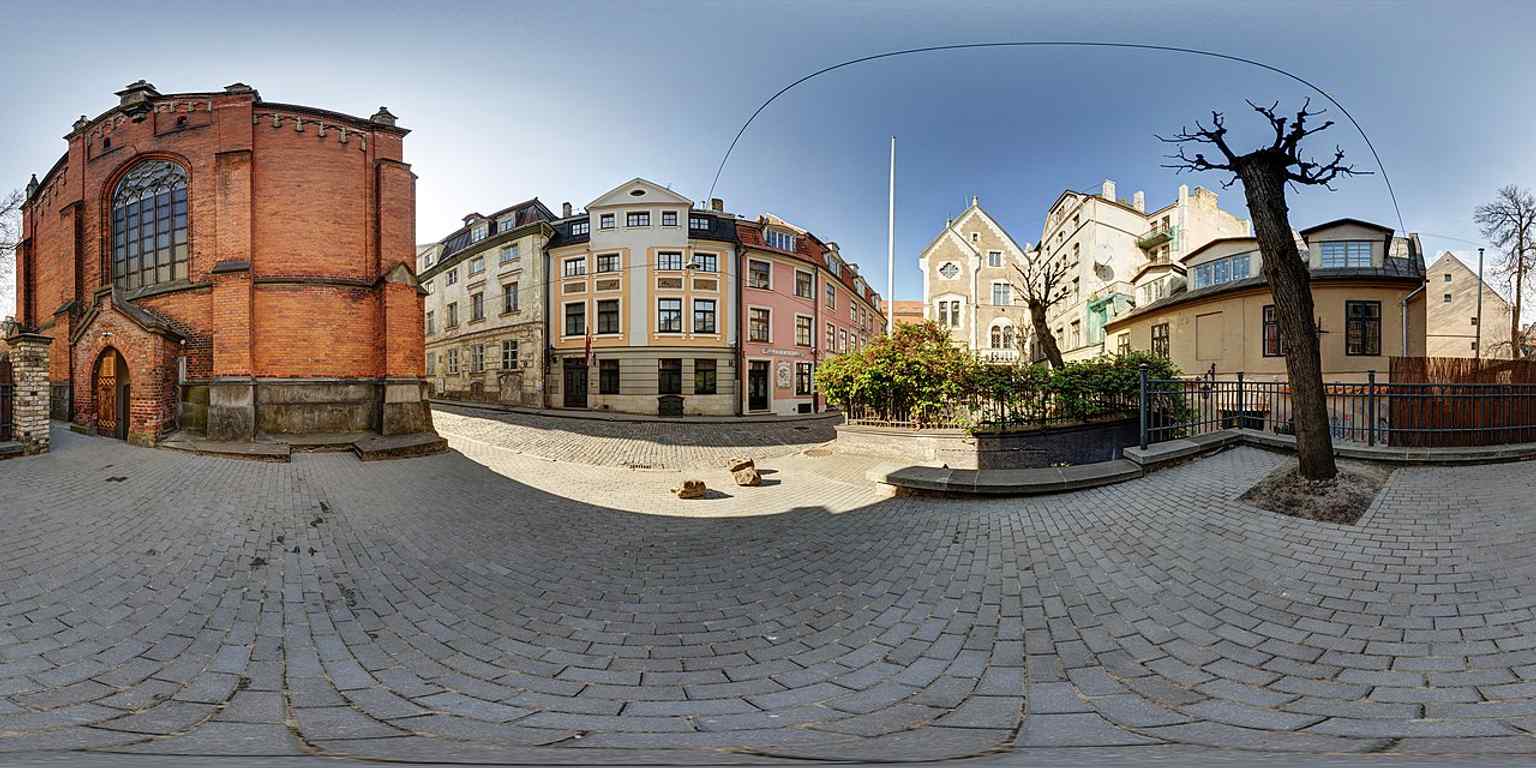
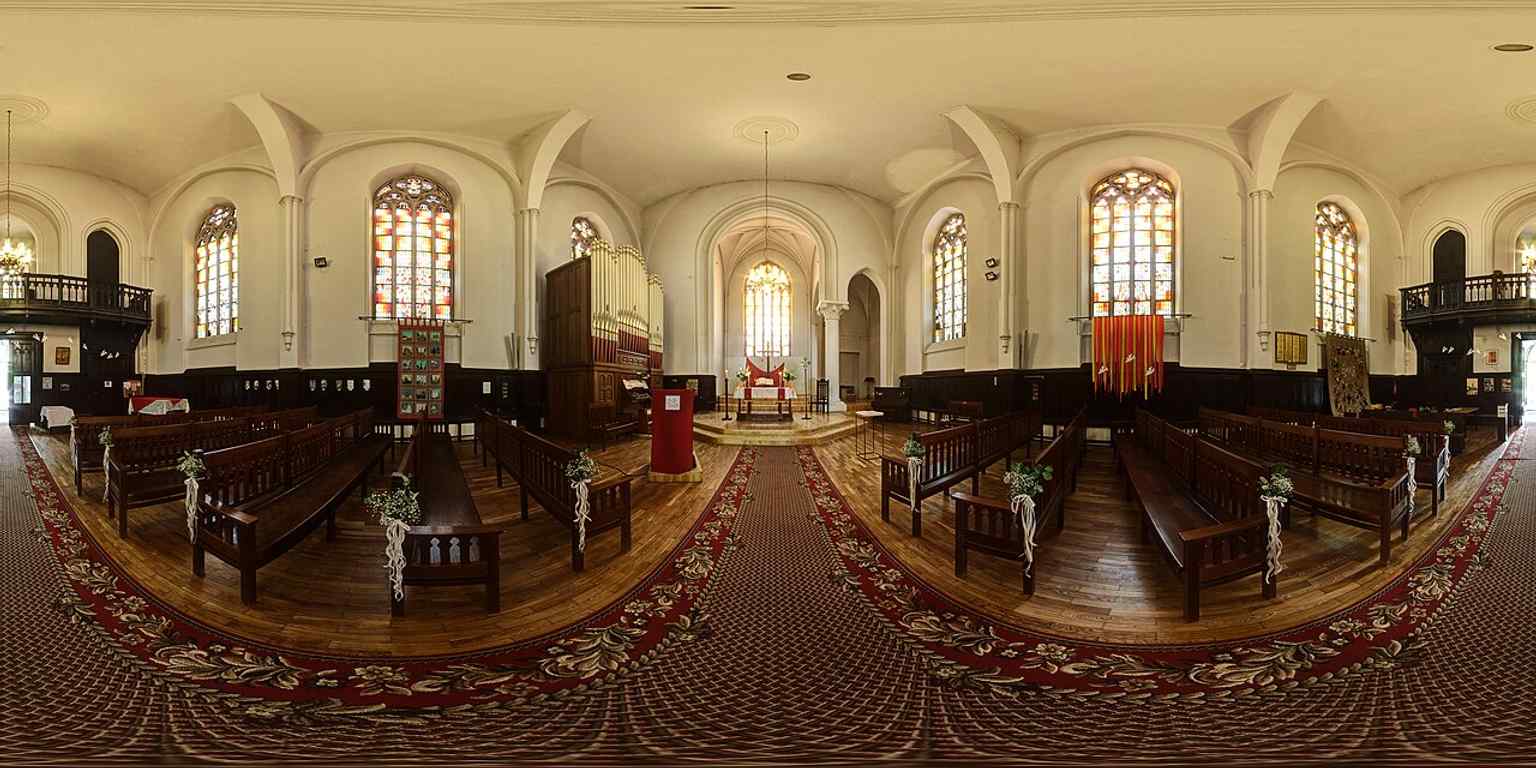
Above the entrance stood the formal name: “The Factory Church of Saint Savior, Riga.” “Factory” here meant a foreign merchants’ trading community, not a place full of smoke and machinery. Inside, the church forms a single hall, or nave, with plastered wooden vaults. The apse, the altar end, had star-shaped vaulting. Wealthy members of the Armistead family funded an elegant interior with oak furnishings, stained glass, and room for about two hundred worshippers. An Italian church painter, Bellentini, created the altar painting. You can see the restored interior space on your phone here.
The twentieth century knocked it around. Soviet authorities seized it in nineteen forty. In nineteen forty-one, architects adapted it for a Latvian Lutheran parish, and shelling during the fighting for Riga damaged the building. Later it sat largely empty, then became student housing and a library for Riga Technical University. Its acoustics were so good that people used it as a recording studio in the nineteen seventies and eighties. Since nineteen ninety-two, the Anglican parish has returned, and today several congregations share the church.
If you want to step inside another time, it is generally open only on Sundays from nine AM to twelve thirty PM.






