
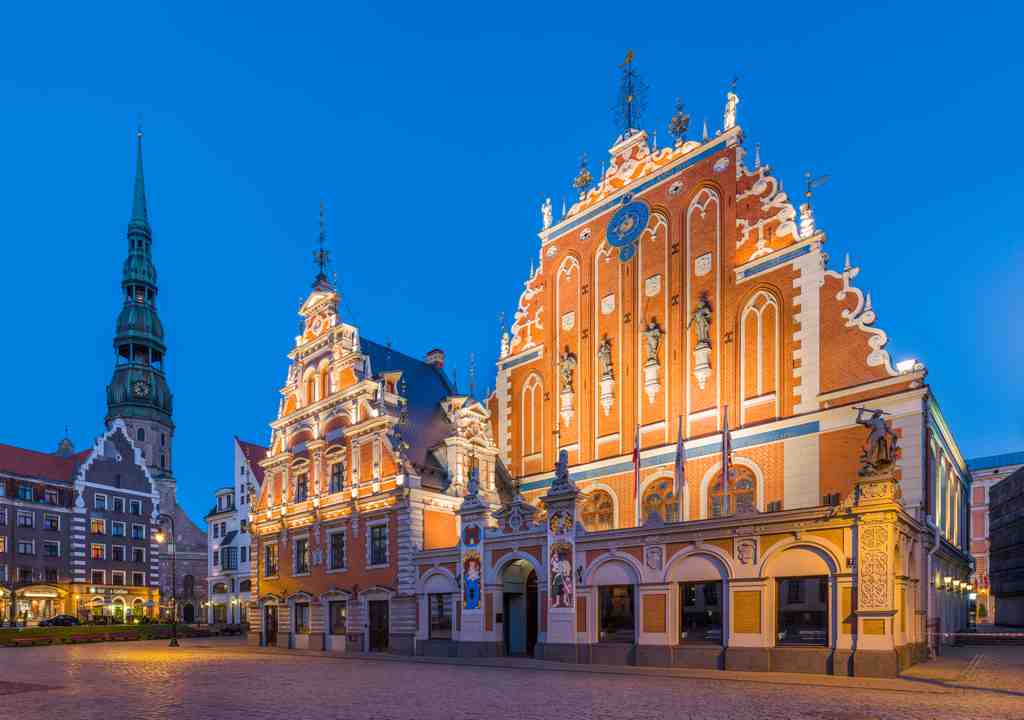
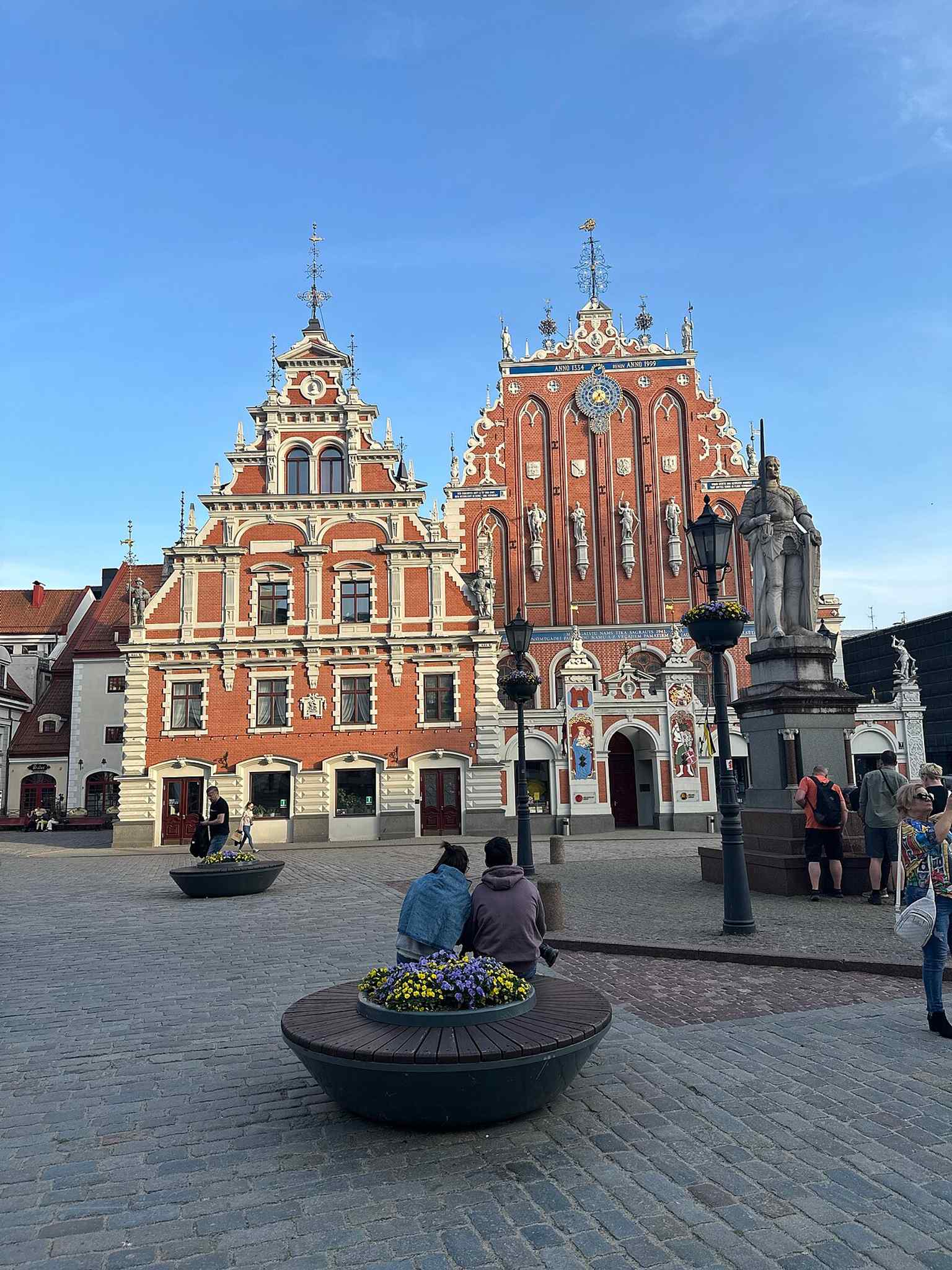
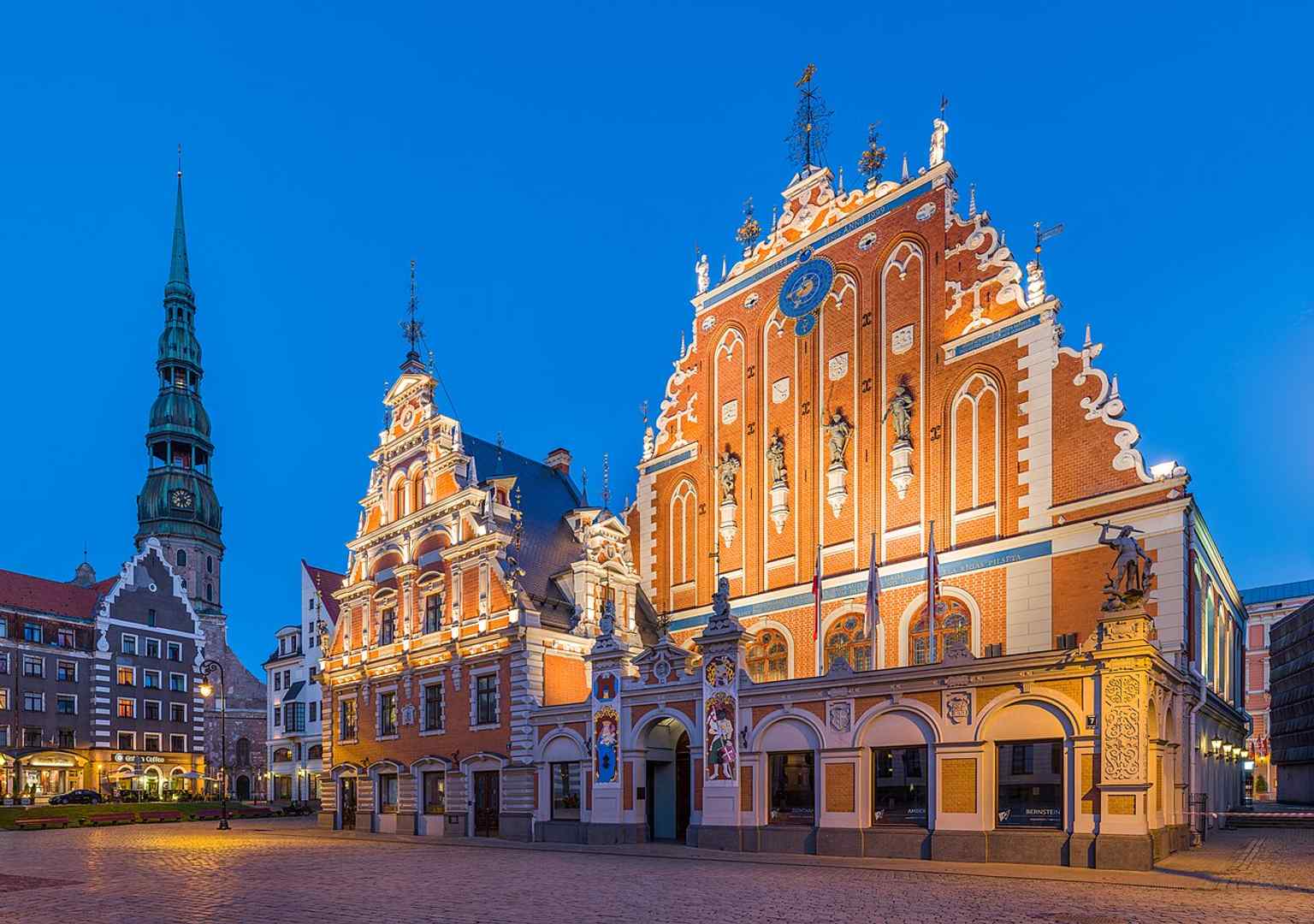
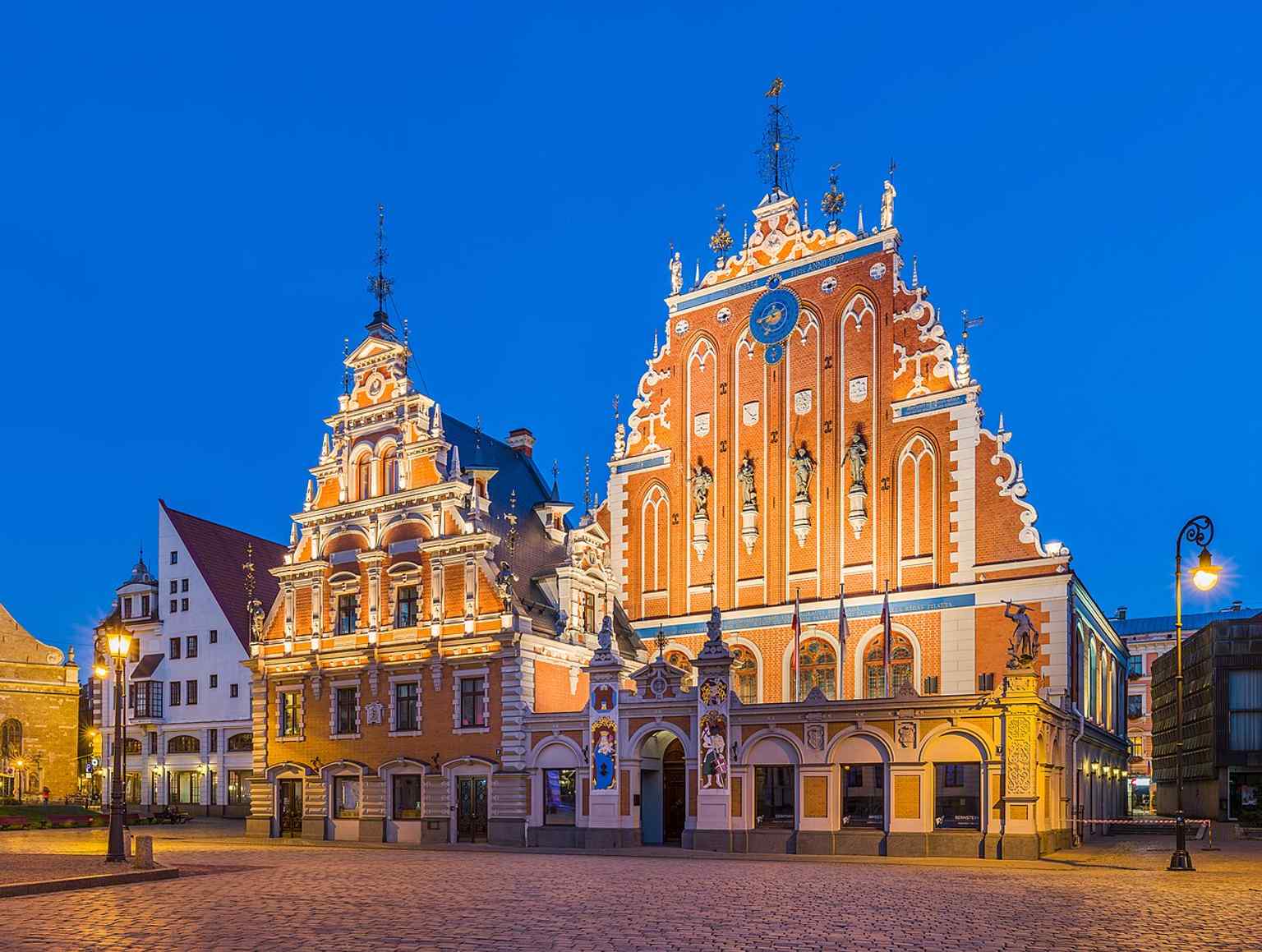
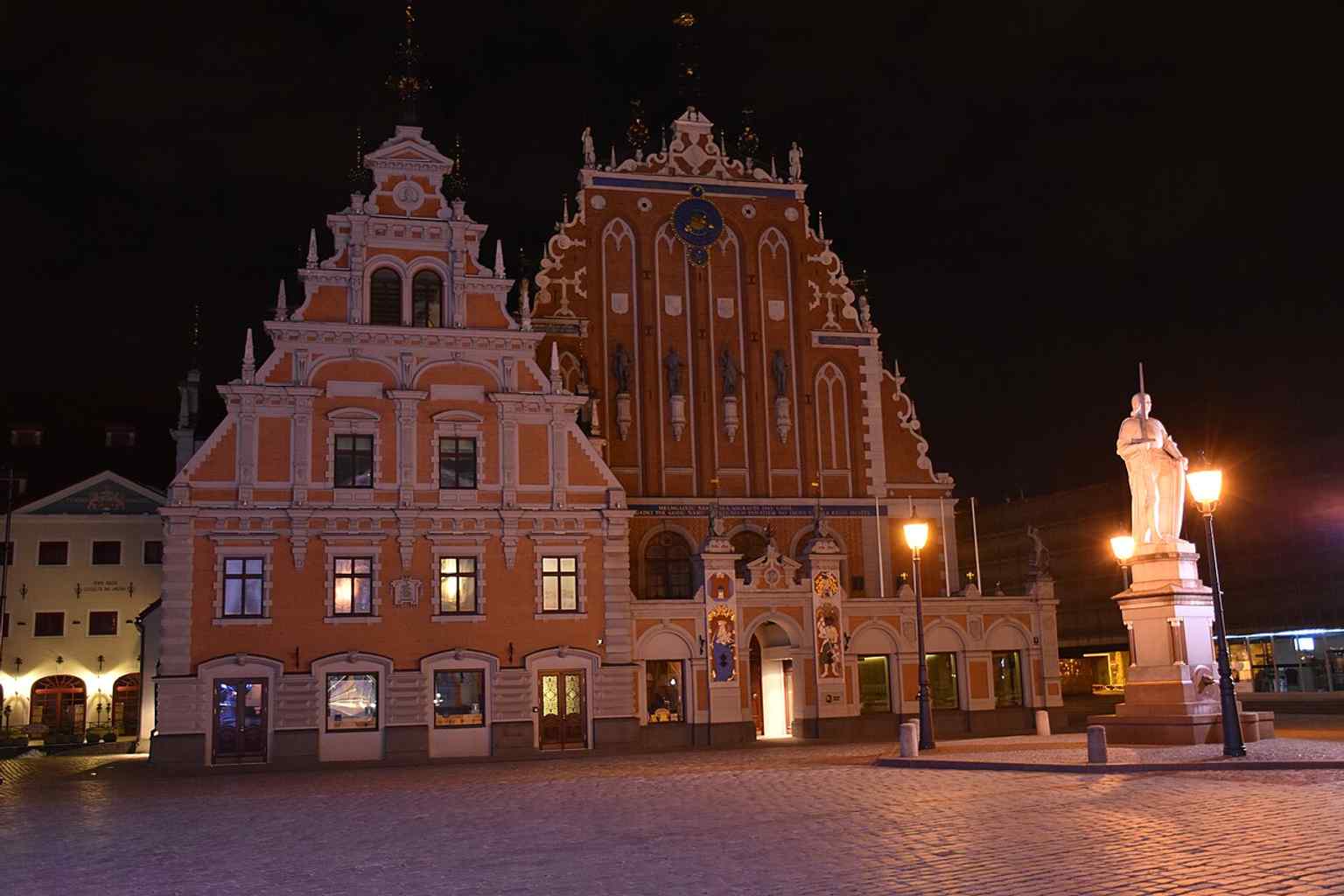
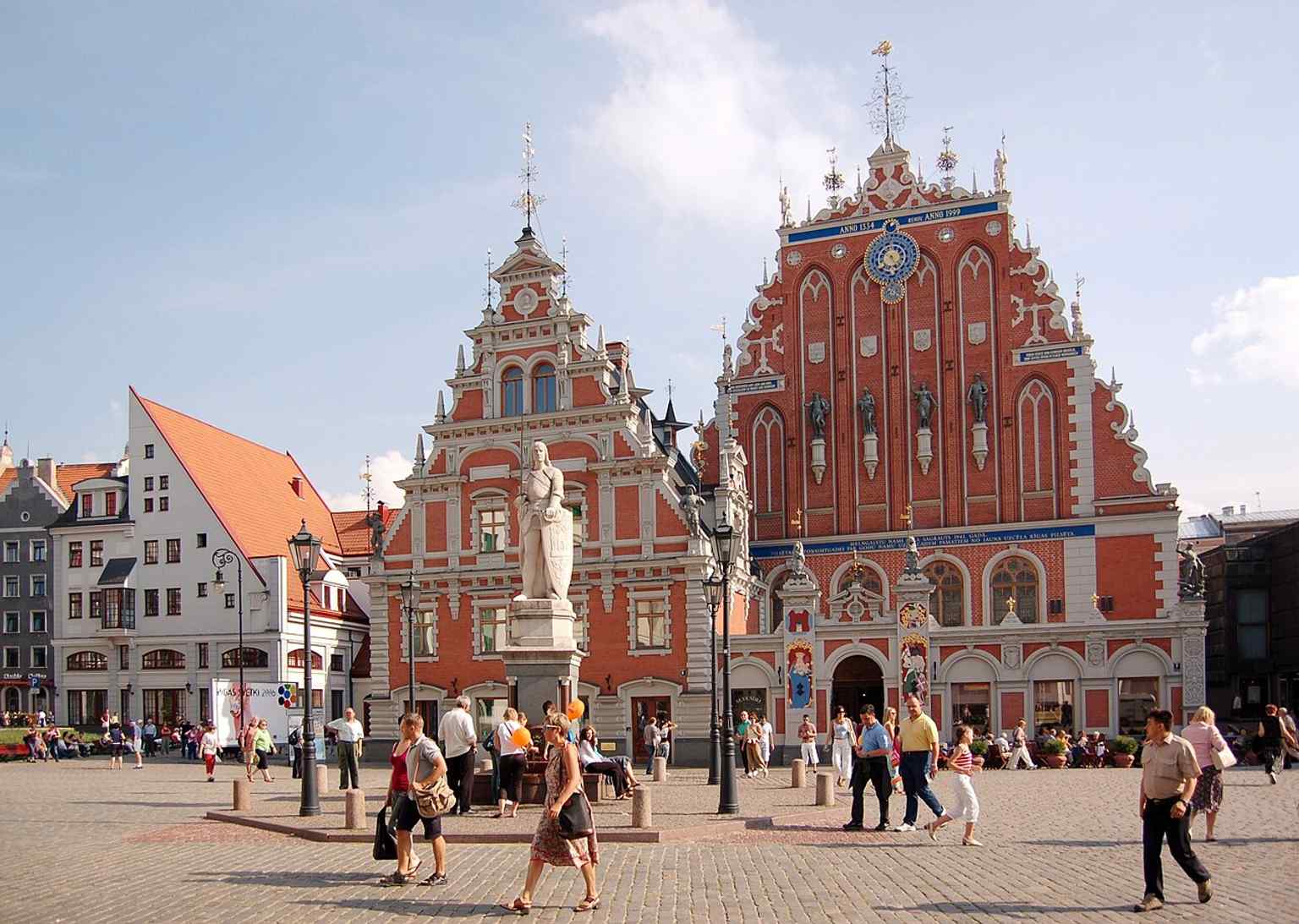
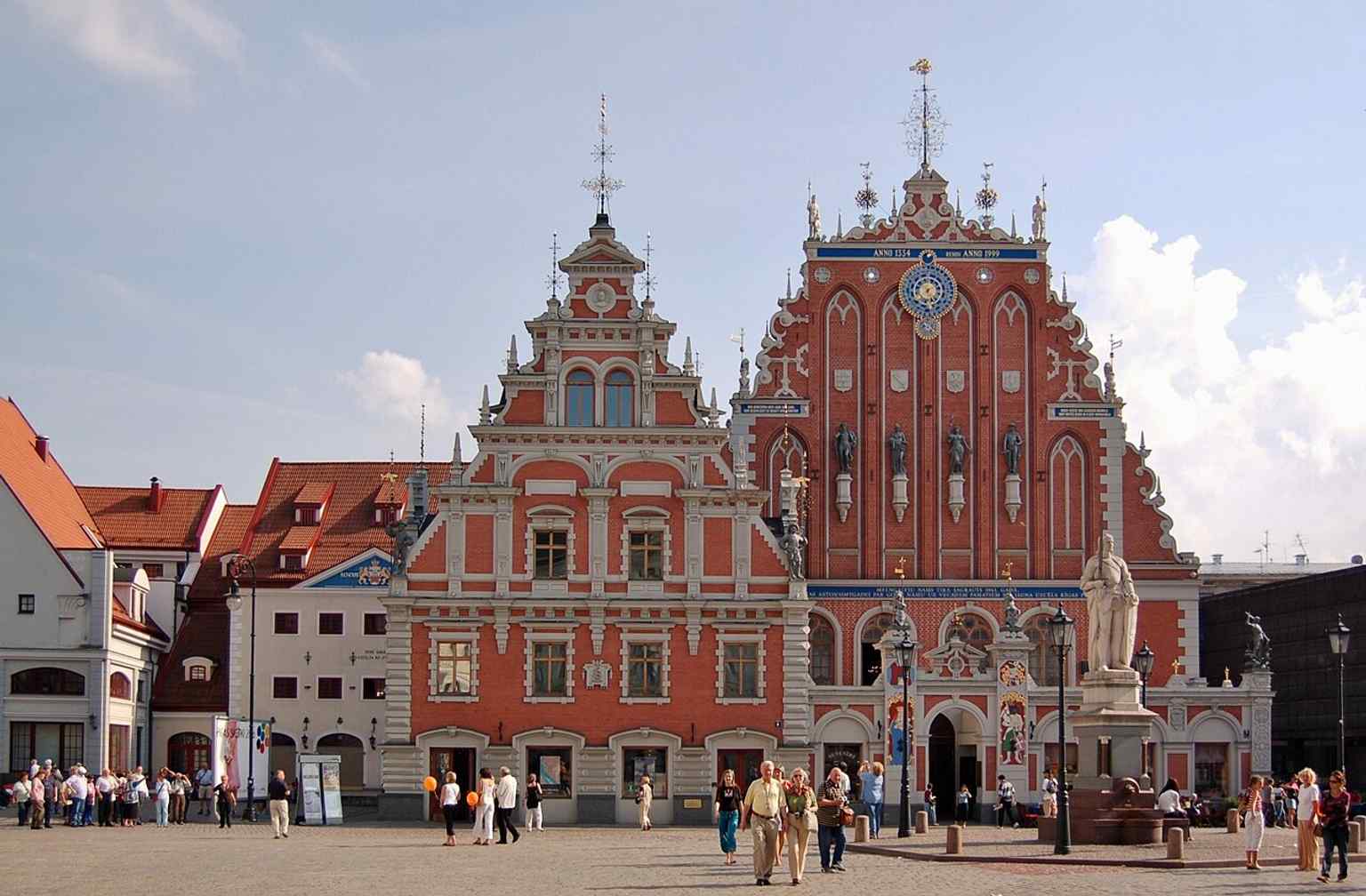
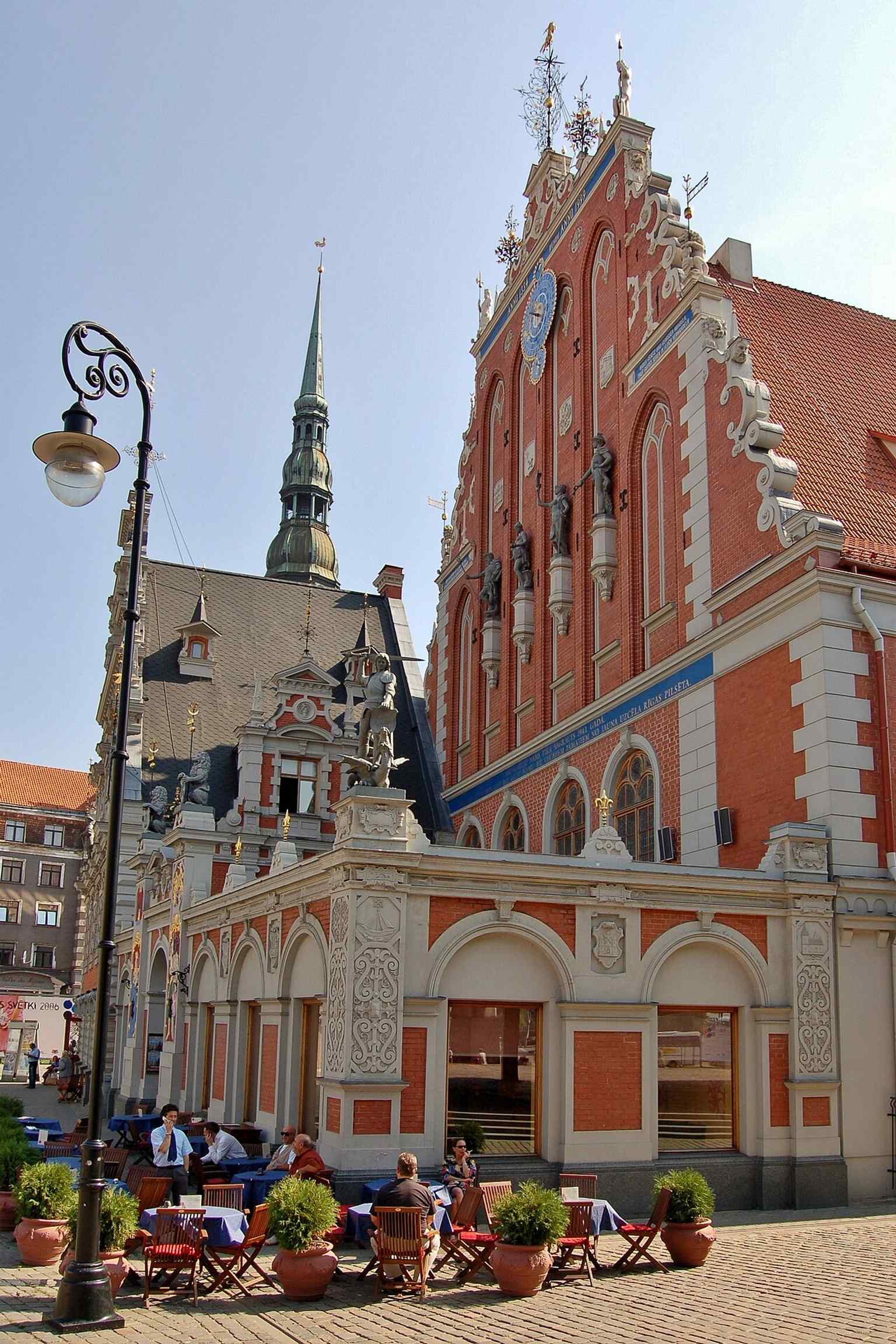
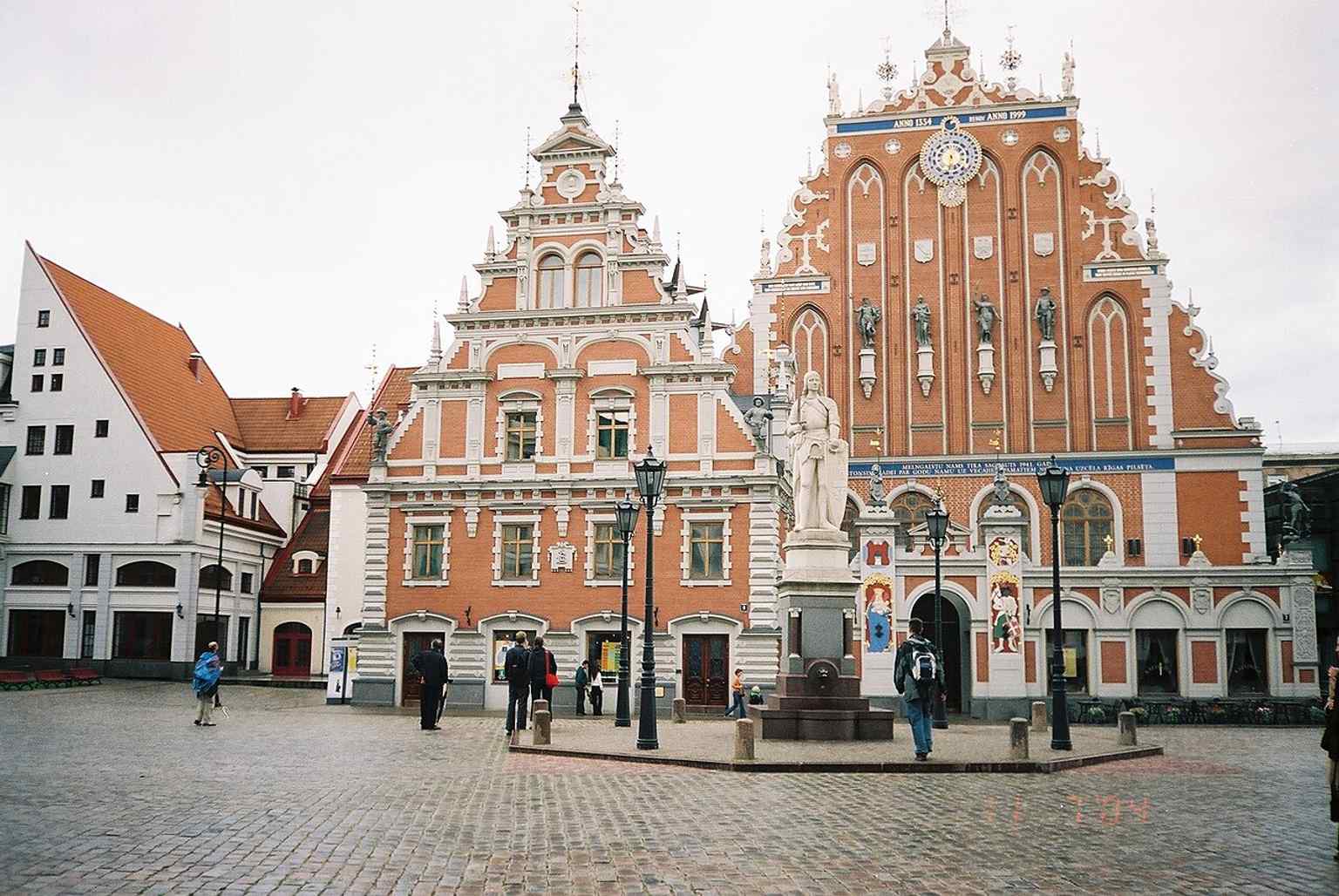
On your left, look for a red-brick facade with a tall stepped gable, pale stone trim, and a striking astronomical clock set high above the square.
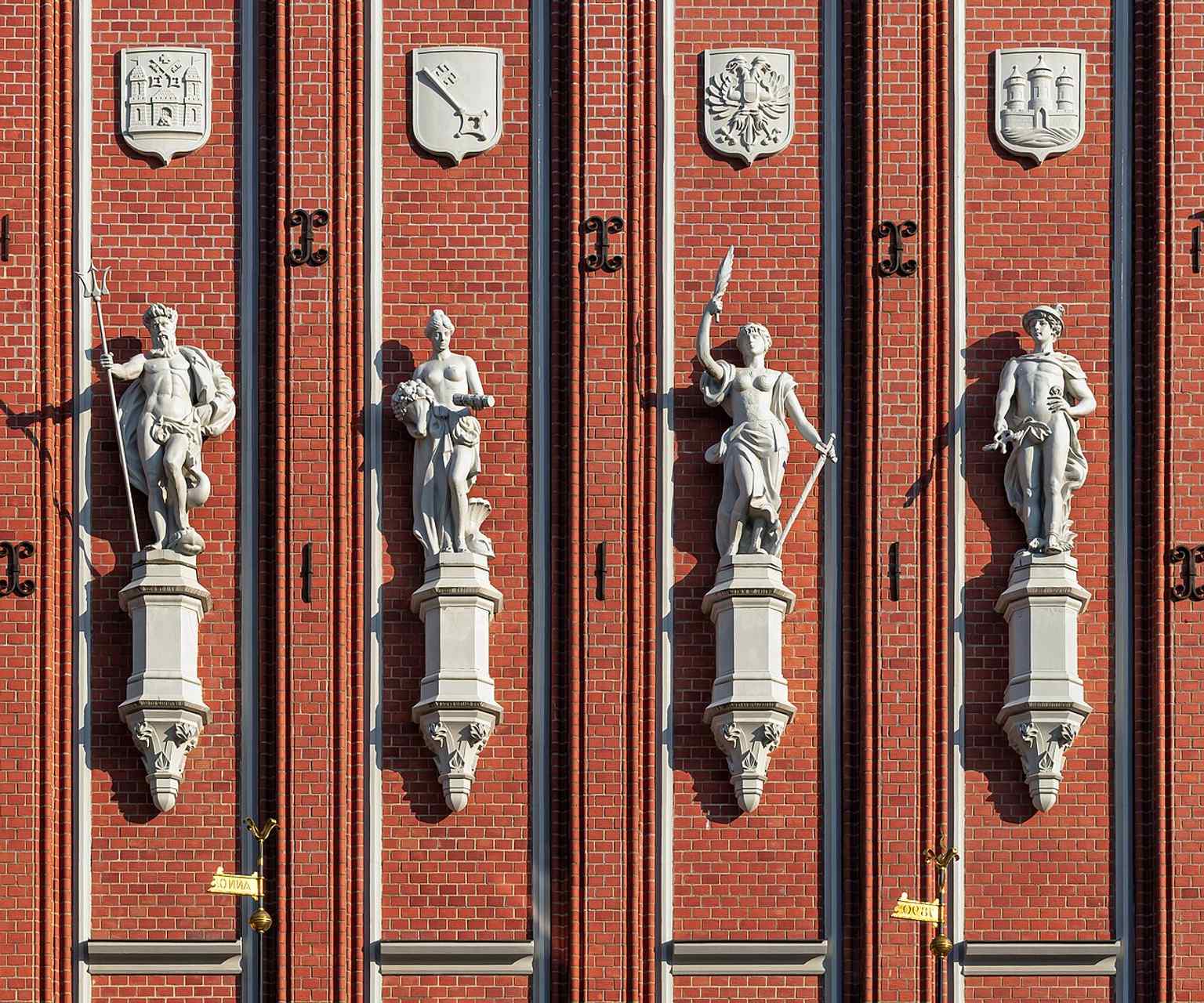
This is the House of the Blackheads, and yes, the name lands with a bit of a thud until you know the story. The Blackheads were a brotherhood of young, unmarried foreign merchants in Riga. They first gathered under Saint George, then later chose Saint Maurice as their patron... a Roman soldier and Christian martyr traditionally shown as a dark-skinned Moor in armor. His black head became their emblem, and eventually their name.
In fourteen seventy-seven, the Blackheads rented rooms here from the city magistrate, starting with the upper floor. Over time they poured money into the place, decorated it, rebuilt it, and more or less made it their own. By day, this building worked as a kind of exchange, where goods and deals moved through Riga. By evening, it changed character completely and hosted concerts, balls, ceremonies, and very serious social drinking.
And these men did take their rituals seriously. New members served older brothers at table and drank from goblets shaped like deer legs. If someone misbehaved, say by starting a fight or grabbing another brother by the hair, the fine came in wax, not cash. Wax mattered; it lit halls, churches, and altars. Medieval discipline, with a surprisingly practical payment system.
One of Riga’s favorite legends starts right here in the square outside. In fifteen ten, the brotherhood reportedly set up a large Christmas tree, decorated it with paper flowers, danced around it, sang, and then burned it at the end of the celebration. Riga and Tallinn still argue over who did the first decorated tree. Cities, like siblings, keep score forever.
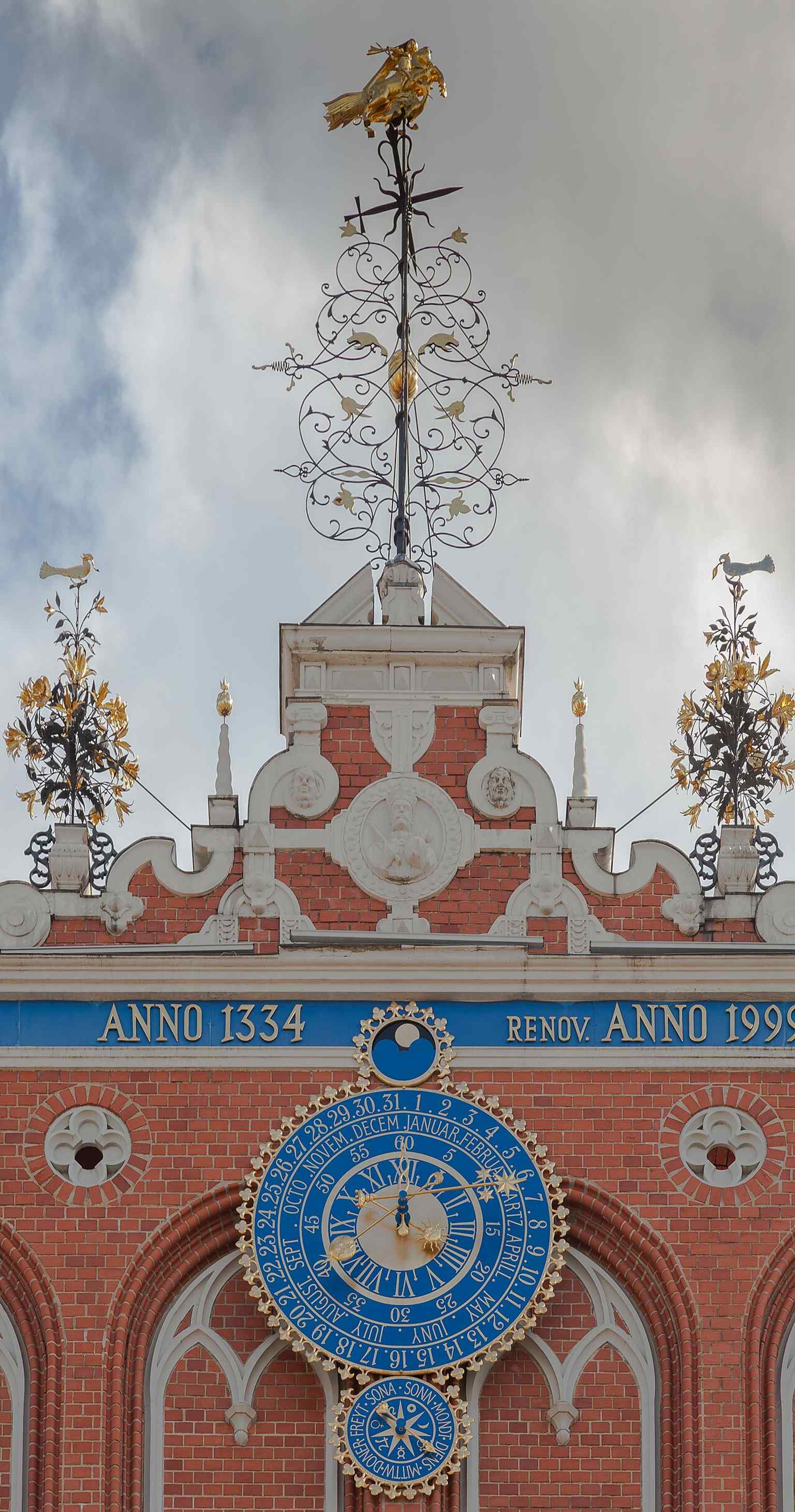
Look up at the facade. The version you see follows the early seventeenth-century design in northern European Mannerism, meaning architecture that loves drama, ornament, and showing off a little. The astronomical clock, first created in sixteen twenty-six, did more than tell time; it tracked moon phases, weekdays, and zodiac signs too. A proper merchant’s clock: practical, theatrical, and slightly smug.
This house also stood in larger history. The brotherhood helped defend Riga, backed the Reformation, and much later, on the eighteenth of March, nineteen twenty-one, delegations from Poland and Soviet Russia signed the Treaty of Riga here, helping redraw the map of eastern Europe.
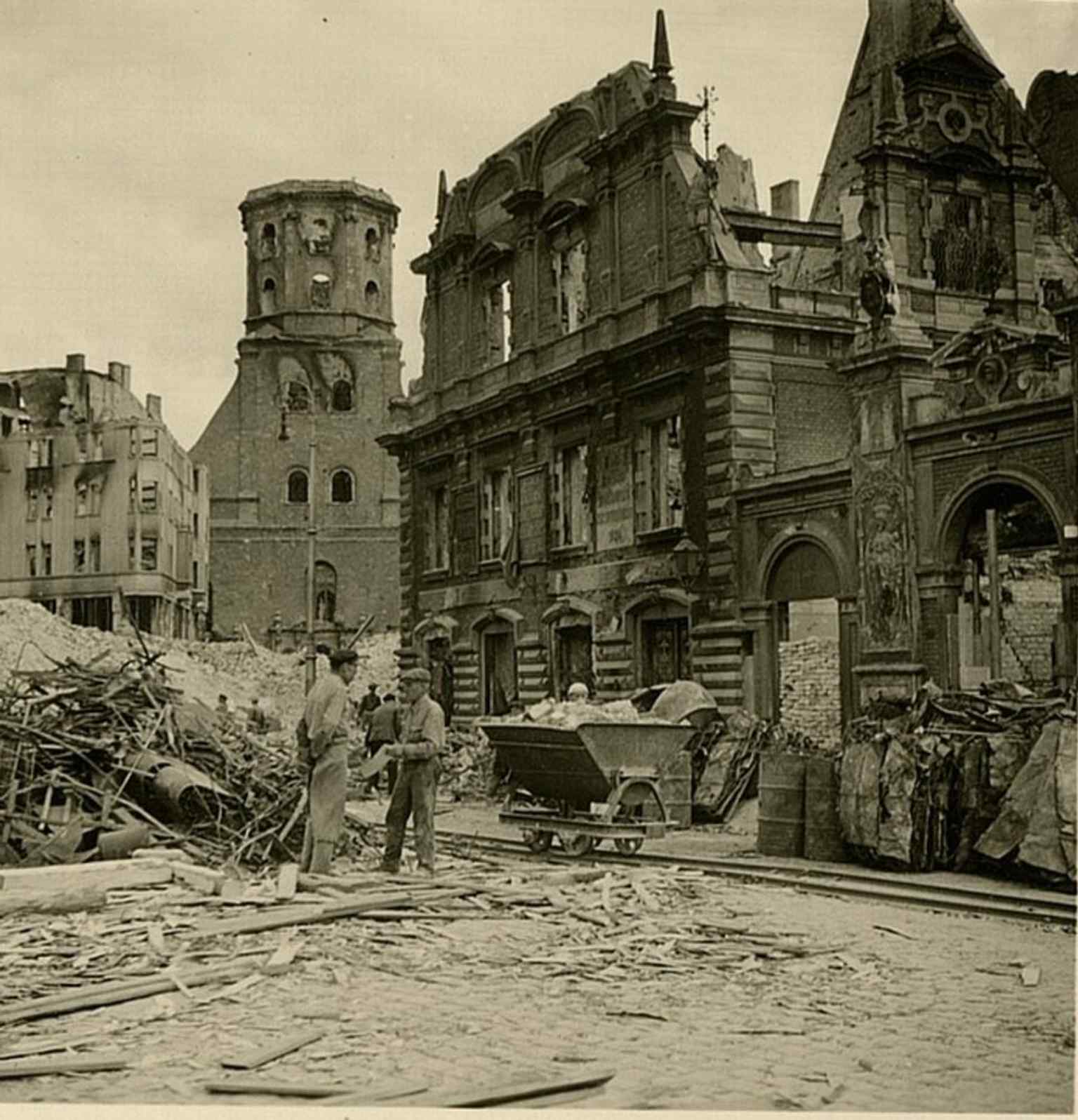
Then came catastrophe. German shelling in nineteen forty-one wrecked the building, the ruins stood for years, and officials finally cleared them away in nineteen forty-eight. If you want, check the before-and-after slider in the app; it really shows how dramatic that loss and return were. In the late nineteen nineties, Riga rebuilt the house on its original medieval cellars, and more than five thousand people joined a campaign called “I build the House of the Blackheads,” each donating five lati for a named brick.
If you decide to go inside later, it’s open daily from ten in the morning to five in the afternoon.
For a merchant clubhouse, this place managed to become a symbol for the whole city. When you’re ready, continue on toward the Palace of Peter the First.






.jpg)


%2C%202006%20(01).jpg)
%2C%202006%20(02).jpg)
%2C%202006%20(03).jpg)
