
On your left is a broad, cobblestone square with a slightly trapezoid shape, framed by ornate stone façades and marked by the statue of Roland rising near its center.
Town Hall Square is one of Riga’s oldest public stages... though it began in a far less glamorous role. In the thirteenth century, this was simply the city market. Merchants rolled in with goods, noise, arguments, and, for a while, fish. The city authorities eventually banned fish sales here because the smell offended medieval burgher sensibilities. Civilization, apparently, has limits. So the fish stalls got pushed beyond the little defensive wall to Herring Street.
As Riga expanded after twelve eleven, this open space grew into the city’s main commercial and ceremonial heart. By the second half of the thirteenth century, the market complex had taken shape. Then, in thirteen thirty-four, a major new landmark appeared here: the building later known as the House of the Blackheads, though at first traders called it simply the New House. Around the same period, Riga raised its second Town Hall, and this square spread to about one and a half hectares.
But this was never just a place to buy bread or meat. Medieval Riga turned the square into its public theater. Guard inspections happened here. City contests crowned the best defender of Riga. Dominican friars staged religious plays - mystery plays, meaning dramatized Bible stories - on three-level platforms. Carnivals and civic celebrations filled the space too. So yes, trade paid the bills, but spectacle kept the square alive.
Over time, the market shifted toward the Daugava embankment, closer to the harbor, and the last stalls disappeared in fifteen seventy-one. Solid houses replaced them, with shops on the ground floor. The square kept shrinking, especially when the Town Hall expanded in the late sixteenth century.
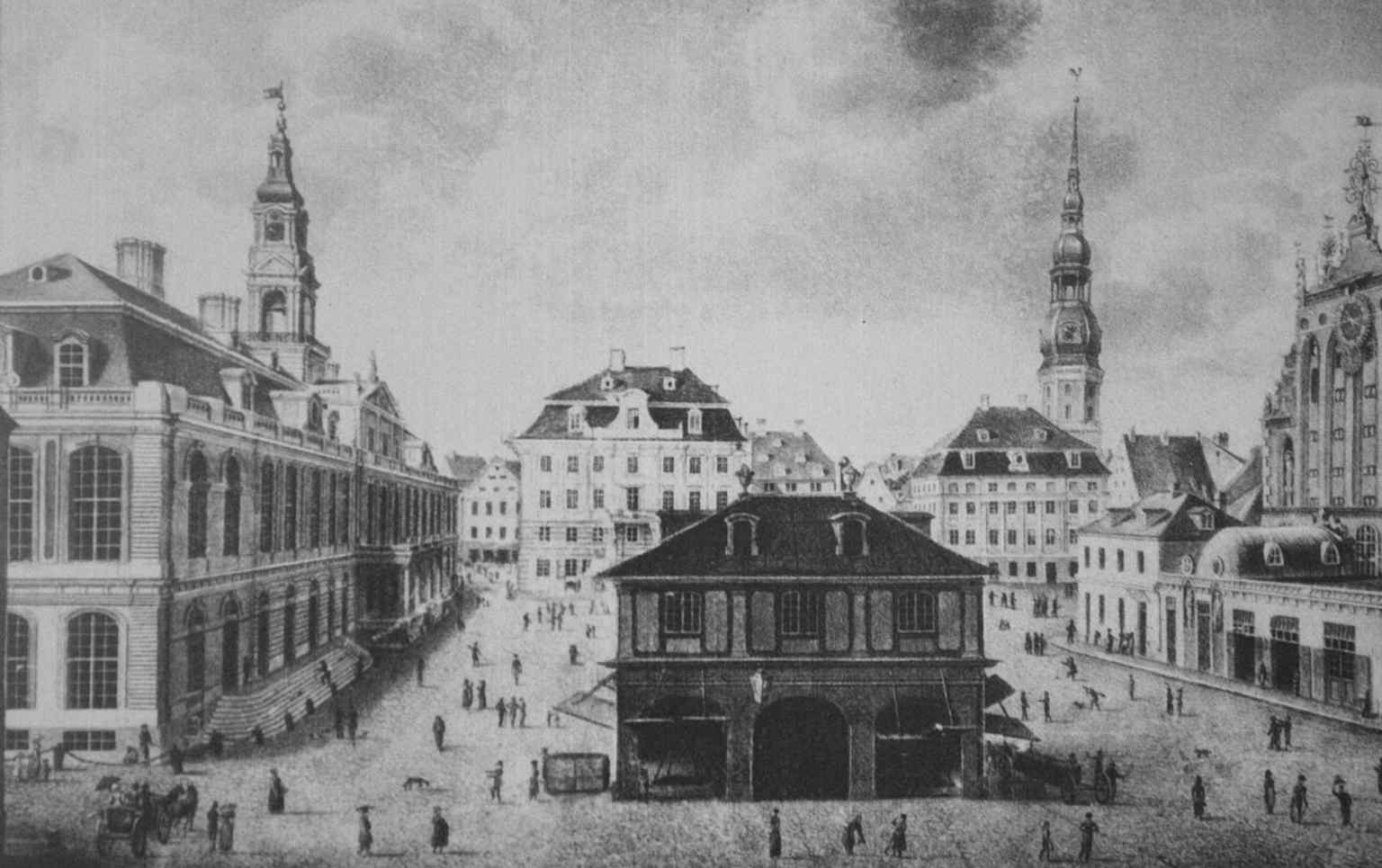
If you glance at your screen, you can see the old weighing house, or Vazhnya, that once stood here in the early nineteenth century. It held the city’s official scales. Six or seven weighers - often Latvians from non-German guilds - measured incoming goods and collected fees for the magistrate. Merchants hated the repeated weighing, and grain often had to be sifted and measured again. Nothing says “welcome to Riga” like extra paperwork with your cargo.
The figure in the square’s center, Roland, symbolized a free city with its own laws and markets. The original late nineteenth-century statue now lives in Saint Peter’s Church museum; the one here is a copy placed in two thousand five.
Then came disaster. On the twenty-ninth of June, nineteen forty-one, German forces attacking from across the Daugava struck the area around Saint Peter’s tower, and fires tore through the Town Hall Square ensemble. Much of what you see around you had to be rebuilt at the turn of the twenty-first century.
The square is always open, which suits a place that has spent centuries refusing to stay quiet.
Town Hall Square condenses the city’s public life: trade, pride, damage, and stubborn reconstruction. When you’re ready, keep going toward the House of the Blackheads and we’ll meet the square’s grand show-off up close.





