
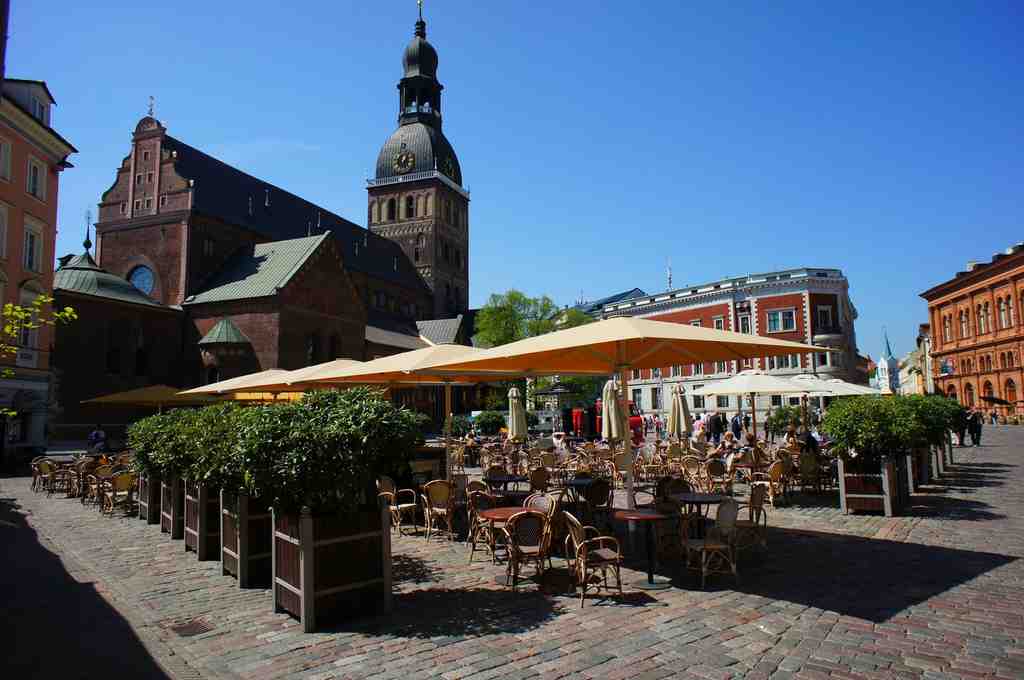
On your left, Dome Square opens as a broad stone-paved rectangle framed by pale masonry facades, with the huge brick-and-stone mass of the Dome Cathedral acting as its unmistakable anchor.
This space feels old... but that is Riga being clever with atmosphere. As an architectural ensemble, Dome Square is relatively young. In the eighteen sixties, the clergy of the cathedral pushed to remove houses packed against the church on the north side. About twenty years later, workers cleared more on the northwest side, and in nineteen thirty-six the city knocked down the last twelve houses to the north and northeast. The reasons were practical: reduce fire risk, make it easier to reach the church, and give people a proper view of the building instead of a medieval traffic jam. If you glance at your screen, one photo helps show just how open this space became through that long process of clearing and rebuilding.
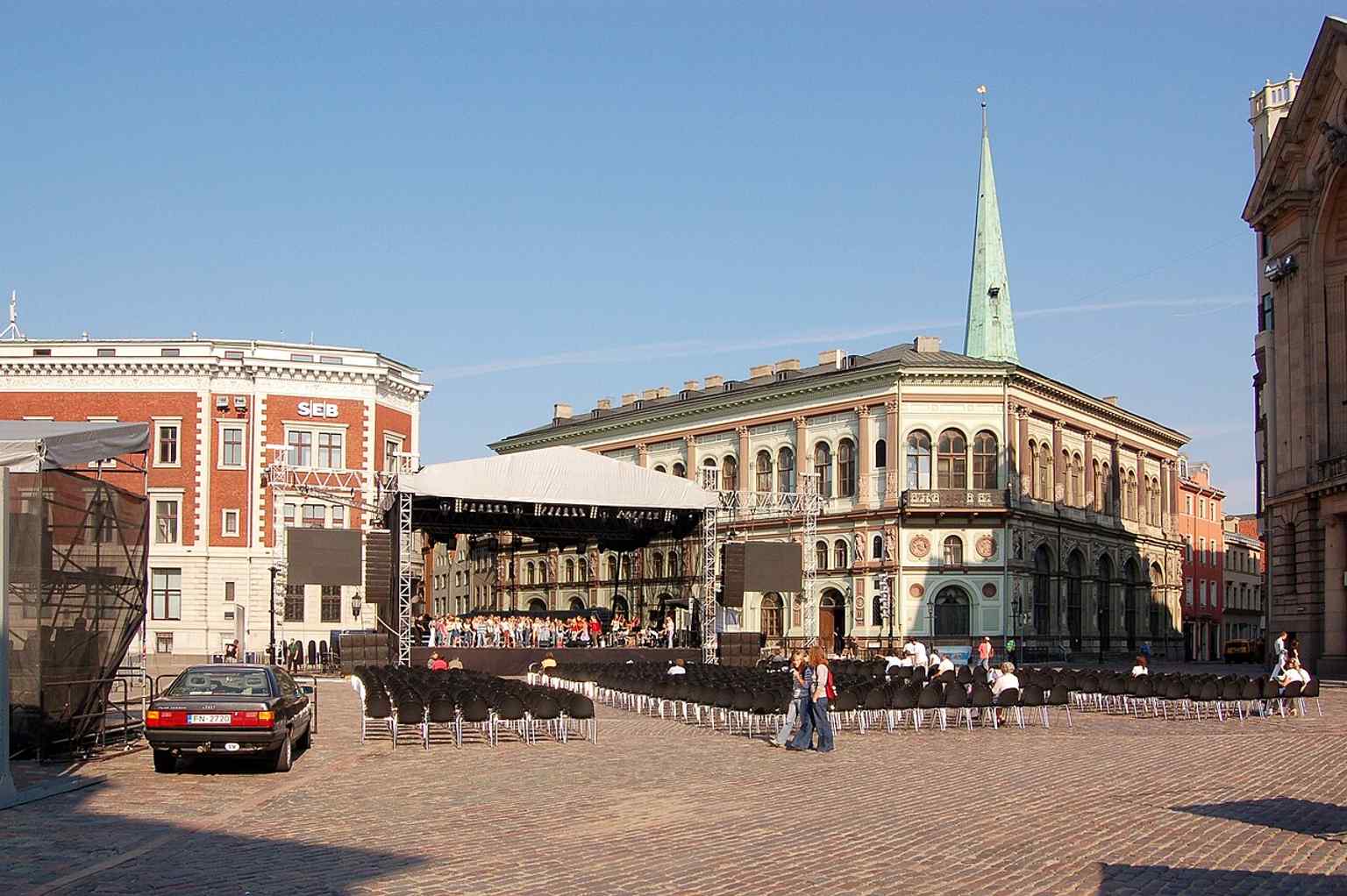
The square took its name from the cathedral in eighteen eighty-six. Then politics barged in. After the coup of nineteen thirty-four, officials renamed it Fifteenth of May Square. After Soviet troops entered Latvia on the seventeenth of June, nineteen forty, the new authorities renamed it Seventeenth of June Square on the twenty-ninth of July. Only in nineteen eighty-seven did Riga restore the historic name, Dome Square.
There is older ground under your feet than the square suggests. During regeneration work in the Old Town, engineers lowered the southern side near the cathedral to the level of the thirteenth century. Then, in nineteen eighty-six and nineteen eighty-seven, archaeologist A. V. Caune uncovered an early thirteenth-century medieval cemetery here. So yes, this open square sits over a much denser past.
Look around the edges and the story keeps going: the Riga Stock Exchange imitates a Venetian palazzo in neo-Renaissance style, and the Latvian Radio building began life as Riga's first commercial bank, designed by Paul Mandelstam, with a surviving facade relief called Golden Age. In the center, a brass rondo marks Riga's place on the UNESCO, the United Nations Educational, Scientific and Cultural Organization, World Heritage list.
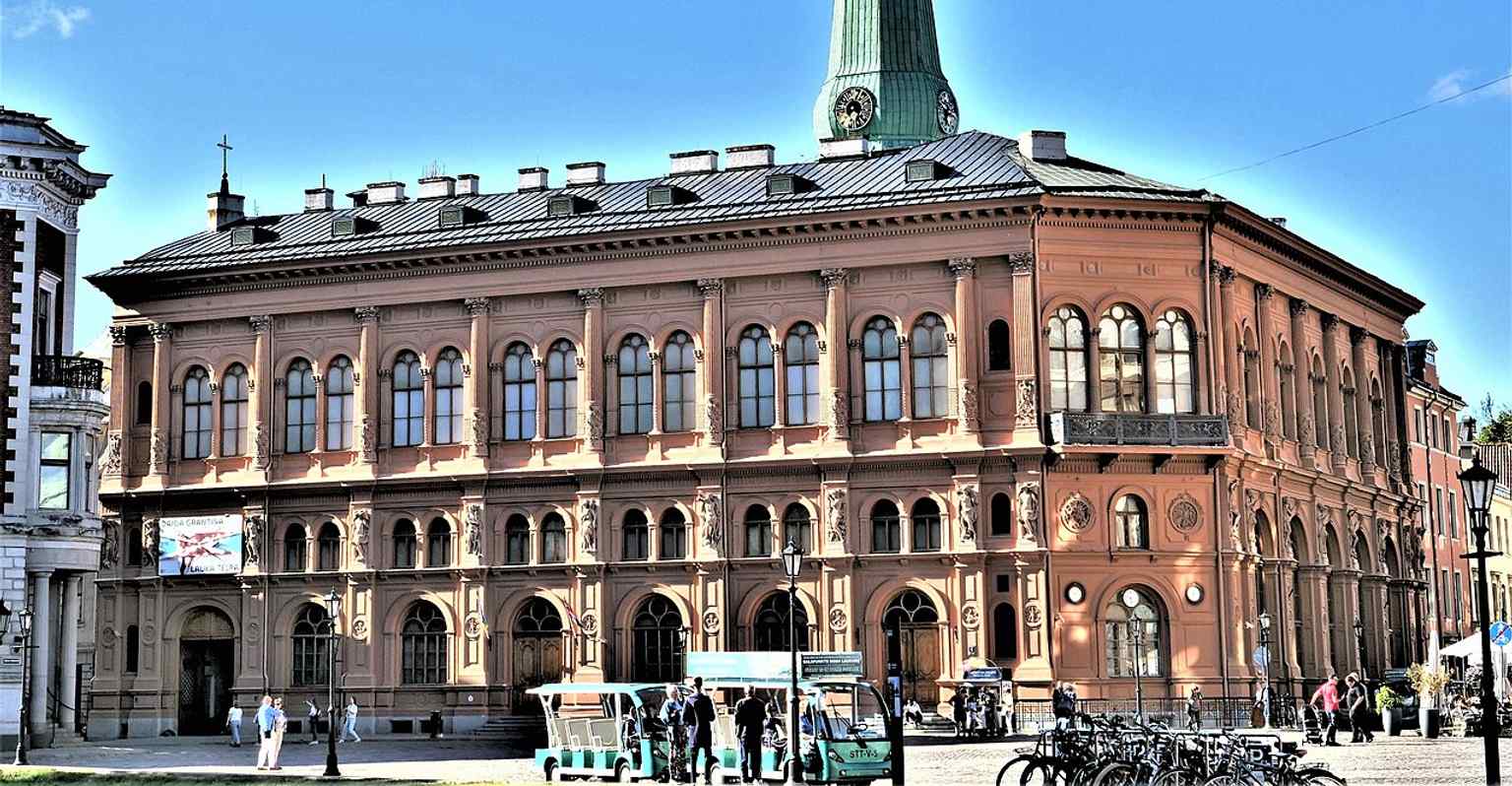
Dome Square never really closes, open twenty-four hours a day, and it carries Riga's memory with almost suspicious efficiency.
When you're ready, continue on to the next stop.





%2C%202006%20(01).jpg)
