
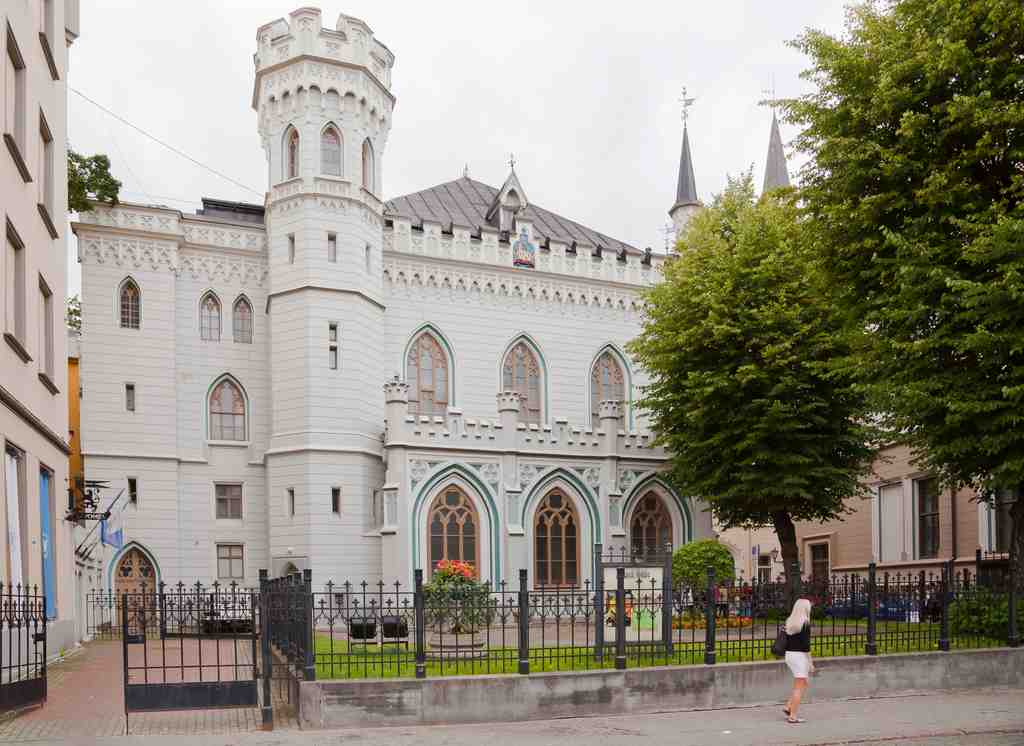
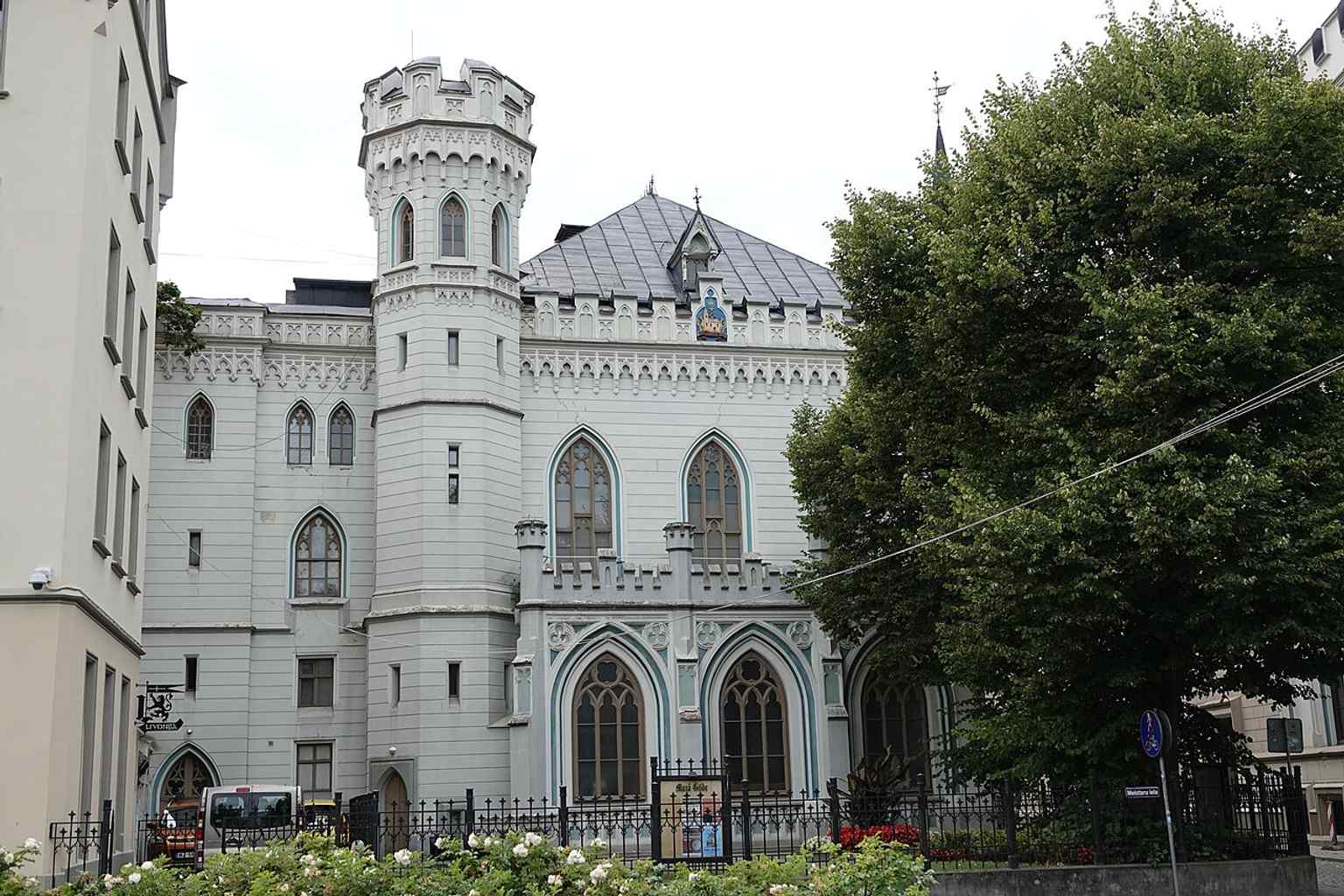
On your right is a pale stone neo-Gothic hall with pointed windows, a steep gabled facade, and a corner statue of Saint John the Baptist.
This is the Small Guild, home of Riga’s craftsmen. “Small” did not mean minor; it meant this was the guild of makers rather than merchants. Riga’s first common guild formed in twelve twenty-six for the city’s German citizens, then split in the mid-fourteenth century into two bodies: Saint Mary’s Guild for merchants, and Saint John’s Guild for artisans. If you wanted to become a proper master in medieval Riga, this place held the keys... and it did not hand them out generously.
A guild was basically a licensed club that controlled a trade. Join, and you could work legally, train apprentices, and sell as a master. Stay outside, and you were stuck. In fact, the Small Guild helped monopolize craft work across the city. Medieval professional networking... with sharper elbows.
The climb to master status was a small obstacle course. First, a journeyman - a trained worker not yet independent - had to produce a “masterpiece,” originally meaning a test object proving skill, not something for a museum. Then he had to travel through Hanseatic trade cities and report back on each place’s “three wonders.” Riga’s own three included a floating bridge across the Daugava, the giant figure of Great Christopher, and the alarm bell at Saint James’ that rang for fires, floods, invasions, plague, and even executions in Town Hall Square. Efficient little city, when it came to bad news.
And there was more. Some new masters had to pay for the ceremonial feast themselves, which hit the wallet hard enough to spark unrest among journeymen. Work illegally, and punishment turned theatrical: the city executioner could publicly destroy your tools in the square. Repeat offenders could lose citizenship and get thrown out beyond the walls. That is one way to settle a labor dispute.
The guild even had its own internal folk politics. Ordinary craftsmen were represented by an official called the Dockmann, a kind of “voice of the people,” who often moved up when one of the twenty-nine elders finally vacated a seat - usually by dying. Cheerful system, really.
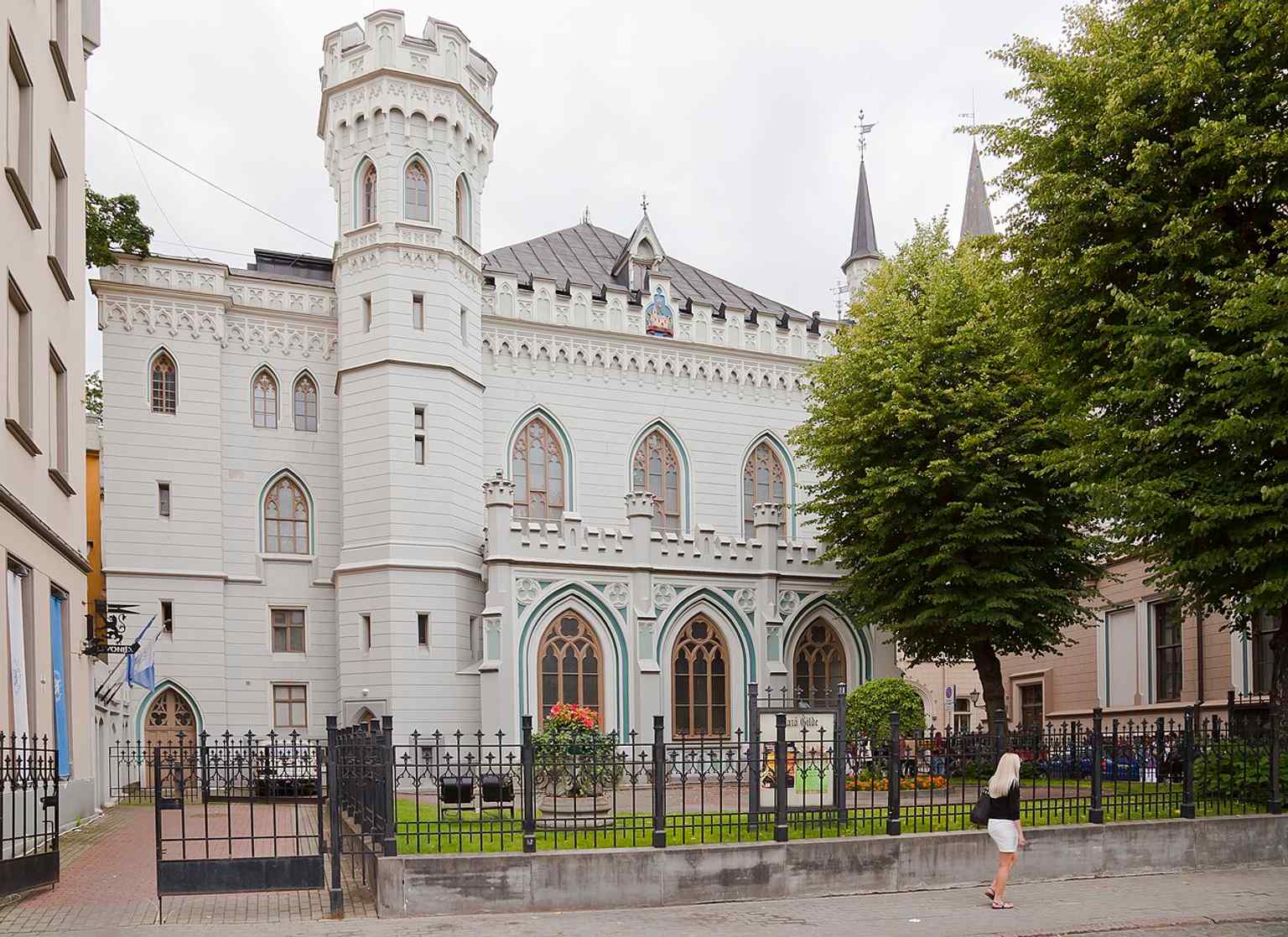
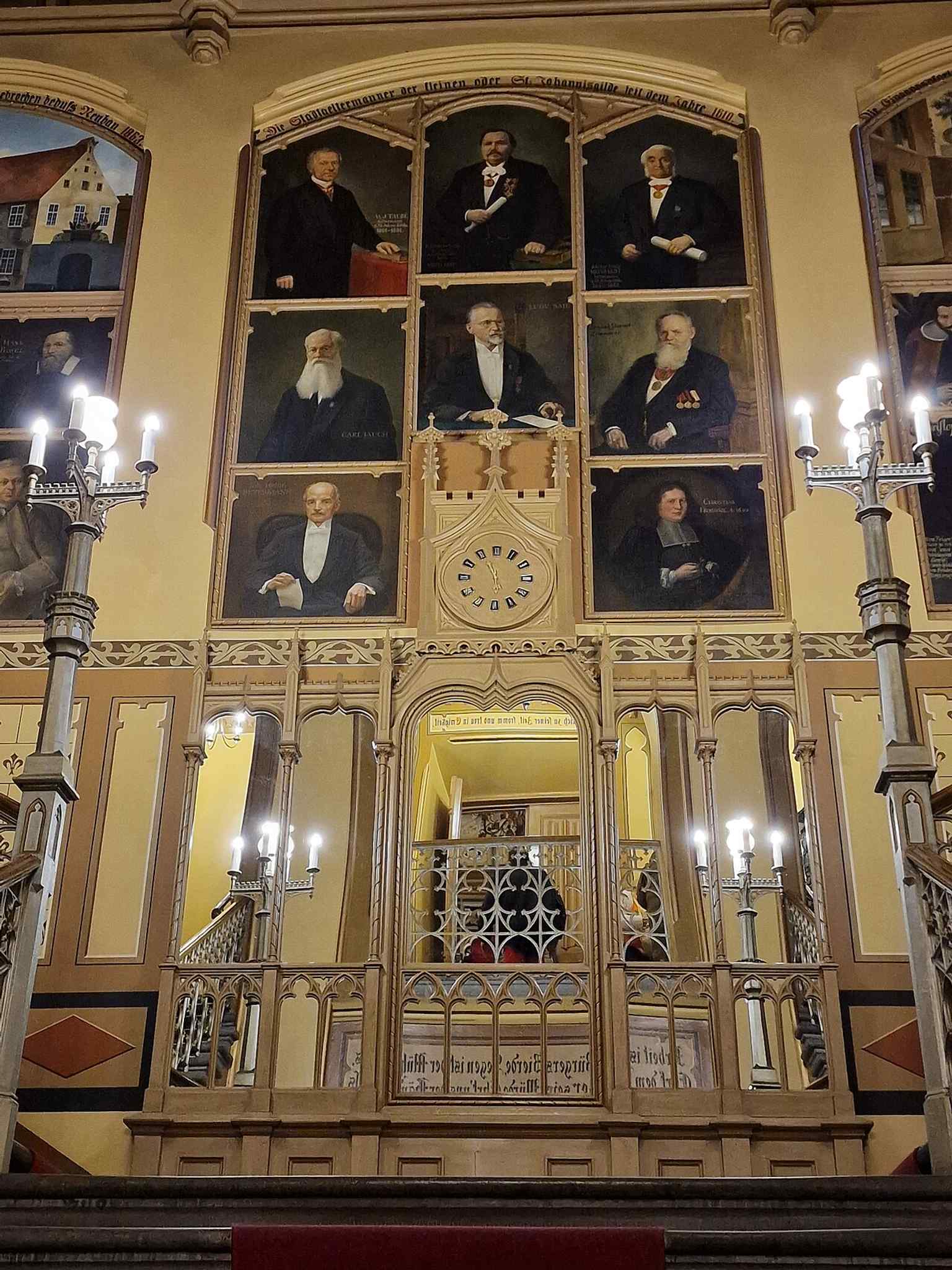
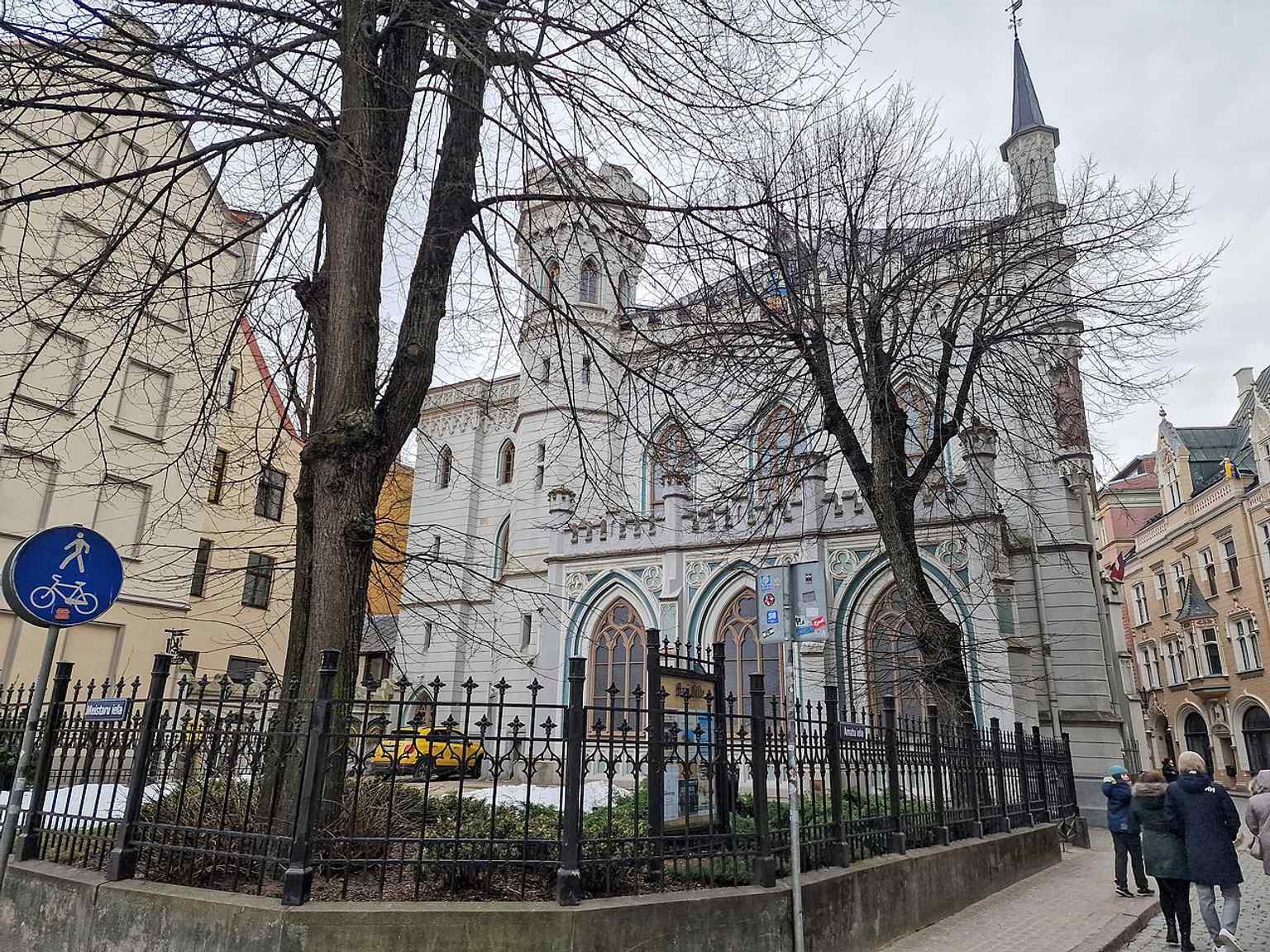
Now, the building in front of you plays a neat trick. It looks deeply medieval, but the version you see is nineteenth-century theater of the highest quality. Architect Johann Daniel Felsko demolished the actual medieval guildhall and, between eighteen sixty-four and eighteen sixty-six, replaced it with a more romantic vision of the Middle Ages. So yes, this facade is younger than it looks and more medieval-looking than the medieval original. If you check the photo in the app, you can see that polished Gothic fantasy clearly. And the interior image shows the ceremonial hall where craftsmen once gathered under carved wood and stained glass portraits of their leaders.
The guild itself finally ended in nineteen thirty-six, when Kārlis Ulmanis’s government replaced the old German guilds with a state-controlled Chamber of Crafts.
Today the building usually opens weekdays from ten in the morning to six thirty in the evening, and stays closed on weekends.
A handsome building, then, but also a reminder that craft, pride, and power have always traveled together. When you’re ready, continue on to the Great Guild, where Riga’s merchants made their own rules.






.01.jpg)