
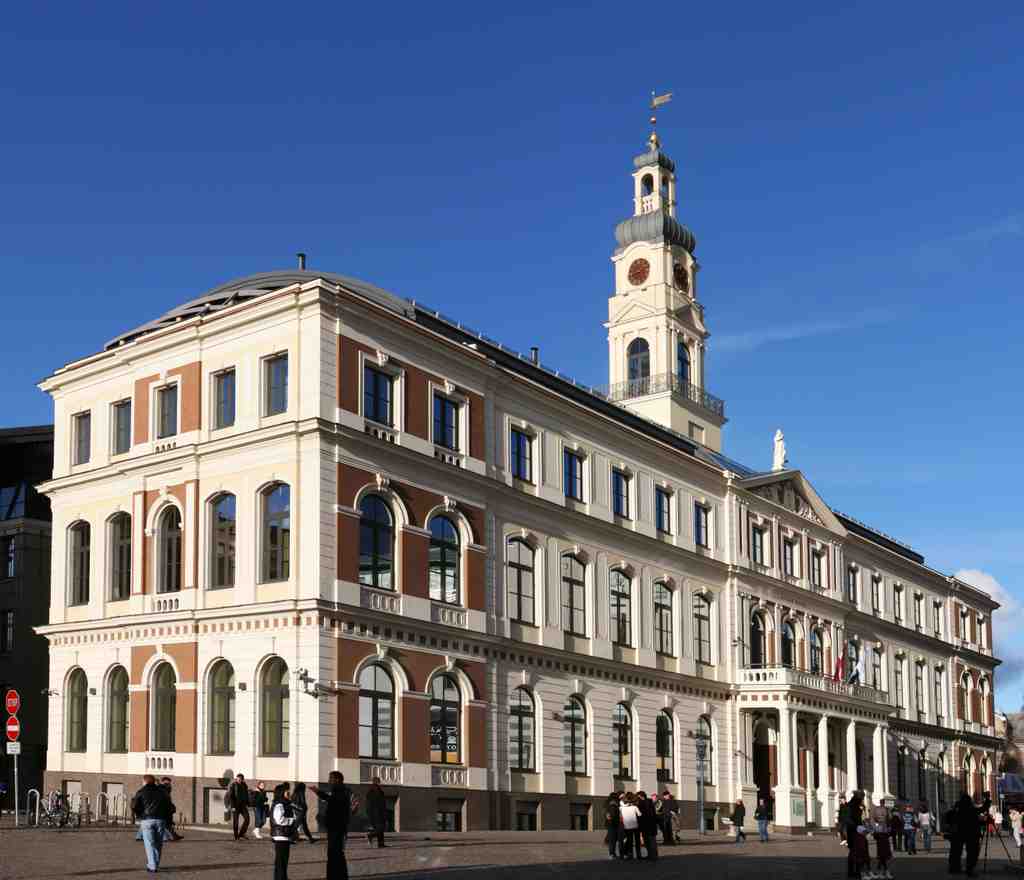
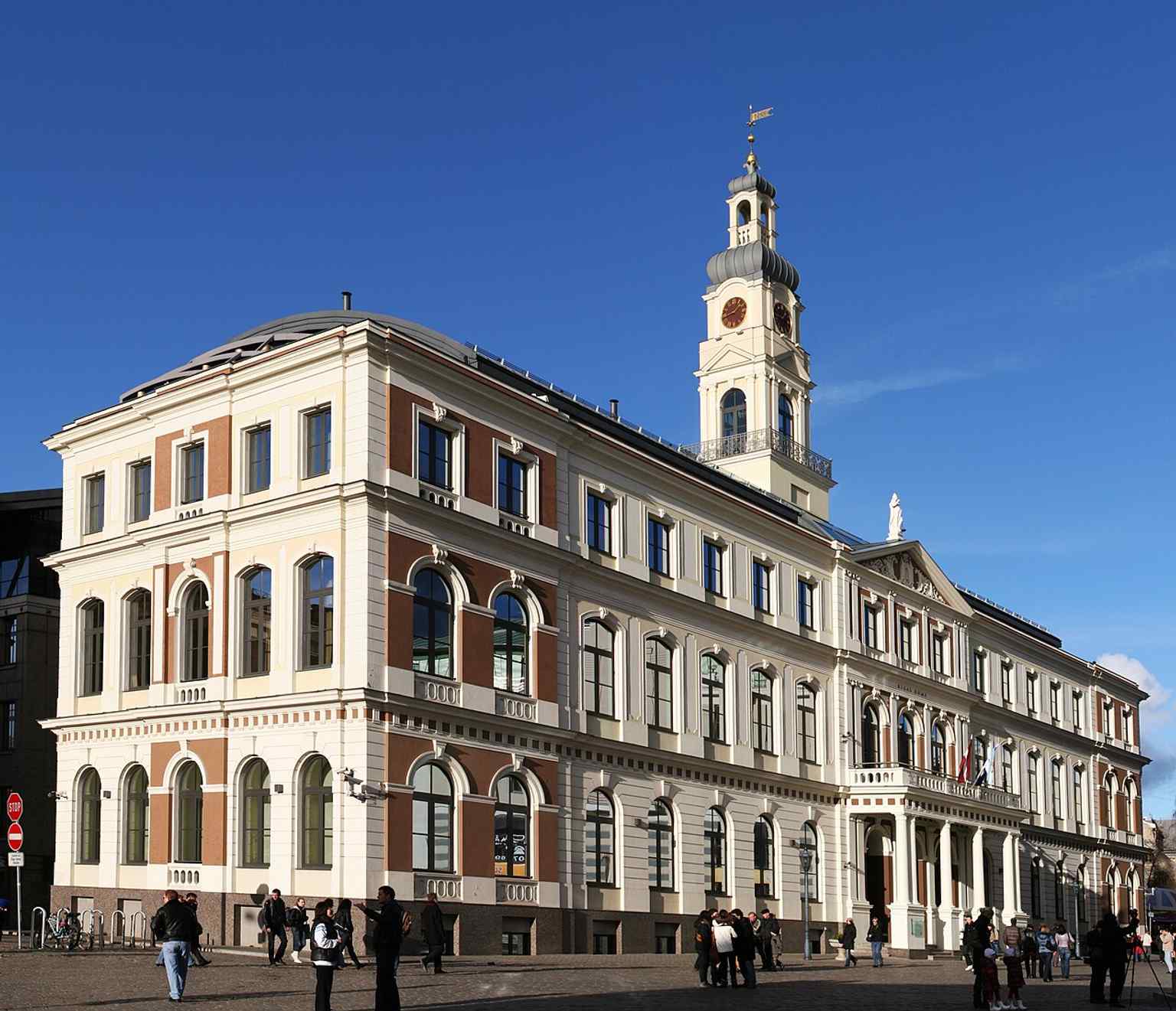
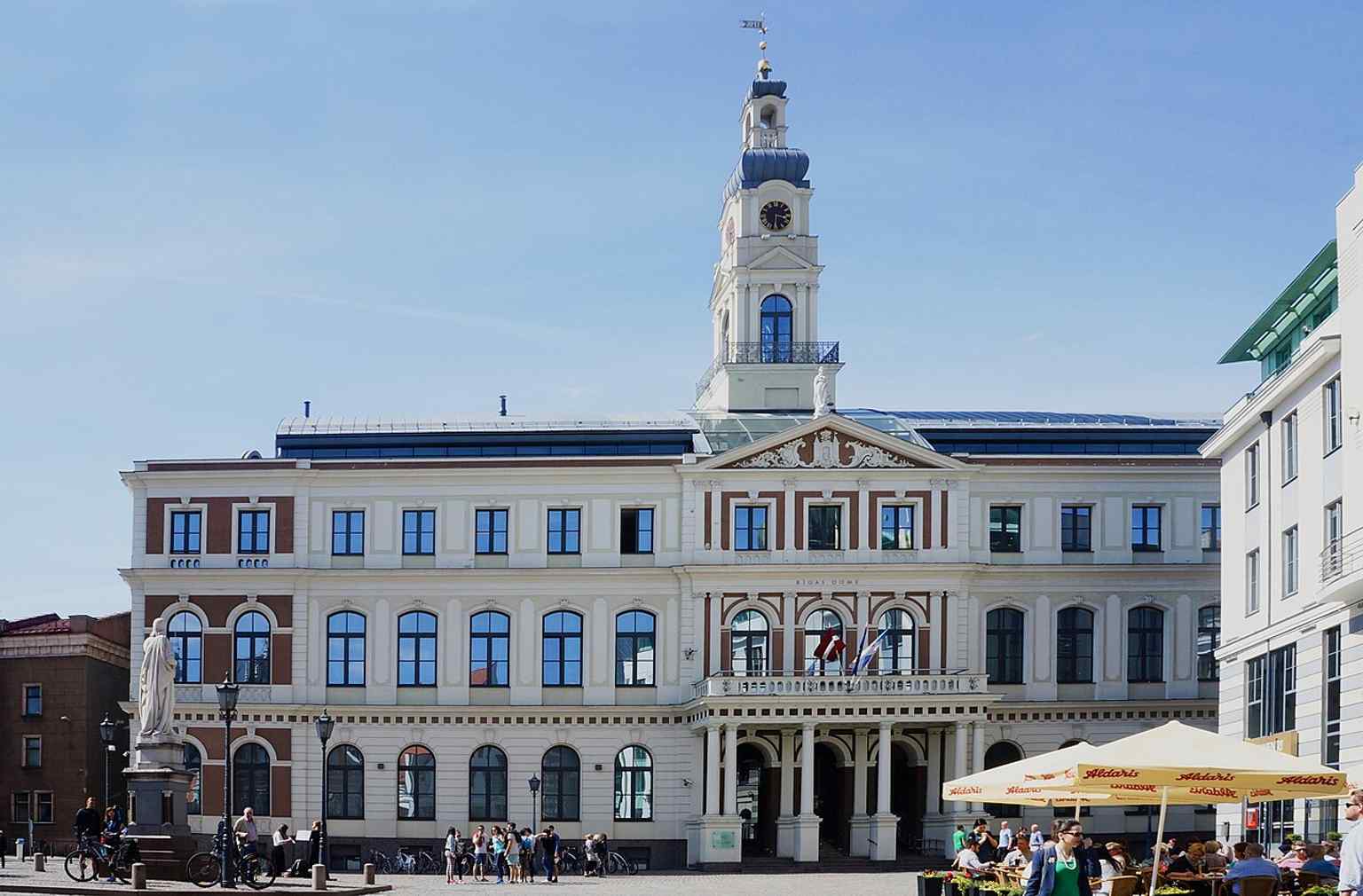
On your right, Riga Town Hall is a broad pale stone building with a symmetrical rectangular façade, a portico of stout columns, and a central tower that neatly pins the whole composition together.
This is Riga’s seat of city government... and like many city halls, it has spent centuries trying to look calm while politics did their usual untidy work.
Riga earned the right to govern itself after a revolt in the thirteen-twenties, when townspeople pushed back against the power of Bishop Albert. By thirteen twenty-six, the city had its own council, called the rat, and a town hall to match. The first one stood near the old main gate. The version that stood here on the market square appears in records by thirteen thirty-four.
That medieval town hall was smaller and Gothic, with a steep roof, a balcony, and an open staircase. From that balcony, a town crier read out the city’s rules in public speeches called bursprake, basically official announcements for everyone within earshot. Some of those rules were about taxes and beer monopolies. Some were what we’d now call dress codes with delusions of grandeur: the council told people who could wear silk, velvet, or gold, and who had better stick to plain cloth. Nothing says civic pride like policing your neighbor’s sleeves. After the fifteen seventies, a city musician also played from the balcony every hour, not just for flair, but to signal that the watch was alert.
This spot also saw blood. During the Calendar Riots, a fierce fight over the new Gregorian calendar and Catholic influence, rebel leaders Martin Giese and Johann Bricken seized power with guild support. Then the Polish king Stephen Batory crushed the revolt, and on the second of August, fifteen eighty-nine, both men lost their heads right in front of the entrance.
Later, Peter the Great’s siege damaged the town hall so badly that the city replaced it in the eighteenth century. A military engineer from Saint Petersburg, Johann Daniel Ettinger, gave it a stern classical face with strong columns and a more theatrical tower. If you check the image on your screen, those entrance columns still echo that redesign. Inside and below, civic order had teeth: the building held courtrooms, debtors’ cells, and even pillories outside for public shaming.
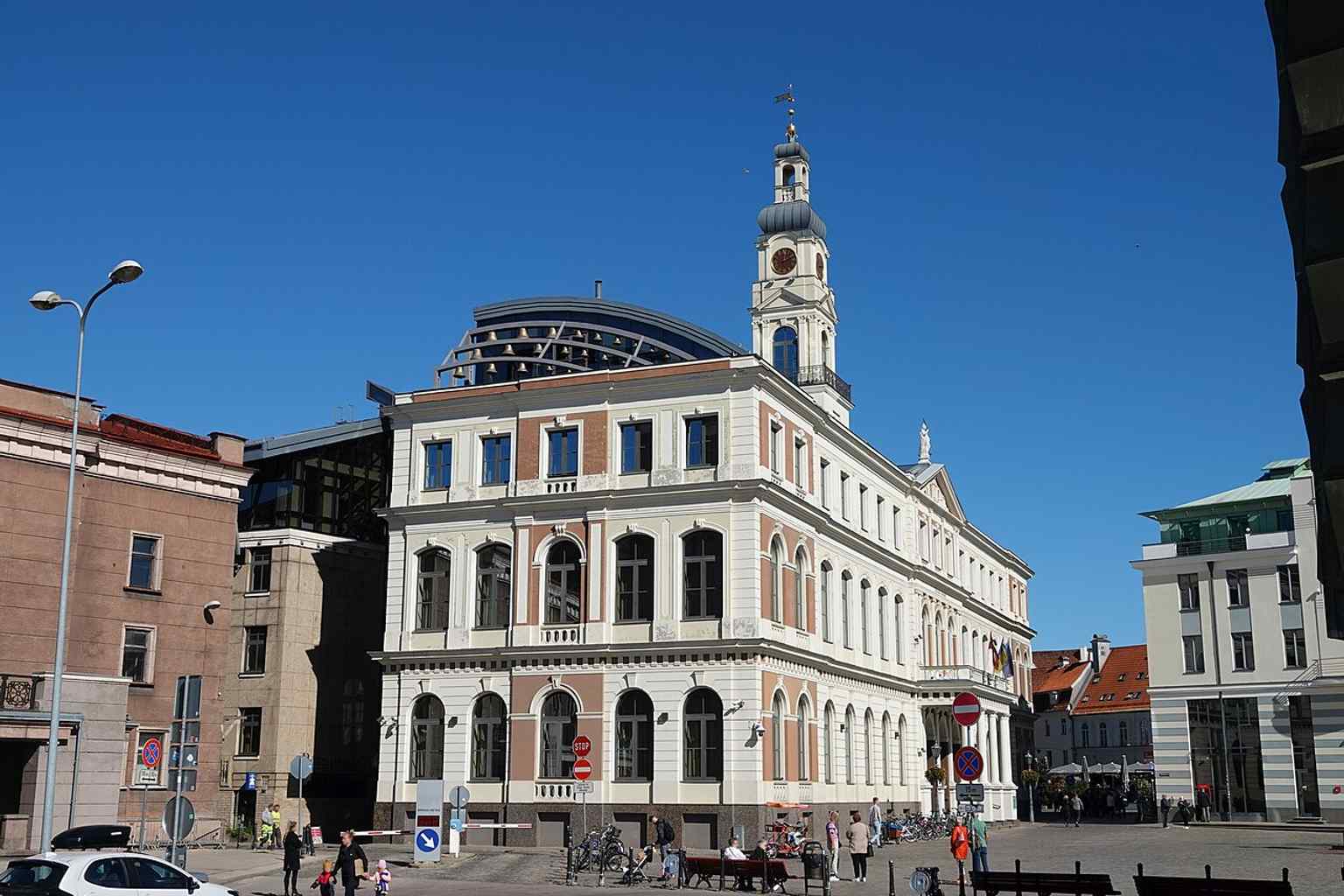
Then came the catastrophe of the twenty-ninth of June, nineteen forty-one. German artillery fired from across the Daugava at Saint Peter’s spire, which Soviet spotters were using. The burning tower fell, flames spread, and Town Hall Square went up with it. This building burned, its ruins lingered until nineteen fifty-four, and later a Soviet technical institute block took its place. In one of history’s drier jokes, the old statue of Themis, goddess of justice, survived and ended up decorating that very Soviet building before returning here. The hall you see now is a reconstruction completed in the early two thousands, and it serves Riga’s city council again. A fuller view in the app helps show that recreated civic stage set.
If you want to return later, the building keeps weekday office hours and closes on weekends.
Riga keeps rebuilding its authority here, stone by stone.
When you’re ready, continue into the square, where the city’s public face gets even more theatrical.






.02.jpg)