
Quebec City Highlights Audio Tour: Historic Landmarks and Old World Charm
Stone walls hold secrets that silence cannot mask. Beneath the grandeur of Old Quebec lies a turbulent history of blood, betrayal, and ghosts waiting for someone to listen. Unlock these whispers through a self-guided audio tour that bypasses the tourist crowds to reveal the raw, unfiltered truth behind the city’s majestic facade. Which hidden chamber inside the Cathedral of the Holy Trinity served as the unlikely backdrop for a high stakes political scandal? Why do the shadows cast by the Quebec fortifications seem to reenact a forgotten night of panic during the great siege? How did a seemingly mundane scandal at the Notre Dame de Quebec Basilica leave an indelible mark on the local soul? Traverse the cobblestones as layers of time peel away to reveal an epic saga. Emerge from this journey with a profound shift in perspective. Start your descent into the dark heart of Quebec today.
Tour preview
About this tour
- scheduleDuration 80–100 minsGo at your own pace
- straighten3.0 km walking routeFollow the guided path
- location_onLocationQuebec City, Canada
- wifi_offWorks offlineDownload once, use anywhere
- all_inclusiveLifetime accessReplay anytime, forever
- location_onStarts at Le Diamant Theatre
Stops on this tour
lock_open 3 free previews · 10 unlock with purchase
Look for a restored stone façade with arched windows and a slate mansard roof, fused to a sharp faceted glass prism, with a large circular artwork hanging over the entrance like a…Read moreShow less
Open dedicated page →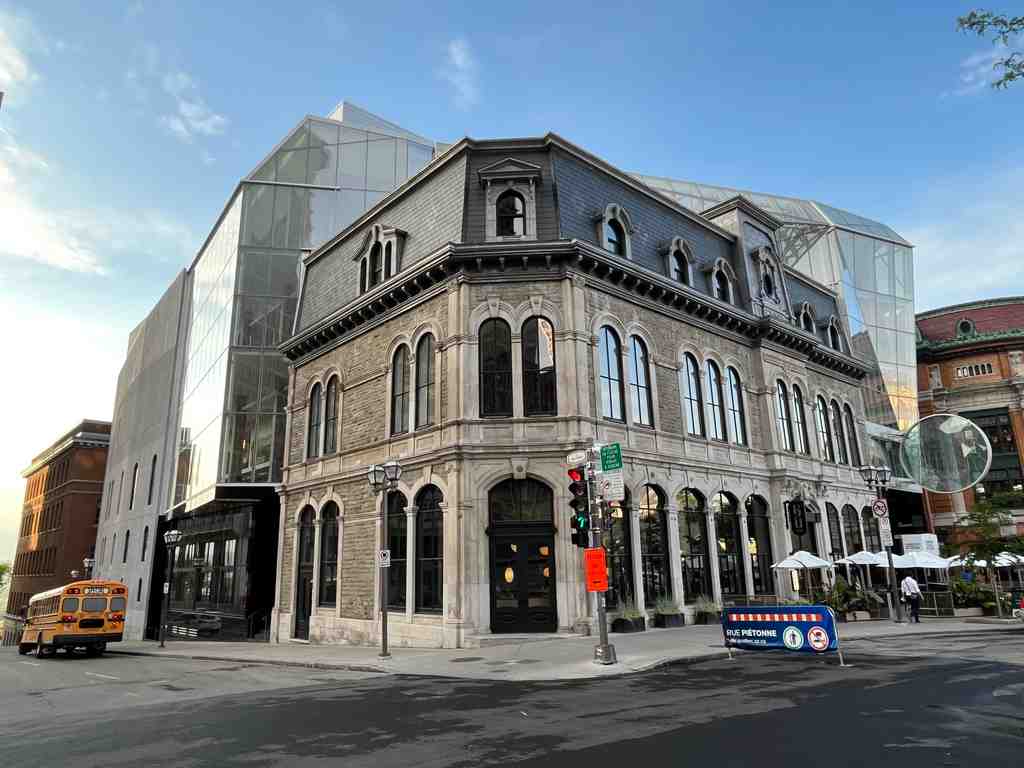
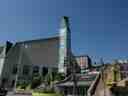
Le Diamant TheatrePhoto: LittleT889, Wikimedia Commons, CC BY-SA 4.0. Cropped & resized. Look for a restored stone façade with arched windows and a slate mansard roof, fused to a sharp faceted glass prism, with a large circular artwork hanging over the entrance like a glowing coin.
Welcome to Le Diamant... a place where Québec City shows one of its favorite habits right away: it rarely starts from scratch when it can argue with its own past instead. Half of this building carries the bones of the city’s first Y-M-C-A, and the other half cuts across it in glass and concrete like a very confident rewrite.
For Robert Lepage, that rewrite was personal. After three decades of touring the world, he said he needed somewhere to set down his suitcases. That’s a lovely line... and also a stubborn one, because this project nearly fell apart more than once. For about fifteen years, land deals tangled, money wobbled, and in twenty fourteen provincial austerity measures put the roughly fifty-four million dollar plan in real danger. Lepage and his team fought to keep it alive, arguing that this was not just another theater, but a cultural anchor the city actually needed.
If you glance at the building, you can read that argument in the architecture. The old Y-M-C-A, designed in eighteen seventy-nine by Joseph-Ferdinand Peachy, kept its arched windows and its Second Empire silhouette - that nineteenth-century style with the steep mansard roof and lots of ornamental detail. Then the new architects sliced the site on a diagonal and inserted this faceted glass volume, like a crystal lodged inside a respectable old civic building. If you want a clearer look at that marriage of old masonry and new glass, check the image on your screen.
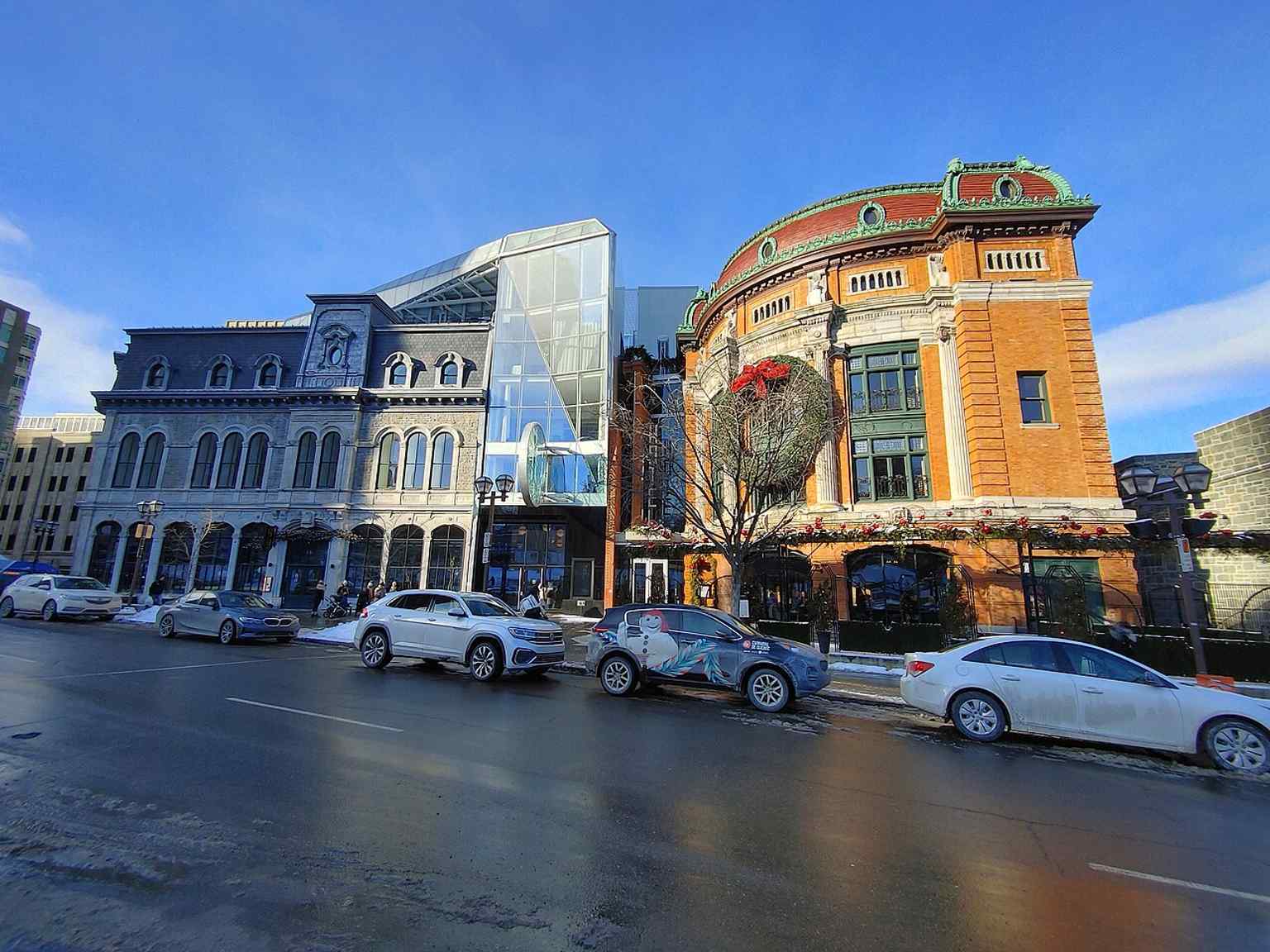
A fresh 2023 angle of the theatre’s façade, underscoring the blend of heritage masonry and modern glass.Photo: Jeangagnon, Wikimedia Commons, CC BY-SA 4.0. Cropped & resized. Now pause for a second and really study the front and the square around it... does this feel purely modern, or does it feel like a place where the city has been training itself, entertaining itself, and showing itself off for a very long time?
Most people walking by never guess what stood here in spirit before the actors arrived. This site belonged to Québec’s first Y-M-C-A, and with it came “Muscular Christianity” - a movement that tried to build moral character through physical discipline. So yes, before there were stage lights, there were bowling lanes, a swimming pool, and a gym where neighborhood boys came to harden body and soul. Québec can be wonderfully dramatic, even when it thinks it’s being upright.
There’s another detail locals love pointing out. Along Rue des Glacis, the concrete panels carry a photo-engraved image of a building that never actually got built. Peachy had drawn a second wing for the old Y-M-C-A, but nineteenth-century funding failed him. More than a century later, Le Diamant gave that missing wing a ghostly afterlife. From the right angle, it appears; shift a little, and it slips away. The city remembers even its unfinished ideas.
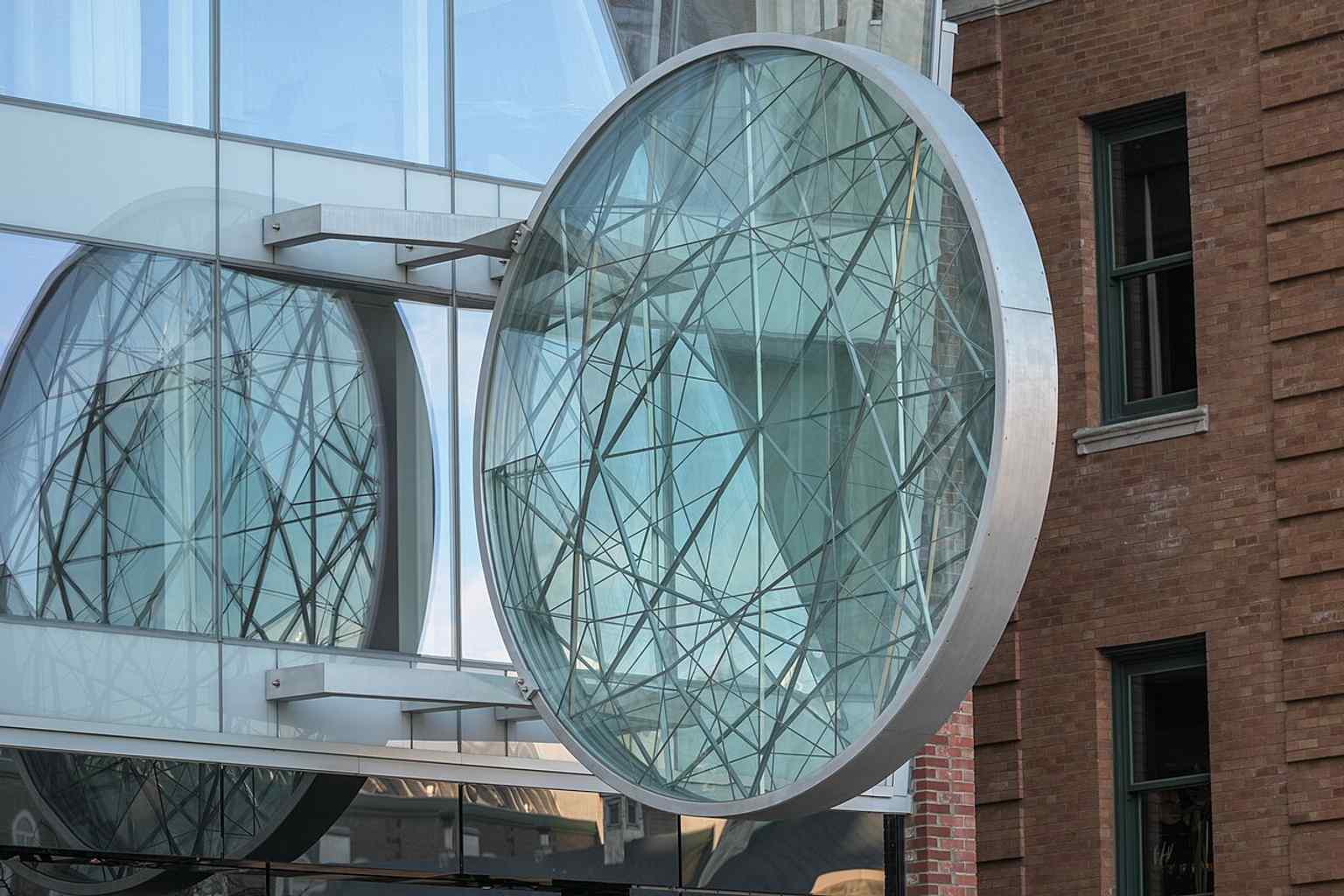
Le Diamant opened in June of twenty nineteen after a three-year construction effort by Pomerleau. Inside, it holds a six-hundred-twenty-five-seat hall, a smaller hall, rehearsal rooms, and the kind of stage machinery directors dream about: hydraulic lifts, advanced sound and lighting, even a retractable orchestra pit. Hanging over the entrance, that circular artwork by Claudie Gagnon nods to the old Cinema de Paris sign that once marked this address, so even the theater’s emblem is a reincarnation.
That’s the pattern to keep in mind as we walk this district: in Québec, performance has never stayed politely onstage. It spills into squares, façades, arguments, and reinventions... which makes the Capitole Theatre, right nearby, a very fitting next stop. If you’re planning to come back inside, Le Diamant is generally open only limited hours from Thursday through Saturday.
An elevated city view that places Le Diamant within central Québec City and its surrounding cultural district.Photo: Wilfredor, Wikimedia Commons, CC0. Cropped & resized. 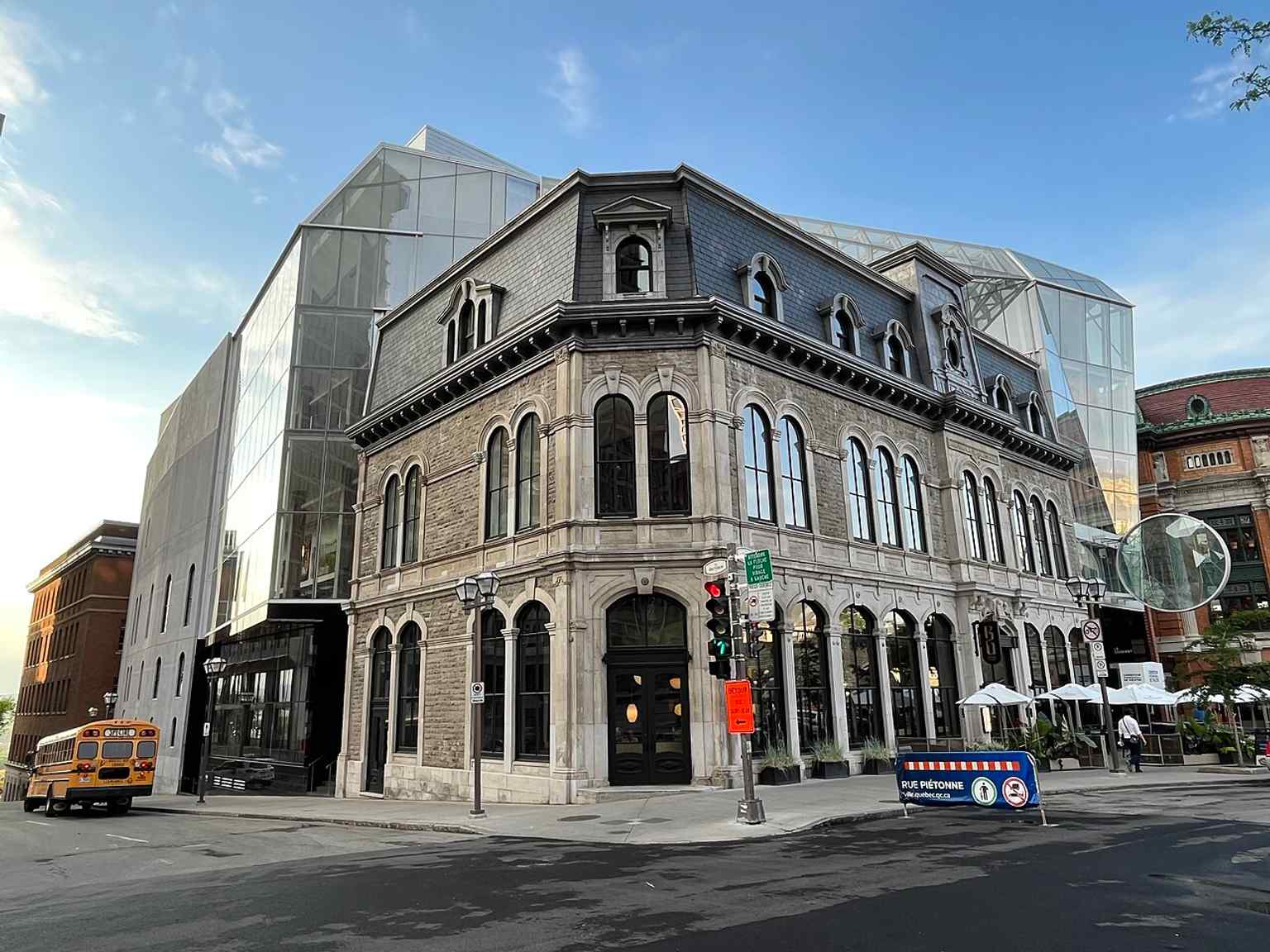
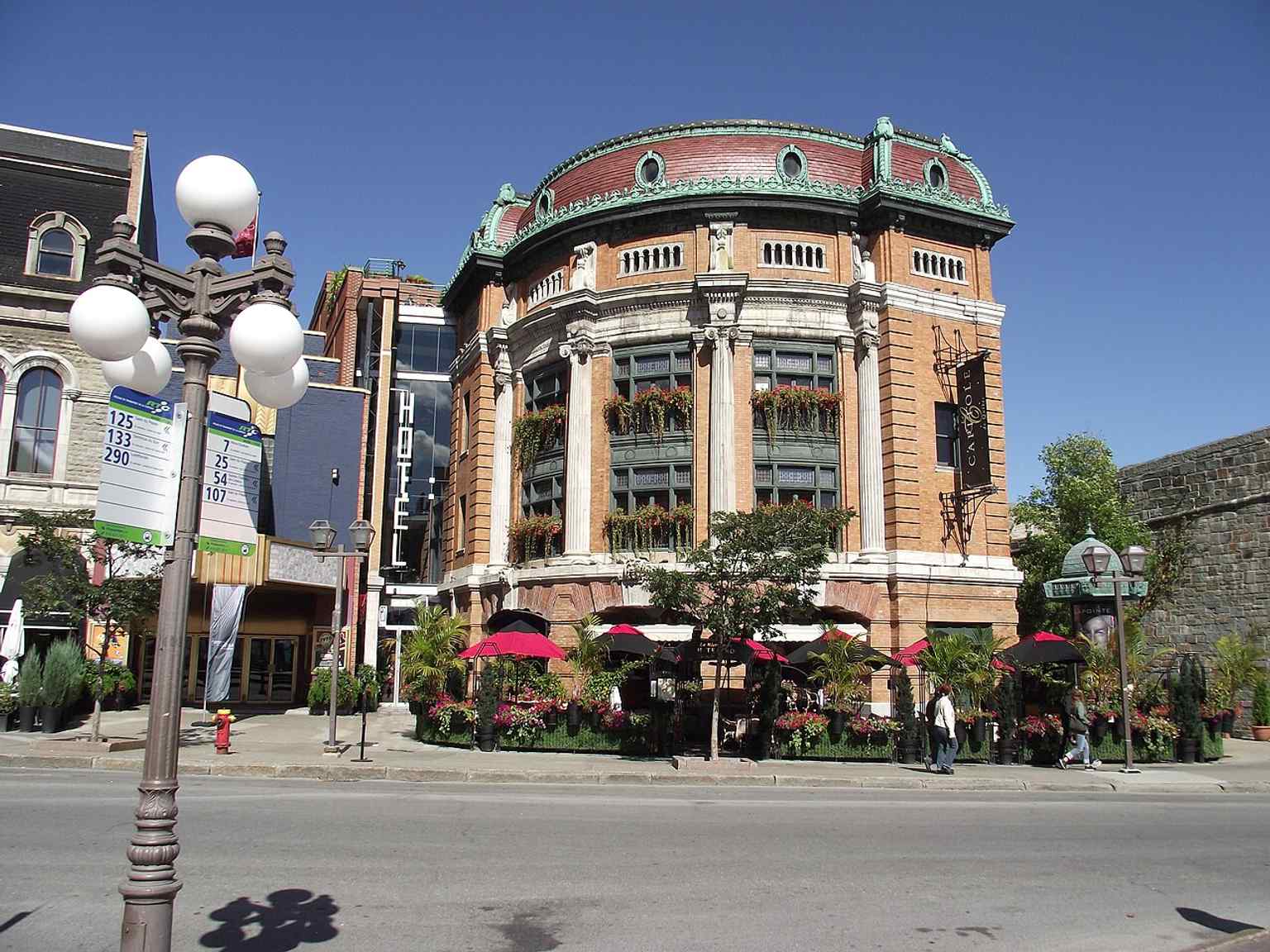
A 2023 street-level view of Le Diamant, showing the theatre as an established landmark in the city center.Photo: LittleT889, Wikimedia Commons, CC BY-SA 4.0. Cropped & resized. On your left, the Capitole shows itself with a pale stone curved façade, tall arched openings, and the bold CAPITOLE sign crowning the roofline. Québec has long treated public…Read moreShow less
Open dedicated page →On your left, the Capitole shows itself with a pale stone curved façade, tall arched openings, and the bold CAPITOLE sign crowning the roofline.
Québec has long treated public life like a performance... not fake, exactly, but staged. Squares, gates, churches, and theatres all gave people places to be seen, persuaded, entertained, or impressed. This building matters because it helped turn that civic instinct into modern spectacle.
In nineteen oh two, Mayor Simon-Napoléon Parent and a group of businessmen pushed for a major entertainment hall here, even after Catholic clergy had spent years resisting professional theatre on moral grounds. So when the Auditorium opened in nineteen oh three, it was more than a business deal. It was Québec announcing that it wanted a place in the wider world of big-city culture.
If you glance at the image on your screen, you can see that Beaux-Arts front... classical symmetry with a bit of swagger... shaped by the American architect Walter S. Painter to fit this tight site beside the old Saint-Jean bastion ditch. The opening nights belonged to the Société symphonique de Québec, ancestor of today’s symphony orchestra, which tells you this place began with ambition, not just popcorn.
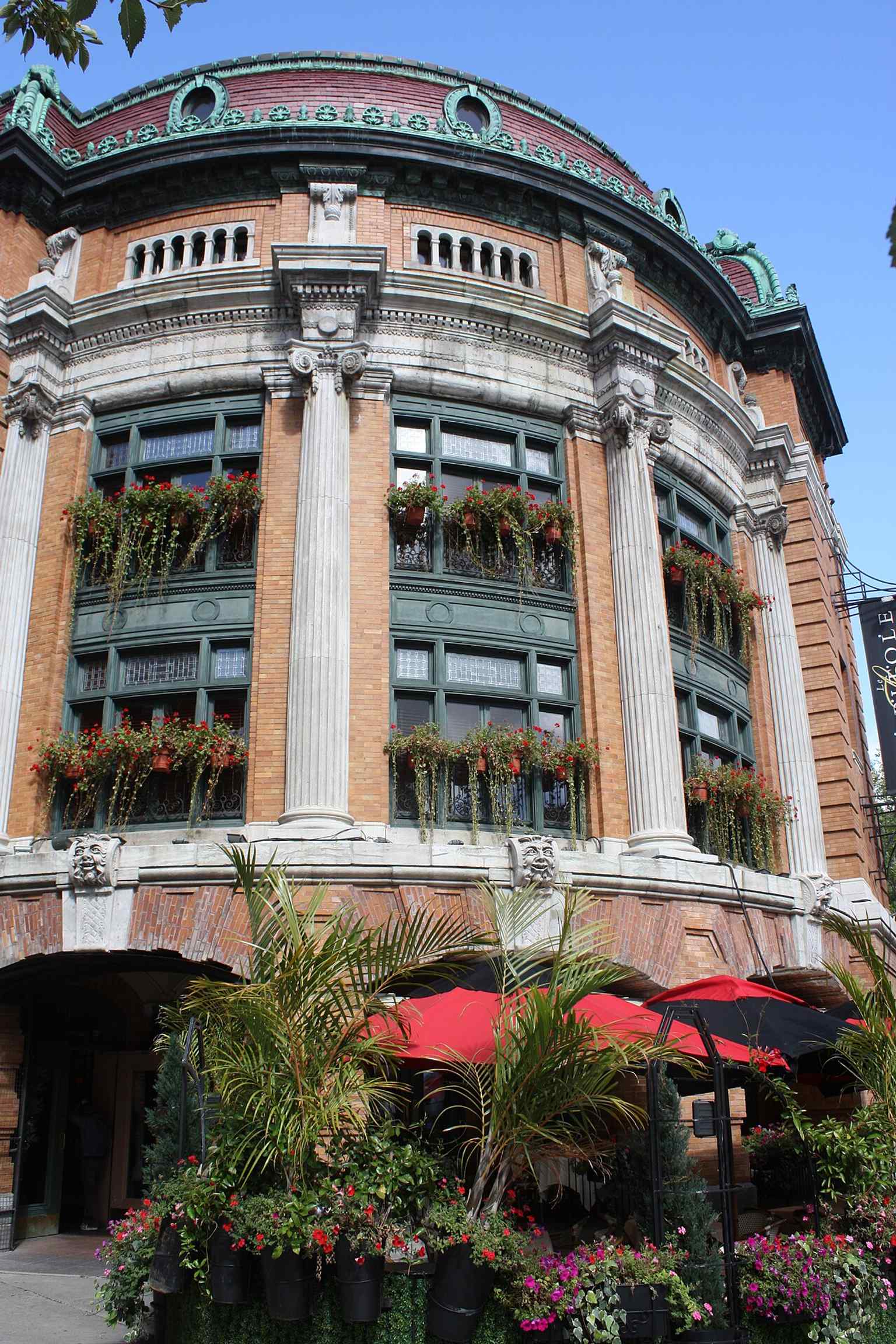
A front-side view of the theatre’s ornate Beaux-Arts façade, the landmark rebuilt from its 1903 auditorium origins.Photo: Alexbruchez, Wikimedia Commons, CC BY-SA 3.0. Cropped & resized. Then came vaudeville, a fast-moving variety show full of singers, dancers, comics, jugglers, acrobats, ventriloquists, and magicians. Sarah Bernhardt performed here in nineteen oh five on her farewell tour. Emma Albani followed in nineteen oh six, also saying goodbye to the stage. Not a bad early guest list.
In nineteen eighteen, the building got pulled into politics the hard way. During the conscription crisis, a crowd attacked the draft registrar’s offices inside, set a fire, and firefighters barely kept the damage limited. Repairs followed, and the owners added a screen for silent films, often accompanied by a Casavant organ. Because if you’re going to reinvent yourself, you might as well do it with musical backing.
A major remodel in nineteen twenty-seven, led by theatre specialist Thomas White Lamb, expanded the hall to about two thousand seats. In nineteen thirty, Famous Players renamed it the Capitol and folded it into a North American cinema chain. Yet it never became only a movie house. Radio station C-K-C-V moved into the third floor in nineteen thirty-five, and the stage kept welcoming artists, ballet, theatre, even Alfred Hitchcock, who presented the world premiere of I Confess here in nineteen fifty-three.
Then came decline: suburban cinemas, new media, and the Grand Théâtre pulled audiences away. The final screening in nineteen eighty-one was Les Plouffe. After that, the building sat stripped and vulnerable until heritage protection arrived, and then producer Jean Pilote bought the wreck in nineteen ninety and brought it back. The reopened Théâtre Capitole in nineteen ninety-two restored not just a hall, but a whole idea of Québec putting itself on display.
If you want a peek at the interior grandeur it recovered, check the app image with the performance space.
An interior view of the theatre spaces, evoking the grand performance hall that once hosted opera, vaudeville, and cinema.Photo: Sylvainbrousseau, Wikimedia Commons, CC BY-SA 3.0. Cropped & resized. Next, we leave the polished world of tickets and curtains for older stagecraft: the fortifications, where survival itself had to be performed in stone. The Capitole is generally open every day, roughly from late morning into the evening.
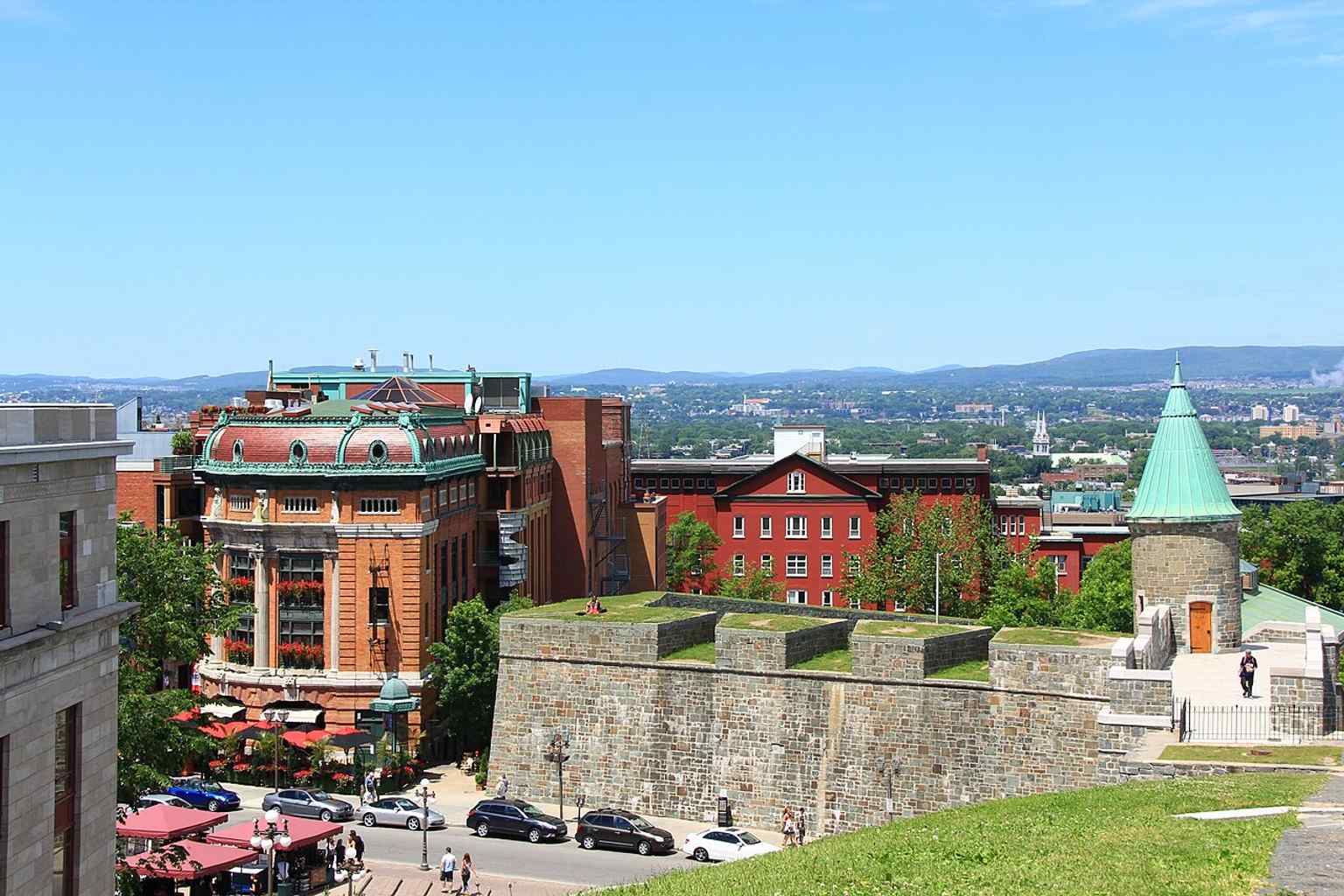
A broad view from the city ramparts, placing the Capitole in its fortified Old Quebec setting near Porte Saint-Jean.Photo: JOFphoto, Wikimedia Commons, CC BY-SA 3.0. Cropped & resized. 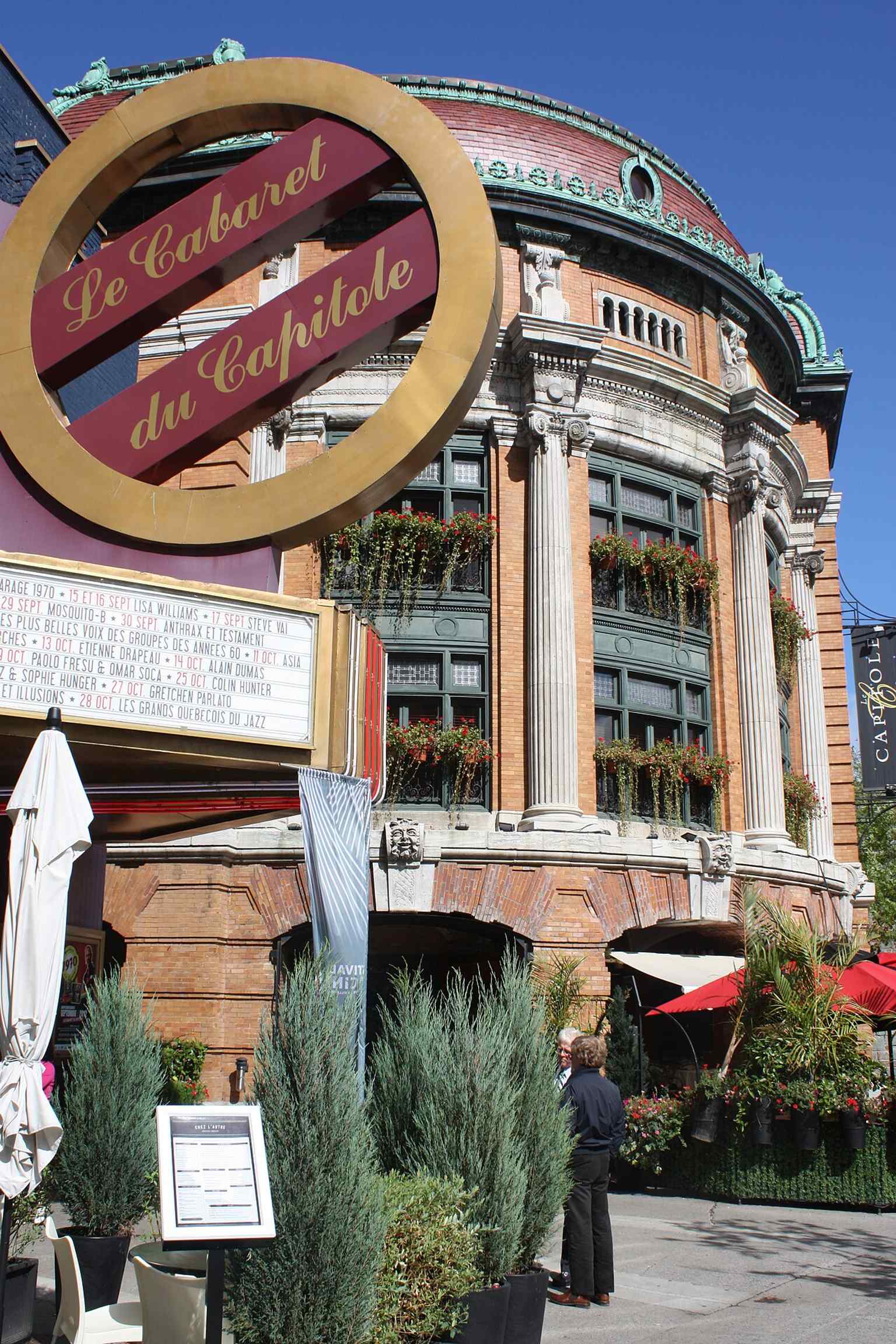
Another clear exterior angle highlighting the building’s curved streetfront and restored historic character.Photo: Alexbruchez, Wikimedia Commons, CC BY-SA 3.0. Cropped & resized. 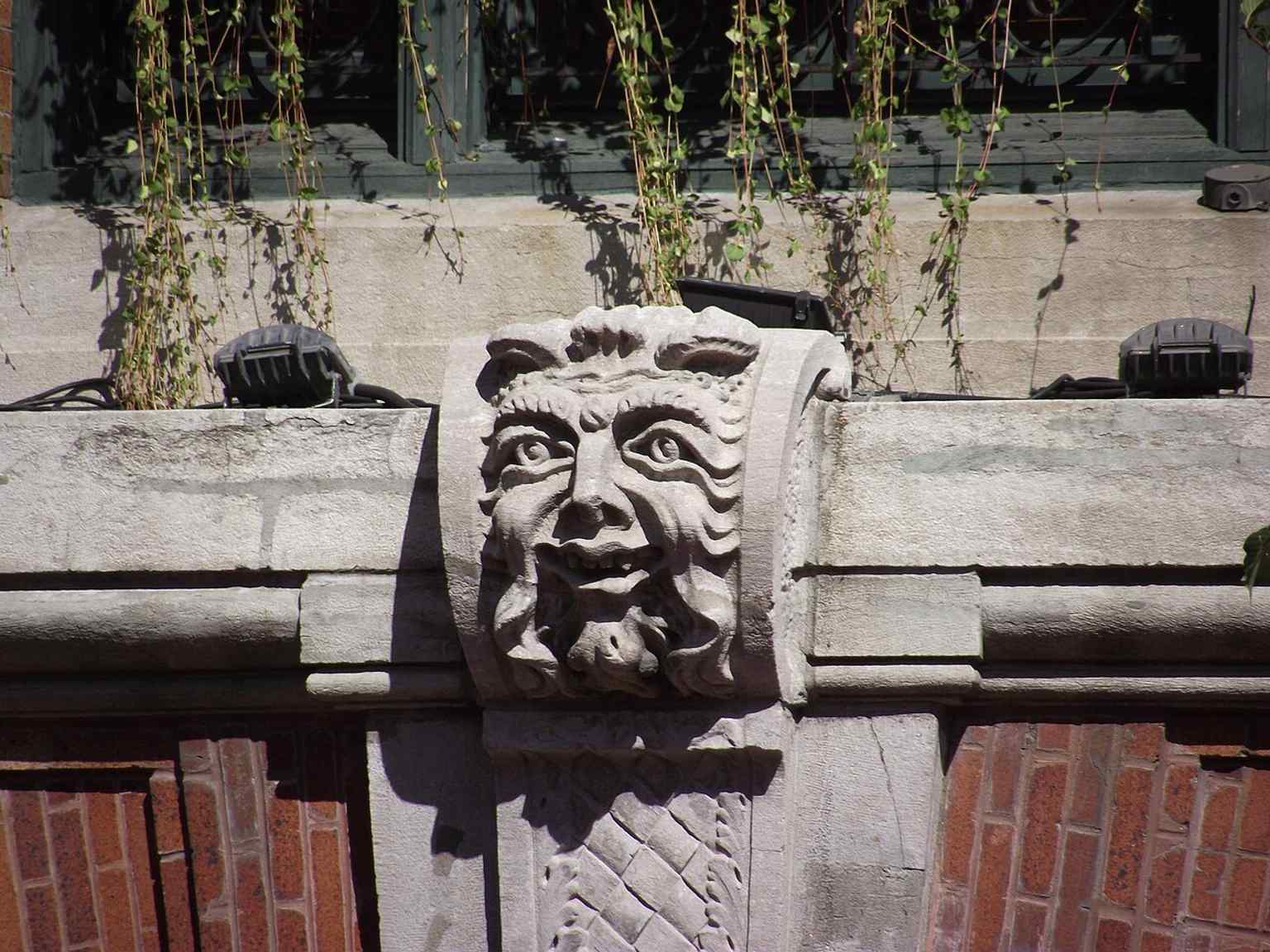
An architectural close-up that helps tell the story of the Capitole’s decorative stonework and heritage status.Photo: Sylvainbrousseau, Wikimedia Commons, CC BY-SA 3.0. Cropped & resized. 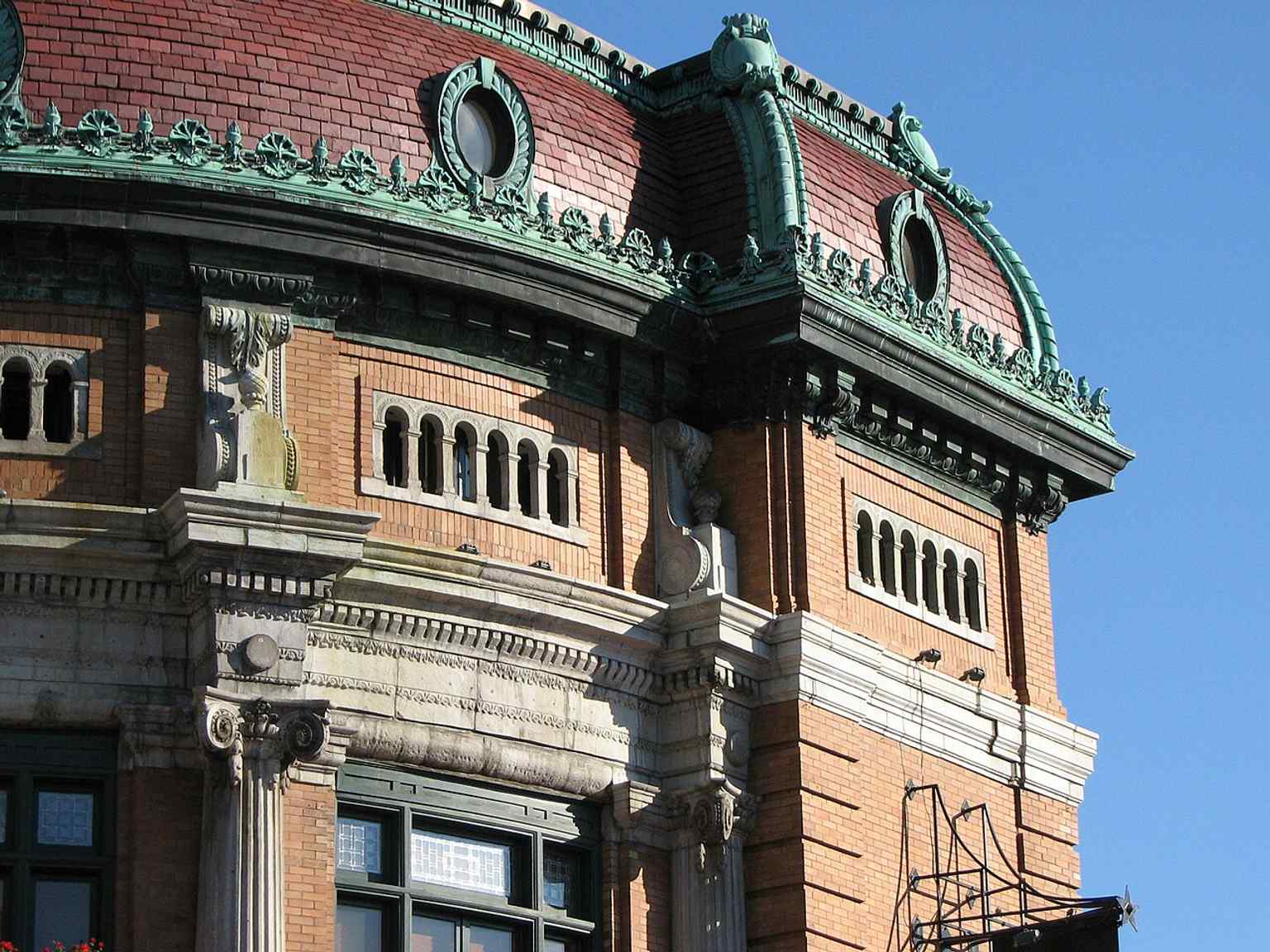
A detailed view of the façade ornamentation, useful for showing the theatre’s preserved early-20th-century design.Photo: Hélène Grenier, Wikimedia Commons, CC BY-SA 3.0. Cropped & resized. 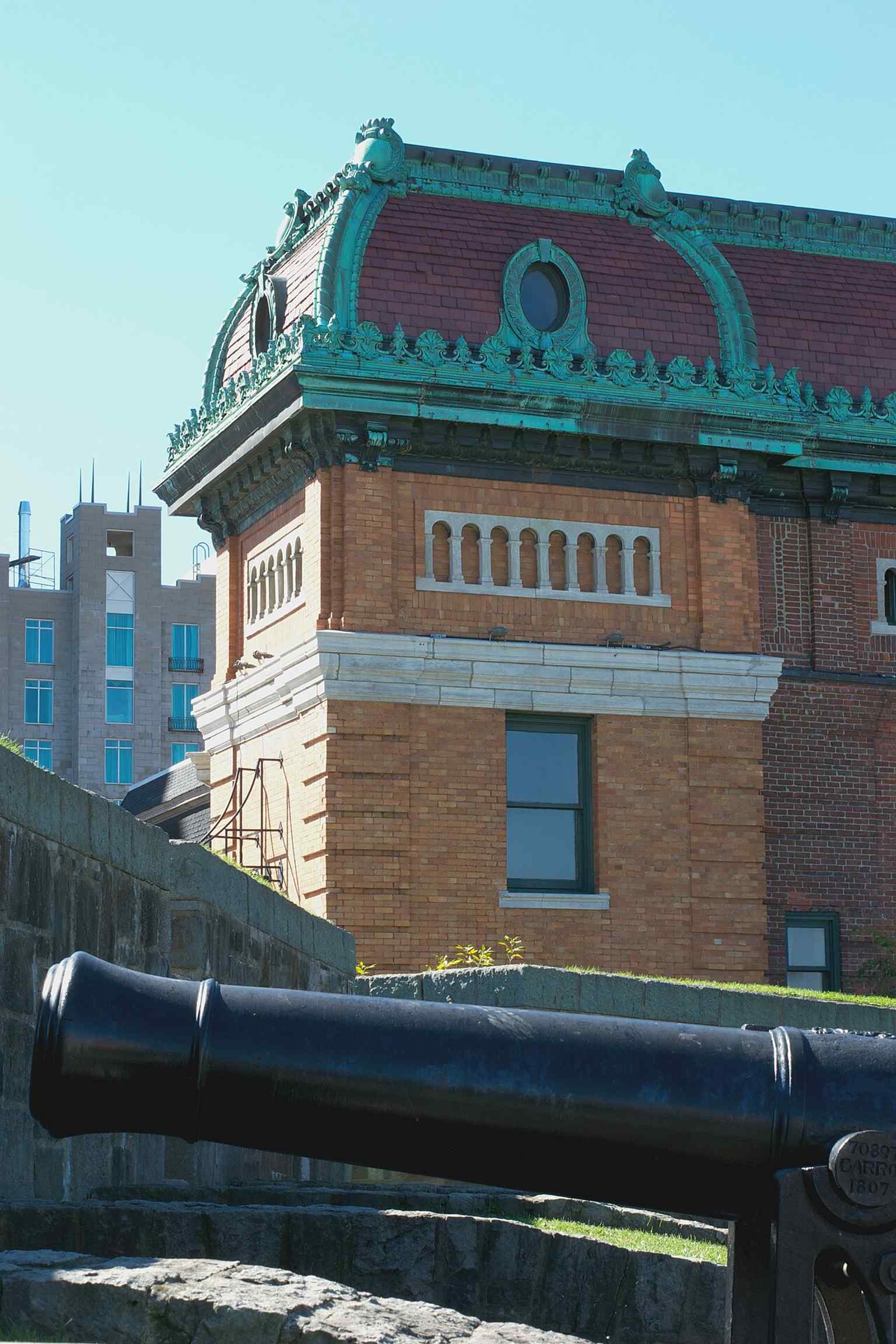
Cannons and the Capitole together — a striking reminder that the theatre sits within Quebec’s fortified old city landscape.Photo: Regmalo, Wikimedia Commons, CC BY-SA 3.0. Cropped & resized. 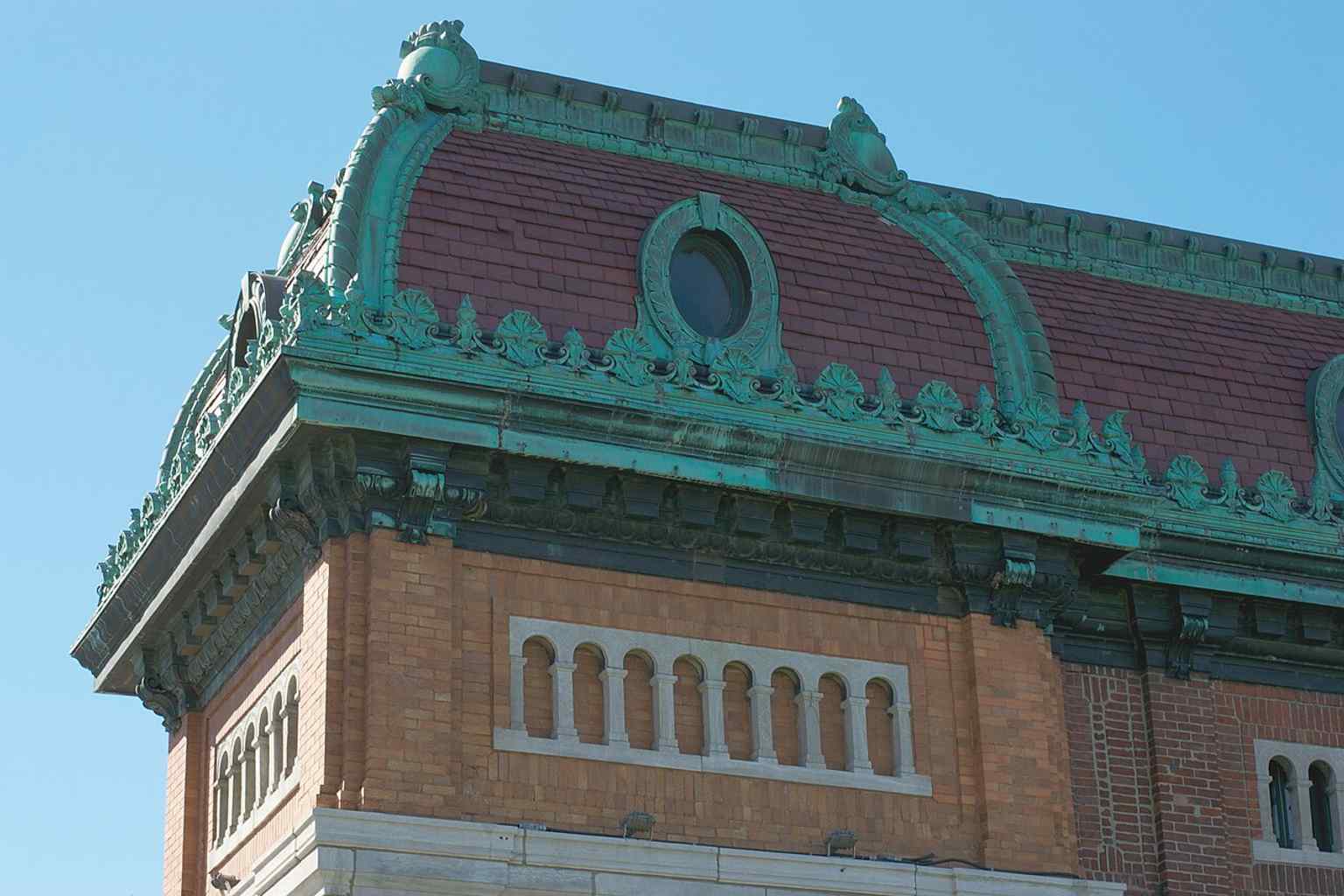
The roofline and upper structure, illustrating the building’s historic silhouette after major restorations and upgrades.Photo: Regmalo, Wikimedia Commons, CC BY-SA 3.0. Cropped & resized. 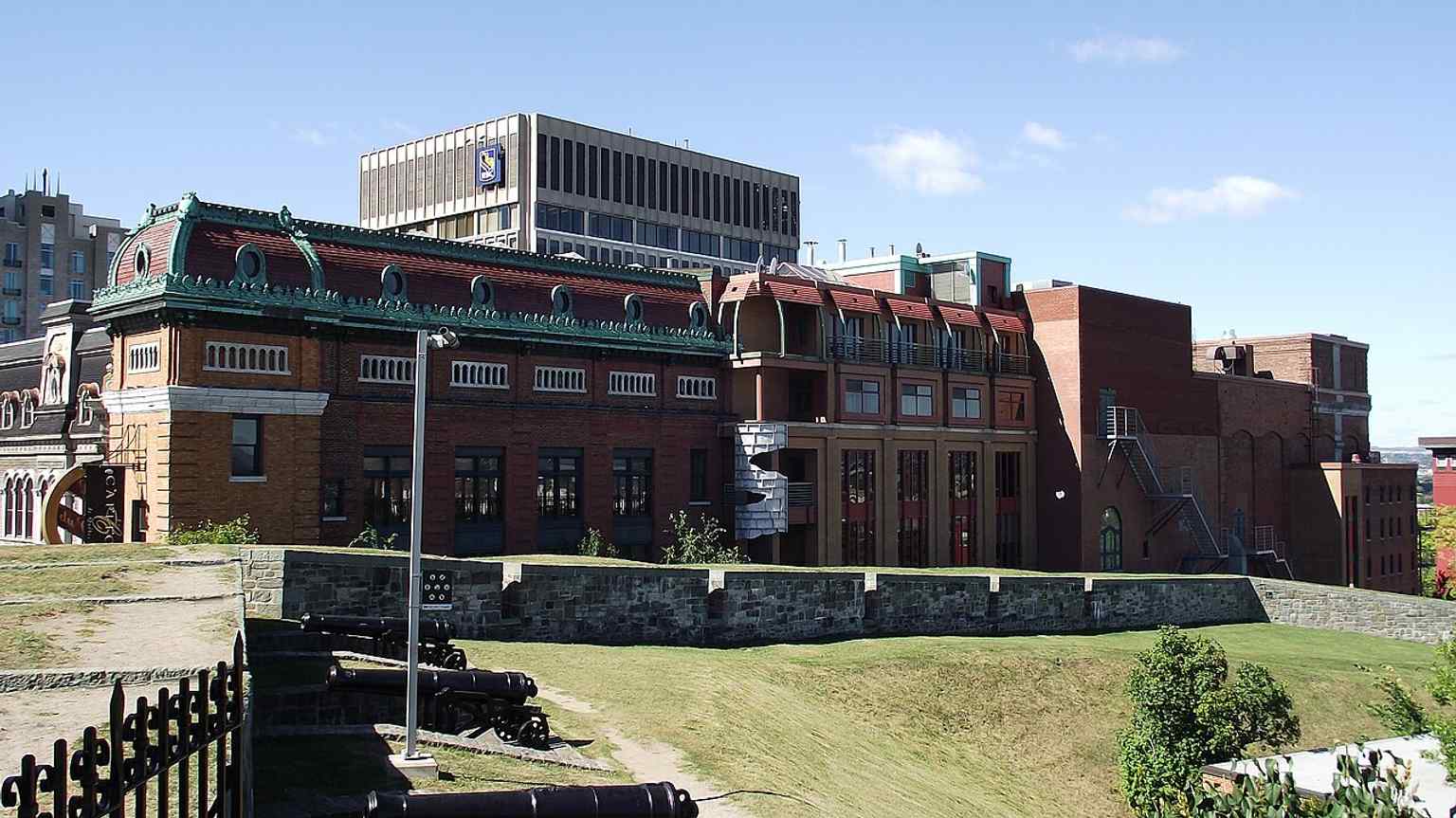
The rear of the building, helpful for understanding how the Capitole evolved through renovations and later restoration work.Photo: Sylvainbrousseau, Wikimedia Commons, CC BY-SA 3.0. Cropped & resized. 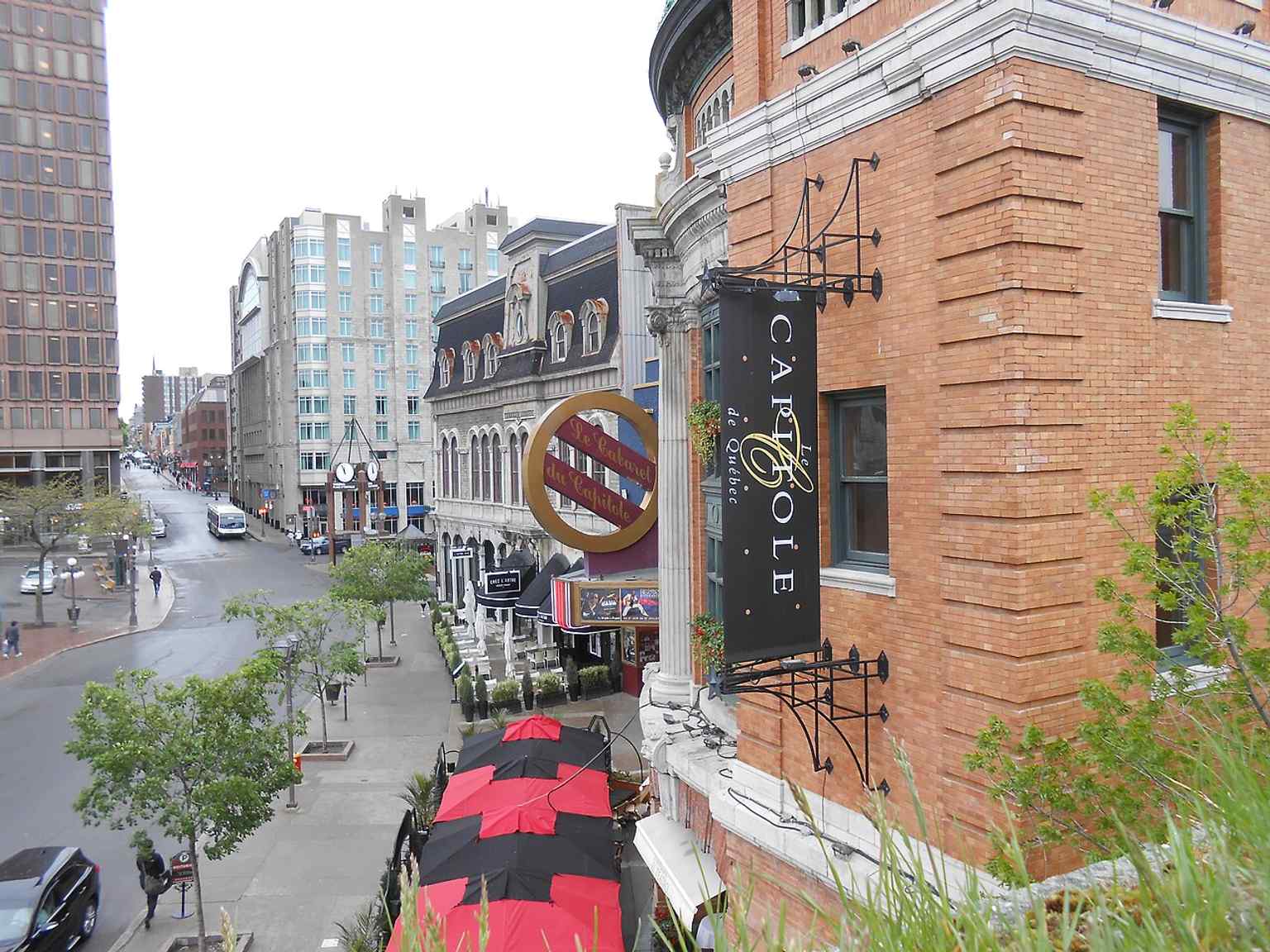
A later daylight view of the Capitole on Place D’Youville, showing the landmark still active at the heart of downtown Quebec.Photo: Jeangagnon, Wikimedia Commons, CC BY-SA 3.0. Cropped & resized. 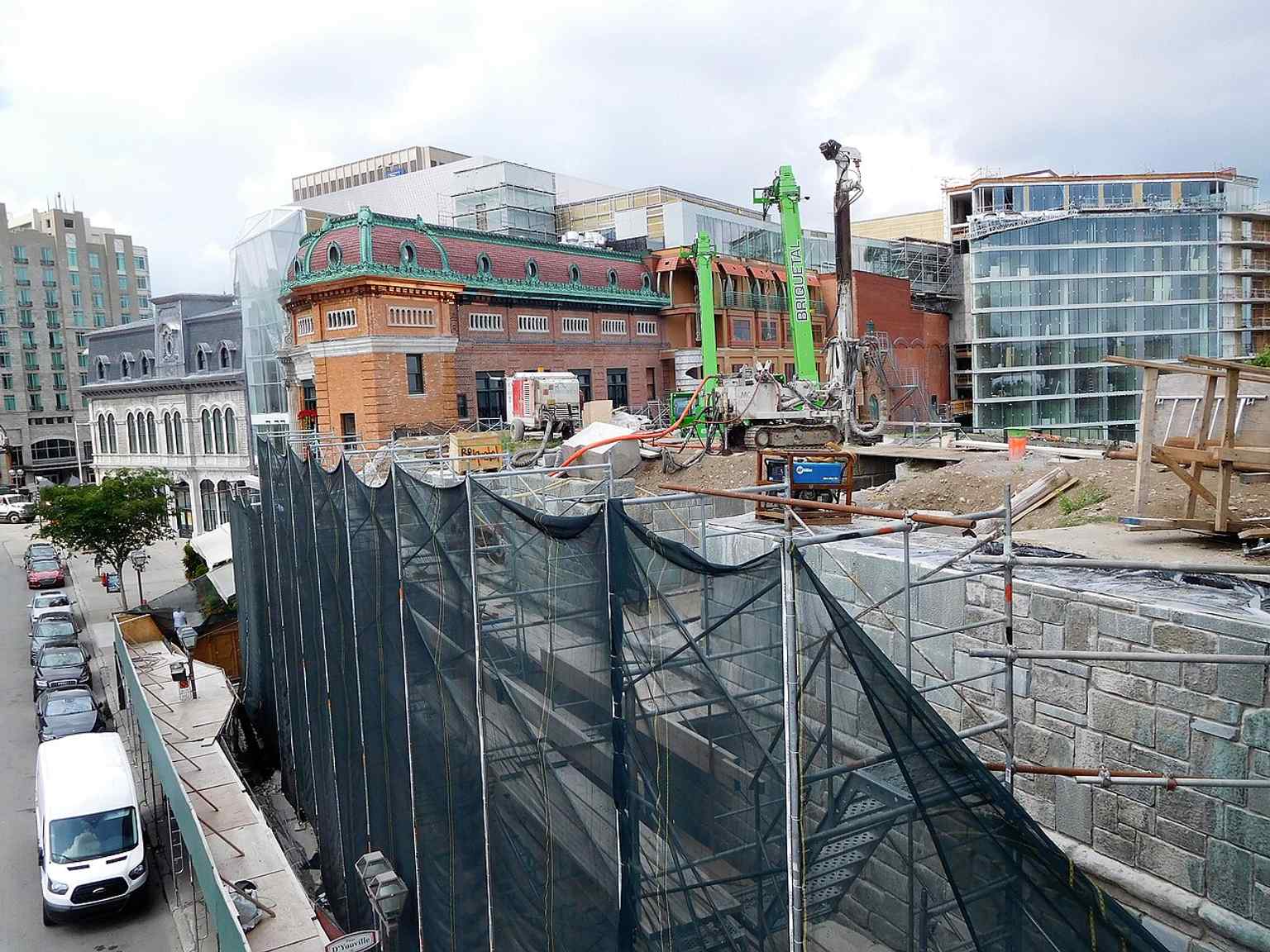
The Capitole seen from Porte Saint-Jean during construction work nearby, underscoring its setting beside the old fortifications.Photo: Jeangagnon, Wikimedia Commons, CC BY-SA 4.0. Cropped & resized. In front of you, a long gray stone wall with angled ramparts and a broad grassy edge draws a hard line around the Upper Town. This is power and memory in stone. These walls are…Read moreShow less
Open dedicated page →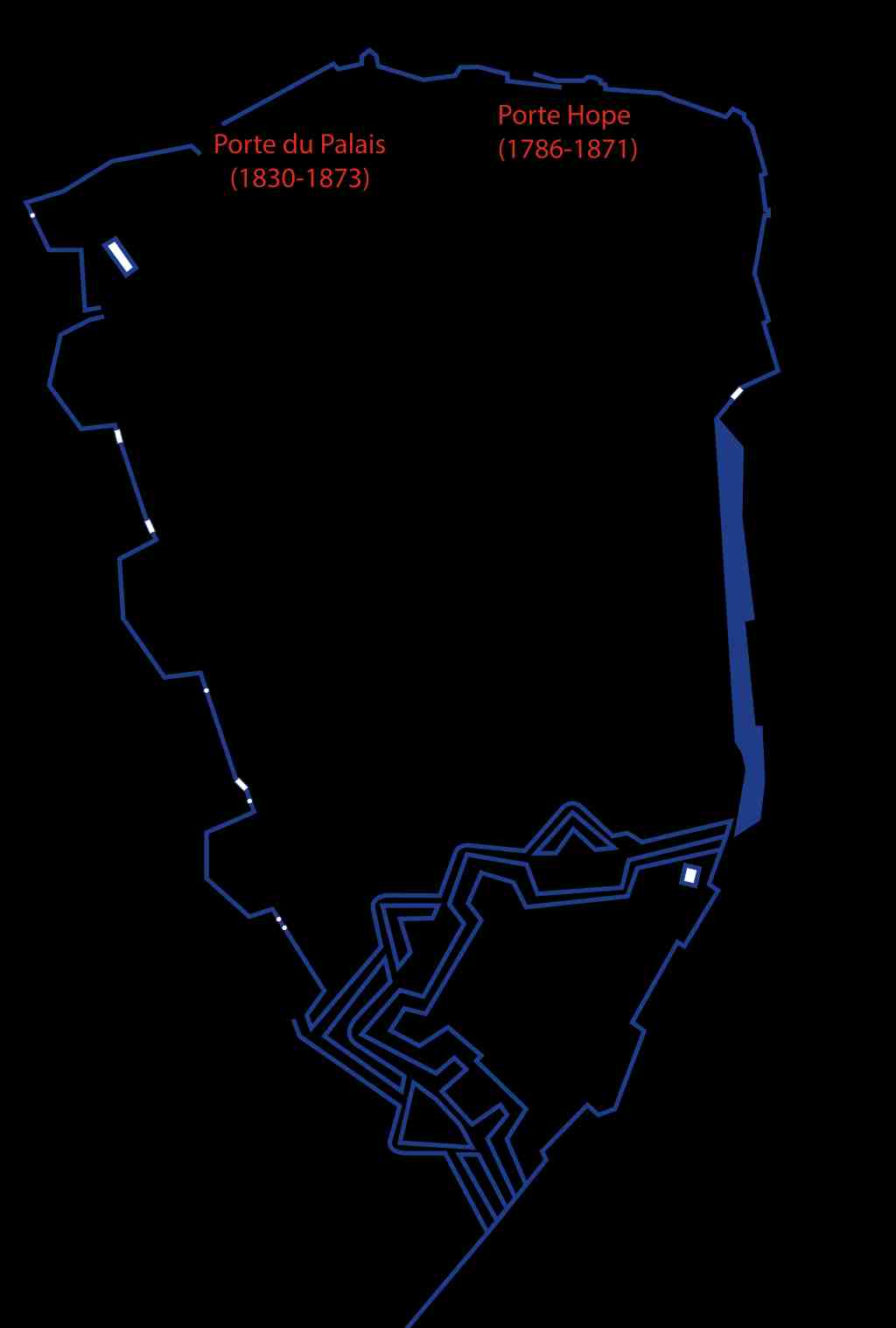
Quebec fortificationsPhoto: Judicieux, Wikimedia Commons, CC BY-SA 4.0. Cropped & resized. In front of you, a long gray stone wall with angled ramparts and a broad grassy edge draws a hard line around the Upper Town.
This is power and memory in stone. These walls are not just old masonry; they are a built argument about who gets protected, who gets watched, and what a city decides is worth saving. In the theater district, buildings asked to be seen. Here, the city answered with something larger and less charming: control.
The alarm bell rang in sixteen ninety, when Admiral Phips and a New England fleet attacked Québec and got pushed back. That scare taught the city a blunt lesson: openness was dangerous. Count Frontenac ordered a rushed first enclosure, with eleven redoubts, meaning small defensive strongpoints, linked by palisades to block an attack from the Heights of Abraham.
That emergency fix did not settle much. In sixteen ninety-three, Josué Dubois Berthelot de Beaucours replaced it with a more formal line. Then, in seventeen oh one, Jacques Levasseur de Néré drew up a grand plan approved in France. On paper, it looked coherent. On the ground, Québec turned into a giant construction site full of disconnected works, half-finished ideas, and imperial hesitation. Bureaucracy, it turns out, can be as effective as enemy cannon.
Real stone closure came in seventeen forty-five, after the fall of Louisbourg caused panic. Governor Beauharnois gave Gaspard-Joseph Chaussegros de Léry the go-ahead to wrap the western side in full masonry. If you want to understand the shape of Old Québec, start there: fear gave the city its outline.
If you check the aerial on your screen, you can see how the fortifications almost cinch the Upper Town shut, turning geography into strategy. And strategy kept evolving. After the British conquest, engineer Gother Mann repaired the old French defenses and added outer works between seventeen eighty-six and eighteen twelve: ravelins, which are triangular outworks, plus other layers meant to slow an attacker before they ever reached the main wall. He was not merely patching stone. He was planning for roads, river routes, and the possibility of conflict with the United States.
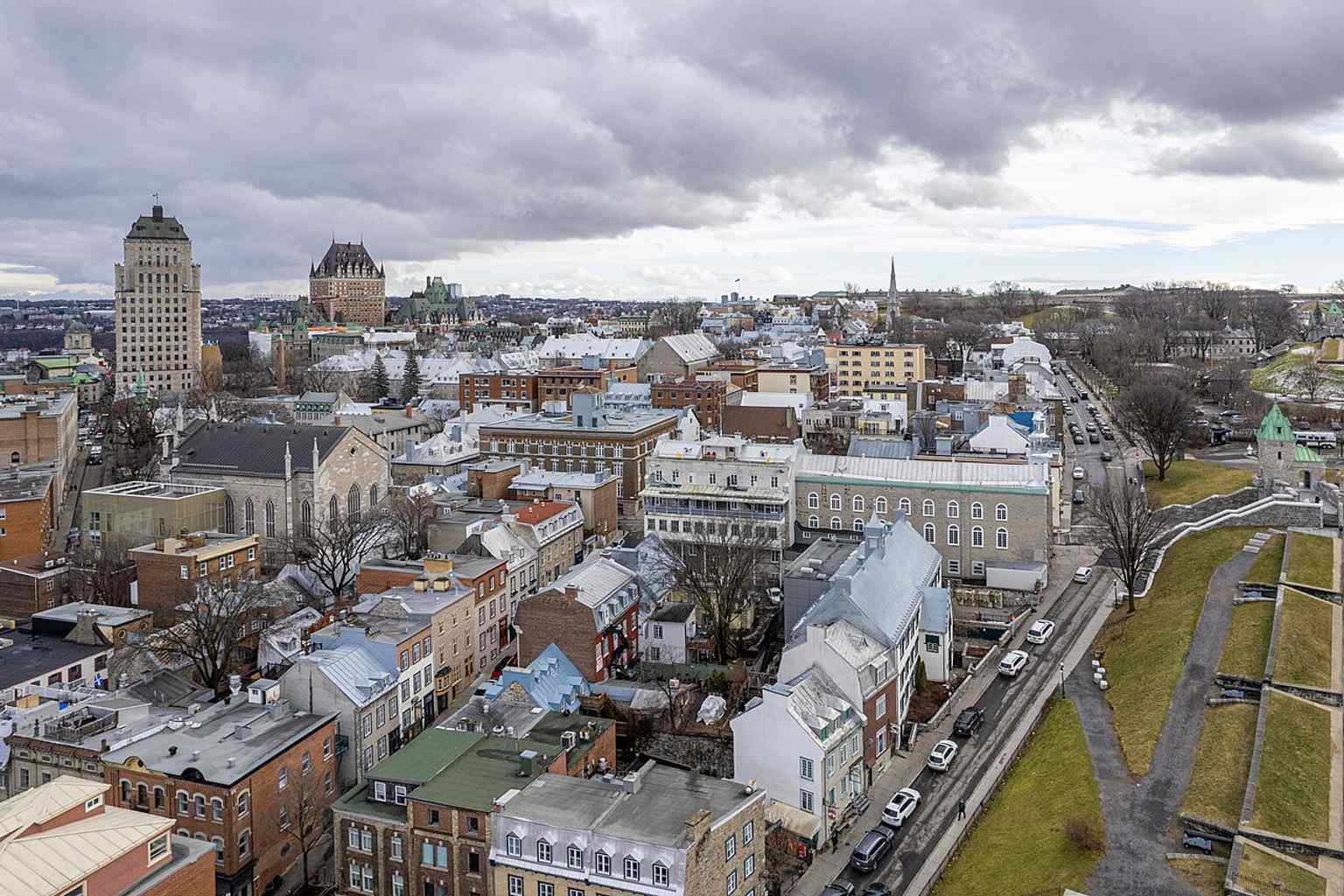
A sweeping aerial of Old Quebec showing the fortifications encircling the Upper Town, matching the site’s role as a city-wide defensive system.Photo: Gabriel Picard, Wikimedia Commons, CC BY-SA 4.0. Cropped & resized. The British pushed that logic further with the Martello towers, finished in eighteen twelve after Governor James Henry Craig started the project without waiting for London’s permission. Then Elias Walker Durnford oversaw the star-shaped Citadelle between eighteen twenty and eighteen thirty-one, folding part of the French wall into a larger British fortress.
And then the twist. In eighteen seventy-one, the British army left. The old gates suddenly looked less heroic and more inconvenient, so the city demolished them as obstacles to traffic. A later governor-general stepped in and argued that Québec should not bulldoze its own identity. He pushed for new, wider, more ornamental gates and a raised promenade, preserving the walls while adapting them to a modern city. You can see that compromise in one of the rebuilt gates on your screen.
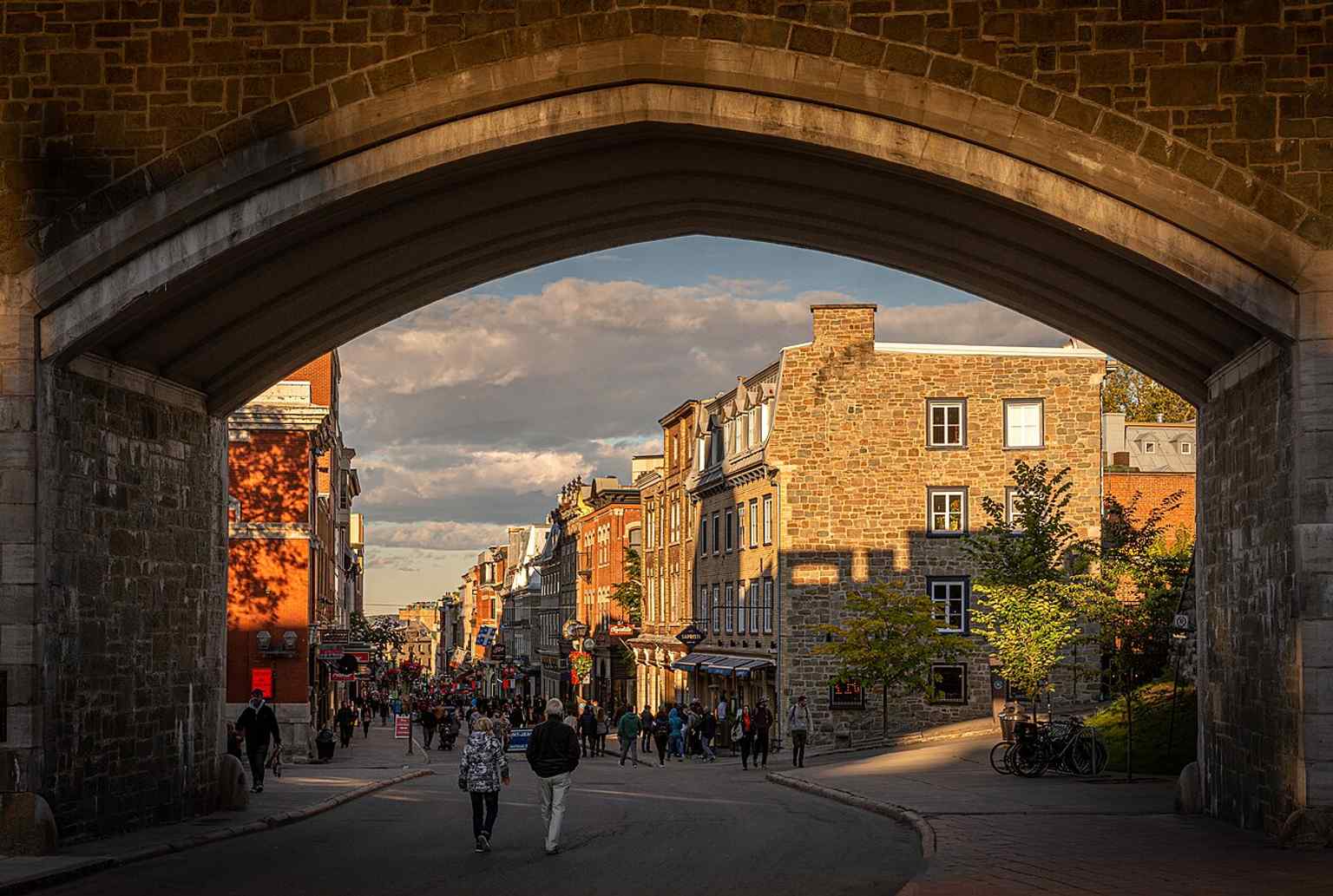
Saint-Jean Gate is one of the reconstructed monumental gates preserved after Lord Dufferin’s intervention in the 1870s.Photo: Wilfredor, Wikimedia Commons, CC0. Cropped & resized. Before you head on, trace the line of the fortifications with your eyes and imagine them not as scenery, but as an urgent answer to danger. Without them, Québec would look different, move differently, maybe even remember itself differently.
That is the strange afterlife of walls: the fear fades, but the stone stays... and later generations give it a new job. In about six minutes, we’ll carry that story indoors at the Morrin Centre, where authority takes a more intimate form.
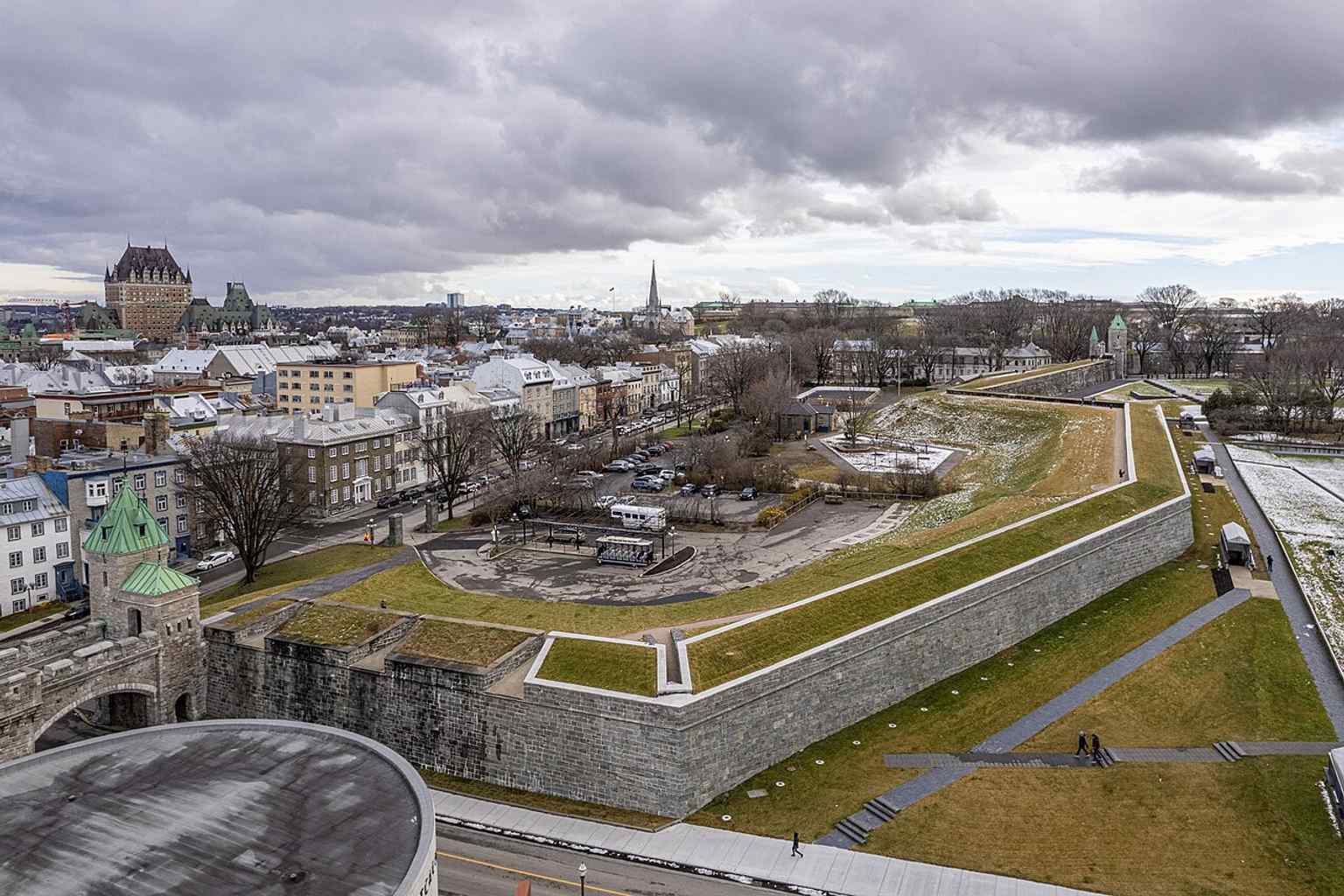
An aerial view of Esplanade Park and the ramparts, linking the walls to the military grounds that grew around them in the 18th and 19th centuries.Photo: Gabriel Picard, Wikimedia Commons, CC BY-SA 4.0. Cropped & resized. 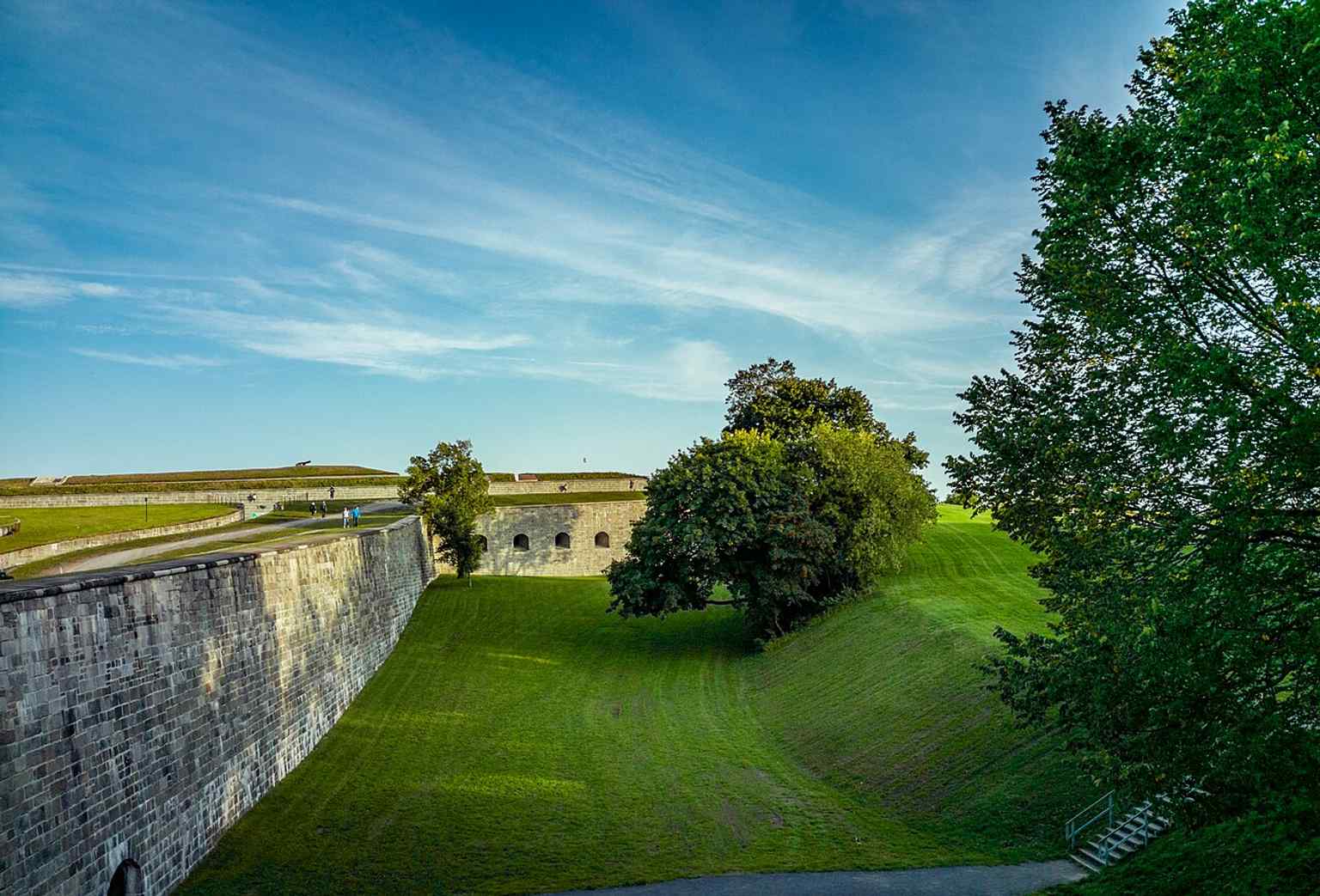
A clear exterior of the fortifications in the city, useful for showing how the walls still define the edge of Old Quebec.Photo: Wilfredor, Wikimedia Commons, CC BY-SA 4.0. Cropped & resized. 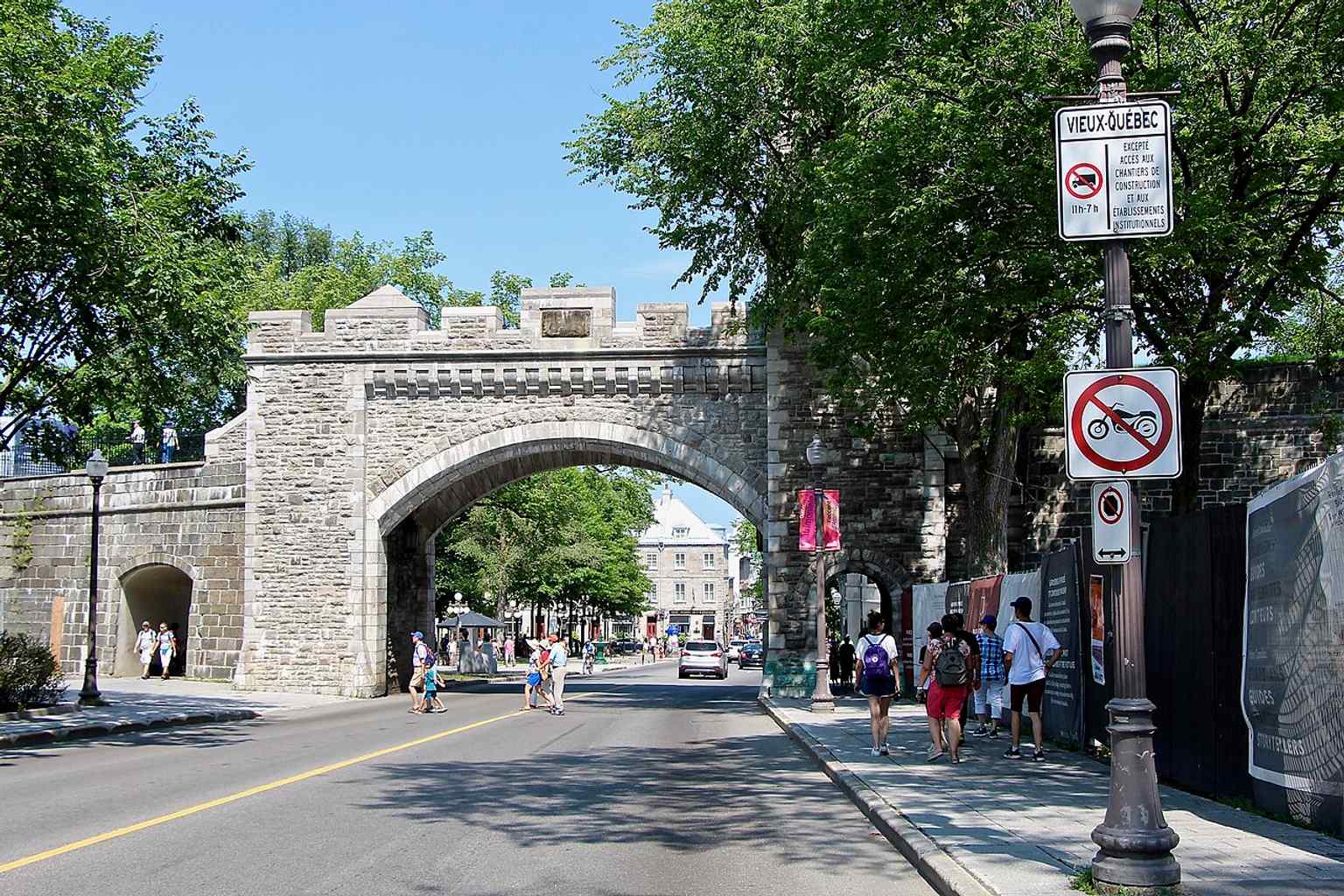
Saint-Louis Gate on St. Louis Street highlights the rebuilt city gates that replaced the older, narrower openings demolished in 1871.Photo: Thomas1313, Wikimedia Commons, CC BY-SA 4.0. Cropped & resized. 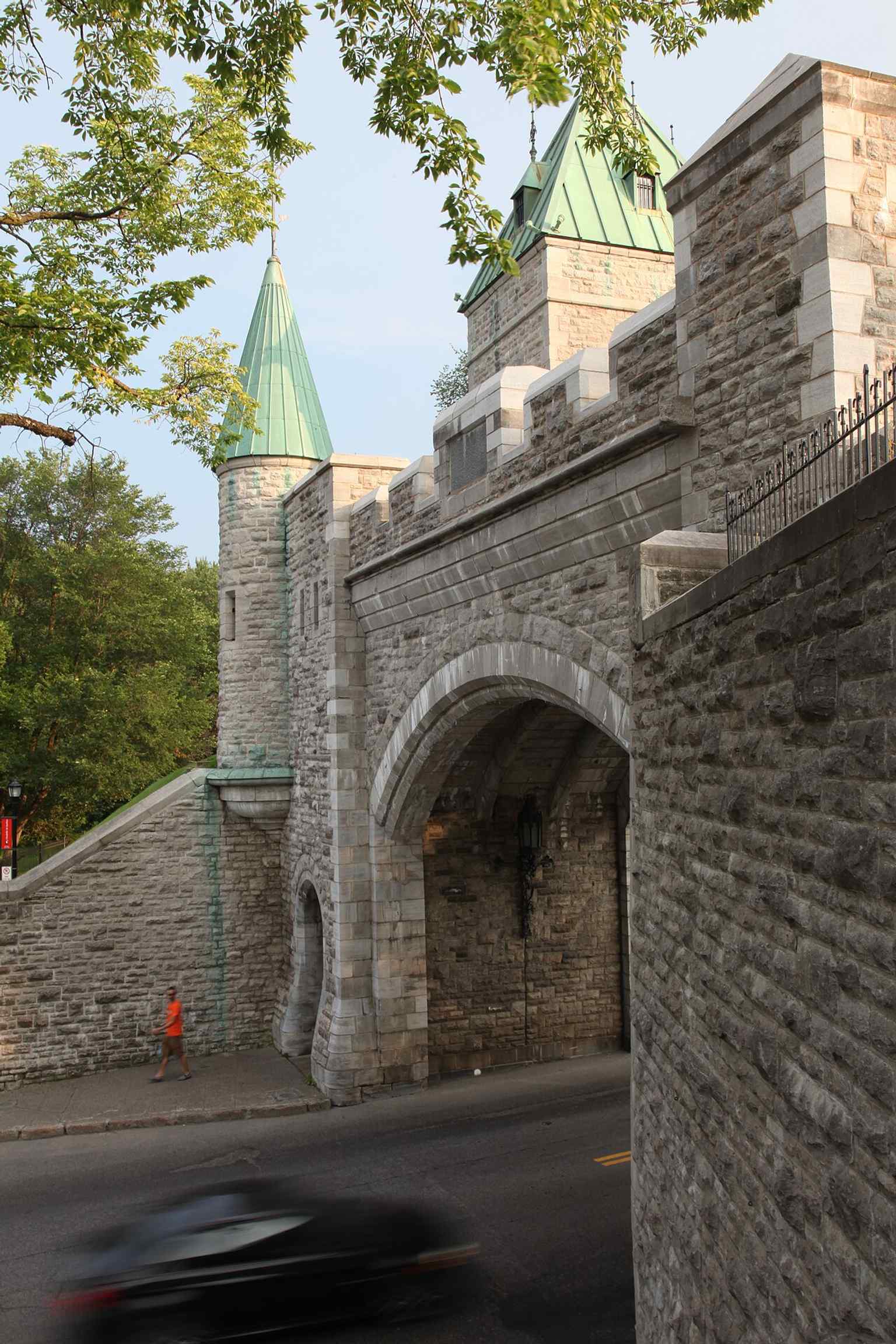
Porte Saint-Louis beside the historic site’s signage connects the gate to the wider Fortifications National Historic Site and its many linked defense structures.Photo: Marc-Lautenbacher, Wikimedia Commons, CC BY-SA 4.0. Cropped & resized. 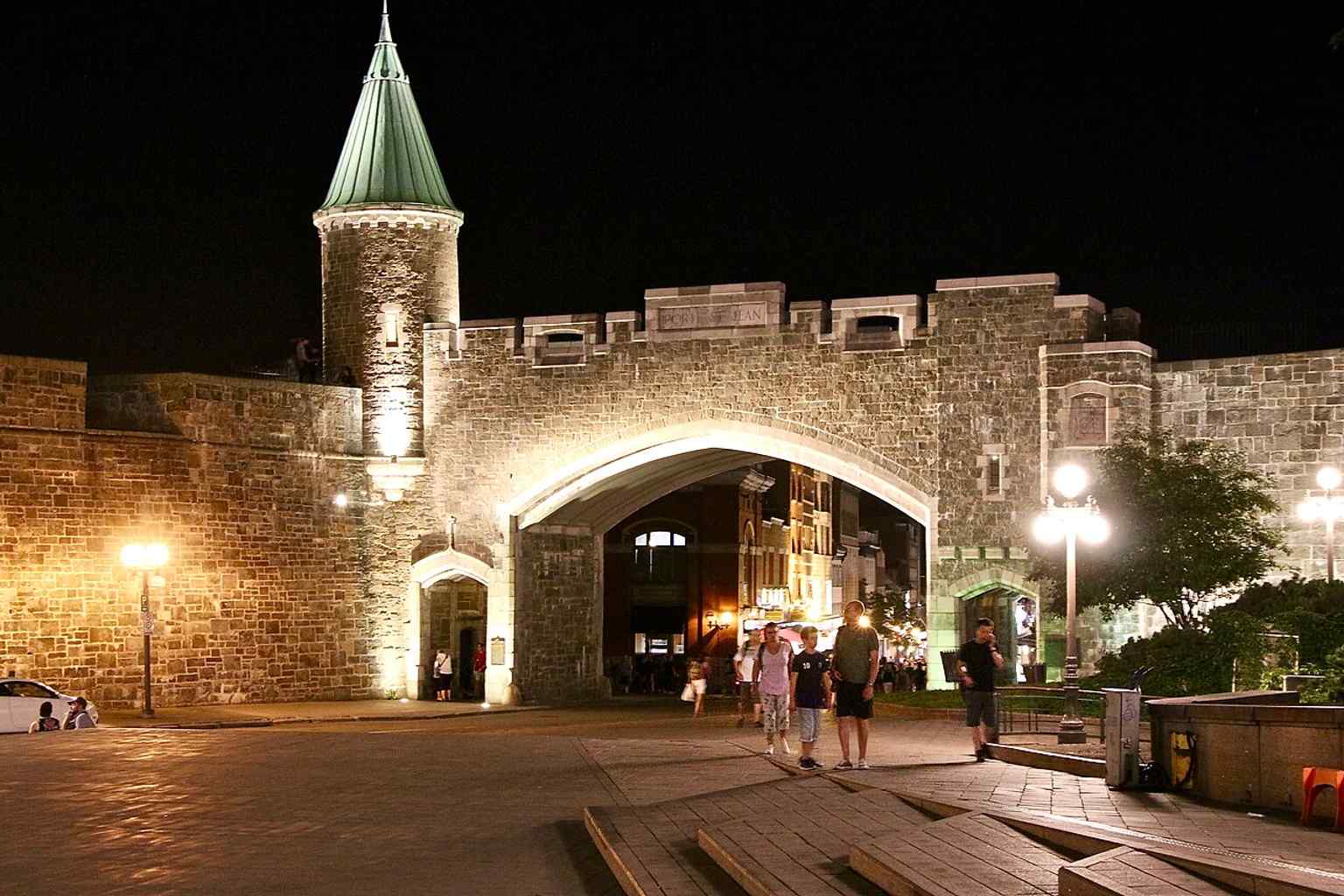
A modern view of Porte Saint-Jean, one of the four historic gates and a key landmark in the defensive ring around the Haute-Ville.Photo: Thomas1313, Wikimedia Commons, CC BY-SA 4.0. Cropped & resized. 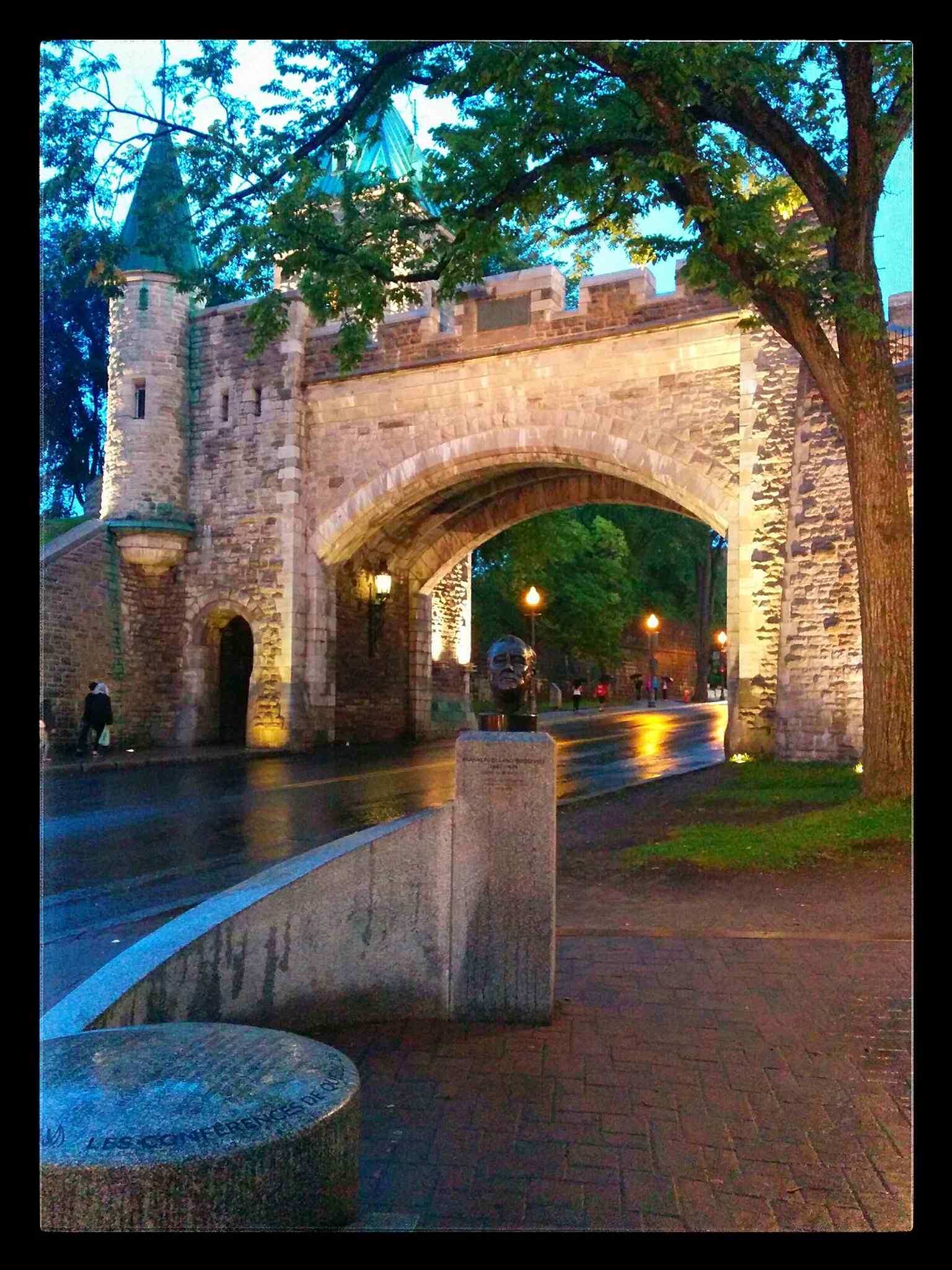
Inside Saint-Louis Gate, a look at the passage through the fortifications that once controlled movement into the walled city.Photo: Slashkari, Wikimedia Commons, CC BY-SA 3.0. Cropped & resized. 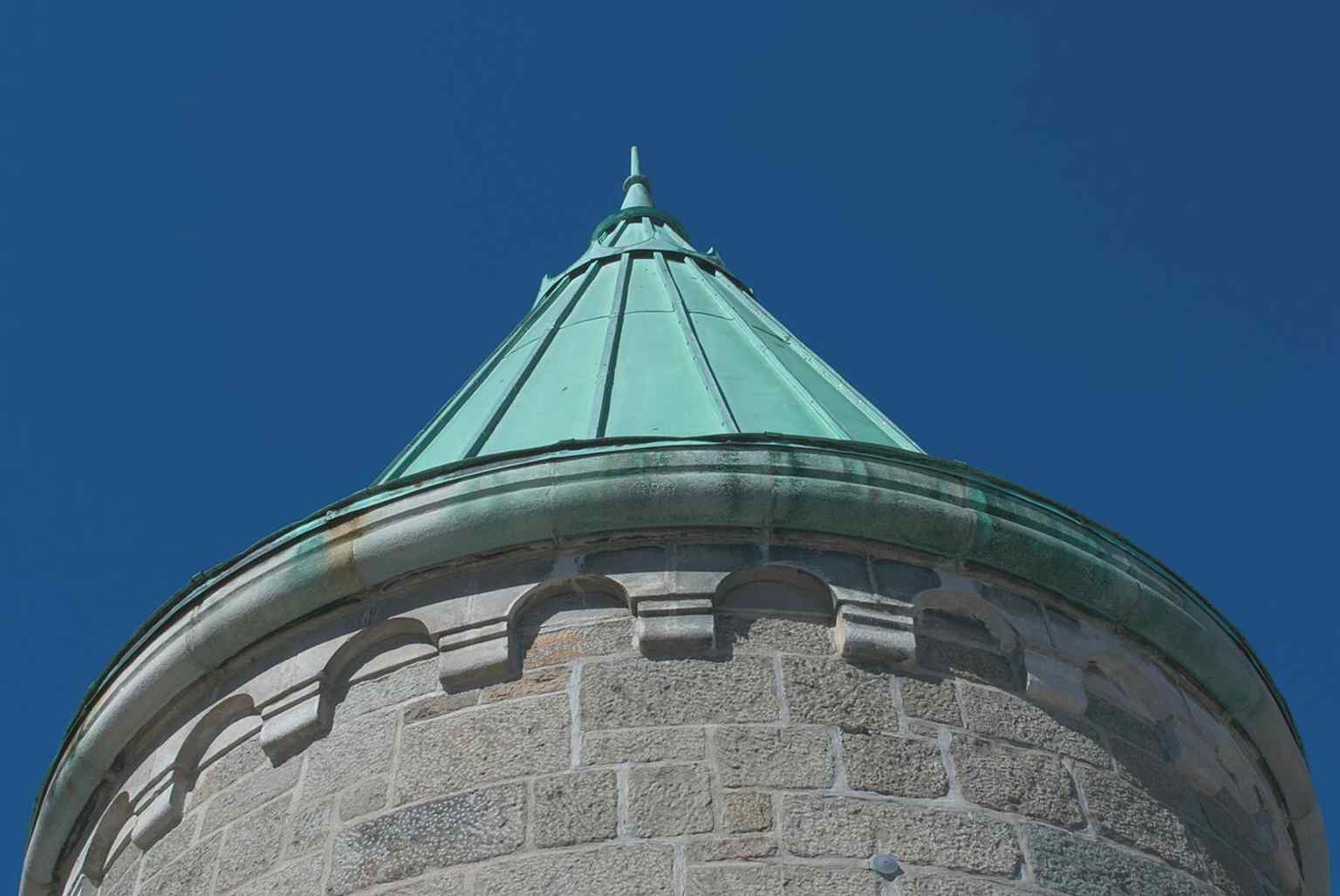
A close view of the Saint-Jean Gate tower, useful for highlighting the gate’s fortified architecture rather than just its street façade.Photo: Regmalo, Wikimedia Commons, CC BY-SA 3.0. Cropped & resized. 
Esplanade Park sits within the broader defense landscape, reflecting how artillery grounds and military spaces were integrated into the fortifications.Photo: Wilfredor, Wikimedia Commons, CC BY-SA 4.0. Cropped & resized. 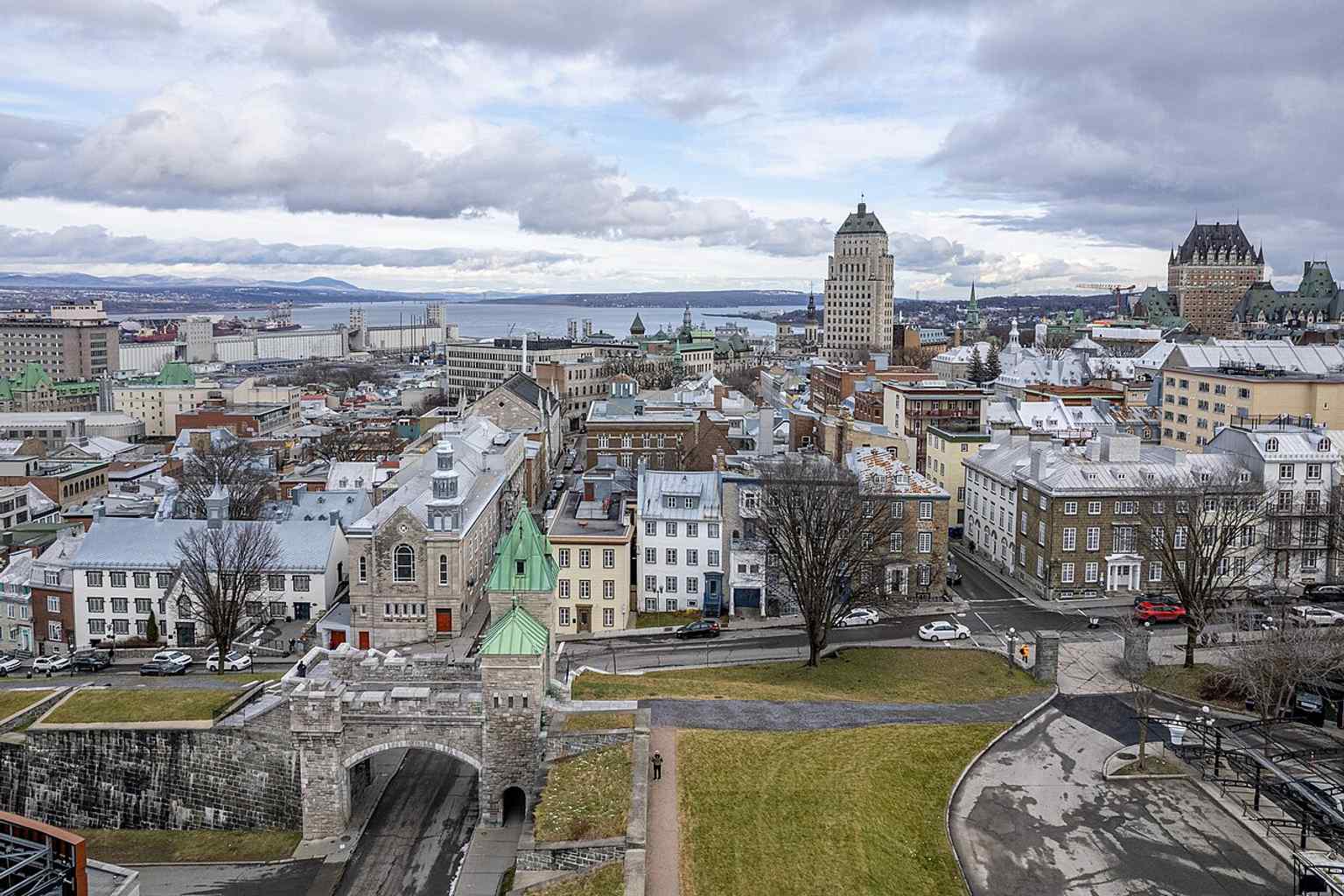
An aerial view of Old Quebec near Kent Gate and Dauphine Street, showing how the fortifications weave through the historic street pattern.Photo: Gabriel Picard, Wikimedia Commons, CC BY-SA 4.0. Cropped & resized.
Show 10 more stopsShow fewer stopsexpand_moreexpand_less
On your left, the Morrin Centre is a solid gray-stone block with a strict rectangular façade, tall sash windows in neat rows, and a small triangular pediment centered above the…Read moreShow less
Open dedicated page →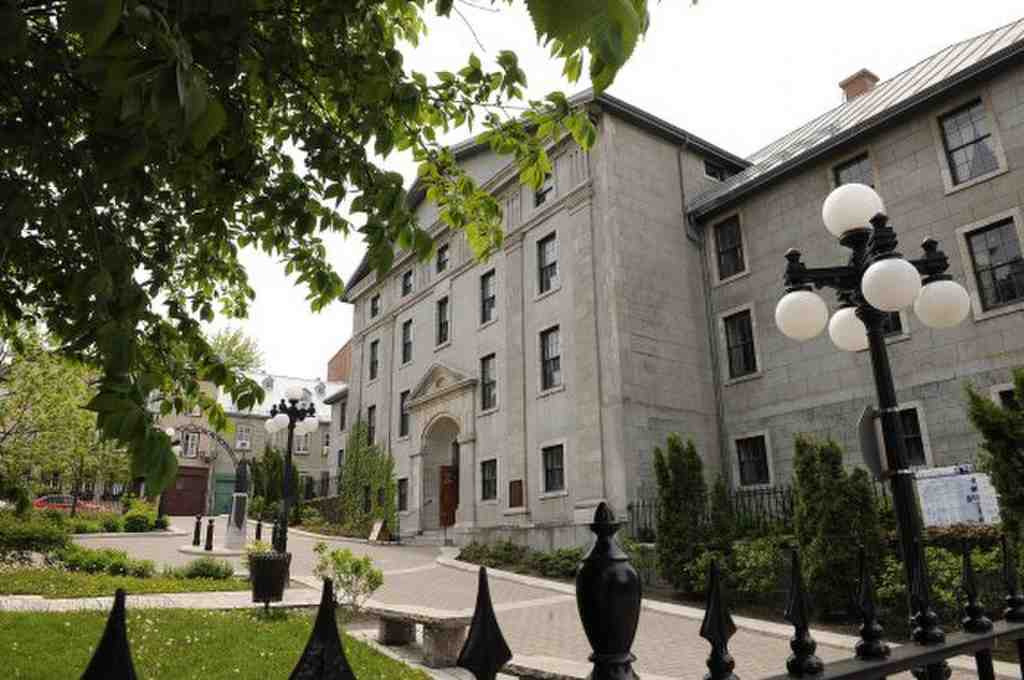
Morrin CentrePhoto: Morrin Centre, Wikimedia Commons, CC BY-SA 3.0. Cropped & resized. On your left, the Morrin Centre is a solid gray-stone block with a strict rectangular façade, tall sash windows in neat rows, and a small triangular pediment centered above the doorway.
This calm, almost scholarly front hides a dramatic career change. Long before it became a library and cultural centre, this was the Royal Redoubt site - first a military post, then a wartime detention ground. In the seventeen forties, British prisoners captured in raids on New England were crowded in here so tightly that disease spread fast and many died. One of those captives, Esther Wheelwright, remained in Quebec and later became mother superior of the Ursuline Nuns. Cities have a talent for turning captivity into unexpected biography.
Then, in eighteen twelve, Quebec built its common jail here, one of the first two prisons in Canada shaped by British reform ideas. The theory came from John Howard: disciplined order through design, with separate cells, hard labour, and education meant to correct the prisoner. Neat theory. Real life ignored the plan. The jail soon overflowed with people arrested for vagrancy, public drunkenness, and prostitution, and the idea of separating inmates by offense gave way to simple crowd control.
And here is the detail most people miss when they look at that front door. It once served as a public theatre of terror. Sixteen men were hanged in front of this jail, and all but one of those executions took place before eighteen forty. Some hangings used an iron balcony built for the purpose. So this entrance did not just regulate who went in... it displayed punishment as a civic performance.
If a place can move from punishment to learning, does that redeem it... or make its older scars even harder to ignore?
After the prison moved in eighteen sixty-seven, architect Joseph-Ferdinand Peachy softened the building for Morrin College. He stripped away some of its harsher features, including four rear latrine towers, and by eighteen sixty-eight the place had turned toward education. In eighteen eighty-five, the college admitted women to its Bachelor of Arts program - roughly when McGill did, and decades before Université Laval. If you glance at the image in the app, the interior shows that later reinvention beautifully: scholarship layered over confinement.
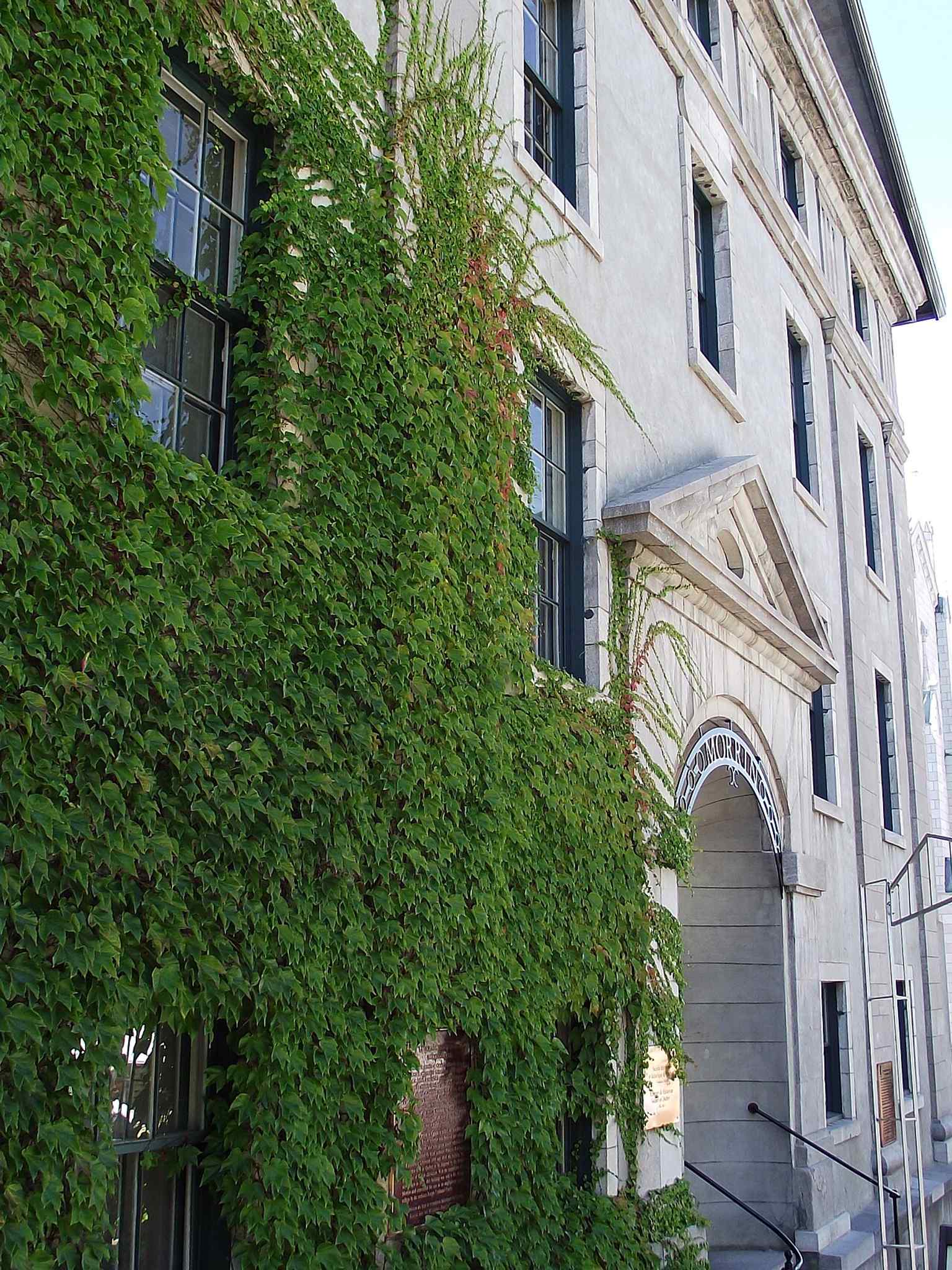
An interior view that helps show the building’s adaptive reuse after the prison era, when it was transformed for education and scholarship.Photo: Sylvainbrousseau, Wikimedia Commons, CC BY-SA 3.0. Cropped & resized. The Literary and Historical Society of Quebec, founded in eighteen twenty-four by Governor General Lord Dalhousie, has kept its English-language library here since eighteen sixty-eight. Today the building preserves books, archives, and more than eight hundred donated objects from local English-speaking families. It is now a National Historic Site, which feels fitting for a place that held soldiers, prisoners, students, and readers in turn.
That is the unsettling thing about this corner of Quebec: public culture and public punishment once occupied the same civic ground. In about four minutes, the Cathedral of the Holy Trinity will show you another version of authority, dressed in stone and ritual. If you want to come back inside later, the Morrin Centre is open daily from ten A-M to four P-M.
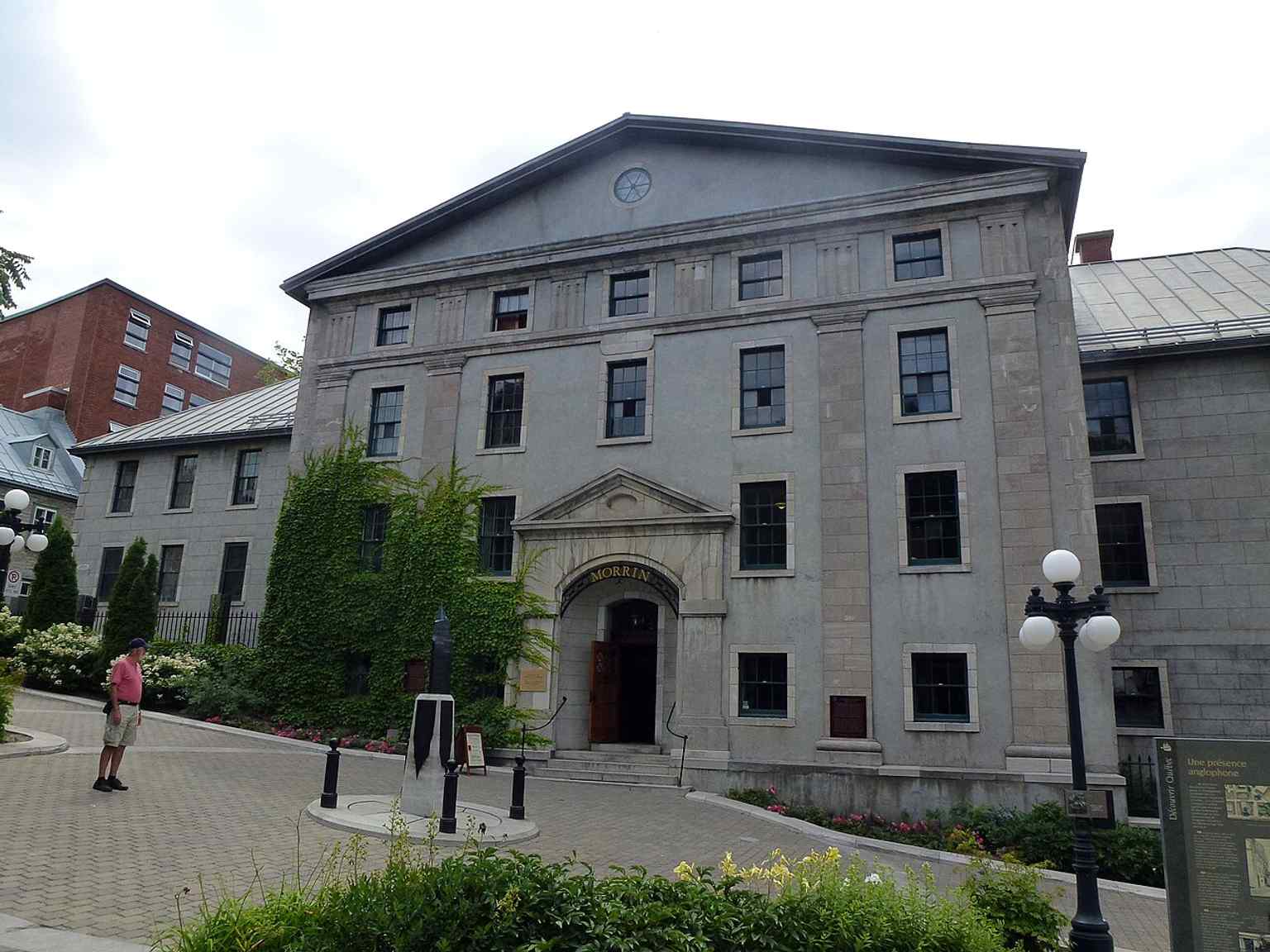
Front view of Morrin Centre, the former gaol that later became Morrin College and today houses the English-language library.Photo: Huguette Dion, Wikimedia Commons, CC BY-SA 3.0. Cropped & resized. 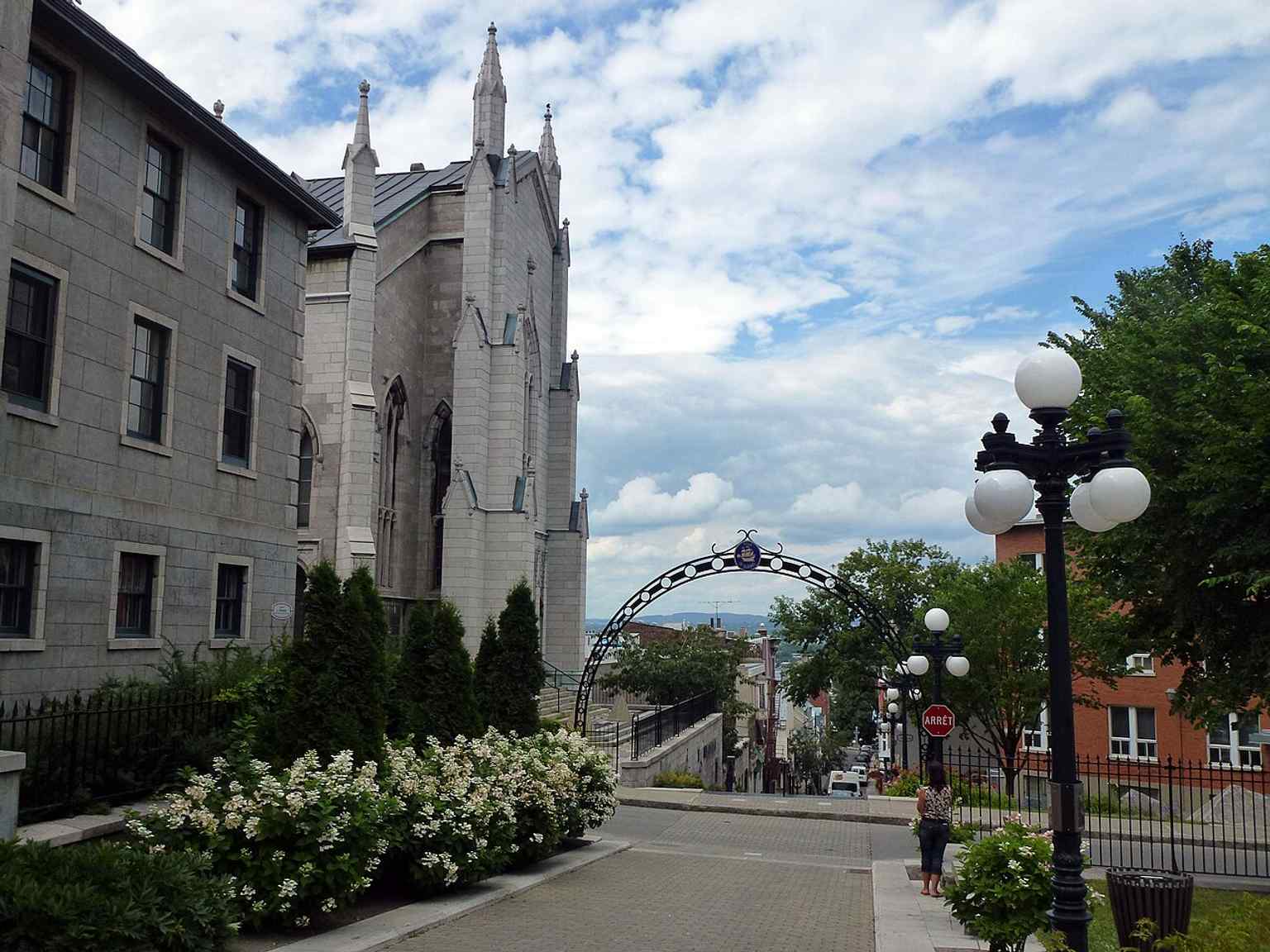
The building from Rue Chaussée des Écossais, showing the old prison site in Quebec City’s historic centre.Photo: Huguette Dion, Wikimedia Commons, CC BY-SA 3.0. Cropped & resized. 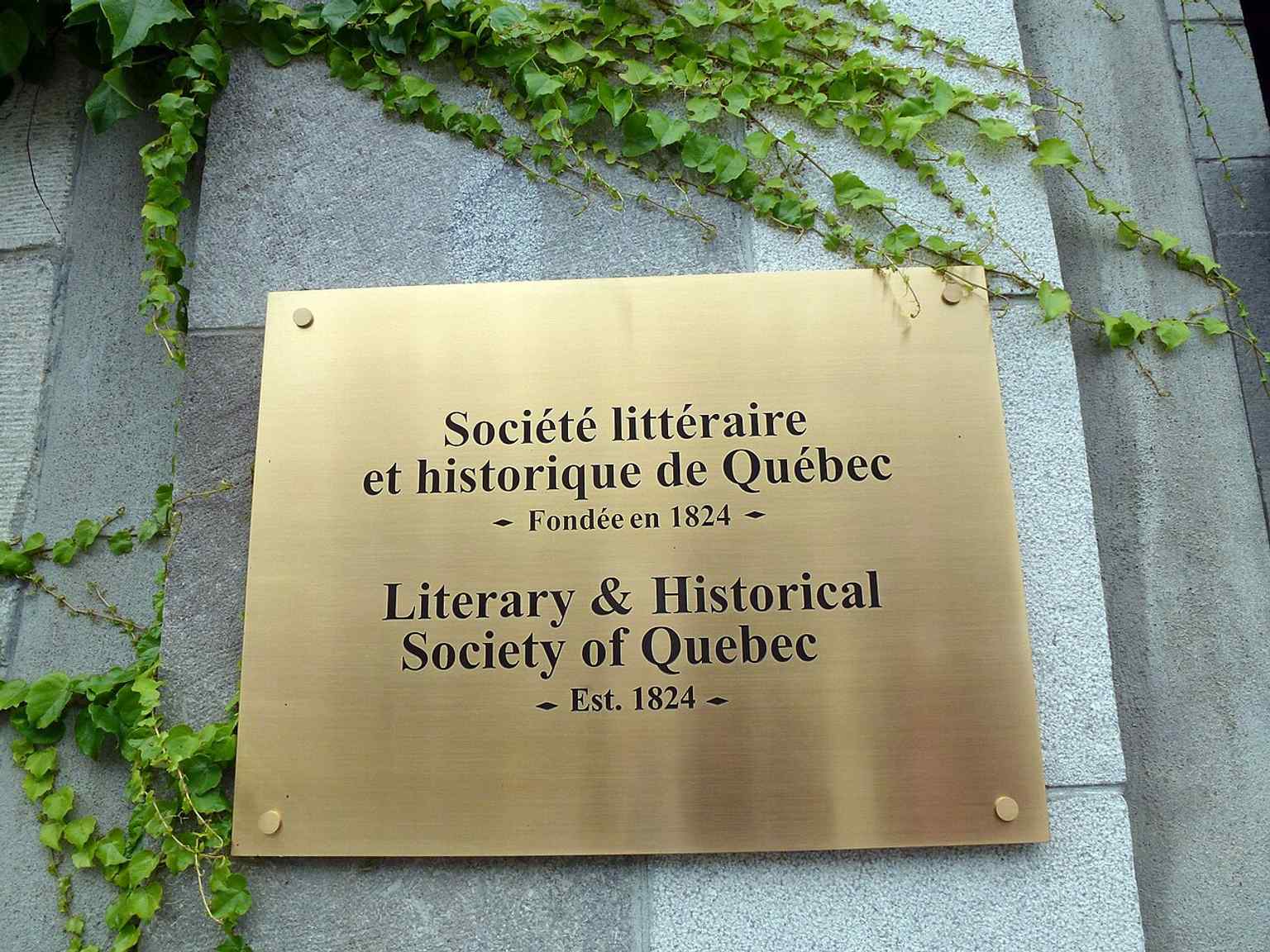
The Morrin Centre identification plaque, marking the site’s layered history as a prison, college, and literary society home.Photo: Huguette Dion, Wikimedia Commons, CC BY-SA 3.0. Cropped & resized. 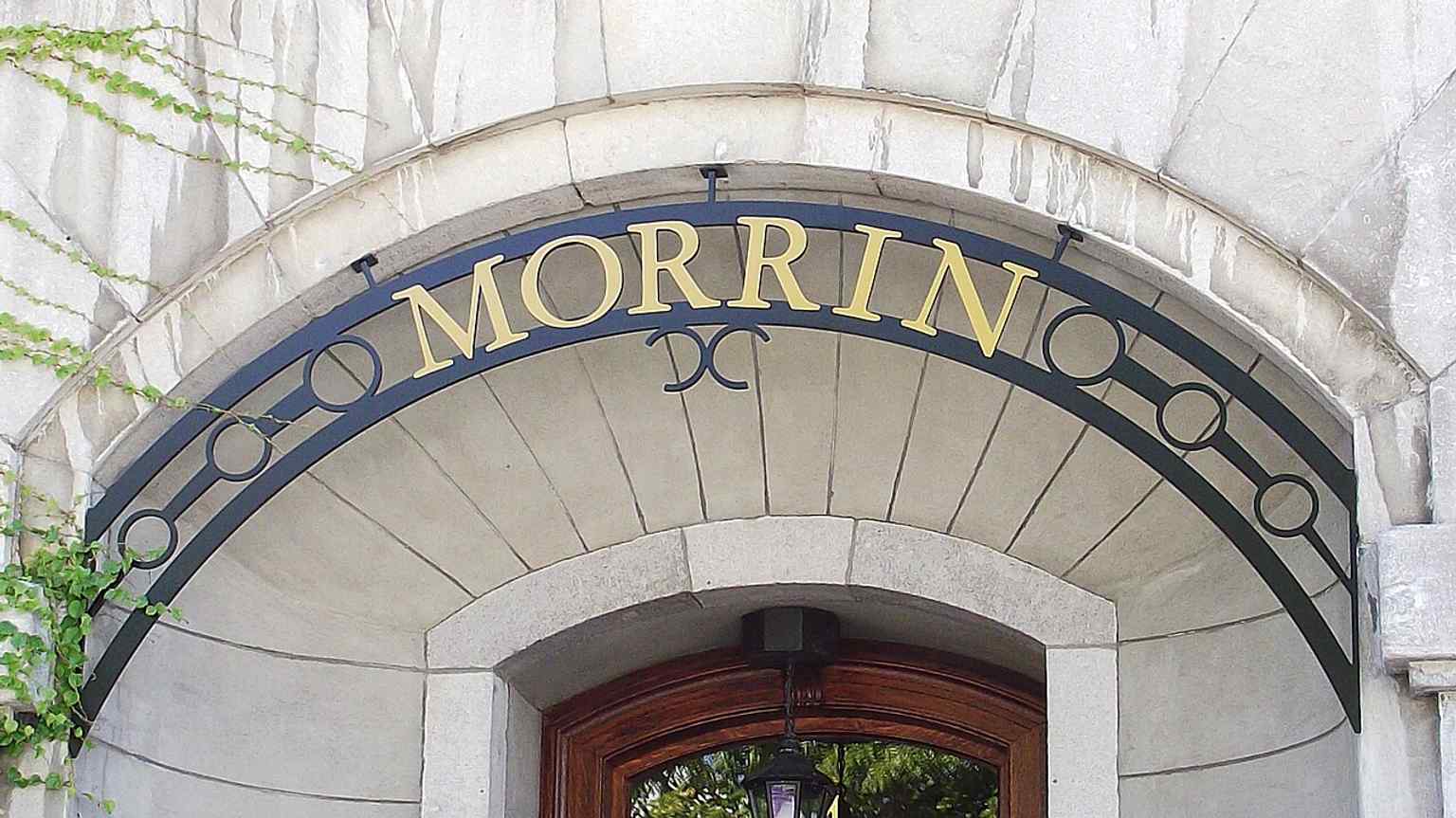
A clear exterior view of Morrin Centre, the National Historic Site that was once the Quebec common gaol.Photo: Sylvainbrousseau, Wikimedia Commons, CC BY-SA 3.0. Cropped & resized. 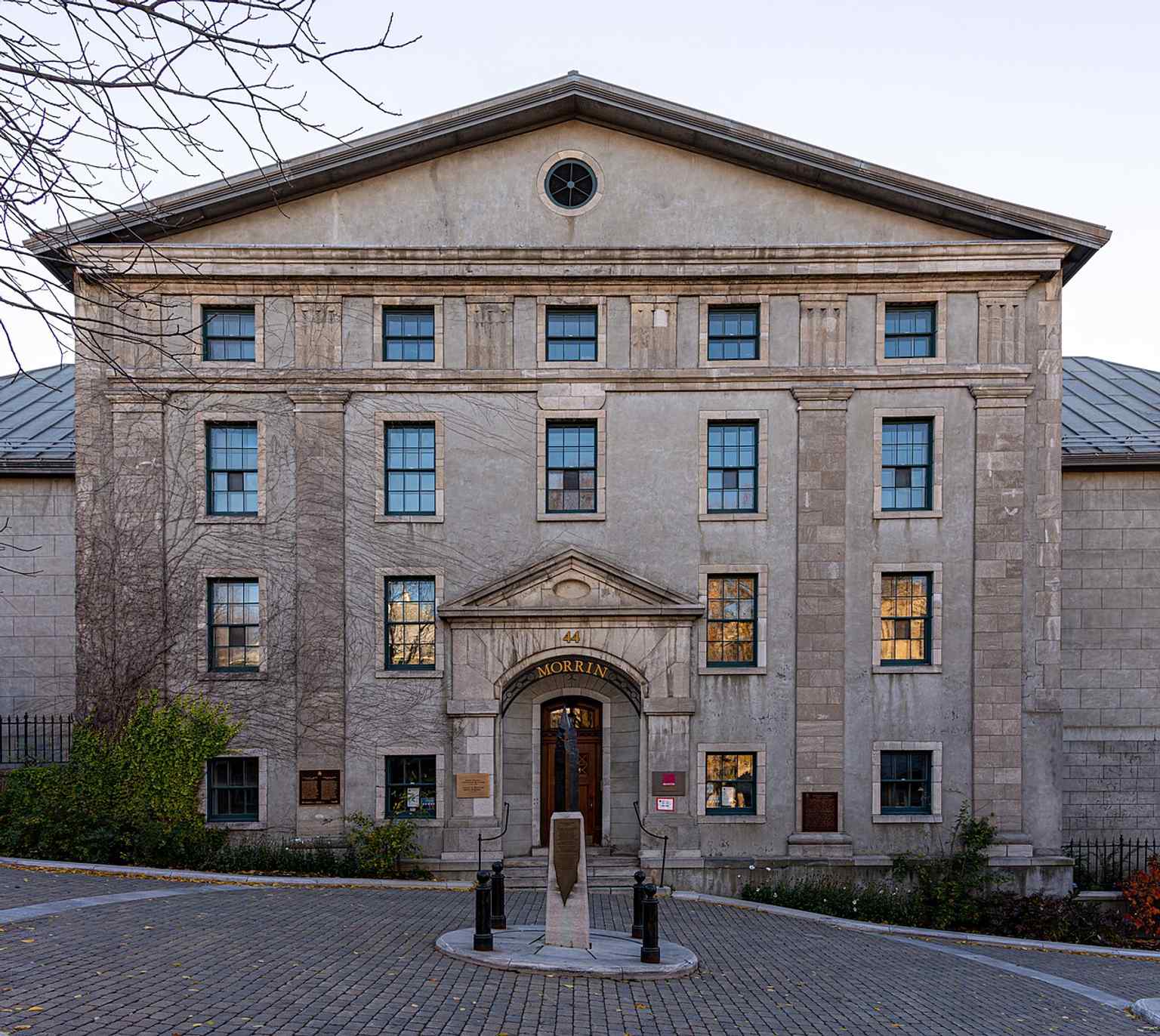
Modern exterior of the Morrin Centre in Old Quebec, now a cultural centre for the city’s English-speaking community.Photo: Wilfredor, Wikimedia Commons, CC0. Cropped & resized. On your right, the Cathedral of the Holy Trinity is a pale stone church with a balanced rectangular front, a tall central bell tower, and a restrained classical portico that feels…Read moreShow less
Open dedicated page →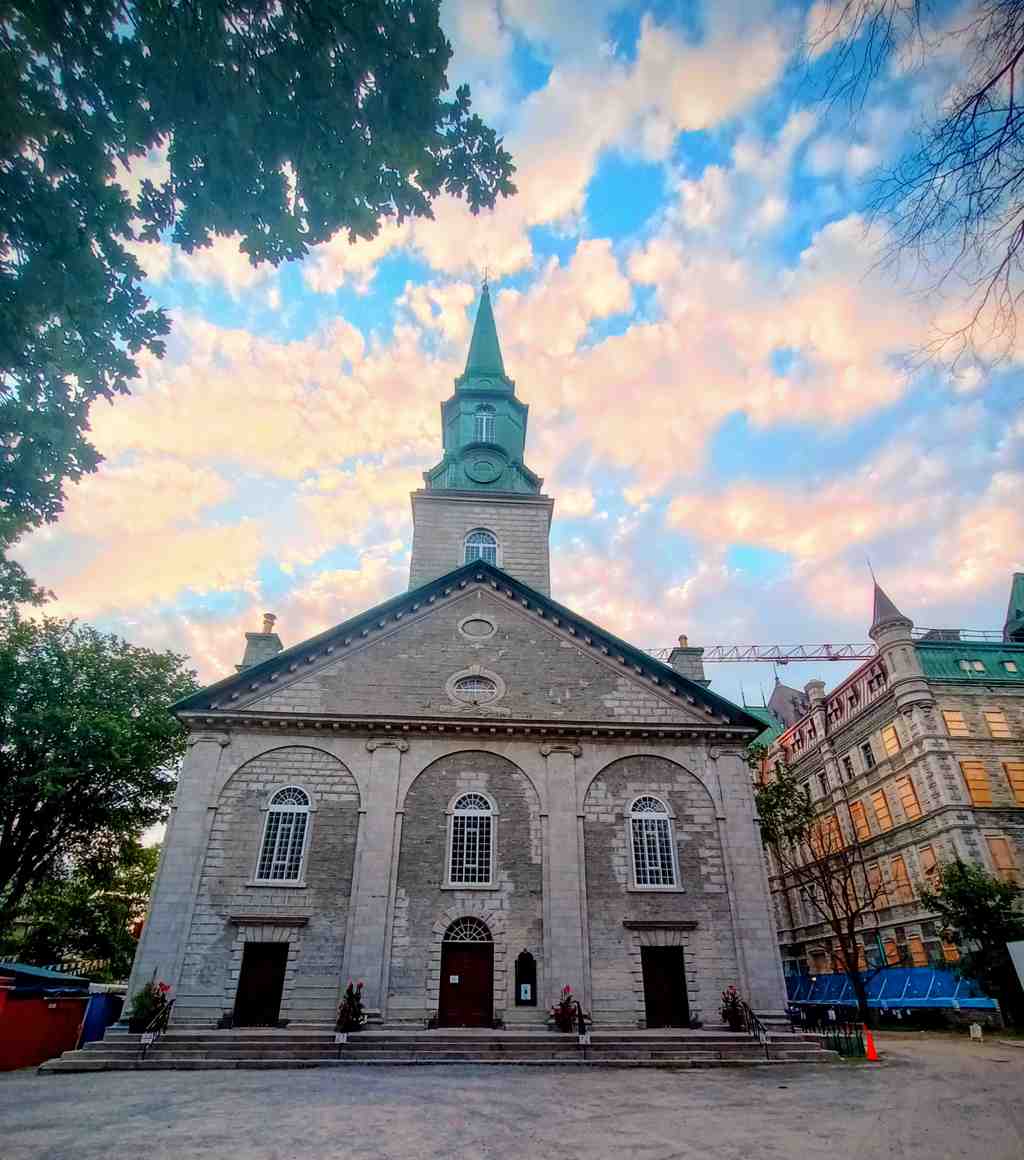
Cathedral of the Holy Trinity (Quebec)Photo: Dpalma01, Wikimedia Commons, CC BY-SA 4.0. Cropped & resized. On your right, the Cathedral of the Holy Trinity is a pale stone church with a balanced rectangular front, a tall central bell tower, and a restrained classical portico that feels more London than New France.
This cathedral does more than pray... it declares. When Bishop Jacob Mountain arrived as the first Anglican bishop of Quebec in the seventeen nineties, he wanted a cathedral that would give the Church of England real stature in the colonial capital. Before a single stone went up, the project already carried political weight: Crown letters patent in seventeen ninety-nine authorized it, and Mountain pushed hard for a building grand enough to say that British power intended to stay.
Military officers William Robe and William Hall designed it, and workers raised it between eighteen hundred and eighteen oh four on the former Récollet site. That choice mattered. In this city, new authority rarely starts from scratch; it usually steps onto older ground and makes its case in stone. When the cathedral was consecrated in eighteen oh four, it became the first Anglican cathedral built outside the British Isles. Not subtle.
If you glance at the image in the app, you can see that calm, measured façade. Its style is called Palladian, a classical design language built on symmetry and proportion, modeled here on London churches like Saint Martin-in-the-Fields. King George the Third paid for construction and even supplied a folio Bible, large prayer books, and communion silver. So the bond to the Crown was not metaphorical... it arrived in crates.
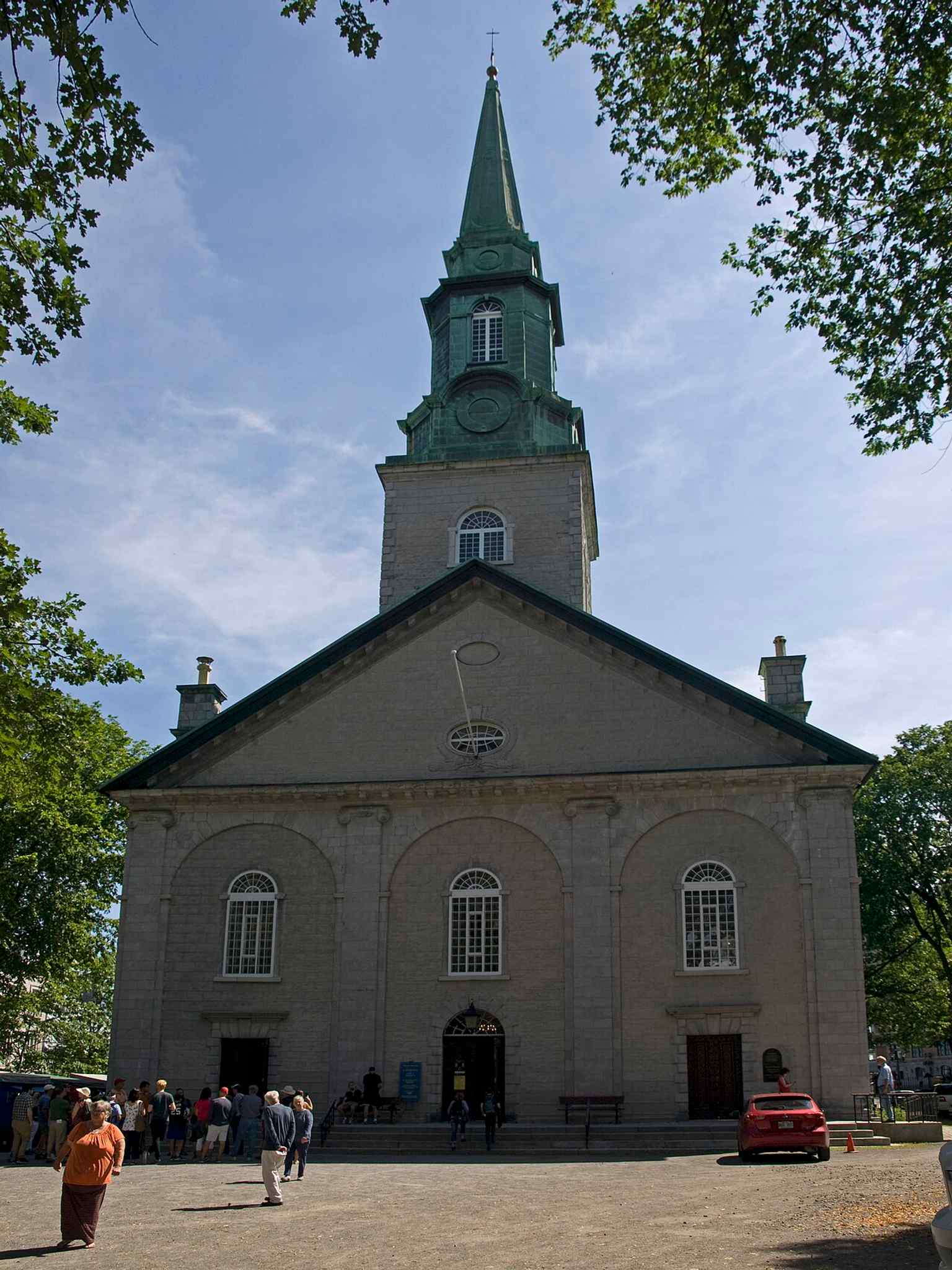
The main façade shows the cathedral’s simple Palladian style, modeled on London churches and funded by King George III.Photo: Ymblanter, Wikimedia Commons, CC BY-SA 4.0. Cropped & resized. Inside, the arrangement continued the message. There is a Royal Pew, a reserved seat for the monarch or the monarch’s representative, because even worship could double as imperial theater. And here’s the detail locals quietly point out: Bishop Jacob Mountain did not just champion this place. He lies beneath the chancel, the space around the altar at the east end. He quite literally claimed the ground of the cathedral he fought to establish.
The tower rises about one hundred fifty-four feet and still holds eight bells cast by the Whitechapel Bell Foundry in eighteen thirty, the oldest change-ringing peal in Canada. Change-ringing means ringing bells in shifting mathematical patterns rather than simple melodies. Those bells left for London in two thousand and six for retuning, then came home in two thousand and seven... heritage rescue with a very musical accent.
If you look at the memorial image on your screen, you’ll catch how this church also stores remembrance, not just ritual. That matters here in Place d’Armes, where sacred space, civic display, and authority all lean on one another. In about two minutes, we’ll step into the square itself and watch those worlds meet in the open. If you want to return later, the cathedral is generally open daily from ten in the morning to five in the afternoon.
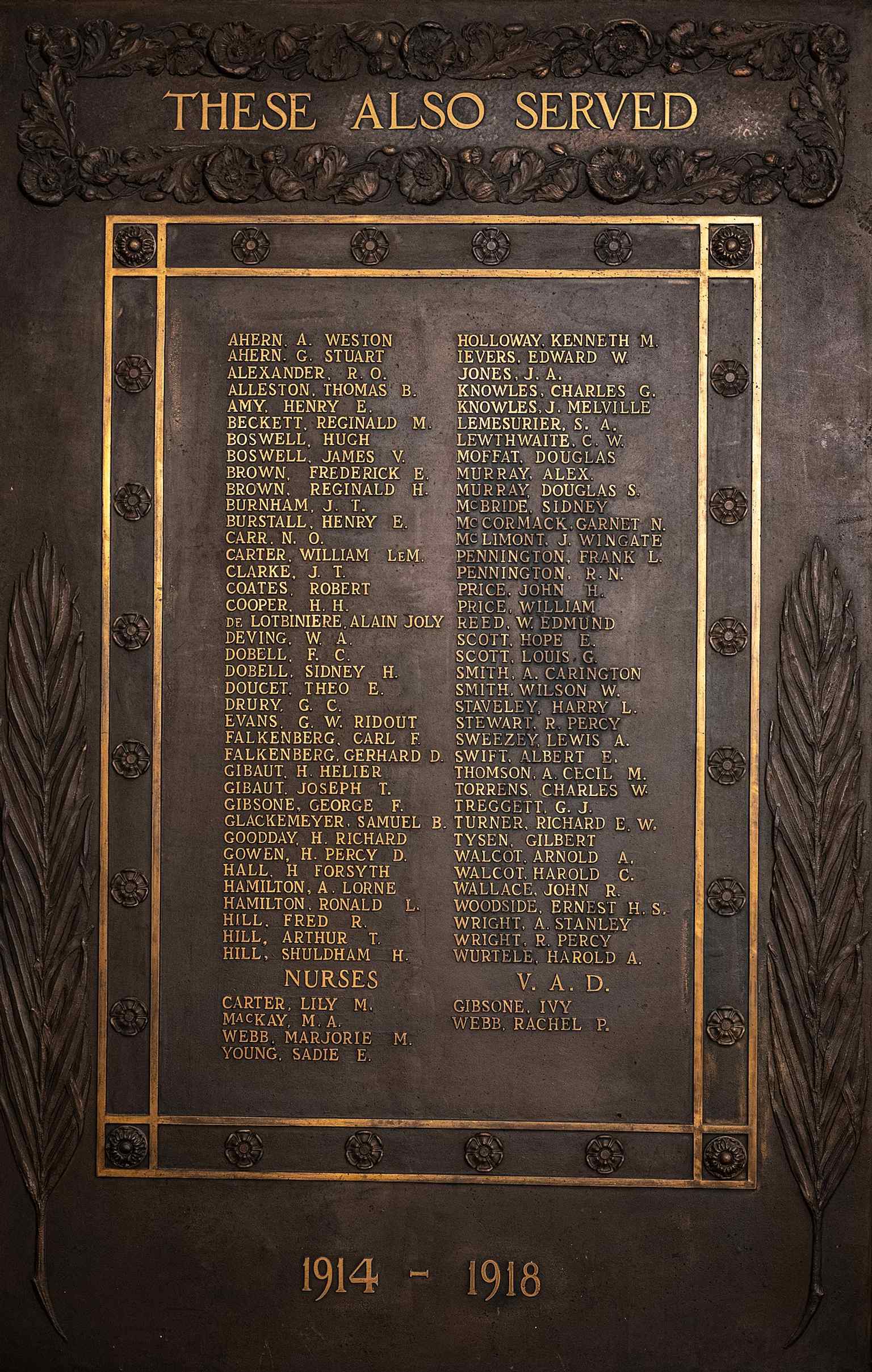
A memorial inside the cathedral points to its role as a burial place and a site of remembrance, not just a parish church.Photo: Wilfredor, Wikimedia Commons, CC0. Cropped & resized. 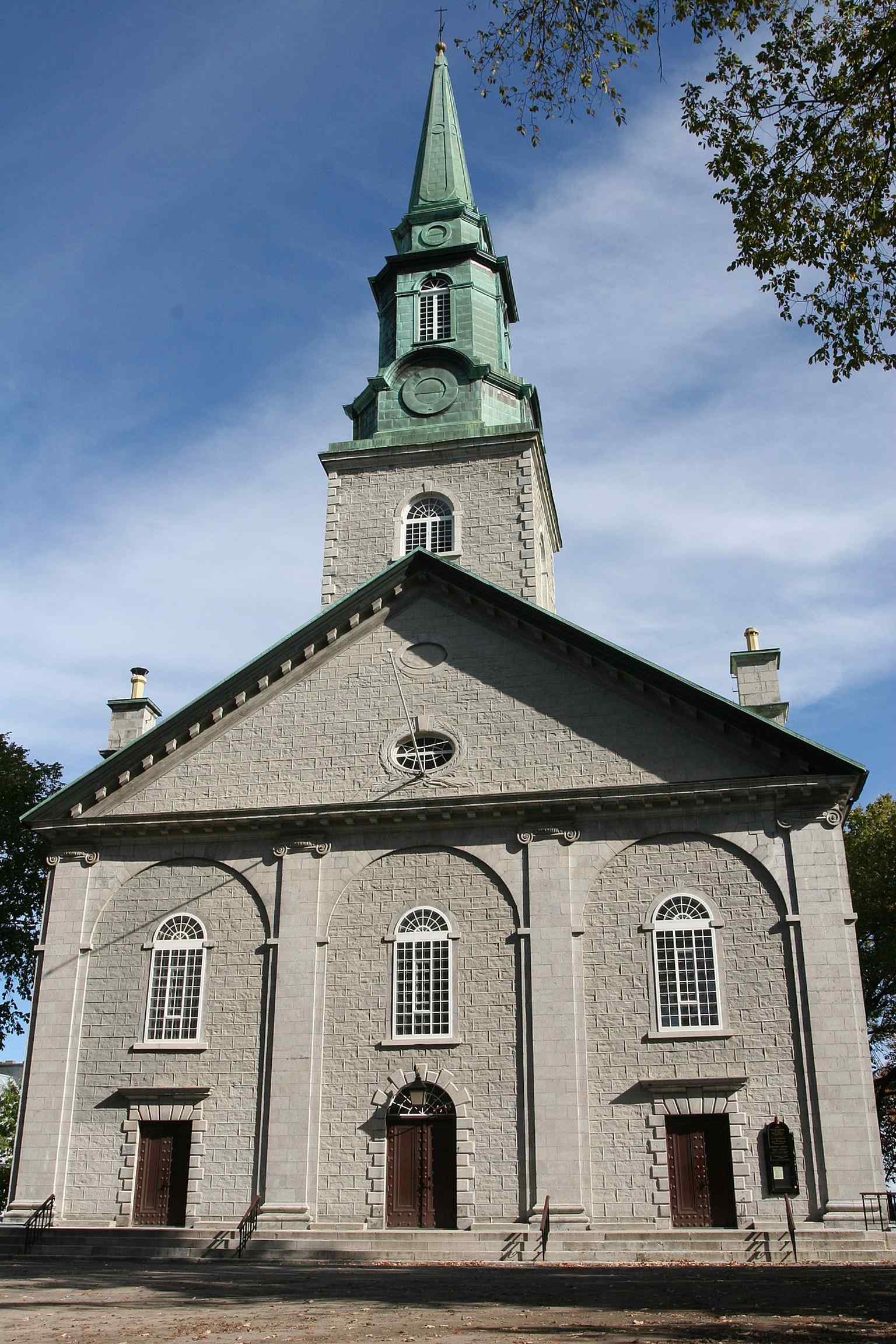
A clear front view of the cathedral in Place d’Armes, where its restrained neoclassical form reflects the Anglican presence that Bishop Jacob Mountain fought to establish in Quebec.Photo: Marc-Lautenbacher, Wikimedia Commons, CC BY-SA 4.0. Cropped & resized. 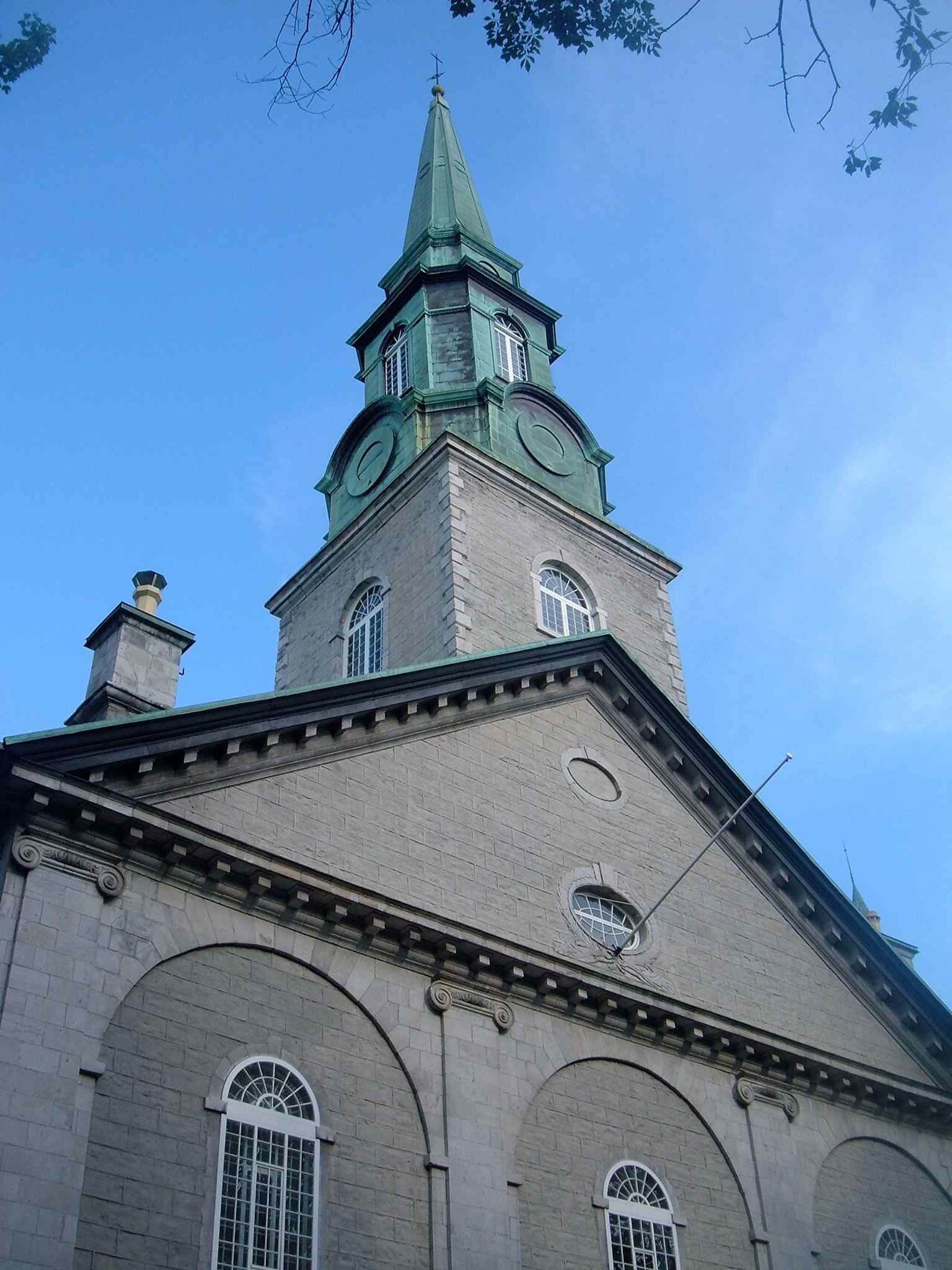
A classic street-level view of the stone cathedral, useful for showing how the building sits in the tight fabric of Old Quebec.Photo: Sleekeels, Wikimedia Commons, CC BY-SA 3.0. Cropped & resized. 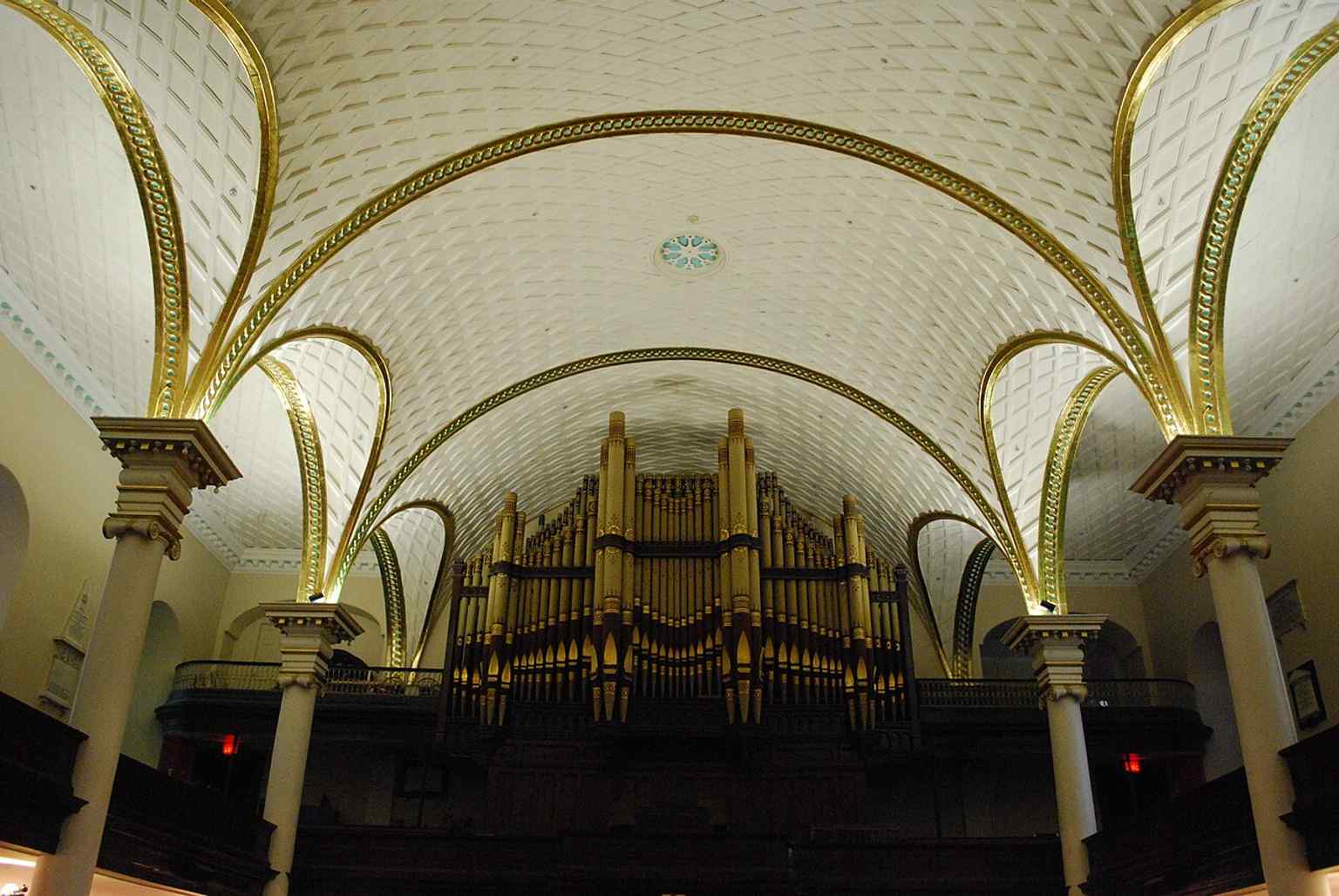
The organ recalls William Carter’s famous 1859 Handel Festival, once the largest of its kind ever presented in Canada.Photo: Concierge.2C, Wikimedia Commons, CC BY-SA 3.0. Cropped & resized. 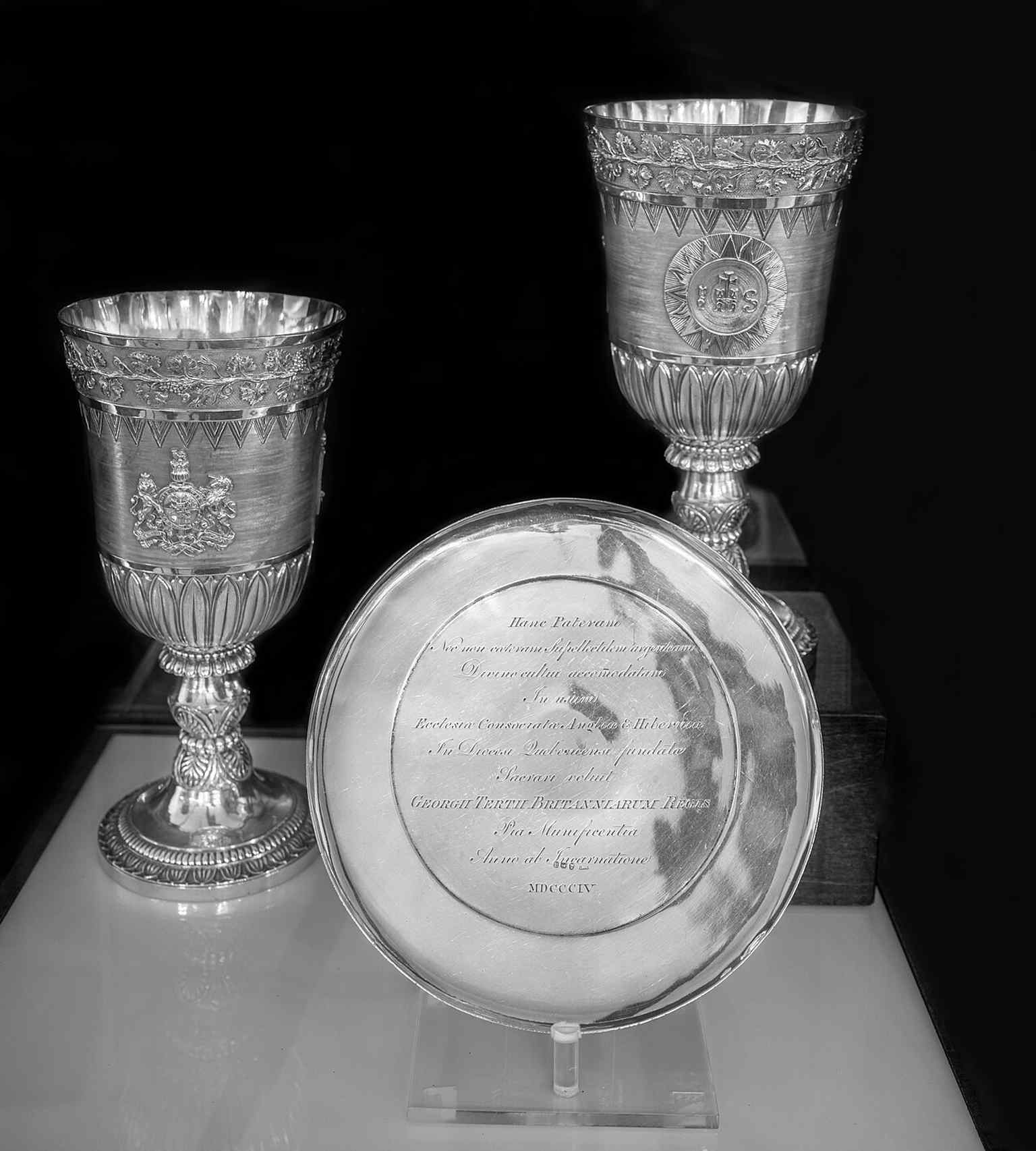
The communion vessels connect the cathedral to royal patronage: George III supplied liturgical objects for worship here.Photo: Wilfredor, Wikimedia Commons, CC0. Cropped & resized. 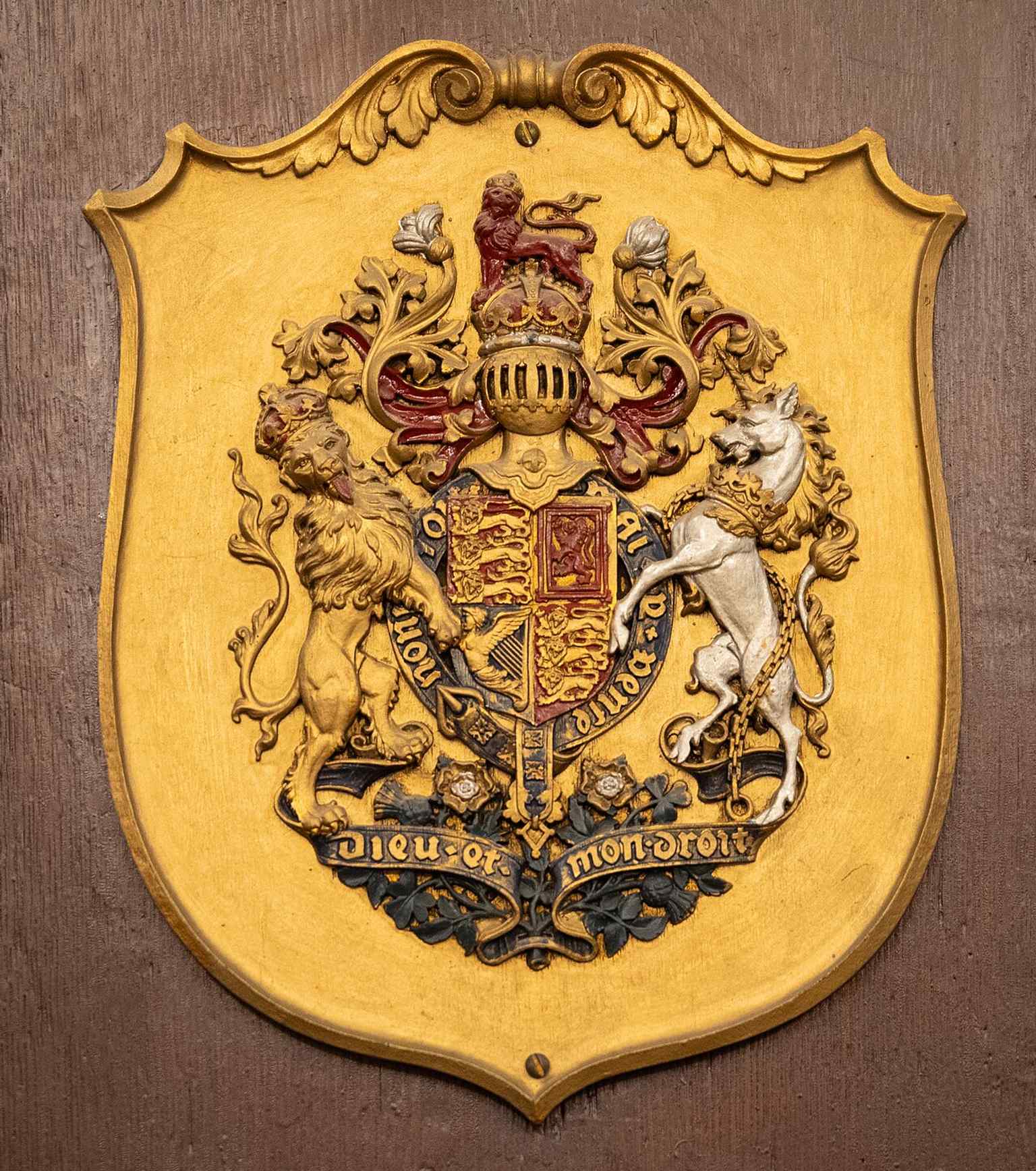
‘Dieu et mon droit’ makes the cathedral’s royal symbolism visible, echoing its close ties to the Crown and imperial hierarchy.Photo: Wilfredor, Wikimedia Commons, CC0. Cropped & resized. 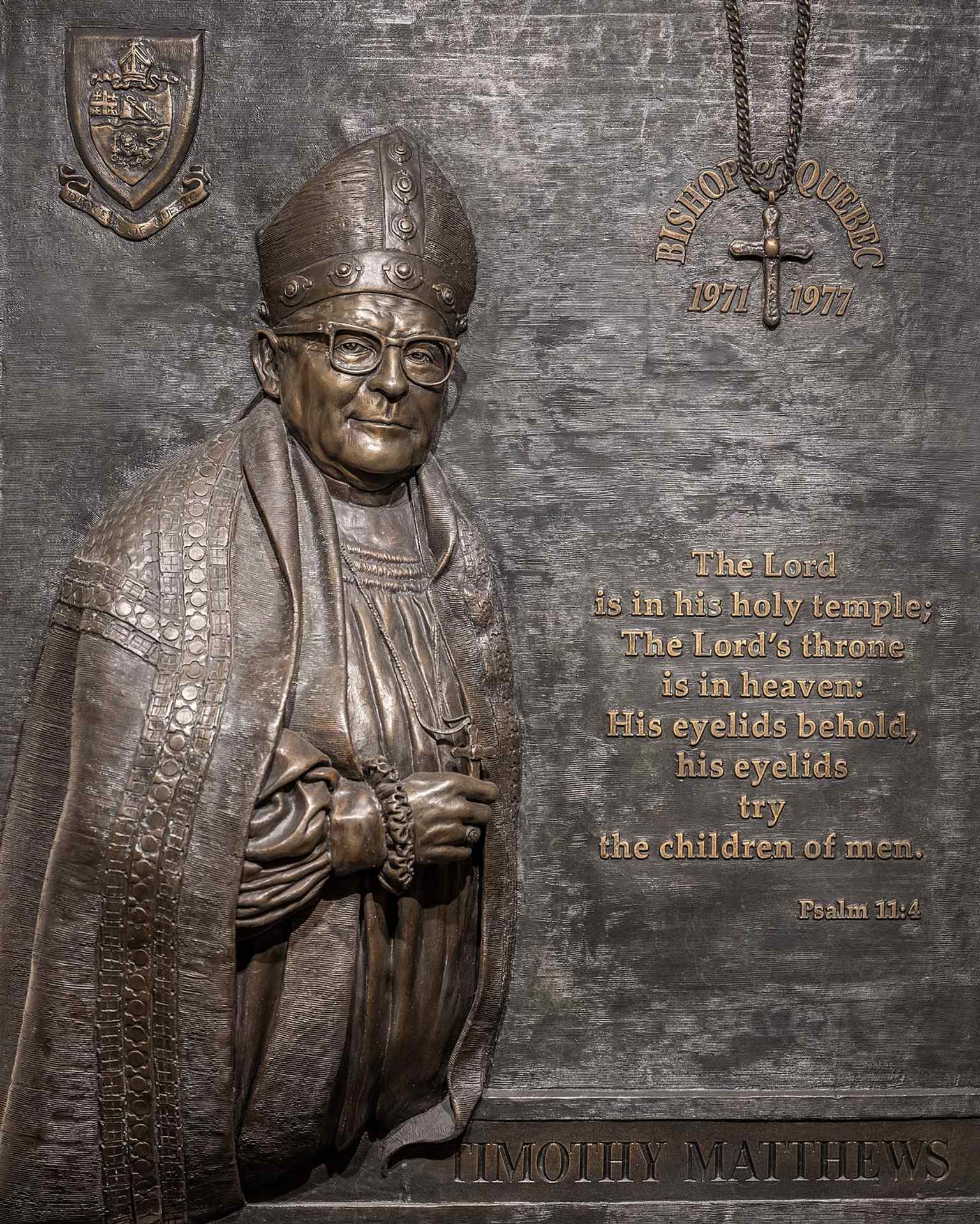
This interior detail helps tell the story of the cathedral as the seat of the Anglican Diocese of Quebec and the legacy of its bishops.Photo: Wilfredor, Wikimedia Commons, CC0. Cropped & resized. 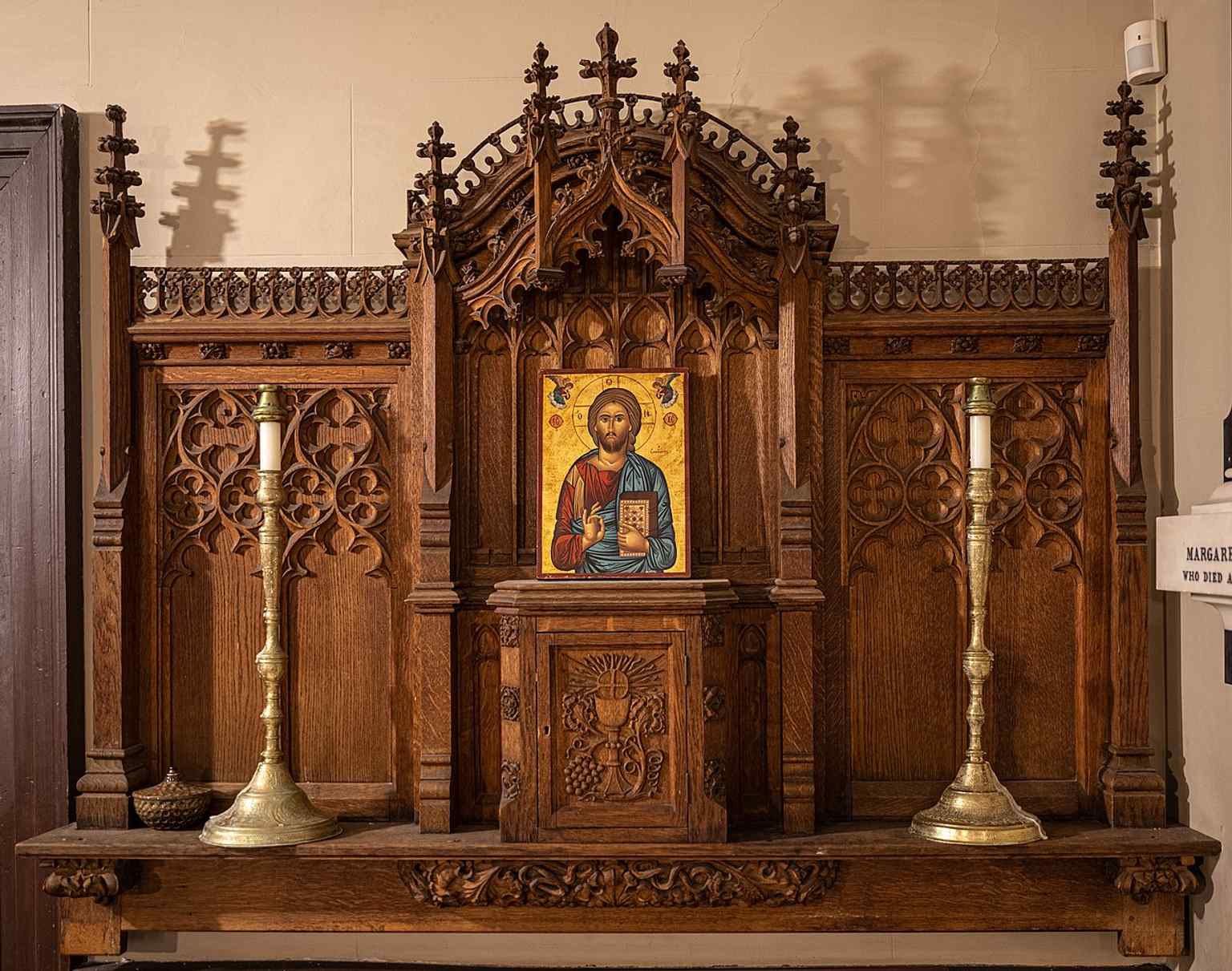
The altar area shows the cathedral’s formal liturgical setting, shaped by its royal foundation and Anglican ceremony.Photo: Wilfredor, Wikimedia Commons, CC0. Cropped & resized. 
A tall interior view that emphasizes the cathedral’s refined proportions and the verticality of its worship space.Photo: Wilfredor, Wikimedia Commons, CC0. Cropped & resized. 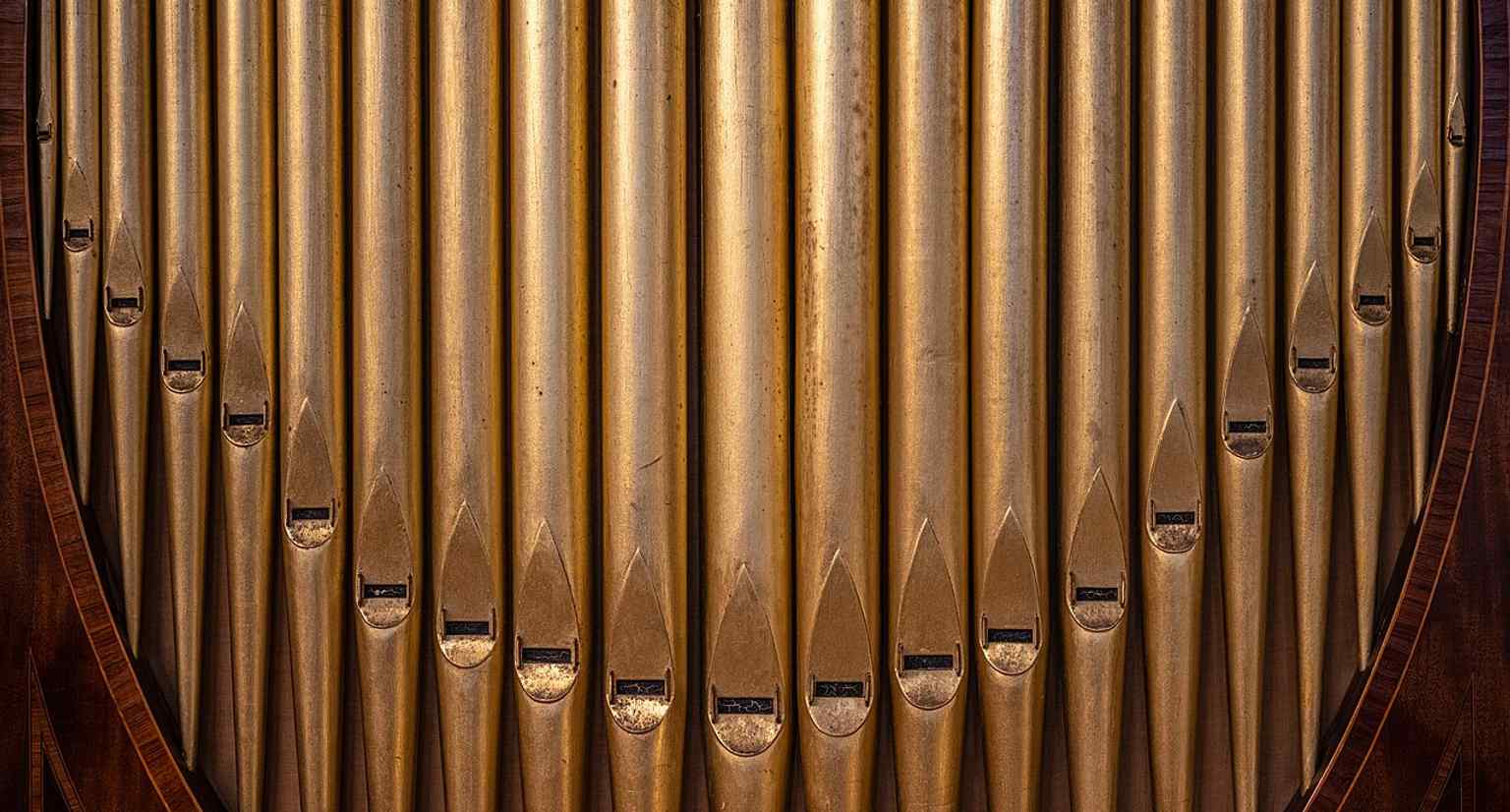
A wide interior composition that gives a strong sense of the cathedral’s scale, furnishings, and heritage character.Photo: Wilfredor, Wikimedia Commons, CC0. Cropped & resized. On your left, Place d'Armes opens as a stone-framed trapezoid of lawn and paving, centered on a tall pale neo-Gothic monument with pointed arches and carved relief panels. A…Read moreShow less
Open dedicated page →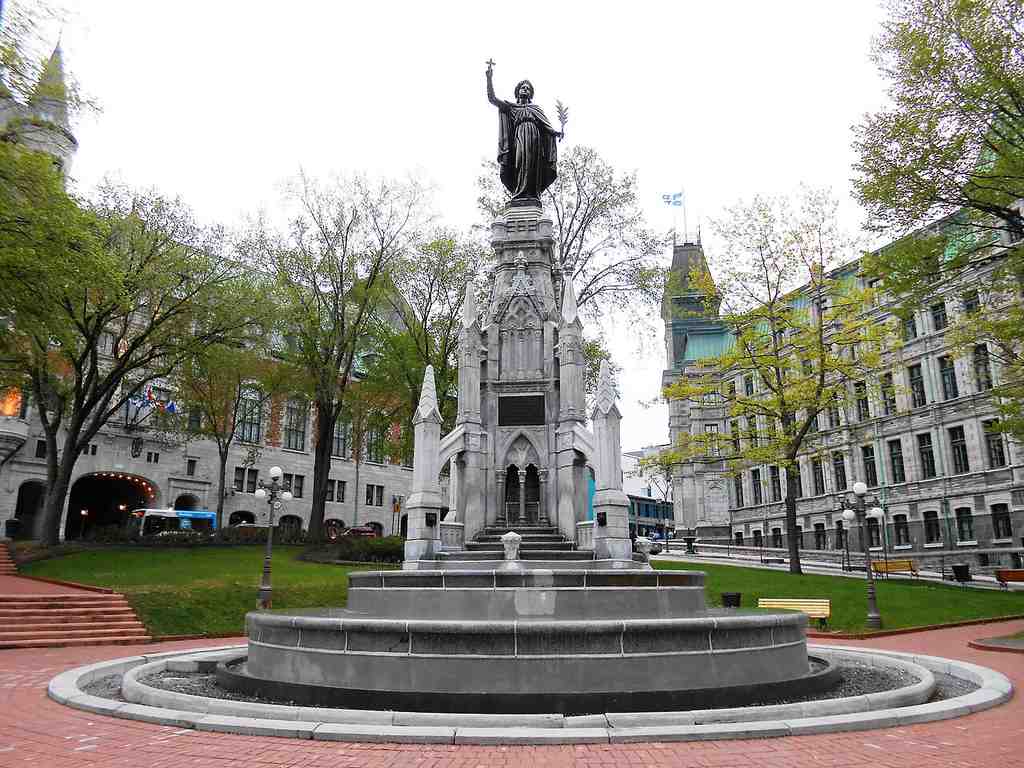
Place d'Armes (Quebec City)Photo: Jeangagnon, Wikimedia Commons, CC BY-SA 3.0. Cropped & resized. On your left, Place d'Armes opens as a stone-framed trapezoid of lawn and paving, centered on a tall pale neo-Gothic monument with pointed arches and carved relief panels.
A place d'armes originally meant the central gathering ground inside a fortified town, where troops drilled, assembled, and staged the rituals of military life. Governor Montmagny laid out this one between sixteen forty and sixteen forty-eight for exactly that purpose... practical, disciplined, and not terribly interested in comfort.
But this square kept changing jobs. Before it settled into public dignity, colonial justice moved in here: the seigneurial court of the Company of One Hundred Associates sat on this site by sixteen fifty-one, and the Sovereign Council followed until sixteen sixty-seven. In sixteen eighty-one, the governor handed the ground to the Récollets, a branch of Franciscan friars, so they could build a hospice - basically a shelter for nights and rough conditions. For a few years, from sixteen eighty-nine to sixteen ninety-two, part of the first general hospital of Quebec stood here too. One patch of land, endlessly reassigned by whoever held authority. Neat, isn’t it?
Then fire rearranged the script. In seventeen ninety-six, the Récollet church and monastery burned. Three years later, workers cleared the ruins, enlarged the square, and made room for the new courthouse and Holy Trinity Cathedral. If you peek at the image on your screen, you can see the Monument of Faith at the center, added in nineteen fifteen and completed in nineteen sixteen. Architect David Ouellet and sculptor Gaston Vennat turned the middle of an old drill ground into a stone sermon, twelve meters high, telling the story of the Récollets in bas-relief.
After the Citadelle rose in eighteen thirty, the square lost its military purpose. A chain went up around the lawn in eighteen thirty-two - apparently even grass needed defending - and by eighteen sixty-five this had become a public park with a basin at its center. So the choreography remained: gathering, watching, commemorating... just with fewer muskets.
Archaeologists suspect more of the Récollet monastery still lies under the square, which feels exactly right for Quebec: every formal surface covers an older argument. Ahead, the great hotel-palace on the promontory takes that civic theater and turns the volume up. Make your way toward Château Frontenac. And if you’re curious, the square is open daily from six in the morning to eleven at night.
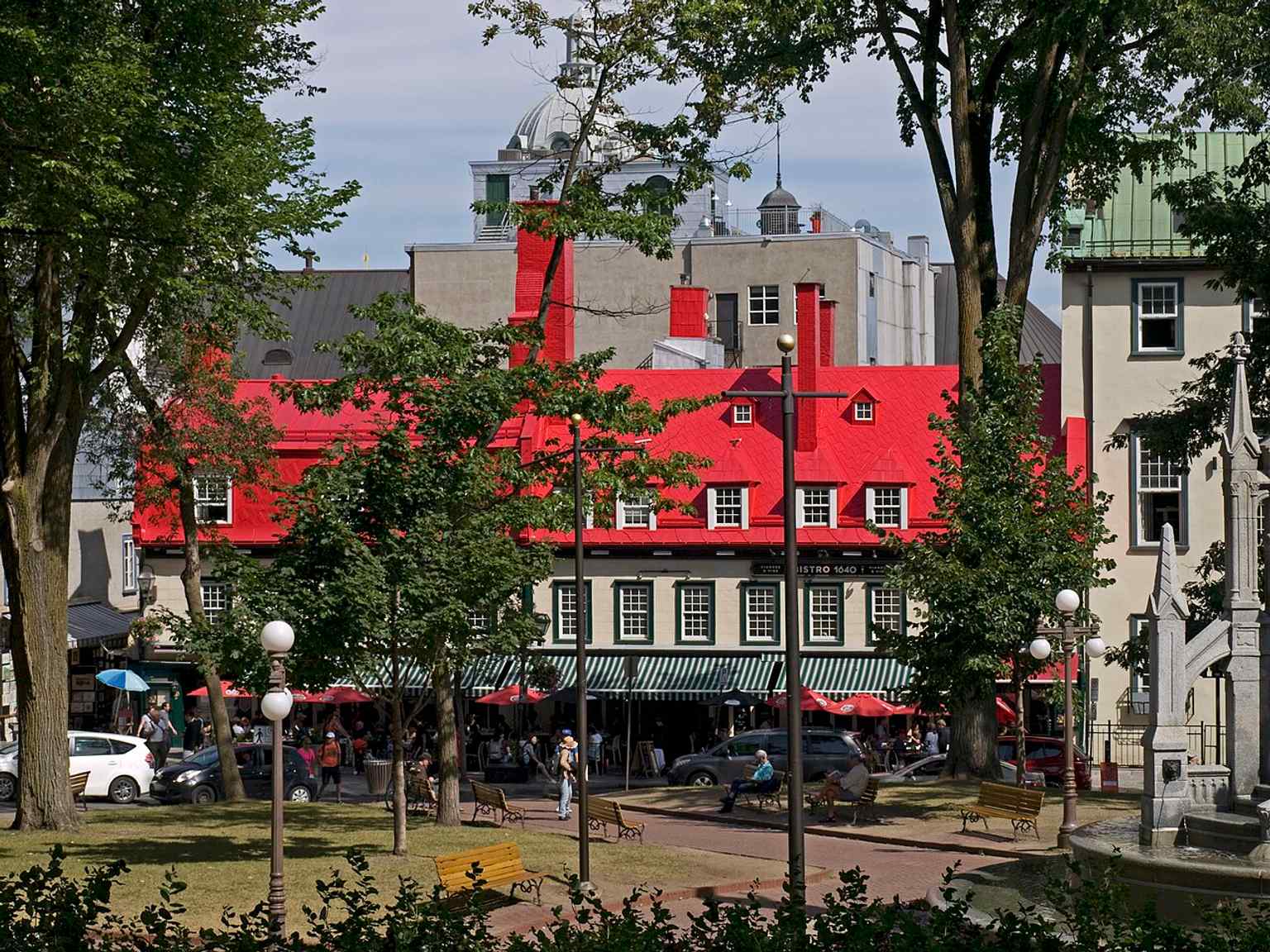
A street-level view of Place d’Armes by Rue Sainte-Anne, showing the square’s historic urban setting in the Upper Town of Old Quebec.Photo: Ymblanter, Wikimedia Commons, CC BY-SA 4.0. Cropped & resized. 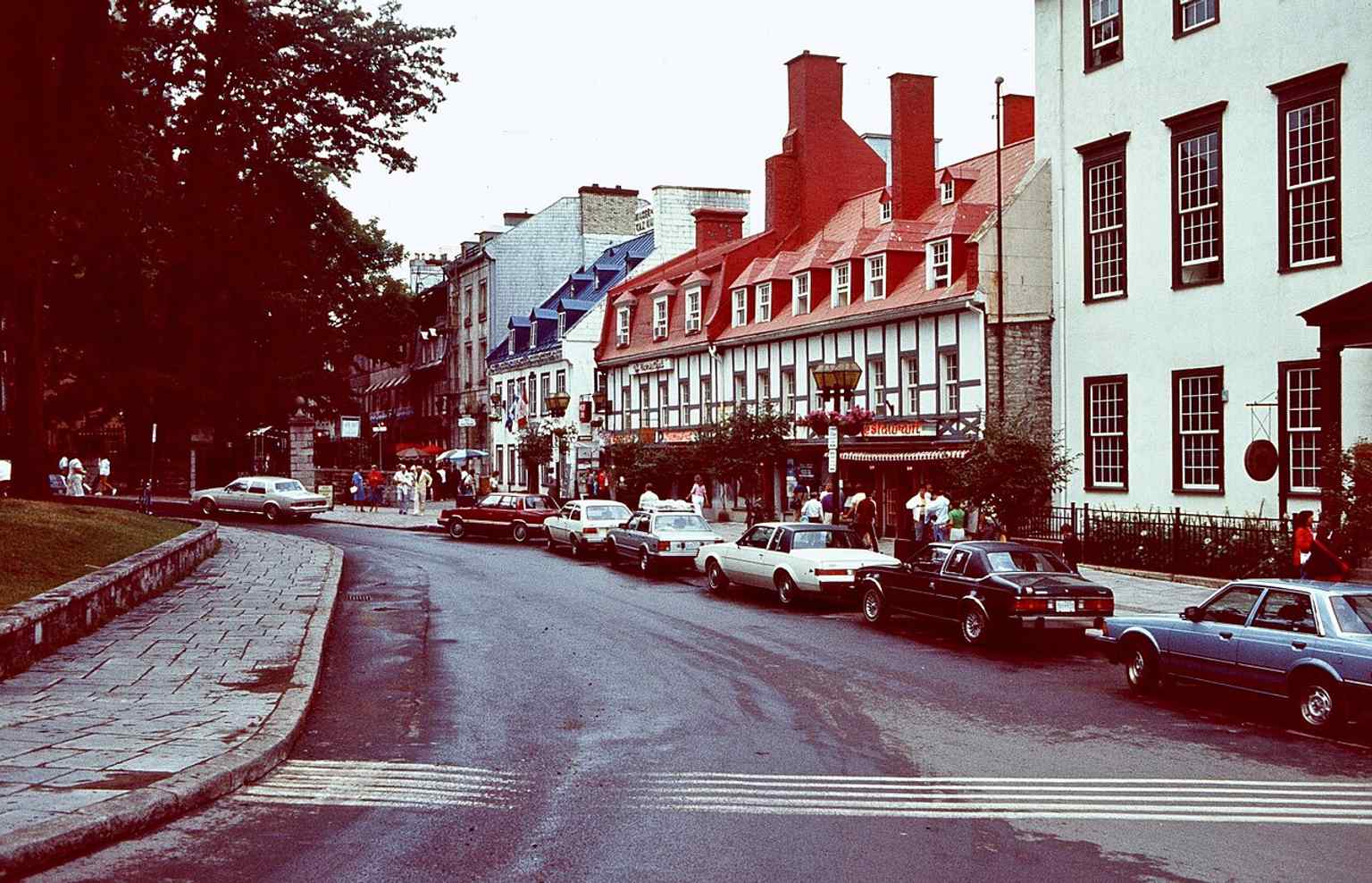
An early-1980s view of the square, useful for showing how Place d’Armes has long been a public space in the heart of Old Quebec.Photo: Lothar Weber, Wikimedia Commons, CC BY-SA 4.0. Cropped & resized. On your left, look for a huge grey-stone hotel with steep copper roofs, round turrets, and a tall central tower that makes the whole place look like a castle that took the train…Read moreShow less
Open dedicated page →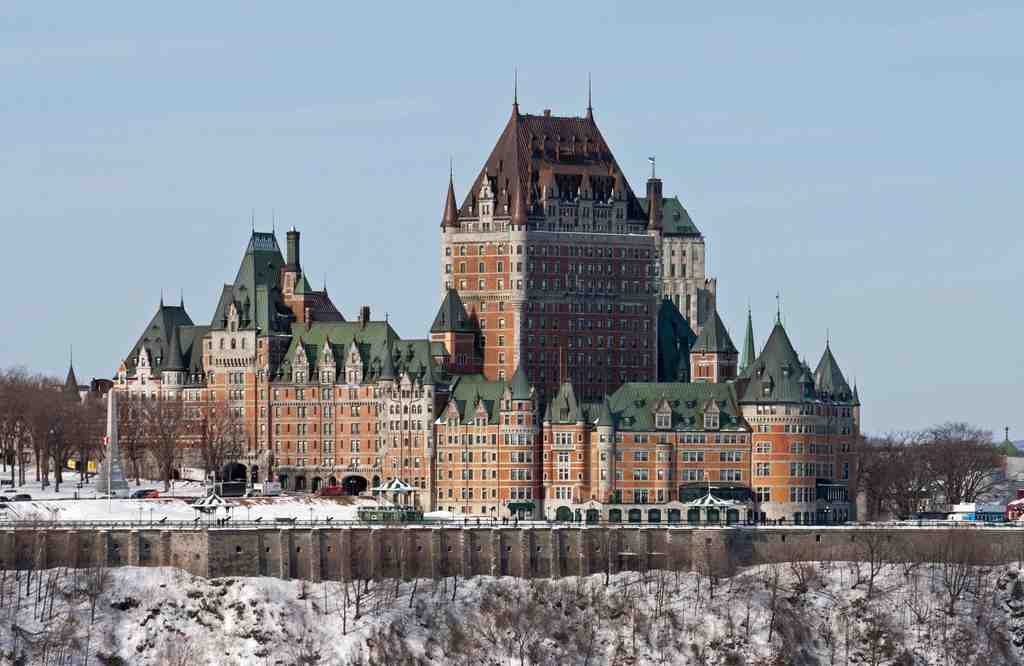
Château FrontenacPhoto: Bernard Gagnon, Wikimedia Commons, CC BY-SA 4.0. Cropped & resized. On your left, look for a huge grey-stone hotel with steep copper roofs, round turrets, and a tall central tower that makes the whole place look like a castle that took the train business very seriously.
This is the Château Frontenac, opened in eighteen ninety-three by the Canadian Pacific Railway and designed by New York architect Bruce Price in the Château style - a French-inspired look full of sharp roofs, dormers, chimneys, and towers. It is one of the most photographed hotels in the world, which feels about right... the building poses for pictures better than most people.
But here is the twist. This postcard castle stands on ground that had already spent centuries serving power. Before the hotel, this height held the Château Haldimand, an eighteenth-century government building ordered by Governor Frederick Haldimand. And even earlier, this cape carried the residences and forts tied to the governors of New France. So the fantasy you see now replaced a chain of very practical authority on one of the most strategic pieces of land in the city.
A later governor-general helps explain that transformation. In the eighteen seventies, he pushed Quebec to restore its old fortified character and even imagined rebuilding the Château Saint-Louis here, the former seat of French governors. That plan stalled. Then railway men, led by Canadian Pacific’s William Van Horne, saw another opportunity: if power no longer needed this cliff, prestige and tourism certainly did. So they turned a command post into a luxury address.
And luxury, at first, meant something almost comic in its extravagance. When the first wing opened, it offered one hundred seventy rooms, ninety-three private bathrooms, and fireplaces - which in the eighteen nineties was a very polished way of saying, “We intend to impress absolutely everyone.”
The building kept growing. William Sutherland Maxwell expanded it in the early twentieth century, and the central tower arrived in the nineteen twenties, pushing the hotel to about eighty meters high. Because it sits on this raised promontory above the Saint Lawrence, it dominates the skyline even now. If you want a quick peek at how restoration changed its look, check the before-and-after image in the app - the copper roofs really do come back into storybook form.
Yet the deeper story sits under the elegance. Between two thousand five and two thousand seven, excavations beneath Terrasse Dufferin uncovered the Forts-et-Châteaux-Saint-Louis site and more than five hundred thousand artifacts. In other words, this hotel quite literally rests above the remains of earlier capitals.
Then the place jumped from colonial command to global strategy. During the Quebec Conferences in nineteen forty-three and nineteen forty-four, Winston Churchill, Franklin Delano Roosevelt, and William Lyon Mackenzie King met here while streets around the hotel were locked down with sentries. One story says a hotel employee picked up a leather portfolio marked “Churchill-Roosevelt, Quebec Conference, nineteen forty-three” and kept it as a souvenir, not realizing it may have contained plans for Operation Overlord. That is one way to learn your workplace has become the center of the war.
If you glance at the photo on your screen, you can see those leaders gathered here in nineteen forty-four.
So yes, it is a fairy tale in stone and copper. But it also shows what this city does so well: it takes a site built for command and recasts it as memory, spectacle, and identity. In a couple of minutes, head toward the edge it commands... Terrasse Dufferin, where this old language of authority turns into a public promenade.
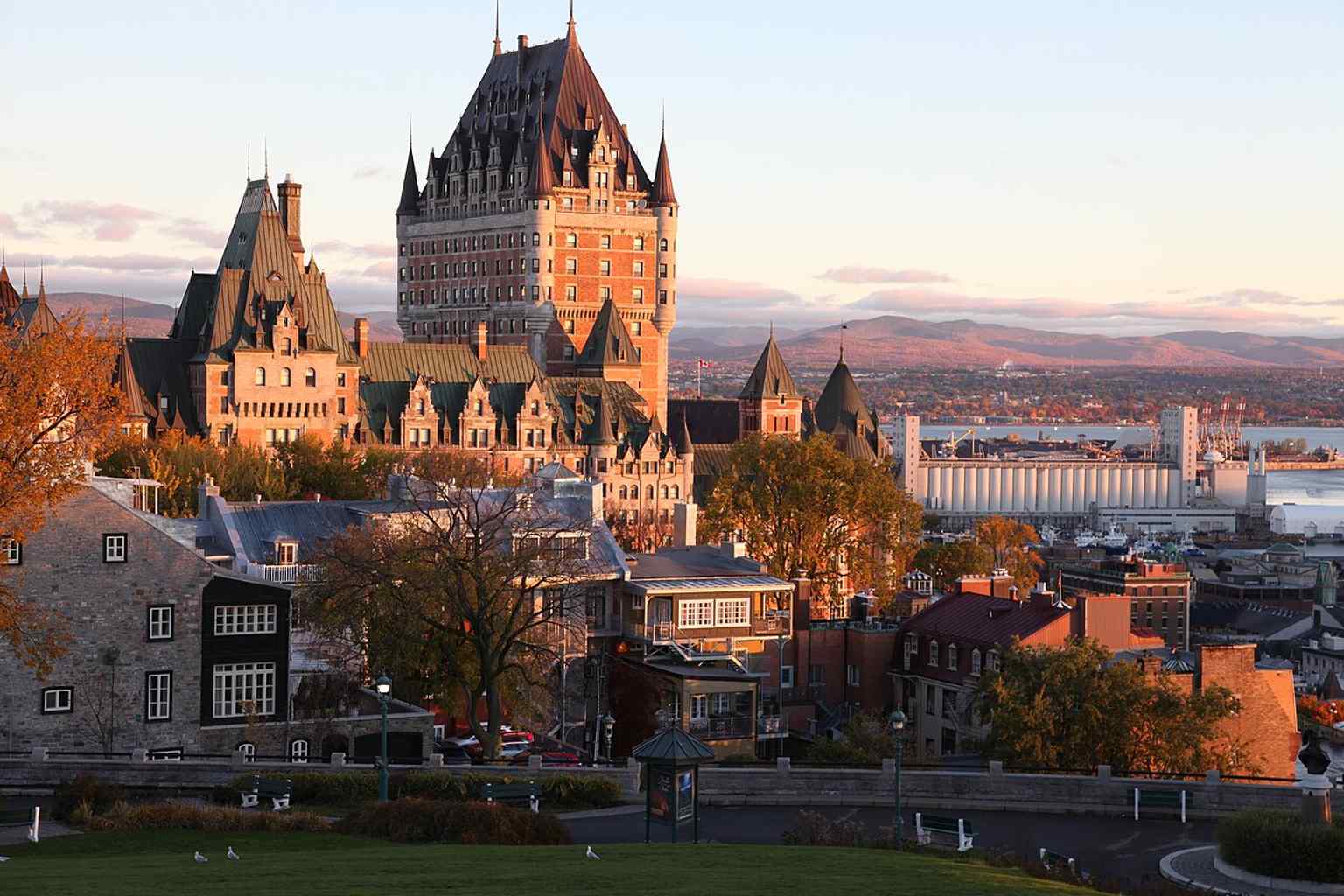
Sunrise over the château’s steep roofs and central tower — a classic view of Quebec City’s most photographed hotel, built for Canadian Pacific in the Châteauesque style.Photo: Marc-Lautenbacher, Wikimedia Commons, CC BY-SA 4.0. Cropped & resized. 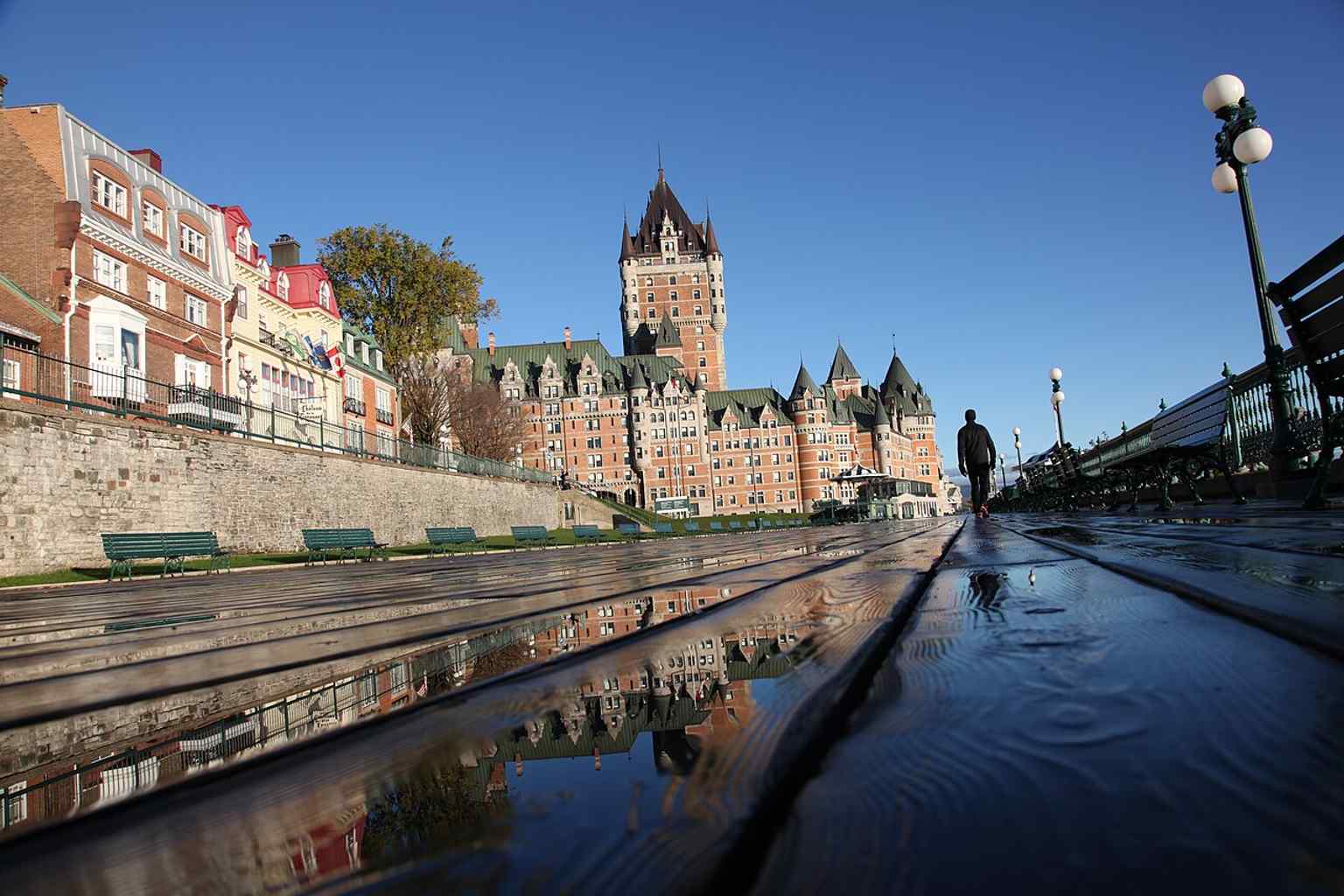
Seen from Terrasse Dufferin, this angle shows how the hotel crowns the promontory above the Saint Lawrence River and overlooks the old city below.Photo: Marc-Lautenbacher, Wikimedia Commons, CC BY-SA 4.0. Cropped & resized. 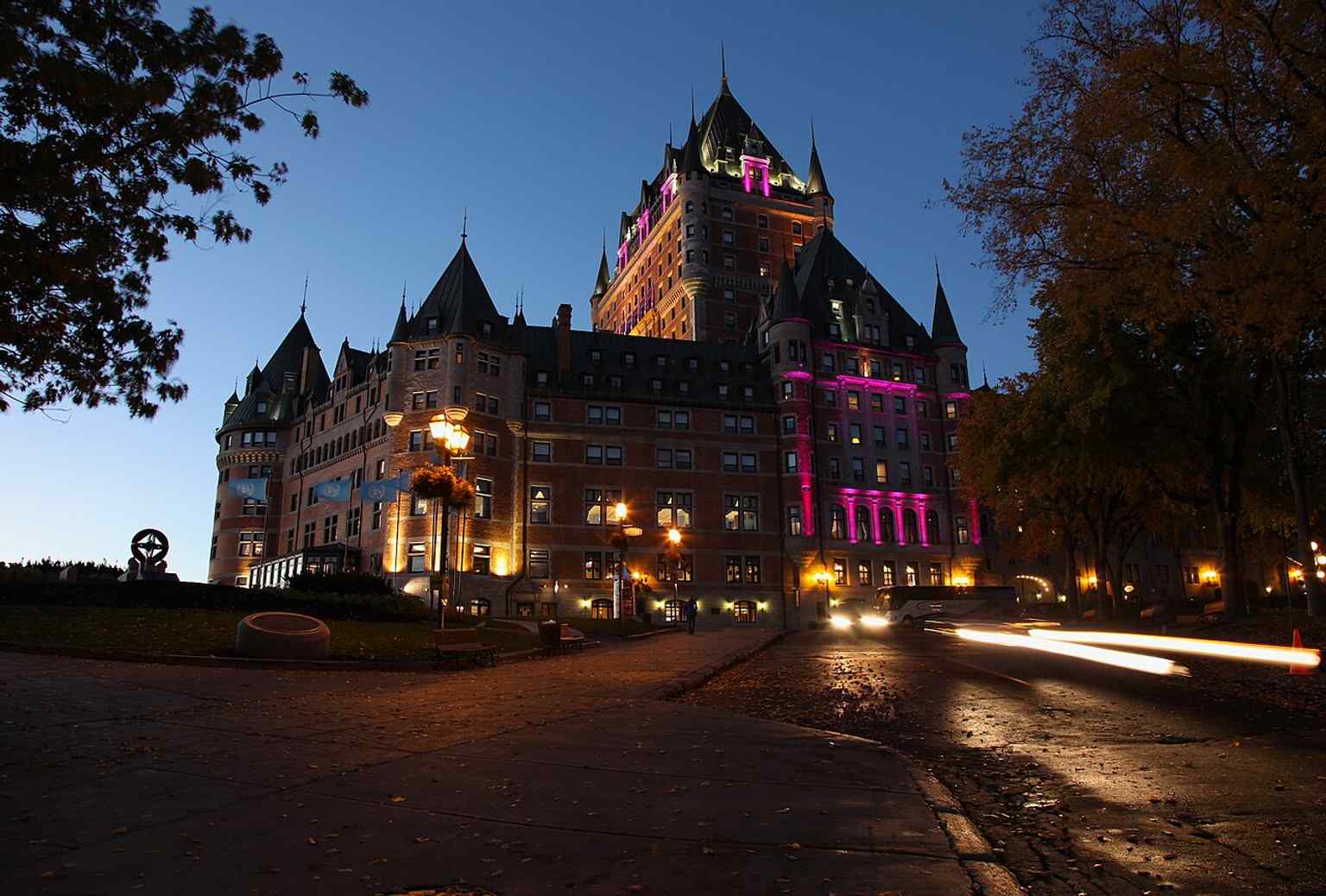
A night view highlights the hotel’s fortress-like silhouette on Cap Diamant, with the French-inspired style that made it a model for grand railway hotels.Photo: Marc-Lautenbacher, Wikimedia Commons, CC BY-SA 4.0. Cropped & resized. 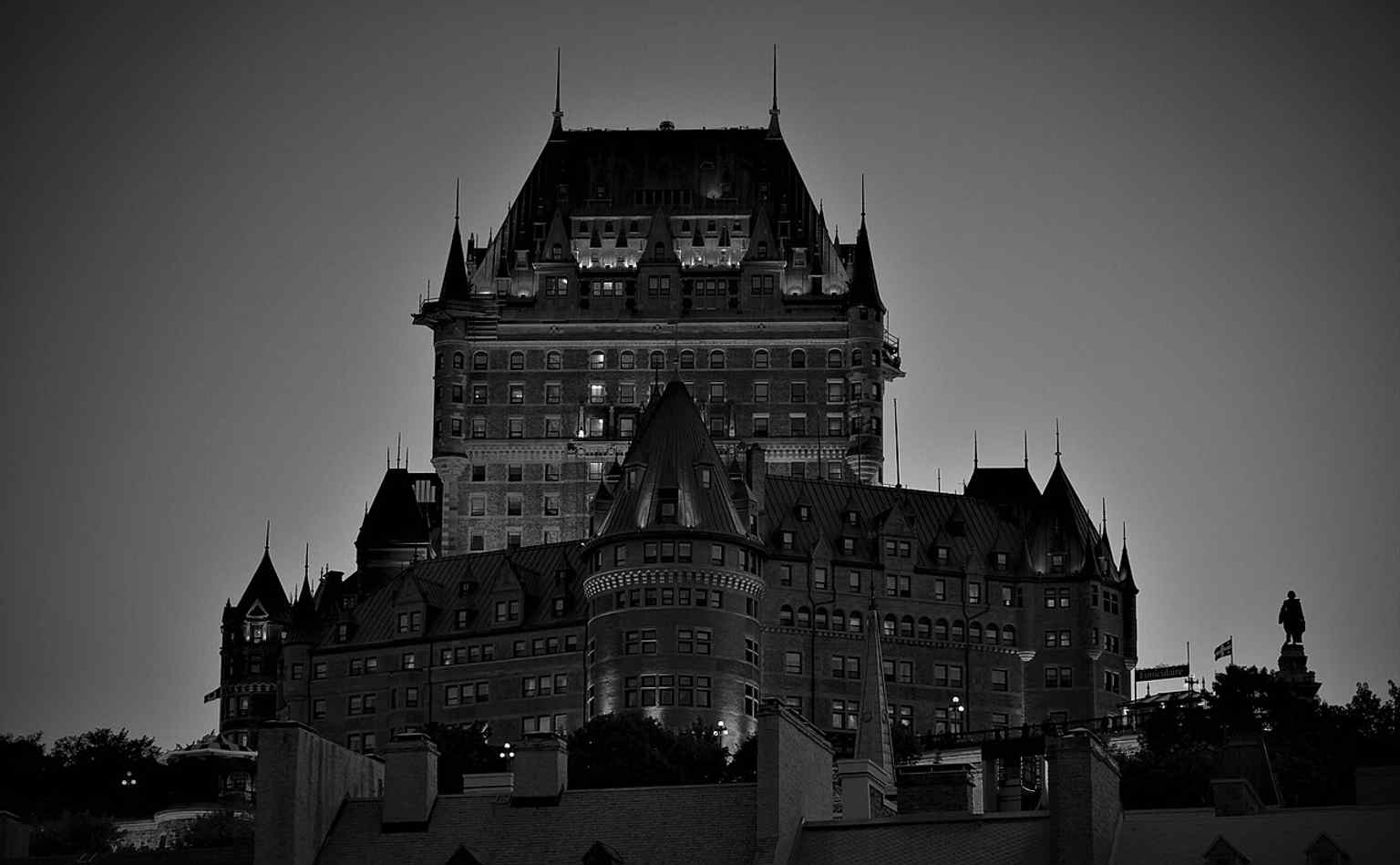
The Château Frontenac glowing at night — a dramatic reminder that its hilltop setting helped make it the “most photographed hotel in the world.”Photo: Sergiu Dumitriu, Wikimedia Commons, CC BY-SA 3.0. Cropped & resized. 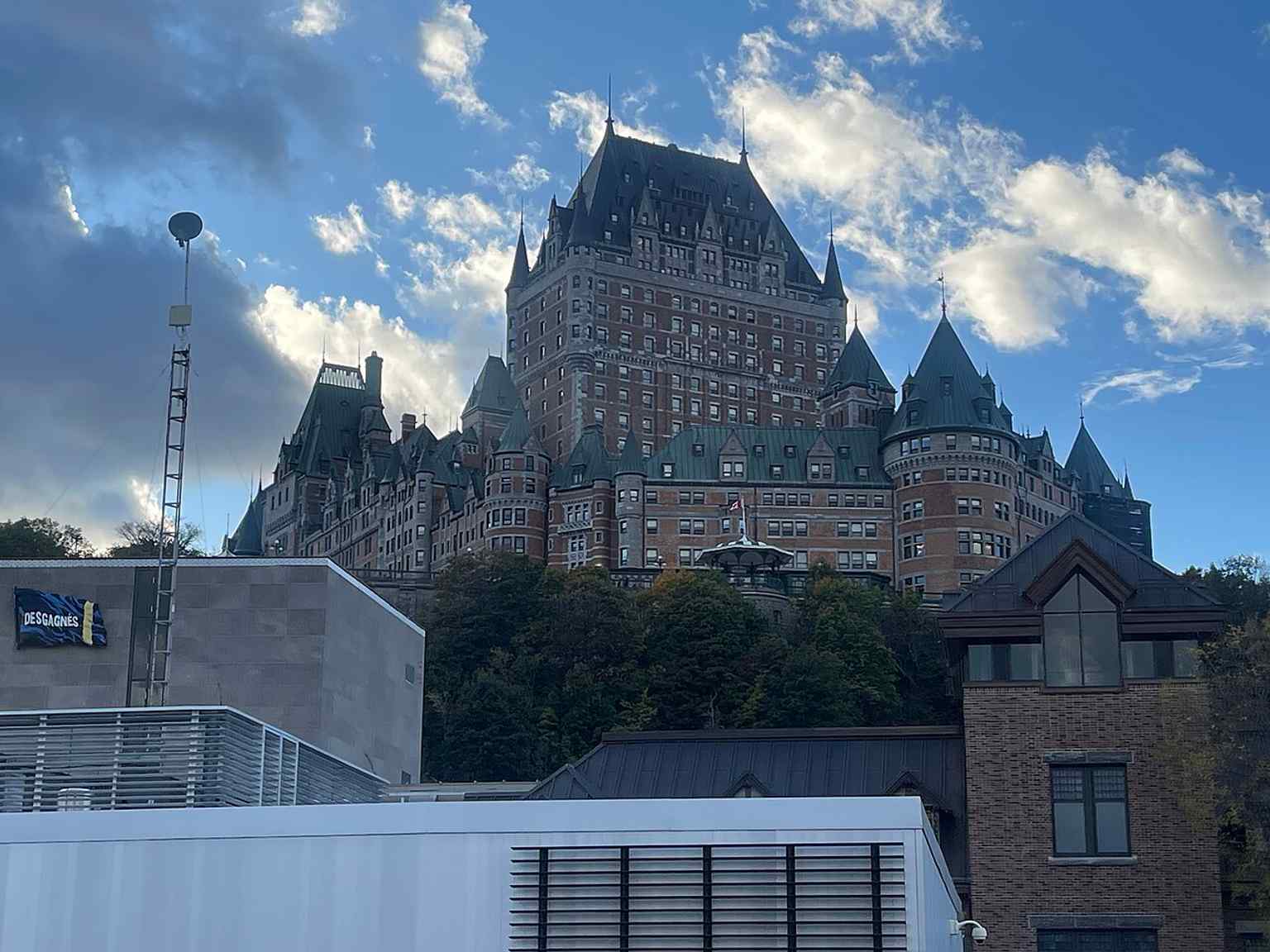
Viewed from the water, the hotel rises above Quebec’s cliff edge, emphasizing the promontory site that made it a landmark on the St. Lawrence River.Photo: LilianaUwU, Wikimedia Commons, CC BY-SA 4.0. Cropped & resized. 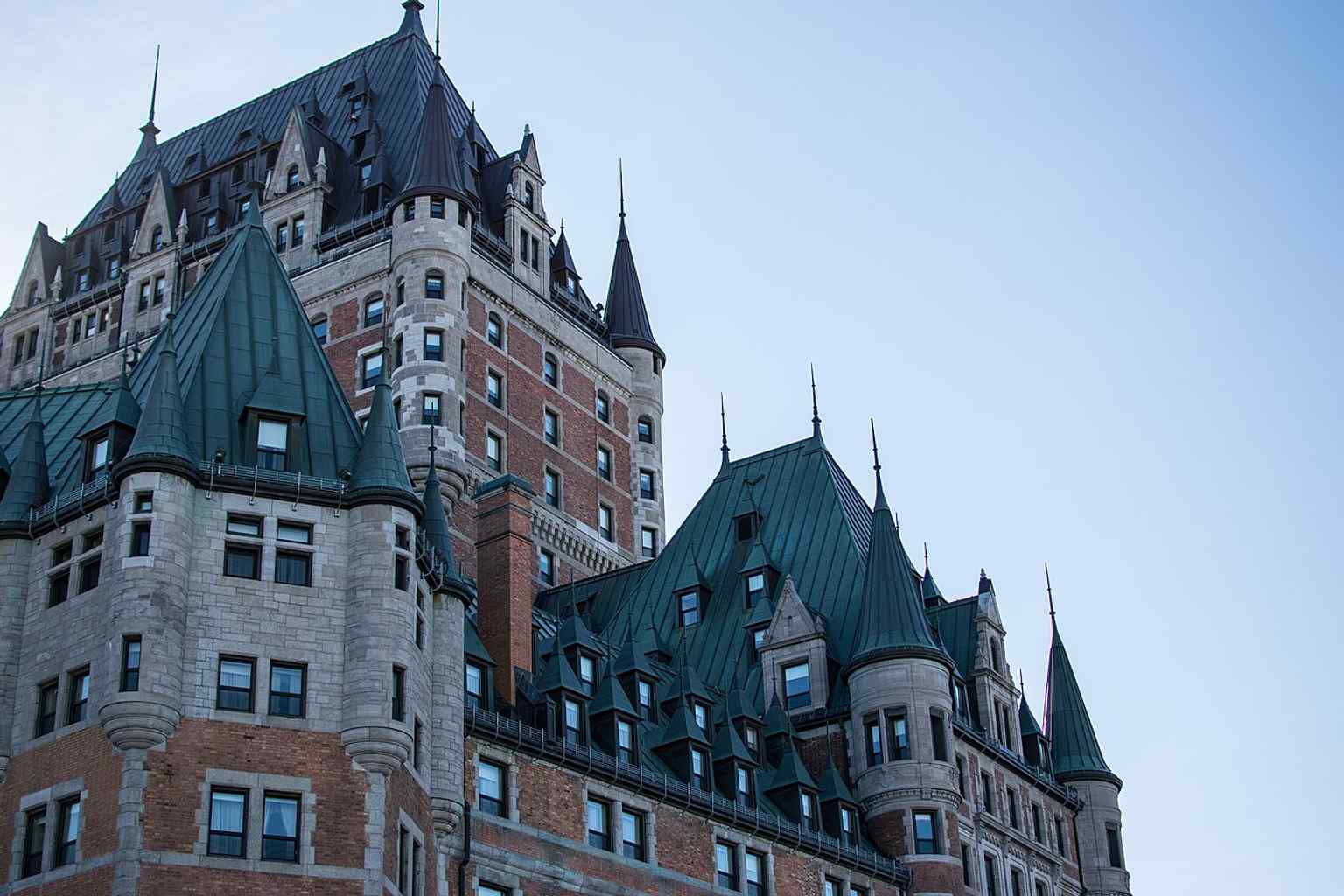
A modern daylight view of the full hotel exterior, useful for showing the 18-floor massing and later expansions that shaped today’s profile.Photo: 0x010C, Wikimedia Commons, CC BY-SA 4.0. Cropped & resized. 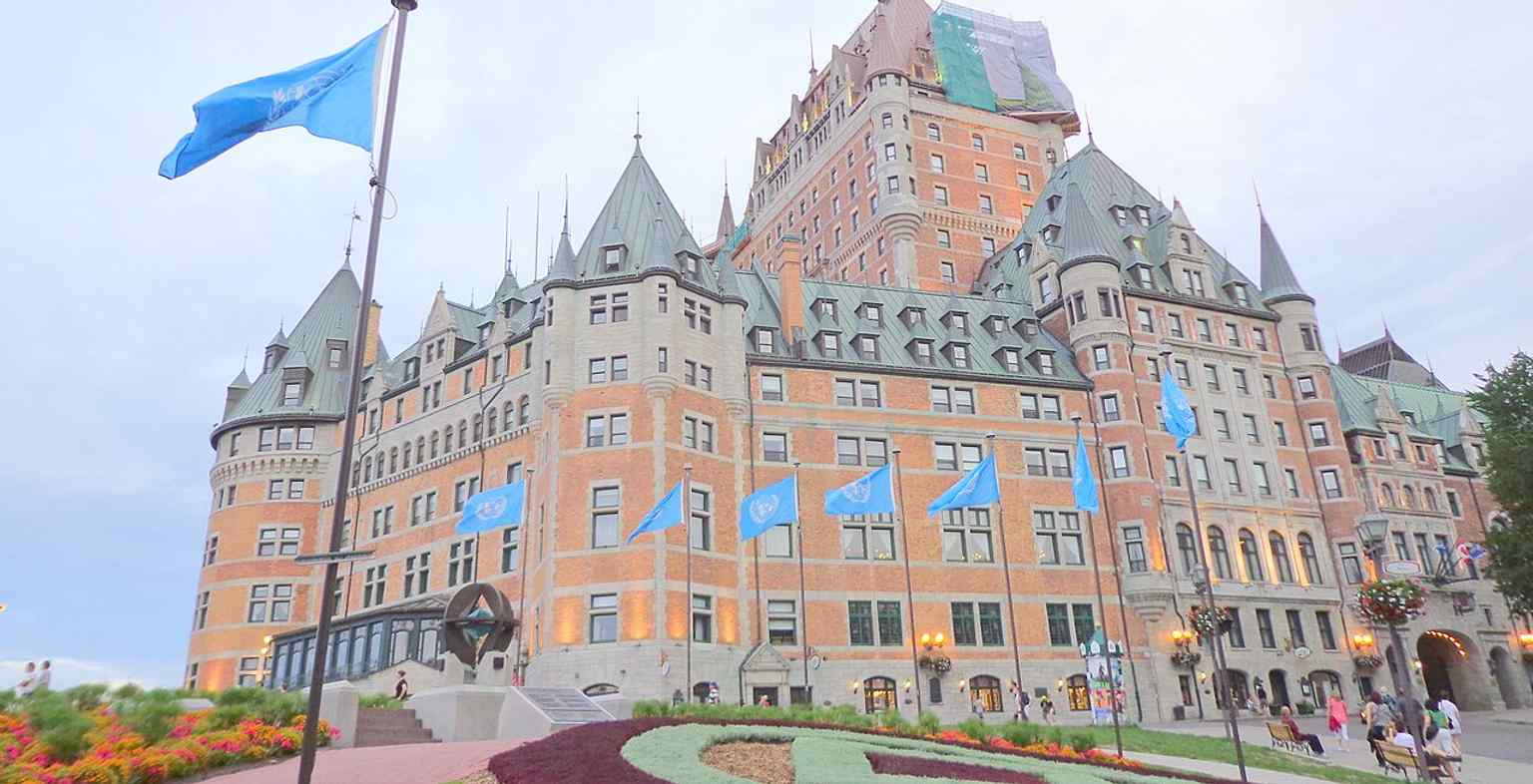
Roof renovation work in 2012 — a rare look at the hotel’s copper roofs being restored during its major preservation campaign.Photo: Thejeffreykelso, Wikimedia Commons, CC BY-SA 3.0. Cropped & resized. 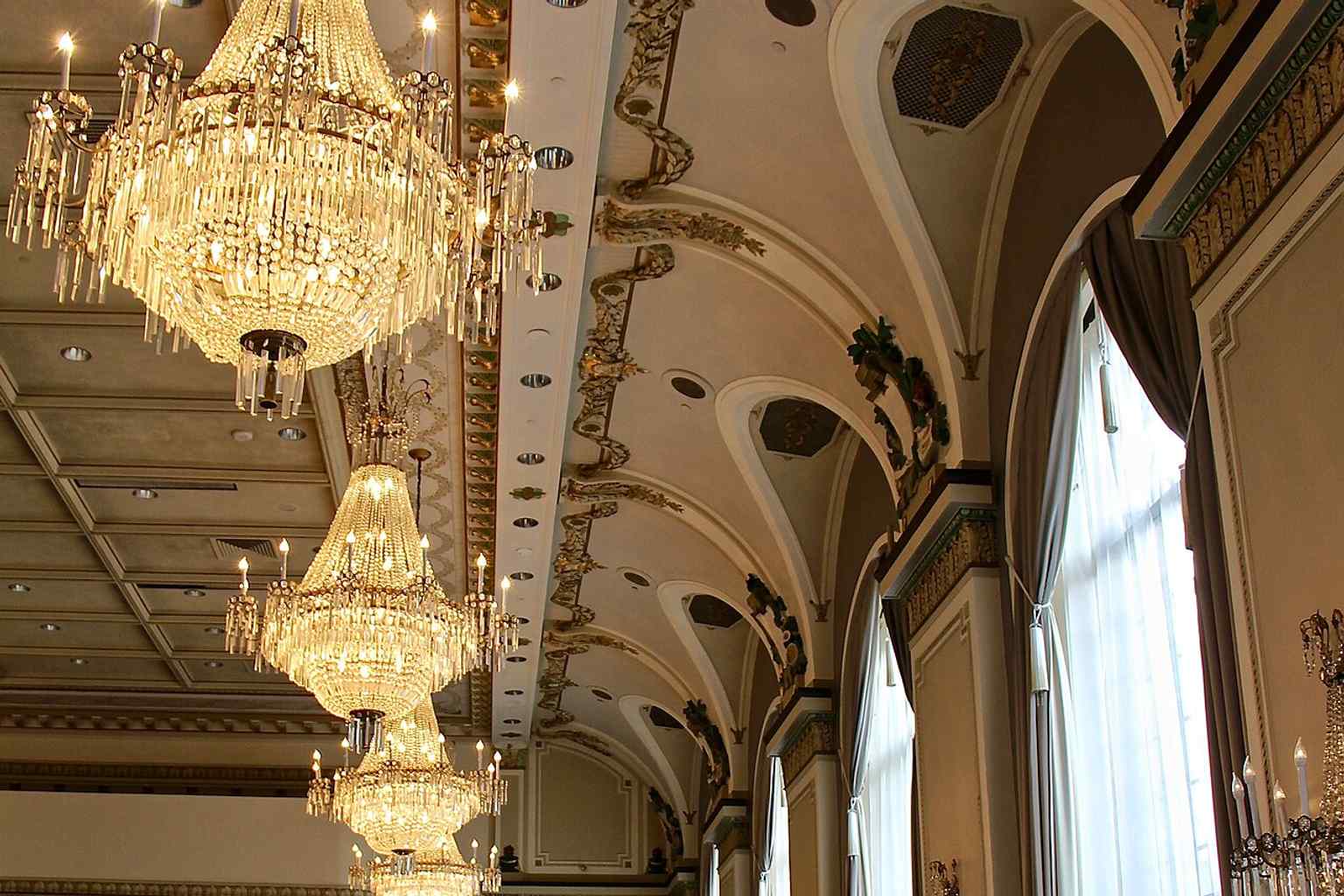
The ballroom’s elegant chandeliers and ornate décor recall the high-profile receptions and state events hosted here, including wartime conference gatherings.Photo: Thomas1313, Wikimedia Commons, CC BY-SA 4.0. Cropped & resized. 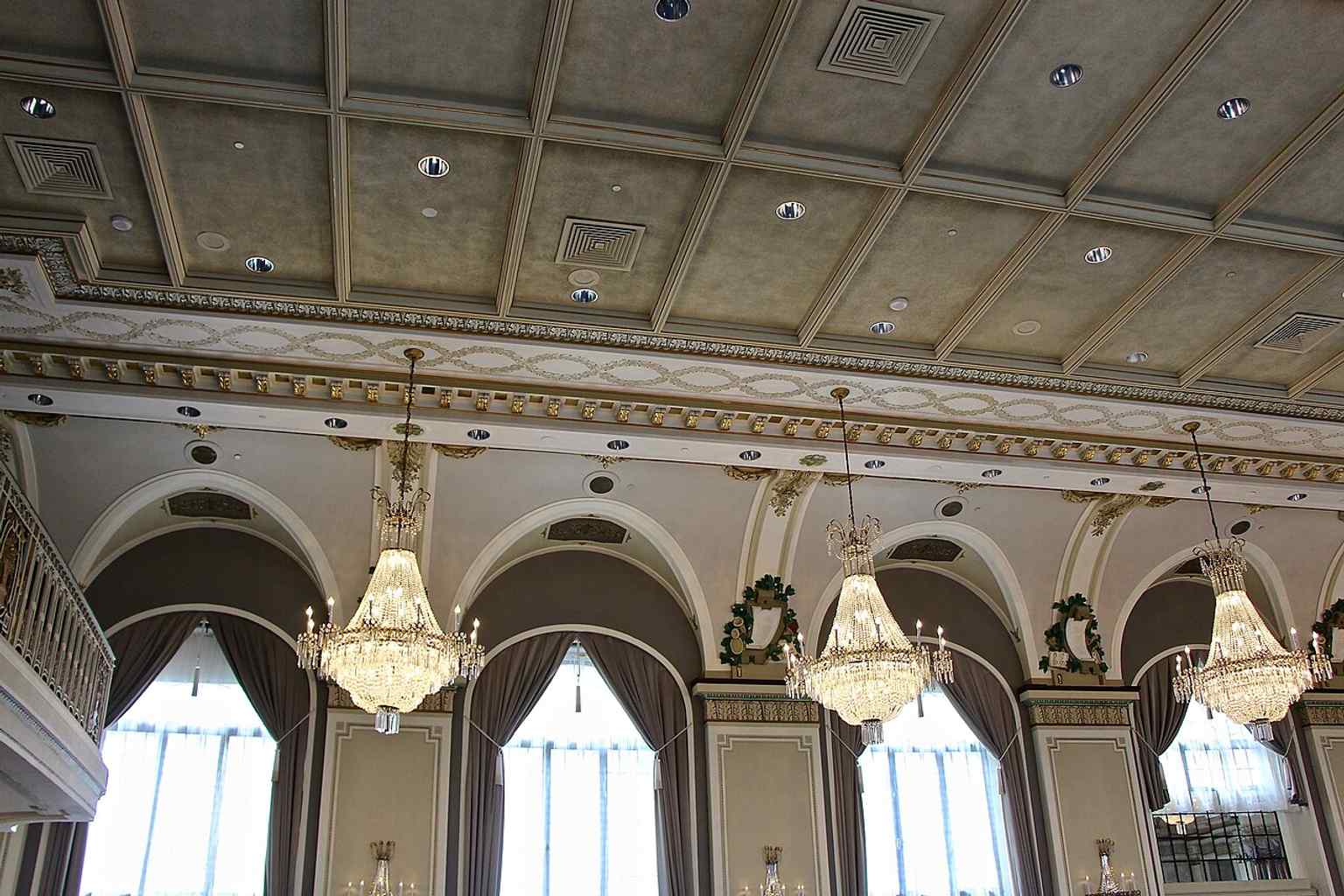
Another ballroom view, showing the polished formal setting where guests like Princess Grace and world leaders attended major Château Frontenac events.Photo: Thomas1313, Wikimedia Commons, CC BY-SA 4.0. Cropped & resized. 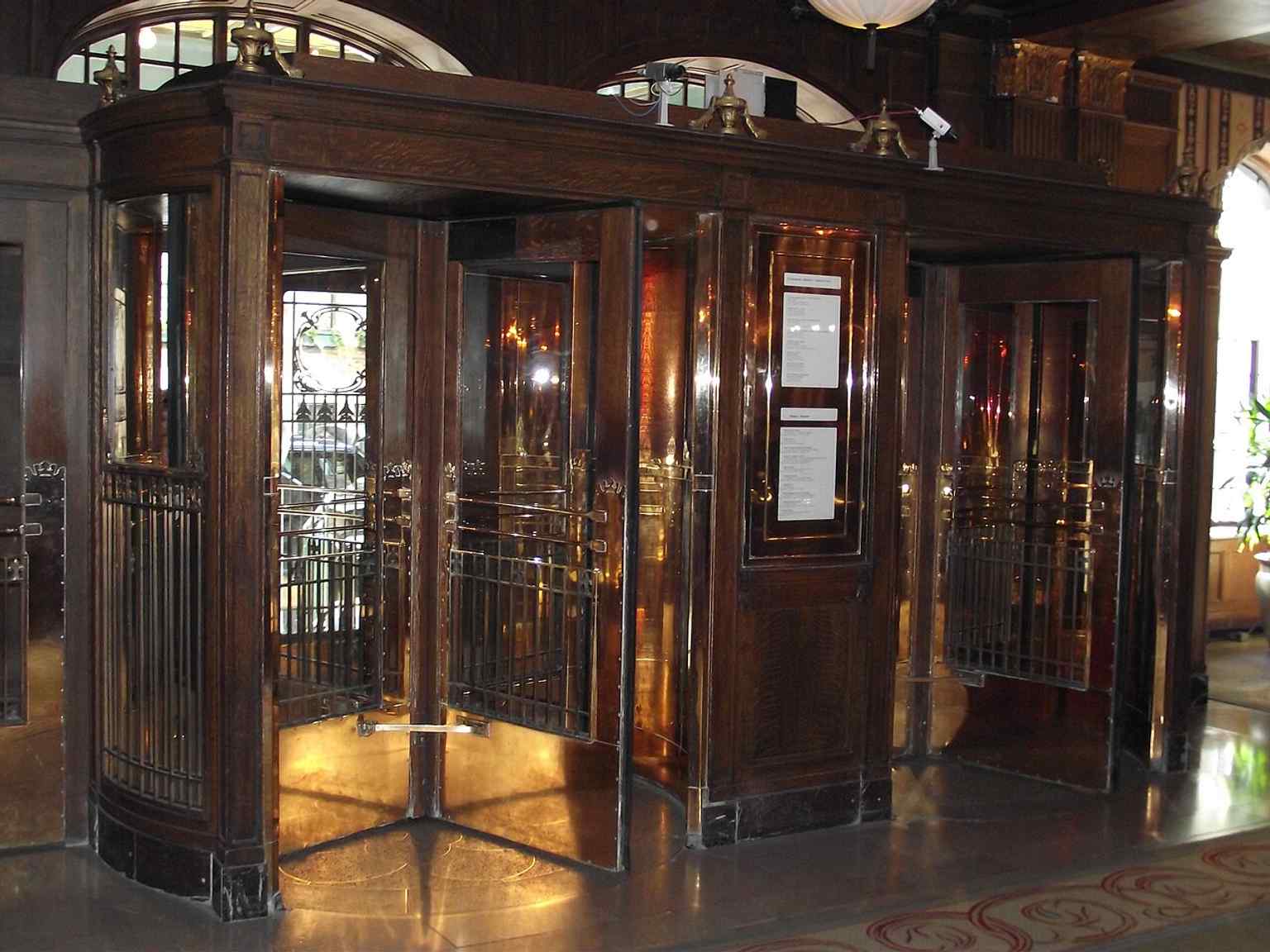
An interior view of the hotel, reflecting the lavish comfort that set this 1893 railway hotel apart, with grand public spaces and historic luxury.Photo: Sylvainbrousseau, Wikimedia Commons, CC BY-SA 3.0. Cropped & resized. 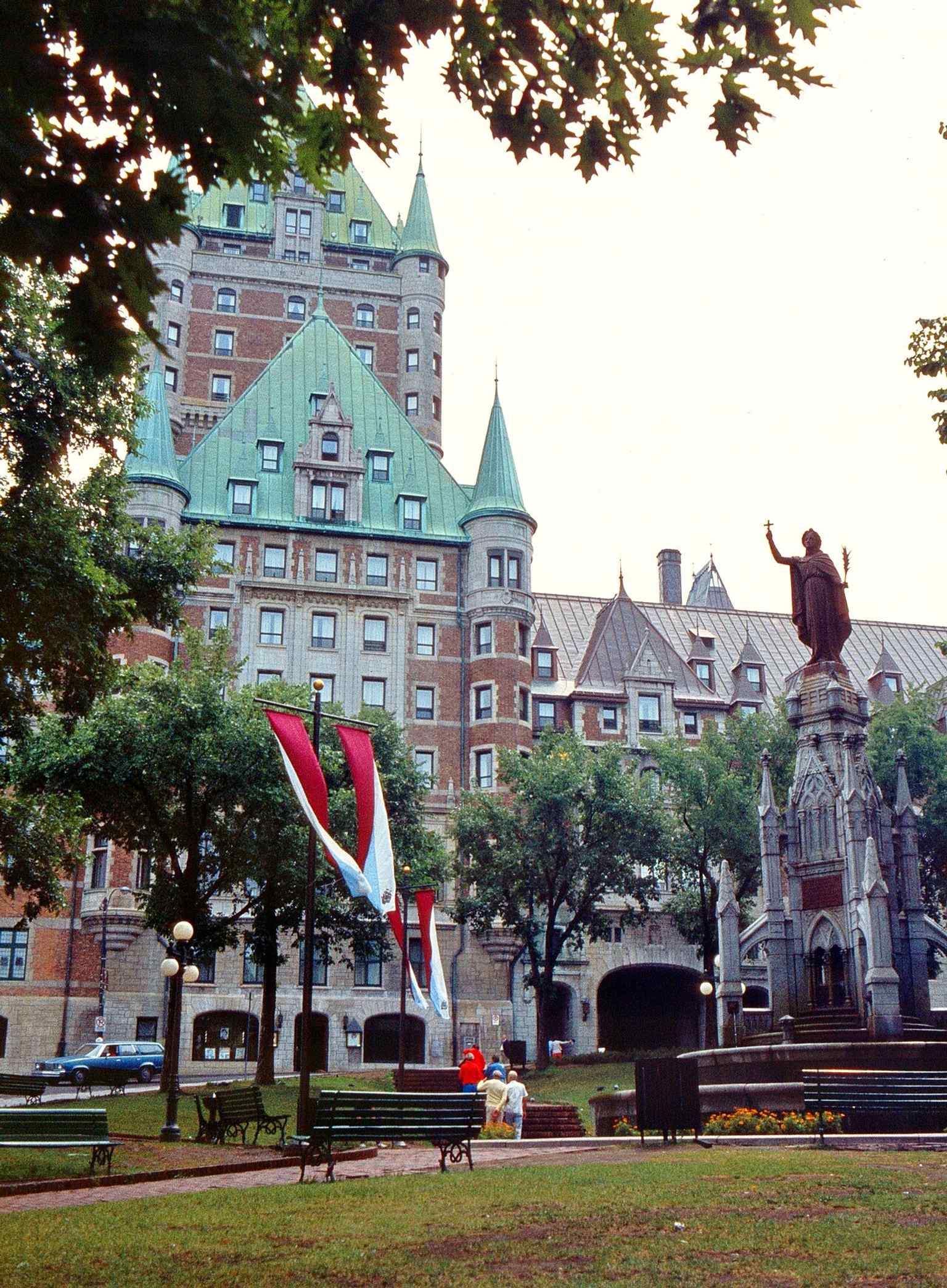
This 1983 postcard-style photo connects the hotel to its long history as a railway-era showpiece, built to attract luxury travelers to Quebec City.Photo: Lothar Weber, Wikimedia Commons, CC BY-SA 4.0. Cropped & resized. On your left, Terrasse Dufferin is a long wooden boardwalk along the cliff, edged with iron railings and marked by round glass domes set into the promenade. This elegant walk…Read moreShow less
Open dedicated page →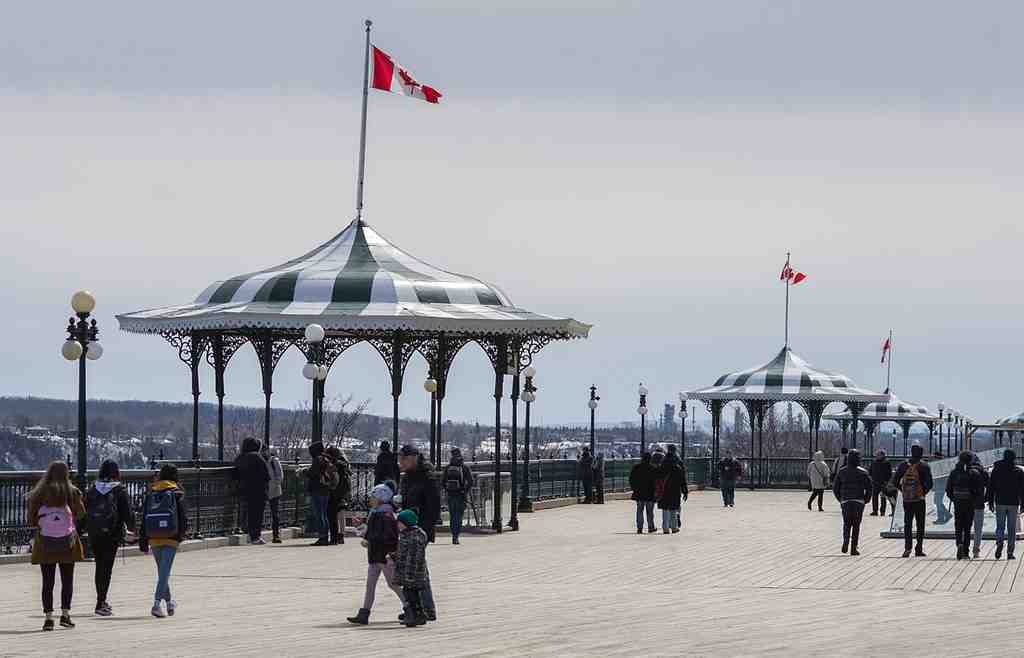
Terrasse DufferinPhoto: Wilfredor, Wikimedia Commons, CC BY-SA 4.0. Cropped & resized. On your left, Terrasse Dufferin is a long wooden boardwalk along the cliff, edged with iron railings and marked by round glass domes set into the promenade.
This elegant walk began after fire tore through Château Saint-Louis in eighteen thirty-four and erased its private terrace. Four years later, Durham Terrace opened the cliff edge to the public. Then came Lord Dufferin. He arrived in eighteen seventy-two just as crews were tearing down Québec’s fortifications, and he argued that the old walls were not dead weight but part of the city’s character. With engineer Charles Baillairgé, he pushed this terrace from eighty-five metres to four hundred thirty, kept the railing, added green-and-white gazebos and a music pavilion, and laid the first stone before leaving Canada in eighteen seventy-eight.
Take a second to notice the boardwalk itself... the stroll, the railings, the open edge. A place meant for defense learned some social skills. If you want, check the before-and-after image in the app; the lighting and fixtures changed, but the promenade still holds its line above the river.
Most visitors miss this part: when the rebuilt terrace opened on the twenty-eighth of June, eighteen seventy-nine, it was tied to the visit of the Marquis of Lorne and Princess Louise. So yes, this was a lookout, but it was also a carefully staged political set. Concerts followed in the music gazebo, toboggan slides arrived in eighteen eighty-four, electric arc lamps lit the terrace in eighteen eighty-five, and Champlain’s statue anchored one end in eighteen ninety-eight.
Look at those glass domes: they reveal the remains of the Saint-Louis forts and châteaux set below the planks. Québec does love building its future on top of its previous draft.
From here, you stand between upper and lower city, between command and leisure. When you’re ready, Notre-Dame de Québec Basilica-Cathedral is about a four-minute walk, and this terrace stays open all day, every day.
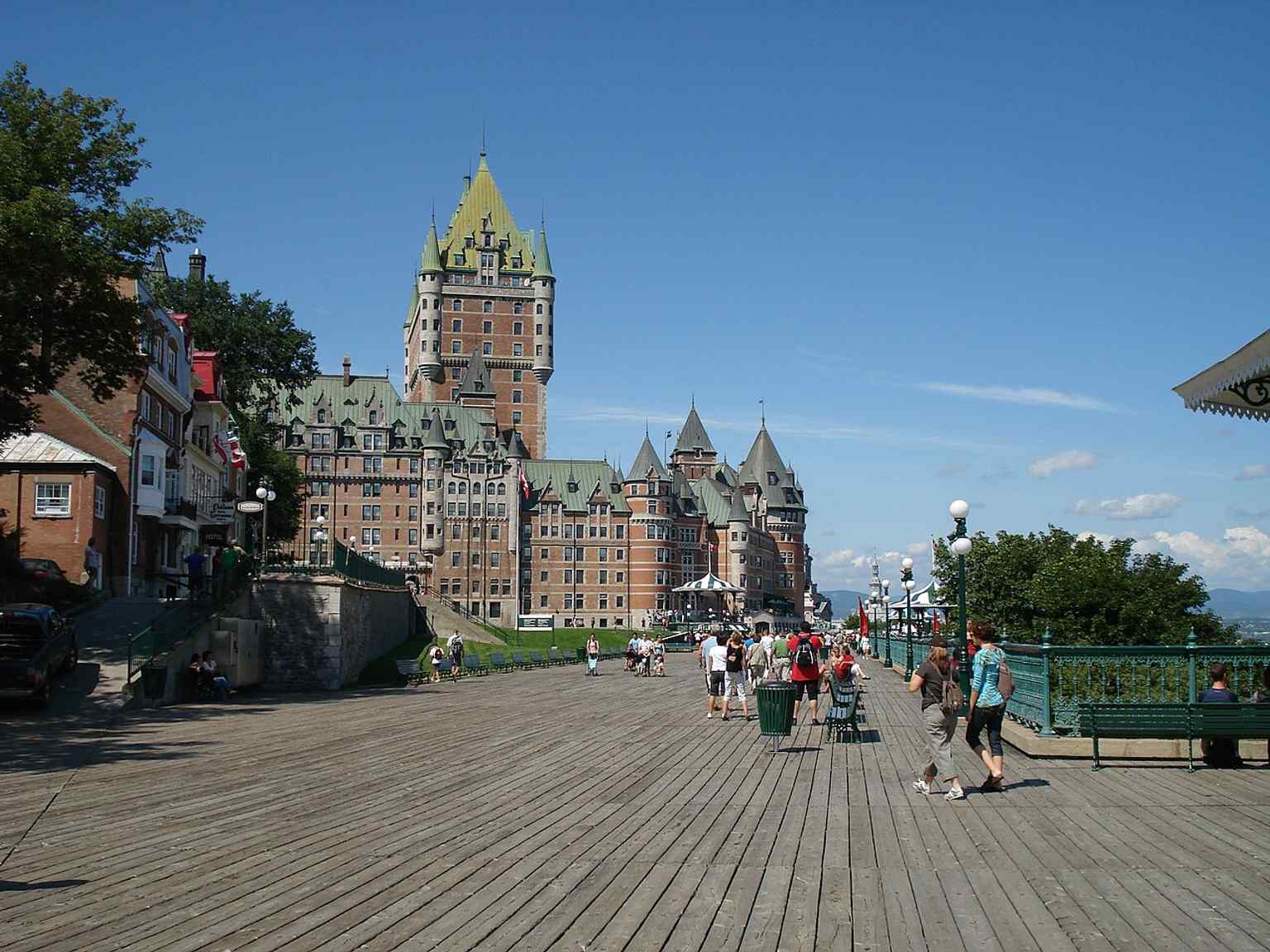
A wide view of Terrasse Dufferin, the cliffside promenade that replaced the old Durham Terrace after the 1834 fire and opened the waterfront to the public.Photo: Mathieu BROSSAIS, Wikimedia Commons, CC BY 4.0. Cropped & resized. 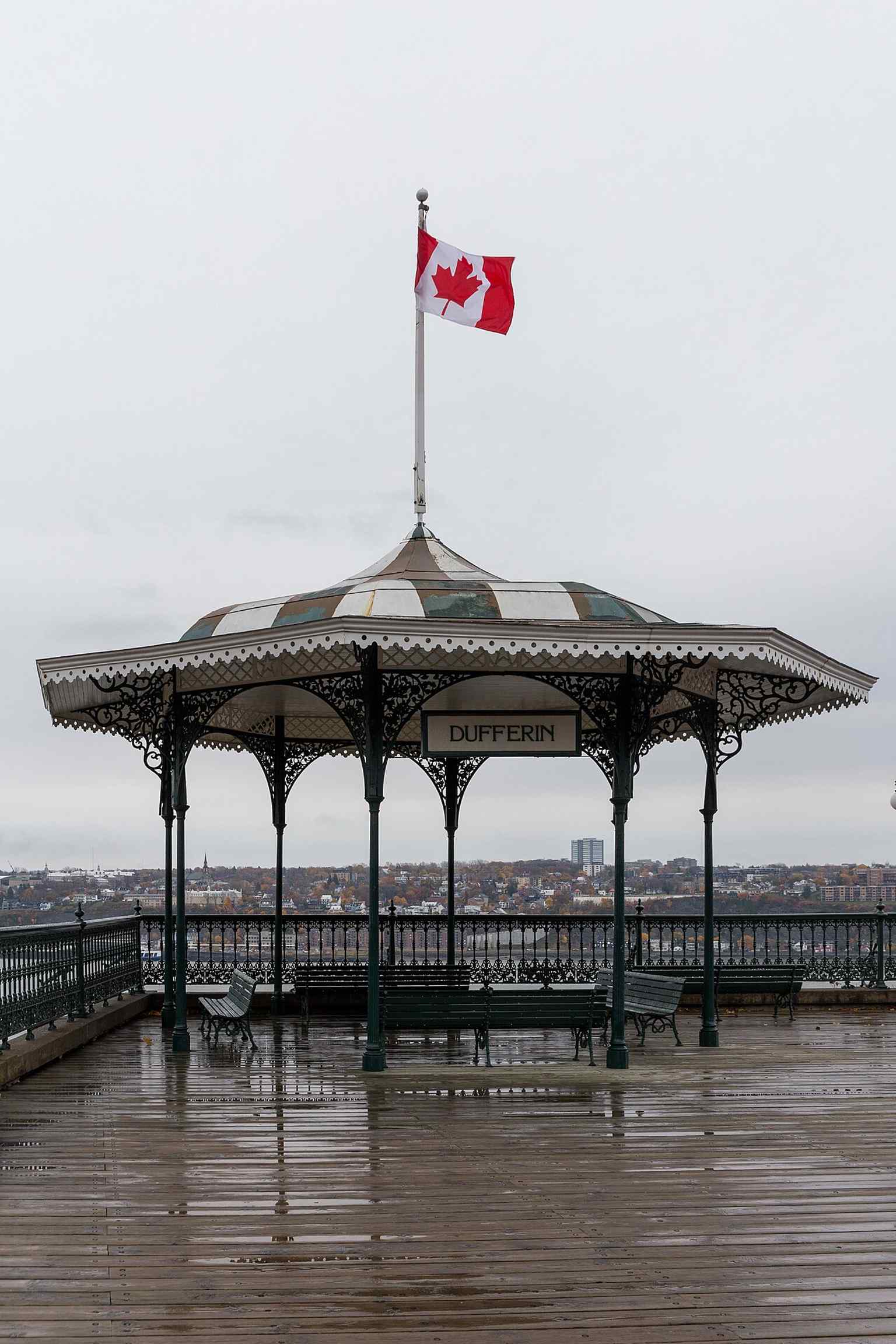
The upper section of Dufferin Terrace in 2024, with the lookout space stretching along the cliff edge above the St. Lawrence.Photo: Pymouss, Wikimedia Commons, CC BY-SA 4.0. Cropped & resized. 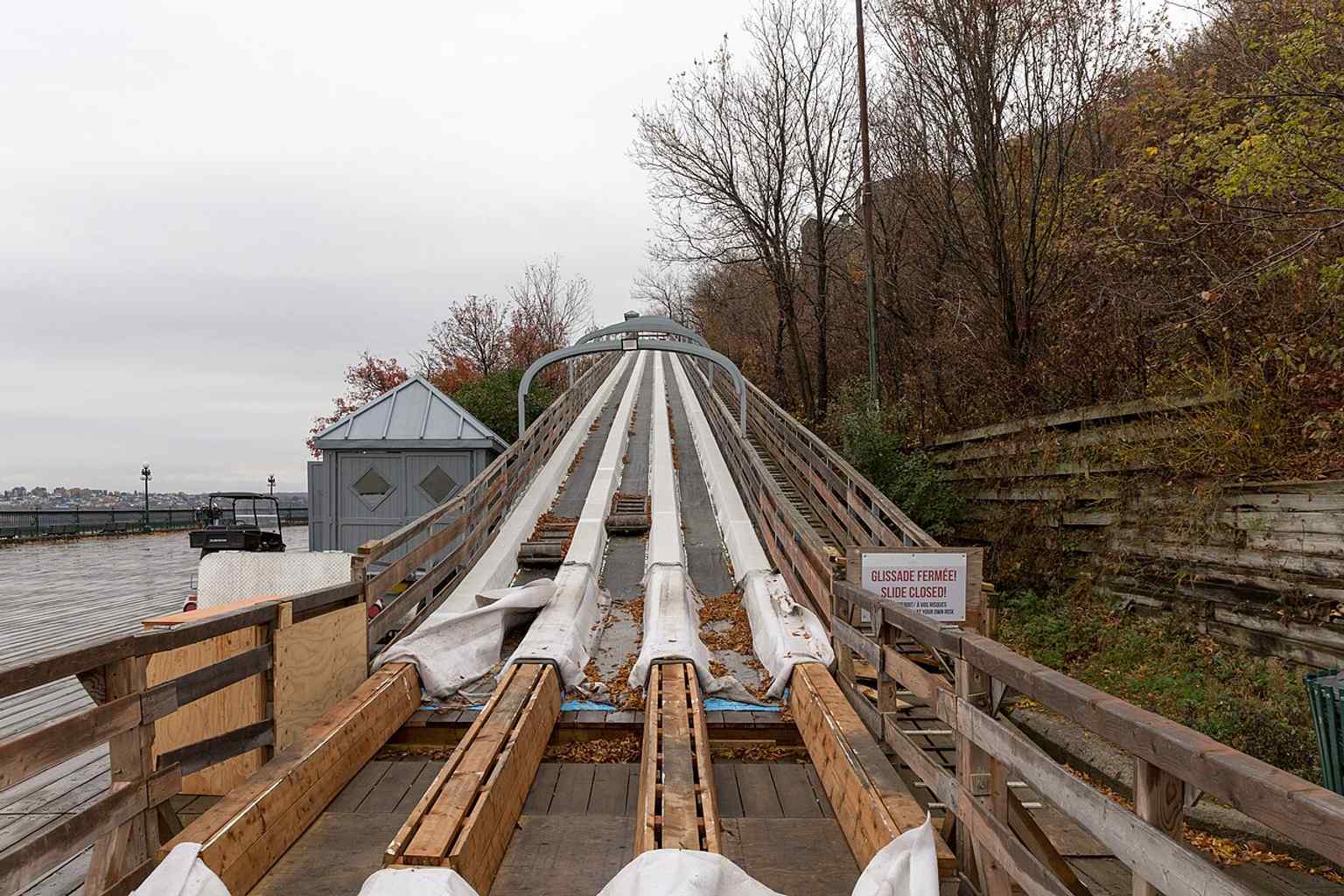
This view emphasizes the open boardwalk and railings that define the terrace, echoing the 19th-century expansion and promenade design.Photo: Pymouss, Wikimedia Commons, CC BY-SA 4.0. Cropped & resized. 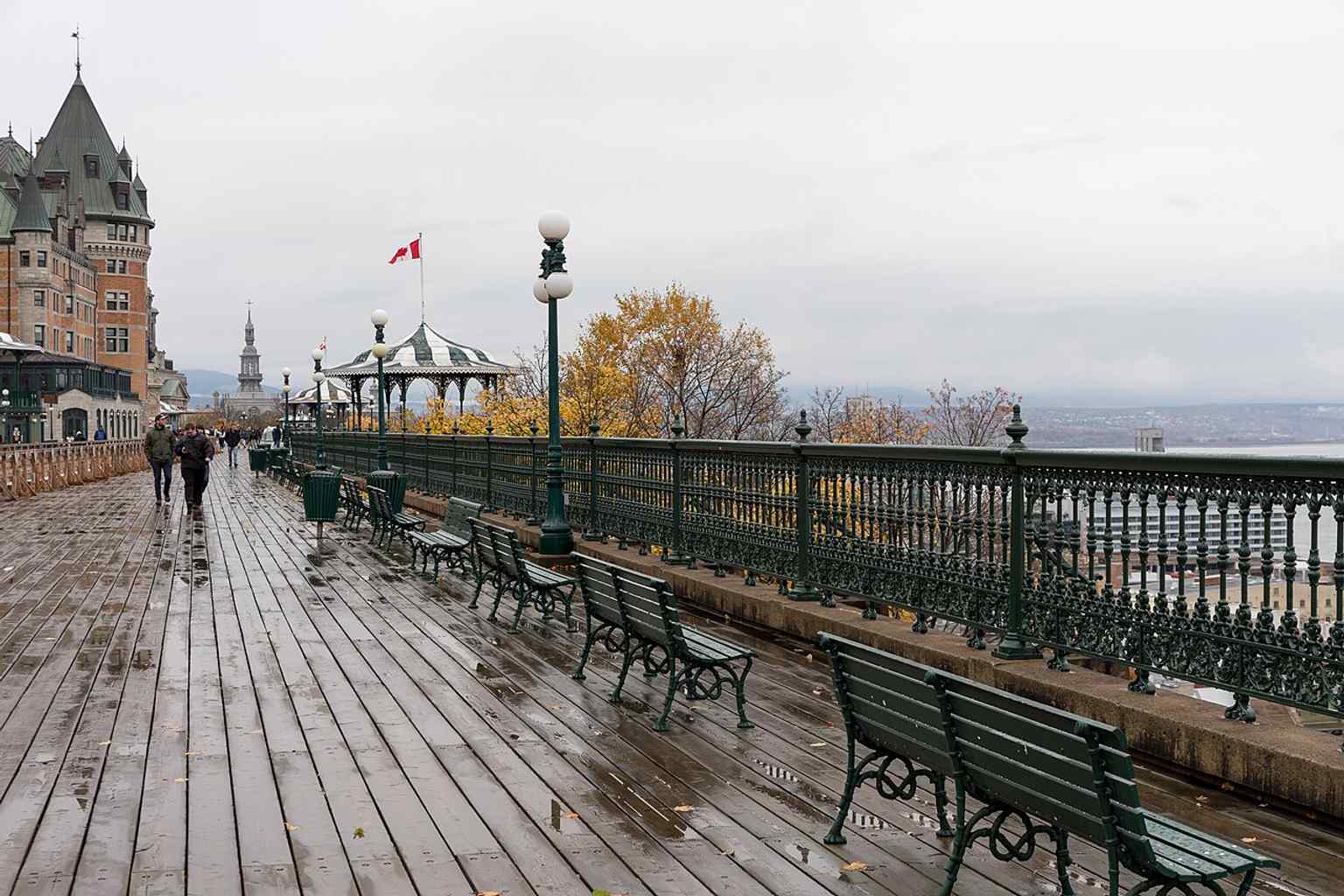
A closer look at the terrace’s built features, the kind of boardwalk setting where the first electric arc streetlamps once lit a public venue in 1885.Photo: Pymouss, Wikimedia Commons, CC BY-SA 4.0. Cropped & resized. 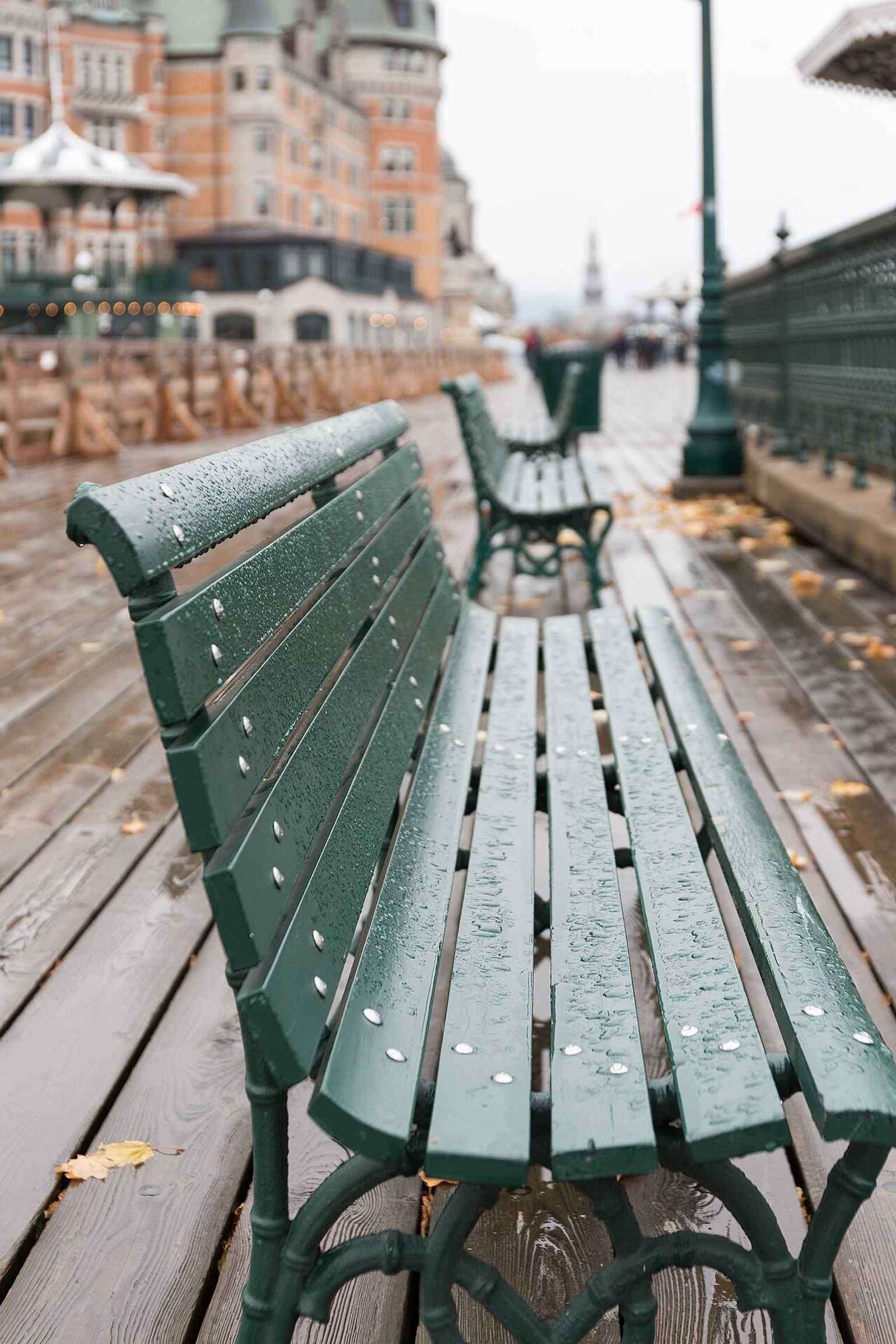
A detail view of the terrace surface and edge, evoking the modern boardwalk built over the archaeological remains of Saint-Louis Forts and Châteaux.Photo: Pymouss, Wikimedia Commons, CC BY-SA 4.0. Cropped & resized. 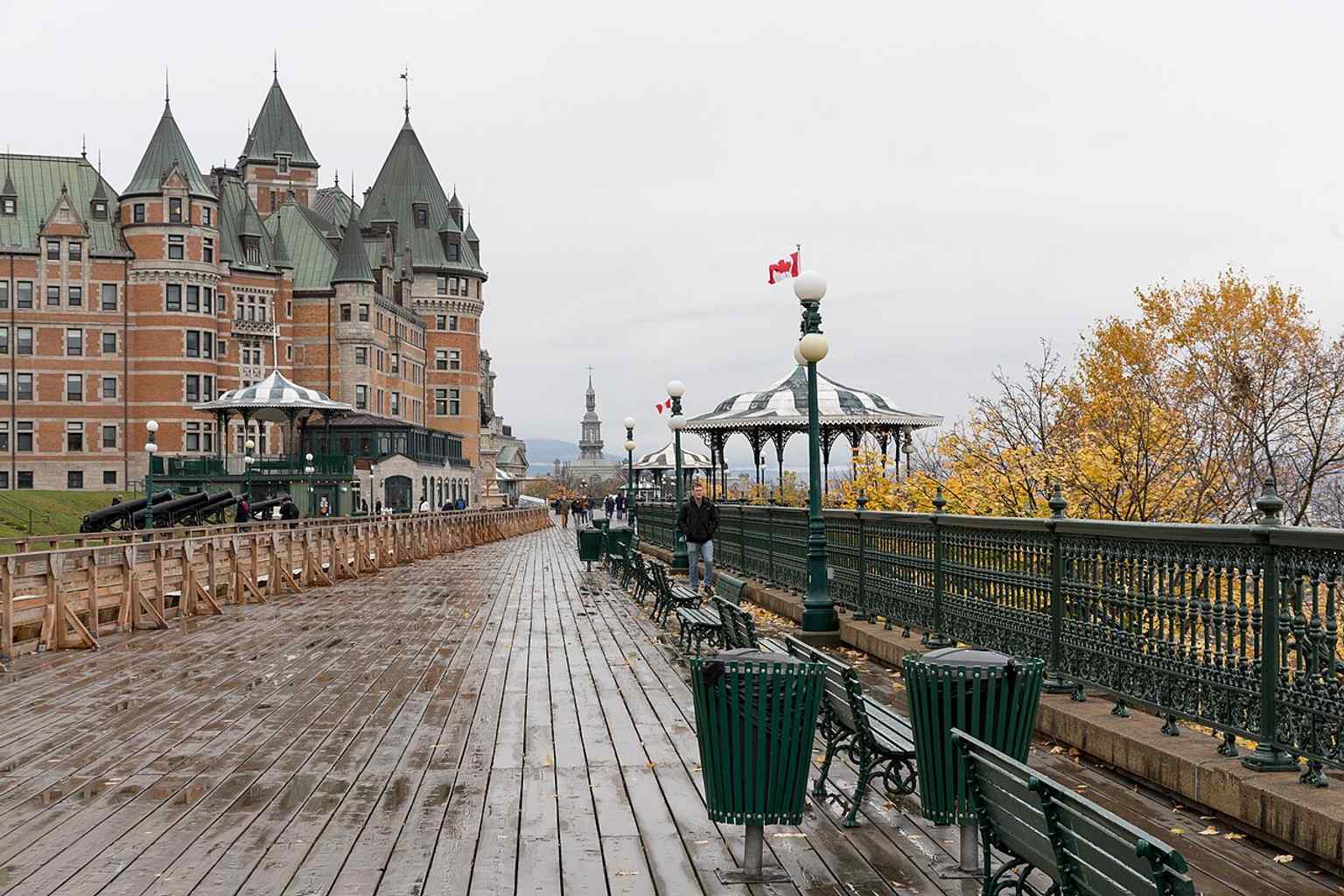
Another angle on the terrace’s long public walk, linking the lookout to the ceremonial role it has played since the 1879 opening.Photo: Pymouss, Wikimedia Commons, CC BY-SA 4.0. Cropped & resized. 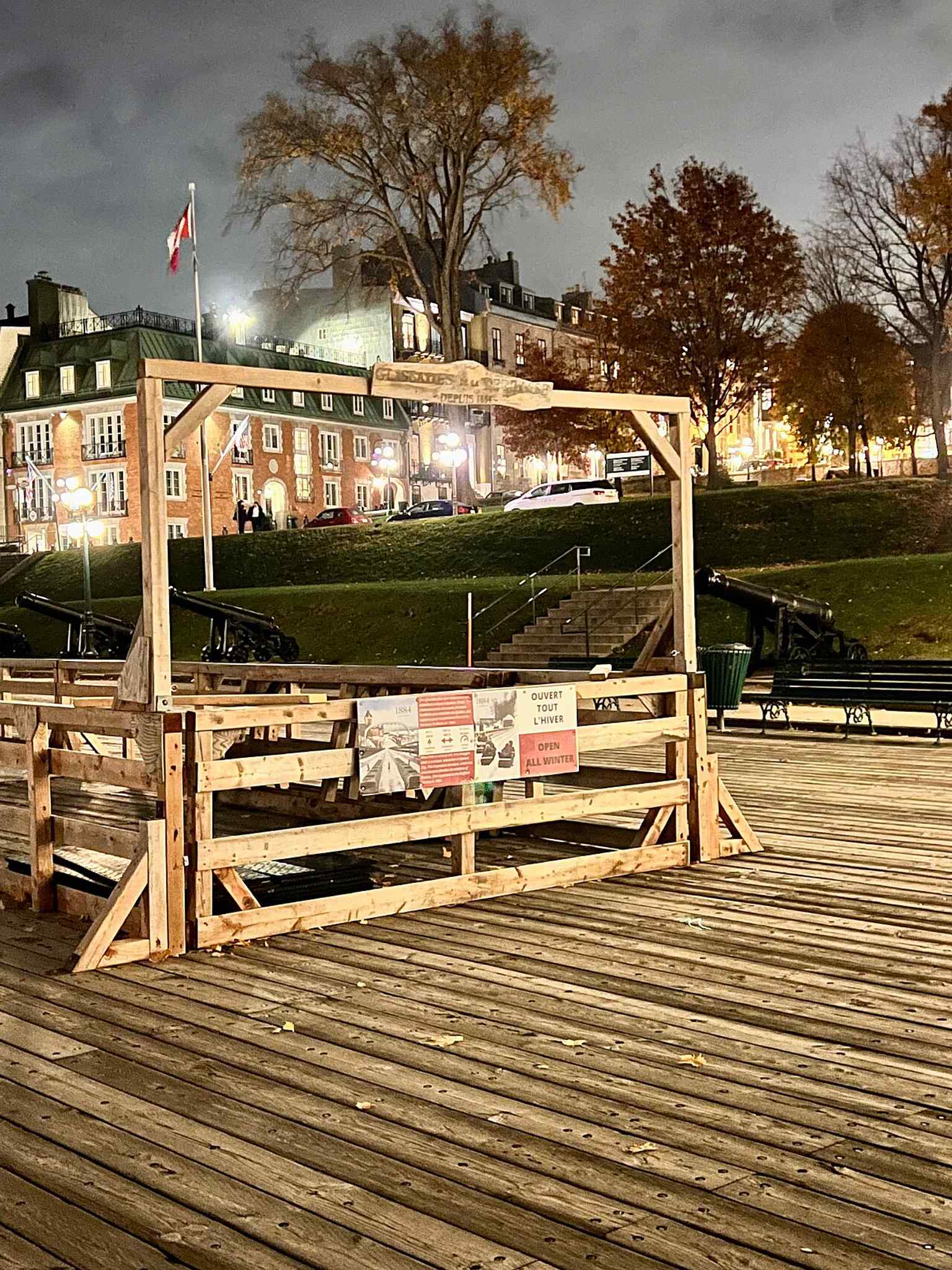
A terrace detail that helps represent the promenade’s lively public role, from 19th-century concerts to today’s street performances.Photo: Cactus0625, Wikimedia Commons, CC BY-SA 4.0. Cropped & resized. On your left, look for a broad pale-stone façade with a triangular classical pediment and one oddly blunt tower without a spire, the basilica’s most recognizable quirk. This is…Read moreShow less
Open dedicated page →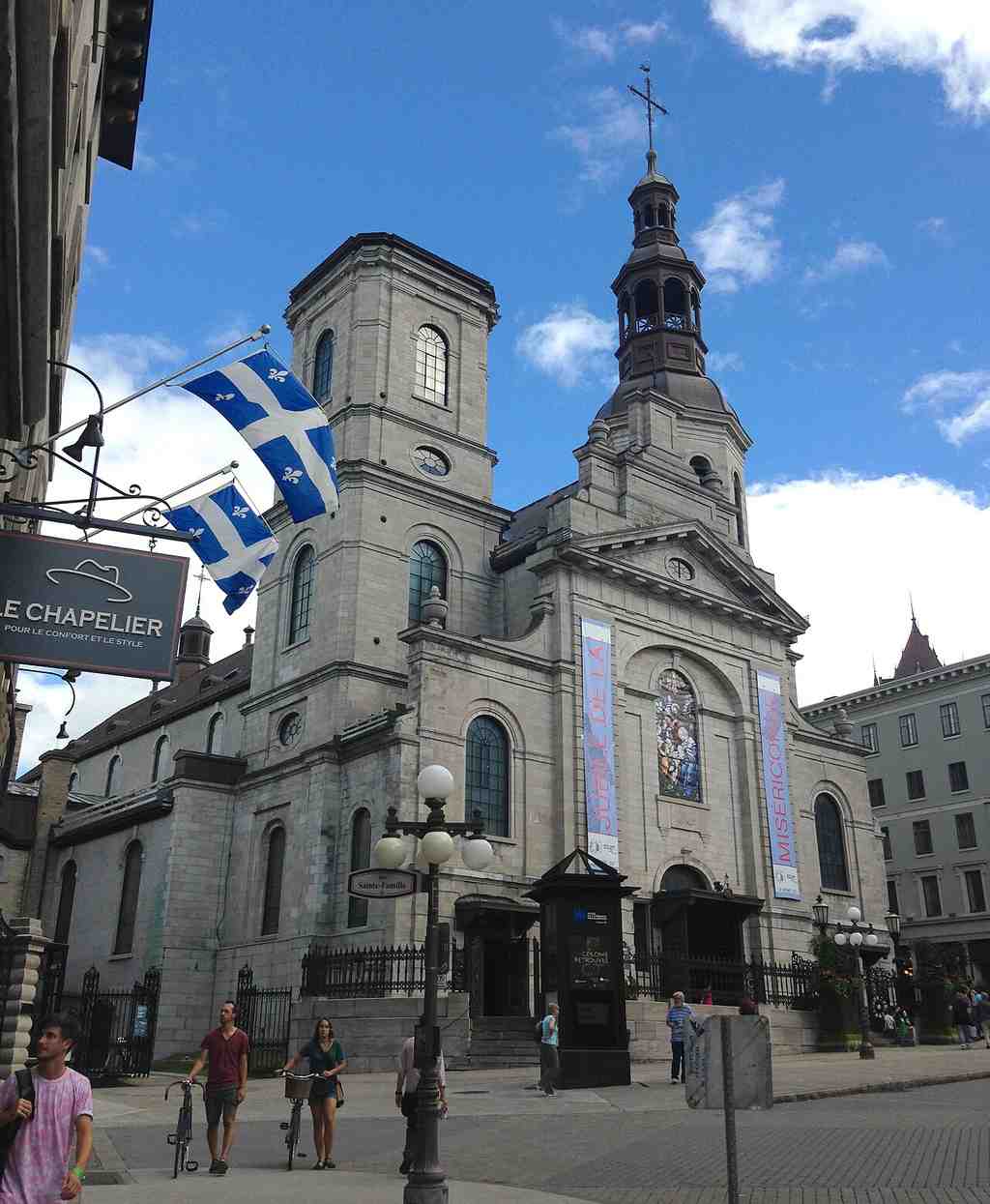
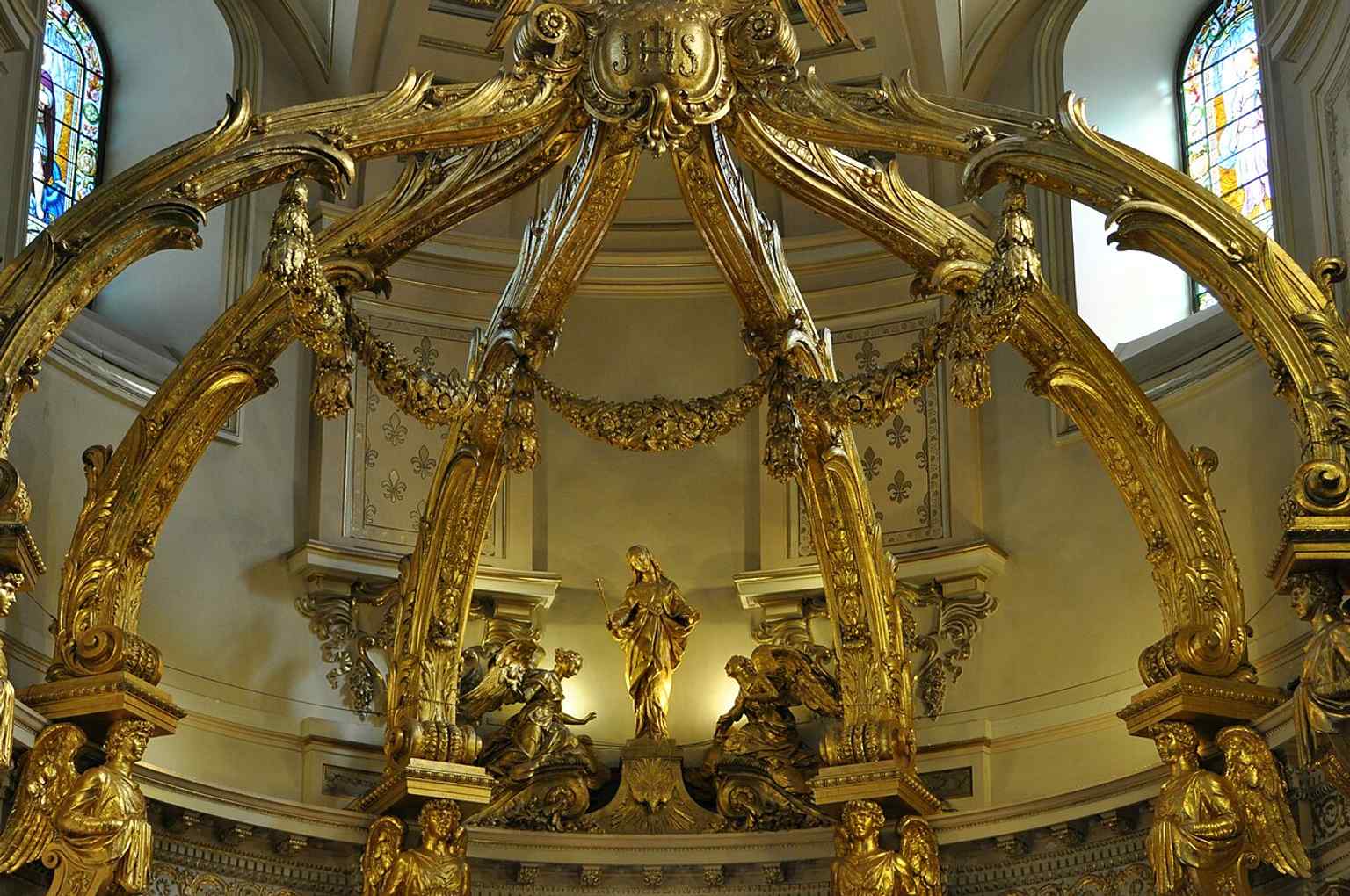
Notre-Dame de Québec Basilica-CathedralPhoto: Judicieux, Wikimedia Commons, CC BY-SA 4.0. Cropped & resized. On your left, look for a broad pale-stone façade with a triangular classical pediment and one oddly blunt tower without a spire, the basilica’s most recognizable quirk.
This is not simply an old church. It is the primatial church of Canada, the senior ceremonial seat of the country’s Catholic Church, and the oldest diocesan seat in North America north of Mexico. It also serves the oldest parish on the continent north of Mexico, and in eighteen seventy-four Rome raised it to the rank of basilica minor, a special papal honor.
The surprise here is scale. François de Laval, the first bishop of Quebec, did not preside over a tidy local parish. His diocese stretched from Quebec toward the Great Lakes and down to the Mississippi. Louis the Fourteenth paid for the first major enlargement, so this small sanctuary in Upper Town became a religious command center for a vast part of New France. If Holy Trinity expressed British authority in stone, this place carried an older Catholic map... and a much larger one. Modest frontage, continental ambitions.
The first church on this site appeared in sixteen forty-seven as Notre-Dame-de-la-Paix, and the first Mass followed in sixteen fifty. After Quebec became a diocese in sixteen seventy-four, architects and bishops kept enlarging it. Then war intervened. British bombardment during the siege of seventeen fifty-nine ravaged the cathedral. After the Conquest, Jean Baillairgé, who had come from France as a teenager, rebuilt it almost exactly as before and added the southern bell tower. His son François, trained in Paris, returned to shape the interior decoration with him. Later, François’s son Thomas redesigned the façade in the eighteen forties in a neoclassical style, meaning it borrowed the balanced forms of ancient Greece and Rome. He planned two matching towers. The ground, rather sensibly, refused. Only the north tower went up, and even that lost its spire because the foundations could not take the weight.
Then came another blow. In December of nineteen twenty-two, fire gutted the church and left only the masonry standing. Many artworks vanished; only the consecrated hosts were saved. The loss came to one million dollars then, roughly the value of about eighteen million dollars now. If you want, check the before-and-after image in the app to see the cathedral mid-reconstruction after that disaster. From nineteen twenty-three to nineteen thirty, Raoul Chênevert and Maxime Roisin used original plans and old photographs to rebuild it with remarkable fidelity. What stands before you is both restoration and re-creation, memory rebuilt on purpose.
That memory goes deep. The crypt holds more than nine hundred burials, including bishops of Quebec and four governors of New France, among them Frontenac. François de Laval rests here too, marked by a bronze recumbent figure added in the nineteen nineties. And somewhere near the earliest chapel, archaeologists still hope to find Champlain’s tomb. The building keeps a few secrets for itself.
It also remains a working church, not a frozen relic. Its Holy Door - a special pilgrimage entrance opened in the twenty tens - became the first in America and the first outside Europe, drawing hundreds of thousands of pilgrims.
From here, head toward Breakneck Stairs, where Upper Town’s grandeur gives way to the city’s steeper, more practical truth. If you want to go inside, the basilica generally opens Monday through Wednesday from nine in the morning to three in the afternoon and stays closed Thursday through Sunday.
A bird’s-eye view of the basilica in Old Québec, showing how it sits along Rue De Buade in the historic heart of the city.Photo: Hélène Grenier, Wikimedia Commons, CC BY-SA 3.0. Cropped & resized. 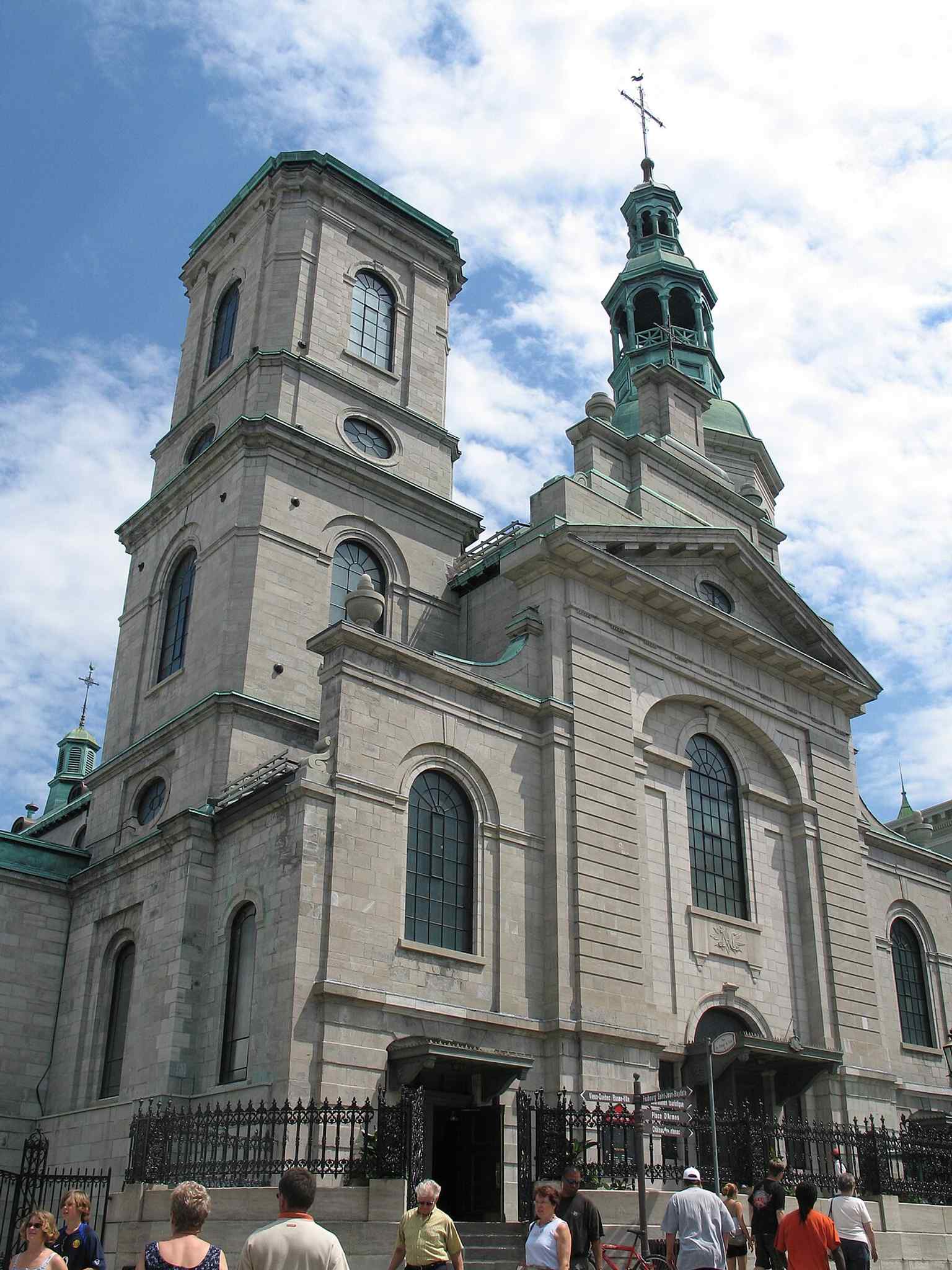
The basilica’s front façade in the old city — the primatial church of Canada and the seat of the Archdiocese of Québec.Photo: No machine-readable author provided. Bouchecl assumed (based on copyright claims)., Wikimedia Commons, CC BY-SA 3.0. Cropped & resized. 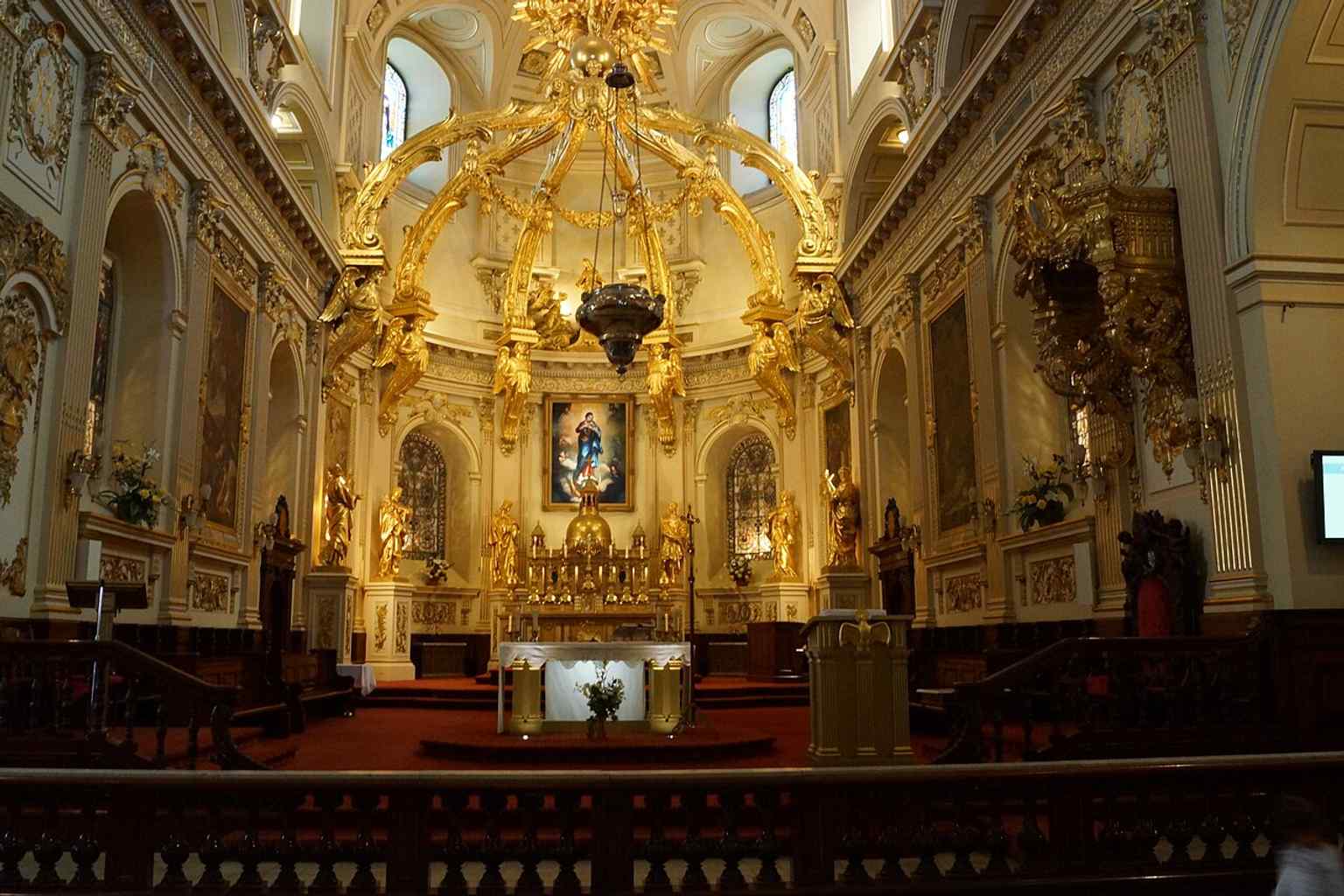
A clear full view of the cathedral-basilica in 2012, useful for showing its landmark presence in Vieux-Québec.Photo: Renaudp10, Wikimedia Commons, CC BY-SA 3.0. Cropped & resized. Look for a steep metal-and-wood stairway zigzagging between stone walls, its landings breaking the climb into sharp ramps. This is the vertical city in miniature: Upper Town…Read moreShow less
Open dedicated page →Look for a steep metal-and-wood stairway zigzagging between stone walls, its landings breaking the climb into sharp ramps.
This is the vertical city in miniature: Upper Town above, Lower Town below, and life shaped by the hard business of moving between them. When Samuel de Champlain put his home atop Cape Diamond in sixteen twenty, people soon wore a path here; by the mid-seventeenth century it had become the Champlain Stairs, also called the Beggar's Stairs. Reckless young men raced horsecarts down nearby Mountain Hill, making this slope more than a little lively. By around eighteen eighty, the old wooden stairway looked so shaky London guidebooks called it Breakneck. Great branding. Charles Baillairgé restored it in eighteen eighty-nine, and he later gave it a sturdier iron form with three ramps in eighteen ninety-three. If you want the transformation, check the before-and-after image in the app. Today’s widened layout dates to the late nineteen-sixties and still counts fifty-nine steps. Despite the name, serious injuries are not commonly reported. The funicular ahead offers the city’s more modern answer to the same problem, and these stairs stay open twenty-four hours.
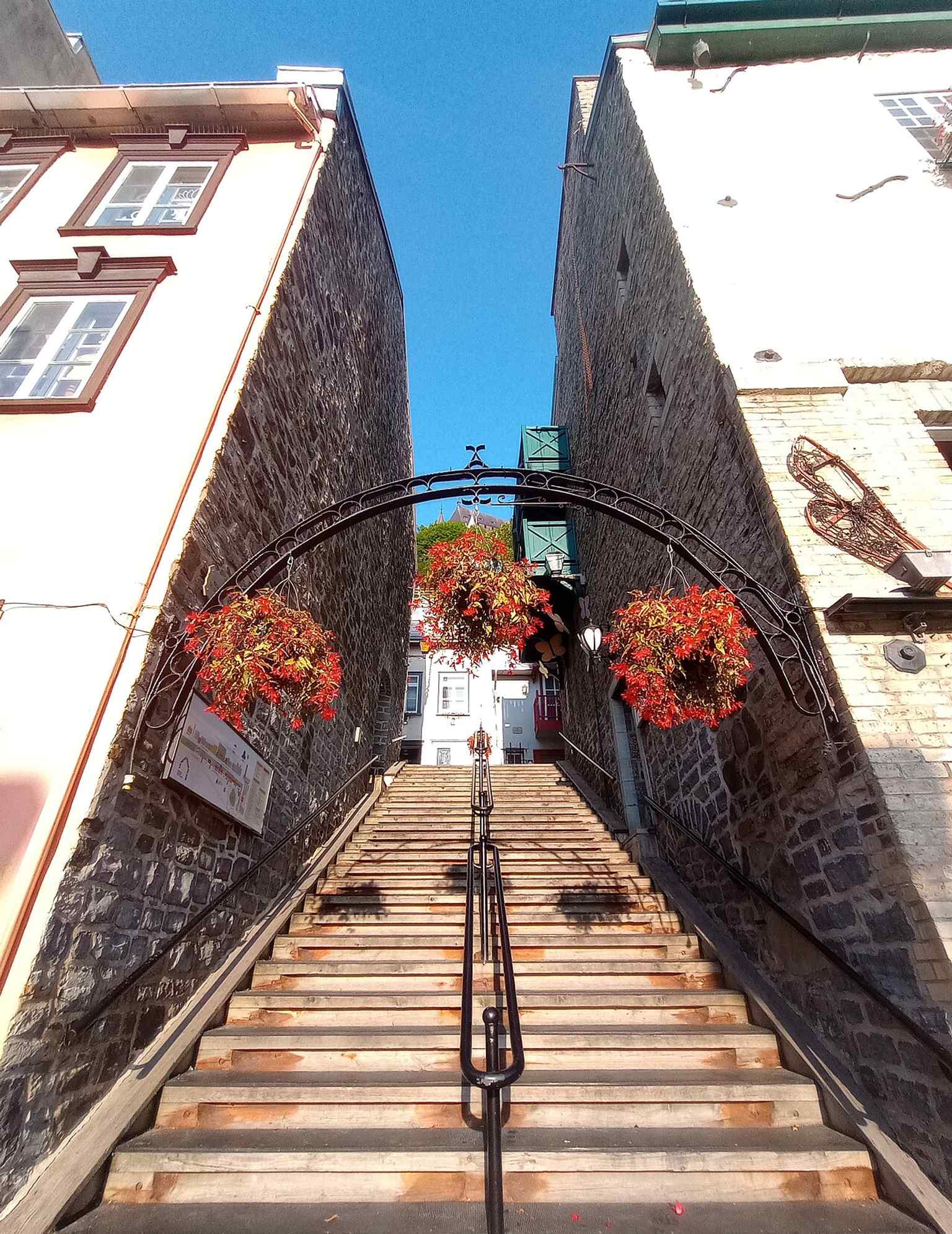
A modern view of Breakneck Stairs in Lower Town, the steep route that became a shortcut between Upper and Lower Québec.Photo: Daniel Di Palma, Wikimedia Commons, CC BY-SA 4.0. Cropped & resized. On your right, the Old Quebec Funicular appears as a steep glass-and-metal railway cut into the cliff, with angular stations and cabins sliding up the stone slope. Quebec solved…Read moreShow less
Open dedicated page →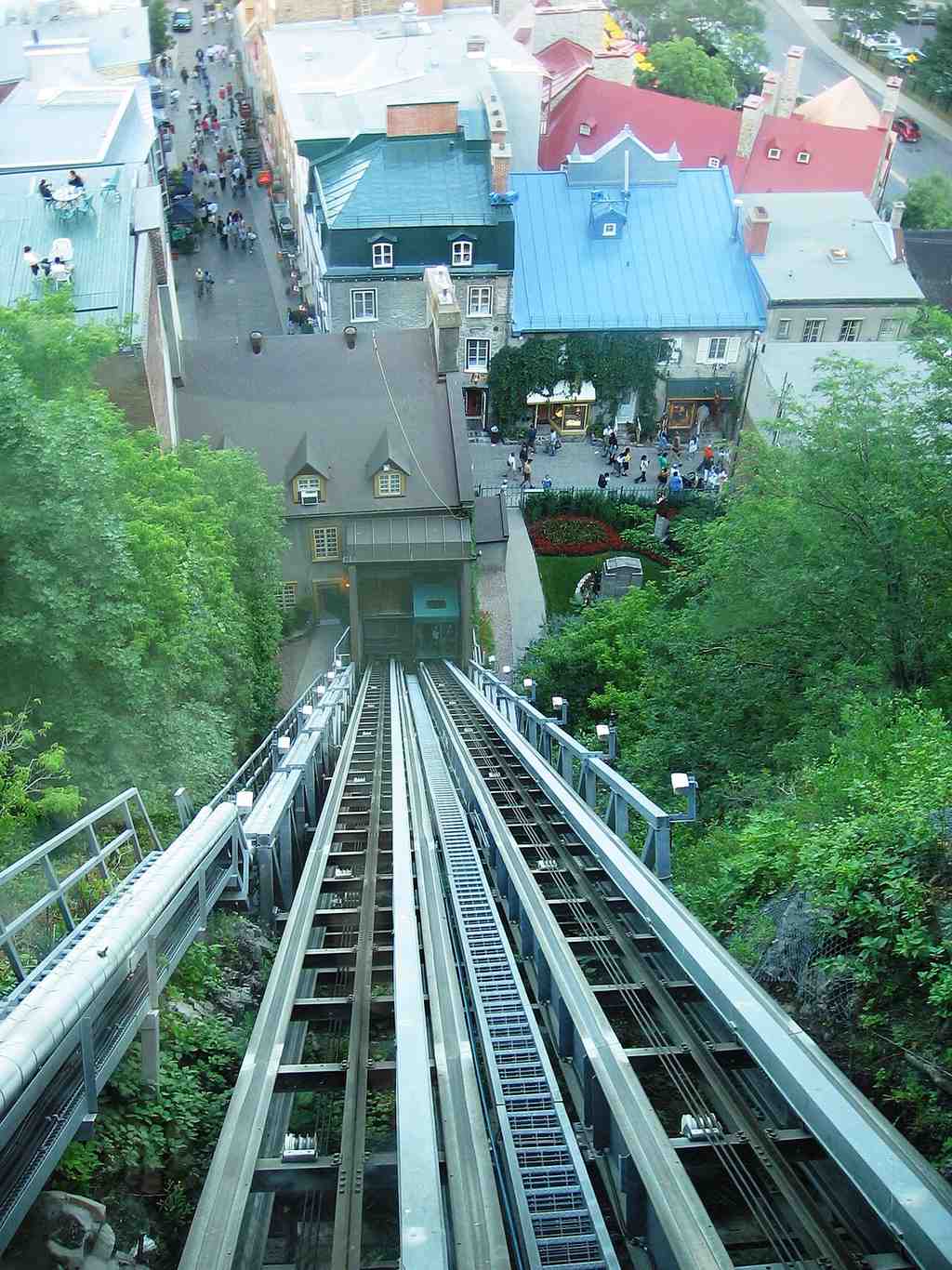
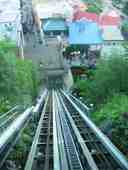
Old Quebec FunicularPhoto: GarrettRock, Wikimedia Commons, CC BY-SA 3.0. Cropped & resized. On your right, the Old Quebec Funicular appears as a steep glass-and-metal railway cut into the cliff, with angular stations and cabins sliding up the stone slope.
Quebec solved its vertical-city problem with prayer, staircases... and then, finally, engineering. William Griffith opened this line on the seventeenth of November, eighteen seventy-nine, to connect Upper and Lower Town without requiring heroic lungs. Most people ride it and assume it was always sleek. It was not. The first system used water ballast - meaning one car carried enough water weight to pull the other - along with steam power. Clever, practical, slightly improvised... very nineteenth century.
In nineteen oh seven, Alexander Cummings converted the line to electricity, turning a mechanical novelty into real urban transport. Then disaster struck on the second of July, nineteen forty-five: fire destroyed the funicular and badly damaged the nearby Louis-Jolliet house. The city rebuilt in nineteen forty-six with metal shelters, choosing resilience over nostalgia. In nineteen seventy-eight, new glass-enclosed cabins made the ride part commute, part spectacle. Take a look at the image on your screen and you can see exactly why the view became part of the appeal.
But this line also carries harder memory. On the twelfth of October, nineteen ninety-six, a cable broke, one cabin crashed with sixteen people aboard, one passenger died, and fifteen were injured. Another injured passenger later died from his injuries. After that, the whole system got a serious rethink.
So here it is: a machine that began as a fix for a cliff and ended up folded into the city’s romance. And down below, Place Royale waits with the older origin story. If you want to ride later, it generally operates from nine A-M to nine P-M daily.
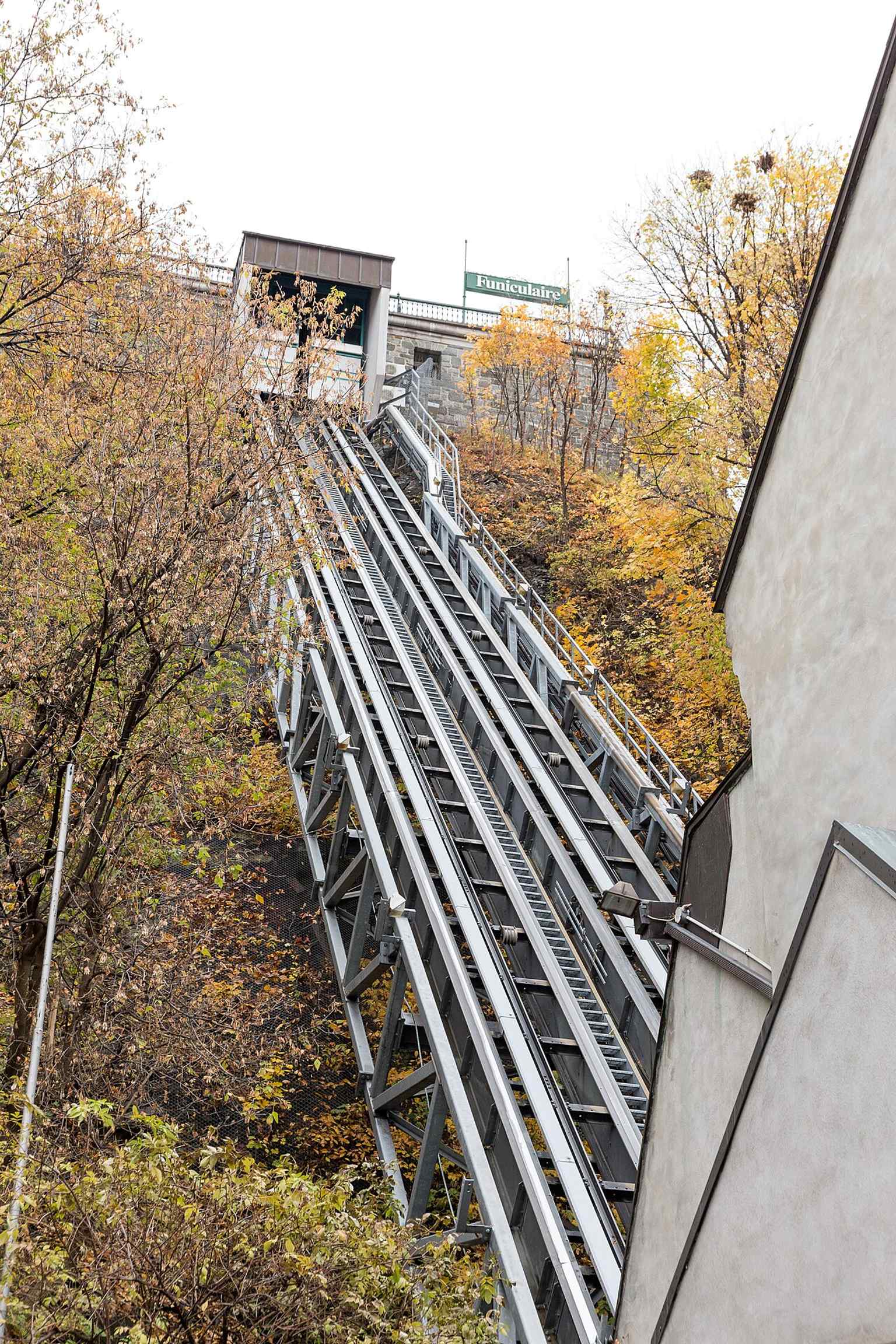
The funicular rising from Petit-Champlain Street, the hillside link that first opened in 1879 to bridge Upper and Lower Town.Photo: Pymouss, Wikimedia Commons, CC BY-SA 4.0. Cropped & resized. On your right, look for a cobbled stone square framed by steep-roofed stone houses, with the small stone church of Notre-Dame-des-Victoires closing the far end and a royal bust at…Read moreShow less
Open dedicated page →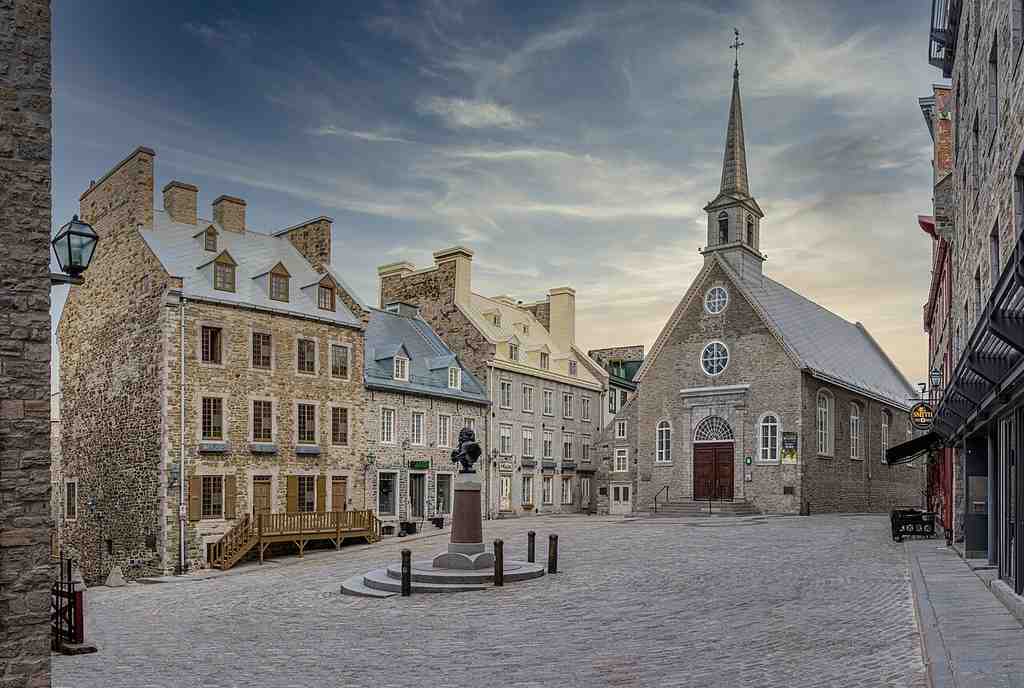
Place Royale (Quebec)Photo: Wilfredor, Wikimedia Commons, CC0. Cropped & resized. On your right, look for a cobbled stone square framed by steep-roofed stone houses, with the small stone church of Notre-Dame-des-Victoires closing the far end and a royal bust at the center.
This is Place Royale... the city’s layered birthplace. People often call it the cradle of French America, and that is true as far as colonial history goes. But the ground under your feet tells a longer story: archaeologists found objects here reaching back about three thousand years, proof that Indigenous people used this point of land long before Samuel de Champlain arrived with founding plans and a talent for making history look tidy.
In sixteen oh eight, Champlain began building his fortified trading post here, the first permanent French settlement in North America. Fur trade goods moved through this little space, and so did people, languages, bargains, and ambitions. If cities had baby pictures, this square would be one of Quebec’s... though, like most baby pictures, it leaves out a lot of what happened just before the camera clicked.
After a fire in sixteen eighty-two, builders remade the square with stone firewalls, which gave the place its sturdy character. It became a market square, then a royal square after Intendant Champigny raised a bust of Louis the Fourteenth here in sixteen eighty-six. The bronze bust you see now came from France in nineteen twenty-eight, a copy of a marble original by Bernini at Versailles. Because of course even a frontier colony wanted a little royal theater.
The church ahead, Notre-Dame-des-Victoires, began in sixteen eighty-eight on the site of the old King’s storehouse. It remains one of the oldest surviving stone churches in North America north of Mexico. During the siege of seventeen fifty-nine, British forces under James Wolfe battered this area into ruins, and the church fell too. People rebuilt it anyway, because to them it meant more than masonry. It held on to memory when politics had shifted.
If you check the app, the aerial image shows how tightly the old streets still gather around this square, like the city never quite let go of its first footprint.
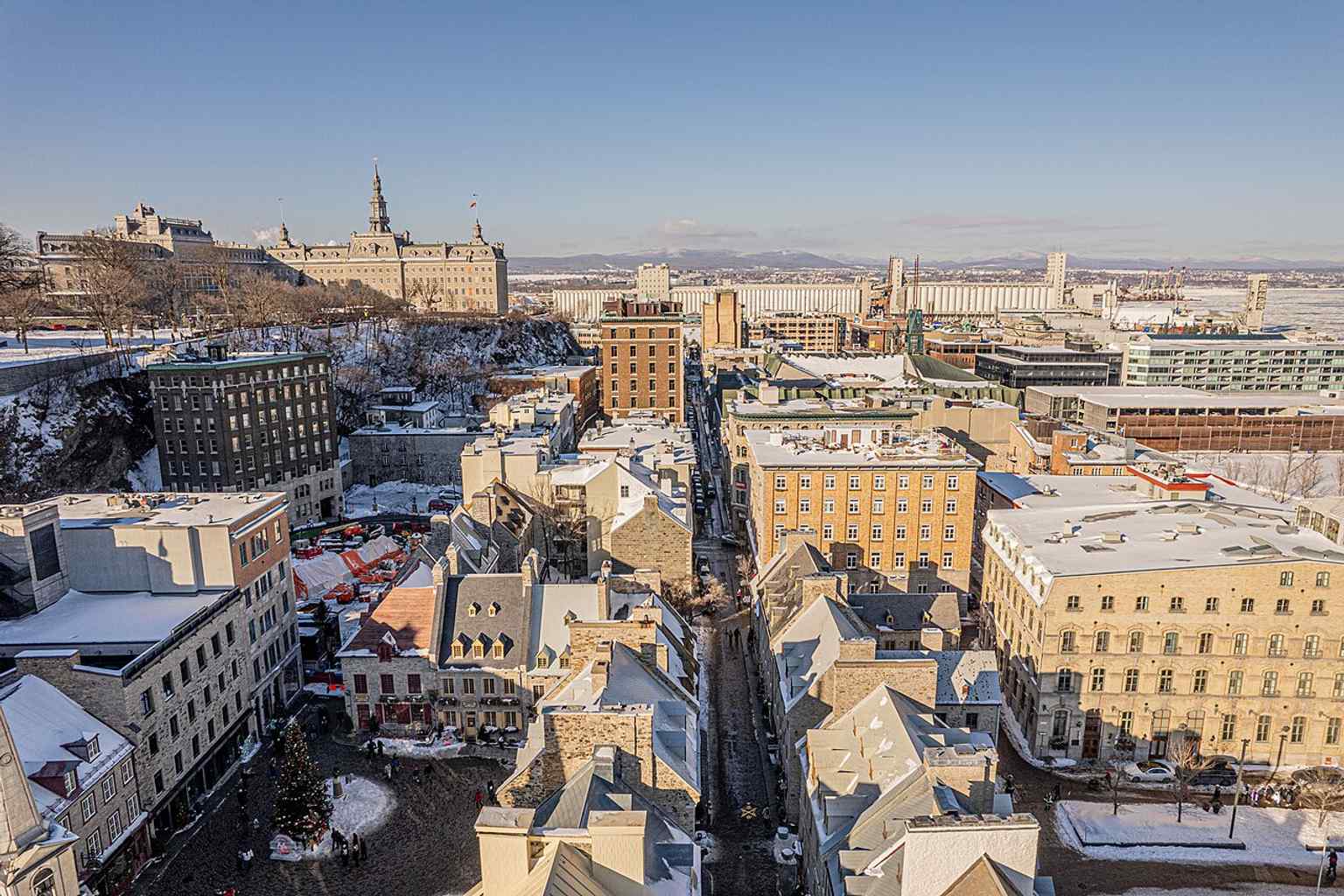
An aerial view of Rue Saint-Pierre beside Place Royale, showing how the old quarter is woven into the historic streets of Vieux-Québec.Photo: Gabriel Picard, Wikimedia Commons, CC BY-SA 4.0. Cropped & resized. And then came another rebuilding. By the twentieth century, trade had moved on and the district decayed. Starting in the nineteen sixties, Quebec restored, reconstructed, and sometimes controversially reimagined these buildings. So this square is not just old; it is also a careful argument about what deserves to survive.
Here’s the question this place leaves hanging: when we call somewhere a city’s birthplace, whose beginning are we honoring... and whose earlier presence slips into the background?
That question follows us to the final stop, the Musée de la civilisation, about a five-minute walk from here, where the city gathers these layers and asks how its story should be told now. And fittingly, Place Royale never really closes; it is open all day, every day.
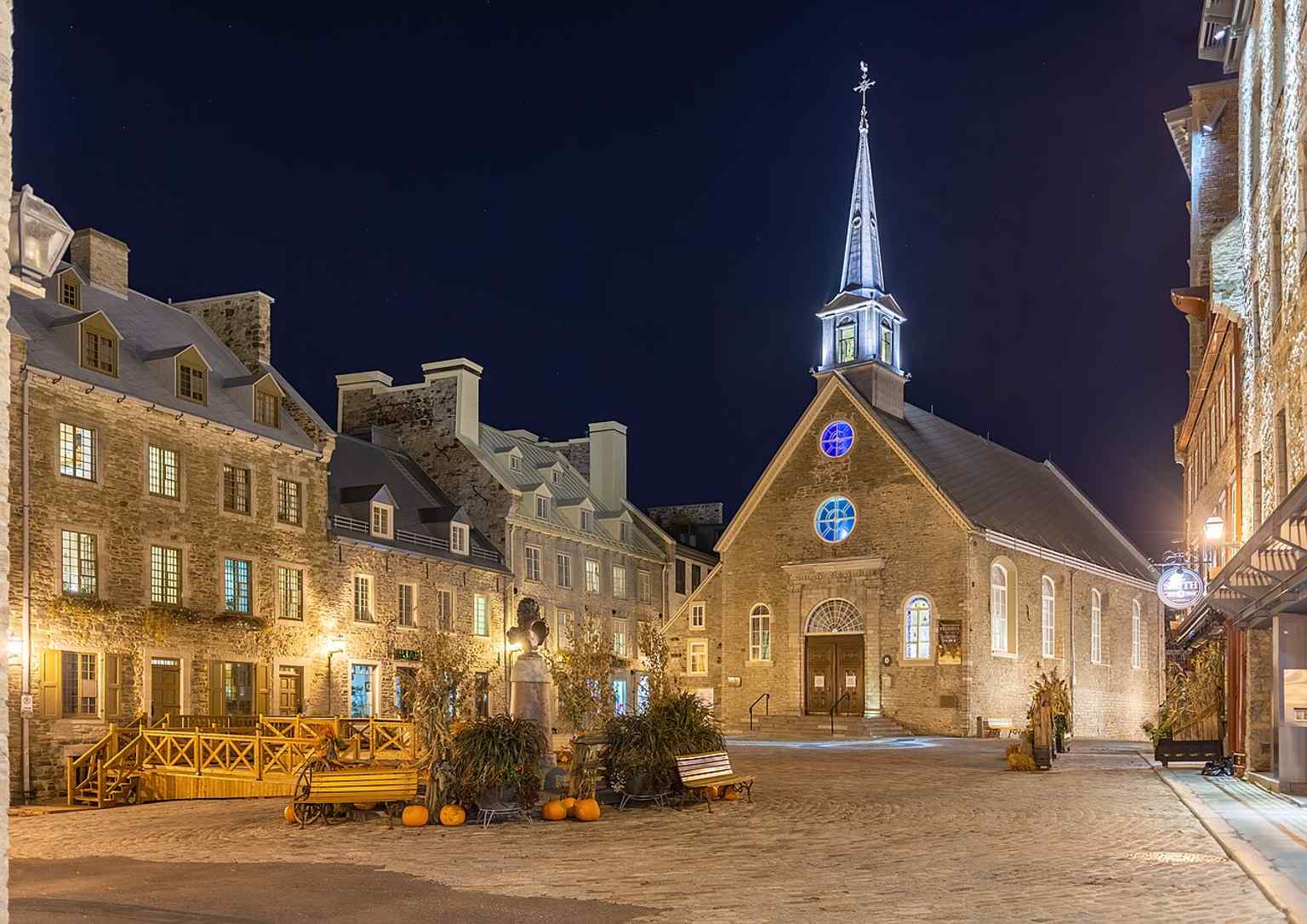
Place Royale lit up at night, with the historic Notre-Dame-des-Victoires area anchoring the square that marks the birthplace of Quebec City.Photo: Wilfredor, Wikimedia Commons, CC0. Cropped & resized. 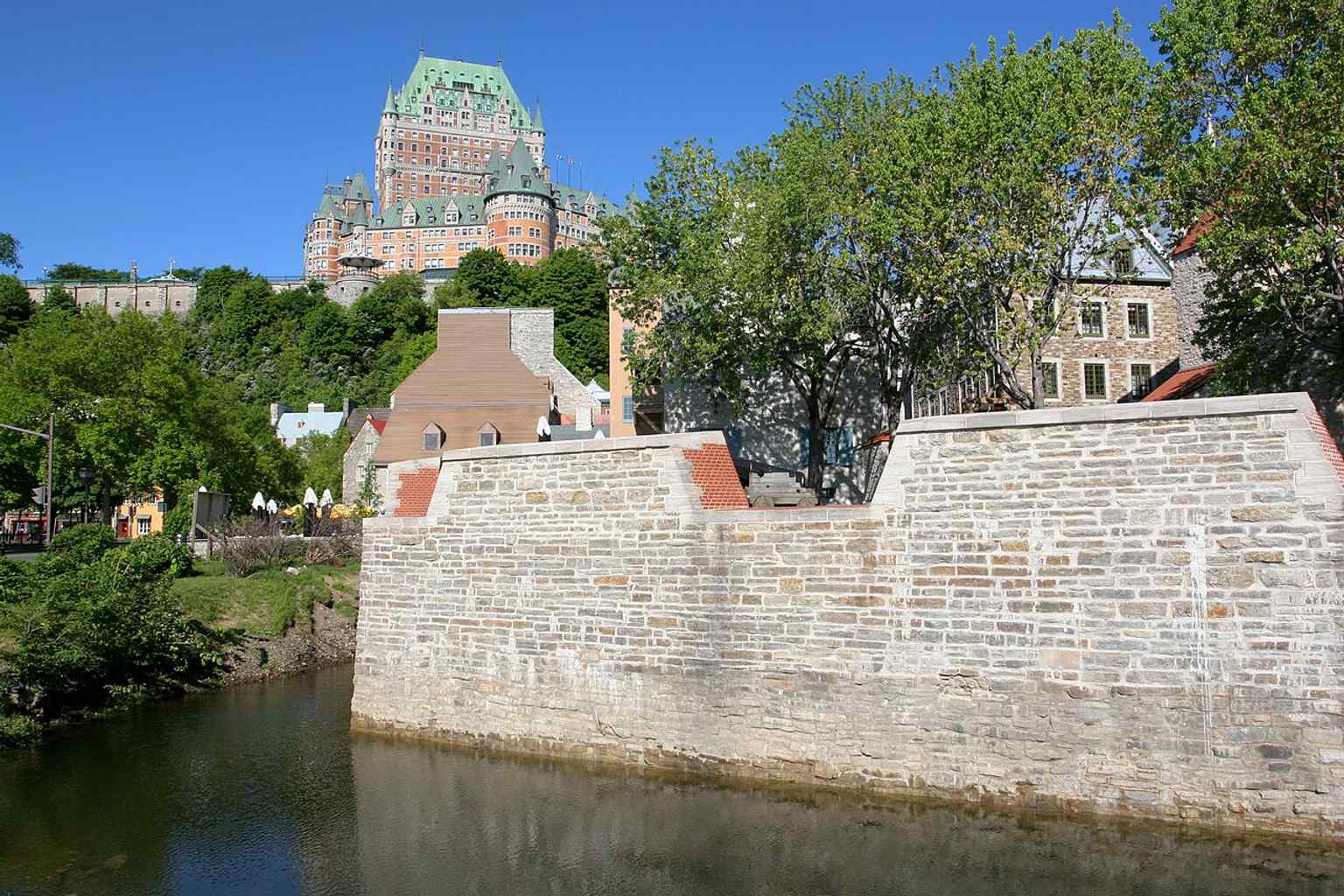
The Battery Royale fortification, part of the old defensive works that helped protect the colonial heart of Quebec near Place Royale.Photo: Marc-Lautenbacher, Wikimedia Commons, CC BY-SA 4.0. Cropped & resized. On your left, look for a broad complex of pale stone and glass in clean modern blocks, with older masonry buildings folded into the frontage like an older chapter left visible…Read moreShow less
Open dedicated page →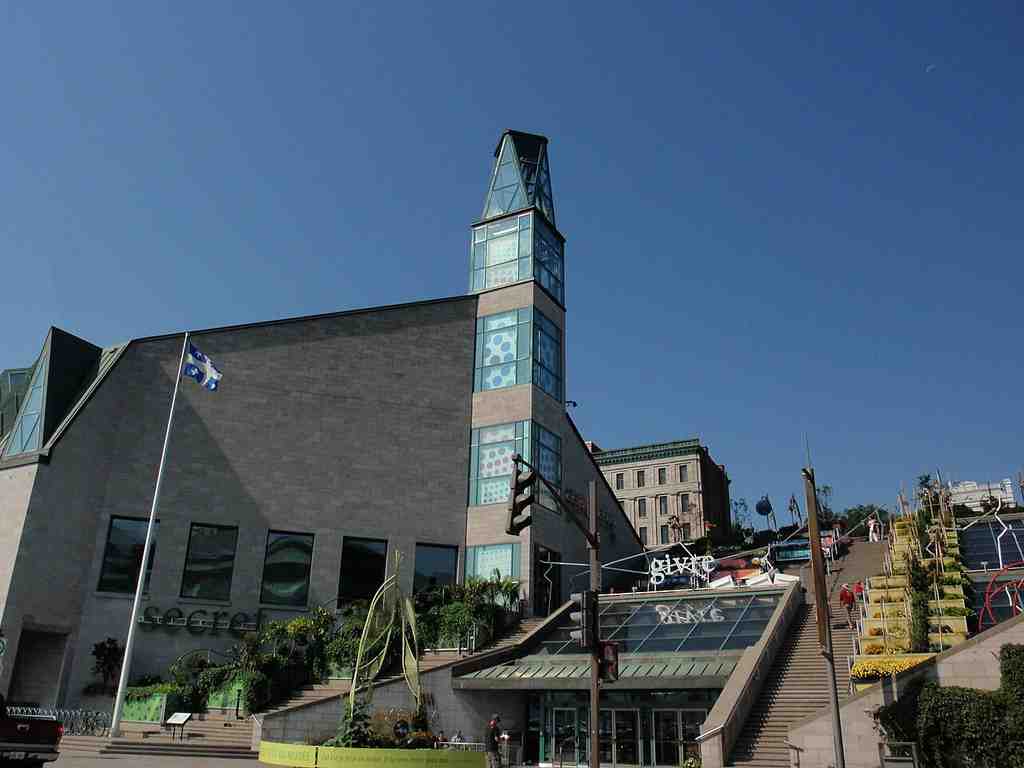
Musée de la civilisationPhoto: Claude Gagnon, Wikimedia Commons, CC BY-SA 3.0. Cropped & resized. On your left, look for a broad complex of pale stone and glass in clean modern blocks, with older masonry buildings folded into the frontage like an older chapter left visible inside a newer cover.
Here in the Lower Town, right by the Saint Lawrence, Quebec gives itself a rather ambitious assignment: not just to keep the past, but to keep arguing with it.
The government created the Musée de la civilisation on the nineteenth of December, nineteen eighty-four, and only opened it to the public on the nineteenth of October, nineteen eighty-eight, after four years of work. That delay matters. Quebec decided this place should have a major public role before the doors even opened. Very confident behavior for a museum that still had to figure out what, exactly, it wanted to say.
Guy Doré, the first director, helped bring the institution into being. Then Roland Arpin stepped in during nineteen eighty-seven and had to rethink almost everything, because the exhibition plan had never really been nailed down. Instead of sinking the project, that last-minute overhaul became part of its legend. Museum historians often point to Arpin’s method as a model, the rare case where a major rethink still kept the project afloat.
The building itself tells the same story. Architect Moshe Safdie designed the complex, but he did not wipe the site clean and start fresh like a man erasing a chalkboard. He stitched modern museum spaces to older buildings on rue Saint-Pierre, including the former Bank of Quebec, the Maison Guillaume-Estèbe, and the vaulted cellars of the Pagé-Quercy house. If you glance at the wider image on your screen, you can see that patchwork clearly: this is a cultural complex, not a single polite box.
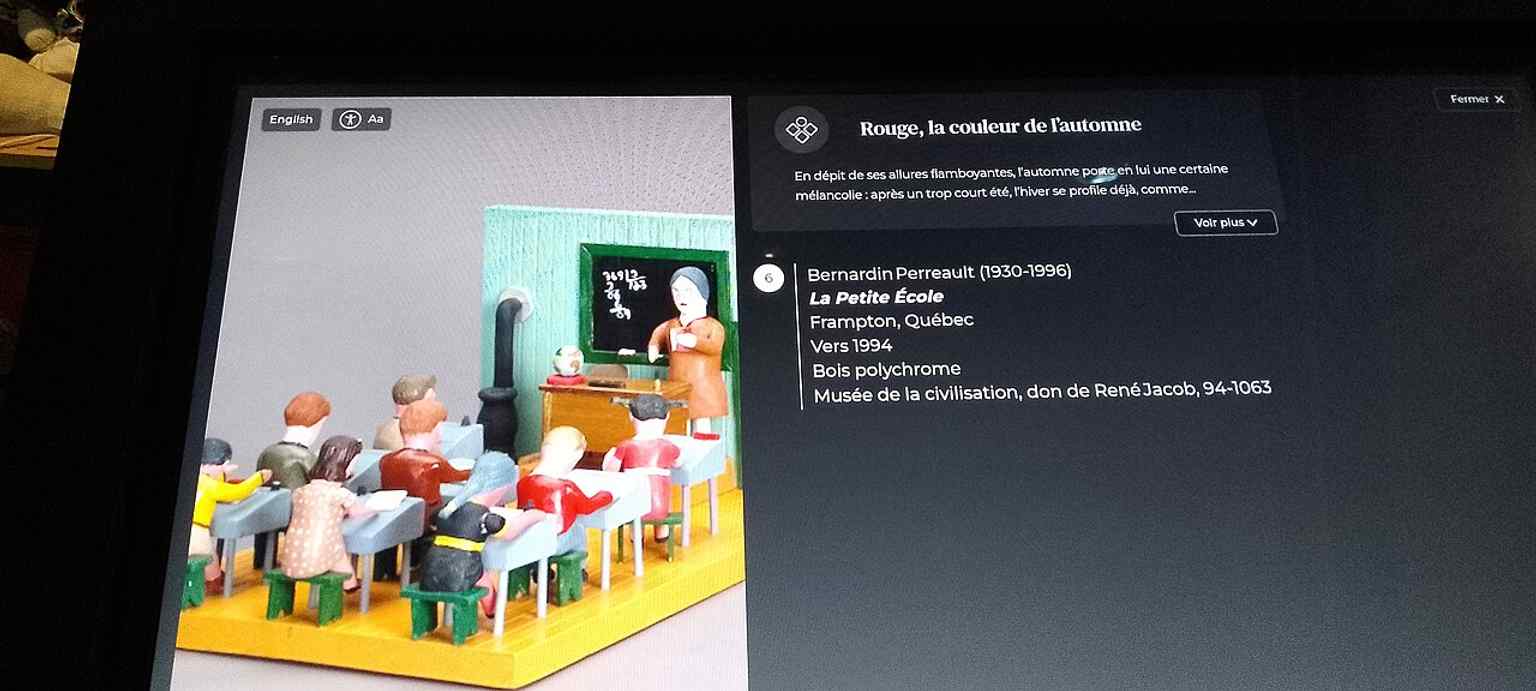
A broader exterior perspective that can support the story of the museum as a major cultural complex rather than a single building.Photo: Cactus0625, Wikimedia Commons, CC BY-SA 4.0. Cropped & resized. Guillaume Estèbe is one of the people still quietly present here. He built his house in seventeen fifty-one, back when this part of the city worked as a busy port district. During rescue archaeology in nineteen eighty-five, workers digging in Estèbe’s courtyard made a startling find: a French Regime barque, a small working boat used to move goods from larger ships. It had been buried around Estèbe’s time and survived because air never reached the wood. Today that boat sits inside as a blunt, beautiful reminder that before this was a museum, it was a waterfront of labor, trade, and mud underfoot. If you open one of the interior images, you get a sense of how the museum frames objects like that not as trophies, but as witnesses.
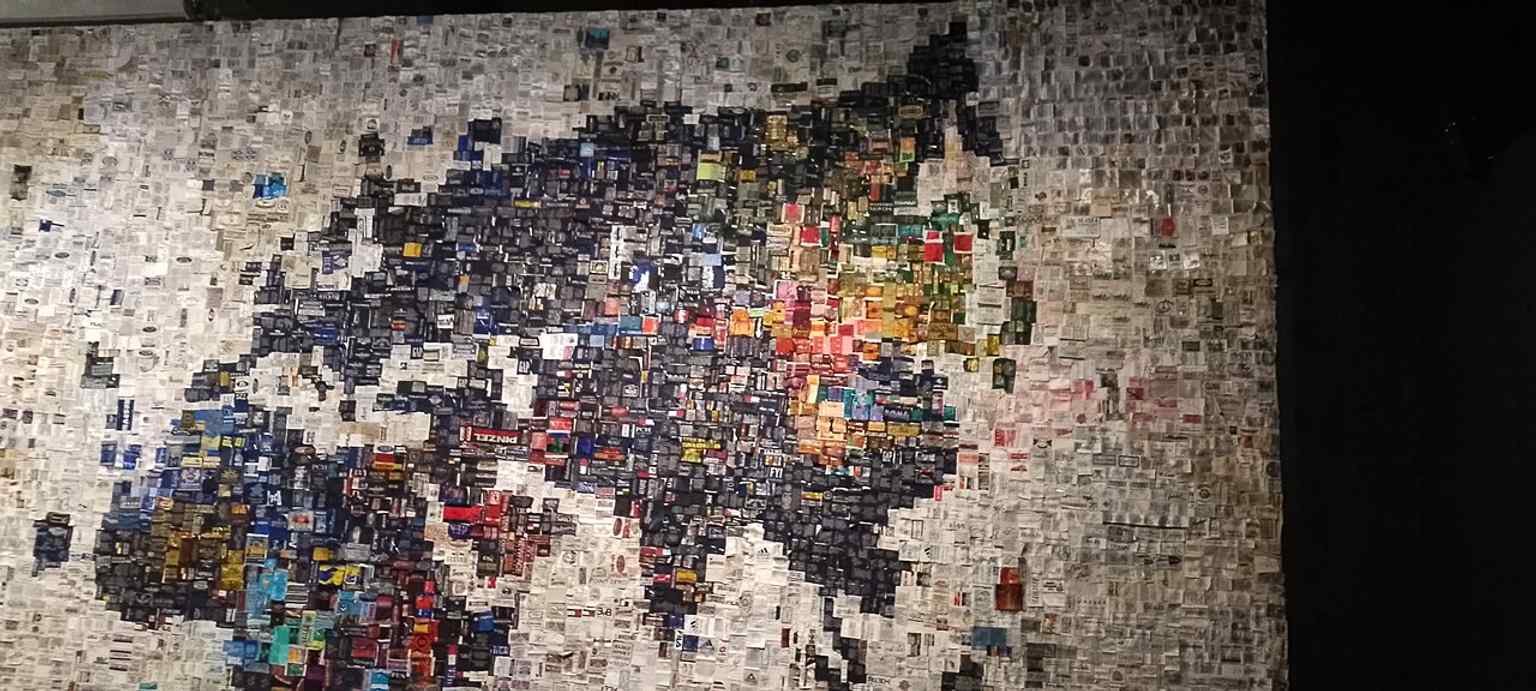
A recent interior image that can illustrate the museum’s modern presentation style and active exhibition environment.Photo: Cactus0625, Wikimedia Commons, CC BY-SA 4.0. Cropped & resized. And that is really this place’s gift. Its permanent exhibitions do not offer one official portrait of Quebec. Le Québec, autrement dit explores the province through different points of view. C’est notre histoire, created in close collaboration with the eleven First Nations of Quebec and with more than eight hundred participants, makes room for upheaval, healing, decolonization - meaning reclaiming history from colonial control - and future dreams. That is a living museum, not a mausoleum.
Even the building keeps adapting. Because its hard mineral surfaces held too much heat, the museum later added a green community roof, a practical little correction that says a lot: identity here is not preserved under glass and left alone.
So this feels like the right place to end. Across Quebec City, stone, stairs, walls, and squares tried to fix memory in place. Here, memory stays in motion... and the city keeps revising itself without entirely letting go of what came before. Not bad for a final stop.
If you want to go inside, the museum is usually closed on Monday and open from ten in the morning to five in the afternoon from Tuesday through Sunday.
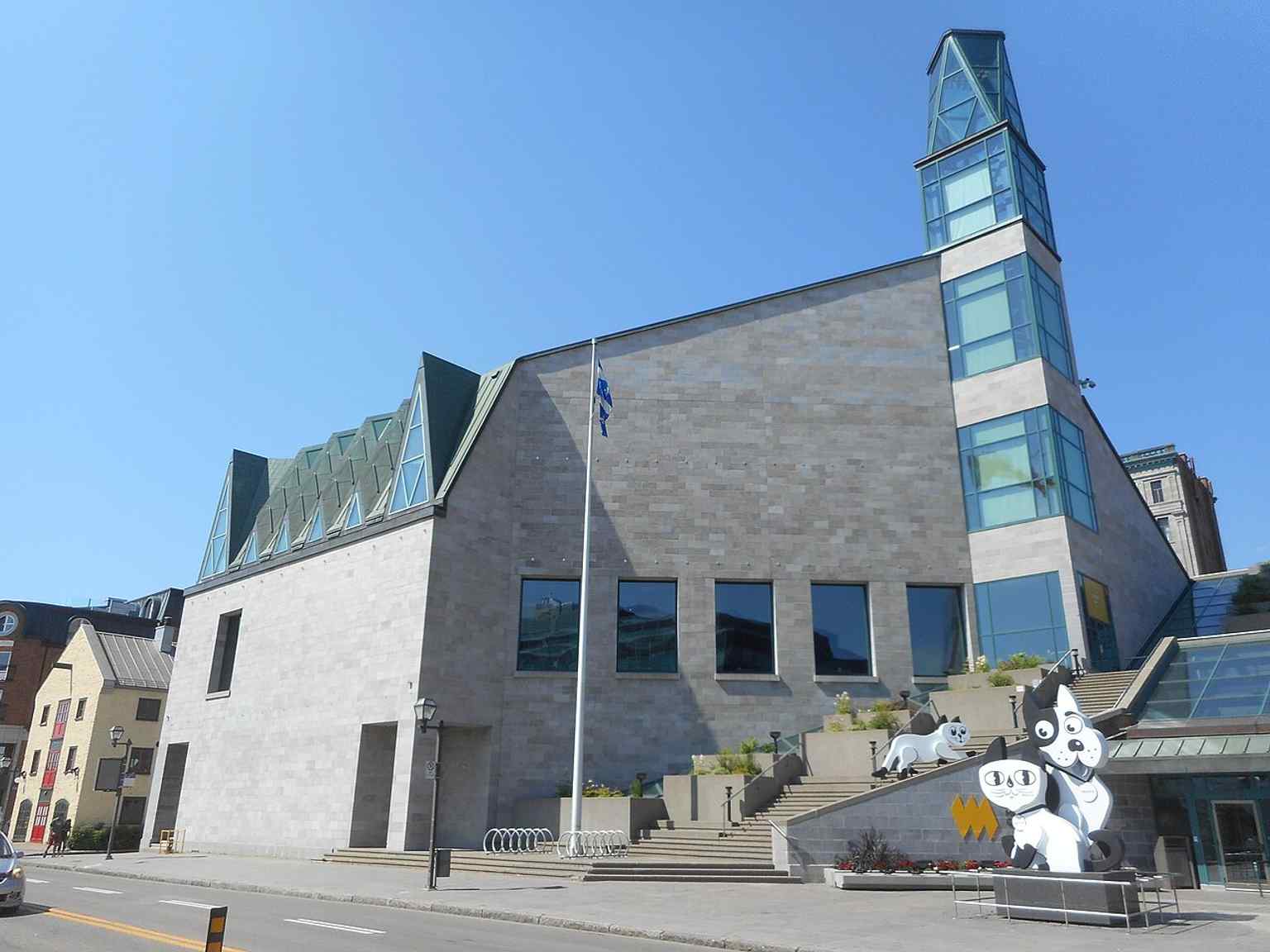
A clear contemporary view of the Musée de la civilisation, the landmark museum that opened to the public in 1988 in Québec City’s Lower Town.Photo: Jeangagnon, Wikimedia Commons, CC BY-SA 4.0. Cropped & resized. 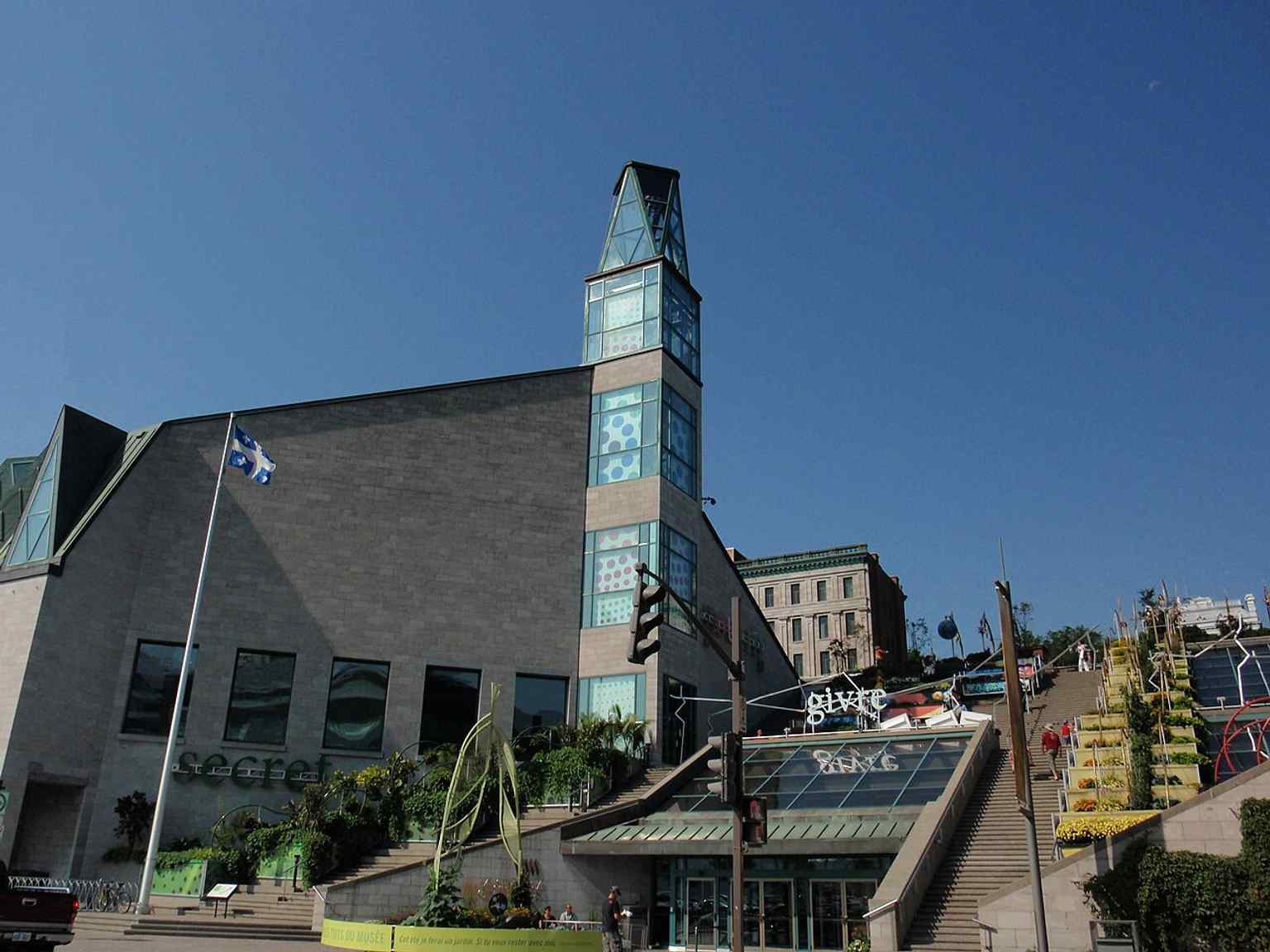
Another strong exterior angle showing the museum on the Saint Lawrence waterfront, tying the building to its setting in Old Québec.Photo: Claude Gagnon, Wikimedia Commons, CC BY-SA 3.0. Cropped & resized. 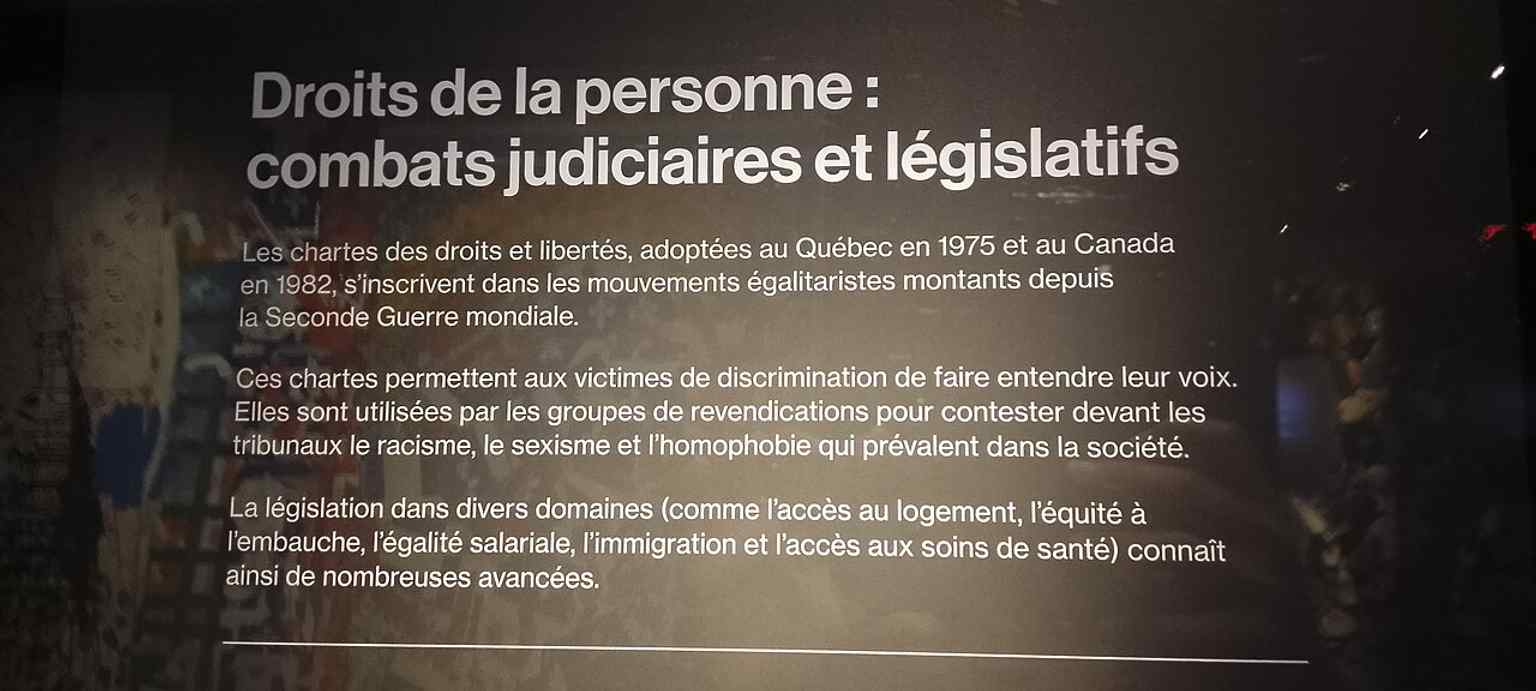
A closer architectural detail of the Musée de la civilisation, good for highlighting Moshe Safdie’s design and the museum’s built form.Photo: Cactus0625, Wikimedia Commons, CC BY-SA 4.0. Cropped & resized. 
An exterior detail that helps vary the visuals while staying focused on the museum’s distinctive modern architecture.Photo: Cactus0625, Wikimedia Commons, CC BY-SA 4.0. Cropped & resized. 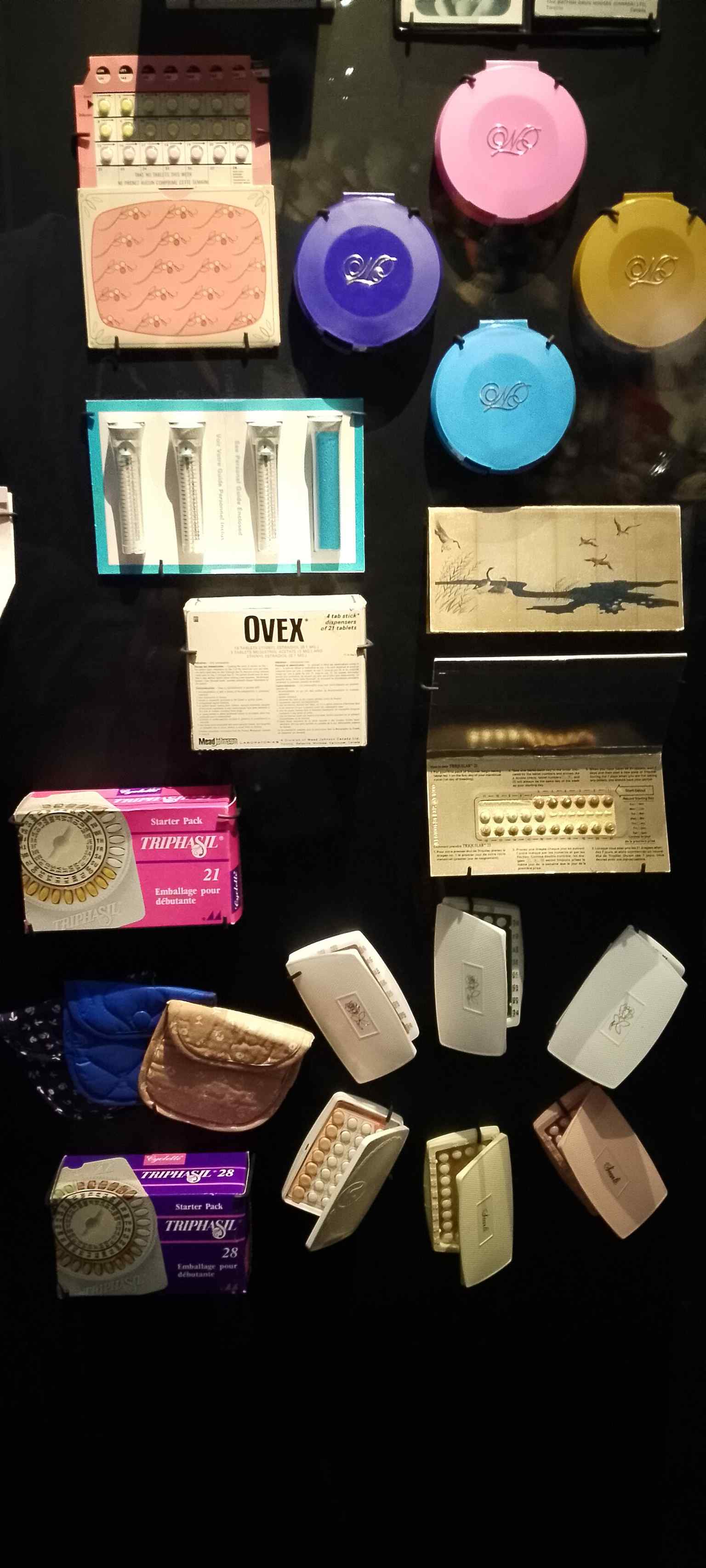
An interior view from the museum that can support the story of its exhibition spaces and visitor experience.Photo: Cactus0625, Wikimedia Commons, CC BY-SA 4.0. Cropped & resized. 
An indoor scene showing the museum’s contemporary public spaces, matching its role as an interactive cultural institution.Photo: Cactus0625, Wikimedia Commons, CC BY-SA 4.0. Cropped & resized. 
A museum interior view that can accompany the discussion of exhibits, guided visits, and the institution’s public-facing mission.Photo: Cactus0625, Wikimedia Commons, CC BY-SA 4.0. Cropped & resized. 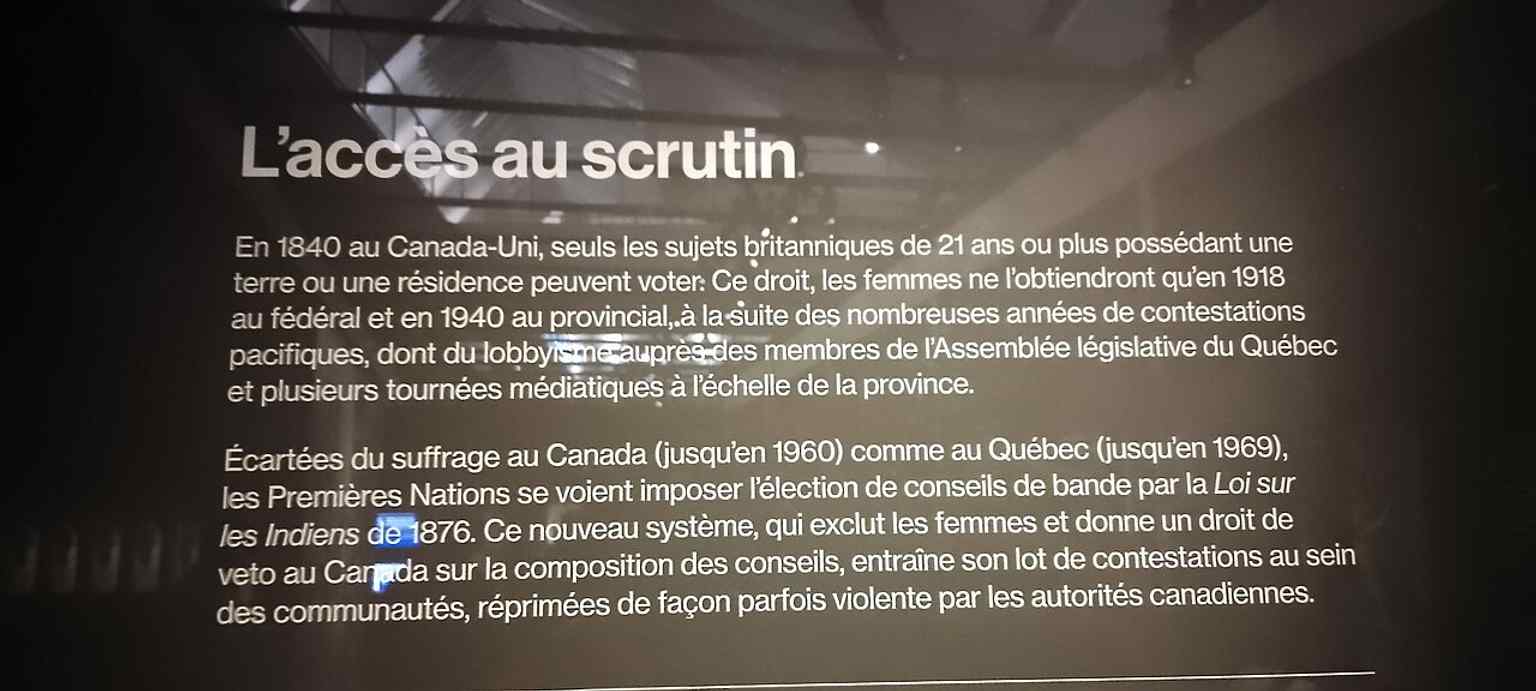
A closer look at a specific architectural or interior feature, useful for breaking up the sequence of wide shots.Photo: Cactus0625, Wikimedia Commons, CC BY-SA 4.0. Cropped & resized. 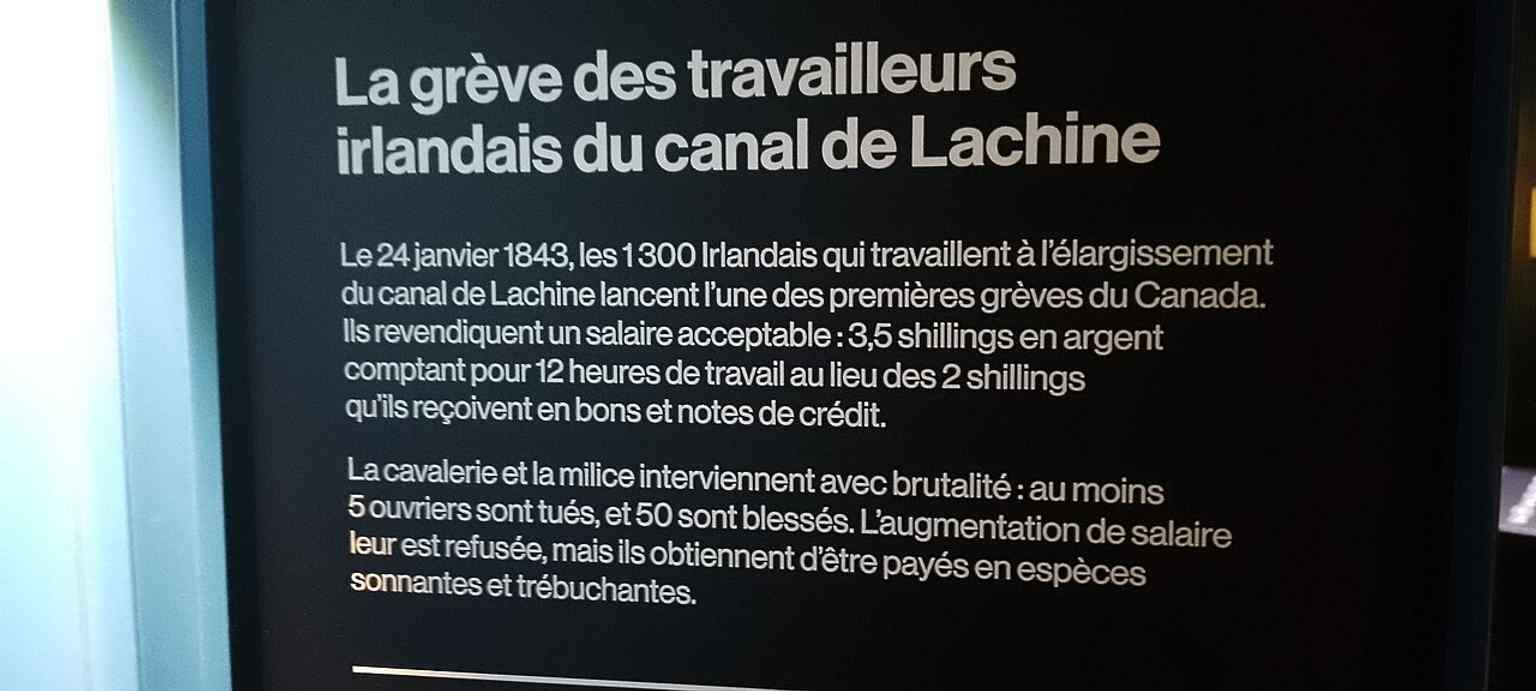
An interior space suited to the museum’s stories about collections, exhibitions, and visitor engagement.Photo: Cactus0625, Wikimedia Commons, CC BY-SA 4.0. Cropped & resized.
Frequently asked questions
How do I start the tour?
After purchase, download the AudaTours app and enter your redemption code. The tour will be ready to start immediately - just tap play and follow the GPS-guided route.
Do I need internet during the tour?
No! Download the tour before you start and enjoy it fully offline. Only the chat feature requires internet. We recommend downloading on WiFi to save mobile data.
Is this a guided group tour?
No - this is a self-guided audio tour. You explore independently at your own pace, with audio narration playing through your phone. No tour guide, no group, no schedule.
How long does the tour take?
Most tours take 60–90 minutes to complete, but you control the pace entirely. Pause, skip stops, or take breaks whenever you want.
What if I can't finish the tour today?
No problem! Tours have lifetime access. Pause and resume whenever you like - tomorrow, next week, or next year. Your progress is saved.
What languages are available?
All tours are available in 50+ languages. Select your preferred language when redeeming your code. Note: language cannot be changed after tour generation.
Where do I access the tour after purchase?
Download the free AudaTours app from the App Store or Google Play. Enter your redemption code (sent via email) and the tour will appear in your library, ready to download and start.
If you don't enjoy the tour, we'll refund your purchase. Contact us at [email protected]
Checkout securely with 






.JPG)


.jpg)


.jpg)
.JPG)


.JPG)


.JPG)


.jpg)


