AudaTours logoAudaTours

Stop 14 of 15

Museum of Civilization

headphones 04:08 Buy tour to unlock all 17 tracks
Museum of Civilization
Musée de la civilisation
Musée de la civilisationPhoto: Claude Gagnon, Wikimedia Commons, CC BY-SA 3.0. Cropped & resized.

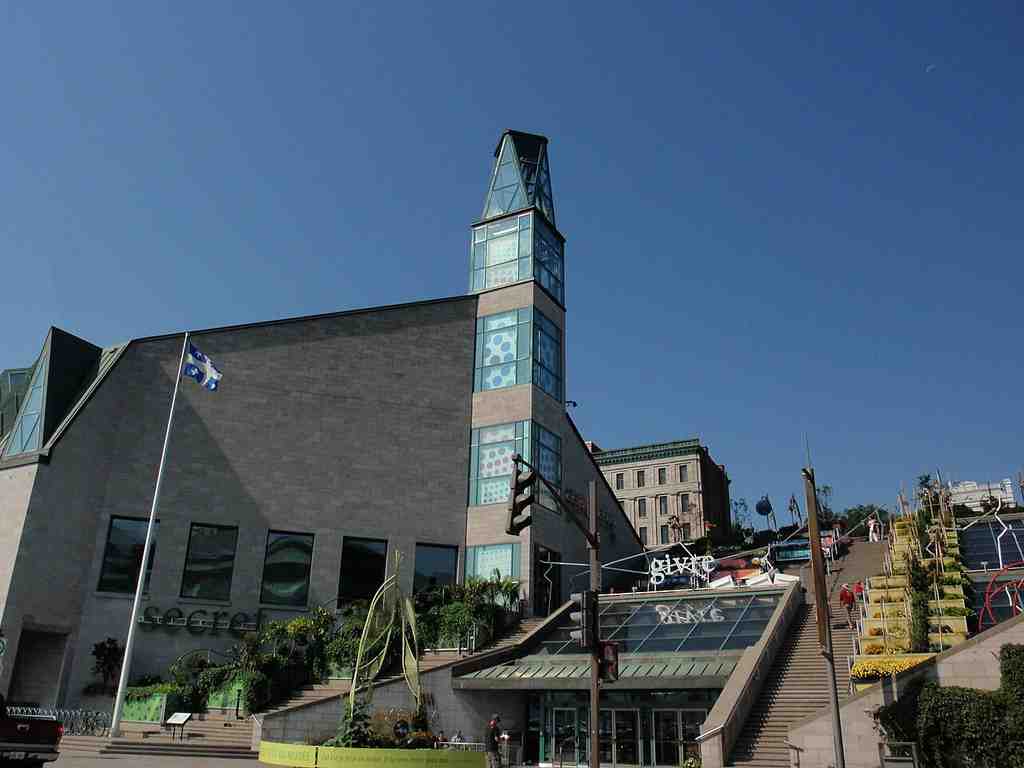
On your left, look for a broad complex of pale stone and glass in clean modern blocks, with older masonry buildings folded into the frontage like an older chapter left visible inside a newer cover.

Here in the Lower Town, right by the Saint Lawrence, Quebec gives itself a rather ambitious assignment: not just to keep the past, but to keep arguing with it.

The government created the Musée de la civilisation on the nineteenth of December, nineteen eighty-four, and only opened it to the public on the nineteenth of October, nineteen eighty-eight, after four years of work. That delay matters. Quebec decided this place should have a major public role before the doors even opened. Very confident behavior for a museum that still had to figure out what, exactly, it wanted to say.

Guy Doré, the first director, helped bring the institution into being. Then Roland Arpin stepped in during nineteen eighty-seven and had to rethink almost everything, because the exhibition plan had never really been nailed down. Instead of sinking the project, that last-minute overhaul became part of its legend. Museum historians often point to Arpin’s method as a model, the rare case where a major rethink still kept the project afloat.

The building itself tells the same story. Architect Moshe Safdie designed the complex, but he did not wipe the site clean and start fresh like a man erasing a chalkboard. He stitched modern museum spaces to older buildings on rue Saint-Pierre, including the former Bank of Quebec, the Maison Guillaume-Estèbe, and the vaulted cellars of the Pagé-Quercy house. If you glance at the wider image on your screen, you can see that patchwork clearly: this is a cultural complex, not a single polite box.
A broader exterior perspective that can support the story of the museum as a major cultural complex rather than a single building.
A broader exterior perspective that can support the story of the museum as a major cultural complex rather than a single building.Photo: Cactus0625, Wikimedia Commons, CC BY-SA 4.0. Cropped & resized.

Guillaume Estèbe is one of the people still quietly present here. He built his house in seventeen fifty-one, back when this part of the city worked as a busy port district. During rescue archaeology in nineteen eighty-five, workers digging in Estèbe’s courtyard made a startling find: a French Regime barque, a small working boat used to move goods from larger ships. It had been buried around Estèbe’s time and survived because air never reached the wood. Today that boat sits inside as a blunt, beautiful reminder that before this was a museum, it was a waterfront of labor, trade, and mud underfoot. If you open one of the interior images, you get a sense of how the museum frames objects like that not as trophies, but as witnesses.
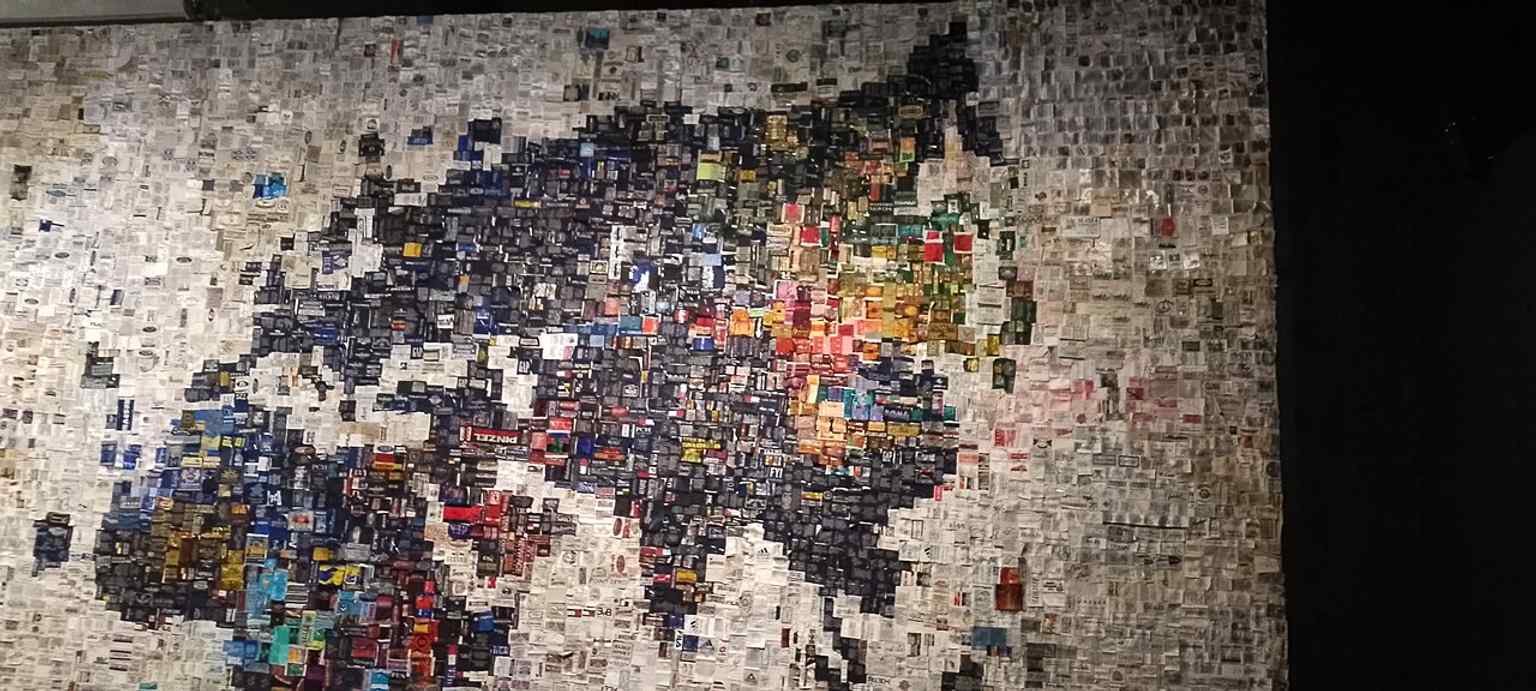
A recent interior image that can illustrate the museum’s modern presentation style and active exhibition environment.
A recent interior image that can illustrate the museum’s modern presentation style and active exhibition environment.Photo: Cactus0625, Wikimedia Commons, CC BY-SA 4.0. Cropped & resized.

And that is really this place’s gift. Its permanent exhibitions do not offer one official portrait of Quebec. Le Québec, autrement dit explores the province through different points of view. C’est notre histoire, created in close collaboration with the eleven First Nations of Quebec and with more than eight hundred participants, makes room for upheaval, healing, decolonization - meaning reclaiming history from colonial control - and future dreams. That is a living museum, not a mausoleum.

Even the building keeps adapting. Because its hard mineral surfaces held too much heat, the museum later added a green community roof, a practical little correction that says a lot: identity here is not preserved under glass and left alone.

So this feels like the right place to end. Across Quebec City, stone, stairs, walls, and squares tried to fix memory in place. Here, memory stays in motion... and the city keeps revising itself without entirely letting go of what came before. Not bad for a final stop.

If you want to go inside, the museum is usually closed on Monday and open from ten in the morning to five in the afternoon from Tuesday through Sunday.
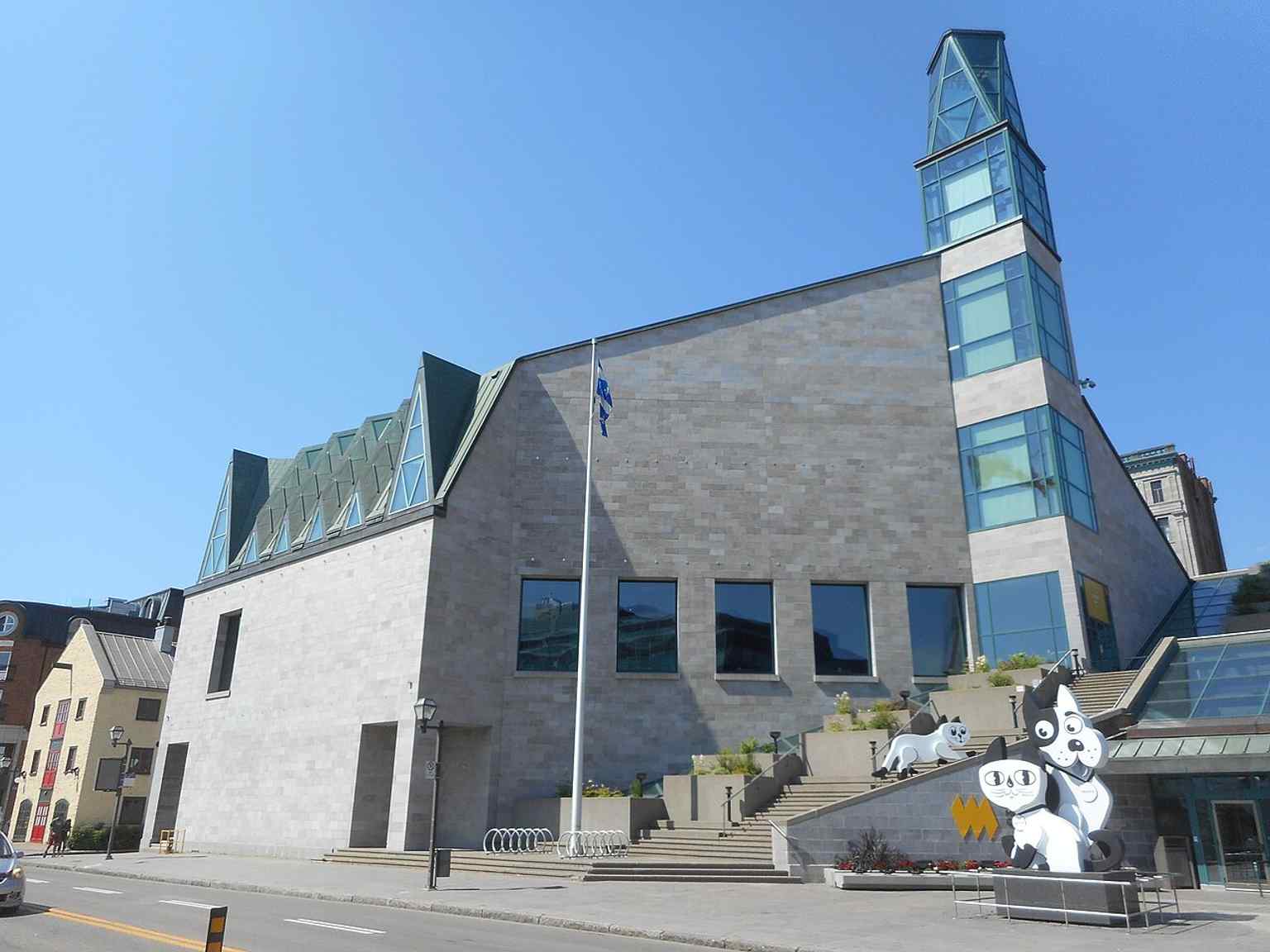
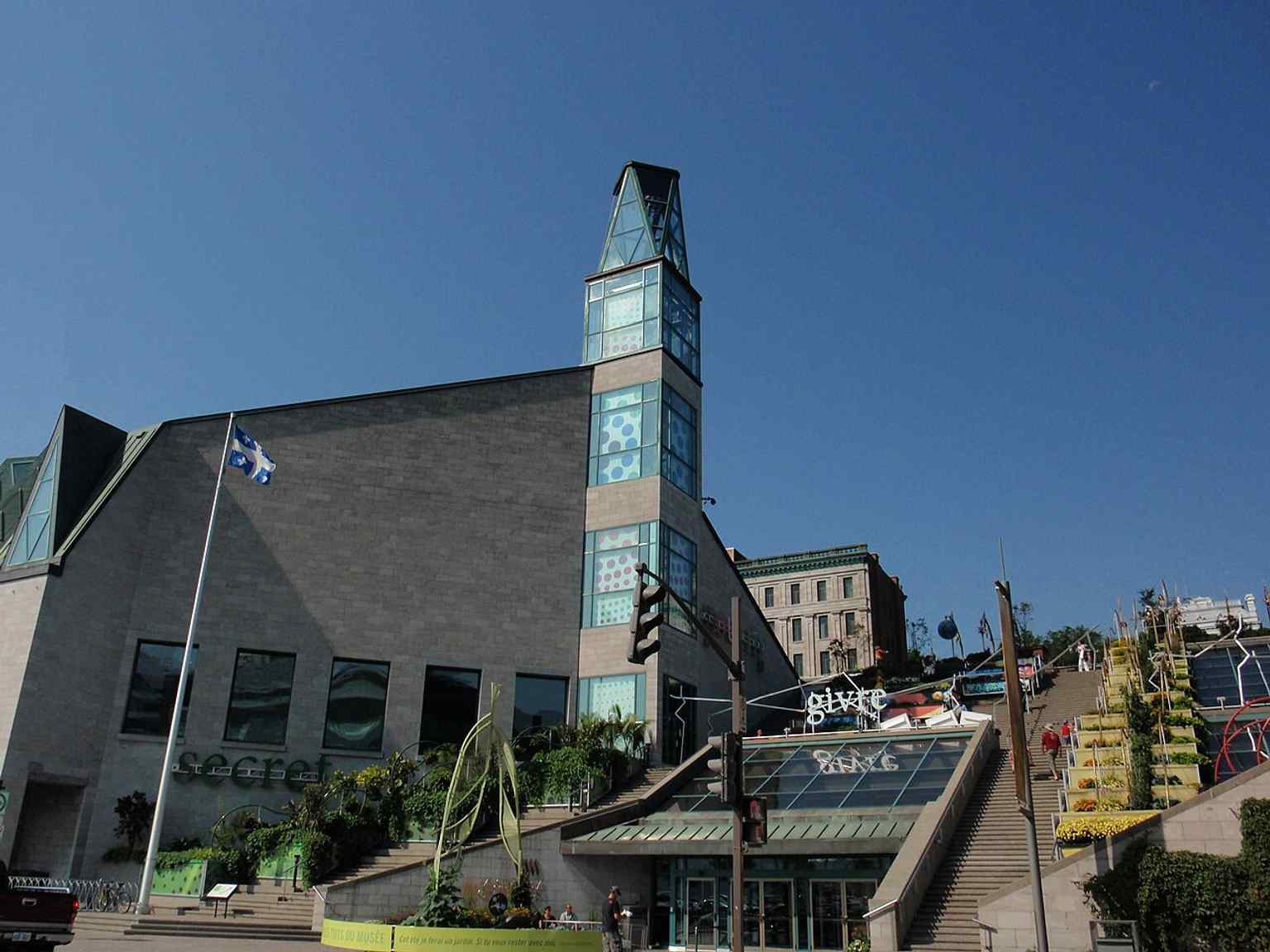
A clear contemporary view of the Musée de la civilisation, the landmark museum that opened to the public in 1988 in Québec City’s Lower Town.
A clear contemporary view of the Musée de la civilisation, the landmark museum that opened to the public in 1988 in Québec City’s Lower Town.Photo: Jeangagnon, Wikimedia Commons, CC BY-SA 4.0. Cropped & resized.
Another strong exterior angle showing the museum on the Saint Lawrence waterfront, tying the building to its setting in Old Québec.
Another strong exterior angle showing the museum on the Saint Lawrence waterfront, tying the building to its setting in Old Québec.Photo: Claude Gagnon, Wikimedia Commons, CC BY-SA 3.0. Cropped & resized.
A closer architectural detail of the Musée de la civilisation, good for highlighting Moshe Safdie’s design and the museum’s built form.
A closer architectural detail of the Musée de la civilisation, good for highlighting Moshe Safdie’s design and the museum’s built form.Photo: Cactus0625, Wikimedia Commons, CC BY-SA 4.0. Cropped & resized.
An exterior detail that helps vary the visuals while staying focused on the museum’s distinctive modern architecture.
An exterior detail that helps vary the visuals while staying focused on the museum’s distinctive modern architecture.Photo: Cactus0625, Wikimedia Commons, CC BY-SA 4.0. Cropped & resized.
An interior view from the museum that can support the story of its exhibition spaces and visitor experience.
An interior view from the museum that can support the story of its exhibition spaces and visitor experience.Photo: Cactus0625, Wikimedia Commons, CC BY-SA 4.0. Cropped & resized.
An indoor scene showing the museum’s contemporary public spaces, matching its role as an interactive cultural institution.
An indoor scene showing the museum’s contemporary public spaces, matching its role as an interactive cultural institution.Photo: Cactus0625, Wikimedia Commons, CC BY-SA 4.0. Cropped & resized.
A museum interior view that can accompany the discussion of exhibits, guided visits, and the institution’s public-facing mission.
A museum interior view that can accompany the discussion of exhibits, guided visits, and the institution’s public-facing mission.Photo: Cactus0625, Wikimedia Commons, CC BY-SA 4.0. Cropped & resized.
A closer look at a specific architectural or interior feature, useful for breaking up the sequence of wide shots.
A closer look at a specific architectural or interior feature, useful for breaking up the sequence of wide shots.Photo: Cactus0625, Wikimedia Commons, CC BY-SA 4.0. Cropped & resized.
An interior space suited to the museum’s stories about collections, exhibitions, and visitor engagement.
An interior space suited to the museum’s stories about collections, exhibitions, and visitor engagement.Photo: Cactus0625, Wikimedia Commons, CC BY-SA 4.0. Cropped & resized.
arrow_back Back to Quebec City Highlights Audio Tour: Historic Landmarks and Old World Charm
Loved by travellers

Thousands of tours started.
Plenty of opinions.

4.8 across the App Store and Google Play. Here's a few we keep coming back to.

starstarstarstarstar
This was a solid way to get to know Brighton without feeling like a tourist. The narration had depth and context, but didn't overdo it.
Christoph
Christoph
Brighton Tour
starstarstarstarstar
Started this tour with a croissant in one hand and zero expectations. The app just vibes with you, no pressure, just you, your headphones, and some cool stories.
download Get the app

Pop your headphones in.
Step outside.

Free to download. Tours in every city. Start in 60 seconds — no account, no card.

Download on the App StoreGet it on Google Play
starstarstarstarstar_half
4.8
AudaTours app icon
headphones
~ 4 min until your first tour starts
public
1,000+ cities worldwide
all_inclusive
AudaTours
Unlimited

Every tour. Every city. One subscription.

3101 tours2271 cities138 countries50+ languages