
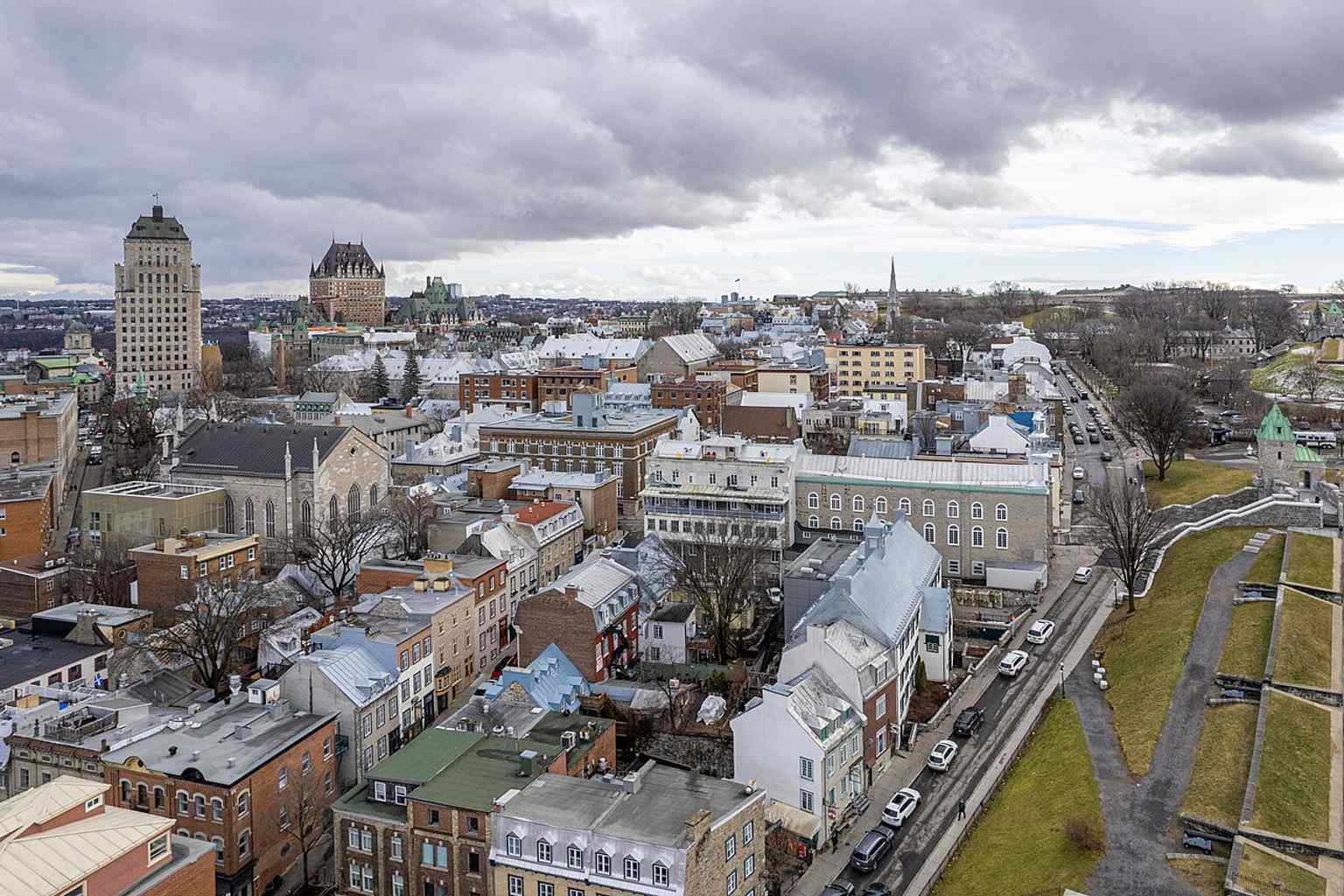
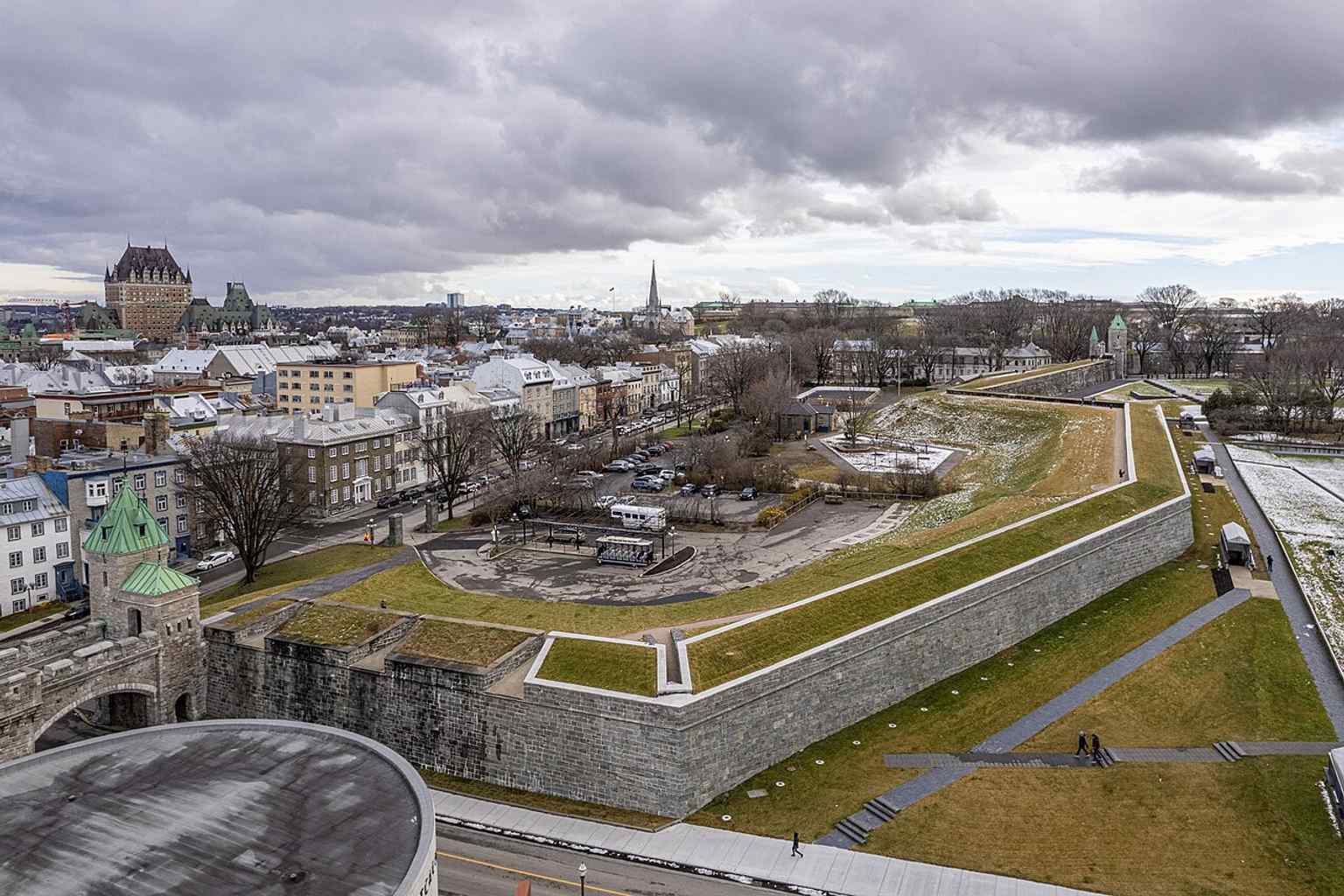
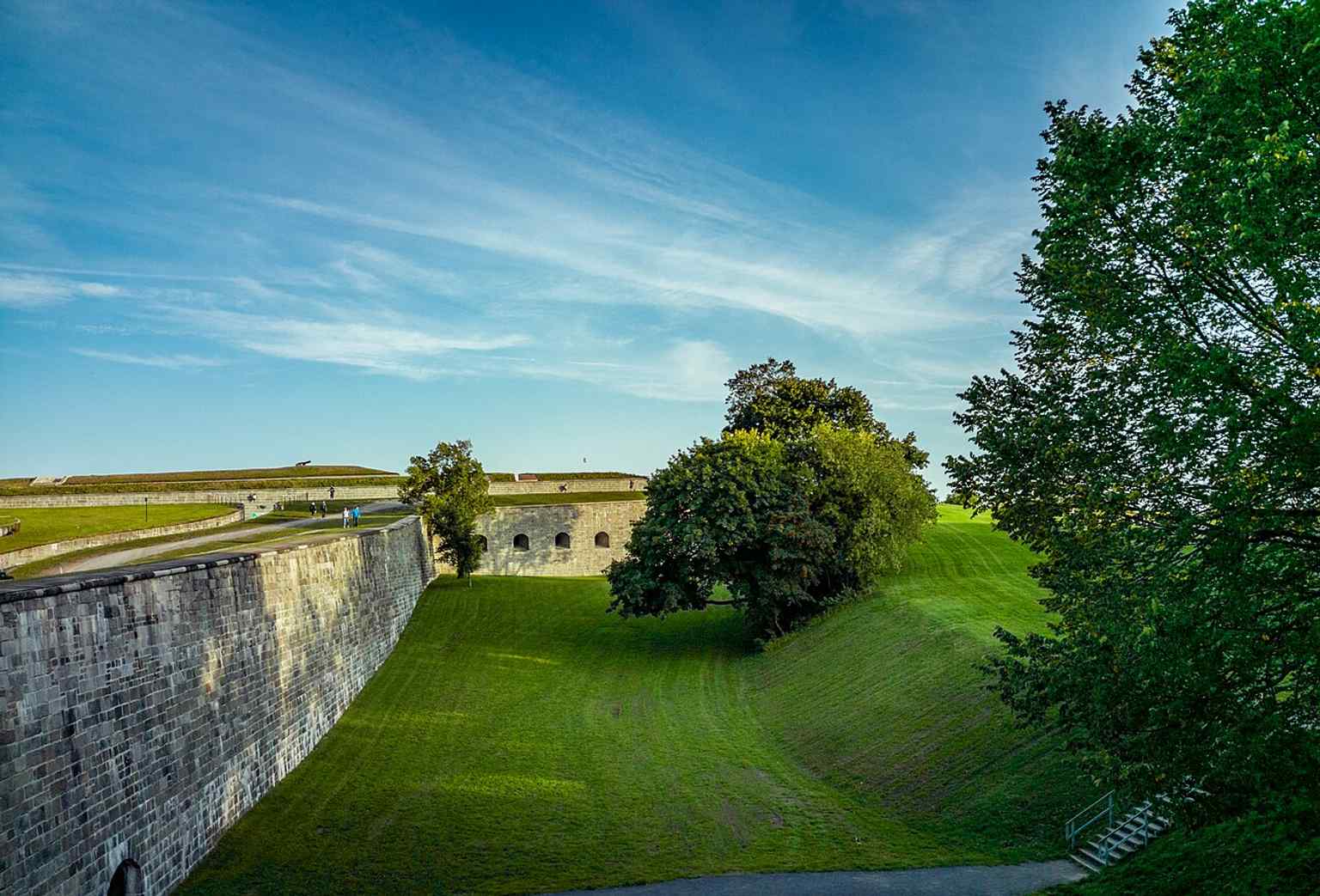
In front of you, a long gray stone wall with angled ramparts and a broad grassy edge draws a hard line around the Upper Town.
This is power and memory in stone. These walls are not just old masonry; they are a built argument about who gets protected, who gets watched, and what a city decides is worth saving. In the theater district, buildings asked to be seen. Here, the city answered with something larger and less charming: control.
The alarm bell rang in sixteen ninety, when Admiral Phips and a New England fleet attacked Québec and got pushed back. That scare taught the city a blunt lesson: openness was dangerous. Count Frontenac ordered a rushed first enclosure, with eleven redoubts, meaning small defensive strongpoints, linked by palisades to block an attack from the Heights of Abraham.
That emergency fix did not settle much. In sixteen ninety-three, Josué Dubois Berthelot de Beaucours replaced it with a more formal line. Then, in seventeen oh one, Jacques Levasseur de Néré drew up a grand plan approved in France. On paper, it looked coherent. On the ground, Québec turned into a giant construction site full of disconnected works, half-finished ideas, and imperial hesitation. Bureaucracy, it turns out, can be as effective as enemy cannon.
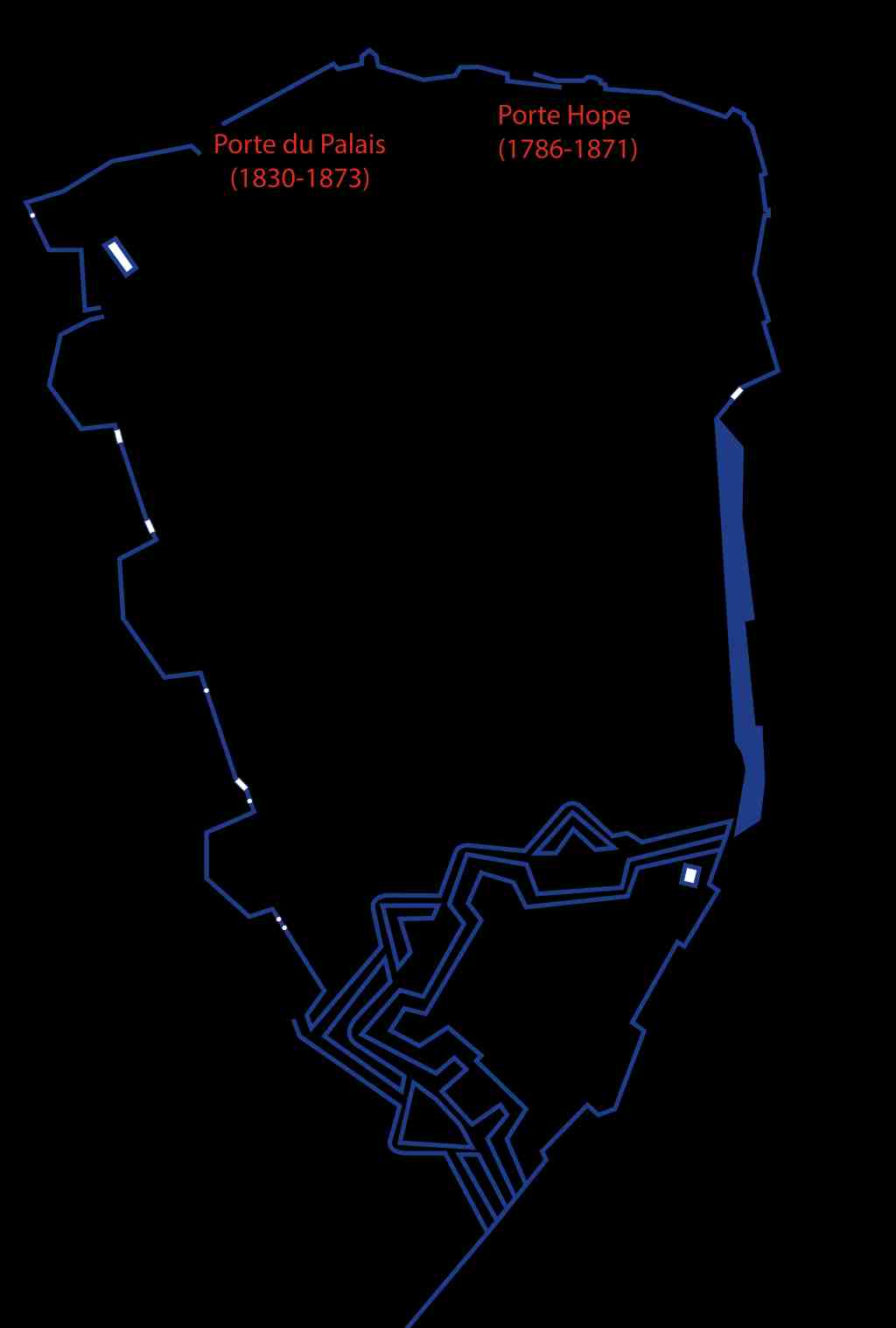
Real stone closure came in seventeen forty-five, after the fall of Louisbourg caused panic. Governor Beauharnois gave Gaspard-Joseph Chaussegros de Léry the go-ahead to wrap the western side in full masonry. If you want to understand the shape of Old Québec, start there: fear gave the city its outline.
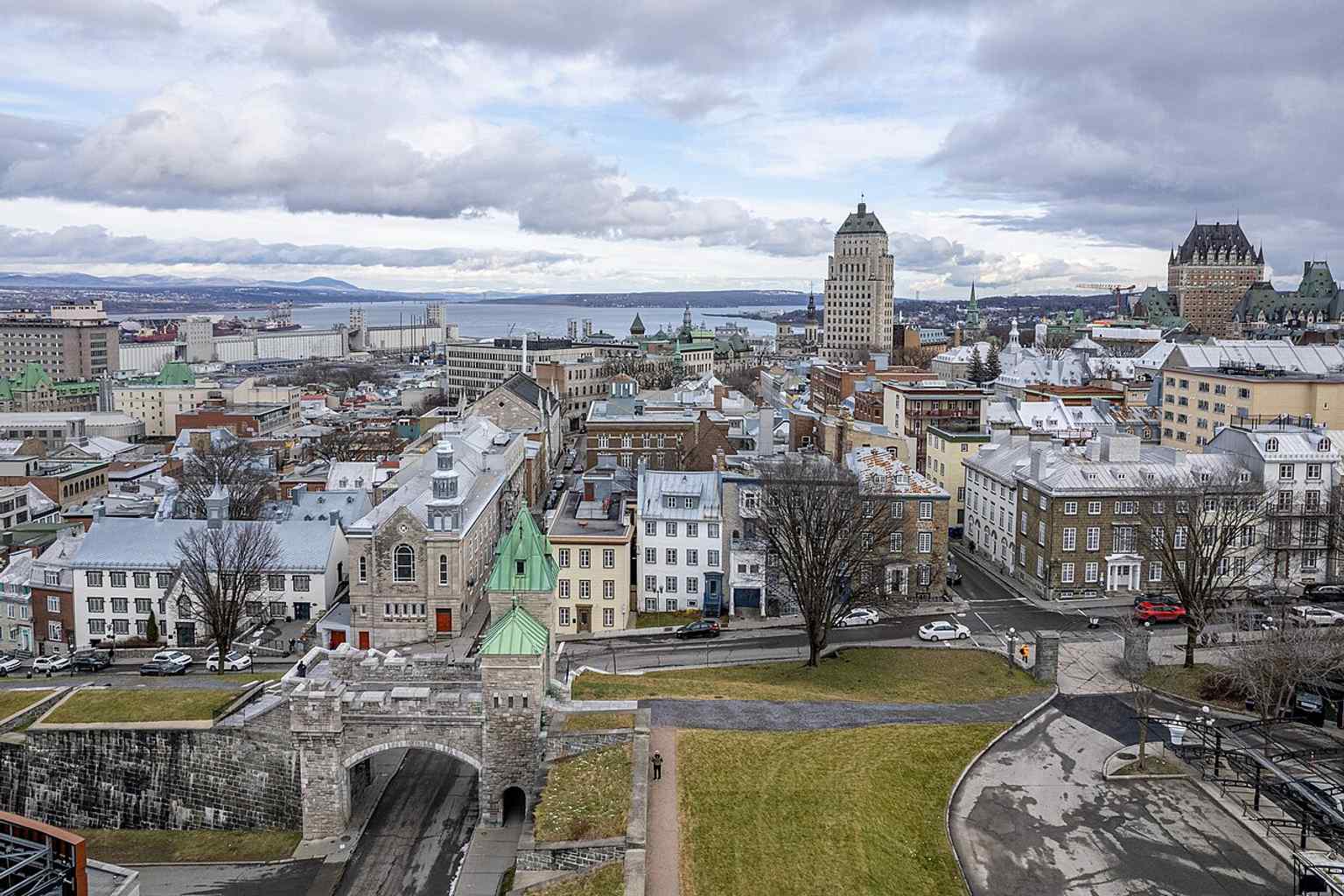
If you check the aerial on your screen, you can see how the fortifications almost cinch the Upper Town shut, turning geography into strategy. And strategy kept evolving. After the British conquest, engineer Gother Mann repaired the old French defenses and added outer works between seventeen eighty-six and eighteen twelve: ravelins, which are triangular outworks, plus other layers meant to slow an attacker before they ever reached the main wall. He was not merely patching stone. He was planning for roads, river routes, and the possibility of conflict with the United States.
The British pushed that logic further with the Martello towers, finished in eighteen twelve after Governor James Henry Craig started the project without waiting for London’s permission. Then Elias Walker Durnford oversaw the star-shaped Citadelle between eighteen twenty and eighteen thirty-one, folding part of the French wall into a larger British fortress.
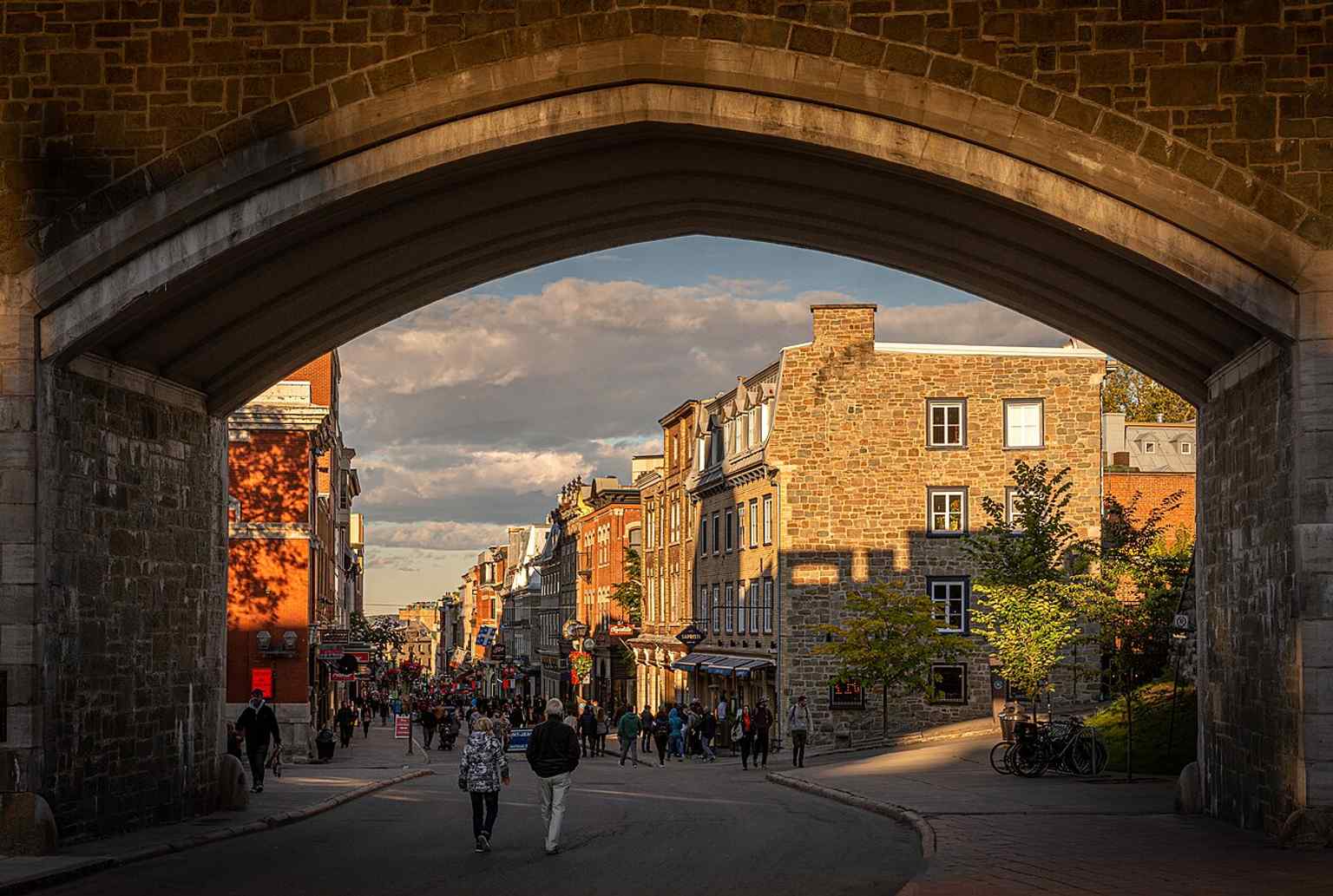
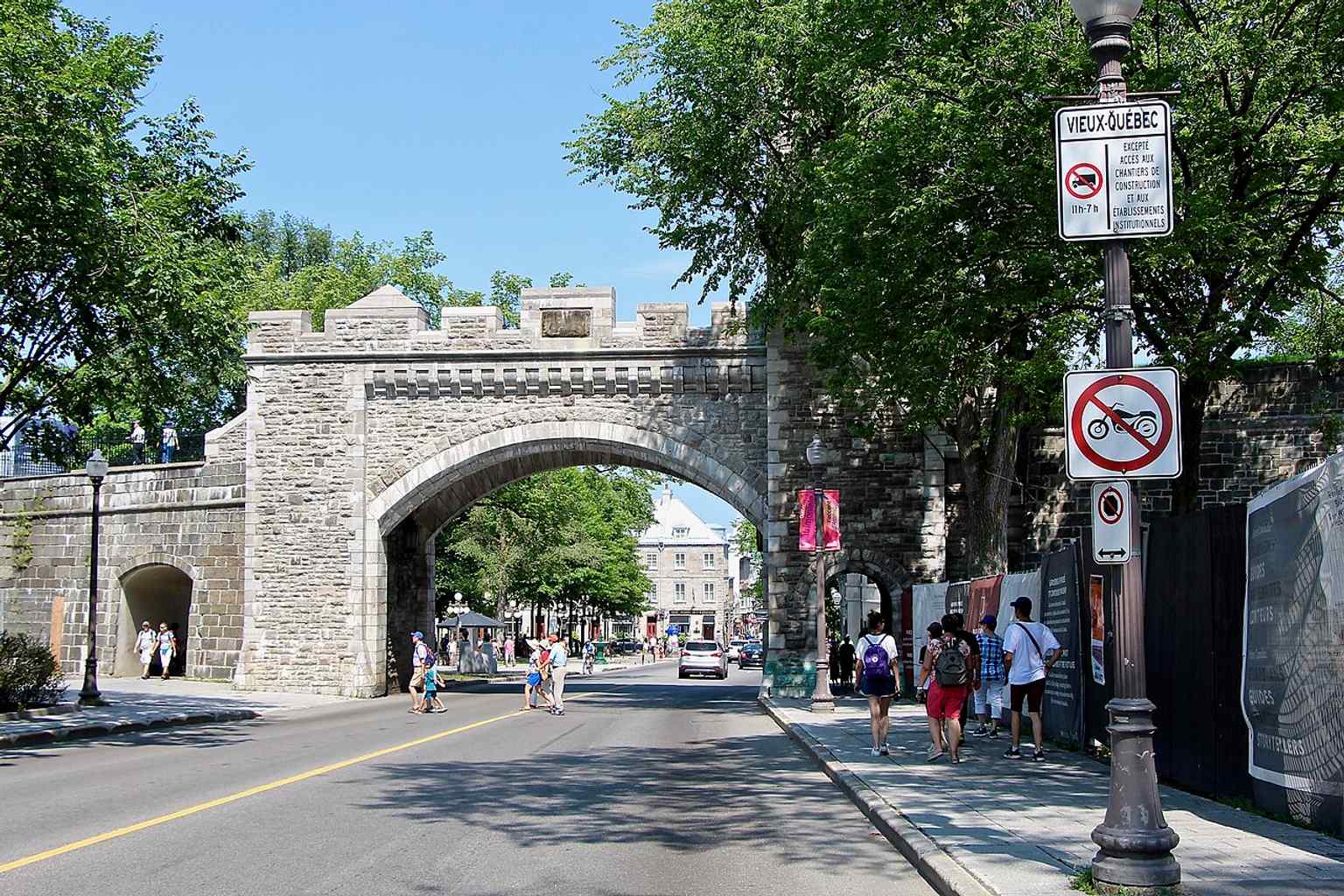
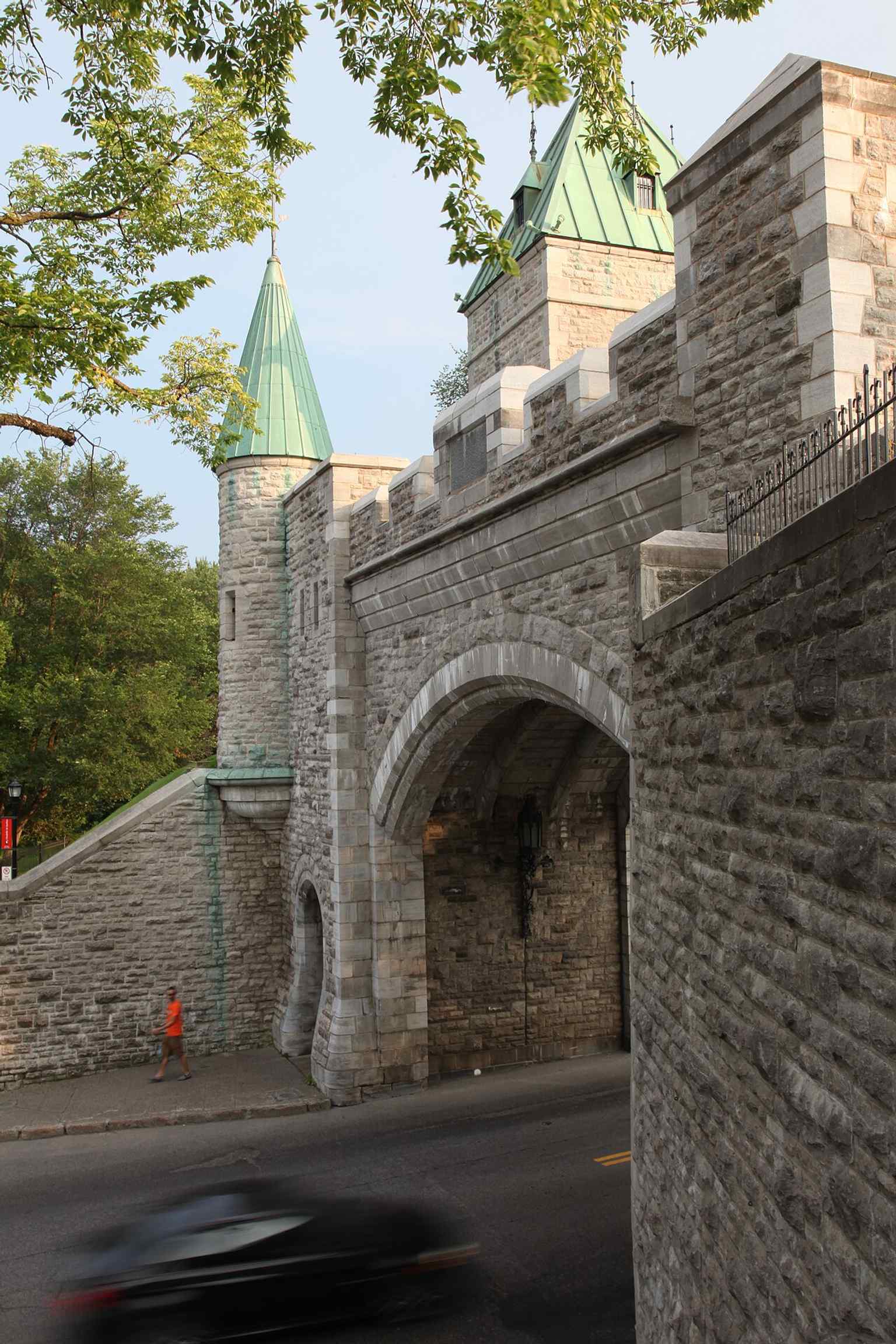
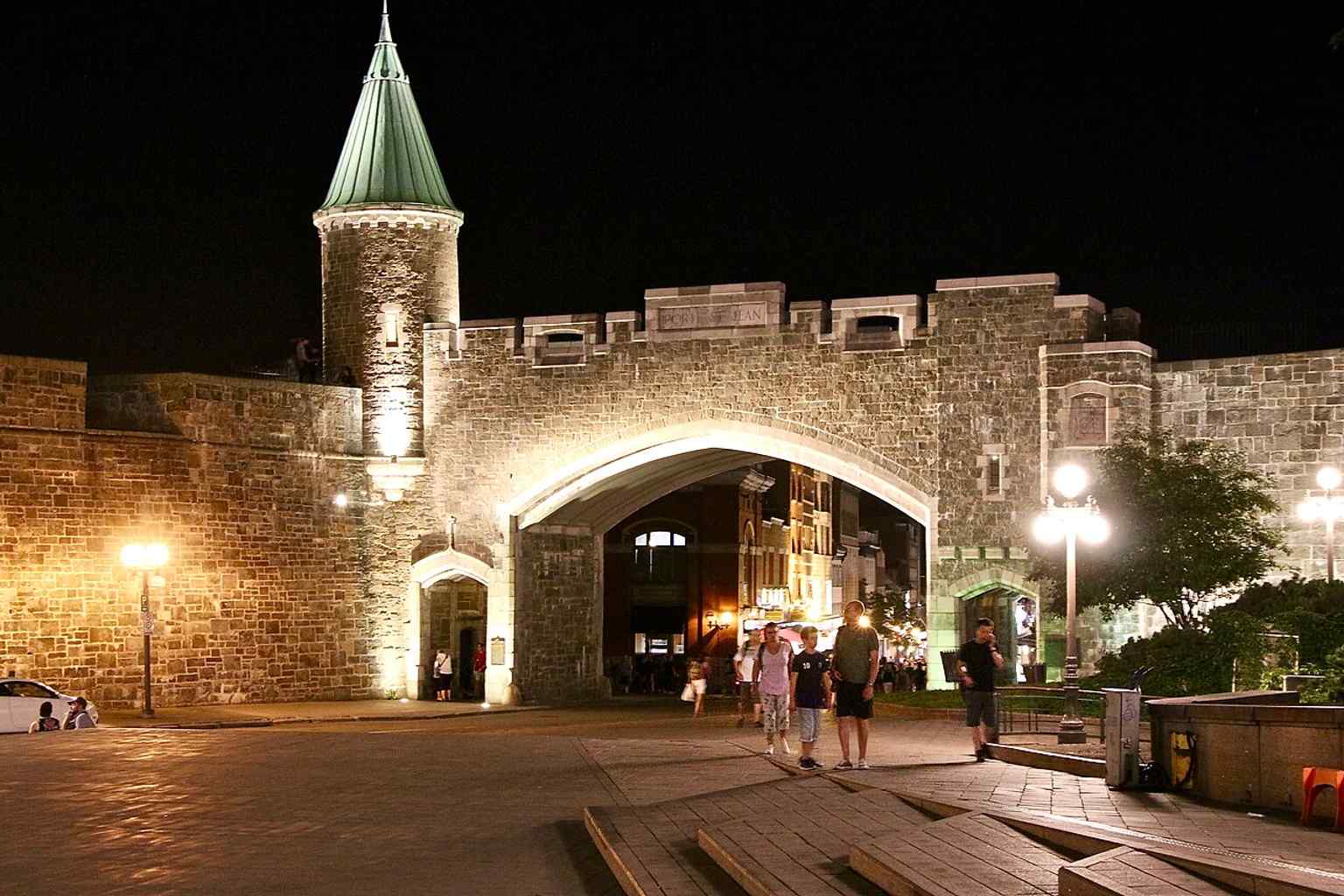
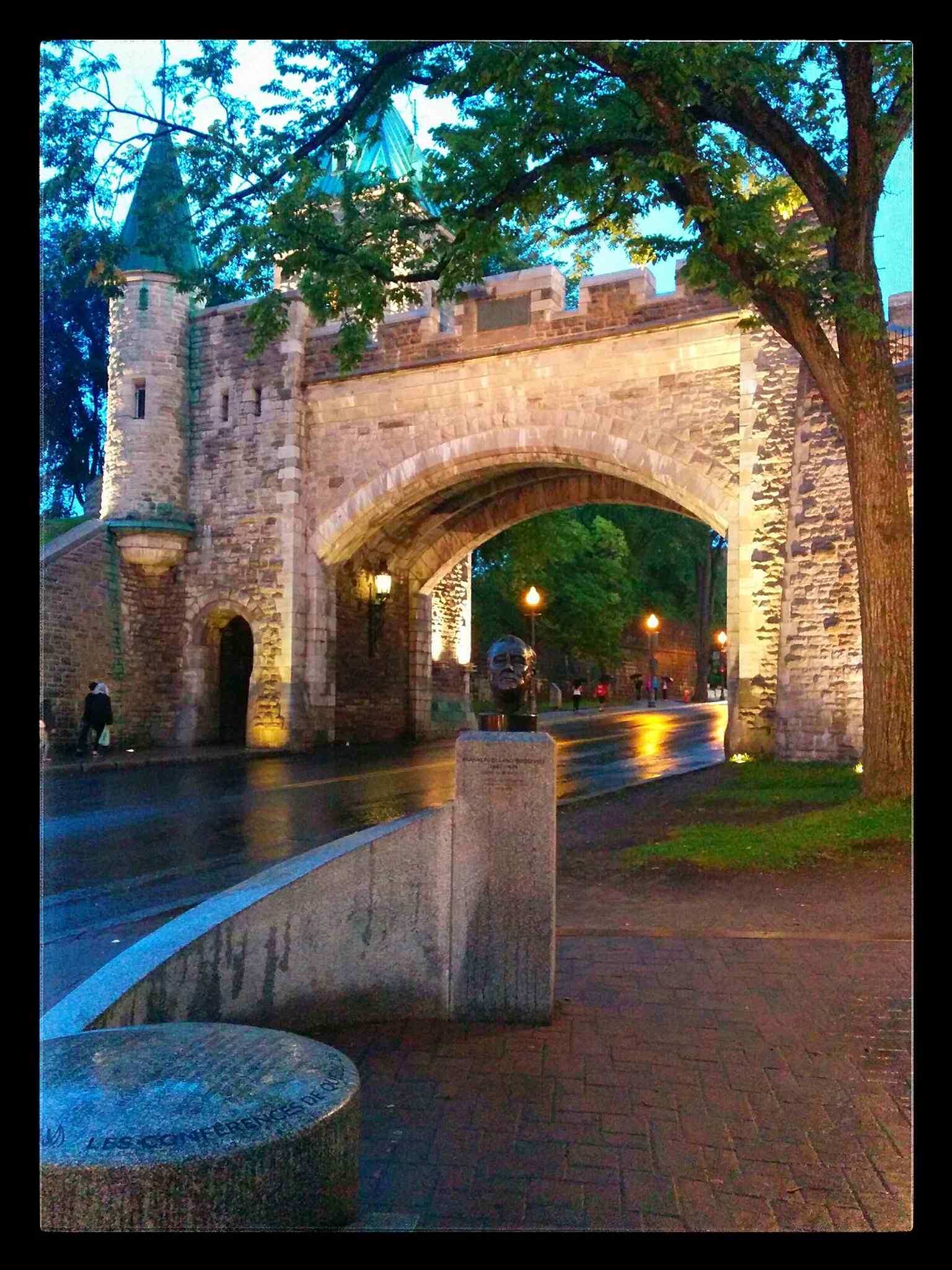
And then the twist. In eighteen seventy-one, the British army left. The old gates suddenly looked less heroic and more inconvenient, so the city demolished them as obstacles to traffic. A later governor-general stepped in and argued that Québec should not bulldoze its own identity. He pushed for new, wider, more ornamental gates and a raised promenade, preserving the walls while adapting them to a modern city. You can see that compromise in one of the rebuilt gates on your screen.
Before you head on, trace the line of the fortifications with your eyes and imagine them not as scenery, but as an urgent answer to danger. Without them, Québec would look different, move differently, maybe even remember itself differently.
That is the strange afterlife of walls: the fear fades, but the stone stays... and later generations give it a new job. In about six minutes, we’ll carry that story indoors at the Morrin Centre, where authority takes a more intimate form.





.jpg)


.jpg)