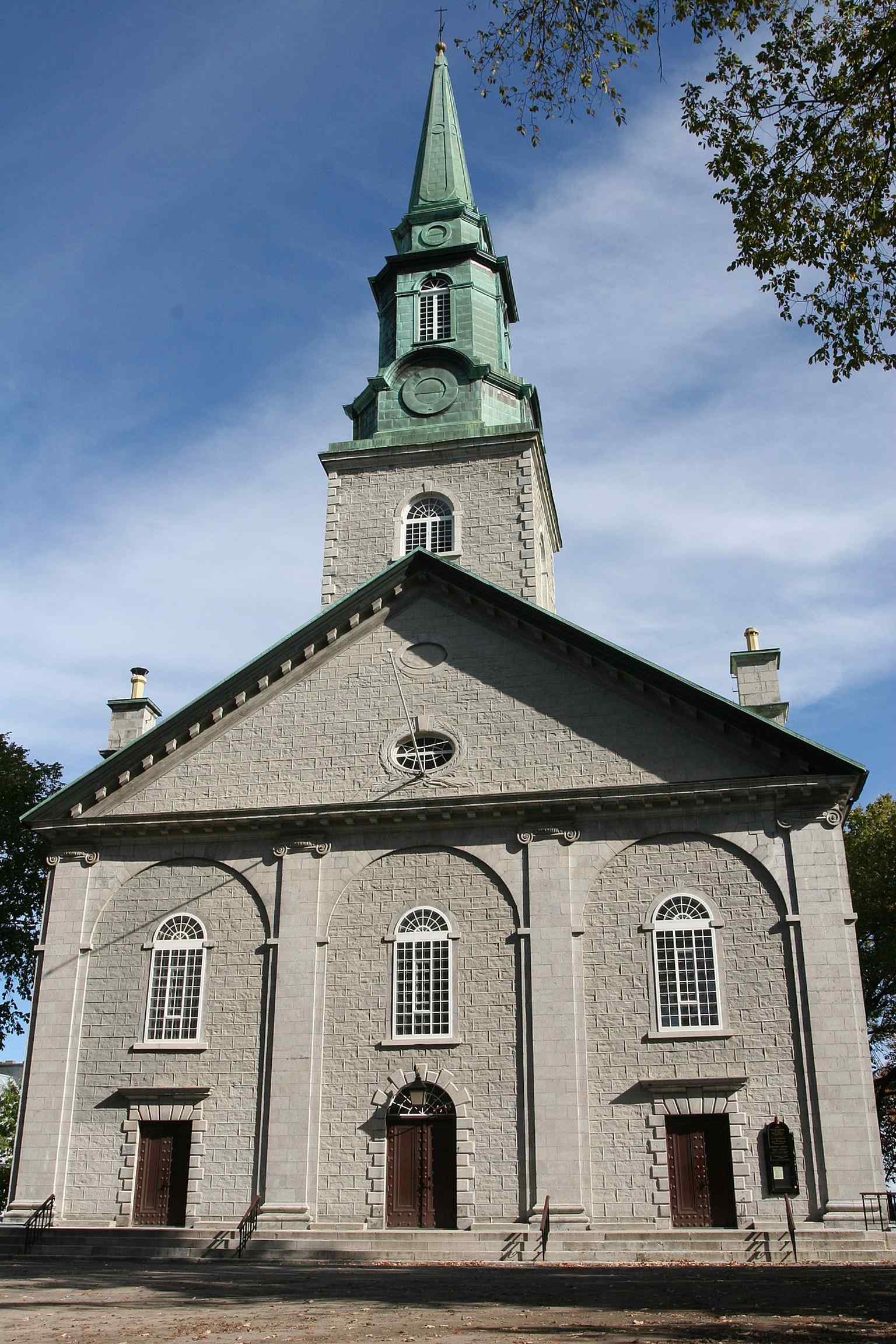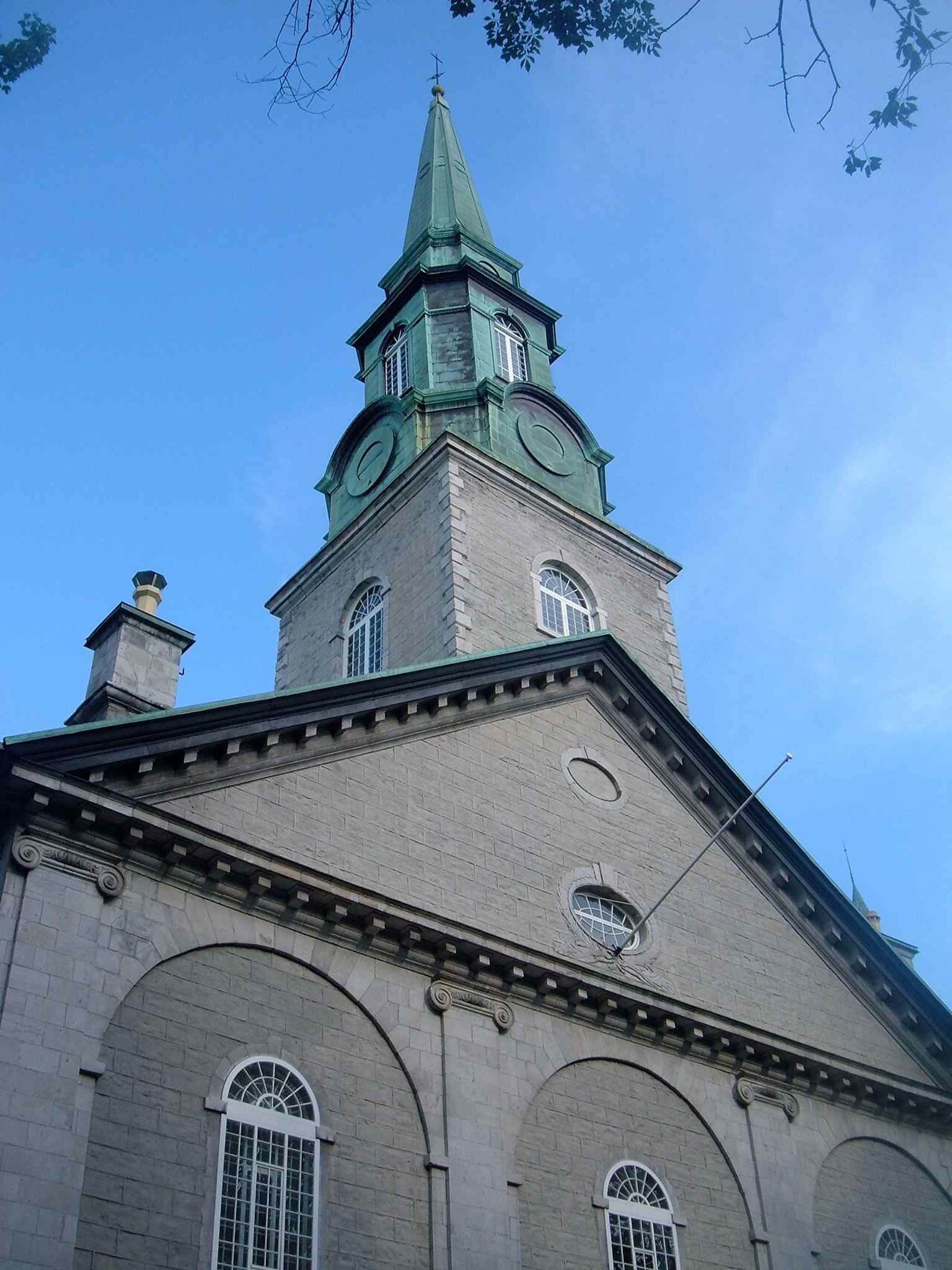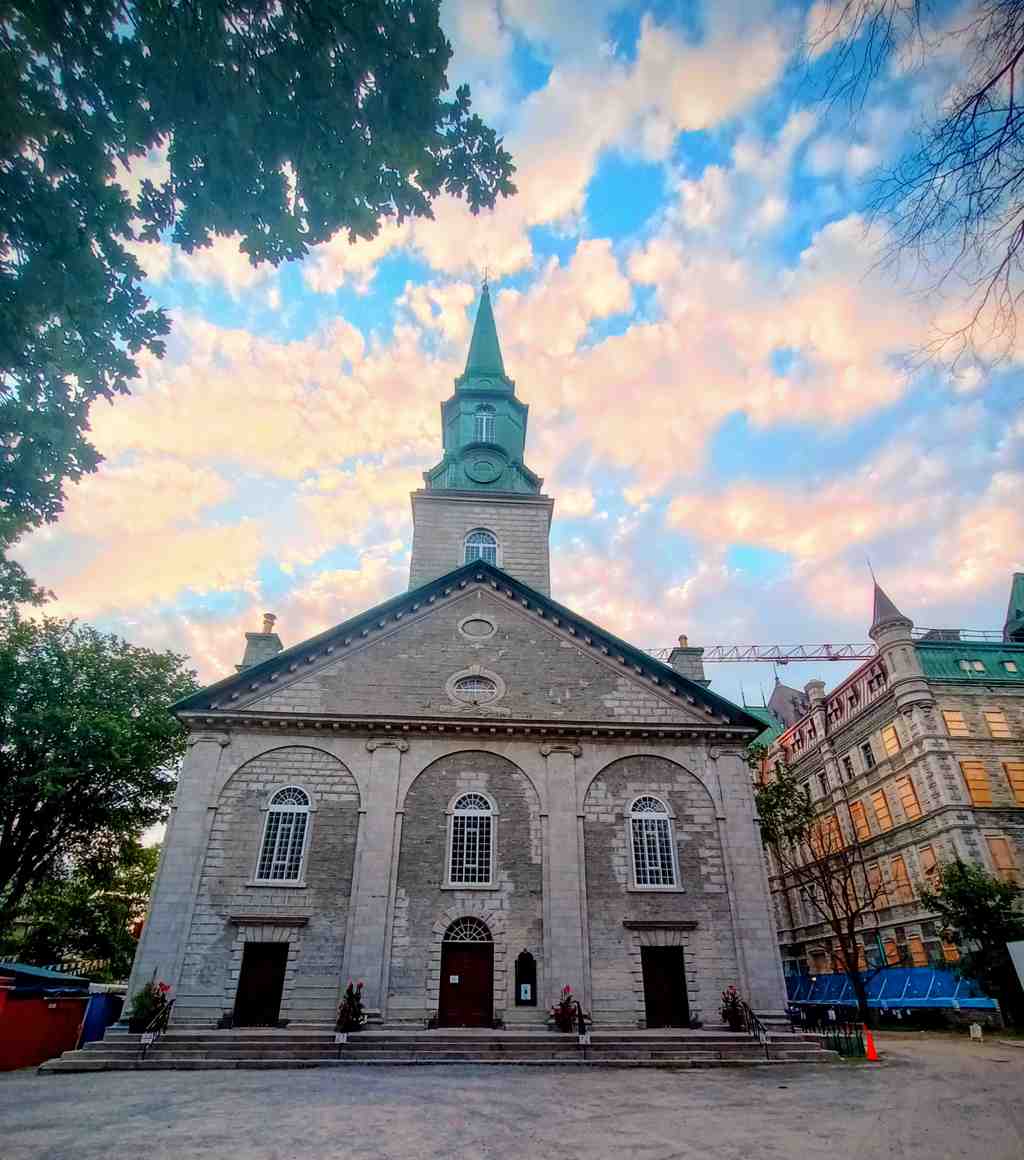
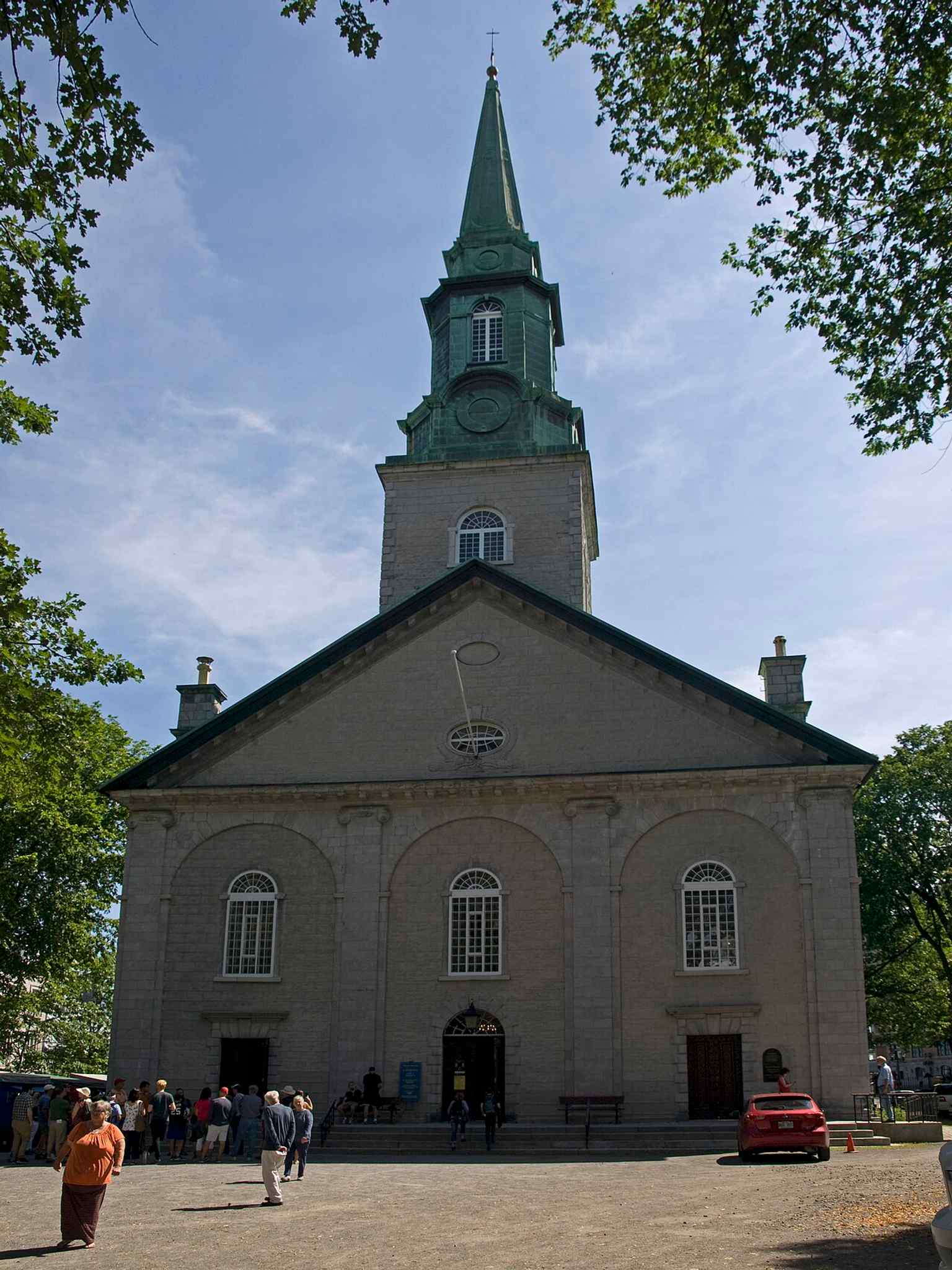
On your right, the Cathedral of the Holy Trinity is a pale stone church with a balanced rectangular front, a tall central bell tower, and a restrained classical portico that feels more London than New France.
This cathedral does more than pray... it declares. When Bishop Jacob Mountain arrived as the first Anglican bishop of Quebec in the seventeen nineties, he wanted a cathedral that would give the Church of England real stature in the colonial capital. Before a single stone went up, the project already carried political weight: Crown letters patent in seventeen ninety-nine authorized it, and Mountain pushed hard for a building grand enough to say that British power intended to stay.
Military officers William Robe and William Hall designed it, and workers raised it between eighteen hundred and eighteen oh four on the former Récollet site. That choice mattered. In this city, new authority rarely starts from scratch; it usually steps onto older ground and makes its case in stone. When the cathedral was consecrated in eighteen oh four, it became the first Anglican cathedral built outside the British Isles. Not subtle.
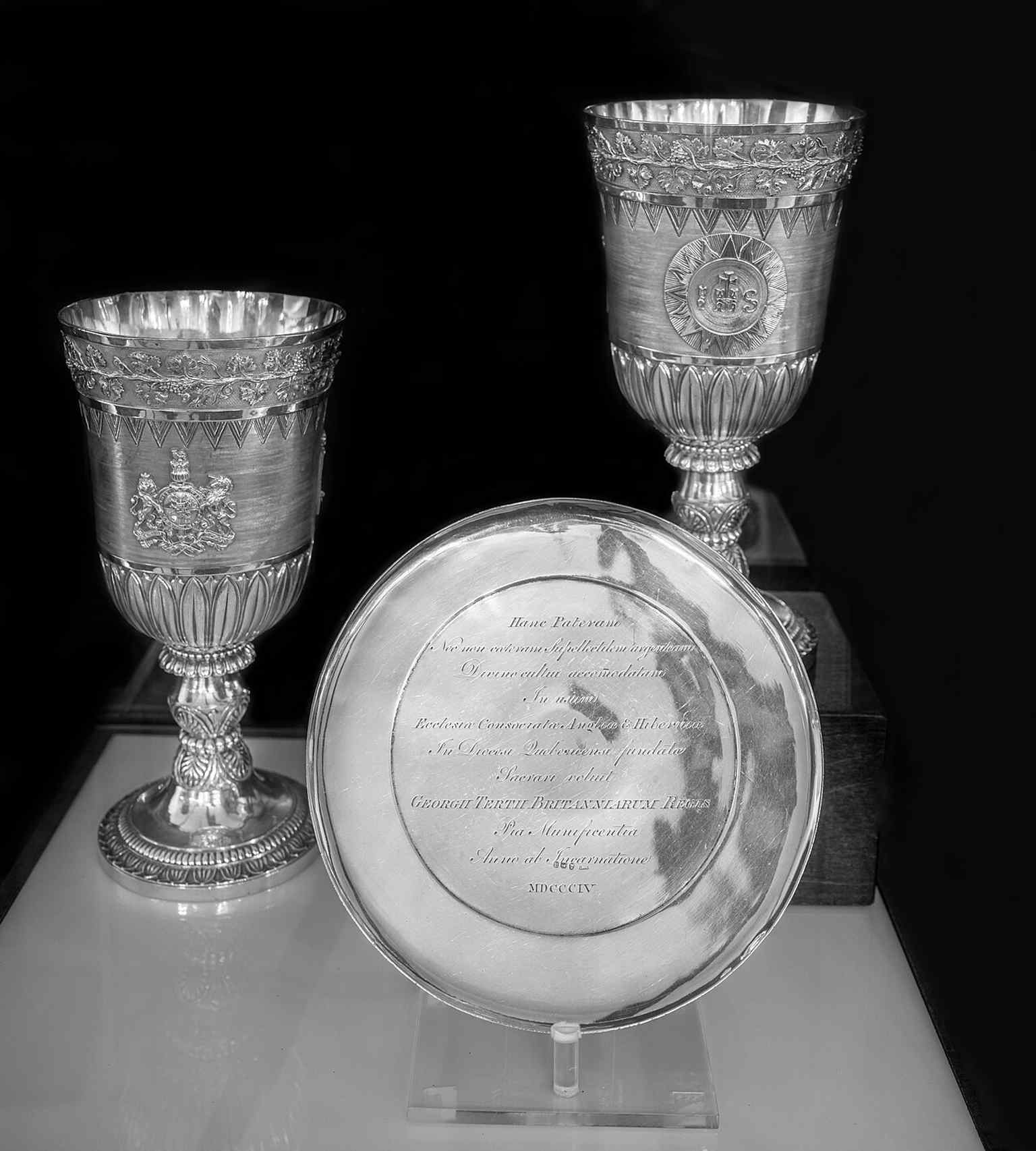
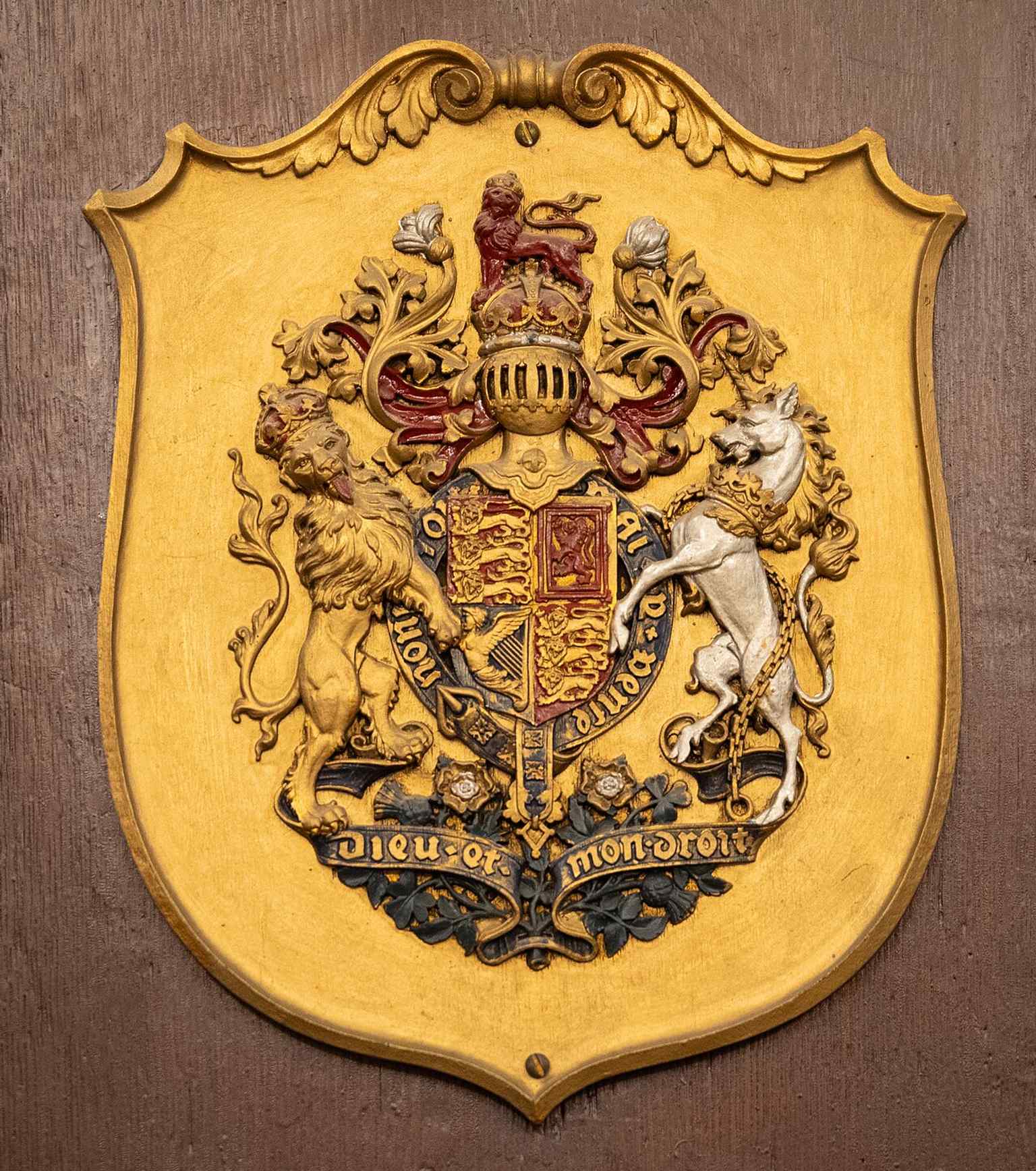
If you glance at the image in the app, you can see that calm, measured façade. Its style is called Palladian, a classical design language built on symmetry and proportion, modeled here on London churches like Saint Martin-in-the-Fields. King George the Third paid for construction and even supplied a folio Bible, large prayer books, and communion silver. So the bond to the Crown was not metaphorical... it arrived in crates.
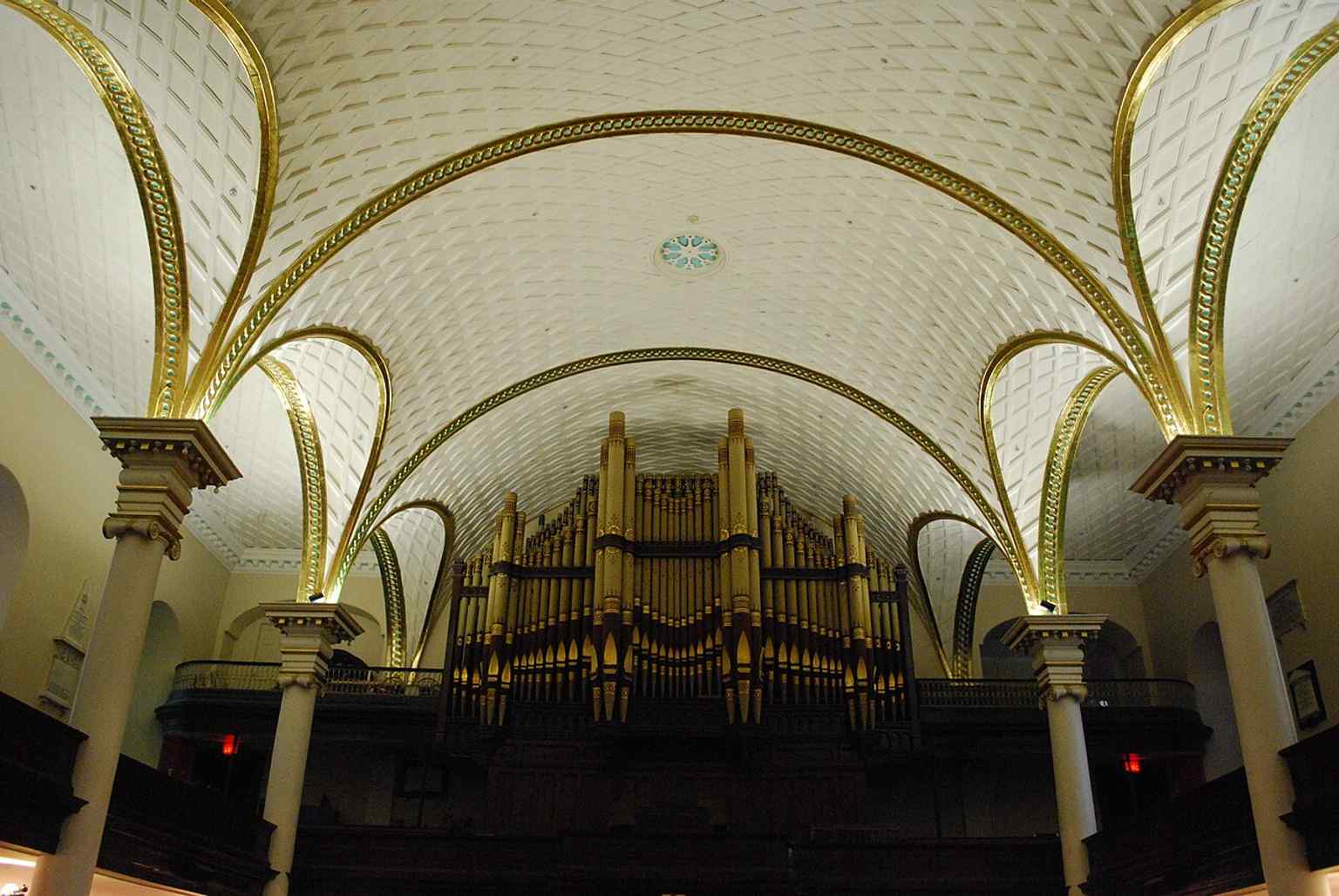
Inside, the arrangement continued the message. There is a Royal Pew, a reserved seat for the monarch or the monarch’s representative, because even worship could double as imperial theater. And here’s the detail locals quietly point out: Bishop Jacob Mountain did not just champion this place. He lies beneath the chancel, the space around the altar at the east end. He quite literally claimed the ground of the cathedral he fought to establish.
The tower rises about one hundred fifty-four feet and still holds eight bells cast by the Whitechapel Bell Foundry in eighteen thirty, the oldest change-ringing peal in Canada. Change-ringing means ringing bells in shifting mathematical patterns rather than simple melodies. Those bells left for London in two thousand and six for retuning, then came home in two thousand and seven... heritage rescue with a very musical accent.
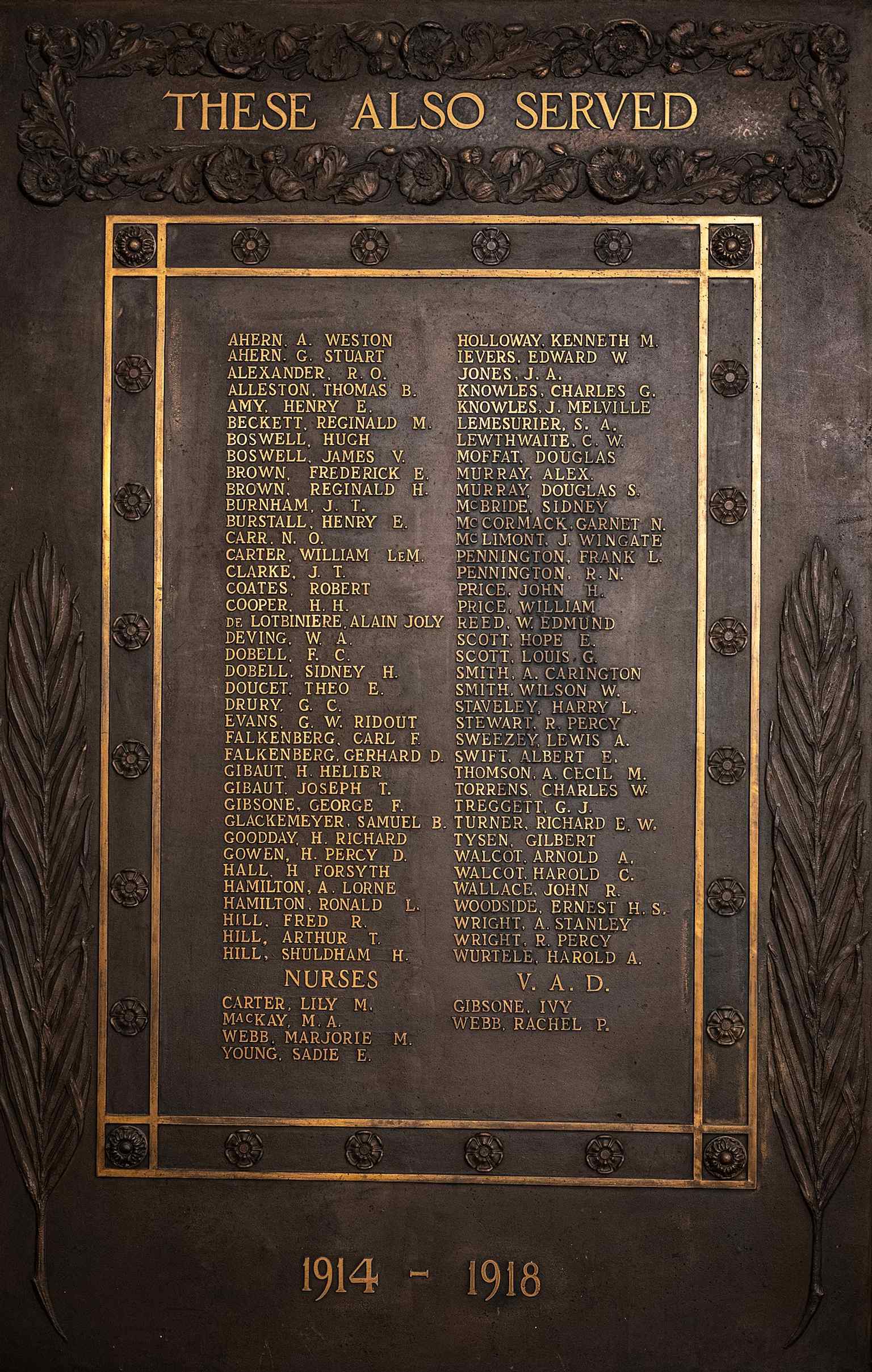
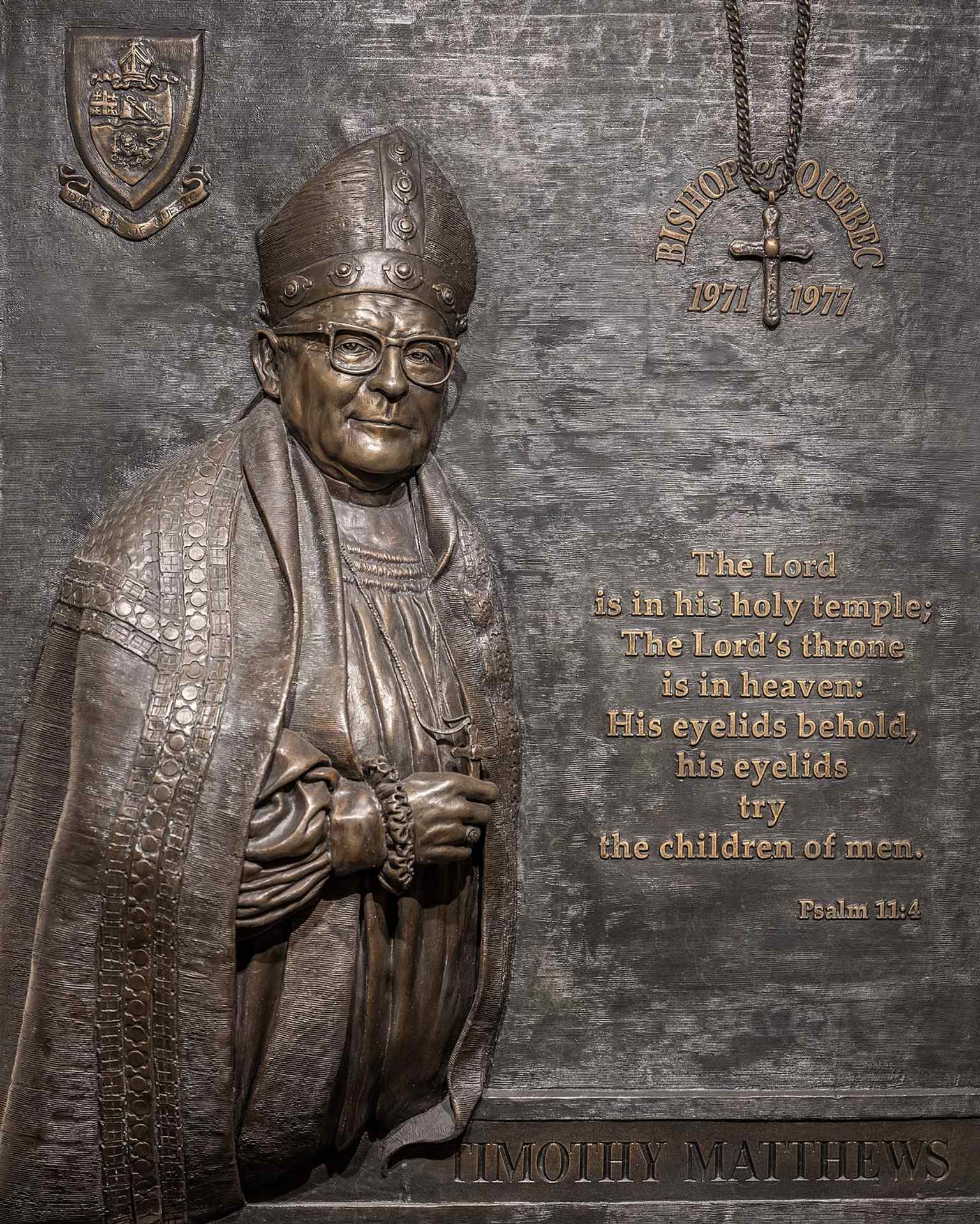
If you look at the memorial image on your screen, you’ll catch how this church also stores remembrance, not just ritual. That matters here in Place d’Armes, where sacred space, civic display, and authority all lean on one another. In about two minutes, we’ll step into the square itself and watch those worlds meet in the open. If you want to return later, the cathedral is generally open daily from ten in the morning to five in the afternoon.