
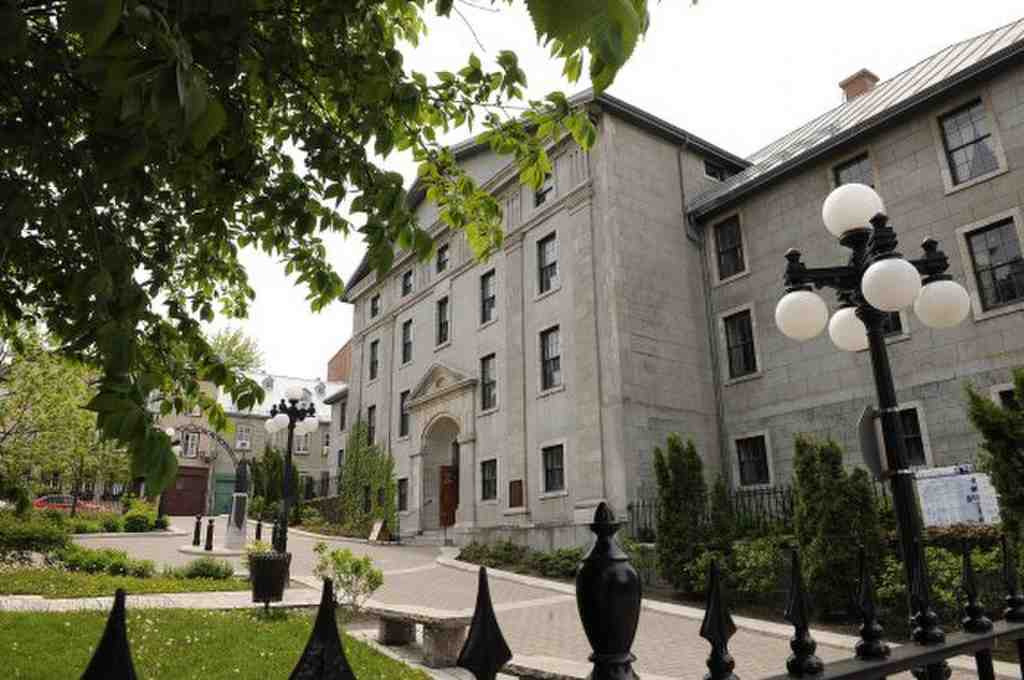
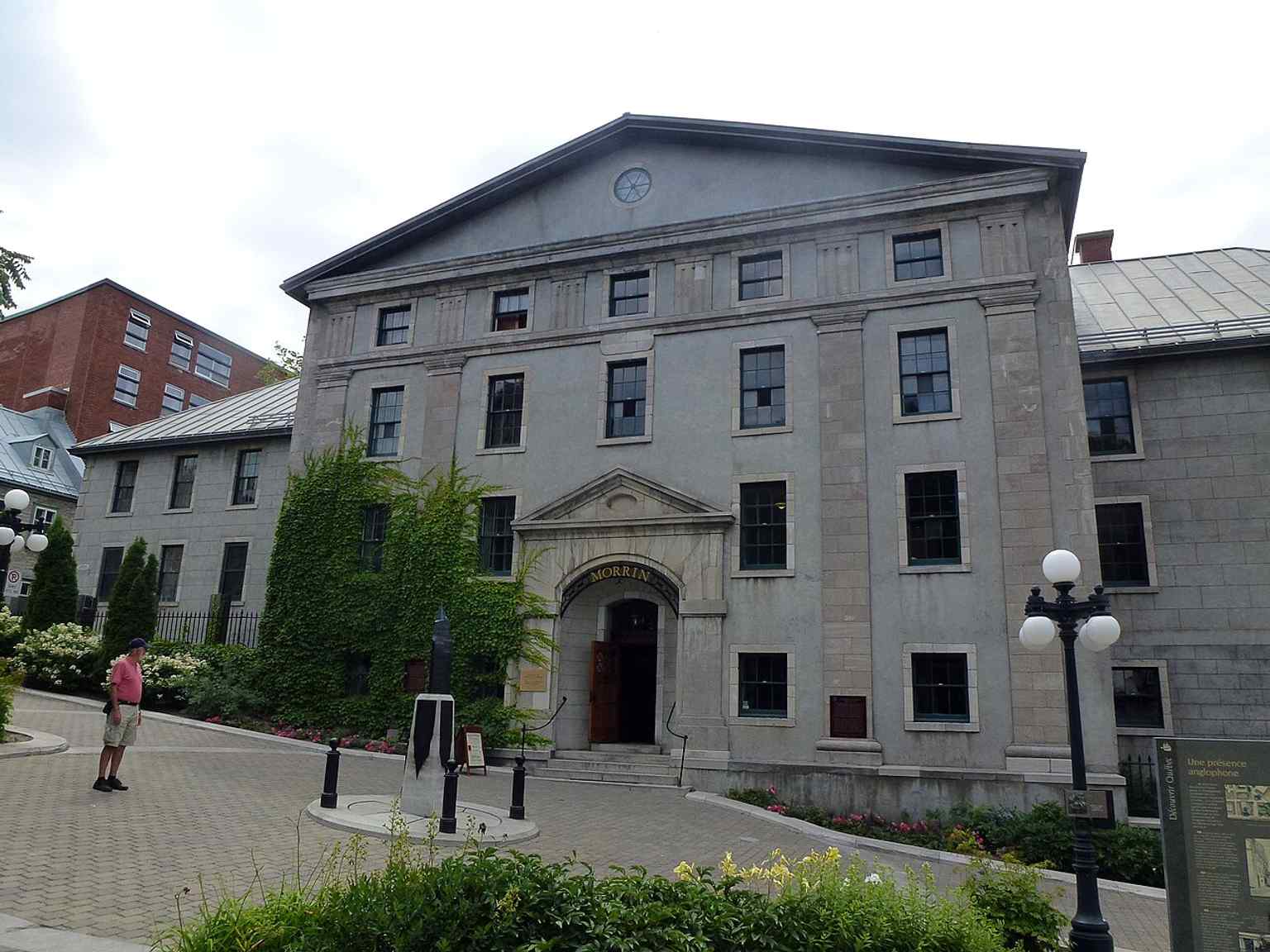
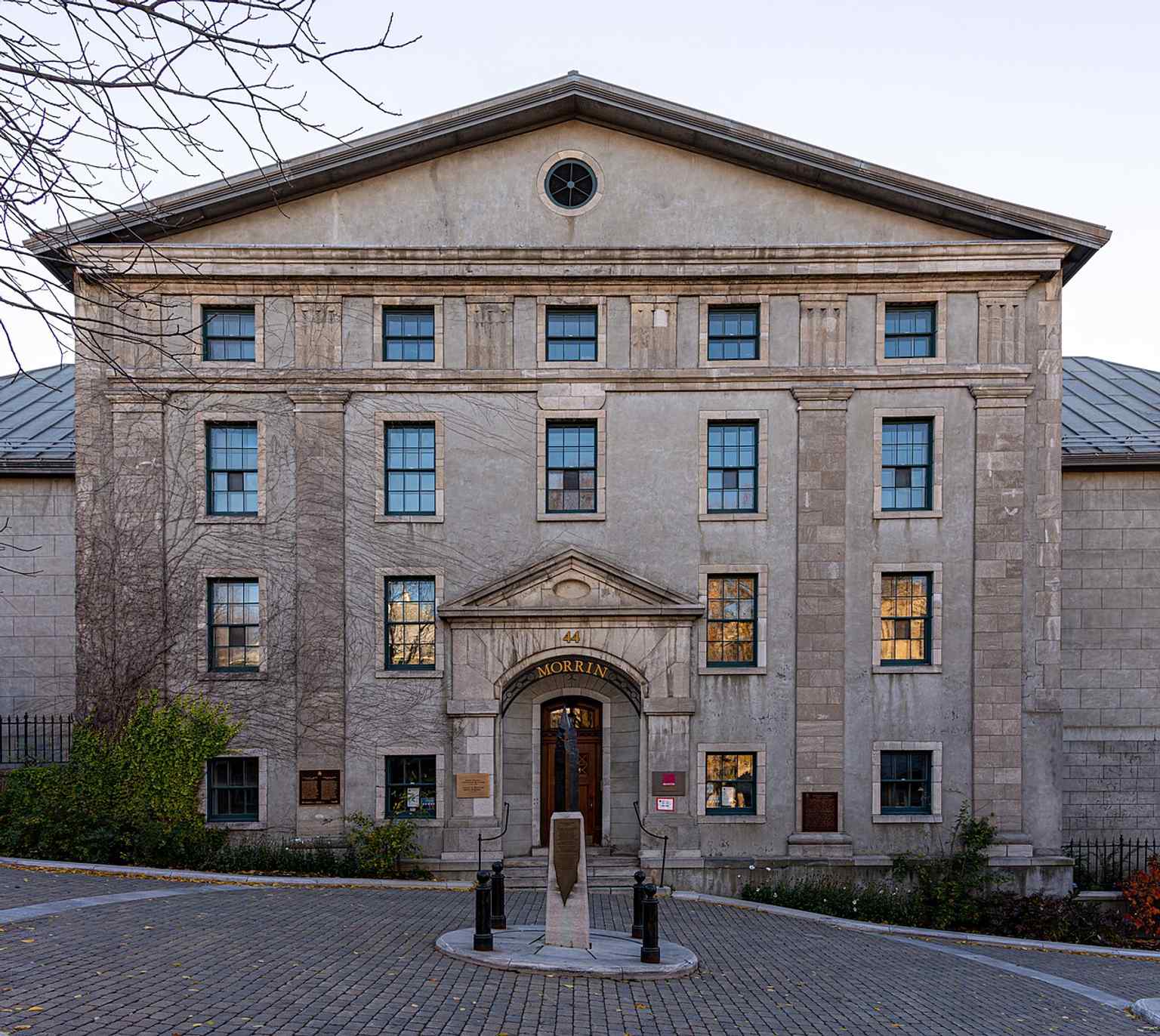
On your left, the Morrin Centre is a solid gray-stone block with a strict rectangular façade, tall sash windows in neat rows, and a small triangular pediment centered above the doorway.
This calm, almost scholarly front hides a dramatic career change. Long before it became a library and cultural centre, this was the Royal Redoubt site - first a military post, then a wartime detention ground. In the seventeen forties, British prisoners captured in raids on New England were crowded in here so tightly that disease spread fast and many died. One of those captives, Esther Wheelwright, remained in Quebec and later became mother superior of the Ursuline Nuns. Cities have a talent for turning captivity into unexpected biography.
Then, in eighteen twelve, Quebec built its common jail here, one of the first two prisons in Canada shaped by British reform ideas. The theory came from John Howard: disciplined order through design, with separate cells, hard labour, and education meant to correct the prisoner. Neat theory. Real life ignored the plan. The jail soon overflowed with people arrested for vagrancy, public drunkenness, and prostitution, and the idea of separating inmates by offense gave way to simple crowd control.
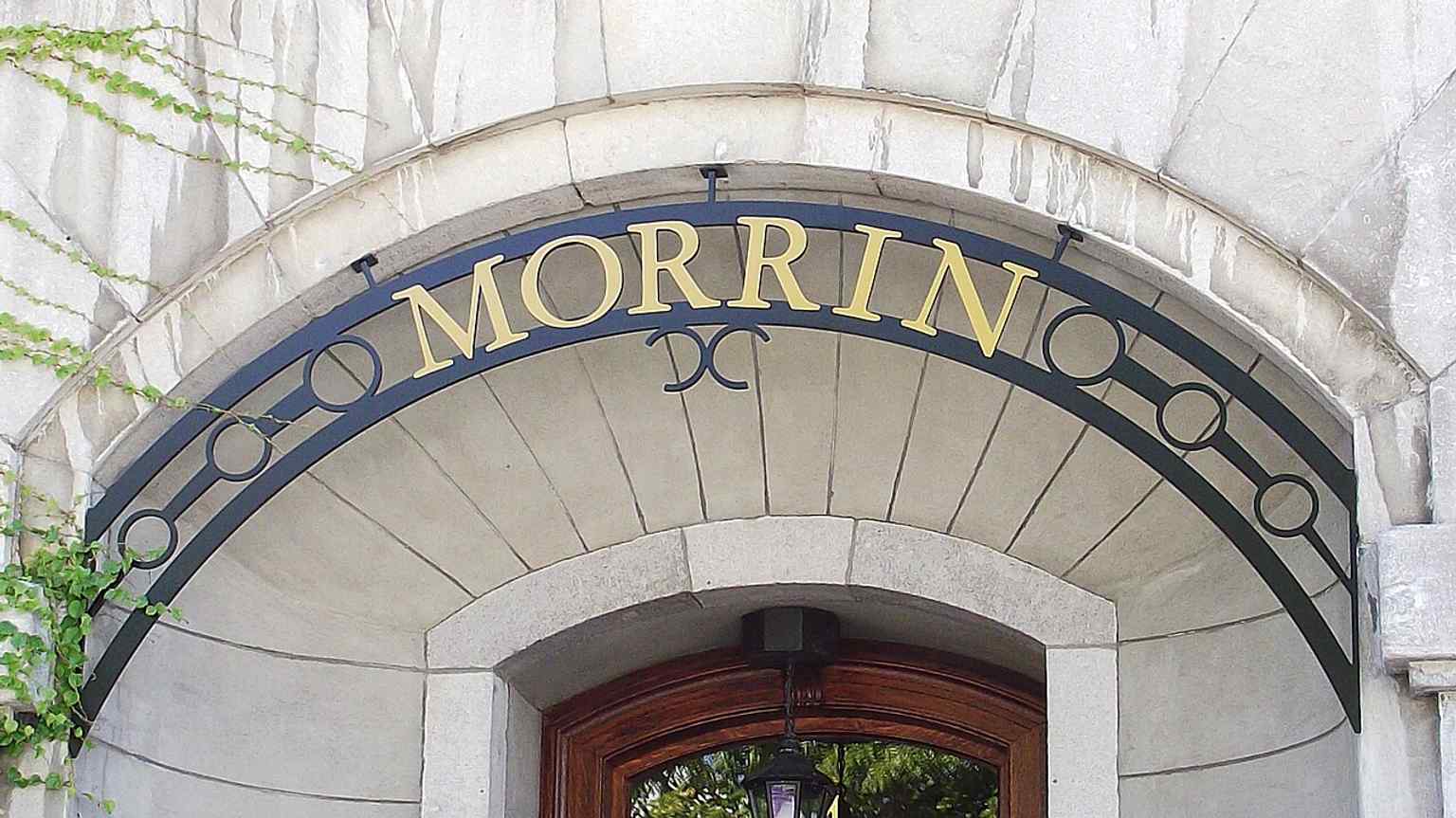
And here is the detail most people miss when they look at that front door. It once served as a public theatre of terror. Sixteen men were hanged in front of this jail, and all but one of those executions took place before eighteen forty. Some hangings used an iron balcony built for the purpose. So this entrance did not just regulate who went in... it displayed punishment as a civic performance.
If a place can move from punishment to learning, does that redeem it... or make its older scars even harder to ignore?
After the prison moved in eighteen sixty-seven, architect Joseph-Ferdinand Peachy softened the building for Morrin College. He stripped away some of its harsher features, including four rear latrine towers, and by eighteen sixty-eight the place had turned toward education. In eighteen eighty-five, the college admitted women to its Bachelor of Arts program - roughly when McGill did, and decades before Université Laval. If you glance at the image in the app, the interior shows that later reinvention beautifully: scholarship layered over confinement.
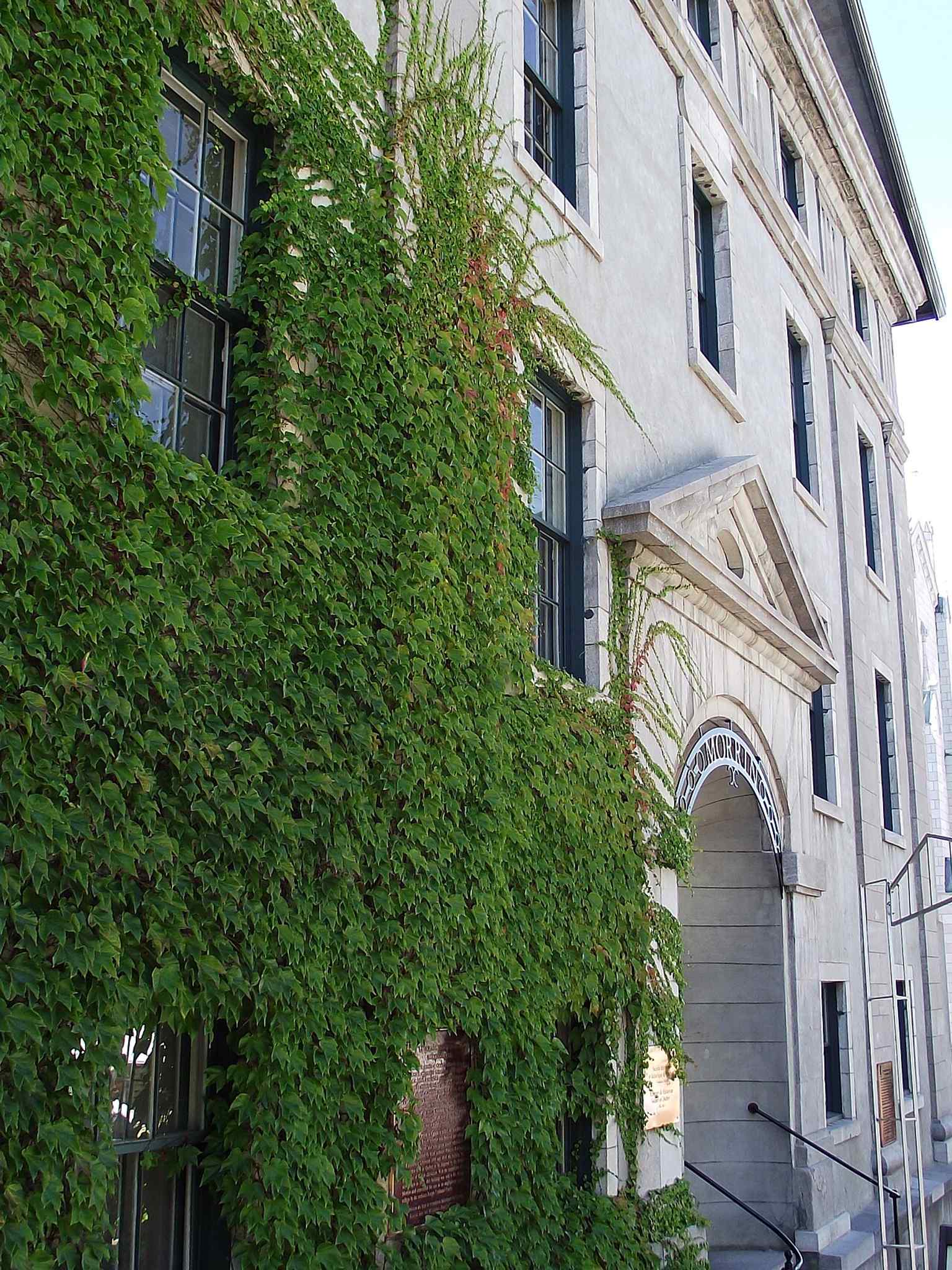
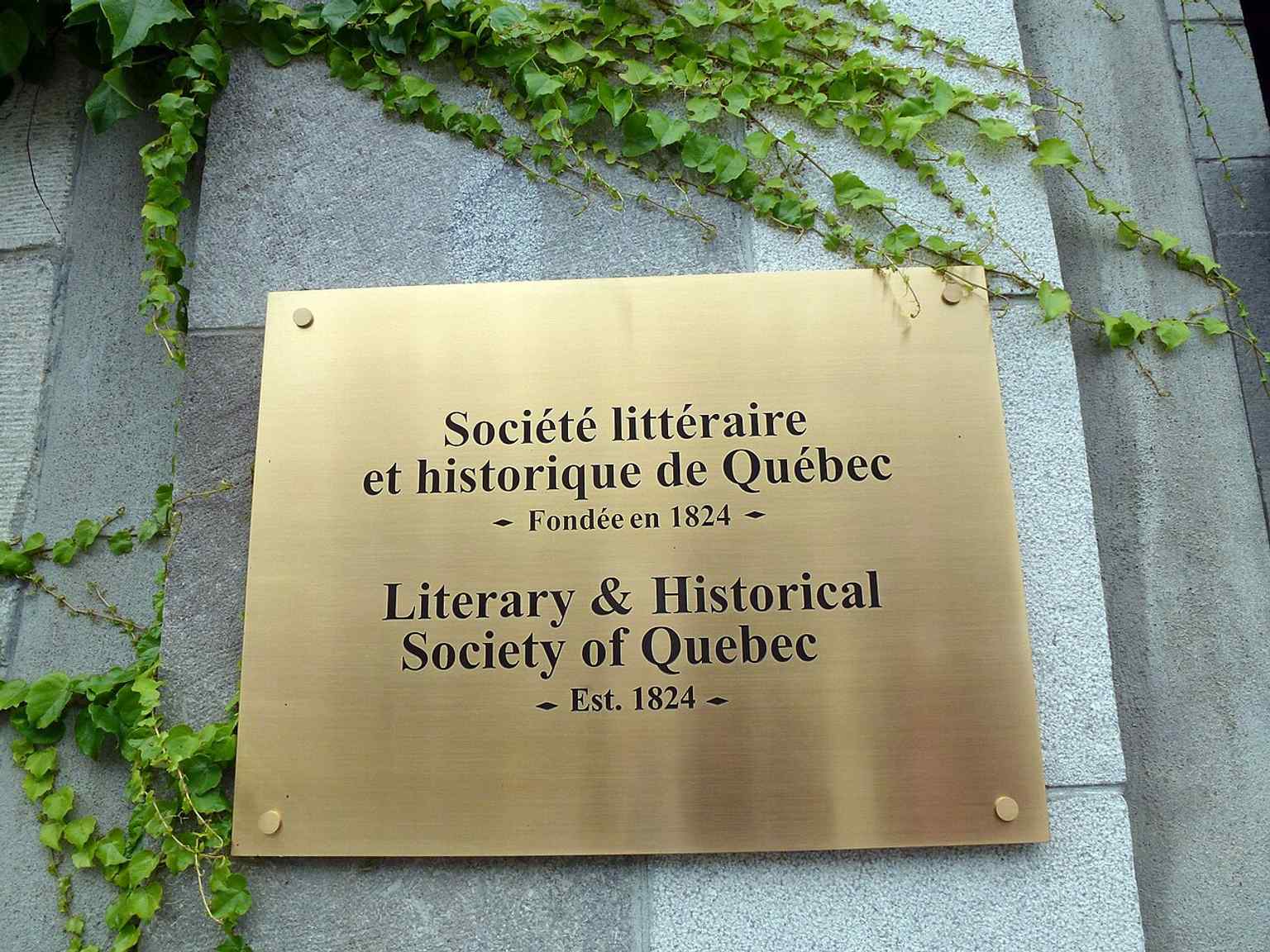
The Literary and Historical Society of Quebec, founded in eighteen twenty-four by Governor General Lord Dalhousie, has kept its English-language library here since eighteen sixty-eight. Today the building preserves books, archives, and more than eight hundred donated objects from local English-speaking families. It is now a National Historic Site, which feels fitting for a place that held soldiers, prisoners, students, and readers in turn.
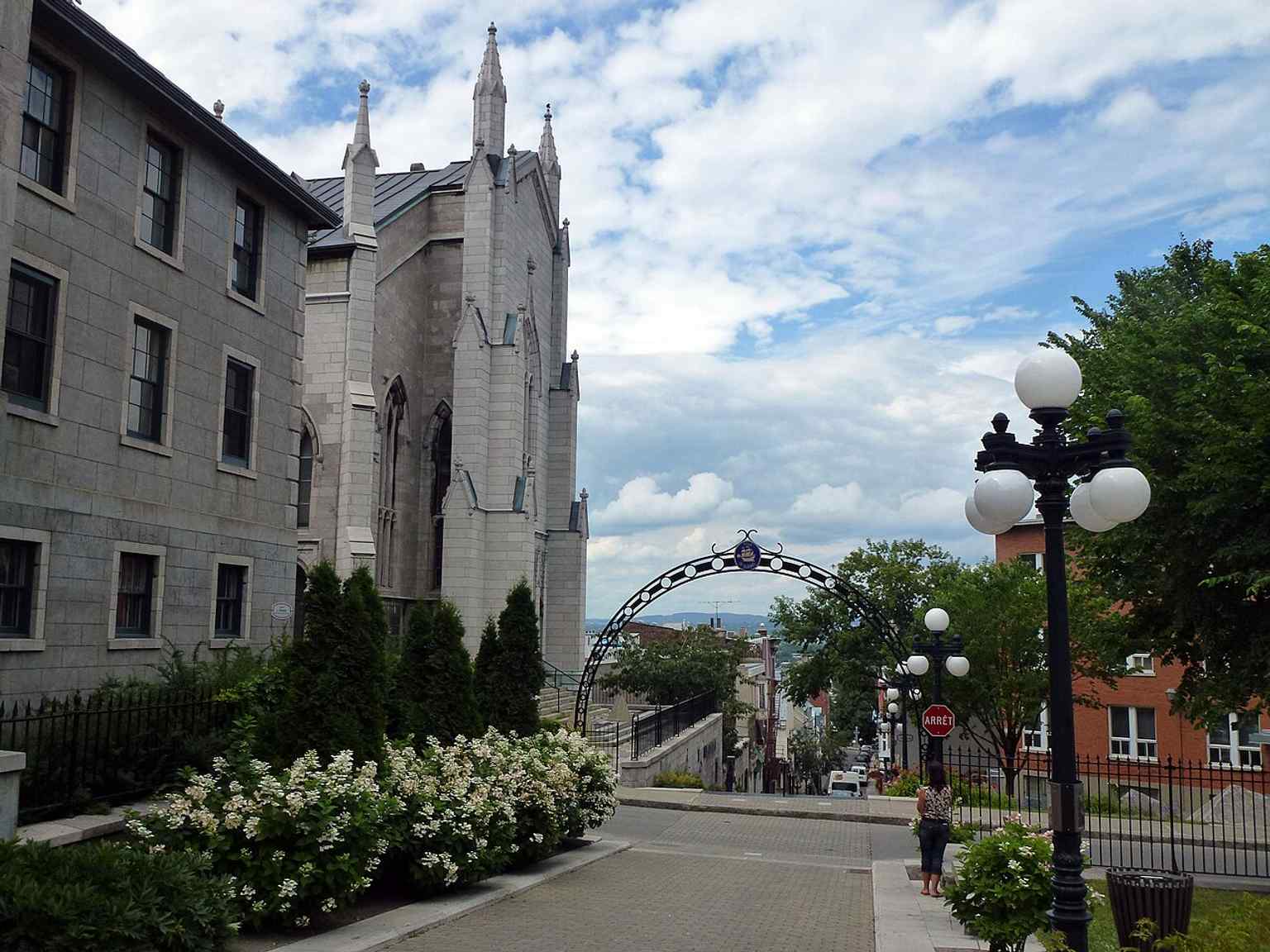
That is the unsettling thing about this corner of Quebec: public culture and public punishment once occupied the same civic ground. In about four minutes, the Cathedral of the Holy Trinity will show you another version of authority, dressed in stone and ritual. If you want to come back inside later, the Morrin Centre is open daily from ten A-M to four P-M.





.JPG)


.JPG)
