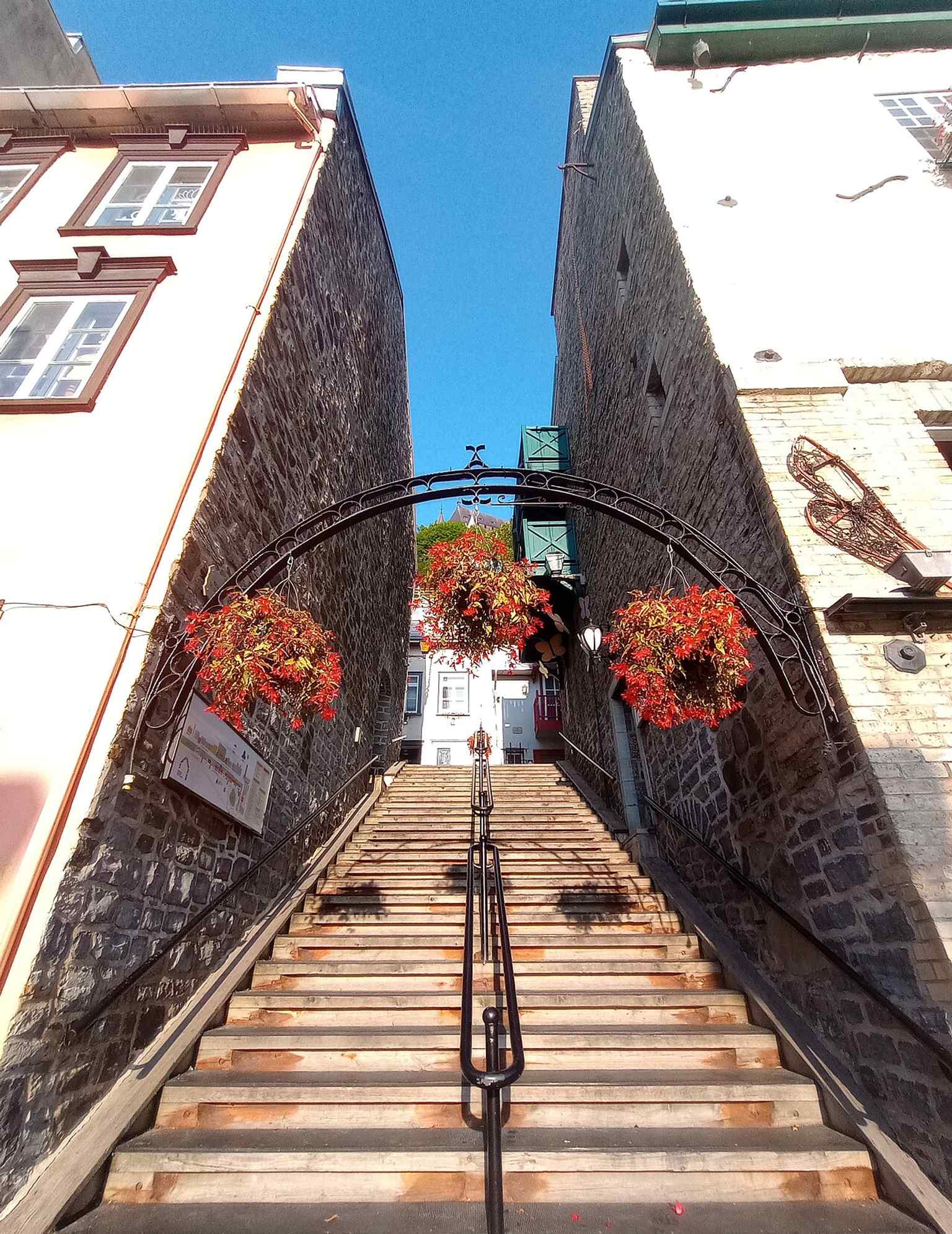
Look for a steep metal-and-wood stairway zigzagging between stone walls, its landings breaking the climb into sharp ramps.
This is the vertical city in miniature: Upper Town above, Lower Town below, and life shaped by the hard business of moving between them. When Samuel de Champlain put his home atop Cape Diamond in sixteen twenty, people soon wore a path here; by the mid-seventeenth century it had become the Champlain Stairs, also called the Beggar's Stairs. Reckless young men raced horsecarts down nearby Mountain Hill, making this slope more than a little lively. By around eighteen eighty, the old wooden stairway looked so shaky London guidebooks called it Breakneck. Great branding. Charles Baillairgé restored it in eighteen eighty-nine, and he later gave it a sturdier iron form with three ramps in eighteen ninety-three. If you want the transformation, check the before-and-after image in the app. Today’s widened layout dates to the late nineteen-sixties and still counts fifty-nine steps. Despite the name, serious injuries are not commonly reported. The funicular ahead offers the city’s more modern answer to the same problem, and these stairs stay open twenty-four hours.