
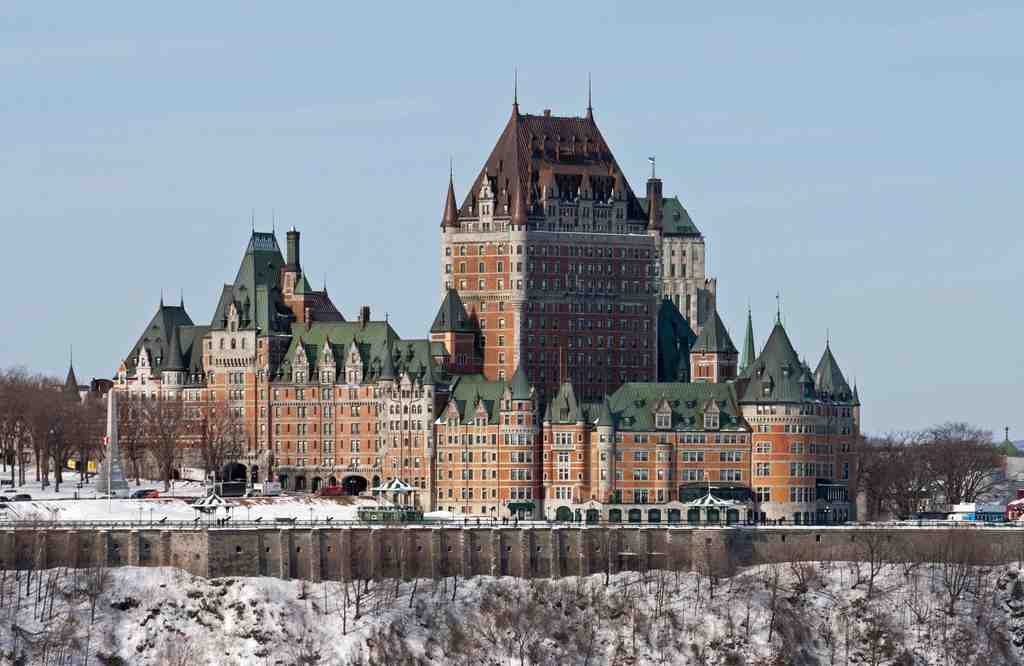
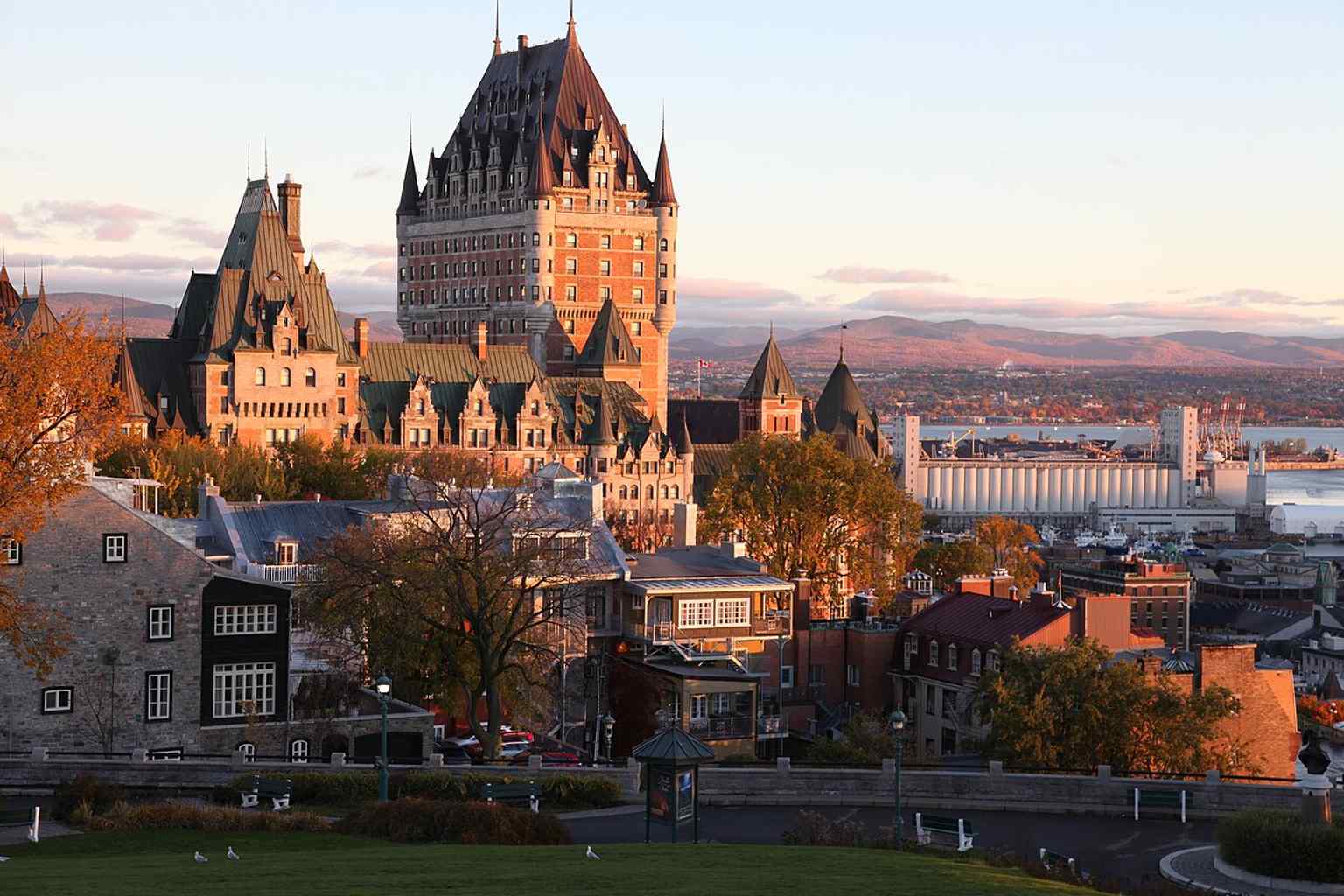
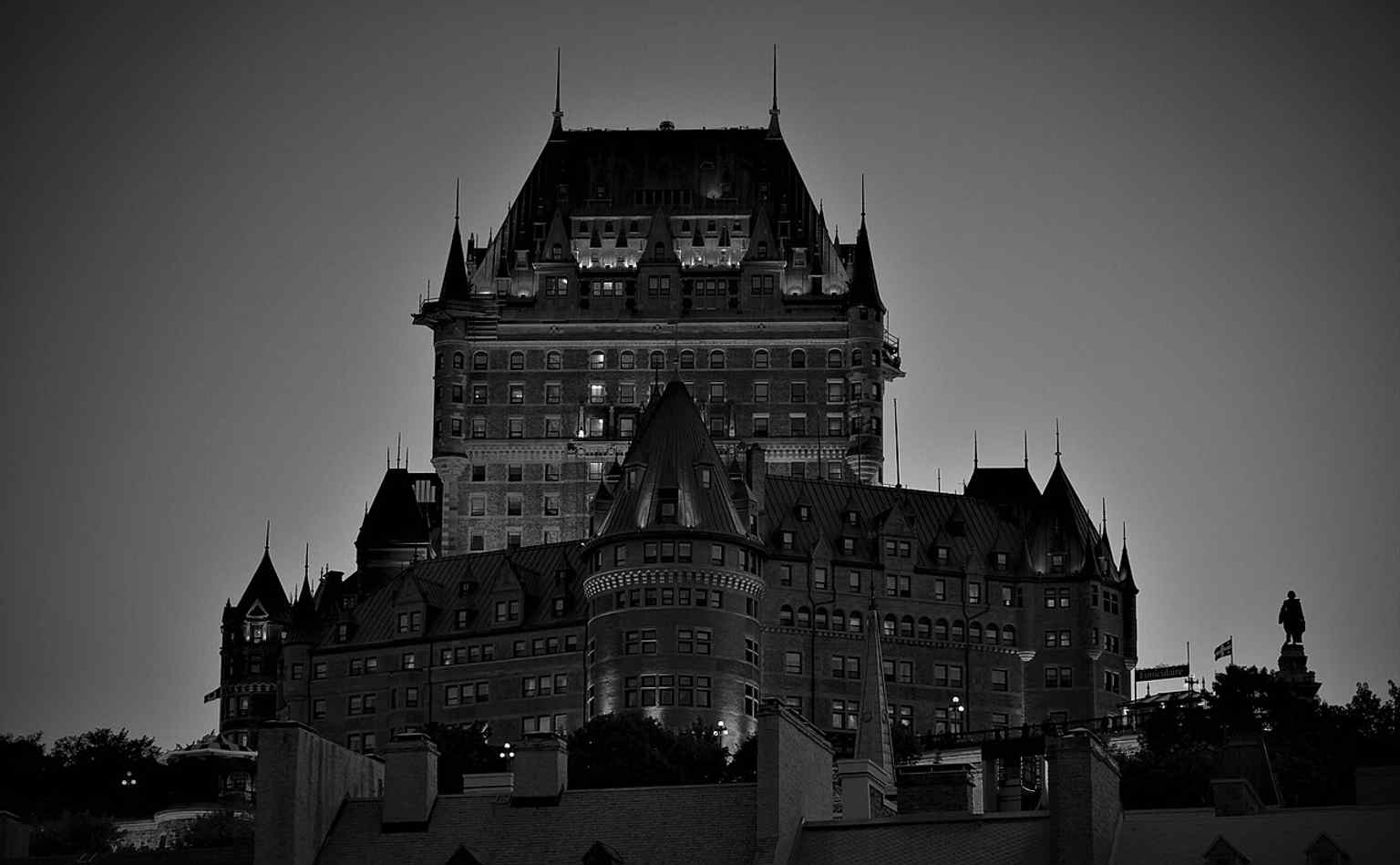
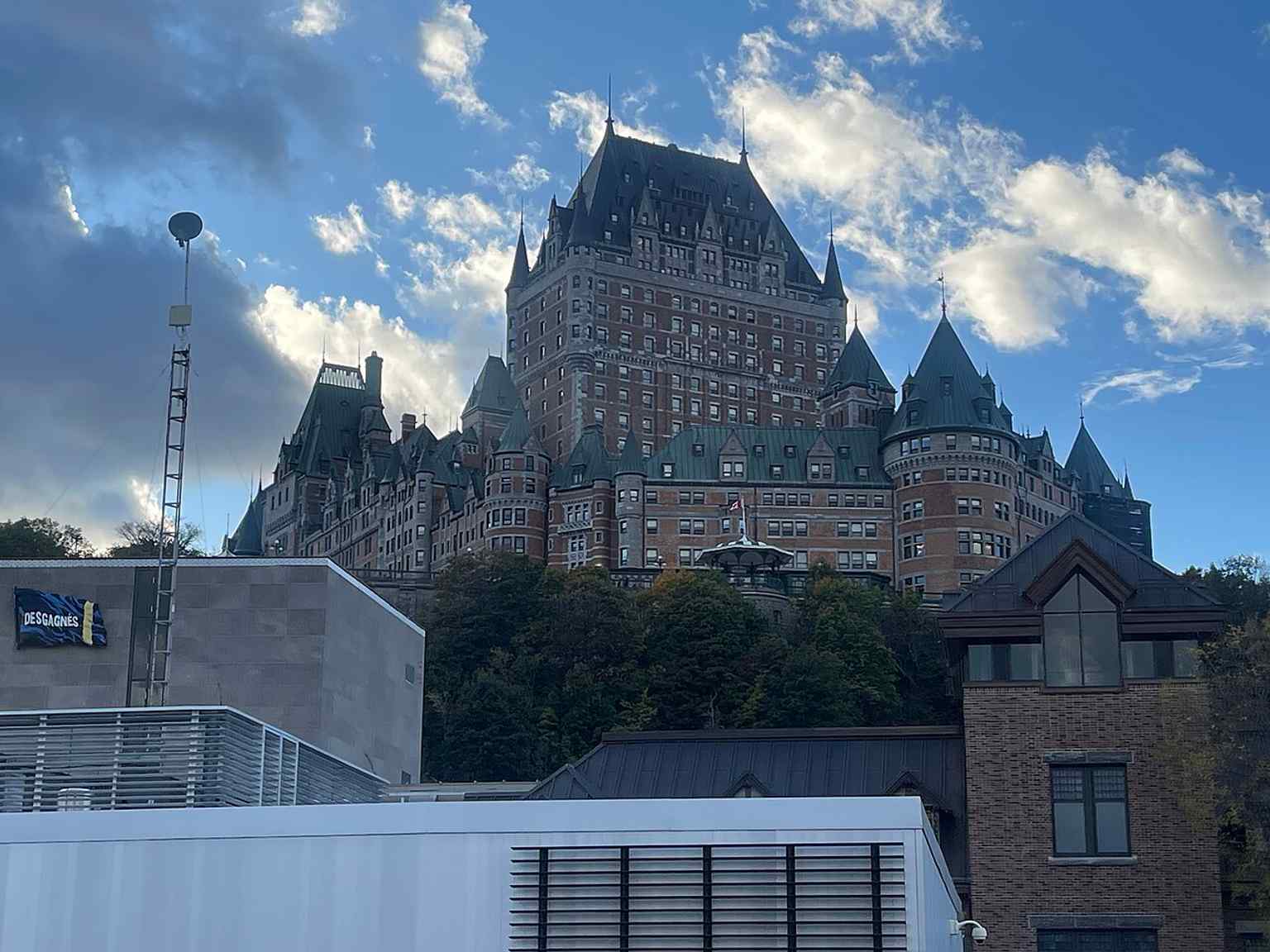
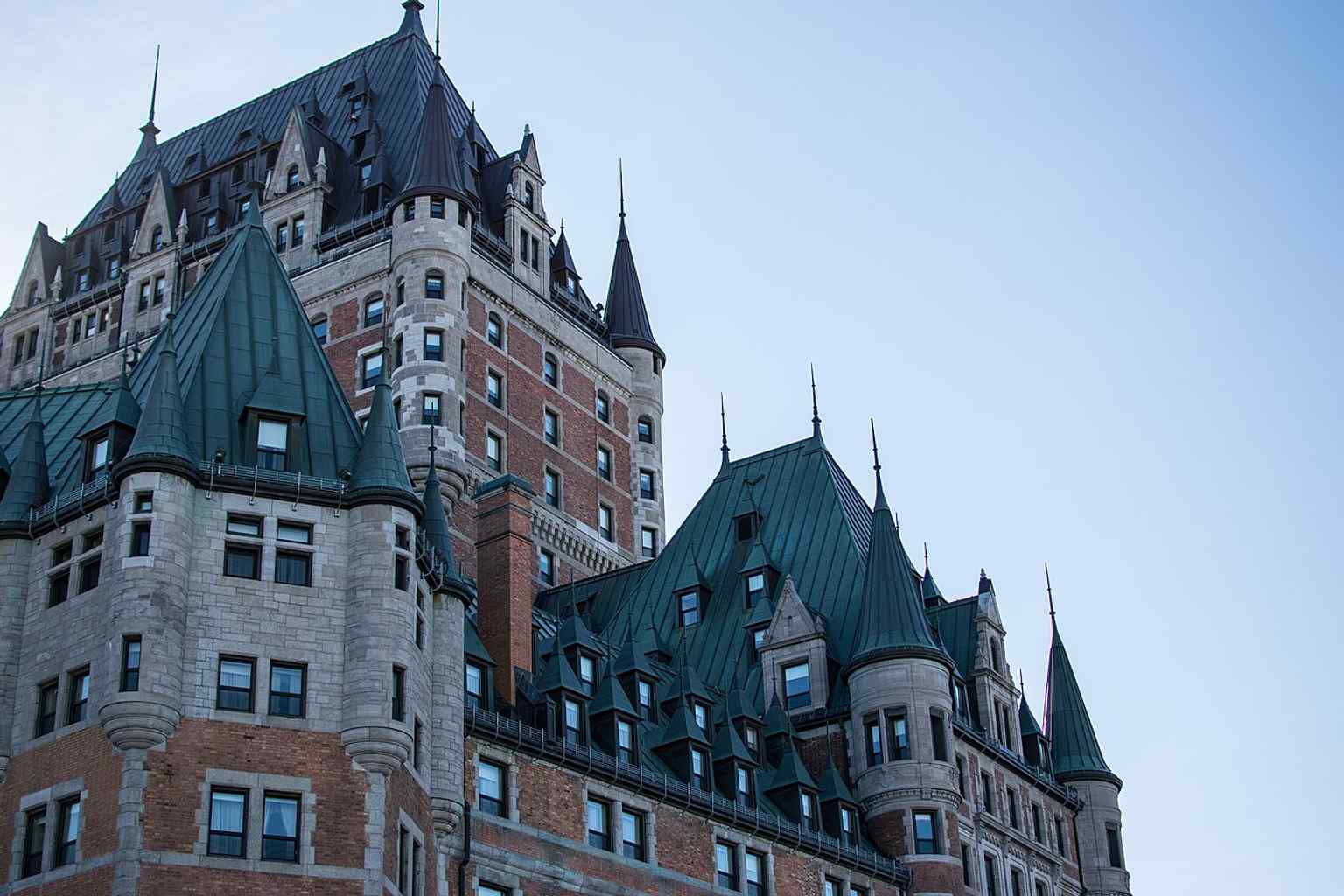
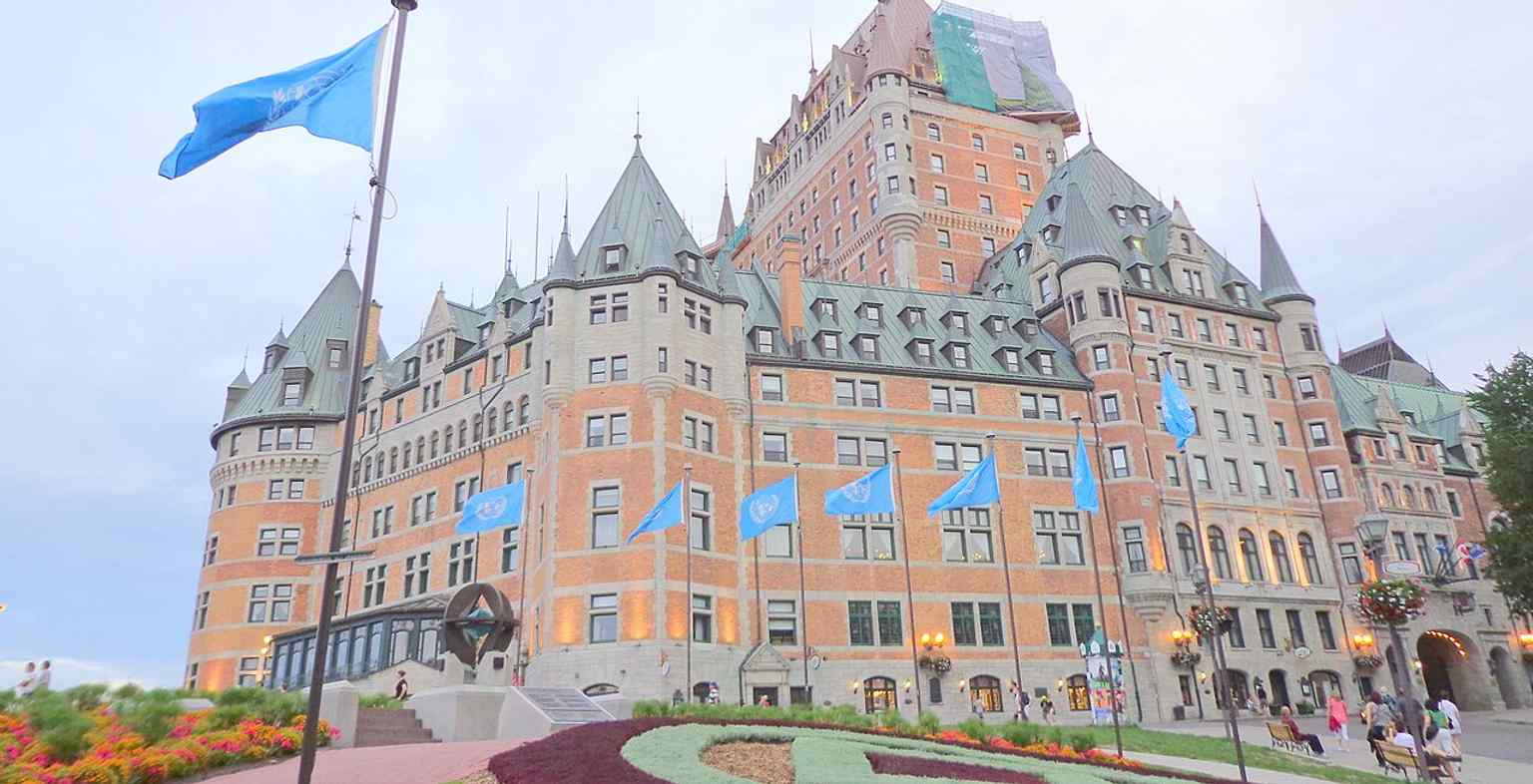
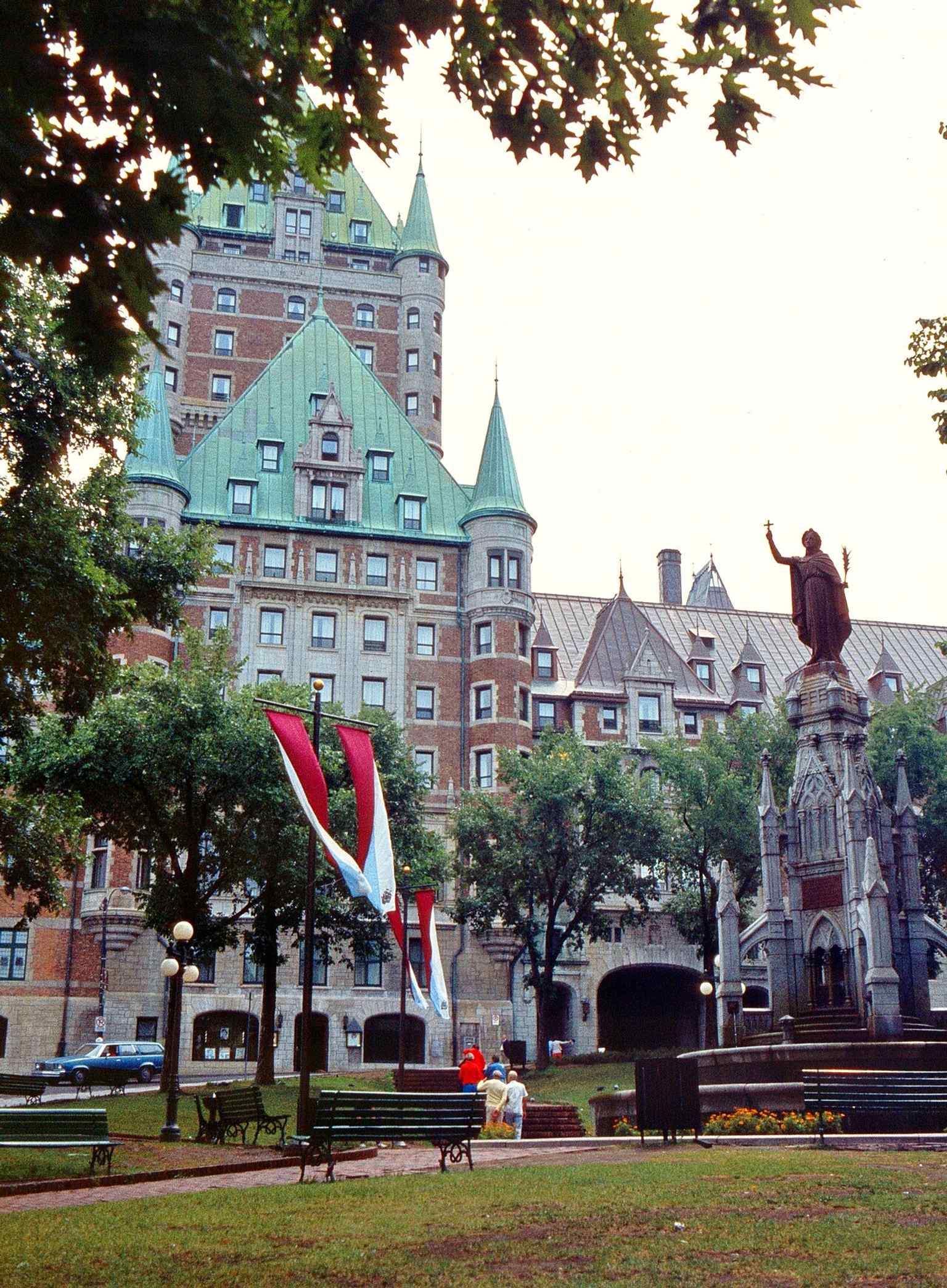
On your left, look for a huge grey-stone hotel with steep copper roofs, round turrets, and a tall central tower that makes the whole place look like a castle that took the train business very seriously.
This is the Château Frontenac, opened in eighteen ninety-three by the Canadian Pacific Railway and designed by New York architect Bruce Price in the Château style - a French-inspired look full of sharp roofs, dormers, chimneys, and towers. It is one of the most photographed hotels in the world, which feels about right... the building poses for pictures better than most people.
But here is the twist. This postcard castle stands on ground that had already spent centuries serving power. Before the hotel, this height held the Château Haldimand, an eighteenth-century government building ordered by Governor Frederick Haldimand. And even earlier, this cape carried the residences and forts tied to the governors of New France. So the fantasy you see now replaced a chain of very practical authority on one of the most strategic pieces of land in the city.
A later governor-general helps explain that transformation. In the eighteen seventies, he pushed Quebec to restore its old fortified character and even imagined rebuilding the Château Saint-Louis here, the former seat of French governors. That plan stalled. Then railway men, led by Canadian Pacific’s William Van Horne, saw another opportunity: if power no longer needed this cliff, prestige and tourism certainly did. So they turned a command post into a luxury address.
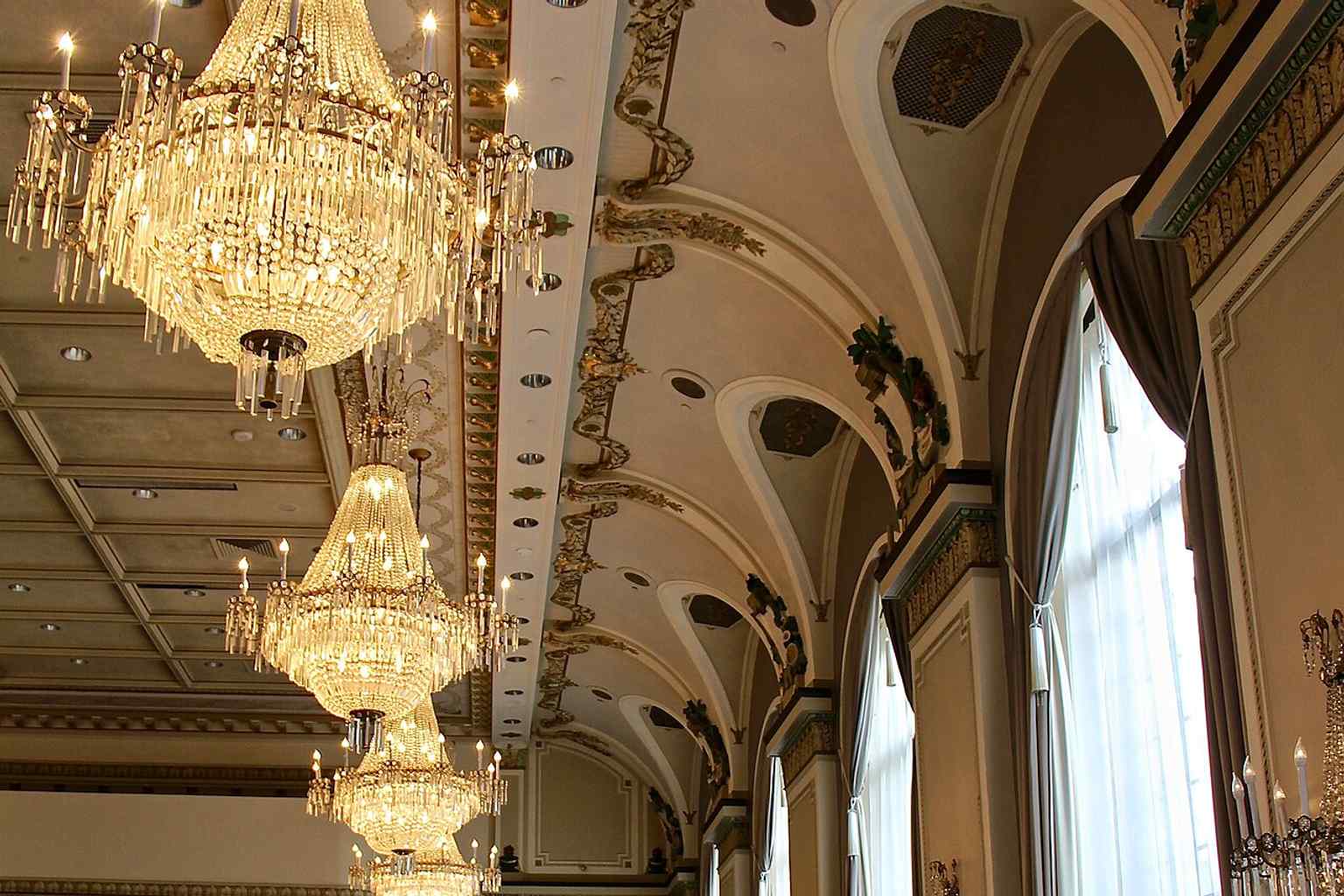
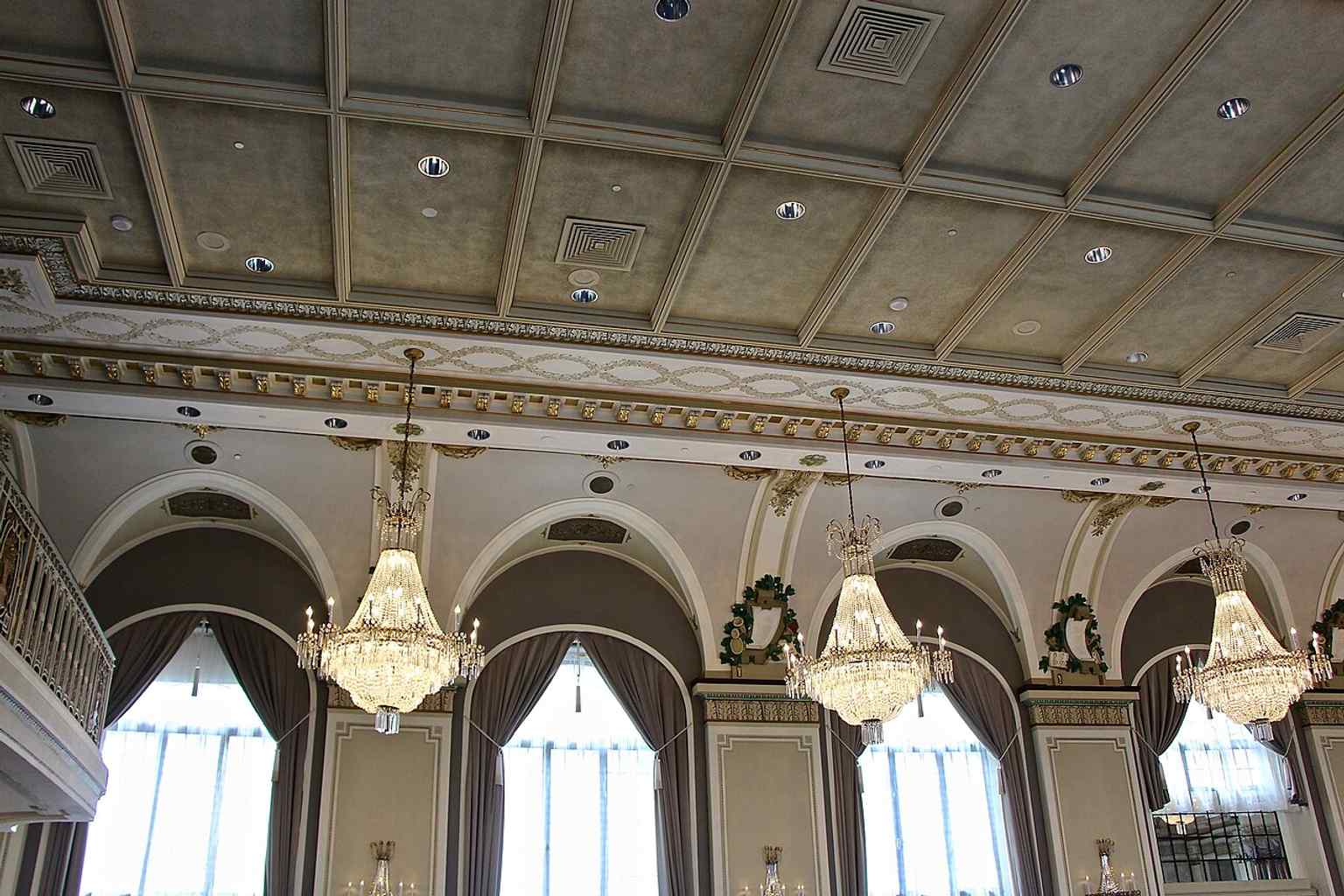
And luxury, at first, meant something almost comic in its extravagance. When the first wing opened, it offered one hundred seventy rooms, ninety-three private bathrooms, and fireplaces - which in the eighteen nineties was a very polished way of saying, “We intend to impress absolutely everyone.”
The building kept growing. William Sutherland Maxwell expanded it in the early twentieth century, and the central tower arrived in the nineteen twenties, pushing the hotel to about eighty meters high. Because it sits on this raised promontory above the Saint Lawrence, it dominates the skyline even now. If you want a quick peek at how restoration changed its look, check the before-and-after image in the app - the copper roofs really do come back into storybook form.
Yet the deeper story sits under the elegance. Between two thousand five and two thousand seven, excavations beneath Terrasse Dufferin uncovered the Forts-et-Châteaux-Saint-Louis site and more than five hundred thousand artifacts. In other words, this hotel quite literally rests above the remains of earlier capitals.
Then the place jumped from colonial command to global strategy. During the Quebec Conferences in nineteen forty-three and nineteen forty-four, Winston Churchill, Franklin Delano Roosevelt, and William Lyon Mackenzie King met here while streets around the hotel were locked down with sentries. One story says a hotel employee picked up a leather portfolio marked “Churchill-Roosevelt, Quebec Conference, nineteen forty-three” and kept it as a souvenir, not realizing it may have contained plans for Operation Overlord. That is one way to learn your workplace has become the center of the war.
If you glance at the photo on your screen, you can see those leaders gathered here in nineteen forty-four.
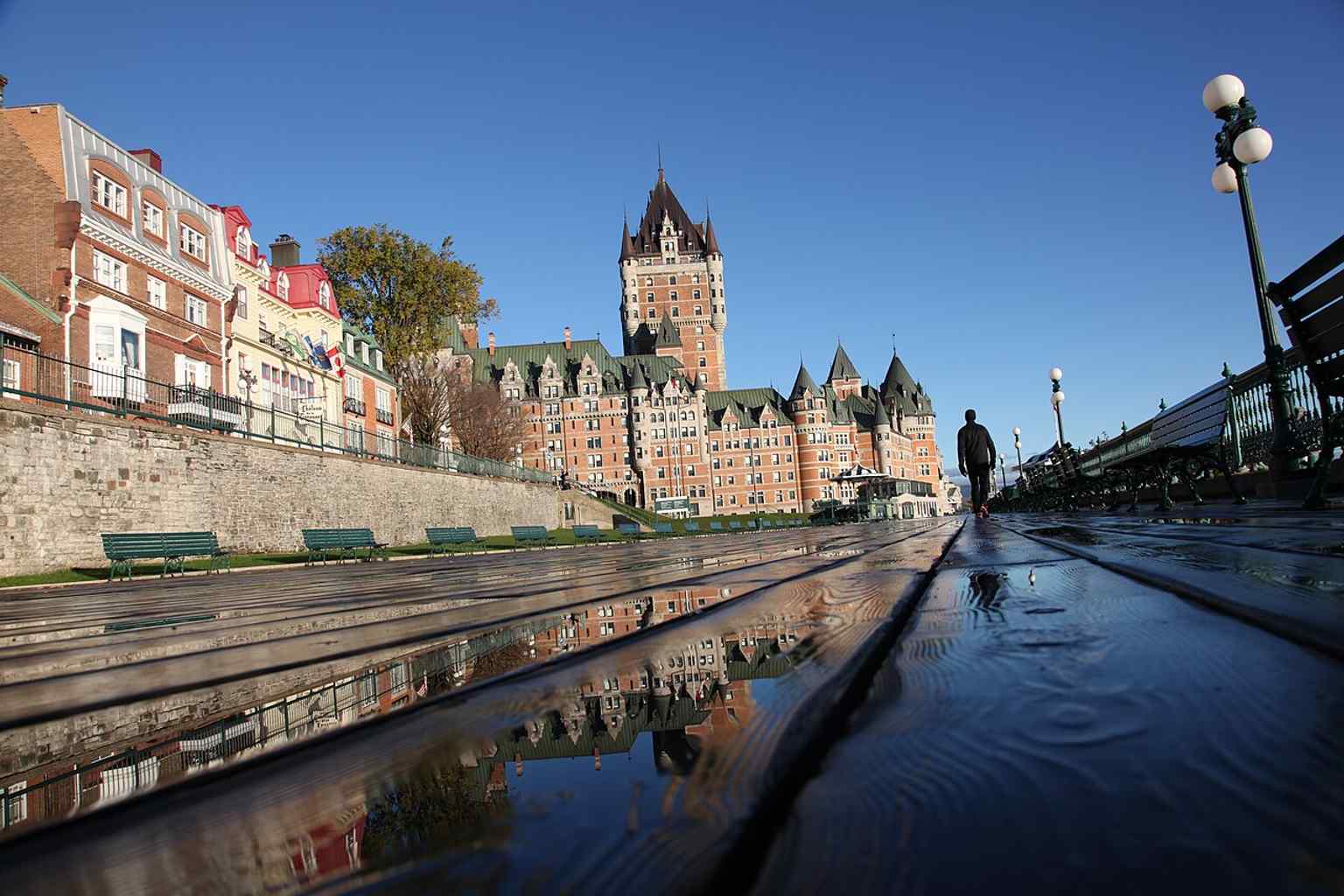
So yes, it is a fairy tale in stone and copper. But it also shows what this city does so well: it takes a site built for command and recasts it as memory, spectacle, and identity. In a couple of minutes, head toward the edge it commands... Terrasse Dufferin, where this old language of authority turns into a public promenade.






.JPG)
