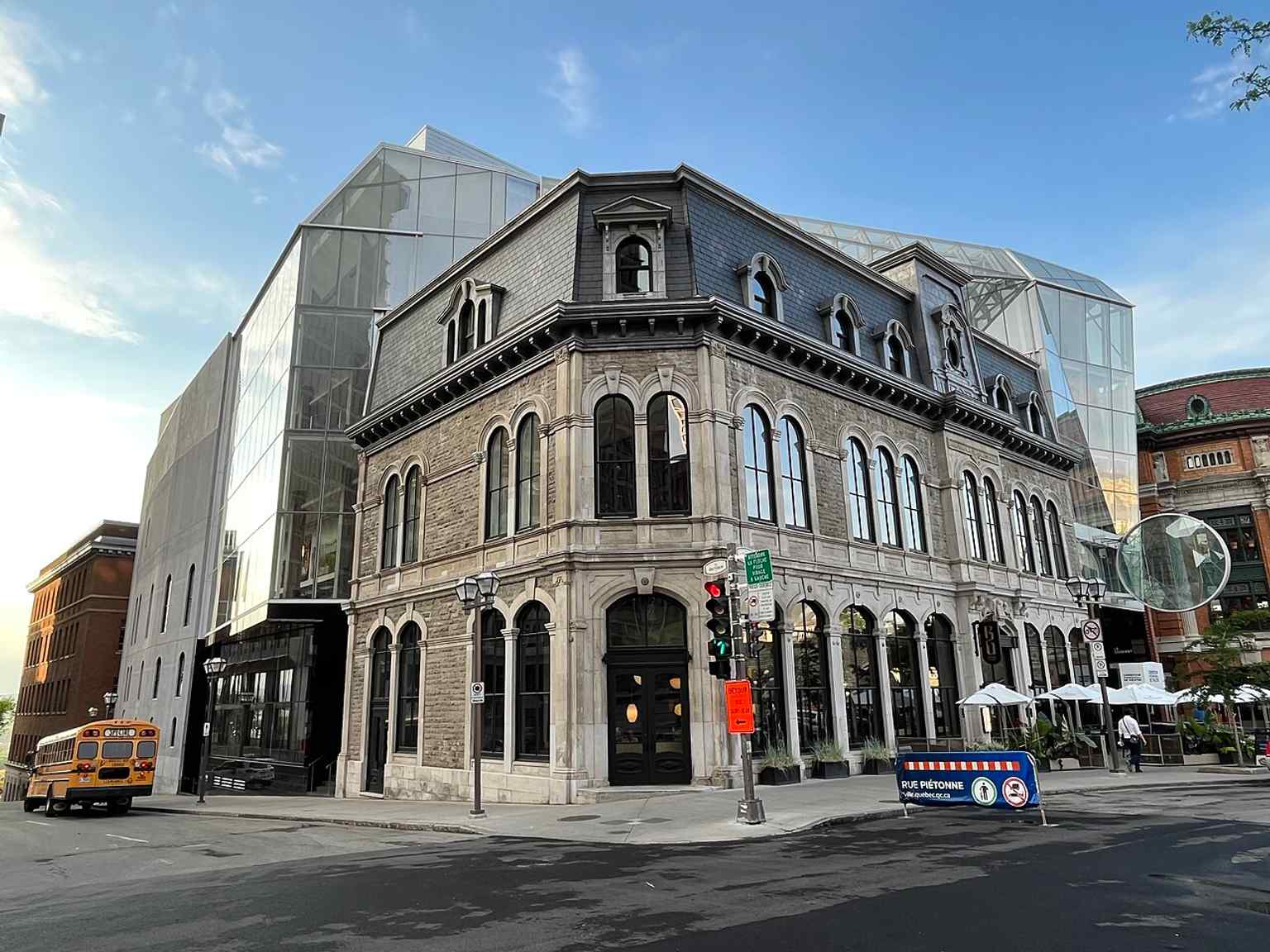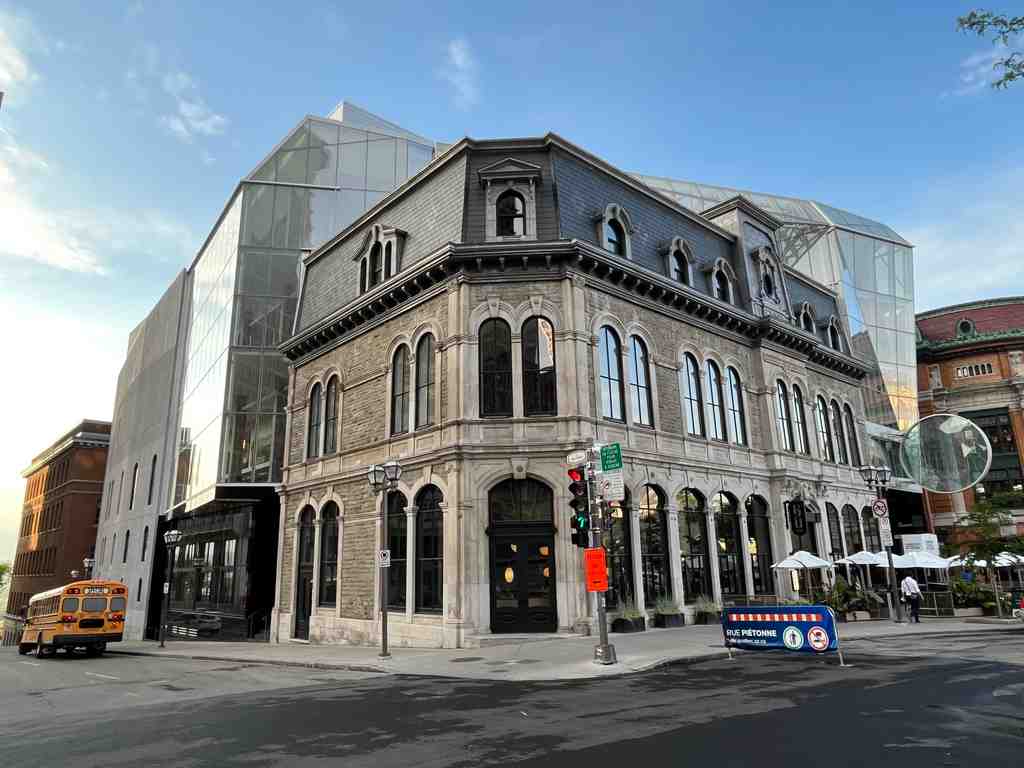
Look for a restored stone façade with arched windows and a slate mansard roof, fused to a sharp faceted glass prism, with a large circular artwork hanging over the entrance like a glowing coin.
Welcome to Le Diamant... a place where Québec City shows one of its favorite habits right away: it rarely starts from scratch when it can argue with its own past instead. Half of this building carries the bones of the city’s first Y-M-C-A, and the other half cuts across it in glass and concrete like a very confident rewrite.
For Robert Lepage, that rewrite was personal. After three decades of touring the world, he said he needed somewhere to set down his suitcases. That’s a lovely line... and also a stubborn one, because this project nearly fell apart more than once. For about fifteen years, land deals tangled, money wobbled, and in twenty fourteen provincial austerity measures put the roughly fifty-four million dollar plan in real danger. Lepage and his team fought to keep it alive, arguing that this was not just another theater, but a cultural anchor the city actually needed.
If you glance at the building, you can read that argument in the architecture. The old Y-M-C-A, designed in eighteen seventy-nine by Joseph-Ferdinand Peachy, kept its arched windows and its Second Empire silhouette - that nineteenth-century style with the steep mansard roof and lots of ornamental detail. Then the new architects sliced the site on a diagonal and inserted this faceted glass volume, like a crystal lodged inside a respectable old civic building. If you want a clearer look at that marriage of old masonry and new glass, check the image on your screen.
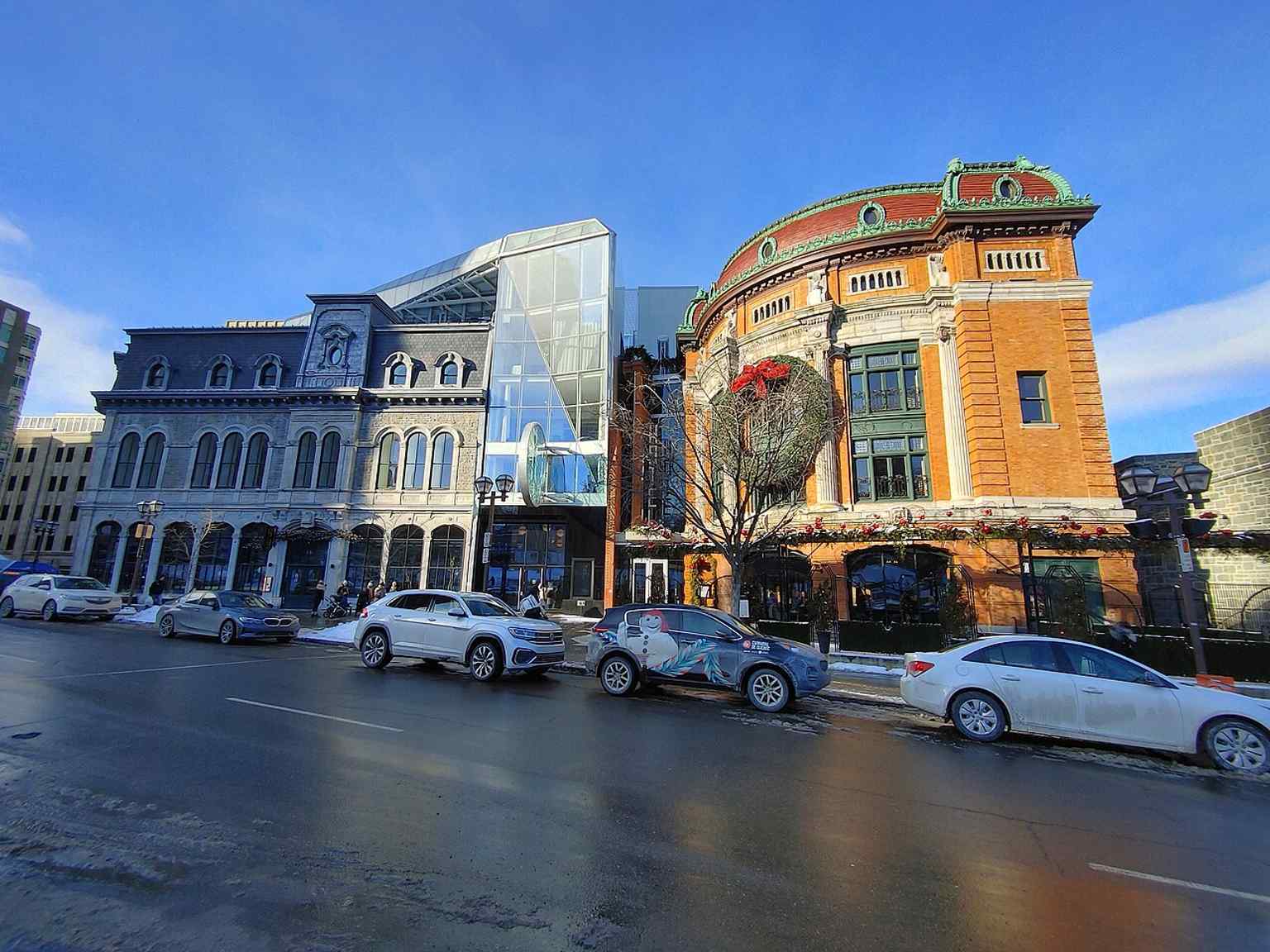
Now pause for a second and really study the front and the square around it... does this feel purely modern, or does it feel like a place where the city has been training itself, entertaining itself, and showing itself off for a very long time?
Most people walking by never guess what stood here in spirit before the actors arrived. This site belonged to Québec’s first Y-M-C-A, and with it came “Muscular Christianity” - a movement that tried to build moral character through physical discipline. So yes, before there were stage lights, there were bowling lanes, a swimming pool, and a gym where neighborhood boys came to harden body and soul. Québec can be wonderfully dramatic, even when it thinks it’s being upright.
There’s another detail locals love pointing out. Along Rue des Glacis, the concrete panels carry a photo-engraved image of a building that never actually got built. Peachy had drawn a second wing for the old Y-M-C-A, but nineteenth-century funding failed him. More than a century later, Le Diamant gave that missing wing a ghostly afterlife. From the right angle, it appears; shift a little, and it slips away. The city remembers even its unfinished ideas.
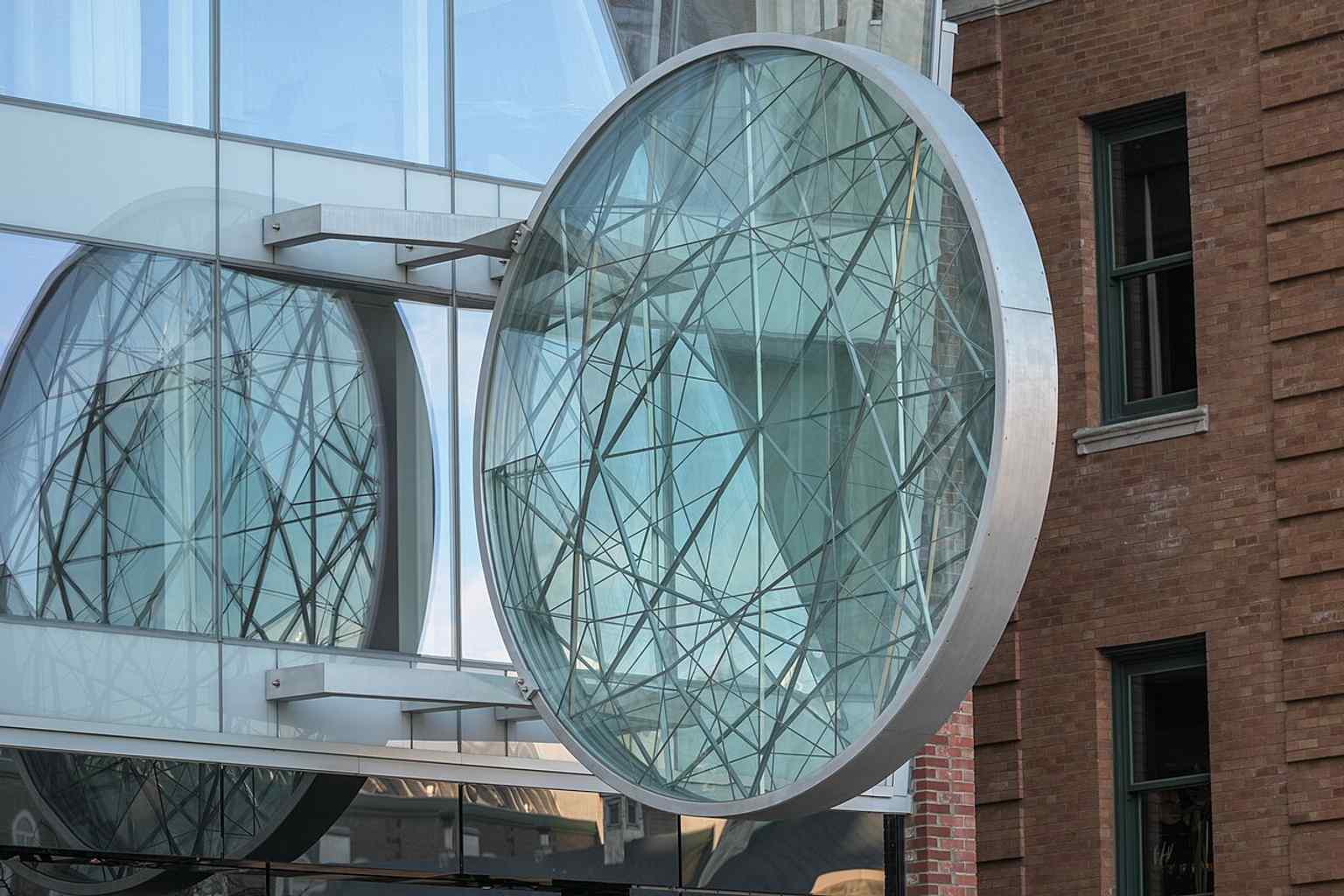
Le Diamant opened in June of twenty nineteen after a three-year construction effort by Pomerleau. Inside, it holds a six-hundred-twenty-five-seat hall, a smaller hall, rehearsal rooms, and the kind of stage machinery directors dream about: hydraulic lifts, advanced sound and lighting, even a retractable orchestra pit. Hanging over the entrance, that circular artwork by Claudie Gagnon nods to the old Cinema de Paris sign that once marked this address, so even the theater’s emblem is a reincarnation.
That’s the pattern to keep in mind as we walk this district: in Québec, performance has never stayed politely onstage. It spills into squares, façades, arguments, and reinventions... which makes the Capitole Theatre, right nearby, a very fitting next stop. If you’re planning to come back inside, Le Diamant is generally open only limited hours from Thursday through Saturday.