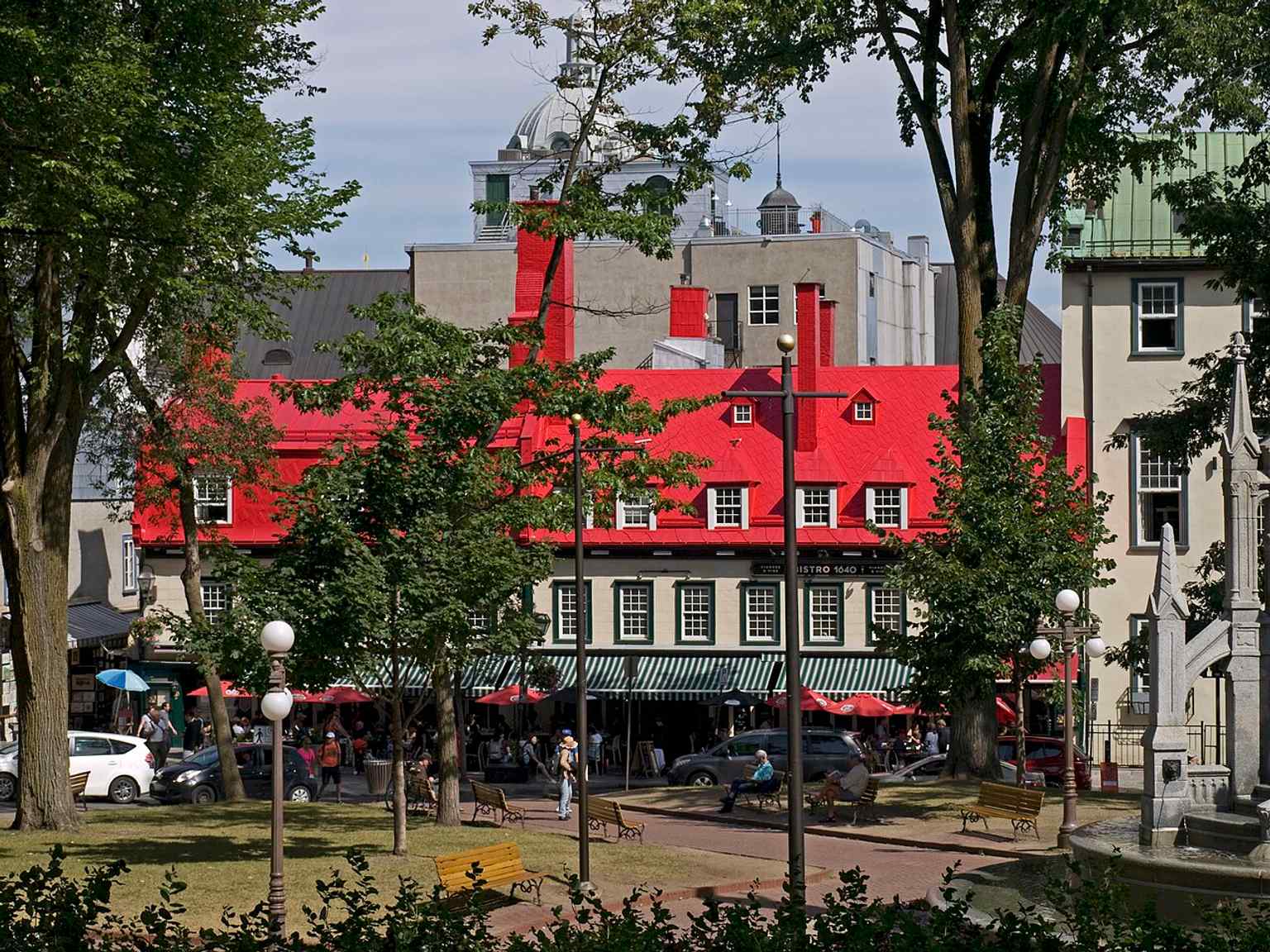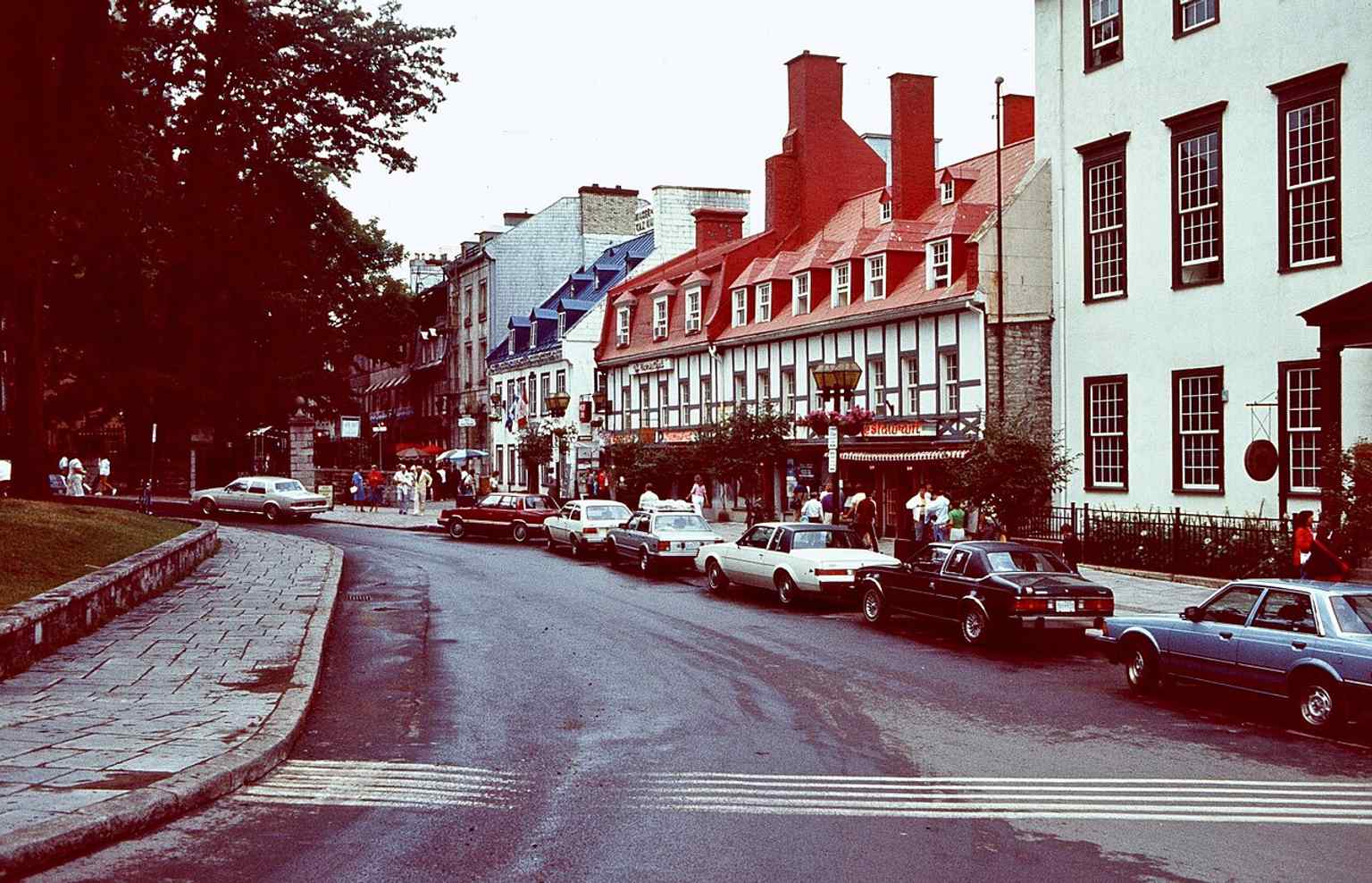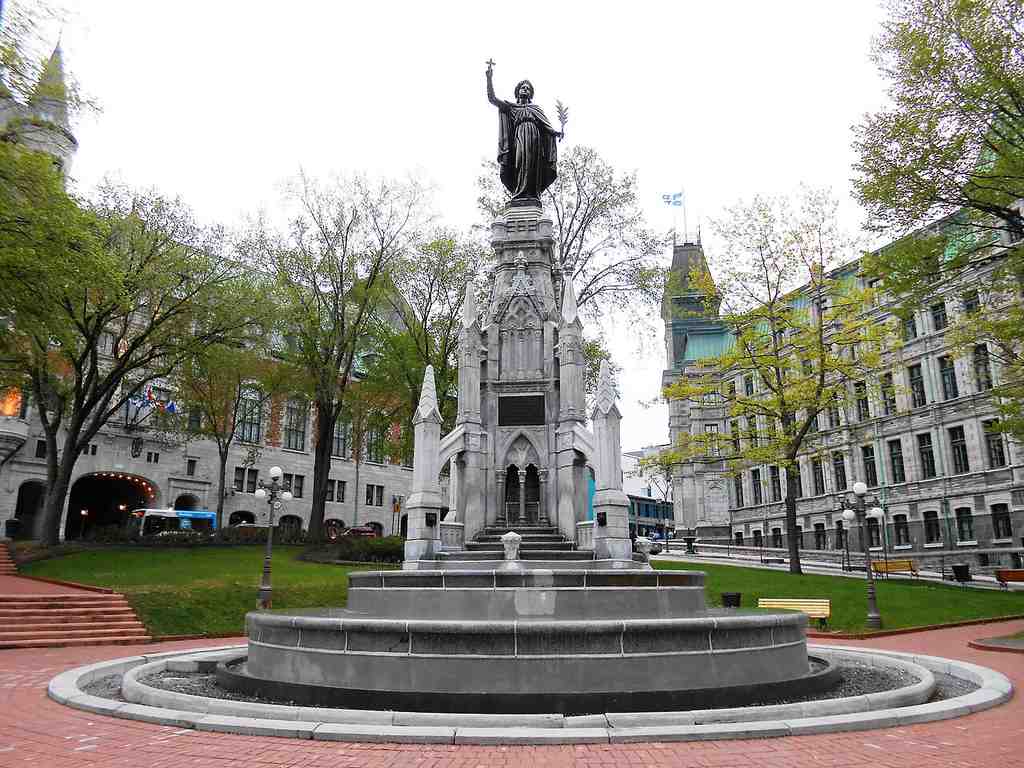
On your left, Place d'Armes opens as a stone-framed trapezoid of lawn and paving, centered on a tall pale neo-Gothic monument with pointed arches and carved relief panels.
A place d'armes originally meant the central gathering ground inside a fortified town, where troops drilled, assembled, and staged the rituals of military life. Governor Montmagny laid out this one between sixteen forty and sixteen forty-eight for exactly that purpose... practical, disciplined, and not terribly interested in comfort.
But this square kept changing jobs. Before it settled into public dignity, colonial justice moved in here: the seigneurial court of the Company of One Hundred Associates sat on this site by sixteen fifty-one, and the Sovereign Council followed until sixteen sixty-seven. In sixteen eighty-one, the governor handed the ground to the Récollets, a branch of Franciscan friars, so they could build a hospice - basically a shelter for nights and rough conditions. For a few years, from sixteen eighty-nine to sixteen ninety-two, part of the first general hospital of Quebec stood here too. One patch of land, endlessly reassigned by whoever held authority. Neat, isn’t it?
Then fire rearranged the script. In seventeen ninety-six, the Récollet church and monastery burned. Three years later, workers cleared the ruins, enlarged the square, and made room for the new courthouse and Holy Trinity Cathedral. If you peek at the image on your screen, you can see the Monument of Faith at the center, added in nineteen fifteen and completed in nineteen sixteen. Architect David Ouellet and sculptor Gaston Vennat turned the middle of an old drill ground into a stone sermon, twelve meters high, telling the story of the Récollets in bas-relief.
After the Citadelle rose in eighteen thirty, the square lost its military purpose. A chain went up around the lawn in eighteen thirty-two - apparently even grass needed defending - and by eighteen sixty-five this had become a public park with a basin at its center. So the choreography remained: gathering, watching, commemorating... just with fewer muskets.
Archaeologists suspect more of the Récollet monastery still lies under the square, which feels exactly right for Quebec: every formal surface covers an older argument. Ahead, the great hotel-palace on the promontory takes that civic theater and turns the volume up. Make your way toward Château Frontenac. And if you’re curious, the square is open daily from six in the morning to eleven at night.