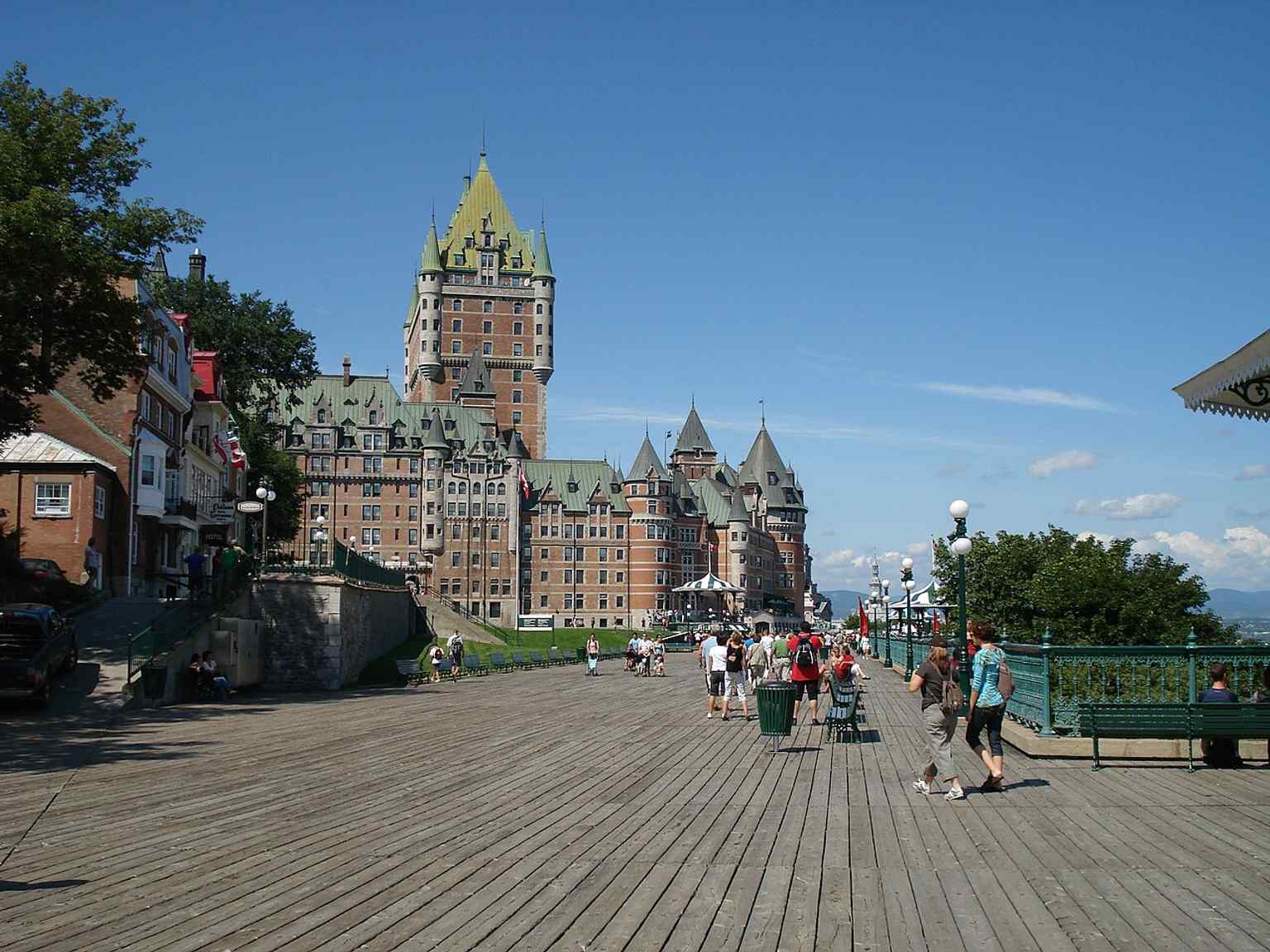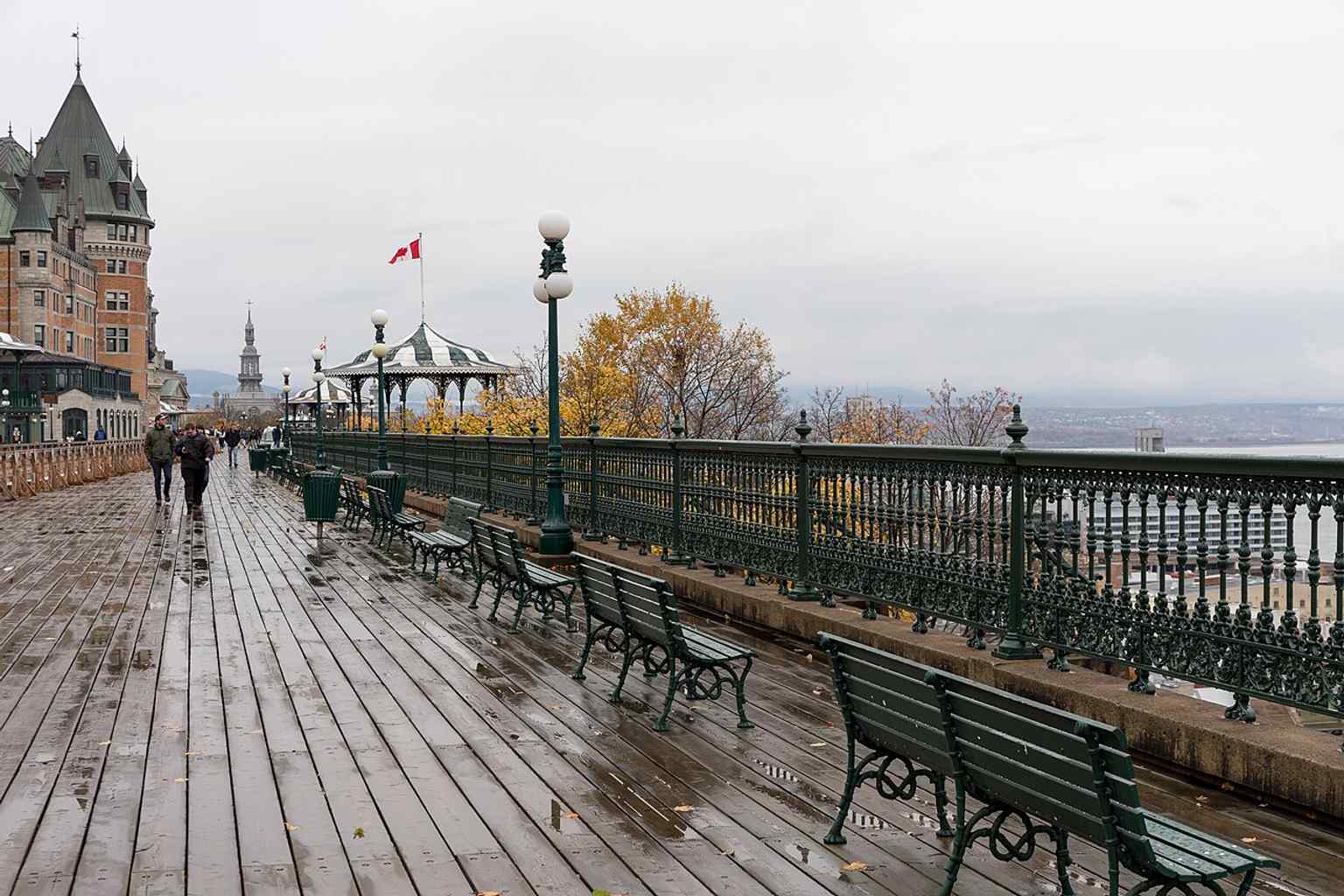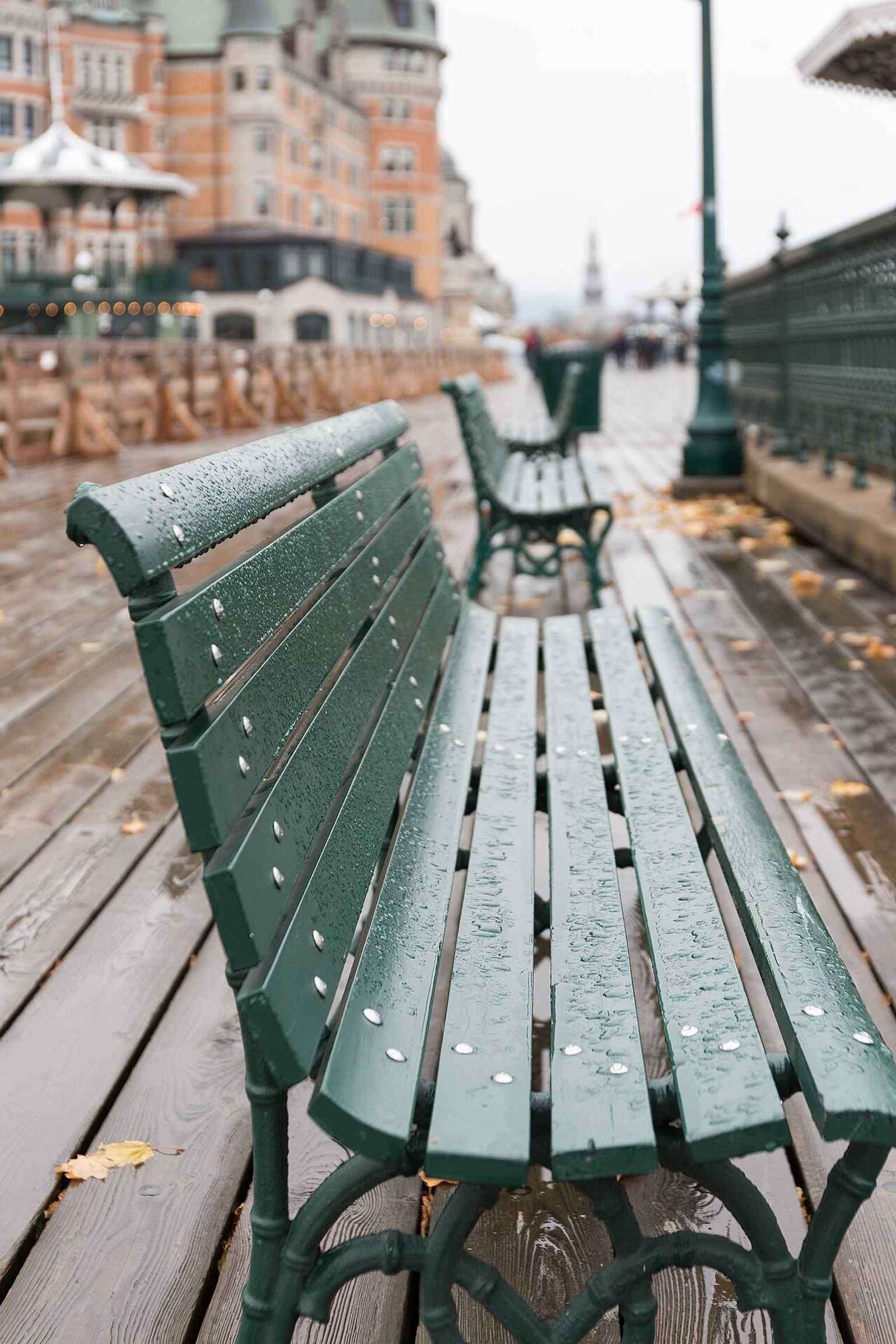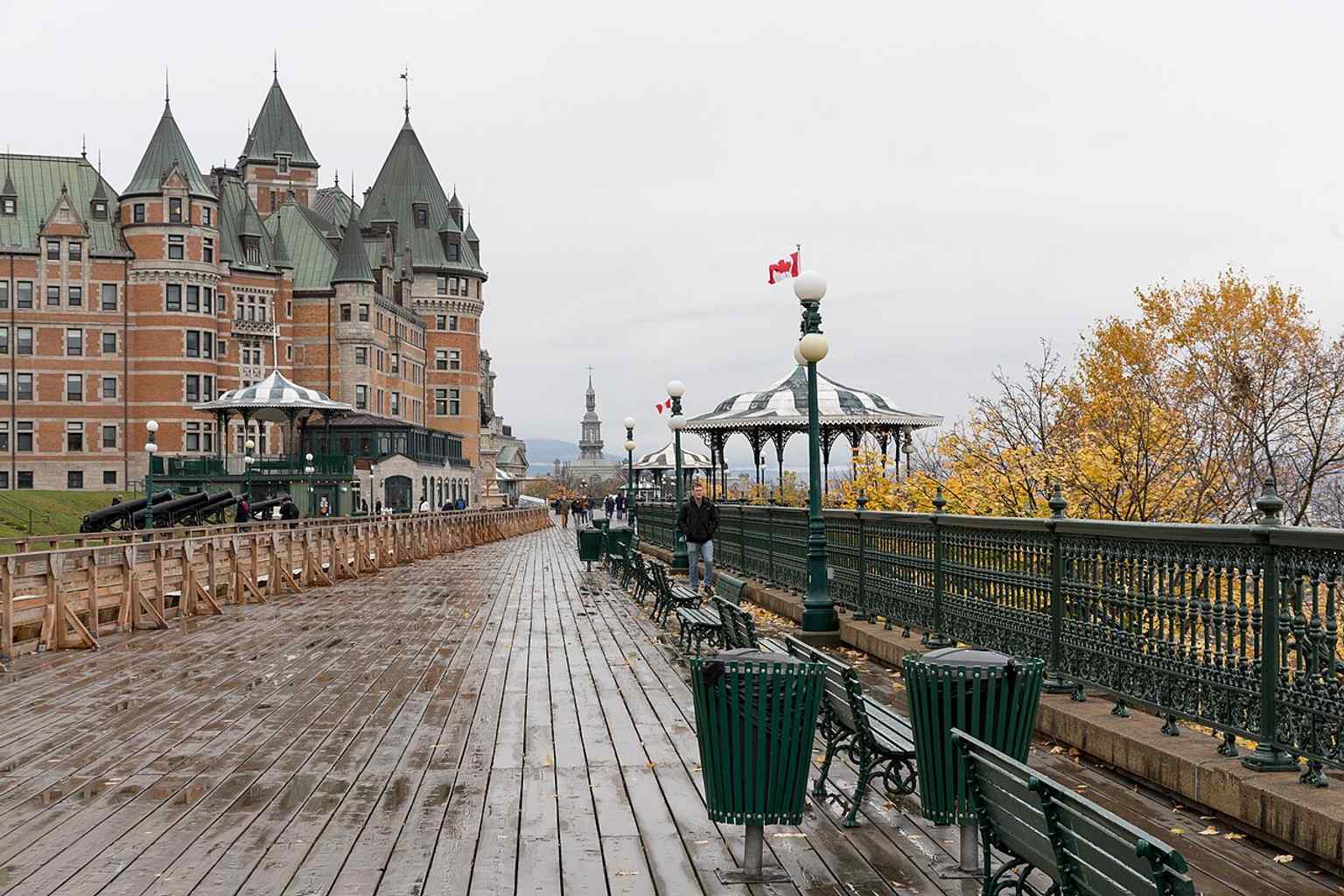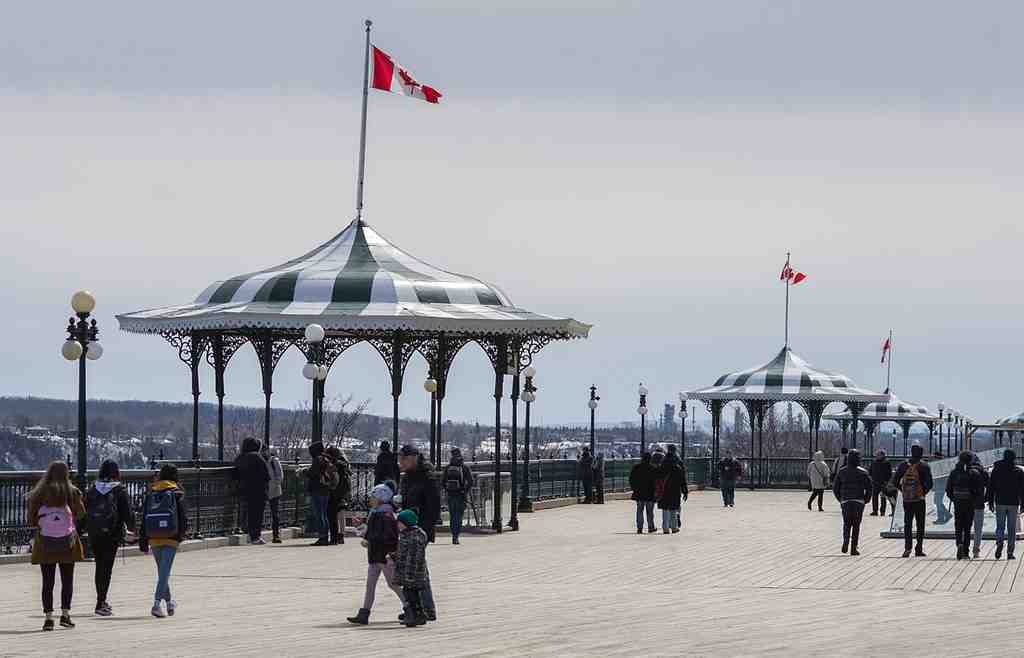
On your left, Terrasse Dufferin is a long wooden boardwalk along the cliff, edged with iron railings and marked by round glass domes set into the promenade.
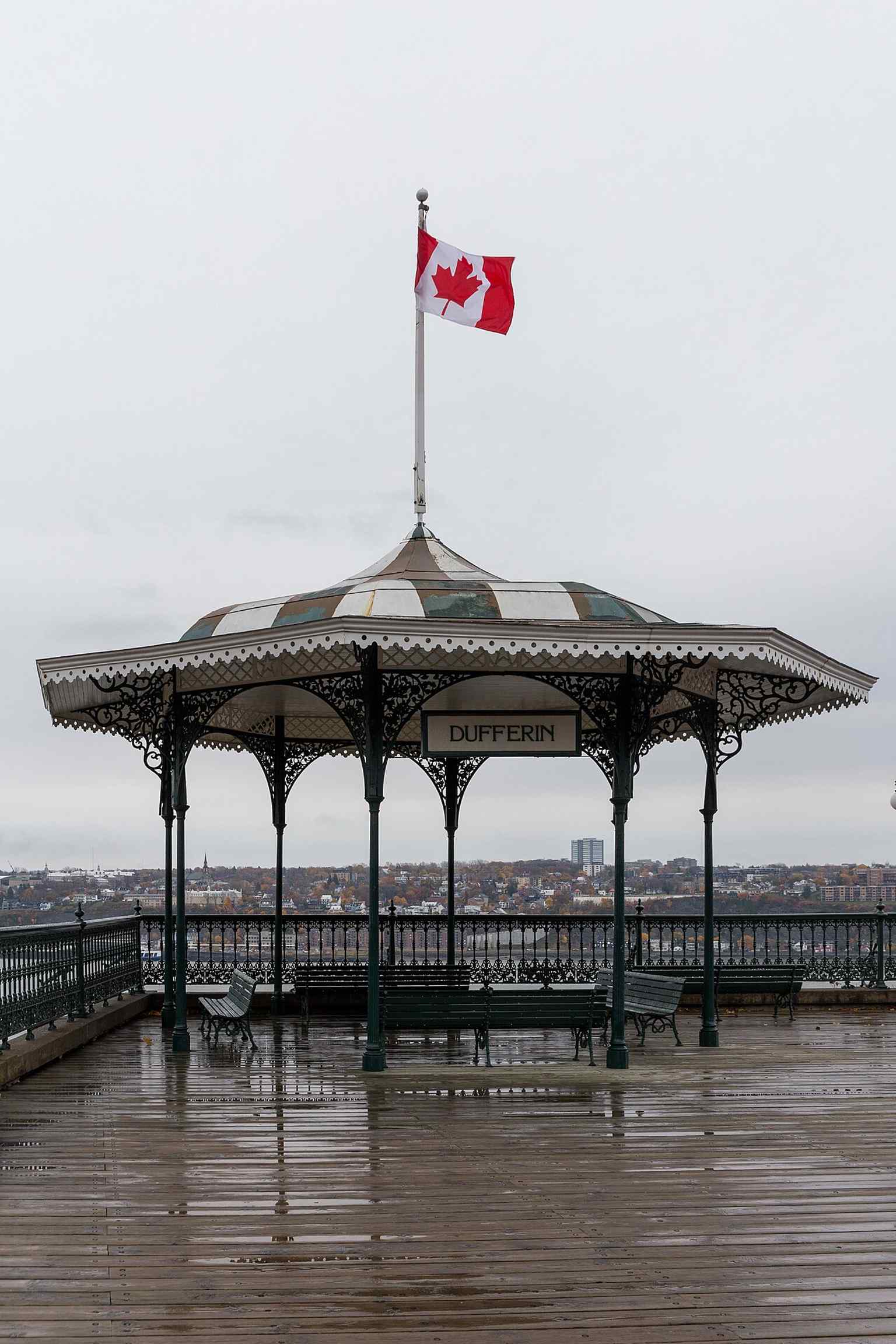
This elegant walk began after fire tore through Château Saint-Louis in eighteen thirty-four and erased its private terrace. Four years later, Durham Terrace opened the cliff edge to the public. Then came Lord Dufferin. He arrived in eighteen seventy-two just as crews were tearing down Québec’s fortifications, and he argued that the old walls were not dead weight but part of the city’s character. With engineer Charles Baillairgé, he pushed this terrace from eighty-five metres to four hundred thirty, kept the railing, added green-and-white gazebos and a music pavilion, and laid the first stone before leaving Canada in eighteen seventy-eight.
Take a second to notice the boardwalk itself... the stroll, the railings, the open edge. A place meant for defense learned some social skills. If you want, check the before-and-after image in the app; the lighting and fixtures changed, but the promenade still holds its line above the river.
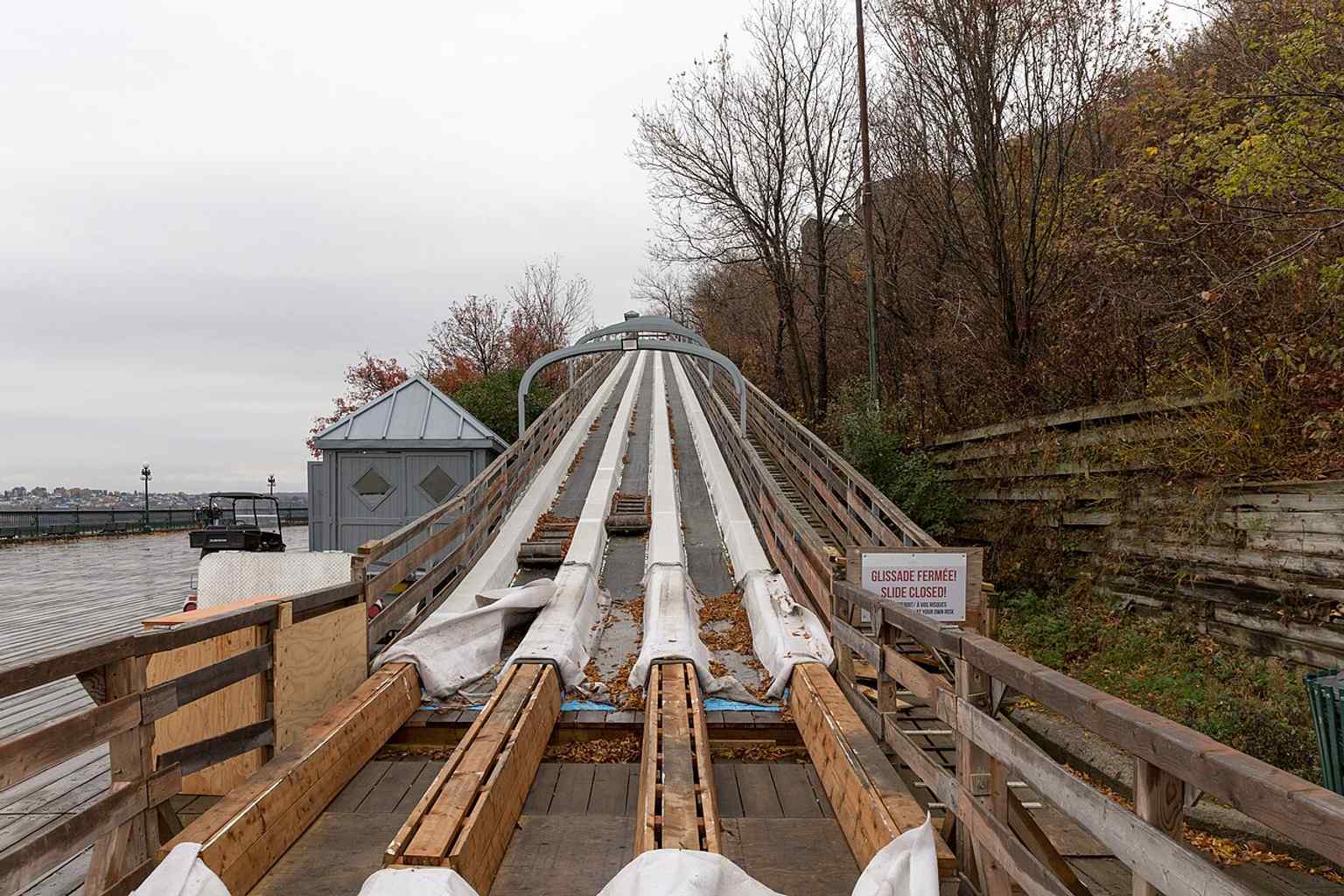
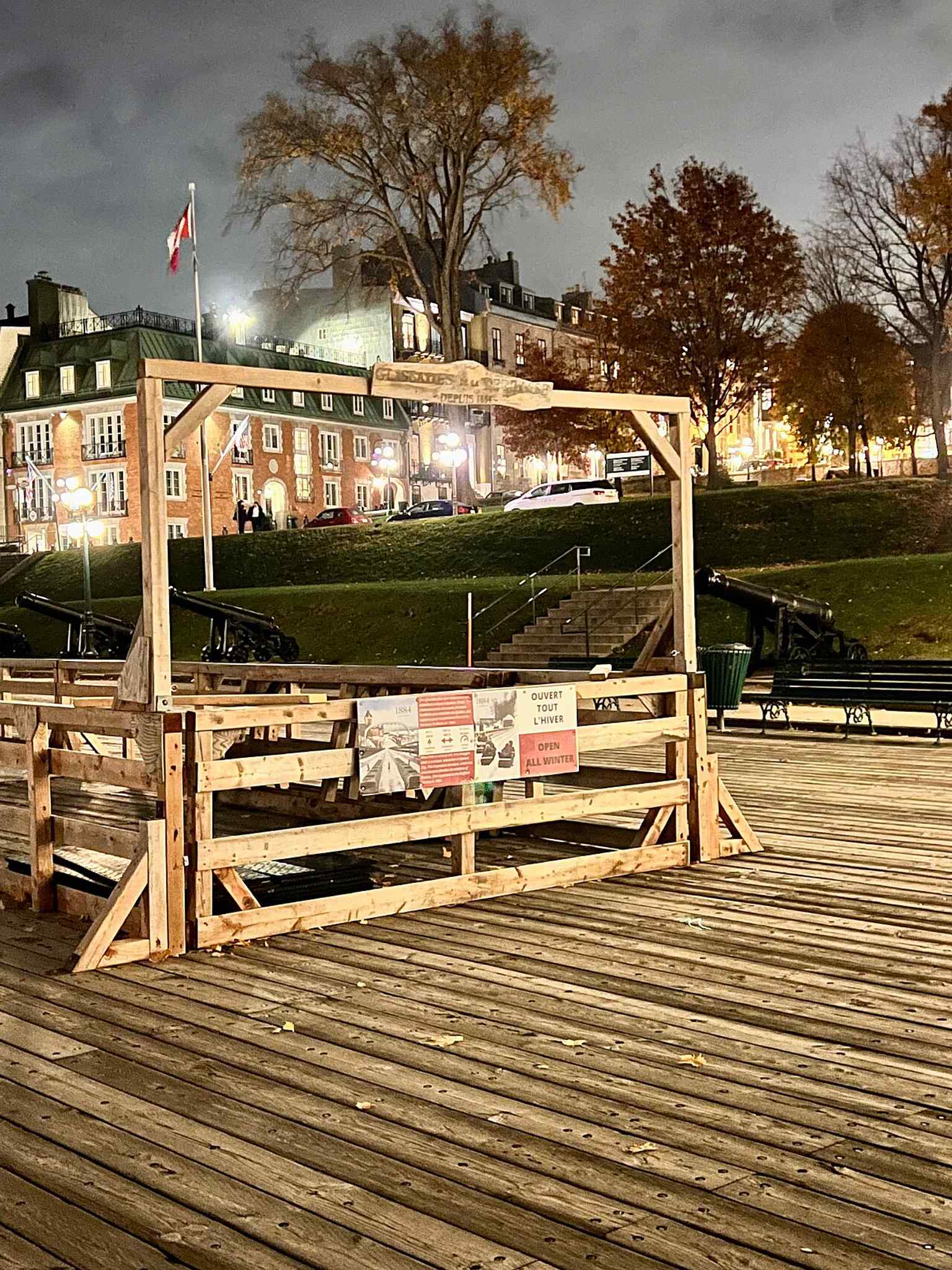
Most visitors miss this part: when the rebuilt terrace opened on the twenty-eighth of June, eighteen seventy-nine, it was tied to the visit of the Marquis of Lorne and Princess Louise. So yes, this was a lookout, but it was also a carefully staged political set. Concerts followed in the music gazebo, toboggan slides arrived in eighteen eighty-four, electric arc lamps lit the terrace in eighteen eighty-five, and Champlain’s statue anchored one end in eighteen ninety-eight.
Look at those glass domes: they reveal the remains of the Saint-Louis forts and châteaux set below the planks. Québec does love building its future on top of its previous draft.
From here, you stand between upper and lower city, between command and leisure. When you’re ready, Notre-Dame de Québec Basilica-Cathedral is about a four-minute walk, and this terrace stays open all day, every day.