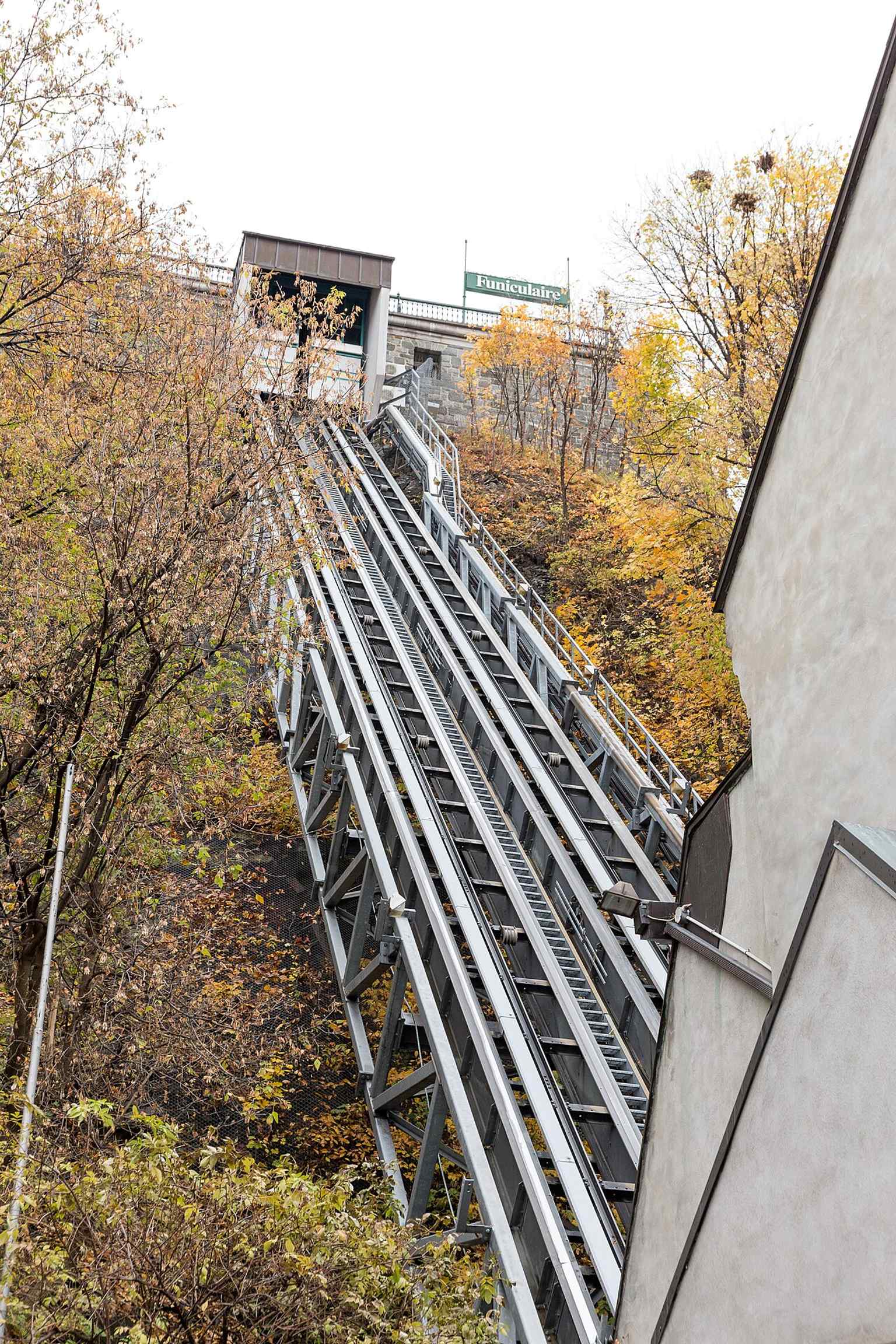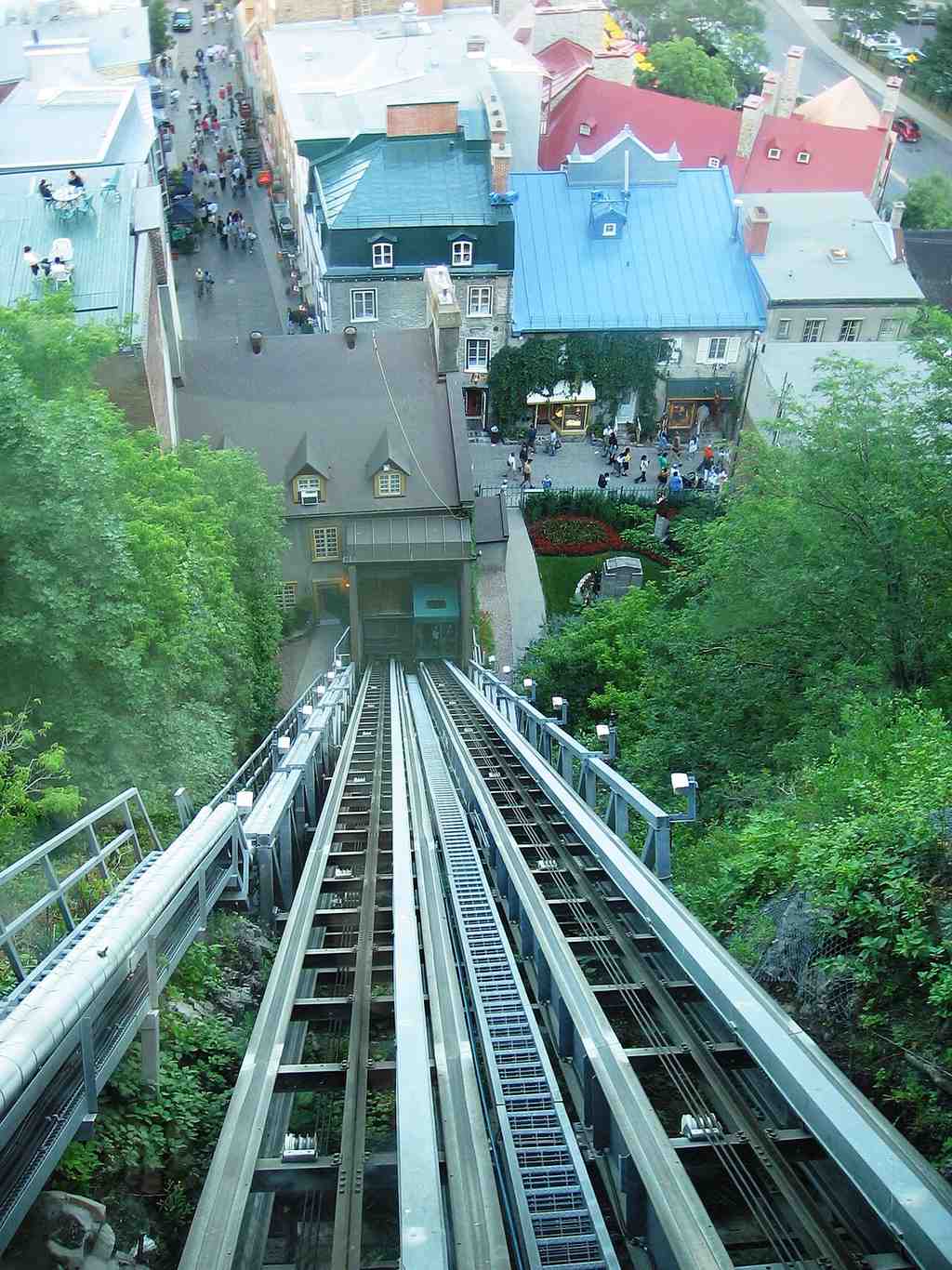
On your right, the Old Quebec Funicular appears as a steep glass-and-metal railway cut into the cliff, with angular stations and cabins sliding up the stone slope.
Quebec solved its vertical-city problem with prayer, staircases... and then, finally, engineering. William Griffith opened this line on the seventeenth of November, eighteen seventy-nine, to connect Upper and Lower Town without requiring heroic lungs. Most people ride it and assume it was always sleek. It was not. The first system used water ballast - meaning one car carried enough water weight to pull the other - along with steam power. Clever, practical, slightly improvised... very nineteenth century.
In nineteen oh seven, Alexander Cummings converted the line to electricity, turning a mechanical novelty into real urban transport. Then disaster struck on the second of July, nineteen forty-five: fire destroyed the funicular and badly damaged the nearby Louis-Jolliet house. The city rebuilt in nineteen forty-six with metal shelters, choosing resilience over nostalgia. In nineteen seventy-eight, new glass-enclosed cabins made the ride part commute, part spectacle. Take a look at the image on your screen and you can see exactly why the view became part of the appeal.
But this line also carries harder memory. On the twelfth of October, nineteen ninety-six, a cable broke, one cabin crashed with sixteen people aboard, one passenger died, and fifteen were injured. Another injured passenger later died from his injuries. After that, the whole system got a serious rethink.
So here it is: a machine that began as a fix for a cliff and ended up folded into the city’s romance. And down below, Place Royale waits with the older origin story. If you want to ride later, it generally operates from nine A-M to nine P-M daily.